January/February 2024

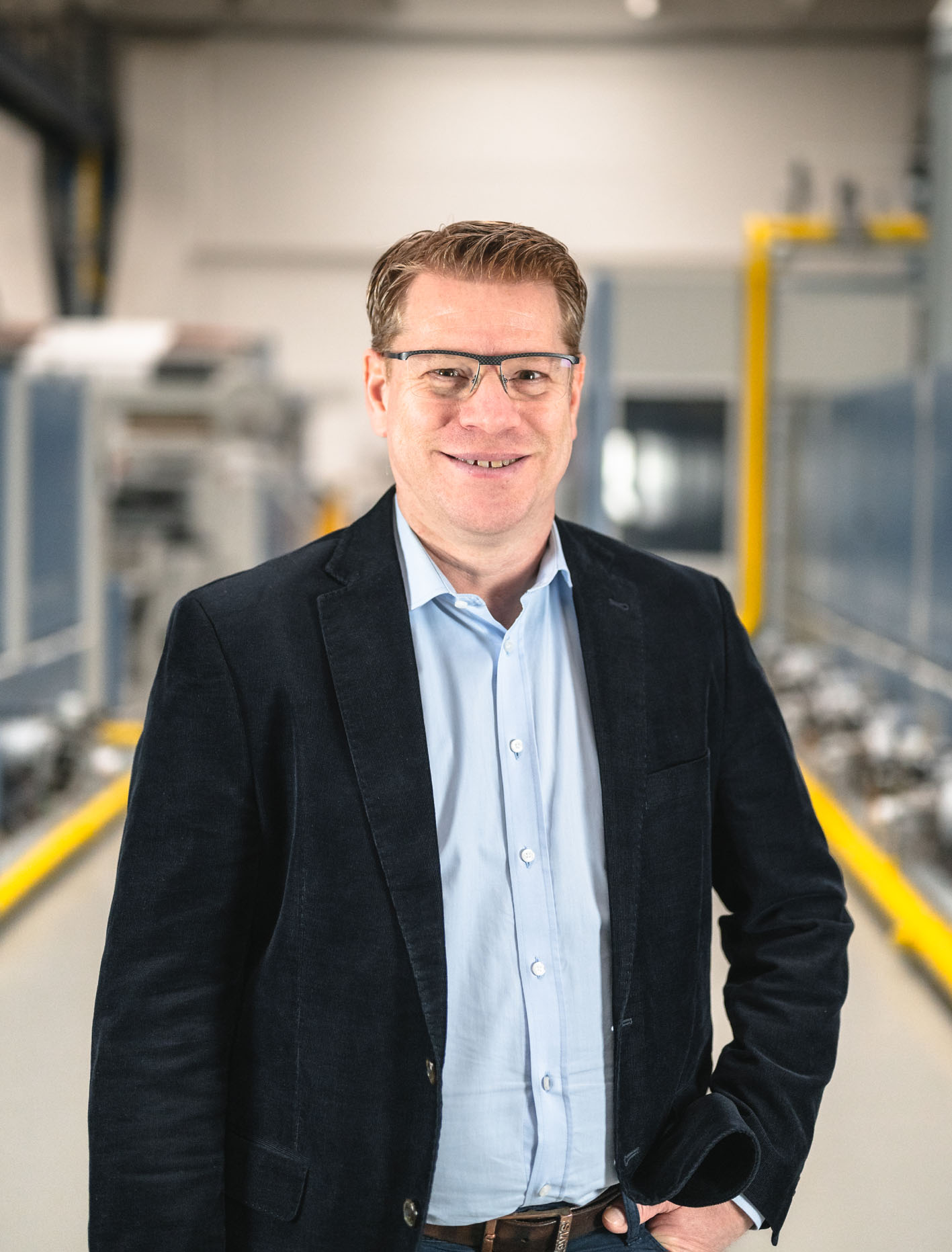
(left to right): Andreas Kueckelmann, Peter D. Dornier and Franz-Peter Matheis

Peter D. Dornier will step down from his position as CEO of Germany-based DORNIER GmbH on July 1, 2024, and transition to the supervisory board. Technical Managing Director Andreas Kueckelmann will succeed Dornier as chairman of the board of management. Kueckelmann will be assisted by Commercial Managing Director Franz-Peter Matheis.

Germany-based Brückner Textile Technologies GmbH & Co. KG has appointed Alexander Mandel sales director. In addition, Raghav Kuberan has assumed responsibility for production and materials management at Brückner’s Leonberg and Tittmoning, Germany, locations as vice president, Operations. Kuberan, who will also handle IT responsibilities in both locations, replaces Rüdiger Gieske who is retiring after more than 25 years as COO.

Vince Tyra is the new president and CEO of Montreal-based Gildan Activewear Inc.

Kentwool, Greenville, S.C., has named Justin Ferdinand president and CEO. Ferdinand replaces Owner Kim Kent and represents the first CEO in the company’s history who is not related to the Kent family. Kim will continue as chairman of the company.

Mary Beth Hunsberger

High Point, N.C.-based Culp Inc. has hired Mary Beth Hunsberger as executive vice president of Culp Upholstery Fabrics. Hunsberger will work alongside Boyd Chumbley during a transition period and will succeed Chumbley as president of the division sometime during the third quarter of 2024. Chumbley will continue with Culp in an advisory role.

Brett Baird was promoted to vice president of sales at Burlington, N.C.-based Trivantage®.

Winston-Salem, N.C.-based HanesBrands has named Richard Mcleod vice president, chief marketing officer of Global Champion®.

NatureWorks, Plymouth, Minn., has appointed Erik Ripple president and CEO. He succeeds interim president Jill Zullo.

January/February 2024

Saucony Runs After A More Sustainable Future

Saucony’s Triumph RFG running shoe features a cotton upper and 55-percent Susterra® propanediol mid-sole for a more sustainable performance product.

By Rachael S. Davis, Executive Editor

Performance running shoes almost exclusively have been produced using man-made materials because performance — including flexibility, cushioning, breathability and stability — as well as durability are specifications that are easily met with synthetic materials.

But when such performance shoes reach the end of their useful lives, they are not very environmentally friendly and are typically difficult to recycle. There are roughly 22 billion pairs of footwear manufactured each year according to various sources, with the U.S. Department of the Interior reporting as many as 300 million pairs of shoes each year are discarded into landfills where they can take 30 to 40 years to decompose.

Lexington, Mass.-based brand Saucony®— a division of Wolverine World Wide Inc. — recently published sustainability goals that aim to have 90 percent of its production contain organic, recycled or renewable materials by the year 2025, ramping up to 100 percent by 2030. With these goals in mind, the brand developed its Triumph RFG (Run For Good) performance shoe — its most sustainable running shoe to date — using sustainable materials throughout its construction.

The shoe features a mesh cotton upper that is dyed using plant-based dyes. These dyes result in light, neutral colors for the running shoes.

To produce the mid-sole, Saucony collaborated with CovationBio PDO™, producer of biobased Susterra® propanediol, to produce the shoe’s PWRRUN BIO+® midsole foam. The foam is made using 55-percent Susterra, a regeneratively grown dent-corn-based 1,3 propanediol, which is petroleum-free. According to CovationBio, Susterra generates
“48-percent less greenhouse gas emissions cradle-to-gate compared to 1,4-butanediol (BDO), a common petrochemical-sourced alternative,” thus reducing dependency on fossil fuels.

In addition, Saucony engineered a material for the outsole featuring 80-percent rubber, which Saucony reports performs just as well as a man-made material but is more sustainable.

“At Saucony, we say that when we innovate, we elevate — the industry, our partners and the sport,” said Rob Griffiths, Saucony global brand president. “But quite simply, the future of our sport depends on the future of our planet, and we know we can do better for ourselves and the earth. There’s no one-size-fits-all solution. That means as a member of the global community, it is imperative that we are constantly innovating, researching, and committing to our promise to find more sustainable options. We believe there is no finish line when it comes to sustainability; we are dedicated to pushing ourselves and the industry to do better.”

“We are proud to be a part of Saucony’s sustainable mission, and this marks a milestone for Susterra propanediol,” said John Hurban, vice president of global marketing and sales at CovationBio PDO. “It’s the first example we’re aware of where this percentage of bio-based content is used in the midsole of an athletic shoe. We believe runners and fitness enthusiasts will benefit from increased high-performance shoe flexibility, comfortability, and durability. This shoe sizes up against the competition and goes the distance to have a lighter environmental footprint.”


For more information about Saucony’s Triumph RFG shoe, visit saucony.com; and for more informa-tion about Susterra®, visit susterra-performs.com


January/February 2024

Omron Automation Selects Spartanburg County To Establish The Company’s First South Carolina Operation

COLUMBIA, S.C. — February 8, 2024 — Omron Automation (OMRON), a global supplier of industrial automation technology, today announced it selects Spartanburg County to establish the company’s first South Carolina operation. The $9.2 million investment will create 162 new jobs in five years.

With more than 90 years of experience, OMRON creates, sells and services fully integrated automation solutions that optimize manufacturing and improve safety. The company provides manufacturing solutions to customers in more than 110 countries and has production facilities in Japan, Brazil, China, the Netherlands and the United States.

OMRON will lease and build out a 60,000-square-foot production facility located at 311 Genoble Road in Greer to manufacture industrial automation technologies including motion controllers and drives, machine vision, barcode readers, and barcode verification systems.

Operations will be online in April 2024. Individuals interested in joining the OMRON team should visit www.sctechjobs.com and enter “OMRON” as a keyword to narrow search, or the company’s careers page.

The Coordinating Council for Economic Development approved job development credits related to this project. The council also awarded a $100,000 Set-Aside grant to Spartanburg County to assist with the costs of building improvements.

“We are thrilled to establish our new location in Spartanburg County, expanding our market presence in the Southeast. This investment allows us to leverage cutting-edge technologies and generate high-quality manufacturing jobs, contributing to the growth and prosperity of the region.” -Omron Automation Americas President and CEO Robb Black

“We are proud to welcome Omron Automation to South Carolina. This announcement is further proof that our state’s reputation as an advanced manufacturing powerhouse continues to attract major international companies to establish operations within our borders.” -Gov. Henry McMaster

“Omron Automation’s decision to invest and create 162 jobs in Spartanburg County will have an immense impact on the state of South Carolina. We look forward to a strong partnership with OMRON for many years to come.” -Secretary of Commerce Harry M. Lightsey III

“We’re excited to welcome Omron Automation to Spartanburg County and excited to bring another innovative, high-tech project to our community. OMRON is another boost for our manufacturing sector and is a strong first announcement for Spartanburg in 2024.” -Spartanburg County Council Vice Chairman and Economic Development Committee Chairman David Britt

Omron Automation (OMRON) selects Spartanburg County to establish the company’s first South Carolina operation.

  • The company’s $9.2 million investment will create 162 new jobs in five years.
  • OMRON is an automation solutions provider.
  • The company will be located at 311 Genoble Road in Greer, S.C.
  • Individuals interested in joining the OMRON team should visit www.sctechjobs.com (enter “OMRON” as a keyword to narrow search) or the company’s careers page.

Posted: February 12, 2024

Source: Office of the Governor of South Carolina

Columbia Sportswear’s Omni-Heat Infinity Supports Historic U.S. Return To The Moon

Rendering of Intuitive Machines’ Nova-C lunar lander on the surface of the Moon. Columbia’s Omni-Heat Infinity technology will help protect the lander from the harsh temperatures of space. Photo – Business Wire

PORTLAND, Ore. — February 12, 2024 — In a move to advance technologies, material innovations and lay the foundation for a sustainable human presence on the Moon, heat insulation technology used in outdoor apparel will be implemented on a lunar lander in a first-of-its-kind partnership between Columbia Sportswear, a global innovator in outdoor, active and lifestyle products, and Intuitive Machines, a space exploration company focused on pioneering the commercial landscape of the Moon.

Omni-Heat™ Infinity, a propriety heat-reflective technology developed by Columbia Sportswear, is set to go to space with the upcoming launch of Intuitive Machines’ Nova-C lunar lander. In laboratory simulations leading up to this launch, Intuitive Machines’ researchers determined that the gold metallic foil of Columbia’s innovative Omni-Heat Infinity fabric will provide benefits toward insulating the lunar lander against the harsh temperatures of space, which can vary between -250° and 250° Fahrenheit.

A close-up of Omni-Heat Infinity reflective technology that is featured in Columbia’s jackets and the company’s other winter products. This same technology is being used to protect Intuitive Machines’ lunar lander from the extreme temperatures of space. Photo – Business Wire

Following a multi-year scientific partnership first announced in 2021, and a shared commitment to innovation and exploration, Columbia is proud to put its Omni-Heat Infinity technology to the ultimate test in new frontiers as a scientific partner.

“As an apparel company developing outdoor products for all seasons and all activities, it’s imperative that we test our technologies in the most extreme conditions and find ways to innovate beyond our customers’ current needs,” said Dr. Haskell Beckham, Vice President of Innovation at Columbia Sportswear. “Taking key learnings from this partnership, we’ll be able to create new products that will help people enjoy more of the outdoors – regardless of conditions – and ultimately unlock the outdoors for everyone here on Earth.”

Selected by NASA to deliver scientific payloads to the surface of the Moon with its Nova-C lunar lander, Intuitive Machines is hoping to mark the United States’ first return to the lunar surface in 50 years. The liftoff of the IM-1 lunar mission is targeted for a multi-day launch window that opens no earlier than February 14, 2024 and the mission will be streamed live on NASA TV and https://www.intuitivemachines.com/im-1.

“Columbia is focused on developing and testing new technologies in challenging environments and our ongoing partnership with Intuitive Machines has the potential to drive even more innovation for our brand. As we look forward, we have an opportunity to set new standards – for ourselves and for the industry,” said Joe Boyle, Brand President of Columbia Sportswear.

The full assembly of Intuitive Machines’ Nova-C lunar lander. Photo – Business Wire

IM-1 will be Intuitive Machine’s first of three scheduled lunar landings as part of NASA’s Commercial Lunar Payload Services (“CLPS”) initiative, a key part of NASA’s Artemis lunar exploration efforts. The science and technology payloads sent to the Moon’s surface as part of CLPS will lay the foundation for a sustainable human presence on the lunar surface and the commercial development of the Moon.

“Creating and defining the lunar economy requires innovation beyond the industry norm,” said Steve Altemus, President and CEO of Intuitive Machines. “By integrating Columbia’s Omni-Heat Infinity technology into our IM-1 lunar mission, we believe we’re trailblazing a path for near-term Earth solutions and the next generation of commercial space exploration that will open access to the Moon for the progress of humanity.”

To celebrate this historic moment, Columbia is taking over the exterior of Sphere in Las Vegas on February 19 to highlight the important role that Omni-Heat Infinity technology is playing throughout this important mission.

Posted: February 12, 2024

Source: Columbia Sportswear Company

AATCC Announces New Corporate Member Benefit

RESEARCH TRIANGLE PARK, N.C. — February 12, 2024 — AATCC prides itself on offering Corporate Members many tangible benefits in addition to increased visibility, access opportunities and ongoing communication. As part of that commitment, AATCC is launching a new, Corporate Member exclusive marketing platform: Corporate Member News.

Thanks to the feedback of Corporate Members, the Association has revamped the previously offered Whitepaper Benefit with a modern, streamlined news feed. Corporate Member News is a dedicated landing where Corporate Members can share not only Whitepapers, but also videos, brochures, blog posts, staff updates, and more! This all-in-one offering is hosted on AATCC Communities, the networking member forum by AATCC, where Corporate Members will be able to market directly to AATCC Members. The site will also be publicly viewable, which means that members can share Corporate Member News links directly with coworkers and customers alike.

In the meantime, AATCC encourages members to stay active on AATCC Communities. Use your Individual or Student Member login information to access the different Communities available; Interest Group pages contain recorded webinars with guest and AATCC speakers, the AATCC Publications Community has podcast episodes available, and Local Section groups are planning their 2024 activities. Members will also be surveyed on how they’ve enjoyed their first year and new features they’d like to see in the coming months, so feel free to explore before sharing your feedback.

Posted: February 12, 2024

Source: AATCC

JEC WORLD 2024: Composites At The Heart Of Sports Innovation

PARIS — February 12, 2024 — As the world turns its attention to France for the 2024 Olympic and Paralympic Games, JEC will be hosting, with Global Sports Week Paris, a day dedicated to sports and composites on March 7, 2024. This day will demonstrate how these revolutionary materials are redefining performance standards in 18 Olympic and Paralympic summer sports. From archery to sailing, composites are ubiquitous, offering lightness, resilience, and performance.

Composites and Sports: the era of optimized performance

The increasing use of composites in sports is redefining the standards of performance. These materials offer a unique combination of lightness, strength, and flexibility, enabling the manufacturing of cutting-edge sports equipment. From traditional Olympic and Paralympic sports like athletics and cycling to emerging disciplines like skateboarding, composites are omnipresent and greatly contribute to the evolution of athletic performances.

Approaching the 2024 Games, JEC World has chosen to highlight the undeniable impact of these innovative materials on the world of sports through a dedicated day on March 7, 2024. Developed with the Global Sports Week Paris, France’s leading international forum for the sports ecosystem, this Sports Summit will showcase concrete examples of innovations that increases the level of competition in each discipline.

A comprehensive program serving innovation

This special day focused on discovery and exchange will address numerous topics related to sports and composites such as:

  • The material at the heart of performance: lightness, resilience, stiffness, elasticity (…): the properties of composites can be a real added value.
  • The sports industry, a laboratory for composites innovation: new materials, new processes, sports provide a playground to test innovations that other sectors can only adopt after long industrial certification and implementation processes. How do major companies use the sports industry to test new processes, techniques…?
  • Sports for all with composites: equipment for Paralympic sports, physical protection of athletes (masks, helmets, cockpits…), and applications in the field of health.
  • Sports & ESG criteria (Environmental, Social, and Governance) – athletes, nature, and composites: athletes are pioneering the use of natural materials (bio-sourced and/or recyclable fibers and resins).
  • Foil & Composites: how composites have revolutionized competitive water sports and sports in general?

First speakers (other names will be announced soon):

  • Xavier Roussin-Bouchard, Innovation Director, Rossignol
  • Thomas Dupont, Composite R&D Manager, Look Group
  • Damian Cessario, Founder and CEO, V-Carbon
  • Christophe Lecompte, VP of Biomechanical Solutions – Research & Development, Össur
  • Luca Rizzotti, Founder, The Foiling Organization

To offer visitors a complete experience, the “Discover Composites” area, an immersive exhibition tracing the evolution of composites in sports, has been created at the entrance of Hall 6. This space will showcase a panorama of sports using composites as well as the major milestones associated with them. This exploration will reveal how composites shape the present and future of sports.

Program

  • 09:30-12:30 : Sports conferences
    Round tables, debates, and testimonials will show how composites serve sports on one hand, and how sports serve innovation in composites on the other.

JEC World 2024 offers much more than a mere industrial event. It celebrates a unique convergence between the ingenuity of composites and sporting excellence, highlighting how these materials transform every discipline.

Posted: February 12, 2024

Source: JEC Group

Solvay Completes Coal Phase-Out At Its US Green River Soda Ash Plant

Green River Soda Ash Plant, Wyoming, USA

BRUSSELS — February 12, 2024 — From the entrances of its Green River, Wyoming soda ash plant and Brussels headquarters, Solvay announced the successful completion of the North American-based facility’s coal phase-out initiative.

The Green River facility produces soda ash and sodium bicarbonate from trona, a naturally occurring mineral. These products are used in numerous applications including flat glass for building insulation, container glass, detergents, animal feed, food and flue gas treatment, as well as fast growing markets for solar panels and lithium carbonate for electric battery vehicles.

Philippe Kehren

“Solvay is determined to undertake its energy transition and reduce its carbon footprint through a number of initiatives, including coal phase-out. From today, we will no longer use coal at Green River. The decision to power this strategic, natural soda ash facility with natural gas enhances Solvay’s long-term competitiveness and sustainability,” said Philippe Kehren, Solvay CEO.

The Green River plant historically used coal as a primary energy source. Solvay’s global sustainability goals include a commitment to phase out coal for energy production before 2030. By 2025, overall emissions from Green River will have decreased by 20 percent compared to 2021, despite a 25 percent increase in production.

Following acquisition of the plant’s full ownership, Solvay announced plans in November 2022 to resume the construction of a 600 kiloton soda ash capacity expansion. The completion of the new terminal at the port of Vancouver will support this expanded capacity and meet customers’ growing demand for a secure, competitive and decarbonized supply of soda ash.

“The capacity expansion remains on track, with production set to begin early next year,” Kehren said. “On top of the coal phase-out, Green River will soon deploy innovative technology to further reduce its emissions. Solvay is the first company to implement regenerative thermal oxidation to abate greenhouse gas emissions in a trona mine.”

Solvay operates seven soda ash plants worldwide. Beyond Green River, coal is being phased out at two plants, located in France and Germany. By the end of 2024, Solvay’s Rheinberg, Germany site will become the first soda ash plant in the world to be powered primarily with renewable energy. The last two Solvay plants using coal for energy production, located in Spain and Bulgaria, have also begun their journey with partial introduction of biomass and gas.

Posted: February 12, 2024

Source: Solvay

INDA, The Association Of The Nonwoven Fabrics Industry, Elevates Sustainability As Top Priority For 2024

CARY, N.C. — February 12, 2024 — INDA, the Association of the Nonwoven Fabrics Industry , proudly announces Sustainability as a primary focus for 2024. This strategic initiative, backed by resounding support from INDA’s leadership, is a direct response to feedback from association members affirming that sustainability remains one of the nonwovens industry’s highest priorities.

INDA’s sustainability endeavor will center around three core pillars crucial to the industry’s future: Responsible Sourcing, End-of-Life Solutions, and Innovations in Sustainability. This multifaceted initiative will introduce a spectrum of new and enhanced offerings, including:

  1. Cutting-edge webinars addressing sustainability issues impacting members and the industry.
  2. Specialized technical and government affairs committees enabling members to collaborate on sustainability opportunities and challenges.
  3. The inaugural release of a comprehensive sustainability report from INDA’s Market Intelligence department.
  4. A dedicated sustainability special edition of the International Fiber Journal, produced by INDA Media.
  5. Significantly enriched sustainability programming at INDA events, including a dedicated focus at the IDEA® 2025 conference.

“INDA member companies are at the forefront of innovation, actively investing in research and development to pioneer ecofriendly materials, explore alternative production processes, and integrate recycled and biodegradable materials, all while advancing circularity,” stated INDA President Tony Fragnito. “This heightened emphasis on sustainability resonates with the nonwovens industry’s dedication to minimizing environmental impact, and underscores INDA’s commitment to driving positive change within the industry to meet evolving member and customer desire for minimizing environmental impact,” he continued.

As INDA embraces sustainability as a theme for 2024, its commitment extends far beyond this year’s horizon. Ongoing efforts will continue to evolve and expand, with a strategic emphasis on amplifying influence and fostering relationships with stakeholders beyond the industry’s confines. INDA anticipates close collaboration with its members and welcomes their feedback on how the association can serve the needs of the industry on this important topic.

Posted: February 12, 2024

Source: INDA, the Association of the Nonwoven Fabrics Industry

How the UFLPA is Transforming the Textile Industry

Sponsored Content

While the Uyghur Forced Labor Prevention Act (UFLPA) is only 18 months old, it’s already causing a seismic shift in the textile industry — one that’s only set to increase.

Closer scrutiny of supply chains and stiff penalties for noncompliance have forced textile businesses to ensure their products aren’t sourced from regions known to employ forced labor practices. Failure to do so is directly affecting business’ bottom line.

As of November 2023, US Customs and Border Protection (CBP) has detained nearly 1,100 apparel, textile and foot-wear shipments, worth $13 million in products. More than 40 percent of these have not been released — making noncompliance a costly mistake.

“The fashion industry has woken up,” believes Ana Hinojosa, strategic regulatory advisor at  Oritain. “Initially the industry was waiting to see if the government was serious about enforcement related to forced labor, but they now know that their products are under the microscope and so are focused on ensuring they comply. Although many companies have strong ethical practices governing their behavior, most are looking to protect their bottom line by ensuring shipments don’t get detained. In the fashion industry, products are very seasonal, so losing 30 days or 60 days of a fashion line to detention means effectively losing the season.”

Oritain’s market insights data, which identifies the prevalence of risk origin cotton in the global apparel market, reveals a trend towards sourcing diversification, especially at the manufacturing country level. It indicates that textile and fashion brands are reassessing whether their current sourcing strategy is exposing them to higher levels of risk.

Proving compliance is no longer a ‘one and done’ exercise. Greater transparency and proper due diligence into supply chain management has become essential. Instead of occasional written reports, textile businesses must now prove compliance through a series of quantifiable, verifiable actions.

Scientific traceability of product origin offers part of the solution. By pinpointing exactly where products originate from, it offers an objective forensic validation that the claims made by suppliers are accurate and that the trust importers have in their partners is well placed.

The UFLPA is not just shaping the industry today — it’s also influencing the market tomorrow. Textile businesses that comply with the legislation will enjoy greater access to potential investment that supports future growth.

“There’s much greater interest on the part of investors in the ethical and social responsibilities of businesses,” says Ana Hinojosa.

“Investors are evaluating the risk of the businesses they’re investing in based on their ethical and social commitments and the demonstrated efforts in meeting those commitments.”

With the National Council of Textile Organizations (NCTO) calling on CBP to increase inspections and testing of Chinese imports, one thing is certain. The UFLPA will continue
to cast a long shadow over the textile industry in 2024 and beyond.


Visit oritain.com/cotton to learn more about the UFLPA and how Oritain’s scientific traceability can help your business stay compliant.

This sponsored content was provided by Oritain.


January/February 2024

Rhode Island School Of Design (RISD) Elevates Textile Program With State-Of-The-Art Jacquard Loom, Promising Infinite Creative Possibilities

PROVIDENCE, R.I. — February 9, 2024 — The Rhode Island School of Design (RISD) has recently installed a state-of-the-art jacquard loom in its Metcalf Building, elevating its Textiles department to new technological heights. The complex installation required significant structural adaptations, including a steel I-beam “cage” to support the loom’s weight and measures to safeguard the building’s infrastructure.

This cutting-edge Itema loom, operated by technician Polly Spenner 10 TX, boasts unique capabilities like weaving large textiles with singular images and three-dimensional fabric structures. Its advanced design enables the production of textiles with diverse colors, patterns, and layers at exceptional speeds. “The fabric almost pours out of the loom,” remarked Brooks Hagan MFA 02 TX, Dean of Fine Arts at RISD.

“The flexibility of the equipment is extremely important,” stated Anna Gitelson-Kahn MFA 09 TX, Head of the Textiles department. This industrial-grade loom functions in a research and development environment, catering to a wide range of student projects.

RISD’s historical relationship with Jacquard weaving, a precursor to modern computing, dates back to the early 1800s with its original punch-card loom. The new loom is a significant upgrade from the school’s second Jacquard loom, used for 25 years, which facilitated computer-aided design and trained numerous alumni.

Dean Hagan highlights the cultural and technological impact of binary encoding in Jacquard weaving, linking it to sophisticated fabrics and computer programming.

The acquisition of the new loom was a collaborative effort involving RISD faculty, staff, structural engineers, manufacturing partners, and funding from industry partnerships and the Pevaroff-Cohn Endowed Chair discretionary funds. Notable contributors include former Textiles Department Head Mary Anne Friel, vice president of Campus Services Jack Silva, and others.

Hagan anticipates that the loom will inspire students to create innovative works such as banners, tapestries, graphically advanced weaves, and origami-like fabrics. “There are a million possibilities,” he says, underlining the loom’s potential to revolutionize textile design and production at RISD.

Posted: February 11, 2024

Source: The Rhode Island School of Design (RISD)

Sponsors