
Nonwovens Industry: Promising Future


D
iloGroup, Germany, is a global leader in the manufacture of complete nonwovens production
lines. In an exclusive interview with

Textile World
, Owner and Chairman Johann-Philipp Dilo explains the company’s situation after the
industry’s slump in 2008 and 2009. He also reflects on some trends in nonwovens products for the
near future and offers his thoughts on ITMA 2011 in Barcelona, Spain.

As the former chairman of The German Engineering Federation (VDMA) Textile Machinery
Association, which hosted ITMA 2007 in Munich, Germany, Dilo is the right person to talk about
ITMA’s future in Europe or in Asia. As a European textile machinery manufacturer, and a true
entrepreneur with his own company, he is a man with a clear view. He is also the right person to
talk to about the future of nonwovens.


TW
:
How do you judge the general economic situation compared to 2009?

Dilo: At least since the second quarter of 2010, the general economic development
at DiloGroup has been positive, with a steep rise in incoming orders and turnovers.


TW
:
How do you see the current economic situation for nonwovens?

Dilo: The positive development is also valid for the nonwovens sector. However, in
any case, it makes sense to consider the different sectors one by one.

nwttJDilo

Johann-Philipp Dilo, owner and chairman, DiloGroup, notes there has been a steep increase in
incoming orders and turnovers since the second quarter of 2010, both in the general economy and in
the nonwovens sector.


Increased Incoming Orders


TW
:
Has the economic situation for DiloGroup changed compared to 2009?

Dilo: For DiloGroup, for some six months, a quick increase of incoming orders has
been recorded, with the consequence that the turnover will increase considerably this year.


TW
:
Which world regions are in the forefront in terms of Dilo’s turnover?

Dilo: By all means, Asia, with strong emphasis on China. Nevertheless, the
recovery is taking place worldwide. This also applies to nonwovens in the United States. The main
market in South America — Brazil — was less influenced by the financial crisis.


TW
:
Are there regions that have not recovered yet?

Dilo: Yes, in Western Europe, the investment situation is still held up by the
financial crisis, which is not yet over completely. Fortunately, Germany is showing very strong
recovery.


TW
:
Which of Dilo’s machinery products are in greatest demand today?

Dilo: In a nutshell, one can notice high demand for staple-fiber web formation by
needlepunching and hydroentanglement. As one knows, there was an annual growth of some 6 to 7
percent for needlepunched products before the crisis started in the fourth quarter of 2008. This
positive trend is now seen again, particularly for technical products in the automotive,
geotextiles and filtration areas.

For hydroentanglement, there are cards with a wide working width of more than 5 meters and
high-speed throughput of more than 300 meters per minute. For this sector, DiloGroup is enjoying a
particularly high number of incoming orders -which are not just concentrated in Asia — including
systems starting at fiber preparation with opening and blending, high-value card-feeding and
carding systems for maximum throughput and fabric evenness.


TW
:
What are the main reasons for this positive trend?

Dilo: At present, there are state programs for infrastructure provision in many
countries, so the geotextiles sector also profits from these programs. And in China, the importance
of sufficient environmental protection is recognized favorably, so the filtration sector has become
very important. A strong upswing also has occurred in the automotive sector.

In numerous fast-developing nations, economic development is indicated by the increasing
spending power of the so-called middle class. This strongly influences the hygiene, cosmetics and
medicine sectors, where bonding by hydroentanglement has its domain and where we think DiloGroup is
technically and technologically in a leading position with its preparation and web-formation
processes.


Service Above All


TW
:
DiloGroup maintains a large and well-equipped application technology facility. How important is
this for your customer relations?


Dilo: This is very important. Any textile enterprise that is faced with a decision
to make a large production plant investment tries to minimize its investment risk. Our technology
center can help to define the throughput performance, nonwovens quality and machine efficiency. So
in this respect, our application trials are the foundation for the quality of customer relations;
and, therefore, they are continuously being conducted as we are mainly working in the investment
business.
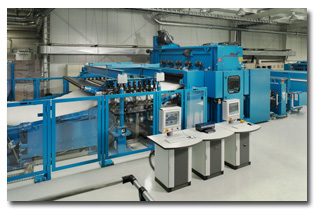
nwttDilo

Dilo’s large and well-equipped application technology facility underlies the quality of its
customer relations.


Dynamic Chinese Market


TW
:
How satisfied were you with the outcome of ITMA Asia 2010?

Dilo: ITMA Asia in Shanghai is very well-established and appreciated as an
important event for Asia. Dilo can also support very well its project-related work by participation
in this exhibition. In this respect, we are very satisfied with the results of the ITMA Asia 2010.


TW
:
Can you protect your products in Asia?

Dilo: There is a main emphasis within DiloGroup in the field of research and
development works, which frequently lead in inventions and are accompanied by patent applications
in all important markets. We have therefore shifted to holding Chinese patent applications too,
because we think that by now, a well-operating patent culture is established that is working
according to the European system.


TW
:
How do you judge the fact that in two years, another ITMA Asia will take place?

Dilo: The Chinese market is characterized by high dynamics. Therefore, it can make
sense to arrange an exhibition of this kind in a shorter rotation — at least in the near future. In
this context, it must be recognized that ITMA Asia at present is still holding to a different
direction compared to ITMA in Europe. ITMA Asia is seen by many — and also by DiloGroup — to
support sales efforts directly and concretely as a so-called operational fair. In this respect,
there is hardly any significant representation of some of the latest developments of Western
manufacturers in the area of nonwovens machinery. Exceptions may confirm the rule. On the other
hand, the European ITMA, if one takes a look at its main targets, wants to offer exactly this
platform for innovations. Of course, there are overlaps.


TW
:
Do you find it acceptable that with the current rhythm since 2010 and ITMA Europe in 2011, an
ITMA will take place three years in a row?


Dilo: Well, one has to take into consideration that because of the geographical
distance, up to now, not many Chinese visitors but also relatively few Chinese exhibitors are
taking part in the European ITMA. Therefore — at least at present — one can imagine that it makes
sense to maintain the current frequency of both events. However, for the future, the target should
be that there will be an ITMA either in Asia or Europe every two years.


The Future


TW
:
What do you expect for the year 2011?

Dilo: Currently, the high amount of incoming orders continues for the first six
months of 2011. However, the good order backlogs will partly be completed only next year, so there
are good reasons for continued optimism for the year 2011.

As already mentioned, needlepunch bonding has a bright future thanks to our mature
technology in the areas of fiber preparation, web formation and bonding, because virtually every
fiber type — natural, man-made, mineral and even metal fibers — are processable. This gives the
positive result that most different products and applications already exist for nonwovens; and it
is fueled by a continuous development for future products. This trend continues and is supported by
the numerous new developments in the fiber industry. This includes, for example, high-temperature
fibers for filtration and high-tenacity fibers for structured parts such as moldings.

The application of natural fibers for car manufacturing still has a promising future, too.

In general, machinery and production lines have to be constantly improved with the aim that
the higher production goes along with quality improvements in the final textile product and a rise
of the availability. These are the classics for research and development. It must be highlighted
that a particular focus has to be on the easy maintenance or, in particular, the cleaning of the
machines, to minimize downtime.

The major cost factor in the textile business is fiber consumption. DiloGroup undertakes
great efforts to achieve further evenness of the fiber mass flow and a reduction of variability in
the end-product to achieve and allow further fiber savings. Alongside, there are also strong
development efforts to better fulfill ecological criteria in general, to further reduce energy
consumption, and to either reduce or reprocess waste. In certain markets, reduced water consumption
and wastewater treatment are also important objectives.


Important ITMA 2011


TW
:
What do you expect from ITMA 2011 in Barcelona?

Dilo: Well, ITMA 2011 will be an indicator in a certain way of how the European
ITMA can further be developed and optimized in the future. By all means, the consequences of the
economic weakness of 2009 will still be apparent. One nevertheless expects that a strong
participation by visitors, particularly from the Mediterranean region as well as from South and
Central America, will be a strong signal for the location of textile production sites in the West.
This production may relate to some special applications and niche markets — among others, in the
sector of technical applications. The advantages of manufacturing close to the consumer markets
have a special impact on short-dated fashion trends and can therefore serve as one of the more
important reasons for a revitalization and increased flexibility in the Western textile economy.

For nonwovens, there is no such strong trend toward a shift to Asian production sites.
Therefore, ITMA in Europe remains attractive certainly for new machinery developments for the
production of technical textiles and nonwovens in Europe.

November/December 2010

ATMC, NSSC Sign Textile Manufacturing Agreement

The University of Massachusetts — Dartmouth (UMass Dartmouth) and the U.S. Army Natick Soldier
Systems Center (NSSC), Natick, Mass., have finalized a research and development agreement to create
specialized camouflage material for U.S. soldiers.

Scientists from NSSC and UMass Dartmouth’s Advanced Technology and Manufacturing Center
(ATMC) will collaborate to develop digital high-speed textile printing processes and technology
that will allow companies to create customized textiles on demand for military clients requiring
specialized camouflage clothing and equipment that minimizes heat transfer and is invisible to
infrared sensors.

The agreement was announced following a roundtable discussion on Massachusetts’
competitiveness in the global textile industry hosted by Secretary of Housing and Economic
Development Greg Bialecki, who stated, “This partnership is designed to support innovation and
collaboration in the textile manufacturing industry here in Massachusetts as the Commonwealth
continues to lead the nation out of the recession.” Approximately eight textile printing companies
are currently operating in the state.

“We have many opportunities to collaborate to enhance the competitiveness of the
Massachusetts textile and advanced materials industry,” said Louis Petrovic, director, ATMC. “From
opening some of the earliest mills in the nation to developing some of today’s most advanced
capabilities, Massachusetts has been a historic leader in materials engineering, and it will be
partnerships like this that keep our industries well-positioned in the rapidly evolving global
economy.”

“We believe there is a real opportunity to grow a 21st century technology textile industry
in Massachusetts through digital technology,” said Richard Himmelwright, CEO of Three Rivers,
Mass.-based Cold Spring Technology, which is working with the university, state, and Natick on the
project. “Digital technology has revolutionized music, photography, publishing and many other
sectors of our economy. Now, we have an opportunity to revolutionize textiles in Massachusetts and
the United States. This partnership is a great start.”

November 16, 2010

The Rupp Report: Cotton Is Still The Focus

The Rupp Report is the outcome of all kinds of information, trends, gossip and even the Bush
Telegraph. Every time, dear reader, when you have the latest Rupp Report on your screen, the next
one is already in the pipeline, at least in the writer’s head. But sometimes the news is even
outrun by events. This is happening at the moment with cotton, the premium natural fiber of the
world.

After being on the road for the last two weeks in Western Europe, the intention was to inform
you in this week’s report about the upswing of the textile industry in general and textile
machinery in particular. All companies visited report only one “problem,” if any: supply. Owing to
the well-known problems in the last 18 to 24 months, most manufacturers reduced their output and so
did their suppliers. However, as mentioned before, cotton is still the talk of the town, and there
is a lot of new information almost every day. Therefore, the Rupp Report will report the good
company news from next week on.

Unstoppable Prices

Among others, an ever-important source of cotton information is the Bremen Cotton Exchange,
which reports that the “upsurge of the price indices has appeared to be unstoppable for months.”
One has to know that the Bremen CIF Index, which was about 80 cents per pound at the beginning of
2010, was fixed at 168.50 cents per pound on Nov. 5, 2010. Those “limit ups” — having been
registered regularly at the New York Futures Market for quite some time — as well as the movements
of the two price indices — Cotlook A and Bremen CIF — cannot be justified by fundamental data
anymore. During the first week of November, the Cotlook A Index increased between 150 and 540
points; the price formation was shaped by a “dramatic upswing.” Looking back, it becomes obvious
that for several decades, cotton prices have tended to remain on a very low level or to drop.
However, it took 30 years — until June 2010 — for them to catch up with the price level of 1980.

Many Reasons

The fundamental data that caused prices to increase continually for several months have been
dominated by the lack of available raw material, as the Rupp Report has reported over several
months. Causes include the flood catastrophe in Pakistan, which ranks fourth among the global
cotton producers; crop expectations of the cotton giant China revised downwards; as well as export
restrictions in India. Furthermore, global stocks were reduced by 25 percent to 8.9 million metric
tons during the 2009-10 season. Such a low level has not prevailed during the last seven seasons.
On the other hand, the demand for cotton has grown by 5 percent.

According to the Bremen Cotton Exchange, there are three major leading indices for cotton
prices:

  1. The Cotlook A Index Far East, published daily by Cotlook Ltd. This index is a price average of
    varieties traded in the Far East.
  2. The Bremen Cotton Exchange’s Bremen CIF Index, also published daily, and the only index based
    on European offers.
  3. The quotes of the IntercontinentalExchange (ICE) of New York. These quotes do not reflect the
    physical cotton business, but, rather, futures trading, and they can lead possibly to quite
    significant volatility.

ITMF Letter

On November 10, the International Textile Manufacturers Federation (ITMF) wrote a letter to
India’s Minister of Textiles Thiru D. Maran, to express the concern of the global textile industry
about soaring cotton prices and its negative impact on the international cotton textile industry.
New ITMF President Bashir H. Ali Mohammad explained in this letter the reasons and the outcome of
soaring cotton prices.

However, the problem is not only market demand, but also governmental actions. ITMF writes:
“Government interventions that are undermining the sanctity of contract are distorting the
international cotton and textile markets and are therefore affecting negatively large parts of the
global cotton and textile industry.” ITMF therefore “urges the Indian government to honor the
sanctity of contract and to refrain from unpredictable and unlawful interventions in the
international cotton markets by restricting cotton exports from India that have already been
contracted.”

Volatility

Many professionals at ITMF’s recent conference in São Paulo, Brazil, mentioned the fact that
it’s not the price as such, but the volatility of the markets that makes the markets unpredictable
and shaky. The extreme upward price trend that has not been compatible with the fundamental data is
the dominating factor. Many cotton traders mentioned in São Paulo that the fulfillment of contracts
might be a risk and could end up in big losses. On the other side, there is fear of contract
infringements.

However, experts at the Bremen Cotton Exchange say product perspectives for the upcoming
season are positive: a significant rise is expected as cotton production has become more attractive
for numerous countries thanks to the price situation. Yet, the current supply situation is
extremely tight. Again, time will tell, and the Rupp Report will keep you informed about the latest
trends.

November 16, 2010

American Truetzschler’s Scholler To Retire After 21 Years As CEO

Kurt Scholler, CEO of Charlotte-based American Truetzschler Inc., will retire at the end of this
year after 21 years of service to the U.S. subsidiary of Germany-based spinning and nonwovens
machinery manufacturer Trützschler GmbH & Co. KG.

Scholler, who earned a masters degree in business administration from the University of
Cologne, Germany, had been associated first with the Germany-based Bayer Group, which sent him to
the United States in 1970 to work for one of its subsidiaries in the areas of finance, accounting
and administration. Around 1981, he left Bayer to join Villeroy & Boch, where he had sales and
marketing responsibilities.

Scholler joined American Truetzschler in 1989, replacing Otto Beck, who had led the company
since it was founded in 1969. The two men worked together at the company for several years prior to
Beck’s retirement in 1994.

“Originally, American Truetzschler was a three-man outfit that sold spinning preparation
equipment from bale opening through carding. Then we widened our product palette, adding draw
frames and getting into the nonwovens area,” Scholler said, referring to Trützschler GmbH’s
acqusition of nonwoven machinery manufacturers Erko and Fleissner in the mid-2000s. “We have been
trying to get quite a bit involved in the nonwovens industry because it’s one industry that hasn’t
been moved totally to China,” he added. The company’s focus today is not only on the manufacture of
machinery and equipment, but also on services it can provide to the industries it serves.

Despite the difficulties the U.S. textile industry has faced in recent years, American
Truetzschler has remained successful and now has 141 associates in two locations. “We’ve had some
difficult times to overcome. The last 10 years were not really a cakewalk, but it looks like
there’s some light at the end of the tunnel,” Scholler said.

Earlier this year, Trützschler acquired the U.S. business of Greer, S.C.-based textile
equipment supplier John D. Hollingsworth on Wheels Inc.. The company has expanded that operation,
which makes wire products, as well as its Charlotte operation, where it is expanding a production
building to provide additional card wire manufacturing capacity.

In addition to his responsibilities at American Truetzschler, Scholler has served in various
capacities with industry trade associations, including as chairman of the American Textile
Machinery Association from 2001 to 2003. Upon his retirement, he will continue his involvement with
American Truetzschler as a member of the Board of Directors and also will continue to be involved
with various industry associations.

Scholler will be succeeded in his leadership role at the company by Stefan Engel, vice
president finance and administration; and Detlef Jaekel, vice president sales, production and
service.

Schoeller

Left to right: Detlef Jaekel, Kurt Scholler and Stefan Engel


November 16, 2010

Invista Announces Energy Efficiency And Emissions Improvements, Debuts LCI Calculator

Wichita, Kan.-based integrated fibers and polymers manufacturer Invista’s Performance Surfaces
& Materials (PS&M) business reports it has significantly improved its energy efficiency and
emissions reductions at its North American plants over the past three years.

Since 2007, Invista has achieved a 13-percent reduction in total fuel energy intensity by
focusing on waste elimination in site-generated utilities such as steam, and upgrading utility
systems to eliminate heat losses; a 21-percent reduction in total fuel carbon dioxide (CO
2) intensity by replacing outdated coal boilers with state-of-the-art natural gas
boilers, and improving operation strategies for boilers a certain locations; and a 6-percent
reduction in total CO
2 emissions intensity by redirecting bulk continuous filament production to more
energy-efficient locations.

“We have dedicated resources at all of our North American plant sites to achieve energy
improvements, and we’re proud of the progress that they and their teams have been making,” said
Derek Young, global sustainability director, Invista PS&M. “Collectively, we are committed to
producing products responsibly and efficiently, conserving resources, eliminating waste, and
designing long-lasting products that give consideration to sustainable attributes such as recycled
content, recyclability and renewable content.”

Invista also has launched a new operations goal of achieving a 20-percent reduction in energy
intensity by 2020. The program will begin in 2011.

In other company news, Invista has debuted the Life Cycle Impact (LCI) Calculator, an online
tool that shows the potential energy and greenhouse gas emissions savings that can be achieved by
choosing carpet made with Invista’s Antron® fiber. To obtain calculations, the user plugs in the
square yards of carpet installed, and selects either the energy savings or emissions savings
button. The tool then calculates total potential savings, based on the projected first life of the
carpet, and equates it to real-world examples of energy consumption.

“Architects, designers and end-users have been impressed with our performance data that shows
that carpets made with Antron fiber can last up to 75 percent longer than the majority of
competitive carpets, which can result in up to 38 percent lower energy consumption and 42 percent
lower greenhouse gas emissions,” said Diane O’Sullivan, global marketing director, commercial
interiors, Invista. “We created the Life Cycle Impact Calculator so they could easily translate the
potential energy and greenhouse gas savings into tangible examples that helps them, as well as
other decision makers in the process, to understand how carpet specification and purchase can
affect the environment.”


November 16, 2010

North American Alpaca Industry Collaborates To Launch Build A Tent Initiative

November 11, 2010 — The North American alpaca industry is meeting to discuss an industry-wide
initiative to support the increased growth of a domestic alpaca fiber market.  Over the next
18 months, these individuals will coordinate the start up this initiative. 

The Alpaca Owners and Breeders Association (AOBA) is hosting the initial meeting on November
19, 2010 from 8:00 a.m. until 4:00 p.m. at their headquarters in Nashville, Tenn.  More than
30 people are scheduled to attend and more than a dozen more will join via a webinar.

“The alpaca industry is a diverse industry,” said Claudia Raessler, who serves on the AOBA
Board of Directors.  “There needs to be an industry collaboration to move a business model
forward and through which industry participants can come together to create a viable market for
domestic fiber.”

One possibility is for the new organization to take advantage of a legal entity designed as a
low-profit, limited liability corporation (L3C). An L3C, sometimes called a for-profit with a soul,
is a flexible investment vehicle that promotes collaborative projects between non-profit and
for-profit businesses. This organizational structure also encourages potential investment
opportunities for resources such as private foundations that had not been available previously.

The organization, designed to leverage existing industry expertise, will focus on the
development and promotion of projects that can be developed through a unified, cohesive plan. 
This will benefit individuals and organizations in the business and ultimately the industry as a
whole.

“In addition to the commercial fiber industry, there is a thriving cottage industry,” said
Raessler. “This initiative will also increase their access to marketplace.”

Anybody can participate in the initiative as a shareholder, from individual producers to
large associations. The levels of investment will determine how much return the investor may
receive on his investment.  The level of investment does not, however, dictate governance
control. Representatives of all investors will “have a seat at the table,” regardless of how much
they invest or industry size.

November 19th’s meeting will serve as an open discussion forum during which an understanding
for possible business models will be discussed and the industry collaboration will be established.

Posted November 16, 2010

Source: Alpaca Owners & Breeders Association

Teijin To Establish HP-PE Plant In The Netherlands

Japan-based Teijin Ltd. has announced it will begin doing business in the high-performance
polyethylene (HP-PE) market. The company will set up a production facility in the Netherlands and
expects to begin commercial production in the second half of 2011, with a goal of having a 15- to
20-percent global market share by 2015.

HP-PE materials, including fibers and tapes, are produced with ultra-high-molecular-weight
polyethylene polymers. The materials exhibit very good impact, cut, wear and chemical resistance
and are used to make reinforced plastics, protective materials, ropes, nets and medical materials,
among other applications.

The Netherlands-based Teijin Aramid B.V. and Japan-based Teijin Techno Products Ltd. —
subsidiaries of Teijin’s Aramid Fibers Business Group — have been developing HP-PE manufacturing
processes and products and are currently producing HP-PE in limited amounts in their pilot plants.
Teijin decided to proceed with commercial production of HP-PE after the two companies successfully
developed viable mass-production technologies and new production processes, and established the
required mass-produced product quality.

In addition to HP-PE, Teijin’s ultra-high-performance materials portfolio includes Twaron®
para-aramid, Technora® para-aramid-copolymer, Teijinconex® meta-aramid, Tenax® carbon fiber and
hybrid products that combine these materials.

November 16, 2010

Precision Textiles Launches SlumberShield™ Mattress Protectors & Encasements Featuring The Industry’s First 360° SecureZZZip™ Zipper System, BedBugBanisher™ Zipper Lock

Totowa, N.J —  November 15, 2010 — Precision Textiles, a division of Precision Custom
Coatings, a global leader in custom coatings and nonwovens, has launched SlumberShield™ Mattress
Protectors and Encasements designed to provide the ultimate protection against bed bugs, dust
mites, allergens, mold and moisture for mattresses and box springs of all sizes. All SlumberShield™
Mattress Encasements and Protectors are finished with Precision Textiles’ state-of-the-art
Breathe-a-Barrier™, the Company’s proprietary breathable waterproof laminate providing unparalleled
comfort, stretch and protection. SlumberShield™ Mattress Encasements feature a patent pending
SecureZZZip™ around the entire perimeter of the encasement, enabling hassle-free removal and care
as well as impermeability thanks to its BedBugBanisher™ Zipper Lock. Precision Textiles is ISO
9001:2008 Certified and the SlumberShield™ Mattress Protectors and Encasements will be sold at
selected furniture and bedding retailers across the U.S. in addition to online.

“We have long provided state-of-the-art flame barriers, laminates and nonwovens on a global
scale for the bedding industry, and our launch of the SlumberShield™ line will give users the
security they need in the protection of their mattresses and box springs,” said Shaile Dusaj,
Director of Industrial Sales and Marketing, Precision Textiles. “With the bed bug endemic and
consumers, the hospitality industry and others scrambling to safeguard their environments,
Precision Textiles provides a smart, all-encompassing solution that is as effective in keeping bed
bugs at bay as it is providing a comfortable night’s sleep thanks to our noiseless,
contour-hugging, smooth designs. We have engineered our SlumberShield™ Mattress Encasement line to
be breathable, impermeable to bed bugs, dust mites, mold, bacteria, and liquids while making it
non-allergenic, easy to care for, affordable and unparalleled in terms of comfort and
quality.”  

The SlumberShield™ Mattress Encasement is sold individually and in kits with multiple
components such as mattress, box spring and pillow encasements bundled.  The SlumberShield™
Mattress Encasement line features a four sided zipper encasement known as SecureZZZip™, the
industry’s first encasement providing 360° zipper access around the entire perimeter of the
mattress and box spring, enabling users to simply unzip the product while leaving the bottom
surface in place. SecureZZZip™ also features SlumberShield’s proprietary BedBugBanisher™ zipper
lock. “Our state-of-the-art 360° SecureZZZip™ allows for the easiest, hassle-free installation and
removal of our mattress encasements,” said Dusaj. “Complete with our BedBugBanisher™ zipper lock,
it has been independently tested for bite through and escape.”  

SlumberShield™ Mattress Encasements come in a Luxury Terry Top or Premium Smooth Top. The
line is available from crib through hotel king sizes in both standard and deep mattress heights (7″
– 14″ mattresses and 14″ – 20″ mattresses respectively). Custom sizes may be ordered by contacting
the Company.    

In addition to the SlumberShield™ Mattress Encasement line, Precision Textiles has also
introduced a product line called SlumberShield™ Mattress Protectors, which functions as a
protective barrier for mattresses and covers the tops and sides of mattresses. The completely
washable line uses Breathe-a-Barrier™, the Company’s proprietary breathable waterproof laminate
providing unparalleled comfort, stretch and protection. SlumberShield™ Mattress Protectors are
non-allergenic and impermeable to dust mites, mold and bacteria. Available in Luxury Terry and
Premium Smooth Tops, the line is available in crib though hotel king sizes.  The Luxury Terry
top comes in one depth (for 7-18″) while the Premium Smooth Top is available in both standard and
deep mattress heights (7″-14″ mattresses and 14″-20″ mattresses respectively). Custom sizes may be
ordered by contacting the company.

Posted on November 16, 2010

Source: Precision Textiles

Heimtextil 2011 Under The Banner Of Sustainability — A Host Of Events And Shows

November 15, 2010 — An immaterial UNESCO World Cultural Heritage is the subject of a special show
in the foyer between Halls 5.1 and 6.1. Over an area of approximately 100 square metres, the
German-african company,  Bark Cloth, is showing textiles and composite materials manufactured
in an economical, ecological, socially sustainable way from tree bark. The German Commission for
UNESCO will assume patronage of the presentation. Dr. Verena Metze-Mangold, Vize-President of the
German Commission for UNESCO, will inaugurate the special show on 12th January 2011.


Bark cloth is an ancient material with a history dating back thousands of years. The bark of
the East African fig tree is harvested to produce it. The bark grows back extremely quickly and can
be used once a year without felling the tree. The cloth made from the bark forms the basis for a
broad palette of firm and flexible semi-finished products, which are produced in a low-energy,
partly CO2-free way. These semi-finished, Barktex-brand products are suitable for a host of
different industrial and craft applications, for example wall coverings and sun blinds, fair and
interior finishes, as well as shoes, clothing and other design-oriented products.

Seamstresses will be demonstrating how the bark cloth is made

 Bark Cloth works with organic farmers in Uganda and is considered to be a pioneer in
bark cloth development and production. In 2005, UNESCO named the artisan production process a
“Magnum opus of oral and immaterial World Cultural Heritage. The admission to the “List of
immaterial cultural heritage” established by UNESCO’s agreement to protect the immaterial cultural
heritage took place in November 2008. Launched in 1999, the former development aid project now
provides hundreds of small farming families with a secure income. 


Designers value the unique texture, tactility and expressive character of Barktex. It looks
like leather, is soft but robust. Each length of traditional, laboriously handcrafted cloth is
unique. At Heimtextil, Ugandan seamstresses will be demonstrating how the bark cloth is made. The
show’s sponsors include exhibitors Arte and Ann Idstein.


A lecture series, special shows and the Green Directory 

In the “Let’s talk about it!” forum in Hall 8, a lecture series will be exploring the theme
of sustainability in depth. Speakers from companies like Tchibo and IKEA will give an insight into
business strategies and quality control in their major corporations. Moreover, an event entitled
“Making organic quality show” will be providing an overview of eco-textile labels. A special show
featuring sustainably manufactured textiles will be staged in Hall 11.1., too.


The first edition of a Green Directory is due to appear at Heimtextil. The Directory lists
exhibitors with product ranges of outstandingly high ecological quality or manufactured in a
sustainable way. The palette of these textiles includes products from almost every house and home
textiles segment. “The aim of this publication is to provide valuable orientation for the
industry”, explains Olaf Schmidt, Vice President Textile Fairs, Messe Frankfurt. “At other Messe
Frankfurt textile events, this type of identification is already well-established.

The Guide allows buyers to find exhibitors with sustainable manufacturing processes and their
products more quickly and easily.”


Messe Frankfurt study – excellent prospects for eco-textiles

This year, Messe Frankfurt commissioned a study of sustainably manufactured home textiles.
Based on this study, the German market for sustainable bed and bath textiles is worth around € 40
to € 80 million and the European and North American markets around € 400 million. According to the
study, the bed and bath segments in this sector are expected to grow at a rate of around ten
percent per annum. Based on a somewhat conservative estimate, this would result in a potential
German market worth € 50 to 130 million by 2015, with Europe, led by Germany, France and the
Benelux, seen as the driving force in the market for sustainable home textiles. 


Posted on November 16, 2010

Source: Heimtextil/Messe Frankfurt

Lighter PP Auto Parts Possible With New Synthetic Mineral Fibers From Milliken Hyperform® HPR Grades Increase Stiffness, Temperature Resistance

SPARTANBURG, S.C. — November 15, 2010 — The new Hyperform® HPR family of reinforcing additives
from Milliken provides processors with a new option for making high performance polypropylene parts
with low weight.

Hyperform® HPR-803 is intended primarily for the automotive sector. Milliken plans future
innovations aimed at applications in automotive, appliances and elsewhere.

“We envisage HPR-803 being used mainly in automotive applications, but are not limiting our
project scope,” says Adam Watson, in charge of marketing for the Hyperform HPR range. “It enables
the production of polypropylene compounds that have mechanical performance similar to or better
than mineral filled compounds, but at lower weight.”

HPR-803 fibers have a high aspect ratio of around 40:1. “We expect PP compounds containing
HPR-803 to replace talc-filled types and possibly other non-PP-based materials too,” says Watson.
“Tests have also demonstrated that HPR-803 works very well in combination with talc, giving
processors and end users the opportunity to convert to the new technology in a step-by-step
fashion.”

Hyperform HPR-803 is added at levels typically one third of those required for talc. This
means parts will be lighter, by up to 15%, and cars may use less fuel and have lower carbon dioxide
emissions.

Several projects currently underway demonstrate the value of Hyperform HPR-803 in producing
lightweight parts with high stiffness. Watson cites development trials with an injection molded
bumper support. “Milliken demonstrated that a compound containing nine percent of HPR-803 could
deliver 10% weight savings over a 20% talc-filled compound, and still maintain dimensional,
stiffness and impact requirements,” he says.

HPR-803 also enabled the parts to be produced with a shorter cooling time and hence lower
overall cycle time. Furthermore, test parts demonstrated excellent performance under thermal
stability performance testing.

The value proposition does not stop at energy savings – aesthetics are also improved with
Hyperform HPR-803. The natural color of the additive is whiter than talc, so processors can cut
down on pigment usage to get the color they want. Parts containing the new reinforcing additive
exhibit a noticeably better surface finish and also higher weather resistance than glass fiber
reinforced PP parts with similar mechanical properties.

For compounders, Hyperform HPR-803 is easier to handle than chopped glass and therefore
presents less of a health and safety issue. Compounds containing HPR-803 exhibit good flow
characteristics, and can be handled in the same way as other PP compounds.

Recycled material exhibits little loss of mechanical properties, unlike glass filled
compounds. Wear on equipment is reduced at all stages of processing. Early data indicate that there
may be energy savings realized from compounding HPR-803, compared with talc and glass fiber
alternatives.

Hyperform HPR-803 is available directly from Milliken as a free-flowing powder, and can be
incorporated during compounding via a side-feeder. Milliken is working with compounders around the
world to develop compounds and masterbatches designed for various applications.

Posted on November 16, 2010

Source: Milliken Chemical

Sponsors



