Graniteville Specialty Fabrics Acquires Coating Machines To Advance Technical And Custom-Coated Fabric Offerings

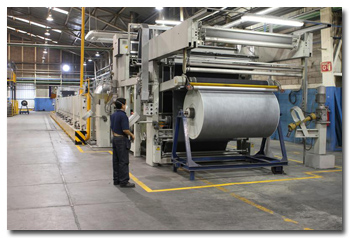
GREENVILLE — May 22, 2012 — Graniteville Specialty Fabrics, a recognized leader in the production
of specialty coatings and coated fabrics, announced today the purchase of two coating machines from
Mascoe Systems Corporation, the largest manufacturer of coating machines in the US.

As many as six different coating methods are built into the coating machines.  The
coaters are built with high-tolerance machining practices and digital set point technology which
allows for absolute repeatability of required coating specifications.

“We selected machine features that will allow Graniteville to continue our high-quality
coating development, yet enable us to explore new coating practices and specialized technical
solutions,” said Jim Egan, president of Graniteville Specialty Fabrics.  He continued,
“Although we have been perfecting coated fabrics for more than 60 years, we remain committed to
developing the most innovative, custom, fabric offerings for our diverse client base. This new
machinery will assist us in continuing those efforts and allow us to further expand our custom
coatings’ capabilities,” said Egan.


Posted on May 28, 2012

Source: Graniteville Specialty Fabrics

Success Due To Customer Focus And Niches

CHEMNITZ, Germany — May 29, 2012 — Future materials in the shape of technical textiles/composites
for the mobility sector and lightweight engineering were the major focus in Chemnitz on 8 – 10 May
2012. More than 1,300 trade visitors attended this year’s dual mtex / LiMA trade fair and
symposium, a visionary combination of trade fairs directed at achieving synergy effects. Chemnitz
Trade Fair Centre invited people to another premiere, the 1st “mtex” informal discussions at the
historic Wasserschloss Klaffenbach on the evening of the second day of the fair. More than 50
interested people enjoyed an entertaining discussion session on the subject of “The future in sight
– success strategies under scrutiny”; the evening was chaired by Kirsten Schönharting.

During the discussions, Dr. Stefan Topp, Dr. Peter Hartwig, Marc W. Lorch, Dr. Stefan
Engelhardt and Karlheinz Siegert unanimously supported the idea that success at a company is always
based on a clear corporate strategy, which needs to be seasoned with innovations and supplier and
customer relations that are characterised by trust. Even if the growth markets are clearly not in
Germany and Europe at the moment, there are some interesting niches in the domestic market. One
major problem for Dr. Hartwig is the fact “that no more innovations are taking place in the fibre
field in Europe any more and very many developments are now taking place in Asia”. But Karlheinz
Siegert said he believed there was enough room for interesting niches in Europe in the yarn sector.
“The need for more individuality and the issue of sustainability make room for this.” Dr. Engelhard
introduced another interesting aspect into the discussions. In his view, innovation does not just
relate to new ideas for products, but also processes. He quoted the specific example of the launch
of the Columbus strategy concept at Hugo Boss in 2004 and this is very successful today; it
involves harmonising and adapting corporate processes to the changing general conditions. “We no
longer think of sectors either, but of clusters, i.e. networks consisting of manufacturers,
suppliers, research institutes and other institutions near each other in geographical terms and
along the value added chain.” According to Dr. Hartwig, a “presence in the world market is the top
priority” for the non-woven fabrics sector. The main markets for Ziegler’s non-woven fabrics are
Asia, Turkey and Hungary, he added. But many medium-sized family companies lack the necessary
capital to be able to assert themselves in the face of global competition. Marc W. Lorch took a
bold step almost ten years ago in order to make room for this. He sold the family business and
provided support as it was merged with two other firms to become what is now Gruschwitz AG. He
still believes that he made the right decision, for “it is almost impossible to face up to global
competition as a small medium-sized enterprise without any financial support. Relying on the banks
is very dangerous, because loans are only granted if they can be serviced.”


Anyone who thinks that the production of technical textiles is a panacea for every ill is
ill-advised in the view of Dr. Topp. “In the end, proximity to a customer, the niche and the
business model are the crucial factors for any corporate success story”. It also makes sense for a
company to set up a second mainstay alongside its core business. Marc W. Lorch believes that there
is plenty of potential to be tapped, particularly in the Swabian Alb region in south-west Germany.
“There are still many textile companies there, which have modern machinery, a high degree of
expertise and well-trained specialists.” As technical textiles continue to be a growth market
against all the odds, it makes sense to orient companies towards them, he added. But it is
necessary to have the relevant raw materials and suppliers nearby in order to be able to provide
the relevant quality for functions and the availability demanded by the market. “Made in Germany
still has great significance for me, but this needs to be both challenged and developed,” said Marc
Lorch. “Like Dr. Engelhardt, I am just as convinced that networks involving several companies can
play a role in preparing and successfully introducing strategies in the field of technical
textiles. But this requires long-term thinking and acting and integrating the customers and
partners along the value-added chain.”

An internationalisation strategy will continue to be an important element and contribute to a
company’s success – this particularly applies to the automobile industry, where the growth markets
are now in Asia and no longer in Europe. Because the OEMs and systems integrators in this field are
moving their operations abroad, companies operating in the technical textiles sector will
increasingly have to internationalise too. So it is important for German manufacturers that
politicians improve the general conditions for successful operations abroad. Innovative answers
also need to be found to the growing problem of a shortage of specialist workers. The evening could
be summed up as follows: the textile industry needs to reposition itself in a better way in
people’s minds and be better portrayed at the textile job colleges and the textile sector. We all
have a responsibility to act as ambassadors for the textile industry.

Posted on May 29, 2012

Source: Messe Chemnitz

NCTO Elects Officers During Annual Meeting Held In Washington, DC

WASHINGTON — May 23, 2012 — William L. Jasper, chairman of the Board and CEO of Unifi, Inc. located
in Greensboro, NC was elected to serve a second term as chairman during NCTO’s ninth annual meeting
held at the Hyatt Regency on Capitol Hill in Washington, DC last week.

Bill Jasper was named Chairman of Unifi’s Board in February 2011 and has served as Unifi’s
CEO and member of Unifi’s Board of Directors and the Company’s Executive Committee since September
2007. Prior to his role as chairman, he served as president and CEO, vice president of sales and
general manager of the polyester segment. He joined the company with the purchase of Kinston
polyester POY assets from INVISTA in September 2004. Prior to joining Unifi, Mr. Jasper was the
director of INVISTA’s DACRON® polyester filament business. Before working at INVISTA, he held
various management positions in operations, technology, sales and business for DuPont since 1980.

James C. Self III, president and COO of Greenwood Mills located in Greenwood, SC, was elected
to a second term of vice chairman of NCTO.

Elected to the NCTO Board of Directors during the various Council meetings were the
following:

Fabric and Home Furnishings Council – Norman Chapman of Inman Mills; Jerry Cook of
Hanesbrands Inc.; Allen Gant of Glen Raven, Inc.; Carlisle Hamrick of Hamrick Mills; David Hastings
of Mount Vernon Mills; and Smyth McKissick of Alice Manufacturing Co.

Fiber Council – Donald Burich of INVISTA, John Freeman of NanYa Plastics, and
James Netzel of DAK Americas

Yarn Council – Bill Carstarphen of Pharr Yarns, LLC; James Chesnutt of National
Spinning Company; Trey Hodges of Swift Spinning; Peter Iliopoulos of Gildan; Gilbert Patrick of
Patrick Yarn Mills, Inc.; and Robin Perkins of Frontier Spinning Mills

Industry Support Council – Joni Davis of Duke Energy, Ludovic Petrois of Staubli,
and Bob Sage of Oerlikon Textile


After being elected chairman, Jasper’s first order of business was to announce appointments
to the following offices of NCTO: president and CEO – Cass Johnson, NCTO; secretary – Mike Hubbard,
NCTO; and treasurer – David Hastings, Mount Vernon Mills. He also announced chairmen for the
following NCTO program committees: Cotton – Andy Warlick, Parkdale; Government Procurement – Steve
Hundgen of Glen Raven Technical Fabrics; Regulatory & Standards – Jim Booterbaugh, National
Spinning Company; and Trade & Economic Policy – Allen Gant, Glen Raven, Inc.

The National Council of Textile Organizations, headquartered in Washington, DC with an office
in Gastonia, NC, is the national trade association representing the entire spectrum of the textile
sector. Domestically focused to ensure a prosperous future for the U.S. textile sector and globally
positioned to work effectively with our international allies, NCTO is on the front lines meeting
the challenges of the 21st Century for the industry.

KEY FACTS ABOUT THE U.S. TEXTILE INDUSTRY

  • The U.S. textile shipments totaled $53.3 billion in 2011.
  • The U.S. textile industry is one of the largest manufacturing employers in the United States,
    the overall textile sector – from textile fibers to apparel – employed over 390,000 workers in
    2011.
  • Textile companies employed 238,000 workers.
  • U.S. government statistics estimate that one textile job in this country supports three other
    jobs.
  • The U.S. textile industry is the third largest exporter of textile products in the world.
    Exports in 2010 grew 13.4 percent to more than $17 billion in 2011. Total textile and apparel
    exports were a record $22.4 billion.
  • Nearly two-thirds of U.S. textile exports during 2011 went to our Western Hemisphere free trade
    partners. The U.S. textile industry exported to more than 170 countries, with 22 countries buying
    more than $100 million a year.
  • The U.S. textile industry supplies more than 8,000 different textile products per year to the
    U.S. military.
  • The U.S. is the world leader in textile research and development, with private textile
    companies and universities developing new textile materials, constructions, product capabilities,
    and functions for textiles that go far beyond basic wearing apparel.
  • The U.S. textile industry invested more than $16.5 billion in new plants and equipment from
    2001 to 2010. And recently producers have opened new fiber, yarn and recycling facilities to
    convert textile waste to new textile uses and resins.
  • The U.S. textile industry has increased productivity by 45 percent over the last 10 years,
    making textiles one of the top industries among all industrial sectors in productivity
    increases.
  • In 2011, textile workers on average earned 151% more than clothing store workers ($575 per week
    vs. $229) and received health care and pension benefits.


Posted on May 24, 2012

Source: NCTO

Invista Presents Autumn 2013 And Winter 2014 CORDURA® Denim And CORDURA® NYCO Fabric Collections At Denim By Premiere Vision

GLOUCESTER, U.K. — May 22, 2012 — INVISTA, owner of the CORDURA® brand, will present an Autumn 2013
and Winter 2014 global fabric collection at the 2012 Denim by Premiere Vision show, which takes
place May 23-24 in Paris. The collection highlights new CORDURA® Denim and CORDURA® NYCO
(nylon/cotton) fabrics from authorized CORDURA® fabric mills around the globe. Visit INVISTA stand
H75 and Artistic Milliners stand H85 to learn more.

The brand’s new offerings include super durable denim and canvas fabrics available with and
without stretch components in weights ranging from 225 -390 gsm (8.00 ounce to 13.75 ounce per
square yard), as well as a wide variety of stylish coatings, fashion forward finishes, and a
durable organic cotton based canvas offering. Based on an intimate blend of cotton and
INVISTA’sT420 Nylon 6,6 staple fiber, CORDURA® Denim and CORDURA® NYCO fabrics are specifically
designed to deliver a comfortable, highly durable fabric solution with exceptional abrasion
resistance and wear life. Target end-uses include Ready-to-Wear, Active/Outdoor, Workwear, and
Surf/Skate markets.

“Anyone who is looking for durable denim and canvas fabrics should be particularly interested
in the exciting array of fabrics being offered by Artistic Milliners, as well as the latest mills
to join our durable denim and duck fabric family: Mount Vernon, Nishat, Penfabric, and Dezhou
YuanJi at the upcoming Denim by Premier Vision show,” said Cindy McNaull, global CORDURA® brand and
marketing director. “These fabrics offer our brand’s renowned long-lasting durability while
providing a versatile range of styling options.”

The Autumn 2013 and Winter 2014 global CORDURA® Denim and CORDURA® NYCO fabric collection
includes:

• Artistic Milliners: 255 – 390 gsm (9-13.75 ounce per square yard) CORDURA® Denim fabrics,
with and without LYCRA® fiber and LYCRA® T400® fiber for added comfort and stretch and wide variety
of specialty colors and finishes (Rivera, Sirrocco, Straight Edge and Pre-Shrunk & Skewed).

• Mount Vernon: 280 – 340 gsm (10-12 ounce per square yard) CORDURA® Denim fabrics (88/12
cotton/INVISTA T420 nylon 6,6)

• Nishat: 225 – 280 gsm (8-10 ounce per square yard) CORDURA® NYCO (75/25cotton/INVISTA T420
nylon 6,6 fiber) fabrics in twill, canvas, rip stop constructions; colors include tan, brown,
black, and navy; 240 gsm (8.5 ounce per square yard) CORDURA®NYCO fabric featuring Organic Cotton;
Stretch CORDURA® NYCO fabric with 2×2 OxfordCanvas construction featuring LYCRA® fiber for enhanced
comfort; Finishes include Peachand Lafer Peach.

• Penfabric: Newest mill to join the authorized CORDURA® NYCO fabric network;CORDURA® NYCO
(75/25 cotton/INVISTA T420 nylon 6,6 fiber) fabric offerings include 325gsm in 2/2 serge, 3/1 drill
and 2/1 canvas and 380 gsm in 3/1 drill & 2/1 canvas weaves.

• Dezhou YuanJi: Newest mill to join the authorized CORDURA® Denim fabric network;offering
355 and 420 gsm (12.5 and 14.75 ounce per square yard) CORDURA® Denim fabrics in 3×1 weave denim
constructions.

Representing two of the key design themes for this year’s show: Ecology and Emerging
Technologies, CORDURA® Denim and CORDURA® NYCO fabrics offer the authentic look, comfort and feel
of traditional 100 percent cotton denim and canvas fabrics with built-in, long-lasting durability
and added value. “Extending the life and performance of denim and other CORDURA® fabric offerings
is our goal and supports our brand’s tagline of ‘Sustainability Begins With Products That Last™,”
said McNaull.

The Denim by Premiere Vision show in Paris will be held at the Halle Freyssinet, a former
railway engine repair shop in the heart of Paris and in a neighborhood known for hosting a number
of architectural projects and fashion shows. Customers are invited to meet the CORDURA® brand team,
as well as see the latest innovations in CORDURA® Denim fabric at INVISTA stand H75, or at the
Artistic Milliners stand H85.For more information on CORDURA® Denim and CORDURA® NYCO fabrics and
sourcing, please visit www.CORDURA.com.


Posted on May 24, 2012

Source: Invista

C.L.A.S.S. Sets Its Sights On Helsinki

MILANO, Italy — May 24, 2012 — According to the Chinese zodiac, 2012 is the Year of the Dragon,
bringer of harmony, strength and good fortune. It also marks a pivotal moment for C.L.A.S.S., the
global eco forum and showroom network created by Giusy Bettoni five years ago to support brands and
retailers in the pursuit of innovative and environmentally ethical products for fashion, home and
design through a wide range of textiles, yarns, processes and services.

Now in addition to the showrooms in Milan and London – both of which have a comprehensive
library of materials available for businesses, designers and buyers who genuinely care about the
future of planet Earth – a new one is about to open in Helsinki. For, in true Nordic spirit, the
capital of Finland is a place where people are particularly sensitive to all matters involving
environmental protection.

The opening, in partnership with Design +, a major Finnish design studio specializing in
fashion and also in sustainable business consultancy services and in the development of new
platforms for young designers,represents another step forward in the C.L.A.S.S. founder’s
pioneering work to promote environmentally ethical fashion in Scandinavian countries. Specifically,
it follows the Copenhagen Fashion Summit held on May 3 with the objective of bringing together
leading figures from the industry who pursue a common vision of eco‐friendly and sustainable
business. At the event, where C.L.A.S.S. played an upfront role in advocating eco‐fashion projects
for sustainable consumption, Giusy Bettoni served as textile advisor on the panel of judges that
evaluated the 15 prominent Scandinavian designers who took part in a runway fashion show
competition.

Copenhagen also had an area dedicated to the partnership signed last March between Livia
Firth, creative director of Eco‐Age.com and founder of the Green Carpet Challenge (a project all
about getting stars to grace the world’s most spectacular red carpets in nature‐friendly gowns) and
Giusy Bettoni of C.L.A.S.S. The first Green Carpet Challenge Fabric Library is a result of this
alliance.

A further initiative on the Scandinavian front – together with the opening of the third
showroom – is an installation featuring clothes made from C.L.A.S.S. fabrics at the Bio Rex Theatre
in Helsinki during the Fashion Summit due to take place on May 24. The aim of the Helsinki summit
is to give international visibility and support to the young fashion brands that have emerged
strongly in the Finnish capital in the last decade. The installation is the work of Design + in
cooperation with C.L.A.S.S. and its partners, official suppliers of the fabrics used to create the
outfits on display.

Giusy Bettoni is keeping busy in Milan too. The latest on her agenda of activities is the
important talk she is to give on social responsibility in textile innovation at the Bocconi
University on May 30, paving the way for partner Livia Firth’s speech the next day.

Posted on May 24, 2012

Source: C.L.A.S.S.

Tavex Corp. Installs Montex Tenter

Spain-based denim manufacturer Tavex Corp. recently installed a Montex 6500 tenter from
Germany-based A. Monforts Textilmaschinen GmbH & Co. KG. at its facility in Tlaxcala, Mexico,
to increase production of stretched denim. The tenter was delivered and installed by Sattex,
Monforts’ distributor in Mexico.

According to Adalberto Avendano, manager for dyeing and finishing at the Tlaxcala plant, the
Montex 6500 has features that make it particularly suitable for denim production and eliminate
several traditional processing steps. “This really is a tenter that is perfect for denim,” Avendano
said. “Monforts and Sattex installed and commissioned the machine, and trained our operators and
maintenance staff. Now the machine is practically handling itself.”

The installed Montex 6500 has eight chambers and is handling fabric weights ranging from 290
grams per square meter (g/m2) to 460 g/m2 and widths from 170 centimeters (cm) to 180 cm. Avendano
noted that Tavex decided to split production of denim types evenly between its existing tenter at
the plant, which produces standard denim, and the Monforts tenter, which produces stretched denim.
The machines together are processing at a rate of 17 million meters of denim per year, Avendano
reports.

Tavex

The Monforts 6500 tenter at Tavex Corp.’s denim manufacturing plant in Tlaxcala,
Mexico


Four years ago, Tavex acquired Mexico-based denim manufacturer Acotex and its plants in
Tlaxcala and Puebla, and now is upgrading those facilities in an effort to expand its stretch denim
business and increase sales to the U.S. market. According to Avendano, stretch denim is the largest
volume trend in the market, and Tavex’s strategy is to offer denim that is comparable to premium
European stretches but manufactured closer to the U.S. market. He reports that total denim capacity
at Tavex’s Tlaxcala and Puebla plants amounts to more than 20 million meters annually, and 90
percent of that production is sent to the United States, the world’s largest market for denim. The
company also has denim production facilities in Spain, Morocco, Brazil and Argentina.

May 22, 2012

Lectra Launches Kaledo® V3

Paris-based Lectra, an integrated technology solutions provider serving the fashion and soft goods
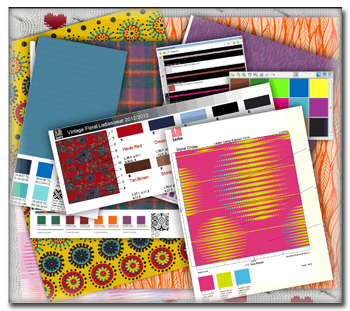
industries, has introduced an updated version of its Kaledo fashion-specific design software. The
Kaledo® V3 textile design suite for creating prints, knits and wovens allows designers the
flexibility to experiment across fabrics while balancing business objectives and production
constraints.

“Consumers are less convinced by price alone — today they crave something new and something
they can value,” said Anastasia Charbin, marketing director, Fashion, Lectra. “Demand has
intensified for original designs and high quality, which means that fashion companies now face the
double challenge of producing rapidly and meeting consumer desires for something unique. Designers
need a professional tool that allows them to turn inefficiency into design time.”

Lectra

Lectra’s Kaledo® V3 textile design software gives designers more flexibility to experiment
across fabrics.


Kaledo V3 features enhanced yarn shading options that give designers control over
individual colors in any given yarn and enables development of highly realistic yarn and fabric
simulations. The software offers a more structured method of sharing and saving information as well
as enhanced technical report creation owing to new features that update fabric specifications
automatically, thereby eliminating accuracy issues, Lectra reports.

“Design and innovation are the essential ways companies can stand out from the competition
today,” said Daniel Harari, CEO, Lectra. “The newest version of Kaledo meets the absolutely
fundamental need for fast time to market and product quality, while at the same time elevating
design to its proper place as a strategic force for brand success.”

May 22, 2012

Reyes Acquires Swisstex France

Reyes Groupe, France, has acquired SwissTex France S.a.s. — a manufacturer of twisting, assembling,
cabling, covering and winding machinery for technical and textile yarn markets. Going forward,
Reyes will operate the company under the name Verdol.

Reyes has worked with SwissTex for more than 25 years and is familiar with its products and
expertise — including brands such as Verdol, ICBT, Rieter ICBT and RITM.

May/June 2012

Jomar Softcorp Reports Interest In Mobile Apps

Jomar Softcorp International Inc., Ontario, Canada — a developer of Web-based mobile enterprise
resource planning and smart grid utility management software solutions for commercial and
industrial applications — reports increased interest in its mobile apps for technical and
industrial textile products and processes.

The apps enable mobile interaction between management and support staff and provide real-time
information including product sales margins; inventory levels across the supply chain; production
schedules; quality control test results and test history; warehouse shipping schedules;
preventative maintenance/repair schedules; and costs by plant, process and product. The software
also provides mobile field services and sales force support, enabling the user to create sample
product presentations, check inventory availability, produce quotes and confirm print orders.

May/June 2012

Stork To Distribute Klüber Lubrication’s Products

Stork Prints America Inc., Charlotte, is now a distributor of Londonderry, N.H.-based Klüber
Lubrication North America L.P.’s lubricants for the textile printing and coating and graphics
printing industries.

“Stork Prints is providing high-quality printing systems, printing screens and forms, spare
parts and services, and maintenance for both the textile printing and the graphics printing
industries,” said Edward Scheppink, managing director, Stork Prints America. “We feel that the
supply of high-quality lubricants and greases for capital goods will be of complementary value for
our customers, [who] have to deal with more efficiency and at the same time with environmental
requirements. The Kluber lubricants and greases have shown to reduce wear and need fewer changes,
and will contribute to higher machine utilization with less impact on the environment.”

May/June 2012

Sponsors