Teijin To Exhibit At Chinaplas 2019

TOKYO — May 17, 2019 — Teijin Ltd. announced today that it will participate in Chinaplas 2019, Asia’s largest exhibition for the plastics and rubber industries, which will be held at the China Import & Export Fair Complex in Guangzhou, China from May 21-24.

Teijin, marking its 20th appearance at the event, will operate a booth (No. 11.2K41) to introduce solutions for automotive parts and components that combine its advanced technologies and materials. The booth will also present Teijin’s high-performance materials for multi-material parts that contribute to weight reduction and improved performance in automobiles. In addition, seminars to introduce advanced resin-processing technologies and solutions for automotive components will be held again this year, following last year’ favorable reception.

Specific exhibits will include the following:

Polycarbonate (PC)-resin pillar-less automotive front window

The world’s first PC-resin window for use in commercial vehicles has been realized with Teijin’s proprietary hard-coating technology for superb resistance to abrasion and weather. The one-piece wrap-around PC-resin window does not incorporate standard window pillars, achieving unobstructed sight lines for safer driving and more enjoyable sightseeing as well as weight reduction.

Aqueous transparent flame retardant coating

Landex Coat Flame Retardant Clear®, the world’s first aqueous transparent flame retardant coating, developed jointly by Dainichi Giken Kogyo Co., Daimaru Kogyo Ltd. and Teijin, can be applied to a wide range of combustible materials, including timber, paper, fiber, rubber and plastic. The product is applied directly to surfaces to enhance flame retardancy while maintaining the materials’ original surface textures as a transparent coating.

Tenax® carbon-fiber-reinforced thermoplastics (CFRTP)

Teijin will showcase carbon fiber prepregs and CFRTPs made with Tenax® and thermoplastic matrix resins including Teiijn’s Panlite® polycarbonate resin, that offer many uses in growth industries such as automobiles, aerospace and electronics.

Posted May 17, 2019

Source: Teijin Group

The Next Generation Of The KARL MAYER Academy: New Premises And A New Profile For The KARL MAYER Academy In Obertshausen

OBERTSHAUSEN, Germany — May 17, 2019 — Alongside its high-tech machinery, KARL MAYER is also offering its global warp knitting customers extensive know-how and expertise to enable them to optimally use the technical possibilities offered by the machines. This company has been running its own training centre for imparting knowledge and know-how for more than 50 years. The Karl Mayer Academy now operates at locations in Germany, China and India, and is extremely successful. Every year, more than 200 students are trained at the headquarters in Obertshausen alone.

The Karl Mayer Academy moved into its modern training centre at its headquarters in April 2019, and the training courses started up in the following May — with a tried-and-tested concept but at a completely new level. “We are now offering our customers courses to qualify them for manufacturing in a digital world, thus giving them the key to success in the future as well,” said Arno Gärtner, the CEO of Karl Mayer. Furthermore, the Karl Mayer Academy, with its bright, open architecture, is a place that will provide inspiration, “Our guests will feel comfortable here and will be able to get to know each other and exchange ideas,” says Arno Gärtner. Learning will become a real experience and a guarantee of the future success of Karl Mayer’s customers.

Modern rooms, first-rate equipment, the latest technology and up-to-date knowledge

The Karl Mayer Academy welcomes its guests in Obertshausen in a hall covering an area of 755 m², which offers a bright, learning-friendly atmosphere, modern architecture and technical equipment that has taken a quantum leap forward in terms of quality. Three separate classrooms, equipped with top-of-the-range training equipment, are available for efficiently providing training in small groups.

Specially designed high-tech production machines in the HKS series are available for practical training. “We have invested extensively in the machinery. The more the users understand the possibilities offered by our sophisticated technology, the more benefit they will gain from it,” said Christine Wolters, head of the Karl Mayer Academy. The training machines all offer the latest high-tech features, especially with regard to the drive, control and patterning technology. They can also be used to demonstrate the possibilities offered by the digital production of warp-knitted textiles.

The new Karl Mayer Academy also gives an insight into the digital features of KM.ON, and these systems extend the possibilities of increasing the efficiency of the customers’ own production processes. The training machines in the Academy are networked via k.ey — an industry PC combined with the relevant software — and provide access to KM.ON’s secure cloud systems.

Top-of-the range technology for learning and testing covers the entire production process, including warp preparation. A brand-new DS OPTO is used to demonstrate the possibilities of synergistically combining sectional warping used in warp preparation for weaving and direct warping used in warp preparation for warp knitting. This universal, hybrid principle provides maximum flexibility and economic viability when processing beams for warp knitting.

The Academy also profits from being close to the Karl Mayer Development Centre. If there is a demand for market-related courses on special machines equipped with the latest technology, the models in the innovation center can be used for short-term training.

With its overall concept and equipment, the new premises of the KARL MAYER Academy will provide the know-how and expertise on both the theoretical and practical production of warp-knitted textiles for today and tomorrow. The foundations for additional E-training are also laid here.

Being creative — by exchanging ideas and testing in relation to production

The TEXTILE MAKERSPACE is located very close to the Karl Mayer Academy. The company’s own innovation platform is based on exchanging information and exploiting synergistic effects. It is available to creative pioneers in the textile and new technologies sectors, and provides space for testing, developing and lateral thinking. Its aims are to develop new applications even outside the traditional textile machinery sector, to act as the starting point for new ideas, and to produce the first visualizations of products. “Genuine, new textile applications are generated in an efficient, uniform process in our TEXTILE MAKERSPACE – from the initial thought process to the prototype. This enables product developers to arrive at innovative end-uses much more quickly,” says Michael Kieren, the main initiator of the TEXTILE MAKERSPACE. The proximity to the Karl Mayer Academy ensures that ideas are developed to suit the possibilities offered by industrial production. Fabrics with individual and extremely end-use-specific requirements in terms of yarns, patterns and characteristics can be tested on the production machines used for training, using all the company’s expertise

Michael Kieren and the MAKERSPACE community have already put some new developments in motion. Smart textiles, wearables and 3D printed garments have been the focus of various trade fairs and events for some time now.

Posted May 17, 2019

Source: KARL MAYER Textilmaschinenfabrik GmbH

ITMA 2019 Exhibitor Preview: VDMA – Herzog, Mahlo & Lindauer Dornier

FRANKFURT, Germany — May 17, 2019 — On the occasion of a VDMA press conference themed “ITMA countdown” in Frankfurt, speakers from member companies Lindauer DORNIER, Herzog and Mahlo showed how Industry 4.0 solutions are going to impact the textile process chain and what technologies visitors can expect to see at ITMA 2019. The products examples of the respective companies made clear that Industry 4.0 is no end in itself but helps to improve production processes and results and supplements the range of services.

Organic start with an app

Dr. Janpeter Horn, CEO of Herzog, the leading company in braiding technology, introduced the company’s latest Industry 4.0. product: An app-box with which the customer can easily access the data of Herzog and other machines, e.g. on a PLC (Programmable Logic Controller). The data can be visualised on dashboards created by the customer on terminals or others. The data can be processed, e.g. by creating key figures, alarms or analyses. Dr. Horn said: “Starting with Indstry 4.0 does not necessarily mean to end up in a huge project and to employ software and consultant teams. We are offering an organic start into Industry 4.0 scenarios.”

To realise this lean approach, the solution makes use of cloud technologies on the shop floor; open source technologies for inexpensive apps; no internet connection is necessary. The main advantage however is the “one-click” installation of apps which have been applicable only for smartphones and tablets.

Better production results with digital help

According to Rainer Mestermann, Managing Director of Mahlo, collecting and processing data for better production results is a basic idea of Industry 4.0. Mahlo develops and produces measurement and control equipment for the textile and nonwoven industry. A new platform from Mahlo realizes the ideas of Industry 4.0 with digital technologies. In the digitization concept for all Mahlo products, the functionalities are grouped, optimized and standardized as “services”. This results in modular hardware and software function blocks that can also be retrofitted. There are modules e.g. for the acquisition and processing of measured values, for control tasks or for the long-term archiving, data logging and analysis. One example is the control module in Mahlo’s weft straighteners. The distortion control was revised and digitised. Optimised hardware and software resulted in a faster and more efficient controller. Mestermann explained: “Evaluations confirmed by customers prove that the control module regulates 20 percent faster and more precisely than before. Better straightening results reduce the production of second-choice goods and the need to pass the same fabric through the stenter several times.”

An addition to personalized services

“Even in a 4.0 future, personal installation and maintenance support will remain an indispensable part of services but the portfolio will be supplemented by digital solutions”, stated Peter D. Dornier, CEO of Lindauer DORNIER. The company is technology leader in weaving machines. At ITMA 2019, Lindauer DORNIER will present a new customer portal. The portal is based on state-of-the-art database technology and will provide an online shop with permanent availability for original parts for all product lines. Remote maintenance and networking of weaving machines — to improve run characteristics, for example — will also be possible in future via the new customer portal. The focus of this solution is on people: Its purpose is to make the job of machine operators and production planners easier.

Thomas Waldmann, managing director of the VDMA Textile Machinery Association, summarized: “The future success of the textile industry is more and more determined by Industry 4.0. As seen today, Industry 4.0 has many dimensions and possible fields of application. In Smart Services, Operations and Factory, key solutions are provided by the machinery industry. Today’s presentations are just a few examples for innovative Industry 4.0 solutions. At ITMA in Barcelona, visitors will have the chance to see the whole range of I4.0 and other innovative solutions offered by VDMA member companies.”

With regard to ITMA 2019, the VDMA published two interviews with experts from 16 member companies presenting their latest Industry 4.0 technologies.

Posted May 17, 2019

Source: VDMA

Techtextil And Texprocess 2019: The Most International Shows Of All Time

FRANKFURT, Germany — May 17, 2019 — At Techtextil and Texprocess the textile and apparel industries displayed their most progressive side and even in challenging times still inspires a positive mood throughout the sector as a result. Record numbers of exhibitors and the highest levels of international participation to date have once again confirmed Frankfurt as the sector’s global marketplace.

With a total of 1,818 exhibitors from 59 countries and, in all, some 47,000 trade visitors from 116 countries,1, the two biggest editions of Techtextil and Texprocess ever to be held, ended today in Frankfurt. Accordingly, for four days, the Frankfurt Fair and Exhibition Centre once again became the leading international platform for users of technical textiles from the widest variety of sectors, as well as for manufacturers of apparel, fashionwear, upholstered furniture and leather products.

“Over the last four days, Techtextil and Texprocess have brought together the entire world of textiles and their areas of application in Frankfurt. This double-barrelled trade fair had, in particular, three major things going for it: a larger number of top decision-makers, higher levels of international participation and a greater degree of satisfaction amongst exhibitors than ever before. Both exhibitors and visitors were extremely well prepared and actively took advantage of what was on offer at the two fairs, in order to drive their business forward in focussed ways,” said Detlef Braun, member of the executive board of Messe Frankfurt.

Techtextil scores highly for visitor quality and variety of users

“We were thoroughly inundated on the very first day, particularly with international visitors. On top of our already high proportion of existing customers, we got lots of new contacts during the course of the trade fair,” said Dr. Günther Gradnig, managing director at Sattler Pro-Tex GmbH. The response of exhibitors to the high levels of technical expertise amongst the visitors has been extremely positive. “The nice thing about Techtextil is that the visitors you meet are 100 percent specialists. The discussions we have had have been exclusively on a technical level — and a very high level at that. At the end of the day, this provides the foundation of good business,” confirms Jörg Perwitzschky, Director of Marketing at Bayern Innovativ, speaking of visitor quality.

Performance, functionality, and smart textiles – in abundance

There was, amongst other things, strong representation at Techtextil for suppliers of fabrics for functional apparel and of smart textiles with integral lighting, heating and sensory functionality, which are used in sportswear, fashionwear, outdoor clothes and workwear. With these products, companies like Schoeller, Freudenberg, RUDOLF and Lenzing attracted designers, product managers and buyers from a host of well-known clothing manufacturers. “We had loads of people at our stand, who were looking for specific things, including many well-known brands such as Alpha Tauri, Mammut, North Face and Tommy Hilfiger,” confirmed Hendrikus van Es, Head of Protection Textiles and Member of the Senior Management Team of Schoeller Textil AG. There were, moreover, numerous exhibitors for accessories and components including, for instance, international market leaders for zip fasteners, YKK. “Visitors came from all over the world, from the USA, Pakistan, Asia, even Columbia. We are fantastically satisfied with the show,” said, for example, Jan Cees van Baaren, sales manager at YKK.

Texprocess a huge boost for the sector

“Texprocess has inspired a very positive mood amongst suppliers. The manufacturers of sewing and apparel technology and of machinery for the processing of technical textiles and leather, have been reporting a certain reluctance to invest amongst their customers, caused by, among other things, current international trade barriers,” said Elgar Straub, general manager of the Textile Care, Fabric and Leather Technologies (TFL) division of the VDMA (Association of German Machine and Plant Manufacturers). “We look towards the future with a great deal of positivity.”

Texprocess was also all about digital solutions for the sector — from fully networked production lines in the form of micro-factories and machines capable of autonomous learning to cloud-based collaboration between designers, product developers, manufactures and retailers across national boundaries. “Digitalization and interlinked networks in the sector are gaining traction and have now reached as far as the retail shop,” says Straub. “An effect that we summarise as Impact 4.0, the direct effects of Industry 4.0.” It is something Alexander Behm, product manager technical textiles at H. Stoll AG & Co. KG also confirms: “I think that, in the not too distant future, things will go more and more in that direction and, in partnership with software suppliers and machinery manufacturers for other stages of the work, will eventually include the entire process chain.” These particular knitting machine manufacturers showcased the 3D knitting of shoe uppers in the Digital Textile Micro-Factory at Techtextil and Texprocess.

Gemini CAD Systems were manifestly delighted with their own micro-factory: „With our ‘Pixel to Product’ concept, we were able to clearly show our many visitors the benefits of made to measure garments and the end-to-end workflow to produce them. The connection to the clothing and fashion industry plays a very important role for us. That is why we will a show micro factory in July with several partners at the world‘s largest trade show for sustainable fashion, Neonyt, during Berlin Fashion Week,” said Luca Traian, CEO Gemini CAD Systems.

Textile industry and textile processers increasingly committed to sustainability

With ‘Sustainability at Techtextil and Texprocess’ both trade fairs concentrated the focus on the approaches that its exhibitors are adopting to sustainability issues. A dedicated exhibition guide took visitors straight to the relevant exhibitors. Marc W. Lorch, CEO of Zwissler Holding AG, said: “For us, the sustainability focus at this year’s Techtextil was extremely important. We have our own Sustainability Manager, who consistently takes care of this matter and its ramifications in all areas. We not only talk about sustainability — we live it. We have been preparing ourselves for this appearance for a long time in the run up to the show and have also involved our customers and suppliers.” And, for the first time, there were, in 2019, two winners of the Techtextil Innovation Award in the sustainability category.

The next Techtextil and Texprocess will take place from 4 to 7 May 2021.

1: 2017: a total of 1,789 exhibitors from 66 countries and 47,388 visitors from 114 countries

Posted May 17, 2019

Source: Messe Frankfurt

Four Unifirst Laundries Earn Food Safety Certification

ALEXANDRIA, Va. — May 17, 2019 — Four UniFirst laundries recently earned the Hygienically Clean Food Safety certification, bringing the number of UniFirst Corp. facilities who have reached this milestone to 52. The four facilities are located in these cities: Sante Fe Springs, Calif.; Baton Rouge, La.; Springfield, Mass.; and Greenville, S.C. UniFirst’s Stratford, CT location also qualified for renewal of its Food Safety certification for another three years.

This achievement reflects UniFirst’s commitment to best-management practices (BMPs) in laundering as verified by third-party on-site inspection and their capability to produce hygienically clean textiles as quantified by ongoing microbial testing. The certification confirms a laundry’s dedication to compliance and processing garments and other textile products using BMPs as described in its quality-assurance documentation, the focal point for TRSA inspectors’ evaluation of critical control points that minimize risk.

This process eliminates subjectivity by focusing on outcomes and results that verify textiles cleaned in these facilities meet appropriate hygienically clean standards and BMPs for servicing animal processing, dairies, fruit/vegetable, bakeries, grain, and other food-and-beverage industry segments.

States with Hygienically Clean Food Safety certified UniFirst laundries (one each except where noted) now include Ala.; Ariz.; Calif. (four); Colo.; Conn.; Fla. (four); Ga. (two); Ill.; La.; Mass. (two); Md. (two); Maine; Mich.; N.C. (four); N.H. (two); N.J. (two); Nev.; N.Y. (two); Ohio; Okla.; Pa. (two); S.C. (two); Texas (six); Utah; Va.; Wash.; and Wis. Canadian provinces represented are Alberta (two) and British Columbia.

“More and more, we’re seeing our customers in food-related industries looking for third-party validation that our specialized Product Protection Process and our Hygienically Clean standards are consistent with HACCP and GFSI guidelines,” said Adam Soreff, director of marketing and communications at UniFirst Corp., Wilmington, MA. “Working with a Hygienically Clean Food Safety certified laundry helps reassure them that their managed uniform program is working in concert with their own food-safety protocols to help them ensure food safety for consumers.”

The Hygienically Clean Food Safety protocol examines a laundry’s Hazard Analysis and Critical Control Points (HACCP) practices, including its techniques for:

  • Conducting hazard analysis;
  • Determining CCPs, monitoring their control, correcting them if not under control;
  • Validating and verifying HACCP system effectiveness; and
  • Documenting and recordkeeping to show ongoing conformance.

Inspection and reinspection verify laundry practices including washing procedures (detergent formulas, temperature, disinfectant, pH, extraction), drying, garment inspection and transportation. Each certified laundry plant’s operational flowchart is evaluated, ensuring these procedures (as well as pickup, unloading and sorting of soiled items and sorting of clean laundry) are mapped. Employees’ use of personal protective equipment is documented.

Inspectors also evaluate practices relevant to handling and processing textile products used in food manufacturing/processing establishments for adherence to U.S. Food and Drug Administration (FDA) and Centers for Disease Control and Prevention (CDC) directives.

Posted May 17, 2019

Source: TRSA

Textile Industry Thanks, Roasts Retiring National Council Of Textile Organizations President & CEO Augustine Tantillo

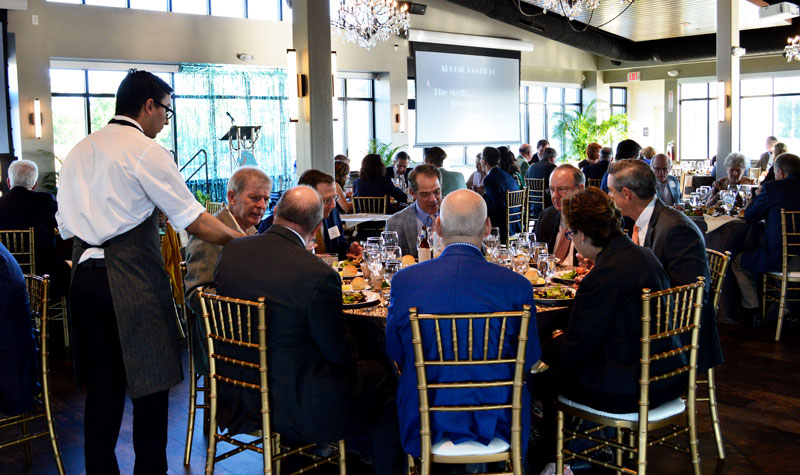
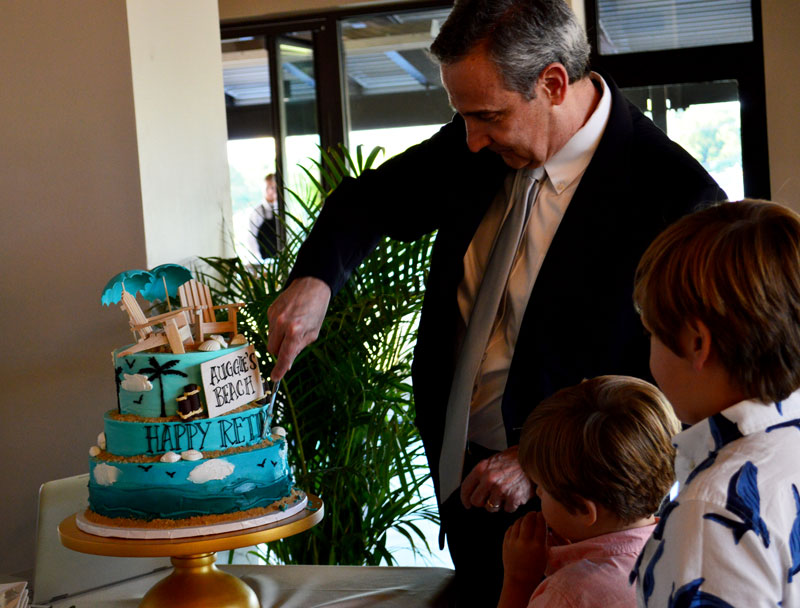
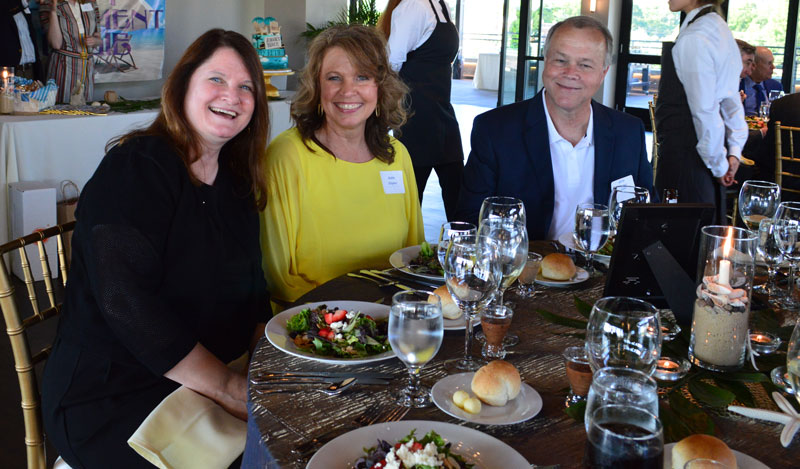
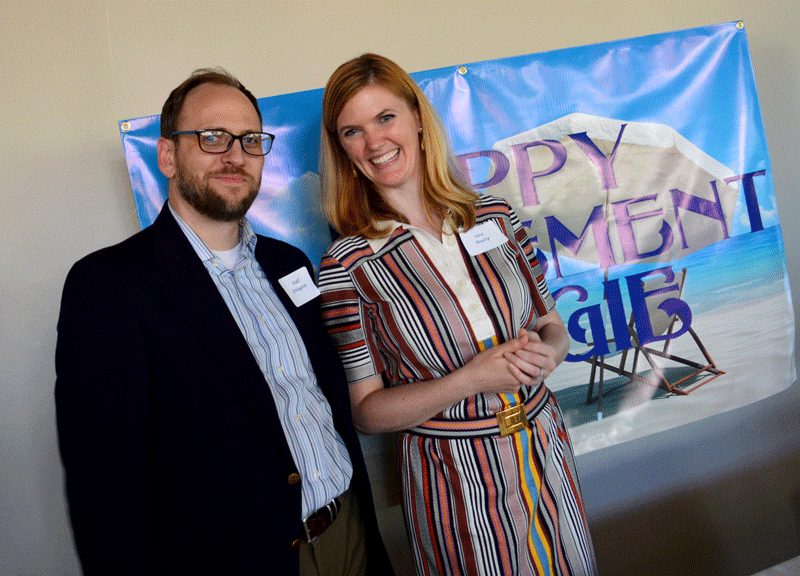
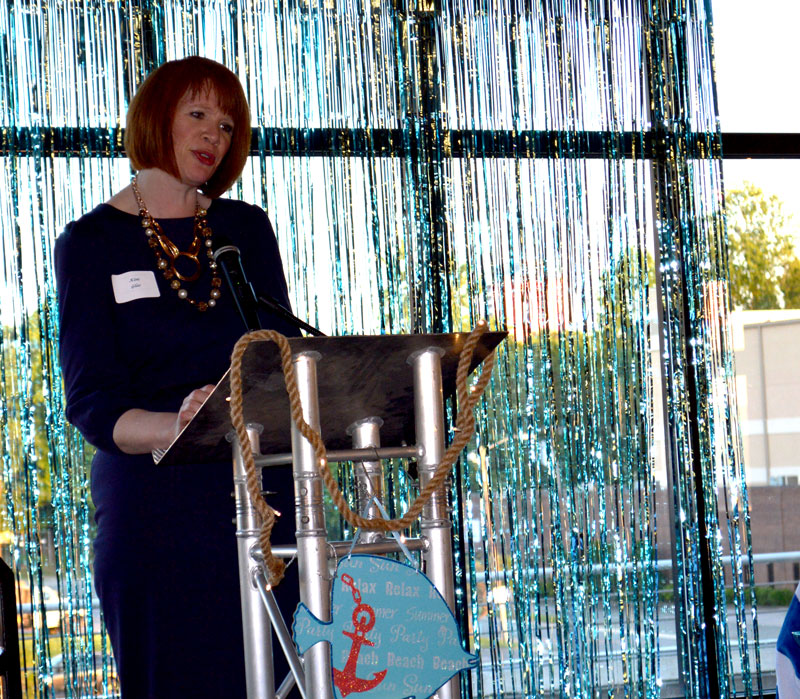
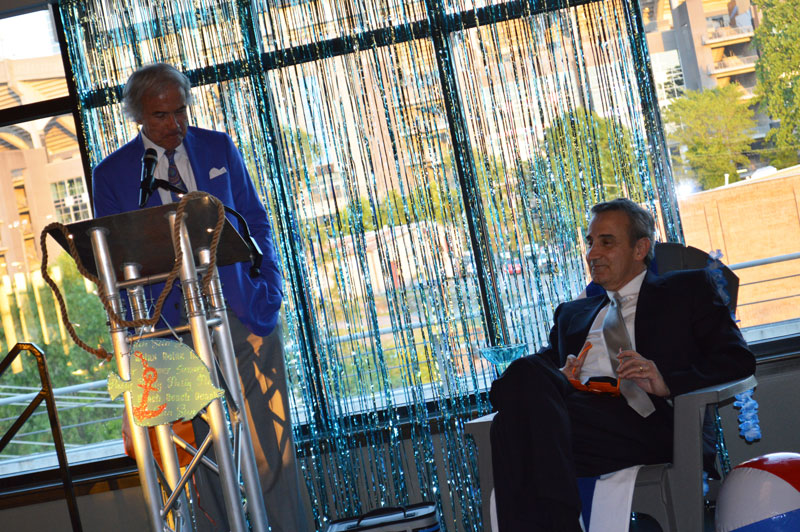
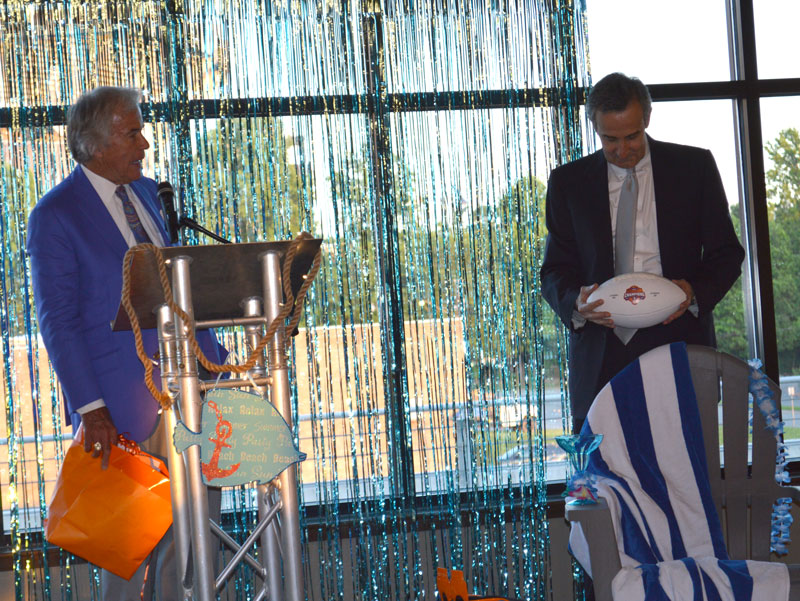
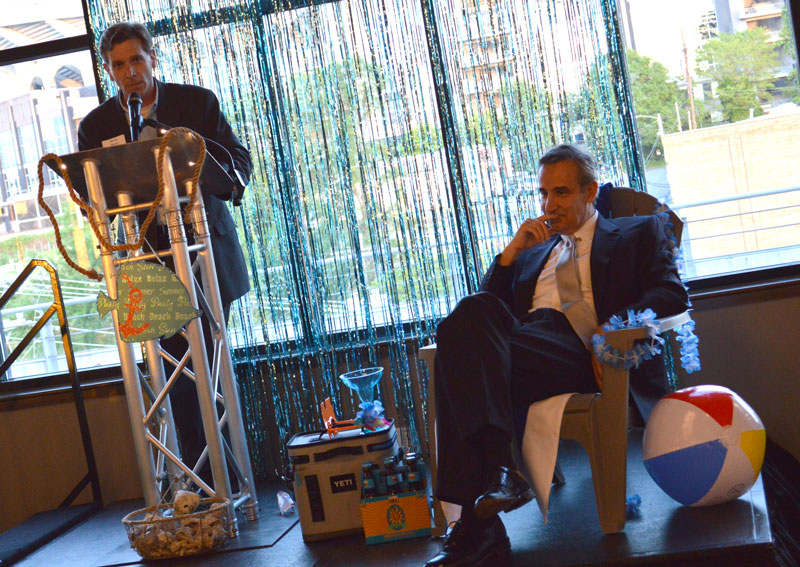
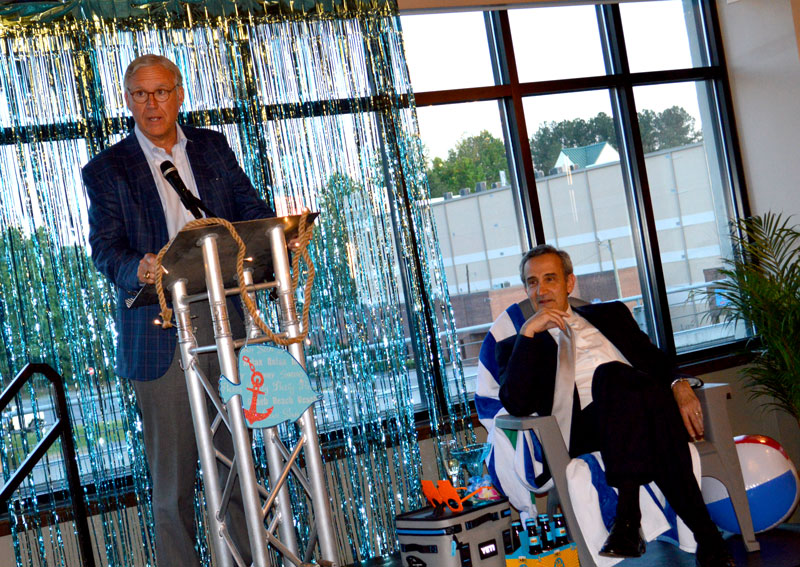
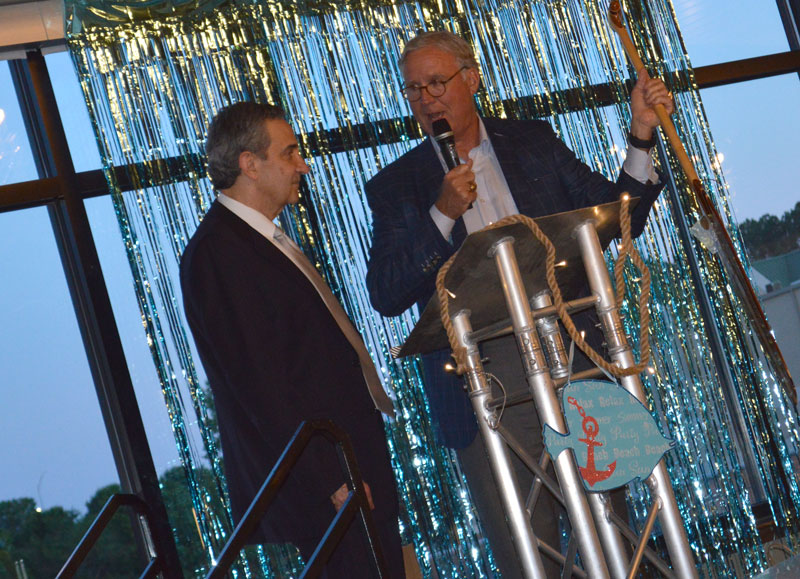
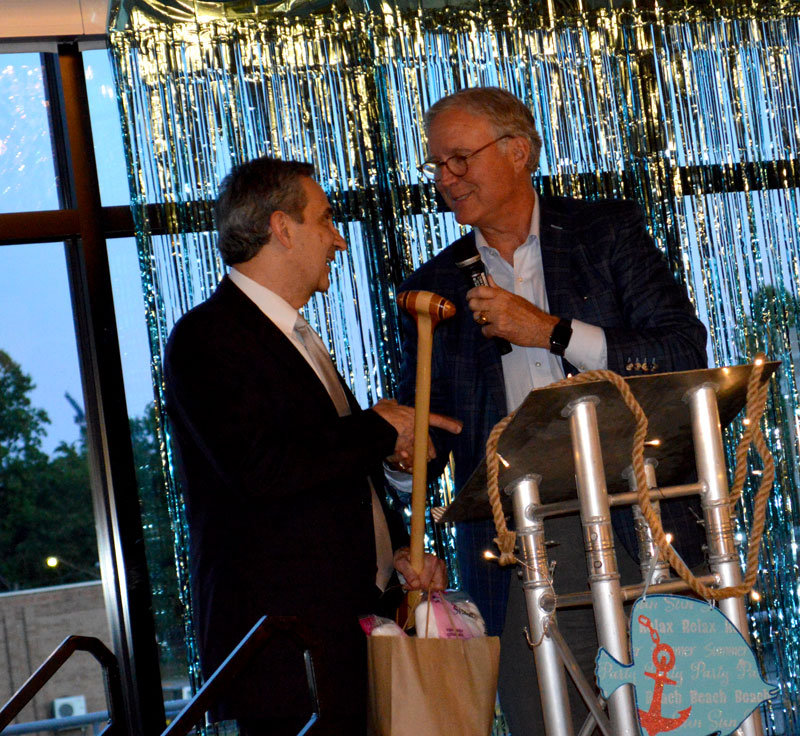
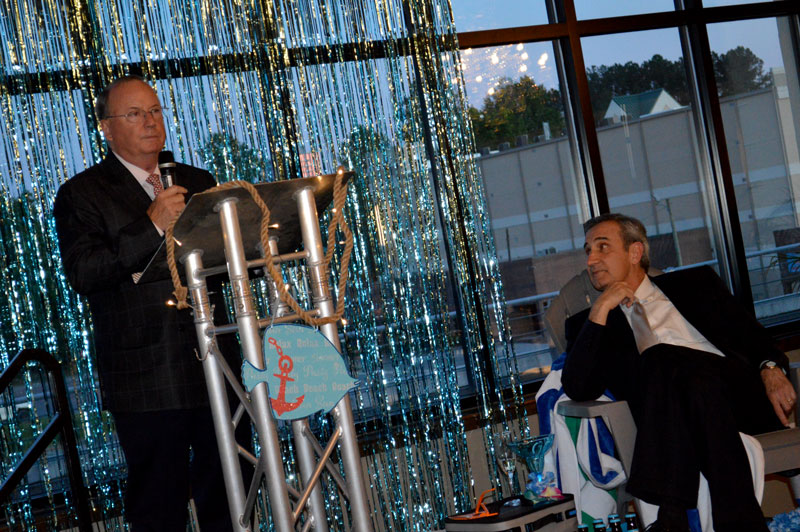
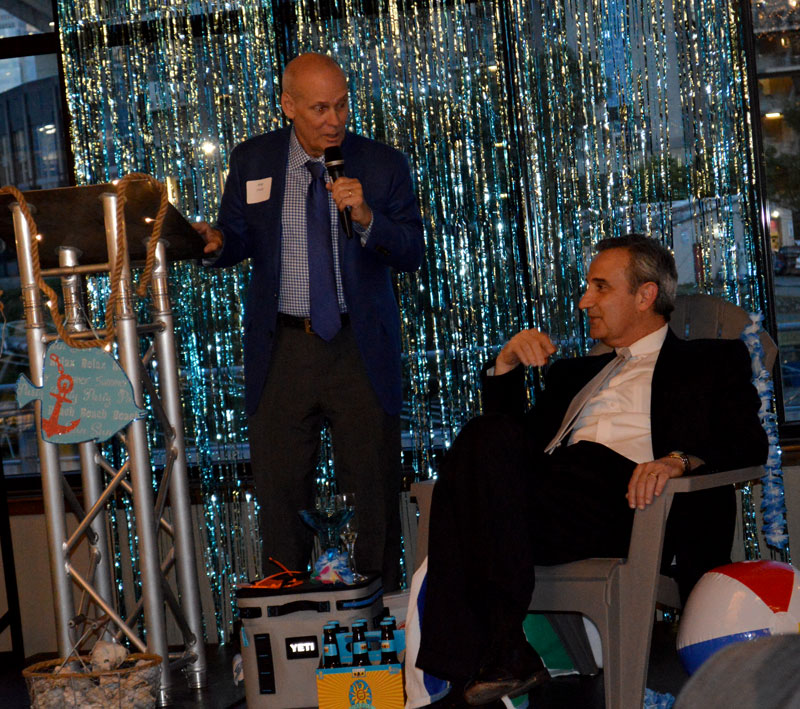
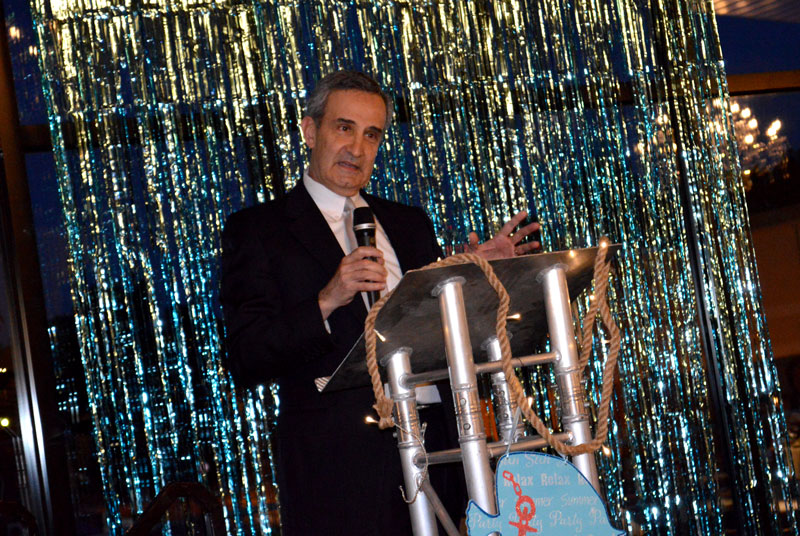
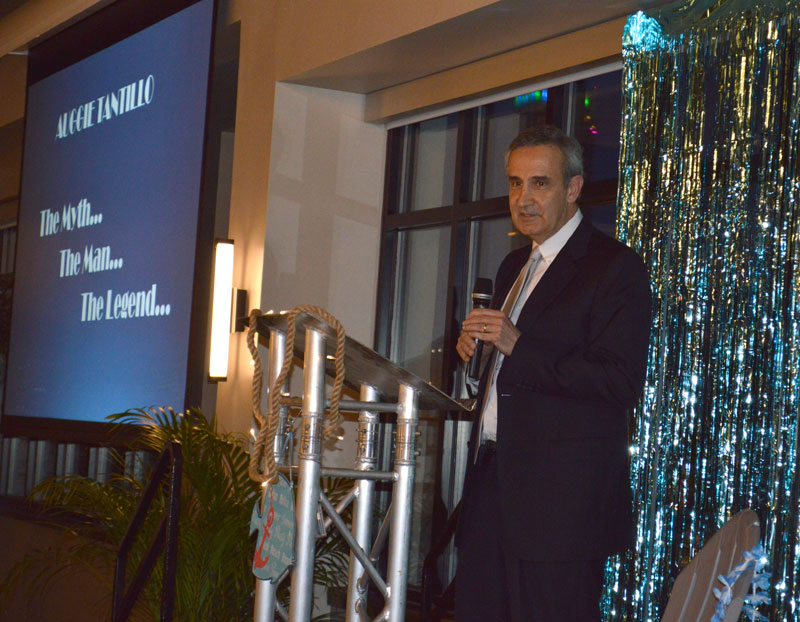
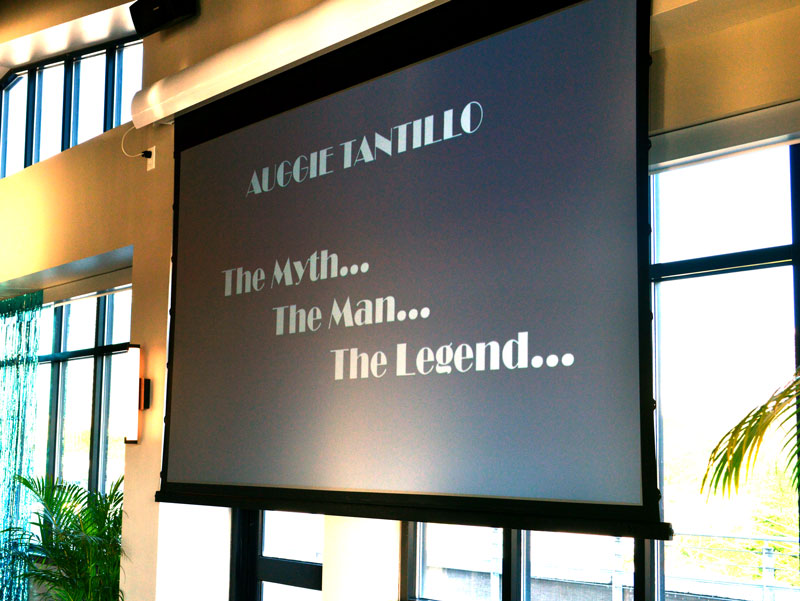
CHARLOTTE, N.C. — May 17, 2019 — Last night, players in the U.S. textile industry gathered to celebrate former National Council of Textile Organizations (NCTO) President and CEO Augustine D. “Auggie” Tantillo and wish him well as he enters retirement. The cocktail reception and dinner featured a roast led by Allen E. Gant Jr., chairman of Glen Raven Inc. Executives in attendance had the chance to express their gratitude to Tantillo for his knowledge and dedication to the textile industry for more than 30 years, while also recounting personal anecdotes.

After the roast, Tantillo entertained the gathered crowd with stories from his time as an employee in the office of the late South Carolina Senator James Strom Thurmond Sr., which was his first job in Washington after he graduated from Clemson University with a B.S. in Agricultural Economics.

During his multifaceted, 38-year career in Washington, Tantillo represented the textile industry for more than 30 years in the policy arena. He was deputy assistant secretary for textiles & apparel at the U.S. Department of Commerce under President George H.W. Bush, and also served as the executive director of the American Manufacturing Trade Action Coalition.

“Auggie Tantillo is a great institution and a great resource for the industry and has a strong legacy of really fighting for this industry on a whole host of trade and regulatory issues,” said Kim Glas, newly-installed NCTO president and CEO. “This industry has seen a great benefit from Auggie’s work over the past 5 years. He’s made a huge difference and is a giant in essence.”

Click here to view a photo gallery from the event

Comments from the industry:

“The textile industry owes a tremendous debt of gratitude to Auggie. Through his leadership, NCTO has become recognized as a thought leader in global trade and has earned a seat at the table on major policy issues. On a personal note, my friendship with Auggie is something that I will always treasure.”

— C.G. “Leib” Oehmig IV, president and CEO, Glen Raven Inc.

“Auggie Tantillo has made an invaluable contribution to the U.S. textile industry through his dedication and wisdom in championing for domestic textiles. His long-standing career, built by mutual respect and wisdom, has spanned many levels in Washington and throughout our industry. I wish Auggie the best in his retirement as he leaves a successful legacy!”

— Robin Perkins, CEO, Frontier Spinning

“Auggie has been a tremendous asset to the industry as ‘the voice of the industry in Washington, DC.’ Although the industry is relatively small in its lobbying effort, Auggie made sure that the administration understood and responded to our stance on issues. I was always impressed with how impactful he was considering that he was so calm and matter of fact in his presentation of issues. Personally, I appreciate Auggie’s sense of humor and his humble leadership.”

— Jim Booterbaugh, CEO, National Spinning Co. Inc.

“First of all, I am sad and glad at the same time that Auggie was offered and accepted the CEO’s position at the ‘Relax Now house.’ He has done tremendous work for the textile industry and definitively deserves the right to slow down and enjoy every second of it. Steve Marshall summarized perfectly how I feel about Auggie: ‘You can speak with spiritual eloquence, pray in public and maintain a holy appearance … but it is your behavior that will reveal your true character.’ Auggie did it all, had it all. He has been an amazing leader, a remarkable spokesperson for our whole industry. He will be missed for his wise advice, professional knowledge, but ever more so as a wonderful friend.”

— Ludovic Pitrois, North American Textile Division manager, Staubli

“What struck me about Auggie was his passion to see the industry not only survive, but thrive as well. He recognized that any industry must constantly evolve if it wants to prosper. And his oversight in the rebranding of the textile industry with the ‘We Make Amazing’ campaign was simply ‘AMAZING.’”

— Wayne Trotter, director of government relations, Teijin Holdings USA Inc.

“Auggie has been outstanding as president/CEO of NCTO. He is a true Southern Gentlemen and commanded the respect and confidence of all he came into contact with on Capitol Hill and in other agencies of the government. He will be missed. However, my fond remembrance is of the day I sat outside and was the dog sitter while his daughter, Auggie and Lisa toured the College of Nursing at ECU. Disappointed she did not attend ECU but, no surprise, opted for Clemson. Great dog! Best wishes to you and whatever is in your future. Thank you again for the service to our great industry.

— Jim Chesnutt, chairman, National Spinning Co. Inc.

“There is a popular term I now hear often at Auggie’s beloved Clemson University — ‘ALL IN.’ Those words, ‘ALL IN,’ perfectly describe Auggie and his career. Since 1981, and whether in government service or government relations, Auggie has been ALL IN. He has given all of himself and has achieved immeasurable success for our industry. Jan and I wish him the very best for his well-deserved retirement.”

— Bill McCrary, chairman and CEO, William Barnet & Son LLC

“Auggie Tantillo is the best association president I have ever had the pleasure to work with. His knowledge of the textile industry is unmatched. His institutional knowledge of previous trade agreements is amazing. NCTO has always out-punched its weight class and it is because of Auggie Tantillo.”

— Anderson D. “Andy” Warlick, chairman and CEO, Parkdale

“Every job is a self-portrait of the person who did it. For Auggie Tantillo, that portrait was a masterpiece. Auggie’s contributions to the textile industry are immense, and his experience in Washington uniquely positioned him to be one of our greatest advocates. Having Auggie at the helm of NCTO advanced our entire industry by leaps and bounds, and we wish him the very best as he moves on to his next great portrait.”

— Jeff Price, president, Milliken Performance and Protective Textiles division

“Many people claim to know a thing or two about their domain, however, when it comes to our U.S. textile industry and the inner workings of the federal government, Auggie has the ability to explain complicated issues in such a way that it becomes as clear as water. A true master of intelligence.”

— Cyril Guérin, president, Picanol of America

“Auggie has been a determined fighter for the interests of the textile industry and the many people who make a living directly and indirectly as a result of the jobs this industry creates. I wish him well in his retirement and he will be missed as a friend to us all.”

— Jay Self, president, Greenwood Mills Inc.

“Auggie Tantillo has been a tremendous asset to the textile industry. His ability to understand the intricacies of Washington, D.C., coupled with his deep understanding of the diverse textile business made him the perfect advocate and defender of our interests. The bright future of American textile manufacturing is due in large part to his leadership.”

— Marty Moran, CEO, Buhler Quality Yarns Corp.

“Working for Auggie over the last six years has truly been my honor. He is held in the highest regard by friends and colleagues of the industry he has represented so well for many years, and those of us who have been privileged to work so closely with him have witnessed first-hand his incredible knowledge and discerning wisdom.  He has qualities that are increasingly rare, and I am grateful to have worked with someone of such distinguished character and integrity.”

— Robin Haynes, director of finance & administration, treasurer, NCTO

Posted May 17, 2019

Source: Textile World, Rachael S. Davis, Executive Editor

NCTO President & CEO Kim Glas Highlights Plans For First Hundred Days On The Job

KimGlas
Kim Glas, NCTO president and CEO, visited Pharr in McAdenville, N.C., while on a visit to the Carolinas.

MCADENVILLE, N.C. — May 16, 2019 — This week, the newly-installed National Council of Textile Organizations (NCTO) President and CEO Kim Glas spent time in the Carolinas engaging with the industry. Glas met with executives at Milliken and Company, Spartanburg, S.C.; was a featured speaker at the Southern Textile Association (STA) Southern Division Meeting in Clemson, S.C.; and spent a day at Pharr, A Family of Companies, in McAdenville, N.C., where she toured several yarn spinning plants and hosted a meet and greet with industry executives. Glas said she was in the Carolinas to hear about what is important to the industry.

Glas also held a media briefing at Pharr where she discussed her plans for the first 100 days of her tenure, noting that this is a transition time for NCTO. “Transitions are a time of challenge, but also a time of great opportunity,” Glas said. “So, I’m all ears and that’s why I’m here today to hear from the industry themselves about what they see, not only about the future of their business, but the future of NCTO.”

Kim reported she has essentially five priorities for the first 100 days:

  1. To get to know the industry, and the businesses in the industry.

“A lot of the industry I know, but there are some folks in the industry I don’t know,” Glas said. “So I’m going to be reaching out, visiting plants, talking to members. And not only figuring out what are they making now, but where do they want to go as an industry. What are their sustainability initiatives? How best can NCTO represent their voice on Capitol Hill and in the administration?”

2. Meeting key allies and stakeholders, and people who should be key allies and stakeholders on Capitol Hill and in the administration.

“There is a huge change in terms of what’s happening in Congress these days and the composition and we need to get up and talk to members of congress about our industry and some of the issues that are on the front pages of the news — whether it’s trade policy or regulatory issues,” Glas mentioned.

3. Strengthening NCTO communications.

“We are delighted that our vice president of communications Kristi Ellis has come on board, and we have Rebecca Tantillo who is handling a lot of our digital operations,” Glas said. “… [NCTO’s] obviously had a branding campaign ‘We Make Amazing,’ [but] how do we take that campaign to the next level? Are we reaching all our key stakeholders that we’re trying to communicate with about the innovation happening in the industry, and what the industry sees in terms of a proactive agenda moving forward?”

4. Building the industry association to make it stronger.

Glas said: “What are services that we can provide that would be of benefit to the industry? Now that there have been some [association] mergers, now it’s time to reflect and think about our strategy moving forward.”

5. Getting to know the staff.

Glas is no stranger to the textile industry. Previously in her career, she served as the deputy assistant secretary for Textiles, Consumer Goods and Materials at the U.S. Department of Commerce under the Obama Administration, where she oversaw efforts to improve the domestic and international competitiveness of the U.S. textile and apparel industries. Glas also worked closely with the United States Trade Representative, key agencies and Congress to advance various critical trade policy issues including changes to the CAFTA-DR agreement.

Glas has a very favorable impression of today’s textile industry and is enthusiastic about educating law makers in Washington about the industry and the great things that are happening.

“When I was the deputy assistant for textiles, … [the United States was] the fourth largest exporter [of textiles] in the world,” Glas said. “And now that data shows we’re the second largest textile exporter in the world. And when I say that to Capitol Hill stakeholders and the administration, it just sort of blows them away that this industry is not only alive, but is doing really well.

“I’m always constantly impressed with the level of investment that the industry is making,” Glas noted. “Just going through the plant today at Pharr, you see the level of investment they are making. Some $2 billion has been invested by this industry in the latest data that we have from 2017, so the amount of technology, the automation happening in the industry and the diversity of the products that we’re making is great.

“I look forward to seeing how the industry continues to transform itself over the next five years,” Glas concluded.

Posted May 16, 2019

Source: Textile World, Rachael S. Davis, Executive Editor
Toray Launches Technorama GIII Weather Simulation Chamber— New Capabilities Designed To Drive Next Generation Materials Development

SETA, Japan — May 15, 2019 — Toray’s Fibers & Textiles Research Laboratories, in Seta, Japan is the home of the company’s new Technorama GIII facility, the textile industry’s most advanced laboratory for reproducing climates from around the world.

Previous Technorama iterations were focused on functional evaluations of thermo-physiological factors, like heat, cold and humidity. Technorama GIII’s vastly expanded compliment of evaluation equipment makes it possible to measure sensations like fabric feel, using “sensitivity engineering” to track human comfort through a range of motion and conditions.

The Technorama GIII is comprised of three chambers, allowing Toray research testers to quickly move between radically different environments, measuring the reaction of materials and products by reproducing everything from a mountain summit to a stuffy, crowded subway car. This provides Toray with unique insight into the performance of everyday casual clothes, as well as high-performance sports textiles.

The testing chambers offer:

  • Variable wind speeds up to 67 mph;
  • Rainfall simulation up to 200 mm/hr;
  • Temperatures from -22 to 140 degrees Fahrenheit;
  • Humidity levels of 20 to 80% RH;
  • Solar Radiation levels to 1.16 kW/m²;
  • Motion simulation equipment (treadmills, bikes, ergometers, etc.);
  • Infrared imaging systems;
  • Motion capture devices;
  • Physiological analysis equipment (myoelectric meters, sweat meters, clothing pressure gauges, etc.); and
  • Thermal mannequins.

With the Technorama GIII laboratory, Toray is poised to develop the next generation of ground-breaking fibers and textiles.

Posted May 15, 2019

Source: Toray

ITMA 2019 Exhibitor Preview: Uster Technologies

USTER, Switzerland — May 15, 2019 — Uster Technologies offers a unique portfolio of solutions for textile quality control, management and improvement, from fiber to fabric — adding value for each stage of production. Now USTER strengthens that concept even further, enabling textile producers to actually prevent poor quality, rather than just recording it.

This latest advance combines textile know-how and technology with smart software, as the textile industry embraces the digital age through intelligent systems which promise faster, better and more cost-effective manufacturing.

Introducing data-based optimization

“Digitalization offers many opportunities for evolving and improving our systems and services,” says USTER CEO Thomas Nasiou. “At the same time, the core of our offering will always be Think Quality and all our efforts will aim towards quality measurement and management to maximize the value for our customers.”

At ITMA 2015 USTER introduced data evaluation to textile quality control, with the USTER® TESTER 6. This allowed users, for the first time, to combine both laboratory and in-process data from different production stages to optimize quality control and its management. In 2019, the next logical step is to extend this connected approach to the further production processes, to offer value modules which enable textile producers not only to be informed of quality problems but also prevent and optimize wherever possible. This is another major step in ‘managing a textile mill with quality in mind’.

Launching at ITMA 2019

USTER QUALITY EXPERT, the Quality Management Platform, collects and evaluates information from different production stages and expands its insightful analytics with valuable intelligence as each additional instrument is connected. The entire process becomes more transparent for managers and operators. Finally, the Quality Management Platform drives consistent quality in every part of the spinning process.

The introduction of the Quality Management Platform marks an important evolution for Uster Technologies. It combines collection and smart data analysis from more process steps with the next level of knowledge-based alerts about possible defects and extended prognosis of yarn performance in subsequent processes. Also very new is the possibility for better contamination control and quality-based optimization of the ring spinning process, including the possibility to stop defect production as early as possible.

Alerts are available on a mobile app and important performance indicators are also projected on dashboards — both with the target to trigger early reaction to problems. Of course, the reporting is also accessible on client terminals across the plant.

The Quality Management Platform will form the centerpiece of the USTER presentation at the upcoming ITMA 2019. At the same time, the comprehensive portfolio of online, laboratory, fabric inspection products and value-added services is being extended with further innovations.

Reflecting the spirit of continuous innovation, a completely new ITMA booth design will highlight the digitally-connected Uster Technologies offering and showcase developments across the entire portfolio. USTER offers visitors an exciting mill management experience at booth D201 in hall 6.

Posted May 15, 2019

Source: Uster Technologies Ltd.

BASF, Longterm Concept, And Gu Guoyi Introduce X-Swift: Swiftly Shaping The Athleisure Shoe Market With Material Innovations And The Latest Footwear Technology

GUANGZHOU, China — May 15, 2019 — BASF, Longterm Concept, and Gu Guoyi have collaborated to develop X-Swift — a newly designed athleisure shoe that showcases four outstanding BASF advanced material innovations fused into one shoe with the latest footwear automation technology. The X-Swift is collaboratively designed by renowned footwear designer Gu Guoyi and BASF’s Creation Center, BASF’s dedicated touch-point for engaging and inspiring designers, bridging the gap between conceptual ideas of creators and the technical possibilities offered by BASF. The design is also multi-purpose; allowing individuals to wear the same pair of shoes to work, and their next work-out.

“The X-Swift marries style and function together — which fits perfectly for consumers looking for high-performance shoes that are versatile enough to match modern lifestyles,” said Gu Guoyi, founder of a banana.design. His professional background includes footwear design for established brand names, such as Reebok and Nike.

Longterm Concept, a leading Taiwanese shoe manufacturer that specializes in an automated and intelligent footwear production process, used the latest automation technology to integrate different footwear automation processes and fuse four different advanced BASF materials cost-effectively. The process also enables a quicker production time compared to conventional footwear manufacturing techniques.

“The demand for new shoe designs is growing at a fast speed. Our process fundamentally changes the way that shoes are made and opens up brand new possibilities both for what we can create and the speed with which we can create it. The name X-Swift aptly reflects the speed of production, and how it mirrors our fast-paced lifestyle,” said Darren Shih, Innovation Director, Longterm Concept.

Each of the advanced and high-performance material solutions from BASF in the athleisure shoe complements each other in their own way. The result is a shoe with better stability and support for the feet:

  • The outsole made of Elastollan® Thermoplastic Polyurethane (TPU) incorporates a high grip tread pattern to optimize traction and provide maximum surface contact.
  • X-Swift’s midsole features the high rebound polyurethane Elastopan® for excellent cushioning and durability, which is superior to conventional midsoles.
  • The midsole is complemented by a unique, breathable insole made of Elastopan that is engineered to work with the high-performance sock liner.
  • X-Swift also features an innovative, two-piece material upper construction which is a combination of sustainable synthetic leather Haptex® and fiber made with Freeflex™ TPU. The materials conform to the foot using minimal seams and stitch lines to provide superior comfort and maximum performance.

“The footwear market is dynamic and fast-paced. So we are challenging ourselves every day to explore the boundaries of our materials. For this co-creation, we are meshing the qualities of our state-of-the-art footwear materials, and prototyping with the limitless potential of new manufacturing technologies,” said Manfred Pawlowski, Vice President, Consumer Industry, BASF Performance Materials. “With a timeless, simple style, cozy comfort and performance in the sole, the X-Swift is every athleisure loving’s best friend and a game changer, empowering the future of footwear.”

The X-Swift will be on display at BASF’s booth during CHINAPLAS 2019 and will be featured as part of its series of tech talks organized at the booth.

Posted May 15, 2019

Source: BASF

Sponsors