ITMA 2019: Positive Reviews

ITMASavio
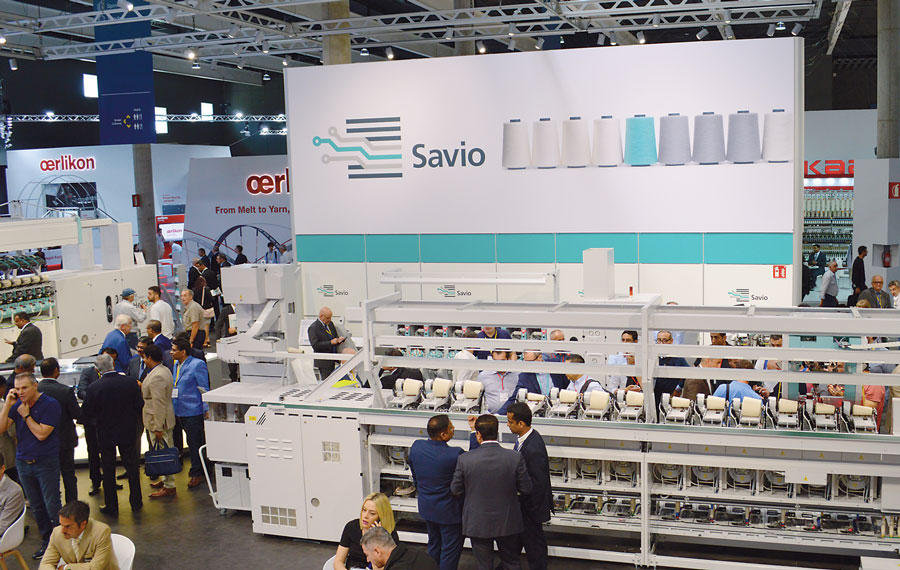
Savio reported high-quality decision makers visited its booth during ITMA.

Textile suppliers report ITMA 2019 was a successful event despite trade woes; clear trends seen in digitalization, sustainability.

By Rachael S. Davis, Executive Editor

ITMA 2019 is now in the textile industry’s rearview mirror, but for exhibiting companies leads gained, connections made and information gathered during the event are just starting points for future business opportunities and ideas for the next generation of technologies.

Textile World recently interviewed just a small sample of exhibitors that participated in ITMA 2019, held in Barcelona, to learn about their experience and get a sense of the overall market for textile investment especially as it relates to the United States.

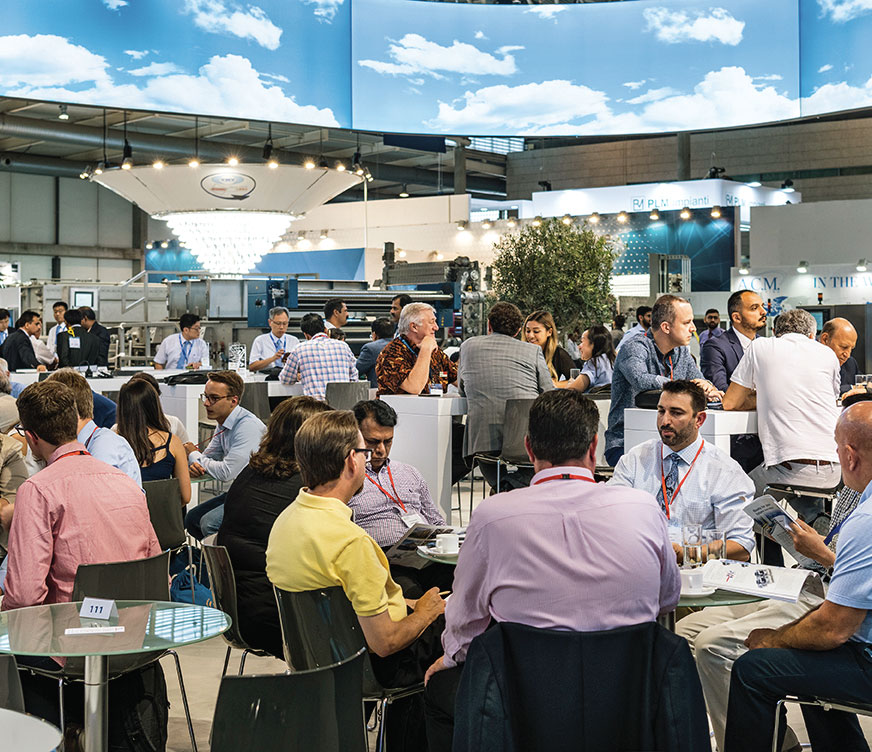
Most companies agreed that both the number and quality of visitors seen during the seven-day show was good.

“We welcomed more than 3,500 visitors, representing roughly 1,500 companies, at the Saurer stand,” reported Anton Kehls, Spinning Solutions Segment CEO, Switzerland-based Saurer Group. “Visitors hailed from a range of countries — particularly well represented were India, Turkey, Pakistan and Vietnam. We also had very fruitful discussions with guests from Mexico, Brazil and South Africa as well as a number of European countries. The percentage of decision makers among our guests was higher than at previous ITMA shows.” Saurer mentioned its Autoairo air-spinning machine, Autocard and Autocard pre-spinning offerings, Autolab laboratory equipment, Sense mill management system and Saurer Academy training portal drew a great deal of interest during the show.

A representative from Italy-based Savio Macchine Tessili S.p.A. reported the company was happy with the quality of visitors at ITMA. “Many important textile groups all visited the exhibition, especially decision makers like owners or very senior executives,” the company reported. “The major visits have been from India, Turkey and Italy, but they had many important delegations from Egypt, South America, China, Vietnam, Indonesia, Pakistan, Bangladesh, Russia.” Savio specializes in yarn finishing machinery including winding, twisting and rotor spinning machines. At ITMA, Savio highlighted its new Helios open-end rotor spinning machine and the MultiLink solution for automatic winding

Some exhibitors reported seeing a good number of U.S. visitors, however others did not.
ITMAMonforts
Monforts held many fruitful meetings during ITMA.

“It was a very good show for Monforts and us, with visitors from just about everywhere,” said Alex Franco, vice president and co-owner of Charlotte, N.C.-based PSP Marketing, the North American representative for Germany-based A. Monforts Textilmaschinen GmbH & Co. KG. “There was a strong showing from North America and we were able to speak to many of the major players. In the United States, there’s currently a push for the replacement of existing tenter frames — some of which have been in operation for 40 years — not so much for increasing production. There was a lot of interest in the latest features of the Montex tenter and the advantages it can bring, while other U.S. companies in sectors such as furnishings and mattress tickings were particularly interested in the flexibility offered by the Texcoat coating system with its multi-head capability and the potential for the value it can provide. We’ve had lots of requests for trials after ITMA.”

Spartanburg, S.C.-based Zimmer Austria Inc.— a company known for its screen and digital printing, coating and drying machinery — reported a high quality of visitors. “We also had the good luck to close several deals at the show for rotary screen printing machines, as well as digital printing systems COLARIS,” said Roland JP Zimmer, vice president sales, North America. “USA visitors quantity was light as expected, but we saw some special interest especially in Zimmer expansive coating technologies such as MAGNOROLL low moisture applications for precoat in digital textile printing and MAGNOJET foam applications. There is definitely more interest in conventional and digital textile printing machinery in the North American market than at the last ITMA.”

ITMATrutzschler
Trützschler showcased its spinning and nonwovens innovations.

Charlotte-based American Truetzschler said the spinning side of its business was very active during the show with a high quantity and quality of visitors. The nonwovens side of Trützschler’s business was slower with fewer visitors from the United States, but this came as no surprise for the company because ITMA was held only shortly after Techtextil North America and IDEA®19. The company did however report a high quantity of European customers with plants in the United States and also high-quality meetings on the nonwovens side.

Italy-based Marzoli reported more than 2,000 visitors from more than 50 countries stopped by its booth during ITMA, while Germany-based DiloGroup noted more than 6,000 visitors from a variety of backgrounds were welcomed into its booth. “Generally, our booth always attracts a lot of people due to the presentation of a fully functional nonwoven line equipped with innovations and developments,” said Andrea Wunder, marketing, Oskar Dilo Maschinenfabrik KG. Wunder noted that the company’s 3D-Lofter technology and the DiloLine 4.0 were of most interest to visitors.

Industry Trends, Technology For All Sectors

The textile industry is constantly facing pressures to be “more.” More sustainable, more environmentally friendly, more nimble, as well as faster while additionally maintaining a high level of product quality. Manufacturers look to technology producers to help them achieve their goals as they address these pressures. ITMA is all about innovation and innovative technology, and some trends emerged during the 2019 edition. As one might expect, sustainability is playing an ever-increasing role and industry digitalization is taking off at a rapid pace.
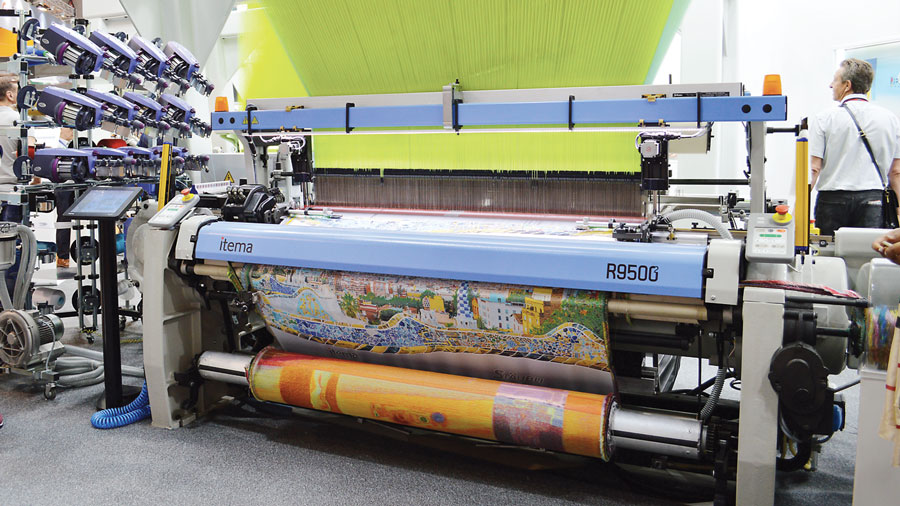
Stäubli demonstrated the capability of its jacquard weaving machines by producing intricately woven jacquard fabrics with a Barcelona-themed design.

“Visitors searching for increased efficiency in their weaving preparation processes were particularly interested in our SAFIR S60 drawing-in system equipped with our standalone Active Warp Control (AWC) technology,” said Ludovic Pitrois, North American Textile Division manager, Stäubli Corp., Duncan, S.C. Stäubli reports a trend towards big formats, which place extreme demands on weavers and their machinery. “Stäubli supports weavers realizing quality fabrics with a broad range capable to weave at highest speeds, and especially with the LXXL Jacquard machine available in formats of up to 25,600 hooks. 51,200 hooks can be achieved by combining two machines,” Pitrois said. “Such formats are particularly suitable for high-density, large-format, heavy-duty applications, such as silk fabrics for upholstered furniture, as shown at the stand, but also for one-piece woven (OPW) airbags and apparel fabrics.

“At Stäubli sustainability begins in our production sites respecting water and energy resources and where recycling plays a constant role,” Pitrois reported. “Thanks to this the life cycle of Stäubli machinery starts with a relatively low environmental impact. The machines are made of high-quality material, undergo severe quality controls during the production process and incorporate latest technologies, thus they assure long-lasting fabrication lines and machine life cycles. Delving further, sustainability is also linked to the services we proved before and after sales.”
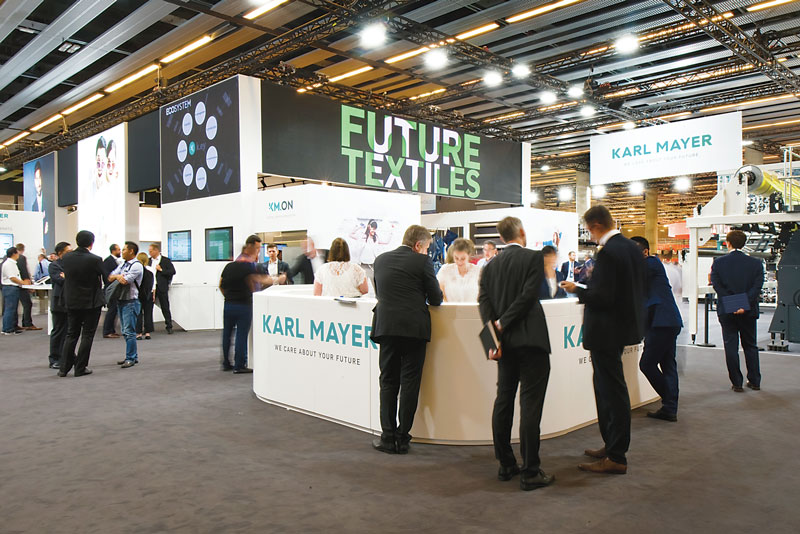
Karl Mayer offers solutions for  warp knitting, technical textiles, and warp preparation for weaving, as well as  digital solutions under the KM.ON brand.
Karl Mayer offers solutions for
warp knitting, technical textiles, and
warp preparation for weaving, as well as digital solutions under the KM.ON brand.

Germany-based Karl Mayer introduced a new innovation for processing sustainable denim, among other innovations at ITMA. “We [illustrated] the implementation of our key strategic topics of sustainability and the environment on various islands at the fair, from energy-efficient machines, through processing yarns with the emphasis on conserving resources, to sustainable warp-knitted textiles and end-use concepts,” said Arno Gärtner, CEO, Karl Mayer. “It became clear from the ITMA fair in Barcelona that the sector is focusing on digital solutions when it comes to process optimization and customer orientation,” Gärtner said. “That is why we are delighted to receive such excellent feedback on the new systems within our software start-up KM.ON.”

“With the rise of the smart factory, customers are increasingly interested in automation and digitization,” reported Saurer’s Kehls. “We have integrated this technology across the breadth of Saurer’s offerings. With our mill management system Senses, users can easily evaluate a range of data from all textile machines in their production facilities — this includes machines from third-party manufacturers. Sustainability is an important factor that has informed the design of technologies for many years already. Our E3 — energy, ergonomics, economics — philosophy demonstrates our commitment to sustainability. Our aim is to make our offerings as energy efficient as possible.”

“There was a lot of attention paid to the energy and heat recovery and the water savings that can be achieved with the latest Montex tenter, with features such as the new integrated MonforClean system, where the waste heat from the drying process is used to pre-heat the drying air, resulting in a radical reduction in the conventional heat supply required,” Franco said. “The further integration of an automatic exhaust air filter washing system, which automatically cleans the module elements also impressed many visitors we spoke with — in the United States that’s a serious benefit because the cost of water is so high.”

“The main topic of ITMA 2019 has been the digital transformation of the textile and garment industry, and Marzoli is following this new idea of business,” said Ilaria Scalvini, Marzoli’s marketing department. At ITMA, Marzoli showed its patented software YarNet and MRM, as well as the new Brain Box software for the optimization of the entire spinning mill. “Regarding sustainability, in recent years this topic has become a major trend in the textile industry,” Scalvini added. “Consumers are better informed, and they expect sustainable products and solution in the textile industry. Marzoli, as a machine manufacturer, is focused on the optimization of production processes through the monitoring of the machinery performances and the adoption of carefully selected technologies and material. This process grants a constant reduction of machines’ energy consumption.”

According to Masaki Karasuno, media relations, Japan-based Shima Seiki Mfg. Ltd., sustainability and factory automation were key words mentioned by most visitors, which portrays a definite trend in the industry. “The concept of sustainable manufacturing is especially making an impact in the entire textile industry, and the flat knitting sector to which Shima Seiki caters is no different,” Karasuno said. “As a matter of fact, flat knitting has traditionally been able to offer a higher sustainability factor than most other textile manufacturing methods, due to the fact that the technology can ‘shape’ parts in order to avoid cutting waste as a by-product of cutting parts out of flat panels and sewing them together.”

“Focus is no longer on performance only — but also on connectivity, use of big data, waste- and energy-reduction and user-friendliness — not by coincidence the four topics we were also highlighting in our pre-ITMA campaign,” mentioned Cyril Guerin, president, Picanol of America Inc., Greenville, S.C. “Sustainability has been a recurring theme in Picanol’s story for the past 83 years. This sustainability manifests itself primarily in our products and processes; for example, the use of simulations for the design of more energy efficient weaving machines, the conversion of old iron into high-tech castings, durable mechanical components, and advanced electronics that ensure the optimum quality of fabrics. Nowadays, sustainability is interwoven in all processes and products, from development to production.”

Trade Woes

When asked if current trade tensions are affecting investment, comments from exhibitors were varied. Picanol’s Guerin had a matter-of-fact approach to the situation. “With regard to the trade tensions, we are operating in a volatile political, economic and financial environment,” he said. “But we cannot change it, so we must deal with it the best we can.”

Lothar Kaierle, vice president, sales, nonwovens, with American Truetzschler, reported that tariffs are creating confusion for sure, but that they are not affecting investment, at least at the moment.

“There is a lot of turmoil, but our customers are generally optimistic,” said PSP’s Franco. “Although, I think many are waiting to see what’s going to happen in the next election. There’s also a move by a number of our customers to bring more manufacturing back to the USA, especially in the Southern states. The trend is to smaller lot sizes and speed-to-market.

“The whole market situation is different in comparison to the last years where investment activity was very active,” Pitrois noted. “There are certainly effects on the market from these tensions, but as well, a general decrease in activity due to the very positive near past.”
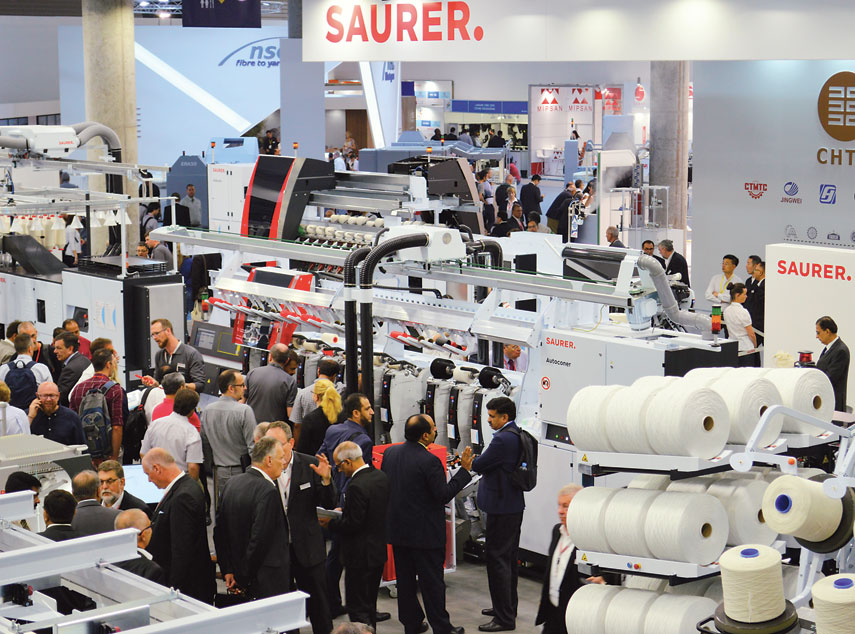
Customers gathered at  Saurer’s booth during the show to  discover what’s new.
Customers gathered at
Saurer’s booth during the show to
discover what’s new.

Saurer’s Kehls said: “No doubt these tensions and the associated uncertainty are having a big impact on companies’ investment plans across the world. We are no exception — Saurer has felt the effects in its key markets, particularly in Turkey, but also in China and India.”

“Current trade tensions did play some role for our company as we use some Chinese-made digital ink on the COLARIS platform that has been hit with tariffs,” said Zimmer. “However, the Chinese supplier was able to compensate pricing to offset the tariffs.

Certainly, trade tensions aside, industry investment is affected by sector and country. “The global economy is influencing investments of different customers,” reported Dilo. “Nevertheless, we do not expect a steep decline in the nonwoven market due to its high variability. The increase in the nonwoven business during the last five to seven years was extraordinarily high and is now coming back to a normal level.”

“If the U.S., a major consumer of textile goods, imposes tariffs and regulates trade, then manufacturers that produce and export to the U.S. will be faced with diminishing profits and will naturally think twice about investing in additional equipment,” said Shima Seiki’s Karasuno.

Forward-Looking Thoughts

ITMA is an innovation show, and as soon as one ends, machinery manufacturers are already looking to the next event and thinking about ways to advance technologies. The next ITMA, to be held in Milan, Italy, in 2023, will certainly build on momentum gained at the 2019 event.

“We are very much looking forward to the next show in Milan in 2023, and have already started the planning and organization process,” reported Dilo’s Wunder. “Each ITMA is a lot of work for the whole company, but it is worthwhile every time.”

Kehls thinks automation and digitization will continue to drive the industry. “Our customers’ needs remain our primary focus,” he said. “The group’s aim is to become a complete solutions provider for the textile industry. We continue to work towards this and look forward to unveiling cutting-edge technologies at the next ITMA.”

Shima Seiki sees sustainability as a continuing theme that will reoccur at the next edition of ITMA. “The industry began to focus on sustainability at the Milan ITMA in 2015, and started to slowly gain momentum throughout the West,” Karasuno said. “Now, along with sustainable development goals, the importance of sustainability is becoming more important in other regions of the world as well. As the sole provider of flat knitting solutions centered around WHOLEGARMENT knitting, and as a collective group sharing the planet with others, we are looking forward to further emphasis placed on efforts to make the world a better place to live. Milan 2023 should provide even better insight into what is required to accomplish that, and we will be there to spearhead that effort with further innovative solutions.”

For Zimmer, a company participating in the digital textile realm, the next ITMA is expected to confirm that digital printing “has finally reached the tipping point and is gaining wider acceptance.”

Ten-Thousand-Foot View

“ITMA 2019 was definitely an overall success as far as Zimmer Austria is concerned,” Zimmer said.

“One-hundred percent, yes, ITMA 2019 was an overall success for Dilo” Wunder said. “Numerous discussions were very fruitful and involved common projects. Furthermore, we were able to awake an interest in nonwovens for various visitors!”

“Yes, overall ITMA 2019 was a big success for our company,” Karasuno said. “Although direct investment in textile machinery is down due to trade relations and other political and economic reasons, we were still able to witness the overall will and interest of our customers towards the latest innovations. Since most of our exhibits were of new machines and new content, there was a large amount of dialogue and a large number of inquiries, which we look forward to materialize as orders in the months to come.”

“For Marzoli, ITMA has been a great success,” Scalvini said. “Visitors showed a great interest in our machines and innovations. We met all our most important customers and we get in touch with some new potential customers. We also finalized several contracts with major clients.

“Staubli could close up ITMA successfully, Pitrois said. “With regard to costs and effort, one must certainly always ask oneself whether a company supports the ITMA mega-concept in this way or whether events closer to the customer in certain regions are an alternative,” Pitrois said. “In this form, ITMA has once again given us the opportunity to show customers from countries where no trade fairs are organized our extensive range of machines at a glance at our stand. Such a presentation gives interested parties and customers a certain security, which they can expect from a manufacturer in terms of finances, service and customer proximity. Stäubli is certain that we will be back in Milan in 2023.”

November/December 2019

Gap, Arvind Unveil Water Treatment Facility

San Francisco-based Gap Inc. and India-based Arvind Ltd. recently unveiled a water treatment facility that will eliminate the need for fresh water at Arvind’s denim manufacturing plant in Ahmedabad. The facility will save 8 million liters of water per day, or 2.5 billion liters per year, according to the companies. The water treatment facility will treat domestic wastewater drawn from the surrounding community using Membrane Bio Reactor technology. In addition, Gap and Arvind, with a business relationship going back more than 20 years, plan to open an innovation center in 2020 that will be focused on sustainable manufacturing processes.

“We’re proud to reach this milestone in our ongoing efforts to end water-wasting processes and reduce our environmental impact. This project is an important example of innovative, sustainable solutions we can unlock through partnership across the apparel industry,” said Christophe Roussel, executive vice president of Global Sourcing at Gap Inc. “Arvind Ltd. is a strong and valued partner to Gap Inc. and a global leader in responsible, innovative textile manufacturing. We are excited to continue to expand our relationship through this critical effort.”

November/December 2019
Epson Launches Dye-Sub Printers With Fluorescent Ink

Japan-based Epson recently introduced its first dye-sublimation printers featuring fluorescent inks. The 64-inch-wide SureColor® F9470 and SureColor F9470H offer the option of printing with fluorescent pink and yellow inks, which can bring vivid colors to sportswear, workwear and fashion items, according to the company. The new models feature a dual PrecisionCore® TFP® printhead and UltraChrome® DS ink technology with high-density black ink. The printers are suitable for roll-to-roll textile, home décor, promotional product and soft signage applications.

“Epson continues to innovate in the dye-sublimation space, and we predict the digital textile market will continue to expand for years to come,” said Tim Check, senior product manager, Professional Imaging, Epson America. “The new SureColor F9470H introduces fluorescent ink support to further expand bold color applications, creating eye-catching output and providing greater versatility for customers.”

November/December 2019

Lectra Hosts Open House In Atlanta

Paris-based Lectra recently hosted an open house for guests from the University of Georgia’s (UGA’s) College of Family and Consumer Sciences’ Textiles, Merchandising and Interiors department as well as the Americas Apparel Producers’ Network (AAPN) at its North American headquarters in Atlanta. Attendees — Dean Dr. Linda Kirk Fox, Director of Development Patricia White and Department Head Dr. Gajanan Bhat with UGA; and Managing Director Mike Todaro and Executive Director Sue Strickland with the Americas’ Apparel Producers Network (AAPN) — learned about Lectra’s latest technologies for the fashion sector and engaged in discussion about how to strengthen industry/ academia partnerships. The meeting was facilitated by Lectra’s Marketing Vice President Daniella Ambrogi.

“We were given several hours of overview on made-to-order and especially on single-ply cutting innovations” said AAPN’s Managing Director Mike Todaro. “We learned a lot — both about the subject matter and [UGA’s] very innovative program and want to thank Daniella and Lectra for giving us the opportunity to do so!”

November/December 2019

SPESA’s Executive Conference Attracts 90 Attendees

The Raleigh, N.C.-based Sewn Products Equipment and Suppliers of the Americas (SPESA) reports 90 industry professionals attended its 2019 Executive Conference in New Orleans. themed “Better, Faster, and Closer.” The event featured remarks from SPESA Chairman Nina McCormack, a keynote from acting administrator and general counsel to the U.S. Small Business Administration Chris Pilkerton, and a Q&A with renowned political commentator, James Carville.

“This industry is moving a million miles a minute,” said Michael McDonald, SPESA’s president. “Our goal as an association is to equip our members and prospective members with the education and insights they need to move their businesses in the right direction. We also want to offer a platform for them to connect with both new and familiar networks. This is a great event to do that.”

November/December 2019

DuPont™ Sorona® Focuses On “Slow Food, Slow Fashion”

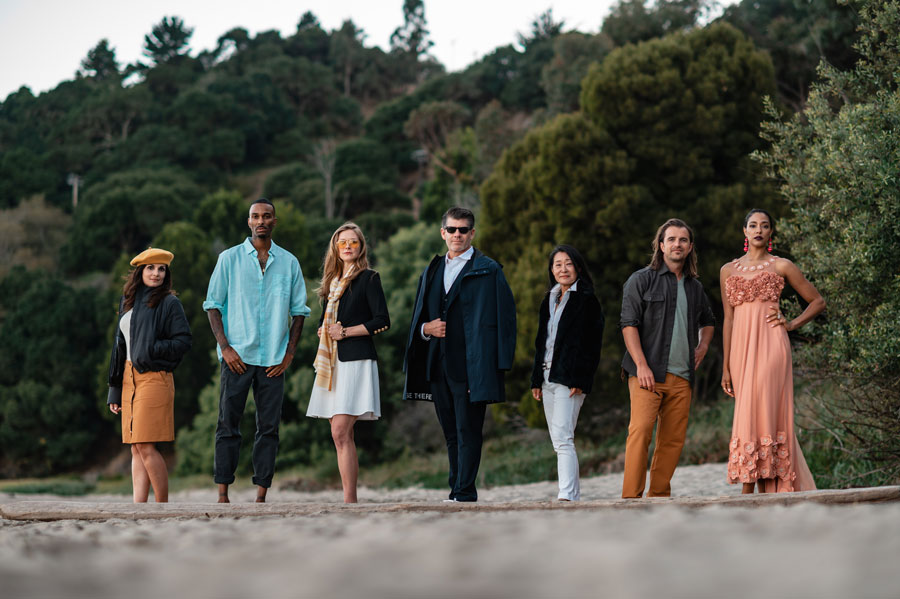
The sustainable fashion show models were outfitted in clothing made with DuPont™ Sorona® fibers. Credit: Russ Levi Photography

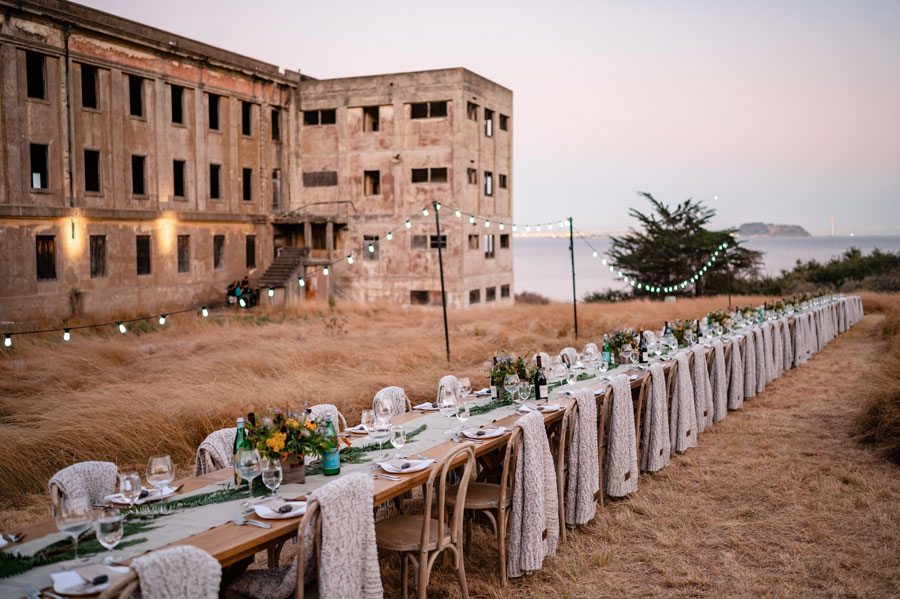
The DuPont™ Sorona® brand team invited brands, NGOs and media to an event on Angel Island to mingle and view some of the latest Sorona fashions.

By Rachael S. Davis, Executive Editor

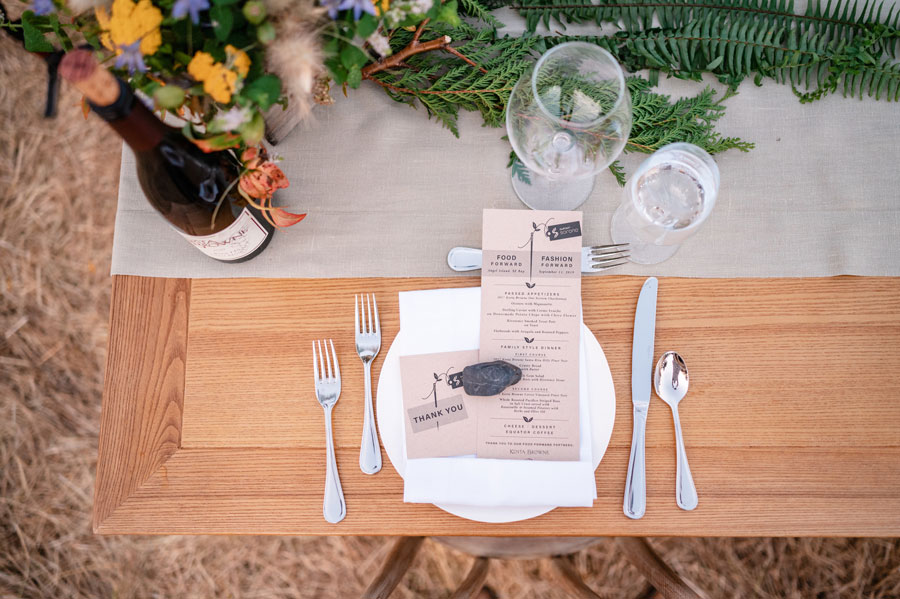
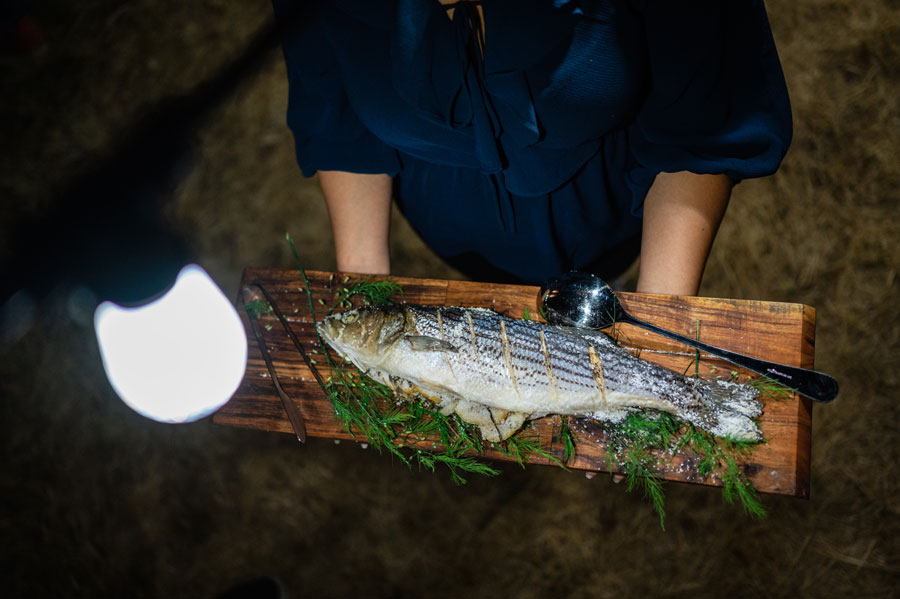
The DuPont™ Sorona® brand team recently hosted a “Slow Food, Slow Fashion” event on Angel Island outside of San Francisco. Professionals from industry brands, non-governmental organizations (NGOs) and members of the media gathered to experience a fashion show and enjoy dinner featuring locally sourced food and wine.

“We know that thoughtful discussion and meaningful collaboration — even across industries — drives real change,” said Renee Henze, global marketing director, DuPont Biomaterials. “With this in mind, the Sorona brand team brought together experts from the slow food and slow fashion movements to discuss how our industries can learn from each other and become more sustainable. By consuming food that is good for people and the planet, and manufacturing, selling and buying clothing that is sustainably sourced, durable and fashionable, we all can work together to promote and drive a more circular economy.”

Industry peers discuss the slow fashion movement over locally-sourced food and wine. Credit: Russ Levi Photography
Industry peers discussed the slow fashion movement over locally-sourced food and wine. Credit: Russ Levi Photography

Featured Fashions

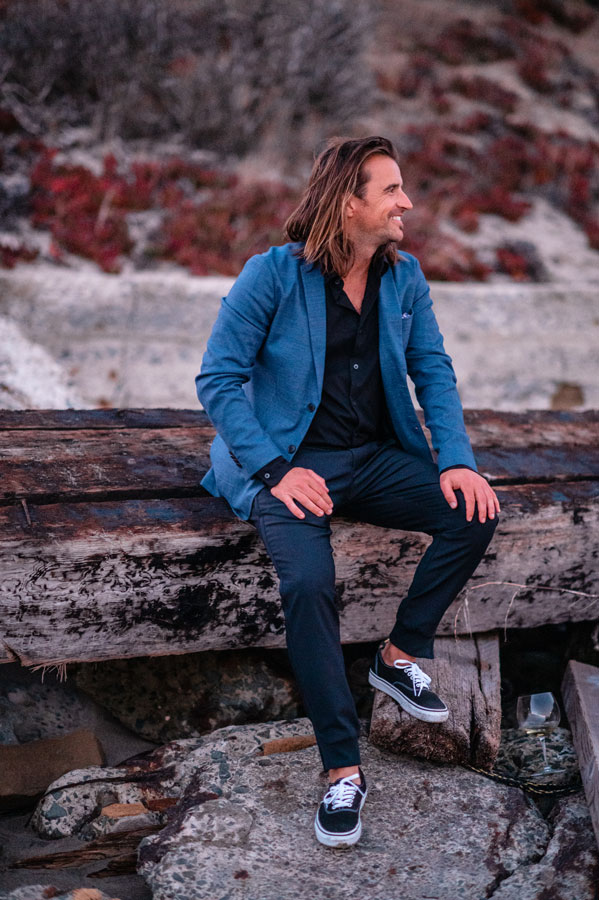
Models wore apparel — everything from high-end gowns to athletic apparel to linen shirts and everyday trousers — manufactured using Sorona fabrics from brands including The North Face, Club Monaco, Helly Hanson, Royal Robbins, prAna, Tommy Bahama and Taylor Stitch. Sorona, based on DuPont’s 37-percent bio-based material, is a versatile fiber suitable for ready-to-wear clothing, outerwear and luxury goods. The fashion show also included products created in collaboration with industry partners such as prototype garments developed through a collaboration between DuPont and the INVISTA® CORDURA® brand. “Ready to wear designers will love the lightweight feel and smooth clean look since eco-efficient CORDURA + Sorona fabrics offer both stylish elegance with an easy pack and go functionality,” said Cindy McNaull, CORDURA business development director. “We like to refer to the combination of these technologies as ‘Performance Proof’ since they give comfort, ease of movement and multi-faceted design options while helping you live more sustainably every day.”

“When ChiaHer, one of our key certified mills out of Taiwan, showed us this new fabric for the CORDURA + Sorona collaboration, I could not wait to see it blowing in the San Francisco Bay breezes on Angel Island,” explained Laurie Kronenberg, Sorona brand manager. “It created the perfect lightweight jacket for our athletic model creating a top to bottom spandex-free outfit.”

After a ferry ride to Angel Island and a talk by Marine Mammal Center experts, guests enjoyed a sustainable fashion show with models outfitted in clothing made with DuPont™ Sorona® fibers. Credit: Russ Levi Photography

According to DuPont, Sorona polymer-based fibers offer a soft hand, as well as stretch and ease of movement. The fiber has an inherent stretch property that does not break down over time when exposed to heat, ultraviolet rays or chlorine. Bio-based Sorona may be recycled in any normal polyester recycling stream, so is an eco-friendly option for stretch in garments.

The company also introduced Sorona Profile fabrics during the Angel Island event. The fabric, showcased in the ECOALF jacket, is designed to be crease resistant for a smooth look, and retains its shape throughout the day and wear-after-wear, according to DuPont.

The bicomponent staple fiber also may be blended with other fiber types from down to recycled polyester to create insulation products with optimized softness, warmth and light weight, according to DuPont. Some of the garments worn during the fashion show featured ECOLoft™ ActiVe insulation manufactured by South Korea-based YOUNGONE Corp. The vertically lapped insulation is a blend of Sorona fibers and REPREVE® recycled polyester fibers from Greensboro, N.C.-based Unifi Inc.

“The Angel Island event has been extremely beneficial,” reported Elyse Kaye, founder and CEO, Bloom Bras. “When I founded Bloom Bras, I searched high and low for materials and/or manufacturers that were sustainable but also technical. Sonora is a really interesting alternative. We are exploring ways to work together in the future. What a spectacular night!”

November/December 2019

November/December 2019

The American Council of Engineering Companies of Minnesota (ACEC/MN), Minnetonka, Minn., has named Jonathan Curry, MPA, executive director.

Stony Brook, N.Y.-based Applied DNA Sciences Inc. has appointed Scott L. Anchin to its board of directors.

Greg Harwell was named group president for Albany Engineered Composites, Rochester, N.H.

Jeffrey W. Smith has joined American Silk Mills, High Point, N.C., as director of sales.

Carstarphen
Carstarphen Photograph courtesy of Ty Longworth, La Vie Magnifique Photography

Bill Carstarphen, president and CEO of McAdenville, N.C.-based Pharr, was presented with the Spirit of the Carolinas Award and The Order of the Long Leaf Pine from the state of North Carolina during the recent Gaston Regional Chamber of Commerce’s 17th annual Salute to Business & Manufacturing.

Olivier Vermeersch was named president and CEO of CTT Group, Saint-Hyacinthe, Québec.

Effective January 13, 2020, John Donahoe is the new president and CEO of Beaverton, Ore.-based Nike Inc. Current Chairman, CEO and President Mark Parker will become executive chairman, continuing his leadership of the board of directors.

Kraig Biocraft Laboratories Inc., Ann Arbor, Mich., has added company COO John Rice to its board of directors.

Under Armour’s President and COO Patrik Frisk has been named CEO of the company effective January 1, 2020. Kevin Plank, the Baltimore-based company’s founder, chairman and current CEO will become executive chairman and brand chief.

Christian Guinet is the new secretary general of the Paris-based French Textile Machinery Manufacturers’ Association (UCMTF). He replaces Evelyne Cholet who has retired.

Lance Marram was named senior vice president, Global Service, of TPI Composites Inc., Scottsdale, Ariz.

Bruce Goldman has joined St. Louis-based knitter Evolution St. Louis as director of operations.

November/December 2019

November/December 2019

New York City-based Fil Doux Textiles has introduced a degradable vinyl product named Otratex™.

Cone Denim, Greensboro, N.C., recently introduced a new sustainable denim capsule collection of CiCLO Stretch Denim, the result of a collaboration with Intrinsic Advanced Materials, Hayward, Calif.

St. Louis-based Baldwin Technology Co. Inc. reports it has successfully installed TexCoat G4 coating lines at Adoksan and Boyteks, both based in Turkey.

Zimmer Austria, Spartanburg, S.C., has announced the sale of the first COLARIS digital textile printer in the United States to upholstery and decorative home fabrics dyehouse Ultimate Textile Inc., Rutherfordton, N.C.

Wilmington, Del.-based DuPont Advanced Printing recently launched DuPont™ Artistri® P2700 pigment inks for roll-to-roll digital printing.

Morris Plains, N.J.-based Honeywell has expanded its line of high-performance hard armor products with the addition of Spectra Shield® 6472 for improved protection in military
helmets.

Newark, Del.-based W.L. Gore & Associates is celebrating the 50th anniversary since the discovery of expanded polytetrafluoroethylene (ePTFE).

Polartec, Andover, Mass., has introduced the Polartec® Military Issue Collection. The American-made product forms the foundation of the GEN III Extended Cold Weather Clothing System, which is the standard issue cold weather apparel system in the U.S. Army.

Mount Holly, N.C.-based American & Efird (A&E) recently opened a manufacturing facility in Vietnam. The plant is A&E’s 28th state-of-the-art manufacturing operation.

Switzerland-based Archroma has joined the ZDHC Foundation as a contributor.

Germany-based Evonik has launched P84® polyimide fibers for a wide variety of high-performance applications.

November/December 2019

Quality Fabric Of The Month: “Sweat, Don’t Smell”

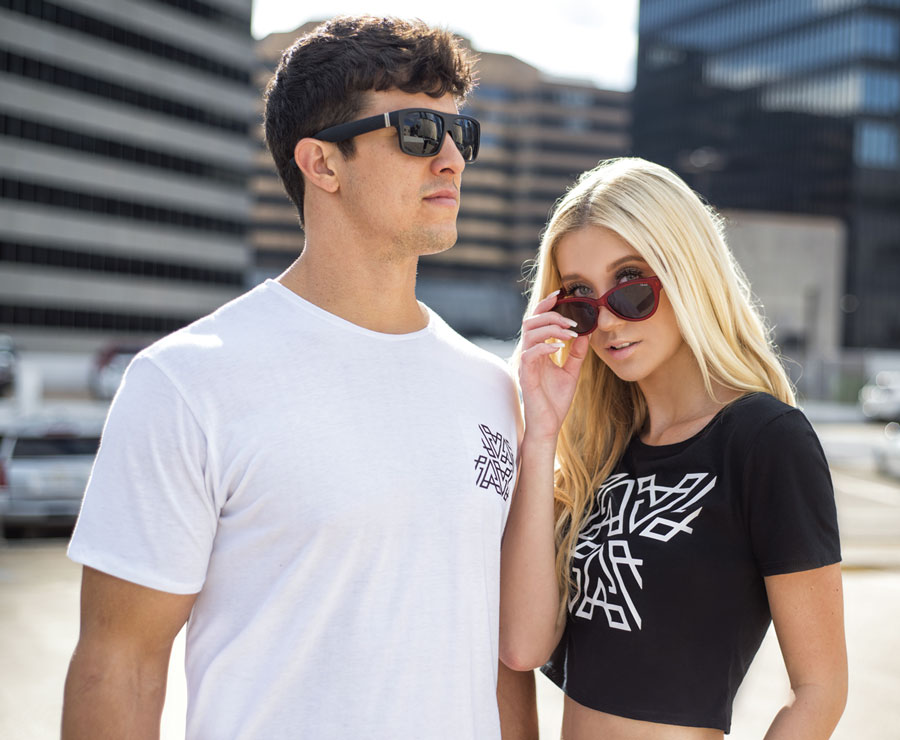
Accel Lifestyle offers black and white tanks and tees made using Prema™ fabric, which  features a silver-polyester additive to combat stink.
Accel Lifestyle offers black and white tanks and tees made using Prema™ fabric, which
features a silver-polyester additive to combat stink.

Accel Lifestyle offers “anti-stink” fitness apparel that is soft, durable and ethically  produced using its Prema™ fabric.

By Rachael  S. Davis,Executive Editor

Fitness clothing can still smell after washing because bacteria contained in sweat may get trapped in the fabric and is difficult to remove using traditional detergents. Biochemist Megan Eddings got tired of throwing away her smelly workout clothes and decided to develop her own technology to produce a fabric that is soft, durable, “anti-stink,” and produced ethically in the United States. After collaborating with multiple fabric, yarn and antimicrobial specialists for approximately three years, Eddings had exactly what she was looking for — Prema™ fabric. Accel Lifestyle, with Eddings as founder and CEO, recently launched a line of tees and tanks featuring Prema, which is a a Supima® cotton/polyester blend with a trade-secret silver-polyester anti-stink antimicrobial component that is incorporated during the yarn production stage. The Supima contributes durability, softness and color retention to the fabric; and the polyester offers wicking attributes. The 4.4-ounce-per-square-yard knit fabric is 100-percent sourced and “Made in the USA” using a sweatshop-free supply chain.

According to the company, Prema prevents the odor-causing bacteria from entering the fabric in the first place. The silver Accel Lifestyle uses inhibits the growth of the smell-causing bacteria focusing on Gram positive and Gram negative bacteria. All ingredients are Environmental Protection Agency-registered and formulated to be gentle on the skin and kind to the environment. The fabric has undergone extensive wear and antimicrobial testing. Wear tests, during which fitness enthusiasts wore Accel Lifestyle products for months with some washing only the garments every few weeks, showed anecdotally that the fabric performed and remained odor-free. Additionally, the fabric was tested for colony reduction against Staphyloccus aureus ATCC 6538 and Klebsiella pneumonia ATCC 4352.

The technology withstands laundering because it is embedded during the yarn production stage and is designed to last for the lifetime of the garment. The initial launch featured six styles of tees and tanks in black and white colors. More recently, Accel Lifestyle added the City Slick Crop Hoodie for women and the Urban Zip hoodie for men to its offerings. The company plans to scale to a full fitness apparel line with most items incorporating science into the fabric to improve odor, cleanliness and performance.

“While there are other antimicrobial products on the market, none check all of the boxes that I was looking for,” Eddings said. “It is very important to have the antimicrobial technology embedded in the fabric. It is also important that no sweatshops are use in the making of any part of the Prema fabric. We are an ethical company and I have personally visited every mill and cut and sew facility myself to make sure I am only working with an ethical supply chain.

“Also, most antimicrobial fabric is made from primarily or 100-percent man-made fibers,” Eddings added. “It is very important that we use the world’s best cotton, Supima, for the luxurious hand, while also being optimal for sweat and performance.”


For more information about Prema™ and Accel Lifestyle, contact info@accellifestyle.com or visit AccelLifestyle.com


November/December 2019

Honeywell Introduces Spectra Shield® 6360 To Enhance Law Enforcement Protection

PARIS — November 19, 2019 — Honeywell today introduced Spectra Shield® 6360, an advanced ballistic material for the creation of soft body armor that provides the highest level of protection for law enforcement. The announcement was made at Milipol 2019.

The newest addition to the Spectra Shield 6000 series, Spectra Shield 6360 will enable ballistic apparel manufacturers to design improved, light weight and comfortable protective vests that meet new stringent law enforcement regulations globally. In tests, Spectra Shield 6360 demonstrated up to 7 percent more ballistic protection than its predecessor in the Spectra Shield 5000 series, reducing the risk of blunt force trauma with greater absorption of energy from bullets.

“Police enforcement is one of the most dangerous jobs, and we’ve consistently innovated our Spectra portfolio to increase protection against the range of threats officers face everyday,” said Tim Swinger, business director for armor, Honeywell Packaging & Composites. “It is critical that we continue to improve the design of protective gear by making it lighter and more comfortable. Spectra Shield 6360 is our most advanced product for soft armor designs, allowing manufacturers to create the lightest vests possible.”

Honeywell’s Spectra Shield 6000 series also includes Spectra Shield 6472, which was specifically developed for high-performance hard armor and for helmet manufacturers to create the next generation helmets. The Spectra Shield series has been widely adopted and proven for the most advanced armor applications globally, from bullet-resistant vests, breast plates, and helmets, to combat vehicles and military aircraft where lightweight solutions and performance are critical.

Honeywell’s Shield technology is also capable of combining a variety of aramid fibers and resins to meet specific performance requirements in soft and hard armor applications. Pound for pound, Spectra is 15 times stronger than steel, yet light enough to float. It has up to 60% greater strength than alternate aramid fiber. Spectra fiber is made from ultra-high molecular-weight polyethylene (UHMWPE) using a patented gel-spinning process.

Customers will also receive a preview of Spectra Shield 6360 at the SHOT Show, Jan. 21-24, in Las Vegas, Nev.

Posted November 20, 2019

Source: Honeywell

Sponsors