SCHAUMBURG, Ill. — September 9, 2025 — INX International Ink Co. continues to score high marks with its employees. In a survey conducted by the Great Place to Work® organization, INX has earned recertification after employee satisfaction ratings reached an all-time high in the past three years.
With 78 percent of employees confirming INX has a vibrant workplace culture, it represents a seven point increase from last year and far exceeds the 57 percent average of typical United States companies. Bryce Kristo, INX President and CEO, believes the yearly improvements are attributed to the outstanding culture employees and management have built together.
Bryce Kristo
“This certification is more than a milestone. It’s a reflection of the trust, collaboration, and care that defines our workplace,” said Kristo, who has worked at INX since 1991. “This recognition is based entirely on our employees’ feedback, and this year’s results are our strongest to date.”
Kristo cited several categories he was especially proud of. Eighty six percent of the employees who responded agreed they have the resources and equipment to do their job, and can take time off when needed. Seventy two percent acknowledged feeling good about the ways INX contributes to the community, which is a nine point increase compared to last year.
The survey prepared by the Great Place to Work organization, one of the world’s foremost authorities on workplace culture, asked employees to respond to 60 statements on a 1-5 scale. According to Heather Seville, Vice President of HR and Risk Manager, INX’s score improved in 57 of the categories this year.
“We scored especially high in regards to treating employees fairly, being a physically safe place to work, making them feel welcome when they join the company, and the areas Bryce Kristo mentioned,” she said. “Our results this year highlight the dedication shown by leaders, supervisors, and individual team members throughout the organization. By prioritizing listening, support, and connection, these shared efforts have made a meaningful impact of how employees experience our workplace.”
WASHINGTON — September 9, 2025 — Following a near-record peak this summer, import cargo volume at the nation’s major container ports is expected to steadily decline for the remainder of the year amid rising tariffs, according to the Global Port Tracker report released today by the National Retail Federation and Hackett Associates.
“We have seen the implementation of reciprocal tariffs across the globe, with a number of key trading partners being subjected to tariffs higher than the earlier 10 percent tariffs,” NRF Vice President for Supply Chain and Customs Policy Jonathan Gold said. “We also continue to see more and more sectoral tariffs impacting a wider scope of products. Retailers have stocked up as much as they can ahead of tariff increases, but the uncertainty of U.S. trade policy is making it impossible to make the long-term plans that are critical to future business success. These tariffs and disruptions to the supply chain are adding costs that will ultimately lead to higher prices for American consumers.”
While “reciprocal” tariffs on a number of countries took effect in early August, a federal appeals court later ruled against President Donald Trump’s use of the International Emergency Economic Powers Act to impose the tariffs, but left them in place while the ruling is under appeal to the Supreme Court. Meanwhile, Trump delayed an increase in tariffs on China by 90 days to Nov. 10 so trade negotiations could continue. Trump also announced an additional 25 percent tariff on India that took effect near the end of August, bringing the additional tariff rate to 50 percent.
“Tariffs have had a significant impact on trade,” Hackett Associates Founder Ben Hackett said. “The trade outlook for the final months of the year is not optimistic.”
U.S. ports covered by Global Port Tracker handled 2.36 million Twenty-Foot Equivalent Units — one 20-foot container or its equivalent — in July, although numbers for New York/New Jersey, Port Everglades and Miami were estimated because they have not yet reported their data. That was up 20.1 percent from June as retailers brought in merchandise ahead of tariffs set to take effect in August, and up 1.8 percent year over year. It would be the second-busiest month on record, topped only by 2.4 million TEU in May 2022.
Ports have not yet reported numbers for August, but Global Port Tracker projected the month at 2.28 million TEU, down 1.7 percent year over year but higher than that 2.2 million TEU expected before the postponement of China tariffs and the new tariff on India.
September is forecast at 2.12 million TEU, down 6.8 percent year over year; October at 1.95 million TEU, down 13.2 percent, and November at 1.74 million TEU, down 19.7 percent. December is forecast at 1.7 million TEU, down 20.1 percent year over year for the slowest month since 1.62 million TEU in March 2023.
While the falling monthly totals are related to tariffs, the year-over-year percentage declines are both because of this year’s early peak season and because imports in late 2024 were elevated by concerns about port strikes.
The first half of 2025 totaled 12.53 million TEU, up 3.6 percent year over year. The full year is forecast at 24.7 million TEU, down 3.4 percent from 25.5 million TEU in 2024.
January 2026 is forecast at 1.8 million TEU, down 19.1 percent year over year.
NEURIED, Germany — September 9, 2025 — AMSilk GmbH, a frontrunner in advanced biomaterials made from silk-based proteins, today announced it has successfully secured 52 million euro financing led by existing investor ATHOS (AT Newtec), along with strong participation from fellow existing investors MIG Capital and Novo Holdings. The financing combines 30 million euros in equity, and 22 million euros in convertible bonds. This reflects strong investor confidence and long-term commitment in AMSilk’s technology and market potential.
The proceeds will be used to build further commercial traction and support AMSilk’s next phase of industrial scale-up, enabling the Company to meet growing global demand for its silk-based protein materials.
AMSilk has concluded several multi-year production agreements, establishing a long-term basis for industrial output and supply reliability. Dedicated production facilities, specifically configured for the manufacturing of AMSilk’s proprietary silk-based protein materials, have been installed at the Company’s key industrial partners. This enables AMSilk to produce at scale with consistent quality and reliability across its product portfolio.
Ralph Fraundorfer, Chief Financial Officer of AMSilk, commented: “We are grateful to our shareholders for their continued support — especially in today’s challenging funding environment. The investment demonstrates confidence in our clear path-to-market, scalable technology and strong partner network. As we move to industrial-scale production, we are focused on establishing robust processes and resilient supply chains — providing clear commercial proof of our ability to deliver on our industrial commitments and scale our innovative biomaterials for global markets.”
Dr. Wolfgang Colberg, Chairman of AMSilk’s Advisory Board stated: “At AMSilk, we are very excited about the enthusiasm of our customers for our products and the high demand we are seeing. With the committed funding from our investors, we can now work with our partners to massively scale-up production. This is a significant step towards establishing a completely new industry in Europe and around the world for high-performance biotech materials that can be used in countless applications.”
Daniel Kolb, Investment Manager at ATHOS KG, added: “AMSilk’s transition to full-scale production signals strong commercial validation. The Company’s ability to manufacture biofabricated materials at multi-ton volumes confirms its industrial viability and readiness to meet growing market demand. At ATHOS, we invest in companies that combine deep technological innovation with clear commercial potential, and AMSilk exemplifies this philosophy.”
AMSilk’s innovative silk-based protein technology creates novel, sustainable biomaterials by reprogramming microorganisms to produce silk-based proteins which can be processed into a variety of forms, including powders, hydrogels, fibers, and coatings. These 100-percent protein-based, fully biodegradable, and microplastic-free biomaterials are used to produce a new class of fibers for textile applications in the fashion and automotive industry and serve as functional ingredients in the consumer care sector. Moreover, there is a wealth of additional potential applications across various industries that can be realized using this technology.
Following the successful extension of its Series C financing in 2023, AMSilk has continued to strengthen its commercial footprint through strategic partnerships with leading global brands in the fashion, automotive, and consumer care sectors. A key pillar of this progress is AMSilk’s collaboration with renowned industrial partners such as Evonik and Ajinomoto, which manufacture its silk-based proteins at scale. These partnerships play a critical role in enabling AMSilk’s transition toward full industrialization and global market readiness.
LOS ANGELES — September 9, 2025 — Hologenix, the pioneer in infrared textile innovation and the company behind CELLIANT®, will be attending the Health Optimisation Summit in London on September 13 and 14. Seth Casden, CEO and co-founder of Hologenix, will be in attendance at The Summit to showcase the company’s new Infrared Dream Pillow Powered by CELLIANT, which marks its international debut, and to meet with potential partners.
The Infrared Dream Pillow uses CELLIANT’s proprietary infrared (IR) technology to promote thermoregulation, improve local circulation, and increase cellular oxygenation, to help you wake up feeling more rested, restored, and energized. CELLIANT has been an innovator in the infrared technology space for decades, but the Infrared Dream Pillow is the first time the team has launched its in-house product. The pillow debuted in May and was met with resounding enthusiasm, which has led Hologenix to expand into the United Kingdom (UK) market.
Seth Casden
“When I first started CELLIANT, my intention was always to help as many people live their healthiest and happiest lives,” said Seth Casden, CEO and co-founder of Hologenix. “Infrared has such incredible benefits, and one day, I hope it’s a part of everyone’s routine.
“We’re always expanding our offerings and identifying new partners — the Dream Pillow is our latest product to bring IR technology to consumers. We’re thrilled to be attending the Health Optimization Summit in London this fall and hope to meet other like-minded companies and retailers, as well as attendees who want to learn more about the power of infrared.”
Many well-respected brands have incorporated CELLIANT into their product lines, and the company looks forward to exploring new opportunities at the show. Hologenix has worked seamlessly with European companies like BLACKROLL, Centa-Star, Decathlon and DAGi, and knows the international market well.
CARY, N.C. — September 8, 2025 — INDA, the Association of the Nonwoven Fabrics Industry, is pleased to announce the three finalists for the 2025 RISE® Innovation Award. A highlight of the RISE® (Research, Innovation & Science for Engineered Fabrics) Technology Conference, this award recognizes groundbreaking nonwoven-based innovations with the potential to advance the industry.
The 2025 RISE Technology Conference will take place October 14–15 at the McKimmon Center, North Carolina State University, Raleigh, N.C.
Technology scouts, product developers, and business leaders from across the nonwovens value chain will gather to discover the latest research, connect with thought leaders, and see first-hand the technologies competing for the award.
The three finalists will present their groundbreaking technologies to conference participants on Tuesday afternoon, October 14. The winner of the 2025 RISE® Innovation Award will be announced on Wednesday afternoon, October 15.
Meet the 2025 Award Finalists
EsterCycle by EsterCycle
Hospitals and laboratories generate enormous amounts of PPE nonwoven plastic waste, most of which is incinerated. Polyethylene terephthalate is used extensively in nonwovens, and there is significant interest in using biobased polyesters such as polylactic acid and polyhydroxyalkanoates to reduce the footprint of these essential materials. EsterCycle is a low cost and emissions chemical recycling technology that can handle biohazard contamination and break down mixed polyester nonwovens for circulation back into the supply chain.
Kelsun® fiber by Keel Labs
KelsunⓇ fiber, developed by Keel Labs, is the world’s first high-performance seaweed-based fiber. Plastic-free and tree-free; the combined properties of Kelsun allow it to outperform all other fibers without shedding harmful microplastics. This breakthrough material brings extreme softness, high absorptivity, inherent flame resistant and antimicrobial properties, in addition to unmatched biodegradability. Engineered to integrate into existing nonwoven manufacturing, Kelsun fiber delivers a revolutionary material that combines performance with sustainability for next-generation consumer and industrial products.
Fentanyl Detection by Rockline Industries
Rockline Industries has developed a revolutionary fentanyl detection wipe that rapidly changes color from orangish to deep red upon contact with miniscule levels of fentanyl, enabling first responders, law enforcement, and others to identify the presence of toxic opioids safely. The wipe contains a novel formula with color indicators and a specific starch bound to viscose fibers, ensuring the reaction occurs on the wipe itself. Tested successfully with pharmaceutical and street-grade fentanyl and other dangerous opioids at various U.S. labs and police departments. The single-use sachet offers a convenient presumptive test with broad applications including military, airports, schools, and penitentiaries, with ongoing patent filings and potential for detecting other dangerous opioids.
The RISE® Innovation Award recognizes innovation in areas that use nonwovens or engineered fabrics in a way that is technically sophisticated, creative, unique, and feasible, and that demonstrates potential to positively impact the nonwovens industry.
2024 RISE® Innovation Award Winner
The 2024 RISE Innovation Award winner was PlantPanel™ X by Hempitecture Inc. PlantPanel X is a rigid continuous insulation material used in exterior above-ground applications. With an R Value of R3.25 per inch, PlantPanel adds to thermal and acoustic comfort and performance. Engineered with a density to resist compression and deflection, PlantPanel is used in split-insulation wall and roof assemblies with either a rain screen cladding or roofing material, depending on the application. With 100-percent biobased and recycled content, PlantPanel is a sustainable, low carbon continuous insulation solution that’s easy to install and safe to handle.
For more information or to register for the RISE Technology Conference 2025, visit www.riseconf.net
Posted: September 8, 2025
Source: INDA, the Association of the Nonwoven Fabrics Industry
LEIPZIG, Germany — September 4, 2025 — Traditionally, assessing fabric hand feel and wearing comfort has been highly subjective, making collaboration along the textile supply chain difficult. The TSA changes this by delivering objective, reproducible data on key parameters such as surface softness, surface smoothness, compressibility, stretch, friction, and thermal behavior. This enables manufacturers, mills, and brands to establish a common language for fabric quality, ensuring consistency and reliability.
By digitizing tactile data and linking it to the cloud-based Virtual Haptic Library, the TSA helps textile developers:
Save time and costs in R&D by reducing sample shipping, iterations, and approval delays – cutting development cycles from up to 20 weeks to as little as two.
Improve efficiency across sourcing and production workflows through digital comparison instead of costly lab dip submittals.
Boost sustainability by minimizing sample waste and reducing transport-related emissions.
Ensure quality consistency by detecting subtle variations between fabric batches that are otherwise nearly impossible to recognize by touch.
The system also integrates seamlessly with Product Lifecycle Management (PLM), Enterprise Resource Planning (ERP), and quality management systems, supporting the textile industry’s shift towards digitization, automation, and data-driven decision-making. “Turning subjective impressions into objective data is a critical competitive advantage,” says Alexander Gruener. “With the TSA and our Virtual Haptic Library, we provide a scalable solution that accelerates development, improves communication, and supports sustainability goals across the global textile supply chain.”
Visitors to the Amsterdam Textile Show 2025 will have the opportunity to experience live demonstrations of the TSA in Hall 11 at booth no. W103 and learn how emtec Electronic is shaping the future of digital fabric evaluation.
WASHINGTON — September 4, 2025 — The American Medical Manufacturers Association (AMMA) has urged Congress to take decisive action to restore American leadership in critical medical manufacturing. As the nation celebrates new investments in medical, biotech, and pharma production, key vulnerabilities persist, especially for U.S. makers of personal protective equipment (PPE) and medical supplies facing unfair global competition.
“Inaction is no longer an option,” said AMMA Executive Director Eric Axel. “America cannot protect its healthcare workers or citizens without a resilient, homegrown manufacturing base for critical supplies. Congress holds one important lever to revitalizing a critical industry.”
AMMA President Dan Izhakyl added, “The challenge to domestic manufacturers is clear. Without durable, bipartisan support from Congress, we risk losing jobs and America’s preparedness, resilience, and national security.”
AMMA released its four immediate priorities to strengthen U.S. medical manufacturing:
Expand Access to Capital for U.S. Manufacturers — The Made in America Manufacturing Finance Act would double the loan limits in SBA’s popular 7(a) and 504 loan programs from $5 million to $10 million. Raising these caps will give small and mid-sized manufacturers, particularly in critical health sectors, the resources needed to modernize facilities, scale domestic production, and compete globally.
Bolster Medical Investments — The FY26 HHS appropriations include over $3.2B for the Biomedical Advanced Research & Development Authority (BARDA) and ASPR procurement. This funding includes $10M targeted at advanced manufacturing and industrial base expansion. We must ensure this funding survives conference negotiations and is protected from cuts.
Strengthen the Strategic National Stockpile (SNS) — The SNS provisions incentivize manufacturers to build capacity inside the U.S. by supporting construction and renovation. Just as important, restrictions on procurement from foreign adversaries reflect the reality that national security is not just about supplies, but also who controls those supply chains.
Maintain “Buy American” Across Federal Investments — Provisions in the Financial Services and General Government Appropriations Bill that reinforce Buy American standards should be carried through final passage. When taxpayer dollars are spent, they should support American workers, innovation, and resilience, not subsidize overseas competitors.
AMMA called on Congress to advance these priorities through committee hearings, markups, and final conference. Congress must deliver the policies, certainty, and investment signals America’s innovators and workers need to build a safer, stronger, and more secure medical future.
Posted: September 8, 2025
Source: The American Medical Manufacturers Association (AMMA)
BANGKOK, Thailand — September 5, 2025 — Indorama Ventures Public Co. Ltd., a global sustainable chemical company, is accelerating the textile industry’s transition to lower-carbon materials with its scalable, high-performance bio-based PET fibers and yarns under the deja™ Bio portfolio.
At the upcoming Dornbirn Global Fiber Congress on September 10-12, Claire Mattelet, Global Sustainability Program Head for Indorama Ventures’ Fibers Business, will share the company’s experience in developing a fully certified, low-carbon supply chain at scale.
Her presentation will explore several challenges, such as:
Securing reliable sources of renewable feedstocks to produce bio-based PTA and MEG inhouse or sourcing bio-based chemicals such as bio-based MEG from trusted partners
Converting feedstock into PET chips, yarns, and fibers
And navigating complex certification requirements
As a result, Indorama Ventures is now able to offer customers and brand owners an integrated, fully certified supply chain through mass balance at scale.
Using a mass-balance approach means that renewable feedstocks, such as used cooking oil, are blended with fossil-based raw materials in existing production systems.
The renewable content is then allocated to final products using certified methods like ISCC+, ensuring traceability throughout the value chain and compliance with chain-of-custody requirements.
By leveraging existing infrastructure, coupled with R&D capabilities and proven technologies, Indorama Ventures enables rapid market deployment of bio-based PET fibers and yarns that are chemically identical to their fossil counterparts. This ensures customer processes remain the same, performance metrics such as durability, dyeability, and strength are equal to virgin solutions, and brand owners and converters can speed up qualification lead times and immediately reduce scope 3 emissions to seamlessly upgrade their existing product lines.
Indorama Ventures invites brand owners, manufacturers, and industry partners to explore the deja Bio portfolio and join the movement toward a lower-carbon textile industry.
The technology is proven, the supply chain is built.
WASHINGTON — September 5, 2025 — The United States Fashion Industry Association (USFIA) announced today that Michael Lambert, executive director of Global Trade and Compliance at Urban Outfitters Inc. takes over as chairman. He has been a member of the Board of Directors since 2020 and has served as vice chairman since 2023. Lambert supports URBN’s global business strategy as head of the Customs, Regulatory, Social Responsibility, Corporate Sustainability and Vendor Relations teams. Lambert is a graduate of Penn State University and has been a Licensed Customs Broker for more than 20 years.
Lambert said: “As a member of the United States Fashion Industry Association for over two decades, I’ve seen firsthand the great benefits that come from being part of the premier trade association for textile and apparel importers. I’m honored to have the opportunity to step into the Chairman’s role after working closely with Chris for the last two and a half years.
It would be an understatement to say that the current global trade environment is challenging. Import requirements are changing weekly, sometimes daily. Costs are rising. Regulations are getting more complicated.
Now, more than ever, the United States Fashion Industry Association is an invaluable resource for navigating the complexities and uncertainties of the global trade environment. I look forward to working together with Julie, the USFIA Board of Directors, member companies and strategic partners to identify the key issues impacting our industry and providing support, advocacy and education to help manage the challenges of the coming years.”
“I’m thrilled to announce that Mike will take over as chairman of USFIA, helping to lead our organization on our continued path of growth and trade policy wins for our members,” said Julia K. Hughes, president of USFIA.
“USFIA remains dedicated to our mission to eliminate barriers to trade, but we also focus on providing resources to help members comply with global labor, human rights, and environmental standards, too,” Hughes explained. “Mike’s expertise in both customs compliance and social compliance reflects USFIA’s commitment to help global brands and retailers balance the variety of trade and compliance challenges that we face every day.”
Lambert takes over as chairman following the departure from American Eagle Outfitters of Chris Lucas, chairman of USFIA since 2023 and an attorney and the former vice president of Commercial & Compliance Law at AEO. Lucas brought a unique and valuable perspective and focus to the association’s policy decisions.
Maristella Iacobello, vice president of Customs & Trade Governance at PVH, replaces Lambert as USFIA’s vice chair. In her role at PVH, she is responsible for providing guidance and policy on Trade and customs compliance matters including Free Trade
Agreements/preference programs, valuation, trade enforcement, classification and supporting Global labeling regulations.
Posted: September 8 2025
Source: The United States Fashion Industry Association (USFIA)
MANCHESTER, England — September 8, 2025 — At the forthcoming ITMA Asia + CITME exhibition in Singapore, specialists from a 20-strong delegation of British Textile Machinery Association (BTMA) companies will be on hand to discuss some of the highly advanced industries they are now actively supporting.
The manufacture of medical sutures, for example, is a very specialized process and because these items are implanted directly into the human body, every stage of production is tightly controlled to ensure safety, sterility and reliable performance.
Absorbable sutures are usually made from polymers that degrade safely within the body, such as polyglycolic acid, polylactic acid or polydioxanone, while non-absorbable sutures use durable materials like nylon, polypropylene, polyester, silk or even stainless steel. All of these must be of medical grade and fully biocompatible.
FET is a world leader in both the fibre selection and production technologies behind medical sutures.
The UK’s Fibre Extrusion Technology (FET) is a world leader in both the fiber selection and production technologies behind this industry and in Singapore will highlight a groundbreaking new parallel technology for the medical sector based on supercritical CO2.
Further developments in the field of automation and control in advanced fiber production will be highlighted by BTMA members including Autofoam, James Heal, Roaches, Strayfield, Verivide and Wira Instrumentation.
Automated Fibre Placement (AFP) and Automated Tape Laying (ATL)
From the micro to the macro, sophisticated aerospace technologies such as automated fiber placement (AFP) and automated tape laying (ATL) meanwhile involve the precise placement of carbon fiber tapes or tows on a mold surface, which are then cured to form lightweight yet strong components.
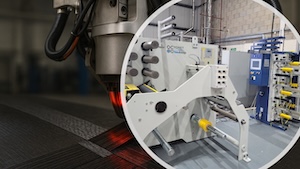
Cygnet Texkimp new prepreg tape slitting machine supports AFP and ATL operations.
AFP allows for complex geometries by steering individual tows, making it ideal for fuselage sections, wing skins and other curved structures. ATL, on the other hand, is more efficient for larger, flatter surfaces such as wing covers or stabilisers, where wider tapes can be laid down at high speed with minimal gaps or overlaps. Together, these technologies significantly reduce material waste, improve repeatability and deliver structural performance beyond what traditional hand lay-up methods can achieve.
The UK’s Cygnet Texkimp has developed a new technology to greatly assist this industry which will be unveiled in Singapore.
BTMA CEO Jason Kent
Collaboration
“High value industries such as aerospace, defense, renewable energy, automotive and the medical sector are areas of high growth and opportunity and an important factor underpinning the success of our companies here is the strong collaboration between industry and the many universities and institutes in the UK,” says BTMA CEO Jason Kent.
“Machine builders can also be important in driving material developments as well as technologies.”
Ultra High Molecular Weight Polyethylene (UHMWPE)
A good example of this is the flexible new process for manufacturing ultra high molecular weight polyethylene (UHMWPE) that will be introduced in Singapore by FET.
UHMWPE is prized in many industries due to its extraordinary properties, being for example, ten times stronger than steel by weight. It is increasingly used in medical implants, but the current systems for manufacturing it are on a huge scale, with very complex processing routes.
This restricts the opportunity for new product development — a disadvantage that is fully addressed with FET’s series lab and small scale gel spinning system, which is already industrialized.
“We have supplied many extrusion systems to the biomedical market and in exploring what else we could do for the same customers it became clear that there was a need for smaller quantities of UHMWPE fibres in bespoke sizes.” explained FET Managing Director Richard Slack. “We believe our introduction of a patented batch system for solvent extraction exploiting supercritical CO2 is a game changer.”
Early stage development
Cygnet Texkimp has meanwhile just introduced a next-generation, production-scale prepreg tape slitting machine at its UK Innovation Centre in Northwich.
This enables organizations to trial the slitting of continuous thermoset, thermoplastic and ceramic prepreg tapes for AFP and AFL processes in real-world conditions using their own materials or those produced on Cygnet Texkimp’s in-house R&D prepreg machines on the machine. The technology can slit tapes at speeds of up to 60 meters per minute, subject to the input material.
“We’re pleased to be able to offer partners the opportunity to engage with us at an early stage in process development, to test out their concepts, explore machine parameters, assess output quality and validate performance with support from our expert team,” said Graeme Jones, wide web product director at Cygnet Texkimp.
Splicing portfolio
Also providing back up services to the aerospace industry is Airbond, with splicing technologies which ensure resource efficiency in the processing of extremely expensive carbon and aramid fibers. Pneumatic yarn splicing is a process established in the textile industry for joining yarns and works by intermingling individual filaments closely together, to make joint which are stronger and flatter than knots.
“We are continuing to find new partners in the wind turbine, hydrogen and aerospace industries and are doing a lot of developmental work with research institutes and universities,” said Technical Director Carwyn Webb. “This is leading to us expanding our portfolio and we are currently working on systems for carbon tape splicing, for example, as well as an automated system for full weaving beams.”
Further developments for the technical textiles and composites sectors will be showcased by BTMA members including Garnett Controls, Roaches International, Slack & Parr and Tatham.
Spirit of openness
“Many BTMA members are currently developing new technologies, either in-house or increasingly through joint projects, and we have much to reveal in Singapore,” said Jason Kent in conclusion. “There’s a new spirit of openness and adventurous interaction in the UK right now — especially in the fields of advanced fibers and technical textiles — which is very encouraging for the future.”
BTMA companies taking part in ITMA Asia + CITME 2025 are:
Airbond (stand A202, Hall 2),
Autofoam (B309, Hall 7),
AVA CAD/Cam (C210, Hall 6),
Cygnet Texkimp (B493, Hall 8),
Fibre Extrusion Technology (B306, Hall 4),
James Heal (B306, Hall 3),
MCL (A203, Hall 5),
Roaches (A112 Hall 2),
Saurer Fibrevision (C301c, Hall 3),
SDC Enterprises (B107, Hall 8),
Sellers (B207, Hall 7),
Shelton Vision (B308, Hall 7),
Slack & Parr (D305, Hall 4),
Society of Dyers and Colourists (B203, Hall 3),
Strayfield (B509, Hall 7),
Tatham (D205, Hall 2),
The Textile Institute (B105, Hall 8),
Verivide (B201, Hall 3),
Vickers Oils (B102, Hall 5) and
Wira Instrumentation (A108, Hall 3),
Founded in 1940, the British Textile Machinery Association actively promotes British textile machinery manufacturers and their products to the world. The non-profit organization acts as a bridge between its members and the increasingly diverse industries within the textile manufacturing sector.
Posted: September 8 2025
Source: British Textile Machinery Association (BTMA)

 SCHAUMBURG, Ill. — September 9, 2025 — INX International Ink Co. continues to score high marks with its employees. In a survey conducted by the Great Place to Work® organization, INX has earned recertification after employee satisfaction ratings reached an all-time high in the past three years.