EURATEX —­ The New EU Industrial Strategy: How Do We Get From Principles To Practice?

BRUSSELS — March 10, 2020 — EURATEX welcomes the proposed new EU industrial strategy but wonders how the proposed principles will be put into practice; reality checks and close monitoring of the implementation of the strategy will be essential to make a positive and sustainable impact.

The European textiles and apparel industry, worth nearly 180 billion euros and including 171,000 companies, is an essential pillar of the European industry. It is a very globalized industry with extensive value chains across different continents. Over the last 10 years, real changes have been made to innovate and increase sustainability of its products, starting from traditional clothing to smart and medical textiles, industrial applications in the automotive and aerospace industry, to protective wear and high-end fashion.

Against this background, EURATEX welcomes the launch of a new comprehensive EU industrial strategy. It is high time for Europe to embrace its industry again, as a source of welfare, innovation and employment. The proposed strategy is rightfully putting emphasis on economic sovereignty, without falling into the trap of protectionism.

The strategy should include some important elements, essential for its success:

  • Any proposed measure must be assessed in a global context, i.e. European companies cannot be subject to new rules, standards or regulations unless all players do play with the same rules. Measures to ensure a level playing field must be realistic and effective.
  • Innovation into a more sustainable industry has an important cost, and the end consumer is not always willing to pick up that cost. This may jeopardize the financial sustainability of our industry, especially for smaller companies. Accompanying measures should be taken to alleviate the burden of green investments, especially for SMEs.
  • Labour force shortage is an important barrier to the development of our industry. In 2018, 34% of the Textile and Clothing workforce was over the age of 50 (a steep increase from the 22% just 10 years ago). It is therefore urgent to make a common effort to both upskill and reskill the current workforce and to attract young talent.

While the principles mentioned in the strategy are sound, effective implementation of such principles into practical measures will be critical. Too often in the past, the EU has presented ambitious plans, but failed to deliver on their implementation, either by lack of resources or political will from member states. EURATEX therefore calls for a strict “governance” of this new strategy, introducing measurable targets, which can be monitored by relevant stakeholders. “We should be vigilant that proposed measures are realistic and effective, and actually support industrial competitiveness, rather than adding a regulatory or financial burden”, commented Director General Dirk Vantyghem on the proposed strategy.

EURATEX stands ready to contribute to a positive and effective implementation of the strategy, making sure the European economy can regain its competitiveness, create jobs and welfare.

Posted March 10, 2020

Source: EURATEX

Vince Hankins Joins Organic Dyes And Pigments As Vice President Of Sales

LINCOLN, R.I. — March 10, 2020 — Organic Dyes and Pigments LLC (ORCO)is pleased to announce that Vince Hankins has joined Organic Dyes and Pigments LLC as vice president of sales. Hankins will be responsible for all of ORCO’s sales and marketing management.

Hankins brings with him over thirty years of sales and business management experience with Unifi, Glen Raven Custom Fabrics and most recently Kaltex America having held positions ranging from technical service, account manager, sales manager, director business development, business and division director. He holds a Bachelor’s Degree in Textile Chemistry from North Carolina State University and resides in Burlington, N.C.

Posted March 10, 2020

Source: Organic Dyes and Pigments

Hengli Petrochemical Announces Full Rate Operation On Its Fourth PTA Line Utilizing INVISTA’s P8 PTA Technology

SHANGHAI — March 9, 2020 — INVISTA’s technology and licensing group, INVISTA Performance Technologies (IPT) and Hengli Petrochemical (Dalian) Co. Ltd (Hengli) announced that Hengli’s fourth purified terephthalic acid (PTA) line has reached full rate.

This PTA line of 2.5 million metric tons per annum capacity, located in Changxing Island, Dalian City, Liaoning Province, utilizes INVISTA’s P8 PTA technology with industry leading variable cost, capital productivity and environmental performance, came online on January 8, 2020. This PTA line also produces benzoic acid as co-product, utilizing INVISTA’s proprietary R2R technology.

Mike Pickens, IPT president, commented: “I congratulate Hengli on the successful operation of its PTA Line 4. Both Hengli and INVISTA teams have demonstrated extraordinary commitment under difficult circumstances. The successful start-up of Hengli’s fourth line yet again demonstrates INVISTA’s capability in technology transfer in the global PTA market.”

INVISTA’s industry-leading PTA technology, including its latest version of P8 technology, is available as a license package from IPT.

Posted March 9, 2020

Source: INVISTA

NILIT® Operates Globally Under Normal Schedule During COVID-19

MIGDAL HAEMEK, Israel — March 9, 2020 — NILIT is closely monitoring the COVID-19 outbreak situation and following relevant guidelines of the World Health Organization (WHO) and local health authorities as it continues to meet the needs of its customers around the world.

“Nothing is more important than the health and safety of our people and of the communities we serve,” said Ilan Melamed, NILIT general manager. “At the same time, we are fully committed to do whatever is necessary to support the needs of our customers and partners wherever they are. As a global operation, we have manufacturing facilities on four continents, and are ready and able to supply from them to any location in the world.”

NILIT is maintaining a normal schedule at all its manufacturing plants, distribution centers and sales offices, and is working closely with its suppliers and logistics partners to ensure that products and services reach global customers in as timely a manner as possible.

Posted March 9, 2020

Source: NILIT®

Ross Stores To Open 100 New Locations In 2020

DUBLIN, Calif. — March 9, 2020 — Ross Stores recently opened 19 Ross Dress for Less® and seven dd’s DISCOUNTS® stores across nine different states in February and March. These new locations are part of the Company’s plans to add approximately 100 new stores — 75 Ross and 25 dd’s DISCOUNTS locations — during fiscal 2020.

“These recent openings reflect our ongoing plans to continue building our presence in both existing and newer markets, including the Midwest for Ross, and expansion of dd’s DISCOUNTS into Indiana,” said Gregg McGillis, group executive vice president, Property Development. “We now operate a total of 1,831 Ross Dress for Less and dd’s DISCOUNTS locations across 39 states, the District of Columbia, and Guam. As we look out over the long-term, we remain confident that Ross can grow to 2,400 locations and dd’s DISCOUNTS can become a chain of 600 stores given consumers’ ongoing focus on value.”

Posted March 9, 2020

Source: Ross Stores Inc.

Wrangler® Introduces Women’s Workwear Line, Addressing Increasing Demand For Fashionable & Functional Women’s Workwear Options 

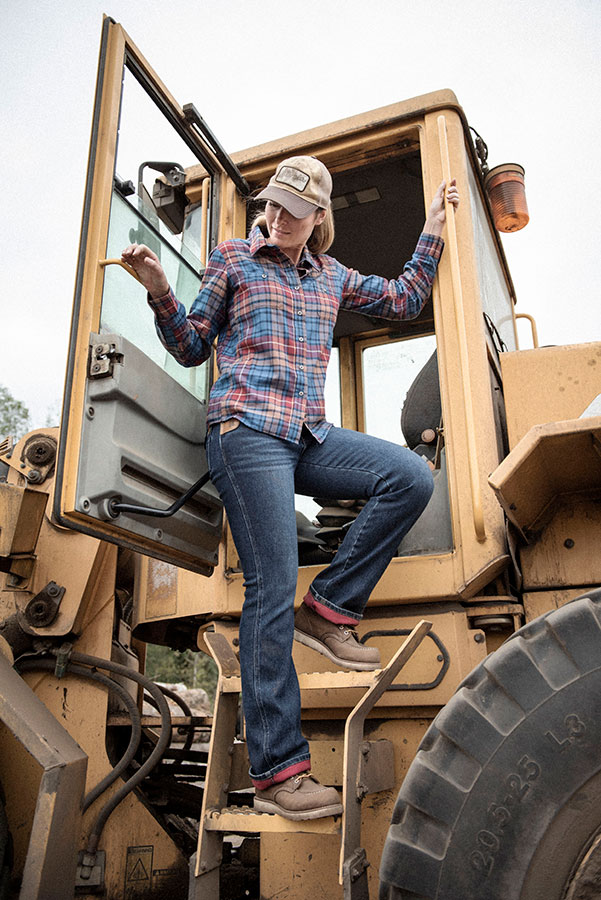
GREENSBORO, N.C. — March 9, 2020 — The Wrangler® brand, a global icon in jeanswear and casual apparel, today announced the expansion of its Wrangler RIGGS Workwear® line to include apparel specifically designed for women. Recognizing an industry need for inclusive apparel on the jobsite, Wrangler is introducing a new line of workwear built off the brand’s successful workwear apparel line, while addressing common issues women face when looking for the perfect fit for their on-the-job needs.

“With our Wrangler RIGGS Workwear line, we have been outfitting jobsites for more than fifteen years,” said Jenni Broyles, vice president and general manager, Wrangler North America. “Today, we are proud to offer a collection that provides the exceptional fit that female consumers know and love from Wrangler, while meeting the functional and performance benefits found in all Wrangler RIGGS Workwear apparel. The women’s Wrangler RIGGS Workwear line is designed to be as strong and protective as the woman who wears it, leaving her feeling empowered, confident and comfortable without compromising her style on the job.”

Built to Help Women Tackle Any Job

The Wrangler RIGGS Workwear for Women collection enhances the brand’s existing female fits in both tops and bottoms by combining the comfort and durability needed to get any job done with confidence. Unique workwear-essential styling such as Room2Move® comfort, reinforced pockets and stitching, and moisture-wicking fabric ensure unparalleled comfort and function on and off the job.

Products available in the Wrangler RIGGS Workwear for Women collection include:

  • Women’s Wrangler RIGGS Workwear pants and jeans – based off the best-selling Wrangler Retro® Mae – featuring Room2Move comfort, a four-way stretch technology that allows for enhanced freedom of movement. Pants and jeans are available in multiple washes of stretch denim, or multiple colorways of stretch canvas, all offering tough, durable construction. Added durability benefits include reinforced back pockets and a patented reinforcement on the front pocket of the jeans.
  • Women’s Wrangler RIGGS Workwear shirts, performance T-shirts, Henley shirts and work jackets are built for adaptability on the jobsite. The tops boast consumer-driven performance benefits like moisture-wicking and stretch fabric for comfort, gusset details for range of motion, and reinforced stitching for longevity. Thoughtful utility features such as chest and sleeve pockets offer added functionality.

Wrangler RIGGS Workwear for Women is available now online and in select specialty retailers, offering inclusive sizing from sizes 0 to 20 and XS to 3XL. Price points range from $29-$49 and all products come with a limited lifetime warranty.

Posted March 9, 2020

Source: Wrangler®, a Kontoor Brands brand

Sinopec Puts Its First Meltblown Nonwoven Fabric Line Into Production

Sinopec to build a meltblown nonwoven fabric plant in 12 days

BEIJING — March 8, 2020 — Forty-eight hours ahead of schedule, Sinopec Corp., a energy and chemical company, put its first melt-blown nonwoven fabric assembly line into operation at its Yanshan factory in Beijing on March 6. The Yanshan factory is a converted 3,600-square-meter warehouse that has found new life as a global production base following the challenges brought by the coronavirus outbreak.

The 14,400-ton capacity Yanshan facility is one of Sinopec’s two melt-blown nonwoven fabric assembly bases and is co-managed with China National Machinery Industry Corp. The base has two non-woven production lines and three spunbond production lines and can produce up to 4 tons of melt-blown fabric for 1.2 million N95 disposable masks or 6 tons for 6 million disposable masks per day.

The new facility also takes advantage of Sinopec’s integrated upstream supply-chain by sourcing local materials from Yanshan and support from the on-site synthetic resin production line.

“It normally takes about half a year to complete the construction of a 10,000-ton melt-blown fabric factory — we have done it in 12 days, 48 hours ahead of schedule. In a challenging time like this, saving 48 hours means that we can produce an extra 12 million disposable masks,” said Lv Dapeng, spokesperson of Sinopec Corp.

The largest medical material supplier in China, Sinopec is a significant supplier of polypropylene, a key component in the production of disposable masks for medical use. The new assembly line will ensure a stable supply of medical supplies, such as masks and clothing, can be distributed across the nation and worldwide.

“We are privileged to support those who are protecting us from the virus. Sinopec will utilize all of our resources to ensure supplies to the frontline are guaranteed,” said Lv.

Sinopec’s other eight melt-blown non-woven fabric production lines in Yizheng, Jiangsu are currently under construction and are expected to enter operation by mid-April.

Posted March 9, 2020

Source: Sinopec Corp.

The National Retail Federation: Coronavirus Impact On Imports Expected To Be Larger And Last Longer Than Previously Expected

WASHINGTON — March 9, 2020 — The coronavirus outbreak is expected to have a longer and larger impact on imports at major U.S. retail container ports than previously believed as factory shutdowns and travel restrictions in China continue to affect production, according to the Global Port Tracker report released today by the National Retail Federation and Hackett Associates.

“There are still a lot of unknowns to fully determine the impact of the coronavirus on the supply chain,” NRF Vice President for Supply Chain and Customs Policy Jonathan Gold said. “As factories in China continue to come back online, products are now flowing again. But there are still issues affecting cargo movement, including the availability of truck drivers to move cargo to Chinese ports. Retailers are working with both their suppliers and transportation providers to find paths forward to minimize disruption.”

“Now that we are in the coronavirus environment, uncertainty has expanded exponentially,” Hackett Associates Founder Ben Hackett said. “Our projections are based on the optimistic view that by the end of March or early April some sort of normalcy will have returned to trade.”

This month’s report comes as a separate NRF survey of members found 40 percent of respondents said they are seeing disruptions to their supply chains from the virus and that another 26 percent expect to see disruptions as the situation continues.

U.S. ports covered by Global Port Tracker handled 1.82 million Twenty-Foot Equivalent Units in January, the latest month for which after-the-fact numbers are available. That was up 5.7 percent from December but down 3.8 percent from unusually high numbers a year ago related to U.S. tariffs on goods from China. A TEU is one 20-foot-long cargo container or its equivalent.

February was estimated at 1.42 million TEU, slightly above the 1.41 million TEU expected a month ago but down 12.6 percent from last year and significantly lower than the 1.54 million TEU forecast before the coronavirus began to have an effect on imports. March is forecast at 1.32 million TEU, down 18.3 percent from last year and less than the 1.46 million TEU expected last month or the 1.7 million TEU forecast before the virus.

April, which had not previously been expected to be affected, is now forecast at 1.68 million TEU, down 3.5 percent from last year and lower than the 1.82 million TEU forecast last month.

While the coronavirus makes forecasting difficult, the report calls for imports to jump to 2.02 million TEU in May, a 9.3 percent increase year-over-year, on the assumption that Chinese factories will have resumed most production by then and will be trying to make up for lower volume earlier. June is forecast at 1.97 million TEU, up 9.6 percent year-over-year, and July is forecast at 2.03 million TEU, up 3.3 percent year-over-year.

Imports during 2019 totaled 21.6 million TEU, a 0.8 percent decrease from 2018 amid the ongoing trade war but still the second-highest year on record. The first half of 2020 is forecast to total 10.23 million TEU, down 2.8 percent from the same period last year and below the 10.47 million TEU forecast a month ago.

Global Port Tracker, which is produced for NRF by the consulting firm Hackett Associates, provides historical data and forecasts for the U.S. ports of Los Angeles/Long Beach, Oakland, Seattle and Tacoma on the West Coast; New York/New Jersey, Port of Virginia, Charleston, Savannah, Port Everglades, Miami and Jacksonville on the East Coast, and Houston on the Gulf Coast.

Posted March 9, 2020

Source: The National Retail Federation (NRF)

Monforts Advanced Technology Centre (ATC): Adventures In Aquaculture

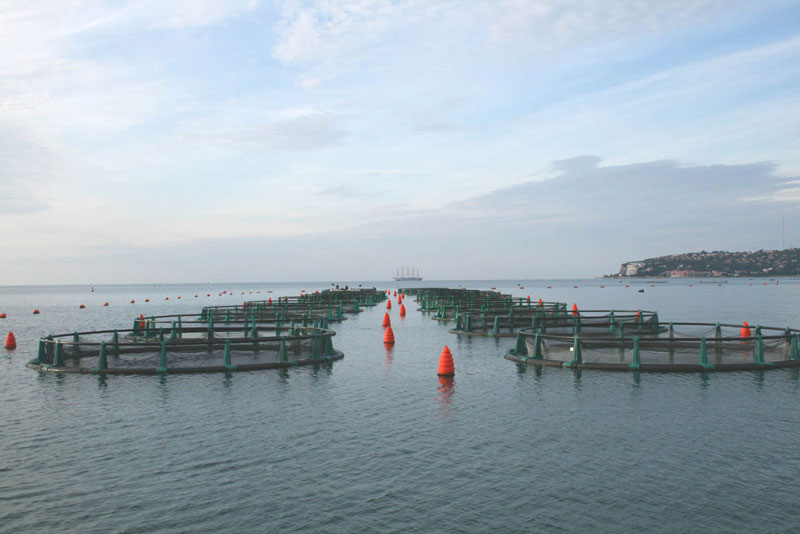
A modern seawater fish farm off the coast of Slovenia.

MÖNCHENGLADBACH, Germany — March 9, 2020 — Monforts has recently been involved in a number of R&D trials aimed at improving the performance of the fishing cage nets employed in fish farming operations at its Advanced Technology Centre (ATC) in Mönchengladbach, Germany.

The cultivation of both freshwater and saltwater fish populations under controlled conditions is a global industry valued at around $200 billion annually and only made possible with the use of huge aquaculture nets.

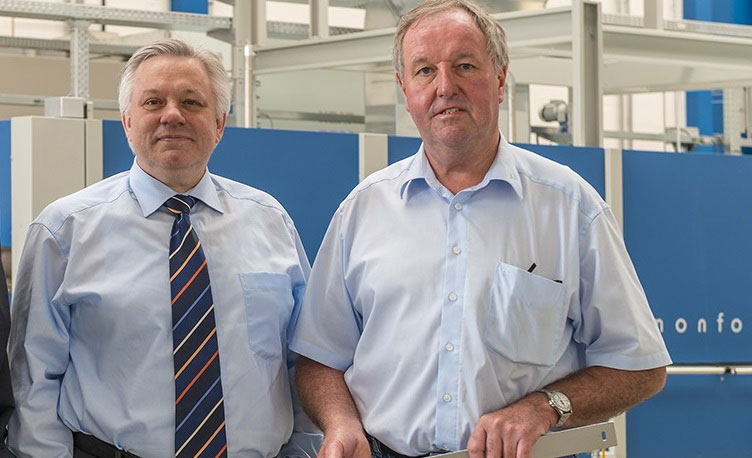
Monforts Head of Technical Textiles Jürgen Hanel (left) with ATC manager Fred Vohsdal, who has now worked for the company for 51 years and has a wealth of accumulated know-how to share with customers.

Biofouling

“These nets are very prone to biofouling and to avoid its negative impacts, high-pressure robotic jets are now used to clean them,” explained Monforts Head of Technical Textiles Jürgen Hanel. “Net cleaning is expensive and can also damage current antifouling coatings on the nets, causing contamination as well as fish health and welfare risks.

“The abrasion resistance of the nets is also extremely important, because in addition to the general wear and tear of the underwater environment, they also contain a lot of potential food for predatory bigger fish, such as sharks. Even sea lions have been known to be attracted to these fish farming cages, but have the advantage of being able to jump over the top of them if they’re not sufficiently protected.”

The development of more effective antifouling coatings for fishing cage nets has been one aspect of R&D work at the Monforts ATC, while the use of how alternative fibres could potentially be coated or finished to replace the polyamide which is currently most widely used has also been explored.

The issue of plastics and synthetic fibres in the oceans has generated global media attention recently, and the aquaculture industry is exploring all avenues that will lead to more sustainable practices.

Diverse applications

“We are asked to investigate a wide range of fabric finishes and coatings at the ATC, where our customers can test their own textiles and technical fabrics on Monforts dyeing, finishing and coating machines under fully confidential, real production conditions,” Hanel said.

“The range of textiles finished or coated with Monforts technologies is already extremely diverse, including standard knits and wovens, as well as advanced denim. When it comes to technical textiles, our lines are already being used commercially for treating substrates for digitally-printed soft signage, carbon fabrics for composites, filter media which must perform in extreme temperatures and flame retardant barrier fabrics, to name just four applications, but the list gets longer all the time.”

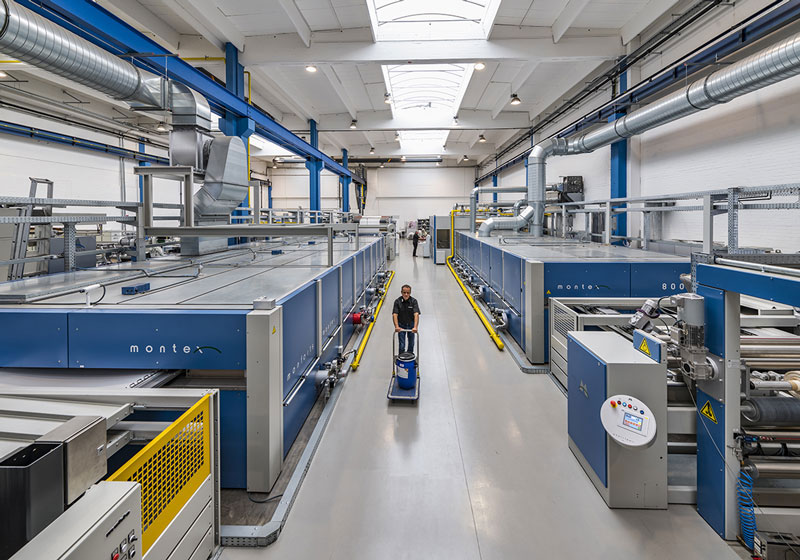
More than 3 million euros have been invested in industrial-scale equipment at the Monforts Advanced Technology Centre (ATC) in Mönchengladbach, Germany.

Expansions

Since its opening in 2013, over 3 million euros has been invested in equipment at the Monforts ATC, which over an area of 1,200 square meters houses two full finishing lines, engineered to accommodate an extremely diverse range of processes, in addition to a Thermex range for the continuous dyeing of denim.

Recent expansions have included the installation of the latest Monforts texCoat coating system, with its multi-head capability, and the CYD yarn dyeing system for denim, both of which received an enthusiastic reception at last year’s ITMA show in Barcelona.

“We have subsequently demonstrated the potential of these new technologies to many customers during their visits to the ATC, in addition to running full trial programmes on our industrial-scale machines,” Hanel concluded. “The intended end-uses may not always be as unusual as fishing cage nets, but whatever the application, trials in real production conditions yield the results that enable us to make many recommendations for improving fabric finishes and coatings.”

Posted March 9, 2020

Source: A. Monforts Textilmaschinen GmbH & Co. KG

INX International Becomes First North American Ink Company To Achieve ISO 45001 Certification

SCHAUMBURG, Ill. — March 9, 2020 —  INX International Ink Co.’s North American ISO Certified facilities have been recognized with certification for the ISO 45001 Occupational Health & Safety Standard. As the first ink company in North America to do so, INX certified locations are now registered to three integrated standards: ISO 9001 and ISO 14001, as well as the new ISO 45001.

ISO 45001 is the world’s international standard for occupational health and safety, issued to protect employees and visitors from work-related accidents and diseases. According to many health and safety experts, it represents a landmark breakthrough. For the first time, businesses of all sizes can access a single framework that offers a clear pathway to developing better and more robust occupational health and safety measures.

ISO 45001 is regarded as a new standard and not as a simple revision or update of OHSAS 18001. The transition from that standard to ISO 45001 was mandatory as the International Standards Organization fully implemented ISO 45001. The transition to it by INX was seamless.

“We are very pleased to receive our official certificate for this standard,” said Rachel Glowacki, director of Quality Systems for INX International Ink Co. “The new standard, along with ISO 9001 and 14001, allowed us to complete the transition goal we strived for in 2019 and gives us an integrated Business Management System. A lot of hard work, long hours, and many lengthy discussions and internal audits by multiple groups and personnel were devoted to this project. I appreciate the support everyone provided to make this happen.”

Audits were conducted at INX’s manufacturing facility in Appleton, Wis., and at four locations in Illinois. This included the R&D Center and manufacturing facility in West Chicago, another manufacturing plant in Homewood, and corporate headquarters, including HR, MIS and the Customer Service Center, in Schaumburg.

Posted March 9, 2020

Source: INX International Ink Co.

Sponsors