Johns Manville Starts Production Of Nonwoven Fabric For Medical Gowns

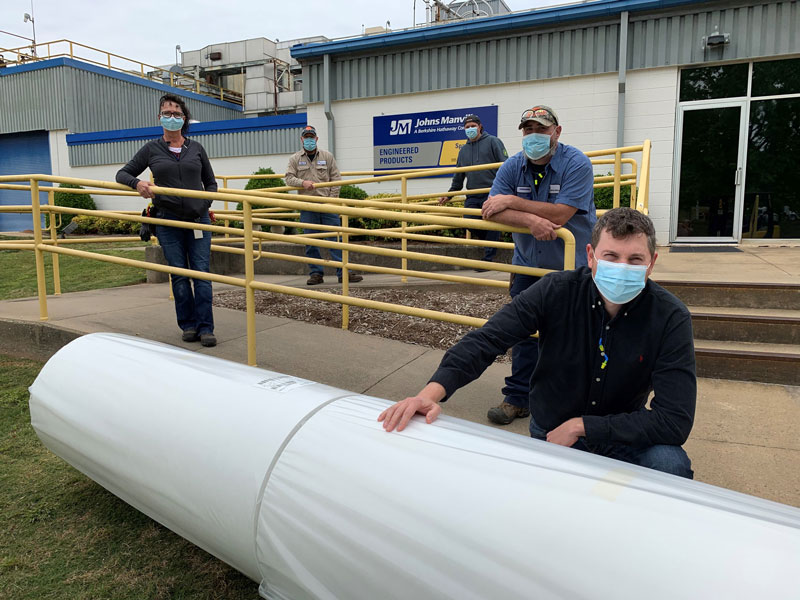
Johns Manville employees in Spartanburg, S.C., pose beside the nonwoven fabric that will be used for manufacturing of urgently needed disposable medical gowns used in the fight against the spread of COVID-19.

DENVER — May 20, 2020 — The Johns Manville plant in Spartanburg, S.C., started production this month to make nonwoven fabric that will be used for manufacturing of urgently needed disposable medical gowns used in the fight against the spread of COVID-19.

“There is a desperate need in North America and in Europe for medical gowns,” said John Vasuta, president of Johns Manville’s Engineered Products business. “Our teams are working quickly to create solutions and manufacture a new coated polyester spunbond nonwoven fabric. We are going through unprecedented times — so every step to support health care workers and others on the front lines helps right now.”

This is the second move by Johns Manville to quickly develop and launch a product that can improve the safety of people in potential direct contact with the COVID-19 virus. In April, production of nonwoven media for the manufacturing of face masks started in Richland, Miss.

“Given the urgent need for action, we quickly decided to build on our own capabilities and develop a coated product to supply the domestic medical gown manufacturing industry,” Vasuta said.

The new polyester spunbond nonwoven is designed for the production of Level 3 medical gowns. “The fabric offers superior liquid barrier performance compared to materials used for Level 1 and Level 2 medical gowns, while also providing comfort and stitch-strength,” said Souvik Nandi, Director Nonwovens Technology at Johns Manville Engineered Products.

The JM plant in Spartanburg employs 100 people and produces a variety of polyester nonwoven products for the use in mainly filtration, roofing and specialty applications using JM’s proprietary spunbond technology. Johns Manville operates a multitude of polyester spunbond lines across the globe with a distinct customer and market focus.

The new fabric is formally known as Evalith® 017/120H3 and is a coated continuous filament, calendared polyester nonwoven. It meets the requirements for a Level 3 medical gown as established by ANSI/AAMI PB70:2012 Liquid barrier performance and classification of protective apparel and drapes intended for use in health care facilities. Per this standard, the material was tested to AATCC 42-2017 Water Resistance: Impact Penetration Test and AATCC 127-2017 Water Resistance: Hydrostatic Pressure Test. Additionally, Evalith 017/120H3 has been tested to and meets the flammability standard per 16 CFR Part 1610 Class 1, according to the U.S. Food and Drug Administration policy and guidance.

Posted May 20, 2020

Source: Johns Manville, a Berkshire Hathaway company
TRSA: The 107th Annual Conference Leadership and Innovation

ALEXANDRIA, Va. — May 20, 2020 — TRSA will host its 107th Annual Conference October 20-22, 2020, at The Westin Alexandria in historic Old Town Alexandria, VA. Old Town Alexandria is the perfect backdrop for conference attendees and guests to share experiences of recovery and renewal in this unprecedented, post-COVID-19 world: this historic 18th century port city, located less than 10 miles from Washington, has had a front row seat to every challenge overcome by man in modern times.

The 107th Annual Conference’s expanded, inclusive agenda includes a dozen general and breakout sessions, as well as Industry Awards recognition including Operator and Supplier Partner (Associate) Lifetime Achievement Awards. The conference begins on Oct. 20 with TRSA committee meetings, featuring industry professionals ranging from managers through CEOs and owners. In addition to committee initiatives, participants of these volunteer-led sessions will also include 30-minute, open discussion on industry-related issues. Following lunch, the TRSA leaders will participate in a Volunteer Leadership Interactive Industry Strategic Direction and Brainstorming facilitated workshop led by Eric Kurjan, president of Six Disciplines Consulting.

The TRSA Annual Conference will inspire and challenge attendees during keynote presentations scheduled throughout the rest of the conference (Oct. 21 and 22):

  • Get A Grip on Your Business: Six Keys to Getting What You Want from Your Entrepreneurial Company – Mike Paton, Visionary, Author and Speaker, Entrepreneurial Operating System Worldwide (EOS).
  • The State of U.S. National Security in Our Airspace – General Lori Robinson, Commander, NORAD (May 2016-May 2018), Commander, U.S. NORTHCOM, Commander, Pacific Air Forces (Oct. 2014-May 2016).
  • Political Update – Chris Stirewalt, Politics Editor, Fox News.

Additional general sessions include Legislative Update with Kevin Schwalb, vice president of government relations, TRSA; and Textile Services Bottom-Line Performance with Andrew Wittmann, CFA, director and senior research analyst, Robert W. Baird Facility & Industrial Services Research Team.

In addition to general sessions, these six breakout sessions will be offered:

  • Growing Your Business After COVID-19 – Eric Kurjan, president, Six Disciplines Consulting and TRSA’s EMI Session IV faculty head and instructor;
  • Managing Difficult People in the Workplace – Dr. H. Kent Baker, University Professor of Finance, Kogod College of Business Administration, American University and Dean of TRSA’s EMI, EMI Session I instructor;
  • Post-Corona, Post-Elections: How Smart Leaders Are Leveraging the New Political, Economic and Tech Issues in a New World – Gene Marks, president and CEO, The Marks Group;
  • Selecting People Who Stay – Sherri Merbach, managing director, C-Suite Analytics, consultant and certified executive coach;
  • The Power of Vulnerability-Based Leadership – James H. Underwood, Senior Consultant, Currier Consulting Group and TRSA’s EMI Session III instructor; and
  • Technology, Experience and the Future of Textile Services – Joyce Gioia, CMC, CSP, futurist and CEO, The Herman Group of Companies.

TRSA will award the commitments to diversity, safety and community service among member companies in addition to the Lifetime Achievement awards conferred annually on a specific operator and associate (supplier) member whose involvement has made an impact on the industry. (Nominations for the Lifetime Achievement awards  – the 2020 Operator Lifetime Achievement award and the Maglin/Biggie TRSA Lifetime Achievement award – are currently being accepted through May 31 at www.trsa.org/awards.)

Posted May 20, 2020

Source:TRSA

International Textile Manufacturers Federation (ITMF) Demands Brands And Retailers To Act Responsibly And Sustainably

ZURICH — May 20, 2020 — The corona pandemic has revealed how extended the textile value chain is from producing fibers to the finished consumer products offered by brands and retailers around the world. Fibers can be produced in one country, yarns spun in another; fabrics are woven or knitted yet in another country before the final garment is sewn and shipped across continents.

The textile value chain is only as strong as the weakest link in it. It is important to realize that in a situation of global demand and supply disruptions, cooperation and dialogue are paramount for the entire supply chain. Our industry is facing demand shocks due to lockdowns around the world, which have posed enormous challenges to the retail industry. Passing the loss and pain to suppliers by cancelling orders cannot be the answer. To the contrary, cancellations will create even more problems by weakening the supply chain further.

Textile and apparel companies are willing to do their utmost part to overcome this demand shock by delaying shipments or deferring payments, when necessary. But this has to be within reasonable limits. It is imperative that brands and retailers and their suppliers cooperate closely and look for solutions that support each other.

ITMF and its national textile and apparel associations represent hundreds of thousands of companies and millions of workers across the globe. These companies and workers cannot absorb the burden alone. ITMF’s recent Corona-Surveys have revealed that orders have plummeted by more than 40 percent globally and that turnover in 2020 is expected to be 33-percent lower than in 2019. The most pressing issue for most companies is liquidity. Therefore, it is essential that brands and retailers find solutions with their suppliers that allow them to pay their workers and avoid massive layoffs.

Responsible sourcing practices by brands and retailers are critical preconditions for socially compliant and eco-friendly production. Sustainability is not a one-way street; it can only be achieved, if stakeholders along the supply chain respect and treat each other responsibly.

Posted May 20, 2020

Source: International Textile Manufacturers Federation (ITMF)

Wind Turbine Blade Recycling Has “Tons” Of Potential

PALO ALTO, Calif. — May 19, 2020 — The Electric Power Research Institute (EPRI), in collaboration with the American Composite Manufacturers Association (ACMA), addresses scientific questions related to recycling millions of tons of wind turbine blades that would otherwise end up in landfills, in a recently published report. The analysis provides guidance on wind power industry R&D priorities, including the magnitude of the wind turbine blade waste issue, potential recycling and repurposing solutions, and next steps for research and development.

“By 2050, the industry could send approximately 4 million tons of wind turbine blades to U.S. landfills,” said EPRI Senior Technical Executive Ken Ladwig. “This report points to promising technologies to avoid waste disposal and explores the need for further review and development of recycling technologies. It also shows us the need for the collaborative development of a commercial-scale facility to process blades at the end of their useful life, as a key aspect of a sustainable and economically viable solution.”

The commercially available technologies reviewed by the report include:

  • Turbine blade life extension;
  • Pyrolysis — a process to repurpose materials from composites for energy;
  • Cement kilns applications; and
  • Grinding turbine blades to re-use them as filler material in a variety of products.

The assessment is based on interviews with industry leaders and experts around the world, focusing on four key questions of turbine blade recycling:

  • Wind turbine blade scrap resources;
  • Material and energy recovery technology;
  • Site location considerations; and
  • Summary of models that address technical and economic viability of recycling processes.

ACMA’s Interim President Kevin Barnett said: “As the composites industry looks ahead to the next revolution in manufacturing, recycling and sustainability are critical issues. This important report provides insights from key industry stakeholders that will inform and promote long-term strategies, new technologies and collaboration to pioneer energy-efficient composite manufacturing and EOL recycling.”

“Wind Turbine Blade Recycling: Preliminary Assessment” is free to download on EPRI’s website and will be presented at ACMA’s 2020 Composite Recycling Conference.

Posted May 19, 2020

Source: Electric Power Research Institute

Ascent Aerospace Installs Large Format Additive Manufacturing Machine

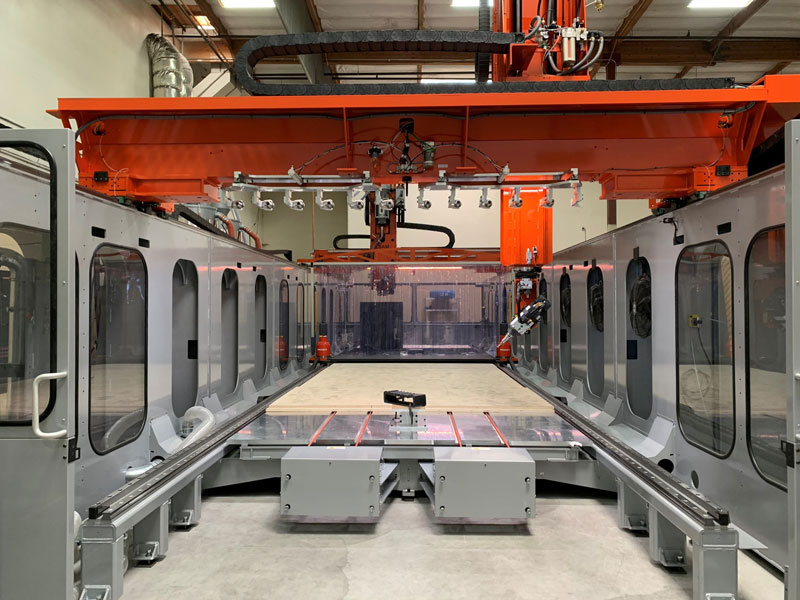
Ascent’s large-format additive manufacturing machine.

SANTA ANA, Calif. — May 19, 2020 — Ascent Aerospace, a leading provider of aerospace tooling systems, factory automation and integration solutions, is proud to announce that its large format additive manufacturing (LFAM) machine has been installed and is operational in Santa Ana, Calif., co-located with Ascent’s composite tooling shop, autoclave and clean room.

Ascent’s investment in the machine was announced in the summer of 2019 to bring the advantages of additive manufacturing to the aerospace tooling sector. By leveraging its deep expertise in tooling to rapidly design and build additive solutions, Ascent Aerospace will bring tools such as low-temperature layup molds, masters, trimming/drilling fixtures, and vacuum holding fixtures to market faster than ever before.

The LFAM machine has an industry leading build area, providing customers in aerospace, automotive, maritime, energy and others the opportunity to benefit from large-scale printed composite tooling. By combining this technology with Ascent’s in-house tooling expertise and heritage engineering capability, it will be possible to fabricate and deliver production-ready fixtures and molds with significantly reduced lead-times compared to traditional metallic tooling. The wide variety of materials that are compatible with the LFAM, such as ABS, Polycarbonate, Nylon, and PESU, will allow Ascent to create tailored solutions to meet customer needs and specifications.

Ascent Aerospace will be hosting a live webinar in the beginning of June as a virtual launch of the LFAM machine. Register for the webinar today to see footage of the machine in action, view a presentation by the product manager and more.

Posted May 19, 2020

Source: Ascent Aerospace

TRSA Launches Safety & Health Certification

ALEXANDRIA, Va. — May 19, 2020 — TRSA is launching a plant-based Safety & Health Certification (S&H). The S&H was created by the TRSA Safety Committee to help laundry facilities create a culture of safety that provides a return on investment by increasing productivity and engagement while reducing injuries, absenteeism and workers’ compensation costs.

“The S&H certification process of internal evaluation, application, inspection and improvement provides laundries with a path toward continuous improvement,” said Joseph Ricci, CAE, president & CEO, TRSA. “It offers a path toward employee engagement that helps organizations create a culture of safety.”

Laundries earning the TRSA S&H Certification have demonstrated best quality management practices verified by an independent, third-party inspection process. Modeled on the OSHA Voluntary Protection Program (VPP) guidelines, prerequisites for obtaining the S&H certification include:

  • Protocols and compliance for workplace and worker safety (PPE, ergonomics, proper training on tools and equipment, access to First Aid, etc.);
  • Prioritizing an environment that benefits workers and results in increased productivity and worker satisfaction;
  • Creating opportunities for increased plant output by minimizing equipment downtime;
  • Increasing plant bottom line through reduced Workers’ Comp premiums and avoidance of the costs associated with worker injury/equipment malfunction;
  • Identifying hazards that could be cause for citations or fines during formal OSHA inspections; and
  • Empowering employee safety training and input on solutions to issues that may be plant-specific.

In addition, earning the S&H Certification also includes implementation of an effective OSHA recordkeeping program and two-years OSHA TRIR (total recordable incident rate) that are less than or equal to the Bureau of Labor Statistics annual report. Interested laundries should download and review the TRSA S&H Standard at www.trsa.org/certification and follow up procedures provided at that site.

Obtaining a culture of safety, organizations documented*:

  • 70% fewer employee safety incidents;
  • 41% lower absenteeism;
  • 40% fewer quality defects;
  • 21% higher profitability;
  • 20% higher sales;
  • 17% higher productivity; and
  • 10% higher customer satisfaction.

*Source: Gallup 2017 report, State of the American Worker

TRSA promotes the value and benefits of linen, uniform and facility services that enhance businesses, retailers, healthcare facilities, restaurants, government and other organizations’ images while providing cleaner, safer environments for their employees and customers.

Other certification programs administered through TRSA include the companywide environmental stewardship certification of Clean Green as well as the plant-specific certifications rooted in best-management practices (BMPs) for handling and laundering of linens and other reusable textiles for healthcare, hospitality, food service and food safety: Hygienically Clean Healthcare, Hygienically Clean Hospitality, Hygienically Clean Food Safety and Hygienically Clean Food Service. TRSA also has the individual Certified Professional Laundry Manager (CPLM) designation which is attained through completion of online study materials and testing or through management and production study through TRSA’s Professional Management Institute (PMI, www.trsa.org/pmi).

Posted May 19, 2020

Source: TRSA

Hyosung Converts creora® Spandex Production To Aid Global Face Mask Production

SEOUL, South Korea — May 19, 2020 — Due to the overwhelming face mask demand for those on the front lines combating COVID-19, and the growing number who need them for personal protection, Hyosung, the world’s largest producer of spandex, has repurposed its facilities to increase the supply of creora® spandex, a key ingredient in the manufacture of what has become the essential accessory for everyone today.

Spandex is primarily used for making the ear loops and head straps to make the mask fit properly and comfortably on the face. While the majority of face mask production is in China, a growing number of consumer apparel and accessory manufacturers around the world are switching gears to make face masks to help with the PPE shortage. This surge in production has made face mask component supplies, such as ear loops, scarce.

“Hyosung has converted creora® spandex yarn production to increase supply to the global mask market by 20 times,” said Mike Simko, Hyosung global marketing director – Textiles. “This production can make earloops for several billion face masks per month, which will be a significant help to our customers’ production needs. We’ve been fortunate to keep our spandex production operating in all of our international plants to serve local and global communities.”

Face mask production is predicted to increase as many nations around the world are encouraging people to wear face masks in places where social distancing measures are difficult. During the course of the COVID-19 crisis, Hyosung has donated over $420,000 along with medical supplies to medical workers caring for COVID-19 patients in Daegu, hit hardest by the virus in Korea, and its adjacent North Gyeongsang Province.

Posted May 19, 2020

Source: Hyosung

Medical Device Company Siren Appoints David Castiglioni Chief Commercial Officer To Lead National Expansion

SAN FRANCISCO — May 19, 2020 — Siren, a medical device company that has developed breakthrough technology to embed microsensors within fabric, allowing for mass production of affordable, washable smart textiles with remote patient monitoring applications, announced today the appointment of David Castiglioni as chief commercial officer. Castiglioni brings an extensive background of startup commercial experience to the Siren leadership team from both the medical device and biotechnology industries and will report to Ran Ma, CEO and co-founder.

In his role, Castiglioni will oversee all aspects of commercialization of Siren’s first product, an FDA-registered temperature monitoring sock that connects wirelessly to a software application, allowing healthcare practitioners to detect early signs of inflammation in patients at risk of developing diabetic foot ulcers. His responsibilities will include leading and driving sales, go-to-market planning, strategic partnerships, clinical education, and customer success.

Castiglioni has led the commercialization of numerous new and innovative medical device platforms. He has over 20 years of medical device sales and marketing experience, including senior executive positions at Abbott Vascular and Intuitive Surgical. During his 7 years at Intuitive Surgical, he served in numerous leadership roles of increasing responsibility as part of the team that drove early-stage adoption of the daVinci robotic surgery system across the globe. Most recently, he was the vice president of sales at VitalConnect, leading commercial expansion of the company’s Vista Solution remote patient monitoring platform in North America.

Castiglioni commented: “I am extremely excited to join the leadership team at Siren and bring a transformational technology to market that will help patients suffering from severe chronic disease. Throughout my career, I have been driven by my passion to improve patient care and commercializing technologies that address unmet clinical needs. Siren’s remote patient monitoring platform aligns with my commitment to putting patients first and represents an enormous improvement for patient care, particularly for those at risk of developing severely debilitating complications of diabetes and associated neuropathy.”

“We are delighted to welcome David to the team as our chief commercial officer during this exciting period in Siren’s national expansion,” Siren CEO Ma. “His passion and commitment for putting patients first, combined with his ability to strategically build strong customer relationships, brings a valuable skill set to the company’s leadership team. David’s extensive healthcare, technology, and medical device experience and track-record means that Siren will be well positioned for our growth phase.”

Posted May 19, 2020

Source: Siren Care

Garmon, Under The Kemin Textile Auxiliaries Business Unit, Introduces Its “Safe Wear” Line Of Products To Provide Extra Protection For Garments

REPUBBLICA DI SAN MARINO — May 19, 2020 — Kemin Industries’ textile auxiliaries business unit, Garmon, a chemical solutions brand for the denim and fashion industry, has introduced Safe Wear, a line of products that gives extra protection to garments. The Safe Wear line, Garmon’s first endeavor into performance finishes, provides solutions for the industrial laundry and manufacturing processes that address consumers’ demand for safety, given the current health concerns in the world.

The goal of Garmon’s new Safe Wear line is to make people feel safe and comfortable living their lives outdoors again.

“In a few months, the world has changed in a way that no one expected, and things we once considered normal — like eating in restaurants or taking public transportation — are now considered risky,” said Kimberly Nelson, president of Kemin Textile Auxiliaries. “Being based in Italy and San Marino, we have seen firsthand the tremendous impact of the pandemic. People want to protect themselves as much as possible, and that includes the garments they wear.”

To make this happen, the Safe Wear line has been designed to include different technologies, levels of protection and price points to suit all the needs of the textile industry and consumers.

The Safe Wear product line includes:

  • HeiQ Viroblock NPJ03;
  • Garmon Sani-tex; and
  • Garmon Elam Sani-tex.

HeiQ Viroblock NPJ03 is the most advanced product in the Safe Wear line. Created by HeiQ, a Swiss company of which Kemin Industries is part owner, HeiQ Viroblock has a strong, patent-pending antiviral and antibacterial effect against enveloped viruses — including coronaviruses — and bacteria.

Research shows that viruses and bacteria, such as SARS-CoV, a similar virus to the one that causes COVID-19, can remain active on textile surfaces for up to two days1. Garments treated with HeiQ Viroblock actively inhibit viruses and kill bacteria upon contact, helping to minimize the potential for re-transmission of pathogens from textiles.

HeiQ Viroblock has been designed to stay active on treated garments for 30 gentle domestic washes, ensuring safety for the consumer that lasts for a good part of the garment’s life.

Thanks to the partnership between Kemin Industries and HeiQ, which began in 2017, Garmon extensively tested HeiQ Viroblock on garments to optimize dosages and application for garment finishing, ensuring an action that does not alter apparel’s properties and look.

Two of the other products in the Safe Wear line, Sani-tex and Elam Sani-tex, are easy solutions to remove germs and bacteria from garments, ensuring hygiene standards. Both have been designed to guarantee an effective, immediate action while maintaining a very competitive price point.

Due to their composition and based on some of the most useful and versatile active sanitizing contents, the application of Sani-tex and Elam Sani-tex on garments removes a variety of microorganisms and different types of viruses, in particular lipophilic viruses (e.g. herpes simplex, vaccinia, influenza and adenovirus). Using Sani-tex and Elam Sani-tex helps both laundries and brands provide consumers a finished product that is safe and respectful of their health.

All the products in Garmon’s new Safe Wear line have been designed for application in the last phase of garment finishing, either alone or in combination with a compatible softener. Safe Wear products have been tested to be suitable for any kind of fiber, including natural, synthetic or blends. All of the Safe Wear products also work with Garmon’s Smart Foam, the easiest system to save water in garment finishing.

Wearing garments treated with Garmon’s Safe Wear products gives consumers the peace of mind to once again interact with the world we knew before, living in the clothes we love.


1G.Kampf et al (2020): “Persistence of coronaviruses on inanimate surfaces and its inactivation with biocidal agents”

Posted May 19, 2020

Source: Kemin Industries

Indorama Ventures Continues To Help Communities In More Countries Fighting COVID-19

BANGKOK — May 19, 2020 — Indorama Ventures Public Co. Ltd. (IVL), a global chemical producer, has continued to offer support to communities in more countries worldwide through its subsidiaries. IVL has been supporting medical personnel and communities affected by the COVID-19 outbreak in Thailand, where its headquarters is located, and another ten countries including Brazil, the Czech Republic, France, Germany, India, Lithuania, Mexico, Poland, Turkey and the United States. The latest contributions through its facilities worldwide include:

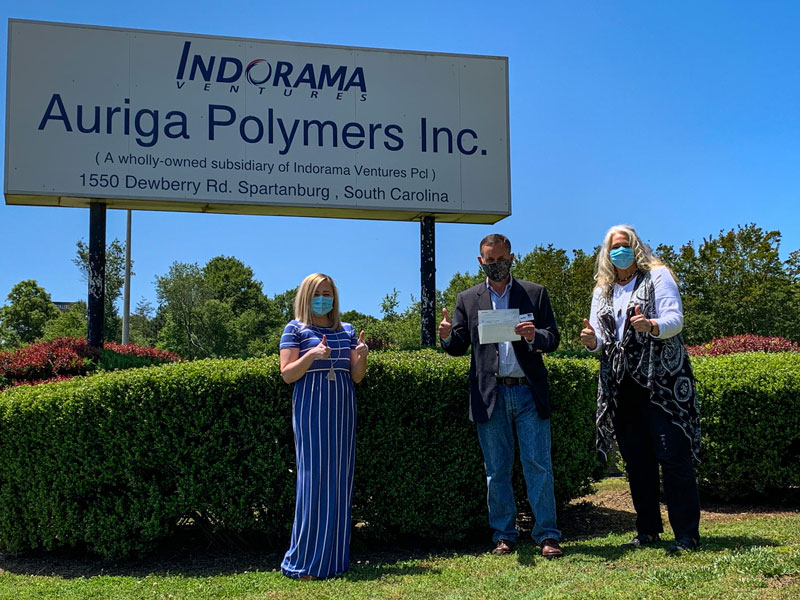
  • Auriga Polymers Inc., a manufacturer of polyester resins and specialty polymers in South Carolina, donated $40,000 to the COVID-19 Crisis Relief Fund of the United Way, a non-profit organization aimed at supporting charities and communities that are most in need.
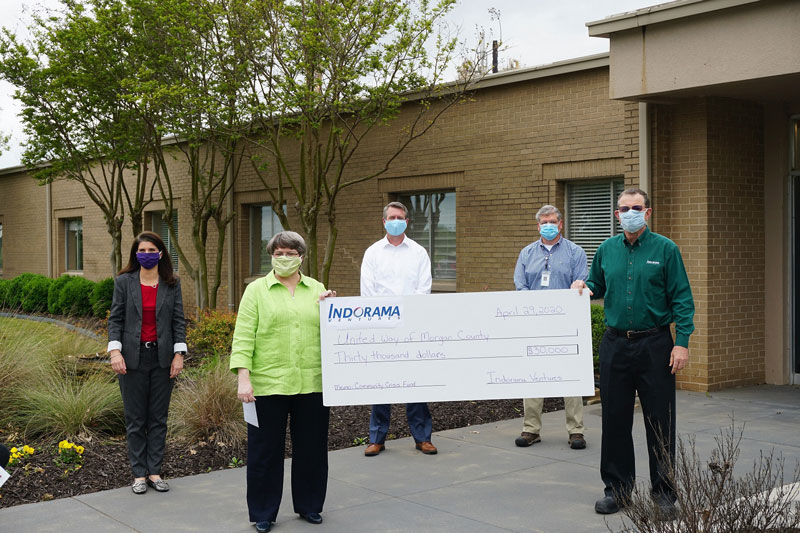
  • AlphaPet Inc., a PET polymers facility in Alabama, in collaboration with Indorama Ventures Xylenes & PTA LLC., granted financial support of $30,000 to the United Way of Morgan County’s Community Crisis Fund with the aim of helping people in communities who are facing difficult circumstances during this period.
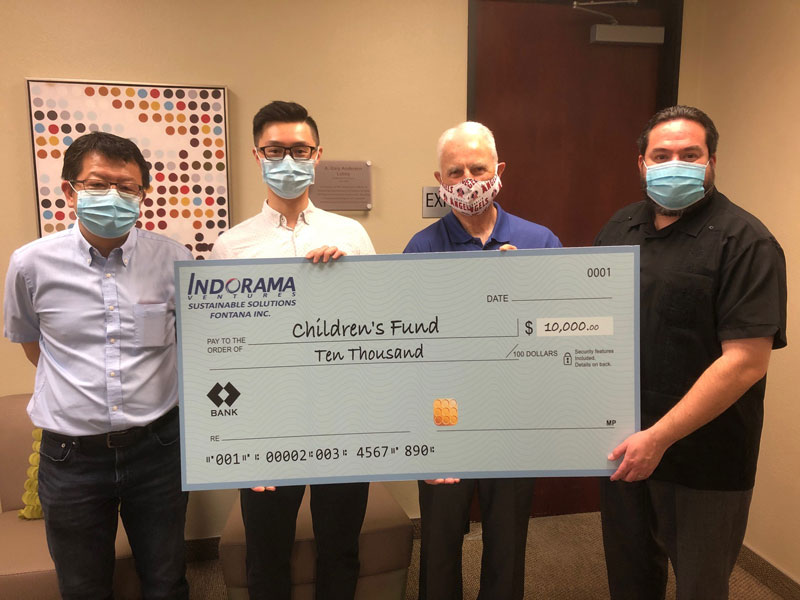
  • Indorama Ventures Sustainable Solutions LLC., in California, donated $10,000 to the COVID-19 Relief Fund of the Children’s Fund, a non-profit organization aiming to support children in San Bernardino County who are most in need.
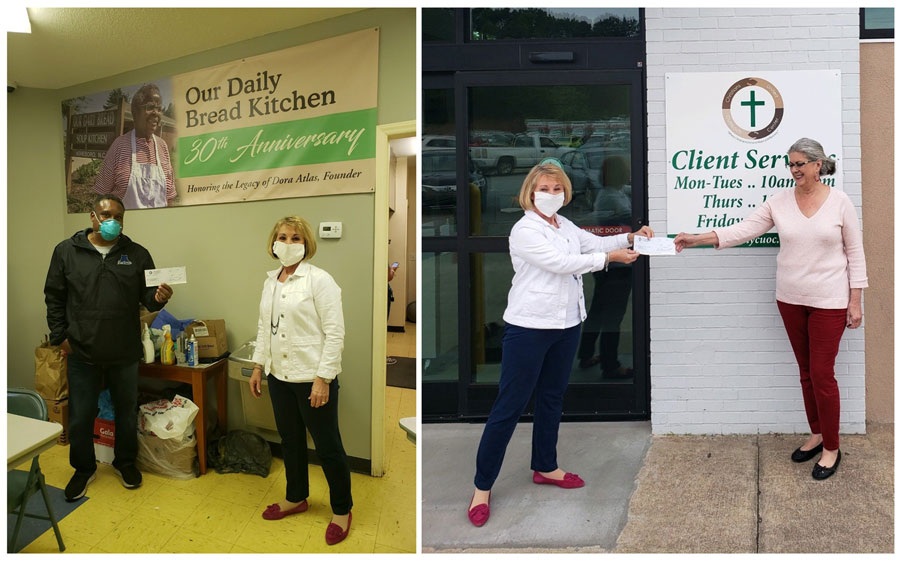
  • StarPet Inc., a PET polymers facility in North Carolina, donated $5,000 to Northridge Church in Randolph County towards the Foster Parent Association. The company also donated $2,500 to Our Daily Bread Soup Kitchen and $2,000 to the Christians United Outreach Center to purchase food to provide nutritious meals for the increased number of families and individuals in need during this pandemic.
  • IVL Dhunseri Petrochem Industries Pvt. Ltd., a PET facility in India, donated 500,000 INR to the Chief Minister’s Relief Funds of West Bengal and Haryana. The company also donated 50 boxes of face shields to Haldia Sub-Divisional Hospital and provided 550 bottles of sanitizers and 4,000 face masks to authorities and residents of Haldia to protect them from infection.
  • Three Indorama Ventures Companies in Mexico, namely, Indorama Ventures Polymers Mexico, S. de R.L. de C.V., Indorama Ventures EcoMex, S. de R.L. de C.V. and Performance Fibers Operations Mexico S. de R.L. de C.V. donated medical equipment to the Mexican Institute of Social Security, a governmental organization that assists public health in Mexico. The equipment includes a vital signs’ monitor, eight respirators, four pulse oximeters, 10 traps for bronchial secretion and three stethoscopes.
  • PHP Fibers GmbH, a manufacturer of high-tenacity polyester and nylon in Germany, handed over 1,500 respirators to the District Administrator of Miltenberg to help mitigate the shortage of medical supplies needed for senior citizens and nursing homes in the district. The company also provided additional face masks for other companies within the Obernberg Industrial Center and to the Bavarian Red Cross.
  • Indorama Ventures Corlu PET A.Ş., a PET facility in Turkey, donated 1,000 face masks, 1,000 pairs of gloves, PPE sets, and 65 food packages to the District Governor for distribution to medical personnel, state agencies, and affected families.
  • Indorama Ventures Xylenes & PTA, LLC, a chemical manufacturer in Alabama donated 100 N95 masks, 100 boxes of face masks, and 12 cartons of disinfecting wipes to Hospice of the Valley and Decatur Fire & Rescue Department. The company also handed over 200 disposable face masks, 200 pairs of gloves, and care packages to Morgan County Child Advocacy Center.
  • Egyptian Indian Polyester Company, a PET facility in Egypt that supplies PET resin for the manufacture of face shields, donated 500 pieces to major hospitals in the Suez Governorate to reduce the risk of infection for medical personnel and patients.
  • Glanzstoff Bohemia, a high-quality fiber manufacturer in the Czech Republic, donated 450 face masks to hospitals and the Fire Brigade in Litoměřice City and the Municipality of Lovosice.

Richard Jones, senior vice president and head of corporate communications and Sustainability at Indorama Ventures, said: “Indorama Ventures has been playing a vital role in supporting hygiene and the well-being of communities and people where we operate, both in Thailand and other countries. As a responsible corporate citizen, we act to support medical personnel, patients and people affected by the COVID-19 pandemic. So far, the contributions have been delivered in eleven countries — Brazil, the Czech Republic, France, Germany, India, Lithuania, Mexico, Poland, Thailand, Turkey, and the USA. We are continuing to offer additional support through subsidiaries in many more countries with the belief that we will overcome this crisis together.”

Posted May 19, 2020

Source: Indorama Ventures

Sponsors