Maverick Concepts Invests In Future Growth With 2nd VUTEk FabriVU Printer And EFI ERP Workflow

FREMONT, Calif. — June 16, 2020 — Maverick Concepts, a creative design and fabrication business serving top retailers and major consumer packaged goods companies, has completed new investments to drive new opportunities. The Garland, Texas-based company purchased two advanced print technology solutions from Electronics For Imaging, Inc. — an EFI™ VUTEk® FabriVU® 340i dye-sublimation printer and EFI Midmarket Print Suite MIS/ERP workflow software.

The new printer — Maverick’s second EFI VUTEk FabriVU 340i model — delivers high efficiency on premium soft-signage textile graphics, with speeds up to 5,381 square feet per hour. The 133-inch wide printer is also the only production-level solution in its class that offers direct-to-fabric production and in-line sublimation without the need for a separate calendar/heat press. As a result, Maverick Concepts’ direct-to-textile prints are immediately ready for finishing and shipping after printing. VUTEk FabriVU printers — which are also available in 70- and 205-inch widths — use aqueous dye-sublimation inks and give Maverick Concepts more firepower to provide its brand clients outstanding quality with a 2,400 dots per inch (dpi) maximum resolution.

Super versatility: Soft signage direct and rigid-substrate transfer work

Maverick Concepts acquired its first VUTEk FabriVU 340i at the PRINTING United trade show in 2019, a purchase that has had very positive results. “We can print direct to textile or to paper for transferring offline for maximum flexibility,” said Maverick Concepts Partner Phil Macnamara. “Plus, we have a unique process that allows us to print on transfer paper on our FabriVU 340i and sublimate offline to rigid substrates.”

While fabric soft signage work takes advantage of the printer’s ability to print and sublimate direct to textile in a single process, the ability to also print on transfer paper for sublimation onto rigid substrates has proven to be an essential benefit. Maverick Concepts chose to add its second VUTEk FabriVU printer to address increased demand for rigid-substrate sublimation work along with other soft signage needs.

Pioneering digital print applications with EFI

Maverick Concepts has a unique offering with UV inkjet printing, 3D foiling, dye-sublimation for both textile and rigid substrates and digital inkjet thermoforming production. The company does thermoforming work using an EFI VUTEk GS3250-TF superwide-format inkjet printer. Maverick Concepts was also one of the first companies to install a pair of EFI VUTEk h5 superwide-format LED inkjet printers, which the company uses to produce a broad range of high-end graphics on rigid and roll substrates. The company’s digital inkjet printers all use EFI Fiery® proServer digital front ends (DFEs).

“From a printing perspective,” Macnamara said, “we are all digital with a full EFI ecosystem.”

Superior management with Pace and Fiery

Maverick Concepts has also extended its ecosystem of EFI technologies to its core business management activities; the company is replacing its existing workflow system with an EFI Midmarket Print Suite featuring EFI Pace™ MIS/ERP software, and is integrating the software with its Fiery DFEs. The suite, which has specific capabilities that streamline planning, management and execution of superwide-format digital print, will simplify production workflows while handling Maverick Concepts’ detailed production and kitting requirements.

“Our more innovative and creative projects may have 20 plus complex components,” Macnamara explained. “With EFI Pace, you can easily manage these types of complex projects. Plus, with EFI Fiery integration, we can have two-way communication between Pace and our EFI printing equipment, so we truly know capacity and efficiency metrics. And we can manage all of our printers from a single Fiery Command WorkStation® interface, with profiling, color management, and equipment workflow all within one system.

“We are excited about the efficiency boost we will get from Pace,” Macnamara added, “including everything from more timely estimates to project management and workflow to accounting.”

“Maverick Concepts is an excellent example of a company that has the initiative to explore range and depth of products and services enabled by the EFI ecosystem, working closely with its customers to offer solutions that really set it apart from competitors,” said EFI Chief Revenue Officer Frank Mallozzi. “This is exactly the approach that winning companies can take to withstand a challenging economy and create dynamic growth in the future.”

Posted June 17, 2020

Source: EFI™
NCTO Elects South Carolina Yarn Manufacturing CEO As Chairman; Council Chairs & Board Members Elected

WASHINGTON — June 16, 2020 — The National Council of Textile Organizations (NCTO), representing the full spectrum of U.S. textiles from fiber through finished sewn products, held its officer elections for fiscal year 2020 today.

In addition to the appointment of a new chairman and vice chairman, NCTO elected chairs for each of its four councils. NCTO is comprised of four councils to ensure a broad representation of the industry supply chain. Each council has an allotted number of members who are elected to the association’s Board of Directors, in addition to the Executive Committee.

“I am pleased to announce our new officers, council chairs, and board and executive committee members for NCTO’s 2020 fiscal year,” said NCTO President and CEO Kim Glas. “David Roberts, CEO of Cap Yarns, has been elected our new chairman and succeeds Leib Oehmig, CEO of Glen Raven Inc., who did an outstanding job serving in the role for more than a year.”

“This is a critical juncture for our industry as we continue to navigate through an uncertain business environment this year. I could not be prouder of our industry, which has stepped up and retooled to produce critical personal protective equipment (PPE) for frontline workers battling the COVID-19 pandemic. With the support of our newly elected officers, NCTO will continue to work on behalf of its members to shape policies that will help our industry persevere and thrive. Through a dedicated association staff and a committed group of industry leaders, we will ensure that together we continue to have a seat at the table in Washington.”

Elected as NCTO Chairman and Vice Chairman for 2020 are:

  • Chairman – David Roberts, CEO of Cap Yarns Inc.
    • Roberts is CEO of Cap Yarns Inc., based in Clover, S.C. Cap Yarns is a specialty yarn manufacturer and a leader in developing unique yarns for the knitting and weaving industry.
  • Vice Chairman – David Poston, president of Palmetto Synthetics LLC
    • Poston is president of Palmetto Synthetics, based in Kingstree, S.C. Palmetto Synthetics is a specialty man-made fiber producer that has provided specialty thermoplastic fibers to companies across the globe.

Elected to the NCTO Board of Directors during the various Council meetings are the following:

Fiber Council:

  • Lowell Bivens of PHP Fibers;
  • John Freeman of Nan Ya Plastics America;
  • Chuck Hall of William Barnet & Son;
  • Rich Lemerise of The LYCRA Company;
  • Alejandro Sanchez of DAK Americas; and
  • Chip Stein of Stein Fibers.

Yarn Council:

  • Jim Booterbaugh of National Spinning Co.;
  • Tom Caudle of Unifi;
  • Charles Heilig of Parkdale Mills;
  • Peter Iliopoulos of Gildan;
  • Marty Moran of Buhler Quality Yarns Corp.; and
  • Allen Smith of American & Efird.

Fabric and Home Furnishings Council :

  • Norman Chapman of Inman Mills;
  • Kathie Leonard of Auburn Manufacturing;
  • Chad McAllister of Milliken & Company;
  • Leib Oehmig of Glen Raven Inc.;
  • Dirk Pieper of Sage Automotive Interiors; and
  • Mike Shelton of Valdese Weavers.

Industry Support Council:

  • Cyril Guerin of Picanol;
  • Ian Mills of Fi-Tech; and
  • Gary Romanstine of Marzoli.

Elected by their respective Councils to serve on the Executive Committee:

  • Lowell Bivens of PHP Fibers;
  • John Freeman of Nan Ya;
  • Tom Caudle of Unifi;
  • Peter Iliopoulos of Gildan;
  • Norman Chapman of Inman Mills;
  • Leib Oehmig of Glen Raven Inc.; and
  • Ian Mills of Fi-Tech.

Elected to chair the Councils:

  • Fiber Council: David Poston of Palmetto Synthetics;
  • Yarn Council: Marty Moran of Buhler Quality Yarns Corp.;
  • Fabric and Home Furnishings Council: Leib Oehmig of Glen Raven Inc.; and
  • Industry Support Council: Ian Mills of Fi-Tech..

Posted June 16, 2020

Source: The National Council of Textile Organizations (NCTO)

Green Science Alliance Co. Developed Textile, Fiber, Yarn, Film Made Of Cellulose-Based Biodegradable Resin

KAWANISHI-CITY/HYOGO PREFECTURE, Japan — June 16, 2020 — Environmental problems such as plastic pollution, global warming due to human population explosion, are getting severe in the world and especially the microplastic problem in the marine environment is becoming a devastating issue. It is predicted that the amount of plastic garbage will be more than that of fish in the world by 2050. There are also some scientific reports that these microplastics are already in our human body. Therefore, plastic recycling, reduction of plastic usage itself, and biodegradable plastic usage and development, have been intensively challenged and carried out.

In this regard, Dr. Ryohei Mori at Green Science Alliance Co. Ltd. has developed biodegradable textile, fiber, yarn, film with cellulose based resin. The company has also applied its nano cellulose composite technology into this cellulose based material, and made so to speak “cellulose + nano cellulose” material and products. Green Science Alliance had confirmed previously that mixed nano cellulose in the biodegradable resin can increase biodegradability. This “cellulose + nano cellulose” resin is a very interesting new type of biodegradable resin material. In addition, cellulose can be said to be a very environmentally friendly biodegradable resin since most of biodegradable resins are composed of either petroleum or edible biomass. Using edible biomass such as corn, sugarcane, potato, etc. as raw material can be risky since they compete with human nutritious food.

They will keep making an effort to improve resin properties such as mechanical properties, molding properties, etc., in order to create good biodegradable resin fiber, yarn, film, as well as nonwovens.

Posted June 16, 2020

Source: Green Science Alliance Co. Ltd.

MycoWorks Announces Expanded Executive Team: Chief Manufacturing Officer Doug Hardesty, Chief Of Product Mike Todd And Advisor John Diener

SAN FRANCISCO — June 16, 2020 — Biomaterials company MycoWorks today announced additions to their executive team: Chief Manufacturing Officer Doug Hardesty, Chief of Product Mike Todd and Advisor John Diener.

Chief Manufacturing Officer Hardesty has more than 25 years of experience in engineering, analytics and manufacturing scale-up. Hardesty brings to MycoWorks his tried-and-true “Vertical Start Up” playbook for rapid and predictable start-up of new manufacturing technologies, honed at Procter & Gamble. Doug has led start-ups for over 15 percent of the Fortune 100 and 30 of the top 100 manufacturing companies, driving the highest efficiency start-ups in corporate history for major brands in alcohol, dairy, food, beverage and medical devices and technologies. This year, he has led projects with capex of over $2 billion dollars and was a key thought leader in enabling the rapid establishment of multiple production sites to support the COVID-19 response.

Chief of Product Mike Todd is an experienced and accomplished supply chain executive with an extensive background in the Global Leather and Luxury Accessories markets. He was previously the senior vice president of Supply Chain at Coach, where he built agile and enduring supply chain teams. Prior to Coach, Todd was at Prime Tanning and Pittards, where he led the design, development and scaling of branded leathers and was a key executive in the commissioning of leather tanning facilities in Europe, Asia and the United States. Todd is a recipient of the Palmer medal and Woodroffe awards for leather technology and light leathers.

Advisor Diener joined AgriProtein as COO in 2017. As COO, Diener oversees the day-to-day factory operations, research & development, and product development. Previously, Diener was CEO of Gold Coin SyAqua Group, a leading aquaculture nutrition and genetics company, and managing director, Corporate Development at the Zuellig Group. A U.S. citizen, Diener has been based in Asia for over 24 years.

“As we embark on scaling up the commercial production of Reishi™, we are thrilled to add these experienced industry executives to the MycoWorks team,” said MycoWorks CEO Matthew Scullin. “Each brings an extensive understanding of the various aspects of our manufacturing processes. Their leadership will be invaluable as we continue to grow operations to meet demand from our brand partners.”

MycoWorks offers an advanced materials manufacturing platform Fine Mycelium™ — a method that enables small batch quality at a massive scale through a controlled and engineerable production process. Fine Mycelium’s capabilities are behind Reishi, a new class of sustainable material that offers versatility, according to the company. It is the only biomaterial that can be fabricated in the same manner as cowhide, offering a sustainable option that does not compromise on performance, quality, or aesthetics. MycoWorks currently operates two production facilities in the San Francisco Bay Area, with a third in development to open later this year.

Posted June 16, 2020

Source: MycoWorks

Polygiene Treats Cashmere Scarves From EZMA With Viraloff

MALMÖ, Sweden — June 16, 2020 — The Indian brand EZMA is the specialist luxury Cashmere Division of the ESSMA Group. It manufactures all kinds of cashmere products including scarves, stoles, as well as shawls, mufflers, capes, throws, carpets and blankets. Partnering with Polygiene it will now offer ViralOff® treated cashmere products, starting with a range of scarves.

“A strategic alliance with Polygiene AB and specifically for the ViralOff treatment, a proven name in its own field, allows EZMA to offer its patrons a sense of confidence and security in using the EZMA Fine Cashmere products, especially in context of this post-Covid world order,” said Sameer Mehra, managing director of EZMA.

“It’s a start for us in cashmere fabrics,” said Ulrika Björk, CEO of Polygiene, “It makes a lot of sense to go with Viraloff in products like scarves as they are so close to your face, but beyond the antiviral properties we should also remember they need less washing and therefore these beautiful cashmere fabrics will last longer. We expect to expand in other ranges going forward.”

ESSMA Group was founded in 1983. EZMA, the specialist luxury Cashmere Division of the ESSMA Group, started in 2002. EZMA works with a vertically integrated manufacturing system from carding to combing, specialty spinning, weaving on traditional Kaani or Handloom, complex dobby’s, ultra-modern weaving systems, each process is carried out to perfection within the production facilities owned by the ESSMA group. EZMA is probably the only textile mill in the world that incorporates six centuries of weaving techniques and state of the art-systems and technologies concurrently and simultaneously.

ViralOff is not intended to prevent disease, it is used for the protection of the treated product.

Posted June 16, 2020

Source: Polygiene

Researchers From Freie Universität Berlin, RWTH Aachen University Showed Textiles For Face Masks Can Directly Inactivate SARS-CoV-2

BERLIN/AACHEN, Germany — Researchers from Freie Universität Berlin at the Institute for Animal and Environmental Hygiene and the Institut für Textiltechnik (ITA) of RWTH Aachen University are collaborating on the topic of alternative personal protection equipment. The testing was conducted in the context of the EIT Health Project ViruShield, supported by the European Union, with the objective to discover alternative filter materials for face masks in light of tight supply and globally imbalanced supply chains for personal protective equipment.

The Switzerland-based company Livinguard has developed a treatment for textile facial masks that can directly inactivate bacteria and viruses. While researchers at the Institut für Textiltechnik (ITA) of RWTH Aachen University conducted experiments on the chemical and physical properties of various textiles for face masks, researchers at Freie Universität Berlin were able to demonstrate that these new textiles can reduce high amounts of SARS-CoV-2 virus particles by up to 99.9% within a few hours. “The textiles in these masks can thus continuously inactivate the exhaled viruses and can make handling these masks even safer overall,” says Professor Dr. Uwe Rösler, Institute for Animal and Environmental Hygiene. “In addition, such textiles could also help to reduce hygienic issues in other general and medical areas, even beyond COVID-19.”

The novel corona virus SARS-CoV-2 can be transmitted through airborne droplets and aerosols. For this reason, governments and health authorities worldwide, including the WHO, recommend wearing face masks to protect other people and, to a small extent, oneself. These face masks can hold back SARS-CoV-2-containing droplets that occur when you exhale, cough and sneeze.

However, great care must be taken when handling contaminated face masks: After use, either the masks must be disposed of, or the viruses can be inactivated by washing at higher temperatures or by microwave treatment.

The principle underlying the Livinguard Technology is that the textile surface has a strong positive charge. When microbes come into contact with the technology, the microbial cell, which is negatively charged, is destroyed, leading to permanent destruction of the microorganism. Unlike alternative metal-based solutions, the novel technology has been found to be safe for both skin and lungs. Moreover, Livinguard Technology is very sustainable, allowing users to reuse the mask up to 200 times with no reduced impact on safety or efficacy.

Posted June 16, 2020

Source: ITA – Institut für Textiltechnik of RWTH Aachen University

Global Graphics Collaborates With Inèdit On Digital Textile Production

CAMBRIDGE, England — June 11, 2020 — Global Graphics Software, developers of core technology for digital printing, is collaborating with Inèdit, the authors of neoStampa, an RIP software for textile digital printing, to create an enhanced PDF engine for textile workflows.

NeoStampa is compatible with most of digital devices sold into the textile market including from vendors such as Mutoh, Epson, EFI Reggiani, Mimaki and Konica Minolta. It allows the textile printer to connect potentially complex workflows, organizing job queues to send designs to different devices easily and increases productivity. It is compatible with the leading textile design tools.

“The PDF format provides an enhanced way of communicating creative design and job/device instructions for textile design houses, mills and print centers,” comments Jeremy Spencer, Global Graphics Software’s vice president of business development. “We are one of the leading experts in PDF technology whose use is growing in the textiles market. So, to collaborate with a world leading workflow provider such as Inèdit is a wonderful opportunity to expand our reach within the textile community.”

Likewise, Daniel Martinez, product owner at Inèdit Software assures that “This collaboration with Global Graphics will mean a change in our clients’ results, providing them with improved precision in PDF printing, that combined with our color management system, will make neoStampa the most complete Rip Software on the digital textile printing market”.

Inèdit will be replacing their existing PDF Library with Global Graphics’ Mako™ an SDK that enables the creation of fast, scalable solutions for print workflows from PDFs or other vector formats. Among other benefits for the textile market Mako gives control over color and images, providing quality rasters for the workflow, and combines precision with performance.

Posted June 16, 2020

Source: Global Graphics

PCIAW® Helps Project Plan B’s Sustainable, Anti-Viral Snood To Market

PLYMOUTH/MILTON KEYNES, England — June 12, 2020 — UK-based organizations PCIAW® and Project Plan B have joined forces to swiftly bring an anti-viral, sustainable snood to market, aimed at protecting essential workers and commuters.

Plymouth company Project Plan B produce the face covering entirely in the United Kingdom, with a Leicester-based manufacturer. They are members of Milton Keynes based PCIAW® (Professional Clothing Industry Association Worldwide) and immediately turned to the industry association once they were ready to bring the product to market.

Project Plan B knew that the issue that could arise from a snood would be the possible contamination of the fabric from hands, touching the fabric to put on, adjust, or remove the snood. Their response was to add a treatment to the fabric to stop the risk of infection through the hands.

Working with an internationally renowned fabric treatment company, Project Plan B have ensured their snoods are protected with anti-viral treatments necessary to defeat bacteria and viruses, including coronaviruses. The malleable nature of the snood also largely reduces the need to touch and adjust the product, decreasing the possibility of contracting the virus.

This innovative technology has been tested successfully against the virus that causes Covid-19.  After treatment the fabric is resistant to harmful microbes and viruses.

Importantly once the snood has reached end of life, Project Plan B will take the snood back to recycle it and ensure a cyclical life span that doesn’t endanger the planet. Everything Project Plan B do is designed to be recycled.

Tim Cross, director of Project Plan B, explained: “When the Coronavirus pandemic started, we immediately wanted to know how we could help.  We didn’t want to disrupt existing supply chains that were equipping the NHS with medical masks, but focused our attention on the essential workers who are still potentially exposing themselves daily to virus. We were especially concerned that in this rush to supply — the environment was being ignored.

“We completely understand that during a time of crisis we have to act quickly to protect lives. However, it is surely incumbent upon us as designers and product developers to think about the products end of working life. At Project Plan B we believe you must design everything to be recycled at end of life so that you can use those fabrics, so rich in resources again and again. The textile world needs to think in a circular way and build in sustainability to their design. Our face covering is made from recycled polyester and can be recycled back into usable polyester at end of life, with built in circularity, to be used again and again.

“Disposable masks are adding to the industry wide problem of mass manufacture and waste.”

The cost of the product will be considerably cheaper than other options available in the market, making it accessible for all people.

The snood offers everyone, especially commuters an easy to wear face covering that is practical and sustainable.

“Our motto here is protect others, protect the planet,” Cross continued. “The garment will be made from recycled plastic bottles and the treatment will last for at least 30 washes. We, of course, are concerned with the sustainable aspect of everything we do and wanted to make sure this garment would have the longevity and durability needed.”

PCIAW® CEO and founder Yvette Ashby added: “PCIAW® is the first and only worldwide organization developed to represent the global companies of the professional clothing industry, we encompass the entire supply chain from buyers, suppliers, manufacturers. We are thrilled to provide our extensive knowledge and contacts to help members such as Project Plan B bring products to market. In the time of this pandemic, innovation in PPE (personal protective equipment) is more vital than ever and we hope other companies will follow Project Plan B’s lead in their affordable, sustainable product offering.”

Posted June 16, 2020

Source: PCIAW

One-Minute Face Mask Assembly Video Highlights The Sealed Edges Quickly Produced On Sonobond’s Ultrasonic Machinery

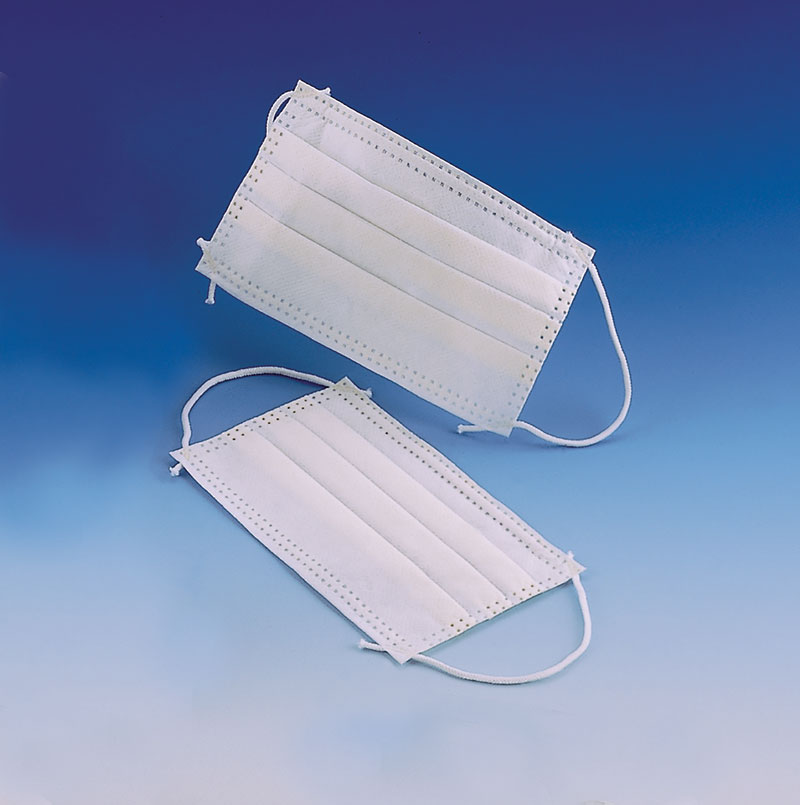
WEST CHESTER, Pa. — June 12, 2020 — Sonobond Ultrasonics’ face mask assembly video demonstrates how this critical personal protection item can be created in approximately one minute, without thread or glue, enabling manufacturers to increase their production speeds and reduce their production costs.

The Advantages of Ultrasonic Technology

Sonobond’s ultrasonic machinery uses high-frequency vibratory waves to produce sealed seams and edges. It is the preferred method for face mask assembly, since reliable bonds are quickly created without stitch holes, glue gaps, fraying or unraveling, and no consumables are required.

Q: What type of face masks can our equipment assemble?

A: Most commonly used face masks can be wholly or partially assembled using our SeamMaster® Ultrasonic Sewing Machine or a combination of the SeamMaster® and our PlungeBonder™ Ultrasonic Spot-Weld Bonder.

Q: What about other medical supplies?

A: Disposable medical gowns and shoe covers, lint-free wound dressings, pillow and mattress covers, and pouches for sterilizing and storing medical instruments are some of the typical medical products assembled with our machines.

Q: How do we ensure that our equipment will suit different customer applications?

A: We offer no-charge, no-obligation textile bonding viability tests to produce sample assemblies using your own nonwoven or synthetic materials. This allows you to evaluate the results and confirm the quality of our process before placing an order.

Q: Is Sonobond continuing to make machines even as other businesses are shutting down to combat the spread of COVID-19?

A: Yes. Sonobond has been granted a waiver from our state’s COVID-19 Orders to continue our critical role in providing equipment that assembles life-sustaining medical supplies. However, due to high demand and our adherence to CDC mitigation measures to protect our staff and the community, we appreciate your understanding if your order is not filled as quickly as usual.

Q: What’s the best way to contact Sonobond for immediate or additional information?

Please call 610-696-4710; or contact Vice President Melissa Alleman at MAlleman@SonobondUltrasonics.com. You can also visit this page on our website https://www.sonobondultrasonics.com/welders-bonders/nonwovens-textiles to view our videos on face mask assembly, and on general textile and filter assembly.

Posted June 16, 2020

Source: Sonobond Ultrasonics

Cradle to Cradle Products Innovation Institute awards Material Health Certificate to Freudenberg

WEINHEIM, Germany — June 15, 2020 — Freudenberg Performance Materials has been recognized with its first Silver level Material Health Certificate from the Cradle to Cradle Products Innovation Institute for its comfortemp® air HO 80x product series. The comfortemp® air HO 80x fiberball paddings are made from nylon 6 and are 100-percent recyclable. The world’s leading specialist in interlinings and paddings for the apparel industry is thus also a groundbreaker in this field, and developed its first cradle-to-cradle solutions in 2017 under projects with C&A and G-Star Raw. The Material Health Certificate now confirms that the materials used in the comfortemp® air HO 80x series comply with the Silver achievement level for material heath.

Nylon 6 enables genuine circular design

By combining its wide-ranging technology know-how, Freudenberg has developed a new generation of paddings made entirely of nylon 6. Nylon 6 is the only man-made fiber that retains its high quality and performance even after several recycling operations. Post-recycling, nylon 6 granules can be used to produce new materials. Over and over again. That is genuine circular design.

High performance

The comfortemp air H080x series paddings are as lightweight as feather products. Thanks to the fine nylon 6 fibers and Freudenberg’s innovative process technologies, they are as efficient as conventional PES paddings. Moreover, the thermal insulation has a high thermal capacity, is soft and has excellent breathability.

It also has high durability, even after many wash cycles, does not clump, and can be washed at a temperature of 40°C.

Social and ecological responsibility is an integral part of development work at Freudenberg Performance Materials. Among other things, the company is now working on achieving Material Health Gold level certification for the comfortemp air H080x series. Further information on the certification of Freudenberg’s comfortemp air HO80x series is available from the Cradle to Cradle Products Innovation Institute website.

Posted June 16, 2020

Source: Freudenberg

Sponsors