Taiwan Textile Industry Actively Helping The United States And Global Partners To Combat COVID-19 Pandemic

TAIPEI — April 23, 2020 — Taiwan Textile Federation (TTF), by integrating upstream, midstream, and downstream textile industries and with the help of textile manufacturers such as Formosa Plastic Group, Formosa Chemicals & Fibre Corp., Far Eastern New Century Corp., KNH Enterprise Co. Ltd., China Surgical Dressings Center Co. Ltd. and Chang Hong Machinery Co. Ltd. etc., a complete surgical mask supply chain was formed. Taiwan has transformed from importing country for surgical mask to the second-largest surgical mask producer worldwide with daily production capacity of 15 million units.

Taiwan plays an important role as the “Silicon Valley” for textiles industry globally and is a long-term trusted partner of international brands. With years of research and development efforts in functional textiles, Taiwan textile industry has accumulated experience and technology that allows Taiwan government to form a national epidemic prevention team in the fight against COVID-19 at short notice.

Through the efforts by manufacturers like WEB-PRO Corp., Nan Liu Enterprise Co. Ltd., Eclat Textile Co. Ltd. and Makalot Industrial Co. Ltd. on the “National Team for Hazmat and Protective Clothing”, Taiwan successfully develops and produced the level 3 protective suit in just one month. In the period from March to April, over one million units of isolation gown and 100 thousand units of protective suits were manufactured.

Thanks to the joint efforts of the Taiwan’s textile industry and the government, Taiwan’s performance on epidemic prevention has been recognized internationally. Taiwan is contributing its experience and capabilities, fulfill its international responsibilities, and actively strengthen anti-epidemic cooperation with other countries.

Taiwan has donated 15 million surgical masks to support medical staffs in countries with severe coronavirus outbreak, and will continue to provide support to the international community. Under the Taiwan-U.S. epidemic prevention cooperation framework and in the spirit of “Taiwan can help!”, Taiwan has donated 2 million surgical masks to the U.S. and will continue to help strengthening protection for frontline medical personnel by providing 100 thousand urgently needed surgical masks every week.

In response to these kind acts, The United States White House National Security Council (NSC) thanked Taiwan for its support and collaboration via a tweet while the European Union representative in Taiwan, Filip Grzegorzewski, posted a tweet thanking Taiwan for its swift delivery of masks to countries hardest hit by the pandemic. Furthermore, Microsoft founder Bill Gates also publicly praised Taiwan’s swift action to fight off coronavirus as exemplary. Even the phrase “TaiwansHelping” is turning into a hashtag keyword on Twitter.

Taiwan Textile Federation (TTF), a non-profit organization, plays an important role in Taiwan’s textile industry. In order to assist the textile industry to cope with the competition of globalization, TTF, as commissioned by the Bureau of Foreign Trade, Ministry of Economic Affairs, implements the “Textile Export Promotion Project” (TEPP) by selecting premium textile exporters and promoting their exports through the measures under this project.

As the severe impact of the COVID-19 pandemic continues to spread across the textile and apparel sector, TTF quickly took actions to assist companies in receiving government relief. TTF asking brands to maintain supply-chain partnerships with Taiwan’s textile industry and to regard suppliers as important business partners.

Taiwanese textile manufacturers’ quick action to integrate the resources and capabilities of all parties to combat the COVID-19 pandemic and the ability to assemble a mask and protective clothing production line in a short period of time, has echoed the long recognized traits “quick response,” “reliability,” “sustainable innovation,” and “profound professional knowledge and experience” of Taiwan textile industry. The brands’ trust is precisely why Taiwan has become the first choice for international brand cooperation. At this critical moment, Taiwan’s textile industry is ready to support its partners to weather out this epidemic and work together to focus on the future of medical fabrics and garment market.

Posted April 23, 2020

Source: Taiwan Textile Federation (TTF)

The Acme Group Pivots Business Model To Assist With COVID-19 Pandemic Shortages

BLOOMFIELD HILLS, Mich. — April 23, 2020 — The Acme Group, a provider of industrial textiles and textile solutions, announces the company’s pivot in the wake of the COVID-19 pandemic. Based in Bloomfield Hills, Mich., the group serves automotive, industrial and other commercial customers globally. Amidst the global crisis and shortages of critical medical equipment and materials, the company has converted its factories to the development and production of KN95 masks and providing meltblown filter material — a key ingredient in face masks — to producers all over the world. The company also converted one of its facilities to cut and sew materials used in surgical gowns and face masks. The Acme Group has provided more than 3 million masks for area healthcare workers thus far.

Founded in 1917, The Acme Group has long been a source of industrial textiles for American manufacturers. The company has adapted to the growing industry and expanded its business model to reach the furniture, aviation, and marine markets. The company takes pride in being large enough to meet their client’s industrial fabric and textile needs while being ‘small enough’ to ensure a personalized customer experience. With the notion of prioritizing the customer’s needs, it was a natural course of action to pivot the business to aid in the COVID-19 pandemic and replenish critical PPE inventories. “I’m really proud of the team and how nimble everyone has been. We have pivoted almost instantly to serving those most in need in these unprecedented times. It is something I am very proud of and a testament to the team we’ve built and their commitment to serve our communities,” stated CEO Jim Colman.

Thru its evolution, The Acme Group and Great Lakes Filters, have garnered capabilities across the globe, manufacturing and producing industrial and automotive textiles for over 100 years. The Acme Group serves as the holding company of its three subsidiaries, Acme Mills, Fairway Products, Great Lakes Filters. President of Great Lakes Filters, Matt Utley adds, “we have a tremendous history of textile manufacturing and distribution and we’re thrilled to put it to work to help a greater cause. We’re excited about what we’ve done and eager to help more. We are open for business and excited to do our part”.

Posted April 23, 2020

Source: Acme Group

Steetwear Brand Social Distance Social Club Launches To Record-Breaking Sales

LOS ANGELES — April 23, 2020 — Social Distance Social Club, a new streetwear brand out of Los Angeles, launched Friday, April 17, to record-breaking sales. The new clothing line was created to increase awareness around the importance of Social Distancing in the era of COVID-19, while raising money for World Central Kitchen.

The current line-up consists of T-shirts, hoodies, facemasks, crop tops, and tank tops with a straightforward message: Social Distancing Saves Lives. The streetwear collection was created by two young entrepreneurs with strong backgrounds in fashion and brand marketing.

The passion for creating the line came out of their frustration with the mixed messaging in media and government on the importance of social distancing to flatten the COVID-19 curve.

The founders have close friends working in the restaurant industry and healthcare, two of the hardest-hit sectors in the COVID-19 pandemic. They understand the challenges restaurants are facing and the sacrifices the nation’s healthcare workers are making.

Inspired by José Andrés and World Central Kitchen, the duo were motivated to create a campaign to raise money supporting World Central Kitchen and #ChefsforAmerica COVID-19 response.

World Central Kitchen is working across America to safely distribute individually packaged, fresh meals in communities that need support by activating restaurants to help meet this demand while providing jobs for their staff and meals for those in need.

Five dollars of every item sold at SocialDistanceSocialClub.shop will be donated to the World Central Kitchen COVID-19 relief program.

With backgrounds in fashion and branding, the founders felt confident they could reframe the Social Distance narrative by aligning the message with an urban streetwear vibe designed to appeal to the America’s Gen Z and Millennial generations.

The founders plan on extending the product line to include joggers, socks, jackets, and other small accessories within the coming weeks.

Posted April 23, 2020

Source: Social Distance Social Club

ReCircled Seeks To Create A Sustainable Fashion Loop

DENVER — April 23, 2020 — ReCircled, a start-up business focused on sustainable fashion, announced today the opening of two modern factories that will provide the infrastructure for fashion brands to move from a linear business model to one that is circular. With a facility in Cozad, Neb., to handle the United States and the second in Prato, Italy, to handle the European market, ReCircled will handle merchandise that has been returned, is damaged or preowned for many of the leading global fashion brands.

According to the Ellen MacArthur Foundation clothing is the second largest use of landfills globally. With the fashion industry stuck in a linear business model of Take-Make-Waste, they have offered four initiatives that the fashion and clothing industry can take to move to a circular model. These initiatives include producing more durable clothing that can be repaired, rental, subscription business models, and for fashion brands to enter the ReSale market.

The MacArthur Foundation recommends that Fashion Brands work with a 3rd Party to develop and execute these initiatives. With a lack of actual facilities that can handle these initiatives, ReCircled is positioned to handle these initiatives.

The ReCircled facilities will receive and sort garments that have been returned to the brands. They will sort items by usable and unusable. Unusable items will be resorted for fiber recycling. Usable items will then be cleaned using the latest waterless, carbon dioxide cleaning, repairs will be done and finally each item will be photographed for resale.  ReCircled will build an e-commerce site for each brand that can be integrated into the brands current e-commerce platform or can stand on its own.

Scott Kuhlman, cofounder of ReCircled, said, “Our proprietary process for sorting, cleaning and repairing garments and accessories, and our unique e-commerce platform allows brands to keep items at their highest value, a core strategy of sustainability.”

ReCircled has put together a team of industry veterans including Principal Tom Ott, who said, “After several decades in the fashion industry this project is one that allows the brands I have worked with over the years to become responsible to the environment and allows them to reach a customer they have not reached in the past.”

With the thought that sustainability and responsibility will lead fashion back from the current global climate, ReCircled is the turnkey solution for fashion brands to enter the Circular Economy.

Posted April 23, 2020

Source: ReCircled

Global Protective Gear Creates Innovative Fabric To Combat Isolation Gown Shortages

ORANGE COUNTY, Calif. — April 23, 2020 — Global Protective Gear has created an innovative fabric to help solve the current isolation gown shortage. With the surge in demand for gowns during the current coronavirus pandemic the traditional supply chain has not been able to keep up. The primary raw material used to create gowns is a nonwoven fabric that is currently in short supply.

To solve this raw material and gown shortage Global Protective Gear is now manufacturing AAMI Level 1 and Level 2 isolation gowns by using an alternative textile. Global Protective Gear has taken a lightweight 100-percent polyester and then applied a polyurethane coating which results in a waterproof equivalent. And now the company is supplying 1 million isolation gowns per week to hospitals and medical facilities around the globe for use in low risk situations.

“We were not going to let a nonwoven shortage get in the way of providing a workable isolation gown in this time of extreme need,” said Gregory Lilien, CEO, about the new product.

And since the new product is based on an actual fabric, the gowns can actually be washed and reused 5 to 10 times. While some users will be required to dispose after each use, in some lower risk situations the gowns can be washed and reused multiple times helping minimize costs further. The current market price for an isolation gown is a staggering $7-15 per piece. In certain lower risk situations, the Global Protective Gear gown can be reused multiple times bringing the cost below $1 per use. This is a step in the right direction to help ease the current choke on the medical product supply chain.

Global Protective Gear is also currently building a new facility to begin production of AAMI Level 3 and 4 gowns for June 2020.

Posted April 23, 2020

Source: Global Protective Gear

Oerlikon Manmade Fibers Segment Looking Positively Towards The Future Even During The Coronavirus Pandemic

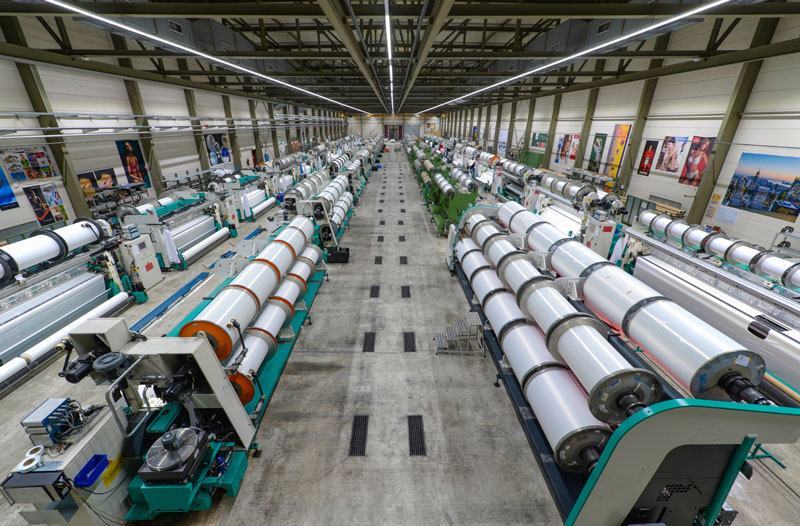
REMSCHEID, Germany — April 23, 2020 — Staggered in terms of timing and with varying magnitude, the global spread of coronavirus is impacting the development of the regional economies in the core markets of the Manmade Fibers segment of the Swiss Oerlikon Group. In the current times, the world market leader for man-made fiber systems for manufacturing polyester, polypropylene and nylon however believes itself to still be well positioned thanks to long-term strategic customer investments, simultaneously also exploiting numerous opportunities for change arising from the coronavirus pandemic.

The sales markets for man-made fiber systems and equipment have been primarily located in China, India and Turkey for many years now. Together, these markets — above all China — make up the lion’s share of the project landscape at Oerlikon Manmade Fibers. And this is paying positive dividends at the moment. Because the production facilities of the major manmade fiber manufacturers in China have been systematically fired up again over the past few weeks, with capacity utilization in-creasing consistently. New projects are being discussed.

Going against the flow

But why is it so? And why is the man-made fiber industry currently practically going against the flow of the rest of the textile machine industry? The reason is very simple: “Long before the coronavirus situation developed, the major man-made fiber manufacturers in China had decided to reverse-integrate their production chains to include petrochemicals in order to expand their portfolios with targeted investments, to reduce their dependence on a ‘single product’, to optimize their costs and ultimately to acquire greater control over margins in a global volume business,” explained Segment-CEO Georg Stausberg.

Similar processes and decisions — albeit not on the same scale as in China — have also been detected at the large man-made fiber manufacturers in India and Turkey. While China is already pursuing and implementing its “From Oil to Yarn” business model, the other market players are currently still focusing on the “From Melt to Yarn” concept. Even though businesses in India and Turkey are presently still temporarily severely impacted by the coronavirus situation, their long-term commitment cannot however be questioned, as the company-internally-agreed master plans will be systematically implemented moving forward.

Long-term investments of global market players

All this has recently resulted in increased demand for spinning and texturing systems — just like those supplied by total solutions provider and world market leader Oerlikon Manmade Fibers with its Oerlikon Barmag, Oerlikon Neumag and Oerlikon Nonwoven product brands. “The investments in petrochemical systems are based on long-term strategic considerations and are resulting — even during the coronavirus pandemic — neither in short- and medium-term economic dips, nor in changed customer behavior.” Stausberg said. “For these reasons, we are currently continuing to look positively towards the future at Oerlikon Manmade Fibers. With orders on our books until 2023, we have created a very good cushion for ourselves. We have to thank all our customers, who have consistently placed their trust in us despite the challenging times we are currently in.

“We would also like to thank all our employees who remain highly-committed at their mobile workstations at home, servicing the markets throughout the world, providing customers with intensive online consultation on technology questions by means of video conference, continuing to manufacture our high-end technological products in superlative quality under the given coronavirus protection measures at our assembly and production sites worldwide and successfully assembling and commissioning the systems on-site, in part also remotely in collaboration with our clients’ staff,” stated Georg Stausberg with pride.

As a result of Oerlikon Manmade Fibers delving into the digital age years ago, the segment has experienced the intensive and short-term benefit from all the measures, in part also in its processing of customer projects. “Admittedly, the coronavirus situation has accelerated this digital transformation to an extreme extent. But it is working and the coronavirus crisis will also allow us to take many positive experiences we have made in our digitally-networked world with us moving forward,” Stausberg concluded.

Posted April 23, 2020

Source: Oerlikon Textile GmbH & Co. KG

Ampacet Introduces REC-NIR-BLACK™ High Alcohol For Spirits, Sanitizer And Pharmaceutical Applications

TARRYTOWN, N.Y. — April 23, 2020 — Ampacet has introduced REC-NIR-BLACK™ High Alcohol, an extension to the detectable REC-NIR-BLACK line of black masterbatches that are near-infrared (NIR) transparent to allow sorting with NIR optical sensors and recycling.

REC-NIR-BLACK High Alcohol is suitable for monolayer PET bottles and containers used in high alcohol applications, including wine and spirits, hand sanitizers, household cleaners, personal care and OTC pharmaceutical products.

“These detectable products are part of Ampacet’s sustainable development program, which features new and innovative solutions that help to protect the environment,” says Doreen Becker, Sustainability Director. “Our REC-NIR-BLACK masterbatch line significantly reduces the carbon footprint by providing a second life for black plastic packaging.”

The key limitation to NIR sorting is its inability to identify and separate plastics that contain carbon black, the most commonly used black pigment. Conventional black colorants absorb a significant part of the ultraviolet and infrared spectrum, preventing the reflection of infrared light back to the sensor and consequently blocking the recognition of the resin’s fingerprint by a NIR scan.

Most black packaging cannot be sorted by recycling companies and can only be disposed of in a landfill or used for energy recovery. Packaging using Ampacet’s detectable masterbatch products can be scanned by NIR technology for automated sorting at recovery facilities. This technology enables the reuse, repair and recycling of black packaging waste and allows recyclers to obtain value from this waste and support the circular economy.

Ampacet’s detectable masterbatch REC-NIR-BLACK was named a Plastics Recycling Awards Europe 2019 award winner in the category of Product Technology Innovation of the Year.

Posted April 23, 2020

Source: Ampacet Corp.

HeiQ, WACKER, FHNW And Alchemie Form A Seamless Supply Chain To Quickly Serving The High Demand For Antiviral HeiQ Viroblock NPJ03

ZURICH, Switzerland — April 23, 2020 — In the news that made headlines over the past month, including CNN, Swiss textile innovator HeiQ launched HeiQ Viroblock NPJ03, which received extremely high demand from all over the globe. Today, HeiQ sends its gratitude to its key supply chain partners who made it feasible to support this demand in such a short time.

The international textile supply chain, from raw materials to chemistry to finished goods, has been disrupted due to COVID-19 pandemic. However, there is high demand for a solution to protect front-line emergency workers with virus-blocking textiles during this pandemic, and that is an enormous challenge during these times. HeiQ has shown its strength to rapidly finalize and validate an antiviral textile treatment to help with the fight, but said that it would not have been possible to serve the sudden and urgent hike in demand without a few close partners for a seamless supply chain that is intact, even during pandemic times. This includes everything from raw materials to production to application methods.

Wacker Chemie AG has been a reliable partner of HeiQ for the past decade for such innovative raw materials as silicone fluid and cyclodextrins. HeiQ Viroblock NPJ03 contains other essential raw materials for which the demand surged. WACKER was able to go out of their way to secure the supply of its cyclodextrins for what was needed.

Once supply of raw materials was secured, the production process of HeiQ Viroblock NPJ03 needed to be developed and optimized quickly for proper scale up. HeiQ’s long-term research partner FHNW School of Life Sciences (University of Applied Sciences and Arts Northwestern Switzerland), based in the new FHNW Campus Muttenz, Switzerland, has been key to many R&D activities of HeiQ’s innovation, including the latest HeiQ Viroblock NPJ03 technology. They stepped in with their chemical engineering know-how and a special permit to use their new Process Technology Center (PTC). On very demanding timelines, the FHNW School of Life Sciences developed quality protocols for initial pilot trials and provided first production batches to serve demands in nearby countries, such as Italy, where material for medical textiles was urgently needed. Previously, The FHNW School of Life Sciences was essential in supporting HeiQ to construct highly efficient manufacturing processes for many of its innovations.

Procedures developed at FHNW’s Process Technology Center are now used as standard protocols across all of HeiQ’s manufacturing locations. The FHNW School of Life Sciences is continuing to support HeiQ with analytical know-how for HeiQ Viroblock NPJ03, and FHNW remains a strong partner for developing future technologies seeking to improve the life of billions of people. By partnering with the PTC at the FHNW School of Life Sciences in Muttenz, in coordination with many other manufacturing locations around the globe, HeiQ was able to ramp up production to satisfy global demand in within one month’s time.

With production secured, application of HeiQ Viroblock NPJ03 had to be suitable for medical personal protective equipment. Cambridge based Alchemie Technology, who dyes and treats medical textiles with their breakthrough new process technology Novara, has successfully applied HeiQ Viroblock NJP03 together with their Endeavour waterless smart dyeing of the required color by the UK’s National Health Service. Alchemie’s Novara precision digital coating technology application is uniquely suited to apply HeiQ Viroblock NPJ03 technology with precision to medical textiles. Their digital on-demand process is non-contact and delivers product only where it is needed, on either one or two sides, with precise resolution. This reduces minimum run lengths, enables rapid changeovers and delivers ultimate flexibility in technical textile manufacturing.

“The team at HeiQ, being flexible and having strong relationships with our partners, worked with the teams at WACKER, FHNW and Alchemie to seamlessly procure raw materials, produce technology and apply product in a quick and efficient manner. Once again, we see the various parts of the supply chain come together in a united effort when needed to develop and produce products for every front-line worker that are more resistant to pathogenic viruses and bacteria. I am very proud of the teams from HeiQ and all our partners”, says Carlo Centonze, HeiQ co-founder and Group CEO.

“WACKER meets the highest quality standards with its products. We are pleased to support HeiQ and make a contribution to the fight against the spread of the coronavirus” said Mark Harrison, global business development manager of Germany-based Wacker Chemie AG. Professor Dr. Falko Schlottig of the Swiss-based FHNW School of Life Sciences, added. “As a long time R&D partner of HeiQ, we are honored to offer both our expertise and our excellent infrastructure, especially the all-new Process and Technology Center, to make this key product to help fight the global pandemic.”

Simon Kew, Managing Director of England-based Alchemie Technology, said, “Our recently developed Novara precision digital coating process is the best platform to apply HeiQ Viroblock NPJ03. We are glad to be working alongside HeiQ on this project.”

Posted April 23, 2020

Source: HeiQ Materials AG

British Standards Institution (BSI) Uses Technology To Provide Clients Remote Alternatives To Traditional Auditing And Training

LONDON — April 23, 2020 — BSI, the business improvement company, has a suite of solutions that enable the delivery of critical services and products without disruption to clients during the COVID-19 pandemic.

As individuals, companies and organizations around the world have needed to adapt to evolving new realities and the impact of the COVID-19 pandemic, BSI has been able to provide steady guidance and business continuity by offering remote audits, consulting services, and online training to keep businesses functioning and maintain certificate validity.

As an industry leader in immersive technologies, BSI is well positioned to provide clients with a portfolio of solutions to help them maintain operations and adhere to safety guidelines amid the COVID-19 pandemic.

Although the COVID-19 pandemic has brought the use of immersive technologies to the front of mind for clients, BSI has been a leader in the provision of live online training, as well as the use of drones for aerial imaging, smart wearables for live-streaming audits, and video conferencing for in-depth document review and process analysis for some time. All in an effort to better serve clients while also saving time and resources. In addition, the use of remote services, where possible, has the added benefit of reducing our collective carbon footprint.

Now, more than ever, these technologies are serving our clients:

  • BSI remote audits enable us to support organizations by delivering their audit programs, how and when they need it, with the same trusted experts;
  • BSI remote consulting enables us to provide a holistic approach to consulting projects; from environmental compliance support and inspection services to industrial hygiene; assessments and workplace safety observations, our subject matter experts (SME’s) utilize emerging technologies to deliver an immersive consulting experience; and
  • BSI connected learning live enables us to continue to run our courses, delivering high-quality online learning and trusted expertise.

“BSI’s immersive technology solutions is an exciting way to deliver our services that allows our global team of auditors to conduct audits regardless of the situation or potential crisis at hand, still adding value in the process while providing trust. Remote auditing and training using the latest technology demonstrates our commitment to providing our clients a resilient, global and uninterrupted auditing and certification service,” said Pietro Foschi, group director Assurance Services, BSI. “Although we’ve been offering many of the services and technology for some time, the current global situation has made their utilization an important alternative to the traditional delivery methods.”

As the current situation subsides, the world slowly recovers, and governments and organizations begin to reassess the new normal , BSI is prepared to continue delivering these services to meet client needs. In the meantime, by adapting our workforce to meet the needs of our clients in a time of social distancing and mitigation efforts, we will continue to provide the services and certifications our clients rely on.

Posted April 23, 2020

Source: British Standards Institution (BSI)

The Summer Edition Of Texworld USA, Apparel Sourcing USA And Home Textiles Sourcing Expo Goes Virtual

ATLANTA — April 23, 2020 — Messe Frankfurt announced today its plans to utilize a virtual platform for its New York textile events. With the aim to support the sourcing community through these unprecedented times, the summer edition of Texworld USA, Apparel Sourcing USA and Home Textiles Sourcing Expo will be presented across digital platforms. Originally scheduled to be held at the Jacob K. Javits Convention Center in New York City, these collocated events can now be accessed live, July 21 – 23, 2020.

“This was a pivotal decision in ensuring the future success of the shows, commented, Constantin von Vieregge, president and CEO, Messe Frankfurt North America. Messe Frankfurt has existed for several hundred years by being open to innovation while still serving the needs of the market. Amending the platform for this edition allowed us to be considerate of the changing textile industry and global business climate.”

Texworld USA, Apparel Sourcing USA and Home Textiles Sourcing Expo have served the sourcing community for over a decade, providing unparalleled access to quality, international textile manufacturers, trend forecasting experts and innovative educational sessions. The transition to a virtual event for the summer edition reinforces the fierce commitment to supporting the industry through both good and challenging times.

Traditional features presented virtually

With the returning support of long-standing exhibitors, international and domestic, the July events will open with similar features found on the trade show floor. An online showroom will highlight material innovations, while allowing visitors to chat with representatives about specific requirements, factory options and more.

In addition to the digital exhibit presentation, a comprehensive educational program will run alongside. Topics will range from sustainability initiatives, environmental and ethical impacts to business tips and sourcing options amidst a pandemic. Comprised of thought leaders and textile experts, these interactive discussions will share insights on how we can collaborate to bring about change individually, locally and globally.

“Despite the current uncertainty that we are facing, we are excited to open our July events virtually, stated show director, Jennifer Bacon.  Although nothing will ever replace face-to-face interaction, connecting textile mills and manufacturers from across the globe with US buyers seeking avenues to source fabrics and accessories remains our focus — to provide a platform for product discovery, trend analysis and education.”

Registration will open in the coming weeks.

Posted April 23, 2020

Source: Messe Frankfurt North America

Sponsors