Texworld USA And Apparel Sourcing USA: Adapt To Challenging Times With New Concept

NEW YORK CITY— September 14, 2020 — The largest sourcing event on the east coast returns to the Javits Center in January 2021 with new dates, a new name, and three ways to participate.

After the successful premiere of a virtual edition in July, Messe Frankfurt North America is bridging the gap between physical and virtual events by introducing a Pop-Up Sourcing Showcase at its New York Textile shows. The announcement comes with even greater changes for these shows. Along with earlier dates for the Winter edition, Texworld and Apparel Sourcing USA are now Texworld New York City and Apparel Sourcing New York City. The virtual platform will take place January 12-14, 2021, along with the Pop-Up Sourcing Showcase that will join the traditional trade show floor presentation at the Javits Center to collectively create the largest sourcing event of the season.

New concept brings new opportunities

The newest concept, “Pop-up Sourcing Showcase” is a dedicated area on the show floor that will feature a unique display of the highest quality fabrics and garments provided by mills from around the globe who cannot be present at the event. Suppliers will submit the best of their collections to be curated by New York-based trend agency, The Doneger Group. The “Pop-up Sourcing Showcase” is streamlined and integrated with the Virtual Platform giving visitors a unique and interactive sourcing experience. Guided by textile and apparel experts on-site, visitors will be able to touch and feel the fabrics, receive detailed product information through the virtual platform and communicate with participating exhibitors virtually.

“We are eager to introduce the Pop-up Sourcing Showcase to the textile community. The show has evolved tremendously since its inception. From the quality of the suppliers to the educational offerings, Texworld and Apparel Sourcing have become a staple in the market,” shared Jennifer Bacon, Show Director.

“As the world faces economic, trade, and political crisis, our events have consistently adapted to the ever-changing industry for over 15 years now,” Bacon continued. “The current sourcing environment has only accelerated the execution of our vision to reimagine the future of our events and we are thrilled to see it come to fruition.”

As we open businesses to a new normal, global manufacturers will be welcomed to exhibit face-to-face. The “Traditional Exhibition” will operate in a typical trade show setting enabling local visitors to meet and source fabrics with exhibiting companies in-person, while adhering to all safety regulations set forth by the show organizer, the Javits Center as well as the state of New York.

“In consideration of our current global business climate and travel restrictions we look forward to increased participation from domestic suppliers and with the safety of our exhibitors, visitors and staff as a key focus, we are confident that the procedures put in place will support a strong health strategy for face-to-face interaction,” stated President and CEO Konstantin von Vieregge.

The mainstay features such as the Lenzing Seminar Series, Textile Talks and the Texworld Trend will remain in place for the Traditional Exhibition as anchors of the event.

The third sourcing opportunity available to the attendees of the Winter Edition is the Virtual Platform. Following the success of the first-ever virtual edition this July, the well-received “Virtual Platform” will be reintroduced for those who are not able to attend the physical event. With features like AI-powered matchmaking, video calling, chat functions an advanced scheduling tool and access to the full complimentary educational program, the virtual platform provides an additional option to stay relevant and connected in the industry.

Summing up the introduction of new concepts, von Vieregge continued, “Messe Frankfurt has a long tradition in being open to innovation and agile during challenging times and it is in this same spirit that we are excited to present a multitude of opportunities for our New York events to continue serving the textile sourcing community.”

Registration for the Winter 2021 edition opens in the coming weeks. For more detailed information on either of these events, please visit us online.

Posted September 14, 2020

Source: Messe Frankfurt
Suominen Introduces BIOLACE® Pure — A 100-Percent Plant-Based Product

HELSINKI — September 14, 2020 — Suominen, a global frontrunner in nonwoven innovations and sustainability, introduces BIOLACE® Pure for wipes. The product is made of biodegradable, compostable, and renewable plant-based fibers and wood pulp from certified forests. The product does not contain any chemical binders or plastics. As the newest product in Suominen’s sustainable BIOLACE product family, BIOLACE Pure is designed to meet the growing wipes market’s increasing demand for sustainable, plastic-free materials.

“BIOLACE Pure offers our customers a unique, sustainable option that does not compromise on the most important features needed for a perfect wet wipe. Its three-layer solution guarantees optimal liquid management and the soft outer layers ensure that the wipe cleans effectively, yet softly,” said Marika Mäkilä, manager, marketing and category management, Europe.

The development of this innovative material with excellent liquid management and cleaning properties is based on Suominen’s long history and know-how in producing pulp-based products. Compared to 100-percent viscose product for wipes, for example, BIOLACE Pure brings superior cleaning power with a lighter carbon footprint and a lower environmental impact.

“Global environmental concerns, such as climate change and marine plastic pollution, are creating new market expectations and demand for sustainable nonwoven products. These global challenges drive also us to continuously develop innovative solutions with smaller environmental impacts and our novel BIOLACE Pure is a great example of our efforts.,” concluded Mäkilä.

BIOLACE Pure will be commercially available in 2021.

Posted September 14, 2020

Source: Suominen Corp.

True Temper Sports Partners With Hexcel On Latest Line Of High-Performance Golf Shafts

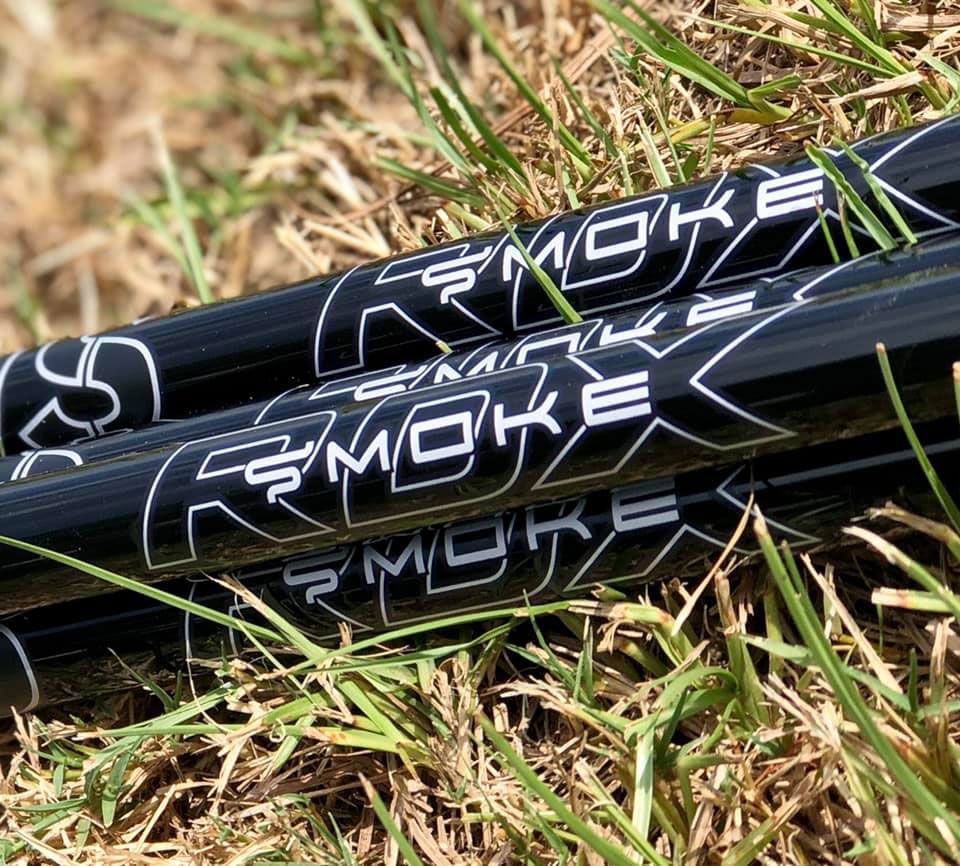
STAMFORD, Conn. — September 14, 2020 — True Temper Sports, leading designers and manufacturers of golf shafts, has chosen to partner with Hexcel on its latest product line, the HZRDUS Smoke Black RDX. The HZRDUS Smoke Black RDX is the first golf shaft to use Hexcel’s new HexTow® HM54 carbon fiber, which is ideal for recreational applications.

HZRDUS has emerged as one of the most dominant shafts at all levels of golf over the past 50 years, and the RDX is the next evolution in the HZRDUS line. By partnering with Hexcel to incorporate HexTow HM54, True Temper has taken its designs to the next level. HZRDUS Smoke Black RDX is the first golf shaft to use HexTow HM54 high modulus carbon fiber and combines it with high tensile strength HexTow IM2C carbon fiber to provide the ideal blend of stiffness and stability desired by engineers to build into the HZRDUS shafts.

Tom Haulik, sales director, Global Fibers at Hexcel, said: “True Temper has a heritage of being the worldwide leader in the manufacturing of golf shafts, so we are very excited to see our new HexTow HM54 fibers used in their latest HZRDUS shaft. HexTow HM54 is the perfect application for a high-performance golf shaft such as HZRDUS Smoke RDX.”

Don Brown, Vice President of Innovation and Product Creation at True Temper, said, “Being able to work with the world’s largest supplier of intermediate and high modulus fibers only makes our product line better. We are pleased to work closely with Hexcel on the use of one the world’s best carbon fibers in our product.”

True Temper Sports is the number 1 shaft in golf. It has been used to win more professional golf tournaments than any other shaft manufacturer. True Temper Sports offer shafts under the True Temper, Project X, ACCRA, Aerotech, and Grafalloy brands.

Posted September 14, 2020

Source: Hexcel Corp.

Crown Linen Services Achieves Renewal For Hygienically Clean Healthcare

ALEXANDRIA, Va. — September 11, 2020 — Crown Linen Services,  the Brockton, Mass. family-owned uniform rental and linen service offering commercial laundry services to nonprofits and businesses in New England for more than 100 years has recently qualified for renewal of the Hygienically Clean Healthcare certification. The recertification reflects its continued commitment to best management practices (BMPs) in laundering as verified by on-site inspection and their capability to produce hygienically clean textiles as quantified by ongoing microbial testing.

The Hygienically Clean Healthcare certification confirms the organization’s continuing dedication to infection prevention, compliance with recognized industry standards and processing healthcare textiles using BMPs as described in its quality assurance documentation, a focal point for Hygienically Clean inspectors’ evaluation. The independent, third-party inspection must also confirm essential evidence that:

  • Employees are properly trained and protected;
  • Managers understand regulatory requirements;
  • OSHA-compliant; and
  • Physical plant operates effectively.

To achieve certification initially, laundries pass three rounds of outcome-based microbial testing, indicating that their processes are producing Hygienically Clean Healthcare textiles and diminished presence of yeast, mold and harmful bacteria. They also must pass a facility inspection. To maintain their certification, they must pass quarterly testing to ensure that as laundry conditions change, such as water quality, textile fabric composition and wash chemistry, laundered product quality is consistently maintained. Re-inspection occurs every two to three years.

This process eliminates subjectivity by focusing on outcomes and results that verify textiles cleaned in these facilities meet appropriate hygienically clean standards and BMPs for hospitals, surgery centers, medical offices, nursing homes and other medical facilities.

Hygienically Clean Healthcare certification acknowledges laundries’ effectiveness in protecting healthcare operations by verifying quality control procedures in linen, uniform and facility services operations related to the handling of textiles containing blood and other potentially infectious materials.

Certified laundries use processes, chemicals and BMPs acknowledged by the federal Centers for Disease Control and Prevention (CDC), Centers for Medicare and Medicaid Services, Association for the Advancement of Medical Instrumentation, American National Standards Institute and others. Introduced in 2012, Hygienically Clean Healthcare brought to North America the international cleanliness standards for healthcare linens and garments used worldwide by the Certification Association for Professional Textile Services and the European Committee for Standardization.

Objective experts in epidemiology, infection control, nursing and other healthcare professions work with Hygienically Clean launderers to ensure the certification continues to enforce the highest standards for producing clean healthcare textiles.

“Congratulations to Crown Linen Services on their recertification,” said Joseph Ricci, TRSA president and CEO. “This achievement proves their commitment to infection prevention and that their laundry takes every step possible to prevent human illness.”

Posted September 11, 2020

Source: TRSA

Fashion For Good: A New Frontier In Chemical Recycling 

AMSTERDAM — September 10, 2020 — The Fashion for Good initiated “Full Circle Textiles Project: Scaling Innovations in Cellulosic Recycling” — a first-of-its-kind consortium project — launches today. As much as 73 percent of clothing produced is sent to landfill or is incinerated and of all new clothing made, less than 1 percent of material used comes from recycled sources. Focusing on cellulosic fibers, this project aims to validate and eventually scale promising technologies in chemical recycling from a select group of innovators to tackle these issues. Leading global organizations Laudes Foundation, Birla Cellulose, Kering, PVH Corp. and Target join Fashion for Good, to explore the disruptive solutions, with the goal of creating new fibres and garments from used clothing and ultimately drive industry-wide adoption.

The project’s overall aim is to investigate economically viable and scalable solutions for cellulosic chemical recycling to enable a closed loop system converting textile waste — of cotton and cotton-blend materials, to produce new man-made cellulosic fibers.

Man-made cellulosic fibres (MMCF) such as viscose/rayon, Lyocell, Modal and Cupro, are most commonly derived from wood and have the third largest share in global fiber production after polyester and cotton. Man-made cellulosic fibers are of increasing importance; production of MMFCs has doubled in the last 30 years and is forecast for continued growth over the coming years.

“A bold approach is needed to identify and scale innovations that drive sustainable change in the fashion industry,” said Katrin Ley, managing director, Fashion for Good. “This multi-stakeholder consortium, a first-of-its-kind, addresses the most important barriers to scaling innovation, setting the precedent for all industry players with ambitions for disruptive innovation to follow.”

Over an 18-month period, project partners will collaborate with innovators, Evrnu, Infinited Fiber Company, Phoenxt, Renewcell and Tyton BioSciences, to validate the potential of their technologies in this still nascent market. The recycled content produced by four of these innovators will be converted at Birla Cellulose’s state of the art pilot plants to produce high quality cellulosic fibers. From there, fibers will move through the project partners supply chains to be manufactured into garments. Given that Infinited Fiber Co. produces industry-ready fiber using its process, the fiber will be delivered directly to the project partner’s supply chains for garment production. The project will provide an assessment of the innovator’s environmental impact, technologies, recycled output and subsequent garments. These results along with the project key learnings should determine how best to support and scale these promising solutions.

“The need of the hour is to co-create sustainable solutions for the fashion industry that can be scaled rapidly and economically,” said Dilip Gaur, business director, Birla Cellulose, Aditya Birla Group

Textile recycling is a key focus for Fashion for Good as a crucial lever in driving the fashion industry towards closed loop production. A systemic change towards circularity will ultimately reduce the environmental impact of textile waste and potentially eliminate our dependence on virgin materials entirely. Furthermore, producing man-made cellulosic fibres through chemical recycling can help preserve ancient and endangered forests. Scalable solutions in high quality textile recycling technologies are therefore urgently needed.

“Next generation solutions are the path to meeting the climate and biodiversity targets that scientists are calling for by 2030. We’ve seen promising momentum in recent years as we’ve worked with brands, producers and innovators to build strong market demand and Identified a great pipeline of game changing technologies. Now we need investment and broad industry adoption to make these Next Gen Solutions a commercially available reality,” siad Nicole Rycroft, founder and executive director, Canopy

Pioneering Collaboration

The unique consortium of brands, fiber producers, manufacturers and innovators is an intentional convening of essential stakeholders in line with key learnings identified in the recently published report by Fashion for Good and Boston Consulting Group “Financing the Transformation in the Fashion Industry”. In order to bring disruptive solutions to scale, the industry needs bespoke consortiums of brands, supply chain partners, innovators, and investors with a shared technology focus to concentrate resources and de-risk investments.

“Chemical recycling faces multiple barriers to scale and industry adoption; a key barrier being risk-tolerant investment for innovations that can enable testing, refinement and scale. We hope that our investment in the Full Circle Textiles Project will enable wider adoption and catalytic investment across the industry to map the course of change together,” said Anita Chester, head of Materials, Laudes Foundation (formerly C&A Foundation).

The formation of this targeted consortium expands on previous pilot project structures and is the first attempt at such a multi-stakeholder collaboration in the fashion industry, to create a streamlined ecosystem that drives a structured innovation process and ultimately, industry-wide adoption.

Mobilizing An Industry

“Financing the Transformation in the Fashion Industry” details further actions required to scale sustainable solutions including a concerted, industry-wide effort to provide the incentives, financial means and focus to accelerate transformation to sustainable and circular practices. Thus, through this Project and its consortium, Fashion for Good hopes to inspire other stakeholders to follow suit in supporting chemical recycling innovators to trial and ultimately secure offtake, catalyzing the transformation to a truly circular economy.

To officially kickoff the Project, Fashion for Good hosted an online media briefing and panel discussion with guest panelists, Dilip Gaur, business director of the Aditya Birla Group; Samantha Sims, vice president, Environmental Sustainability & Product Stewardship, PVH Corp.; Christine Goulay, head of Sustainable Innovation, Kering; Nicole Rycroft, founder and executive director, Canopy; and Katrin Ley, managing director of Fashion for Good. The media briefing outlined the scope of the project, introduced the selected innovators and consortium partners, as well as opening the floor to questions from invited media.

Posted September 11, 2020

Source: Fashion for Good 

Gerber MCT Cutter Empowers Colorwave Graphics To Transform During COVID-19 Pandemic

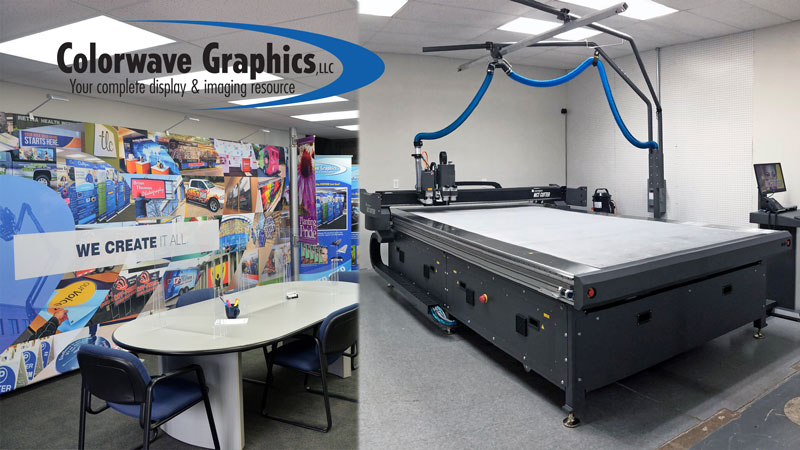
NEW YORK CITY — September 11, 2020 — As COVID-19 cancelled in-person events, sign & graphics companies were forced to develop new revenue streams in order to stay afloat. Colorwave Graphics was able to expand their business through a quick and seamless transition to producing personal protective equipment (PPE) by leveraging the Gerber MCT Cutter. Colorwave was able to develop signage for social distancing, sneeze guards and even a temporary hospital bed made from 100-percent recyclable material. Additionally, the versatile solution empowers the Illinois-based signage producer to greatly improve their speed and throughput, enabling them to cut 2-up gang banners in just 20 seconds, which normally would have taken 40 hours manually.

“The pandemic has further highlighted the need for versatility in the sign & graphics space,” said Pete Doscas, vice president and general manager, Americas Sales & Service Delivery of Gerber Technology. “Since Colorwave was already leveraging a versatile solution that enables them to create and produce a variety of projects, they were able to quickly expand their business for PPE without falling behind.”

Colorwave saw an immediate improvement in its production process when they integrated the Gerber MCT Cutter into its supply chain last year. It was able to handle multiple projects at once and take on new projects that it previously wasn’t able to, all while improving throughput, reducing operator error and shortening time to market. With the Gerber MCT Cutter, the industry’s most versatile solution, Colorwave was able to create 800 banners as 2-up gangs in just four hours. It cut each gang banner in 20 seconds, which normally would have taken their team 40-plus hours to cut by hand.

“Having the ability to run multiple projects, all with unique cutting and routing processes, was a major game changer for us,“ said Mike Lombardo, Colorwave Graphics. “Not only were we able to take on new projects but we were also able to dramatically increase our throughput.”

To optimize its supply chain even further, Colorwave also utilized Gerber’s advanced, remote service and support solutions. Gerber professionals were able to remotely access Colorwave’s TigerVision™ software and resolve complex issues quickly to get the company back up and running within minutes.

Posted September 11, 2020

Source: Gerber Technology

Simplicity to Sustainability: Sunbrella Debuts Balance, RETWEED Collections

Sunbrella RETWEED

BURLINGTON, N.C. — September 9, 2020 — From timeless patterns to new uses for recycled materials, Sunbrella debuts collections and collaborations that tell the story of what is next in textile design. These indoor and outdoor fabrics inspire every design style while delivering on the performance expected from Sunbrella, including fade-proof and bleach-cleanable qualities.

“These introductions honor the comfort and classic elements of design but are also in many ways reflective of the new world in which we are creating spaces,” said Greg Voorhis, executive design director at Sunbrella. “As we look to the future, we recognize the importance of exploring new meanings of simplicity, livability and fresh environments that ground us. These collections and patterns deliver on these very elements, with new possibilities to create comfortable spaces we can escape in, trust and enjoy for years to come.”

Balance

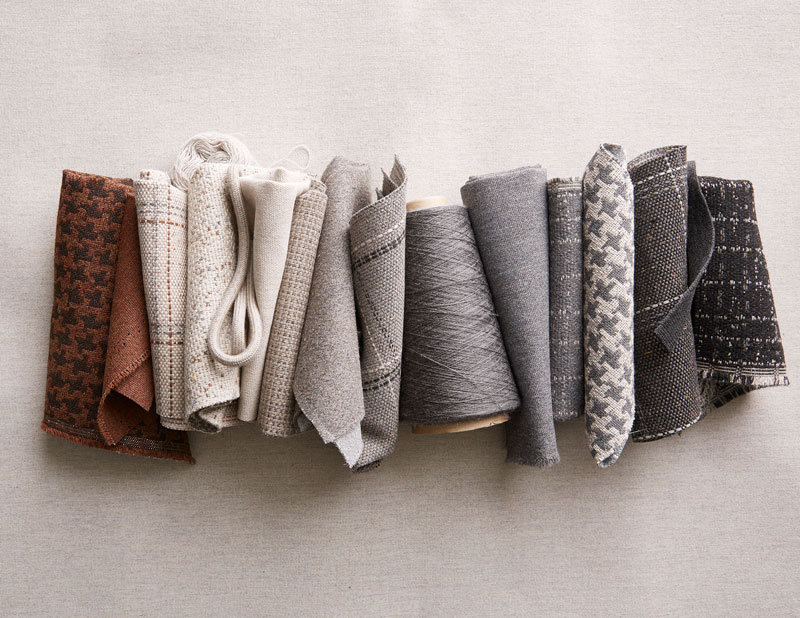
Balance is anew collection of woven fabrics from Sunbrella driven by an instinctual human desire to create inspired and livable environments that provide a sense of simplicity. Fusing modern and classic elements with functionality, comfort and design, the playful and approachable collection features eclectic color combinations with saturated colors grounded in neutrals. Earthy hues such as Nurture Clay incorporate subtle, elegant texture to remind us that less is more, while Infused Gem and Surround Sunrise honor the beauty of modern heirlooms with fresh stripes and contemporary geometrics.

RETWEED

The new RETWEED Collection is the first sustainable line of performance fabrics from Sunbrella and Richard Frinier to contain up to 93% recycled content. With the textural appearance of hand-loomed textiles where no two rolls are alike, RETWEED breathes new life into fabric scraps with patterns woven in classic neutral and richly colorful earthen hues. This appearance of this mid-century modern and vintage tweed-inspired collection is elevated through the use ofSunbrella recycled yarns, which provide flecks and natural color variations. The perfectly imperfect flecks within Tweeds Midnight symbolize the importance of sustainable living practices. The familiarity of Houndstooth Mocha reminds us to reimagine the iconic designs.

Collaborations that inspire

In addition to these new offerings, Sunbrella continues its history of design leadership through collaborations with other heritage brands, legendary designers and noteworthy partners:

  • Pendleton II: Pendleton by Sunbrella was born from the idea of bringing two heritage brands together, combining Pendleton Woolen Mills’ distinct aesthetic and the enduring performance qualities of Sunbrella fabrics. With nods to ancient traditions, spiritual connections and revered tribal leaders, this collection pays homage to America’s National Parks with new patterns in National Park Stripes.
  • Larsen Performance Collection: The Larsen Performance Collection is the result of the firstcollaboration between Sunbrella and legendary textile designer Jack Lenor Larsen. It is inspired by his textile archive and myriad collections spanning over six decades. While at once distinctly modern and archive-inspired, these designs are a personal correlation to indoor/outdoor living as experienced by Jack himself.
  • Sien+ Co: Inspired by the beauty of imperfection within authentic craftsmanship, Sunbrella announces a new line of highly-texturized outdoor fabrics with textile design studio Sien + Co. Thick and texturized, this line of sustainable performance fabrics features Sunbrella Renaissance yarns that combine up to 50% post-industrial recycled Sunbrella fiber with virgin Sunbrella fiber

Posted September 11, 2020

Source: Sunbrella

Collaboration Between DuPont™ Sorona® And Sateri’s EcoCosy® Results In Innovative Fabrics For Fashion And Athleisure

WILMINGTON, Del. — September 10, 2020 — DuPont™ Sorona® and Sateri’s EcoCosy® have together developed a new fabric called StretchCosy™. The fabric uses a blend of Sorona, a partially plant-based fiber, and Sateri’s ultra-comfortable and near weightless EcoCosy fibers to achieve a soft material that is highly stretchable, shape-retaining and, most importantly, sustainably sourced.

StretchCosy combines the mechanical stretch of Sorona stretch fibers, which gives it excellent stretch and long-lasting, consistent recovery, with the soft, cotton-like breathability and smooth silk-like texture of EcoCosy for an unparalleled fabric that is high-performing and well-suited for fashion and sportswear.

Created in 2019, StretchCosy is a fabric breakthrough that made it possible for natural plant-based fibers to be more extensively used in various applications — for example, T-shirts, shirting, bottoms, jackets, dresses, hoodies and underwear. Previously, cellulosic fibers were rarely found in sportswear, due to concerns such as pilling. The combination of Sorona and EcoCosy in StretchCosy has eliminated this concern, hinting at the future of activewear where performance combined with sustainability will be the norm.

Tom Liu, Sateri’s vice president for Commercial, said: “StretchCosy marries the best of Sorona and EcoCosy. In addition to their complementary properties, both fibers are derived from plant-based materials. Sorona is partially made using renewable plant-based ingredients, while EcoCosy fibres come from certified and sustainable wood sources. The end product, StretchCosy fabric, is not only a natural and comfortable fabric, but also sustainable.”

The global sports apparel market is forecast to reach around $208 billion in 2025. Combined with the rise of the athleisure fashion movement and an increase of stay-at-home workouts due to the COVID-19 pandemic, demand for clothing that is high performing yet comfortable is expected to continue growing. StretchCosy embodies these characteristics, a win-win situation for sustainable clothing.

Renee Henze, Sorona global marketing director, said: “It is encouraging to see members of the same industry come together to collaborate for the better good. Our partnership with Sateri in creating StretchCosy combines innovation from both fiber offerings into a superior product that we believe not only will exceed consumer expectations, but is kinder to the environment.”

StretchCosy has been well-received by fabric manufacturers and various brands, including Shui Bing Yue (水冰月), In & On, and famous women’s fashion Eifini (伊芙丽). Such feedback has prompted both companies to formalise and deepen the strategic partnership with the introduction of StretchCosy, and confidently look forward to a greater success across segments in the near future.

Posted September 10, 2020

Source: DuPont Biomaterials

Oerlikon Presented At The Manmade Fibers Conference In Qingdao City, China

REMSCHEID, Germany/QINGDAO CITY, China — September 10, 2020 — The 26th China International Manmade Fiber Conference was held this year from September 7-9 together with the China Chemical Fiber Technology Conference in Qingdao City. Due to the corona pandemic, no international speakers were able to be present live on site. However, Oerlikon sent more than just a greeting message to the over 400 participants at the Grand Mercure Qingdao Nanshan Resort.

The management of the Manmade Fibers segment of the Swiss Oerlikon Group presented itself with a hybrid, interactive talk: Wang Jun, Oerlikon’s China President, on stage and the CEO Georg Stausberg, who joined in online, together convinced the congress participants of Oerlikon’s performance as an innovation and technology leader even in challenging times such as the current pandemic.

“Green Deal”

In addition to a current review of the international market situation in the machine and plant construction for man-made fibers, Georg Stausberg also dealt very clearly with the time after the pandemic in a question and answer interview with Wang Jun. When asked about the challenges and opportunities for the future of the man-made fiber industry, he said: “As a machine and plant manufacturer there is always one thing that will move us all forward: sustainable technologies. We all strive for innovative industrial solutions for a better world. And how can we achieve this? In Europe, we should all consistently pursue the goals of the announced ‘Green Deal’ of the European Union and produce climate-neutrally by 2050 — or even better much earlier”.

The CEO of the Manmade Fibers segment had the appropriate technology solutions at the ready: “Digitization with all its innovative possibilities, for example through the use of artificial intelligence, can and will help us in this process. And last but not least, automation. The interaction of automation and digital processes will ensure more sustainable Industry 4.0 production solutions for the manufacture of manmade fibers and their production machines and systems. “

More sustainable production methods

The combined event then brought to light numerous other innovative ideas. The Chinese speakers and the connected speakers from overseas talked about the latest developments in the field of functional textiles, bio-based fibers and materials, new fields of application for textiles and of course also about their sustainable production methods.

Posted September 10, 2020

Source: Oerlikon

Shima Seiki Selects Archroma’s Color Atlas Library System For New Design Software 

REINACH, Switzerland — September 10, 2020 — Archroma, a global supplier of color and specialty chemicals towards sustainable solutions, today announced that the 4,320 color references of its Color Atlas library have been selected by Shima Seiki and integrated into its SDS-ONE APEX series of software for the design, planning and virtual sampling of textile and apparel.

Shima Seiki is a provider of digitally optimized solutions for the fashion industry, that combines its on-demand WHOLEGARMENT knitting machine with realistic virtual sampling. Based on actual yarn data, fabric simulations generated on the SDS-ONE APEX-series are unparalleled in quality and realism. Design and simulation are available for knits and various other textile applications, and smooth transition to machine programming is possible for quick and accurate design-to-manufacture interface.

That is where the Color Atlas by Archroma® will considerably benefit to the users of Shima Seiki’s solutions.

The Color Atlas was launched in 2016 to provide fashion designers and stylists with off-the-shelf color inspiration that can be implemented in production with just a few clicks.

The Color Atlas continues to evolve in line with Archroma’s commitment to sustainability through innovation. The company describes it as “The Archroma Way to a sustainable world: safe, efficient, enhanced, it’s our nature”. All color references available in the Color Atlas have been formulated with products that comply with leading international eco-standards, and can be selected based on the desired sustainability profile.

Today, the Color Atlas contains 4,320 colors applicable on cotton poplin, almost the double compared to similar tools available to textile and fashion specialists. Technical support is available to designer, manufacturers, as well as brands and retailers, through Archroma’s global offices — for every single color from its selection to its implementation in production. Engineered color standards empowered by NFC technology are also available for all colors and reproducible in production.

With this new collaboration, the users of the SDS-ONE APEX design software of Shima Seiki will have at their disposal 4320 colors that they can visualize, evaluate and implement, in a considerably accelerated process from the first creative idea to the production to the final outlet, whether online or in brick-and-mortar shops.

“Accurate color evaluation and communication are very important issues for design work”, explains Hideya Ohtani, general manager, Graphic System Development Division, at Shima Seiki. “We have high expectations for Archroma’s Color Atlas to help our APEX series users develop their products in an even more smooth and accurate manner. “

“We are proud to bring our Color Atlas library to the users of Shima Seiki’s extremely advanced design software,” says Chris Hipps, head of Color Management Services, at the Archroma Brand Studio. “Designers and users of the software will have at their disposal not only color options they never had before but also colors that they can trust will be implementable right away. That’s what we strive to do at Archroma: create a new way of working: safe, efficient and enhanced. It’s our nature!”

Posted September 10, 2020

Source: Archroma

Sponsors