ANDRITZ To Acquire France-Based Laroche

GRAZ, Austria — December 4, 2020 — International technology Group ANDRITZ has signed an agreement with Laroche, based in Cours, France, to acquire LM Industries comprising Laroche SA and Miltec SA, France. Andrtiz will take over all Laroche entities and their business worldwide. Closing of the transaction, which is subject to approval by the Andrtiz Supervisory Board, is expected at the beginning of 2021.

Laroche is a leading supplier of fiber processing technologies such as opening, blending and dosing, airlay web forming, textile waste recycling and decortication of bast fibers. The product portfolio further complements the Andrtiz Nonwoven product range. Andrtiz is now able to offer the complete supply and value chain, from the raw material, to opening and blending, web forming, bonding, finishing, drying, and converting. Laroche’s high-performance technologies for opening and blending enhance the Andrtiz scope of supply for spunlace, needlepunch and wetlaid production lines. Moreover, both companies have agreed to further strengthen the development of their existing technologies for high-speed and high-capacity applications and also to continue pursuing the development of textile recycling processes in order to stay ahead of the changes the industry is facing.

Laroche SA has been developing fiber processing technologies for more than 100 years. With integrated manufacturing, the company supplies lines for a wide range of industries/products: spinning, bedding and furniture, automotive, acoustic and thermal insulation, geotextiles, filtration, wipes, and many more.

Robert Laroche, president of Laroche: “This acquisition is the logical conclusion in view of the successful long-term relationship between Andrtiz and Laroche. We have been working in close cooperation for more than ten years and are very much looking forward to becoming a member of the Andrtiz family.”

Andreas Lukas, senior vice president and division manager, Andrtiz Nonwoven: “By adding Laroche’s state-of-the-art products and expertise to our existing capabilities, Andrtiz Nonwoven will further strengthen its market and technology position.”

Posted December 4, 2020

Source: ANDRITZ

VDMA: Webtalk On Technologies For Technical Textiles

FRANKFURT — December 4, 2020 — The next VDMA technology webtalk is scheduled for December 9, 2020, 2-4 p.m. (CET). The topic will be “Technologies for Technical Textiles”.

The presenters and their topics at a glance:

  • Bena Manasieva Cavus from company Georg Sahm, will show how to add value and performance to your technical yarns with a single end extrusion coating line.
    Title of the presentation: “Winding and Yarn coating of Technical Textiles”
    www.sahmwinder.com
  • Janpeter Horn and Dennis Behnken, HERZOG Flechtmaschinen will present new developments in technical braids such as rope braiding/tension members to replace steel wire, medical braids for stents, ligaments, sutures and composites for lightweight construction and near net-shape preforms.
    Title of the presentation: “New Developments in Technical Braids”
    www.herzog-online.com
  • Hagen Lotzmann: “At KARL MAYER we work closely with our customers to offer the best cost–benefit ratio. We do this by using our advanced standard platforms as the basis for developing customised solutions.”
    Title of the presentation: “Engineered solutions for technical textiles and composites – from standard application machines to customized systems”
    www.karlmayer.com

After the presentations, the three experts will be available to answer the participants’ questions.

Registration is possible via this link (no participation fee):

https://register.gotowebinar.com/register/7532245499354171406

Posted December 4, 2020

Source: VDMA

Orion Engineered Carbons Publishes Its 2019 Sustainability Report

HOUSTON — December 1, 2020 — Orion Engineered Carbons S.A., a worldwide supplier of specialty and high-performance carbon black, today announced that it published its annual sustainability report, highlighting the company’s results against its targets and the core elements of its strategy to drive sustainability across the full spectrum of the carbon black value chain.

“As a responsible member of the global community, we embrace sustainability as an integral part of our long-term strategy,” said Corning Painter, Orion’s CEO. “We have started to create a sustainability culture across our entire value chain and we will focus on improving our business practices each year in order to be a positive force in driving long-term change. This includes the most widely-recognized corporate sustainability measures, as well as exploring alternative, green feedstocks, searching for low CO2 emitting carbon black production technologies, and developing sustainable products that deliver long-term benefits to all stakeholders.”

This year’s report highlights the company’s accomplishments since 2019 in several key areas, including the following:

Governance: The company increased the independence and enhanced the diversity of its Board of Directors. The Nominating, Sustainability and Governance Committee of the Board established its oversight role of the company’s sustainability directives.

Emissions reduction: Orion has defined clear emissions reduction targets for greenhouse gases, sulfur dioxide, nitrogen oxide, particulate matters and its overall energy recovery rate. The company also commissioned enhanced air emission controls at several facilities.

Collaboration to develop sustainable product portfolios: Orion recently became part of the EU-funded BlackCycle Project aimed at testing the viability of using recovered oil in the production of carbon black for tires.

Employees and culture: Orion conducted its first employee engagement study and invested in significantly enhanced employee training programs.

Communities: Orion participated in community support programs throughout its worldwide footprint, including donating much-needed equipment and supplies to support the fight against the global pandemic.

Assessment: Orion’s efforts to improve its sustainability performance resulted in receiving gold medal status in 2019 from EcoVadis, an independent assessment organization providing evidence-based sustainability assessments for companies across 21 indicators and four themes: environment, labor and human rights, ethics and sustainable procurement.

The company’s report is available at https://orioncarbons.com/sustainability

Posted December 3, 2020

Source: Orion Engineered Carbons S.A.

Manchester Mills, Microban Announce Exclusive Partnership, Creating Antimicrobial Treated Textiles For The Healthcare Industry

HUNTERSVILLE, N.C. — December 3, 2020 — Microban® International, a global supplier of antimicrobial technologies, and Manchester Mills , a textile producer committed to innovation with a customer first approach, announced today an exclusive partnership to provide antimicrobial treated textiles to healthcare facilities. The products will be sold directly and exclusively to the healthcare industry via Manchester Mills and its distributor network.

“At Manchester Mills, we are dedicated to developing smart, thoughtful textile solutions that ensure peace of mind,” said Elizabeth McNulty, senior vice president and general manager at Manchester Mills. “The Protect360°® products we are launching with Microban are truly innovative and provide added protection for specialized facilities. We look forward to adding Microban technology into more Manchester Mills products to service the healthcare industry.”

Key offerings of the Protect360° product line include mattress encasements and pillow protectors that are treated with Microban antimicrobial product protection and inhibit the growth of product damaging bacteria. Protect360° products are also waterproof, and feature patent pending bed bug protection. Additionally, the fabric has passed third party testing for Viral Penetration Protection, providing a barrier against viruses.

The exclusive partnership between Manchester Mills and Microban include the development of the following textiles with built-in antimicrobial technology for healthcare facilities in the United States, Canada, United Kingdom and European Union: mattress and pillow encasements, mattress and pillow protectors, towels, sheets, utility bedding, bath mats, comforters, pillow shells, blankets, spreads, mattress pads and pillows.

“The healthcare industry is now and always will be a focus for antimicrobials where cleanliness is key,” said Brian Aylward, senior director of Global Textiles for Microban. “We are extremely proud to have our technologies incorporated into Manchester Mills textiles for the healthcare industry.”

Microban’s portfolio of technologies continues to work to revolutionize product performance with protection that lives on. Its portfolio of solutions includes AEGIS®, SilverShield® and ZPTech® for antimicrobial product protection, and Scentry® and Scentry Revive® for odor control. As part of its commitment to sustainable manufacturing processes, Microban products are bluesign® and Oeko-Tex® approved.

Posted December 3, 2020

Source: Manchester Mills

Hyosung Advances Its Global Spandex Position With Investment In Brazil And Turkey Facilities

SEOUL — December 3, 2020 — The demand for spandex in the global apparel market continues to grow due to consumer popularity of comfort and athleisure wear, which happen to be garments of choice as people are spending more time at home in the wake of the pandemic. According to global research and consulting firm, Wood Makenzie’s April 2020 report, spandex demand has been growing by 9 percent, which is more than triple the growth rate of general apparel fibers, which grow 2 to 3 percent annually.

To better serve apparel brands who rely on South American and European-made textiles in the development of their performance materials, Hyosung is expanding its creora® spandex manufacturing facility based in Araquari (SC) Brazil and in its creora spandex manufacturing facility based in the Cerkezkoy area of Turkey.

According to Hyosung, the expansion project in its Brazil-based facility, which was established in 2011, will allow the plant to increase annual spandex capacity from 12,000 metric tons to approximately 22,000 metric tons. Completion of the project is scheduled for mid-2022.

The company’s Turkey-based expansion, which is expected to be complete by the third quarter of 2021, will allow this facility to increase annual spandex capacity from 25,000 metric tons to 40,000 metric tons.

“We are proud to strengthen our presence in the South American and European premium textile markets with the expansion of our plants in Brazil and Turkey, which are production bases for our regional South American and European customers,” said Hyun-Joon Cho, Hyosung chairman. “We will support these markets by providing ongoing innovation and solutions, which Hyosung is known for.”

To provide faster product delivery and reduce its carbon footprint, Hyosung has strategically expanded its manufacturing network to serve clients on each continent since its start in Korea in 1992. In 1999, the company expanded into China, and now has bases in Brazil for the Americas, India for emerging Asian markets, Vietnam for the rest of Asia, and Turkey for Europe.

With a current production capacity of approximately 340 thousand tons per year, Hyosung is the leading producer of spandex, supplying approximately one-third of the world’s spandex. The company’s most recent stretch solutions include new GRS-certified creora® regen made with 100-percent recycled reclaimed waste, creora Color +, dyeable spandex for extraordinary colors in blends with natural blends, and creora 3D Max, for denim you want to live in.

Posted December 3, 2020

Source: Hyosung

NCTO Outlines Key Priorities For The Incoming Biden Administration And Congress To Strengthen The U.S. Supply Chain For Essential Products

WASHINGTON — December 3, 2020 — National Council of Textile Organizations (NCTO) President and CEO Kim Glas issued a statement today outlining immediate steps President-elect Joe Biden’s administration and a new Congress can take to bolster the U.S. manufacturing sector.

“As President-elect Biden has named several key members of his economic team in recent days, the U.S. textile industry stands ready to work with this critical team. NCTO is also eager to work with the new Congress on advancing these bipartisan priorities.

The U.S. textile industry looks forward to working with President-elect Joe Biden’s transition team and his administration to provide input on key policies outlined in the campaign to prioritize investing in American manufacturing and its workforce, onshoring critical supply chains, and cracking down on the predatory trade practices that have harmed the manufacturing sector and U.S. jobs. We agree with the President-elect that we must not revert to status quo trade policies that have undermined our nation’s resilience and exacerbated income inequality by impacting the manufacturing sector and promoting a race to the bottom that have especially hurt the nearly two-thirds of the American workforce without college degrees.

As domestic manufacturers, the U.S. textile industry fully supports the President-elect’s campaign pledge to strengthen ‘Buy American’ rules and invest in government purchases of American-made products.  It is imperative that we strengthen the domestic personal protective equipment (PPE) supply chain to achieve a long-term goal of ending our over-reliance on China and begin onshoring the production of critical medical textiles. We look forward to working with the President-elect and his team to strengthen and maintain these supply chains, which is a paramount national and healthcare security issue. Further, we are prepared to engage with leaders in Congress to enact bipartisan legislation to ensure we can make the long-term investments needed to fully bring critical PPE production back to the United States.

The COVID-19 crisis has made clear to Democrats and Republicans alike that our past trade policies have left the United States too reliant on imports of essential goods. Our national trade and economic agenda must put American manufacturing workers at the center. President-elect Biden has committed to taking on China and other countries that utilize predatory trade and economic tactics that have hurt domestic manufacturers and we welcome that call.

There are four immediate steps the Biden administration can take in the first months in office to help boost investment in the U.S. textile industry and onshore critical PPE supply chains.

Expand Investment in American-Made PPE

We strongly endorse President-elect Biden’s plan to bolster the industrial base through strong Buy American proposals. The Berry Amendment, a domestic procurement law that governs purchases by the Defense Department, has been an essential tool of national security policy to ensure our warfighters and military personnel are wearing 100-percent Made-in-America product and that we are not relying on foreign supply chains from China and elsewhere to supply critical military materials.  Our healthcare workers are on the front lines and we need to ensure that the products they are wearing are made in America and that they meet the critical performance requirements of the healthcare setting.  Regrettably, our overreliance on China for these essential products failed to meet our needs during a time of crisis.  That can never happen again; we must onshore and diversify these critical supply chains moving forward.

Expanding the Berry Amendment to federal purchases of PPE is a central element of pending bipartisan legislation known as The American PPE Supply Chain Integrity Act, which should be adopted.  In addition, we urge the federal government to deploy long-term federal contracts for PPE to spur investment and create jobs in the U.S., a key element of separate pending bipartisan legislation named the Make PPE in America Act.  Lastly, we believe we must utilize tax incentives to help promote the domestic manufacturing industrial base and U.S. manufacturing jobs.

Appoint a High-Level COVID-19 Coordinating Supply Chain Team

In order to help ensure industry is meeting federal government needs and priorities, it is critical that the U.S. textile industry and PPE producers have a high level of communication and coordination with key officials across all the government agencies procuring medical PPE. Establishing a key point person and team is critical to ensure the necessary collaboration to help industry and government respond quickly and effectively to national, state and local PPE needs. A high-level team comprised of experts committed to U.S. manufacturing is vitally important in advancing both short-term needs and long-term supply chain efforts. As such, we are prepared to do our part in developing a streamlined, high-level coordination structure that ensures that the contracting process yields timely acquisition of quality U.S.-made PPE and other medical items.

Continue to Support Tariffs and Strong Trade Enforcement

We also appreciate President-elect Biden’s pledge to continue aggressive trade enforcement actions against China, along with his willingness to work long-term with international coalitions to comprehensively address systemic predatory trade practices. For far too long, our industry, like so many others in the manufacturing sector, has been hindered by predatory trade practices. The U.S. textile industry is highly automated and is proud to compete with anyone in the world on a level and fair playing field.  But the rules of the road are not always abided by or fair — and, regrettably, the U.S. textile industry has far too often faced that sobering reality. This is why aggressive enforcement actions, including continuing punitive tariffs on finished products, is critical to getting the Chinese to address systemic unfair trade advantages, such as government subsidies, state-owned enterprises, forced labor practices, weak environmental standards, intellectual property theft and currency manipulation that non-market economies use to manipulate global markets and hurt U.S. producers. Punitive tariffs coupled with other enforcement mechanisms are also necessary to increase negotiating leverage to address these larger systemic issues. We need to appropriately punish countries that engage in unfair and illegal practices while rewarding companies that invest in the United States for critical materials like PPE, and work to further strengthen our alliances with our existing free trade agreement and trade preference partner countries.

Provide Targeted Stimulus to U.S. Manufacturers and Workers

The unprecedented reduction in consumer demand since the onset of COVID-19 has significantly hurt the U.S. textile industry and other key manufacturing sectors of the economy. It is critical that the textile industry and other impacted manufacturing sectors and their workforce have access to critical support like the Paycheck Protection Program.  Additionally, this program should be expanded to ensure more medium-sized manufacturers that have made PPE have the opportunity to participate. A robust manufacturing stimulus will help stabilize the industry and lead to critical domestic job growth in this important sector and we urge Congress and the administration to come together to implement a plan as soon as possible.

We look forward to working with President-elect Biden and the new Congress and their teams on implementing these key immediate priorities in the days ahead.”

Posted December 3, 2020

Source: National Council of Textile Organizations (NCTO)

Hohenstein Tests According To European Guidelines For Community Masks

BÖNNIGHEIM, Germany — December 3, 2020 — Testing and research partner Hohenstein now tests according to the first European guideline for community masks, the CEN Workshop Agreement (CWA) 17553:2020. Hohenstein had already taken a big step towards safety and functionality with the introduction of its quality label for Tested Community Masks. The new “Community Face Coverings-Guide to minimum requirements, methods of testing and use” sets minimum requirements for design, performance evaluation, labeling and packaging of both reusable and disposable masks.

Community masks are important in containing the spread of the coronavirus, SARS-CoV-2. However, to fulfill their function, they must meet certain requirements. The objective of the standard is to support manufacturers who have switched production to non-medical, everyday masks regarding the requirements for such masks, which must also meet the legal requirements for textiles and satisfy certain functional demands.

Uniform product quality and durability standards across Europe are particularly important for containing the spread across borders. Clear product information helps consumers rely on the safety of community masks. The guideline can also boost marketing for suppliers in international competition.

Standardized test procedures at Hohenstein provide information as to whether everyday masks have sufficient breathability and filter performance. Other quality parameters include washability, fit and safety from harmful substances. Hohenstein also checks compliance with legal requirements and proper labelling and use instructions.

Manufacturers of everyday masks can also earn the Hohenstein Quality Label for Tested Community Masks by proving product performance and certifying to STANDARD 100 by OEKO-TEX®.

Detailed information can be found here: Hohenstein.US/CWA-Face-Mask-Standard (https://www.hohenstein.us/fileadmin/user_upload/Downloads/Factsheets/Factsheet_Community_Masks_CWA_17553_EN.pdf) and Hohenstein.US/Quality-Label-Face-Masks (https://www.hohenstein.us/en-us/trust/hohenstein-quality-labels/from-a-z/tested-community-masks/)

Posted December 3, 2020

Source: Hohenstein

Safariland And Flying Cross Launch Virtual Sizing Technology For Body Armor And Uniforms

JACKSONVILLE, Fla. — December 3, 2020 — Safariland®, a brand of The Safariland Group, a global provider of safety products, along with Flying Cross, a Fechheimer Brothers Company brand and global supplier of public safety uniforms, announced today their collaborative launch of phase one of a new virtual sizing technology called XpertFit. This virtual sizing technology revolutionizes the process in which individual officers are sized for body armor and uniform apparel. XpertFit offers a touchless, self-measure method of capturing body measurements right from a mobile phone.

“This new sizing service really sets apart the level of innovation and depth of resources available to our customers as two leading industry brands,” said Bob Getto, president/CEO of Fechheimer Brothers Co., the parent company of Flying Cross. “XpertFit will provide our dealers and end users value and efficiencies they have not previously experienced up until now. In addition, XpertFit is the perfect solution during this heightened time of social distancing.”

XpertFit takes the guesswork out of onsite measuring by providing instant and accurate measurements from a smart device. The process takes less than two minutes to complete from initiating the technology until the time you are provided with product sizing.

Individuals will simply access the technology from a mobile device and choose their path to fit either body armor or uniforms. Next, the technology will gather general information and then take a front and side profile picture. This is then used to calculate measurements based on its uniquely developed algorithm, and determine a recommended size for Safariland body armor, or Flying Cross uniform apparel.

The new XpertFit technology will enter phase one of its release in early December to a select group of dealers and customers and will be ready for a full launch in Q2 of 2021. This first-to-market technology is an exclusive for Safariland and Flying Cross through their participating partnering dealers. XpertFit was created in partnership with 3DLOOK, the global supplier of AI-first contactless body measuring and fit solutions.

“The proper fit of armor and uniforms is essential to duty and safety personnel, and our collaboration with 3DLOOK has allowed us to revolutionize the process.” said Brad Williams, president of Safariland. “Convenience and accuracy of measurements is a growing concern. XpertFit will allow the reflection of this urgency and efficiency to change the procurement process in an effort to save time and increase consumer confidence.”

“We’ve worked hard to bring this level of service to our customers,” said Getto. Every detail has been vetted from the algorithms, use in market, process flow and privacy of customer information. Being able to partner with Safariland to incorporate body armor makes this even more powerful. We are excited to see what this will do for our top customers, retailers, and internal teams as well.”

“We’ve had the pleasure of working with the amazing teams at both Fechheimer and The Safariland Group to deliver this first of a kind simple and accurate fit and sizing solution that delivers a contactless and safe measuring experience. This is a major step in digital transformation for the whole global uniform manufacturing industry,” said Vadim Rogovskiy, cofounder and CEO at 3DLOOK.

Posted December 3, 2020

Source: 3DLOOK LLC

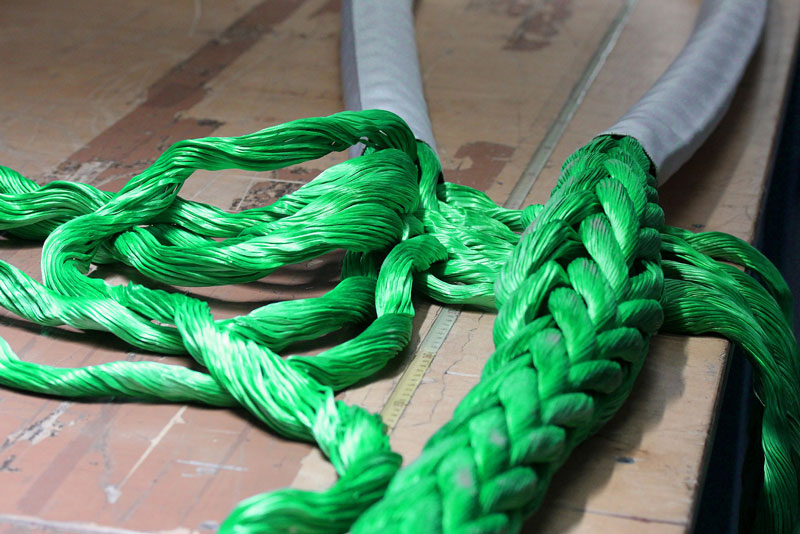
Gleistein Ropes Switches Its Entire Portfolio Of Products Made With Dyneema® To Bio-Based Dyneema® Fibres

BREMEN, Germany — December 3, 2020 — With immediate effect, Gleistein is switching its entire portfolio of products made with Dyneema® to be manufactured exclusively from bio-based Dyneema fibers. These fibers possess exactly the same trusted strength and reliability of their conventionally sourced counterparts, yet contribute substantially to climate protection due to their renewable, bio-based raw material. This results in a significant reduction in carbon emissions and fossil fuel dependency. With this move, Gleistein is adopting the leading role worldwide among textile rope manufacturers aiming towards becoming carbon neutral in the future.

Over the past decades, Gleistein Ropes and DSM Protective Materials (formerly DSM Dyneema) have continuously worked together to deliver premium, industry-leading textile rope solutions for their customers. The outstanding quality, often featuring the world’s highest performance attributes, is the result of extensive ongoing R&D investments and a joint, resolute commitment to excellence. This pursuit of excellence has not been limited to the products ultimately produced, but has also focused on supporting the values of Gleistein as a company — where sustainability and environmental issues play a pivotal role — and which has also earned the company recognition in the past, such as being officially honored as the first “Climate Protection Company” by the City of Bremen. Now, Gleistein is the world’s first company to take the next logical step further and is switching its entire portfolio of products made with Dyneema to be manufactured exclusively from bio-based Dyneema fibers.

The new, sustainable fibers from Dyneema are the first bio-based high modulus polyethylene (HMPE) fibers guaranteeing responsible sourcing of the raw materials without any compromise to performance. Extracted from wood, the Dyneema bio-based raw material originates from sustainably managed and FSC and PEFC certified forests. The process involves the collection of crude tall oil (CTO), a residue from wood pulp production. The provision of the bio-based material occurs via a so-called mass balance approach within an ISCC Certified value chain. The fiber is certified in accordance with the International Sustainability & Carbon Certification standard to ensure full compliance and traceability.

Klaus Walther

Klaus Walther, managing director of Gleistein Ropes, said: “By completely switching our products made with Dyneema to the new bio-based Dyneema fibers, I anticipate that we will reduce our carbon footprint to the tune of around 1,000 mt CO2 in the first year alone, which is equivalent to taking more than 210 passenger cars off the roads. Importantly, our customers will continue to enjoy exactly the same extremely high levels of performance they are accustomed to from conventional Dyneema fibers. Naturally, we are proud to be taking on the pioneering role of being the world’s first textile rope manufacturer to use sustainable raw materials for its entire portfolio of products made with Dyneema. But we also hope that more companies will follow our example and join us in making a real contribution to climate protection and sustainability in our industry.”

Jan Lodewijk Lindemulder, global business director, DSM Protective Materials: “I am very pleased to see our initiative to launch bio-based Dyneema is embraced by Gleistein. Switching their entire portfolio of products made with Dyneema, to bio-based Dyneema, demonstrates Gleistein’s ambition to become carbon neutral in the future. An ambition that is shared by DSM and the driver behind this sustainable development. Together with all parties in the value chain we can and will reduce the carbon footprint of our industry.”

The Gleistein products made exclusively with Dyneema bio-based fibers are available now.

Posted December 3, 2020

Source: Gleistein Ropes

VDMA Textile Machinery Association: Young Talents Honored Online

FRANKFURT — December 3, 2020 — In early December, the chairman of the Walter Reiners Foundation of the VDMA Textile Machinery Association, Peter D. Dornier presented awards to six successful young engineers. Due to the COVID-19 pandemic, the award ceremony took place as a web conference for the first time.

Philippa Böhnke, ITM Dresden, and Juan Carlos Arañó Romero, ITA Aachen, were honored with creativity awards for the cleverest bachelor or project work. The prizes are endowed with 3,000 euros each.

Böhnke’s project dealt with composite implants for the repair and regeneration of bone defects.

In his bachelor thesis, Arañó Romero has developed a spinning machine able to produce yarn with material from the moon. By this, the transport effort in space travel can be minimized, because insulating material for example necessary for a moon base can be produced on the moon directly.

Harry Lucas, TU Chemnitz, and Maximilian Speiser, Reutlingen University, were awarded two promotion prizes in the category master thesis with prize money of 3,500 euros each. The master thesis of Lucas deals with the development of a new knitting head for jacquard knitted fabrics, enabling a large variety of colors e.g. in the production of fan scarfs.

Speiser showed in his master thesis a solution for increasing energy efficiency in the nonwovens process.

This year, two promotion prizes of the German Textile Machinery Industry in the dissertation category were awarded to Dr. Frederik Cloppenburg, ITA Aachen, and Dr. Annett Schmieder, TU Chemnitz. In his dissertation, Cloppenburg developed a model for the optimization of roller cards in the nonwovens process.

Schmieder introduced in her dissertation a damage analysis system for fiber ropes. The system detects when a rope must be replaced e.g. in transport applications.

The award ceremony 2021 shall take place with physical presence again. It is scheduled for early May at the fair Techtextil in Frankfurt.

Posted December 3, 2020

Source: VDMA Textile Machinery Association

Sponsors