BURSA, Turkey — September 23, 2021 — Making investments that increased its production capacity during the pandemic, Durak Tekstil has started to reap fruit in 2021. Durak Tekstil increased its turnover by 20 percent in the first half of the year compared to the same period of the previous year and reached the market success it targeted in terms of sales and orders.
Durak Tekstil, an industrial sewing and embroidery thread manufacturer, announced that it achieved successful results in the first half of 2021 despite the pandemic. The company made an investment that increased its capacity by 30 percent in 2020, and recorded a significant increase in sales in both Turkish and export markets. Reaching a global turnover of $25 million throughout the last year, Durak Tekstil achieved a 20-percent turnover increase in the first half of 2021 compared to the first six months of the previous year, with the realization of consumer demands that were delayed in the first six months of 2021.
Underlining that Durak Tekstil is a strong brand with a 50-year history in the industry, board member and marketing director Yiğit Durak emphasized that they have achieved successful results with the production and sales measures they have taken despite the pandemic that has been in effect for two years.
“Thanks to our quick decision-making and taking the necessary steps during the pandemic, we have progressed in accordance with our plans in both investment and production legs,” Durak said. “In this way, in a period of lockdowns and temporary decreases in demand, we made an investment that expanded our capacity by 30 percent, as well as increased our employment by 10 percent to over 350. Because we knew that a bigger market awaited us after the crisis. The results of the first half of 2021, which we achieved with our monthly production capacity of 250 tons, confirmed this view”.
Providing information about the 2021 year-end targets, Durak stated that Turkey’s total growth expectation is 7 to 8 percent, while Durak Tekstil aims to grow by 20 to 25 percent.
Innovation is part of our corporate identity
Durak Tekstil carries out its production and sales activities in line with the five-year strategies it has determined through long studies. In the vision of growth; product innovation, institutionalization, market analysis considering customer needs and market knowledge are the main points. Durak expressed the increase achieved in sales with this vision as follows: “Five years ago, domestic sales had a 75-percent share in our total sales while exports were at 25 percent. Today, the exports have reached a share of 60 percent with a significant increase. According to our strategic plans, we anticipate that the share of exports in our total sales will be 75 percent in 2023”.
The product range continues to expand with continuous R&D
Stating that they made sales to more than 70 countries in 5 continents, Durak emphasized that the company strengthened its competitive position in the global market from year to year. Relaying that they have made a significant progress in the European market with the effect of product quality and logistics advantages as well as their rich product range, Durak said: “Our industrial sewing and embroidery threads are preferred in several different fields and applications in the textile industry. Especially apparel, bedding, shoes, and embroidery became prominent as our main sectors. We observe a significant increase in demands for our threads with technical features. For example, our flame retardant threads have become one of our most attractive products in recent years. Our product range continues to expand to respond to new demands in the market through continuous R&D”.
Explaining that 5 percent of its annual budget is allocated to R&D, Durak emphasized that this rate is already well above the average in the textile industry. Noting that R&D studies have been carried out within the scope of the design center for a long time. “We are establishing an R&D Centre to take this to a further stage,” Durak said. “Products developed through R&D create high added value. For example, one of our threads with technical specifications attracts great attention in Germany and finds buyers in the market at 5 times the price compared to similar ones. In addition to developing new products, we also receive support from R&D for a more environmentally friendly and sustainable production. Our carbon footprint has decreased over the years through its contribution. We plan to expand and diversify our recycled thread portfolio, which currently accounts for 5 percent of all our products. We are improving ourselves with new technologies and methods for a more sustainable textile production”.
Stating that they are continuing their efforts to obtain the Turquality certificate, Durak disclosed that they primarily want to grow in foreign markets within a certain standard system and corporate structure. “The textile industry demands a faster, higher quality and stable supply of products,” Durak noted. “As the Turkish textile industry, we are the most serious partner in this regard. We can reach the power to meet new demands by increasing our capacity and flexibility with the investments we will make. Durak Tekstil has determined becoming stronger in current markets and making a good entry into potential markets that it has never been to, in order to double its global power as its basic strategy. As a result, we offer new products with high added value to the market and achieve growth results that reflect positively on the industry”
NUREMBERG, Germany — September 23, 2021 — Free once again to make plans, travel, share important moments with others, choose what we do with our days, enjoy outdoor life in harmony with nature and our own emotions.
The new normal will not be just a return to our previous lives. This complicated period the whole world has gone through has planted many seeds of change. Südwolle Group wants to contribute to this awareness, offering state-of-the-art proposals for a new lifestyle in line with our emerging sensibility.
Sustainable innovation is a central value for all Südwolle Group collections. The company has long been engaged in researching raw materials that are natural, recycled and eco-friendly and offer high-performance alternatives with low environmental impact, helping the transition towards an environmentally responsible textile sector.
The yarns used in the Südwolle SS2023 weaving collection are pure wool or wool blends, in line with the new mood that is taking hold among consumers. Nowadays fashion works for wellbeing and everyday activities in a fluid and personal manner, increasingly detached from passing trends and predetermined codes of elegance that are becoming ever less appropriate as an expression of the way we live and feel.
The new formal replaces the conventional suit with tailored jackets and trousers: comfortable, casual and well cut in high-quality materials that guarantee fit, comfort and durability. The general focus on these factors makes clothes purchases more informed and reasoned, and less impulsive.
A renewed interest in heritage finds a response in Südwolle’s knowledge of wool and its essential properties, updated for sustainability with the introduction of certified fibres, chlorine-free anti-shrinkage treatments and long lasting products that are easy to care for and wash at home at low temperature.
Overview of the collection
The textile collection is enriched by the line of OTW® yarns, resulting from the development of the patented Omega Twist® spinning technology, which gives the yarns great performances in terms of reduced pilling, increased elasticity, resistance and durability. The range of OTW®includes yarns in the finest pure wool, such as OTW Campiglia Nm 120/2 (100-percent Wool 17.2 μ) and OTW Volturno Fine Nm 76/2 (100-percent Wool 19.3 μ) which emphasize the clean style and technical hand of superior quality wools.
The focus is on the origin of fibers and environmentally responsible materials. There is a wider and more varied range of products in RWS-certified wools (Responsible Wool Standard) which guarantee a traceable production chain, animal welfare and sustainability for workers and the environment.
Blends of wool and viscose, FSC®,certified and sourced from responsibly-managed forests, make it real to produce clothes that are biodegradable at the end of their life cycle.
The use of completely biodegradable and FSC or PEFC™ certified cationic Danufil® Deep Dye Viscose, means a reduction of energy required for dyeing processes. These viscose fibres can be dyed when blended with wool, eliminating the need for double dyeing and therefore saving water, energy and time. Moreover, they create interesting melange effects, thanks to the variation in color absorption between the different fibers.
Technical, GRS certified wool blends feature an increased presence of recycled polyesters and nylons from pre- and post-consumer sources, and are available on request for customized yarns.
Other sustainable new materials include SEAQUAL®, a polyester derived by upcycling Marine Plastic recovered from the oceans.
Q-NOVA® is a recycled, extremely durable polyamide filament with excellent dyeing effects. It is used in our crêpes like Tenda Crespino Eco Nm 120/2 (85-percent Wool 19.3 μ/15-percent Q-NOVA Polyamide), with a cool, light hand. An eco-friendly reinterpretation of a classic yarn, Cile Crespino Eco Nm 76/2 (35-percent Wool 23.5 μ/50-percent viscose FSC certified/15-percent Q-NOVA Polyamide) is a pleasant, soft blend.
The H.Fancy line presents bestselling summer fancy yarns, featuring experimental textures and natural 3D effects.
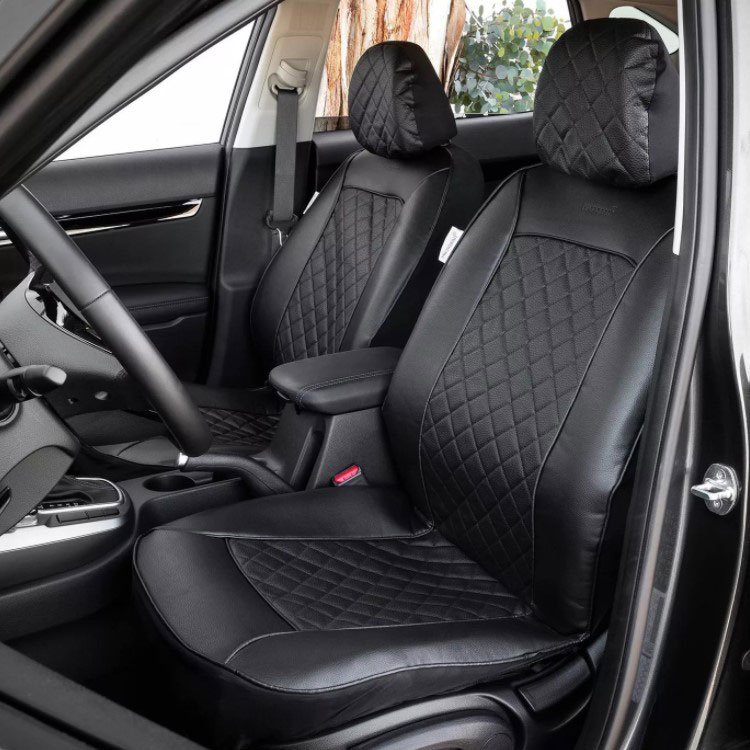
HUNTERSVILLE, N.C. — September 23, 2021 — Microban International and Pilot Automotive are delighted to join forces to develop car seat and steering wheel covers that stay cleaner for longer. Microban® antimicrobial technology is incorporated during the manufacturing process, producing covers that are resistant to the growth of microbes including mold and mildew.
Car interiors are rarely cleaned as regularly as people clean their homes, making them prone to the build-up of dirt, food crumbs and debris, the perfect breeding ground for microbes. This is especially evident on steering wheels — the most frequently touched part of any car — and research has shown that the average steering wheel is four times dirtier than a public toilet. Pilot Automotive car seat and steering wheel covers with Microban antimicrobial technology provide 24/7 protection for the life of the products, resulting in a cleaner driving experience and supporting regular car maintenance.
“Microban is delighted to partner with Pilot Automotive to lead innovation in automotive cleanliness,” said Gary Gagnon, director of Business Development at Microban. “Not only does Microban product protection offer additional peace of mind for drivers, but it also inhibits the growth of degrading microbes and so extends the lifetime of the products.”
“We are delighted to offer a range of automotive interior products treated with Microban,” said Hitesh Patel, vice president, Product Management at Pilot Automotive. “The universal seat covers fit most cars and provide a stylish modern interior appearance that is easy to wipe down. The steering wheel covers are available in three unique styles and provide additional grip when driving due to the anti-slip rubber core on the inside. Our covers featuring Microban technology are easily the best choice for shoppers looking for a cleaner driving experience.”
BIELLA, Italy — September 23, 2021 — Sustainability, recycling of materials, education, and training, these are central themes for textile industry, and they will cover as a fil ruge the whole 56th Filo edition. This is the contest where a special collaboration between Filo and ITS TAM – Istituto Tecnico Superiore Tessile Abbigliamento Moda Biella arises.
At the 56th Filo edition, indeed, ITS TAM Biella presents the exhibition entitled Ricucire il futuro – Omaggio a Chanel.
This is a setting up which has been totally created and developed by the students attending the ITS TAM Biella: fifty years after her death, they wanted to pay a tribute to Coco Chanel’s style, while also proposing a reflection and an interpretation on current issues and problems.
The designed garments and the story of their genesis talk about an activity of analysis, research, comprehension, and invention resulting in creations which reveal technical competences and know how learnt by the students, enhancing the beauty of fabrics and yarns which have been used. The students decided to work on three themes:
COCOONING: curling up in the cocoon to mitigate pandemic’s anxiety. Chanel’s style interpreted in comfortable clothing to wear at home but also perfect for going out.
TIMELESS: a manifesto against the squandering and the nonsense of fast fashion. The re-discovery of the beauty and the quality, of endless garment which lasts in time.
IMPERFETTI: recycling and re-use as resources for a new and sustainable fashion, interpreted by using valuable but waste materials. Imperfection as signal of uniqueness.
The exhibition set up at Filo will allow the visitor to discover the process of study, ideation, and synthesis that brought to the creation of exhibited pieces.
Silvia Moglia, director of ITS TAM, said: ‘Ricucire il futuro was born from the collaboration between Fondazione Cassa di Risparmio Biella and ITS TAM to celebrate the excellences of our territory, and in the meantime to narrate the gaze of young people at current issues. For us, as students, it has represented a great opportunity for confrontation and reflection and the possibility to put into practice the competences acquired during the two years of the course for the creation of garments that we are proud to exhibit at Filo’.
Paolo Monfermoso, Filo general manager, stated: ‘We are particularly happy to welcome at Filo the exhibition by ITS-TAM Biella, since through the garments on exhibition, we have a concrete prove of how the past could be a great inspiration for the future of textile-apparel industry. Moreover, high skills and technical competences acquired by the students represent a specially reassuring signal for our industry, that needs this kind of competences for keeping its identity and its role in international markets’.
The 56th Filo edition will be held on the 29th and the 30th of September at MiCo – Milan Convention Centre (via Gattamelata 5).
LEONBERG, Germany — September 23, 2021 — Some 117 years ago, the WEIDMANN weaving mill was founded in the tranquil Filstal valley in the district of Göppingen near Stuttgart, Germany. Today, Weidmann GmbH in Süßen is known worldwide as a specialist for the finishing of fiber and down-proof articles and woven industrial fabrics. Weidmann’s customers particularly appreciate the company’s reliability and flexibility with regard to their individual requirements, and consistently high quality of its products. The Swabian textile manufacturer finishes premium fabrics, mainly for the bedding industry, using the latest technology and in an environmentally conscious manner.
The complex production and finishing processes for high-quality fabrics require a reliable and efficient machine technology. With this in mind, Weidmann has always relied on the proven stenter technology from BRÜCKNER. For many decades, the German textile machinery manufacturer has been a world leader in the construction of production lines for the finishing of classical textiles, woven industrial fabrics, nonwovens, glass fabrics and floor coverings. In addition to tenters, the company’s production program also includes coating lines, relaxation dryers, sanfor lines, continuous dyeing lines as well as ovens for the bonding of nonwovens and other special lines. All machines are produced 100-percent in-house in Germany.
Both companies continuously invest in new and innovative technology in order to be successful and competitive today and in the future. Only Recently, a completely newly developed Brückner tenter was installed in the ultra-modern plant at Weidmann. During the intensive project engineering phase it soon became clear which features are of special importance for their daily production requirements:
Uniform moisture distribution in the machine entry and during pick-up of the specialized chemicals in the finishing padder before the thermoprocess;
Weft-straight fabric flow with minimized residual distortion;
Very good accessibility for maintenance and daily cleaning;
Sensor technology and automation of setting parameters for energy optimization;
Heat-recovery with hot water generation for the dye house; and
The line must be fully Industry 4.0 capable.
The new line is equipped with two padders, a weft straightener and 6 drying compartments. The two padders arranged one behind the other with automatic squeezing pressure adjustment and special roller covering allow an absolutely uniform liquor application and produce a pleasantly soft fabric handle. A differential moisture measurement by microwave sensors continuously checks the fabric moisture and thus the pick-up during running production, so that the squeezing pressure can be adjusted automatically if necessary. The straightening unit in special design in front of the tenter entry ensures the correct and straight fabric flow. Possible bow or skew distortions are reduced to a minimum by an intelligent drive system.
The newly developed tenter dryer is specially designed for textiles which produce a large amount of lint during the drying process. The lint is collected on horizontally arranged double lint screens, which can easily be cleaned during ongoing production. The interior of the dryer can also be cleaned very easily and quickly by means of a suction probe and it is easily accessible for cleaning and maintenance work on the nozzles, width adjustment and chain rails. Energy-saving motors of the highest efficiency have been used for the dryer. The air circulation fans and motors can be easily removed from the outside of the dryer as one unit for maintenance work. The newly developed horizontal fabric transport chain is characterized by its high robustness and easy maintenance or lubrication with high temperature grease. Due to the large chain rolls, very long lubrication intervals are possible even at high production speeds.
Of course, the new Brückner line is also Industry 4.0 capable. Via OPC-UA the stenter is directly connected to Weidmann’S ERP system. All production and quality data are recorded per batch, hour, day, week and year. Electricity and gas consumption are accurately measured and logged. The current machine status can also be monitored from an external device, such as a smartphone or tablet. Maintenance and servicing is supported by digital and interactive maintenance programs.
To enhance the servicing of the machine the customer can use the newly developed feature of a visual link between the machine and Brückner technicians, this can be used as an addition to the standard teleservice function. This enables Brückner to provide support and to eliminate malfunctions remotely much faster and more directly targeted. Furthermore, the simulation software ExPertex, which is newly developed by Brückner, is installed on the new line at Weidmann. On the basis of fabric type and process parameters, this tool gives the line operator valuable hints as to which settings can make the current finishing process even more energy efficient and productive. The software maps the technical processes on the line and helps the line operator to determine the optimum machine recipe and settings for the respective process.
Henrike Weidmann
Henrike Weidmann, together with her husband Michael Rapp, are the third generation to run the family business. They are positive about the future.
Weidmann said: “The Brückner company, like us, has very high quality standards. The direct communication with Sales, Service and Design made it easy for us to implement our many requests for optimization.
At Brückner, as always, we found reliability and the best support. Qualities that we, as a family run company have also anchored in our company philosophy. Another criteria in our purchase decision was that the company manufactures in Germany. This increases confidence in the quality and helps to maintain our textile know-how ‘Made in Germany’.”
FRANKFURT AM MAIN — September 23, 2021 — Addition to Frankfurt Fashion Week: Messe Frankfurt is launching a new platform for quality and lifestyle fashion in the mainstream sector. Called Val:ue, the new event augments the Frankfurt Fashion Week by adding a supplementary market segment and, for the first time, will bring together international brands, producers, designers and buyers at Frankfurt Fair and Exhibition Centre from January 18-20, 2022.
“With Val:ue, we are creating a new, central meeting place for the fashion world’s global players within the framework of the Frankfurt Fashion Week. Now, firmly established retail brands from the quality mainstream segment have the chance to get together there and, against the background of first-class presentations of collection highlights, find answers to the urgent challenges generated by the process of transformation currently taking place in the sector. In other words, Val:ue is rounding off the Frankfurt Fashion Week by adding an extra market segment and ensuring complete coverage of the fashion spectrum,” said Claudia Franz, director, Brand Management Apparel Fabrics & Fashion, Messe Frankfurt.
Leading brands and independent labels
Val:ue presents the latest looks and future-oriented trends for the coming season in the fields of men’s and women’s outerwear, shoes, leather goods, accessories and lifestyle. To this end, it focuses on companies with a well-developed brand consciousness and a good sales network, which are positioned as driving forces of innovation in the trade. Thus, the spotlight of the new fashion fair is on customer-oriented product developments, new logistics concepts, digitalization and greater sustainability in the mainstream. Val:ue shows how footfall-generating and business-relevant brands tackle tomorrow’s challenges and how they take advantage of the opportunities offered by the transformation process. This is to say, the worldwide sector now has not only a compact platform for business and commerce but also a great solution for buyers with regard to one-stop-shops. The result is a melting pot for the fashion world, in which both major international labels and new, ambitious independent labels are to be found.
New: Sourcing at Frankfurt Fashion Week
Professional sourcing solutions are more important than ever before given the challenges arising from the on-going transformation of the sector and the geographic changes taking place in the value chain. Therefore, Val:ue is being supplemented purposefully by the downstream subject of apparel sourcing in the world of fashion. In this segment, established and aspiring players show turnkey solutions for all participants of the fashion market – including white and private labels distinguished by a high standard of quality. Whether for garments, accessories, bags, shoes or leather goods, Val:ue is where new international business relationships and trusting partnerships are founded. In a nutshell: the apparel sourcing in fashion segment at Val:ue offers a variety of additional buying options for participants of the Frankfurt Fashion Week.
Impulses for the transformation of the fashion sector
Val:ue supports the 17 Sustainable Development Goals (SDG) of the United Nations for social, economic and ecological change. Reference is being made to the SDGs at the première of Val:ue and, from 2023, they will be a precondition for companies to take part. Thus, Val:ue is set to generate new impulses for the future-oriented transformation of the fashion sector and create new opportunities for exhibitors to put their own sustainability commitment in the limelight.
Register now and be part of the first Val:ue
Val:ue invites the international fashion community to be part of the new event. Brands and retailers can be in position from the time the transformation of the sector begins to take shape. Then, from January 18-22, 2022, the motto in Frankfurt will be “think fashion differently.”
NEW DELHI — September 23, 2021 — Cosmo Speciality Chemicals, a 100-percent subsidiary of Cosmo Films Ltd., has launched Superwash POL — a dye transfer inhibitor to prevent bleeding and staining. The special formulated agent provides an amphiphilic character with polar groups and hydrophilic properties with un-polar groups preventing the dye bleeding and redeposition on white or differently colored textiles.
Compatible with anionic surfactants, Superwash POL improves wet fastness properties like wash and rubbing of dyed/printed goods. Effective in hard water and suitable for a wide range of pH, the innovative washing off agent also helps with avoiding tinted of ground printed goods.
Talking about the new product, Anil Gaikwad, business head, Cosmo Specialty Chemicals said: “With an aim to continue bringing innovative products for the textile industry to deliver new solutions, we are launching Superwash POL. Because of its amphiphilic character it helps avoid tinting of the ground of printed goods while offering an excellent cost/benefit ratio. It is indeed the most effective dye transfer inhibitors for liquid laundry.”
“Cosmo believes in being specialized and niche in its offerings. Therefore innovation is promoted as one of the most important values, driven by the consumer needs and backed by strong tech infrastructure” added Pankaj Poddar, chairman and CEO of Cosmo Speciality Chemicals.
Effective in different shades of dye, Superwash POL works for cotton polyester blends and requires a very less amount to perform in comparison to the competition. A 0.5 to 1.0 percent dose for exhaust application and 1 to 4 grams per liter for continuous application are the recommended dosages of this DTI agent from Cosmo Speciality Chemicals.
MÖNCHENGLADBACH, Germany — September 23, 2021 — Global energy consumption reached a record high in 2019, following a 40-year trend for rapidly increasing energy demand that was only halted by the Coronavirus pandemic.1 It’s estimated that more than 80 percent of this energy is still generated from fossil fuels that produce carbon dioxide emissions and contribute to climate change.2 Renewable energy offers a solution to this problem, but saving energy whenever possible is an even more effective approach. That’s why Trützschler has developed the intelligent card TC 19i, which sets a new benchmark for energy-efficient carding.
Only the intelligent Trützschler card TC 19i features the unique T-GO gap optimizer, which continuously and automatically monitors and adjusts the carding gap to an ideal position during production. By now, more than 2000 intelligent cards sold worldwide prove quality and production leaps in the double-digit percentage range daily, thereby reducing energy demand per kilogram produced.3 Innovative drive- and air technology further reduce energy consumption of the TC 19i. In this way, the TC 19i saves energy to help protect the planet — and also boosts profitability for yarn production.
The most energy-intensive elements in a carding machine are the drive, the dust suction process and the compressed air system. Permanent suction is needed to remove dust and cotton waste in key places. In contrast to Trützschler cards, many cards on the market also use compressed air for suction hoods in the pre-carding and post-carding areas, for example. Smart optimization of these areas has made the intelligent card TC 19i a benchmark for energy efficiency in carding because it uses less electricity, lower suction pressure and less compressed air than other machines, while providing the highest production rates currently available on the market.
In a head-to-head comparison between the TC 19i and a high-performance card from a competitor, the TC 19i consumed at least 10-percent less energy per kilogram of material produced when manufacturing rotor yarn from a cotton and cotton waste mix. The compared energy values included electric power consumption and energy required for suction and compressed air and were measured in both cards at the same production of 180 kilograms per hour (kg/h). A 10-percent reduction in energy per kilogram of sliver produced, as proven here by TC 19i, can have a significant impact on a spinning mill’s profitability; annual savings worth a five-digit sum are frequently possible, depending on factors such as the output of the mill. The customer trial also showed TC 19i’s excellent reliability at the customer’s usual production rate of 180 kg/h, and even demonstrated stable performance at 300 kg/h in the same application. Because the TC 19i with T-GO gap optimizer realizes maximum production rates at no compromise in quality, manufacturers can reduce their energy demand and investment costs drastically: Less machines are needed to achieve the desired output, and energy consumption per production is reduced.
Energy-efficient air technology
Next to increased productivity, air technology plays a pivotal role in the energy balance of the TC 19i. Christian Freitag, head of Air Technology at Trützschler, explained how he optimized the TC 19i in this area. “First, we reduced the need for compressed air wherever possible,” he said. “And second, we reduced suction pressure and air requirements for suction. All of our air collectors, for example, are carefully developed to eliminate potential resistance and facilitate an ideal flow.”
This improvement was made possible by a long and sometimes challenging innovation process involving mathematical models of air flows, as well as flow simulations and prototypes. By combining the final flow- optimized parts in the TC 19i, Trützschler’s experts have developed a card that operates with suction pressure of just -740 Pa and with an air requirement of only 4200 cubic meters per hour. This translates into 40-percent less energy demand for air technology compared to the latest high-performance competitor model.
“These achievements are fantastic — but we didn’t stop there,” said Ralf Helbig, R&D Engineer for Air Technology at Trützschler. “We have also made it possible to further reduce energy demand in polyester applications, which are increasingly important to our customers. In a polyester configuration, the TC 19i can reduce the necessary pressure for waste suction by a further 14 percent because of improvements to elements in the pre-carding and post-carding areas, and the removal of suction hoods. The suction is still just as reliable — but it needs much less energy.”
Good for the environment – and for the balance sheet
With its unique gap optimizer T-GO, its state-of-the-art drives and optimized air technology, the intelligent card TC 19i is leading the market for energy-efficient carding. No other card can match its stable performance at such high levels of productivity, or its consistent quality and energy efficiency. As a result, the TC 19i makes a valuable contribution to global sustainability – and makes mills even more profitable too.
3 Increased production leads to higher power consumption per hour. The increase in output outweighs this factor so that power consumption per kilogram of card sliver produced is lower.
As of late September, spinners reported strong demand across the board. Many plants were operating at or near capacity, limited only by availability of labor.
“We have a nice backlog — orders we would like to be a to quickly fulfill,” said one executive. “We have the mechanical capacity, the materials and the desire. What we don’t have is enough people to get these orders processed as quickly as we would like.”
Said another source: “We’ve been told there are thousands and thousands of people still out of work and thousands of unfilled job openings. It would seem like there are plenty of jobs to go around for those who want to work. But people got used to unemployment subsidies, and now it seems they don’t want to go back to work for what they were making before the outbreak.”
“There are different views on the subject,” said one industry analyst. “Some people say raising wages will get people back into the workforce. But I am sure some companies could not survive if they have to incorporate a massive wage increase into their operations. Margins throughout the textile industry have always been somewhat thin compared to some other industries. There has to be a happy medium out there somewhere. It is easy to sit behind a desk and make a decision. Put that same person on the shop floor and the decision might be different.”
Other executives are not as quick to blame COVID and temporarily enhanced unemployment benefits for labor shortages. “The truth is, we were losing people to other jobs and other industries long before COVID became an issue,” said one manager. “Replacing employees became difficult several years ago. Those we replace them with — when we can actually find replacements — have to be trained and then given enough time to get up to speed. What suffers is productivity.”
Unifi Continues Sustainability Initiatives
Greensboro, N.C.-based Unifi Inc. is continuing its commitment to sustainability by visiting college campuses. The company recently brought its REPREVE® mobile tour to The University of Notre Dame during the school’s home opener football game against Purdue University on September 18.
“Unifi is committed to working today for the good of tomorrow, and that includes educating younger generations about the importance of recycling,” said Jay Hertwig, senior vice president of Commercialization at Unifi. “Our partnership with Notre Dame demonstrates the importance and impact of recycling and how the transformation of recycled bottles into new products results in greener, more sustainable college campuses and helps to protect our natural resources.”
Inside the REPREVE mobile tour, L2 Brands also gave product demonstrations to college students, alumni and friends of Notre Dame, who were able to see firsthand how the bottles they recycle are given a second life and transformed into their favorite Fighting Irish hats, shirts and jerseys.
Earlier in September, Unifi published its latest sustainability report.
Key accomplishments and highlights for the 2021 sustainability report include:
Investing in Sustainability — Unifi is prioritizing new, innovative products and processes to reduce total energy and water impacts throughout the life cycles of both Unifi’s products and those of its customers.
Achieving Further Sustainability Scoring — Unifi’s pledge to continue using Life Cycle Assessment (LCA) on its products provides the company a pathway to further reduce the environmental impact for customers, brands, and end-consumers.
Building the REPREVE Portfolio — Sales of Unifi’s flagship recycled brand continue to grow quarter over quarter, emphasizing the promise to lower-impact materials.
2021 Diversity Champions — Unifi was honored as the 2021 Diversity Champion by the University of North Carolina School of Law’s Director Diversity Initiative, highlighting Unifi’s commitment to diversity and inclusion.
Pursuit of Zero Waste to Landfill Manufacturing — Six of Unifi’s seven owned and operated facilities achieved zero waste to landfill.
A Culture of Safety — Unifi’s Total Recordable Incident Rate continues to stay below 1.0, a testament to its people promoting and embracing a safe work culture.
Alignment with Global Standards — Unifi provides in-progress Global Reporting Initiative and Sustainability Accounting Standards Board disclosure grids in the appendix of the sustainability report.
In Brief
In late August, the Department of Defense (DOD), on behalf of and in coordination with the Department of Health and Human Services, awarded $6.5 million to U.S. Cotton LLC, a subsidiary of Gastonia, N.C.-based Parkdale Inc., to increase domestic production capacity of the polyester-tipped swabs used in COVID-19 home test kits and mass testing settings.
In other medical textiles news, a new market study published by Global Industry Analysts Inc., predicts the global biomedical textiles market to reach $15.4 billion by 2026, growing at a CAGR of 4.2 percent. Biodegradable, one of the segments analyzed in the report, is projected to record a 3.6 percent CAGR and reach $5.5 billion in the next five years. After a thorough analysis of the business implications of the global COVID-19 pandemic and its induced economic crisis, growth in the non-biodegradable segment has been readjusted to a revised 4.6 percent CAGR for the next seven-year period. The U.S. market is estimated to be $3.7 billion during the current year.
Outside of the medical arena, the global cotton yarn market is expected to reach $95.5 billion by 2026, according to a recent research report. That is up from $77.3 billion in 2020.
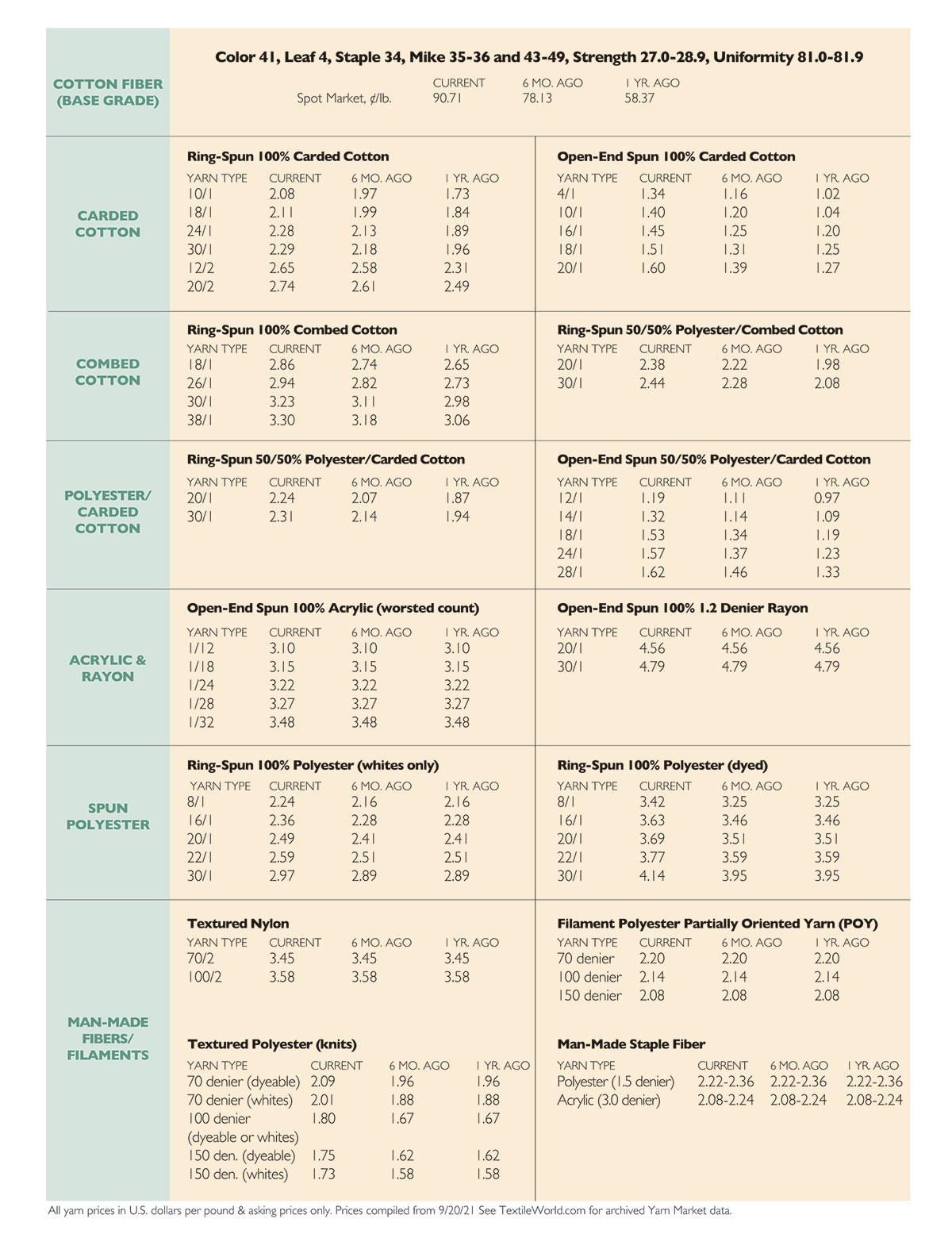
And, finally, the price of U.S. cotton remains above $0.90 per pound in late September, continuing a surge that began late last year.
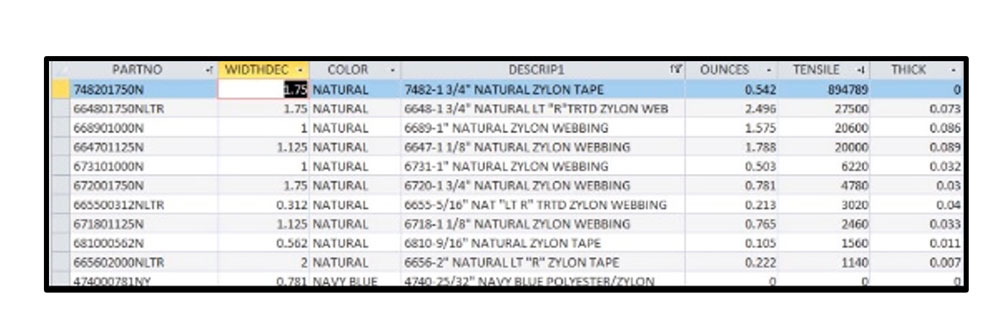
An example of test data linked to various manufacturing processes.
The art and science of developing end materials for challenging new applications
By Ted Fetterman
In the fashion world, textile development is both an art and a feel. Industrial fabric applications do not follow quite the same pattern — they focus more on performance than style. However, there is still an interaction between the customer and the fabric, and most product developers want to touch the fabrics and work with them before using them in an industrial application. To ensure that a woven webbing fabric meets the performance requirements of an application in particular environmental conditions, it is critical that all are prototyped and tested.
What is driving the need for prototype development?
Two very different types of product development drive the need for a custom prototype.
One primary driver is product developers’ need for woven materials that meet the performance requirements of a particular new application. Developers trying to match up all the application performance requirements to an available solution often begin by conducting a simple Internet search on textiles based on published fiber performance and chemistry criteria. Textiles that meet established published specifications offer material performance predictability, but because applications are so unique, testing of prototypes is always required.
The other frequent impetus stems from a chemical company’s development of a novel polymer combination that lends itself to a fiber application. The chemical company then looks for applications for that chemistry and may approach original equipment manufacturers (OEMs) with the new fiber. The OEM in turn may have an application in mind – if they could get the material woven into a narrow fabric. At that point, chemical companies often contact woven webbing manufacturers like BRM to create a textile architecture in which the end material highlights the inherent chemical properties of the fiber. To ensure the fabric is fit for the desired end use and can be guaranteed to perform for a particular purpose and in specific environmental conditions, the customer must perform engineering and testing on a prototype.
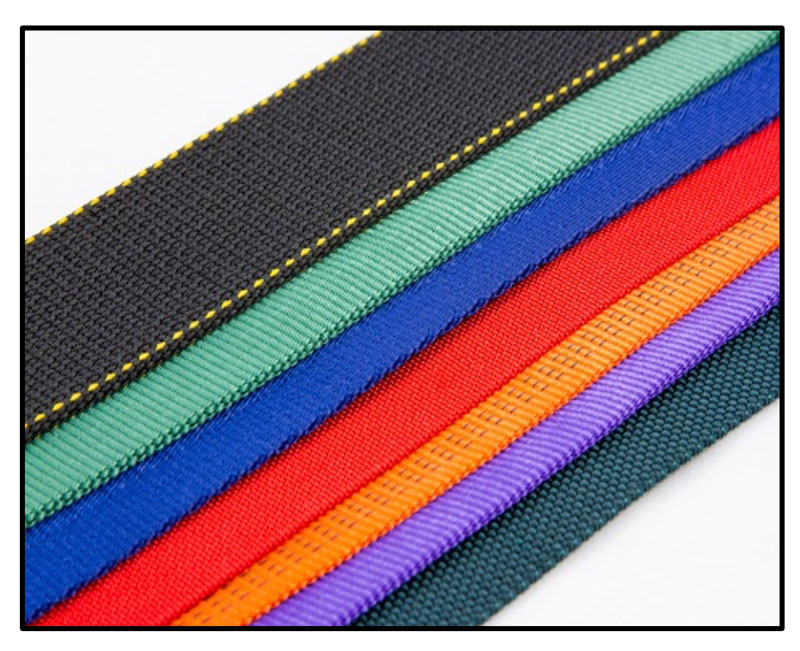
Examples of various off-the-shelf narrow fabrics customers can incorporate into their development process.
All applications are unique
All applications feature unique characteristics — they rarely fit into a neat box. This is because, while woven fabrics themselves can be guaranteed to meet material design specifications, it is not possible to predict the performance of any particular woven material for all applications. For example, all materials to be used on the lunar surface must be designed to function within extreme temperatures: daytime on the moon’s equator can be as high as 90°C and nighttime temperatures can be as low as -200°C. Materials must also meet ultraviolet (UV) degradation requirements; prototypes are used to test for exposure time, amount of radiation, and type of radiation.
At BRM, every inquiry goes through a process that includes a regimented data creation method. Extensive sampling is performed on everything woven, dyed, and finished. All information is entered into a vast database of test data linked to all manufacturing processes. Application experts draw from this information during the product development stage to pair products with customer needs.
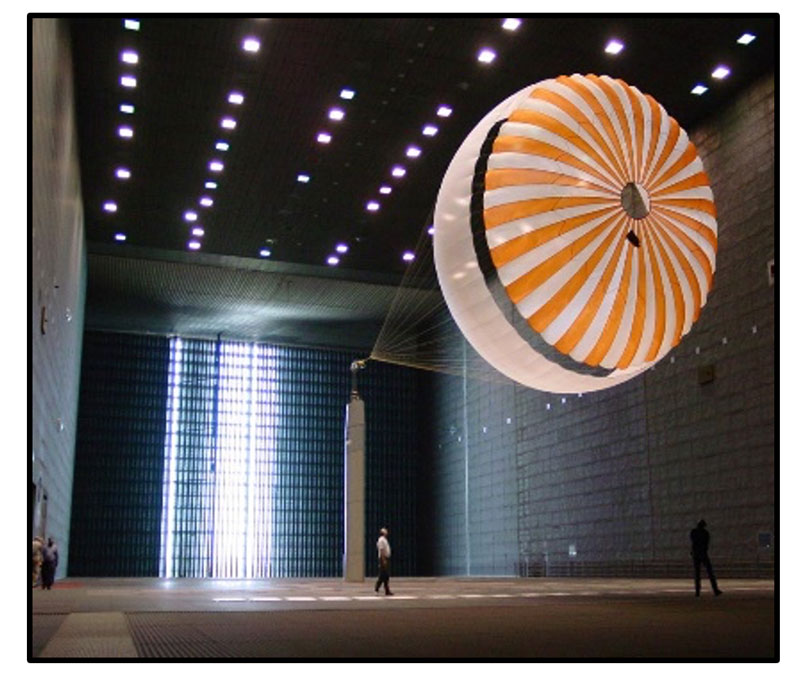
As one of the few textile companies with such an extensive database, BRM has become a go-to supplier to NASA. The company plays a prominent role in development of material for the US Department of Defense through many of its R&D offices and labs. BRM is also working with the Parachute Industry Association (PIA), US Army Research Laboratory (DEVCOM) and US Defense Logistics Agency to update, modify, and validate modifications to US Mil-specs and PIA specs to regulate quality.
Digging deeper into the prototyping process
When discussing prototyping in woven fabrics, it is important to note that all projects are prototyped and tested for the application — whether BRM has off the shelf fabrics or develops a new fabric.
The process begins with communication between the customer and BRM to understand the application, either using face to face communication or virtual platforms. The customer may show drawings and BRM shares relevant test report information. Then it is time for the prototype stage.
To save time and money, most customers start off wanting to incorporate an existing, off the shelf fabric into their development process. The majority can be handled by an in-stock fabric. Putting samples in fabricators’ hands is critical; samples may be sent for an initial evaluation, based on the project scope. BRM might send several materials that are close to one another but different in some way, along with data sheets or test reports. These prototypes will be tested by the customer for actual application performance with regard to thickness, tensile strength, and the effects of UV or saltwater.
When the project cannot use an off the shelf item, BRM must come up with a new solution to meet the requirements. BRM uses a rigorous regulated project planning control process for custom prototyping — an extensive step by step review of the application to determine what would be necessary to satisfy the customer and mitigate any business risk.
Weaving experts review all the specifications to gain a deep understanding of the environment the fabric will be used in, and what type of chemistry is required. They then enter into a product development agreement for a particular application, which includes producing prototypes for detailed customer testing. For example, BRM tensile strength tests are conducted using an approved ASTM method and known information on the mechanics of the material. However, while speed can be controlled in the lab, customer testing is required to model all dynamic forces under high speed conditions.
In most cases, customers want prototypes to blow apart and model through observation rather than benchtop studies. For example, space programs use prototypes to test the interaction of propellants with all structural materials in the vehicle, including webbing.
The U.S. federal government maintains considerable mechanical engineering laboratory resources for this type of testing. It has been increasing its focus on gathering enough data to predict performance of materials in extreme environments to satisfy recent mission requirements pushing these limits.
The prototyping process was an integral piece of developing a stronger and lighter material for climbing gear.
Using prototyping process to help come up with a new solution
BRM uses a careful iterative process to come up with new fabric prototypes. When benchtop analysis to eliminate variables has been exhausted, application experts take a snapshot and determine which variables have not been eliminated. Then weaving experts go to the loom and weave a new fabric, using the ideas collected on potential changes in the loom. It is not an exact science — customers know that they will not know how the fabric will actually perform until it has been blown apart. In recent years, BRM has also increased its level of non-destructive testing. Rather than destroying the material at extremes, experts conduct cycle and abrasion testing to measure the effect of some stimulus to the material.
Everything done on the loom is meticulously documented, including any and all changes to the formulation. Internal test results on effects of changes are compiled. Customer testing provides additional feedback, which may lead to another round of changes.
One recent example of the importance of the prototyping process was a project for the recreational climbing market. The customer wanted to develop a stronger yet lighter material for use in sewn slings, structural loops of webbing used to fix gear to a climber or the mountain. This market is driven by weight, and the industry is always looking to get the same or better performance while reducing weight.
The customer wanted higher strength in the base tubular webbing. Established materials for this application must pass a standard — 22 kilonewtons (kN) over a 10 millimeter pin, the diameter of carabiner and connector in the climbing market. A standard sling has a substantial through-thickness and placing the sewn loop over the pin creates internal forces. In substituting material, BRM used a more densely packed yarn to achieve the desired increased strength. Changing just one variable in the weave structure changed the dynamic of the webbing, and the internal pressure forces caused the webbing to melt. This could not have been predicted without testing the solution using a prototype.
After getting the new and unexpected result, the next step was a forensic analysis of the material to understand why it melted. Application experts found that the high tenacity fiber used had a low melt point (lower than nylon) and the pressure caused heat. A visual analysis revealed that the loop had melted into a hard plastic mass, indicating the issue was generated by heat and not mechanical force. After the analysis, the application team investigated ways to modify the design to reduce the density and allow the fibers to be efficiently incorporated into the design without such high pressure. Lowering the fiber content reduced the density of the weave, which allowed all the fibers to load evenly, thereby increasing the woven structure’s tensile yield. BRM regularly applies the concept when trying to increase the performance yield of the fiber inputs.
Applications for outer space require very complex and high-performing materials.
Weight reduction is also driving development in the aerospace market. For outer space/NASA applications, it is expensive per pound to transport material from earth to the moon. The same is true in commercial aviation. For example, one current space application project that required higher performance materials for use as a tensile structure and mechanism for actuating a robotic arm on the moon began with standard mechanical engineering specifications but had to be tailored for the extreme environment found on the on surface of the moon. The process included several rounds of discussions and specification requirement changes to the base fiber. BRM and the customer are currently in the process of designing and testing multiple samples, and one will be downselected as the way to go forward.
A third example illustrates the importance of an iterative prototype production and testing process for new applications. It also underscores the challenge of understanding the relationships among the variables, even with a good understanding of the variables present from inputs. The project involves product development on comingled structural fibers with thermoplastic fibers. BRM fabric experts are investigating the properties and values if the material is woven into two-dimensional or three-dimensional woven structures. Three weave design material combinations are being tested to evaluate the performance characteristics of the design combination. While increased interlaminar sheer properties were desired and initially predicted, the increase in strength result was not ideal. However, energy absorption and dissipation properties was discovered to be more valuable as a result of the design.
Finally, prototyping is also valuable for medical applications, though it is less prevalent. The medical arena is a known environment. Performance is well-established and only certain fabrics can be implanted. For example, BRM has long made woven tubular materials used as structural component material for arterial stents and grafts. The woven structures are further processed by medical device manufacturers. In recent years, medical research and development has been focused on smaller and smaller structures, which have been difficult to achieve with existing yarn sizes. BRM is undertaking development with a textile yarn producer, reducing the size of yarn so structures can be smaller and smaller. For this application, prototypes of iterations is the path towards understanding weavability of a new fiber.
Prototyping reaps huge benefits
Prototype development in the webbings market has reaped enormous benefits to customers in a wide range of industries. There are limitations to internal testing – customer prototype testing is essential to ensure performance of the test material relative to the application and environmental conditions in which it will operate.
Editor’s Note: Ted Fetterman is director of sales and marketing, Bally Ribbon Mills, Bally, Pa.