After more than 40 years as the Industrial Fabrics Association International (IFAI), the association now goes by the name Advanced Textiles Association (ATA). The change was made after 85.6 percent of its members cast a vote in favor of the new name.
A change had been under discussion for several years as the association sought to position itself in the best way to meet the needs of its members and the overall industry.
“This is an exciting time for our great association,” said IFAI Chairman Amy Bircher. “President and CEO Steve Schiffman and his staff have worked hard to meet the needs
of our members in finding a name that reflects the vision for our future while still honoring the past and recognizing the importance of our history.”
“We wanted a name that is more inclusive, easier to remember, and reflects advances in
and the future of all the industries we currently serve and will serve in the future,” Schiffman noted.
ATA will unveil its new rebranding soon. The association also will transition its website from ifai.com to textiles.org.
In other recent IFAI news, the Upholstery & Trim Group and its members — comprised of manufacturers and distributors of fabrics and accessories for applications in the automotive, marine, industrial and contract markets — have joined IFAI.
Each year, Textile World editors look forward to the National Council of Textile Organization (NCTO) Chairman’s state of the industry presentation from NCTO’s annual meeting (See “2022 State Of The U.S. Textile Industry,” TW, this issue).
It is not just a recap of NCTO’s activities, which are highlighted, but also a look at the U.S. textile industry’s performance, challenges and future outlook. It paints a solid picture of the U.S. industry featuring a collection of aggregated industry data, as well as opinion of industry members living those data.
The NCTO chairman for 2022-23 and presenter of this year’s address is David Poston, founder and president of Palmetto Synthetics LLC, Kingstree, S.C. (See “Palmetto Synthetics: Custom-Designed Fiber Solutions,” TW, May/June 2021).
Poston points to the positive performance of the U.S. textile industry and a “solid
year in 2021,” referencing “a rebound of remarkable proportions” with increases in overall shipments of U.S. manmade fibers, textiles and apparel; increased U.S. exports; and strong capital expenditures.
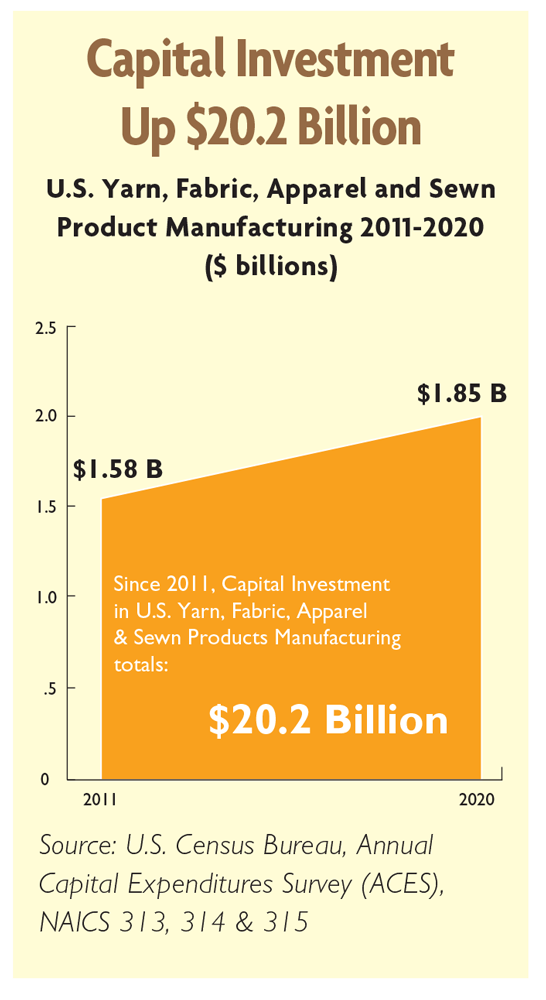
Poston stated: “Capital expenditures have remained strong. Investment in yarn, fabric, apparel and sewn product manufacturing in 2020 — the latest figure that we have — hit $1.85 billion. Since 2011, capital investment in U.S. yarn, fabric, apparel and sewn products manufacturing totals $20.2 billion.” Keep in mind those are billions with a “b” and up from the $1.58 billion invested in 2011.
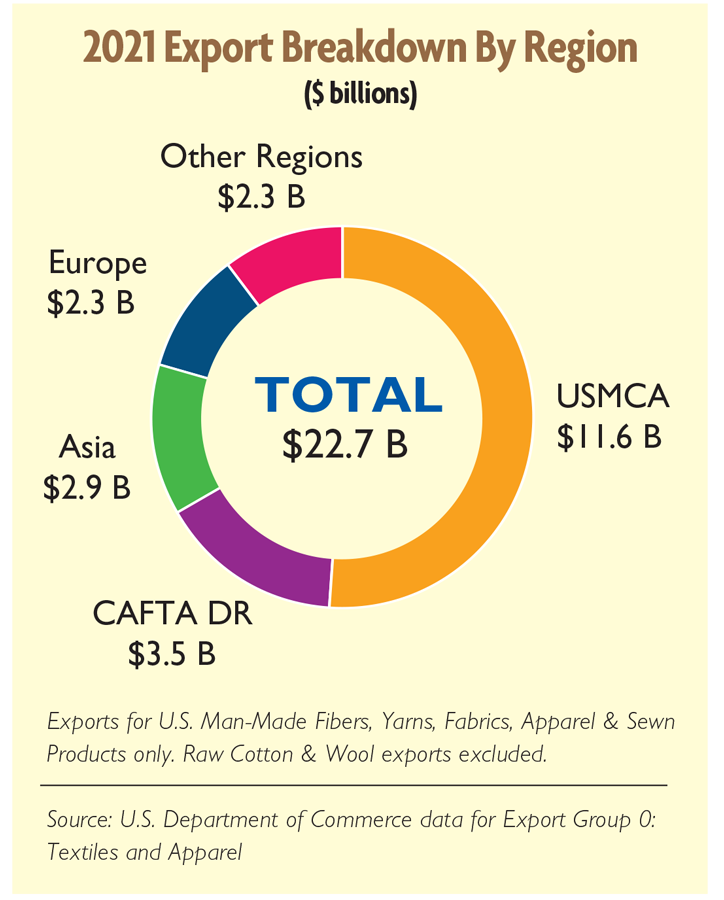
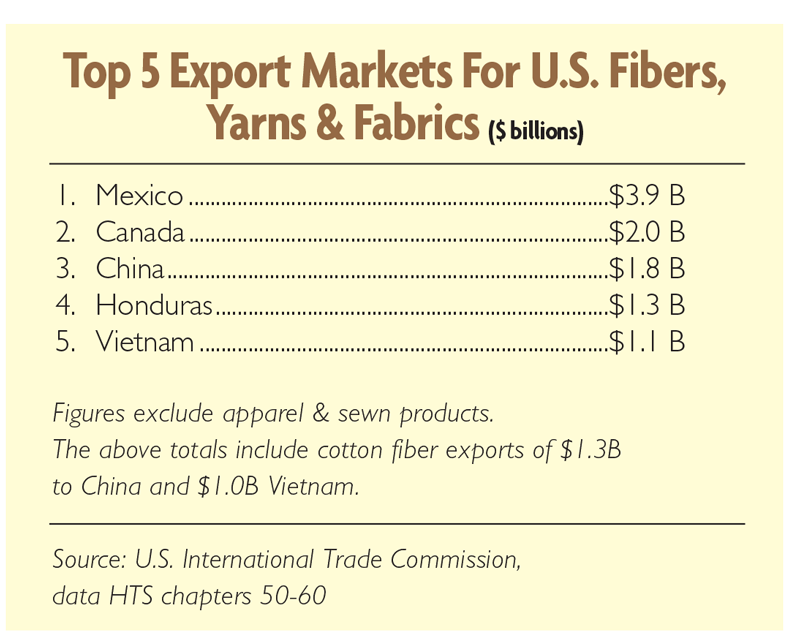
In textile exports, roughly half are within the United States-Mexico-Canada Agreement member countries with Mexico receiving $3.9 billion in U.S. fibers, yarns and fabrics; and Canada receiving $2.0 billion — respectfully the U.S. textile industry’s strongest export markets.
Dominican Republic-Central America Free Trade Agreement members received $3.5 billion in U.S. exports of fibers, yarns and fabrics, with Honduras — the U.S. textile industry’s fourth strongest export partner of those products — taking in $1.3 billion.
Referring to the overall U.S. textile and apparel exports to the Western Hemisphere, Poston stated, “The bottom line is the fundamentals for the U.S. textile industry are sound and a testament to our industry’s resilience in the face of a perfect storm of supply chain disruptions, rising costs and a once-in-a-generation healthcare crisis.”
This one sentence seemingly captures the true “state” of the industry — an industry that always rises to the occasion, whether it’s for personal protective equipment, test kit swabs or any other demand seemingly out-of-the-blue.
“Strong underlying economic fundamentals and expansion in the U.S. and Western Hemisphere in 2021 created a sound business environment for our industry, and we remain optimistic that the business climate will continue this year,” Poston concluded.
In a personal note, Poston added, “I am optimistic about the future, knowing the strength of the industry, buoyed by its incredible trade and lobbying organization in Washington, will overcome emerging challenges and continue to carve out a niche as an important backbone in the U.S. economy and the Western Hemisphere.”
A powerful summation from an industry veteran who has seen it first-hand and continues to voice the optimism of the U.S. textile industry.
The U.S. textile industry was an industrial powerhouse that led the world in style, volume and quality during the middle of the 20th century. Unfortunately, by the early days of the 21st century, the industry has fallen to where it was a shadow of its former glory, ravaged by imports from government-subsidized Asian companies that paid very low wages.
One by one, spinners, weavers and knitters turned the lights off and shut the doors forever. Some experts and analysts predicted the industry had no future and would eventually all but disappear.
Despite all the naysaying, textile leaders were not ready to throw in the towel. Instead, they transitioned from mass production of commodity products to creating specialty, niche and high-tech products. They espoused a new value proposition that refocused the industry’s priorities. No longer would U.S. companies try to compete on volume and price. Instead, they promised to be world’s best in quality, service and speed to market. They realigned manufacturing capacity to more realistically align with demand. And they saw orders, revenue and profits skyrocket. The U.S. industry reclaimed its place among the world’s elite. All was well — at least until news broke of a highly contagious virus that was decimating China and beginning to spread around the world.
The industry hit bottom during the first half of 2020. Plants shut down. People sheltered in place. Stores and restaurants closed. Container ships full of products and supplies
were lined up at ports across the world with no way to unload their cargo.
Perservering
Ever resolute, the industry persevered, and when the economy began to reopen, spinners and their sister companies once again began to recover. Orders improved — some companies even finished 2020 close to their original projections. Yet, even with a decent degree of recovery, things were not quite the same. Many companies had problems keeping qualified employees even before the pandemic began. After the initial quarantine period, many of those who were temporarily laid off decided not to return to work. A shortage of qualified labor, coupled with a global supply chain in disarray, meant customers were not getting their orders as quickly as before.
“Demand remains solid,” said one industry expert. “The problem is getting product to the customers. Between production problems and shipping problems, the time from order to delivery has increased substantially.”
And that negates two of the three U.S. industry’s foundational advantages. Quality is still there. Service and speed to market are not.
So, that leads to the question: what’s next?
A number of consulting companies and analysts have assessed the current state of manufacturing in America, including the textile industry, and have suggested several steps companies can take to solve the current labor problem, as well as prepare for a secure future.
Recommendations
Consulting company Deloitte, for example, has recommended manufacturers need to watch and act upon specific trends to secure their future. Three of those trends apply specifically to spinners and others in the textile industry. In dealing with the workforce shortage, Deloitte recommends finding ways to add flexibility and work/life balance to manufacturing jobs. Many displaced workers became used to a more balanced lifestyle and chose not to return to a more restrictive manufacturing environment.
Logistics challenges, including shortages of truck drivers, dock workers and others, are likely continue — maybe into the first half of 2023. As a result, spinners will likely incur higher costs, which are likely to be passed on through to customers. Companies should carefully plan and map out their supply networks. Deloitte says, “digital supply networks and data analytics can be powerful enablers for more flexible, multitiered responses to disruptions.”
The third applicable trend is sustainability. Deloitte reports: “The fast rise of environmental, social, and governance factors is redefining and elevating sustainability in manufacturing as never before.” This is something at which many spinners excel. Efforts by such companies as Unifi and Elevate Textiles have gained considerable global attention. More and more companies in the industry are undertaking concerted sustainability initiatives.
INDA President Dave Rousse (center) and guests cut the ribbon to open the trade show floor.
INDA’s IDEA® 22 was one of the first major textile industry trade shows to resume business as usual this year.
TW Special Report
As the world attempts to get back to “normal” following the onset of the COVID-19 pandemic and the subsequent shutdowns, so does the trade show world. No one fully understands how the trade show and event industry will be changed long term as we learn to navigate in the COVID environment, but the one thing that is clear is that people want face-to-face interactions and sales networking opportunities in person. The demand for trade shows exists.
“There is no doubt communicating through digital means helped us get through the pandemic,” said Holger M. Steingraeber, senior vice president, Global Marketing & Communications, Freudenberg Performance Materials. “However, virtual meetings cannot completely replace face-to-face interactions. At Freudenberg Performance Materials, connecting to the customer is vital to better understand challenges, develop solutions, and strengthen our partnerships. Therefore, we are very happy in-person trade shows are possible again.”
The IDEA® 22 nonwovens trade show held recently in Miami Beach and organized by the Cary, N.C.-based Association of the Nonwoven Fabrics Industry (INDA), was one of the first major textile industry trade shows to resume business as usual this year. With its triennial schedule, IDEA luckily avoided any pandemic-related cancellations or reschedules, and the 21st edition of the show took place as planned at the Miami Beach Convention Center. The event was also collocated with INDA’s FiltXPO™ exhibition and conference.
The combined events offered training classes; conference sessions on nonwoven trends, forecasts and market information for China, Asia, South America, North America and Europe, as well as filtration statistics and trends; and a welcome reception. INDA also presented its IDEA Achievement Awards and IDEA Lifetime Achievement Awards. FiltXPO also featured the first “Summit for Global Change.”
According to INDA, approximately 5,000 participants — exhibitor personnel and visitors — took the opportunity to interact face-to-face. “The event attracted a high level of participation among key decision makers despite lingering travel restrictions, which is a testimonial to the show’s importance within the international nonwovens and engineered materials industry,” said INDA President Dave Rousse.
“The size and scope of IDEA and FiltXPO have been excellent for us as both exhibitors and as visitors,” noted Rolk Kammermann, head of sales and marketing, Innovative Swiss Made Nonwovens.
Award Recipients
Val Hollingsworth, board chair and CEO of Hollingsworth & Vose, was recognized as the IDEA 2022 Lifetime Achievement Award winner. The IDEA Entrepreneur Achievement award was presented to Doug Brown, president of Biax-Fiberfilm/5K Fibres.
The IDEA 2022 Achievement Awards were presented in six different categories. Winners included Herrmann Ultrasonics Inc., Rem Brands Inc., LifeSavers Wipes, Mann + Hummel GmbH, Glatfelter Corp./Blue Ocean Closures, and Suominen Corp.
The next IDEA show is planned for April 23-25, 2024, in Miami Beach. FiltXPO will return to an individual event on a new 18-month schedule with the next event taking place October 10-12, 2023, in Chicago.
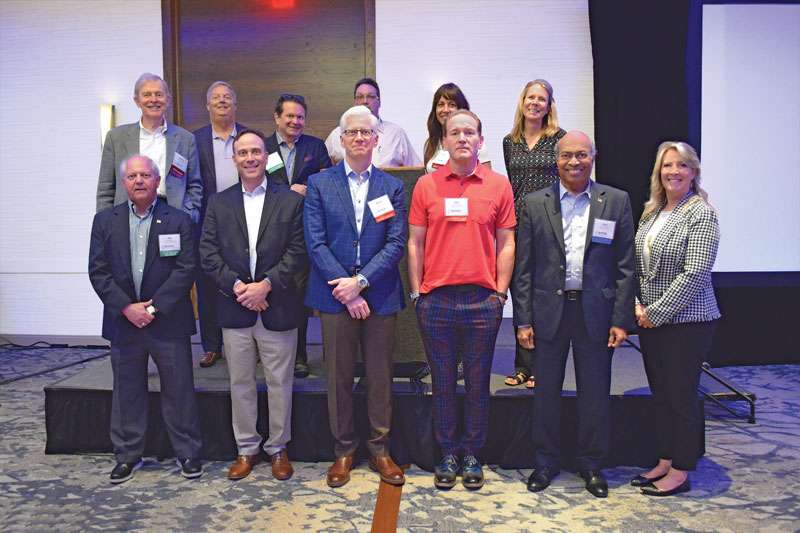
SYFA officers and directors (front row, left to right) Bill Rothermel, Immediate Past President Dan Sistrunk, President Hardy Sullivan, Mike Becker, John Amirtharaj and Kim Hall; (back row, left to right) Alasdair Carmichael, Stan Pendergrass, Bart Krulic, Managing Director Rodney Turner, Celeste Ramsey and Nikki Brooks.
SYFA recently held a successful spring conference and is preparing for its 50th anniversary celebration this fall.
TW Special Report
The Synthetic Yarn and Fabric Association (SYFA) held its 2022 spring conference recently at the Sheraton Charlotte Airport Hotel, Charlotte, N.C.
The theme for the event was “Global Textiles … It’s a Small World After All.” Presenters came from companies and organizations including Stäubli Corp., Eastman Chemical Co., ClearTrackHR, Wells Fargo, the National Council of Textile Organizations, American Apparel & Footwear Association and Textile Technology Center at Gaston College.
Conference sponsors for the spring event included Gold Sponsors Premiere Fibers Inc. and Jomar Softcorp International Inc.; Silver Sponsors Pulcra Chemicals LLC and Unifi Inc.; Bronze Sponsors Goulston Technologies, PolySpinTex, Milliken & Company and Avient; and Patrons The Association of the Nonwovens Fabrics Industry (INDA) Milliken & Company (facemasks) and Measured Solutions Inc. (hand sanitizers).
The SYFA also introduced new board members — Nikki Brooks, Goulston Technologies; Bart Krulic, Palmetto Synthetics; and Bill Rothermel, Precision Fabrics — and outgoing board President Dan Sistrunk took a bow after serving the association for the past three years as president.
“At our last conference in the fall of 2021, I stated that it was good to be back and emerging from the post-COVID world to a period that resembled a more normal textile environment, but little did we know the next round of challenges that we were going to encounter,” Sistrunk said. “Since the last SYFA conference, we have faced a new set of challenges ranging from labor shortages and growing inflation to geopolitical destabilization. However, I firmly believed then and it remains true today that with these challenges there is great opportunity for the SYFA organization and the industry. By harnessing the power of industry organizations like SYFA, each member, through the networking and collaboration the organization provides, will be able to better understand, uncover, and tap into some of this opportunity amidst the chaos we are all currently facing.”
John Woods, vice president, Fibers and Analytical Service Technology, Eastman Chemical Co., delivered a presentation entitled “Materials Circularity: The Way to a Sustainable Future.”
Incoming President Hardy Sullivan is ready to helm the SYFA for the next two years and had kind words to share about Sistrunk as he stepped down. “Like so many organizations that rely on face-to-face engagement, Covid was a real test,” Sullivan noted. “I’m so thankful for Dan Sistrunk’s leadership and the sustained effort by board volunteers. We maintained relevance by publishing technical and economic-focused papers quarterly, and we navigated the rocky waters of trying to meet virtually and safely.”
Sullivan is especially excited to celebrate the association’s 50th anniversary this year in the fall. “It’s exciting to think that an organization like SYFA can survive 50 years,” Sullivan noted. “The organization began with a focus on textured yarn, but, over time, its reach has broadened, spanning fiber to end-use. It’s a testament to, now as much as ever before, there’s real value in sharing technical, economic, and industrial knowledge.
“The needs for sustainability, innovation, and commercialization are here to stay, so this is just SYFA’s first 50 years. The board is planning a special ‘Past, Present, and Future’ celebration for the fall conference. It will be special and, as always, very worthwhile. We hope to see you there.”
The fall 50th anniversary conference will take place at the Sheraton Charlotte Airport Hotel November 3-4, 2022. Plans for the event include a panel discussion among top-level textile executives, and a cocktail reception followed by an evening sit-down dinner for all attendees. For more details as the event gets closer and to register, visit the association’s website, thesyfa.org.
Recent issues of Textile World featured “Textile Education Circa 2022,” an article I wrote split into two parts that focused on current textile- related education programs in the United States. Part 1 featured a review of the more formal degreed options provided by colleges and universities for those interested in receiving a degree in some version of textiles — in design, fashion, engineering or management, for example — while part 2 focused more on the assorted training, apprenticeships and other related non-degreed training options being conducted through universities, colleges and industry related organizations.
However, after finishing the two articles, the thought occurred to me that while the editorial provided information on options for degreed and non-degreed offerings, neither article really offered much help in the way of what one should actually try to learn specific to textiles. So, allow me to offer an opinion, or two, derived from close to 45 years of experience in the textile industry. I’ll call it Part three-ish.
It’s All About Hand
First and foremost is the term “hand,” which many would argue is the primary fundamental factor guiding much of the global textile industry. Hand is defined by www.textileglossary.com as “literally, the feel of the goods in the hand.” In essence, it’s the tactile characteristics of a fabric. The desired “hand” for an application or specific end-use will likely influence fabric choices, architecture, construction, manufacturing techniques, processing parameters and any finishes applied.
I doubt I’ll ever forget my first real encounter with fabric hand. It occurred when I was maybe 12 years old, yet I remember it like it was yesterday. I was in the lingerie section of a department store with my father, who at the time ran a small tricot knitting mill. He appeared to be caressing different pieces of lingerie and suggested that I feel this one or look at that one. At 12 I knew enough to know that I should feel uncomfortable, and definitely noticed a few people in the store who were
looking at us curiously. Later, I realized my father was essentially comparing the different tactile aesthetics of these lingerie items to similar fabrics he was producing. “It’s all about the hand,” he said with a wink.
“I still always inquire if there is a sample when engaging in a new project with a customer,” said Bill Christmann, vice president, sales and marketing, Gehring Textiles, Hauppauge, N.Y. “I need something I can touch and handle and get the feel of. Otherwise, we’re just initially guessing at what you might want. If I have something representative to start with, it makes the development and selection process that much easier moving forward.”
A sentiment, I’ve found, that is shared by many others in the textile industry. Granted, the hand of specific fabrics is likely more evident and meaningful to the fashion and perhaps home furnishings industries, but hand also applies to many, if not all, other textile industry segments. The crisp, neat and clean look of a properly assembled printed banner; a composite parts operator who notices the fiberglass fabric in use is too stiff to nest neatly into the crevices of a mold; how a convertible top fabric has to be stretched and conformed properly around its support structure on an expensive new sports car; or the feeling and support of a seating fabric on an office chair are just a few examples of the hand in segments outside of the fashion industry.
And to those involved, each of these examples has respective significance and importance equal to that feel, softness and comfort of my niece’s snuggle blanket.
One concern voiced with greater frequency is the feeling that the use of hand as a formal term and attribute is waning and not entirely appreciated in today’s textile industry. This fear continues to grow given today’s focus on digitization and Industry 4.0, more folks working from home doing business over Microsoft® Teams or Zoom calls, less and less true research and development happening, emphasis on speed-to-market creating a shortened development cycle, and the continued lack of experienced and properly trained next-generation employees at all levels to back-fill for the older ones who either have or are quickly approaching retirement age. Like everything else, the future remains to be seen, but today, a clear understanding of the importance of hand remains a critical factor to every aspect of success in the textile industry, whether the term hand is used or not.
Truly No Substitute For Hands-On Learning
A natural extension of hand specific to textiles and its related facets is being hands-on, or more specifically learning by doing. As Marcia Weiss, director, Textile Design Programs at Thomas Jefferson University, so eloquently stated in Part 2 of the article, “there’s truly no substitute for hands-on learning when it comes to textiles!” I’m certain most industry veterans will agree that Weiss’ statement rings absolutely true. One simply cannot learn certain things from a book or computer screen. Some may equate this to the differences in one being street smart instead of being book smart. A fine differentiation of the two terms was offered by Ashley Fern in a lifestyle article for the website Elite Daily: “Street smarts are what a person learns through their personal endeavors whereas book smarts comes from a lecture or textbook.” The value of either or both can certainly be debated in a number of different ways and forums.
That said, in my humble opinion, one should not only be satisfied with book smart learnings alone! As a newly learned component of the global textile industry, there are just some things you have to experience in person and hands on. I certainly learned this from my father during my days working at his knitting mill. I received my bachelor’s degree in Textile Engineering from the then Philadelphia College of Textiles and Sciences — now part of Jefferson University — but I earned what I affectionately refer to as my unofficial and possibly more valuable Master’s degree from the unlicensed and certainly unstructured “Bubba U.” It was at Bubba U — under the tutelage of folks like Bubba, Harold, Jim, Frank and others who I worked with throughout the years —where I learned so much more about the real world of textiles through mentorships and friendships, not to mentioned various versions of working relationships.
Things like how to handle a fine filament yarn — maybe the size of a human hair at best — that you can barely see, let alone position accurately to thread it into the eye of a 48-gauge tricot knitting machine blade — that’s 48 blades per inch for those not familiar with it. It truly requires a sense of touch that most cannot appreciate. The only viable method of learning this skill, and it is a skill, is to actually do it, which requires figuring out how to grip the fine yarn without losing or breaking it, determine the yarn’s location by its touch on your fingertip and then gently manipulate and guide it into the threading hook and through the hole in the correct blade. Or, why does one fabric style run better on machine #123 instead of machine #321 though each machine is basically identical? Or what affect will a particular setting allow one style to run well, but a similar style won’t run at all? The nuances of working with highly elastic yarns compared to ones with little to no stretch. The useful short-cuts in the design, interface or even ERP programs that are used every day; or the different sounds machines make when they’re running well or right before all hell breaks loose. Some of these examples may be simply attributed to common sense or street smarts, but each is representative of the untold examples of lessons that can only truly be learned through trial and error or with the assistance of an experienced machine technician or operator.
Speaking of which, please allow me a moment here to go on the record and state that some of the most intelligent people I’ve ever met are machine operators and technicians, most of whom truly do not receive the recognition they deserve. Many of these people may not have formal degrees, but they certainly do deserve credit for their knowledge of the machines and systems they operate, in many cases the underpinnings of the companies they work for. And lest we forget or underestimate that little “black book” that many technicians possess containing their most guarded and, in some cases, magical secrets on machine settings for specific products, computer codes, batch formulas and the like. It is definitely worth getting to know a few of these folks.
An additional aspect of learning through a hands-on approach is that one develops a much better understanding of the machines and programs used by the industry and how each relates to a fabric being produced. Directly working with the machines, processes and technologies in the training labs allows one to try and learn different things in a typically more user-friendly environment, without the potential corporate concerns or pressures related to possibly breaking something that could result in shutting down production and impacting customers. Also, from a more practical personal perspective, keep in mind that the more practical experience one gains, the more employable one becomes and the potentially higher wage they can command.
Transition Into The Real World Of Textiles
Understanding the concept of a fabric’s hand and fully embracing the notion of a hands-on work ethic throughout college and on into, if not throughout, one’s textile industry career, will only help to ease the transition into the real world of textiles. Priya Jyotishi, a textile technologist for Propel LLC, Pawtucket, R.I., and graduate of Drexel University with a Masters in Science, Fashion Design and Research, felt her hands-on work during her tenure in school was instrumental to landing her position at Propel. “If I didn’t do that lab work at school, I would likely not have my position at Propel,” Jyotishi said.
“My lab experiences really helped to tie everything together. Drexel teaches both the pattern coding and also working directly on the machine to make the pattern work correctly, which really helped me to understand what works, what to do when you encounter an issue and ultimately how to figure it out. Sometimes it may take a while, but you figure it out and that helps to make the next time much quicker. All very pertinent to my work now at Propel.”
Essentially, today’s textile education experience continues to evolve in order to grow a more well-rounded individual. As noted in Parts 1 and 2 of the original article, various related entities are working towards this through any combination of hands-on lab work, inter-department and industry-specific project collaborations, course work that may require an engineer to take design courses or vice-versa, and internships and apprenticeships. The end goal is to ease an individual’s transition into the textile world and speed up the company on-boarding processes. Companies are responding with increased involvement in these programs along with more direct textile industry support. Here’s to the ongoing success of these efforts and the hope that the fundamentals of hand and hands-on continue to be a vital focus!
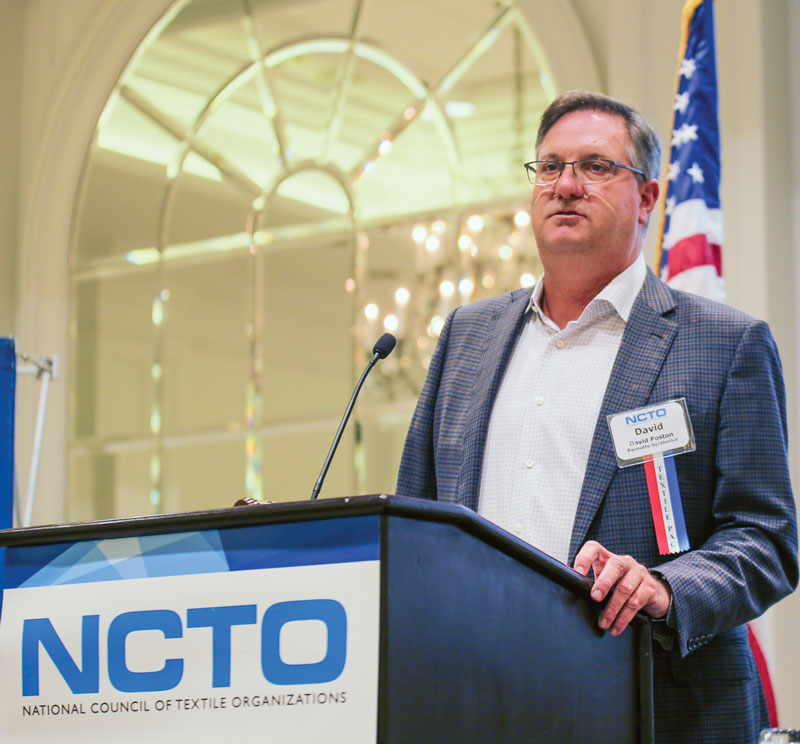
NCTO Chairman David Poston outlined key industry facts and economic data, noting the industry’s rebound in 2021, in his “State of the U.S. Textile Industry” address during NCTO’s 18th annual meeting.
By David Poston
Let me begin by saying what an honor and privilege it is to assume the role of Chairman of the National Council of Textile Organizations (NCTO) after David Roberts stepped down in November.
We all faced a litany of challenges in 2021 but I am proud to stand here today and say that our industry’s resilience and innovative spirit pulled us through and put us on a path of growth.
If 2020 was a year marked by an economic downturn and once-in-a-generation pandemic and health crisis, 2021 was defined by a rebound of remarkable proportions in our industry, nearly on par with the performance of pre-pandemic levels in 2019.
As we are all aware, the headwinds from global supply chain disruptions, rising material costs and labor shortages were strong, but the U.S. textile industry still managed to have a solid year in 2021. Overall, our industry’s performance and growth last year far outpaced the previous year of 2020, and we remain cautiously optimistic.
NCTO has been highly engaged in working with the Biden administration and our allies in Congress to achieve key policy priorities, and we succeeded on many fronts in 2021.
I would like to sincerely thank our staff, led by NCTO President and CEO Kim Glas, as well as our industry leadership for navigating these difficult times and partnering with the administration and key congressional offices on critical policy priorities that impact our daily operations.
As a result of our amazing advocacy efforts, NCTO can point to a long list of accomplishments, ranging from strengthening the Berry Amendment for military contracts to coordinating with agencies on nearshoring and onshoring opportunities and amplifying investment in the hemisphere, fending off proposals to weaken the yarn forward rules of origin in the Dominican Republic-Central America Free Trade Agreement (CAFTA-DR) and helping secure government contracts to continue producing lifesaving PPE during this ongoing healthcare crisis.
Last month, many of you participated in a number of Zoom calls with House and Senate leadership and with our congressional footprint. Your participation in these discussions matter and are critical to pushing our issues collectively.
Members of Congress demonstrated their interest in helping promote onshoring and nearshoring policies, as well as policies aimed at helping make the domestic and Western Hemisphere PPE supply chain more permanent.
Many thanks to the entire NCTO staff for this enormous effort and to all the NCTO members who participated in these critical discussions.
Before laying out NCTO’s policy wins in 2021, I want to quickly recap how the industry fared last year.
By The Numbers
We began to bounce back strongly from the COVID-19 pandemic in 2021.
Building on innovation, productivity, reciprocal free trade agreements, U.S. trade preference programs and a focus by this administration on domestic manufacturing oriented policies, the U.S. textile industry has maintained its rank as the second largest individual country exporter of fibers, yarns, fabrics and sewn products.
The metrics for our industry were strong last year, as business rebounded from the downturn in 2020.
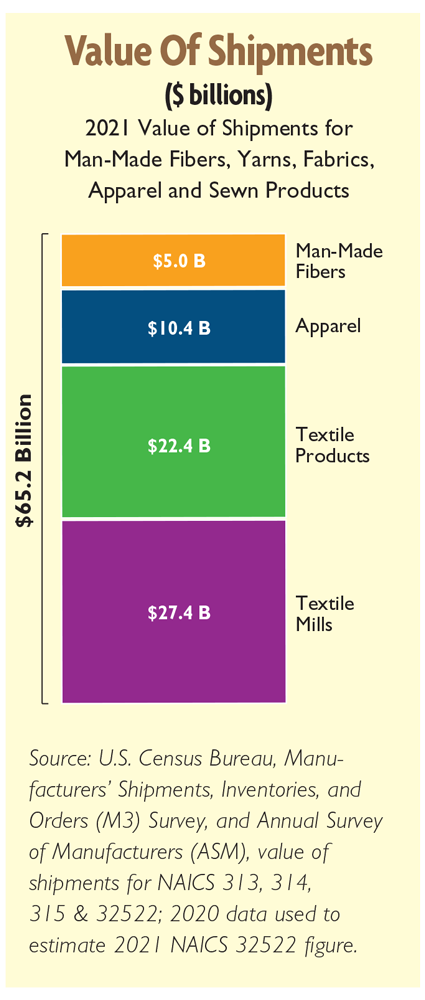
In 2021, the value of U.S. man-made fiber, textile and apparel shipments totaled an estimated $65.2 billion, compared with $60.8 billion in shipments in 2021.1
Here are two additional key industry facts:
U.S exports were also up compared to 2020. Exports of fibers, textiles and apparel were $28.4 billion in 2021, compared with $25.3 billion in 2020.2
Capital expenditures have remained strong. Investment in yarn, fabric, apparel and sewn product manufacturing in 2020 — the latest figure that we have — hit $1.85 billion. Since 2011, capital investment in U.S. yarn, fabric, apparel and sewn products manufacturing totaled $20.2 billion.
We saw a return to solid growth in our industry and the U.S. manufacturing base as a whole in 2021.
Economic activity in the U.S. manufacturing sector grew in December, marking the 19th consecutive month of overall economic growth, according to a closely watched survey.3
Of the 18 manufacturing industries, textiles and apparel was among the 15 sectors that reported growth in December.
Made in USA production is strengthening as you can see from these metrics, and policies in Washington aimed at expanding Berry and buy American rules are contributing to overall growth in American-made products for the military, PPE and federal agencies.
The Western Hemisphere supply chain remained a key driver behind the industry’s growth and remains a vital economic engine for the textile and apparel sectors.
The U.S. textile industry has made a significant commitment to the region, with an anticipated $1 billion in investments in the CAFTA-DR countries this year alone, as a result of the ongoing supply chain crisis that has forced retailers and brands to reconstitute their supply chains out of Asia and nearshore and onshore more production.
We have $35 billion in annual two-way trade with the Western Hemisphere, which supports 2 million direct jobs in the entire supply chain.
I’m happy to say the short-term and long-term trend in trade flows remains positive and strong, despite the headwinds from two years of sourcing disruptions due to the pandemic.
U.S. textile and apparel exports to the Western Hemisphere rose 6.5 percent to reach $16.1 billion in 2021, compared with 5 years ago in 2016. Similarly apparel and textile exports from the Western Hemisphere to the U.S. are on the rise. These exports from the entire region to the U.S. grew by 6.8 percent to hit $19.1 billion over the same time period.
The bottom line is the fundamentals for the U.S. textile industry are sound and a testament to our industry’s resilience in the face of a perfect storm of supply chain disruptions, rising costs and a once-in-a-generation healthcare crisis.
Based on the growth we are seeing in capital expenditures and strengthened partnerships with our Western Hemisphere partners, the industry is well-positioned to continue adapting to expected disruptions and inflationary pressures and capitalize on opportunities in the year ahead.
Policy Issues
NCTO was at the forefront of policy debates in Washington last year, advocating on every aspect of critical trade and economic issues impacting our industry’s robust performance and growth.
I would like to highlight a few accomplishments NCTO staff achieved during the year.
CAFTA-DR — NCTO worked tirelessly to thwart a well-funded effort by certain apparel importers to undermine the yarn forward rule of origin in the CAFTA-DR agreement to allow third-party textile inputs from Asia to displace U.S. and Central American-made textile inputs. NCTO engaged directly with the administration and Congress to underscore the importance of strong trade rules to the economic stability of Central America, and secured a public statement affirming the administration’s support of yarn forward.
NCTO will continue to monitor any renewed attempts this year by certain importers to dismantle the CAFTA-DR rules.
Personal Protective Equipment (PPE) — We all know how critical it is to garner support for long-term PPE government contracts and policies that will expand the Berry Amendment and establish a permanent domestic supply chain.
In 2021, NCTO led efforts and organized a broad coalition of industry and labor unions to push for the passage of the first Berry-like buy American rule for federal procurement of PPE. The Make PPE in America Act, co-signed by Senator Rob Portman and Senator Gary Peters, was signed into law on November 15 and took effect in mid-February.
There are numerous other issues requiring NCTO’s focus and resources, such as amplifying support for the Section 301 case against China’s intellectual property abuses, promoting tariffs on finished products, including apparel and PPE, the need to pass a new Miscellaneous Tariff Bill with immediate retroactivity, and continued engagement with the Hill on preserving a provision that would effectively dose the de minimis loophole for Chinese imports in underlying legislation aimed at improving U.S. competitiveness.
Time simply will not allow for me to go into detail on all these important issues. With that said, please know that without exception, NCTO is highly engaged on every policy matter that affects the U.S. textile industry with the intent of shaping policy determinations in a manner that directly benefits U.S. textile investment, production, and workforce.
Industry leadership and involvement is of paramount importance. From contributions to NCTO’s TextilePAC to arranging congressional visits to facilities where members of Congress can experience state-of-the art manufacturing first-hand, the industry can make a difference and help raise the level of awareness about its importance to the overall U.S. economy and workforce, and to the local and state economies it supports.
Conclusion
Strong underlying economic fundamentals and expansion in the U.S. and Western Hemisphere in 2021 created a sound business environment for our industry, and we remain optimistic that the business climate will continue this year.
We will closely monitor emerging issues this year, including spiking global fuel prices stemming from the Russian war of aggression on Ukraine and mounting inflationary pressures on consumer products, as well as the multitude of other issues highlighted.
However, if we stay the course and work with our customers and trading partners to mitigate any impacts from the ongoing pandemic and these new headwinds, we believe we can maintain a robust manufacturing environment in the United States.
That concludes my formal remarks. On a personal note, I am honored to serve as chairman of a highly effective organization and dedicated staff, which tirelessly advocates on policies impacting the day-to-day operations of our organizations and this economically vital industry.
I am optimistic about the future, knowing the strength of the industry, buoyed by its incredible trade and lobbying organization in Washington, will overcome emerging challenges and continue to carve out a niche as an important backbone to the U.S. economy and the Western Hemisphere.
References: 1 Bureau of Economic Analysis 2 U.S. Department of Commerce data for Export Group 0 – Textiles and Apparel 3 Institute for Supply Management’s manufacturing index
Editor’s Note: David Poston is founder and president of Palmetto Synthetics LLC, Kingstree, S.C. He was elected NCTO chairman for 2022-23, and Norman Chapman, Inman Mills, was elected vice chairman. The North American Industry Classification System (NAICS) is the standard used by Federal statistical agencies in classifying business establishments for the purpose of collecting, analyzing, and publishing statistical data related to the U.S. business economy. NAICS Subsector 313 covers Textile Mills, subsector 314 covers Textile Product Mills and subsector 315 covers apparel.
Fabrics featured in Culp’s Waterways LiveSmart® Spring fabric collection were designed to inspire a sense of renewal, restoration and healing.
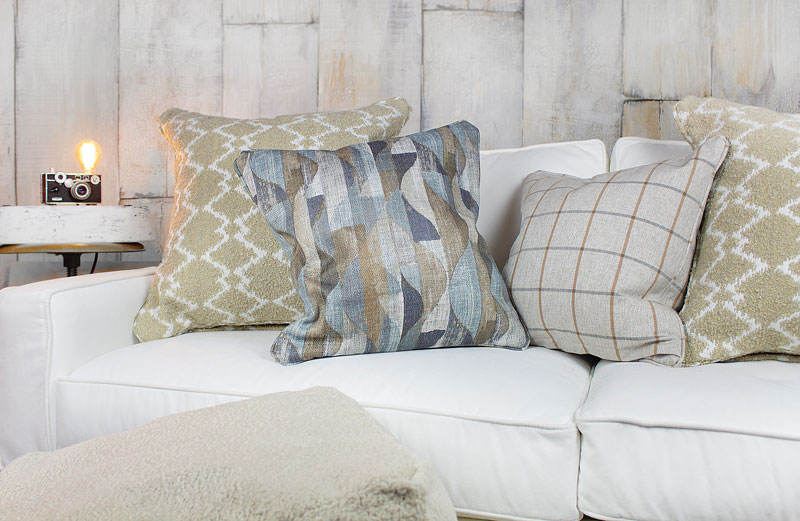
Staying up-to-date with predicted home furnishings trends allows Culp to make products that will be successful in the marketplace.
TW Special Report
Successful home furnishings textile companies understand that they are in a fashion-driven industry. It’s an industry where designers must know what’s trending in the world of fabric and décor. Additionally, they must also understand factors influencing the ways that homeowners utilize their living spaces. In business for 50 years, Culp Inc., High Point, N.C., is one such successful textile company.
Tammy Buckner, Culp Upholstery Fabrics senior vice-president of Marketing & Design for Residential Fabrics, and Donna Morrison, vice president and creative director, are closely involved with following trends to help inform the company’s product decisions.
“We always stay up-to-date on the latest trends that are influencing consumer buying decisions and those are the catalyst for our innovation and product development strategy and direction,” Buckner stated.
What follows is a look at spring 2022 trends.
Social Media Trend Predictions
With travel still limited, consumers are looking to social media for trend direction. Pinterest, Houzz, and even Tik Tok have become important sources for consumers looking to find new trends and styles.
With more than 400 million users, one of the biggest drivers of trends is Pinterest. Each season, Pinterest releases its design trend predictions. In 2020 and 2021, 8 out of 10 of Pinterest’s predictions came true. Pinterest isn’t just ahead of trends, it’s also where trends grow the fastest and stick the longest. Pinterest trends increased about 56 percent in their first six months, while trends spotted elsewhere only grew about 38 percent during that same time.
Some of the trends Pinterest is predicting for 2022 include:
Curved Furniture — organic, flowing architecture with 360° views. It’s not just the front of the piece of furniture that needs to be considered, but also the back and sides. Culp is working on fabric designs that feature one type of fabric on the inside and a second on the outside. This is in line with what consumers are buying right now.
Barkitecture — furniture for pets. This trend goes much further than pet beds. With people working from home during COVID, pets were in laps, in home office spaces, or beside their owners if they were working on the sofa. So, as consumers are redesigning their homes and buying new furniture, they are keeping this in mind. They want to make sure their furniture is pet friendly.
Biophilic Design — making the space inside the home feel like a retreat, an escape. This brings in everything from floral ceilings to live and artificial plants.
Lake it Till You Make It — nearby lakes are becoming more popular. People are choosing lake homes as second homes/vacation homes instead of beach homes because of the cost. In an effort to better manage their time, people are opting to travel closer to home for vacations and are choosing the lake instead of a long beach vacation. This is something Culp has kept in mind as it designs novelty and specialty fabrics. It’s not all coastal, it’s more vacation and escape oriented.
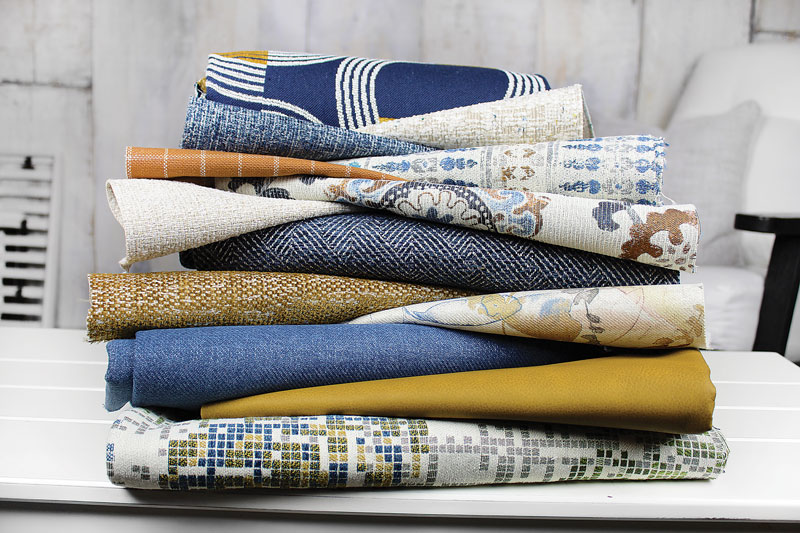
Culp’s Cobalt collection is part of its LiveSmart® Evolve fabric line. Cobalt features unique colors and textures in patterns that are both crisp and carefree.
Approximately 40 million people per month use Houzz to search for renovation ideas. Some 90 percent of Houzz users are homeowners, and 72 percent are between 25-54 years old. Houzz is predicting three main trends for 2022:
Multiple window banks — people want to be able to see the outdoors. They want to let in natural light, and this goes along with the biophilic design trend noted by Pinterest.
Cozy outdoor areas — during the pandemic, people looked to make the most of their outdoor living spaces such as decks, patios and balconies.
Practical storage solutions — people are tired of seeing clutter at home and are looking for ways to hide the clutter. There is a surge in consumer demand for furniture with hidden storage solutions.
Tik Tok is a major predictor of trends, and the platform is growing at a fast rate. Whether or not someone is a Tik Tok user, the platform still has influence. Many how-to videos such as how to refinish a piece of furniture or a cooking demonstration, and many posts seen on Instagram — perhaps a showroom or home walk-through — are made on Tik Tok and released on other social media platforms, so much so, that it does influence how consumers are buying today. Tik Tok is predicting that it will reach 755 million users in 2022, with 60-percent growth in 2020 and 40-percent growth in 2021.
Tik Tok predictions for home furnishings include:
Sustainability — Users are discussing ways to reduce, reuse and recycle in many ways. Everything from buying used furniture at thrift stores, to buying items that are made from sustainable materials, and finding ways to reduce their carbon footprint.
Botanical — Similar to biophilic design, this trend pairs houseplants with soft textures in the home, incorporates natural woods and brings the outside in.
Grand Millennial — This term is a combination of grandmother and millennial. The trend focuses on younger people furnishing their first home who may have a collection of furniture that was given to them that they mix with more modern pieces of their own. Anthropology is a company that offers lots of spin on this style of decorating.
Cottagecore — Cottage style has not been seen much since the late 1990s, but the trend is reviving. Floral wallpaper, vintage furniture and natural wood are all becoming popular again.
Electric Nostalgia — A fun, upbeat trend where designers are using iconic textures and patterns from the 70s, 80s, and 90s.
A Trend Towards Casual
Home furnishings trends right now are going very casual. Instead of a lot of pattern, consumers are seeking more textures and mix-and-match in soft, relaxed, comfortable fabrics. There also is a desire that fabrics accent the natural elements brought into the home.
Some of the most important trends Culp is currently focused on include:
Curve Appeal — This trend is a result of growing interest from customers. It brings back some of the nostalgia of the past because these types of frames historically were seen in the 1980s and 90s.
Cozy — Now, more than ever, when choosing a fabric for Culp’s line, it has to be soft and inviting. The hand has to be incredible. This trend is about naturals and layers of white-on-white, and bleached and natural woods for the pared-down home. It creates a modern and comfortable look that is growing. Much of Culp’s current line was created knowing that this is something people are looking for right now.
Technology — There is a big technology trend seen in motion furniture, which includes frames with integrated workstations, Wi-Fi, surround sound speakers, remote controls, wireless charging units and lights, for example. All of this is combined with a movement toward a sleeker, more modern look in motion furniture. It’s becoming more than just the over-stuffed recliners seen in the past. Hidden motion, where the frames don’t look like motion frames, also is increasing in popularity. There are hidden footrests, hidden headrests, lumbar support and massage features. All of this combines so consumers can relax and watch Netflix as long as they want to.
Leather Alternatives — Culp produces many faux and vegan leathers. Consumers want material that will hold up to modern-day life with pets and activity. Culp’s faux leathers are an ethical and sustainable option that performs better than leather. Faux leather also is much less expensive than real leather, making it a more affordable option for more consumers.
Pet Friendly Fabrics — Consumers are looking for upholstery fabric that can withstand pets, and also looks and feels good.
Performance Market Demand — Pre-COVID there was demand for performance fabrics, and the market was beginning to move toward that. But, COVID has exaggerated this whole movement. Culp has seen a lot of growth in this segment. Some consumers are remodeling, and some are buying furniture for the first time. There is demand for performance fabrics that are available at an affordable price. Previously, performance fabric was something obtained through a designer, or there was a $600 or $700 upcharge to obtain such fabrics. That’s not really the case anymore, and consumers expect fabrics to work for their families.
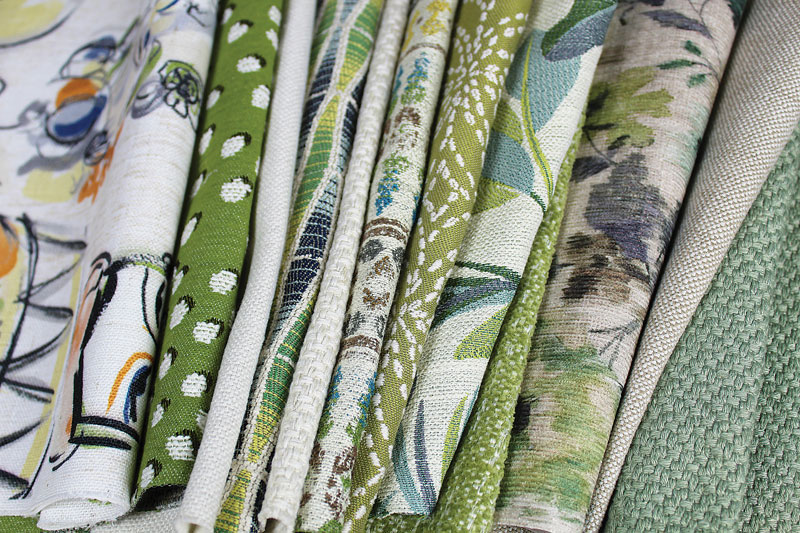
The calm embrace of healing green tones in Culp’s LiveSmart® Juniper collection creates rich layers of texture that aim to restore and comfort.
Fabric That Performs
The demand for performance fabrics is something that is driving a lot of innovations at Culp. The performance trend has given a huge boost to its LiveSmart® brand, which has been the company’s premium brand for about five years now. Since its launch, the company has expanded different areas where it sees demand for performance fabrics. LiveSmart is cleanable, stain-resistant, water-repellent, and now also is fluorine-free. LiveSmart technology combines a performance fiber with a performance finish, so it gives the fabrics inherent durability and longevity. It’s great for families with pets and children — people who use their furniture heavily every day.
The LiveSmart product line includes:
LiveSmart Washables — Keeping things clean became top-of-mind during the pandemic as most people stayed home. This is where the slipcover trend started taking off. Culp’s LiveSmart Washables embraced this trend and many retailers are now adding slipcovers to their product lineup.
LiveSmart Outdoor® — Culp’s LiveSmart Outdoor performance fabrics have become even more popular as outdoor living spaces become more important. The fabric can also be used indoors in areas such as dining rooms and children’s rooms.
LiveSmart Evolve® — This is Culp’s LiveSmart line with an added sustainability component. Fabrics are made using recycled water bottles. Sustainability is something Culp continues to focus on as a company, and the line continues to grow. The premise is to capture the water bottles before they enter landfills, before they enter waterways, and before they enter oceans.
Culp has offered LiveSmart Evolve fabric for more than three years now. Initially, there was some resistance. Some of retailers said it wasn’t for them, that their customers didn’t want to pay more for a “sustainable fabric” option. This attitude is something the company has seen a huge shift in lately. There is a bit of a disconnect going on between consumers and retailers. In the past, consumers liked the idea of sustainable fabrics, but they didn’t want to pay more. Attitudes have now changed. Consumers are asking for sustainable options and are definitely willing to pay more.
The fact that 75 percent of people value sustainability over brand name is another big change. A lot of small companies, especially e-commerce companies focused on sustainability, are making a huge impact on customers, and customers want to spend their money with those retailers. Today, Culp sees consumers pushing retailers to be more sustainable.
One of the important factors Culp considered when creating its LiveSmart Evolve brand of fabric was traceability. Greenwashing is common — where companies say they are sustainable, but upon examination, they really aren’t. Culp wanted to be sure it could trace the sustainability factor all the way through the supply chain. This traceability is something that Greensboro, N.C.-based Unifi Inc. offers with its Repreve® yarn. Each fiber is stamped with Unifi’s U-Trust branding, which gives consumers and retailers a certifiable way to trace the fabric and prove that it is made with sustainable materials. This fiber enables Culp to certify every fabric it introduces.
Additionally, retailers now can include a certification number with their frames and anything they produce using these sustainable fabrics that the consumer can punch into the Unifi portal, and actually see the number of recycled bottles that went into their piece of furniture. This is a big step for the industry, and the consumer can really see the impact of their purchasing choice.
Culp’s LiveSmart® Terra collection features a blend of various colors and textures to lend a multidimensional tone.
Making A Difference
To date, Culp has incorporated more than 86 million recycled plastic bottles into its LiveSmart Evolve fabric, which is an exciting innovation for the company and a step it is really proud of. Culp feels like this is a space where it can really make a difference and the company continues to grow its line.
Some Culp customers use exclusively recycled materials. They use recycled filling, biodegradable bags and recycled steel for the frames, for example. There are many manufacturers who focus on sustainability from beginning to end, from the process to the product they are making. Culp offers its LiveSmart Evolve fabrics in multiple price points to open up the marketplace and make its products available to consumers in all segments of the market.
“It has been a period of time in our business where there have not been many new products introduced at retail,” said President and CEO Iv Culp. “You can see from our designers’ perspectives that there is a lot of opportunity for us with new products. Sustainability and performance will drive the day, but what our designers can do with texture, color and merchandise packages there is a lot of upside to us as we look into some new roll-outs into retail. People have been so busy and so backlogged, that they haven’t been focused on launching new items, but there is a nice trend of that heading forward that we’re certainly motivated by.”
Accelerating Circularity is engaged in research and trials with the goal of making textile-to-textile recycling possible to reduce textile waste.
TW Special Report
Accelerating Circularity is a non-profit organization formed to transition textile supply chains from linear to circular to reduce textile waste and its detrimental impacts on the environment. The mission is to design and implement commercial systems where textile waste is repurposed as raw material through reuse and recycling and therefore no longer sent to landfills and incineration. Accelerating Circularity believes that spent textiles are too good to waste.
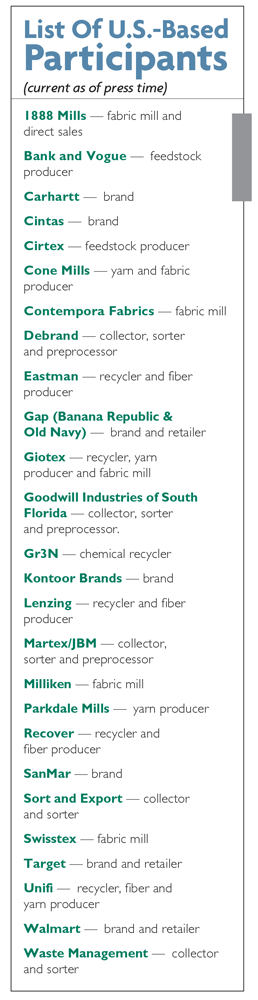
Accelerating Circularity Inc. was founded in 2019 by Karla Magruder with GAP Inc., Giotex, Gr3N, Lenzing, Target, Unifi Inc., and VF Corp. as founding members; and with funding from Gap, Target, VF Corp. and a grant from the Walmart Foundation. The Accelerating Circularity community believes it will take the cooperation of the entire industry to make meaningful change. The initiative is unique in its focus on developing the entire system required for textile-to-textile recycling. Investment in circular systems will be one of the tools allowing companies to meet their commitments on recycled inputs and greenhouse gas (GHG) reductions. In addition to founding partners, and trial team participants, Accelerating Circularity also convenes the Collaborating Organization’s Group which includes:
American Apparel & Footwear Association;
Fashion For Good;
United States Fashion Industry Association;
Apparel Impact Institute;
Fashion Takes Action;
Secondary Materials & Recycled Textiles;
Textile Exchange;
Outdoor Industry Association;
Retail Leaders Association; and
Circle Economy.
Accelerating Circularity’s vision is a world where textiles are in continuous use, the adoption of virgin materials is based on strategic limits and the industry has lowered environmental impacts.
Solving A Problem
Today, the textile industry generates enormous waste — the United States’ municipal solid waste stream alone contains 16.9 million tons of textiles annually.1 Clothing under-utilization and lack of recycling are responsible for annual global economic losses of $500 billion.2 Less than 1 percent of used clothing is recycled into new materials.3
To mitigate these issues, the textile industry must become circular. The need to eliminate waste and reduce the need for virgin raw materials is essential to reduce planetary impacts in the areas of energy, chemicals and water. Textile waste must become the industry’s new raw material.
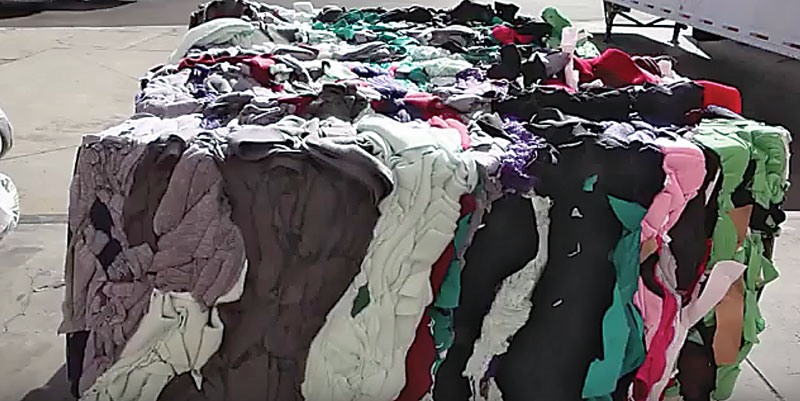
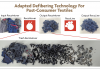
Bales of post-consumer textile waste
Focus And Process
Accelerating Circularity’s initial focus has been on developing trials in the United States as well as the manufacturing belt in Mexico and Central America targeting and engaging textile networks used by U.S. brands and retailers. There is a separate Accelerating Circularity project for Europe.
The organization’s process has been to:
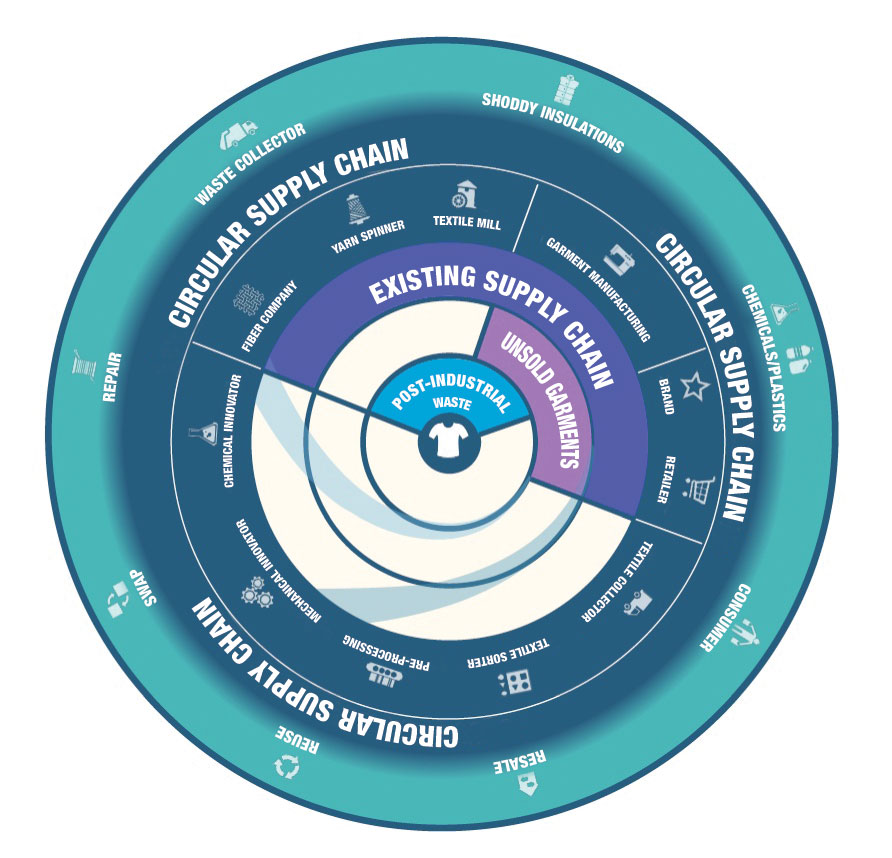
RESEARCH existing systems for textile feedstock generation, collection, sorting, preprocessing, recycling, apparel & product development, and brands and retailer targeted circular products;
MAP existing systems and identify gaps;
MODEL new circular supply chain systems for textile-to-textile supply networks;
LINK the newly identified supply chain systems;
PILOT textile-to-textile supply networks at scale levels of approximately 10,000 units;
REPORT on all findings from research through piloting; and
DEVELOP TOOLS to facilitate future trials and expedite circular systems.
Research has revealed significant gaps and opportunities in the sorting and preprocessing of post-consumer textile waste in preparation for recycling. Post-industrial materials are typically sorted at the generating facilities.
Currently, a large part of post-consumer textiles in the United States is collected by the three largest thrift operators — Goodwill, Salvation Army and Savers/Value Village — along with collection bin operators.
Other collection channels include clothing drives, brand/retailer takeback programs, and online thrift operators using mail-in collections such as Thredup. Clothing not collected typically winds up in landfills through the municipal solid waste (MSW) stream. Because MSW collectors already handle so much of this material, they — along with the municipalities and local governments they serve — must play a future role in diverting it from incineration and landfill into our new textile recycling pathways.
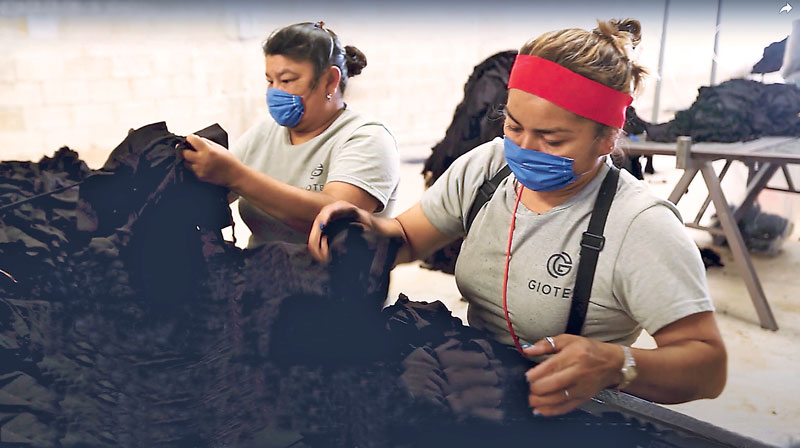
The next step, sorting, has challenges that demonstrate a serious gap. Today, spent textiles are manually sorted into fractions tailored for reuse markets. Non-reusable items are sorted into grades for shoddy, wipers and mechanical recycling. Reduced sorting costs and increased accuracy of fiber detection are prerequisites to scaled circular supply chains for textile-to-textile recycling. This requires commercialized, automated sorting solutions as well as some workforce development opportunities.
The fiber content and volume of collected material vary by season and location. Since individual recycler processes are specific when it comes to fiber and volumes there is a need for aggregation to meet each recycler’s unique requirements. Because the capability for this step currently exists in some form by various actors already collecting and sorting spent post-consumer textiles, aggregation could scale quickly once there is sufficient demand.
Preprocessing of spent consumer textiles into recycling feedstocks includes hard part removal, print removal, sanitizing/laundering and right sizing. Today, little preprocessing is done for textile-to-textile recycling. It is a key gap and opportunity for development in order to scale spent textile recycling.
Studying The Issue
To focus on the social aspects of the circular economy, Accelerating Circularity commissioned research and prepared a white paper to define where more workers will be needed to collect, sort and process recyclables.
The Accelerating Circularity study indicates that the textile-to-textile recycling workstream may offer some longer terms strategic advantages that the reuse/resale marketing does not. For example, potential support for onshoring and growth of the existing workforce.4
Sorting is a critical function although today it is generally considered an entry-level, unskilled job with minimum compensation. At the same time, it is physically demanding. The reuse/resale market relies on intense sorting to generate income through the grading of reusable items. While some technologies are in development and can automate specific parts of the sorting process, they are not fully functioning. Many of those interviewed for the workforce study believe sorting will remain a combination of automated and manual labor.
Post-consumer textile collection has a workforce and an infrastructure development opportunity — to make the consumer donation of unwanted clothing more convenient and to maximize the diversion from landfills. Policy and legislation are critical to empowering job creation through the establishment of a circular economy. A 2020 study by the European Apparel and Textile Confederation (EURATEX) estimates that about 20 jobs can be created for every 1,000 metric tons of textiles collected, sorted and recycled in the European Union.5
Next Phase Of Trial Development
After extensive work mapping, modeling and linking potential circular value chains, Accelerating Circularity embarked on the next phase of trial development in the fourth quarter of 2021. The objective is to utilize post-consumer and post-industrial feedstocks for circular textile-to-textile processes available today at scale and in pre-commercial stages with output to fiber, yarn, fabric, and ultimately into products under the categories of fleece, towels, workwear, tees and denim. Targeted outcomes include the demonstration of the feasibility of circular textile-to-textile systems, collection of data on quality/aesthetic metrics and economic/environmental impact versus the production of virgin materials, and tool development to expedite the move to circular systems.
The scope and scale of the U.S.-based project trials include 12 unique recycled products in multiple yarn combinations and fabrics with the aim of manufacturing into a minimum of 10,000 product units per trial or through a combination of brand partners. Newly collected and presorted textiles, namely, post-consumer and post-industrial cotton and polyester feedstocks, have gone to recyclers and will be chemically and mechanically transformed into newly recycled fibers. These new recycled fibers will then be spun or extruded into cotton, polyester, poly/cotton, and Tencel™ Refibra™ blended yarns. Throughout, data will be collected on quality, aesthetics, and performance and detailed in future Accelerating Circularity reporting.
Moving Towards Circularity
These trials are at the forefront of the industry’s move to circularity. It is the first time for a group to develop circular products at scale. Having the entire value chain from collectors, sorters, pre-processors, recyclers through to brands and retailers is critical to success. Everyone is pulling together with the goal of making textile-to-textile recycling possible.
“We are constantly learning as we move ahead with each stage of these trials,” said founder and CEO Magruder. “Stay tuned for future Accelerating Circularity reporting as we intend to share the collected information and data from these scaled trials. The trial participants are essential to making this a successful endeavor. “
References: 1 U.S. Environmental Protection Agency. “Advancing Sustainable Materials Management: 2017 Fact Sheet.” EPA website, 2017, epa.gov/sites/production/files/2019-11/ documents/2017_facts_and_figures_fact_sheet_final.pdf. Accessed March 10, 2020. 2 Ellen MacArthur Foundation, 2017, A New Textiles Economy: Redesigning Fashion’s Future, ellenmacarthurfoundation.org/assets/downloads/publications/ A-New-Textiles-Economy_Full-Report_Updated_1-12-17.pdf. Accessed 2020. 3 Ibid. 4 Organization for Economic Cooperation and Development (OECD), Labor market consequences of a transition to a circular economy (2020) 5 EURATEX, ReHubs: A joint initiative for industrial upcycling of textile waste & circular materials (2020)
Intradeco Holdings announced more than $100 million of investment in Central America, part of which will be used to expand the company’s solar energy power.
The western hemisphere textile industry continues to hear the promise of reshoring, but exploring the practical, rational and non-monetary implications is complicated.
By Jim Borneman, Editor In Chief
Reshoring or near-shoring textile and apparel supply chains to the United States and Western Hemisphere really isn’t a new topic. For many years, Western Hemisphere groups have tried to make a case for sourcing close to where products will be sold. Even when exploring the total cost and speed-to-market issues, cost often worked against sourcing close to home and was maligned as protectionist as retailers and brands searched for the latest “cheap needle.”
Free Versus Fair Trade
In the past, promotion of Western Hemisphere-focused supply chains often devolved into trade law debates labeling Western Hemisphere promoters as protectionists — or fair-traders — and global sourcers as globalists — or free-traders — that wanted to let the market speak for itself.
For many years, these debates surfaced with every discussion of a new free-trade agreement (FTA), regional trade agreement — such as the Caribbean Basin Initiative (CBI), Caribbean Basin Trade Partnership Act (CBTPA), North American Free Trade Agreement (NAFTA), Dominican Republic-Central America Free Trade Agreement (CAFTA-DR) and United States–Mexico–Canada Agreement (USMCA) — and even the ascent of China into the World Trade Organization (WTO).
The apparently emotional argument that global sourcing would lead to supply chain vulnerabilities was only envisioned in the supply of goods to the U.S. Department of Defense (DoD).
The Berry Amendment was formed to insist that purchases to supply US military personnel would consist of 100-percent Made-in-America product, diminishing the DoD’s reliance on foreign supply chains.
Enter COVID-19: Vulnerabilities Exposed
When the COVID-19 pandemic took hold in 2020, it really didn’t take very long to to see how exposed Americans were because of the lack of domestic production and manufacturing of an array of goods.
Things most people rarely thought about were now essential items — N-95 masks and other personal protective equipment (PPE), swabs for tests, ventilators, and the list goes on.
As consumers moved through the pandemic, supply chain disruptions came into focus with shipping issues, component shortages and lockdowns crippling labor and even threatening Christmas.
Time For A New Discussion
With the supply chain challenges top of mind, maybe it is worth considering a look at the promise of re- or near-shoring. With a focus on exploring the practical and rational implications at play and acknowledging the world has truly changed, the economics of trade need to be reimagined. Energy prices, shipping expenses, time-on-the-water — or the cost of speed-to-market — investment in downstream supply and infrastructure all are under examination.
The Rise Of Non-Monetary Social Costs
If phrases like traceability, circularity, forced labor, slave cotton, green manufacturing, sustainability, carbon footprint, fair labor practices are entering a sourcing decision-making-process, then factoring them into the re- or near-shoring calculation is essential. The challenge of considering non-monetary factors in a costing model has always been an issue of the product’s total cost — even valuing the cost effect of sustainability in a pre-COVID sourcing world or time-on-the-water as a cost of speed-to-market.
Investments In Central America Are Happening
As previously reported by Textile World, significant investments are occurring in Central America in support of near-shoring.
Miami-based Intradeco Holdings announced investments of more than $100 million in three major projects in Central America to make the most of CAFTA-DR and nearshoring opportunities, advance full circularity, and expand solar power. Its first project is the Central American Spinning Works, a state-of-the-art ring spinning mill in Honduras that began operations earlier this year. The second project is the creation of a manufacturing plant in El Salvador that uses 100-percent recycled yarns — both cotton and man-made fibers. A third project will allow the company to expand its solar energy power to attain 30 megawatts by the third quarter of 2022.
Intradeco Holdings has invested in three major projects in Central America including a plant in El Salvador that uses recycled yarns for which the company selected recycling technology from France-based Laroche.
“[Our] announcement is consistent with our 40 years of innovation and service which comes with being an integral part of the textile, apparel, and retail industries,” said Intradeco Chairman Felix Siman. “With our comprehensive distribution channels and state-of-the-art supply chain, we can reach our customers in an efficient and cost-effective manner in the shortest time possible. Intradeco is a founding member in The HUGE (Honduras, USA, Guatemala, El Salvador) Business and Investment council. Through these investments, our company is helping to create more than 1,000 jobs in Central America, while contributing to the region´s environmental sustainability objectives.”
Also reported recently by TW: “Gastonia, N.C.-headquartered Parkdale Mills, one of the largest manufacturers of spun yarn and cotton consumer products in the world, will make a multi-million-dollar investment in a new yarn spinning facility in Honduras and make an additional substantial investment to support existing operations in Hillsville, Va. This investment will help customers shift 1 million pounds of yarn per week away from supply chains in Asia and China and enhance U.S. and CAFTA-DR co-production resilience and increase regional product offerings. Parkdale’s announced investment will create hundreds of jobs in Honduras and further support hundreds of employees in Parkdale’s Hillsville operations.”
“Parkdale’s investments will support good paying jobs in the United States and in the Central American region and significantly increase our extensive product offering and capacity, including the production of sustainable specialty yarns,” noted Parkdale’s Chairman and CEO Anderson Warlick.
Future Trade Differences Could Undermine Efforts
As previously stated, trade activity always seems to breed challenges and uncertainty to existing trade agreements. As consideration of nearshoring continues there is no doubt that the basic principles that underlie existing trade agreements will be reexamined and relitigated with all parties seeking an advantage. This can be destabilizing for those taking nearshoring and the investments necessary to perform at the highest levels and deliver a revitalized nearshoring supply chain seriously.
Look for the “yarn-forward” rule of the CAFTA-DR agreement to come under attack. Simply put, to ship a CAFTA-DR member country-made product into the United States duty free, it must be made from U.S.-made or indigenous yarn — yarn made in the CAFTA-DR member country of the product’s origin. This really disincentivizes importing Asian fabric — not made with U.S. or indigenous yarn — into CAFTA-DR countries to be made into garment for export to the United States because such products cannot enter duty free.
Herndon, Va.-based Werner International released a report in January 2022 titled, “The Economic and Societal Impact of the Yarn Forward Rule on CAFTA-DR Signatories.” The report is certainly worth the read if nearshoring or investment in the nearshoring supply chains is part of your business strategy.
Duty Free Matters
Access to the U.S. market “duty free” is the reward for most trade agreement compliance. But for most in the industry, it simply means a price advantage compared to competing imports. The Werner International report provides some interesting benchmarking data that illustrates the effect of duties on landed duty paid U.S. prices of several garments made in China compared versus the same garments made by CAFTA-DR members in Honduras.
Werner compared a men’s 100-percent cotton basic T-shirt, a men’s 100-percent polyester active T-shirt, men’s five pocket cotton jeans and women’s trousers with a fiber content of 96-polyester/4-percent lycra (See Table 1).
Table 1: Note: Landed Duty Paid includes duties, freight and insurance fees
According to the Werner evaluation, the “… table [located on page 17 of the report] shows the outcome in terms of the ex-factory price for each garment produced, the import duties paid into the U.S., and the final price, including duties paid, freight, and insurance costs.
“As the table … demonstrates, duty-free access to the U.S. market makes CAFTA-DR countries globally competitive for the U.S. market across the spectrum of apparel products. The duty-free access and close proximity to the U.S. market along with a strong, integrated coproduction chain are the inherent advantages of the US-CAFTA-DR trade relationship. The region is competitive on pricing because of this combination of factors.”
Werner goes on to state: “… China has a significant advantage in terms of raw material costs, particularly in synthetics. But the data also demonstrate that China’s pervasive price manipulation can be offset by the application of duty-free benefits for qualifying goods under the CAFTA-DR agreement.”
Keep in mind that China’s “price manipulation” is a longstanding point of contention between those identifying as free-traders versus fair-traders. But Werner also states that “[The] Central American polyester yarn industry has invested millions of dollars in the last two years and is projected to invest more in the next two to three years, which will improve the region’s competitiveness in regard to labor, energy, speed, and flexibility. These technology investments in polyester yarn production will yield significant cost improvements related to labor and energy and narrow the gap compared to China’s synthetic yarn costs.”
The duties imposed on the four product examples ranged from 24 to 39.5 percent and move each product from a more expensive Honduran ex-factory price, to a less expensive Honduran landed duty paid U.S. price, which illustrates the power of CAFTA-DR compliance.
Will The Promise Be Kept?
Only the future performance of the on- and near-shoring supply chain participants, or co-producers, in relationships with top brands and retailers will tell if the the promise of textile reshoring is real and a part of the future. Significant challenges lie in valuing the benefits provided by the region and the economics of global trade being reimagined. There will be challenges to the yarn forward rule, which could impact other existing regional trade agreements. There is a lot at stake — investments, jobs and supply chain vulnerabilities all will play a role in the outcome.