The Role Of Textiles In The Internet Of Things

Nextiles Inc. has developed a method of blending conductive fibers with sewing technology to translate circuitry into fabric. This has led to new opportunities in flexible and wearable sensors for motion and performance measurement and tracking.

Why innovation in sewing technology will advance the textiles industry into the Internet of Things

By George Sun

The Internet of Things, frequently referred to as IoT, is a term used to describe the rapidly increasing number of connected devices to the internet. If you have used a streaming device such as a Roku TV, a wearable such as a FitBit, or even an iPhone, you’ve participated in and contributed to the massive IoT industry as a consumer. This movement shows no signs of slowing down any time soon, largely thanks to advancements in technologies such as 5G and access to smaller and faster sensors like inertial measurement systems (IMUs). According to Statista, there were nearly 10 billion devices connected to the internet in 2020. In the next 10 years, that number is projected to grow nearly three-fold, to almost 30 billion devices. While IoT is clearly trending upward, this trend mostly is prevalent in the consumer electronics industry today; however, the textile and garment industry has yet to embrace the IoT revolution. A main reason is that textile and electronics are like water and oil, rarely combined. And if so, they come in as pods, pucks, or straps that are tethered to a piece of cloth. How-ever, inevitably, all devices, including textiles, will be connected to the internet, according to Brooklyn, N.Y.-based Nextiles Inc. Innovations in both materials science as well as sewing technology can help move the industry forward for all.

The Opportunity For Textiles In IoT

The materials that power IoT devices revolve around silicon. With that, peripheral materials such as heavy metals and plastics together make the devices used today from cars to Bluetooth-enabled home products. Manufacturers in semiconductive devices have been reaping the rewards from big data while the textile industry has largely been left out of the IoT movement.

However, the materials have lately seen a plateau in innovation, and as the chip shortage and supply chain issues persist, there needs to be a new player to support the IoT movement. The textile industry is prime to steal the spotlight from consumer electronics, and because up to 95 percent of the body touches fabric on any given day, it is the best means to introduce innovative solutions to wearables, health tech and everyday consumer electronics. In many ways, today’s wearable technology has it backwards by using hard chips to measure the flexible nature of the human body. Whereas in textiles, there is an opportunity to make clothing the protagonist and main data capture tool to gain better data insights that is more comfort-able and amenable to any way, shape, or form a person may go through such as during training or an injury. By turning textiles smart, consumers will have a more comfortable form factor, and manufacturers will be able to gain more insights on their customers by collecting more behavioral data from fabric-based sensors made possible through sewing technology.
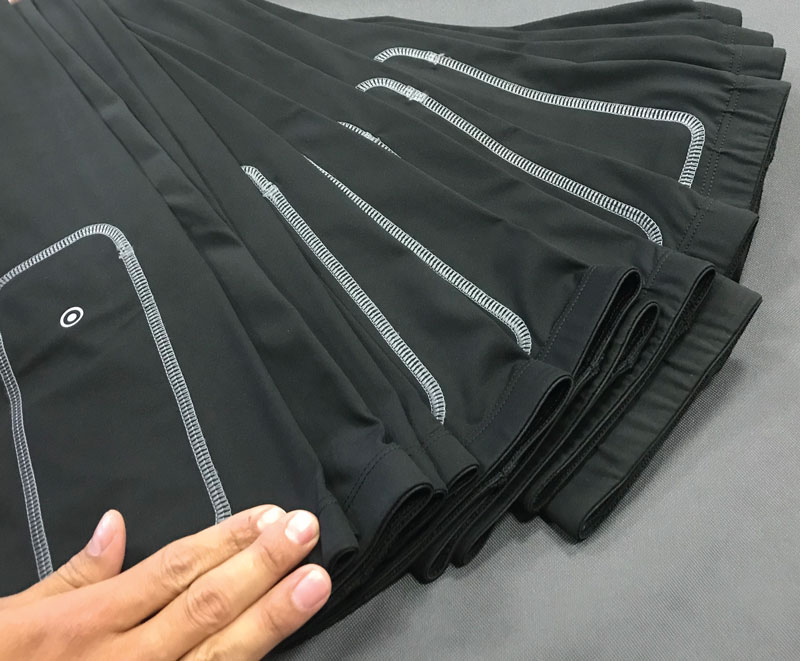
Nextiles’ compression garments, such as sleeves, can measure joint and limb movement for high-performance sports to monitor workload in sports such as baseball and tennis.

Fabric As The Data Capture Tool

The beauty of sewing technology is, with the right blend of materials and patterns, any sewable material can be turned smart. For the textiles industry to innovate quickly, leveraging its current infrastructure machinery, labor and processes in sewing is most efficient. Sewing is more than 1,000 years old and yet it is still ripe for innovation, despite its reputation for being off-shored to countries with cheaper labor. Sewing flexible electronics directly into fabrics is an all-inclusive approach as multiple industry sectors have access to a needle and thread. In addition, sewing fabric-based sensors does not require special machinery, only the ability to use a sewing machine. Lastly, fabric-based sensors and sewing technology can be applied to any industry — allowing any company to be a data capture company first.

The textile industry has the opportunity to reshape how consumers interact with their surroundings — whether it is a smart surface, a tech-enabled uniform, a connected car seat or even smart furniture, By leveraging sewing technology, any manufacturer has the technological tools to capture more data and provide more value back to their end users. It’s becoming apparent that every company is vying to become a data capture company because of the profits and information that can be gained directly from users. Industries that have been left out of the Silicon Revolution during the 60s, such as mills, and garment manufacturers, can finally participate in this revolution that will be dominated through soft goods such as textiles.

A More Connected Future

By merging two disparate technologies, the new — semiconductors and their materials — and the old — sewing and textiles — innovative soft-good materials can add value to the textiles ecosystem and help reshape the way we view connected devices. In combination with the chips and plastic formula, including smart textiles will tremendously advance the state of connected devices and open new opportunities for insightful feedback.

Every time a smart device is used, it gets smarter. Shouldn’t the same machine learning opportunities exist for items that can be sewn? The industry has the opportunity to be rekindled as the new vehicle for connected devices by merging flexible electronic materials with sewing technology. The result, an era that ushers in new form factors and technology that advance not only the industry as a whole, but our society overall.


Editor’s Note: George Sun is co-founder and CEO of Brooklyn, N.Y-based Nextiles Inc., a company that was spun out of the Massachusetts Institute of Technology and the National Science Foundation. The company partners with select athletes, teams and brands to help innovate and develop a spectrum of customizable, form-fitting and elegantly designed products focused on human movement, data collection and quantification.


July/August 2022

South America On A Path Towards Sustainable Denim Manufacturing

Switzerland-based Sedo Engineering Ltd. has a vision for the future of denim —one that is focused on sustainability, reliability and transparency

Nuevo Mundo selects Smart-Indigo™ technology from Sedo Engineering to reduce its environmental impact.

TW Special Report

Denim manufacturers in South America — the largest supplier of denim items to the Americas — are investing insustainable technologies. Peru-based company Nuevo Mundo is leading the way. The denim manufacturer will be the first South America-based manufacturer to abandon the chemical production of liquid indigo as it turns itself toward a sustainable technology.

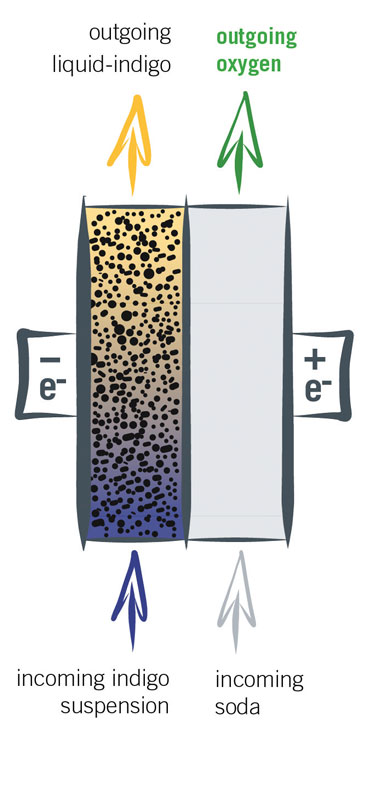
Smart-Indigo™ is a disruptive new technology developed by Switzerland-based Sedo Engineering Ltd. The technology has a growing number of denim manufacturers counting on this unique technology to produce liquid indigo where the only waste product is oxygen. Smart-Indigo makes a huge difference in the denim world by using electricity instead of chemicals to produce liquid indigo for denim dyeing. The use of electricity instead of chemicals results in a process free of hazardous chemicals and one that emits 90-percent less carbon dioxide, and consumes 70-percent less energy and 30 percent less water at different stages of the process. This technology protects the environment, creates safer and healthier workplaces, and offers economical production. Approximately 20 installations are now producing sustainable liquid-indigo in countries like Pakistan, Bangladesh, Vietnam, China and Italy in addition to this first installation in South America.

“Until today the denim market and sales have been a price battle as you find in every country at least three to four big players, producing for the local market and as well for export,” said Mr. Mayo, owner of Nuevo Mundo. “To enter the E.U. market and U.S. market so to improve exports we have to clean up the fabrics produced conferring a proper soul and history to be told to the brands and to the final users in order to differentiate and increase the real value of the twill we produce.

“Smart-Indigo is the technology that allows Nuevo Mundo to create a unique value starting from one of the two main components of the denim indigo twill — the indigo dye,” Mayo continued.

Sedo Engineering’s 3D carbon electrode technology

“Being cleaner, without using chemicals to dissolve it is the major step to decreasing environmental impact and the first step toward an ecological transaction that soon or later all the world will be forced to do, so being pioneers in adopting technologies confers more consciousness and more knowledge and experience having sooner return of investments and improving the sales,” Mayo concluded.

The technology uses a completely new approach to liquefy the indigo powder. The electrochemical process consumes considerably fewer resources than existing methods. It uses only indigo pigment, caustic soda, water and electricity. In a fully automated process, the clean liquid indigo is produced, metered and fed directly into the dye bath. The Smart-Indigo solution is the most sustainable and independent way to dye denim, according to its developer and manufacturer Sedo-Engineering which comes from a group of textile and dyeing experts. Thus, in addition to the sustainability of the final product, the requirements of the manufacturer are also taken into account with many extras such as automatic washing processes and easy operation.

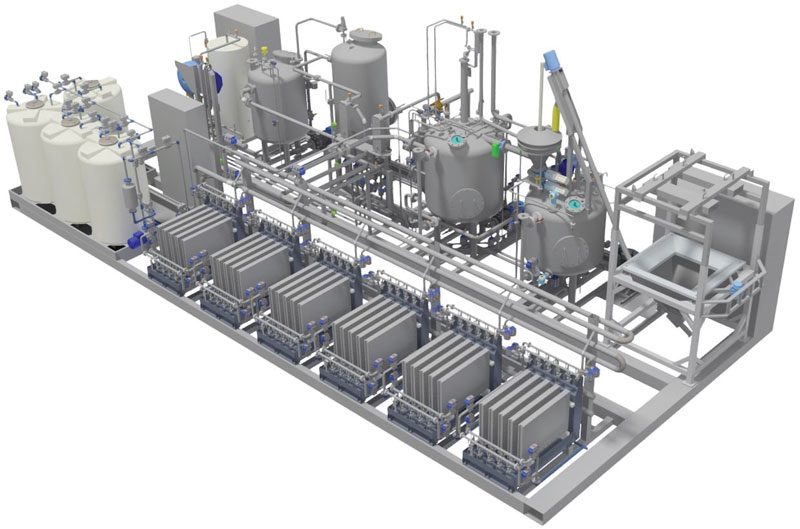
The Smart-Indigo™ machine

Producing denim items under such conditions gives every denim producer a key advantage in the continuously more sustainable textile world where consumers and thus, clothing brands, are driving the change towards sustainability. Additionally, these producers benefit from their own dye production on-site in a quantity according to their needs. This offers numerous advantages such as cost savings due to zero costs for chemicals or pre-reduced liquid-indigo, lower costs for water, energy and wastewater treatment, and of course independence from suppliers.

Today’s consumers don’t just shop anymore, they want to feel good about their choices. There is only one direction the textile world is heading, and that is towards sustainability. Brands, as well as manufacturers that change early in this direction, will be the winners of tomorrow. Thanks to pioneers like Nuevo Mundo who rely on new sustainable technologies, the change is being driven forward and the necessary interaction of planet, people, and profit is moving into the center.

July/August 2022

Innovation For Sustainable Dyeing

Colorifix engineers organisms that can product pigment the same way it is produced in nature to minimize the impact of industrial dyeing.

Companies are harnessing nature’s solutions to create technical innovations for sustainable textile coloration.

By Andrew Filarowski

Get involved in any textile coloration conversation in 2022 and circularity is among the first topics on the table. This is fantastic, given that not so long ago the environmental impact of the industry was something of an elephant in the room and not to be talked about.

However, discussion and action are two different things. While as a sector the dyeing industry is much more willing to address its resource-heavy ways, taking positive steps to reduce water and chemical use and carbon emissions can be harder than simply articulating the issue.

Since its release this past spring, the Society of Dyers and Colourists’ (SDC’s) latest white paper, “Destination low carbon: Global technology and innovation reducing the environmental footprint of textile coloration,” has sparked new conversations about what is possible.

The 20-page document covers examples of technology and innovation that can cut down on water and energy used in dyeing processes, as well as effluent created.

But it also examines the ways the textile industry can take influence from and harness the help that nature can provide in devising cleaner solutions for coloration. Two European companies are under the spotlight in this respect.

They are not the only companies blazing a trail in this most fascinating of areas, but they are certainly two to watch, as their processes continue to be developed and refined.

The first company is Switzerland-based Archroma; the second is England-based Colorifix. Both companies make use of natural hues but in very different ways. Archroma has created a limited palette of dyes derived from non-edible agricultural and herbal waste, capable of replacing petrol-based raw materials; while Colorifix uses microorganisms to grow color based on natural DNA codes —including from plants, animals and insects — that can be applied to textiles without added chemicals.

Both innovations open up a myriad of possibilities for forward-thinking dyehouses that could potentially build elements of more natural dyeing into their existing operations.
Let’s look more closely at what each of these companies is doing, in turn.

Archroma uses agricultural waste— such as almond nut shells, rosemary leaves and bitter oranges — to create its EarthColors® dye range. The products have been adopted by various brands including Primark, which used the dyes in the EarthColors by Archroma loungewear collection — part of its Primark Cares line.

Removing Toxic Impurities

Archroma, established in 2013, is a global provider of specialist chemicals, serving the coatings, adhesives and sealants markets, as well as branded and performance textiles.
The “Archroma way” was devised to remove as many toxic impurities as possible from the dyeing process while also making savings on energy and water use. This involves creating efficiencies across the board in wet processing, but also using smart chemistry to change recipes rather than equipment.

One key development is the company’s EarthColors®, a new range of dyes based on biosynthetic dyes manufactured near Barcelona, Spain. Agricultural waste is taken from a 500 kilometer radius and processed for use as a replacement petroleum raw material.
What in particular does that waste consist of? Examples include almond nut shells, rosemary leaves and bitter oranges. Using this material saves waste from landfills and creates a natural plant-based alternative — dyestuffs that are of the same quality and the same fastness as a man-made dye.

While the available palette is limited, the resultant products are wide ranging and versatile enough to have already been adopted by brands such as Patagonia, G-Star, Primark, Armed Angels and Esprit. EarthColors has already replaced more than 15 metric tons of petroleum-based raw materials with natural alternatives for dyeing.

Paul Cowell, Archroma’s global head of Competence Centers & Brand Studio, Brand & Performance Textile Specialties, said: “Getting brands onside can be a challenge. When merchandizers want the lowest prices, and designers desire the latest trends, it can often be that the sustainability team’s calls for less resource use goes unheard.

“However, we have seen a positive change in brands’ approaches to sustainability, and more and more brands are looking for impactful solutions.”

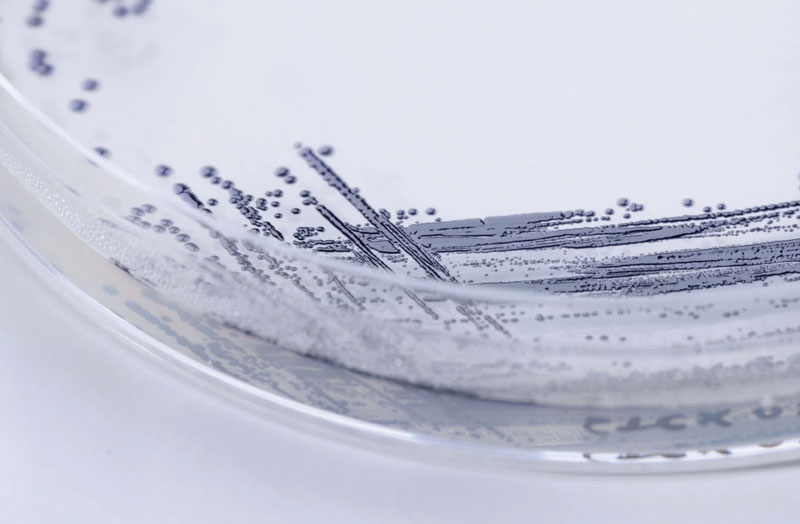
To create its engineered microorganisms, Colorifix looks for colors generated by organisms in nature and uses DNA sequencing to pinpoint the genes leading to the production of the pigment.

Pioneering Clean Dyeing

University of Cambridge researchers Jim Ajioka and Orr Yarkoni founded Colorifix Ltd. in 2016 after learning about the devastating impact of textile dyeing on the environment and also human health in Nepal and Bangladesh during the course of their fieldwork.

Realizing they could use their scientific expertise to engineer microorganisms to create clean dyes, they set about using DNA codes, or “color instructions,” to produce color just as it appears in nature.

Like Archroma, Colorifix takes a holistic look at every stage of dyeing processes, focusing on the engineering of microbes to produce naturally occurring pigments to be deposited and fixed onto textiles without any added chemicals.

Explaining the process, Colorifix CEO Yarkoni said: “What we do is based on the concept that every color in nature made by a living organism — plant, animal, insect, or microbe — is coded for by DNA. By identifying these ‘color instructions,’ Colorifix can replicate that DNA code in a more useful context. “We can insert that code into a microorganism that can then pro duce the color, just as it is produced in nature.”

Yarkoni continued: “The engineered microorganisms are then grown in a fermenter with renewable feedstocks such as yeast, simple sugars, and plant by-products. The microorganisms divide exponentially, resulting in a colorful dye liquor that can be put directly into standard dye machines.”

Colorifix’s pilot dyehouse in Cambridge, which showcases the capabilities of the company’s products, has been busy with potential customers this year — chiefly the mills that implement the technology, but also the brands themselves, taking an overview of their supply chains.

Colorifix seeks to minimize the environmental impact of industrial dyeing by replacing chemistry with biology.

Colorifix sends as little as 50 milliliters of color-producing microorganism to its customers who use it to grow the dye liquor onsite using a fermentor. This distribution model is another opportunity to save carbon, when compared with large tankers filled with man-made dyes.

Coloration programs are much shorter and lower in temperature than those using conventional dyes and just one bacteria-removing wash is required, rather than several baths. There also is no fixing step, or hazardous effluent.

Changing The Sector For The Better

To sum up, presented are just two of the companies working to evolve the way the coloration sector operates using new technology and innovation to harness the natural solutions that our environment can provide.

When overhauling production techniques, a dyeing company’s first thoughts often turn to cost. How much is the outlay, and how long will it take to recoup this money?
The answer is often less than owners and managers would estimate, with resultant savings in water, energy, and chemicals, quickly beginning to offset initial costs.

While every dyehouse is different, the same principle is true of all available solutions to the collective carbon issue outlined in SDC’s white paper, including advancements in control and automaton, or investment in a key piece of new machinery that will harmonize with the existing plant.

The Importance Of Reducing Our Industry’s Carbon Footprint

It feels unnecessary to outline reasons to go greener as this is simply a case of doing the right thing by the planet we inhabit. But also, commitment to environmental standards could be the key to business survival, sooner than one may imagine.

In its “Global Risks Report 2022,” The World Economic Forum puts extreme weather, climate change action failure and biodiversity loss top of its list of major threats for industry in the months and years ahead. Number seven on the list is human environmental damage.

Action on climate change is not something that can be put off. And that means everyone, not just the largest public companies. All businesses should contribute, down to the small and medium-sized enterprises.

This is not simply about minimizing impact on the planet — which should be the first priority of course— but also safeguarding the company’s own future and the jobs of the personnel employed.

Banks and investors are now favoring businesses with strong circularity agendas rather than operations they may view as dirty or unsustainable. Those who cannot demonstrate progress towards becoming cleaner and more efficient will struggle to borrow money to expand.

On top of this, companies bidding for major contracts — particularly with the public sector or powerful clothing brands — are being asked, increasingly, to set out their net zero ambitions in considerable detail. This situation, too, will only intensify.

So, the impetus for every player in the dyeing industry to reduce their environmental footprint is clear and the SDC is doing all it can — via its global networks, and educational opportunities — to help make this happen.


Editor’s note: Andrew Filarowski is technical director of the Society of Dyers and Colourists, Bradford, Eng-land, SDC’s white paper, “Destination low carbon: Global technology and innovation reducing the environmental footprint of textile coloration,” may be downloaded from the association’s website located at sdc.org.uk.


July/August 2022

Restoring Original Performance And Quality

Figure 1: Variation in load before the guiding arm refurbishment (top) versus uniform load after the refurbishment.

Rieter’s guiding arm guiding arm refurbishment kit offers uniform load for reduced yarn breakage and undrafted ends.

TW Special Report

The guiding arm in the drafting system plays a major role in ensuring production and quality in the spinning mill. The guiding arm refurbishment kit helps maintain original quality and performance by reducing load variation, thereby lowering yarn breakages and undrafted ends.

The P3-1 guiding arm is a proven drafting system which was introduced more than 25 years ago by Switzerland-based Rieter and is still being produced in accordance with the original specification. This is strong proof of its solid performance that has been validated over a long period of time. Depending on the operating conditions, some internal parts of the guiding arm are subject to wear-and-tear and therefore need to be replaced with new parts.

In addition to an original P3-1 guiding arm replacement, Rieter also offers a refurbishment kit which helps restore the original performance. The Rieter service engineers recently successfully implemented the refurbishment kit at the Orta Anadolu spinning mill in Turkey.

After the installation was completed, spinning mill Manager Orhan Herdem said to the Rieter service engineers: “As a result of the guiding arm refurbishment, there is an improvement in both quality and efficiency. With the support of the technical service from Rieter, the machine operation is now more economical.”

Rieter recommends refurbishing the guiding arm after eight to 10 years to ensure uniform and consistent load across the machine. Replacing worn out and aged parts can help restore the original performance of the drafting system. A new guiding arm enables a more effective load distribution, consistent drafting and output yarn quality. The improvements in terms of load uniformity and performance can be witnessed before and after the repair service conducted by Rieter service engineers (See Figure 1).

India-based Sreedhara Textiles was experiencing guiding arm load variation, quality and productivity issues in its Rieter ring spinning machines. These were not the only concerns Rieter’s service engineers had to contend with. They also were asked to find the most economical solution.

After the guiding arm refurbishment at the company’s ring spinning machines was completed, the factory manager, S.J. Aananthakumar, expressed his satisfaction to the Rieter service engineers: “The individual parts for the guiding arm refurbishment of our ring spinning machines were delivered with perfect packing and on time. The costs of this repair service offering are characterized by high price performance ratio, and ultimately, we are very satisfied by the consistent quality and productivity levels which were achieved. We are experiencing fewer breakages per 100 spindles per hours, imperfections and Autoconer clearer cuts per 100 kilometers.”

July/August 2022

Recycling Renegades

Renegade Plastics is attempting to reduce the amount of plastic waste sent to landfills with its polypropylene-based industrial fabrics.

By Rachael S. Davis, Executive Editor

Golden, Colo.-based Renegade Plastics Corp. was started with the mission to “reduce plastic waste one practical step at a time.” Eventually, the company would love to offer a biobased industrial fabric once the technology is durable enough to be used in demanding industrial and agricultural applications. But in the meantime, Renegade has focused on an environmentally friendly alternative to polyvinyl chloride (PVC)-coated or laminated fabrics. The focus is to reduce the use of toxic and non-recyclable materials as a first step.

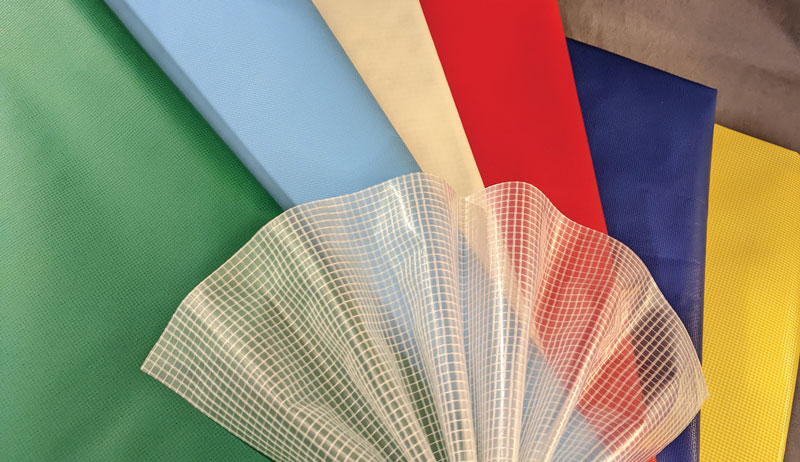
Renegade’s industrial fabrics are a proprietary polypropylene (PP)-based formula. The core product line features an opaque fabric with a woven scrim as the base, and a translucent fabric with an open knit scrim base. Because the fabric is not a mixed mate-rial like PVC-coated scrim, it is fully recyclable at the end of its useful life. According to the company, the fabrics are free of lead, dioxin and phthalates; and have an 80-per-cent lower carbon footprint compared to PVC-coated and laminated fabrics. The fabrics also are just as strong, but between 30- and 40-percent lighter than equivalent PVC-coated and laminated fabrics.

The opaque fabrics may be used in a myriad of industrial applications. “We are focusing on our tent and ski resort industry products to start,” said Curran Hughes, president. “But we are currently engaging customers across industries like upholstery, automotive, construction, fabric structures, fumigation, outdoor sports and tarps, among other industries.” Two early adopters of the opaque products include Idaho Sewing for Sports, Grangeville, Idaho, and American Tent, Green Bay, Wis.

The initial collection offers a limited selection of colors and weights, but the company plans to gradually expand its portfolio and work with customers on customized options.

“Depending on fabric weight, we are starting with white, black, blue, gray and red colors,” Curran said. “Many customers have requested different colors on each side of the fabric, which also is an option!”

While the translucent fabrics may be used in any application, Curran notes considerable interest in those products from the agricultural industry as a replacement for polyethylene (PE) films. Renegade’s translucent products features high ultraviolet, thermal and chemical resistance and may last two to 10 times longer than PE films.

“Most of our fabric’s advantages compared to other polymer coated fabrics stem from its non-toxic PP formulation where both the scrim and the coating are made from the same base polymer,” Hughes said. “The formulation is unique because no harmful plasticizers are used. This means no fumes from welding, and the product can withstand cleaning using harsh cleansers such as bleach.”

The company’s long-term vision includes a recycling program. “Until  we have sufficient scale to build our own program, we commit to customers that we help them find a recycler for their scrap and/or waste fabrics,” Curran said.

The second step for Renegade is to add recycled content back into the process and close the loop on its supply chain. “But our first priority is to get these novel fabrics into the market and build the foundation for that long-term goal,” Curran said.


For more information about Renegade Plastics’ industrial fabrics, contact sales@renegadeplastics.com; or visit renegadeplastics.com


July/August 2022

July/August 2022

The Raleigh, N.C.-based Association of the Non-woven Fabrics Industry (INDA) COO Tony Fragnito was recently named president of the association by its board of directors. Dave Rousse was named president emeritus and will continue to assist Fragnito as needed until his retirement in January 2023.

Susan DeCourcey

Susan DeCourcey was named executive director for the Secondary Materials and Recycled Textiles (SMART) Association, Bel Air, Md. She replaces Jackie King who has retired.

Deckers Brands, Goleta, Calif., named Anne Spangenberg president of Fashion Lifestyle, effective July 11, 2022. She reports directly to CEO and President Dave Powers.

Kim Poulsen was appointed CEO of Finland-based Spinnova Plc effec-tive August 1, 2022. The company’s Co-Founder and current CEO, Janne Poranen, will become chair of the board of directors; while current board Chair Harri Sundvik will become the deputy chair of the board.

Ana Hinojosa and Peter Cullinane have joined New Zealand-based Oritain Global in advisory roles.

San Francisco-based Levi Strauss & Co. announced Amisha Jain as the company’s new senior vice president and managing director of South Asia-Middle East and Africa
(SAMEA)

Ullhas Nimkar

England-based Society of Dyers and Colourists (SDC) has named Ullhas Nimkar president for a one year term. Based in Mumbai, India, Nimkar has been a member of SDC for 35 years.

Mark Pikaart has joined Schoeller Textil AG, Switzerland, as Western Regional Sales Manager, North America.

The National Council of Textile Organizations’ (NCTO’s) Fiber Council announced Abigail McBee as the recipient of the 2022 Paul T. O’Day Scholarship Award. She is the daughter of Gaffney, S.C., residents Emily and Douglas McBee. Her father is employed by Auriga Polymers/Indorama Ventures in Spartanburg, S.C.

Switzerland-based Crealet AG announced Andreas Wirz as CEO and Mario Kuster as head of research and development.

Alberto Paccanelli was re-elected president of Belgium-based EURATEX, the European Apparel and Textile Confederation, for two years.

Frank Stevens is the new COO at Sweden-based Polygiene Group.

Lillian Link

Southern Textile Association (STA) Secretary/Treasurer Link Lillian has retired after 27 years with the association. In other STA people news, at its recent Joint Annual Meeting of the STA and Fiber Buyers Groups, Russell Mims received the Steve Epps Lifetime Service Award, and Brad Burnett — STA president from 2010-11 and chairman 2011-12 — was presented with the David Clark Award for distinguished leadership and service. The Steve Epps Lifetime Service Award recognizes people who have been STA members for at least 20 years, are retiring or have retired, and who served the association in many capacities of leadership and service. The David Clark Award is given to STA members who have continued to provide leadership and service to the STA and the industry for a minimum of 10 years after their elected term has ended.

Germany-based Trützschler Group SE has expanded its board of directors with the addition of Dr. Ulrich Schwenken who will serve as CEO and Heinrich Krull who will serve as COO.

Jeff Smith

Jeff Smith has joined Ultrafabrics, Tarrytown, N.J., as head of Residential, North America.

Medical apparel manufacturer Careismatic Brands, Chatsworth, Calif., has named Girisha Chandraraj CEO and Sidharth Lakhani COO.

Lion Brothers Co., Owings Mills, Md., has hired apparel veteran Christopher Heyn as president and CEO.

Xcel Brands Inc., New York City, has appointed Ken Downing creative director of the Halston brand.

Herculite Products Inc., Emigsville, Pa., has hired Jake Ritchie as Midwest Regional manager for the Direct Sales team.

July/August 2022

Macy’s Appoints Emilie Arel To Board Of Directors

Emilie Arel

NEW YORK CITY — August 16, 2022 — Macy’s Inc. today announced the appointment of Emilie Arel, president and CEO of Casper Sleep, to its board of directors, effective August 15, 2022.

As president and CEO at Casper Sleep since 2021, Arel oversees all facets of the business, including the company’s commercial and brand strategy, as well as its wholesale strategy and developing retail partnerships. She brings over 20 years of experience, serving in various leadership roles at retail and consumer brands, such as Target, Gap, FULLBEAUTY Brands and Quidsi, an Amazon company with 10 brands.

“We are pleased to welcome Emilie to the Macy’s Inc. board of directors,” said Jeff Gennette, chairman and CEO of Macy’s Inc. “She brings two decades of impressive, digital-first and brick-and-mortar retail experience to our board, including leading the digital transformation at FULLBEAUTY Brands and implementing Casper’s omnichannel strategy to drive consistency for consumers. Emilie’s experience putting customers at the center of the shopping experience will benefit our board and the broader organization as we continue to provide Macy’s Inc. shoppers with a more personalized and immersive brand experience.”

“We are confident Emilie’s insights, retail merchandising expertise and proven ability to maximize the customer experience will be a valuable addition to our board as we engage both new and existing customers with our leading assortment of categories, products and brands via our omnichannel ecosystem,” said Paul Varga, Macy’s Inc. lead independent director. “We look forward to her contributions as we continue to deliver against our long-term Polaris growth strategy, while positioning Macy’s Inc. to capture additional consumer demand and market share.”

“I am honored to partner with a leading retailer like Macy’s Inc. and look forward to leveraging my omnichannel retail experience to build on the momentum the company has achieved in recent years,” said Arel.

With the addition of Arel, the Macy’s Inc. board will comprise 14 members. Arel will serve on the Nominating and Corporate Governance Committee.

About Emilie Arel

Emilie Arel, 44, is the resident and CEO at Casper Sleep, overseeing the company’s comprehensive business strategy, including commercial, brand, and operations. As a three-time CEO with over two decades of experience serving in various leadership roles, she has led complex e-commerce and omnichannel businesses, in addition to retail stores. Previously, Arel served as CEO of FULLBEAUTY Brands, a plus-size apparel company, where she led the company through a debt restructuring and put them on the path to a digital transformation. Prior to FULLBEAUTY, she served as the CEO of Quidsi, an Amazon company with 10 brands, including Diapers.com and Soap.com. Earlier in her career, Arel spent seven years with Gap Inc. where she held multiple merchandising and licensing positions and led a team of 12,000+ employees and 220+ stores. Before joining Gap, Emilie held various roles at Target Corp. for six years. Arel has earned MBAs from Columbia Business School and the University of California, Berkeley. She completed her undergraduate work at the University of St. Thomas in St. Paul, Minnesota.

Posted: August 16, 2022

Source: Macy’s Inc.

Hyosung TNC Commercializes World’s First Bio-Based Spandex

SEOUL — August 16, 2022 — Hyosung TNC has succeeded in extracting spandex from corn and commercializing the world’s first bio-based spandex.

Hyosung TNC announced on August 10, 2022, that it successfully developed bio-derived spandex, creora® bio-based, using a natural material extracted from corn instead of coal, and obtained a global eco-friendly certification.

Commercializing the world’s first bio-based spandex that reduces carbon emissions by 23 percent compared to conventional products

The creora bio-based spandex uses a corn-derived substance that obtained an eco-friendly certificate from the U.S. Department of Agriculture, replacing a part of coal-extracted raw materials.

The corn-derived substance has long been used for general fibers, wrapping papers, cosmetics, and liquid detergents, but not for high-functional textiles, such as spandex, as it is impossible to deliver unique elasticity and resilience due to technological limitations. Building on its technological prowess that leads the world’s spandex market, Hyosung TNC has made research and development efforts for more than a year, and successfully commercialized bio-based spandex for the first time in the world.

According to the Life Cycle Assessment, an assessment technique based on the international standards for environmental impact, when creora bio-based is applied to the products, it can reduce water use by 39 percent and carbon dioxide emissions by 23 percent, compared to conventional spandex products.

Obtaining an eco-friendly certification from SGS, the world’s leading international standard certification institute

In June 2022, the creora bio-based received the Eco Product Mark, a global eco-friendly certification, from the SGS (formerly Société Générale de Surveillance).

The Eco Product Mark is awarded to products that used eco-friendly raw materials, harmless to human body and produced in eco-friendly methods through ESG-oriented management.

As the European Union recently announced a full-scale adoption of the Carbon Border Adjustment Mechanism (CBAM) in 2025, global demand for eco-friendly biomaterials is on the rise.

Data Bridge, a global market survey institute, expects the global biological fiber market to grow at an annual average of 5.5 percent by 2029,

“We will drastically expand the eco-friendly product business,” said Hyosung Chairman Cho Hyun-joon, signaling the group’s intention to collaborate with global brands.

Hyosung TNC will initially start production of the bio-based spandex at its production bases in Korea including facilities in Gumi, and then increase its production through global production bases, such as those in Vietnam.

In addition, it aims to continuously increase the use of natural raw materials for its products through collaboration with global fashion brands.

“We will play a pivotal role as an industry leader by steadily developing the next-generation eco-friendly textiles including biodegradable fiber,” Hyun-joon said.

Posted: August 16, 2022

Source: Hyosung Corp.

Barco® Uniforms Debuts Fresh Approach To Healthcare Apparel With New Barco Unify™ Collection

LOS ANGELES — August 16, 2022 — Barco® Uniforms today unveiled its new collection, Barco Unify™. Made to inspire optimism, hope and unity, Barco Unify introduces a fresh approach to healthcare apparel, crystallizing a new chapter in the Barco brand’s 93-year history.

“At Barco, we know our healthcare workers give us their very best care each and every day,” said Barco Uniforms CEO Ron Wagenseil. “In turn, we believe they deserve the very best from us, too. Their unwavering support, commitment and strength is what fueled the inspiration behind our Barco Unify collection, and we couldn’t be more excited to share the new line with the healthcare community today.”

With innovative fabrics & athleisure-inspired styles that are perfect for the workplace and beyond, Barco Unify seamlessly fuses fashion and function to meet the lifestyle needs of today’s modern medical professionals. Barco’s premium, superbly soft, LUXE360 fabric also features wrinkle-release and moisture-wicking technologies with 4-way stretch for optimal comfort that lasts all day long.

Available in four core colors and one trend color for women, Barco Unify offers coordinating separates for the modern minimalist with six new styles for women and three for men. With universally flattering fits, the new Barco Unify collection not only elevates and honors the individuals who wear them, but also reaffirms the brand’s longstanding roots.

The Barco Unify collection has all the must-have features for healthcare workers to feel empowered and comfortable:

  • Style: the women’s collection includes three scrub tops to suit any mood or style – the sporty Henley, classic V-neck, and Sweetheart neckline. A fresh new take on the slim-leg and jogger looks, these scrub pants are modern classics in the making, and finish off the look with the sporty warm-up jacket.
    • The men’s collection includes a classic V-neck and jogger combination that marries form and function with Luxe360 fabric. The warm-up jacket, with its modern fit and clean angles, is the perfect piece to round out the look.
  • Color & Fit: available in four core colors for women and men including Black, New Royal, Indigo, Steel, and an exclusive women’s only fashion colorway, Dusty Red, each piece features athleisure-inspired silhouettes and styling, in the LUXE360 stretch-twill for a sportswear look & feel.
  • Sizing: with 4-way stretch and supple draping, all Barco Unify styles are available in inclusive sizes to fit all bodies and never loses shape over time.

Barco Unify is now available at retailers nationwide with inclusive sizing ranging from XXS – 5XL, retailing for $31-$47. To keep up with the latest from Barco Uniforms and to find a retailer near you, please visit www.barcounify.com

Posted: August 16, 2022

Source: Barco® Uniforms

RISE® – Research, Innovation & Science For Engineered Fabrics Conference – To Focus On Rethinking, Reusing And Recycling Nonwovens This September In Raleigh

CARY, N.C.— August 16, 2022 — More than 20 industry experts will present their views on how material science innovations can create a more sustainable future for the nonwovens industry at the Research, Innovation & Science for Engineered Fabrics (RISE®) Conference, September 27-28 at North Carolina State University.

Starting with responsible sourcing of nonwoven inputs to developing realistic end-of-life options and circularity opportunities, RISE will focus on rethinking, reusing and recycling nonwovens and engineered materials at the Talley Student Union in Raleigh.

Co-organized by INDA and The Nonwovens Institute at North Carolina State University, registration is open and the full program is available on the RISE® website https://www.riseconf.net/register.html

Participants will learn what’s coming next with sessions on the following six themes: Towards a More Circular Industry; Advancement in Sustainable Inputs; Development in Natural Fibers; Sustainable Inputs: Fibers and Biofibers; Waste Not, Want Not, Sustainable Inputs from Waste Products; and Economic Insights and Market Intelligence.

The 12th edition of RISE® will bring together thought leaders in product development, materials science, and new technologies to connect and convene for the industry’s premier nonwovens science and technology conference.

Expert speakers will address the latest trends and innovations around circularity — an important component of sustainability strategies that aims to return a product into the supply chain, instead of the landfill, after users are done consuming it.

RISE® session highlights include:

  • The Global Plastic Crisis: Who Will Be the Winners/Losers in The Marketplace?: Dr. Bryan Haynes, senior technical director, Global Nonwovens, Kimberly-Clark Corp.;
  • Sustainable Fibers – Developments and the Future: Dr. Jason Locklin, director, University of Georgia, New Materials Institute and Dr. David Grewell, Center director, Center for Bioplastics and Biocomposites;
  • Thinking Differently: In a Changing World What’s Next for NatureWorks and Polylactic Acid Polymers (PLA): Dr. Liz Johnson, vice president of Technology, NatureWorks LLC;
  • PLA and PLA Blends: Practical Aspects of Extrusion: Dr. Behnam Pourdeyhimi, William A. Klopman Distinguished professor and executive director, The Nonwovens Institute, North Carolina State University;
  • Hemp is Strong – Are You?: Olaf Isele, Strategic Product Development director, Trace Femcare Inc.;
  • Exploring Natural Fibers in Nonwovens: Paul Latten, director of Research and Development & New Business, Southeast Nonwovens Inc.;
  • Potential Nonwoven Applications of Tree-Free Fibers Made from Microbial Cellulose:
 Heidi Beatty, CEO, Crown Abbey LLC; and
  • Ultra Fine Fibers Made from Recycled Materials: Takashi Owada, general manager, Teijin Frontier (U.S.A.) Inc.

The event also will feature the presentation of the RISE® Innovation Award, a special opportunity to tour the Nonwovens Institute’s state-of-the-art facilities with advance registration required, and poster presentations by North Carolina State University graduate students. Participants also will have opportunities to network during coffee and session breaks and two buffet lunches.

For full session descriptions and speaker bios, visit the RISE® website. https://www.riseconf.net/

Posted: August 16, 2022

Source: INDA, the Association of the Nonwoven Fabrics Industry

Sponsors