MycoWorks Commercializes Reishi™, The World’s First Plastic-Free, Mycelium Leather Alternative, With Luxury Hatmaker Nick Fouquet 

EMERYVILLE, Calif. — July 18, 2022 — Today, biomaterials innovator MycoWorks announced the commercial launch of the first fashion items made with its flagship mycelium material, Reishi™. The Reishi Collection by luxury hatmaker Nick Fouquet includes the Reishi Boletus, Coprinus, and Morchella hats, now available in limited runs on NickFouquet.com.

“We are elated that consumers can now wear and enjoy designs made with Reishi,” said Sophia Wang, MycoWorks co-founder and chief of Culture. “MycoWorks partners with craftspeople and brands with whom we share artistic values, which is why we’ve partnered with famed hatmaker, Nick Fouquet. This Reishi collection exhibits the unique hand feel and versatility of our material.”

Unlocking new design possibilities for brands, MycoWorks’ Fine Mycelium technology engineers mycelium — the infinitely renewable root structure of mushrooms — as it grows to designers’ exact specifications for hand feel, texture, strength, and functionality. The result, Reishi, is a luxury, natural material that matches the performance of the highest quality animal leathers with lower environmental impact.

For the Reishi Collection, Nick Fouquet leveraged all-natural, 100-percent plastic-free Reishi as the base material for the Reishi Boletus and as decorative trims for the Coprinus and Morchella.

“Our clients want luxury made from materials that feel good and that they feel good about,” said Nick Fouquet. “MycoWorks’ Reishi is the only leather alternative we’ve seen that matches the beauty, quality, and functionality of traditional leather. Reishi feels organic and rich, and has a beautiful, worn patina that we showcase through the distinct styles of our Reishi Collection.”

The commercial availability of Reishi represents a major leap for fashion, which has long been seeking plastic-free, animal-free leather alternatives that meet the quality needs of high-end fashion with a lower environmental footprint.

This year, MycoWorks will continue commercializing Reishi with a range of carefully selected brands, spanning heritage brands and new, independent designers.

Posted: July 18, 2022

Source: MycoWorks

Kraig Biocraft Laboratories Enters Next Phase Of Business Plan, Signs Deal With Contract Manufacturer To Produce Metric Tons Of Recombinant Spider Silk

ANN ARBOR, Mich. — July 18, 2022 — Kraig Biocraft Laboratories Inc., the biotechnology company focused on the development and commercialization of spider silk, announces the signing of its first third-party production contract for large scale manufacturing of the company’s recombinant spider silk. The company expects to immediately begin operations with this contractor to produce hundreds of kilograms of spider silk per month and to achieve production levels reaching multiple metric tons of spider silk per month as early as the first quarter of 2023. The contractor is in possession of the company’s specialized eggs and anticipates a 90-day ramp-up for the first deliveries under the contract.

Pilot testing with this contractor during the first two quarters of 2022 demonstrated the capacity and expertise of this manufacturer to operate at a large scale and with excellent quality.

Under the contract terms, Kraig Labs will become a minority owner of the silk producer. Kraig Labs will have complete access to the manufacturer’s financial records and an onsite presence to ensure the proper handling and security of the company’s propriety spider silk technology.

“Our business model was designed to leverage the existing silk production infrastructure. The signing of this agreement rapidly expands our access into that production network and brings us to the next critical stage in our business plan,” said company COO Jon Rice. “Working with this contract manufacturer, we will soon be ready to deliver metric tons of eco-responsible and cost-effective spider silk to the consumer markets.”

In the coming days, the company plans to release the first in a series of behind-the-scenes videos looking into its operations in Vietnam and the commercialization of its spider silk materials.

Posted: July 18, 2022

Source: Kraig Biocraft Laboratories, Inc.

Findings Show That Respondents Feel Confident About The Outlook For The U.S. Fashion Industry In 2022, Despite Current Economic Conditions And Continuing Setbacks Due To COVID-19

WASHINGTON, D.C. — July 18, 2022 — The United States Fashion Industry Association (USFIA) has released the ninth annual Fashion Industry Benchmarking Study, a survey of executives from over 30 leading fashion brands, retailers, importers, and wholesalers, including some of the largest brands and retailers in the country.

Conducted in conjunction with Dr. Sheng Lu, Associate Professor in the University of Delaware Department of Fashion & Apparel Studies, the survey asked respondents about the business outlook, sourcing practices, utilization of Free Trade Agreements and preference programs, and views on trade policy.

This year’s study finds that most respondents (77 percent) feel at least somewhat optimistic about the next five years, despite the current short-term challenges. Nearly all respondents — 97 percent — plan to increase hiring over the next five years. As the industry continues to recover from the global pandemic shutdown, more than 90 percent of respondents expect their sourcing value or volume to grow in 2022.

Increasing sourcing and production costs remain a top concern for the U.S. fashion industry and, for the first time in the nine-year history of the Benchmarking Study, 100 percent of respondents expect their sourcing costs to increase in 2022. U.S. fashion companies continue to adopt a more diverse sourcing base, to handle supply chain disruptions and growing sourcing risks. Reducing “China exposure” is one crucial driver of U.S. fashion companies’ sourcing diversification strategy. One-third of respondents report sourcing less than 10 percent of their apparel products from China this year. In addition, a new record of 50 percent of respondents source MORE from Vietnam than China in 2022.

Asia remains the dominant supplier of apparel. This key finding has been consistent over the last nine years. Almost all the top ten most-utilized apparel sourcing destinations in 2021 are Asia-based, led by China (91 percent), Vietnam (88 percent), Bangladesh (84 percent), and India (72 percent). However, there is considerable excitement about increasing apparel sourcing from the Dominican Republic-Central America Free Trade Agreement (CAFTA-DR) region. Over the next two years, 60 percent of respondents plan to increase sourcing from CAFTA-DR. Improving textile raw material supply will be critical to encouraging more U.S. apparel sourcing from the region.

U.S. fashion companies strongly support another ten-year renewal of the African Growth and Opportunity Act (AGOA). Meanwhile, Ethiopia’s loss of AGOA benefits is negatively impacting the region. No respondent plans to move sourcing orders from Ethiopia to another AGOA beneficiary country. This highlights the uncertain future for sourcing when supply chains are disrupted.

Respondents represent companies with headquarters or major management offices in the United States. This year, around 75 percent of respondents also have headquarters or major management offices outside the United States, including China, Asia other than China, Europe, Eastern and Central America, and Mexico, among others. In addition to 100 percent selling products in the United States, over half of respondents also sell products in Canada, Western Europe, Mexico, and Asia. These patterns reflect the global nature of the fashion business today and the ever-closer connection of the U.S. fashion industry with markets and supply chain partners worldwide.

Posted: July 18, 2022

Source: The United States Fashion Industry Association (USFIA)

Digitalization And Sustainability Key To Resiliency For Italian Textile Machinery Sector

MILAN — July 13, 2022 — The objective critical issues faced by Italy as a whole throughout the course of 2021, primarily dictated by a pandemic that upset any and all pre-existing equilibriums, have not slowed or halted the Italian textile machinery sector.

Indeed, data presented during the annual assembly of ACIMIT, the Association of Italian Textile Machinery Manufacturers, held on 1 July proved decidedly positive, showing that in 2021 the sector recovered significantly compared to 2020, to the point of returning to pre-Covid levels.

Specifically, Italian textile machinery production amounted to 2.388 billion euros (+35 percent over 2020 and + 5 percent over 2019), with total exports amounting to 2.031 billion euros (+37 percent over 2020 and +9 percent over 2019).

However, these results do not cancel the obstacles that companies are still facing. Looking to the near future, expectations are for a rather uncertain outlook, as underscored by ACIMIT President Alessandro Zucchi: “2022 remains a year replete with unknown factors, starting with the Russian-Ukrainian conflict, along with the persistence of the pandemic, which seriously risk delaying expected growth consolidation for businesses in the sector. Difficulties in finding raw materials and components negatively affect the completion and fulfilment of orders processed as far back as 2021. To boot, rising energy costs and inflationary trends affecting numerous commodities are depressing overall business confidence. So the outlook for the sector is not so good.”

As such, the two cornerstones through which ACIMIT aims to support the Italian textile machinery sector are digitilization and sustainability.

4.0: The textile machinery sector looks to the future

The road to digital transformation has already led numerous manufacturers to completely rethink their production processes, rendering them more efficient and l ess expensive. The digital world is moving ahead at a decisive rate in the textile machinery sector, where the buzzwords are increasingly, for instance, the Internet of Things connecting to a company’s ecosystem, machine learning algorithms applied to production, predictive maintenance, and the integrated cloud management of various production departments. It is no coincidence that ACIMIT has focused decisively on its Digital Ready project, through which Italian textile machinery that adopt a common set of data are certified, with the aim of facilitating integration with the operating systems of client companies (ERP, MES, CRM, etc.).

A green soul

Combining production efficiency and respect for the environment: a challenge ACIMIT has made its own and which it promotes among its members through the Sustainable Technologies project. Launched by the association as early as 2011, the project highlights the commitment of Italian textile machinery manufacturers in the area of sustainability. At the heart of the project is the Green Label, a form of certification specifically for Italian textile machinery which highlights its energy and environmental performance. An all-Italian seal of approval developed in collaboration with RINA, an international certification body.

The project’s many benefits: the Rina Consulting survey

The assembly held on 1 July provided an opportunity to take stock of the Sustainable Technologies project, more specifically, with the presentation of the Rina Consulting survey on the Green Label’s evolution and impact in recent years.

The results have confirmed the initiative’s extreme validity. The technological advances implemented by the association’s machinery producers participating in the project have effectively translated into benefits in terms of environmental impact (reduction of CO2 equivalent emissions for machinery), as well as economic advantages for machinery users.
With reference to the year 2021, a total of 204,598 tons of CO2 emissions avoided on an annual basis have been quantified, thanks to the implementation of improvements on machinery. This is a truly significant reduction which, for the sake of comparison, corresponds to the carbon dioxide emissions generated by 36,864 automobiles traveling an average of 35,000 km a year. In terms of energy savings, the use of green labeled textile machinery has provided excellent performances in allowing for a reduction of up to 84 percent in consumption.

A round table discussion on the Green Label’s primary purpose

The environmental and economic impact generated in production processes for Italian textile machinery through the use of Green Label technologies was the focus of the round table which concluded the ACIMIT assembly.

Moderated by Aurora Magni (professor of the Industrial Systems Sustainability course at the LIUC School of Engineering), the debate involved Gianluca Brenna (Lipomo Printing House administrator and Vice President of the Italian Fashion System for Welfare), Pietro Pin (Benetton Group consultant and President of UNI for the textile-clothing area), Giorgio Ravasio (Italy Country Manager for Vivienne Westwood), as well as ACIMIT President Alessandro Zucchi.

Called on to compare common factors in their experiences relating to environmental transition processes for their respective companies, the participants were unanimous: the future of Italian textile machinery can no longer ignore advanced technology developments capable of offering sustainable solutions with a low environmental impact while also reducing production costs. This philosophy has by now been consolidated, and has proven to lead directly to a circular economy outlook.

The upcoming ITMA 2023 exhibit

Lastly, a word on ITMA 2023, the most important international exhibition for textile machinery, to be held in Italy from June 8-14, 2023, at Fiera-Milano Rho. Marking the 19th edition of ITMA, this trade fair is an essential event for the entire industry worldwide, providing a global showcase for numerous innovative operational solutions on display. A marketplace that offers participants extraordinary business opportunities. The participation of Italian companies is managed by ACIMIT.

General information on Italian textile machinery sector and ACIMIT

ACIMIT (Association of Italian Textile Machinery Manufacturers) was founded in 1945 with the primary objective of promoting the Italian textile machinery industry, by supporting its activities in Italy and abroad. A non-profit organization, it currently brings together some 180 producers of textile machinery, divided into different categories: spinning, weaving, knitting, finishing and other machinery.

ACIMIT represents an industrial sector that includes roughly 300 companies (employing some 13,000 people) and which produces machinery for a total value of around 2.4 billion euros, of which about 85% is exported. Creativity, sustainable technology, reliability and quality are the characteristics that have made Italian textile machines industry leaders worldwide.

Posted: July 14, 2022

Source: ACIMIT — Association of Italian Textile Machinery Manufacturers

The Recent Techtextil In Frankfurt Emphasized The Diversity Of Applications For Nonwoven And Technical Textiles, According To Finishing Technology Specialist Monforts

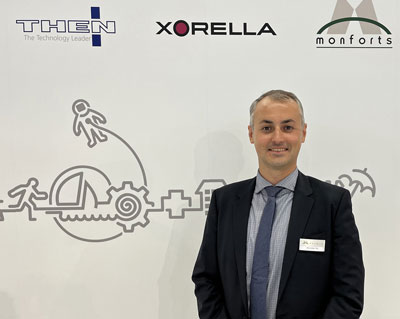
Alexander Fitz

MÖNCHENGLADBACH, Germany — July 13, 2022 — “We fielded enquiries at top management level from an extremely wide range of companies, all with very different ideas for new product applications during the show,” said Alexander Fitz, who joined Monforts a year ago as engineer for textile technologies and co-ordinator of the Monforts Advanced Technology Centre (ATC).

Fitz brings a solid background in both technical textile technology and processes to the role, having previously worked for both a well-known nonwovens machinery builder and a leading roll-goods manufacturer.

Trials

“We are now looking forward to interesting new trials and pilot production runs, as well as the commissioning of new orders for machines resulting from the extremely busy exhibition,” he said. “Obviously, everyone at the moment is looking to make energy savings, and we have developed a range of options for helping companies increase their resource efficiency, both on new lines and as retrofitted systems, but this is not stifling innovation at the new material level.

“There was a lot of interest in what is possible with the Montex®Coat coating system and the range of different techniques it enables, and at our ATC in Mönchengladbach, a Montex Coat unit is integrated into the full technical textiles pilot line, on which it is possible to run new fabrics in widths of up to 1.8 metres.”

Explosion proof

The technical textiles line at the ATC incorporates a Montex four-chamber stenter and is fitted with an explosion-proof coating application chamber in order to allow treatment to be carried out with organic solvents and other volatile materials.

Every single component within the chamber has to meet the standards of the European Union’s ATEX directives for working in a potentially explosive atmosphere. A range of sensors linked to alarms operate at various levels within the chamber to ensure the specified lower explosion limit (LOL) is never exceeded and the ventilation adapts accordingly.

Monforts at Techtextil 2022

Advanced functions

Special features on the finishing line relate to further advanced functions such as the ability to treat materials not only at temperatures of up to 320°C, but also to be able to treat the top and bottom faces of certain materials at different temperatures within a single pass through the machine.

To achieve this, the first two chambers of the stenter are fitted with special, heavy duty TwinAir ventilation motors and separate burners for individual top/bottom temperature. A temperature differential of up to 60°C can be achieved between the upper and lower nozzles within the chamber, depending on the treatment paramenters.

“There are many applications where employing two separate temperature treatments is beneficial, such as floorcoverings — where the textile face fabric is treated at one temperature and the rubber backing at another — as well as PVC flooring employing chemical foams or for materials like black-out roller blinds with heavy backings,” Fitz explained. “Other materials, such as PTFE-coated filter materials are also applied and then cured at separate temperatures.”

Another key feature of the technical textiles line at the ATC is the special stretching device which is capable of pulling ten tons in length and ten tons in width — a huge amount per square meter of fabric and necessary in the production of materials such as woven or 3D knits for high temperature filter media.

“This line has been engineered to provide the ultimate in precision coating and finishing for industrial-scale trials and we are greatly looking forward to the new work that will be conducted following our discussions with companies at Techtextil,” Fitz concluded.

Posted: July 14, 2022

Source: A. Monforts Textilmaschinen GmbH & Co. KG

Ultrafabrics Announces Jeff Smith As New Head Of Residential, North America

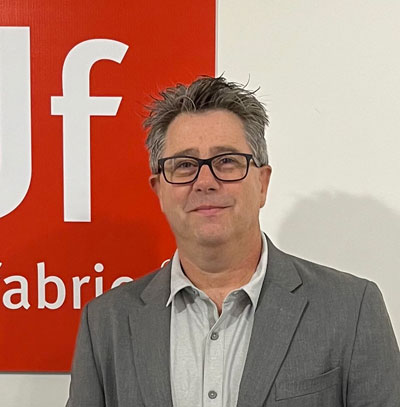
Jeff Smith

TARRYTOWN, N.J. — July 13, 2022 — Ultrafabrics is proud to announce its most recent hire, North Carolina-based Jeff Smith, as head of Residential, North America. With 25 years of experience in the textile industry that spans the residential, retail, outdoor and casual markets, Ultrafabrics looks forward to integrating his knowledge base into its global strategy.

“I’m looking forward to continuing to invest in building the Ultrafabrics brand in the residential market,” Smith said. “The potential to build on its impeccable reputation is very exciting, and bringing the latest and greatest performance fabrics to specifiers is our number one priority.”

“The residential market is important to Ultrafabrics and is growing rapidly,” confirmed Sergio Prosperino, vice president of sales at Ultrafabrics. “Jeff is the right person to lead and guide this business through its next phase of growth. We are confident that his customer-centric approach will continue to reinforce our position as a leader in performance fabrics.”

Ultrafabrics continues to grow globally over 11 different markets but prioritizes serving sectors at a regional level. Smith’s future-focused knowledge of the residential market will ensure that partners have what they need now, and for years to come.

Posted: July 14, 2022

Source: Ultrafabrics

Elevate Textiles Expands Involvement With Textile Exchange Organization Through New Membership

CHARLOTTE, N.C. — July 13, 2022 — Elevate Textiles, a global provider of advanced, high-quality products and mission critical textile solutions, is excited to establish a membership with the Textile Exchange organization, a global non-profit driving positive impact on climate change across the textile and fashion industries. Elevate and its brands including American & Efird (A&E), Burlington, Cone Denim, Gütermann, and Safety Components will utilize this membership to accelerate and further expand upon their adoption of preferred fibers.

The Textile Exchange organization guides brands, manufacturers, and farmers towards more purposeful production starting at the source — raw materials and fibers. Its goal is to help the industry achieve a 45-percent reduction in the emissions that come from producing fibers and raw materials by 2030, speeding up the adoption of practices that improve positive impact in water, soil health, and biodiversity. Elevate supports Textile Exchange’s belief that for real change to happen, everyone in the industry must come together as a community to establish clear paths to positive impact.

Elevate Textiles currently participates in Textile Exchange’s 2025 Recycled Polyester Challenge and is pleased to now become a full member of the organization. The Challenge was launched by Textile Exchange and the United Nations Framework Convention on Climate Change’s Fashion Industry Charter for Climate Action to help initiate a shift in the market towards the uptake of recycled polyester and the associated reduction in greenhouse gases. This joint initiative challenges the industry to bring the percentage of recycled polyester up from 14 to 45 percent at 17.1 million metric tons by 2025.

“We are thrilled to further our involvement in the key initiatives that the experts at Textile Exchange are driving forward to reduce our impact and improve sustainability practices even more,” says Jimmy Summers, chief sustainability officer for Elevate Textiles. “This membership gives our company and brands additional tools needed to achieve preferred fiber goals and holistically reduce our impact from the start of the supply chain. We are currently using Textile Exchange standards at many of our facilities across the globe, specifically Organic Content Standard (OCS), Recycled Content Standard (RCS), and Global Recycled Standard (GRS). We look forward to continuing our work with the organization to provide our customers and stakeholders with the most responsibly and sustainably sourced materials possible.”

Posted: July 14, 2022

Source: Elevate Textiles

ASTM International Honors Richard Lacey With Top Annual Award

W. CONSHOHOCKEN, Pa. — July 14, 2022 — ASTM International presented its top annual award — the Award of Merit — to Richard Lacey for his contributions to ASTM’s geosynthetics committee (D35).

The prestigious award, which includes the accompanying title of fellow, is ASTM’s highest recognition for distinguished service and outstanding participation in ASTM International committee activities. Lacey was recognized for his exceptional contributions to the geosynthetics industry, including standards development, testing and research.

An ASTM International member since 1988, Lacey had been previously honored by the committee with an Award of Recognition (2008) and two Awards of Appreciation (2001, 2018).

Lacey works as a senior engineer at TRI Environmental, Inc., a position he has held since 2007, where his work involves equipment design projects and internal calibration and quality control systems. He earned his bachelor of science in geotechnical engineering from the University of Pittsburgh in 1982.

Posted: July 14, 2022

Source: ASTM International

Accelerating Circularity Europe Launches Polyester Textile-To-Textile Trials 

CAMPBELL HALL, N.Y. — July 14, 2022 — Accelerating Circularity’s mission is to design and implement commercial systems in which textile waste is repurposed as raw material through reuse and recycling, and therefore ensure that they are not incinerated or sent to landfills. For the last year, Accelerating Circularity Europe has been working with their European Steering Committee, Spent Textile, and Brand & Retailer Working Groups to research, map, and identify expertise and infrastructure to accelerate the move to circular systems; this work is now complete. The next step is to move into the trial phases to demonstrate what is possible at scale. The first trials will focus on post-consumer and post-industrial polyester textiles feedstocks. These will be the sources for both mechanically and chemically recycled fibers.

“According to the EU Commission Strategy1 by 2030, textile products placed on the EU market will be long-lived and recyclable, to a great extent made of recycled fibers,” shared Karla Magruder, Accelerating Circularity founder and president. “The circular textiles ecosystem will be thriving, driven by sufficient capacities for innovative fiber-to-fiber recycling, while the incineration and landfilling of textiles will be reduced to the minimum. Accelerating Circularity Europe trials are completely aligned with this strategy.”

“Our work has been based on collaborative efforts of more than 80 members of our working groups representing all levels of the value chain from the EU-27 plus members from Norway, Switzerland, UK, Morocco, and Turkey,“ Magruder added. “Our goal with the textile-to-textile polyester trials is to demonstrate circular systems at scale so our participants will be able to really demonstrate the feasibility.”

“To scale textile-to-textile recycling using post-consumer textile waste, we need collaboration to develop the corresponding value chains and the business case. With our participation in the Accelerating Circularity Europe trials, we want to help develop these systems and enable products to be produced with raw materials coming from post-consumer textile waste,” said Martin Böschen, CEO, TEXAID.

“To effectively close the loop of textile waste, at least national or even better international collection systems and infrastructures for end-of-life textiles have to be established. From an economic and efficiency perspective, but also from a consumer acceptance point of view, brand specific return systems only, will not be sufficient. Accelerating Circularity Europe systems trials for polyester will bring various players of a future circular textile value chain together to test and validate polyester fiber-to-fiber recycling at scale, here in Europe, and thus perfectly fulfill these requirements,” said Dr. Martin Mayershofer, Research & Development at Sympatex, Focus Closing the Loop. “At Sympatex, we believe, an industry-wide, common pursuit of circularity and reclosing the textile loop together are indispensable,” he added.

“Accelerating Circularity Europe has brought together the top minds in the European design and textile markets to develop real, achievable solutions that will sustainably change the apparel industry for the better,” said Regina Goller, director Fabric & Trim Management Apparel for Jack Wolfskin. “True circularity will give synthetic fabrics that are essential for performance, comfort and protection multiple lives with minimal impact on the environment. Design for sustainability has been a driving force for Jack Wolfskin for decades. By collaborating with our peers in the industry, together we will be able to create optimal systems and implement them throughout the marketplace.”

Accelerating Circularity Europe system trials for polyester include these partners among others:

Amazon, Antex, Avery Dennison, Brav, Covation Biomaterials, Craghoppers, Elis Textil Service, Enviu, Erema Group, European Outdoor Group, Eurotex, GIZ / Partnership for Sustainable Textiles, Gr3n, Jack Wolfskin, Oberalp, Recyclatex Group, Reverse Resources, Sympatex, TEXAID, VAUDE, WWF, Zalando.

In addition to the polyester trials, Accelerating Circularity Europe is planning a range of cellulosic trials of mechanically and chemically recycled cotton for circular knits and woven items with their partners of Recover™, Lenzing (Refibra™), Inditex, Tomra among many others from the value chain.

Posted: July 14, 2022

Source: Accelerating Circularity

France Relance Program Strengthens Stability Of B.I.G. Yarns Comines (FR) In A Challenging Market Environment

WIELSBEKE, Belgium — July 13, 2022 — On Wednesday, July 13, Beaulieu International Group (B.I.G.) Yarns Comines (FR) received a delegation of institutional representatives as part of its France Relance program.

At the end of 2021, B.I.G. Yarns Comines was selected as one of the laureates for the French government’s Program that is highly focused on accelerating economic growth.

The France Relance program created for this purpose aims to provide financial support to companies after the Covid crisis and ensure the recovery of the economy. They give oxygen to companies that are committed to additional employment, strengthening of skills (employment, training), innovation, competitiveness and, of course, sustainability.

The financial support allowed B.I.G. Yarns to increase the production capacity of its best-in-class 1-step 3-layer PA yarn technology by 20 percent through the installation of new state of the art production lines at the Comines production site. The new lines utilize B.I.G. Yarns’ cutting-edge PA yarn technology that increases design, contrast and color freedom for carpet tile manufacturers, but also provides increased flexibility. This realization allows customers to respond faster to new developments in the contract market.

Staff and the environment also benefit from this new technological development. Specific energy consumption is also optimized, contributing to energy savings at the site.

In addition to strengthening and renewing its production infrastructure and technology, B.I.G. Yarns also focused on developing new innovative products that contribute to the sustainability efforts of its customers.

For example, B.I.G. Yarns will start producing PET yarns for the first time and will be able to offer a completely new portfolio of PET yarns to its customers in the automotive industry.

This strategic reinforcement project will ensure that B.I.G. Yarns Comines can sustainably hold its own in a very challenging and rapidly changing market affected by high raw material and energy prices, strong competition, and fluctuating demand that affects the entire sector. In addition, all realizations contribute to reducing the carbon footprint which ensures that B.I.G. Yarns can continue to build a sustainable future for its customers, its employees and the community.

Emmanuel Colchen, General Manager of B.I.G. Yarns concludes, “We are extremely grateful to the Hauts-de-France region and the “France Relance” Program for the support we receive, for the encouragement and the belief in our efforts to strengthen the future of the B.I.G. Yarns division.”

Posted: July 14, 2022

Source: B.I.G. Yarns Comines

Sponsors