Sensoria Health & Defender Announce Availablity Of First Smart Diabetic Boot With Remote Patient Monitoring

LOS ANGELES, Calif. — September 29, 2022 — Sensoria® Health www.sensoriahealth.com, developer of Remote Patient Monitoring and Artificial Intelligence wearable solutions, and Defender, next-generation designer and manufacturer of innovative foot care solutions for people with complex foot care issues, announced today at the DFCON Conference the availability of the Foot Defender® powered by Sensoria Smart Boot, the world’s first smart diabetic footwear. Available now, the Foot Defender powered by Sensoria is designed to help heal diabetic foot ulcers and reduce the risk of amputations for extended quality of life. The solution combines the Foot Defender Smart Boot with Sensoria Core microelectronics and the Sensoria Patient Mobile App and Clinician Dashboard to monitor a patient’s diabetic foot ulcer healing and rehabilitation compliance to the clinician’s prescribed stabilization and mechanical offloading protocol.

The Foot Defender powered by Sensoria is designed to improve patient adherence to mechanical offloading, monitors patient usage, activity, improves outcomes, and reduces healthcare cost. Designed by Dr. Jason Hanft, a leading podiatrist, together with a former Nike industry-leading shoe designer, Michael DiTullio, to create a protective boot specifically built to better protect foot wounds in a form factor that patients will actually want to wear, Foot Defender powered by Sensoria is available now; visit https://sensoriahealth.com/diabetic-foot-ulcer-boot/ for more information.

Shoe-Like Design Alleviates Foot Contact Pressure by up to 50% as Compared to Other Protective Diabetic Boots

Foot Defender powered by Sensoria has an easy-to-use shoe-like design with a low-profile abrasion resistant compression-molded outsole that alleviates average contact pressure across the foot by up to 50 percent as compared to other protective boots on the market. Used for both stabilization and offloading, the boot is non-intrusive, cost-effective, and readily usable or embeddable and deployable for a broad spectrum of devices and patient types, whether they are bed-bound, chair-bound, or ambulatory. The Foot Defender powered by Sensoria solution is compliant to the IWGDF guidelines and is the most referenced product in the latest offloading clinical gold standard guidelines. It is also currently being validated by USC Keck School of Medicine and Baylor College of Medicine, which received a $2.5 million R01 NIH grant to validate its clinical value.

Reduce the Risk of Diabetic Amputations

In the United States, 80 million people will be older than 65 years of age in the next few years, according to the CDC. In addition, every 20 seconds world-wide, a limb is amputated due to diabetes; and every 1.2 seconds, there is a new Diabetic Foot Ulcer (there is no amputation without an ulcer). After an amputation, there is a 50 percent chance that the same patient will have the other limb amputated within two years, with patient five-year life expectancy worse than most cancers. In addition, Diabetic Foot Ulcers are responsible for more hospitalizations than any other complication of diabetes, driving direct costs of at least $40 billion dollars annually worldwide and at least $17.5 billion in the United States alone.

“Usually subjects with diabetic foot ulcerations wear their offloading devices in just 28 percent of their daily steps. And there is strong evidence that uncomplicated plantar ulcers can be healed in 8 to 12 weeks. Yet current standard of care in U.S. clinical trials have a 76 percent treatment failure rate at 12 weeks,” said Dr. David G. Armstrong, professor of Surgery at USC Keck School of Medicine. “Through the marriage of Sensoria Health’s sensors with the Foot Defender, AI/ML algorithms, custom microelectronics, and remote monitoring cloud software, the system extends the reach of clinicians and potentially contributes to deliver better outcomes for our patients. By injecting sensing technology into footwear and garments that are already a part of the patient workflow, we can likely improve adherence, accurately monitor patients, improve outcomes, and reduce healthcare cost around the world.”

“Combining Foot Defender with Sensoria’s smart technology offers the best of biomechanical engineering and modern footwear design with mobile, plus cloud patient monitoring to promote faster healing, improve overall compliance and ensure healthier outcomes,” commented Dr. Hanft. “It’s a game-changing solution that brings the science of off-loading and protecting diabetic feet into the 21st century.”

Availability

The Foot Defender powered by Sensoria is available now. For more information, see https://sensoriahealth.com/diabetic-foot-ulcer-boot, contact Sensoria Health at Info@Sensoriahealth.com or contact Defender to purchase at Info@DefenderOps.com. The solution may be reimbursable by Medicare and additional codes may be available for remote patient monitoring.

Posted: September 29, 2022

Source: Sensoria Health
Milliken, Together With EREMA And PreZero, To Showcase Technology For Producing Top-Quality Recycled Polypropylene At K 2022

GHENT, Belgium — September 28, 2022 — Milliken & Company, a diversified global manufacturer with more than 70 locations worldwide, is partnering with European recycling leaders EREMA (Engineering Recycling Maschinen und Anlagen Ges.m.b.H.) and PreZero at the upcoming K 2022 show to highlight the use of our Hyperform® HPN® performance additives in recycled polypropylene (rPP) compounds. Our common purpose is to close the loop and advance circularity.

At the October 19-26 trade fair in Düsseldorf, the Austria-based recycling machinery manufacturer EREMA will put its technology on full display. Operating in the EREMA Circonomic Centre in the outdoor area (OA/-CE03) of the fairgrounds, it will present a live recycling demonstration of recycled material supplied by German environmental services provider PreZero (Hall 8B/A57).

For the live recycling demonstration, the partners will use post-consumer waste that was collected by PreZero. Then, in an example of true value-chain collaboration, PreZero leverages its formulation expertise using EREMA recycling technology and Milliken’s Hyperform HPN additive to make the recycled PP resins. EREMA’s machinery innovation allows PreZero to create odor-optimized premium rPP pellets directly from contaminated post-consumer material.

Hyperform HPN upgrades the recycled PP by improving the material’s physical properties while also reducing the cycle time needed to process it. Additionally, these additives also provide for better dimensional control and crystallization stability during the post-injection molding period.

The efficient use of our HPN nucleating agent brings the performance of rPP closer to that of virgin PP. As PreZero likes to say: “With our plastic recycling activities we give seemingly worthless material, waste, a new life.”

Milliken’s popular Hyperform HPN performance additives contribute to faster, trouble-free production of both virgin and recycled PP and deliver proven energy savings. “UL Environment & Sustainability, a unit of the global UL group, has reviewed and certified that Hyperform HPN enabled an average of 5-8 percent energy savings for firms that injection mold thin-wall PP products,” notes Wim van De Velde, Milliken’s Global vice president – Plastic Additives. “This helps users to lower costs, reduce carbon emissions[1] and advance circularity while producing stronger, lighter products. They also enable greater use of rPP in an increased number of applications.”

At the K show, EREMA will run its patented INTAREMA® TVEplus® RegrindPro® extruder system with ReFresher technology, which sets new standards in the recycling of materials that are difficult to process such as heavily printed films and very moist materials. This is made possible through ultrafine filtration, thorough melt homogenization, and high-performance degassing in a single step. The proven basic principle of TVEplus technology is that melt filtration takes place upstream of extruder degassing.

As Michael Heitzinger, managing director of EREMA Engineering Recycling Maschinen und Anlagen GmbH, explained: “The efficient interplay of our ReFresher technology with this proven extruder system makes it possible to achieve odor-optimized premium recycled pellets directly from contaminated post-consumer material. The unbeatable combination of top pellet quality and odor optimization opens up completely new application opportunities for recycled plastics.”

Visitors to K 2022 can watch a live recycling demonstration in the EREMA Circonomic Centre in the outdoor area (OA/-CE03) on two different days: Friday, October 21, from 10.00 am-1.30 pm, and on Wednesday, October 26, from 2.30-5.30 pm.

For more information on Milliken’s purposeful collaborations, visit us in Hall 06/6A27 at the K Show or k2022.milliken.com.

Posted: September 29, 2022

Source: Milliken & Company

RISE® Research, Innovation & Science For Engineered Fabrics Delivers Material Science Innovations To Advance Sustainability

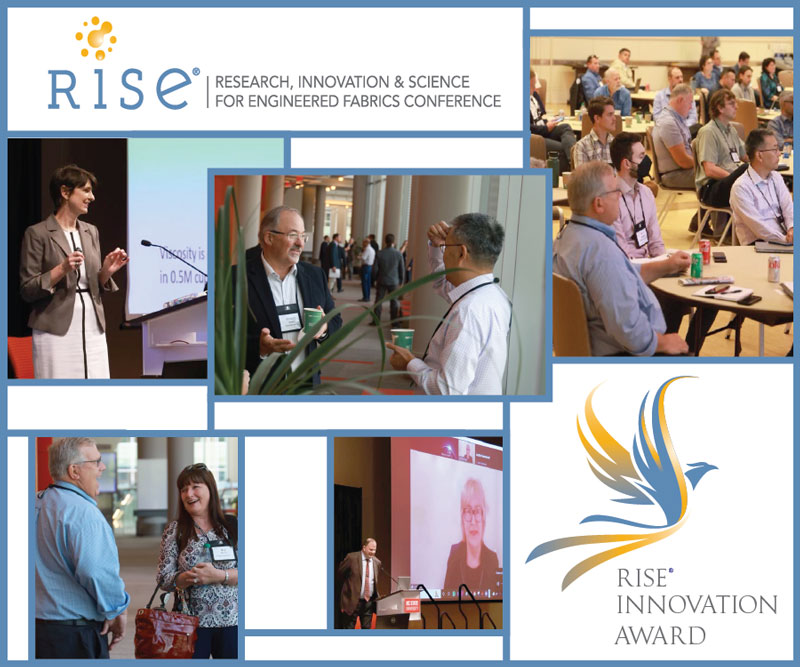
CARY, N.C. — September 29, 2022 — Product development and innovators in nonwovens & engineered materials gained valuable expert insights on material science innovation and sustainability at the 12th edition of RISE® – Research, Innovation & Science for Engineered Fabrics conference.

INDA, the Association of the Nonwoven Fabrics Industry, and The Nonwovens Institute, North Carolina State University co-organized the event, Sept. 27-28 at North Carolina State University in Raleigh, N.C.

More than 20 industry, academic, and government experts from across the globe presented technical developments in sessions focused on circularity and sustainable inputs from such sources as Polylactic Acid Polymers (PLA), natural fibers, biofibers, and waste products. Participants called the conference “thought provoking” with outstanding speakers.

Highlights included presentations on:

  • Achieving Supply Chain Circularity, by Dr. Kat Knauer, program manager – V Research, National Renewable Energy Laboratory, NREL;
  • The Global Plastic Crisis: Winners/Losers in the Marketplace, by Dr .Bryan Haynes, senior technical director, Global Nonwovens, Kimberly-Clark Corp.;
  • Sustainable Fibers – Development and the Future by Dr. Jason Locklin, director, University of Georgia – New Materials Institute;
  • PLA & PLA Blends: Practical Aspects of Extrusion by Dr. Behnam Pourdeyhimi, William A. Klopman Distinguished professor, and executive director, The Nonwovens Institute, North Carolina State University; and
  • Mitigation of Quat Incompatibility with Cotton and other Cellulosic-based Substrates, by Dr. Doug Hinchliffe, Research Molecular Biologist, USDA-ARS.

RISE participants found the high-quality and on-point technical program valuable.

Paul Latten, director of Research and Development and New Business, Southeast Nonwovens Inc., praised the high quality and depth of the science presented by speakers and said it will help him do a better job for his company and clients.

“RISE is an excellent conference for us to discuss concept strategies with the industry. I very much appreciate the focus on sustainability,” said Lars Heepe, Head of Research and Development and Intellectual Property, at Gottlieb Binder GmbH & Co. KG.

RISE® Innovation Award Winner

DiaperRecycle was awarded the RISE® Innovation Award for its innovative technology to recycle used diapers into absorbent and flushable cat litter. The annual award recognizes innovation in areas within and on the periphery of the nonwovens industry that use advanced science and engineering principles to develop unique or intricate solutions to problems and advance nonwovens usage.

By diverting used diapers from households and institutions, and separating the plastic and fiber, DiaperRecycle strives to decrease the climate-changing emissions of diapers from landfills.  “I am thrilled and grateful to win this award as it proves we are on the right track,” said Cynthia Wallis Barnicoat, CEO of DiaperRecycle.

Other award finalists included Binder BioHook® by Gottlieb Binder GmbH & Co. KG and Sero® hemp fibers from Bast Fibre Technologies Inc. (BFT).

The event also featured poster presentations by North Carolina State University graduate students, a tour of the Nonwovens Institute’s state-of-the-art facilities, an industry reception, networking breaks and luncheons.

The 13th edition of RISE® – Research, Innovation & Science for Engineered Fabrics conference will be held Sept. 12-13, 2023, at North Carolina State University in Raleigh, N.C.

Posted: September 29, 2022

Source: INDA, the Association of the Nonwoven Fabrics Industry

September/October 2022

Jim Kearns, executive director and CFO of Alsco Uniforms, recently was elected chair of the board of directors of TRSA – the organization Strengthening the Linen, Uniform and Facility Services Industry.

Teijin Holdings USA President Jane Thomas has again been appointed to the Investment Advisory Council of the U.S. Department of Commerce. She will serve until 2024.

Spartanburg, S.C.-based Milliken & Company has promoted David Smith to executive vice president and president of Milliken’s Textile Business. He replaces Chad McAllister who has left the company.

Ulrich Reifenhäuser, chief sales officer of the Germany-based Reifenhäuser Group, recently was awarded the 2022 Georg Menges Prize at the 31st International Colloquium on Plastics Technology. The award recognizes those who have contributed outstanding service to the transfer of research results into industrial practice.

Web Industires Inc., Marlborough, Mass., has promoted Kathrin Doyle Arena to vice president of human resources.

Matt O’Sickey has joined the Association of the Nonwovens Fabrics Industry (INDA), Cary, N.C., as director of Education and Technical Affairs. INDA also recently named Ryan Ragan director of Membership and Industry Relations.

Kraig Biocraft Laboratories Inc., Ann Arbor, Mich., has contracted Jeff Dorton to help the company develop innovative yarns and fabrics using its Dragon Silk™ spider silk fiber. Initial developments will be used by Spydasilk Enterprises, the company’s Singapore-based joint venture apparel brand.

Mayzo Inc., a specialty chemicals company based in Suwanee, Ga., has named Doug Hartman director of sales and customer care. He replaces Eduardo Padilla who was promoted to president of the company last year.

Elin Wengström has joined Coloreel, Stockholm, as vice president of marketing.

Cambridge, England-based Global Inkjet Systems Ltd. (GIS), a Nano Dimension division, has announced that GIS Co-founder Nick Geddes has joined the executive team at Nano Dimension as senior chief technology officer. Steve Williamson has been promoted to GIS general manager.

The New York City-based American Down and Feather Council (ADFC), a division of the Home Fashion Products Association (HFPA), has named Brett Rife chair. Rife is vice president of sales for Keeco LLC and succeeds former Chair Travis Stier.

Advanced Functional Fabrics of America Inc. (AFFOA), Cambridge, Mass., has announced the promotion of Michelle Farrington to chief technology officer. She will lead AFFOA’s integrated technology development team and is responsible for developing AFFOA’s technical strategy.

Steven Bethell of Bank and Vogue has joined the board of directors at Accelerating Circularity.

Conover, N.C.-based Nufabrx® has named former W.L. Gore & Associates CEO Dr. Jason Field board member; and Elise Donahue, former CEO of Airborne, South Beach Diet and co-founder of Prestige Brands, advisory board member.

Unifi Inc., Greensboro, N.C., has elected Frank Blake to its board of directors.

Dearborn, Mich.-based Carhartt has appointed Susan Hennike chief brand officer. She reports to President and CEO Linda Hubbard.

Chico’s FAS Inc., Fort Myers, Fla., has named Leana Less senior vice president of marketing.

Tommy Bruno has joined Culp Inc., High Point, N.C., as executive vice president of Culp Home Fashions. He replaces long-time employee Sandy Brown who is retiring at the end of the year. The company also named Teresa Huffman chief human resources officer; and promoted Forrest Buck to vice president of Information Technology.

Emilie Arel, president and CEO of Casper Sleep, has joined the board of directors at Macy’s Inc., New York City.

September/October 2022

From Traveling Traveler Salesman To Traveler Expert

A.B. Carter offers years of experience in rings and ring travelers and can help customers optimize their spinning processes.

Driven to innovate and exceed customers’ expectations, A.B. Carter recently celebrated its centennial.

TW Special Report

Anniversaries are always special, but a 100-year anniversary is a significant milestone especially worth celebrating. Through innovation, quality production and exceptional customer service — all performed with a global outlook — A.B. Carter Inc., Gastonia, N.C., has reached that centennial. Established in 1922, the company has weathered the ups and downs of the U.S. textile industry and finds itself in a great position today and is ready to take on the next 100 years.

A.B. Carter bills itself as a company grounded in American heritage, yet driven to innovate. It aims to meet and exceed its customers’ expectations, and is committed to excellence in products and service.

History

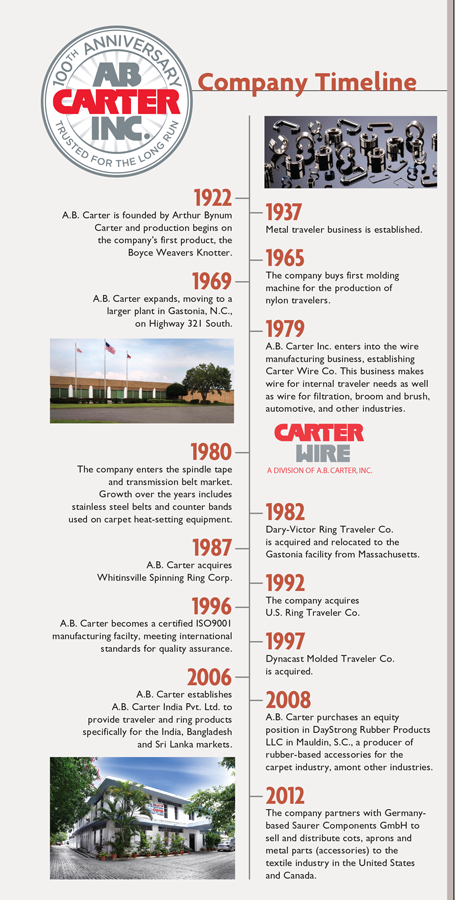
A.B. Carter was founded in 1922 by Arthur Bynum Carter. A self-educated fellow, Carter began his career as a ring traveler sales representative working with spinning mills. It was during this time that Carter was introduced to the Boyce Weavers Knotter. Finding the technology interesting, Carter bought the patent and struck out on his own. He began manufacturing the knotter, modifying and tweaking the design until it was the finest weaver’s knotter sold all over the world — loved, in part, because of its simplicity.

Carter then began to expand his offerings and using his interest and prior expertise in ring spinning and ring travelers, began manufacturing metal travelers. Carter Traveler Co. soon began to supply high-quality ring travelers to customers in the United States and beyond. The company later added yarn spinning rings and nylon travelers to its portfolio.

Henderson Wise, A.B Carter president and CEO

“Our steel and nylon travelers have grown and evolved to be the global standard in all types of spinning and twisting applications,” said Henderson Wise, president and CEO, A.B. Carter.

“Mr. Carter worked his way up the ladder of success by the sweat of his brow,” Wise noted. “His passion and fortitude for the textile industry laid the foundation for our company.”

Product Portfolio, Vertical Production

Today, in addition to its travelers and rings the company’s diverse product portfolio includes bobbins, belts and accessories, splicing and knotting equipment, lab testing equipment, and some accessories for carpet yarn production.

The diversity of the business has been a positive for the company as the industry has changed over the years. “Through acquisitions and partnerships, we have added lines to complement our knowledge and work in all types of spinning and twisting applications,” Wise said. “We must continue to innovate as we move forward in this ever-changing industry.”

A.B. Carter operates a vertical manufacturing structure to ensure high-quality products with flexibility and customization in mind. The company maintains complete control over the manufacturing process for its steel travelers. The Carter Wire Co., a division of A.B. Carter, produces the highest-quality wire that is drawn to size, annealed and shaped. The formed travelers then are heat treated and finished to exact customer specifications. Quality is assured by the company’s advanced metallurgical lab and innovation center staff who conduct extensive tests on the company’s products.

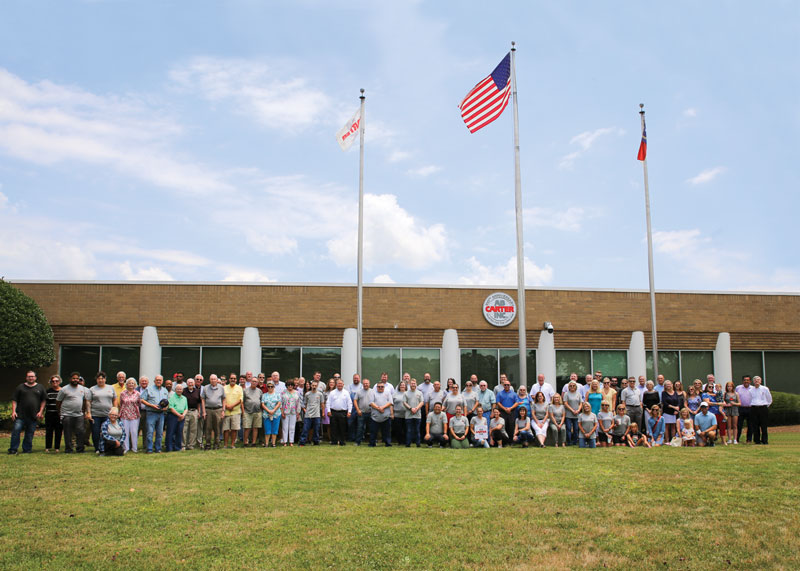
A.B. Carter employees, friends and family recently gathered for a centennial celebration.

Customer-Oriented Innovation

A company’s longevity and continued success is determined by many other factors, but long-standing relationships with valued customers undoubtedly plays a significant role.

“Mr. Carter believed then, as we still believe today, that our customers are our partners, and we should always go above and beyond to serve them,” Wise said.

Customers depend on A.B. Carter’s technical assistance in the spinning process. “Our technical engineers have many years of experience to help optimize the spinning process along with our rings and ring travelers in all types of applications,” Wise said. “We value this relationship as we work to make our customers successful.”

A.B. Carter also relies on its customers to be partners in innovation. “We have stuck to our roots with continued innovation,” Wise offered. “Our research and development and engineering teams have worked diligently as the demands of spinning mills increase. Innovations are paramount as we partner with our customers to optimize the spinning process, and our partnerships are valuable because they propel us to improve and innovate.” The company currently is excited about a new traveler series that is showing excellent improvements in traveler life and yarn quality parameters in production conditions.

Team Atmosphere

A company’s success surely also is aided by a team of knowledgeable and loyal employees. Henderson says one of A.B. Carter’s greatest strengths and assets is its employees. “Many of our employees have been here for many years,” Wise said. “We have always had an open-door policy as this extended communication and genuine interest in all our employees makes everyone feel like they are an important member of the team.”

Global Reach

Spinning is a global enterprise, and in order to grow and remain successful, A.B. Carter is committed to doing business on the international stage, keeping up what Mr. Carter started all those years ago. “Spinning optimization is critical to mill profitability, and spinning mills today compete in a global market,” Wise said.

To support the company’s positive and growing global demand, in 2006, A.B. Carter opened a subsidiary in India — A.B. Carter India Pvt. Ltd. — to supply travelers and ring products to customers in India, Bangladesh and Sri Lanka. “The team at A.B. Carter India does a great job in covering the markets in India and Bangladesh,” Wise said. “The spinning mills in those areas are very technical and run some of the highest spindle speeds worldwide. We have seen our market share increase there as recent innovations have allowed our customers to improve their processes and yarn quality.”

The company’s full global network also includes employees and offices in Hong Kong, Shanghai; Sao Paulo, Brazil; and Istanbul, Turkey; as well as 45 agents located throughout the world.

Celebrating The Milestone Anniversary

A.B. Carter recently held a company-wide celebration at its Gastonia headquarters that included employees past and present, the board of directors, shareholders, and friends. “A.B. Carter Inc. has a long and storied past and a great future as a global supplier in the textile industry,” Wise remarked. “I am extremely proud of our company and all our employees for achieving this great accomplishment.

“Our customer service and continued innovation are commitments that began 100 years ago with Mr. Carter’s drive and passion,” Wise continued. “We look forward to continuing our next chapter as we move forward in the ever-changing textile industry.”

September/October 2022


A Time For Celebration: 50 Years Of Leadership In Synthetic Fibers

From its beginnings as the TYAA in 1972, SYFA has adapted to weather downturns in the industry and is celebrating its 50th anniversary this year.

By Alasdair Carmichael

The Synthetic Yarn & Fabric Association (SYFA) and its predecessor organization the Textured Yarn Association of America (TYAA) is celebrating 50 years of operation in 2022. The TYAA was first formed in 1971 and held its inaugural meeting in 1972.

This time period was the dawn of draw texturing and the commercial arrival of polyester textile filament as a feed yarn for draw texturing. Prior to the beginning of the 70s, nylon was the main textured fiber using fully drawn yarn as the supply.

Polyester was developed in the 1940s, and the initial focus was on producing a staple fiber to either complement cotton in blended yarn or to compete with cotton. Filament polyester remained a smaller volume than polyester staple globally until 1993, but by 2020 had grown to be more than double the size of staple.

The growth of texturing and particularly polyester brought a number of new producers into the U.S. market and resulted in industry leaders, led by Norman Cohen of Goulston Technologies Inc., Monroe, N.C., deciding that the sector was large enough, and unique enough, to warrant its own technical trade association. The author of this article joined the U.S. texturing industry in spring 1972 and had the privilege to attend the second full meeting of the TYAA in summer 1973.

The Growth Of Texturing

A major driver of the growth in texturing in the United States and elsewhere was the development of draw texturing which took four process steps and combined them into two steps, as well as increasing productivity and producing a larger, better package of yarn for direct knitting or weaving.

There was no shortage of technical developments to be discussed at the TYAA conferences!

In the mid to late 1970s, there were approximately 115 companies in the United States with texturing or draw texturing machines. At this time, the structure of the industry was driven by growth. There were a number of large fabric companies that diversified their production to include texturing. Additionally, some of the large polyester fiber producers also invested in texturing. There also were many specialized yarn companies with texturing operations. The double knit industry provided an apparently insatiable appetite for more and more textured polyester, until the inevitable happened and demand collapsed.

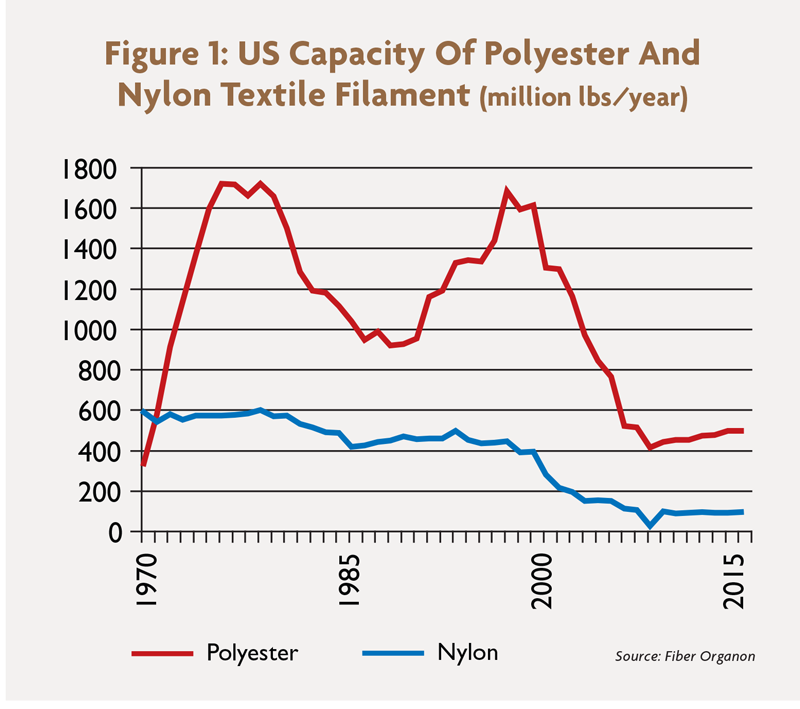
Figure 1 shows data from the American Fiber Manufacturing Association (AFMA) publication Fiber Organon. Polyester textile filament capacity in the United States grew from 316 million pounds in 1970 to 1.7 billion pounds by 1979, with the growth driven mainly by demand for textured polyester. The 1979 peak was the highest level the U.S. industry ever achieved. The 1980s were a time of consolidation and closures within the industry, as well as a time for product development and production technology improvements which resulted in a good recovery in the 1990s.

However, the good times for the domestic industry came to an end as the calendar turned into the 21st century and global supply chains became the prevalent business model. Many sectors of the textile industry were hit very hard by global sourcing and the textured yarn industry was no exception. The chart tracks the downturn very clearly.

The TYAA was faced with a rapidly declining pool of membership. From approximately 115 companies with texturing machines in the late 1970s, by 2006 there were only 17 companies remaining.

The association faced three options:

  • Close down completely;
  • Merge with another group; or
  • Increase the scope of membership by rebranding and appeal to a wider range of membership.

Following tough discussions, the board decided to take the most difficult of the alternatives and rebranded in 2006 as the Synthetic Yarn and Fiber Association (SYFA), a name that was later changed to Synthetic Yarn and Fabric Association.

The rebranding has been a success with both membership and attendance at conferences seeing significant growth in the years following the decision.

Two association milestones stand out. The first is an awareness of the importance of sustainability to the industry and, from the beginning of the association’s rebranding process, it has made a conscious effort to include presentations on sustainability at all its meetings. The most successful meeting in association history was the 2008 Winter Conference when the entire program was devoted to sustainability under the theme “Sustainable is Attainable.” That meeting saw a record attendance of more than 300 people.

The second milestone is more recent, and that was the ability to come through the COVID-19 pandemic and be in position to look ahead to a bright future.

The association is celebrating 34 years as TYAA and 16 years as SYFA for a total of 50 years of serving the U.S. synthetic textiles industry. Please join SYFA in celebrating this milestone at the fall conference to be held November 3-4, 2022, in Charlotte, N.C. For more information about this special event, please see, “50 Years Of SYFA,” TW, this issue.

Editor’s Note: Alasdair Carmichael is vice president of the Synthetic Yarn
and Fabrics Association (SYFA)

September/October 2022

Archroma To Acquire The Textile Effects Business Of Huntsman Corp.

Switzerland-based Archroma, a portfolio company of private investment firm SK Capital
Partners, reports it has entered into a definitive agreement to acquire the Textile Effects business of Huntsman Corp., Salt Lake City. The transaction is subject to customary conditions and approvals, and is expected to close in the first half of 2023.

“I am thrilled to see the combination of Huntsman Textile Effects and Archroma”, said Barry Siadat, co-founder of SK Capital Partners and chairman of Archroma. “Finally, we have achieved a dream of combining the technologies, products and capabilities of the legacy pioneers of the textile industry, namely Ciba, Sandoz, Hoechst and BASF, into a modern and cohesive enterprise that is focused on delivering innovative and sustainable systems and solutions to serve the evolving needs of today’s textile industry.”

September/October 2022

TAU Invests In DyeCoo, CleanDye

TAU Investment Management LLC, with locations in New York City and Hong Kong, reports it has made investments in two waterless dyeing companies. The company will acquire significant stakes in and join the board of directors at DyeCoo Textile Systems BV and
CleanDye Holding BV through a special purpose vehicle formed and managed by TAU.

DyeCoo is the creator of a waterless and chemical-free dyeing technology named DyeOx. CleanDye is the first dyeing facility built to use DyeOx technology exclusively. The investments are part of TAU’s strategy to invest in sustainable and responsible supply chains, and TAU joins other companies — including Ingka Investments and Nike — who have already invested in the technology.

“This is a unique opportunity to support two organizations bringing a new facet of sustainability to the garment industry,” said TAU CEO Oliver Niedermaier. “We look forward to further application opportunities for the technology in other sectors, such as automotive and beverages.”

September/October 2022

Microban® Introduces DuraTech™Antimicrobial

DuraTech™ by Microban® is a new antimicrobial additive for cotton applications from Microban International, Huntersville, N.C. According to the company, the product “helps to prevent the growth of odor-causing bacteria up to 99.99 percent after 75 home launderings.” It also continues to reduce odors up to 99 percent once home launderings surpass 75.

The product is non-heavy metal, binder-free, non-ionic and fully water soluble. DuraTech may be applied using traditional padding processes. Microban reports the additive also does not impact the appearance or feel of the cotton fabric. The technology — available to customers in the United States and Asia — is suitable for sheets and towels used in home textiles and hospitality applications.

September/October 2022

Haartz Gets EMPEL™ PFAS-Free Finishing Platform License

Green Theme Technologies Inc. (GTT), Rio Rancho, N.M., has granted a license to The Haartz Corp., Acton, Mass., for its patented EMPEL™ textile finishing platform. EMPEL is per- and polyfluoralkyl substances (PFAS)-free, and uses “clean chemistry” in a waterless process to add treatments such as durable water repellents, anti-wicking and durable stain releases to a variety of textile substrates.

The platform applies a nontoxic hydrocarbon monomer solution to a fabric that is then polymerized to wrap each individual yarn with a high-performance, durable finish.

“Haartz is the perfect partner for GTT,” said Martin Flora, vice president of Business Development for GTT. “They are world leaders in scaling finished fabric technologies through world-class manufacturing and testing facilities. With their various product categories, including apparel, furniture and automotive, our partnership brings textile innovation to North America and helps drive a positive and sizable environmental impact.”

September/October 2022

Sponsors