Nike Forward: Changing The Paradigm

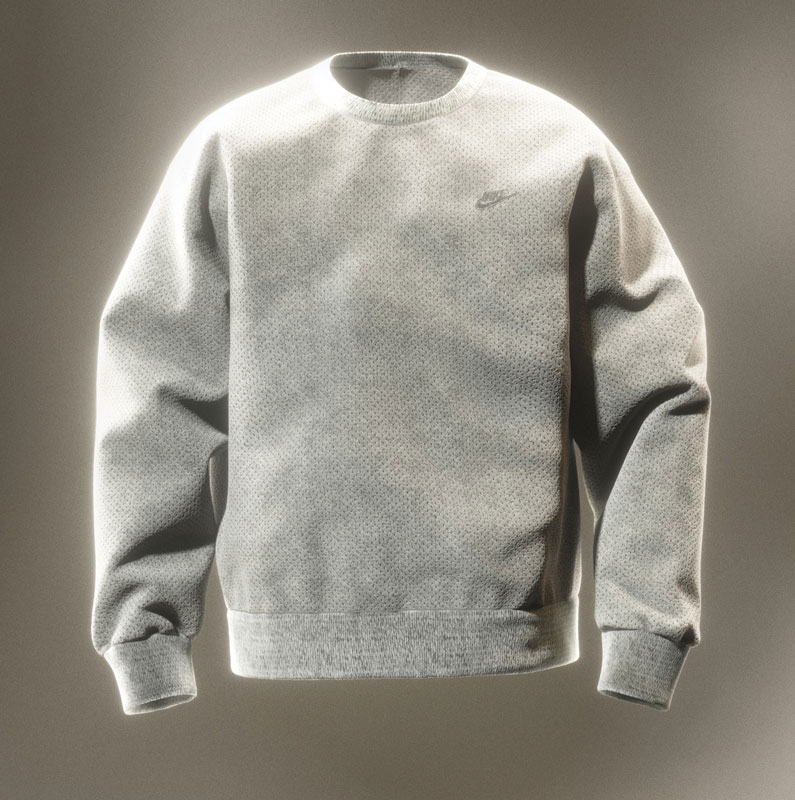
With athlete performance and sustainability in mind, Nike’s Forward platform focuses on needlepunching for apparel creation.

By Rachael S. Davis, Executive Editor

Nonwovens are a relatively new textile material compared to woven and knit constructions that are thousands of years old. The nonwovens process allows a wide variety of fabric types with unique properties to be produced depending on production parameters. This adaptability has led to an extensive portfolio of products used in automotive, construction, filtration, and medical applications, to name just a few markets.

There is still lots of potential to unlock in nonwovens production, especially as it relates to apparel and fashion applications. Although applications are broad, the properties of a nonwoven fabric typically do not have the aesthetics or performance characteristics sought in a non-disposable apparel fabric. However, Beaverton, Ore.-based Nike Inc. is looking to change that notion.

The company recently introduced Nike Forward — a platform used to produce a sustainable nonwoven that the company believes can be used in place of traditional fleece fabrics in athletic applications. The motivation behind the platform was to help solve problems for athletes with environmental concerns top-of-mind.

Nike saw the potential of nonwoven manufacturing techniques to reduce the number of steps required to produce a fabric compared to traditional knit or woven fabrics and set about “hacking” a needlepunching machine in a research and development process that took more than five years.

Fewer processing steps — as with all nonwovens, the process goes from fiber directly to fabric — results in less energy consumption, which Nike reports translates into an average of 75-percent reduction in the carbon footprint compared to the traditional knit fleece fabrics it currently uses.

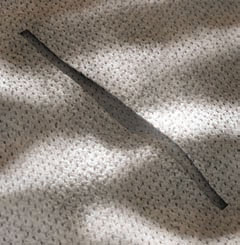
A diverse range of fibers can be incorporated into the layers from pre- and post-consumer waste as well as industrial waste; and the garments feature 70-percent recycled content by weight. No water is used to dye or finish the fabric, and garments initially will be available in only one color — gray. The garments also feature raw cut pockets and no embellishments such as trims, zippers or other closures. These design details result in a garment that is easier to recycle at the end of its useful life.

The garments feature raw cut pockets with no closures or embellishments to make it easier to recycle at the end of its useful life.

The initial introduction of Nike Forward includes a crew and hoodie style made using 100-percent polyester in a five-layer construction. This lightweight material, which will break in over time, is warm and meets Nike’s Therma-FIT ADV technology standards for warmth without the weight.

Nike does admit piling is possible and provides specific care directions to mitigate the issue.

“As part of our commitment to serve athletes by offering more sustainable options and meeting our bold, science-based impact targets, we’re introducing a material innovation that can be adapted to different lifestyle and performance purposes,” says Seana Hannah, vice president, Sustainable Innovation, Nike.

“We believe this platform has the potential to reset the way we think about material and apparel,” said Aaron Heiser, vice president, Global Apparel Product Merchandising, Nike. “This is the biggest Nike apparel innovation since Dri-Fit 30 years ago and has huge potential to transform the industry in the way that Air and Flyknit did for Nike footwear.”

According to Nike: “Today Nike Forward shows up as a hoodie — the uniform of sport and a style around the globe. Tomorrow it could be anything.”

September/October 2022

50 Years Of SYFA

The Synthetic Yarn and Fabric Association (SYFA) will celebrate its 50th anniversary during its fall conference with an enhanced schedule.

TW Special Report

The history of the Synthetic Yarn and Fabric Association (SYFA) is an interesting one (See “A Time For Celebration: 50 Years Of Leadership In Synthetic Fibers,” TW, this issue). Established in the 1970s with the dawn of draw texturing as the Textured Yarn Association of America Inc. (TYAA), the organization is celebrating its 50th anniversary this year.

Today’s SYFA comprises more than 265 individual and corporate members affiliated with the man-made fiber, yarn and fabric industry. Its mission “is to support the production and continued advancement of synthetic yarns and fabrics through technology and education and to promote both existing and new uses for these quality materials. Through our conferences and other events, SYFA provides members with a valuable forum for networking, discussion and presentations related to the development of synthetic yarns and fabrics and their downstream applications, as well as to explore current trade issues to find new solutions to the challenges that face our industry.”

SYFA’s fall conference, to be held November 3-4, 2022, at the Sheraton Charlotte Airport Hotel, will celebrate the milestone anniversary with some special features.

As usual, the conference will feature a slate of speakers with presentations from Consultant Jeff Dugan; Julie Rader, director, U.S. Manufacturing and Sourcing, Walmart; a speaker from the Wilson College of Textiles, NC State University; Laura Murphy, research director, Fibres, Wood Mackenzie; Nello Masciarelli, director of Energy, Gildan; and Alasdair Carmichael, program director, NAPCOR.

In addition, a panel featuring six of the textile industry’s top leaders — Leib Oehmig, CEO Glen Raven Inc.; Cameron Hamrick, CEO, Hamrick Mills; Jeff Price, executive vice president of Strategic Initiatives, Milliken & Company; Charles Heilig, president and CEO, Parkdale Mills; Eddie Ingle, CEO and director, Unifi Inc.; and Amy Bircher, CEO and founder, MMI Textiles — will sit together and share their thoughts on the “Past, Present and Future” — the theme for this anniversary event.

Several past TYAA and SYFA presidents will be in attendance as the association looks back over its 50 years.

At the end of Thursday’s session, all attendees will gather for a cocktail reception at 5:30 p.m. followed by a sit-down dinner at 6:30 p.m. During dinner, Kim Glas, president and CEO, National Council of Textile Organizations, will deliver a keynote address.

Mark your calendars to come network and reminisce with SYFA members past and present this November as the association celebrates its 50th anniversary.


For more information about the SYFA’s fall 2022 conference and to register for the event, please visit thesyfa.org.


September/October 2022

New Method Can Remove Dyes From Wastewater

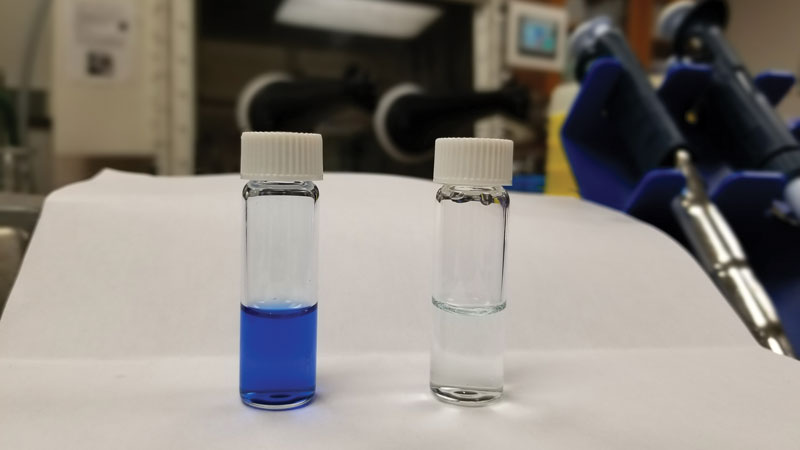
The left vial shows dye solution in water (blue) and the right vial shows clear water after the dye was removed from the solution by the polymer. (Photo: Januka Budhathoki-Uprety)

Recent research focused on using polymer to clear dyes from wastewater

By Laura Oleniacz

North Carolina State University researchers have demonstrated that a synthetic polymer can remove certain dyes from water, and that the polymer can be recovered and reused. The findings offer a new potential method for cleaning wastewater after use by textiles, cosmetics or other industries.

“Dyes are used everywhere, including in the textile industry, as well as in pharmaceuticals, cosmetics, paper, leather and even in medicines,” said Januka Budhathoki-Uprety, lead author of a paper on the work and an assistant professor of textile engineering, chemistry and science at NC State, Raleigh, N.C. “If these contaminants aren’t properly removed from wastewater after dyeing and finishing, they can be a significant source of environmental pollution and pose risks for human health.”

In the study, published in ACS Applied Polymer Materials, researchers made a synthetic polymer called polycarbodiimide. The researchers then tested the material’s ability to clean wastewater first by dissolving it in a solvent, and then mixing it with water contaminated with dyes. They tested the polymer solution against a series of 20 anionic dyes, also called acid dyes, which are used in the textile industry. For initial assessments, the researchers did a visual test with the naked eye to see if the polymer worked. The researchers later quantified how well the polymer removed the colorant using ultraviolet-visible (UV-Vis) spectroscopy.

“We mixed the polymer solution and dye-contaminated water so the polymer in the solution can grab on to the dye,” Budhathoki-Uprety said. “This is a two-phase solution, just like oil and water. The polymer part of the solution grabs onto the dyes. Then we were able to easily separate the clean water from the contaminated solution mixture by draining it out, similar to separation of water from a mixture of oil and water.”

The polymer solution removed all but four of the 20 acid dyes they tested. In addition, they found it was easy to recover the polymer within minutes. They found characteristics of the dyes — related to their molecular structures — that contributed to whether the polymer worked or not.

“We found that the polymer solution can remove dyes from contaminated water, and we can recover the polymer and use it to remove dye from contaminated water again,” Budhathoki-Uprety said.

In future studies, researchers are planning to develop a library of polymers that would have the potential to work with more types of dyes. In addition, they want to develop a more practical mechanism for using polycarbodiimide to clean wastewater.

“We are working to develop materials that can do the same work without having to use the polymer in the solution phase,” Budhathoki-Uprety said. “If you have dye spill, you don’t want to have to use a flammable solution — you want a solid material that is easier to handle.”

The study, “Polycarbodiimide for Textile Dye Removal from Contaminated Water,” was published online in ACS Applied Polymer Materials on July 22, 2022. Co-authors included Meghan Lord, graduate student in Fiber and Polymer Science Program, and Graham Neve and Mike Keating, undergraduate students in the Textile Engineering, Chemistry and Science Department at NC State. The study was funded by the Textile Engineering, Chemistry and Science Department at NC State. Individual researchers were also supported by the Office of Undergraduate Research Federal Work Study Research Assistant Program at NC State.


Editor’s Note: Laura Oleniacz is Public Communications Specialist at NC State News Services.


September/October 2022

Shima Seiki Turns 60

Japan-based Shima Seiki Mfg. Ltd. is celebrating its 60th anniversary. To mark the milestone, the company will host a three-month-long open-house event at its headquarters in Wakayama, Japan, that will feature a virtual fashion show, machine and sample exhibits, and a presentation of the latest DX design technology; as well as a special website that offers seminars and event content for those not able to attend the open-house in person. The theme for the event is “Open Up The Future.”

Shima reports it is sending a strong message on this anniversary “in an effort to accelerate the widespread use of virtual samples to reduce waste throughout the supply chain to ensure a sustainable future for the fashion industry and for the planet as a whole.”

September/October 2022

Tonello Presents Evolution 3

Italy-based Tonello S.r.l. recently introduced the Evolution 3, a new generation of washing and dyeing machines. The technology was developed with reduced water and energy consumption, increased productivity, and lower maintenance costs in mind. According to the company, the updates result in energy savings of up to 20 percent compared to previous generation machines.

Improvements include: high efficiency motors; an optimized transmission with high-efficiency belts for improved durability; a more compact design; new inverters for motor control to reduce stress and vibration; and electronic boards designed to withstand even the most harsh laundry and dyeing plant conditions. The machines are constructed using premium materials, such as AISI 316L stainless steel; and quality construction methods, such as drum welds created by high-precision anthropomorphic robots.

The Evolution 3 range is designed to handle future technology updates, and is compatible with accessories and kits, and the Metro and Mago Site Manager software programs.

September/October 2022

Downlite Outdoor Announces Expansion At Its State-Of-The-Art Canadian Down Facility

MASON, Ohio — September 29, 2022 — Downlite Outdoor, a division of Downlite — a down and feather processor and a supplier of responsibly sourced performance fills to the outdoor, home furnishings, and hospitality markets — expanded its new facility in Mississauga, Canada to meet growing demand.

With the rapid growth of Downlite in the Canadian outdoor market, the new facility has exceeded expectations with the Canadian business. Business growth has exceeded plan by 15 percent. Due to the new proximity to North American business, Downlite has added new clients and substantially grown current ones. Because of these factors the new facility has expanded by 50 percent.

“We are ecstatic about the growth, stated Joe Crawford, CEO of Downlite. As expected, we were able to fulfill all of our customer’s expectations when we built this new state-of-the-art facility. Little did we know we would be expanding so soon. The expansion will allow us to continue to grow and most importantly, continue to provide our customers with premium quality product, whenever they need it.”

The new facility opened in June 2021, with the goal to process and deliver down quickly to Downlite’s Canadian customers. The Downlite facility has state-of-the-art European equipment, allowing for maximization of cleanliness and performance in down production. The expansion helps provide fresher material and shorter lead times, while increasing processing and distribution capabilities for the North American market in both Home and Outdoor.

“Adding this expansion not only helps us to continue to provide the best product to all of our clients but puts us in the position to offer more employment opportunities for all levels within the facility. It is definitely an exciting time for us at Downlite.” stated Hailey Werthaiser Parnes, vice president, Business Development.

Posted: September 29, 2022

Source: Downlite Outdoor

Haelixa Makes Egyptian Cotton Product Traceable

KEMPTTAL, Switzerland — September 29, 2022 — Within the scope of the United Nations Economic Commission for Europe (UNECE) initiative “The Sustainability Pledge”, to improve transparency and traceability for sustainable garment and footwear supply chains, the Swiss company Haelixa traces Egyptian cotton from the source up to premium shirts.

The UNECE and United Nations Centre for Trade Facilitation and Electronic Business (UN/CEFACT) has been developing over the period 2019-2022 policy recommendations, implementation guidelines, a call to action http://thesustainabilitypledge.org/, and a traceability toolbox including blockchain and DNA tracing solutions, which has been implemented in few different textile supply chains. Haelixa is proud to be part of the group of experts that develops such policy recommendations and conducts projects with key industry players to set traceability benchmarks and later develop them into standards.

Fashion brands are often responsible for complex global value chains and traceability is the needed tool to enable trust, transparency and credible sustainability. The magnitude of the supply chain traceability challenge can be overwhelming for brands, but the UNECE initiative framework facilitates the alignment with suppliers, provides the necessary guidance and the needed tools, with Haelixa as physical traceability provider.

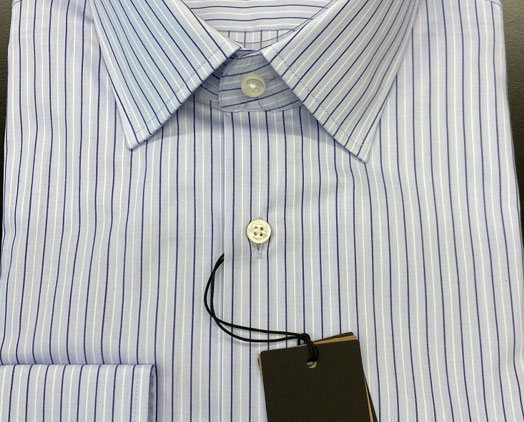
To make the premium shirts traceable, Haelixa has developed a unique DNA marker to label the raw material, premium Egyptian cotton. The DNA marker has been applied as fine spray to GIZA 96 lint cotton in Borg Al Arab, Egypt and used to produce the finest fabric by Swiss manufacturer Weba. Once applied to the fibers, Haelixa’s DNA markers stay safely embedded into the material and withstand the industrial processing, ensuring traceability from the source until the finished garment. Samples of lint cotton, yarn, and fabric at different steps were verified with a test based on PCR, and the correct DNA marker was detected, thereby enabling the identification of the premium product, of its origin and the specific supply chain. The forensic data obtained were recorded on a blockchain system provided by UNECE. The marked fabric was used to make Hugo Boss cotton dress shirts. As one of the leading premium fashion brands and partner to the UNECE project, Hugo Boss is responsible for a complex global value chain and strives for high sustainability standards and is looking at traceability options.

“In cases like this one, where the material is of the highest quality and the product is shipped from one facility to another for premium processing, adding physical traceability is critical to ensure that the origin, quality and processing claims can be backed up” said Gediminas Mikutis, CTO and co-founder at Haelixa.

Maria Teresa Pisani, Economic Affairs officer and project lead at UNECE, emphasized: “Traceability and transparency are crucial elements to protect environmental, social, and human rights along global value chains. At UNECE, we aim to enhance traceability approaches by exploring new and innovative solutions that help identify and address negative impacts in the fashion industry. Therefore, it is only right that we collaborate with Haelixa, and engage in a shared ambition as part of ‘The Sustainability Pledge’. The complementation of UNECE blockchain pilots with Haelixa DNA markers is a great way to substantiate the digital world with the physical reality, and is a right step forward to a sustainable value chain transformation at scale.”

Posted: September 29, 2022

Source: Haelixa Ltd.

Levi Strauss & Co. Releases 2021 Sustainability Report And New Slate Of Sustainability Goals Across Its Main Pillars Of Climate, Consumption And Community

SAN FRANCISCO — September 28, 2022 — Levi Strauss & Co. has released a new slate of sustainability goals as part of its newly published 2021 Sustainability report, demonstrating its commitment to a holistic definition of sustainability and progress across its key pillars of climate, consumption and community. The 16 goals cover focus areas including greenhouse gas emissions, water stewardship, circular economy and new business models, worker well-being in the supply chain, diversity, equity and inclusion and social issue advocacy.

Taken together, they are a clear expression of the company’s guiding philosophy of profits through principles. They also signal the company’s commitment to working in partnership with others throughout its value chain, its intent to accelerate the development of circular products and the broader circular economy ecosystem, and its determination to enhance a longstanding company value of treating all people with dignity and respect. You can read the report and see the goals here. An executive summary is here.

“These goals are crucial to the future of our business,” says Chip Bergh, CEO and president of Levi Strauss & Co. “By doubling down on sustainability and ESG reporting at Levi Strauss & Co., we are creating a more resilient business while also signaling to our full range of stakeholders, including our consumers, that we are committed to being transparent about our progress on ESG matters and working to create the scale necessary to address the most pressing challenges of our time.”

The goals are among the highlights of the company’s recently published sustainability report and comprehensive set of disclosures. It also complements the latest iteration of the Levi’s® brand’s Buy Better Wear Longer marketing campaign, launched on September 21 as a continuation of the brand’s ongoing conversation with consumers about the need to combat overproduction and overconsumption in and by the apparel industry.

With regard to the goals, LS&Co. will be reporting out progress on each goal on an annual basis, demonstrating to all stakeholders — from investors to employees to supply chain workers to partners around the world — that it is becoming more sustainable, more equitable and more impactful as a company day by day.

“Our new goals signal a step change in our sustainability ambitions and our intent to increase open collaboration in the industry,” says Jeffrey Hogue, chief sustainability officer at LS&Co. “We intend to leverage the strength of our brands and our longstanding company values to inspire our employees, communities and value chain partners to join our journey to create a more inclusive and regenerative apparel industry.”

The goals are as follows:

Under the climate pillar

  • 40 percent absolute reduction in supply chain greenhouse gas emissions by 2025*
  • 90 percent absolute reduction in greenhouse gas emissions and 100-percent renewable electricity in all company operated facilities by 2025**
  • Net-zero emissions of greenhouse gases by no later than 2050***
  • Reduce freshwater use in manufacturing by 50 percent in areas of high water stress by 2025****
  • Continue to assess and identify material impacts and dependencies on nature across the value chain, in order to implement comprehensive biodiversity action strategy by 2025

*Against 2016 base year. Supply chain GHG emissions refer to Scope 3, Category 1 (Purchased Goods and Services). While this goal was approved by SBTi under the apparel and footwear sector science-based targets guidance v.4.0, it will be adjusted to a 1.5°C trajectory as now required by the SBTi Net-Zero target application process. 


**Against a 2016 base year. This goal is consistent with limiting temperature rise to 1.5°C compared to pre-industrial levels. 


***We plan to submit this goal for SBTi approval in 2023.


****Against 2018 base year.

Under the consumption pillar:

  • Key markets to introduce or increase resale and upcycling initiatives to extend the life of our products by 2025
  • Circular ready in 2026*
  • Zero-waste-to-landfill from LS&Co. company-operated facilities and 50 percent waste diversion across strategic suppliers by 2030**
  • Eliminate single-use plastics in consumer-facing packaging by shifting to 100 percent reusable, recyclable or home compostable plastics by 2030
  • Strategic garment wet finishing manufacturing and fabric mills use 100 percent certified screened chemistry by 2026***
  • Use only third-party preferred or certified more sustainable primary materials by 2030****

*Product will be considered circular ready when it meets all pillars of the Ellen MacArthur Foundation Make Fashion Circular Framework. Note that LS&Co. product will not be fully circular in 2026, but that the company is prepared to set forth a path by 2026 to bring fully circular products to market. 


**In alignment with the Zero Waste International Alliance and TRUE Zero Waste certification, facilities that reach the 90% threshold will be designated as zero waste. We are committed to sharing our waste diversion progress. 


***Strategic garment wet finishing manufacturing and fabric mills cover approximately 80% of product weight. 


****In this context, “preferred” is based on the Textile Exchange, which defines a preferred fiber or material as “one which results in improved environmental and/or social sustainability outcomes and impacts in comparison to conventional production.”

Under the community pillar:

  • Continually improve apparel worker health, satisfaction and engagement
  • Ensure competitiveness and equity in total rewards
  • Ensure that LS&Co. remains a dynamic and inclusive career destination
  • Leverage the leadership of the Levi Strauss Foundation and invest in our communities to advance pioneering social change
  • Drive societal impact in communities where LS&Co. operates through advocacy, grantmaking, employee giving and volunteerism

“Sustainability, ESG and business performance go hand-in-hand at LS&Co.,” says Harmit Singh, LS&Co. Chief Financial Officer. “Addressing the material impact areas of our business and the industry is not the provenance of any one team but the collective responsibility of the entire company. We are all partnering on the actions and resources needed to address our goals, and we see a great opportunity to deliver new financial innovations and vehicles to accelerate and create impact at scale.”

Several of the goals are new, such as the net zero greenhouse gas emissions goal and the commitment to phase out single use plastics in consumer-facing packaging by 2030. Others were pre-existing, such as LS&Co.’s science-based climate targets and the intent to halve freshwater use in manufacturing in areas of high water stress by 2025. Across all goals, the company will continue to pilot new solutions, develop partnerships for impact and accelerate successful tactics to achieve the goals and play its part in addressing climate change.

One theme that cuts across all the goals is the need for increased partnership across the industry to meet common challenges. It is evident that companies across sectors, and particularly those with shared supply chains, can have a deeper, more lasting impact by working in close alignment with each other and their suppliers. LS&Co. is aligning with other brands to collaborate with manufacturing partners and other organizations on climate solutions, from cotton cultivation to circular design. To that end, over the past 18 months, LS&Co. has joined industry efforts with partners like Fashion for Good, the Ellen MacArthur Foundation, the United States Cotton Trust Protocol and, most recently, Organic Cotton Accelerator to help move the industry toward more sustainable, circular-ready production.

Posted: September 28, 2022

Source: Levi Strauss & Co.

Kolon Industries Targets The Global Tire Cord Market By Vietnam Plant Expansion

SEOUL — September 28, 2022 — Kolon Industries Inc., a chemical materials and textile maker in South Korea, announced it has completed the expansion of its tire cord production plant in Binh Duong Province, Vietnam, and is speeding up to boost its global competitiveness.

The company said it has increased 19,200 tons of the annual capacity of PET (polyester) tire cord production from 84,000 tons to a total of 103,200 tons. This expansion is its second investment since the first expansion of 16,800 tons of PET tire cord Vietnam plant in 2018, and is expected to greatly improve the production efficiency once again.

Tire cords are high-strength fibers used as reinforcing materials for tires, which serve as frames for tires and keep them in shape. Tire cords are important as they affect the safety and performance of automobiles. Depending on the raw materials, there are PET, nylon, rayon, and steel tire cords. Kolon Industries produces PET tire cords, which are mainly used in passenger car tires.

Kolon Industries’ tire cord plant is located in Bau Bang Industrial Park, Vietnam. It brought in the latest production facilities and thus owns a consistent production system from yarn spinning to weaving, processing, heat treatment, and finished products. The Vietnam plant is currently in full operation after quality approval from global tire manufacturers.

Kolon Industries’ tire cord expansion is in line with the growth of the global tire market. Demand for replacement (RE, Replacement Equipment) tires increased last year, and shipments of new vehicle (OE, Original Equipment) tires increased this year. According to an automobile market research agency, the tire market is recovering to its pre-COVID-19 level from this year and is expected to grow at an annual average of 4 percent.

Kolon Industries has formed partnerships with major global tire companies since it started its tire cord business in 1973. Following the establishment of a new factory in Nanjing, China in 2004, the company secured international production bases with the best technology and price competitiveness through this continuous investment in Vietnam.

“This investment will help expand sales of Kolon Industries high-performance and high-value premium products, along with the global market dominance and tire cord business profitability,” a company official said.

Posted: September 28, 2022

Source: Kolon Industries Inc.

Hyosung: Newly Transformative Nylon, As Core Material For Hydrogen Energy

SEOUL — September 28, 2022 — Nylon has evolved into the core material of the hydrogen energy industry.

Hyosung TNC announced on the September 7 that it has succeeded in developing and using nylon for the liner material of hydrogen vehicle fuel tanks with its own technology, the first of its kind for a Korea-based company.

A liner is a core component required to store hydrogen in the fuel tank’s internal container and prevent leakage.

Hyosung TNC’s nylon material is superior to conventional metal and high-density polyethylene (HDPE) liner materials in terms of lightweight, gas barrier, and impact resistance.

Superior light and safe than metal… Excellent impact resistance against temperature fluctuation

The nylon liner material developed by Hyosung TNC is 70-percent lighter than metal and 50-percent lighter than HDPE and gas barrier property that prevents leakage of hydrogen gas is also 30-percent higher than metal and 50-percent higher than HDPE.

Metal liner is heavy and has a high risk of brittleness when exposed to hydrogen for a long period of time, whereas nylon liner has low hydrogen absorption and air permeability, so there is no risk of being brittleness.

HDPE liners are used as high-pressure containers at 400bar levels, but cannot withstand the 700bar pressure required by typical hydrogen electric vehicles.

In addition, the hydrogen container liner must be able to withstand rapidly changing temperature fluctuation caused by frequent charging and discharging of hydrogen and the nylon liner has excellent impact resistance against to it from -40 to 85 degrees Celsius.

Expected the import effect of 270 billion won annually by 2030

The success of this development is significant in that it has laid the foundation for Hyosung TNC to enter the nylon liner market, which has been monopolized by foreign companies, for the first time as a domestic company.

According to H2 Research, a research institute specializing in the hydrogen market, the global hydrogen vehicle market will grow in earnest, including restrictions on the operation of internal combustion engine trucks in major urban areas in Europe from 2025 is expected to expand to 1.05 million units.

Therefore, the import substitution effect of the nylon material liner market is expected to grow to about 270 billion won annually in 2030.

In addition, with the expansion of various hydrogen mobility markets such as hydrogen electric vehicles, drones, trams, ships, and UAM (urban air mobility), nylon is expected to gain more attention as a liner material for hydrogen containers.

The complete of Hydrogen Value Chain in Production, Distribution, Storage and Utilization

The nylon liner is expected to contribute to the completion of Hyosung’s hydrogen value chain.

Hyosung has built a hydrogen value chain through No. 1 supplier of hydrogen charging stations in Korea, construction of liquefied hydrogen plants and liquefied hydrogen filling stations that will change the map of the hydrogen economy, production of carbon fiber, which is essential for fuel tanks for hydrogen vehicles, etc.

The success of this development is significant because Hyosung has secured the technological capabilities to lead the global market not only in the production and distribution of hydrogen but also in the storage and utilization fields.

Chairman Cho Hyun-Joon said, “Fiber evolves into a key energy material by combining to technology”

Hyosung TNC’s nylon-applied hydrogen container passed the hydrogen container international quality standard (UN/ECE R134) in June, and has been equipped with function, quality and technical perfection as a liner material. It is also planned to conduct commercial tests in cooperation with hydrogen fuel tank manufacturers and automakers.

Hyosung TNC is planning to expand the application of nylon as a liner material from tube trailers of commercial trucks to CNG and hydrogen vessels sailing the seas around the world, such as Antarctica and the Equator, by enhancing the impact and heat resistance range from -60 to 90 degrees Celsius.

In addition, as Hyosung TNC developed the world’s first recycled nylon fiber technology from recycled fishing nets discarded in the sea, it plans to expand the eco-friendly plastic material market by applying recycled nylon to a liner material in the future.

Chairman Cho Hyun-Joon added: “Hyosung TNC’s development of nylon liner material demonstrates, even in the textile industry, which has been regarded as a declining industry, the innovation that transforms it into a key material for the high-tech hydrogen industry, can happen if it’s supported by technology. We will contribute to the development of the future eco-friendly energy industry with the technology of materials and textiles.”

Posted: September 28, 2022

Source: Hyosung Corp.

Sponsors