Innovation In Weaving Lights The Road To Industry 4.0

Karl Mayer’s Multi-Matic® 32 compact
sample warping machine.

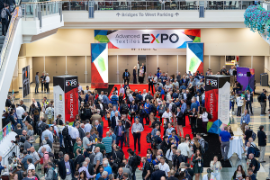
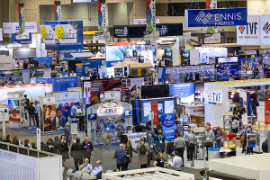
Exhibitors at ITMA 2023 showcased the latest weaving technologies, which showed a continued commitment to sustainable production and digitization.

By Dr. Abdel-Fatah M. Seyam, Technical Editor

Responding to environmental concerns and demand from consumers, textile machinery manufacturers are developing technologies to address sustainability in terms of reducing manufacturing waste, saving in energy and water consumption, and producing yarns and fabrics from recycled and biobased fibers. The technologies exhibited at ITMA 2023 revealed the continued commitment of the machine manufacturers, which started at the previous ITMA show, to focus on sustainability and digitization that light the road to Industry 4.0. It should be noted that sustainability and digitization are highly interrelated.

This paper covers some notable innovations in weaving technologies exhibited at ITMA 2023. As seen at previous shows, machine manufacturers continue to develop and improve their equipment to form diversified products for apparel, home and technical textiles markets.

Several exhibitors demonstrated weaving yarns from recycled fibers at high-speed. At the previous ITMA show, machine manufacturers marketed their technologies as Industry 4.0 ready, which has continued at this ITMA with more development in digitization. The last three decades have witnessed a dramatic increase in automation, control, monitoring of production and performance, and data storage in super computers and cloud and communication to access the data using electronic devices.

Preparation for Weaving

Sample preparation technologies were developed for rapid prototyping. Prior to the development of sample technologies, weavers used production machines to develop prototypes, which led to significant loss of production and raw materials.

Sample warpers were advanced to not only produce prototypes, but also small and medium orders for diversified line of production. Today, because of their numerous advantages, sample warpers are used not only by weavers, but also by universities and research institutions.

At ITMA 2023, Germany-based KARL MAYER Group exhibited a compact version of the automatic sample warping machine MULTIMATIC® 32 Compact with creel capacity 32 wound packages for short and medium length warps. The machine was producing an intricate striped warp. The MULTIMATIC 32 Compact is characterized by its high production, interactive multiflexible movable creel, fast pattern changes and short setup times. The increase in productivity is achieved by eliminating the stop for leasing and sizing separation.

The company offers LINKMATIC® automatic systems to increase the productivity of indigo and sizing machines by up to 30 percent. After completing a warp beam set, the system is used for tying-in the warp yarns from the new warp beam set to the set just completed.

LINK-MATIC is designed to be managed by only one operator and reduce material waste. Karl Mayer’s machines, including warp preparation systems, are networked via cloud for efficient access to machine data and remote service.

Production and quality management reports stored in the cloud can be accessed by electronic devices such as mobiles and laptop or desktop computers. Its software offering KM.ON offers customers individual solutions that include production data analysis tools for flexibility and efficiency.

Belgium-based VANDEWIELE NV again showed its Smart Creel that was introduced at the previous show. The creel is very compact compared to a traditional creel because the large wound packages are replaced with much smaller cells/holders arranged in rows and columns. Robots are used to wind the pile yarns from large wound packages with the exact length needed per weaving pattern.

Germany-based Groz-Beckert KG showed its KnotMaster as well as the WarpMasterPlus drawing-in machine that were on display at past ITMAs. The WarpMasterPlus is equipped with a computer system with swivel monitor or a touch screen user-interface with operator guided visualization that provides instructions on operation and troubleshooting via videos. Two monitors are available as an option to facilitate operator monitoring because the machine is long at between 2.4 and 4 meters. The machine consists of the drawing-in needle, drop wires, heddle wires, reed, and a single yarn from a wound package and their associated modular mechanisms. The yarn is fed to the machine by a feeder that is similar to a weft yarn feeder in weaving. The heddle wires and drop wires, which are loaded by an operator, are fed automatically to the drawing-in zone. The single yarn is fed to the drawing-in needle that threads the yarn through a drop wire eye, a heddle wire eye, and a reed dent. Then the yarn is cut, and the procedure is repeated at up to 150 times/min depending on the yarn type. After the drawing-in is completed, the drop wires are transferred to drop wire bars and the heddle wires to harnesses. The harnesses, drop wire bars, and reed are moved on a trolley to a storage area. When a weaver’s beam is ready, the drawn-in warp from a single yarn is knotted to the corresponding warp yarns using a tying-in machine. Then warp beam, read, harnesses, drop wires bars are moved to the weaving area to supply a new warp to a weaving machine according to production planning. Due to the absence of the weaver’s beam because of using a single yarn, the drawing-in machine occupies less space. However, space is required at the next step for the weaver’s beam and tying-in process post drawing-in. While the drawing-in process is faster and setup time is shorter as a result of the simplicity of drawing from a single yarn, additional time is needed for knotting the weaver’s beam yarns to the drawn-in yarns.

Stäubli’s TIEPRO features a conical yarn separator that works in auto-reverse when detecting double ends.

Switzerland-based Stäubli showed its tying-in machine TIEPRO that was unveiled at ITMA 2019, while revealing more information about the technology at this ITMA. The machine employs a new method of yarn separation from the upper and lower warp sheets. Two conical-shaped separators are used instead of the traditional method of yarn separation, which requires a range of needles depending on yarn type and size. The TIEPRO conical yarn separation mechanism is independent of yarn type and size. Additional features of the TIEPRO include: tying-in with or without lease; 3 to 100 Ne yarn count range; double end detection; short knot fringes; up to 600 knots per minute depending on yarn characteristics and size; and it’s suitable for staple yarns, 100-percent cotton yarns and cotton blends. TIEPRO is equipped with an Auto-Reverse function that is associated with detecting double ends. The machine repeats the yarn separating process on its own before tying and it does not cut the yarn. Operator intervention is required to separate the double end and then the tying-in resumes from where it was stopped.

Stäubli again exhibited its SAFIR 60 automatic drawing-in machines for striped warps. The company’s new version of Active Warp Control 0.2 (AWC 2.0) allows the SAFIR machines to detect double-end and manage color and S or Z twist sequence in instances of drawing-in warps without lease. If double-end is detected, the two yarns are returned to the warp sheet and the system tries again for picking one yarn. As for the color/twist sequence, the AWC 2.0 checks the yarn color against the color repeat sequence and if the yarn is out of sequence, it will be kept in a storage area. Yarn in storage will be picked up later and placed in the correct sequence. The color detection system is designed to detect small differences in color to meet the demand of using same color of different shade and depth.
Weaving

Germany-based Lindauer Dornier GmbH exhibited the new air jet A2, as well as its rapier P2 weaving machines. The P2 rapier weaving machines were shown at ITMA 2015 before commercialization, and at ITMA 2019 post commercialization. At the Dornier booth, one P2 Type TGV 8/S G20/360 cm with 339 cm width in reed (WIR) machine was weaving plain weave sailcloth fabric at 320 picks per min (ppm) or 1,085 meters per min (m/min) rate of filling insertion (RFI); while an A2 Type AWS 4/E D 10/280 cm with 266 cm WIR was weaving plain woven awning fabric at 900 ppm or 2,394 m/min RFI. At the VANDEWIELE/Bonas booth, a second P2 Type TKN 8/J G/220 cm with 171 cm WIR machine was weaving intricate jacquard scarf fabric at 400 to 450 ppm or 684 to 770 m/min RFI; and on the Stäubli stand, another A2 Type AWS 6/J G/240 cm with 226.5 cm WIR machine was forming jacquard high stretch sportswear fabric from warp and weft yarns containing spandex at 1,000 ppm or 2,265 m/min RFI.

The A2 air jet machines, which is the successor of A1 series that was introduced in 1989, were shown for the first time at this ITMA. The A2 machines are highly digitized. The ErgoWeave® operating panel was redesigned with optimal continuous fabric production parameters overview. The more user-friendly high-resolution interface permits monitoring and shortens changeover of woven fabric parameters.

In the vein of digitization, weaving machines may be networked using Dornier DoXNet software, which provides a user-friendly production overview. Networking does not require internet; hence weavers have full control over their proprietary production, optimum machine settings and fabrics’ specifications data. With DoXNet, the optimum machine setting for a given type of fabric can be shared with other machines weaving the same fabric. If so desired, Dornier DoXWeave’s control desk, which centrally man-ages weaving machine data in a plant or plants, allows remote access to weaving machines’ production data. The Dornier myDoX is a portal that allows customers to shop 24/7 online and provides direct Industry 4.0 connection to experts and information from Dornier.
Discussion with technical personnel at the show revealed that Dornier’s biggest contribution to sustainability is designing sturdy machines work for many years. Dornier still provides spare parts for machines produced in 1978. It is well known fact that weavers have to surplus their machines or seek machine shops for support at extremely high cost because of a lack of spare parts for early machines. The question that comes to mind is “Can such machines be digitized at reasonable cost to benefit from digitization and readiness for Industry 4.0?”

Itema’s iSAVER® technology
eliminates the need for auxiliary
selvage yarns and cutters and minimizes the fringe on the left-hand side of the fabric.

Itema S.p.A., Italy, unveiled the new EVO Series rapier machines, R9500EVO, and an air-jet machine A9500EVO. A total of 12 machines —11 EVO 1 R9500-2 and one Hercules— were in operation at ITMA; seven machines at its booth and five machines on partner’s stands. The machines covered the formation of diversified fabrics for apparel, home textiles and technical textiles using natural and high-performance fibers. At its stand, Itema exhibited R9500 EVO/220 cm weaving wool fabric at 600 ppm or 1,320 m/min RFI, R9500EVO/220 cm weaving denim fabric at 750 ppm or 1,650 RFI, R9500EVO/190 cm weaving jacquard tapestry fabric at 600 ppm or 1,140 RFI, R9500EVO/260 cm weaving jacquard terry fabric, R9500EVO/220 cm weaving reinforced sail fabric at 600 ppm or 1,320 RFI, A9500EVO/190 cm weaving bottomweight fabric, and Hercules/380 cm weaving heavy-weight filter fabric.

The five machines exhibited at other stands include R9500EVO at the Stäubli booth weaving Jacquard high fashion apparel, R9500EVO at the VANDEWIELE booth weaving Jacquard decoration fabric, R9500EVO at the MEI stand weaving label fabric, R9500EVO at the Julibao booth weaving label fabric and a R90002 weaving shoe fabric.

In terms of sustainability, Itema offers the mechatronic device iSAVER® for raw material waste reduction, which has been expanded to several other fabric types after its initial success in denim weaving. At the Itema booth, three machines were equipped with the iSAVER® device. The technology eliminates the need for auxiliary selvage yarns and cutters and minimizes the fringe on the left-hand side of the fabric. The iSAVER® is compatible with up to six different filling yarns.

In terms of digitization, Itema offers iKNOW™ and MyWeave™ systems. The iKNOW is an expert system loaded with information collected from the field over years. Itema reports the system enhances the user experience and optimizes production. Such systems are useful based on previous experience and therefore may be limited when it comes to developing new fabrics using new materials, especially fabric from recycled and bio-based fibers. The system needs continuous update that requires commitment from Itema and their customers. MyWeave is a new system that provides monitoring and management production data for a plant or plants. The EVO series is equipped with an EVOConsole of 15.6-inch-wide touch screen and can be connected to Wi-Fi and Bluetooth. It is also ready for data analysis and IoT. The EVOConsole allows access to the brand-new customer portal HelloItema, which allows customers to request service, access data and documents, and order spare parts.

Picanol’s Ultimax Terry-8-J-260 weaving machine

Picanol NV, Belgium, unveiled new rapier Ultimax weaving machines that build on the predecessor Opti-Max machines. The Ultimax machines are designed with a high degree of digitization to facilitate operation and communication with each other, as well as PicConnect. Picanol also exhibited the OptiMax-i rapier and OmniPlus-i air jet machines that were shown previously. A total of 10 machines were shown at the Picanol stand, one machine was exhibited at the VANDEWIELE/Bonas stand and one at the Staubli booth. The list of machines along with fabric type, weaving speed and RFI are listed below:

  • Ultimax-4-R-220 weaving denim fabric at 730 ppm (1,600 m/min RFI);
  • Ultimax-8-R-360 weaving voile fabric at 400 ppm (1,440 m/min RFI);
  • Ultimax Terry-8-J-260 weaving jacquard terry towel at ppm (1,417 RFI);
  • Ultimax-12-J-340 jacquard flat carpet at 300 ppm (1,020 m/min RFI);
  • OptiMax-i Connect-4-R-430 weaving anti-hail fabric at 330 ppm (1,419 m/min RFI);
  • OptiMax-i Connect-4-R-540 weaving coating fabric at 275 ppm (1,485 m/min RFI);
  • TerryPlus-i Connect-6-D-260 weaving jacquard terry towel at 600 ppm (1,560 m/min RFI);
  • OmniPlus-i Connect-4-D-340 weaving sheeting fabric at 1,000 ppm (2×3,400 m/min RFI);
  • OmniPlus-i Connect-4-D-190 weaving car seat fabric at 1,200 ppm (2,280 m/min RFI);
  • OmniPlus-i Connect-4-P-190 weaving bottom weight fabric from 100-percent recycled yarns at 1,500 ppm (2,850 m/min RFI);
  • OmniPlus-i Connect-4-J-220 weaving jacquard african damask at Staubli stand; and
  • OptiMax-i Connect-12-J-190 weaving a jacquard fabric at VAN-DEWIELE/Bonas booth.

The OmniPlus-i Connect-4-P-190 weaving machine was weaving bottom weight fabric from 100-percent recycled warp and weft yarns with fiber content 67-percent polyester/33 percent cotton at and impressive speed of 1,500 ppm (2,850 m/min RFI). The performance, and hence weavability, of yarns from recycled fibers is lower. Despite this, Picanol demonstrated the commitment to develop high-speed machines to handle such yarns containing short fibers and support sustainability initiatives. Picanol reports that the Ulti-max-4-R-220 is recycled yarn ready. Another notable achievement is weaving sheeting from fine cotton yarns Nm 102/1 warp and Nm 68/1 weft with fabric count (72x41x2) at 1,000 ppm weaving speed or 2×3,400 m/min RFI — the 2 denotes double-pick insertion. As a result of the higher levels of short fiber content in recycled yarns, higher fly is generated that settled on the machine, warp sheet and fabric during demonstration. This fly will require a blowing system to remove the lint. Blowers and suction systems are not unusual in weaving operations.

The Ultimax-8-R-360 and Omni-Plus-i Connect-4-P-190 machines were equipped with newly developed leno motion O-Leno. The O-Leno yarns are driven by a timing belt and two time gears that can be programmed to form half-turn or full-turn leno weaves to secure the fabric selvages. It may be programmed to vary form half- or full-turn leno for individual weft yarns depending on their surface characteristics.

Picanol’s highly digitized machines are Industry 4.0 ready. The company developed PicConnect to access data stored in the cloud. It is the gateway to all Picanol digital information access such as Picanol applications, IoT, AI, and customer service.

Smit’s 2FAST rapier weaving machine

Smit S.r.l. Italy, exhibited three rapier machines — the new 2FAST 220 C8 D; the GS980 260 F8 J, previously shown at ITMA; and a new conceptual machine under development, the CONCEPT 190 C8 D. The 2FAST machine was weaving denim fabric at 700 ppm with WIR 222 or 1,554 m/min RFI, the GS980 machine was weaving jacquard terry towel at 500 ppm with WIR 244.4 cm or 1,222 RFI, and CONCEPT machine was weaving shirting fabric at 800 ppm with WIR 172 cm or 1376 m/min RFI. The 2FAST and the CONCEPT machines are designed for quick style Changes. The warp stop motion of the CONCEPT machine uses a laser device, which eliminates the drop wires. Monitoring warp breaks using lasers may be challenging in situations where a high warp density causes the broken yarn to be supported by neighboring yarns instead of falling where it is detected by the laser. The 2FAST machine is equipped with 2SAVE that was shown for the first time at ITMA 2019. 2SAVE eliminates auxiliary selvages from both sides and cut weft fringes collected for recycling. While the machine at the show was weaving denim fabric, it is designed for versatility to weave fabrics for fashion, home textiles, and technical fabrics using range of yarns from different fibers and counts. The rapier uses a previously introduced free flight system — no guide is required to support the rapier during weft insertion.

Japan-based Toyota Industries Corp. showed three of its new JAT 910 air jet series machines at ITMA. A JAT910 4F-230ES-EF was weaving high fabric count (274×526) double-faced fabric at 1,000 ppm with WIR 210 cm (2,100 RFI), a JAT910 2S-340LM-ET was demonstrated weaving side-by-side 261 cm wide sheeting and 20 cm wide pillow fabrics at 900 ppm (3,060 m/min RFI), and JAT910 8T-280JE-EH was weaving four panels of different jacquard terry towel patterns at 950 ppm with 269 WIR (2555.5 m/min RFI). Toyota’s approach to sustainability is in reducing air and energy consumption. Its i-SENSOR technology monitors the leading weft yarn during insertion inside the shed prior to arrival at the right-side selvage. Early arrival — which occurs as the weft package diameter is reduced due to the fact that the weft yarn gets more air friendly with higher traction —will be detected and insertion timing is adjusted accordingly. Toyota reported a 20-percent reduction in air consumption compared to the conventional models. There are no studies in public domain that com-pares air consumption using adaptive control systems by different machine manufacturers.

Toyota’s factory management support system FACT has been evolved to FACT-plus. The system collects data in real time from weaving preparation, weaving machines and the inspection room, and pro-poses actions to machines and operators. It monitors different sensors — such as speed, pressure, temperature, and compressor pressure data, for example — and provides instructions for machine maintenance and the next assignments for operators.

Japan-based Tsudakoma Corp. exhibited a new air jet weaving machine series, the ZAX001neo, that was successfully commercialized and sold in 2021. At its stand the company demonstrated a ZAX001neo-190-2C-Cam weaving lining fabric at 1,200 ppm (2,280 m/min RFI), and a ZAX001neo-390-4C-Cam weaving awning fabric at 820 ppm (3,198 m/min). A new weft insertion system, designed as a standard for the ZAX001neo machines with optimized auxiliary nozzles positions, led to a reduction of 35 percent in air consumption corresponding to 20-per-cent reduction in air pressure compared to the previous generation model. Additionally, a direct drive high-efficiency IPM motor, developed for this series, reduces stop marks. The company upgraded its weaving support system to Weave Navigation® System II. The system has different functions: Weave Vavi® provides user support to best weaving conditions for a given situation; Tune Navigation delivers the best machine setting — including loom timing, tension, easing amount and air pressure — for a given fabric type; and i-start, which eliminates stop marks via controlling the let-off and take-up to adjust cloth fell position and the warp tension back to its pre-set levels.

3D Weaving

3D weaving for fiber-reinforced composites and other innovative applications was a highlight in the weaving area again at this ITMA. At previous shows, companies displayed 3D woven products with variable thickness, distances (spacer), stitched multilayer, and unstitched/stitched double cloth for insertion of electronics and ceramic for ballistic protection.

At ITMA 2023, VANDEWIELE showcased samples and displayed on a large screen several distance/spacer fabrics for automotive and boat applications to demonstrate the capabilities of its weaving technologies.

England-based Optima 3D was a return exhibitor at ITMA. The company exhibited one Series SJ-600-4 3D weaving machine equipped with four shuttles for weft insertion and the SX Staubli Jacquard shedding system. The machine forms one shed at a time and the shuttle is transferred by a magnetized rapier arm for weft insertion. The arm is designed with a magnetized conical space to hold the metal nose of shuttle. The machine is equipped with a linear fabric take-up motion — thick 3D preforms cannot be taken-up on rollers — and touch-screen controls for user interface. Warp yarns are supplied from a com-pact creel with rotating flanged spools that allow parallel winding for longer yarn packages and hence longer runs to reduce creel changes. The creel capacity is 576 spools, and two or more creels can be set behind the machine if needed. The company product line also includes spool winding machines. Shuttle weaving combined with a jacquard shedding system allows the formation of 3D orthogonal and angle interlocking, stitched/unstitched multi-layer along with a variety of shaped 3D preforms including I, T, Truss, cellular, among other shapes, for fiber-reinforced composites and other applications.

VÚTS A.S., Czech Republic, exhibited the DIFA air-jet weaving machine weaving 3D distance fabric. The machine can be programmed to form fabrics with variable distances between the top and bottom base, or ground, fabrics to obtain the target shape of the inflatable structure after coating. This type of distance fabric requires a mini-mum of two warp beams — one dedicated for the warp sheet for the top and bottom ground fabrics and the other is assigned for the pile warp sheet. Applications for the distance fabrics include inflatable structures such as boats of different types, dock, mats, flood protection and lifting bags.The company also showed its CAMEL ADAPTIVE air-jet machine for leno fabrics. VUTS promotes its machine as Industry 4.0 ready.

Jakob Müller’s NFM 53 2/84 MDW forming an e-textile with two conductive yarns.

Smart & High-Performance Narrow Weaving

Switzerland-based Jakob Müller Group has been developing narrow weaving machines for smart textiles applications since ITMA 2011. Back then, the company showed a wireless smart label that consisted of a woven antenna from electrically conductive yarn and a chip with integrated circuit for antifraud identification using radio frequency (RF) technology. At ITMA 2019, the company showed its NFM®MDW® — Multi Directional Weaving — machine weaving narrow fabric containing electrically conductive e-yarns from polyester/copper/silver with the aid of e-yarn guides that move the yarns out of the open reed and place them as desired to form fabric-based electronic circuits.

At ITMA 2023, Jakob Müller showed the NFM 53 2/84 MDW. Unlike the previous generation shown in 2019, the updated model uses a different methodology of laying in effect or functional yarns in strategic places to form a desired pattern. The MDW is equipped with effect or functional yarn guides with up to four guide bars available. The effect/functional yarns are moved downward aided by the guide bars. The weft yarn is then inserted to hold the effect/functional yarn in place, then the effect/functional yarn is incorporated to the fabric following the beat-up. A strategic motion can be electronically preprogrammed to move the effect/functional yarn to either side by a specified distance and lower the yarn to interlace with the weft yarn. The steps are repeated to complete the targeted design. The calculated movement of the effect/functional yarn guides results in the formation of area covered with the yarn distributed with the desired pattern. The NFM 53 2/84 MDW machine was demonstrated forming an e-textile from polyester filament base fabric yarns and two conductive yarns containing copper and nickel controlled independently by two guide bars. Potential applications for this technology include e-textiles, fashionable textiles using colored and fancy yarns, and multidirectional yarns for enhanced performance in different directions other than the main directions of warp and weft. Currently, formation of 3D multidirectional preforms for fiber-reinforced composites is achieved by manually stacking of 2D woven fabrics at different angles to form semi-isotropic and other structures with enhanced properties at different directions, which is time consuming, subjected to labor errors, and costly. The MDW technology can be expanded for broad weaving to benefit the fiber-reinforced composite industry for forming wide preforms with laid-in multidirectional high-performance yarns.

On-Loom Fabric Inspection

On-loom fabric inspection systems have been developed to detect defects at the loom stage and trouble shoot the root cause of defects and thus avoiding the production of off quality fabrics that leads to reduction in fabric waste and increase in profit. One of the early systems was Batch Motion consisting of an off-loom fabric take-up, platform/stage for operator/inspector and inspection station. The inspection station is similar to post-weaving manual inspection and relay on the weaver/ inspector’s eye to detect defects. There are several drawbacks associated with the batch motion and to eliminate manual or Batch Motion inspection, several automated on-loom fabric inspection systems with high-speed image capture using cameras and scanners were developed. Examples of these technologies include LOOM-TEX by Elbit Vision Systems, Israel, Cyclops by Duluth, Ga.-based Barco, and Fabricscan by Uster Technologies Ltd., Switzerland. These systems can capture and store fabric defect images, identify and classify defects, report defects maps, and stop the weaving process based on the severity of the defect. The systems are installed between the front fabric rest and take-up rolls, which was an improvement over the manual post-weaving and Batch Motion inspection. However, more than one meter of fabric passes the system before detection, which results in late discovery of fabric defects and leads to second quality product and waste. To avoid this serious disadvantage, Uster offers the Q-BAR 2 on-loom automatic fabric inspection system that was exhibited again at this ITMA. The scanner is installed right above the fabric formation area and covers the entire width, including the cloth fell, as well as the fabric length as the fabric is taken up for 100-per-cent quality fabric quality monitoring. The fabric is scanned right after each weft insertion so fabric inspection is not delayed. The Q-BAR 2 is equipped with a touchscreen visualization system. The system offers options for grading fabric rolls based of defect type, size, and location that can be defined based on the quality required in the end-use product.

Uster’s Q-BAR 2 on-loom automatic fabric inspection system

While there are high volume instrument systems to measure fiber quality data that spinners use to optimize bale layout for production of high-quality and consistent yarn batches and monitoring quality of yarn of individual positions on winding machines, these data are not utilized by the weavers due to lack of available systems. Warp yarns are numerous and it is extremely difficult to make use of their quality data captured during the winding process during the weaving process. It is envisioned that the Uster Q-BAR 2 system may be used to monitor the warp yarns. Two monitoring locations may be feasible: to monitor the warp sheet between the warp take off point from the warp beam and web roll using additional unit; or, to monitor the warp and fabric quality using one unit. The latter approach is less expensive but more challenging as the reed moves — from the beat-up position to the most back position —and comes between the scanner and the warp sheet up to 1,500 times —equal to loom speed in ppm. However, this may be accounted for since the system uses high-speed cameras.

Road To Industry 4.0 For The Weaving Industry

The ultimate goal of Industry 4.0 is to maximize productivity, efficiency and product quality through automation and digitization of technologies that allow communication between machines, software systems, and people via the Internet of Things throughout different stages of the pipeline required to manufacture a product. This can be achieved by cyber-physical systems and big data/cloud storage to collect data from sensors and integrate them for analytics and artificial intelligence (AI). In terms of automation, weaving machine manufactures have developed numerous automated systems including warp stop motions, weft stop motions and automatic repair, monitoring stops and efficiency, adaptive weft control systems for air-jet weaving for saving energy, automatic weave/pattern change, pre-programmed weft selection for intricacy and hybridization, preprogrammed variable machine speed, preprogrammed weft density, automatic on-loom fabric inspection, automatic smart drawing-in and tying-in machines, individual warp yarn control in jacquard, and individual harness control in dobby, among other automation technologies. More affordable automations are still required to achieve the goal of Industry 4.0, including automatic repair of broken warp yarns, multi-phase weaving that triples or quadruples productivity with dobby/jacquard shedding systems, and automated style change system. There is a need for integration of the entire technologies required to manufacture woven-based products from fibers since the productivity and quality are influenced by all the steps required to form them.

At this ITMA, weaving machine manufacturers continued to advance their technologies with high degree of digitization that allows machines to communicate and store big data relevant to the production and fabric quality that are accessible to users via intuitive use-friendly interface. Manufacturers’ software products are broad and varied, which poses challenges to companies housing machines from different manufacturers. Machines are driven digitally by proprietary and elaborate low-level computer code. A company with machines from different manufactures cannot integrate its production and quality data without adding significant cost. The integration must be done by collaboration between machine manufacturers to standardize data access and user interface or by a third party. The demand from customers may lead government agencies to regulation of standardization. Collaboration between companies that are not fully vertically integrated, such as greige fabric producers, are in need to collaborate with their suppliers and customers to take full advantage of digitization and Industry 4.0.

The complexity of the textile industry creates a need for a technical team with collective skills in textile technology and engineering, machine learning, AI models, computer programming language, mathematics, and statistics to achieve the goals of Industry 4.0. Vertically integrated companies may afford to build such a team. Those who cannot afford such a team may collaborate with their business partners or retain consultant firms in the field. How fast the textile industry completes the road to Industry 4.0 depends on the factors discussed above and perhaps more importantly on the economy.

September/October 2023

Composite Machinery Innovations

Dornier offers the PROTOS® tape weaving composite technology

While ITMA remains an event with limited composites offerings, plenty of composite related innovations were to be found at ITMA 2023.

By Prateeti Ugale

The 19th international textile machinery show, ITMA 2023 was recently held in Milan. The “Olympics” of textile machinery exhibitions held every four years, has a 73-year history of displaying the latest technology for every single work process of garment making and textiles. Out of the many products specialized in various areas, this article focuses on the latest and existing machinery for textile reinforcement structures, composite processing machinery, and accessories for the same.

A composite is made up of at least two components that possess significantly different physical and chemical properties which when combined forms a material that possesses advantageous properties of all the base components. In textile reinforced composite, the two components are matrix, which is a polymeric bonding component and textile, which is a reinforcement. The resultant composite benefits from tensile strength of the textile reinforcement and compressive strength of the matrix. Common fibers used are carbon, glass, basalt, aramid, or natural fibers to provide strength to the material whereas, matrix resins include materials like epoxy, polyurethane (PU) and others which function as glue to hold the reinforcement in place1. Braiding, nonwovens, knitting, weaving production techniques can be used to obtain reinforcement architecture. Composites have infinite applications including automotive, sports, aerospace, medicine, construction, and many others. The composite manufacturing process usually includes:

• prepreg — fiber architecture achieved through careful placement of fibers also called tape laying;
• impregnation — fibers and resins are comingled to form a composite; and
• consolidation — intimate contact is made between layers of fibers or lamina.

Composites can also use fillers, additives, and surface finish coatings depending on end-use applications. Lamination technique or process is another class of composite which involves manufacturing a material with multiple layers to achieve end-use properties like appearance and strength.

Technical Textile Reinforcement Structures

Braided Reinforcement Structures — Braided composites are at the forefront of the composite market due to their structural integrity and cost efficiency. The France-based Interreg North-West Europe (NWE) Program supported COBRACOMP project aims to develop, test, and validate a new automated textile braiding process to produce preforms for composite materials reinforcement. The organization displayed a section of its braider at ITMA. Higher mechanical performance is achieved with the innovative multilayer 3D axial braid assembly with more axial yarn, fiber fraction, and homogeneity. Composites expert Georges Cahuzac invented new architecture that has no gaps between unidirectional (UD) fibers, a bias to UD ratio of 5:4 equal to 80 per-cent and introduces four UD sections per layer. Front crash cone is an application that illustrates that this braid can absorb lots of energy due to the presence of UD yarns which help resist crack propagation.

Zhejiang Benfa Technology Co. Ltd., China, showed a hose braiding machine at its stand. The braids produced from this braider are used as high-pressure wire hoses, Teflon hose, high pressure rubber hose and car air-conditioning hose, among other applications. Its machinery can braid using stainless steel and aluminum wire as well as nylon, polyethylene and composite yarn material.

Germany-based HERZOG GmbH displayed SE 1/32-432 and SE 1/32-266 rope braiding machines. Its GF 1/32-120 glass fiber braiding machine along with the take-up is used for producing fiberglass sleeving and for overbraiding hoses with fiberglass.

Nonwoven Reinforcement Structures — Germany-based AUTEFA Solutions converts carbon fiber waste by recycling carbon fibers to carbon fiber nonwovens. If the waste is resin-free it can be directly processed on AUTEFA machinery; if not, the resin needs to be removed using pyrolysis. The Aerodynamic Web forming Machine Airlay K 12 can produce a nonwoven with isotropic fiber orientation and medium fiber separation. Autefa Solutions’ Carbon Card can produce incredibly good fiber separation with UD orientation. The fiber orientation, surface weight and width of the nonwoven can be adjusted using Crosslapper TOPLINER in combination with the card. Its Needle Loom Stylus can process 100-percent carbon fibers and enable mechanical web bonding. By adding a thermoplastic, thermal bonded nonwovens can be produced using Thermobonding Oven HiPerTherm. Autefa is the key supplier for carded-crosslapped needlepunch lines, aerodynamic web forming technology, thermobonding lines and spunlace lines.

Dilo Group’s MicroPunch technology made its debut at ITMA 2023.

Germany-based Dilo Group demonstrated brand new MicroPunch technology as alternative to hydroentangling. This is a “green” needling technology for lightweight nonwovens right from bale opening to final winding step. The technology is classified green because the trimmed material can be recycled within the process therefore there is no fiber loss and no water is consumed. These lightweight nonwovens — in the range of 30 to 40 grams per square meter (g/m2) — may be used for applications including artificial leather and automotive, among other applications. Dilo’s inventions Hyperpunch and Cyclopunch have speed of 150 meters per min (m/min) and stroke frequency of 3,000 per minute. Dilo demonstrated the machine with a needle density of 45,000 needles per m per board, a barb depth of 20 to 40 microns, and throughput speed up to 140 m/min at 2,000 strokes/min. Dilo Group machines can also process aramids, glass fiber, P84® and polypropylene (PP), which is useful for composite applications.

Woven Reinforcement Structures — Germany-based Lindauer DORNIER GmbH’s A2 air-jet weaving machine debuted at ITMA 2023 and hence, its stall was very busy. This new machine provides improved efficiency, as well as enhanced flexibility and reliability to technical textiles. Electronically controlled systems monitor and control reliable weft insertion. DORNIER Composite Systems® is designed to produce high-quality reinforcement fabrics. World renowned, the P2 roving weaving machine produces reinforcement fabrics using carbon, glass and aramid fibers. Tritos® PP equipment manufactures multilayer textiles with complex structures for composite reinforcements using digital weave patterning, rapid rapier motion for low filamentation, and flexible shed geometry. Protos® TW is a tape weaving machine that can process strip-like materials such as fiber reinforcement tapes and films using zero twist feeder. Lastly, Protos® TP machine is used for UD tape which can be either be coated with a binder or impregnated with thermoplastic resin.

Switzerland-based Jacob Müller Group exhibited the Narrow Fabric Loom NFM 53 2/130, which can make spacer fabrics, tapes, rigid webbing and elastic ribbons with controlled thread transports suitable for all yarn types.

Knit Reinforcement StructuresCOMEZ International, a member of the Jacob Müller Group presented the DNBF/EL-800, an electronically controlled raschel type warp-knitting machine that can produce 3D knitted fabrics, tubular fabrics and nets for the automotive industry. It operates at a higher speed compared to the previous models. Müller also offers the NH2 53 8/27 needle loom that uses the Z6 weaving system to make spacer fabrics suitable as reinforcements in lightweight composite materials and can provide good compressive stability by incorporating monofilaments.

Germany-based Karl Mayer Group showed new digital developments and applications of artificial intelligence to change patterns without making manual adjustments. It demonstrated the HKS 3-M ON, which is the fastest three-bar tricot machine and a compact warp knitting machine, as well as a warp knitting machine with magazine weft insertion to produce technical textiles with reduced weft yarn waste and increased working speed and width. The KM.ON dashboard is user-friendly and tackles the issue of global shortage of skilled workers. MULTI-MATIC® 32 Compact was the highlight in the warp preparation area. Karl Mayer also offers composite machines for producing biaxial and multiaxial textiles, fiber spreading lines and fiber reinforced thermoplastic tapes.

BIAXTRONIC® II can produce biaxial layer structures; COP MAX 4 can produce multilayer, multi-axial structures; MAXTRONIC® can produce high performance glass fiber composites; and COP MAX 5 can process carbon fibers and lightweight textiles. UD 500 AND UD 700 are fiber spreading machines that can produce fiber tapes from continuous filament yarns. SIM.PLY UD can produce tapes up to a width of 800 millimeters (mm).

IPCO’s ThermoPress HB —hybrid belts — double belt press for composite applications.

Impregnation, Coating, Lamination Lines For Prepregs & Composites

At ITMA 2023, Sweden-based IPCO AB highlighted its Thermo-Press Systems and Scattering Systems. IPCO’s scatter system can deposit powdered, granular and fibrous materials onto a carrier material up to 1800-mm-wide. Applications include composites, nonwovens and textiles. ScatterPro F can scatter fibers like glass and carbon uniformly using key features such as a special agitator for uniform distribution, optimized scattering roller to hold the fibers, a rigid or adjustable doctor blade, easy change of the brush roller and a scattering roller with digital position display to adjust the distance between the two rollers.

IPCO manufactures double belt presses used in composites produc-tion. Its presses include ThermoPress TB, which has Teflon®-coated belts and counter pressure elements to make multi-layered materials, mixed thermoplastics, carbon fiber, glass fiber, and composite sandwich sheets. ThermoPress CB is used in making fiber-metal composites. ThermoPress SB is a high-pressure steel belt-based double belt press technology used to make high performance metal-plastic composites. IPCO has a 1,600-square-meter center of excellence testing center in Germany that has a full range of processes from impregnation, lamination, and consolidation to tempering and cooling. The company can consolidate prelaminate sheets and impregnate fibers with resin which can be applied in liquid, film, or powder form on a felt or nonwoven material.

Germany-based BRÜCKNER Trockentechnik GmbH & Co. KG, exhibited innovations for textile coating and finishing at ITMA 2023. Its finishing line for glass mesh fabric and for construction reinforcements is the Techno-line TT glass fiber finishing line. OPTI-COAT KA/KC coating unit has a simple and com-pact design with combined floating knife-/knife against cylinder unit. Woven and knitted fabrics can be processed for end-use applications including technical lightweight protection materials and air bags.

Since 1949, Germany-based Maschinenfabrik Herbert Meyer GmbH has been making fusing, laminating, and scattering machines and presses. At its booth a Technical Sales representative mentioned that the company has bonding technology for composites like honeycomb sandwich sheets and fiber reinforcement composites; and for technical textiles like powder coating and impregnation. For prepregs, the flow behavior of the thermoplastic adhesive is important as the fibers need to be optimally encapsulated. Prepreg makes semi-finished products for end-use components. For this application Meyer has laminating machines that can generate high pressure linearly as well as surface wise. These prepregs can be used in televisions, notebooks, mobile phones, the aviation and automotive industries and for lightweight construction components. The KFK-P is a high pressure at elevated temperatures laminator used for processing fiber reinforced composites and other composites. Some technical highlights are hydraulic belt tension, hydraulic pressure by the means of pressure rollers and pneumatic surface pressure.

Meyer also offers a production line to make glass mats from glass rovings with the help of a cutting unit that cuts the roving into a defined length and spreads them evenly on a conveyor belt. Then a powder scatterer distributes the adhesive powder. An infrared preheating station helps fast melting of the adhesive to increase the production speed. Applications of the lamination and scattering machines are tempering and sintering of UD-/Machine Direction (MD)-layers, coating of UD-tapes, thermoconsolidation of UD-/MD-layers, connecting of single UD-tapes to large-area layers and, production of UD-/MD tapes in different effective direction.

Meyer’s thermoconsolidation press is suitable for carbon layers or any other material that requires high processing temperatures. The temperature can go up to 400°C.

Italy-based Matex S.r.l. has expertise in coating and finishing machines since 1973. At ITMA 2023, it showed a reverse cylinder coating head with features including independent driving system, tension control for adjustments with lightweight materials, trays for continuous recirculation, gap control using digital display, removable roller and cleaning tray which help with easy maintenance. The machines can do direct coating and transfer coating with a knife or rotating cylinder. Matex also has impregnation equipment such as Rotocomp for impregnation of composite substrates with carbon, glass, or aramid fibers. Rotocoat, Rotomark, Rotopharm, and Rotosplit are its lamination lines. End-use applications include soundproofing for offices, automotive and filtration.

Zappa Macchine S.r.l., Italy, was founded in 1860, and its long history brings experience and knowledge in hot melt lamination, coating, impregnation, calendaring, flock, prepreg and powder scattering. With coating head model HSM-2, blade in air and blade over roll coating is feasible. This technology is used in applications like prepregs, technical textiles and traditional textiles. The head can be customized per a customer’s requirements and has accurate blade gap settings. Width ranges from 500 to 6,000 mm, and mechanical speed is 0 to 40 m/min. The company also highlighted a rotogravure head that can coat different water-based resins on a fabric for the Brinatura “frosted” effect. It can apply micro-dots of resin using different engraved rollers. The head also may be used to apply special effects such as lamination with metallized film. The web width of this machine is 1,600 to 3,600 mm and mechanical speed is 0 to 40 m/min.

Italy-based COS.T.A. S.r.l. designs industrial lines for applications including synthetic leather, tannery, carbon fiber dip coating and furniture edge banding. COS.T.A. offers high-performance dip coating technology for carbon fiber, fiber-glass and Kevlar® that can be used for prepreg preparation. The company also has lab lines for research and development, self-adhesive technology, technical textile laminations and hot melt lines.

Germany-based A. Monforts Textilmaschinen GmbH & Co. KG presented the Montex®Coat coating unit which can coat using air knife, roller knife, magnetic doctor blade, rotary screen printing, paste and foam coatings — hence, can offer a lot of tailor-made solutions from one source. It has improved features including saving setting time, handheld control device, and automatic edge limiters for immediate adaptation to changing coating widths.

At ITMA, Van Wees had samples of high performance-fibers for the production of composites used in applications including sailcloth and flexible protection materials like bullet-resistant vests.
Source: Photo taken at Van Wees booth during ITMA

The Netherlands-based Van Wees UD and Crossply Technology B.V. entered the composite industry in 1994. The company is proud to be the only company to offer UD and multi-axial cross-ply technology. It manufactures UD thermoplastic resin impregnation machines, fabric prepreg (thermoset) impregnation machines, crossply machines, lamination lines, creels and other custom-built machines. It also offers product and development services at its Research and Technology Center (R&TC).

Van Wees displayed a variety of samples at ITMA including glass fiber PP, a crossply roll of carbon fiber PP; materials used for soft applications such as sailcloth and flexible protection materials like bullet resistant vests; and flax fiber reinforced polymer.

At Van Wees, technology offers a spreading section, impregnation section, and final winding using tension control on every yarn. The fibers that may be process on these machines are glass, carbon, aramid fibers and ultra-high-molecular-weight polyethylene (UHMWPE), which are converted to UD tapes using dispersion resin. These tapes are then used as raw materials for the multiaxial UD or crossply machines to make composites with various fiber orientations and layers.

The three machines Van Wees offers for impregnation of fibers and fabrics are dispersion impregnation, thermoset impregnation by reverse roller coater, and thermoplastic resin impregnation with inline extruder. The dispersion impregnation is stable with high impregnation due to easy penetration at the speed of 20 m/min. The thermoset prepregs are made in one step process by reverse roller coater at a speed of 3 to 10 m/min. For impregnation of thermoplastic resins, the film is made by melting the polymer in an extruder and metering the film thickness on impregnation roller at a speed of 3 to 15 m/min.

VanWees also has equipment for making flakes, which can be compression molded on a press to make make products. For flat panels, it has heated tables on which the materials is consolidated using vacuum pressure only. All the equipment used in-house is commercially available.

Van Wees also has expertise in testing and consultation, and has inspec-tion machines at its research facility, as well as drumwinders that can mimic the processes as it would take place in actual crossply and UD production.

Texmer creel
Source: Photo taken at Texmer booth during ITMA

Accessories For Enhancing Composite Production

Texmer GmbH & Co. KG, Germany, specializes in developing and supplying creels for all winding materials that can be pulled off both tangen-tially and overhead. A motor on the creel calculates and controls tension from full bobbin to empty bobbin. The company developed patented tension balancing systems that provide a substantial number of adjusting possibilities. Texmer has experience with high-quality pneumatically braked creels characterized by short response times, high operational safety and extremely low wear. Diameter control secures trouble-free operations. These creels are made for technical yarns and tapes. Specially coated guide elements help reduce carbon fiber damage to a minimum and increase process reliability. It is particularly important for low yarn tension glass roving creels to have exact control. Pneumatic mandrels have unrolling solutions for glass fiber roving without a twist. The yarn comes in minimum contact with the Texmer creel and can be drawn as far as possible without deflection. A polyacrylonitrile (PAN) precursor creel can hold bobbin diameters up to 1,000 nanometers and weight up to 500 kilograms (kg). All positions are individually controlled. Once the controlling unit of the electronically controlled creels is adjusted it will maintain a required thread tension by accelerating or decelerating the motor during operation.

Topocrom GmbH, Germany, offers Topocrom® surface structure for wear and corrosion protection that helps extend the service life of machine parts. It is challenging to process technical fibers such as carbon, aramid, glass and basalt fibers because they can be very abrasive. If the fiber filaments break, tear, stick or splice it can lead to interruptions in automated operations, which often happens because of the unsuitable surface of the guiding element. Topocrom employs a chrome electroplating process. Base materials suitable for chrome plating include steel, steel alloys, cast iron, stainless steel, copper, copper alloys, titanium and titanium alloys. The roughness of the surface can be changed by altering the current during electroplating and Topocrom coating can prevent splicing, wrapping, adhesion of filaments, reduce dust formation and increase wear resistance.
Van Wees also develops creels with features such as regulated yarn tension with manual or automated adjustment for each individual row or the entire creel. This is helpful when processing yarns like nylon, polyester, aramids, and UHMWPE. In the case of carbon fiber, it supplies special eyelets to avoid twisting the tows. Van Wees’ glass roving creel can handle heavy rolls up to 25 kg.

Switzerland-based Retech AG provides heat treatments for filament yarns with high-quality components, machines and in-process monitoring systems. The company demonstrated intriguing sustainable advancements for heated godets that are crucial in manufacturing synthetic yarns. Retech presented the new “blue line” tem-perature controller UCR-6/CR-7 and transmitter UTR-4 /UTR-4A. The new devices are sustainable as they con-sume less energy, which reduces the overall cost while producing exceptional results. Retech presented its innovation in a customized draw frame with godet, Internet of Things (IOT) technology and (super) slow speed drive concept. It presented vibration measurements, bearing temperature display and induction temperature measurement; and its demonstration unit explained the negative temperature effects and vibrations. The newly developed algorithms, monitoring devices and sensors can achieve higher productivity, less downtime and a longer lifetime.

Germany-based Osthoff-Senge GmbH & Co. KG demonstrated one of its singeing machines that often is a first step in finishing. Woven and knitted fabrics comprised of cotton, viscose and glass fibers may be treated. The display machine was five feet wide and ran at a speed of 100 m/min.

Conclusion

Textile composites play a significant role as innovations in lightweight performance materials used in sleeves for electron volt batteries or artificial leather for high-end fashion brands, among other applications. The theme for ITMA 2023 was “Transforming the World of Textiles” and the event featured 20 sectors of innovations including composites, although composite technologies remain a relatively small focus. Some companies specialize in composite technologies, while other companies are focused on manufacturing such as braiding, nonwovens, knitting and woven reinforcement that may be used in composite applications. At ITMA, several companies demonstrated the ability to process high-performance fibers on their machines, provide research and development consultation and testing and contract manufacturing. Overall, this year’s ITMA unveiled remarkable advancements in improving process sustainability by reducing waste and adding smarter and faster technologies to make machines more automated and efficient.


References:

1 Romeo RIM. (n.d.). What Are Composites? – Romeo RIM. Retrieved July 19, 2023, from https://romeorim. com/what-are-composites


Editor’s Note: Prateeti Ugale is a Ph.D. student in Fiber and Polymer Science and a research and teaching assistant at NC State University’s Wilson College of Textiles, Raleigh, N.C.


September/October 2023


Celebrating Georg+Otto Friedrich — KARL MAYER’s First Warp Knitting Customer

(right to left): Julian Schubert, sales manager at KARL MAYER; Philipp Seubert, executive board, GOF Industrial; Kai Trippel, executive board; and Jonas Menzel, Procurement from Georg+Otto Friedrich

OBERTSHAUSEN, Germany — September 27, 2023 — The KARL MAYER GROUP is proud of its long-standing partnerships. Some of them have been in existence since the very beginning, and one of them recently celebrated a round anniversary: the first warp knitting machine produced by the innovative textile machine manufacturer based in Obertshausen was sent on 10 September 1948 to Georg+Otto Friedrich, a leading producer of warp-knitted digital printing fabrics and technical textiles in the neighboring town of Groß-Zimmern. As a token of its solidarity, the loyal customer has donated an old treasure — the seventh machine built  to KARL MAYER’s Academy.

Setting trends in warp knitting

After the first investment 75 years ago, the two companies have grown continuously together and have advanced warp knitting. Georg+Otto Friedrich has tested many new KARL MAYER models in live operation in its workshops, thus helping them to be successful. In addition, valuable impulses for further developments came from the resourceful textile producer. “280″ were considered technically unfeasible for a long time. Today KARL MAYER builds even wider machines,” recalled Managing Director Kai Trippel of an example of this.

Today, Georg+Otto Friedrich is the largest customer of the model of KARL MAYER’s most modern generation of tricot machines, the HKS 3-M ON. Just in December 2022, the last machines of an extensive investment project were put into operation. The company produces around 650 tons of warp-knitted fabrics per month at its sites in Groß-Zimmern in Hesse and Limbach-Oberfrohna in Saxony. In Neresheim in Baden-Württemberg, there is a separate company for textile finishing. Thanks to the high technical level of the machines and the know-how of the employees, the textile products made by Georg+Otto Friedrich are of the highest quality.

Leadership position obligates

In addition to high quality, the company focuses on sustainability. “As the leading manufacturer of textile solutions in Europe and as the world market leader in the field of digitally printable warp-knitted polyester fabrics, we have a special responsibility for environmental and social issues,” explained Philipp Seubert, managing director of GOF Industrial. Georg+Otto Friedrich, for example, was a pioneer in the processing of recycled materials, starting with the first processing tests around ten years ago. It then took a good five years to develop the market for this new material.

“We first had to explain a lot why a PET recycled in Europe has a much smaller carbon footprint and what effort is involved in collecting, sorting, cleaning, etc,” said Philipp Seubert. Today, complete product lines and diverse articles made from recycled post-consumer PET are offered. Of particular note here is DecoTex Blue, a sustainable textile developed by Georg+Otto Friedrich together with the SEAQUAL® initiative. The fabric consists of more than 60-percent SEAQUAL polyester fibers, made from recycled marine plastic. By participating in the PLANT-MY-TREE® reforestation program, the manufacturer also aims to completely offset the CO₂ footprint of its recycled textiles within a few years. By August 2023, around 6,000 trees had already been planted.

In addition to recycling, Georg+Otto Friedrich focuses on the topic of energy. “The solutions to many of today’s problems require energy. It is important to us to save electricity and use renewable energy,” emphasized Jonas Menzel from purchasing. Looking over the hall roofs in Groß-Zimmern, it becomes clear that the company is serious about this: solar cells on the buildings as far as the eye can see. Around 30 percent of the energy required comes from the company’s own generation. The installed capacity can supply 800 households.

Georg+Otto Friedrich is therefore well positioned for the future. KARL MAYER Sales Manager Julian Schubert is looking forward to a continued bilaterally successful cooperation. He particularly appreciates the exchange at eye level.

Posted: September 27, 2023

Source: KARL MAYER GROUP

September/October 2023

Macy’s Inc. has joined the U.S. Cotton Trust Protocol, Memphis, Tenn.

PrimaLoft Inc., Latham, N.Y., recently launched PrimaLoft® Utility, a resilient, man-made insulation material designed to excel in harsh conditions and last longer.

Blue Ridge Home Fashions, Irwindale, Calif., has introduced a new basic bedding collection —comprised of filled pillows, comforters, mattress pads, mattress toppers and blankets — featuring CiCLO® sustainable textile technology from Intrinsic Advanced Materials LLC.

HanesBrands, Winston-Salem, N.C., has announced a multi-year licensing agreement for the design, production and distribution of Champion and C9 Champion outerwear in North America with New York City-based G-III Apparel Group Ltd.

Navis TubeTex, Lexington, N.C., is now a sales agent in Canada, Honduras and the United States for Germany-based SETEX a producer of controllers, sensors and software solutions for textile dyeing and finishing operations.

Cone Denim®, Greensboro, N.C., has joined the CIRCULOSE® Supplier Network. It reports it is the first U.S.-based denim mill to join the network, which comprises yarn and textile manufacturers committed to streamlining and increasing the production of Circulose, a cellulosic fiber made using waste material.

Switzerland-based electronic warp feeding system provider Crealet AG is celebrating its 20th anniversary.

Aurora Specialty Textiles Group, Yorkville, Ill., recently celebrated 140 years of continuously manufacturing products in the United States.

New York City-based denim brand Madewell has become a bluesign® System Partner.

Montreal-based Gildan Activewear Inc. recently published its 19th Environmental, Social and Governance (ESG) report, which highlights the companies 2022 performance against
key targets.

September/October 2023

September/October

Brent Hyder has joined Denver-based VF Corp. as chief people officer. He reports to President and CEO Bracken Darrell.

The Italy-based Association of Italian Textile Machinery Manufacturers (ACIMIT) has appointed Giorgio Calculli managing director. He replaces Federico Pellegata, who after 25 years as managing director, is moving into a role as CEO of ACIMIT Servizi S.r.l., a company that provides services to its associated member companies to help promote and support the Italian textile machinery at home and abroad.

The board of directors at Albany International Corp., Rochester, N.H., has named Gunnar Kleveland the successor to Bill Higgins as president and CEO. Higgins is retiring, but will remain on Albany’s board.

Tom Gyles is the new senior vice president, Global Distribution Network in Canada, for Portland, Ore.-based Columbia Sportswear Co.

Standard Fiber, Foster City, Calif., has named Trina Solomon to the new position of vice president, marketing and brands.

Daren Abney was recently named executive director of the U.S. Cotton Trust Protocol.

Dr. Sanjay Patel has joined Navis TubeTex, Lexington, N.C., to lead the chemical applications product line and strengthen the company’s commitment to providing sustainable chemical finishing solutions.

San Francisco-based Gap Inc. has named Chris Blakeslee president and CEO of Athleta.

Kontoor Brands, Greensboro, N.C., has appointed Pete Kidd executive vice president and chief human resources officer.

Cincinnati-based Standard Textile Co. Inc. has named Jonathan Simon executive vice president of Global Growth and Strategy.

Markku Koivisto, senior vice president, Europe and R&D at Helsinki-based b, has been named interim senior vice president, Americas. Lynda Kelly, senior vice president, Americas and Business Development, has left the company for medical reasons. The company has started the search for a new senior vice president, Americas.

September/October 2023

Soft, Sustainable ZZZs

Cotton Incorporated’s RESTech COTTON™ technology imparts increased softness, moisture management properties and durability to cotton sheeting for a more restful night’s sleep.

By Rachael S. Davis, Executive Editor

When polled by Cary, N.C.-based Cotton Incorporated as part of a Home Textiles Survey, 79 percent of respondents said quality is a priority when choosing sheets, 70 percent actively seek 100-percent cotton goods and quality bedding translates to better sleep according to 87 percent of people polled. In addition, 71 percent express a desire for environmentally friendly textiles.

Cotton Incorporated’s latest innovation, RESTech COTTON, uses advanced chemistry to create a 100-percent cotton sheeting solution that checks all the boxes to meet those consumer concerns and produce a restful night’s sleep. The company reports the technology brings comfort, durability and softness to sheeting products, while remaining an ecofriendly choice because it’s biodegradable and recyclable.

According to Cotton Incorporated, RESTech COTTON-treated sheets are up to 40-percent softer than untreated cotton sheets, with durability that beats polyester and rayon when tested against ASTM D3885 – Standard Test Method for Abrasion Resistance of Textile Fabrics. In addition, RESTech boosts the natural moisture management and thermoregulating properties of cotton, and  may dry up to 50-percent faster on the skin, thus providing cool comfort for hot sleepers. Cotton also is a naturally hypoallergenic fiber that is gentle on the skin for people with skin sensitivities.

The technology is applied as a finish using a standard pad-dry-cure application after the sheets have either been bleached to a finish white or dyed.

According to Mark Messura, senior vice president, global supply chain marketing for Cotton Incorporated, the cotton-specific innovation was designed for practical implementation and may be licensed from the company with the only requirement that it be used on 100-percent cotton fibers. However, there may be further applications for the technology that will be introduced in the future.

“RESTech COTTON technology takes the best attributes of cotton and cotton finishes to create a unique, durable product with non-fluorine technology,” noted Dr. Hongqing “Mike” Shen, vice president and managing director of product development and implementation for Cotton Incorporated. “It allows sheets to hold less moisture, dry more quickly, maintains remarkable softness and comfort. This combination makes it a triple threat.”

“With our RESTech COTTON technology, we’ve captured the timeless comfort of cotton and enhanced it with modern innovation, redefining the possibilities of a good night’s sleep,” said Jennifer Lukowiak, director, supply chain marketing, for Cotton Incorporated. “This technology is a perfect choice for those seeking not just better sleep but a more sustainable one. It’s another proud mile-stone in our continuous effort to promote the natural excellence of cotton.”


For more information on RESTech COTTON™ please visit cottonworks.com /restech-cotton.


September/October 2023

PAKA® Launches Performance ¾ Crew Socks

BOULDER, Colo. — September 28, 2023 — PAKA®, an innovator in alpaca fiber apparel, is excited to announce the launch of its new Performance ¾ Crew Sock. Since its launch in 2017, PAKA has been setting the standard for alpaca-based athleticwear. The Performance ¾ Crew Sock highlights their latest innovation with the natural fiber, incorporating the finest alpaca yarn diameter the company has ever used to create an ultra-soft and highly durable multisport sock.

Alpaca fiber is a performance powerhouse — it’s naturally odor resistant, moisture wicking and thermoregulating. Alpaca’s impressively low moisture retention rate of 8 percent (typical wool compares at an average of 18 percent) helps to keep feet dry and comfortable, and avoids the moisture and friction buildup that can lead to blisters. Alpaca fibers also contain a keratin protein with natural antibacterial properties that make it incredibly difficult to make these socks smell.

Paka takes these inherent features of the fiber to the next level with intelligent design. The Performance ¾ Crew Sock is crafted with a snug rib-knit design to avoid shifting and friction, a breathable mobility mesh where the ankle meets to the foot to promote ventilation, compressive arch support, and strategic extended heel padding for high-impact zones.

“We wanted to create a versatile performance sock that could stand the test of intense biking, hiking and backpacking. We went all the way back to refining the yarn in Peru, creating a much finer thread count that would knit into a high-compression rib,” said Kris Cody, PAKA Founder and CEO. “We went through probably 15-20 prototypes, sending them out on treks until the sock encompassed everything our community needed.”

The Performance ¾ Crew Sock is available for $24 in Black, Charcoal, Blue, Walnut, Quail and Forage colors

Posted: September 27, 2023

Source: PAKA

PT. Embee Plumbon Tekstil (Indonesia) Joins International Textile Manufacturers Federation (ITMF) As Corporate Member

ZURICH — September 27, 2023 — Since PT Embee Plumbon Tekstil started its operations in 1999 in Indonesia the spinning company has evolved into one of the leading spinning companies in the world. Embee pursues a customer-focused approach by continuously upgrading its technology, by producing in a skillful manner, and by conducting comprehensive training programs. This approach allows setting the highest standards in product and process development.

Christian Schindler, director general of ITMF, stated that: “ITMF is very fortunate to welcome such a renowned spinning company as a new Corporate Member in its membership. companies like Embee demonstrate how important it is to offer quality products that the markets demand at a competitive price. ITMF offers Embee an environment that can be seen as sounding board. This helps Embee to better understand the company’s position in the global competition, to learn about the prevailing trends in the global industry and to identify suitable suppliers and customers”.

Vijay Agarwal, president director of PT. Embee Plumbon Tekstil, commented that: “by joining ITMF we become a part of a unique universe of the global textile supply chain. It is important for Embee to look beyond the daily business and develop a feeling for the evolution of the industry. A forum like ITMF offers just that. To have access to ITMF’s data, survey, webinars, and its international network across the entire textile value chain provides intangible value for us. Engaging with colleagues from around the world in an atmosphere of trust is very valuable.”

Posted: September 27, 2023

Source: International Textile Manufacturers Federation (ITMF)

MAS Holdings’ Fabric Park Redefines Sustainable Manufacturing

THULHIRIYA, Sri Lanka — September 27, 2023 — In an era where environmental sustainability is transitioning from choice to necessity, MAS Fabric Park (MFP) stands out as a revolutionary force in Sri Lanka’s apparel industry. Nestled in the tranquil environs of Thulhiriya in the Kegalle District in Sri Lanka, this 165-acre privately owned apparel-intensive free trade zone is not just a manufacturing hub; it’s the result of the MAS Group’s unwavering vision for sustainability, a testament to the Group’s dedication and a shining example of business harmonizing with the environment.

A Vision for Positive Change

MAS Holdings, the parent company of Fabric Park, has long embraced a vision of sustainable growth and positive transformation within the Company’s ethos, which is seen throughout the organization and its initiatives. The belief is that sustainability goes beyond profit; it’s about fostering positive change in the world, making a difference for the communities around the locality, and leaving a lighter footprint on our planet.

Murad Rajudeen, CEO of MAS Fabric Park

MAS Fabric Park’s CEO Murad Rajudin explained that MFP provides partner plants with centralized utility services including treated water, raw effluent treatment for factory-discharged water, energy in the form of electricity distribution from the main grid, steam, and thermic heat, based on the location of the plant.

“MFP plays a pivotal role in the intricate supply chain of MAS Holdings. Firstly, it is a strategic hub for fabric development and value addition, contributing significantly to the vertical integration of the MAS supply chain. This integration is crucial in a global industry where speed, efficiency, and reducing carbon footprint have become paramount. By offering state-of-the-art infrastructure and facilities for fabric manufacturing right within Sri Lanka, MFP not only streamlines operations but also aligns with the global demand for responsible and sustainable manufacturing practices.”

Comprehensive Water Management, Waste Reduction, and Value enhancement

Sustainability is deeply ingrained in every facet of MAS Fabric Park’s operations, notably in its approach to IPZ’s overall water footprint management, centralized effluent treatment, and waste management operations. The Park introduced a uniquely designed centralized raw wastewater collection and combined treatment system, which strictly adheres to global-level Zero Discharge of Hazardous Chemicals (ZDHC) standards with respect to the fully treated discharges of the zone.

Water Treatment Plan at MAS Fabric Park

MFP General Manager (Hydro & Sustainability) Harsha Deraniyagala says, “MFP is leading the way in centralized water management systems, and centralized effluent treatment operations whilst meeting global standards with a present capacity of 9,000 cubic meters per day. These innovative systems, operating at such high capacity, eliminate the need for redundant in-house treatment plants for partner facilities, effectively optimizing resources and curbing environmental impact within the zone.”

In addition, MAS Fabric Park has pioneered the sustainable management of textile “sludge”, which is a globally concerned area related to the industry. Through sustainable solar and thermal drying-based reductions, and dried sludge co-processing for energy recovery leading to final eco-brick production, it has significantly reduced the waste footprint of the zone whilst ensuring circularity within the entity. Even the ultimate byproduct of textile wastewater treatment sludge finds purpose in products like the Eco Brick, used in constructing the chalets at MAS Athena and also across other construction needs of the entity, whilst biological waste is being diverted for composting for nurturing plants, aligning seamlessly with the concept of waste-to-energy and waste-to-value. These initiatives contribute for the significant reductions of respective Carbon Footprints usually linked with the water, wastewater, and resultant large-scale environmental engineering operations. The fully equipped, ISO IEC 17025 accredited water quality laboratory and the research center support the related quality assurance and compliance aspects throughout the respective value streams.

Solar Revolution – Clean Energy and Carbon Footprint Reduction

The path to sustainability at MAS Fabric Park was not without its share of challenges. In its early stages, the substantial investment required for clean energy battled with an unfavorable national electricity tariff, resulting in a low return on investment (ROI) for green projects. However, a turning point came with the introduction of the “Sooriya Balasangramaya” national solar initiative, which sparked a newfound interest in clean energy among investors, both industrial and domestic.

Nandana Dissanayake, Deputy General Manager of MAS Fabric Park

Deputy General Manager Nandana Dissanayake proudly affirms, “Our 24 MW solar capacity is a groundbreaking achievement in Sri Lanka’s renewable energy landscape, decreasing our carbon footprint by 20 tons annually.” MFP wholeheartedly embraced the shift towards clean energy, directly addressing its carbon footprint. Today, it stands at the forefront of rooftop solar installations with an impressive 24 MW of solar capacity spread across its facilities—a milestone that solidifies its status as the largest multi-site rooftop solar project in Sri Lanka under a single business entity.

Beyond Industrialization – Analog Forest and Biodiversity Restoration

One of the most striking aspects of MFP’s sustainability journey revolves around its “Thuruwadula” analog forest. Analog forests represent human-crafted natural ecosystems aimed at reclaiming land lost to agricultural expansion. Thuruwadula, spanning 9.7 acres serves multiple roles as a sanctuary for preserving biodiversity, a model for adapting to climate change and a valuable educational resource.

Within the confines of Thuruwadula, endangered endemic plant species have discovered a safe haven from extinction. The flourishing growth of Ayurvedic and medicinal plants not only benefits the environment but also has a positive impact on local communities. Furthermore, the forest provides a habitat for numerous animal species.

Thuruwadula also plays a crucial role in enhancing rural communities, both socially and economically, by promoting species that offer sustenance and marketable products. While it typically takes up to 80 years for an analog forest to evolve into a rainforest, Thuruwadula, situated in a dry zone, is already displaying approximately 20% of the characteristics of a natural forest. This unique ecosystem is home to an impressive variety of wildlife, including 25-35 bird species, 10 butterfly species and 15 snake varieties, as well as deer, mouse deer, porcupines, rabbits and other fauna.

Long-Term Commitment and Future Prospects

“MFP plays a critical role in not only the MAS Supply chain but also the Sri Lankan apparel industry’s supply chain,” says Rajudin. “Our commitment to sustainability is unwavering given that we have set ambitious goals to reduce Greenhouse Gas Emissions by 25% by 2025.” With an annual consumption of approximately 230 million kWh of electricity from the national grid, the shift towards clean energy has already made a substantial impact, reducing carbon footprint by 20 tons annually.

In an industry often criticized for its environmental impact, MFP is a role model of change. It is a reminder that we can reduce our carbon footprint, restore ecosystems and build a brighter future for generations. It’s a symbol of hope, proving that businesses can be forces for good and that a sustainable future is within our grasp.

As for MFP’s future, the journey is far from over. The Park plans to expand its solar capacity and continue its role as a leader in sustainable practices. It’s not just about meeting today’s environmental standards; it’s about setting new benchmarks for tomorrow.

Posted: September 27, 2023

Source: MAS Fabric Park (MFP)

PLEVA Gmbh: Weft-Straightening At ETV Textilveredlung

EMPFINGEN, Germany — September 27, 2023 — A high quality fabric is an essential requirement for any finisher who intends to ensure a consistency in quality and resource-efficiency. A particularly important quality criterion is fabric with straight weft and course.

The German textile finishing company ETV Textilveredlung produces for various areas of application a wide variety of articles and qualities. Their customers are from the automotive sector as well as from sportswear, building materials, protective clothing, home textiles, medicine and filtration. This implies the use of completely different fibers (cotton, polyester, mohair, polyamide, aramide and blends), different fabric weights from 80 to 800 g/m2 and different fabric widths in a range from 1000 to 2800 mm.

Despite the huge variety in the portfolio, the goal and claim of ETV Textilveredlung is to produce high quality, straightened fabrics without distortion at all times while maintaining easy, intuitive operation.

Fitted to these needs the well-known German manufacturer PLEVA gives with the automatic weft- straightener SL smart including the unique high- tech traversing camera technology the optimum solution and offers the finisher several advantages.

The user-friendly, self-explanatory interface displays all important information at one glance. This enables to work with maximum efficiency and to react to the complex portfolio with the integrated recipe management for sophisticated straightening. The well-established advanced traversing camera with many measuring points across the fabric width ensures the most accurate straightening. In combination with the fast reaction time of the rollers, it allows best straightening results. Furtheron the machine design is fitted to even the harshest working conditions and optimized for easy cleaning and low maintenance.

Dirk Tunney, COO ETV Textilveredlung is satisfied and said: “Very good straightening results have been achieved for all articles. Even in the case of very special fabric designs/structures, the stored recipes always deliver a good result. The positive experiences in the use and easy handling of the SL smart straightening machine (which is in use since 2021) have prompted us to install a new PLEVA high-tech straightening machine in March 2023. We can recommend PLEVA with a clear conscience.”

Besides those advantages, also a positive ecological impact is achieved: Due to the first-time-right-principle, only one round through the production line with the fabric is needed to produce directly the aimed result. This saves energy and valuable resources. In addition, due to the higher quality of the goods, there are no more costly readjustments or wasted fabrics and complaints can be reduced drastically. This is not only good for textile finishing companies and customers, but also for the environment.

Posted: September 27, 2023

Source: PLEVA GmbH

Sponsors