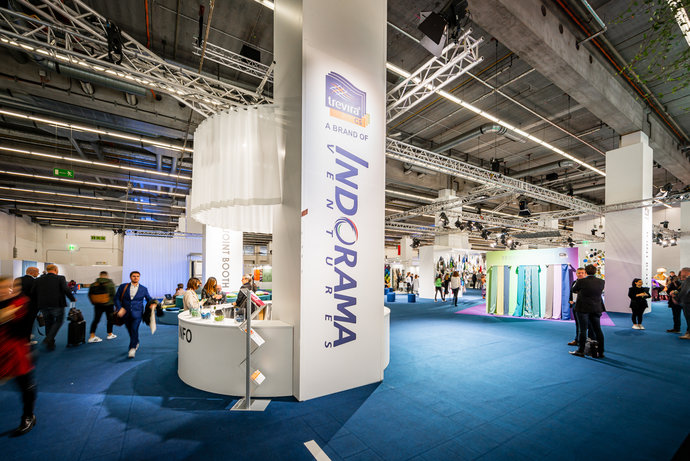
HATTERSHEIM, Germany — November 30, 2023 — The Trevira CS® brand will be presenting itself with 17 top customers and partners as well as an innovative special exhibition at Heimtextil, which takes place in Frankfurt from January 9 to 12, 2024. The joint stand is located in Hall 4.0/Stand C15 together with the Indorama Ventures PCL stand.
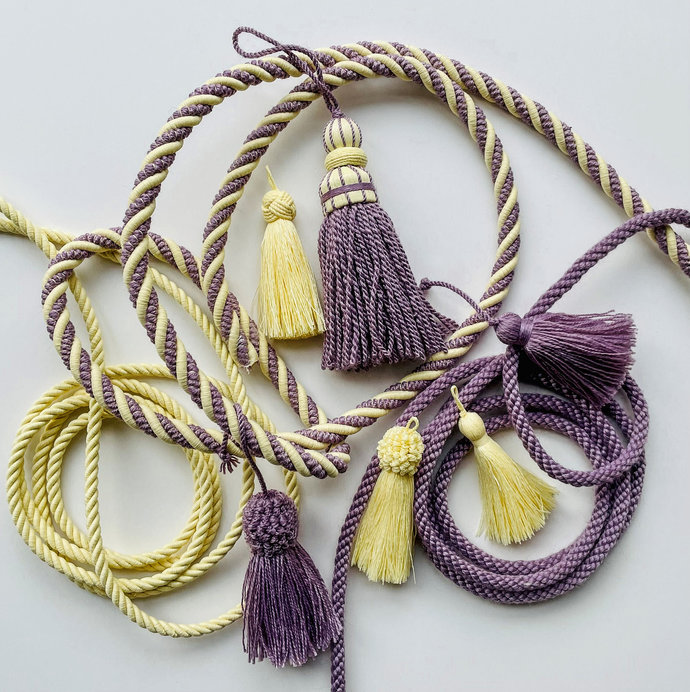
Trevira CS customers and partners will be exhibiting their flame retardant products and new collections for the home textiles and contract market at individual stands on the joint booth. Visitors can discover innovations in the areas of yarn production, woven and knitted fabrics and interior solar shading. The exhibitors at the Trevira CS stand will represent all textile applications with their products, from lightweight curtains to heavy upholstery fabrics. In addition to the yarn and fabric manufacturers, one exhibit is dedicated to presenting a traditional craft at the Trevira CS joint stand. The trimming maker Jende Manufaktur will be demonstrating the manufacture of trimmings from flame retardant, UV-stable, spun-dyed Trevira® yarns as well as from materials from the co-exhibiting yarn manufacturers.
The following Trevira CS customers and partners will be exhibiting a wide variety of flame retardant products at the joint stand in January:
Casalegno Tendaggi S.r.l., Chamatex SAS, F.lli Baroni s.r.l., FIDIVI Tessitura Vergnano S.p.A., Hoftex Färberei GmbH, Ilcat by Lei Tsu s.r.l., Jende Manufaktur GbR, Lodetex S.p.A., Mattes & Ammann GmbH & Co. KG, Mottura S.p.A., Pozzi Arturo S.p.A., PUGI R.G. S.R.L., Tessitura Mario Ghioldi & C. s.r.l., Tintoria Sala s.r.l., Torcitura Fibre Sintetiche S.p.A., Torcitura Padana S.p.A. and Wintex S.r.l..
#treviracsCore – sparking emotions
The Trevira CS special showcase 2024 will be held under the motto #treviracsCore. The term “core” means core element/heart and is used in conjunction with a hashtag and another defining term in the digital media for a trend/lifestyle that people feel connected to and follow.
This time, the special show is about demonstrating what Trevira CS fabrics are capable of achieving in addition to their functionality and performance in the design of textile spaces. From a sustainably furnished lounge, to a luxurious interior or a casual outdoor area, to a cozy retreat — Trevira CS creates a high-end aesthetic, an atmosphere that inspires and appeals to our emotions – and does so with fabrics that are safe.
For the design of the special show, all Trevira CS customers were invited to submit their latest Trevira CS products as part of the annual Trevira CS fabric competition. A total of well over 200 articles from more than 50 customers were available. This year’s special show will also feature trimmings made from Trevira CS yarns.
The special show includes 4 themes for which the Trevira CS fabrics were submitted.
Theme 1: #MySustainableStay
A “Sustainability Lounge” invites visitors to stay and linger. Here, all information on Trevira CS sustainability topics is presented, featuring the latest Trevira CS eco textiles and fabrics made from chemically recycled raw material.
Theme 2: #MyOutdoorTimeout
Trevira CS fabrics are used in this installation to create an outdoor scene. A wide variety of outdoor materials will be used here.
Theme 3: #MyHiddenTreasures
The Trevira CS portfolio available on the market holds a veritable treasure trove of luxurious fabrics with which to create extraordinary, sophisticated interiors. Here, visitors can expect a staging with exquisite, fine fabrics.
Theme 4: #MyCozyCosmos
Everyone can create their own personal kingdom, their place of retreat, with Trevira CS fabrics. Materials with a pleasant, comfortable feel are in demand here. This scene could also be well imagined as a private living ambience.
Director Marketing Trevira CS Anke Vollenbröker, said: “We are delighted that we will once again be present at Heimtextil with a large joint stand together with 17 Trevira CS partners. This year, with our special presentation #treviracsCore, we want to show that Trevira CS fabrics offer everything you need to follow your preferred personal interior lifestyle – with textiles that are safe.”
BRISTOL, England — November 30, 2023 — Fast-growing microplastic filtration technology company Matter has bolstered its senior leadership team with a new chief commercial officer and chief technology officer.
Earlier this year Matter completed a $10 million Series A round involving funds backed by Leonardo DiCaprio and Ashton Kutcher.
Industry experts Martin Allman and Jess Middlemiss join Matter as chief commercial officer and chief technology officer respectively.
Matter is working to stop microplastic pollution originating from sources including textiles and laundry, and is targeting rapid growth across a number of applications around the world.
Matter has developed solutions for capturing, harvesting and recycling microplastics.
These include Gulp – a sustainable, long-lasting washing machine filter that catches up to 90 percent of all microfibers from every laundry cycle.
Matter’s new chief commercial officer, Allman, will be tasked with scaling-up Matter’s technology to international markets.
The former British Army Officer has joined Matter after almost two decades in the green energy sector.
Joining the team as chief technology officer, Middlemiss — formerly of Dyson — will focus on driving forward innovation in microfiber capture and recycling.
Adam Root, CEO and founder of Matter, said: “Our new hires are about culture as much as they are about technical ability.
“We look to appoint the very best industry talent who are committed to our mission of living in a world without micropollutants in the environment. Martin and Jess embody this spirit perfectly.
“Our new C-Suite team is an integral part of Matter’s evolving story and will support in driving industry transformation.”
Allman said: “Matter has established itself as one of the most exciting, fast-growing companies in the clean tech space.
“We have ambitious plans to accelerate delivery of our solutions across the laundry and textile spaces and beyond. There is no more exciting industry to be in right now.”
Jess Middlemiss, noted: “I feel privileged to be working alongside the Matter team to build on the wonderful foundation of technology that the entire team has worked so hard to establish to-date.
“Matter has developed technologies that work for both industry and the environment. And I’m confident that the speed of innovation shows no sign of letting up in 2024 and beyond. Cutting edge technology is a central element of any global solution to the plastics crisis and Matter will continue to strive to be at the forefront of this change.”
ESPOO, Finland— November 30, 2023 — Kuura textile fiber, which is made from Metsä Group’s softwood pulp, received a “Green Shirt” rating based on the evaluation arranged by not-for-profit environmental organization Canopy. Their annual Hot Button Ranking is a well-established tool used in the global textile and fashion industries to assess the sustainability of wood-based textile fibers.
Metsä Group’s Kuura textile fiber has achieved high scores based on the Hot Button Ranking evaluation arranged by the Canadian not-for-profit environmental organization Canopy (see “MI Demo”, which is the subsidiary that owns and operates the Kuura demo plant in Äänekoski, Finland). The Kuura textile fiber, made out of softwood pulp from the Äänekoski bioproduct mill, was awarded for the third consecutive year with a Green Shirt rating, the requirements of which are a risk-free, transparent supply chain and traceable raw materials. Leading brand owners, in terms of environmental sustainability, exclusively source fiber from Green Shirt producers.
Metsä – Kuura
The textile fiber market is expected to grow from approximately $42 billion in 2022 up to $66 billion by 2030. Metsä Group’s Kuura concept is based on a vision to offer the global textile and nonwoven industries a new textile fiber with a significantly reduced environmental footprint. The ongoing R&D-focused phase for developing the Kuura concept is a joint effort of ITOCHU Textile Company, a part of Japanese trading giant ITOCHU Corporation, and Metsä Group’s innovation company Metsä Spring. With the collaboration, Kuura has already been utilized in creating fashionable and sustainable outfits like jackets and shirts, as well as in cutting-edge artwork that promotes the future of sustainable fibers.
“The Hot Button Ranking criteria have been made stricter every year. The fact that our operations were evaluated as worthy of the Green Shirt level for a third consecutive time shows that we have also moved forward in sustainability matters. Kuura is still in the research and development phase, which involves testing and developing the production process at the demo plant and assessing the market interest towards the new fibre. However, we are already attracting interest from some of the world’s largest and leading sustainable fashion houses, which reinforces the notion that we are on the right track with Kuura,” said CEO of Metsä Spring Niklas von Weymarn.
The Kuura textile fiber has also been evaluated by neutral expert organisations using the ISO standardized Life Cycle Assessment (LCA). The LCA is a method to measure and assess the environmental (and societal) impacts of any product. In the conducted assessments, it was determined that the large-scale production of Kuura would emit clearly lower greenhouse gas levels compared to currently commercially available bio-based textile fibers and polyester fibers. Hence, in the so-called Global Warming Potential category, Kuura ranked as best in class, mainly thanks to its production being integrated into the unit producing pulp. This, in turn, makes the total energy requirement to make Kuura fibers very favorable. Moreover, all energy utilized in producing the Kuura fiber would be renewable.
Additionally, the Kuura textile fiber is also perfectly suited to the EU’s plans to bring forward regulation related to the circular economy of textiles, as the fiber is essentially unmodified cellulose fibers produced by nature. This means that Kuura is 100-percent recyclable and naturally biodegradable. Compared to cotton fibers, the production of wood-based textile fibers, especially when made using wood from Nordic forests, does not compete with food production, and does not require irrigation water, fertilizers or pesticides.
“What also makes Kuura special is the backward traceability, which, in turn, takes us back to the over 90,000 Finnish forest owners that are owner-members of the parent company behind Metsä Group. All the wood used for Kuura (in practice pine and spruce) would be procured within a 100-km radius from the entity comprising the bioproduct mill and the Kuura mill,” von Weymarn said.
While proceeding with the Kuura test production in the 40 million euro demo plant located in Äänekoski, Metsä Spring is simultaneously developing the technical concept of a possible first commercial textile fibre mill. In Metsä Group’s concept, the Kuura mill would be integrated into a modern bioproduct mill in order to maximize the industrial efficiency of textile fiber production.
FRANKFURT, Germany — November 30, 2023 — This year’s edition of ITMA ASIA + CITME proved to be a success for the exhibiting VDMA member companies. Measured by booked square meters, Germany had the largest contingent, among the foreign exhibitors. More than 40 VDMA member companies were exhibiting their innovative products in Shanghai.
Dr. Janpeter Horn, chairman of the VDMA Textile Machinery Association noted: “Although facing a difficult market situation, this year’s edition of ITMA ASIA + CITME has exceeded the expectations, both in terms of the number of visitors and the quality of the talks. The significant number of foreign visitors to the fair was particularly pleasing.”
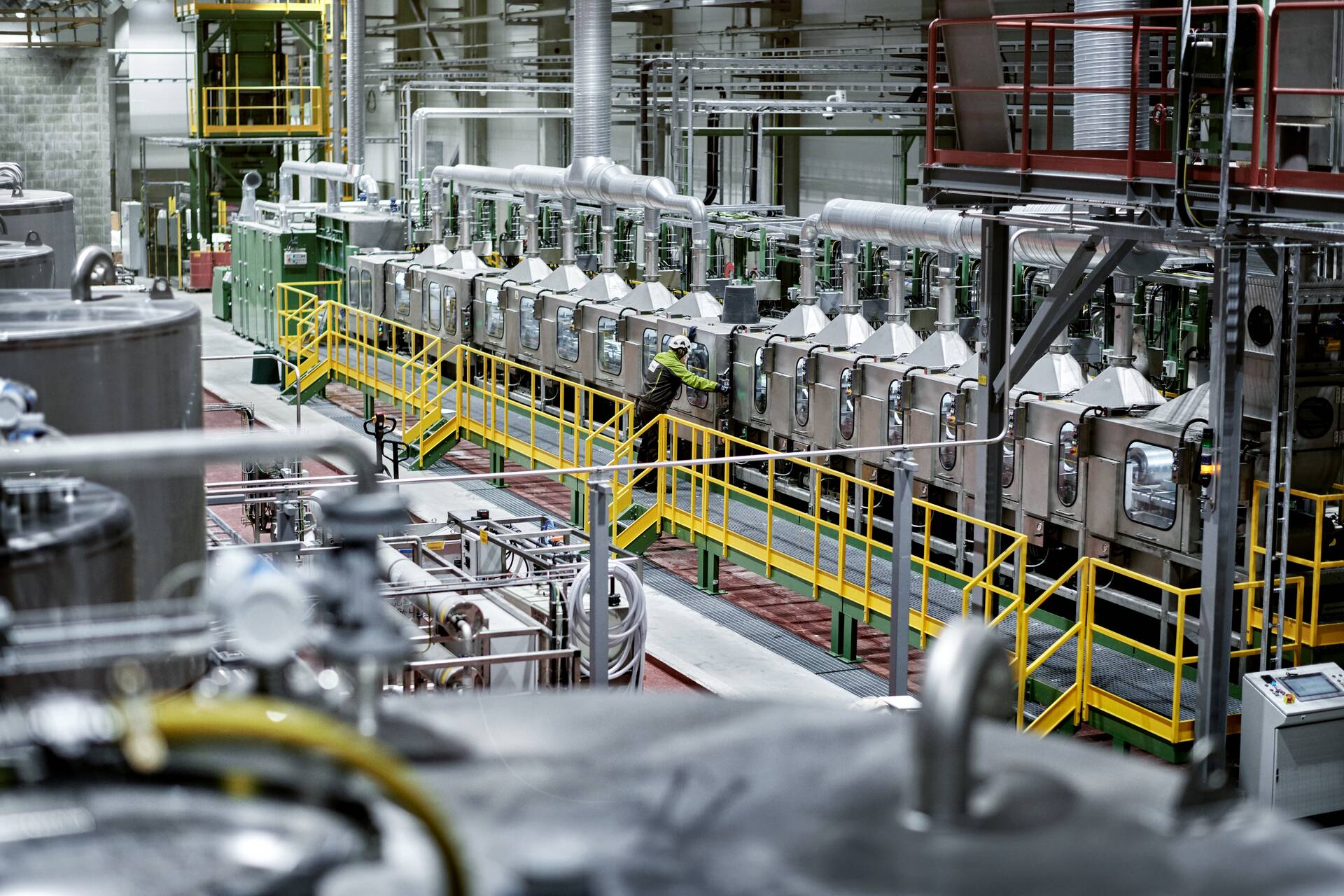
Solutions were demonstrated for more sustainable textile productions by most of the exhibitors, and here the VDMA members presented their technologies for saving water, energy and raw materials under the heading “Smart technologies for green textile production.”
Dr. Uwe Rondé, CEO, Saurer Intelligent Technology AG, explained: “Saurer is satisfied with both the number of visitors and the quality of the discussions. Our booth was full from morning to evening with customers focused on latest technologies within the three mega trends: recycling, automation and digitalization. Although machine utilization in the spinning mills is still well below average, people are already gathering information and thinking about what to invest in once the market recovers.”
Benjamin Reiners, owner of Reiners + Fürst stated: “This year’s ITMA ASIA + CITME has exceeded our expectations by far. Especially the first day — a Sunday — has brought many high-quality customers and exclusively decision makers to our booth. We estimate about 20% international customers mainly from Bangladesh, Egypt, India, Iran, Pakistan, Uzbekistan and Vietnam. All customers agreed that the market situation at the moment is difficult, capacity usage is between 50 to 75 percent in the ring spinning sector and improvement is expected not before the 2nd half of 2024. Nevertheless the general spirit is very positive.“
“This ITMA ASIA was a great success for Trützschler. We welcomed a large number of Chinese visitors to our booth, as well as a significant number of interested international visitors”, said Dr. Bettina Temath, head of Global Marketing Trützschler Group SE.
Georg Stausberg, CEO of the polymer processing solutions division and chief sustainability officer of the Oerlikon Group stated: “We can look back on a successful show where we were able to meet many of our customers not only from China, but also from Pakistan, India and Indonesia, for example.”
“A very well-attended trade fair, with interesting discussions, great innovative topics, in line with the modern and rapidly developing China,” noted Wolfgang Schöffl, head of product line weaving machines and member of the extended management, Lindauer Dornier.
The VDMA Textile Machinery Association and VDMA China were present at the fair, to support the members e.g. with regard to IPR. With the help of a VDMA expert and a contracted law firm, the member company Sahm submitted a complaint application for patent infringement disputes during the exhibition to the onsite IPR office. Both parties, Sahm, and the Chinese company, that used patented design without permission reached an agreement: The Chinese company had to stop displaying functions and designs involving patent infringement on site which meant the removal of some structural parts and the covering of key components protected by patent protection.
Dr. Harald Weber, managing director of VDMA Textile Machinery concluded: “Asia, and China in particular, represent the primary foreign markets for the VDMA member companies in the sector. The Chinese market is the main destination for their exports. Other major export destinations in Asia include India, Pakistan, Bangladesh and Uzbekistan. ITMA ASIA + CITME provides a unique platform to showcase technologies for customers directly in Asia. The VDMA member companies are looking forward to the coming edition of the fair from 14 to 18 October, 2024 in Shanghai.”
The latest survey of VDMA members’ subsidiaries in China gives reason to hope that the economic situation in the Chinese textile industry could also improve significantly in the second half of the year. In addition, European textile machinery manufacturers are urged to be present on the most important market and at the trade fair and to offer Asian customers most advanced technology for their demanding challenges.
Impressions of the trade fair were captured in 3 videos which are available at www.vdma.org/itma.
The VDMA represents more than 3,600 German and European mechanical and plant engineering companies. The industry stands for innovation, export orientation and SMEs. The companies employ around 3 million people in the EU-27, more than 1.2 million of them in Germany alone. This makes mechanical and plant engineering the largest employer among the capital goods industries, both in the EU-27 and in Germany. In the European Union, it represents a turnover volume of an estimated 860 billion euros. Around 80 percent of the machinery sold in the EU comes from a manufacturing plant in the domestic market.
WASHINGTON — November 30, 2023 — National Council of Textile Organizations (NCTO) President and CEO Kim Glas issued the following statement today in support of Rep. Jennifer Wexton’s (D-VA) letter to Department of Homeland Security (DHS) Secretary Alejandro Mayorkas, urging his agency to step up isotopic testing of imported products containing cotton sourced from forced labor in Xinjiang, China.
The Congresswoman’s press release and letter can be found here.
Statement by NCTO President and CEO Kim Glas:
“I want to sincerely thank Rep. Wexton for raising critical questions and concerns in her letter to Secretary Mayorkas about why more isotopic testing is not being done to ensure the Department of Homeland Security’s compliance with the UFLPA, which bans tainted cotton products and other consumer goods made with forced labor from entering the U.S. market.
It is alarming that slave labor products from Xinjiang are still bleeding into the U.S. market unchecked, as the Reuters news story exposed, which also served to underscore the weaknesses of our government’s efforts to enforce the law. Congress has already allocated significant resources to U.S. Customs and Border Protection (CBP), under the DHS umbrella, for the development, procurement, and application of new technologies such as isotopic testing for cotton fibers and cotton containing products to track the geographic origin of items and inputs from the Xinjiang Uyghur Autonomous Region (XUAR—a region that has become synonymous with forced labor practices and human rights abuses.
It is imperative that CBP step up its overall enforcement efforts, which have shockingly been on the decline in the apparel and textile import sector, and significantly increase its isotopic testing as well as the number of contracted labs it uses.
If DHS does not act swiftly, the vital manufacturing sector that I represent, which produces a broad range of components for consumer goods, critical items such as personal protective equipment, and military products, will be further devastated as factories shutter and job losses mount, while China continues to exploit the government’s ineffective enforcement and reap the rewards of its predatory trade practices.”
Posted: November 30, 2023
Source: National Council of Textile Organizations (NCTO)
Peter Brust (left) and Oliver Meier (right) staged a rapier yarn transfer, aided by company CEO Peter Dornier, to mark the transition in leadership at AmDo.
Dornier’s recent Technology Day held at its Charlotte location showcased AmDo’s capabilities for the North American market.
TW Special Report
Germany-based Lindauer Dornier GmbH (LiDo) began shipping its rapier weaving machines to the United States in the 1960s. Burlington and Milliken & Company were its first U.S. customers, and the machines quickly proved themselves and signaled a shift from shuttle looms to a shuttleless design in the United States. By 1977, more than 2,000 Dornier weaving machines were installed in North Carolina and the surrounding area; and in 1978, Field Engineer and Salesman Hans Geiger was tasked with locating a suitable place to establish American Dornier (AmDo). An old Trützschler location in Charlotte was acquired and AmDo— Dornier’s oldest subsidiary — had a home. The original 1,100-square-meter building was expanded to 3,000 square meters in 1997.
Dornier’s technologies include film stretching lines for biaxial polypropylene and polyester films; the P2 rapier and A2 air-jet weaving machines; myDoX digital solution; and Dornier Composite Systems® comprising the PROTOS® TP for unidirectional tapes, PROTOS TW for woven tape fabrics and TRITOS® for multilayer and 3D fabrics, among other technologies (See “Reintroducing DORNIER’s Composite Systems® Suite,” TW, September/October 2021).
From this original location, AmDo still serves the Americas with its 30-person team in the following areas: weaving machine sales and support; film stretching equipment support; spare parts; installation, service and personnel training; film stretching clip chain overhaul and repair; and marketing.
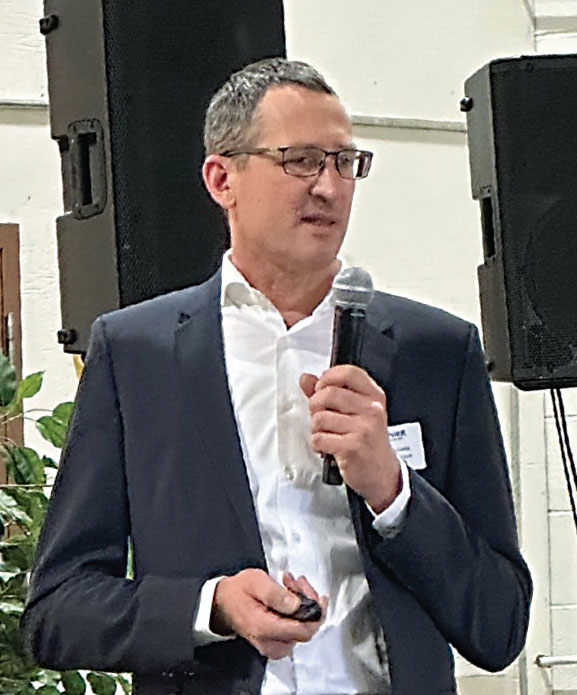
The company recently saw a transfer of management and the change seemed like an opportune time to host an open house — Technology Day 2023 — to showcase the capabilities and technologies avail-able in the United States. Oliver Meier recently took the helm of AmDo as executive vice president. He replaced the retiring Peter Brust who had run the operation for 22 years. During the Technology Day, Meier and Brust conducted a yarn transfer from a left-hand to a right-hand rapier in a symbolic display of the change of management. The transfer was assisted by Peter D. Dornier, LiDo CEO since 2001 who came from Germany along with other Dornier executives to participate in the Technology Day.
The event gathered guests who came from the various markets that Dornier serves — traditional weaving, composites and film production.
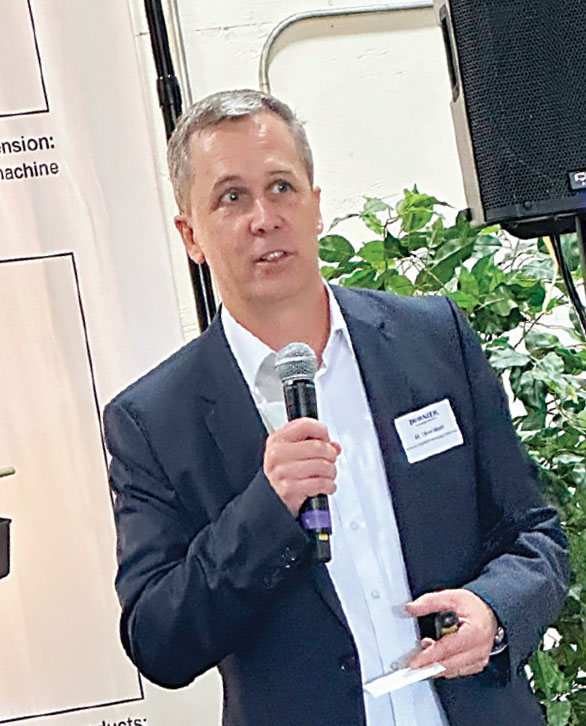
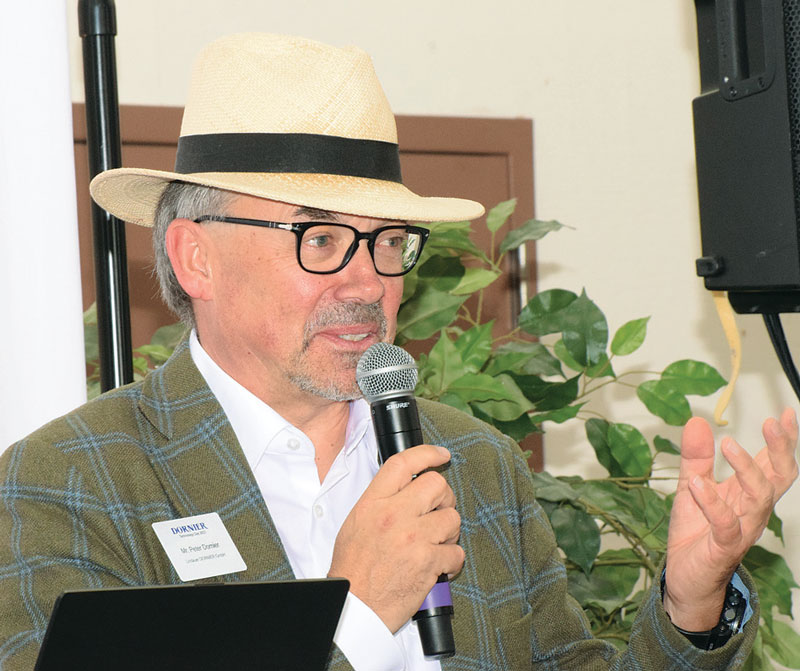
Meier started the day with a warm welcome for the guests, and Dornier provided a little history of the company, which actually got its start with his grandfather, Claude Dornier, in aircraft design and construction, before LiDo was established in 1950 and the company transitioned into a manufacturer of textile equipment.
Josef Klingele, head of Product Line Composite Systems, next gave an in-depth presentation highlighting all the technologies offered by Dornier.
Dornier also recognizes the importance of an aging workforce and the need to attract and train new talent. To that end, the company has an apprentice program in Germany and also offers training classes at AmDo. Martin Kaess, head of Training — known as the Ausbildungsleiter in German — explained Dornier’s offerings during Technology Day. Kaess explained the company’s dual training system available in Germany that combines theoretical instruction at vocational school two days a week with practical skills at Dornier for the remainder of the week. Trainees can earn money while gaining work experience and knowledge at school in order to become a qualified employee at the end of the apprenticeship. The program is open to international applicants as well as German nationals. The program includes employment opportunities at LiDo, AmDo, as well as a path to German citizenship. Apprenticeship paths include technical training in metals such as machinists, and industrial or construction mechanics; and in electronics or mechatronics. All programs can lead to a Bachelor of Engineering if so desired.
Kaess explained that the company also is in the process of establishing a training center set to open in 2025. The 10,000-square-foot facility will host up to 75 trainees teaching them about the latest machinery and tools, modern CAD/CAM systems, and mechanical and electrical systems using engaging projects.
AmDo also offers continuous education and training seminars in Charlotte. In 2024, seminars on the following topics will be available:
• Rapier weaving machines;
• Air-jet weaving machines;
• Electronics, both AT and FT;
• Electronic Mini Camps; and
• Supervisor training.
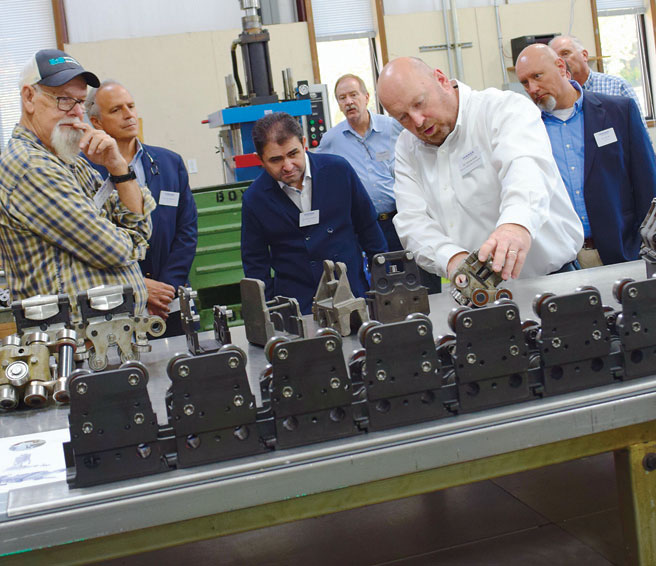
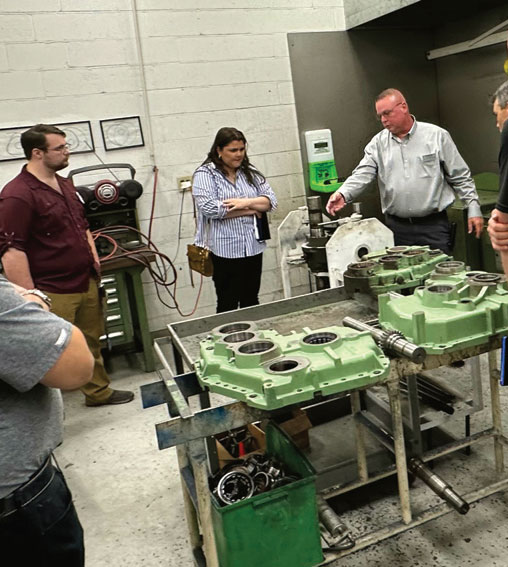
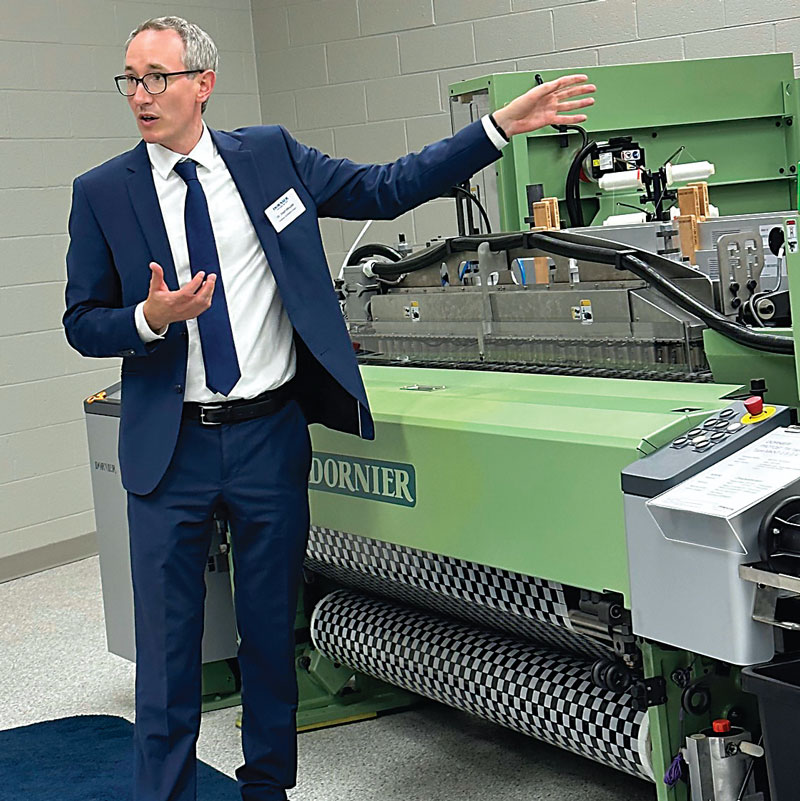
After the presentations, visitors participated in guided tours of the U.S. operation, which included a look at the Electronics Repair Shop, Spare Parts Department, Gear Box Repair Shop, Clip Chain Overhaul Service (CCOS), Weave Room and Tape Room. Dornier emphasizes the durability and repairability of its machines and many older models are still in operation with the assistance and care from Dornier technicians and spare parts program. In the afternoon, attendees could observe Dornier technology in action including the A2 and P2, and the Protos tape weaving machine. The company also offered demonstra-tions of its MyDox digital platform.
“The event was a great opportunity to introduce the PROTOS Tape Weaving to the North American market,” Klingele said. “The customer feedback received was very positive and encouraging and reflects the right direction for Dornier in this market sector”
“The effort we put into this event was well worth it,” Meier added. “We have been happy to receive so much positive feedback from our customers, and already are discussing the possibility of an event next year and how we can make it even more impactful for the industry.”
1 of 9
Oliver Meier
Christian Kroell explaining the CCOS
Terry Ellis, Gear Box Repair Shop
Josef Klingele
Martin Kaess
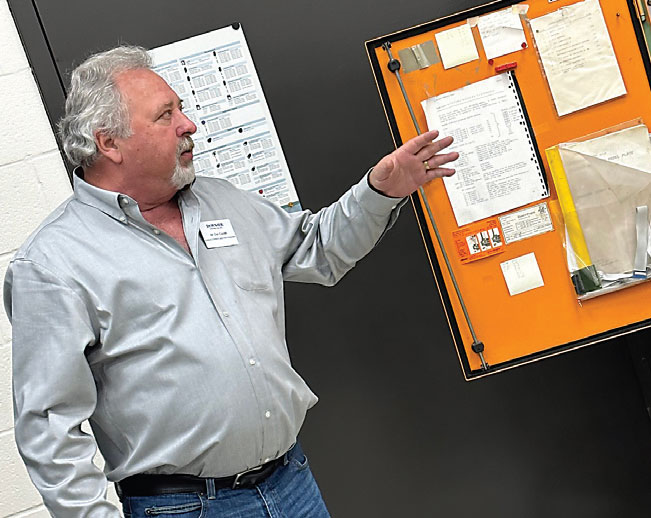
Dan Caudill, Electronics
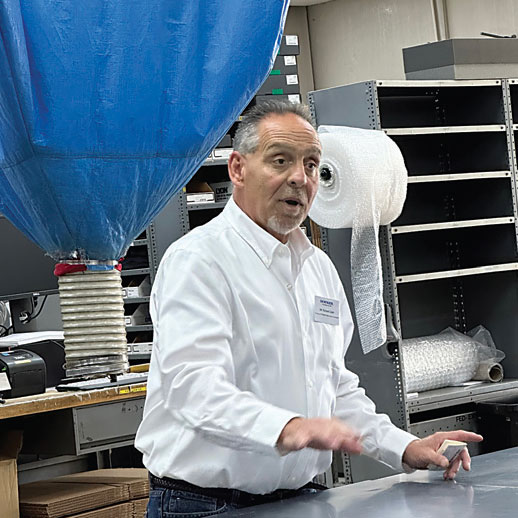
Richard Clarke, Warehouse & Logisitics
Peter Brust (left) and Oliver Meier (right) staged a rapier yarn transfer, aided by company CEO Peter Dornier, to mark the transition in leadership at AmDo.
KARL MAYER North America recently hosted the inaugural Textiles Innovation Conference designed to connect the textile manufacturing industry in the United States.
By Jim Kaufmann, Contributing Editor
Generally speaking, transporting and setting up textile manufacturing machinery at trade shows held in North America can be difficult and expensive. Granted, for new and perspective customers, machine manufacturers can be very open and accommodating to visitors at their locations, but that interest still needs to be developed and fostered. Couple this with the fact that International Textile Machinery Association (ITMA), the granddaddy of global textile and machinery trade shows, only comes around once every four years and it is easy to understand why textile machinery manufacturers continue to explore new ways to showcase their latest offerings. However, after attending the recent Karl Mayer Stoll Textiles Innovation Conference, it is evident that the Karl Mayer Group has taken this effort to a different and interestingly higher level.
Held recently at its North American headquarters in Greensboro, N.C., the event had the overall feel of a boutique trade show. “Last year was our first of this kind,” said Matthew Llewellyn, director of sales and marketing for Stoll by Karl Mayer. “It was smaller in scale and we only focused on the Stoll weft knit product line, but we received positive feedback from the participants and certainly learned a lot.
This year we expanded the conference to include the Karl Mayer products —warping and warp knitting technologies — and invited a broader list of exhibitors from different aspects of the supply chain, from fiber to finished product, to create more of a whole eco-system type event.”
Mariano Amezcua, who was named president of Karl Mayer North America earlier this year, added: “We didn’t want to view this simply as a Karl Mayer or Stoll event. It’s a textile community event intended to highlight all aspects of this industry. You do need the whole supply chain to make a product, so we tried to bring all the industry segments together to foster those connections.”
Throughout the three-day event, attendees saw numerous presentations, learned about exhibitors from different aspects of the industry, and observed various warping and warp and weft knitting machine demonstrations.
Varied Presentations With Common Inspiration
The presentations offered covered a wide variety of topics, though knit-ting was a central theme. Highlights included:
Donna Brin, president of Little River, S.C.-based manufacturer Bfive40, who offered that 3D knitting technologies generally reduce waste and processing steps, while providing the ability to configure structures to specifically what is needed in the application. “Ultimately you produce items faster by cutting out subsequent production steps and with 3D knitting, the labor is in the machine,” Brin said during her presentation. “The constraints of labor are critical throughout the industry, not just in the U.S., and because of this, we need to look at costs differently with a view towards the whole system as opposed to just the individual components.” Brin noted she prefers to ask, “What steps can we take to cut out downstream operations through 3D knitting to reduce overall costs specific to the part?”
Tomas Infantes Schnoor, service manager for technical textiles at Karl Mayer, who addressed industry service challenges by reaffirming that “tribal knowledge” is disappearing throughout all segments of the textile industry as the average worker age continues to rise and there is an inherent lack of organized transfer of that wealth of knowledge forward. To aid in improving this concern, Karl Mayer/Stoll is starting an academy in North America for training, which will also assist in the transfer and preservation of industry knowledge.
Kayla Franklin, assistant trade marketing manager for Greensboro, N.C.-based Unifi Inc.’s Repreve® brand, who informed attendees that more than 35 billion plastic bottles have been recycled to date to produce the company’s Repreve fiber. According to Unifi’s calculations, this number translates to a reduction in carbon dioxide emissions of more than 1 billion units and the saving of approximately 5 billion gallons of water to date. Franklin also mentioned that Repreve contains a unique tracer in the yarn allowing companies and customers to determine if the product content is in fact Repreve. In addition, Unifi is continuing to develop a “Tex-tile Takeback” program focused on the recycling of textile fabrics into recycled filament yarn.
Reid Hix, sales and business development manager for Karl Mayer, who presented warp knit variations of “woven” fabrics for slacks and dresses. Upon review of the samples provided, it was rather difficult to tell if the fabric was a woven or knit simply from their look and feel. Karl Mayer’s development and testing has found that warp knit versions out-perform weaving technologies in speed and output by up to 13 times. Hix noted that while wovens are more stable and like-constructions tend to be lighter in weight, warp knits are softer and more durable.
Andre West, director of the Zeis Textile Extension Wilson College of Textiles at North Carolina State University, who provided an update on the college’s new Flex Factory Prototype Lab intended to primarily focus on product and application development (See “Flex Factory: Hub for New Ideas,” TW, March/April 2023). “We have the ability to develop fabrics at the university, and it only made sense to also provide our students and interested parties a facility to also develop applications from these fabrics,” Dr. West said. More equipment is on order and will be installed to encompass cut-and-sew through 3D printing, digital printing and other areas to complement the assorted textile labs already functioning within the Wilson College of Textiles. Dr. West also echoed concerns specific to the need for textile training programs and the collective efforts being made by NC State and its partner institutions.
Exhibitors, Machine Demonstrations And Networking Opportunities
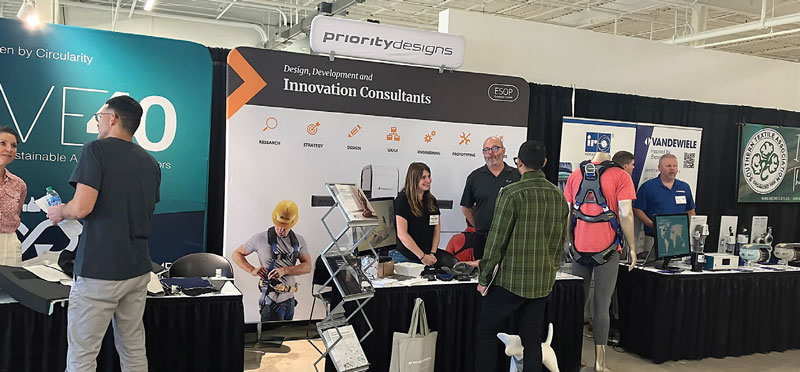
Those participating in the exhibitor segment of the event represented varied aspects of the supply chain including machine suppliers, fiber and fabric producers, product design firms, and universities. Attendees and exhibitors alike appeared to embrace the event and the numerous scheduled opportunities to interact with others throughout the supply chain.
Wolfgang Philipps, a senior Knit Engineer at Priority Designs, an employee-owned design firm based in Columbus, Ohio, felt “It was a great chance to connect with suppliers and potential customers, while gaining insights into the latest in technologies and sharing our unique capabilities with the knitting community.”
Overall, the event was well-executed and feedback was very positive. “I’m still learning about this industry, so the talks were very interesting and it was great to be introduced to the different sectors from yarn suppliers through to where and how the technology is applied” said Lauren Street, a digital knit graduate assistant at the School of Fashion at Kent State University, which was also an exhibitor.
Forrest Sloan — manager, international marketing — Kuraray’s Vectran fiber and polymer, offered: “The people here have a focus and the equipment to make custom products, so participating was a good fit for us where we can showcase Vectran, which is geared more towards technical, custom and niche products. Vectran receives better recognition from this type of crowd who tend to be on the higher end of our spectrum with more knowledge of high-performance textiles and applications. They’re not the typical low-cost manufacturing types we find at the larger, more traditional, textile events. It’s also nice to see actual equipment developments within the same setting, not only machines, but yarn handling, tensioning, yarn path improvements, and the respective technicians that all help us to better understand where issues may occur with a product like Vectran. It’s been a real positive experience!”
The Karl Mayer Group’s goal was to create a more comfortable and easy atmosphere where participants would feel they could engage. Because there wasn’t the obligatory fees to exhibit or attend found at most other events, there was a broader variety of participants present. “They did well to mix random folks and the people who actually get their hands dirty from different segments of the industry, each with their own perspectives and needs, not just the sales folks or executives typically found at the bigger shows,” West said. “The social time provided is valuable for all to intermix in a smaller, more intimate setting; much better for networking. It really almost feels like a juried show where much of the audience is culled from various segments throughout the industry.”
According to Llewellyn and Amezcua, the plan is to continue hosting similar events annually with improvements made as more feed-back is gathered. This may include a facility tour at future events and more matches throughout textile supply chain sectors. “It’s nice to see different segment representatives talking together and looking for ways to work together more effectively,” Amezcua said. We’ll keep working to help make those connections because that’s how we all win!
“Next year, we also want to focus on brand leadership and their needs from the textile manufacturing community,” Amezcua added. “We will invite key brands from the apparel, footwear, and furniture industries. Ultimately, we want to integrate automation and on-demand principles to provide unique, higher-margin products to brands and their consumers.”
Blockchain technologies can be used to empower suppliers and workers.
TW Special Report
Gone are the days when compliance meant checking off boxes on a form. A myriad of new due diligence legislation is in the pipeline, and legislation already in effect is revealing heavy consequences.
One noteworthy example is a case against IKEA regarding the labor conditions for IKEA suppliers in Bangladesh and Pakistan. This case was brought about because of the Norwegian Transparency Act implemented in 20221. The act requires companies to carry out due diligence activities to ensure they operate responsibly, respecting human rights and decent working conditions. The Norwegian Consumer Protection Authority (NCPA) investigating the case ruled that IKEA did not breach the law, but this verdict was based on time constraints: the complaint was issued on the day the law came into force. Notably, the NCPA warned that companies are expected to deliver a higher level of due diligence from now on, with little room for exemption based on contractual confidentiality.
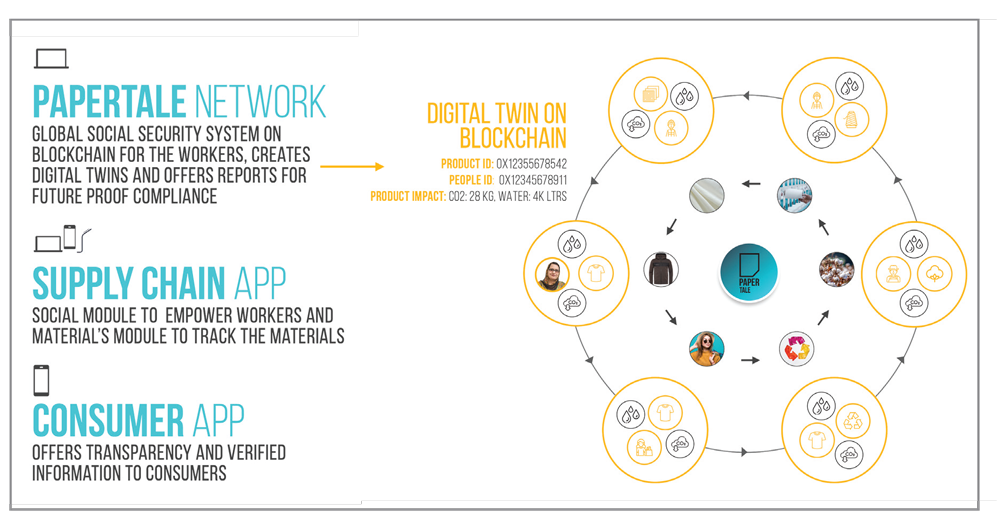
A diagram illustrating how the PaperTale technology works
Stricter legislation also extends beyond European borders. This is demonstrated by legislative developments in the United States. The Corporate Governance Improvement and Investor Protection Act was passed by the house in June 2021 and is currently before the senate. This act would require companies to periodically disclose information, including metrics, related to social and governance performance2.
It can thus be concluded that the conventional approach of relying solely on audits is becoming obsolete from a regulatory standpoint. But pressure regarding due diligence is also increasing from non-legislative parties. According to a survey conducted in 2020 by Fashion For Good, 69 percent of consumers want to know how their clothes were made, as opposed to 59 percent in 20183.
Furthermore, in a 2020 survey conducted by Eurobarometer, nearly half of Europeans “totally agreed that clothes labeling should contain information on both environmental impact and working conditions of the workers4.” Additionally, in September, Nike’s shareholders issued a letter, pressing the company to pay $2.2 million to compensate garment workers who had claimed wage theft at supplier factories.
These pressures raise the question of how companies can stand strong in the face of this rapidly evolving compliance landscape. Companies need to put themselves in a future-proof position, to withstand legislation that becomes increasingly stringent and maintain a relationship of trust with consumers and shareholders.
Here, PaperTale, a Sweden-based technology company steps in as a transformative enabler, using block-chain technology as a unique tool.
The happiness of a factory worker is the primary inspiration behind the PaperTale app.
Common Application Of Blockchain Technology
Blockchain technology already is in use as a tool for tracing materials. This is one way in which PaperTale uses the technology — its system creates a digital duplicate, also known as a “digital twin,” for each material. When the physical material moves to the next party in the supply chain, the same action is mirrored in the digital realm. This transaction is recorded on the blockchain, along with confirmation from the receiving party that the physical material matches its digital twin. For an extra layer of validation, evidence of material purchase can also be included. Through this process, materials can be tracked throughout the entire supply chain.
With blockchain, transactions are validated and stored by a community as opposed to conventional systems where data is stored by one party, in which case the data can easily be manipulated by that party. The benefit of involving multiple parties is that it becomes nearly impossible to change the data: before recording the data, all parties have to validate it together. Once data is recorded, every party maintains the data history in chronological order, so that changes cannot be made without notifying the entire community.
PaperTale’s use of blockchain technology is unique because it employs a public blockchain rather than a private one. Because the community recording and validating data is open to everyone in a public blockchain, PaperTale argues that it results in a more inclusive type of transparency. However, the degree of transparency is still customizable: every party using the solution can choose to put some data on the Blockchain, while restricting access to other — more sensitive — data.
The type of data that the blockchain is applied to is another way that distinguishes PaperTale’s use of the technology. PaperTale uses blockchain for data related to environmental impact and material tracking, which is fairly common. The innovative aspect of PaperTale’s technology lies especially in applying the technology to the social impact of production, as this is still largely unexplored.
Using Blockchain For Social Governance
First, it is possible to map out the workforce in a factory by registering workers’ IDs. This is done by simply integrating PaperTale’s system with enterprise resource planning (ERP) and product lifecycle management (PLM) systems, which are already in place in a large part of the industry. PaperTale tested multiple methods for the verification of IDs and landed on banks as a suitable third party. ID registration opens the door for the main asset of using blockchain in social governance — wage verification of workers along the supply chain. Wage transactions can then directly be connected to the blockchain. As a result, other parties like brands, consumers, and legislators have direct insight into verified wage payments, with high confidence that this data is authentic and has not been manipulated. It is worth noting that displaying the exact wage is optional with blockchain. Currently, the PaperTale system checks whether the wages are above the threshold defined by the local law of the area where a facility is located.
It could be argued that payment according to law is not high enough as a standard, but PaperTale’s solution is being developed with a focus on the supplier’s perspective. As sup-pliers can face financial pressures, increasing wages by a fixed amount can be difficult in the short term. Instead of raising the wage threshold in the system, PaperTale therefore came up with a different approach —the profit-sharing system. Here, a percentage of the net profits are shared amongst all employees of the factory. This percentage is distributed in a way that promotes equal opportunity and reflects the collective effort and dedication of the entire workforce. The mechanism of distribution is still being fine-tuned, as well as educating workers about how the calculation takes place.
Whereas capturing the financial reality of workers is quite black and white, other factors of social governance, such as workplace safety, are more of a gray zone. However, having ventured into this uncharted territory, PaperTale reports that it is possible to connect social governance-related data with a fairly high confidence level to the blockchain.
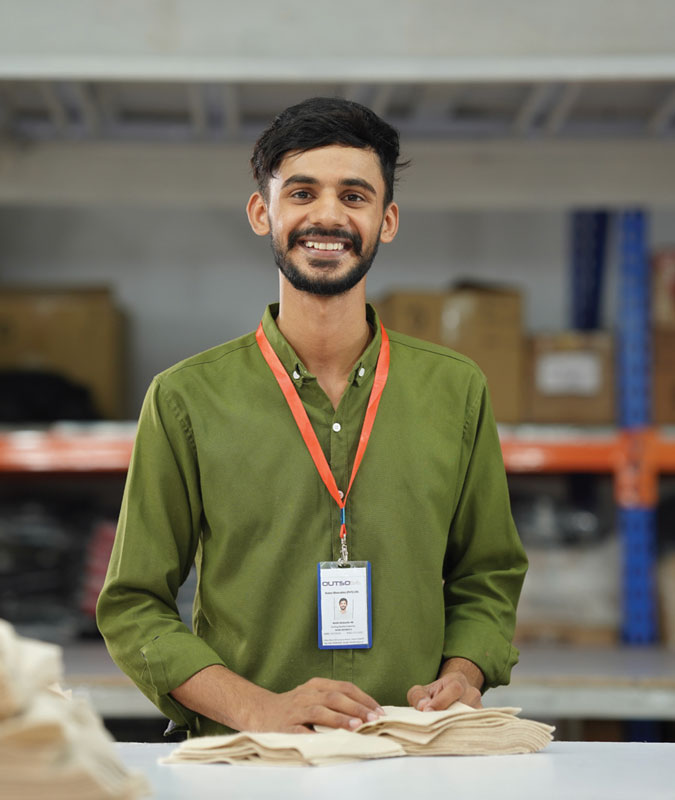
A worker using the PaperTale Workers App on a kiosk located in the Outso factory in Pakistan.
A Supplier’s Perspective
Building on the ID registration of the workers, PaperTale built an app for the workers to use. This app opened up further possibilities to gather on-site data, and for connecting workers directly to the system. The app gives workers the ability to view their contracts and salaries. In turn, they can check whether the two correspond, and press “verify” if this is the case. The percentage of workers that have verified their wages then turns into data about the facility. For example, facilities where more than 80 percent of workers have confirmed their wages can be rewarded. Likewise, workplace safety can be measured by sending forms to workers that allow them to answer questions about their working environment. Worker attendance can be tracked through devices that allow workers to record the clock-in and clock-out times for their shifts, using fingerprint scanning and facial recognition technology. After implementing this, PaperTale found that attendance data can be combined with the contractual functionality of the workers’ app and functionality was added that requires employers to request overtime from the workers through the app. In this way, over-time hours are added automatically to the wage calculation, which workers can then monitor for themselves and verify through the app.
With this method, PaperTale’s system is a tool for worker empowerment in parallel with supplier empowerment, breaking the cycle of imposing demands on suppliers that they are unable to meet due to resource constraints. The system allows suppliers to showcase their efforts, and use this as an enabler to build trust for compliance. Brands can then extend this trust to their consumers and shareholders.
Although PaperTale’s system has not reached a 100-percent confidence level for data related to working conditions, manipulating this system would take significantly more effort than manipulating audits. But while audits are not the main focus of PaperTale’s new method, they still play a role. Rather than being the centerpiece, they are a component of PaperTale’s solution. For example, periodical audits are used to measure building safety. These audits are performed by auditing bodies that can verify the results in PaperTale’s system, after which the results are published onto the blockchain. In this way, conventional methods like audits are combined with innovation to form building blocks of a more solid system.
To optimize results, innovation should continuously take place with ongoing reflection on outcomes. PaperTale’s technology is being implemented and tested on the ground in the Outso Wearables factory, in Lahore, Pakistan. Outso has successfully implemented worker ID and wage registration, verification of wages by workers through the app, recording attendance, and even the profit-sharing mechanism. One gap PaperTale identified is training workers to educate them about their rights and thereby maximize their ability to benefit from the technology. Outso’s workers are closely involved in PaperTale’s solution development. To measure worker satisfaction, the Outso factory carried out an anonymous survey that measured the satisfaction level of workers as compared to their previous workplace. After implementing the measures mentioned above, worker satisfaction had improved from 71 to 93 percent. The factory also experienced fewer delays and improved quality of work.
Moving Beyond Blockchain’s Hype
PaperTale is eager to demonstrate that recording certification on blockchain technology is only the start of what the technology can do. By supplementing certification with real-time environmental and social data, the full potential of blockchain technology can be unlocked.
The aforementioned usage of a public blockchain is another way of going beyond blockchain’s hype, and to tackle the issue of techwashing. The company noticed that the phrase “Blockchain Technology” is frequently used for public relations-related reasons rather than practical, on-the-ground innovation. Such blockchain-related techwashing came as no surprise to PaperTale, given the share of obstacles the company had to overcome to develop a scalable blockchain solution that does not become a burden for brands or suppliers and is built for reality.
Becoming Future-Proof
PaperTale envisions a future in which ethical and sustainable practices are not goals but essential components of every business. The company’s transformational approach that empowers both workers and suppliers sets the stage for a future in which trust is the foundation of business. A future-proof industry can be built if brands, suppliers, and consumers come together in a collective commitment to social and environmental responsibility. PaperTale aims to be the catalyst for the continuous innovation and collaboration needed to realize such a future. The current crises we face as a society did not arise in isolation. As such, the change required to address them cannot occur in isolation either.
References: 11 Act relating to enterprises’ transparency and work on fundamental human rights and decent working condi-tions (Transparency Act) — Lovdata 22 H.R.1187 — 117th Congress (2021-2022): Corporate Governance Improvement and Investor Protection Act 3 Consumer Survey Report : Fashion Revolution 4 Surveys — Eurobarometer
Tajikistan-based terry products manufacturer Arvis LLC has joined the Zurich-based International Textile Manufacturers Federation (ITMF) as a corporate member.
The Lycra Co., Wilmington, Del., has launched Lycra® FiT400™ fiber, a bicomponent fiber engineered for optimal performance in knits.
Q-Lab, Westlake, Ohio, recently was honored with two National Top Workplace awards — one for employee appreciation and a second for employee well-being. Previously recognized with Regional Top Workplace awards, this is the first time the company was honored at the national level.
Culp Inc.’s mattress fabrics division, Culp Home Fashions, has been recognized as an Environmental Partner by the North Carolina Department of Environmental Quality’s Environmental Stewardship Initiative.
Spartanburg, S.C.-based Milliken & Company was named one of America’s Best Employers for Veterans 2023, by Forbes and Statista.
The Association of the Nonwoven Fabrics Industry (INDA), Cary, N.C., has published a new report, the “North American Nonwovens Industry Outlook, 2022-2027.” The 12th edition of the report provides demand data from 2017-2022 with additional forecasts through to 2027.
Germany-based Freudenberg Performance Materials Apparel has added two thermal insulation products to its comfortemp® range. Down Feel WA 150LB and Fiberball WB 400LB are made using low-level bisphenol A recycled PET fiber.
Switzerland-based Datatex recently opened new offices in Coimbatore, India, and Lahore, Pakistan.
Switzerland-based Archroma reports its Castellbisbal, Spain-based sulfur dye manufacturing and research hub is 100 years old. The company marked the milestone with a ceremony with some 250 guests.
Jeff Crisco was named president of Asheboro Elastic Corp. (AEC Narrow Fabrics), Asheboro, N.C. He will work closely with current CEO Charles Adams until he retires at the end of the year to ensure a smooth leadership transition.
Dr. Andreas Raps has been named CEO and Marco Altherr CFO of Germany-based Freudenberg Performance Materials, effective January 1, 2024.
Wes Fisher, director of Government Affairs with the Association of the Nonwoven Fabrics Industry (INDA), Cary, N.C., was named a 2023 Top Lobbyist by the National Institute for Lob-bying and Ethics (NILE).
Anne Cavassa
PrimaLoft Inc., Latham, N.Y., has appointed Anne Cavassa president.
The French Textile Machinery Association (UCMTF), Paris, named Mireille Jautzy secretary general. She replaced Christian Guinet who retired.
Delos Custom Rugs & Carpet, Calhoun, Ga., recently hired Lacey Stinnett as director of design and Tina Johnson as business development manager.
Paris-based Chargeurs PCC has promoted Giorgio Marcarino to worldwide chief commercial officer. Francisco Ros has moved into the role of general manager, EMEA, vacated by Marcarino. In addition, the company has hired Luca Faccioli as chief information officer and Bertrand Venault as chief people officer.
Home Furnishings International, Gaffney, S.C. has added Bally Faudar as senior vice president and Erin Gallagher-Brinskele as vice president, Kitchen Textiles. Both hires report to Amy Bell, executive vice president and chief merchandising officer.
Shawn Curran
Gap Inc. veteran Shawn Curran has joined Baltimore-based Under Armour as chief supply chain officer. He reports to President and CEO Stephanie Linnartz.
South Korea-based Hyosung recently appointed Laura Nilo U.S. marketing manager, West Coast; and Christiane Rauch was named senior consultant, Northern Europe–Hyosung Spandex.
Minette Bellingan was named COO of Germany-based C&A Europe.