CULVER CITY, Calif. — APRIL 11, 2024 — As part of a broader initiative to reduce environmental impacts and keep ahead of evolving global chemical regulations, Active Apparel Group (AAG), manufacturer of performance apparel for the leisure/lifestyle and active market, is embracing water-based OEKO-TEX 100 Class 1 Standard Printing Inks in their manufacturing process.
Common and inexpensive inks used in the global manufacture of apparel contain a wide range of toxic chemicals, including phthalates, petroleum-based co-solvents, PVC, and other volatile organic compounds. AAG’s initiative to use OEKO-TEX approved, water-based inks creates benefits for factory workers, people living local to these factories, consumers, and everyone downstream. The benefits of water-based inks are numerous.
“Reducing toxic chemicals from the manufacturing process is the right thing to do for our employees, for people living close to our manufacturing facilities, and for anyone buying the apparel that we manufacture,” said Daniel Hawker, CEO of AAG. “Moving away from toxins also allows us to keep ahead of increasingly stringent environmental regulations, allowing our customers to stay profitable in a quickly changing global marketplace.”
AAG offers a range of printing methods to address a variety of customer needs, including: digital printing, screen printing, and heat transfers for on-garment logos and care instructions. OEKO-TEX certified water-based inks are used for all of its digital printing and for the majority of its screen printing. These non-toxic water-based inks offer a socially and environmentally better alternative to the more commonly used Plastisol inks.
Making a sizable environmental impact, the printing service of AAG’s business is significant. Digital printing averages 25,000 meters per month with screen printing averaging 60,000 garments per month.
The use of water-based inks requires a skilled production team and training of employees is ongoing. AAG currently employs 30 people at its printing operations in Ningbo, China.
OEKO-TEX 100 Class 1 Standard Printing Inks are a specialized category of printing inks (typically used in textiles and fabrics) that comply with the stringent OEKO-TEX 100 certification, ensuring they contain no harmful substances and are safe, even for the most sensitive skin. Compared to industry standards, these inks offer substantial environmental benefits by significantly reducing the risk of allergens and harmful chemicals leaching into the environment.
PADIHAM, England — APRIL 10, 2024 — Pertex, the creator of high-performance fabrics for outdoor apparel and equipment, has launched a new brand identity and strategy. The new identity draws from foundations as the experts in weaving lightweight fabrics from ultra-fine yarns. It combines technical elements of fabric construction with a heritage and ethos rooted in the outdoors, summarized by the strapline “Pertex. Weaving high-performance fabrics for outdoor people since 1979.”
The identity launches for Spring 2024 across all Pertex communications. It includes a completely redesigned on-product branding program which allows Pertex brand partners to clearly differentiate their product with premium, functional benefits.
A new consumer facing website features detailed information, graphics, and animations, underlining the innovation behind Pertex fabrics and giving consumers insight into the unique performance advantages. It also invites users to explore the history, responsibility, and ethos of the brand to form deeper connections though shared values and perspectives.
“Pertex was born from the combination of creative ingenuity with deep technical knowledge. For 45 years we have been developing fabrics which equip people to experience the joy of the outdoors in all the elements,” said Andy Laycock, Pertex Brand director.
“This new brand identity allows both us and our partners to effectively communicate the performance of Pertex fabrics and to tell the story of the brand. It provides a distinct and unique positioning for Pertex to thrive, even in today’s demanding environment,” Laycock added.
A campaign to introduce the identity will through April, across Pertex digital channels, encouraging people to explore the branding through the new Pertex.com website.
AACHEN, Germany — APRIL 11, 2024 — At Techtextil in Frankfurt, Germany, the ITA Group will be presenting its entire range of research on sustainability and recycling at the Elmatex joint stand in Hall 12.0 D63 from April 23-26, 2024:
The BIOTEXFUTURE innovation area is gaining speed and is presenting most of the exhibition items at its own stand and at the stand of ITA Institut für Textiltechnik of RWTH Aachen University. Specifically, these are the projects BIOBASE, BIOTURF, CO2TEX, DEGRATEX and LIGHTLINING projects.
BIOTURF, CO2TEX and BIOBASE will also be presented at the joint bioeconomy stand of the Federal Ministry of Education and Research (BMBF) in Hall 2, Stand A35, at the Hannover Messe (22-26 April 2024) in Hannover, Germany, which is taking place at the same time.
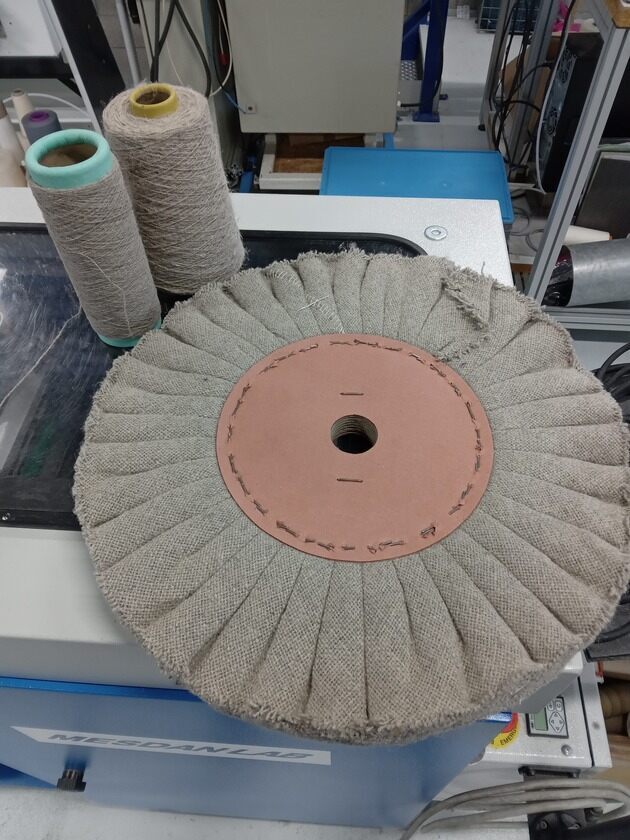
ITA will also be presenting a more wear-resistant hemp polishing disc at Techtextil in Frankfurt am Main.
The Recycling Atelier ITA Augsburg gGmbH presents its core competence as the first model factory for mechanical textile recycling.
Hemp Polishing Disc
Please find below a brief overview of the individual exhibits:
BIOBASE – Interior textiles made from biopolymers
As part of the BIOBASE project, funded by the Federal Ministry of Education and Research, interior textiles made from biopolymers have been developed together with Krall+Roth Produktions GmbH. In order to investigate the substitution potential of different biopolymers, an established, petroleum-based product is being modelled with polymers based on renewable raw materials. Therefore, commercially available bio-based polymers have been selected, melt-spun into filament yarns, then air-texturised and further processed into fabrics. The manufacturing processes and machine settings along the textile value chain had to be adapted to the respective material behaviour of the biopolymers. Using this process, fabrics made from four different (partially) bio-based polyamides were successfully realised for the interior sector. Please find further information here – https://biotexfuture.info/projects/biobase/
BIOTURF – Bio-based artificial turf without microplastic granulate infill
The aim is to develop an artificial turf structure made of bio-polyethylene (PE) that does not differ chemically from petroleum-based PE in terms of its essential properties. The mono-material structure should enable high-quality material recycling – an important starting point for the subsequent recycling of the product. In addition, the new artificial turf structure will not require the addition of infill granules, thus solving the current microplastic problem of artificial turf pitches. Please find more information here – https://biotexfuture.info/projects/biobase/
CO2TEX – Lifestyle compression stocking with TPU yarns that contain CO2, among other things
Elasticity is the ability of a textile to stretch or recover when required. This has a direct effect on functionality. Currently, elasticity in textiles is almost exclusively provided by so-called “elastanes”.
Elastanes are elastic filament yarns that are usually made from fossil-based elastomeric polyurethanes. The estimated production volume is around 1.22 million tonnes per year. The elastomeric character requires the use of dry spinning technologies for yarn production, which leads to challenges such as low production speeds and therefore comparatively expensive yarns.
In addition, potentially hazardous and environmentally harmful solvents must be used – an appropriate occupational safety concept is therefore essential. At the end of the product life cycle, dry-spun elastanes impair recycling because the individual components of the textile cannot be separated with technically and economically justifiable effort.These challenges can be solved by using elastic, bio-based or CO2-containing TPU filament yarns.
In the CO2Tex project, TPU yarns were developed on industrial melt spinning systems using polymers with a renewable content of up to 18 per cent by weight. With elongations of up to 600 per cent, diverse and innovative applications can be developed, such as the lifestyle compression stocking exhibited here – https://biotexfuture.info/projects/co2tex/
DEGRATEX: Degradable geotextiles
The aim of DEGRATEX is to develop bio-based, degradable solutions for geotextiles for short-term applications such as the temporary stabilisation of earth structures or vegetation protection. The materials fulfil their function until they can be taken over by natural components such as soil-stabilising or ground-covering plants.
As part of the project, various materials and textile structures for these applications are being researched and the effects of the degradation process on the surrounding environment are being scientifically assessed. In addition, the project aims to develop assessment and decision-making tools for the use of degradable geotextiles. The results will make it possible to replace conventional geotextiles with bio-based and degradable product solutions within a technically and ecologically sensible framework. In this way, material structures can be used resource-efficiently in applications, provide added value from a technical and functional point of view and reduce the use of petrochemical plastics for use in nature. Please find more information here – https://biotexfuture.info/projects/degratex/
Hemp polishing disc
Currently, polishing discs are generally made of cotton, for more abrasive polishing processes they are made of sisal, for example. For ecological reasons, the cotton polishing disc will be replaced by a more wear-resistant hemp polishing disc. For this purpose, cotonised – i.e. cotton-like – hemp is used. The wear resistance is ensured by a stronger material removal behaviour, which polishes the components faster. This saves time in the polishing process and therefore money. Please find more information here – https://www.ita.rwth-aachen.de/cms/ita/das-institut/aktuelle-veranstaltungen/ita-auf-der-techtextil/~bgdaxr/hanfpolierscheibe/?lidx=1
LIGHT LINING – Aerogel fibres and textiles
The ITA has succeeded in developing a cost-effective and industrially scalable manufacturing process for insulating textiles made from 100 percent aerogel fibres. Cellulose aerogel textiles are not only sustainable, but also very flexible and drapable compared to conventionally rigid or brittle aerogel products, which means that they can also be processed on conventional textile machines. The development at ITA promises a new, globally unique, sustainable, highly efficient insulation material that combines the advantages of textiles (flexibility & good processability) with those of aerogels (very low weight & very good thermal insulation). Please find further information here – https://biotexfuture.info/projects/lightlining/
Recycling Atelier ITA Augsburg gGmbH
The Recycling Atelier is a centre for research and development along the entire textile production chain for textile recycling. The bundling of the most important processes enables holistic and comprehensive research that has not existed in this form to date. Together, the partner network is looking for answers to the scarcely practised textile recycling and the missing triad of technical meaningfulness (downcycling), economic benefit (lack of profitability) and ecological meaningfulness (CO2 footprint).
Under the title “Walk4Recycling”, the Recycling Atelier now presents products made from post-consumer recycled materials. A new flat-knit jumper, teddy bears and a fleece bag have been produced from used textiles (worn knitwear) with the help of the strong partner network. The ring yarn used for the jumper consists of 65 per cent recycled cotton and 35 per cent new polyester. This high proportion of post-consumer recycled material is an innovation for a ring-spun yarn of this fineness, as today mainly coarse rotor yarns for lower-quality textiles are spun from these materials. The dyeing and decolouring process, which is essential for the fashionable reuse of textiles, is demonstrated using the teddy bear as an example. The non-woven bag shows the potential to close further circles. The fibre remnants from the ring yarn production of the jumper and teddy were collected for this purpose. The fibre remnants were processed with regranulated LooPET fibres to create a nonwoven fabric. This gives the cotton fibres a further life cycle.
Come and see us – we look forward to your visit
Posted: April 11, 2024
Source: ITA – Institut für Textiltechnik of RWTH Aachen University
ROSH HA’AYN, Israel — APRIL 11, 2024 — Kornit Digital Ltd. a worldwide supplier of sustainable, on-demand digital fashion and textile production technologies, announced today the company is setting the stage for an unprecedented display of its vibrant digital fabric and integrated workflow portfolio at Texprocess 2024. Kornit’s display at Messe Frankfurt, held April 23-26, allows attendees to experience the unmatched power of digital textiles, enabling companies to grow both dynamically and sustainably, respond to ever-changing customer demands and embrace the newly digital supply chain. Don’t miss the chance to visit Kornit Digital at Hall 8, Stand A32.
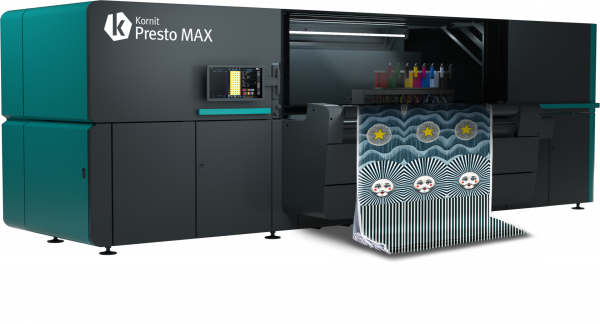
Kornit Presto MAX
Kornit Digital will feature a view into the end-to-end, fabric manufacturing ecosystem — allowing for production of any fabric and any design for any purpose. The centerpiece is Kornit Presto MAX, rapidly transforming the digital world of fabric printing with an ability to print on any fabric type — from cotton and polyester to denim and leather. This single-step solution sets new benchmarks in both textile design and manufacturing across fabrics, home décor, and more. Built on the promise of sustainability, Presto MAX is proven to dramatically reduce both water usage and waste — ensuring businesses can thrive in an eco-conscious marketplace. The system is the world’s first offering to print white ink on colored fabrics alongside neon to extend the color gamut by as much as 30 percent. Kornit’s new Vivido inks now additionally offers the industry’s richest, dark black pigments.
Additionally featured is the KornitX Global Fulfillment Network, a game-changing solution designed to optimize operational efficiency, eliminate supply chain bottlenecks, and ensure products are readily available to meet customer demands. The solution connects brands, retailers, and digital platforms to a high-quality production network — providing rapid replenishment and trend adaptability for direct-to-fabric production. Revolutionary pixel-to-parcel monitoring and control fully integrates the end-to-end production workflow for a seamless experience. The solution based on Kornit’s game-changing MAX technology empowers brands to break free from traditional constraints and unlock their true potential. It enables them to maximize margins, boost profitability, and pave the way for a sustainable future in the digital on-demand fashion and textile industry.
Beyond technology demonstrations, Kornit will additionally highlight how MAX technology serves as a vibrant partner platform to drive possibilities across the entire fabric printing and processing chain. Key partners highlighted include:
Colortex: Providing fashionable, custom textiles for the footwear industry.
ZwissTex: Offering quality, sustainable textile solutions for the automotive and clothing sectors.
Print Logistic: Delivering a full range of services – from printing to worldwide drop-shipping for smooth e-commerce integration.
CGS: Driving global performance through business applications, enterprise learning and outsourcing services.
FastSwen: Leveraging Moving Cavity Technology (MCT) to transform textile handling and production efficiency.
Premier Digital Textiles: Serving as the prime supplier of textiles with extensive warehousing across the US and UK.
Greentex: Providing highly sustainable, innovative, and customizable fabrics for advanced textile printing.
To experience the unmatched power of on-demand, sustainable textile production, don’t miss the opportunity to visit Kornit Digital at Texprocess 2024. Witness the future of digital production at Hall 8, Stand A32.
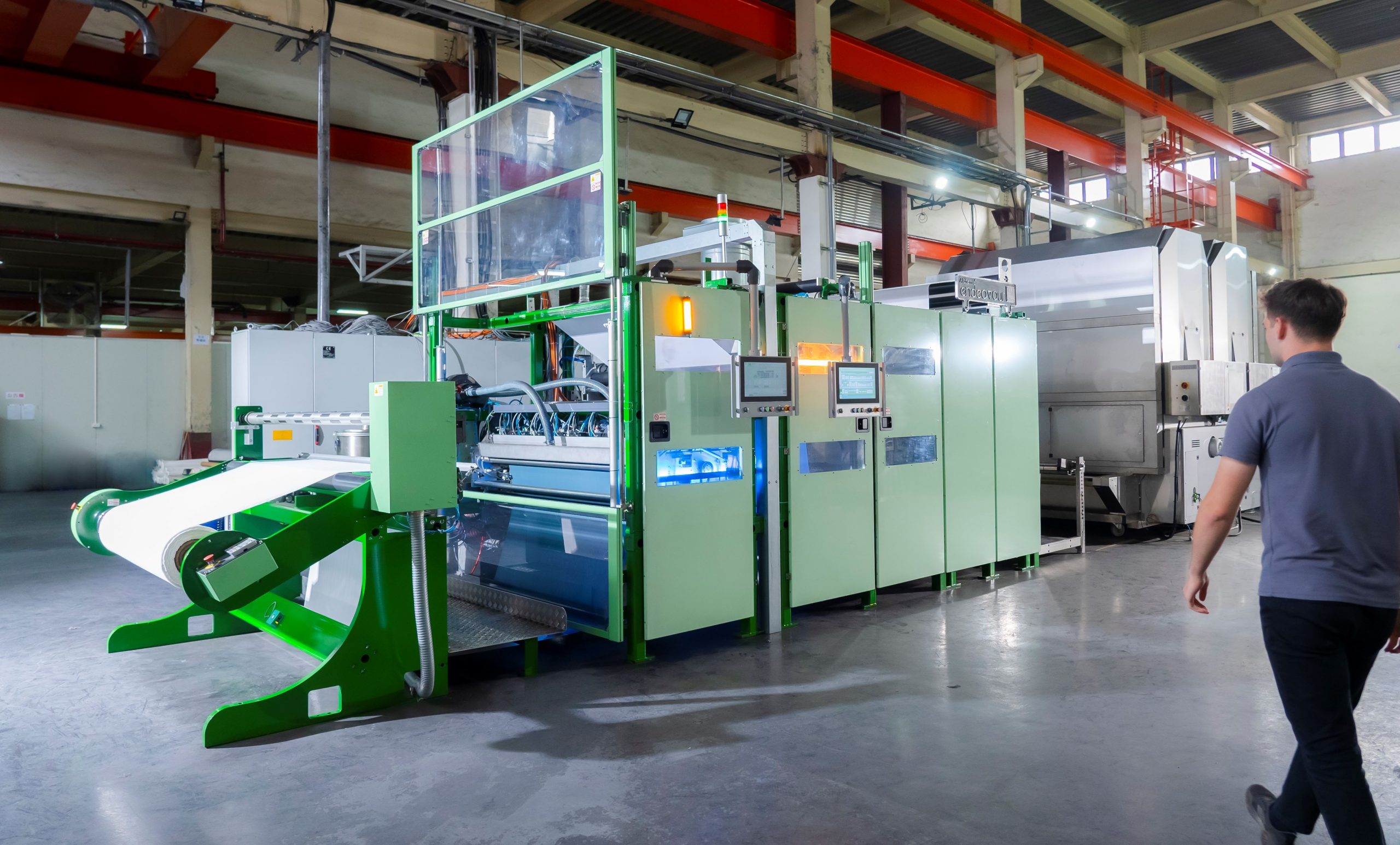
CAMBRIDGE, England — APRIL 8, 2024 — Alchemie Technology, an England-based clean digital textile dyeing technology pioneer, has today announced the opening of its first in-market production and demonstration facility in Nantou, Taiwan, dedicated to woven polyester. With the introduction of Alchemie’s Endeavour low carbon digital textile dyeing production in Nantou, Alchemie sets a new standard for textile dyeing, challenging conventional practices.
Alchemie Endeavour™ – Low Carbon Digital Textile Dyeing Production
Alchemie’s low carbon Endeavour dyeing process delivers significant sustainability benefits when compared with traditional dyeing processes. It facilitates the transition from wet dyeing to dry processing, resulting in a substantial reduction of up to 85 percent in carbon emissions and a decrease in waste water of up to 95 percent. The unveiling of the demonstration and production hub in Taiwan comes after a decade of technology development and is a major step forward in Alchemie’s mission to eradicate pollution from textile dyeing and finishing processes.
The textile industry carries a considerable environmental burden: without intervention, projections indicate that emissions could soar to 2.5 gigatons by 2050 under current practices, posing a grave threat to climate stability. To mitigate this risk and keep global warming below the critical threshold of 1.5°C, achieving net-zero emissions around 2050 is imperative. Additionally, as the world’s second-largest producer of industrial waste water discharge, the textile sector directly impacts millions of individuals worldwide. This underscores the urgent need for sustainable practices and regulatory measures within the industry.
Alchemie’s brand-new Taiwan facility focuses on polyester woven fabrics and serves as a pivotal step in Alchemie’s ambitious 2024 roadmap, which includes the development of in-market production solutions for cotton woven and knits, as well as polyester with elastane. Alchemie’s Endeavour low carbon digital dyeing production is a true end-to-end process solution: from virgin fabric intake to fully fixed and softened fabric colouration output, the Endeavour process ensures seamless digital dyeing, delivering high-quality results at every stage of production.
Dr Alan Hudd CEO and Founder at Alchemie
Dr. Alan Hudd, Founder and CEO of Alchemie Technology, said “In light of the global fashion industry’s staggering contribution of 2.1 billion metric tons of carbon emissions, equating to over 3 percent of global emissions, there is an urgent need for action. As the world increasingly prioritises environmental conservation, energy efficiency and carbon reduction, there’s a growing demand for low carbon dyeing technology.”
A traditional jet exhaust dyeing process uses large volumes of hot water, at temperatures of up to 135 degrees, for both dyeing and washing, requiring large amounts of energy generated by burning fossil fuels to create steam. At the core of Alchemie’s dry dyeing technology lies its patented digitally controlled piezoelectric nozzle, providing unparalleled precision: it achieves 100-micro registration of 1.2 billion drops per linear meter of dyed fabric, ensuring the highest level of accuracy.
Hudd added, “With the opening of our new production and demonstration hub in Taiwan, we are poised to forge partnerships with leading brands and textile players to unlock greater business opportunities and sustainability. These partnerships are not only about enhancing return on investment but also about driving tangible environmental benefits”.
EMIGSVILLE, Pa. — APRIL 8, 2024 — Herculite Products Inc., parent company of Strataglass LLC — a producer of clear press polished PVC sheets for the marine industry, with recognized brands such as Strataglass, CrystalClear, and PanoramaFR — is pleased to announce that Julie Tinsman has been hired as director of Business Development to promote brand awareness, loyalty and grow market share while strengthening our relationships with End Product Manufacturers and our Distribution partners.
“Adding Julie to the Strataglass team is a sign of our deep commitment to the Marine Industry. She has a strong history of building relationships with those driving the industry forward,” said Craig Zola, vice president of Marketing and Distribution.
Tinsman comes to Herculite with experience developing sales and marketing programs that grow sales revenues across national distribution channels. She has a background in sales, business and product development, OEM direct sales, and management in both B2B and B2C environments. Julie is an avid supporter of the marine fabrics industry and currently serves on the MFA advisory board and the Zone 7 board. Tinsman regularly participates in industry expert round table discussions and attends industry trade shows and events.
PORTLAND, Ore. — APRIL 10, 2024 — Authenticity50 — an American-made bedding and home goods company known for its commitment to premium quality, ethical domestic manufacturing and supply chain transparency — has introduced Heritage American Sheets; natural unbleached cotton sheets that are 100-percent “Seed to Stitch®” Made in the USA and celebrate local craftsmanship and tradition.
Authenticity50
Authenticity50’s Heritage American Sheets are part of a new ‘Vintage meets Modern’ bedding collection encompassing the high quality and durability that American-made is known for, and a classic and timeless look. Made with unbleached cotton and minimal processing, they feature the natural flecks found in raw cotton fibers. The name Heritage American represents the brand’s desire to capture the authenticity of the fabric, its enduring appeal, and its American origin. Consumers looking for premium, long-lasting bedding that’s locally made and kinder to the environment will appreciate this new line.
“We’re proud of our domestic supply chain, and radically low carbon footprint,” said Jimmy MacDonald, Authenticity50 co-founder. “Our sheets travel about 750 total miles for production and support local manufacturing communities. Other brands make their products overseas and transport them via container ships — one of the planet’s worst polluters.”
Launched for the warmer Spring season, the Heritage American Sheets feature a light and airy percale weave and come in “Rustic Cotton” — a natural shade showcasing the authentic color of the unbleached fabric.
“It’s a perfect neutral color for Spring, matches any room decor and instantly creates a welcoming vibe,” said co-founder Steph MacDonald. “The sheets are also durable, soft, and sleep cool; great for warmer weather.”
The sheets begin with premium American long-staple cotton that produces an extremely fine, yet durable single-ply thread; this makes for a much softer and longer-lasting fabric and resists pilling. The raw cotton is spun into yarn in Georgia, woven at one of the last remaining textile mills in South Carolina, and finished in Tennessee. The fabric then heads to New Jersey, where it’s cut and sewn by hand at a second-generation family-owned factory, to ensure the highest standards and quality. This fully 100 percent Seed-to-Stitch® supply chain is the hallmark of Authenticity50, as every aspect of their products are sourced, grown, and crafted in America.
Authenticity50 Heritage American Sheets come in a variety of sizes, starting at $199. Each set includes a flat sheet, a 14-inch deep fitted sheet and envelope closure pillowcases. Available now at www.authenticity50.com.
STAMFORD, Conn. — APRIL 10, 2024 — Hexcel Corp. announced today that following a comprehensive succession process, its board of directors has appointed Thomas C. Gentile III as CEO and president of Hexcel Corp., effective May 1. He also is expected to be appointed to the board of directors following the annual shareholder meeting on May 2.
He will succeed chairman, CEO and President Nick Stanage who worked closely with the board on his desire to retire at the end of the year. Stanage will become executive chairman of the board to ensure a smooth and successful transition until his retirement on December 31, 2024.
Stanage said: “Today, Hexcel is well positioned with the right strategy, an incredibly talented team and a clear roadmap to continue driving innovation across our differentiated portfolio while delivering sustainable, long-term growth for shareholders. I am confident that this is the right time to transition to a new leader who will continue propelling the business forward and executing against our financial targets. With his significant leadership and aerospace industry experience and composites knowledge, Tom is ideally suited to lead Hexcel into the future. I look forward to working closely with him in my role as Executive Chairman to ensure a seamless transition.”
Gentile is an experienced CEO with a demonstrated record of growing and transforming technology-focused businesses in aviation, health care and financial services. Most recently, he served as president and CEO of Spirit AeroSystems from 2016 to 2023. Previously, he held a succession of leadership roles at GE across the United States, France and Australia including president & COO of GE Capital, president & CEO of GE Healthcare Systems, and president & CEO of GE Aviation Services. Currently, he serves as executive advisor to the Dean of the Barton School of Business and formerly was chair of the Aerospace Industries Association (AIA) in 2023. He serves on the Board of Advisors to the Smithsonian National Air and Space Museum, is president-elect of the Wings Club Foundation, and is involved with numerous charitable organizations. Gentile earned a degree in economics and an MBA, both from Harvard University, and he studied international relations at the London School of Economics.
Stanage joined Hexcel in 2009 as president and was appointed COO in 2012, CEO in 2013, and chairman of the board in 2014. His successful career also includes leadership positions at Dana Holding Corp. and Honeywell.
Hexcel Lead Director Jeffrey C. Campbell said: “Under Nick’s leadership, Hexcel has further established itself as a global leader in advanced lightweight composite materials. He has helped enhance shareholder value, built a talented leadership team, and nurtured a resilient culture that will provide a strong foundation as Tom joins the company. The Board conducted a rigorous succession planning process, and we are pleased to have found in Tom a seasoned executive with deep knowledge of the aerospace industry, including both the airframe and jet engine markets, along with substantial operational expertise and a strong focus on customers and shareholders. We are confident that Hexcel has a bright future with Tom at the helm leading the company forward.”
Gentile said: “It is a privilege and an honor to succeed Nick and build upon the incredible operational foundation and culture he and the team have established. I have long admired Hexcel and been impressed by the company’s strong customer relationships and commitment to innovation. I am excited to work with Nick, the Board and the management team and to continue the impressive momentum underway at Hexcel.”
Stanage concluded: “I am proud of all that we have accomplished at Hexcel, and I want to thank our One Hexcelteam for their phenomenal support and commitment over the last 14 years. It has been an incredible honor to lead the Hexcel team, which is the most talented I have ever known. I am convinced that Tom will now provide great leadership for the next step in the journey and that he will take Hexcel to new heights and a highly successful future.”
Reaffirming 2024 and Mid-Term Guidance
The Company reaffirmed its 2024 and mid-term financial guidance, as detailed in its Form 8-K filed with the SEC today.
KENNEWICK, Washington — APRIL 10, 2024 — Carbitex — producer of flexible carbon fiber composites focused on footwear, travel, and accessories — has announced the appointment of Filippo Sartor to vice president of Global Sales, and Sam Gardner to the role of vice president of Engineering and Operations. After a restructuring of manufacturing operations and the return of Carbitex founder, Junus Khan, as company president in 2023, the brand welcomes two strategic hires to catalyze the next phase of the leading materials brand.
With more than 20 years in the footwear industry, including nearly 11 years as the Global senior sales manager at JV International, official worldwide licensee for Michelin Soles, Sartor brings high level sales expertise within performance footwear and material innovation. With extensive focus on building new business in the United States and Far East, and based in Milan, Italy, Sartor is uniquely positioned to help propel Carbitex globally into the next chapter.
“I am extremely proud to join the Carbitex team and see huge growth potential thanks to a dynamic group of people dedicated to enhancing the technical benefits in the footwear market,” Sartor said. “I look forward to building Carbitex’s global presence and supporting the many existing brand partners. My experience growing a diverse range of technical and lifestyle footwear brands, combined with the expertise of the team, will help us create new solutions for the most demanding partner needs.”
Gardner, based in Renton, Washington, will manage product development and manufacturing at Carbitex. With time at Square One Distribution — a long-time Carbitex brand partner in the wake and waterski segment — and most recently as vice president for Union Aquaparks, Gardner has considerable experience designing new products and managing sourcing, logistics, and supply chain. His background will help Carbitex strengthen both factory and brand partner relations and push product innovation.
“Filippo and Sam fill key roles with expertise that seamlessly aligns with our vision,” Khan said. “Their backgrounds in sales, product design and manufacturing solidify a complete team poised to drive Carbitex’s next phase of growth.”
These recent hires position Carbitex to better serve strategic brand partners, achieve forecasted growth in the short and long term, and expand global market presence.
PARIS — APRIL 9, 2024 — Lectra has announced a major development of its SaaS platform dedicated to collection management for the fashion sector: Kubix Link 3.4 This new version improves optimization at each phase of bringing a product to market, from design to marketing. Its launch goes hand in hand with that of Kubix Forms, a solution that simplifies the collection and integration of data from third-party users on the Kubix Link platform.
To maintain their profitability in the face of current economic instability and intense competition, fashion brands must reduce their costs. While collection renewals are accelerating, brands must also optimize their production operations. Finally, they must respond to increasing requirements in terms of sustainability, compliance and traceability.
In this context, it has become absolutely essential to have information that is as accurate and up-to-date as possible at each stage of the product lifecycle. Fashion brands also need to be able to very simply and easily share this product information with all those involved in the design, manufacture, distribution and marketing of their collections.
A better user experience with Kubix Link 3.4
With Kubix Link PLM, Lectra already had a cloud-hosted SaaS platform offer that included functions for product lifecycle management (PLM), product information management (PIM) and data asset management (DAM).
Kubix Link 3.4 enhances the user’s experience through new media organization (photos, videos), greater data storage capacity, increased flexibility in using the tools offered, as well as improved translation to facilitate cooperation between multilingual teams.
This new version also provides transparent integration of third-party solutions, similar to AccuMark, Lectra’s patternmaking software, or the brand new offer, Kubix Forms. This is being launched in parallel with Kubix Link 3.4 to make it easier for fashion brands to collaborate with their external partners.
“Kubix Link is already used by 300 customer brands and we are the European leader in product data management and collaboration. We want to go further by continuing to develop innovative solutions to respond to the new needs of our customers. The fashion industry evolves very quickly. We are happy to be able to participate in this transformation by providing responses based on our mastery of new technologies and our expertise in each sector, gained from Lectra’s experience working hand in hand with the most renowned fashion brands for over 50 years,” explained François Gonnot, Product Marketing director at Lectra.
Broader collaboration made simpler with Kubix Forms
Launched at the same time as Kubix Link 3.4, Kubix Forms revolutionizes the collaboration between fashion brands and their partners. Third-party users can fill out and expand the information available on Kubix Link. It is now possible to overcome traceability challenges by retracing the origin of textiles and calculating their carbon footprint, to check production quality and interact transparently with suppliers and brands to obtain product information more easily. Automatic response integration in Kubix Link ensures that work flows smoothly, reducing time spent on manual data entry, and promotes data enrichment in a secure manner for brands.
Gonnot concluded: “Fashion brands need more transparency, traceability, compliance and collaboration. The Kubix Forms offer gives them the opportunity to make significant advances in optimizing their business processes and maximizing their operational efficiency, regardless of their size. With the integration of Kubix Forms, Lectra is providing a proactive response to the growing demand for smooth collaboration with third-party users. We therefore offer a significant competitive advantage to customers who trust us to actively contribute to their growth and success.”

 CULVER CITY, Calif. — APRIL 11, 2024 — As part of a broader initiative to reduce environmental impacts and keep ahead of evolving global chemical regulations, Active Apparel Group (AAG), manufacturer of performance apparel for the leisure/lifestyle and active market, is embracing water-based OEKO-TEX 100 Class 1 Standard Printing Inks in their manufacturing process.