ITMA 2003 To Include ForumCEMATEX, the organization comprised of European textile manufacturers
associations and organizer of ITMA 2003, has added the ITMA Forum to the activitites offered during
the quadrennial textile machinery exhibition, to be held in Birmingham, England, October 22-29,
2003. The Forum, a three-day conference focusing on strategic initiatives for the global textile
industry, will take place October 23-25. It will comprise six open discussions including China,
trade developments, corporate finance, skills management, supply chain management and technical
textiles. The opening session, China: a Competitor, Supplier, Partner or New Market will feature
panelists Chinese Textile Minister Du; Bill Lakin, secretary general, Euratex; and Carlos Moore,
senior vice president, American Textile Manufacturers Institute. We are extremely happy to be
running this major conference alongside ITMA 2003, said Evelyne Cholet, secretary general, CEMATEX.
The development reflects a visionary step forwards in the evolution of CEMATEX, and I am certain
that this addition to the exhibition will be welcomed by both exhibitors and visitors, as well as
position the ITMA brand well and truly at the forefront of our industry.
May 2003
ITMA 2003 To Include Forum
ATMI Annual Meeting
ATMI Annual MeetingBy James A. Morrissey, Washington Correspondent Opportunities
Textile industry leaders see problems, but also some opportunities ahead.At a critical
time in the history of the US textile industry, mill executives attending the 54th annual American
Textile Manufacturers Institute (ATMI) meeting took a hard look at the future, saw some mighty big
problems, and discussed what they need to do in order to survive in the increasingly competitive
world market for textiles.During three days of information-packed sessions, ATMI members and
government officials discussed ways to combat a continuing wave of imports and limited overseas
markets for US textiles and apparel that have resulted in a textile trade deficit of $5 billion,
the loss of 25,000 jobs in the past year and seven consecutive years of declining textile mill
shipments. Overshadowing the discussions was the specter of the impending removal of all textile
and apparel quotas in less than two years.By far the biggest news was made by US Department of
Commerce Under Secretary of International Trade Administration Grant Aldonas, who reiterated the
Bush administrations commitment to help the US textile industry become more competitive in world
markets. He also made a long-awaited announcement of the governments plans to deal with import
surges from China.

Grant Aldonas, under secretary of international trade with theUS Department of Commerce, is
commited to helping the UStextile industry become more competitive in international markets.When
China became a member of the World Trade Organization (WTO) at the beginning of last year, it was
permitted to catch up on a seven-year quota phaseout that other WTO members had enjoyed. There was
an immediate surge of imports in the decontrolled categories that contributed to a 135-percent
increase in imports from China. Last August, ATMI filed a petition with the Committee for the
Implementation of Textile Agreements (CITA), asking that the quotas be reimposed under the
so-called safeguard mechanism in the China WTO accession agreement.Aldonas announcement was well
received by the leadership of ATMI, although Chairman Van May expressed his disappointment that it
was so long in coming. May said it now appears that the government will act under a strict
timetable, and he said ATMI is looking at additional product categories where Chinese exports are
disrupting the US market.Under the safeguard guidelines, a petitioner for relief must provide CITA
with detailed documentation of a claim that a product from China is creating market disruption or
threatening to impede the orderly development of trade in such products. Once a petition is filed,
CITA will call for public comment and within 60 days of the close of the comment period, CITA must
seek consultations with China. If those consultations are not satisfactory, the United States may
take unilateral action. Some industry observers said the consultation process could be drawn out
and frustrate efforts to get timely relief, but Aldonas said the US government would act to
expedite the process, and he would not permit anyone to game the system.In another announcement
that warmed the hearts of attendees, Aldonas said the United States will take unilateral action
against Vietnam if a bilateral textile agreement cannot be reached in the near future. He also said
an aid package offered to Turkey in return for support of the war in Iraq will not contain any
textile concessions. During the 1991 Gulf War, the United States doubled Turkeys textile quotas in
return for permission to use its air bases to attack Iraq. The US government reportedly offered a
similar increase recently to Turkey, but Aldonas said that is not going to happen this time
around.On another front in the trade battle, Aldonas announced that the government is moving
forward to develop techniques for tracing illegal textile and apparel imports. The Department of
Energys Oak Ridge National Laboratory is working on three possible approaches to creating a marker
system that will help Customs agents determine the country of origin of imports and whether they
are illegal transshipments.Two panel discussions at the annual meeting addressed steps textile
manufacturers can take to increase their ability to gain greater access to foreign markets. David
Hastings, CFO, Mount Vernon Mills, Greenville, led a discussion on how textile companies can
overcome difficulties in financing exports, and problems such as difficulties in payment
collection. James Morris, Southeast director, Export-Import Bank of the United States (Ex-Im Bank),
Washington, discussed how loans from the bank can help textile exporters overcome serious
commercial and political risks involved in exporting to certain countries. Morris said many
problems arise from the fact that textile manufacturers want cash or at least guarantees in
advance, and potential overseas customers want to pay only after their products are sold at retail.
He urged textile manufacturers to take advantage of Ex-Im Bank programs to help reduce the risks of
dealing with overseas customers.Morris said Ex-Im Bank offers insured loans at reasonable rates
with virtually no minimum or maximum on contracts where there is reasonable assurance of payment.
Eligible products must have at least 51-percent US content. He said a particular advantage of Ex-Im
Bank loans is that companies can pay a monthly premium on goods only as their goods are shipped,
thus avoiding up-front payments for the entire amount of the loan.Bohdan Sosiak, partner with Risk
Protection International LLC, Stratford, Conn., discussed how risk insurance can help protect
textile exporters from losses due to a number of causes. He said the basic goal of risk insurance
is to help exporters sell goods abroad and get paid for them, and this can be accomplished by
insuring against both commercial and political risks. On the commercial side, this means insuring
against slow pay and protracted defaults, insolvency and bankruptcy. It also is possible to get
insurance against foreign government actions such as embargoes and license revocations, currency
inconvertibility and transfers, political expropriation and wars, and rebellions and revolutions.
In addition, Sosiak said risk insurers can provide a good deal of client support by providing
market intelligence, evaluations of potential customers and help in finding lending opportunities.
With respect to market intelligence, it is possible to provide insights into country risks,
underwriting trends and financing options, Sosiak said.
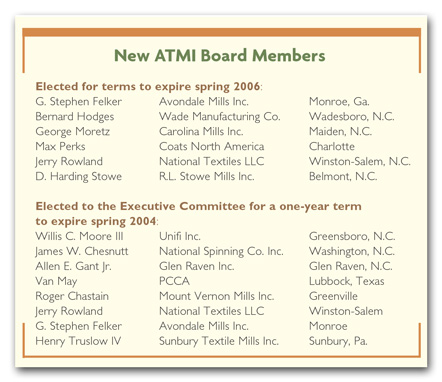
Emy Ruiz, senior vice president and international trade finance manager, Union Planters Bank,
Memphis, Tenn., said financing also is available from international banks. She underscored the
importance of working with an experienced international financing institution when dealing with
such things as letters of credit, international monetary transfers and payment methods. Ruiz urged
textile companies to work with either Ex-Im Bank or commercial lenders, and pointed out a
little-known fact that cotton textile manufacturers can take advantage of the governments Commodity
Credit Corp. financing, which many believe is available only to agricultural commodities.A panel of
leading Latin American trade experts took a look at what moderator G. Stephen Felker, chairman,
president and CEO of Avondale Mills Inc., Monroe, Ga., called the good, the bad and the promising
aspects of textile trade among the nations of the Western Hemisphere. For the most part, the
panelists were optimistic about opportunities to compete against products from China and other
major overseas exporters, which many feel will overwhelm the US market once import quotas are
removed, and if there are significant tariff reductions as a result of the current WTO
negotiations. Jesus Canahuati, general manager, Central American Elastics and Textiles (ELCATEX),
Honduras, the largest textile manufacturer in Central America, emphasized that the single biggest
competitive advantage countries in the hemisphere have is their proximity to the US market and what
that means in terms of inventory control, lead time, warehousing, style changes and eliminating
overstocking of goods. He said that in order to benefit from these advantages, textile companies
throughout the area must improve their communications and work cooperatively to respond to customer
demands. Carlos Arias, vice president, Koramsa, a major apparel manufacturer in Guatemala,
emphasized that worldwide competition has resulted in more demanding and sophisticated consumers
who are more price-and quality-conscious than ever. In every case, the Latin American experts rated
high the prospects for special regional trade agreements. But they underscored the importance of
developing partnerships now in order to encourage investments and fend off the increased
competition that will come when import quotas are removed worldwide. US textile manufacturers
expressed concern with the so-called Tariff Preference Levels (TPLs) that are in some of the
agreements. TPLs enable countries that are not participants in the agreements to enjoy preferential
quota and tariff treatment for a given amount of exports up to a specified level. The US textile
industry is strongly opposed to TPLs, but the US government seems willing to grant them in
connection with some of the regional preferential agreements under certain circumstances. Industry
officials also expressed fear that the US governments proposal to eventually eliminate all tariffs
on textiles and apparel will undercut the advantages of the regional pacts.At the meetings closing
session, Lawrence Chimerine, Ph.D., an economic forecaster, told attendees that the US economy has
slowed, but it is not collapsing, and he expects things to improve before long. He looks forward to
a better and more balanced economy than the United States had in the 90s, and expects modest growth
depending on the outcome of the war in Iraq and its aftermath. Chimerine said the current slow
economic growth is the result of nervousness about spending by consumers, war worries and the fear
of terrorism, a severe winter and a late Easter that delayed retail spending. At the same time, he
said, things are looking up inflation will remain under control, oil prices will decline, jobs will
come back in some areas of the economy, there will be tax cuts, and the Department of Homeland
Security will create additional government and civilian employment. Chimerine also looks for
improvements on the international trade front, since the trade deficit has become a major concern
across the entire manufacturing segment of the economy. This means the textile industry could have
more powerful allies in its international trade battles.
May 2003
Pillowtex Relaunches Cannon Brand
 Pillowtex
Relaunches Cannon® BrandAfter spending more than 10 years in the shadows, Kannapolis, N.C.-based
Pillowtex Corp.s Cannon® brand of bed and bath textiles resurfaced with the introduction of a new,
updated product line during Home Fashions Week, held in late March in New York City. With
assistance from several consumer research and brand consulting firms, Pillowtex determined that
Cannon is the most recognized and most favored brand of home fashion textiles. The new product line
was developed in response to feedback from consumers and retail customers. Products are offered in
12 core colors. Four colorways including mix-and-match sheet patterns are based on four of the core
colors.With a rich heritage dating back to 1887, Cannon is an American and global icon. Consumers
equate Cannon with tradition, value, quality and honesty, said Mike Gannaway, chairman and CEO,
Pillowtex. With great pride we are relaunching the Cannon brand to offer value- and
quality-conscious consumers a time-tested and trusted product line that delivers exactly what
consumers asked for products that look and perform the way they should.
May 2003
ShanghaiTex Questions
A
this issue goes to press in late April, the question remains whether ShanghaiTex will
open on June 2 as planned, or face rescheduling due to the threat of poor attendance related to the
Severe Acute Respiratory Syndrome (SARS) crisis. The impact of SARS on individual health, business
travel, as well as the global economy should not be dismissed.
Shanghai, at this writing, has reported two people in a city of 17 million with the
mysterious SARS virus. Francis Markus, a BBC correspondent, noted the skepticism Shanghai’s
inhabitants have as to “how China’s business hub could have so few cases while numbers have
skyrocketed elsewhere.” The World Health Organization (WHO) is currently investigating further.
In the same BBC report, WHO praised Shanghai for its efforts in controlling SARS. Dr.
Wolfgang Preiser, a member of WHO’s Shanghai team, stated, “The situation in Shanghai was nowhere
near as bad as in Beijing because the authorities had acted much faster to monitor and prevent the
disease.”
Although textile executives are generally of the intrepid sort, both attendees and exhibitors
will weigh the personal and business consequences of their actions. In the end, the decision to
attend or not may be preempted by the city of Shanghai’s actions potentially halting all
exhibitions, which will be a serious blow to the city’s economy.
Bloomberg News has reported that Shanghai is scheduled to host 182 exhibitions from late
April through the end of 2003. The Shanghai Convention Exhibition Industry Association reports the
city generates an estimated 1.8 billion yuan ($217 million) annually through exhibitions and
conferences.
Shanghai aside, the overall consequences of SARS are even more far reaching. Asian economies
are starting to deal with mounting fallout from the syndrome. The World Bank has cut its regional
economic forecast, and threat of exposure to the virus is having a chilling effect on China’s
explosive growth.
As China’s overwhelming textile and apparel exports expansion charges toward 2005, one can
only wonder to what extent SARS will impact the supply chain and the intense globalization the
industry is experiencing.
Exhibitors and attendees alike may need to reshuffle their schedules for a December show. If
so, what does this mean for ITMA 2003 in Birmingham, England?
May 2003
Blue Ketchup, Better Burgers
T
he H.J. Heinz Co. has just introduced its Stellar Blue ketchup to the market. The company
enjoyed tremendous success with Blastin’ Green ketchup last year and feels the blue line will boost
its overall sales for 2003. Simultaneously, Jim Cantalupo, the new CEO at McDonald’s Corp.,
released the specifics of his turnaround strategy for the burger chain. In essence, the new
marketing effort will concentrate on “doing fewer things but doing them better.”
Perhaps there is a valuable lesson here for yarn manufacturers. As a number of firms are
struggling for survival, the time may be right to adapt new business models that emphasize
technology, niche markets and innovative value-added products. As one spinner said, “We are
modifying a lot of our existing equipment to enable us to make higher-value effect yarns.”
Fashion designers are looking at effect yarns as a viable way to get a more natural
appearance in knitted or woven fabrics. In fact, effect yarns are now a fashion trend from denim to
T-shirts. Devices are available to allow the conversion of existing ring spinning and open-end
equipment. Program-controlled drafting systems allow the production of slub, multicount, and
multitwist effect yarns. This type of diversification and flexibility in product may be the
industry’s version of blue ketchup and better burgers.
Recession Worries Grow
Most economists felt that the major obstacle to economic recovery was the war in Iraq. Despite
the news that Saddam Hussein’s government has toppled, Wall Street continues to stumble lower.
Analysts have already pushed back their forecasts of economic recovery to the second half of this
year. The CEO of a major textile firm said, “Investors have shifted their attention from the war to
the first-quarter earnings report.”
Gross domestic product gains declined to 1.4 percent for the fourth quarter of 2002. Many
economists are predicting little change for the first quarter of 2003. In fact, some feel the final
results may show the economy actually shrank during this period — initial signs of a slide back
into recession.
The most critical element seems to be job losses. The economy lost another 108,000 jobs in
March. The 465,000 jobs that have disappeared over the first quarter have caused the Federal
Reserve Board to put together an Emergency Economic Rescue Plan. According to Fed Chairman Alan
Greenspan, the plan may include the purchase of long-term securities in an effort to stabilize
long-term interest rates.
The Fed has indicated its willingness to lend money directly to commercial banks and has
committed to maintaining the Federal Funds Rate at levels necessary to produce a sustainable
economic recovery. In fact, the Fed has indicated that the Federal Funds Rate would be held at a
lower level over a long period if the rate is moved below the current 41-year low of 1.25 percent.
The CEO of a large textile firm reacted to the proposal by saying, “The Fed is trying to bolster
confidence. They are trying to eliminate worries about sudden jumps in long-term and short-term
rates. Hope the plan works.”
New Optimism Over Trade Issues
Grant Aldonas, under secretary of international trade administration with the US Department of
Commerce, recently announced a “ safeguard provision” for dealing with the flood of imports from
China. The safeguard — which will remain in effect until December 31, 2008 — gives the United
States the right to impose quotas on certain textile and apparel products that were previously
removed from quotas as part of China’s accession to the World Trade Organization.
The biggest impact of the new safeguard affecting yarn manufacturers will be in the area of
knit fabrics. In 2002, China surged ahead to become the fifth-largest exporter of knits to the
United States, up from a position of 26th in 2001. Overall, this is still a very small piece of the
pie, since total textile imports from China are approaching 5 billion square meters, valued in
excess of $8.7 billion. A textile executive stressed, “This should have happened sooner. Everything
going forward will be based on the current level of imports.” A good point, since China’s textile
and apparel exports rose 36.6 percent in December alone!
May 2003
Quality Fabric Of The Month: Shimmer And Strength
Pallas® Textiles, a Green Bay, Wis.-based designer and marketer of contract and residential textiles and wallcoverings, recently introduced Alloy, a panel fabric in which polyester crepe is bonded with aluminum to create an elegant, shimmering textile that also is extremely durable. Developed by Rock Hill, S.C.-based designer Michael D. Laessle, who drew on technology used originally for military applications, the fabric was the recipient earlier this year of the ADEX Platinum Award, sponsored by Design Journal, in addition to a Best of NeoCon Silver Award and an Innovation Award in the fabrics, leathers and vinyl category at NeoCon 2002.
The fabric was nearly two years in development, according to Laessle. “Timing is everything,” he said, adding that Alloy’s evolution involved considerable trial and error to perfect both the bonding and the dyeing processes for the fabric relative to its envisioned use in contract and
residential interiors.

Alloy is available in five metallic colors, which are coated
lightly onto the crepe fabric to give a sense of deepened texture.
“The manufacturing process is quite amazing,” said Laessle. “A 100-percent polyester crepe greige fabric is fed through a chamber heated to 1,200°F under high pressure. Aluminum rods are also fed into the chamber, where the solid metal changes to gas and permanently fuses with the fabric — hence, the name Alloy.”
Color is coated onto the fabric very lightly and adds depth to the crepe texture by settling into the interstices between warp and filling. The addition of the metal makes the fabric “ virtually indestructible,” according to Kimberly Christman, president of Pallas. It passes all
crocking, fading and flammability tests; and it also has passed the Wyzenbeek abrasion test for more than 100,000 double rubs. “The aluminum is so imbedded into the polyester fiber that it won’t rub off,” Laessle explained.
Alloy may be used in vertical applications, such as panels and demountable walls, or in selected seating applications. “Although it maintains the qualities of a fabric and sews beautifully, it does not have the stretchability of other fabrics, so as seating it works best for such uses as banquettes,” Laessle said.
As a wallcovering, he said, Alloy appears to be seamless. One facility is using Alloy in its communications center in combination with wood, which Laessle said softens the metallic, industrial aspect inherent in the fabric. Describing other vertical uses, he mentioned a hotel that is using
it for shower curtains. Its shimmering elegance and durability make this innovative fabric suitable for a variety of contract and residential uses.
May 2003
Medline DuPont Enter Marketig Relationship
Mundelein, Ill.-based Medline Industries Inc. and Wilmington, Del.-based DuPont Medical Fabrics
have entered into a marketing relationship in which DuPont will provide its spunlaced fabric for
Medlines Proxima line of disposable protective surgical apparel and products.According to the
companies, DuPonts spunlaced fabric combines the natural feel of cotton with advances in material
technology to provide a splash-resistant barrier. DuPont adds that the fabric has high drapability
and softness, which optimize wearer comfort and dexterity. Moreover, the manufacturing process uses
no binders, chemicals or adhesives, resulting in a high-purity fabric structure and minimizing the
possibility of product contamination and allergic reactions by users.Medline also will incorporate
a high-tech fabric still under development by DuPont into its Proxima line later this year.
May 2003
Geri-Care Cotton Craft Sign Business Agreement
Moonachie, N.J.-based Geri-Care Products LLC, a supplier of reusable incontinent care products, and
Atlanta-based Cotton Craft Inc., an importer of cotton institutional blankets, have entered into a
joint business agreement that, according to the companies, will allow them to offer a more diverse
product line and a higher service level to their customers.The joint business will be based in
Moonachie and will maintain offices and a showroom in Atlanta.
May 2003
Borgers To Build Alabama Plant To Supply Mercedes-Benz
Germany-based Johann Borgers GmbHandCo. KG, an automotive carpet supplier, is currently scouting a
Tuscaloosa County, Ala., site for its first US plant, reports Developing Alabama.According to the
Alabama Development Office publication, Borgers USA will build a $5 million plant that will employ
70 associates to supply the Mercedes-Benz plant in Vance, Ala., which assembles the M-Class
sport-utility vehicle and is undergoing a $600 million expansion.
May 2003
ParksandWoolson Moves South
ParksandWoolson Moves SouthSpringfield, Vt.-based ParksandWoolson Machine Co. Inc. has opened a
service and repair center in King, N.C., and plans to move its entire manufacturing operation to
that location within the next 12 months. Initially, the company will hire 10 employees and
anticipates creating a total of 30 new jobs for the region over the next three years.The
manufacturer of textile finishing and web handling equipment is making the move to North Carolina
in order to be closer to its many customers, which include Guilford Mills, National Textiles and
Burlington Industries.We are excited about bringing our company to [King] and the wonderful
opportunities available here for our business and our employees, said Al Peterson, president. Our
customers have reacted favorably to our decision, since it will allow us to service their needs in
a timely and efficient manner. We look forward to being a contributor to the community and being a
part of it.
May 2003
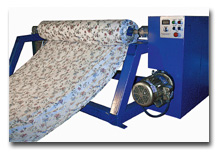
ParksandWoolson, which manufactures the Posi-Winder, plans to move its entire operation to
King, N.C.