American Floorcovering Alliance

afabuilding_Copy

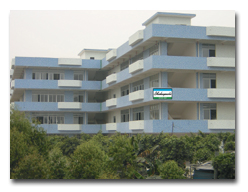
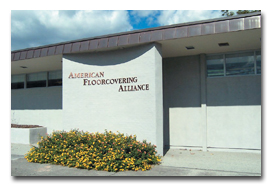
The American Floorcovering Alliance is located in Dalton, Ga.


T
he American Floorcovering Alliance (AFA), located in Dalton, Ga., was formed in 1979 as
the Dalton Floorcovering Market Association (DFCMA) to promote the floor covering industry. The
AFA, which took on its new name in March 2002, promotes the industry’s products and services to the
world, and educates members and others through seminars, press releases and trade shows. Membership
is open to any company in the floor covering industry or in a floor covering-related industry.
Financial support comes from membership dues and trade shows. The alliance is governed by a Board
of Directors elected from within the membership.


Benefits of Membership

According to Wanda Ellis, executive director: “Membership means competitive advantage from free
marketing services to an on-line classified section, from a global trade network to group pavilions
at foreign trade shows. These are just some of the many services that members may access as part of
the American Floorcovering Alliance.”

The AFA’s offices in downtown Dalton provide members with a convenient place to meet clients,
employees or peers and do business in a boardroom environment. “Our members think of our offices as
their offices, and that’s just the way we like it,” Ellis added.


Marketing Assistance

Throughout the year, the AFA offers a variety of seminars that give the inside track on who’s
doing what within the floor covering industry. It also provides its members frequent news releases
relaying opportunities or events that may affect their business. The alliance also provides members
free, up-to-date mailing lists targeted to leading flooring industry manufacturers, distributors,
vendors and others involved in the trade. “What’s more, we can assist in the distribution of
promotional literature for your company,” Ellis said. The AFA offers member companies a variety of
professional promotional services, which include generating publicity through trade and news media
contacts, preparation and distribution of press releases, free listing of products and services on
the alliance’s website, www.americanfloor.org, listing within its membership directory, assistance
in developing trade advertising and advertising opportunities exclusively targeted to the
trade.


Resources

The AFA offers the Flooring Industry Profile Book, an up-to-date reference tool that helps
readers keep track of manufacturing resources and business activities within the industry. The
on-line database includes listings of US and Canadian carpet manufacturers and their plant
locations by state or province. Also included are listings of commission yarn spinners, filament
twisters and heat-setters, dyers, printers and finishers, yarn and fiber dyers, and tufters; and
their plant locations by state.

Ellis offers members her services as the vice chair of the 34-member North Georgia Export
Council – formed to aid the Department of Commerce with trade promotion efforts for the State of
Georgia. These services include access and assistance to a number of resources such as the Georgia
Department of Economic Development, the US Small Business Administration, the Export-Import Bank of
the United States, the Georgia Department of Agriculture, and the Georgia Technical Center for
International Standards and Quality, among others.


Annual Meeting

Members of the alliance are invited to attend its annual meeting, held at the end of the
membership year each October. The meeting features a keynote speaker, Board of Directors elections
and a cocktail party followed by a dinner. Members are encouraged to bring associates to network
with other members.

Nominations for open positions on the board are accepted prior to the meeting, or they may be
made from the floor during the meeting. Any AFA member in good standing may serve as a director.
Directors on the board serve one- to two-year terms and meet four times a year to conduct alliance
business.

“It’s a unique opportunity for networking, as well as for having your views heard in regard to
what the alliance can do in the future for you and the industry,” Ellis said.

At the end of 2004, the AFA celebrated 25 years of leadership and promotion in the flooring
industry at its annual meeting held at the Dalton Golf & Country Club. In addition to electing
officers for the 2004-05 term, the alliance recognized the following companies as 25-year members:
BB&T; Brown Industries; Caraustar; Carpet Crafts; Global Textile Services; Grass-Tex; Northwest
Carpets; Rogers Finishing; and Shaheen Carpet Mills. Manry & Heston and The Sample Works were
recognized as 10-year members. Burtco Enterprises Inc. was honored by the alliance as Member of the
Year.


Global Trade Show Participation

The AFA sponsors local trade shows for the flooring industry, such as the biennial Floor Tek
Expo, which features machinery, equipment and service vendors for the carpet and rug industry. The
AFA staff coordinates the logistics of all exhibits, accepts reservations and provides other
marketing services for the show. Additionally, the AFA exhibits at such international shows as
Domotex, held in Hannover, Germany; Domotex Asia/ChinaFloor Surfaces, held in Shanghai; and
Surfaces Expo, held in Las Vegas, to promote the products and services of member companies. The AFA
has led a Georgia delegation of floor covering companies to the annual Domotex floor coverings show
held in Hannover since 1998. Participating companies are housed in an AFA-hosted pavilion equipped
with a community lounge, and meeting and exhibit space.

Domotex is one of the world’s largest forums for carpet, floor coverings and related products
and services. Display categories traditionally include handmade carpets/area rugs, machine-made
woven carpet, textile and resilient floor coverings, parquet and other wooden flooring, laminated
floor coverings, fibers and yarns, textiles, and natural stone and ceramic tiles.

According to organizer Deutsche Messe AG, the show features more than 89,500 square meters of
exhibition space. The last edition, held in January, attracted 1,226 exhibitors – an increase over
2004 and 2003 numbers. More than 90 percent of exhibitors reported reaching their intended target
groups.

domotex

The AFA led a delegation of US floor covering companies to Domotex 2005, held in Hannover,
Germany, earlier this year.

Domotex 2005 offered such special events as the Domotex Workshop, a daily series of
practice-oriented presentations. The Skilled Trades Forum offered visitors a program of discussion
on practical aspects of flooring solutions. The Carpet Performance Showcases provided attendees
with practical hints for the retail shop-fitting sector. Due to an increase in requests for quotes
and product information from visitors to the AFA Pavilion at Domotex 2005, the alliance has decided
to double its floor space at the next edition of the show, which will take place Jan. 14-17,
2006.

The AFA also has participated in the Domotex Asia/ChinaFloor Surfaces show since 1998. It led a
group of companies to the show last month, and plans to attend next year’s show, to be held in
March.

The AFA also led a delegation of US companies to Surfaces Expo 2005 – an international floor
covering show that offers exhibitions and a comprehensive conference program that includes
workshops and seminars. The alliance plans to participate in next year’s edition of the show, which
will be held Feb. 1-3, at the Sands Expo & Convention Center in Las Vegas.

April 2005
Setcore Spinning Achieves Oeko-Tex Standard 100

Egypt-based Setcore Spinning S.A.E. has achieved the Oeko-Tex Standard 1000 for compliance with
environmentally friendly criteria in the workplace. The company is the first manufacturer outside
Europe to fulfill the requirements outlined in the standard.

Standard 1000 criteria include the use of environmentally friendly dyestuffs, chemicals,
auxiliaries and technologies; conservation of water and energy; environmentally friendly wastewater
treatment; and reduced emissions and production waste. The standard also specifies operating
conditions such as noise levels, safety and dust; and prohibits the use of child labor.

Setcore Spinning operates two facilities with a total of 212 employees and 28,000 spindles, and
produces combed Egyptian cotton yarn ranging from Ne 20 to Ne 100. Four teams of employees work in
shifts that allow the company to operate around the clock, 365 days a year. The company’s products
also have been evaluated by Oeko-Tex and have achieved Oeko-Tex Standard 100 certification for
skin-friendly products.

April 2005

Parras Cone Purchased Marzoli Machinery

Parras Cone de Mexico S.A. de CV, Mexico, has purchased 12 1,008-spindle MP-TN ring-spinning
frames and four FT2DN roving frames with full roving transportation automation and slubbing devices
from Spartanburg-based Marzoli International – the US sales agent for Italy-based spinning
machinery manufacturer Marzoli S.p.A.

spinningnews_Copy_2

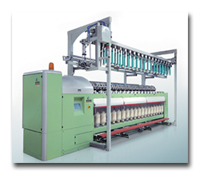
Marzoli FT2DN roving frame with full roving transportation automation and slubbing
devices

Parras Cone is a joint venture between Greensboro, N.C.-based International Textile Group
subsidiary Cone Mills LLC’s Denim division and Mexico-based denim manufacturer Compania Industrial
de Parras S.A. de CV.

April 2005

Küsters To Install Machinery In Pakistan

Eduard Küsters Maschinenfabrik GmbH and Co. KG, Germany, has received orders from Nishat Chunian
and Nishat Mills – both based in Pakistan – for one bleaching range, one dyeing range and one
mercerizing range each. All ranges are continuous open-width and are designed for treatment of
3,200-mm-wide, 80- to 250-grams-per square-meter woven fabrics such as poplin, bed linen,
jacquards, satin and striped satin made with cotton, Lycra®, cotton/polyester and viscose. The
companies also have ordered two latest-generation HyCon-L calenders to process fabrics 3,400 mm
wide. Küsters reports the calenders add luster and a soft hand to fabrics in one fabric passage.

April 2005

Welcome From The AFA President

Welcome to Floor Tek Expo 2005!

On behalf of the Board of Directors and membership of the American Floorcovering Alliance (AFA),
I am pleased to welcome you to our seventh show, geared exclusively to the floor covering
industry.

Floor Tek may not be the largest show, but it is the only show that brings together our industry
under one roof to see the very latest technologies developed over the last couple of years. During
the show, you will see all of the new products, services and techniques that our industry has to
offer, and talk with the best and brightest people the industry has to offer.

I hope you spend a few minutes at the American Floorcovering Alliance’s booth to find out more
about membership programs and exclusive services available to AFA’s members. Learn why you should
join the team by talking with our members and staff manning our booth.

AFA is proud to be the organizer of Floor Tek Expo and will continue to improve in our efforts
for successful shows to come.

We hope you enjoy your visit and gain a greater scope of the flooring industry from your
attendance.

To you success,

W. Lamar Brown, President, Board of Directors

April 2005

Springs To Invest In Katherine Plant, Close Other Plants

Springs Industries Inc., Fort Mill, S.C., will invest $10 million in Katherine Plant, Chester,
S.C., to add new technology and relocate weaving equipment from the Fort Lawn, S.C.-based Elliott
and Frances plants, which will be closed over the next three months. About 250 employees who weave
bedding fabrics will be affected. Molly Laster, manager, corporate communications, said there will
be opportunities to transfer some affected employees as closing dates approach. Springs also will
reduce fabric finishing and sewing capacity at Grace Complex, Lancaster, S.C., eliminating 450
jobs. The company expects normal attrition and turnover to make more jobs available there.

About 3,000 associates will remain at the Chester and Lancaster facilities after the closings
and capacity reduction have been completed.

Springs also will close a towel weaving plant in Griffin, Ga., and a towel finishing plant in
Hartwell, Ga., consolidating weaving in a remaining plant in Hartwell and finishing in a remaining
plant in Griffin. These closings will eliminate about 580 jobs.

The investment and closings are a response to the recent removal of quotas and downward import
price pressures. They also are part of Springs strategy to balance domestic manufacturing with
overseas sourcing and streamline domestic operations to make them more efficient and flexible.
Laster said upgrading its remaining US facilities allows Springs to fulfill orders more quickly and
offer a greater array of fabrics, using finer threads for higher-quality cloth.

April 2005

Electro-Jet Receives AMEC Award For Innovation

Electro-Jet S.A., a Spain-based manufacturer of spinning-related and other textile machinery,
recently received the Spanish Association of Export Companies’ (AMEC’s) El Forjador de la Innovaci
– an innovation award given in recognition of the company’s ongoing development of innovative
products. The award was given on the occasion of AMEC’s 35th anniversary celebration in Barcelona,
Spain.

Among Electro-Jet’s most notable innovations is a roving frame that the company reports is the
fastest such machine on the market, with a doffing time of less than two minutes.

April 2005

Shakespeare Opens Plant In China

Shakespeare Co. LLC, Columbia, S.C., a manufacturer of engineered monofilaments and specialty
polymers, has opened a 50,000-square-foot manufacturing plant in China.

“The addition of production capacity in China fits into our global growth strategies and
facilitates our supply to the emergent Asian markets,” said Jim Bennett, president.

Shakespeare Co.’s new facility in China

The company now operates four manufacturing facilities on three continents.

April 2005

As Trade Deficit Soars, Industry Seeks Controls On Imports

As the US Commerce Department reported that the trade deficit reached a record $61 billion in
February, industry lobbyists called for the government to take measures to correct the currency
imbalance that gives China and other nations an advantage in pricing their exports to the United
States. In the first two months of this year, the trade deficit with China rose by 47 percent over
the comparable period last year, and industry officials said at that rate it could grow to $238
billion this year. The US trade deficit in textiles and clothing was $12.9 billion in the first two
months of this year, an increase of 16.5 percent. If trade continues at its present rate, the
textile and apparel deficit could reach $85 billion this year.

Auggie Tantillo, executive director of the American Manufacturing Trade Action Coalition, said
the deficit should send a strong signal to Congress and the White House that the current trade
policies are not working, and he called for passage of legislation pending in Congress that would
declare currency manipulation illegal and levy tariffs on goods from countries that subsidize their
currencies to help offset pricing advantages resulting from currency imbalances.

Government Initiates Steps To Limit Chinese Imports

As textile and apparel imports from China continue to rise sharply, the Bush administration has
initiated a procedure that could result in the imposition of new import quotas later this year. The
inter-agency Committee for the Implementation of Textile Agreements (CITA) announced it has
self-initiated safeguard proceedings in three critical product categories to determine whether
imports are causing market disruption. Under the agreement that brought China into the Word Trade
Organization, countries that can show Chinese imports cause or threaten to cause market disruption
can use a safeguard mechanism to negotiate or unilaterally impose temporary quotas limiting growth
to 7.5 percent.

Commerce Secretary Carlos Gutierrez said the “government’s action was taken to demonstrate that
the administration is committed to enforcing our trade agreements and to provide assistance to our
domestic textile and apparel industry consistent with our international rights and
obligations.”

Products subject to the review will be cotton knit shirts and blouses (Category 338/339), cotton
trousers (Category 347/348) and cotton and man-made fiber underwear (Category 352/652). Import data
for the first quarter of this year show Chinese imports in these three categories grew at 1.250
percent, 1,500 percent and 300 percent, respectively. While US textile manufacturers and labor have
filed more than a dozen safeguard petitions on their own, the self-initiated petitions by the
government could result in much quicker results.

CITA will publish notices in the Federal Register seeking public comments regarding each product
categories within the next 30 days. After that, CITA has 60 days to render a final determination.
If the committee determines that Chinese imports are contributing to disruption of the US market,
it will seek consultations with China with a view toward easing or avoiding market disruption. As
of the date such consultations are requested, a quota will be put in place to limit US imports of
the products. The Commerce Department said every effort will be made to reach agreement on a
mutually satisfactory solution within 90 days of the request for consultations.

US textile manufacturers hailed the government’s action, but it was sharply denounced by textile
and apparel importers as an unjustified act. Laura E. Jones, executive director of the United
States Association of Importers of Textiles and Apparel, said, “There is no reason to believe that
imports of these products from China are causing market disruption,” adding that she sees no
pattern, and no consistent and substantial increases to justify what she called the the drastic
action of self initiation. Kevin Burke, CEO of the American Apparel & Footwear Association,
said that while there have been substantial increases in the products involved, the Bush
administration provides no evidence that this surge has caused market disruption. Claiming that
past safeguard actions have shown no evidence of preserving US jobs, Burke said the
administration’s time and energy would be better spent promoting quick congressional passage of the
Central American Free Trade Agreement, which he says is specifically designed to promote US textile
jobs.

Textile manufacturers, on the other hand, see the action is a significant step forward and
expressed gratitude that the US government has recognized the Chinese threat. Allen Gant, chairman
of the National Council of Textile Organizations, said the industry anticipates that a final
decision on these petitions could be reached in as little as five weeks. Auggie Tantillo, executive
director of the American Manufacturing Trade Action Coalition, urged CITA to act as quickly as
possible, noting that while the US government can wait up to 60 days after the comment period to
render a decision, it does have the power to make that decision the day comments are closed. He
said the US industry cannot afford to wait an additional 60 days for a decision.

As these efforts move forward in the United States, Europes major textile and apparel trade
association, Euratex, urged the European Commission to act on its 12 petitions for relief using the
safeguard mechanism. Bill Lakin, Euratex’s executive director, said the time has come to limit the
seemingly voracious appetite of Chinese exporters for the European market.

April 2005

Sponsors