Freudenberg North America Companies Target Zero Manufacturing Waste In Push To Improve Sustainability

MANCHESTER, N.H. — June 18, 2012 — In an ambitious drive to reach zero manufacturing waste in its
North American facilities, Freudenberg North America’s 16 companies will increasingly pursue
industrial processes that focus on recycled product content, plant recycling, lower water and
energy consumption and increased use of sustainable materials over the next decade. 

The companies were challenged to reach this objective by parent corporation, Freudenberg and
Co., during a recent internal Global Innovation Forum on raw materials and innovation. The two-day
event, annually conducted and simultaneously video-cast from locations in Germany, Brazil, the
United States, China and Japan, allowed Freudenberg’s global contingent of scientists, chemists and
other technical specialists to review green projects, share best practices and participate in
critical discussions about ongoing environmental issues.

The impact that global megatrends such as population growth, global warming and an increasing
scarcity of resources is having on Freudenberg’s business and innovations – and how the corporation
will respond – was central to the Global Innovation Forum.

“In the past, we have successfully issued challenges to our manufacturing facilities to
achieve zero defects and zero accidents,” said Dr. Martin Stark, a member of the Freudenberg and
Co. Management Board. “We are now issuing a challenge to achieve zero manufacturing waste. The
trends driving our business today mandate this kind of response if we are to maintain long-term
growth and profitability.”

In North America, Freudenberg companies provide products and services as diverse as consumer
cleaning products; medical devices; seals and gaskets for the transportation and construction
industries; industrial components for the energy and oil and gas industries; nonwoven filters and
materials; information technology outsourcing; and specialty lubricants and release agents. All of
the companies are engaged in implementing processes and programs that will improve the
environmental sustainability of their products and plants, said Leesa Smith, president, Freudenberg
North America Limited Partnership.

“Freudenberg’s North America companies are committed to developing the highest quality
products available in manufacturing facilities that protect people, communities and the
environment,” Smith said. “Freudenberg has a 160-year history of conducting its business with
integrity and a commitment to the welfare of its plant communities. The confluence of new
environmental challenges and this long-standing corporate culture is pushing our people to develop
green industrial innovations that will help solidify our success – and the health of our
communities – into the next century.”

Among the environmental initiatives that Freudenberg North America companies are pursuing:

  • Freudenberg Nonwovens, headquartered in Durham, N.C., uses millions of pounds of 100 percent
    post consumer (PCR) and post industrial recycled plastic annually to produce Lutradur® ECO, a
    polyester industrial backing used in building and construction substrates, landscaping materials
    and wallpaper and carpet backings. The company produces the material using a proprietary,
    closed-loop manufacturing process in plants that reuse all of their material scrap. Commercial use
    of Lutradur ECO is rapidly rising as contractors seek new ways to improve the sustainability of
    their own building and construction designs.
  • Freudenberg Household Products, headquartered in an environmentally certified building in
    Aurora, Ill, manufactures recycled household and institutional cleaning products, including
    recycled broom fibers. The company established a joint venture with SP Berner Plastics Group S.L,
    to consolidate production of recycled mop and broom components such as handles and bristles. The
    consolidation has reduced the company’s carbon footprint by eliminating 22,800 tons of CO2 that
    would have been produced by shipping bristle fiber stock from Italy.
  • Freudenberg Texbond, based in Macon, Ga., recycles more than 1 million plastic drink bottles a
    day in production of its nonwoven roofing membrane and building materials. Its products address
    soundproofing, waterproofing and thermal insulation challenges for the construction industry while
    helping customers meet green purchasing initiatives. Texbond processes the plastic from bottles
    into polyester fibers, which are further processed into fabric.
  • Freudenberg-NOK Sealing Technologies, in Plymouth, Mich., is pursuing dozens of technological
    innovations aimed at reducing the company’s reliance on scare natural resources, lowering vehicle
    emissions, improving engine and transmission performance, supporting development of wind and solar
    energy and incorporating more recycled content in its products. The organization’s Low Emission
    Sealing Solutions (LESS) components use one quarter of the energy a conventional radial shaft seal
    uses, thereby reducing fuel consumption and lowering vehicle emissions. The company’s FluoroXprene®
    fluoroelastomers are a unique group of newly-developed materials that bridge the technology gap
    between PTFE and rubber while substantially reducing CO2 emissions and energy usage. FluoroXprene
    materials are completely recyclable. The company is also pursuing ultraviolet (UV)-curable sealants
    that will reduce energy consumption, lower Co2 emissions and reduce cycle times.
  • Freudenberg Filtration Technologies, in Hopkinsville, Ky., uses 100 percent post consumer
    recycled plastic to create the material used in its high-quality commercial and industrial Viledon®
    air and liquid filtration systems. The company’s Viledon® Hydrotexx ECO is green filtration media
    made from PCR polyester and offers consumers in the pool and spa market a green water filter
    alternative.
  • Chem-Trend, based in Howell, Mich., has developed technology to substitute water for solvents
    as a release agent carrier across all of its product lines. The transition from chemical solvents
    to water in this process has eliminated the release of volatile organic compounds (VOCs) found in
    the solvents while ensuring excellent release performance and process adequacy.
  • A number of Freudenberg North America companies, including Kluber Lubrication (Londonderry,
    N.H.), Freudenberg Information Technologies (Morrisville, N.C.), Vibracoustic (Plymouth, Mich.),
    Chem-Trend and FNST are implementing environmental projects in their facilities that range from
    installation of more energy efficient lighting, heating and cooling systems and production
    machinery to using recyclable shipping containers and sourcing vendors who offer their own green
    products and supplies.


Posted on June 26, 2012

Source: Freudenberg North America LP/PRNewswire
Teijin Launches Three-layer Anti-perspiration Polyester Fabric

Tokyo-based Teijin Fibers Ltd. has developed a polyester fabric that comprises a three-layer
structure, with each layer providing specific functions and all three working together to provide a
capillary-like pump action, to offer comfortable anti-perspiration performance in all-season
sportswear, casualwear and uniforms.

The fabric’s inner layer is hydrophobic to repel moisture and keep perspiration away from the
wearer’s skin after it has been absorbed by the middle layer, while the outer layer diffuses the
moisture to provide a quick drying function. The repellency agent in the inner layer is integrated
into the yarn rather than being applied to the surface, thereby withstanding repeated laundering.

The new fabric is being targeted for the fall/winter 2013-14 and spring/summer 2014 seasons.

June 19, 2012

Nilit Introduces NILIT® Breeze Cooling Comfort Yarn

Israel-based nylon 6,6 fiber manufacturer Nilit Ltd. has introduced NILIT® Breeze, a patent-pending
cooling yarn for sportswear, outerwear, workwear, underwear, socks, hosiery and shapewear
applications. Fabrics made with the yarn — available in specially textured or flat varieties — have
been independently tested by Centexbel, the Belgian Textile Research Centre, and shown to cool
wearers by almost 1°C when compared to knitted fabrics made with standard yarns, the company
reports.

Nilit Breeze’s cooling effect is derived from a combination of three properties: a flat
cross-section structure, which offers a wide surface area to quickly transfer body heat; the
incorporation of an inorganic additive into the polymer, which increases surface area and creates
small channels that promote cooling; and a unique texturing process, which creates a low-bulk yarn
to maximize the garments’ breathability and ventilation. The combination of these properties also
provides ultraviolet protection. Nilit reports the yarn also enhances shapewear and hosiery.

“Always at the forefront of textile technology, we at Nilit are constantly striving to
produce high-quality yarns with added consumer benefits,” said Michal Ron Gavish, global marketing
manager, Nilit. “Nilit Breeze is a perfect example. With its innovative cooling effect and soft
feel, NILIT Breeze is the perfect solution for today’s sports garments, hosiery and shapewear.”

June 19, 2012

Huntsman Unveils Oleophobol® CP-U Textile Finish

Singapore-based Huntsman Textile Effects has added Oleophobol® CP-U, an environmentally friendly
textile finish designed for automotive and upholstery applications, to its line of Oleophobol CP
oil-, water- and stain-repellent finishes.

The company reports that liquids bead up and roll off of fabrics treated with Oleophobol
CP-U, allowing spills to be blotted off the surface of the textile with an absorbent cloth. The
finish, developed through an alliance between Huntsman and Wilmington, Del.-based DuPont, is based
on short-chain chemistry and offers improved fluorine efficiency and a level of trace impurities
below detection limits.

Fabrics treated with Oleophobol CP-U can qualify to carry DuPont’s Teflon® hangtag.

June 19, 2012

Energy Management: Strong Stuff

Schmitz-Werke GmbH + Co. KG, Germany, a manufacturer of high-tech textiles, has been keeping an eye
on its energy consumption for a long time. After installing a building management system, it
invested in an integrated energy management system with which it will be able to allocate energy
consumption systematically to its plant sections and pinpoint additional potential for saving
energy. As those responsible for the system state, “What we can get from this is ‘really strong
stuff.'”

Although the textile industry outside Germany has tapped into key markets, Germany can
nevertheless claim some segments of the industry that remain within its domain. These include
high-tech textiles, such as those manufactured by Schmitz-Werke in Emsdetten, near Münster, under
the brand names drapilux, swela, and markilux. These include, for example, luminescent materials or
materials that neutralize smells or even have germicidal properties. As a result of its focus on
environmentally related influences, the company is also concerned about ecological production
processes — not least from the viewpoint of energy consumption.

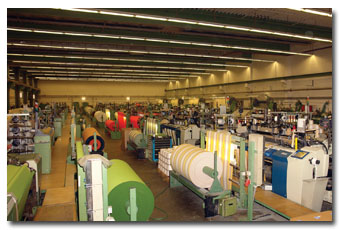
At the Emsdetten site, a workforce of about 800 people operates on a three-shift basis to
produce about 120,000 meters of fabric per week at full capacity. This involves about 90 looms in
constant operation and includes the dye works, weaving preparation and textile finishing
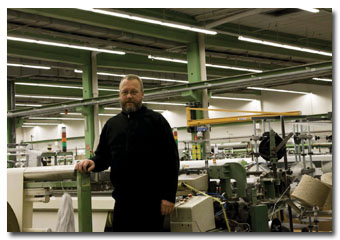
(See Figure 1). “We had already invested in an integrated building management some years
ago, in order to base our production on optimized processing and energy usage,” reported Norbert
Gerling, head of Processing Technology
(See Figure 2). This means, for example, that machines and systems can be started up and
shut down on a time-controlled basis.

Energy1


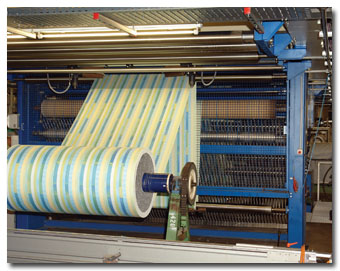
Figure 1: One example of the high practical benefit of the B.Data energy management system
is that it enhances the potential for energy savings because the slightest leaks in pneumatic
valves in the weaving mill can be determined very quickly.

Photo courtesy of Siemens AG

Energy2


Figure 2: Norbert Gerling, head of Production Technology, Schmitz-Werke GmbH + Co. KG, reports,
“Energy optimizations can be implemented relatively easily with the current data plus the
corresponding evaluations.”

Photo courtesy of Schmitz-Werke GmbH + Co. KG


Energy Management With Many Analysis Options


Decisive factors for optimized factory operation are the appropriate meters for electricity,
steam, water, compressed air and gas. As many as 100 meters are distributed across the factory, and
their values previously had to be recorded on a largely manual basis, although some were already
recorded electronically for the building control system. In the short metering cycles, however,
some values were also lost in the building control system. “The problem until now,” Gerling
explained, “has been the difficulty of evaluating this energy information.” Until now, the data
were used exclusively for building control and could not be analyzed at all — or only at great
expense and effort, primarily because most of it was manually recorded. In order to be able to
perform a reasonable analysis of production data, it is not enough to make a note of meter readings
every month. One other disadvantage of manual recording is that employees who are engaged in
recording the meter readings are not available during this time to assist with the production
itself.

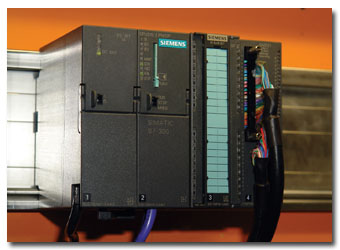
For this reason, Schmitz-Werke installed Germany-based Siemens AG’s Simatic S7 controller
for recording all relevant energy data and linked it via Simatic Net OPC servers direct to the
B.Data energy management system. Only with this solution is it now possible to record all measured
values and evaluate the energy-relevant data with ease
(See Figure 3).

Energy3

Figure 3: Due to the building management system, 150 data points were already present at
the beginning. Now, the energy management system is being expanded to the production level in order
to pinpoint further potential for energy saving.

Photo courtesy of Schmitz-Werke


With a full-capacity energy consumption of about 11 million kilowatt hours per year, every
percentage saved is worth a great deal of money. “Although in the past we have already leveraged
significant optimization potential by means of the building management system, I’m still reckoning
on saving an additional 5 percent by means of energy management,” commented the plant engineer.
Meanwhile, the new system already has paid for itself. He added, “Even after the first evaluations
in B.Data, we immediately noticed some high energy consumers that we were quickly able to optimize
using controller adaptations that were easy to perform and were therefore saving money right after
installing the program.”

One important topic regarding the intelligent recording of energy consumption, for example,
is the standby current that often is underestimated considerably in production plants. But leakage
in the compressed air supply also plays a significant role. The energy management system now
automatically records all relevant factors influencing energy flows within the plant. Even
individual process sections such as the tenter frame, where high-tech materials are created by
finishing textiles, are now “wired”
(See Figure 4). This already means there are 150 data — or measurement — points, and the
number is still rising.

Energy4


Figure 4: For particular plant sections subject to approval, such as the tenter frames, the
regional authority demands production journals. With B.Data, these can be prepared in no time at
all.


Photo courtesy of Siemens


Easy To Install And Use


Gerling has learned already how easy it is to install and operate the Siemens energy
management system. The in-house information technology (IT) department installed a virtual server
on the existing hardware. By remote access, Siemens then set up the program with basic parameter
settings. In the preparatory phase, this just required a consultation of a few hours. As Gerling
confirms, “The actual cost of installation for us can barely be measured, it was so small.”

Data exchange between the building control system, where most of the data are already
available, and the energy management system takes place with the aid of an OLE for Process Control
(OPC) server. This standardized, multivendor software interface is based on the Windows® technology
of the component object model (COM), distributed COM (DCOM), or on the extended markup language
(XML). Communication is by means of Ethernet. An independent ring system was also installed at the
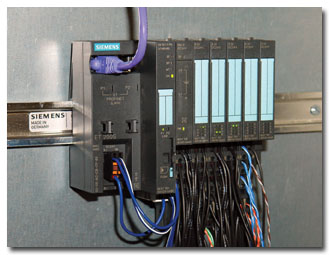
Emsdetten works, to which a Simatic S7-315 2PN/DP controller with bus-capability was connected as a
head-end station to the data industrial personal computer (IPC), as well as several Simatic ET200S
distributed input/output (I/O) stations — all from Siemens — and individual meters
(See Figures 5a and 5b).

Energy5A

Energy5B

Figures 5a and 5b: The measurement points for the energy management system are polled by
means of an in-house ring system, to which the Simatic S7-315 2PN/DP controller and ET200S
distributed I/O stations are also connected.


Photos courtesy of Siemens

Gerling also regards as a great advantage the fact that the system operates with
standardized data formats. In this way, all energy data can be generated as standard reports on the
basis of Microsoft® Excel, saving time and presenting users with a trusted format. The required
evaluations can also be extracted easily from the program and sent by email to any recipients. At
Schmitz-Werke, for example, these recipients are the various heads of departments.


Creating One’s Own Individual Evaluation Screenforms


It is important that the durations, intervals and data points for the evaluations can be
individually parameterized. Gerling sees yet another plus point here for this solution: “We can
create the required evaluation screenforms all ourselves, so we don’t need any support from the
software manufacturer, which also recommends the system as a very economical solution for other
applications.” According to his experience, this operation is not so easily done for rival
products.

The importance of an individual adaptation of the energy management system is demonstrated
by the increased desire on the part of the regional authority for corresponding operating journals.
These journals must record daily and sometimes even hourly values, in order to be able to document
the environmental impact of the production processes on an uninterrupted basis. The Emsdetten
works, like many other operations, of course, operate systems that are subject to authorization. In
the case of wastewater, therefore, the temperature, pH value, flow rate and other parameters must
be capable of being displayed. Also, in the case of air conditioning, room temperatures or humidity
must be verifiable to comply with labor protection law. “With the new energy management system, we
have all of this information at our fingertips at any time,” Gerling said.


Simple Manual Input Of Measured Values


The important thing in this context is that even the readings of meters onsite — such as
sub-meters or the water, gas or electricity meters of the utility companies — can be entered easily
into the system by the boiler attendants, because an automated connection is not economically
viable for all meters at this time. The next time the meters are replaced, however, automatic
recording is planned here too.

The manual recording of the values in these cases is performed using a Web user interface.
Access to the system is password protected, which not only securely authenticates the operator, but
also ensures the traceability of the data for all operator actions.

At present, the processing technology in these works uses a software license for 500 data
points. A further aspect regarding the future capability of the solution chosen here is the
scalability: If it emerges in the course of time that a great deal more data need to be recorded,
the scope of the solution can be considerably extended. “In this context, of course, it is also
important to us that Siemens is a reliable partner that pays a great deal of attention to the
topics of energy management and data consistency, from the production level to the management
level,” Gerling added.

In the course of the requirements relating to energy management on the basis of DIN EN 16001
or ISO 50001, the investment in B.Data has been the decisive step. Those responsible at Emsdetten,
therefore, also want to create the basis for a certification in accordance with the Renewable
Energy Sources Act (EEG) by the end of 2012. “Our aim is, of course, also to save further money by
avoiding EEG levies,” Gerling said.

Energy Management Safeguards Production In Germany

Schmitz-Werke is known as a technical textiles manufacturer that also produces awnings and
blinds. Many years ago, it invested in a building management system to enable it to operate the
factory in the most energy-conscious manner possible. With the installation of its own energy
management system — the modular and industry-neutral B.Data energy management system — including a
three-day training course for the users, the next step has now been taken: The energy data of the
building can be analyzed intelligently and individually for the first time, revealing further
potential for energy saving. What started with the monitoring of auxiliary processes should
gradually work its way through the entire production process. The aim is to be able to produce more
economically through environmental awareness and thereby safeguard Germany’s position as a textile
producer. B.Data is ideally suited to this purpose, as Gerling’s comment makes clear: “It enables
any company to determine much of its energy-saving potential very easily.”


B.Data Energy Management System Capabilities

  • Flexible data acquisition by connecting to subordinate measuring systems, or via process
    visualization systems such as WinCC or process control systems such as PCS 7
  • Applicability for all types of energy — including gas, steam, water, and electricity
  • Trend analysis: graphical analysis of historical and online data
  • Energy balancing, including reporting: transparent energy and material accounting on a
    cost-by-cause basis
  • Emission monitoring, for example, carbon dioxide (CO2) balancing
  • Transparent reporting based on Microsoft Excel
  •  Long-term archiving of the collected energy data
  • Calculation of key data and key performance indicators (KPI)
  • Precise display of the tariff models — regardless of their complexity
  • Versioning of models: calculation of new contract structures and tariff models with real data
    from the past
  • Basic data generation for forecasting and advance planning of future energy needs
  • Transfer of energy data to higher-level management systems, such as SAP

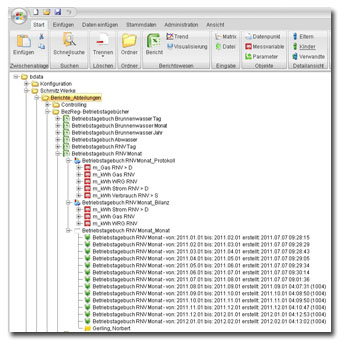
Energy6


Figure 6: B.Data offers a clearly structured user interface. With measurement points whose
calculation methods — which extend up to energy reports — are easily traceable for users, the
configuration of the energy system itself is manageable and expandable.


Photo courtesy of Schmitz-Werke


Editor’s note: Carsten Schmidt is marketing manager, HMI and energy management, with Siemens
AG, Industry Automation, Industrial Automation Systems.

Rudolf Traxler is manager, industry automation software, energy management, with Siemens
Industry Automation, Industrial Automation Systems.

Ulf Vesper is an energy management consultant with Siemens Customer Services.


June 19, 2012

First Half Of 2012 A Mixed Bag For Spinners

So, what kind of year will 2012 turn out to be for yarn spinners? On the heels of one of the best
years in recent memory — 2010 — and one of the most turbulent — 2011 — halfway through 2012,
spinners are still uncertain about how the year will be reflected in the history books.

“So far it has not been anything to write home about,” quipped one spinner. “At the same
time, it hasn’t been nearly as bad as it could have been. We’ve gone through a lot worse and not
that long ago. I guess you could sum it up by saying we are disappointed in our results through
mid-June, but cautiously optimistic about the rest of the year.”

Added another spinner: “The first half has been slower than we anticipated. But we’ve seen
some positive signs recently. Beginning about six weeks ago, we noticed an increase in activity,
and it has been pretty steady since then. We believe the market is finally beginning to stabilize
and that we will begin seeing some semblance of normalcy over the next few months.”

A yarn broker said his business has experienced a noticeable uptick in recent weeks. “But it
is focused on just a few areas,” he said. “We’re not seeing as much cotton business as we have in
the past. Poly/cotton blends seem to have replaced 100-percent cotton for a lot of our customers.
We noticed a movement in this direction when the price of cotton shot up in 2010, but we expected
these customers to return to all cotton once the price fell. Cotton prices are still falling, but
we’re still seeing a lot of demand for blends. I think some customers are still concerned about
cotton. They are waiting to see if prices are going to continue to fall. Raw cotton prices fell
another 15 cents or so over the past few weeks. These customers don’t want to find themselves in
the position they were in last year when they had orders for a lot of high-dollar yarn and then
suddenly saw a huge drop in prices.”

One spinner noted that commodity yarn activity for his business remains weak, but specialty
yarns are moving at a brisk pace. “We’re getting some inquiries and making some sales,” he said.
“We’re seeing activity for upholstery yarns, home furnishings and specialty apparel. It’s looking a
lot more promising that it did just a month or two ago. We’re hopeful that we are moving into a
sustained inventory replenishment cycle and that business will remain solid for the rest of the
year.”


Cotton Prices Beginning To Recover?


The free fall in cotton prices has been a major concern for spinners since the middle of
last year. Spinners are still coping with having raw material inventories that were purchased at a
price above the current market rate. However, despite a precipitous year-to-year fall and a steady
month-to-month decline, cotton prices rallied substantially in mid-June for the first time in more
than a year.

Quotations for the base quality of cotton in the seven designated markets measured by the
U.S. Department of Agriculture (USDA) averaged 69.11 cents per pound for the week ended June 14.
This price is down from 150.43 cents reported during the corresponding week of 2011 and from 81.24
cents reported in the first week of May 2012. However, the price was up almost 7 cents per pound
from the week ended June 7. Further, according to the USDA, demand was up substantially as well.
For the week ended June 14, spot transactions totaled 5,461 bales, compared to only 1,511 bales the
previous week.

“We’re hoping the cotton market is beginning to stabilize,” noted one spinner. “Our
customers are extremely price-conscious. They are watching prices fall from week to week and only
buying what they absolutely have to have. They are waiting for that price to bottom out. We’re
hopeful that is happening now and that we will see some stability. When we get some equilibrium in
raw material prices, I think you will see sales activity pick up substantially.”

June 2012

Bulletin Board

Switzerland-based
Clariant International Ltd. has launched the Clariant Denim Book, which offers an
overview of denim manufacturing from cotton to fashion. The book may be downloaded at
advanceddenim.clariant.com.

Germany-based
DiloGroup’s website, dilo.de, is now available in German, English, French,
Spanish, Italian and Chinese.

The Arlington, Va.-based
American Apparel and Footwear Association has published updated Chinese and
Vietnamese language versions of its Restricted Substances List covering apparel, footwear and home
textiles, available at wewear.org.

The
International Oeko-Tex Association, Switzerland, has awarded Oeko-Tex® Standard
100 certification to products offered by the
YKK Group, Japan; and Oeko-Tex Standard 1000 certification to
Tejidos Royo, Spain, as an environmentally friendly production site.

The Research Triangle Park, N.C.-based
American Association of Textile Chemists and Colorists (AATCC) is soliciting
abstracts for its 2013 International Conference, to be held April 9-11, 2013, at the Hyatt Regency
in Greenville. AATCC is seeking abstracts for its three educational tracks: Chemical Applications,
Materials and Concept 2 Consumer. More information may be found at aatcc.org/ic/index.cfm.

Bellefonte, Pa.-based
NanoHorizons Inc. has been awarded US Patent 8,183,167 B1 for its wash-durable,
effective antimicrobial and antifungal textile.

The Woolmark Company, Australia, has launched “Wrapped in Merino,” a social media
campaign allowing participants to collaboratively design a giant virtual scarf that will be
submitted to RecordSetter for inclusion in the organization’s list of world records. More
information may be obtained at https://www.wrappedinmerino.com.

The
Carpet and Rug Institute, Dalton, Ga., is relocating to 100 S. Hamilton St.,
Dalton, Ga., 30720. Phone and fax numbers remain the same.

Israel-based
Nilit Ltd. has released its Bodyfashion Trendbook covering bodywear and activewear
trend concepts for Spring/Summer 2014.

Nilitshapeways

Nilit’s Spring/Summer 2014 Bodyfashion Trendbook

The
Wallcoverings Association, Chicago, is offering a continuing education course on
its Sustainability Standard. Information may be obtained by contacting info@wallcoverings.org;
+312-321-5166.

Nashville, Tenn.-based
Bulwark FR, a division of VF Corp., has released “451 Degrees,” a short film
covering fire safety in the industrial workplace. The film may be viewed at bulwark.com/451.

United Kingdom-based
Americhem Europe Ltd. has for the second time received The Queen’s Award for
Enterprise by Her Majesty The Queen in the International Trade category in recognition of the
company’s commitment to growth in recent years.

Phenix City, Ala.-based
Textest has launched an online ordering service for textile testing, available at
textest.com.

Carmel, Ind.-based
Top Value Fabrics has launched a Print Media category website, located at
topvaluefabrics.com/digital-and-screen-printable-banner-media.html.

Quebec-based
Victor Group Inc.’s 100-percent Eco Intelligent® polyester yarn-dyed panel and
healthcare cubicle products have attained Silver level compliance with the NSF/ANSI 336:
Sustainability Assessment for Commercial Furnishings Fabric.

Ireland-based
Research and Markets Ltd. has published “Trends in U.S. Textile and Clothing
Imports, 2012 Edition”; and “Plunkett’s Apparel & Textiles Industry Almanac 2012: Apparel &
Textiles Industry Market Research, Statistics, Trends & Leading Companies.”

The Alexandria, Va.-based
Textile Rental Services Association has added a General Membership classification
for private- or public-sector organizations that process their own textiles.

Ann Arbor, Mich.-based
CIMdata has published a paper titled “Executing Effectively from Design to
Manufacturing.”

June 2012

Kornit® Digital Launches The Kornit Allegro – A Breakthrough In Digital Textile Printing

ROSH-HA’AYIN, Israel — June 1, 2012 — Kornit Digital today announced the launch of the Kornit
Allegro, the industry’s only complete solution for digital pigment printing on textile, which will
expand printing options while decreasing additional time and costs in the printing process.

Kornit Allegro is a one-step production line, enabling the shortest printing cycle from file
preparation to a finished printed fabric. This unique and innovative approach is achieved by
Kornit’s patent pending chemical solution that eliminates the need for any external process steps.
This solution will create a differentiated printing experience, helping to achieve higher quality,
faster results and increased revenue at lower costs.

By using Kornit Digital’s unique pigment ink, textile printing businesses can now print on
any type of fabric using the same Kornit Allegro printer and Kornit ink set and experience results
of vivid colors and superior hand feel.

As a leading international company for digital ink development, Kornit Digital adopts the
most stringent standards for protecting both human health and the environment. By using Kornit’s
100 percent biodegradable ink and eliminating energy and water consumption, the Kornit Allegro is
the most eco-friendly solution in the textile printing industry.

“We are very excited about this new solution,” said Ofer Ben-Zur, Kornit Digital’s chief
executive officer. “Because the Kornit Allegro eliminates the need for special fabric preparation
and post-print wet processes, we truly believe this solution will revolutionize the textile
printing industry.  Kornit also provides the only digital pigment ink in the marketplace. With
our vast experience in creating chemical solutions, we are able to push the industry limitations
and revive pigment inks with our innovative digital solutions portfolio.”

Posted on June 19, 2012

Source: Kornit Digital/PRNewswire

TenCate Geosynthetics Americas Completes First Ever NTPEP On-site Audit For Geosynthetic Reinforcement

PENDERGRASS, Ga. — May 30, 3012 — TenCate Geosynthetics announced that the TenCate Miragrid® XT
geogrid product line has completed the first ever evaluation by the National Transportation Product
Evaluation Program (NTPEP) which incorporated an onsite audit of the manufacturing facility.

The American Association of State Highway and Transportation Officials (AASHTO) in
conjunction with NTPEP have developed a process for the evaluation of production data and field
performance data for reinforcement geosynthetics. The data generated by NTPEP is valuable for State
DOT’s and other regulatory agencies to develop and maintain Qualified Products Listings (QPL). As
of 2011, an audit phase has been added to the evaluation process in order to verify the consistency
of the geosynthetic reinforcement in accordance with the REGEO work plan.

“We are very proud of our manufacturing process and procedures,” stated John Lostumbo, PE,
Market Manager for Engineered Structures. “The Project Work Plan developed by NTPEP, which now
incorporates an on-site audit process, is among the most stringent review processes available for
geosynthetic reinforcement materials.We are excited to be the first geosynthetic producer to
complete this evaluation process.”

The evaluation is performed in accordance with WSDOT Standard Practice T925 to determine the
long-term strength of the geosynthetic reinforcement, including the long term strength reduction
factors. Detailed evaluations are performed on creep,installation damage, and durability to
determine the appropriate reduction factors.Additional conformance testing is performed to provide
additional verification of these reduction factors. According to the report from NTPEP, “An on-site
audit to verify the consistency of the TenCate Miragrid® XT product line was conducted at TenCate’s
manufacturing plant on June 8, 2011, in accordance with the REGEO work plan. The audit verified
that the materials and processing used to manufacture each product in the line are consistent and
meet the definition of a product line in the NTPEP work plan and WSDOT T925.”


Posted on June 19, 2012

Source: TenCate Geosynthetics Americas

ITMA 2015 To Drive Sustainable Innovations In Textile And Garment Machinery

MILAN — June 13, 2012 — ITMA, the world’s most established textile and garment machinery
exhibition, will put the spotlight on innovations that promote sustainability for its 17th
presentation in Milan, Italy, in 2015. A trendsetting showcase of exciting innovations since 1951,
the theme chosen for the 2015 edition is ‘Master the Art of Sustainable Innovation’. 

Mr Stephen R Combes, President of CEMATEX, which owns the show, said: “The drive towards
sustainability is increasingly integrated with enlightened business practices. The keyword here is
‘sustainability’, and we hope industry members will join us in this responsible mission to promote
more eco-friendly solutions and practices for the entire textile and garment value chain.”

ITMA 2015 will continue to be an industry leading platform for the textile and garment
community. It is expected to span over 100,000sqm of net exhibit space and attract over 1,400
exhibitors.

Miss Maria Avery, Secretary-General of CEMATEX, said: “In 2011, we introduced several new
ideas that have enhanced the participation of all stakeholders. They included the inaugural World
Textile Summit and Sustainable Textile Leaders Roundtable Dialogue. These were immensely popular
and we intend to continue with them. We hope to further enhance the relevance and look at how we
can better support the green theme.”  

New initiatives to drive industry forward

Among the new initiatives that will be organised in line with the theme are conferences and
workshops on sustainable innovations. The exhibition will also have a bigger focus on the waste
management and recycling sector. In addition, for the research and education (R&E) sector, more
emphasis will be placed on innovations that promote sustainability. 

Ms Sylvia Phua, CEO of MP International which is organising ITMA 2015, added: “ITMA has
always been a catalyst for industry competitiveness for over 60 years. Besides the mindset change,
we believe that innovative technologies hold the key to environmental sustainability.”

MP International will be working closely with CEMATEX and other key associations to ensure
the new initiatives are relevant for industry players to allow for maximum benefits for their
participation. 

Besides the value-added initiatives, ITMA remains the global marketplace and one-stop
sourcing platform for emerging trends and innovative solutions. 

Fashion capital presents a venue of choice

An ideal city to host ITMA 2015, Milan is widely recognised as one of the world’s fashion
capitals, with a long history within the fashion, clothing and textile industries. Hosting ITMA for
the fifth time, the city continues to draw fashion aficionados, supermodels and international media
twice yearly for its spring and autumn fairs.

Fiera Milano Rho boasts one of the largest fairgrounds in the world, spanning 345,000 square
metres of covered gross exhibition space. The venue is well-equipped with some 10 conference halls
and a host of restaurants, bars and coffee houses.

Designed by architect Massimiliano Fuksas, Fiera Milano Rho is located in the west of Milan
and connected to the city centre via a dedicated metro station, Rho Fiera. It is also served by
railway and there are 14,000 parking spaces for visitors. Fiera Milano Rho is also the site of
World Expo 2015, which will take place from May to October 2015.

Space application for the exhibition sales opens in mid 2013. Those interested to find out
more can visit the ITMA 2015 booth located at Hall E7, Stand C12, at ITMA ASIA + CITME 2012, which
is being held at the Shanghai New International Expo Centre (SNIEC) from 12 to 16 June. For more
information and updates, please visit www.itma.com.


Posted on June 19, 2012

Source: CEMATEX and MP International Pte Ltd

Sponsors