Quality Fabric Of The Month: Extreme Insulation

By Janet Bealer Rodie, Contributing Editor

Aerogels, developed in the 1930s and first used as insulating materials in industrial and National Aeronautics and Space Administration (NASA) applications, now are finding their way into outdoor apparel, footwear and other outdoor gear. The nanoporous materials comprise an amorphous silica gel impregnated into a nonwoven flexible substrate. The resilient, thin batts thus produced are made up more than 90 percent of air; resist compression under load; and retain their thermal performance even when pressures as high as 50 pounds per square inch (psi) are applied. In testing, they have been shown to exhibit the lowest thermal conductivity compared to foams, fiberglass and lofted polyester insulation; and the highest Clo-value per inch compared to polyester down and batting.

Aerotherm aerogel insulation, Clinton, Mass., has developed a way to encapsulate the raw aerogel material, which is custom-manufactured by Northborough, Mass.-based Aspen Aerogels using a polyester nonwoven substrate and supplied in rolls to Aerotherm’s manufacturing facility in South
Korea, where it is slit, cut into specific pattern panels according to application and encapsulated in a polyurethane membrane. The material by itself is dusty and tacky-feeling, and the encapsulation makes it easier to handle than the raw material and more suitable for incorporation into apparel and footwear.

Because of its demonstrated thermal performance and resilience, Aerotherm® aerogel insulation is particularly suitable for extreme weather applications. Among targeted end products and
components are: footwear including ethylene vinyl acetate (EVA) molded and flat insoles, liners, strobe, uppers, tongue, toe cap, and other components; apparel including jackets and vests, elbow, shoulder, knee, seat, thigh and other key heat-loss and/or compression zones; and gear including gloves, seat pads, grill mitts, thermal coolers and other gear. Recommended thickness for footwear components is 3 millimeters (mm); and for apparel and gloves, 2 mm.

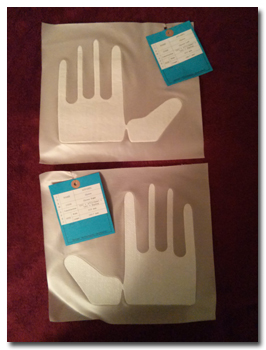
aerothermglove
Aerotherm aerogel insulation panels encapsulated in a polyurethane membrane are
custom-manufactured according to product specifications.


In addition to its U.S. headquarters and its South Korea plant, Aerotherm has a European headquarters in Russia to handle business in the European Union, and a sales force in China to handle all business in Asia and work closely with the factories in the region. According to Sales and Marketing Director Jonathan Klein, the company works with retailers, brands, product developers, designers and manufacturers to provide customized solutions for their various products, beginning with helping to develop prototypes and then manufacturing components, or shaped panels, according to final product specifications. Those panels, which have a 1-inch seam allowance to facilitate sewing or bonding to fabrics, are then shipped to the customer’s factory along with instructions; and Aerotherm supports the end-product manufacturing as needed.

“Our operation is completely global and seamless, and our facility in South Korea is tied into all the discussions,” Klein said.

In garments, Klein recommends that Aerotherm be used in conjunction with a lofted insulation. “We recommend using Aerotherm in high-compression, stressed areas such as the elbows, knees and seat,” he said. “We don’t recommend using it throughout the garment because it’s going to be way too warm and not really breathable. However, it’s excellent for designers because they can create their own breathability around the panel.”

By incorporating Aerotherm into the garment, the bulk of the garment is reduced by almost half, Klein added. “That’s what a lot of brands are looking for, in boots as well as garments.”

Klein noted that the insulation becomes more flexible and softer with continued laundering, adding that the company is working to develop a softer, more stretchy adhesive material to improve the flexibility even more.

RockyJacket
Rocky Brands’ Rocky® S2V provision jacket featuring Aerotherm® aerogel insulation received an
ISPO Award at ISPO Munich 2013.


Several apparel and footwear brands have introduced products featuring Aerotherm aerogel insulation; and two of those products received awards at the winter 2013 edition of ISPO Munich, a trade show targeted to the outdoor, ski, action and performance sports sectors. Rocky Brands Inc., Nelsonville, Ohio, won an award for its Rocky® S2V provision jacket for extreme weather applications. Millet, France, was recognized for its Everest Summit Gore-Tex® mountaineering boots.
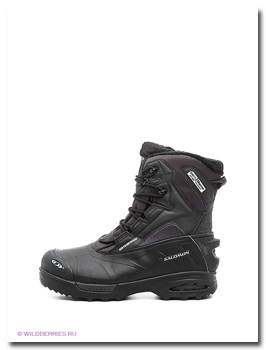
Salomon, a global manufacturer of boots for various outdoor activities, also offers a boot that features Aerotherm insulation.

Salomonboot

Salomon has incorporated Aerotherm aerogel insulation into the boot shown here.

Aerotherm also offers retail products including insoles, seat pads and gloves under its Aerotherm – Essential Equipment Collection. These products can be private labeled as well, Klein said.

For more information about Aerotherm® aerogel insulation, contact Jonathan Klein +1-508-330-0171; j.klein@aerotherminsulation.com; aerotherminsulation.com.


April 2013


Lenzing Group: Second-Best Result In The Company’s History

LENZING, Austria — March 22, 2013 — In spite of difficult market conditions in its core fiber
business, the Lenzing Group succeeded in achieving the second-best business result in its history
in the 2012 financial year. This can be attributed to new record fiber sales volumes and the good
performance of Lenzing’s specialty fiber TENCEL®.

Consolidated sales of the Lenzing Group were down slightly from the previous year, declining
by 2.3% to EUR 2.09 bn compared to EUR 2.14 bn in 2011. The decline is due to the fact that more
dissolving wood pulp from the Paskov pulp plant was used internally than in 2011. Adjusted for this
consolidation effect, consolidated sales remained constant. The significant lower average fiber
selling prices compared to the boom year 2011 could be compensated by the strong rise in fibersales
volumes, which climbed by close to 14% year-on-year, from 712,000 tons to 810,000 tons.

Consolidated earnings before interest, tax, depreciation and amortization (EBITDA) amounted
toEUR 358.7 mn1, a decline of 25.3% from the record EBITDA of EUR 480.3 mn achieved in 2011, bu
tabove the comparable level of EUR 330.6 mn generated in the year 2010. The EBITDA margin amounted
to 17.2% (2011: 22.4%). Earnings before interest and tax (EBIT) of the Lenzing Group amounted to
EUR 255.0 mn in the 2012 financial year, comprising a decline of 29.9% from the prior year level of
EUR 364.0 mn. The EBIT margin was 12.2% (17.0% in the record year 2011).

“We performed quite well in 2012 despite a very difficult market environment”, says Lenzing’s
Chief Executive Officer Peter Untersperger. “Naturally, our operating margins were below those in
the boom year 2011 but still at a good level. We fully utilized our new production capacities, and
were sold out throughout the entire year. This success proves the long-term correctness of our
growth strategy in our core business of manufacturing man-made cellulose fibers”, CEO Untersperger
adds.

The one-off decommissioning costs for European Precursor (EPG), the joint venture with SGL
Carbon and Kelheim Fibres, amounted to EUR 23.5 mn (2011: EUR 0). Accordingly, consolidated EBITDA
after restructuring amounted to EUR 352.4 mn, corresponding to an EBITDA margin after restructuring
costs of 16.9% of sales.


Record investment program

CAPEX (investments in property, plant and equipment, intangible assets and non-controlling
interest) rose to the record level of EUR 346.2 mn in the 2012 financial year (2011: EUR 196.3 mn).
Lenzing’s investment activity focused on the completion of the fifth production line at the
Indonesian subsidiary PT. South Pacific Viscose (SPV), the debottlenecking program at the plant in
Nanjing (China), the capacity expansion drive at the TENCEL® factory in Mobile/Alabama (USA),
expansion investments at the Lenzing site as well as the commencement of construction of the new
large-scale TENCEL® plant in Lenzing. These investments were complemented by the further remodeling
and upgrading of the Paskov plant (Czech Republic) and the acquisition of the remaining shares.

“The record year 2011 must not obscure the view on the second-best result in the company’s
history. As planned, 2012 represented the peak year of investments when it comes to the
implementation of our growth strategy”, says Lenzing’s Chief Financial Officer Thomas G. Winkler.
“Due to Lenzing’s stable financial position and low debt we can afford this investment into the
future without touching on our strategic liquidity reserve of more than half a billion euro.”

Adjusted equity of the Lenzing Group rose to EUR 1,15 bn at the end of 2012, an increase of
10.0% from the prior-year level of EUR 1,05 bn. This corresponded to an adjusted equity ratio of
43.8% of total assets (2011: 44.8%) which increased as a consequence of the record investments
which were made.

Segment Fibers

Initial estimates 2 conclude that the rise in world fiber production only amounted to 1.2%
during the reporting year, with total volume up only slightly from 81.0 mn tons to 82.0 mn tons.
This was in contrast to the 6.4% increase generated in 2011 and owing to the continued slow
economic development. Worldwide production of man-made cellulose staple fibers, the core business
of the Lenzing Group, climbed 9.2% in 2012 to 3.66 mn tons, thus expanding at a considerably faster
rate than the global fiber market as a whole.

The fiber market in 2012 was dominated by a significant decrease in selling prices for all
fibers. The average price of cotton, the benchmark for the entire fiber industry, fell more than
40% below the prior-year level. Cotton inventories further increased, and the global stock-to-use
ratio reached a record level of more than 70%. Spot prices for viscose fibers were down by about
15% in China, the world’s largest fiber market.

Lenzing achieved a new sales record in 2012 against the backdrop of a very difficult market
environment. The average fiber selling prices of the Lenzing Group fell by 12%, decreasing from EUR
2.22 per kilogram to EUR 1.96 per kilogram.

“The fiber market rewarded Lenzing for its high product and service quality as well as its
close cooperation with and integration in the textile chain”, states Friedrich Weninger, Member of
the Management Board and Chief Operating Officer. “In particular, our specialty fibers Lenzing
Modal® and TENCEL® enabled us to successfully differentiate ourselves from standard products
manufactured by Asian producers. In addition, we successfully attracted new customers and opened up
new markets while launching new innovative fiber applications on the marketplace”, COO Weninger
says.

Lenzing Modal® and TENCEL® achieved price premiums of 40% – 60% in 2012 compared to standard
viscose fibers. Specialty fibers accounted for approximately 35% of fiber sales in 2012. However,
in the course of the year, selling prices for Lenzing’s specialty fibers had to be continually
adjusted downwards in line with general price levels as a result of the significant drop in cotton
and viscose fiber prices.


Segments Plastics Products and Engineering


The Segment Plastics Products showed a satisfactory development during the year under review.
Lenzing reported very good volume demand, especially in the thermoplastics business area.

The Segment Engineering profited from the positive mood in the capital goods market in 2012.
Lenzing Technik equally took advantage of the extensive investment activity within the Lenzing
Group as well as growing demand on the part of external customers.

Outlook Lenzing Group

The current market situation featuring many uncertainty factors only allows for low
visibility with respect to further developments in the year 2013. From Lenzing’s perspective the
most likely scenario is a sideways trend, with 2013 considered to be a transitional period.

The additional production capacities which will be available to the Lenzing Group for an
entire year for the first time will serve as the basis for an increase in sales volumes by about
13.5% to 920,000 tons. As a result, sales are expected to climb to a range between EUR 2.15 bn and
EUR 2.25 bn. This includes the decline in the external sales of the Business Unit Pulp totalling a
further EUR 50 mn, which in turn is the consequence of the full-scale conversion of the Paskov pulp
plant to manufacturing dissolving wood pulp for the Group’s internal requirements.

The anticipated decrease in average fiber selling prices in a year-on-year comparison to EUR
1.80 to EUR 1.90 per kilogram (2012: EUR 1.96/kg) will impact earnings directly. The earnings
contribution achieved by the additional sales volumes is expected to be largely offset by cost
increases for personnel, chemicals and other input factors.

For this reason, in the light of the assumed development of fiber prices, EBITDA of the
Lenzing Group should range between EUR 260 mn and EUR 290 mn in 2013, and EBIT is expected to be in
the range of EUR 140 – EUR 170 mn from today’s perspective. This corresponds to an expected EBITDA
margin of about 12% – 13% and an expected EBIT margin of approximately 6% – 8% in the 2013
financial year.

Investments (CAPEX) are likely to total approx. EUR 260 mn, significantly below the
comparable level of EUR 346 mn in 2012. Sales negotiations focusing on the divestment of the
Business Unit Plastics, which is not part of Lenzing’s core business, are already at an advanced
stage. Binding offers were submitted.

Lenzing will respond to the low market visibility in 2013 by optimizations of market
activities, cost structures as well as replacement and maintenance investments. The targeted volume
growth of the Lenzing Group reaching the threshold of about one million tons of annual fiber
capacity by the year 2014 remains unchanged. However, new investment projects will be subject to
scrutiny with respect to the planned timeline. In the medium- and long-term, all three megatrends
on the fiber market (population growth, increasing wealth and sustainability) driving growth of the
man-made cellulose fiber industry will continue uninterrupted. “However, we intend to flexibly
adapt our pace of growth to current market conditions and place additional emphasis on cash
management”, says Lenzing CEO Peter Untersperger.

Posted on April 16, 2013

Source: Lenzing Group

Rieter Results 2012

WINTERTHUR, Switzerland — March 21, 2013 — The Rieter Group held its own in 2012 against difficult
market conditions worldwide. Order intake for the year as a whole declined by 12% to 839.7 million
CHF, although Rieter received more orders in the second half-year than in the first. As expected,
sales totaling 888.5 million CHF were 16% lower than in 2011. Mainly due to lower sales and also
the 2012/2013 investment program announced by Rieter in spring 2012, the operating result (EBIT)
declined to 33.6 million CHF or 3.8% of sales (2011: 10.6% at 112.6 million CHF). Net profit was
26.5 million CHF or 3.0% of sales (2011: 11.2% at 119.0 million CHF). For the 2012 financial year
the Board of Directors proposes a dividend of 2.50 CHF to be paid out of the reserves from capital
contributions. Despite adverse economic conditions, Rieter strengthened its market position during
the year under review and closed with a sound balance sheet. Rieter has reached its half-time goals
in the investment program for further growth, and is well on course with the respective projects.
In 2013, Rieter will focus all the more on greater profitability.

The business year 2012 was beset by uncertainties in all major economic regions worldwide.
Textile machinery and component suppliers were faced with additional industry- and country-specific
challenges in their main markets of China and India.Spinning mills in India were still affected
during the first half of the year with the consequences of raw materials price distortions, but
during the second half-year, demand started to improve particularly in northern India. In China the
spinning mills suffered as a result of government regulated raw material prices. Overall, Rieter’s
spinning mill customers recorded a more stable trend of business in the second half of 2012 and
operated profitably. The business environment in Rieter’s yarn customer markets remained volatile,
however, and the banks upheld their caution with regard to project financing.

It was clearly apparent in 2012 that in this unfavorable environment, Rieter is well
positioned with the existing product range and is heading in the right direction with its
innovation and expansion strategy focused on Asia. Today the company is considerably better off
with market-specific products than during the economic slump of 2008/09. Rieter strengthened its
overall market position in 2012. In the major markets of China and India, machinery and components
offering higher productivity and quality, with lower energy consumption and with a higher degree of
automation, are in greater demand than ever.

Orders received and sales

Order intake by the Rieter Group in the year under review declined by 12% to 839.7 million
CHF. This was also due to cancellations of orders totaling about 60 million CHF. The second
half-year nevertheless brought 435.6 million CHF order intake, 8% higher than in the first half of
the year. The main reason for this positive development was market revival in India and a slightly
increased demand in Turkey, in the South East Asian countries, and in North and South America. In
China, Rieter attained a good level of order intake despite a more challenging environment. During
this period several large orders for machine deliveries in the 2013 financial year were also
received. Both business groups recorded lower order intake, but the decline was less pronounced
with Spun Yarn Systems (machinery business) than with Premium Textile Components (components supply
business). Rieter orders on hand per year-end totaled around 550 million CHF.

Rieter Group sales for 2012 totaled 888.5 million CHF, 16% less than in prior year. The
downturn became more pronounced in the second half-year, when sales were 18% lower than in the
first semester. This was due to weak order intake at the beginning of 2012, orders postponed by
customers until the 2013 financial year, and weaker components supply business. Spun Yarn Systems
business group sales declined by 16% to 727.6 million CHF despite substantially higher sales in
China compared to the previous year. Premium Textile Components sales declined by 19% to 160.9
million CHF.

Per December 31, 2012 Rieter employed a workforce of 4720, as against 4695 one year earlier.
There are mainly two reasons for this slight increase in the Rieter workforce despite declining
business volume. On the one hand Rieter is expanding local presence in India and China, and on the
other hand there has been an ongoing need for specialist personnel in Switzerland and Germany to
provide strategic project support. Furthermore, Rieter also employed temporary personnel amounting
per year-end to 985 employees or 17% of the total workforce.

Operating result and net profit

The Rieter operating result for 2012 before interest and taxes (EBIT) totaled 33.6 million
CHF or 3.8% of sales (2011: 112.6 million CHF or 10.6% of sales). The difficult market environment
and associated decline of business volume did not deter Rieter from continuing with its investment
program. EBIT for the year under review included expenditures totaling 25.3 million CHF for
investment program 2012/2013 (see page 6). These expenditures impacted the EBIT margin by less than
2.8 percentage points, well within expectations. EBIT prior to deductions for strategic projects
therefore amounted to 58.9 million CHF, or 6.6% of sales. In addition to the decline of business
volume, a less favorable product mix also impacted EBIT development. Components supply business
contributed less to Rieter’s sales than in prior year, and machinery sales margins declined. This
was attributable on the one hand to the lower demand for high-margin products, and on the other
hand to the cyclic and currency-related higher pressure on pricing. The operating result was
enhanced by gains totaling 6.0 million CHF from the sale of Czech production plants in 2012, as
announced in 2011.


Investments in tangible fixed assets and intangible assets totaled 81.6 million CHF, a good
51.6 million CHF of which in strategic projects. Regular investments of 30.0 million CHF in
replacements and rationalization thus amounted to 3.4% of sales, in line with the long-term
average. Rieter accelerated research and development with 42.7 million CHF or 4.8% of sales (2011:
39.5 million CHF).

Net profit for the year under review amounted to 26.5 million CHF or 3.0% of sales (2011:
11.2% of sales at 119.0 million CHF, of which 47.3 million CHF from reduction of Rieter’s equity
interest in Lakshmi Machine Works). This includes gains of 17.6 million CHF from sale of the
residual equity interest in Lakshmi Machine Works and Lakshmi Ring Travellers. Earnings per share
for 2012 thus amounted to 6.40 CHF. Return on net assets (RONA) was 6.7% (2011: 19.8%).

Dividend

Rieter Holding Ltd. posted a net profit of 12.0 million CHF for the 2012 financial year
(28.7 million CHF in 2011). The Board of Directors will propose to the Annual General Meeting on
April 18, 2013 that a dividend of 2.50 CHF be paid for the 2012 financial year out of the reserve
from capital contributions (2011: 6.00 CHF). This corresponds to a distribution ratio of 39% of
earnings per share. Rieter aims for an average distribution ratio of about 30% over the years,
taking into consideration various factors such as the trend of business, liquidity needs and market
prospects.

Spun Yarn Systems Business Group

Order intake of 695.0 million CHF by the Spun Yarn Systems Business Group in 2012
was 10% lower than a year earlier (2011: 775.0 million CHF). Sales by Spun Yarn Systems were 16%
lower at 727.6 million CHF (2011: 861.7 million CHF), declining mainly in the second half-year.
This is attributable on the one hand to low order intake in the first half of 2012, and on the
other hand to some orders not being delivered until 2013 partly as a consequence of customer
postponements.

The operating result (EBIT) of 81.2 million CHF (9.4% of sales) posted by Spun Yarn Systems
for 2011 declined in 2012 to 30.5 million CHF (4.2% of sales). The lower profitability than in
prior year is attributable to the lower business volumes, a less favorable product mix in machinery
business, and lower spare parts sales. The cyclically lower demand for new machinery, resulting in
more intense competition among manufacturers, has led to pricing pressure in particular on business
invoiced in Swiss francs. This likewise led to a margin decline, which could only be compensated in
part by the production costs savings realized. Furthermore, the majority of strategic project costs
arising in connection with the 2012/2013 investment program were charged to Business Group Spun
Yarn Systems, especially to locations in Switzerland.

Premium Textile Components Business Group

Order intake by the Premium Textile Components Business Group declined by 21% from prior
year to 144.7 million CHF in 2012 (2011: 183.3 million CHF). This development is mainly
attributable to weaker demand for deliveries to Chinese and Indian textile machinery manufacturers.
Sales declined by 19% to 160.9 million CHF (2011:199.1 million CHF), while segment sales – i.e.
including internal deliveries to Spun Yarn Systems – declined less by 12% to 232.3 million CHF
(2011: 263.9 million CHF).

Premium Textile Components’ EBIT for the year under review amounted to 16.0 million CHF,
corresponding to an operating margin of 6.9% of segment sales (2011: 35.1 million CHF or 13.3% of
segment sales). Profitability declined mainly because of lower volumes, particularly in third-party
business with textile machinery manufacturers and in spinning mill retrofit business.

Balance sheet and finances

Rieter has a sound balance sheet with an unchanged equity ratio of 35% (2011: 35%). In
particular the high investment and project costs in connection with the 2012/2013 investment
program, and a slight increase in net working capital, resulted in negative free cash flow of 32.3
million CHF. Due to postponements of orders in the second half-year, some machines completed by
year-end were not yet delivered. In 2012 dividends totaling 27.7 million CHF were paid out of the
reserve from capital contributions. Net liquidity had reduced per 31.12.2012 to 95.6 million CHF.

Rieter’s financial stability is additionally ensured by a 250 million CHF bond issue until
2015. This assures Rieter of strategic flexibility and long-term financing of the company’s
development.

Progress with the 2012/2013 investment program

Although the substantial investment program announced early in 2012 (see page 6)
placed challenging demands on those involved, all half-time goals for the year were nevertheless
reached. The overall program implementation is now going ahead and financially well on course. By
year-end 2012 Rieter had taken the following important steps:

Expansion in Asia: Rieter made rapid progress with capacity expansion in its two
key markets of China and India. In Changzhou, China, Rieter upgraded the existing plant and
completed the first construction phase of a large second plant. This was inaugurated in June and is
now fully operational. Both plants are at a high level of the operational excel- lence for which
Rieter strives worldwide. In India, Rieter created additional capacity with an existing plant
rebuild and a new plant building in Koregaon Bhima. The plant in Wing was optimized and has
likewise made good progress in operational excellence. The expansion plan is scheduled for
completion per year-end 2013.

Innovation: Rieter worked intensively on innovations in 2012 and launched new
machines and technology components to improve yarn quality, increase productivity and enhance
energy efficiency. Selective and controlled market launch of the J 20 airjet spinning machine went
ahead, and a customer in China commissioned the first complete line of J 20 airjet spinning
machines. Well received by customers were among others the E 80 comber and a wide range of new
Bräcker, Graf, Novibra and Suessen brand technology components.

Process improvements: Rieter was also well on course with process improvement
investment priorities per year end 2012. Apart from the projects for global standardization and IT
support of business processes, Rieter made good progress with organizational realignment to a
global working approach, in particular with regard also to manufacturing. By concentrating assembly
work at the Winterthur location in Switzerland, and with projects in Germany and the Czech
Republic, Rieter pushed forward operational excellence in Europe as well.

Expertise in the textile value chain – a competitive advantage

Ongoing innovations in components and machines are crucial to Rieter’s long-term success.
Together with its recognized expertise in the textile value chain and the ability to manufacture
high-precision components in volume, innovations secure Rieter’s strong competitive position
globally. The company is well placed to uphold and extend its technological and innovation lead in
the years to come. Rieter has a global customer base and presence, and covers all four final
spinning technologies as well as the relevant spinning preparation. Rieter is therefore able to
optimize the spinning process as a whole.


Strong brands with international presence

With its long-standing industrial experience, its strong Rieter brands in the
machinery business as well as in the components business with the brands Bräcker, Graf, Novibra and
Suessen and its extensive expertise in the textile value chain from raw materials to end products,
the Rieter company enjoys global recognition. During 2012 Rieter’s specialists attended not only
the three large trade fairs ITM in Istanbul, ITMA Asia in Shanghai and ITME in Mumbai, but also
several other important trade fairs and symposia in specific market areas. Rieter’s development
result presentations make a major contribution to improving know-how throughout the industry. In
great demand are for example Rieter’s seminars for yarn suppliers and designers to deepen their
understanding of the four spinning systems and the resultant yarn properties. Rieter thereby meets
a widespread customer need for know-how exchange along the entire value chain. This also results in
valuable feedback to the Rieter product development.

Rieter’s unique technology leadership in the spinning machinery market is unchallenged. This
is clear from the high access rates to the Rikipedia online database for yarn production
information, high readership of Rieter articles in the specialized media, Rieter’s close contacts
with universities, specialized institutes and leading fiber producers, and from the invitations
received to presentations in all parts of the world.

Rieter diligently protects know-how of vital business importance through patents and by
other means.

Board of Directors and Annual General Meeting

Shareholders at the Annual General Meeting held on April 18, 2012 elected Dr. Jakob Baer,
Michael Pieper, This E. Schneider, Hans-Peter Schwald and Peter Spuhler to the Board of Directors
for a further three-year term of office. This E. Schneider continues as Vice-Chairman of the Board
and Lead Director.

By approving an amendment to the articles of association, shareholders enabled the creation
for two years of new authorized capital to the maximum amount of 2.5 million CHF in the form of up
to 500 000 registered shares. This measure will provide Rieter with greater financial flexibility
for exploiting strategic opportunities, such as acquisitions, without delay.

At the Annual General Meeting to be held on April 18, 2013, Dr. Dieter Spälti is standing
for re-election to the Board of Directors for a further three-year term of office.

Focus on sustainable profitability improvement

The expansion of Rieter locations in China and India will be completed by the end of 2013 as
announced. The projects for improving global processes are likewise well advanced. With completion
of the 2012/2013 investment program and in order to improve the ability to respond to the market
cycles typical in this industry, Rieter aims again to lower the break-even threshold in both
business groups.

Rieter expects further market growth above all in Asia, and must therefore adjust capacities
accordingly at the long-established locations. The expected consequence is personnel reductions
totaling about 5% of the global workforce, both temporary and permanent, over a period of 24 months
predominantly in Switzerland. Although this will be achieved in part through natural fluctuation,
early retirements, and reduction of temporary personnel engaged specifically for the investment
program, the remaining workforce will also be subject to adjustments. Consultations with the
respective staff committees will be held at the appropriate time. Rieter is also focusing on margin
improvement through production costs savings, optimal capacity management and greater price
discipline, in order to reach the announced mid-term goals.

Outlook

Rieter business activities are broadly based worldwide. Heterogeneous market development is
expected for 2013. Market development depends amongst other factors also on currency exchange rate
developments, consumer sentiment in Europe and North America, fiber consumption growth in Asia, and
raw material prices. The slight improvement in market conditions in the second semester of 2012
continued in the first two months of 2013. Full-year sales for this financial year are expected to
reach at least a similar level as in 2012. As a result, operating profit (EBIT) is expected around
2012 levels before disposal gains. This includes strategic project costs from the investment
program 2012/2013 of about 20-25 million CHF. Operating profitability in the first semester 2013 is
expected to be lower due to less attractive inherent margins in the current order backlog. Rieter
expects a slightly positive net profit in 2013. Investment activity from the finalization of the
investment program 2012/2013 will lead to capital expenditure of around 35-40 million CHF on top of
ongoing replacement demand.


………………………………………………………………………………………………………
Investment program 2012/2013 for further growth

Rieter expects that global demand for short staple fibers (natural fibers / staple man-made
fibers) will grow by an average of 2.3% annually until 2030. The additional spinning capacity this
will require, the replacement demand and the trend toward greater automation, especially in the
Chinese and Indian markets, will have a positive impact on demand for spinning machinery and
components.

Against this background Rieter is aiming for overall annual average growth of 5%, half of
which should be organic. Rieter’s strategic targets are to retain its leadership in the premium
segment and also to expand its position in the local markets in China and India.

In the implementation Rieter is focusing on

Expansion in Asia: Further build-up of capacity in China and India;

Innovation: Increased focus on air-jet spinning, improvement of yarn quality,
productivity and energy efficiency of machinery and components;

Process improvements: Operational excellence, global standardization and IT
support of business processes.

Rieter plans investments totaling around 140 million CHF in 2012/2013 for rapid expansion in
Asia, product innovations, and the further improvement of global processes. In 2012, 51.6 million
CHF were invested, and another 25.3 million CHF impacted the result as strategic project costs
(2.8% of sales). These investments were in addition to the regular investments for replacements.

Through this investment program, Rieter is seeking to achieve an EBIT margin of at least 9%
over the demand cycles and greater than 12% in peak years.

……………………………………………………………………………………………………….


Posted on April 16, 2013

Source: Rieter Holding Ltd. 

TÜV Rheinland To Help Manufacturers Export To Iraq

BOXBOROUGH, Mass. — April 11, 2013 — As of January 2013, TÜV Rheinland’s International Approvals
Group has begun issuing Certificates of Conformity (CoC) for a variety of products that meet the
Iraqi safety requirements. TÜV Rheinland is one of four companies authorized to assist
manufacturers to export products to the Republic of Iraq.  

Specifically, TÜV Rheinland helps customers follow the Pre-Import Inspection, Testing and
Certification Program of Goods into the Republic of Iraq (ICIGI). The program is mandated by Iraqi
Central Organization for Standardization and Quality Control (COSQC) based on Law No. 54 of 1979
(Article 3/Clause 8).  

Under the new regulation, 12 categories of products must be certified for exporting to Iraq,
including:

1.       Chemicals

2.       Construction products

3.       Cosmetics

4.       Electrical and electronic products

5.       Food

6.       Household fuel burning appliances

7.       Household hardware

8.       Kitchenware

9.       Textile and footwear

10.     Toys

11.     Vehicles, tires and spare parts

12.     Others (all kinds of metallic cans and covers)

TÜV Rheinland agent will perform verification at the border point of entry in Iraq to
authenticate the CoC, check the condition of the shipment, consistency between the CoC and import
documentation and visually check the packages or goods whenever customs opens a container. Upon
completion of the verification, TÜV Rheinland will issue a release document, which will be provided
together with the CoC to the customs. 

The company’s International Approvals services also include document verification such as
technical file review, pre-shipment inspection in the exporting country, and issuance of CoC. TÜV
Rheinland’s Technical Competence Center in Abu Dhabi, United Arab Emirates, supports the company’s
offices in North America in technical inquiries and information distribution and provides updates
from the Republic of Iraq. TÜV Rheinland’s Market Access team has the advantage of the biggest
network of laboratories in Saudi Arabia, Kuwait and Nigeria, which implement similar certification
procedures.  

Additionally, the company assists its customers in obtaining the Communications and Media
Commission (CMC) required approvals in the telecom and wireless markets in the Republic of Iraq. In
accordance with Order 65 of 2004, the CMC is the sole entity responsible for issuing licenses for
the use of telecommunication devices in Iraq and for allocating frequencies. TÜV Rheinland can
obtain a permit for importation according to the regulatory procedures.


Posted on April 16, 2013

Source: TÜV Rheinland

Noble Biomaterials Acquires Carolina Silver

SCRANTON, Pa. — April 9, 2013 — Noble Biomaterials, Inc., the global leader in bacterial management
solutions and manufacturer of X-STATIC® silver fiber technology, announced the acquisition of
Carolina Silver LLC, a full-service manufacturer of silver-based fabric, yarn and fiber.

Based in Maiden, North Carolina, Carolina Silver’s advanced facility is located in the heart
of the North American textile industry and has been offering customers a wide range of
anti-bacterial and conductive technology solutions since 2003. Carolina Silver’s technologies
provide proprietary solutions to the wound care, military and industrial markets places under the
AG3+ brand.

“Carolina Silver has been a leader within the silver textile solutions industry,” said Jeff
Keane, CEO of Noble Biomaterials. “Its technologies will support the growth of the X-STATIC brand
in preventing infections, healing wounds and eliminating odor.”

“The integration of Carolina’s technologies into Noble’s best in class business model and
global sales capability will allow us to reach many more customers around the world,” said Jerry
Finney, CEO of Carolina Silver.

Made with 99.9% pure silver, X-STATIC® is the premier silver antimicrobial technology
designed to protect products from bacteria, fungi and odor. It naturally inhibits the growth of
bacteria in apparel and textiles permanently; preventing the spread of infection, healing chronic
wounds and keeping athletic gear smelling fresher and lasting longer.

Noble Biomaterials Inc. was advised by Dechert LLP and Brookwood Associates.


Posted on April 16, 2013

Source: Noble Biomaterials Inc.

Leading Trade Groups Announce Second Annual “Imports Work” Week To Take Place On May 6-10, 2013

WASHINGTON — April 10, 2013 — A leading group of trade associations and organizations announced
today that the second annual “Imports Work Week” will take place during the week of May 6-10, 2013.

Imports Work Week is an effort to draw attention to the essential role that imports play in
the U.S. and global economy.  For many years, May has been recognized as World Trade Month,
with civic groups, business associations, and Democratic and Republican administrations seizing the
opportunity to celebrate the important role of international trade in the U.S. economy. 
Imports Work Week, which coincides with World Trade Month, is dedicated to discussing the value of
imports in the trade equation.

On each day during Imports Work Week, participants will highlight a different theme regarding
how Imports Work for U.S. jobs, working families, manufacturers, and development.  In 2012,
Imports Work Week featured events in Congress and at the Trans-Pacific Partnership negotiating
round in Dallas, Texas.  Numerous associations and think tanks participated in Imports Work
Week by publishing commentaries and blog postings and issuing studies, along with other grassroots
and social media activities.  These groups were joined by world leaders such as World Trade
Organization (WTO) Director-General Pascal Lamy, who stated on the occasion of Imports Work Week,
“To shoot at imports is to shoot yourself in the foot because you are undermining your exports as
well. This is why we need a new narrative which recognizes that trade is about imports as well as
exports.”

More information about Imports Work Week can be found at www.importswork.com or through
Twitter at @importswork.

The Coordinating Committee for Imports Work Week includes the following:

American Apparel & Footwear Association (AAFA)

American Association of Exporters and Importers (AAEI)

Coalition for GSP

Consuming Industries Trade Action Coalition (CITAC)

Emergency Committee for American Trade (ECAT)

Fashion Accessories Shippers Association (FASA)

Footwear Distributor and Retailers of America (FDRA)

International Wood Products Association (IWPA)

National Fisheries Institute

National Retail Federation (NRF)

Outdoor Industries Association (OIA)

Retail Industry Leaders Association (RILA)

Trans-Pacific Partnership (TPP) Apparel Coalition

Travel Goods Association (TGA)

United States Association of Importers of Textiles and Apparel (USA-ITA)

U.S. Chamber of Commerce

U.S. Council for International Business

Washington Council for International Trade (WCIT)

Posted on April 16, 2013

Source: AAFA

DyStar Nanjing Colours Successfully Started Trial Production On 2nd Indigo Line

NANJING, China — April 11, 2013 — A month ahead of schedule, the trial production for DyStar’s
additional Indigo line at the company’s manufacturing hub in Nanjing, China, had successfully
started on April 1 2013.

The latest technology and several process improvements from DyStar’s first experience at the
Nanjing plant and from the company’s global team in Ludwigshafen, Germany, were implemented. This
allows us to respond to the growing demand for the high quality DyStar Indigo Vat 40 % Solution.
Coupled with a strong support from our outstanding customer services and innovations, DyStar will
be able to serve worldwide customers even better in the future.

The Nanjing plant intends to gradually increase the production output, until the designed
capacity of 12,000 metric tons per year for the second Indigo line, is reached.


Posted on April 16, 2013

Source: DyStar Singapore Pte. Ltd.

Leading Wall Decor Firm Advances To Visual 2000 Integrated PLM/ERP

MONTREAL — April 8, 2013 — Visual 2000 International Inc. (http://www.visual-2000.com) announces
that wall décor leader Ren-Wil Inc. is implementing the integrated Visual PLM.net® Product
Lifecycle Management and Visual ERP.net™ Enterprise Resource Management solutions at its LaSalle,
Quebec headquarters. One of the largest manufacturers and importers of framed pictures, mirrors,
and lamps in North America, the company designs medium to high-end artwork that is sold through
major furniture, gift, bath, glass and lighting stores across Canada and the United States. Ren-Wil
expects the integrated PLM/ERP solution to streamline business processes and increase efficiency
throughout its operations.

“From its inception in 1967, Ren-Wil applied a successful controlled growth strategy that
allowed us to expand and innovate without compromising quality or customer service,” explained
Ren-Wil Chief Financial Officer Albert Sayegh.  “Although our growth has been strong, we
eventually realized that our ability to remain on track would be centered on integrating
systems.  We established a comprehensive plan that would catapult our systems to the forefront
of technology.  Using advanced Business Intelligence (BI) and state-of-the-art supply chain
solutions, we are able to successfully drive our business to the next level.  Today, we’re
continuously improving productivity and efficiency in the import and distribution of home décor
products thanks to Visual 2000 International ERP and PLM systems.”

Visual PLM.net will help Ren-Wil streamline and manage its design, product development,
sourcing, and other pre-production processes. Visual ERP.net will manage the order to cash
processes, improve supply chain collaboration and execution, and improve accuracy and efficiency of
warehousing and distribution activities.

Visual 2000 Canada Sales Director Alain Perez added, “We are pleased to be working with
Ren-Wil. Like many other growing companies, they have come to recognize how fully integrated
systems can eliminate the gaps in process visibility and functional capabilities that are common
with independent or loosely connected business systems. We look forward to helping them to achieve
their current and future business goals.”

Posted on April 16, 2013

Source: Visual 2000 International Inc.

Kirk Announces Deputy U.S. Trade Representative Marantis To Serve As Acting USTR

WASHINGTON — March 14, 2013 — Departing U.S. Trade Representative Ron Kirk announced today that
Deputy United States Trade Representative Demetrios Marantis will assume the post of Acting United
States Trade Representative effective Friday, March 15, 2013, as Ambassador Kirk departs his
position after four years of service in President Obama’s Cabinet.

Marantis, confirmed by the U.S. Senate as Deputy USTR in May 2009, has been responsible for
U.S. trade negotiations and enforcement in Asia and Africa, including the Trans-Pacific Partnership
(TPP), the Asia Pacific Economic Cooperation (APEC) Forum, the U.S.-China Joint Commission on
Commerce and Trade (JCCT), the U.S.-India Trade Policy Forum, and Trade and Investment Framework
Agreements with countries ranging from South Africa to the Philippines. Ambassador Marantis also
leads USTR global initiatives on trade and the environment, as well as trade and development,
including the administration of the African Growth and Opportunity Act (AGOA) and the Generalized
System of Preferences (GSP) program. As Deputy USTR, Ambassador Marantis played a central role in
the negotiation and congressional passage of the U.S.-Korea trade agreement, which entered into
force on March 15, 2012. He also spearheaded conclusion in APEC of the first-ever agreement to
reduce tariffs on environmental goods.

“Demetrios has been a leading voice for President Obama’s trade policies in Asia and Africa,
and he has been instrumental in successes from the completion of the U.S.-Korea trade agreement to
the advancing of the Trans-Pacific Partnership and beyond,” said Ambassador Kirk. “I have valued
Demetrios’s contributions and counsel during my time as USTR, and his expertise and leadership
abilities will bolster this agency’s work for the American people and in the global trading
community at this time of transition.”

Before joining the Administration, Ambassador Marantis served as Chief International Trade
Counsel for the Senate Finance Committee. Ambassador Marantis joined the committee in February 2005
after serving as Issues Director on the Kerry-Edwards 2004 presidential campaign.

Ambassador Marantis spent two years in Hanoi as Chief Legal Advisor for the U.S.-Vietnam
Trade Council, providing technical assistance on international trade matters. Between 1998 and
2002, he served as Associate General Counsel in the Office of the U.S. Trade Representative where
he negotiated provisions of international trade agreements and represented the United States in WTO
dispute settlement proceedings. He also worked for five years in the Washington, D.C. and Brussels,
Belgium offices of Akin, Gump, Strauss, Hauer & Feld.

Posted on April 16, 2013

Source: USTR

Statement By Acting U.S. Trade Representative Demetrios Marantis On Japan’s Announcement Regarding The Trans-Pacific Partnership

WASHGINTON — March 15, 2013 — Today, Acting U.S. Trade Representative Demetrios Marantis commented
on the announcement made by Prime Minister Shinzo Abe of Japan regarding the Trans-Pacific
Partnership (TPP):

“The United States welcomes Prime Minister Abe’s important announcement formally expressing
Japan’s interest in joining the Trans-Pacific Partnership negotiations,” said Ambassador Marantis.
“Since early last year, the United States has been engaged with Japan in bilateral TPP
consultations on issues of concern with respect to the automotive and insurance sectors and other
non-tariff measures, and also conducting work regarding meeting TPP’s high standards.

“While we continue to make progress in these consultations, important work remains to be
done. We look forward to continuing these consultations with Japan as the 11 TPP countries consider
Japan’s candidacy for this vital initiative in the Asia-Pacific region. We will continue to consult
with Congress and stakeholders as we proceed.”

Posted on April 16, 2013

Source: USTR

Sponsors