Ascend Performance Materials, based in Houston, Texas, announced it has successfully completed its financial restructuring and emerged from Chapter 11 bankruptcy protection. The company’s Plan of Reorganization, confirmed by the U.S. Bankruptcy Court on Dec. 9, 2025, is now effective.
Through the process, Ascend reduced its long-term debt by about $1.3 billion, secured a $350 million asset-based credit facility, and gained more than $600 million in new capital from shareholders, strengthening liquidity and lowering debt service costs.
“Today marks the final milestone in Ascend’s restructuring process, and we are thrilled to emerge with significantly less debt and a much stronger capital structure,” said Patrick Schumacher, Ascend’s newly appointed CEO. “Thanks to our people and new ownership group, we are better positioned for growth and continued leadership in nylon resins and engineering thermoplastics.”
Ascend plans to reinvest in reliability, efficiency and long-term growth initiatives.
Bangkok–based Indorama Ventures is advancing circularity in home and contract textiles with new Trevira® flame-retardant fibers and filament yarns made from 50% recycled textile material. The innovation debuted at the Heimtextil trade show in Frankfurt, Germany, in mid-January.
“This innovation is possible through Indorama Ventures’ joint venture with Jiaren Chemical Recycling,” said Jesper Nielsen, global key account manager, flame retardancy. “Jiaren transforms post-consumer and industrial textile waste into recycled polyester chips, from which we produce our modified Trevira® flame-retardant fibers and yarns.”
Fabrics made with these materials can qualify for the Trevira CS Eco brand, combining circular design with the proven, permanent flame-retardant performance of Trevira CS. The partnership with Jiaren, announced in November 2025, supports Indorama Ventures’ long-term goal of achieving large-scale textile circularity without compromising safety or comfort.
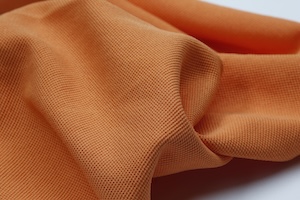
Fabric made from cotton-like fancy yarns with a soft, voluminous structure for textile surfaces with a natural, cotton-like appearance.As demand grows for textured and differentiated fabrics in fashion, home and automotive markets, fancy yarns are gaining new importance. Remscheid, Germany–based Barmag is advancing Draw Textured Yarn (DTY) production with flexible, modular texturing technology that creates “cotton-like, linen-like, thick & thin, two-tone, different shrinkage and elastane-covered” yarns.
According to the company, Barmag systems deliver precise, reproducible-effect structures with stable crimp and uniformity, even in complex applications. The company’s solutions allow reliable combinations of POY, FDY and elastane while maintaining energy efficiency and process control.
Barmag’s atmos.io digital platform further enhances production by tracking each yarn package and enabling real-time data-based decisions. Digitizing the entire material flow allows yarn manufacturers to intervene when necessary.
According to Barmag, integrating flexibility, quality, and digitalization, Barmag’s DTY systems provide a reliable, economical path to premium fancy yarn production.
The Berry Amendment remains the cornerstone of today’s US textile industry. Enacted in 1941 to protect manufacturing capacity — especially textiles — for military needs during World War II, it was made permanent in 1994 and codified into law in 2002.
The amendment safeguards U.S. textiles by mandating that the Department of Defense (DoD) (now Department of War) source most textiles, clothing, and materials from domestic producers — from raw fiber through finished garments. Many regard Berry as the foundation of the “Buy American” procurement policy for military outfitting.
More importantly, it incentivizes capital investment by the industry in readiness to serve the DoD as a dependable partner with the DoD offering predictable demand, allowing for capacity planning for military-focused yarn, fabric, apparel, and advanced textile solutions.
Berry has not been without opposition. Some argue that the amendment inflates procurement costs, limits competition, and guarantees demand to specific U.S. firms — effectively creating a “self-imposed blockade” on efficient sourcing from around the globe.
The National Council of Textile Organizations (NCTO) President Kim Glas notes that, “The U.S. textile industry provides $1.8 billion of high-tech and functional components for vital uniforms and equipment for our armed forces each year. The Department of War estimates that over 8,000 different textile items are purchased for use by the U.S. military — and over 30,000 line items when individual sizes are considered.”
One of the best examples of the need to protect U.S. manufacturing capacity is when the U.S. textile industry rapidly pivoted to produce Personal Protection Equipment (PPE) during COVID-19. Many say the response served as a compelling example for why sustained support like the Berry Amendment is vital. Manufacturers quickly re-tooled their plants to supply more than $2 billion in Berry-compliant gowns, masks and gear for the DoD, HHS and FEMA, proving that domestic capacity exists but relies on steady demand to remain viable amid foreign competition.
A strong Berry Amendment drives innovation and investment in the U.S. textile industry by guaranteeing a stable market for advanced materials and cutting-edge products — in effect, incentivizing R&D knowing the DoD has a steady demand to consume high-performance military gear.
Recently, the NCTO announced the launch of the bipartisan Congressional Berry Amendment Caucus, co-chaired by Reps. Pat Harrigan (R-NC) and Don Davis (D-NC), with strong backing from NCTO and groups like the Warrior Protection and Readiness Coalition.
At the time NCTO’s Glas stated that the new bipartisan Caucus is, “aimed at strengthening national security and the U.S. defense industrial supply chain through the federal procurement of American-made mission-critical clothing, textiles and gear.”
The goals go beyond preserving Berry and include modernizing the amendment, closing the $150K small-purchase loophole and pushing for multiyear contracts to stabilize supply chains for uniforms, body armor and advanced textiles.
From WWII to COVID-19—no crisis was foreseen, yet dedicated leaders and a resilient industry proved the value of a robust U.S. textile base: ready to serve, built to endure.
CreateMe is partnering with UNTUCKit and Supima® to debut the first commercially available digitally bonded T-shirts, produced in the U.S., showcasing how automation can strengthen domestic manufacturing and deliver durable, premium apparel at scale.
TW Special Report
Newark, Calif.-based CreateMe Technologies has announced a strategic partnership with New York apparel brand UNTUCKit and Supima® cotton to launch the first commercially available digitally bonded garments. The partnership marks a significant step toward automated, on-demand apparel manufacturing using robotics and adhesive bonding technology.
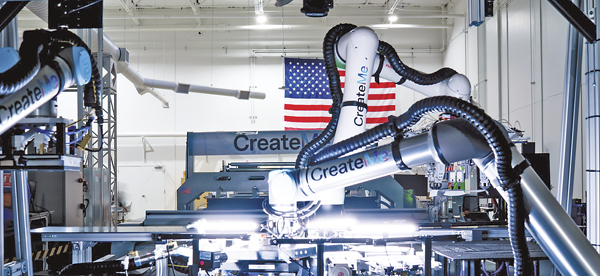
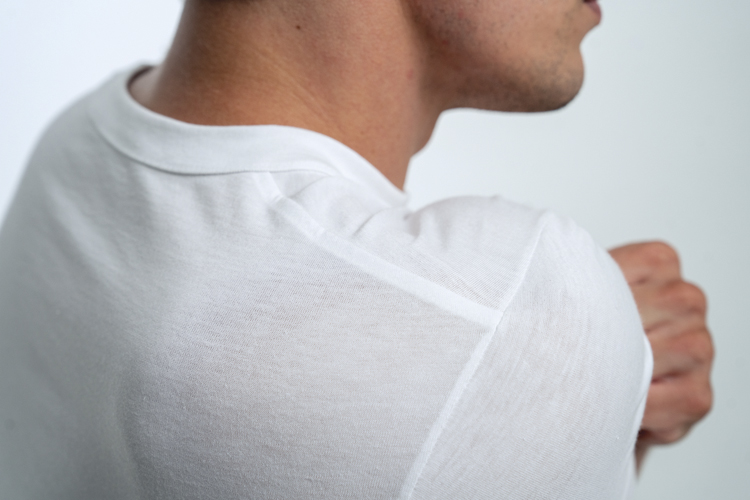
Through this collaboration, CreateMe will debut its first bonded men’s T-shirt, made from U.S.-grown Supima® cotton and produced domestically using the company’s proprietary Pixel™ bonding and MeRA™ automated assembly systems. Supima® cotton, prized for its extra-long staple fibers, delivers greater softness, strength, and color retention than traditional cotton — qualities that align well with CreateMe’s focus on durable, high-performance apparel.
New Manufacturing Model
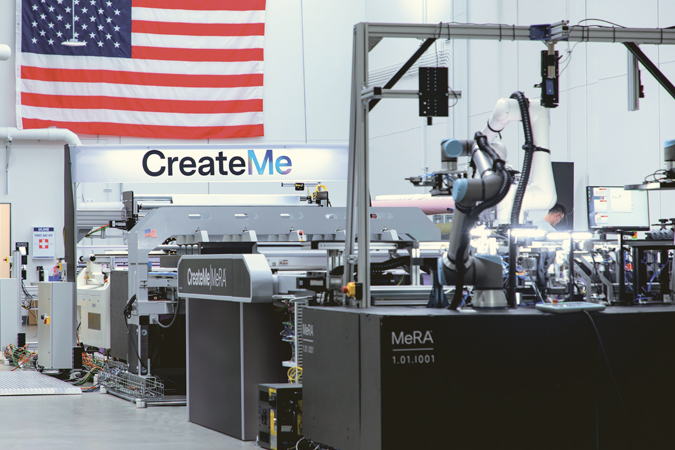
The partnership with UNTUCKit demonstrates the commercial maturity of CreateMe’s digitally bonded garment technology and its readiness to manufacture at scale. Pixel™, CreateMe’s digital adhesive application system, serves as the foundation of its process, enabling precision and flexibility in garment construction without traditional stitching. Together with MeRA™, the system represents a shift toward a more agile, automated manufacturing model, capable of meeting rapid market demands.
“Partnering with UNTUCKit accelerates the shift toward a more modern way of making clothes,” said Cam Myers, founder and CEO of CreateMe. “UNTUCKit built its brand by challenging convention, and this collaboration brings that same mindset into manufacturing. It proves that high-quality apparel can be produced competitively in the U.S. at scale, while giving consumers a better, more durable product. This is the first of many bonded garments we’ll bring to market.”
The partnership follows CreateMe’s commercialization roadmap, with initial product development and pilot testing leading to retail introduction. Plans call for production to scale to approximately 50,000 bonded T-shirts per year beginning in the third quarter of 2026.
CreateMe, UNTUCKit and Supima® advance U.S. apparel manufacturing with Pixel™ bonding and MeRA™ robotic assembly to craft durable, premium T-shirts through advanced bonding automation.
Bringing Innovation To Classic Apparel
For UNTUCKit, known for redefining the classic button-down shirt, the alliance offers an opportunity to apply material and process innovation to its well-established brand identity. “At UNTUCKit, we’re always exploring innovations that enhance product performance and the customer experience,” said Bjorn Bengtsson, chief product and supply chain officer at UNTUCKit. “CreateMe’s adhesive bonding technology opens exciting new opportunities to rethink how we approach apparel construction in a more efficient and responsible way.”
This approach reflects broader industry trends toward domestic, technology-driven production. Faced with rising global production costs, long lead times and supply chain uncertainty, brands are increasingly looking for solutions that balance cost efficiency with flexibility. CreateMe’s automated bonding technology reduces reliance on overseas production, shortens turnaround time and allows manufacturers to respond more closely to real consumer demand.
Supima® Strengthens The Collaboration
As the third partner, Supima® brings both material quality and deep industry heritage to the project. The American-grown cotton is a natural companion to CreateMe’s U.S.-based production and UNTUCKit’s focus on everyday comfort and quality. “Supima could not be more excited to work with fashion technology innovator CreateMe and our longtime partner and fashion disrupter UNTUCKit to bring innovation and style to the fashion market,” said Buxton S. Midyette, vice president of marketing and promotions at Supima®.
Supima’s involvement underscores how premium fiber innovation continues to intersect with technological advances in apparel production. Pairing advanced robotics and bonding with one of the world’s most recognized cotton varieties showcases the potential for U.S. textile manufacturing to combine heritage materials with next-generation processes.
Scaling A Sustainable System
CreateMe envisions the UNTUCKit partnership as a first step toward a larger ecosystem of bonded apparel. Building on its bonded T-shirt program, the company plans to extend production capabilities into women’s styles and additional T-shirt variations as part of its 2026 roadmap.
The enterprise sits within CreateMe’s broader mission to localize and digitize soft-material manufacturing through automation. The company operates on the premise that “The Future of Fashion is Bonded™”— not sewn — and holds more than 95 patents across robotics, adhesives and automation. Its proprietary technologies include Pixel™ micro-adhesive bonding, the MeRA™ robotic assembly system, and Thermo(re)set™ reversible-adhesive science. Together, these innovations enable precise, waste-reducing garment production closer to end markets.
As automation gains ground in textiles, CreateMe’s collaboration with UNTUCKit and Supima® serves as a proof of concept: that bonded apparel can meet the quality, consistency and scalability required by global brands while strengthening domestic supply chains. In a sector defined by long-distance sourcing and intensive manual labor, the move toward digitally bonded, robotically assembled garments could redefine how — and where — clothing is made.
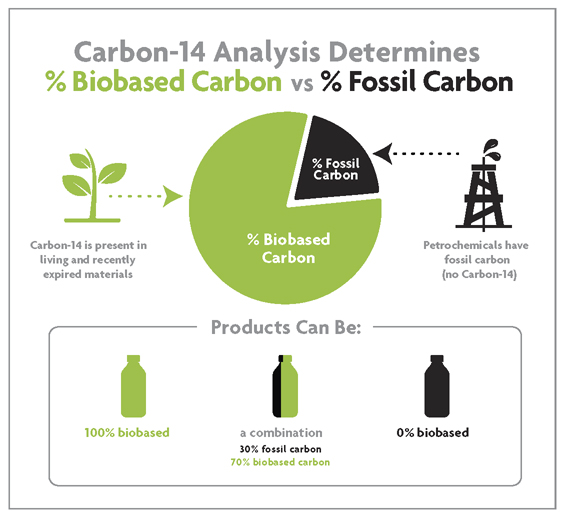
Figure 1: Biobased testing reveals the percentage of biobased versus fossil carbon content in a given sample.Biobased carbon testing helps manufacturers develop materials that meet the expansion of governmental initiatives to increasingly eco-conscious consumers.
By Jordan Turner, SGS Beta
The global biobased textiles market was valued at US$5.80 billion in 2024 with projections indicating growth of 11.6% between 2025–2034.1 This growth is the result of improvements in global environmental regulations, increased demand from eco-conscious consumers favoring sustainable products and expansion of governmental initiatives.2 These industry developments favoring the use of eco-friendly materials necessitates a reliable method for manufacturers and distributors to ensure their textiles are produced using renewable biomass resources like plant fibers. ASTM D6866 biobased carbon content testing via carbon-14 analysis is an accurate, well-established third-party analytical tool that can be used to meet these industry goals and standards by validating the biobased content of a material or finished product.
Untangling the Definition of “Biobased”
The ASTM D6866 analytical standard defines the term “biobased” as “containing organic carbon of renewable origin like agricultural, plant, animal, fungi, microorganisms, marine, or forestry materials living in a natural environment in equilibrium with the atmosphere.”3 Biobased products are produced using renewable raw materials from marine, forestry, or agricultural sources. A biobased textile is fully or partially sourced from renewable biomass resources such as plants and animals. Biobased textiles serve as a renewable alternative to fossil-based synthetic fibers like polyester, which is currently the most prevalent fiber accounting for 57% of global fiber production.4 Despite this seemingly straightforward definition, there are some nuances within the textile industry when it comes to the three types of fibers that are typically referred to as biobased: natural, regenerated (or semi-synthetic), and synthetic biobased fibers.5
Natural fibers include cotton, wool, hemp, linen and silk. These are of biological origin, coming from plant or animal sources. Therefore, natural fibers clearly fall within the definition of biobased. These fibers are obtained via harvesting directly from the plant or animal before entering the production process. Natural textiles have been used for millenia. However, modern innovation within the industry has led to the development of two additional types of fiber that are considered to be biobased.
Regenerated or semi-synthetic fibers come from renewable biological resources like wood and plant fibers, pulp and cellulose. These include viscose from bamboo fiber (also known as rayon) and lyocell from wood pulp. Although they are derived from renewable biomass, thus fitting the definition of biobased, regenerated fibers are man-made. Their components must be extracted and chemically dissolved then reformed into fiber before being processed into textiles.
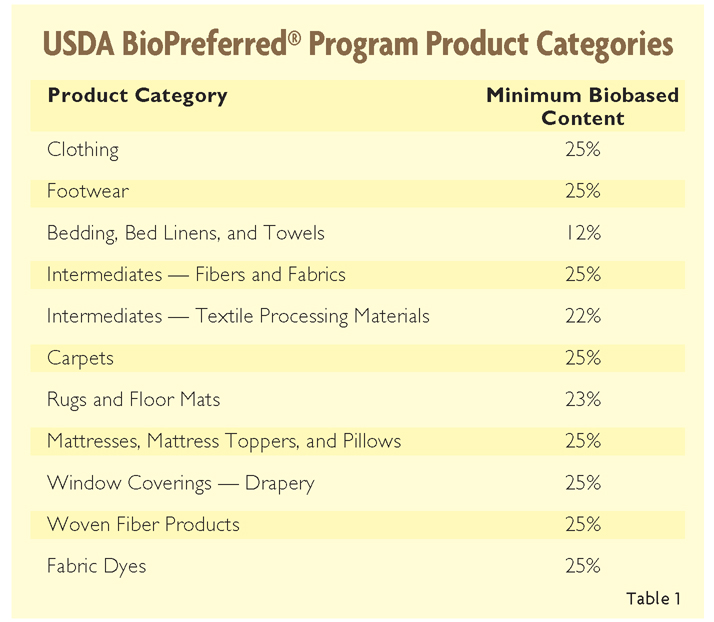
The USDA BioPreferred® Program outlines categories and sets a minimum biobased content percentage for textile intermediates, processing materials and finished products.13While synthetic biobased fibers are also considered to be biobased, their journey from raw material to fiber is much different from that of natural and regenerated fibers. They are made by synthesizing biomass raw materials either chemically or biologically. Developed as an alternative to fossil-derived synthetics like polyester and nylon, the most common biobased synthetic fibers are polytrimethylene terephthalate (PTT) fibers, polylactic acid (PLA) fibers, polyethylene terephthalate (PET) fibers, and polyamide (PA) fibers.6 Like regenerated fibers, synthetic biobased fiber is man-made, created by converting biomass such as corn, sugar beet, sugarcane and castor into monomers or molecules.7 This is achieved through fermentation or chemical synthesis.8 These monomers are then polymerized and processed into fiber.
All of these types of fibers fit into the definition of “biobased” as they are obtained from renewable biomass. However, they differ when it comes to the level of processing required to produce the fibers. There is some flexibility in the interpretation of what it means for a product to be “biobased,” especially between the United States and the European Union.9 Therefore, it is important for textile producers and manufacturers globally to have a reliable method in their toolkit to ensure their textiles and fibers are authentic by verifying their exact biobased carbon content, according to internationally recognized standards like ASTM D6866 and EN 16640.
Measuring Up: Carbon-14 Biobased Testing
Biobased carbon content testing is performed using an Accelerator Mass Spectrometry (AMS) instrument to measure the amount of carbon-14, or radiocarbon, in a raw material (e.g. cotton) or finished product (e.g. linen garments). Carbon-14 is a radioactive isotope that is present in all living organisms. It is formed in the upper atmosphere and enters the global carbon cycle in the form of carbon dioxide which is then taken in by plants through photosynthesis and by animals when they eat plants. Upon the death of the organism, this exchange ceases and the amount of carbon-14 begins to decrease through the process of radioactive decay. The detection limit of carbon-14 analysis is 43,500 years before present (BP). This is a particularly valuable trait of the method because fossil-derived materials are significantly older than this detection limit, and they no longer contain any carbon-14. Therefore, only the portion of the sample that comes from recently-expired biomass will retain a measurable amount of carbon-14.
Biobased testing is applicable to liquids, solids, and gaseous samples, and is carried out according to internationally recognized analytical standards such as ASTM D6866 and EN 16640. The method accurately reveals the biobased carbon content of organic materials that were in direct equilibrium with atmospheric CO2 until respiration or metabolism ceased, either by the organism coming to the end of its natural life or by a crop being harvested.10 Carbon-14 analysis distinguishes between the amount of biomass-derived, biobased carbon as opposed to fossil-derived carbon in samples of both raw materials and end products. Measuring the carbon-14 isotope is ideal for verifying the amount of biobased content in a material. As this method directly measures the amount of biomass present, biobased testing via carbon-14 analysis is the most accurate analytical method for identifying the exact percentage of carbon that comes from renewable biomass sources.
In addition to being highly accurate, biobased carbon content testing results are also easy to understand. Results are presented in the form of a percentage (%), a ratio representing the exact amount of biobased carbon versus the amount of fossil carbon, or absence of carbon-14 in a sample (Figure 1). This ratio, falling between 0% to 100%, clearly identifies the portion of the sample that comes from renewable biomass. A material that is fully fossil-derived has 0% biobased content while completely biomass-derived materials will have 100% biobased content. Any percentage in between is indicative of a mixture of fossil and renewable components.
Pinning Down the Applications of Biobased Testing
Biobased testing has a number of beneficial applications that biobased textile manufacturers and distributors can take advantage of to authenticate the composition of their fibers and finished products, and to support marketing claims. From research and development (R&D), to marketing, to certification programs, the data provided by biobased testing can help support business goals at every step. Obtaining accurate third-party analytical verification of biobased content is an excellent marketing tool that can be used to prove textiles and final products are made from renewable, biomass-sourced components instead of synthetic petroleum-derived fibers. Authentication of biobased content provides scientific back up to ensure products can withstand consumer scrutiny. These results are accurate enough to be used by R&D teams to verify the biobased content of end products and confirm that materials obtained from external suppliers are genuine.
Additionally, biobased testing results are required by some third-party programs in order for the applicant to meet the criteria for voluntary labels and certifications. These programs can be pursued to improve brand image and appeal to customers who are sustainability-conscious, while providing scientific evidence of marketing and label claims.
Stitching it all Together: Biobased Certifications & Eco-Labels
One certification program that has outlined criteria for the biobased textiles market is the USDA BioPreferred® Program. The program requires ASTM D6866 biobased testing to meet their certification requirements for biobased products.11 It recognizes 139 product categories, setting a minimum biobased content percentage for 14,000 products as of September 2025.12 Successful certification of a product under the BioPreferred® program allows manufacturers to use the USDA Certified Biobased Product label on their product packaging and marketing materials, clearly displaying information about the product’s biobased content to consumers. Additionally, BioPreferred® certified products gain an advantage when it comes to United States government procurement as federal agencies have mandatory purchasing requirements for certified biobased products.
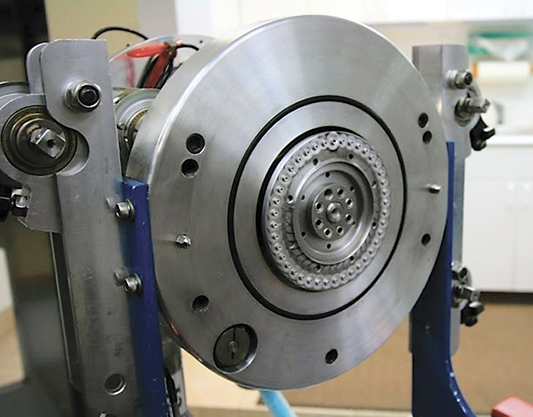
Biobased carbon content testing is performed using an Accelerator Mass Spectrometry (AMS) instrument.The USDA BioPreferred® Program product categories include a range of textile products as well as intermediate fibers and fabrics; processing materials like treatments and finishes; woven, tufted, and knitted rugs and carpet; window coverings; mattresses and pillows; and fabric dyes (Table 1). Clothing and footwear have a minimum biobased content of 25%. Intermediate fibers and fabrics used to manufacture finished products also have a minimum biobased content of 25%. Bedding, bed linens, and towels, including blankets, sheets and pillowcases, have a minimum biobased content of 12%. Fiber floor coverings like carpets require 7% biobased content. Additionally, the SGS Green Marks Biobased Certification is another program that requires ASTM D6686 and EN 16640 standardized biobased content testing. To qualify for the label, a product must have a biobased content percentage of at least 20%.14
In Europe, two eco-label programs that require biobased testing include Din Certco’s DIN-Geprüft Biobased Certification scheme and Nordic Swan. The DIN-Geprüft Biobased certification program accepts products that have a biobased content of 20% or more according to ASTM D6866 or ISO 16620.15 Products receive a label representing one of three quality levels depending on their biobased content: 20-50%, 50-85%, or >85%. Nordic Swan’s eco-label for textiles sets requirements for certifying natural and synthetic textiles, hides, and leather. The criteria requires biobased synthetic fibers to contain at least 90% biobased raw material that has been confirmed using ISO 16620, ASTM D6866, or equivalent testing such as carbon-14 biobased testing.16
Tying Off the Thread
Carbon-14 biobased carbon content testing is a key resource for companies seeking to ensure their label claims are supported and their products and materials are transparent under consumer scrutiny. Biobased testing verifies the exact amount of biobased carbon in a material or end product to prove it was sourced from sustainable biomass instead of fossil fuel sources. Further, a number of third-party certification programs including the USDA BioPreferred® Program require biobased testing results in order to apply for their certifications and eco-labels. The percentage of biobased content obtained through biobased testing also supports marketing and R&D goals, like improving brand image, validating label claims, and appealing to their sustainability-conscious customers. The accuracy and wide applicability of biobased testing make it a valuable option for sustainability-focused manufacturers to consider when seeking a solution for determining the authenticity of their biobased textiles.
References
1, 2. Polaris Market Research. (2025). Bio-Based Textiles Market Size, Share, Trends, & Industry Analysis Report By Source Material (Plant-Based, Animal-Based, Microbial/Bioengineered, and Others), By Application, and By Region – Market Forecast, 2025–2034. Polaris Market Research. https://www.polarismarketresearch.com/industry-analysis/bio-based-textiles-market
3. ASTM International. (2025). Standard Test Methods for Determining the Biobased Content of Solid, Liquid, and Gaseous Samples Using Radiocarbon Analysis. ASTM International. https://store.astm.org/d6866-24.html
9. Willemse, M., & van der Zee, M. (2018). Communicating bio-based content of products in EU and US. [White paper]. Biobased Content. https://biobasedcontent.eu/white-paper-communicating-bio-based-content-of-products-in-eu-and-us/
10. ASTM International. (2018) ASTM D6866 – 18, Standard Test Methods for Determining the Biobased Content of Solid, Liquid, and Gaseous Samples Using Radiocarbon Analysis. ASTM International. https://store.astm.org/d6866-22.html
11. USDA BioPreferred® Program. (2025). What is the BioPreferred Program? [Fact Sheet]. USDA BioPreferred® Program. https://www.biopreferred.gov/BioPreferred/faces/pages/AboutBioPreferred.xhtml
14. SGS. (2025). SGS Green Marks. SGS. https://www.sgs.com/en-us/services/sgs-green-marks
15. DIN CERTCO. (2025). Biobased products. DIN CERTCO. https://www.dincertco.de/din-certco/en/main-navigation/products-and-services/certification-of-products/environmental-field/biobased-products/
16. Nordic Swan Ecolabel. (2022). Nordic Ecolabelling for
Textiles, hides/skins, and leather. [Criteria Document]. Nordic Swan Ecolabel. https://www.nordic-swan-ecolabel.org/4a428f/contentassets/2a4b1e9ce1d04ad0a820553f8b716cd9/criteria-document_039_manufacturing-of-textiles-hidesskins-and-leather-039_english.pdf
WEINHEIM, Germany — February 26, 2026 — Freudenberg Performance Materials will showcase textile innovations that increase efficiency, performance and sustainability in industry and mobility at Techtextil 2026. For the first time since the merger of Mehler Texnologies and Heytex, the MehlerHeytex brand will make its debut as a leading expert in coated technical textiles. Moreover, Freudenberg Performance Materials Filc (Filc), specialist for advanced needlepunch nonwovens and laminated materials, will present its groundbreaking solutions for automotive applications. Filc customers can benefit from the perfect combination of functionality, comfort and sustainability. The Freudenberg Performance Materials experts are looking forward to welcoming visitors to the trade fair at Stand A11 in Hall 11.0 from April 21 – 24, 2026.
MehlerHeytex: more technology, more markets, more customer centricity
Under the motto “Engineered solutions that move the world”, MehlerHeytex will introduce itself as the optimal partner, for example in the development of special solutions. MehlerHeytex offers one of the most comprehensive technology platforms on the market and serves a wide spectrum of international industries. Following the merger, Mehler Texnologies and Heytex have joinied forces, combining now their know-how and offering broader expertise and greater customer centricity worldwide. Customers also enjoy the benefits of sales offices in an even larger number of countries – with contacts fluent in the national languages and short communication channels.
Filc: high-performance nonwoven solutions for modern mobility
Freudenberg Performance Materials Filc (Filc) provides visitors with in-depth insights into its innovative nonwoven solutions for the automotive sector. These include efficient acoustic materials, nonwovens for seatings and for luggage compartments.
With Finsol, Filc provides lightweight acoustic nonwovens that absorb sound, effectively reduce noise and improve comfort in vehicles. The materials support multiple automotive applications, including door panels, trunk liners, headliners, wheel-arch liners and many more. Their lightweight construction contributes to improved EV efficiency and range. They are available in 100% polyester versions or with recycled content.
For complex seat designs, Filc offers low-emission, low-flammability and shape-stable nonwovens. They improve comfort and climate control, and simplify manufacturing and assembly processes. Certain materials, such as FilFlex, are optionally made from 100% PET, thus providing recyclability.
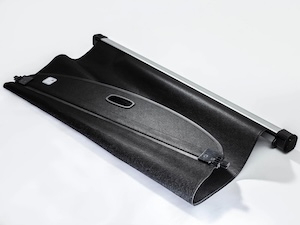
Filc has developed durable, abrasion-free, lightweight nonwovens designed for luggage compartment linings. These materials even perform in extreme environmental conditions and are fully recyclable. They provide broad design options – from custom colors and flexible embossing to easy-clean treatments.
SAN DIEGO— February 19, 2026 — General Atomics Electromagnetic Systems (GA-EMS) and the Department of Energy’s Oak Ridge National Laboratory (ORNL) have established a Memorandum of Understanding (MOU) to advance innovation in industrial manufacturing of advanced ceramic matrix composites for extreme environments.
GA-EMS and ORNL partner to drive U.S. industrial innovation critical to producing next-generation technologies that support national security and economic competitiveness.
These critical materials help safeguard national security, boost economic competitiveness, and power future breakthroughs across aerospace, defense, energy, and other critical industry sectors that depend on products that can withstand extreme temperatures, radiation, corrosion, and intense mechanical stress.
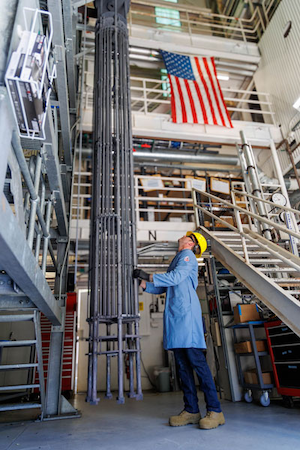
Under the MOU, GA-EMS will examine its advanced manufacturing processes for ceramic precursors, fibers and composites using resources from the DOE’s Manufacturing Demonstration Facility (MDF) at ORNL. MDF supports federal programs and serves as an open-access resource to advance U.S. industry. Potential projects will demonstrate ways to improve energy utilization, process efficiency and manufacturing throughput to ensure a steady supply of extreme environment materials for industrial markets and federal agencies.
“The agreement creates a powerful partnership that will accelerate innovation, strengthen critical supply chains, and deliver advanced materials essential for national and energy security. The initiative complements our growing advanced materials and technology capabilities and launch of MAITrX, our Materials Acceleration, Innovation and Transition Exchange, developed to drive customized advanced materials technologies to commercial implementation. By maturing MAITrX capabilities, built on more than 60 years of nuclear expertise, with ORNL’s expertise, we are proactively positioning ourselves to tackle critical material challenges that support the safety and security of the U.S.,” Scott Forney, president of GA-EMS said.
GA-EMS will lead the development of scalable, efficient manufacturing techniques for extreme environment materials including precursors, fibers, composites and coatings utilized in carbon/carbon (C/C), carbon/silicon carbide (C/SiC), and SiC/SiC composite systems. The company will collaborate with ORNL to streamline production and apply these materials to advanced nuclear power, hypersonic thermal protection systems and fusion energy demonstrators. The collaboration will marry innovative GA-EMS and established MDF processes that reduce production time and enhance productivity through improved resin formulations, advanced preforming, in- situ monitoring, and advanced thermal processing.
The MOU will enable ORNL to contribute to current and future applications for collaboration with an industry partner committed to securing our nation’s energy security through implementation of advanced manufacturing technologies.
“Our focus will explore greater manufacturing efficiencies and accelerate the development of extreme environment material technologies to ensure secure, affordable, and reliable solutions to fuel the nation’s economic growth and energy independence,” Robert Wagner, associate laboratory director for the Energy Science and Technology Directorate at ORNL said.
Posted: February 27, 2026
Source: General Atomics Electromagnetic Systems (GA-EMS)
BANGKOK, Thailand — February 27, 2026 — At the Tire Technology Conference on March 3-5 in Hannover, Germany, Indorama Ventures’ Global R&D Lead for sustainable filament yarns, Thomas Buss, will present the company’s path to lower-carbon PET products for tire reinforcement.
He will showcase how Indorama Ventures is advancing materials that combine virgin-like performance for safety-critical tire applications with significantly reduced greenhouse gas emissions. That includes different biobased and recycled PET solutions designed for use in tire cord fabrics and other reinforcement materials.
Biobased reinforcement PET offers a substantially lower product carbon footprint while maintaining the physical, mechanical, and processing performance of virgin PET. This enables true drop-in readiness for customers, with no compromise on performance, durability, or safety. Indorama Ventures’ fully integrated and third-party certified supply chain ensures traceability, credibility, and reliable supply across all product lines.
“Indorama Ventures remains open to diverse technologies, selecting only those that meet our technical and sustainability criteria”, says Thomas Buss. “That’s why, in addition to our biobased solutions, we are also using multiple recycling technologies to advance our offerings to the market. Our new joint venture with Jiaren Chemical Recycling, for example, enables us to finally close the textile loop at scale.” Respective yarns and fabrics from pre- and post-consumer textile feedstock are further enlarging the company’s sustainable portfolio and strengthening its commitment to transforming reinforcement materials for tire applications through circular solutions.
Thomas Buss will give his presentation on March 3, 13.45pm CET, in room Casablanca at the Tire Technology Conference in Hannover (Deutsche Messe)
CHICAGO, IL — February 27, 2026 — Six months after beginning its collaboration with Lectra, a provider of industrial intelligence technology solutions to players in the fashion, automotive and furniture industries, Chicago Protective Apparel (CPA) is already seeing transformative results.
After implementing Lectra’s Valia Fashion—its intelligent cloud‑based solution—and the Vector Fashion iX6 automated cutting solution, CPA has achieved measurable ROI through material savings and improved operational efficiency. These upgrades have streamlined production and elevated quality across its facilities. With continued API automation and ongoing pattern conversions, the company expects even greater gains in the months ahead.
Founded in 1913, Chicago Protective Apparel, a division of Mechanix Wear, provides a broad range of high‑hazard personal protective apparel for industries such as heavy manufacturing, foundry, and electrical/utilities. The company produces hundreds of thousands of garments each year to safeguard workers in high‑risk environments. With more than 1,000 product families and over 200 fabric types across its U.S. and Mexico facilities, CPA set out to modernize its production processes to meet growing customer demand while upholding its uncompromising safety standards.
Since collaborating with Lectra, CPA has realized significant operational improvements, including:
An increase in overall nesting efficiency from 83% to 89%
Early indicators of a 4–6% reduction in fabric consumption, depending on marker complexity and fabric type, which also contributes to CPA’s ability to reduce textile waste
A 10% reduction in quality defects in the cutting process
Lead times for material readiness shortened by five days
Seamless cross‑border coordination enabled by real‑time monitoring across U.S. and Mexico facilities through Valia Fashion
Improved precision and reduced manual intervention through barcode scanning and API‑driven order management.
“What I really appreciated about working with Lectra was having a dedicated team supporting us to ensure a smooth implementation,” said Keith Christiansen, President & GM at CPA. “Looking ahead, we’re confident that we can double our business over the next three to five years — and Lectra will play a key role in helping us get there.”
By digitizing workflows from the cutting room to the factory floor, Lectra’s solutions have given CPA unprecedented visibility and control. Orders can now be monitored and transferred instantly across locations, while precision cutting reduces manual strain on the sewing department and ensures consistent product quality. Data traceability for spreads, cuts, and fabric usage has also been strengthened, further enhancing operational accuracy.
Valia Fashion is emerging as a critical component of CPA’s cutting operations, providing real‑time visibility into key equipment performance indicators. Its monitoring capabilities enable the team to track utilization rates, cycle times, and machine‑level efficiency with greater precision. This data allows CPA to implement targeted corrective actions, optimize asset performance, and enhance process consistency. As part of CPA’s continuous improvement framework, Valia Fashion supports data‑driven decision‑making and advances the organization toward higher levels of operational excellence.
“Protective apparel plays a vital role in safeguarding workers in high-risk industries, and we are honored to help CPA advance that mission,” said Ketty Pillet, Vice President Marketing, Americas at Lectra. “In just six months, CPA has demonstrated how quickly a company can unlock measurable value when digital transformation meets a strong vision to set new standards in quality and performance.”
With a successful six-month rollout complete, CPA and Lectra are focused on expanding these early gains. Their joint efforts are establishing the infrastructure needed for scalable growth, accelerated product‑design innovation, and continued advancements in manufacturing performance. This foundation positions CPA to consistently deliver the highest levels of safety, quality, and reliability to customers worldwide.