MARIETTA, GA— June 17, 2019 — YKK is tackling the plastic waste issue with its materially recycled NATULON® zipper, which has saved millions of plastic bottles from landfills in the past five years. This is just one of the many environmentally friendly products the company will showcase at the 2019 Outdoor Retailer Summer Market, to be held June 18 – 20, 2019 in Denver, Colorado.
NATULON® zippers are resource-conserving, recycling-oriented products made from PET bottles, old fiber and other polyester remnants. 10,000 NATULON® zippers of 60 cm length recycle approximately 3,600 plastic bottles (29 g/bottle). The materially recycled zippers are bluesign® certified.
NATULON® is part of YKK’s latest collection of sustainable trims aimed at reducing carbon emissions, toxic chemicals, and water use. The collection features its GreenRise™ zipper, the first in the industry to use plant-based plastic, which contributes to the prevention of global warming by reducing fossil resource consumption. Also included in the collection are environmentally friendly snaps and buttons using a new finishing process that reduces thermal energy, water usage, and toxic chemicals and waste.
YKK continues to reduce carbon emissions in its manufacturing processes, including those that are directly due to manufacturing (Scope 1), indirectly from factory energy consumption (Scope 2), and from material procurement and transportation (Scope 3). These initiatives are being carried out globally. In 2015, YKK (U.S.A.) Inc. installed 1,968 solar modules on the roof of its Anaheim, CA facility, resulting in a CO2 offset of 896 tons per year. At YKK Bangladesh Pte. Ltd., a hybrid power generation system that combines solar power and diesel power generation was introduced in 2016, which has reduced fuel use by 90,000 liters and carbon emissions by 265 tons per year. As a result of such initiatives, globally YKK has reduced carbon emissions by 8.9% (estimated) in FY2018 compared to FY2013.
GASTONIA, NC — June 17, 2019 — Conitex Sonoco, the world’s largest manufacturer of paper cones and tubes for textile yarn packaging, will premiere its new printed barcode and QR code capabilities at the International Textile Machinery Association’s (ITMA) 2019 trade show. “Conitex Sonoco works diligently to keep our paper cones and tubes at the forefront of the latest technological advances. We are pleased to offer our high-tech customers the ability to add barcode and QR code identification printed directly onto their cones and tubes,” said Michel Schmidlin, COO at Conitex Sonoco.
With an already vast combination of color and design printing options for positive identification, Conitex Sonoco’s barcode and QR code printing capabilities will allow automated textile mills to identify and track specific yarn data from packaging to delivery and beyond.
Further to the company’s mission to offer the finest paper cones and tubes in the textile carrier industry, Conitex Sonoco will also display their dimensionally accurate and perfectly balanced carrier design, trusted to perform flawlessly with the newest spinning technology.
“In all countries where the technology exists, our ability to meet exceptionally low tolerances coupled with the ability to craft a perfectly balanced textile cone and tube makes Conitex Sonoco the supplier of choice for the fastest spinning machines in the world,” explains Agustin Marin, VP of Converting.
Offering a full range of sliver cans for all applications domestically and internationally, Conitex Sonoco will showcase their rectangular sliver can, an ideal design for automated spinning lines, at ITMA 2019. The only manufacturer of sliver cans in the United States, Conitex offers customizable options for their performance grade sliver can line as well as a standard grade option.
Specialists in textile packaging, the company will also display their popular LoadRunner® corrugated yarn pallet. Ideal for single-ship and export, the LoadRunner® corrugated pallet is lightweight yet durable, eco-friendly and ISPM-15 exempt and features custom cut dividers used to positively locate and secure yarn packages for a quality delivered product every time.
Visit Conitex Sonoco in Hall 7, Booth D225 at ITMA 2019 being held at the Fira de Barcelona, Gran Via, Barcelona, Spain from Thursday, June 20 – Wednesday, June 26, 2019.
WASHINGTON, DC — June 17, 2019 — The National Council of Textile Organizations (NCTO) and several of its member companies are set to testify at the U.S. Trade Representative’s nearly two-week long hearing on the proposed Section 301 tariff list as part of the administration’s ongoing review and consideration of the Tranche 4 of retaliatory tariffs on U.S. imports from China.
Daniel Nation, Director of Government Relations for Parkdale Mills, a member of NCTO, will kick off the U.S. textile industry’s testimony on the first day of the hearing.
China’s rampant abuse of intellectual property rights and intellectual property theft has spanned decades at the direct expense of the U.S. textile industry and its supply chain, largely contributing to the U.S. trade deficit with China in textile and apparel products—totaling $46.5 billion in 2018—and the loss of 1 million manufacturing jobs in this critical sector.
“There is little doubt that China’s extreme position in the global textile and apparel marketplace has been advanced by an elaborate system of illegal practices, that include state sponsored subsidies, unethical labor and environmental practices and theft of intellectual property,” Nation said in prepared remarks for today’s USTR hearing. “Consequently, Parkdale supports the existing Section 301 case against China.”
However, Nation stressed the effectiveness of the administration’s case has been “greatly diminished through the omission” of finished textile and apparel products from the various retaliatory tariff lists.
“Including finished textile and apparel products on the 301 retaliation list would greatly enhance the administration’s leverage in the ongoing negotiations and help redirect trade in this sector to the Western Hemisphere,” Nation said. The Western Hemisphere is a top export market for the U.S. textile industry, representing $15.7 million in textile and apparel exports.
“NCTO is pleased the proposed Tranche 4 includes finished imported items from China, which have the most significant impact on U.S. employment, production and investment,” said NCTO President and CEO Kim Glas, who is scheduled to testify at the hearing on June 20. “We believe this move will lead to the re-shoring of production to the United States and the Western Hemisphere production platform. It’s critical we address and mitigate China’s rampant trade distortions.”
“While NCTO members support the inclusion of finished products in Tranche 4, we are seriously concerned that certain inputs already vetted by the administration and removed from previous retaliatory tariff lists are back on this list for proposed duties,” Glas noted. “Adding tariffs on imports of manufacturing inputs that are not made in the U.S. such as certain chemicals, dyes, machinery and rayon staple fiber in effect raises the cost for American companies and makes them less competitive with China. We firmly believe the integrity of the earlier exclusion process should be upheld.”
“We also urge the U.S. government to institute a fair, transparent and expeditious exclusion system for all retaliation tranches,” Glas added.
“Lastly, we want to flag that the administration’s 301 efforts are being undermined by shipments under the $800 Section 321 de minimis threshold, which are not subject to the retaliatory tariffs – or any tariffs. Section 321 is a substantial and growing loophole that gives China backdoor duty-free access to the U.S. market at a time when the administration is spearheading efforts to address China’s unfair trade practices,” Glas said. “This should be rectified both in the 301 and broader context.”
NCTO and its member companies are strongly encouraging the USTR’s office and President Trump to adopt the following recommendations:
enact the proposed 25% penalty tariffs on finished apparel items and other sewn products;
maintain the previous product input exemptions that were vetted by the U.S. government and granted and excluded from previous tranches;
institute a transparent, fair and expeditious exclusion system for all tranches;
and apply 301 retaliatory tariffs to Section 321 de minimis shipments.
NCTO is a Washington, DC-based trade association that represents domestic textile manufacturers, including artificial and synthetic filament and fiber producers.
U.S. employment in the textile supply chain was 594,147 in 2018.
The value of shipments for U.S. textiles and apparel was $76.8 billion in 2018.
U.S. exports of fiber, textiles and apparel were $30.1 billion in 2018.
Capital expenditures for textile and apparel production totaled $2.0 billion in 2017, the last year for which data is available.
Posted June 17, 2019
Source: The National Council of Textile Organizations (NCTO)
TRISSINO, Italy — May 30, 2019 — SANTEX RIMAR GROUP, together with SMIT, are looking forward to meeting you at ITMA Europe in Barcelona from 20 to 26 June 2019:
SANTEX RIMAR GROUP – Hall2, C106
In a new era where sustainability and the production processes speed are the hardest challenges and, at the same time, the biggest opportunities to develop new business models, SANTEX RIMAR GROUP is presenting new solutions for the textile industry in almost 800 square meters spread in two booths.
“Santex Rimar Group will once more demonstrate his unique capability to understand customers’ needs along the complete production process in textile industry, testified by the impressive machinery and processes innovation presented at the exhibition, from weaving to finishing to technical textiles, exploiting areas where real added value can be transferred to its valuable customers” says Ferdinando Businaro, Santex Rimar Group President.
“Santex Rimar Group aims to transfer the results of tireless research and improvements to the customers in order to give them unique competitive advantages, supporting them in the race to be really sustainable and successful” concludes Simone Rancan, Group CEO.
NEW PRODUCTS:
Sperotto Rimar COMPAS
The Compacting Revolution
New frontier in compacting woven and knitted fabrics made in natural and blended fibers.
Solwa DRYWA
Green sludge dryer
Efficient and cost-effective sludge management respecting environment and climate.
Santex Rimar Group ATHENA
Advanced Deep Learning Technologies.
Achieve quality production standards with Industry 4.0.
SMIT– Hall 4 – D107
NEW PRODUCTS:
Smit 2FAST
Flexible Advanced Shuttleless Technology
Unleash the full potential of free flight
Santex Rimar Group GUARD ONE
Quality control system
Protect your profitability and production consistency
Santex Rimar Group 2SAVE
Sustainability through fabric waste reduction
During the tradeshow it will be possible to meet our staff at the booth and see some of our best-seller products:
Hall 2 | C106
Cavitec CAVIFLEX
Hotmelt coating and laminating machine with interchangeable coating modules
Isotex ISOCOAT
Highly customizable coating and laminating lines for technical textiles
Santex SANTACOMPACT RD
Felt belt compacting for the high-quality finishing of open width knitted fabrics
SperottoRimar DECOFAST 4.0
The evolution of continuous decatizing process under pressure equipped with a new high-performance steam extraction system
SperottoRimar VELURA DD28
The latest and most advanced solution in the raising technology
Hall 4 | D107
Smit GS980 260 F8 J
Combined with a 6.144 hooks STAUBLI Jacquard (full width, 1 hook per end, 12+12 ends/cm), with 100% cot- ton, dyed yarn terry towel
Smit GS980 360 C8 J
Combined with a 27.648 hooks BONAS Jacquard (full width, 1 hook per end, 79,5 ends/cm), with 100% cotton bed sheeting
Smit GS980 220 C8 D
With synthetic sportswear article, multifilament black and white polyamide warp yarn, 44 ends/cm; texturized polyamide weft yarn, 32 ins/cm
Smit ONE 190 C8 J
Will be on show in combination with a BONAS Jacquard and the Van De Wiele “Smart Creel” at Van De Wiele booth (Hall 4, stand A206)
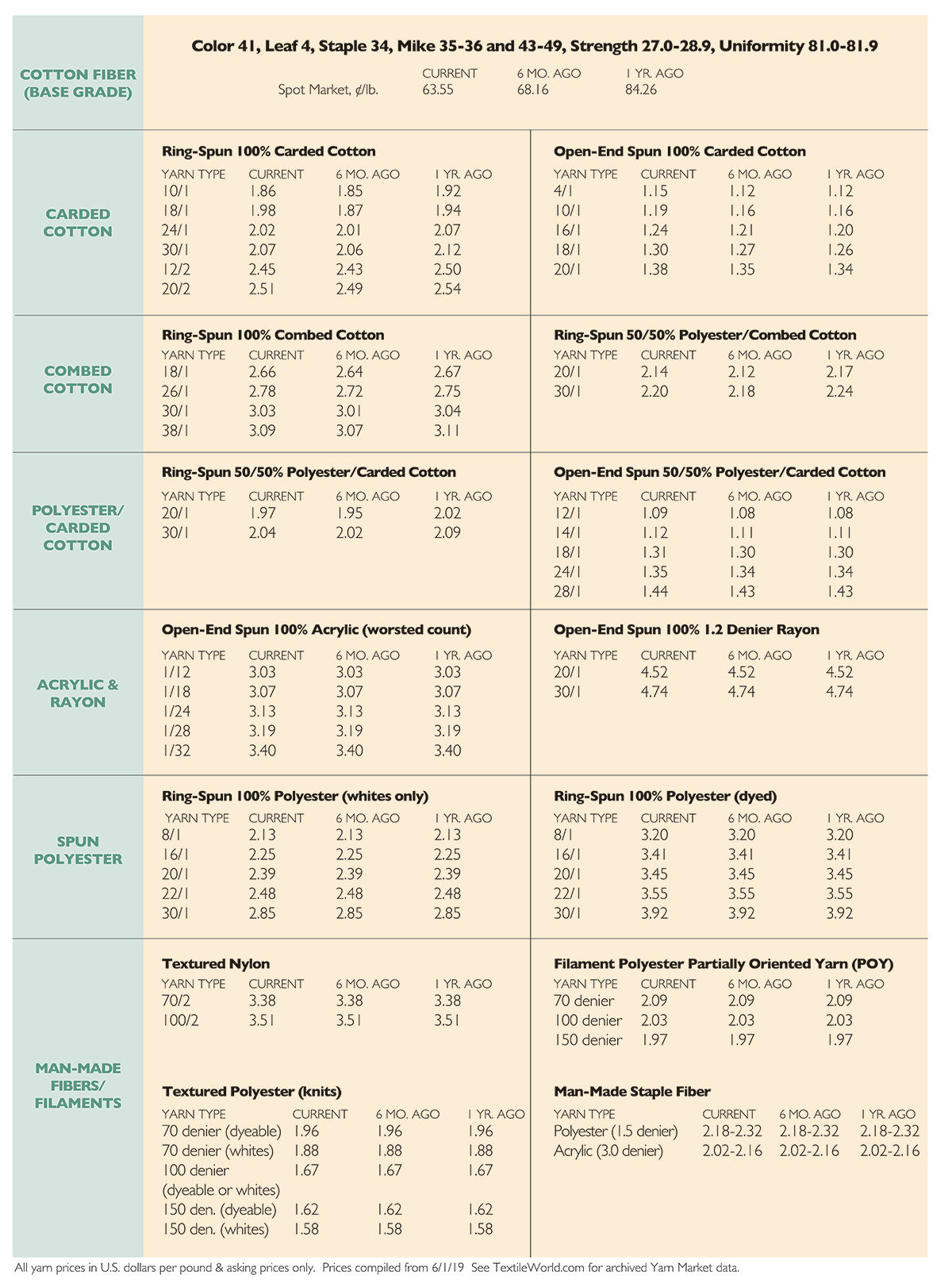
So far, the Trump administration’s trade wars haven’t had a tremendous impact on spinners. “I can’t say it hasn’t affected us,” said one spinner. “But we have had a slight decrease in inquiries as customers assess what the short- and long-term impact of higher tariffs will mean to them and consumers.”
“It has affected us most in some polyester yarns,” said one spinner. “Our technical and woolen yarns are moving very well.” At this point, the small impact on the yarn industry is caused by increased tariffs (both ways) between the United States and China. “I had one Chinese seller offering to sell me 40 count 2-ply polyester yarn for a dollar a pound,” a spinning executive said. “The going rate here for a comparable yarn is three dollars plus. Just the polyester fiber alone costs us 90 cents a pound. I think China is beginning to panic in some areas.”
New Tariffs On Mexico
The effect on the U.S. textile industry could change significantly, however, if President Trump’s threat to impose additional tariffs on Mexico is implemented. Trump has threatened to levy the tariffs on June 10 if Mexico does not act to curtail the influx of illegal immigrants to the United States. The proposed 5 percent increase would begin on June 10 and incrementally increase to 25 percent if the dispute is not resolved.
The magnitude of the trading relationship with Mexico is significant for the U.S. textile industry, representing $12.2 billion in two-way textile and apparel trade in 2018, according to a news release from NCTO”. The U.S. textile industry alone exported $4.7 billion in yarn and fabrics to Mexico last year and had a net export surplus of $3.8 billion. As a result, Mexico is the single largest market for U.S.-made textile exports.
“We are very concerned about the impact these proposed tariffs would have on a critical and integrated supply chain for the U.S. and Mexico textile and apparel industries,” said NCTO President & CEO Kim Glas. “Under the NAFTA agreement, the U.S. has benefited as a result of strong rules of origin that require the use of regional yarns and fabrics. As a result, the U.S. industry has made significant investment — $22.8 billion from 2006 to 2017 — to help grow the manufacturing of fiber, yarns, and fabrics in the United States. NCTO supports the passage of the pending U.S.-Mexico-Canada Agreement (USMCA) because it is a critical trade agreement that will strengthen the industry’s supply chain representing approximately $20 billion in three-way trade.”
Glas continued: ““Adding tariffs to Mexican apparel imports, which largely contain U.S. textile inputs, would significantly disrupt this industry and jeopardize jobs on both sides of the border. And as a result, it will accelerate substantially the immigration issues the administration’s is seeking to address. In addition, this tariff increase would give a significant competitive advantage to China, which already accounts for about 38 percent of apparel and textile imports to the United States.
Even prior to this week’s tariff announcement, the risk to the U.S outlook was increasing. The May manufacturing sector’s Purchasing Managers Index (PMI) fell to a nine-year low, according to multiple economic reporting sources. The April durable goods report was also weak, particularly capital goods orders and shipments. More worrisome, the May PMI data also revealed a notable slowdown in the services sector, representing 85 percent of the U.S. economy. In addition, the Federal Reserve Bank of Richmond’s services sector index decreased considerably in May. Overall, the Richmond Fed’s report suggests slowing growth in the region’s services sector. Despite the recent disappointing April retail sales data and with the housing sector continuing its two-year weak spell, consumer confidence has remained a bright spot. The May Conference Board index recovered to near its October 2018 cyclical peak.
Technology Advances
Kraig Biocraft Laboratories Inc., a developer of spider-silk-based fibers, has created the next generation of recombinant spider silk using the company’s new design, gene editing, and incorporation approaches. Kraig Labs designed this approach to customize mechanical properties for specific commercial markets and has demonstrated the ability to more quickly, accurately, and efficiently, generate new transgenics.
This is the material science breakthrough that Kraig has been pushing for since establishing the Dragon Silk line. This new transgenic was specifically engineered for high strength and significantly higher protein expression levels. This achievement marks a significant milestone in Kraig Labs’ mission to produce and commercialize eco-friendly materials that exceed the performance and strength of native spider silk. Further, the company has submitted five new provisional patent applications for technologies related to its recombinant spider silk technologies. These applications cover a broad range of technologies in the creation, screening, and production of new recombinant proteins. They expand beyond the company’s publicly disclosed silkworm and silk technologies and include advanced construction systems, methods and non-native proteins.
SCHLIEREN, Switzerland — June 12, 2019 — As one of the pioneers in this field, HeiQ is the go-to solution provider for many apparel brands that seek fluorine-free sustainable water repellent solutions. Used by over 50 brands worldwide today, HeiQ Eco Dry is a family of innovative, eco-friendly and PFC-free water repellent textile technologies. After adding HeiQ DuPont™ ECO-LED to the range last year, recently HeiQ has further developed another technology targeting footwear materials.
This new solution, HeiQ Eco Dry FW, is Oeko-Tex® conform and bluesign® pending, enables very high hydrophobic properties, and is suitable for wool, polyamide and their blends. It does not compromise on breathability and is fluorine-free. For leather on footwear, HeiQ DuPont™ ECO-LED is recommended. With HeiQ Eco Dry, brands protect their products in a sustainable manner.
“Summer just started. And in many countries it also means the start of rainy season!”, says Hoi Kwan Lam, Chief Marketing Officer at HeiQ. “We work with over 150 brands all over the world on a daily basis and what we see is the unstoppable growth in their craving for innovative, sustainable and effective solutions.” continues Lam. “Our ecological solutions allow brands to send a positive message and maintain a sustainable image. Today, 58% of consumers that are willing to pay more make their purchase decisions based on a brand’s environmental commitment*. We are happy for such a trend and it also means business opportunities for all”.
To learn more about HeiQ Eco Dry, visit them at both the Outdoor Retailer Summer Market in Denver (booth #54069-UL, June 18-20, 2019) and the Functional Fabric Fair New York City (booth#415, July 22-23, 2019).
Arta’s Thermex Econtrol range has a working width of 1.8 meters
As an accredited supplier to leading European retail brands such as Marks & Spencer, H&M, INDITEX and Top Shop, Turkey’s Arta Tekstil Ltd. is seeing a program of continuous investment over the past three years now paying solid dividends.
TW Special Report
With a production capacity of around 4 million meters of finished woven fabrics per month, Arta employs 300 workers over three shifts daily, with 50% of its output exported to key retail customers and the other half produced on a commission basis.
The company is situated in Çorlu, some 70km west of Istanbul – a city which has boomed over the past 30 years, with its population having risen from barely 20,000 to over 270,000 people. This has largely been due to a welcoming immigration policy and the new textile mills which have emerged in the past few decades in the city and now number around 350 in total.
Of the textile companies in Çorlu, however, around 250 are estimated to be dyeing and finishing operations, so how, you may ask, does a company like Arta distinguish itself?
The answer is through clever combinations of processes exploiting its comprehensive dyeing, finishing, coating and digital and rotary printing technologies to the full.
In addition to other technologies, the company’s recent investment programme has seen the installation of a new European-built Monforts Thermex Econtrol dyeing system as well as two ten-chamber Monfongs Montex stenters and a Monfongs sanforising unit, all of which have been installed and commissioned by Istanbul-based Neotek.
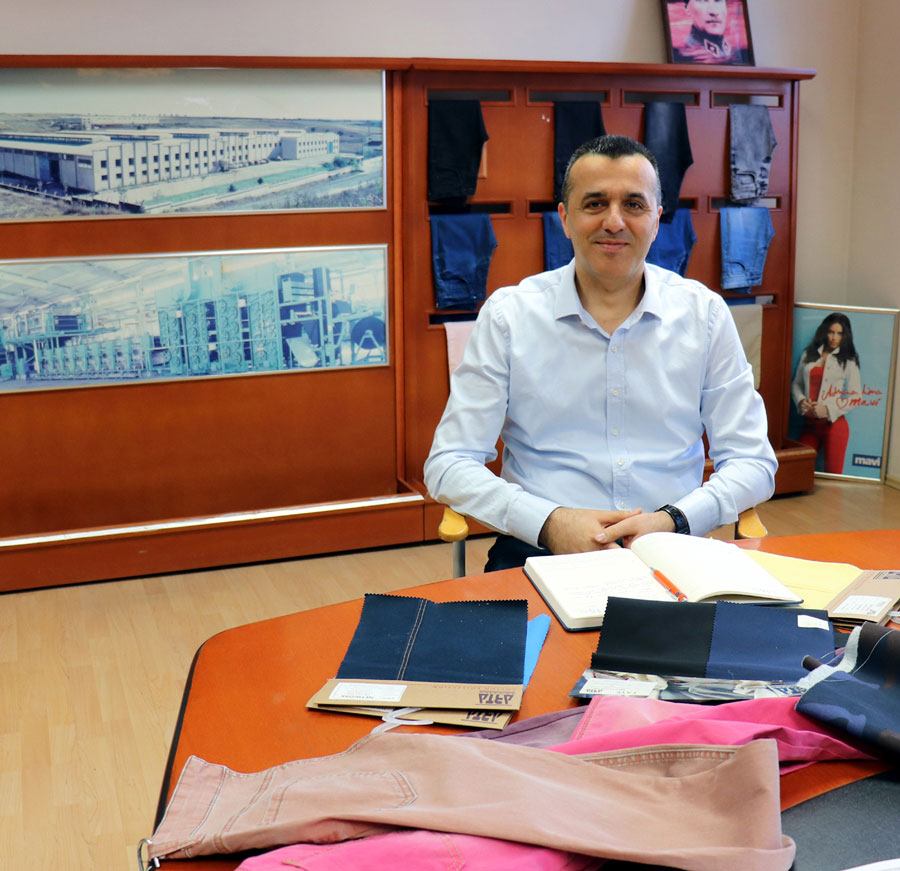
Arta plant manager Mehmet Kalipçioĝlu.
Wider Range
“In combination with the new Monforts Thermex system, this provides us with a far wider range of fabric finishes and surface effects that we can achieve compared to our competitors,” said Arta plant manager Mehmet Kaan Kalipçioĝlu. “We specialize in cotton, polyester, viscose and lyocell finished fabrics and their blends, with varying levels of controlled stretch, in advanced weaves including twills, poplins, canvas, sateen, double-face as and dobby qualities.
“Our dyeing methods include reactive, sulphur, indanthren, indigo, pigment and disperse dyeing, along with specially-developed in-house techniques and special glitter, PU, pearl and other blade coatings. Through combinations of all of these techniques, we are able to provide our customers with highly-differentiated fabrics.”
Added to these winning combinations can be a variety of finish effects such as silicone, wrinkle-free, paper-touch, water repellent, stain repellent, anti-bacterial, fire-retardancy etc.
Single Process
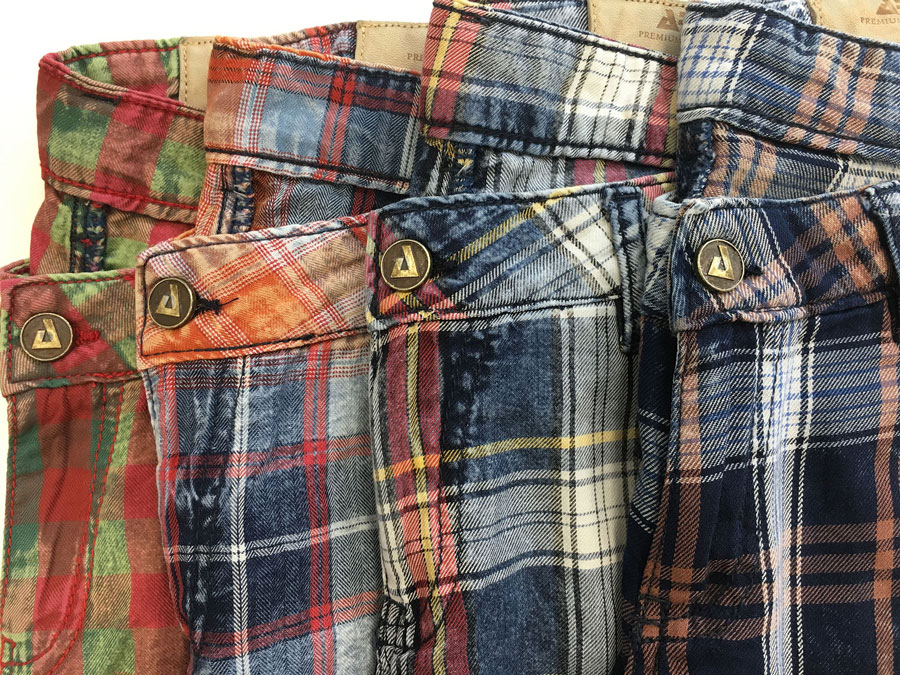
One special development Arta has been involved with in a joint project for TÜBITAK — The Scientific and Technological Research Council of Turkey — has resulted in a fast and economical method for applying both reactive dye and a version of pigment dye in a single process.
“Since the washing effects of reactive and pigment dyes are far different, there are some colors you can only get with either, but our customers can now achieve outstanding new color shades after garment washing with this process, and different shades or contrast colors can be combined,” Kalipçioĝlu explained.
The latest Monforts and Monfongs installations, he adds, have resulted in a production increase of over 50 percent, with a marked improvement in quality and reproducibility.
“What’s been particularly impressive is the total control we now have over parameters such as humidity,” he said.
A fast and economical method for applying both reactive dye and a version of pigment dye in a single process allows striking new color combinations and effects to be achieved.
The company’s Thermex Econtrol range meanwhile has a working width of 1.8 meters and allows the single-bath continuous dyeing of cotton and polyester fabrics with selected reactive and dispersion dyestuffs, as well as cotton-polyester blends to be processed without reductive intermediate cleaning, eliminating the need for a steamer.
“Other processes, such as the use of indanthren vat dyes for enhanced wash and boil fastness, or the over-dyeing on reactive-dyed cotton fabrics to achieve an extremely broad range of color effects, are also carried out on the range,” Mr. Kalipçioĝlu says.
Another significant advantage for the company is the advanced water treatment and recycling equipment it has in place.
“It’s now very difficult to get a license to operate a new plant in Çorlu, due to new government regulations to protect agriculture in the region,” Kalipcioĝlu concluded. “Luckily, we have been well prepared for this.”
Editor’s note: Article issued on behalf of A. Monforts Textilmaschinen GmbH & Co. KG by AWOL Media.
WATTWIL, Switzerland — June 13, 2019 — Our motto for ITMA 2019 highlights our purpose – since Saurer’s inception, our innovations have been the driving force behind our customers’ creations – from yarns to garments, tires and artificial turf. For Saurer, this year’s exhibition marks the beginning of a new era. Over the past years, we have committed ourselves to gaining insight into our market and truly focusing on our customers’ needs. Based on our clients’ feedback, we have increased our product offering, marking further strides towards our goal of becoming a comprehensive solution provider. In response to customer requests, we now offer all staple fiber spinning solutions. Saurer’s overarching mill management system ties our offerings together: it allows all our customers to gain a detailed overview of their operations and makes optimization easier.
While our E³ (energy, economics and ergonomics) principle still forms the basis of our design philosophy, we are now focusing on adding intelligent technology. Our machines’ self-learning features optimize the speed to suit the material being processed. The Saurer products within a given system can be linked, which saves on labor and makes production processes more efficient and less wasteful, with a major impact on profitability.
Data analysis made easy – for all our customers
Whether they are in spinning, embroidery or twisting, all our clients can benefit from Saurer’s mill monitoring system Senses to analyze production, quality and machine data. As an added advantage, this system is also compatible with third-party machines. Users can tap new optimization potential by controlling the production process and making it more transparent.
Clients will also have the option of linking our machines and the new laboratory equipment from our Autolab series, which premieres at the exhibition, to the software platform. The powerful combination of analytical capacity gives the user a clear picture of all the processes making up their operation in real time.
Increased automation as a vital concept
As vital yarn characteristics are already determined during the preparation of the raw material, we set ourselves the goal to be able to control and manage the entire process, ensuring best sliver quality for the five end-spinning processes. With the addition of the new innovative Autocard and the draw frame Autodraw, we have further extended our spinning product portfolio.
As with all our products, we have also integrated automation technology in our embroidery machine. The new Automatic Rear Carriage adjustment helps in reducing the machine setting time while the intelligent thread watcher SmartMon drives the precise and fast detection of yarn breaks, on both shuttle and needle side, which drastically lowers mending costs.
Sensors are fundamental to any data collection effort. Saurer’s twisting machines will also feature an integrated device that measures tension and monitors yarn twist in industrial and carpet yarn as well as tire cord and staple fiber. This innovation is unrivaled on the market.
A time for festivities
This ITMA is also a special one for us, as several product lines as well as our service offering are celebrating anniversaries. The TechnoCorder has been in existence for 20 years, we launched the first Saurer ring-spinning machine 70 years ago and entered the embroidery sector one-and-a-half centuries ago with a manual machine. Over the decades, we have continuously adapted our products to ensure we are at the cutting edge of innovation.
Experts take the stage
On the occasion of these festivities held at ITMA 2019, we will have the pleasure of hosting a number of specialists who will provide insights into our sector, including:
Thomas Weide, whose subject area is Textile Technology of Spinning, is from Hochschule Niederrhein, Mönchengladbach, and will speak on “Development in modern spinning technology” (11:30 on 21 June).
Thomas Fröis, CEO of the start-up Textible and winner of the Futurezone Awards 2017 in the category Start-up of the Year. He will reveal how he built a successful business with his products, manufactured using shuttle embroidery (11:30 on 22 June).
Dr Uwe Möhring, Managing Director of the renowned TITV Greiz, the Institute for Special Textiles and Flexible Materials, will hold a presentation entitled “New opportunities with embroidery in the field of smart textiles” (16:00 on 22 June).
Daniel Bücher, Researcher at ITA, RWTH Aachen, will talk about “Artificial Intelligence ‒ decision systems for textile applications” (11:30 on 25 June).
Dr Walter Arne, Fraunhofer ITWM, Kaiserslautern, and Erik Bell, ITA, RWTH Aachen, will present the latest on “Digital twins ‒ how to improve package dyeing” (16:00 on 25 June).
We are eager to welcome you to Stand B201 in Hall 6 at Fira de Barcelona to reveal the culmination of our hard work, share market insight as well as gain valuable knowledge about our sector by listening to our customers.
ALBSTADT, Germany/BARCELONA, Spain — June 13, 2019 — Mayer & Cie. (MCT) is premiering the OVJA 1.1 EETT at the industry’s leading trade fair, ITMA. A premium jacquard machine, it is part of the focus on sports of the company’s “Stay a winner: With Mayer & Cie.” presentation in Barcelona. The industry leader developed the OVJA 1.1 EETT especially for the manufacture of shoe uppers now that “fabrics” are in demand for sports and leisure footwear. The OVJA 1.1 EETT comes with double electronics and double transfer technology, which is reflected in an extra variety of patterns and, in particular, in innovative hole structures.
“The OVJA 1.1 EETT is yet another machine in our portfolio with which customers can claim to be on the winning side in keeping with our ITMA slogan ‘Stay a winner: With Mayer & Cie.’,” says Marcus Mayer, Managing Director of Mayer & Cie. in charge of technical development. “The OVJA 1.1 EETT is most definitely a premium machine and the right choice for especially exacting requirements such as multi-colored spacer fabrics with a 3D effect or a wide range of hole structures.”
The OVJA 1.1 EETT: Pattern variety to the power of two
The new OVJA 1.1 EETT, as the EE in its name indicates in the original German, features electronic individual needle selection in the rib dial and the cylinder, both using 3-way technology and thus making jacquard structures possible on both sides of the fabric. The OVJA 1.1 EETT pairs its double electronics with bi-directional transfer and can thus knit virtually any conceivable pattern. It produces combinations of single and double jersey as well as spacer structures, while the range of hole structures is enormous due to the double transfer function. “Variety of structures is currently an important argument in the market, especially the market for circular-knitted shoe uppers,” says Mayer & Cie.’s Hardy Bühler, regional sales manager and trend scout. “The new OVJA 1.1 EETT caters for this market more than comprehensively. With this machine you can give your creativity a free rein.”
Variety written in capital letters the OVJA 1.1 EETT offers also in terms of gauges, yarn use and machine diameter. With diameters from 30 to 38 inches it knits E18 to E28 gauge fabrics and processes up to 1,200 denier yarns. The machine produces spacer fabrics of up to 5 millimeters thick in the grey goods category.
In designing the OVJA 1.1 EETT, Mayer & Cie. set great store by ease of use. “For such a complex machine ease of use is key,” says Marcus Mayer. “It widens its scope of applications to outerwear or mattress covers.” Numerous features make handling the OVJA 1.1 EETT simple. They include the new machine control and the connection to the Knitlink platform.
Circular-knitted shoe uppers: A market in its starting blocks
Circular-knitted shoe uppers for sports and leisure footwear have been an option since 2012 when they debuted at the Olympic Games, since when fabric shoe uppers have mostly been flat-knitted, with circular knitting and warp knitting a fair distance behind in joint second place.
When the three techniques are compared, however, circular knitting leads the field for productivity. In addition, setup times are shorter, with the result that smaller batches can be manufactured profitably. For trend scout Bühler that is why circular-knitted shoe uppers are ready to take off — a view that leading sporting goods manufacturers share. “In circular knitting,” he says, “the market is still in its infancy and we expect the trend to really kick in soon.” It has not yet gained momentum as much as had been hoped, due in part, he says, to fashion trends. “Sneakers with several layers of leather — and not ‘fabrics’ — are the current front runner. But nothing can be relied on to change faster than fashion.”
The OVJA family: Machines for exacting tasks
In addition to the new OVJA 1.1 EETT, Mayer & Cie. has another six machines in its portfolio that are suitable for making shoe uppers. All except the Technit, which produces spacer structures in four needle tracks, are OVJA jacquard machines. The OVJA 1.6 ET 3 WT, for example, is an established machine that knits hole designs thanks to its stitch transfer option. It also offers a good compromise between pattern variety and productivity. The OVJA 0.8 E is another “old hand”. Coarse jacquards are its speciality, with gauges starting from E4. A more recent addition to the family is the OVJA 1.6 EE – 3/2WT; it is especially good at producing multi-coloured designs combined with microstructure elements.