TTI Machine Technology Enables Curved Carbon Fiber Rear Bumper Beam For Iconic Chevrolet Corvette Stingray

BREMERVÖRDE, Germany — May 19, 2020 — Thomas Technik & Innovation (TTI), a pultrusion specialist, has collaborated with Shape Corp, the US based Tier 1 supplier of metallic body structure components, plastic parts and bumper systems, on the development of a curved carbon fiber rear bumper beam for the latest Chevrolet Corvette Stingray sportscar. TTI’s Radius Pultrusion technology is the only composites solution that can produce the curved profiles and satisfy a demanding set of safety, performance, production rate and costs requirements.

The Chevrolet Corvette Stingray has always made extensive use of composite materials in its construction, and the launch of Detroit-based General Motors’ new 8th generation flagship car, with a carbon fiber bumper beam and mid-engine layout, continues this strategy. With the first two years of production sold already, the TTI and Shape Corp. process is well placed to support GM’s production requirements, with the new Radius Pultrusion line delivering an annual production capacity of 70,000 parts.

TTI set up the initial process on its prototype line, and optimized fiber and fabric guide systems to feed the complex set of reinforcements into the chrome plated steel Radius Pultrusion moulds. As pultrusion places particular stresses on the reinforcement fabrics used, TTI also suggested modifications to the selected carbon multiaxials to maintain perfect fiber alignment in the part and improve production line speed.

The highly automated bumper beam production cell installed at Shape Corp. controls a complex set of reinforcements including carbon fibers running from a creel, biaxial, triaxial and stitched unidirectional carbon fabrics — all with glass surface tissues for stabilization and a better surface finish.

“TTI’s Radius Pultrusion provided the perfect advanced composites solution for an extremely challenging bumper beam requirement in the Corvette Stingray. With TTI providing a complete technology package of machinery, process development and exceptional technical support, the Corvette Stingray project has been a great success for Shape Corp. and TTI,” commented Toby Jacobson, Plastic Materials & Process manager, Advanced Product Development, Shape Corp.

The curved, multi-hollow carbon fiber rear bumper beam produced for the Stingray showcases Radius Pultrusion’s unique ability to form complex curved profiles for highly structural applications, within a compact machine space. TTI has developed this concept further with the recent launch of its ultra-compact pullCUBE pultrusion machine. At only 3.5m in length, pullCUBE is around 75% shorter than traditional machines making it a highly transportable and space-efficient option for both curved and straight section pultruded parts.

General Motors Co. and tier one Shape Corp. recently won the PACE Innovation Partnership Award for the development of this first curved pultruded automotive part.

Posted May 19, 2020

Source: Thomas Technik & Innovation (TTI)
Starlinger Rounds Off Portfolio With New Circular Loom RX 8.1

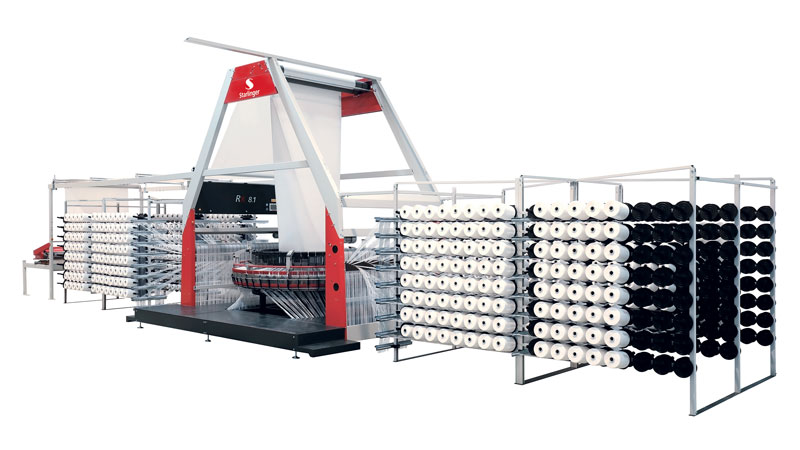
VIENNA, Austria — May 19, 2020 — The RX circular loom series is produced at the Starlinger plant in Taicang/China specifically for the Southeast Asian market. This series is now extended with the RX 8.1, a circular loom that is particularly suited to the production of lightweight fabrics for 1-loop FIBCs, tarpaulins as well as geo- and agrotextiles made of PP, HDPE, and PET. In combination with the RX 6.0, RX 6.1, and RX 8.2, Starlinger Taicang now offers the ideal circular loom for every fabric width.

The new Starlinger circular loom RX 8.1 produces fabric with a width of 1,200 to 
1,700 millimeters (mm), which is an ideal match for 1-loop FIBCs, tarpaulin fabrics as well as geo- and agrotextiles. The model completes the RX series, which now covers every working width between 300 and 2,250 mm.

Like all models of the RX series, the RX 8.1 is equipped with numerous technological advantages. Due to its special reed and shuttle design, the machine does not have any sliding parts that would require lubrication, and thus leaves no traces of oil on the fabric. This property allows for the optimal adherence of the coating to the fabric and eliminates concerns regarding the use of the fabric in food applications. Moreover, the RX 8.1 produces fabric of highest quality at lowest production cost per square meter, as the production speed of 800 picks/minute is high while the number of warp breaks is low. Other advantages are the machine’s user-friendliness, the energy-saving motors as well as a low noise level.

The machine will give its official debut at the plastics exhibition Chinaplas in 2021, as this year’s event has been cancelled due to COVID-19. In the meantime, prospective clients will have the opportunity to visit the Starlinger factory in Taicang for live demonstrations of the RX 8.1. The standard execution of the machine with single inlet will show the production of tarpaulin fabric with a double flat width of 1,500 mm and a weight of 70 g/m2. A second machine will be equipped with double inlet and a gusseting device, which are available as options, and will produce fabric for 1-loop FIBCs with the same width, but twice the fabric weight (140 g).
Another attraction in Taicang is the RX 6.0 L: On this 6-shuttle circular loom, a PE liner is inserted into the woven fabric tube and attached to the plastic fabric. This process is performed fully automatically in the production process and allows the use of the fabric in sensitive applications such as food packaging.

Posted May 19, 2020

Source: Starlinger & Co. Ges.m.b.H.

Auto, Aerospace Company Yajima To Establish U.S. Headquarters In Purdue Research Park

WEST LAFAYETTE, Ind. — May 19, 2020 — Yajima Industry Co. Ltd., with specialty in lightweight automotive and aerospace products and components and supplier to Subaru of Indiana Automotive Inc., announced it will establish Yajima USA, located in the Purdue Research Park in West Lafayette.

Yajima specializes in the production of sheet metal pressed products using an integrated system from product design to production, including the die design and its production within the group of Yajima Industry, which are the strengths of the company.

Yajima also provides special products and components to the motorsports aftermarket by making use of its technology to design and produce innovative, lightweight automotive and aerospace parts.

“The founding of Yajima USA in the Purdue Research Park and its association with Purdue’s Composites Manufacturing Simulation Center is another example of the success of the Purdue Research Foundation’s efforts to bring high-technology companies to Indiana to promote the economic vitality of the state of Indiana and the region,” said Brian Edelman, president of the Purdue Research Foundation.

The Yajima USA office is located at 1281 Win Hentschel Blvd., West Lafayette, and will focus on development of lightweight parts and components to proactively take advantage of carbon fiber-reinforced polymer composites and noncombustible magnesium alloy parts.

Yajima USA was attracted to West Lafayette by the combined presence of Subaru of Indiana Automotive (SIA), the home of North American production for the Ascent, Impreza, Legacy and Outback models, and of Purdue University’s Composites Manufacturing Simulation Center (CMSC), located in the Indiana Manufacturing Institute in the Purdue Research Park.

The Composites Manufacturing Simulation Center was founded in the College of Engineering in 2015 as an affiliate of the Institute for Advanced Composites Manufacturing Innovation, one of the national manufacturing centers of excellence of the United States Department of Energy with the goal of developing model-based engineering methods for composites manufacturing in the automotive and wind energy industries.

“We are especially pleased to be a partner with Yajima USA as the company establishes a presence in the United States with the goal of supplying products produced with advanced composites of carbon fiber in support of Subaru of Indiana and the growing aerospace products industries in the U.S. and Japan,” said R. Byron Pipes, executive director of CMSC at Purdue.

The goals of the Purdue CMSC are to develop a comprehensive set of simulation tools that connect advanced composites from their birth in manufacturing to their lifetime prediction; to advance the certification of composite products by analysis validated by experiments; to teach the use of these tools to the future generations of engineers; and to work with industry, academia, and government to put these tools in the hands of current engineers with the goal of developing weight-savings in advanced vehicle development.

Joint Yajima-Purdue CMSC programs are being developed to support the design and manufacturing simulation of products for the automotive and aerospace industries with Yajima USA personnel located in West Lafayette with professional personnel and advanced students of CMSC.

“Yajima’s decision to make Indiana its U.S. headquarters supports the long-standing tradition of Japanese manufacturers choosing to grow in our state,” said Indiana Secretary of Commerce Jim Schellinger. “The establishment of Yajima USA in Purdue Research Park is the perfect match with its proximity to SIA, the Indiana Manufacturing Institute and other aerospace and automotive manufacturing companies. Yajima USA joins more than 300 Japanese business facilities in the state, and we’re excited to watch them grow their operations and workforce in West Lafayette.”

The Indiana Economic Development Corp. is working with the company on a conditional incentive package.

Posted May 19, 2020

Source: Purdue Research Foundation – Brian Edelman/Byron Pipes

Registration For The 2020 Virtual Edition Of Texworld USA And Apparel Sourcing USA Now Open

ATLANTA — May 19, 2020 — Texworld USA and Apparel Sourcing USA announced today registration for the premier of its virtual edition is now open. The easy online system is the first of many steps in preparation for three days of product discovery, trend analysis and education, set to go live on July 21-23, 2020.

“We are inviting the textile sourcing community to join us on our new virtual platform,” said Jennifer Bacon, show director, Fashion and Apparel, Messe Frankfurt North America.  “Our belief in face-to-face interaction will not waiver but there’s a new normal arising and we will welcome it with a steadfast commitment to supporting the industry. This summer, global manufacturers will display their collections virtually and as we navigate these unprecedented times, we are pleased to continue to offer opportunities for sourcing, networking and education.”

Similar to the traditional trade show floor, exhibitors and visitors will have an interactive experience, coupled with many new exciting features, including online “showrooms” highlighting vivid fabric innovations and new color palettes. With exhibiting companies from global textile manufacturing hubs from China, India, Turkey, Pakistan, Taiwan and Korea coupled with North American suppliers, the summer edition will offer buyers a host of opportunities to source and connect through one-on-one chats and AI-powered matchmaking.

Virtual seminars cover strong comprehensive topics

Live streaming of the educational programming, Textile Talks and the Lenzing Seminar Series, will feature a variety of thought leaders focusing on placing information and insight into the hands of industry professionals to help move their businesses forward. Lively presentations addressing climate change, sustainability post COVID-19, adapting to new business models and other dynamic topics designed to engage and inform will be available during the three-day live event and 45 days following.

“We are excited to host our education seminar series as digital webinars with international presenters to discuss adding value with circularity, lower environmental impacts, and branding,” said Tricia Carey, director of Global Business Development – Apparel, Lenzing Group.

Held alongside Texworld USA and Apparel Sourcing USA is the co-located event, Home Textiles Sourcing, for those manufacturers, retailers, converters, contract specifiers and designers seeking new fabrics and products for their latest home collections.

Providing a seamless registration experience allows visitors a single badge entry for all three shows. As the largest sourcing event on the East Coast for fabric buyers, product R&D specialists, designers and other industry sourcing professionals, the virtual platform enables access to those who historically were unable to travel to the event.

Registration is open. Early registration is essential, as it allows for more time to set up meetings and one-on-one chats.

To register or for more information on any of these events, please visit us online.

Posted May 19, 2020

Source: Messe Frankfurt USA

Dow Collaborates With Multiple Partners To Develop And Donate Level 2 Medical Isolation Gowns

Dow collaborates with multiple partners to develop and donate Level 2 medical isolation gowns

MIDLAND, Mich. — May 18, 2020 — For healthcare professionals battling the COVID-19 pandemic, isolation gowns are among the most used and needed personal protective equipment (PPE). In response to this critical need, Dow collaborated with nine key partners across a myriad of industries to develop and donate 100,000 isolation gowns to help frontline workers in Texas, Louisiana and Mexico.

“The Dow team is proud to continue developing PPE to help our frontline workers, but this effort would not have been possible without our partner companies, each of whom readily stepped up to make this project a reality,” said Michelle Boven, global marketing director for Health & Hygiene at Dow. “It’s also a testament to how quickly companies can innovate when a diverse team from different organizations across industries come together to achieve a common objective.”

The end-product, Association for the Advancement of Medical Instrumentation (AAMI) Level 2 gowns, required concepting, design, testing, package development and a supply chain. In this case, each collaborator brought their unique expertise to the table, all donating valuable time and resources to the project.

  • The gown is made with polyethylene nonwoven coated with a layer of polyethylene film made with resin donated by Dow.
  • Fitesa manufactured the nonwoven material that provides tear resistance and soft touch.
  • Cadillac Products Packaging Company provided extrusion coating of the film making it durable enough for AAMI Level 2 performance.
  • 3M and Shurtape donated the tape to provide barrier performance on the gown sewn seams.
  • Mobility technology company, Magna International, Inc., – identified through Dow’s relationship with Volkswagen – provided resources to cut and sew the gowns.
  • DuPont provided isolation gown design expertise.
  • Landaal Packaging Systems has donated all the boxes to ship the gowns.
  • Plastixx FFS Technologies donated the bags for each gown to be packaged in for distribution.

The 100,000 AAMI Level 2 gowns will be distributed equally to government agencies in Mexico and in the states of Louisiana and Texas.

“Our teams are problem solvers by nature and their passion around helping during these unprecedented times has been nothing short of inspiring,” said Frank Eupizi, director of engineering, Magna International. “It’s been an honor to witness the same passion at Dow and to collaborate with them to provide medical gowns for healthcare professionals using the skills and expertise normally applied to producing automotive seat covers. We are grateful for the opportunity to make a difference together.”

“Many companies have shown tremendous ingenuity and speed in changing over production to meet the needs for respirators, masks, face shields, hand sanitizer and other products critical to fighting this pandemic,” Boven said. “With the accelerated product development, testing and certification of these medical gowns, Dow is proud to be among these innovators and we will continue to look for ways to use our vast material science expertise to address the needs of frontline workers around the world.”

The gowns conform with ASTM and ANSI standards and are labeled in compliance with FDA guidance on non-surgical apparel.

These isolation gowns are the latest action Dow has undertaken to help address the COVID-19 global pandemic crisis:

  • On May 14, Dow, Whirlpool Corporation and Reynolds Consumer Products announced the development of a powered, air-purifying respirator, or PAPR, which takes the place of a traditional medical face mask and faces shield.
  • On April 17, Dow announced the open source design for a simplified face shield and the donation of 100,000 face shields to hospitals in Michigan.
  • On April 9, Dow announced an additional $500,000 donation to the Great Lakes Bay Region in Michigan to aid COVID-19 relief efforts in Dow’s global headquarters community.
  • On March 30, Dow announced that sites across North America, Europe and Latin America were set to produce more than 200 metric tons of hand sanitizer, equivalent to more than 880,000 eight-ounce bottles, to be donated to local health systems and government agencies.
  • On March 23, Dow committed $3 million to aid COVID-19 relief efforts, with donations going towards global relief organizations, as well as non-profits in communities where Dow operates.

Posted May 18, 2020

Source: Dow

Huntsman Completes The Acquisition Of CVC Thermoset Specialties

THE WOODLANDS, Texas — May 18, 2020 — Huntsman Corp. today announced that it has completed the acquisition of CVC Thermoset Specialties, a North American specialty chemical manufacturer serving the industrial composites, adhesives and coatings markets. Huntsman acquired the business from Emerald Performance Materials LLC, a majority-owned affiliate of American Securities LLC, for approximately $300 million, subject to customary closing adjustments. The all-cash transaction was funded from available liquidity.

The acquisition of CVC Thermoset Specialties, with its highly specialized toughening, curing and other additives used in a wide range of applications and markets, is strongly aligned with Huntsman’s strategy of growing its specialty Advanced Materials portfolio. CVC Thermoset Specialties has annual revenues of approximately $115 million with manufacturing facilities located in Akron, Ohio, and Maple Shade, New Jersey.

Scott Wright, president of Huntsman’s Advanced Materials division, commented: “These products deliver enhanced performance, such as durability, flexibility, and chemical, crack and impact resistance, in harsh environments. Its applications make vehicles, aircraft, infrastructure and electronics lighter, stronger and last longer. Not only will this acquisition strengthen Advanced Materials’ position in North America, it offers products and technologies that we intend to rapidly grow and globalize by utilizing our existing asset footprint and routes to market in Europe and Asia. We expect to achieve approximately $15 million of annualized synergies within two years.”

Peter Huntsman, chairman, president and CEO, further commented: “This acquisition provides unique technology, cost efficiency, an expanded customer base, and greater shareholder value. We look forward to continuing to expand through transactions such as this.”

Posted May 18, 2020

Source: Huntsman Corp.

Against Business As Usual: Renewing Our Commitment To A Sustainable Future with TENCEL™

LENZING, Austria — May 17, 2020 — The start of 2020 was met with different challenges due to the global COVID-19 pandemic which, alongside the impact on public health, has resulted in economic and environmental shifts. During this time, everyone must take the responsibility to keep themselves and those around them healthy and strong, given the aftermath of the virus is sure to bring further challenges.

Despite global headwinds, the TENCEL™ brand shall continue to “stay on course” through good and bad times and find ways to sustain its core DNA to promote sustainability. Last year, the brand launched multiple initiatives across the trade and consumer sector, aligning with business development goals. This year, TENCEL will continue long-term business planning to offer expertise and products across different segments, improve customer experience, and work closely with stakeholders on driving sustainability awareness and industry reforms.

Some latest TENCEL brand stories include:

TENCEL Luxe collaborates with Red Carpet Green Dress™ to unveil sustainable eco-couture textiles and custom-made gowns for Oscars 2020

TENCEL Luxe partnered with RCGD to deliver an exceptional range of eco-couture gowns for the Oscars® 2020. With high-end fashion historically lacking in naturally-sourced materials, this groundbreaking partnership is driving sustainable fashion to new heights. TENCEL Luxe is leading the charge for the future of eco-couture by meeting the increasing demand from high-end fashion brands for environmentally friendly fabric alternatives.

Lenzing introduces TENCEL Modal fibers with Eco Pure technology to strengthen sustainability commitment at Première Vision

With sustainability always front of mind, Lenzing introduced TENCEL branded modal fibers with Eco Pure technology at Première Vision. Manufactured using a chlorine-free bleaching process, textiles made of these fibers tend to be softer and are perfect for making undergarments, loungewear, bedding and more.

Lenzing bagged two awards at Transform Awards Europe for excellence in brand transformation

At Transform Awards Europe, Lenzing and branding partner Siegel+Gale, were awarded “Best Brand Architecture Solution” and “Best Visual Identity from the Engineering and Manufacturing Sector”. Lenzing was thrilled to receive the awards in recognition of the brand’s transformation and collaborative efforts.

GUESS announces sustainable Summer collection using TENCEL and LENZING™ ECOVERO™ branded fibers

Lenzing is once again excited to partner with GUESS as they continue to grow their “Smart GUESS” collection made with TENCEL and LENZING ECOVERO branded fibers. An array of styles that incorporate Lenzing’s environmentally conscious fibers have been created for men and women, demonstrating GUESS’ rapid progress in sustainability.

TENCEL encourages young designers to BEDifferent in bedding design competition to promote sustainability

The TENCEL brand launched the “BEDifferent” project, during which they asked design students from European fashion academies to create a bedding collection that expressed the future of eco-friendly bed linen using TENCEL x REFIBRA fibers. Three winners were selected for their truly unique collections that brought the “BEDifferent” campaign to life.

Italy’s ACBC put their best foot forward with sustainable shoe concept in collaboration with TENCEL

Two Italian designers came up with a solution to revolutionize footwear sustainability. Their shoe brand, ACBC, designed a “Jogger” shoe that came in two parts, the skin and the sole, connected via a patented zipper system. The biodegradable “skin” of the shoe offers wearers multiple footwear design options and is made from TENCEL branded fibers for enhanced breathability and, above all, environmental sustainability.

Fashion and sustainability unite at Neonyt in Berlin

During Neonyt, Harold Weghorst, Lenzing’s Vice President of Global Brand Management, spoke on a panel titled “SDGs X Fashion – The UN’s Fashion Industry Charter for Climate Action,” alongside industry peers. The panel discussed the charter, upcoming industry challenges and how the fashion industry can collaborate effectively to address current issues in sustainability.

TENCEL and fashion brand, LANIVATTI launches first eco-collection in Jakarta

TENCEL and fashion brand, LANIVATTI, launched an exciting collaboration for their “Beyond Borders 2020” collection in Jakarta. Eighty percent of the materials in the collection were made from TENCEL branded fibers. The grand launch event saw top influencers, fashion experts, and local media come together to celebrate the special occasion.

Posted May 18, 2020

Source: TENCEL

Magnetic Attraction Of The Latest Fully Integrated Montex®Coat Finishing Lines From Monforts

MÖNCHENGLADBACH, Germany — April 24, 2020 — A typical integrated Monforts coating line is automated from the inlet feed to the winder and includes weft straightening, the Montex®Coat coating device, Montex TwinAir drying chambers, an Eco Booster heat recovery system and a cooling zone, with visual touchscreen control via the proven Qualitex system and full Teleservice access and as well as a new hand-held device.

A number of doctor blade options are available for the Montex Coat coating unit, including air knife, roller knife, magnetic roller and foam coating, in addition to screen printing. The company also provides fully explosion-proof lines for solvent-based coatings and for high-temperature processes up to 320°C, such as for PTFE sintering.

Wide widths

There has been a notable adoption of magnetic roller coating technology, the company, which is headquartered in Mönchengladbach, Germany, notes — especially by technical textiles and nonwovens manufacturers who are finishing wide-width materials.

With this option, it is possible to carry out applications such as full PVC coatings, pigment dyeing or minimal application surface and low penetration treatments

Typical products this technology is eminently suited to range from tents and awnings, black-out roller blinds and sail cloth to automotive interior fabrics and medical disposables.

“Magnetic roller coating allows a wide range of coatings and finishes to be carried out, while being easy to handle for operators and much easier to clean at the end of the process,” explained Jürgen Hanel, Monforts’ head of Technical Textiles. “As important as anything, however, is the coating uniformity it guarantees, with no difference in tension across the entire width of the fabric — which is particularly important when companies are operating at wide widths.

With traditional dip coating systems, he adds, as well as with many standard knife coating technologies, there is always a difference in the tension — and hence the amount of pressure with which the coating is applied — between the center and the edges of the wide width fabrics being treated. With the use of a magnetic roller, there is no difference in the pressure being applied anywhere on the fabric.

“Our magnetic roller technology provides textile finishers with an expanded range of options due to the fully-adjustable positioning of the magnet within the roller,” Hanel said. “With four different magnet positions possible, the roller can be set to operate both as a direct coating system and as an indirect coater. We recommend the use of this technology for companies working with fabrics of over 2.4 meters.”

Adjusting the roller surface, rather than changing the finishing formulation, to match the required add-on and viscosity for each coating effect required, leads to much higher output from the line, he adds.

Hand-held control

Furthermore, adjustments can now be made simply and easily with the new hand-held remote controller which has recently been introduced for the Montex Coat unit.

“This is a really big help because making adjustments manually was previously quite time consuming and operators had to move between the fixed control panel and the position of the adjustment constantly,” Henel says. “It also allows an operator to check that the knife is precisely positioned by simply holding the device in the position where he or she can see and measure the gap. With the device the motors can be controlled and the necessary adjustments carried out.”

Also offered as an option for the Montex Coat is a carbon fibre roller for meeting even the highest level of coating accuracy that is being demanded by the most exacting customers today.

This provides the extreme stiffness necessary to deal with the winding tension required in the processing of materials such as prepregs for composites and other heavyweight fabrics, but at the same time, a significant improvement in coating accuracy is achieved, even for very lightweight flexible materials. In addition, the surfaces of the rollers are protected against both abrasion and damage from aggressive chemicals by a special ceramic coating.

“We continue to focus on incremental improvements to our technologies to better serve our customers — and with our Montex Coat we have a most versatile product in our portfolio.” said Monforts vice president Klaus Heinrichs.

Posted May 18, 2020

Source: A. Monforts Textilmaschinen GmbH & Co. KG


Truetzschler‘s My Mill — The All-In-One Platform For Mill Management

MÖNCHENGLADBACH, Germany — April 24, 2020 — Whether information about production, quality, maintenance or simply a complete overview — with My Mill, mill managers can fulfill any individual information need. Mill managers can now make informed, data-based decisions and generate quick wins as of day one.

Especially in times with COVID-19 it is essential to focus on the bottlenecks, stay operational and thus profitable. My Mill enables spinning mills to generate profits faster, bundle resources, optimize processes and save costs.

What if the investment in digitizing a spinning mill pays off in no time?

The current crisis forced many companies to push their digital transformation. What kept companies from digitalizing earlier could be the fear that new tools will have a negative impact on the already established processes.

With My Mill, Truetzschler put a special focus on quick wins. Not all spinning mills feature a fully equipped IT department with full-time employees. The goal is to guide customers to their focus areas intuitively and provide analyses for production, quality and maintenance that they can extend individually at any time.

Big data

An easy-to-understand data preparation makes it possible to discover optimization potentials immediately and to plan resources sensibly. Fault statistics, shift data and quality comparisons provide a solid entry point to focus on production bottlenecks and quality limiters. Notifications will appear, when attention is required, e.g. when a machine leaves its limits.

My Production – the ideal My Mill extension

The My Production app is the perfect companion for managers while on the road. They can find out about their current production with just a few touches on their smartphone – anytime and anywhere.

My Production shows an overview of the complete installation right up to detailed information on machine level. Push notifications will inform users, if any action is required.

Talk to me

Spinning mills very often feature a heterogeneous machine and laboratory environment. Data acquired in one system might be required by another system. My Mill provides the possibility of an external interface, so users can utilize the data generated by Truetzschler machines as required in their mill. In addition, My Mill can also be used for data from other manufacturers.

Cloud-based solution

In terms of cyber security, Truetzschler’s digital offers are cloud-based and extremely secure. The applications rely exclusively on the highest security standards.

Posted May 18, 2020

Source: The Truetzschler Group

ITMF’s Cotton Contamination Survey 2019: Contamination Level Up And Stickiness Level Down Compared To 2016

ZURICH — May 18, 2020 — “ITMF’s Cotton Contamination Survey 2019 shows that the level of contamination of raw cotton by foreign matters and the appearance of seed-coat fragments have increased compared with 2016, underscoring the importance of clean cotton to spinners. At the same time the level of stickiness has fallen slightly to the lowest level. Furthermore, the survey reveals that there are significant differences between cotton varieties when it comes to the level of contamination.” These are the main conclusions to be drawn from the “Cotton Contamination Survey 2019” which has just been released by the International Textile Manufacturers Federation (ITMF). This 15th edition covers 128 spinning mills located in 25 countries which evaluated 81 different cotton growths.

Contamination – increase

The level of cottons moderately or seriously contaminated as perceived by the spinning mills from around the world grew from 23% in 2016 to 26% in 2019. A closer look at the extent of the contamination shows that 7% (2016: 7%) of all cotton evaluated were seriously contaminated by some sort of foreign matter whereas 18% (2016: 18%) were only moderately contaminated. As the summary data are arithmetic averages of the different contaminants, the extent of contamination is fully illustrated by the results for the individual contaminants. They range from 6% all cottons processed being moderately or seriously contaminated by “tar” to 55% of them being moderately or seriously contaminated by “organic matter”, i.e. leaves, feathers, paper, leather, etc. Other serious contaminants are “strings made of plastic film” (39%), “fabrics made of plastic film” (39%), “strings made of woven plastic” (36%) as well as “fabrics made of woven plastic” (31%). The most contaminated cotton descriptions considered for the survey originated in India (MCU-5, J-34, India- Others, DCH), Pakistan (NAIB, Pakistan Others, MNH93), Tajikistan (Medium Staples) and Mozambique. In contrast, very clean raw cottons were produced in Australia, the USA, (Memphis Territory, California, Pima, South Eastern, Texas H. Plains and Arizona), Argentina, Brazil and Spain.

Stickiness – slight decrease

The presence of sticky cotton as perceived by the spinning mills is close to constant (i.e. 16% in 2016 vs. 15.7% in 2019) and remains at the lowest level since 1989. Descriptions that were affected most by stickiness were those from Sudan, the USA (Pima, USA-Others, Memphis Territory, Texas H. Plains, California, South Eastern), Mexico (Juarez) and Turkey (Turkey – Others). On the other end of the range, cottons from South Africa, Tanzania (Mwanza, Coastal), China (Shandong, Xinjiang), Mozambique, Chad, and Pakistan (MNH93, Pakistan – Others, NAIB) were not or hardly affected by stickiness.

Seed-coat fragments – increase

With regard to seed-coat fragments, the Cotton Contamination Survey 2019 shows that their appearance in cotton growths remains an issue for spinners around the world. 34% of all cotton growths consumed contained moderate or significant amounts of seed-coat fragments, a slight increase since 2016 (32%). The origins affected most by seed-coat fragments are those from Turkey (Turkey – Others, Cukurova / S.E.), India (India-Others, J-34, MCU-5), Sudan (Sudan – Others), and Pakistan (MNH93, Pakistan – Others). Countries for which the existence of seed- coat fragments were negligible included those from Tanzania (Coastal, Mwanza), India (Shankar-4/6), Australia, the USA (California, Pima, Memphis Territory, USA – Others, Texas H. Plains).

Posted May 18, 2020

Source: International Textile Manufacturers Federation, (ITMF)

Sponsors