NRF: Retail Imports Still Strong After Setting New Records For The Holiday Season

WASHINGTON — December 9, 2020 — Imports remain strong after setting new records this fall as retailers stocked up both stores and warehouses for the holiday season and met new demands for quick delivery of online orders, according to the monthly Global Port Tracker report released today by the National Retail Federation and Hackett Associates.

“The pandemic has made the past year one of the most trying the supply chain has ever seen, but retailers have met that challenge,” NRF Vice President for Supply Chain and Customs Policy Jonathan Gold said. “We’ve gone from not knowing whether we would be able to get merchandise from China to having a surplus of goods when stores were closed to having to meet pent-up demand as consumers returned. At this point, retailers have seen a successful holiday season so far and goods are reaching the shelves. We hope 2020 is a one-time experience, but we’ve learned a lot.”

Hackett Associates Founder Ben Hackett said the retail inventory-to-sales ratio soared to 1.68 in April, when most stores were closed, then plummeted more than 25 percent to 1.22 in June and has remained at about that level since then. That drove record imports as retailers both replenished inventories and prepared for the holidays.

“With inventories low but demand growing, we have witnessed a surge in imports as retailers try to keep up,” Hackett said. “The dramatic shift to online shopping coupled with the expectation of next-day delivery is also spurring the growth of imports at warehouses for major online sellers, who need to have enough stock on hand not just to meet demand but to meet it instantly.”

U.S. ports covered by Global Port Tracker handled 2.21 million Twenty-Foot Equivalent Units in October, the latest month for which final numbers are available. That was up 17.6 percent year-over-year and up 5.2 percent from 2.11 million TEU in September, the previous record for a single month since NRF began tracking imports in 2002. September, in turn, had edged out 2.1 million TEU in August, which had broken the previous record of 2.04 million TEU set in October 2018. A TEU is one 20-foot container or its equivalent.

October’s number brought the total for the “peak season” — the period from July through October when retailers rush to bring in merchandise for the winter holidays each year — to 8.3 million TEU. That was an increase of 8.8 percent over the same time last year and beat the previous record of 7.7 million TEU set in 2018.

Even with most holiday merchandise already in the country, November imports remained strong at an estimated 2.07 million — a 22.4 percent jump year-over-year and the fourth-busiest month on record. December is forecast at 1.91 million TEU, up 11 percent from last year.

As recently as a month ago, 2020 was expected to total 20.9 million TEU, a drop of 3.4 percent from last year and the lowest annual total since 20.5 million TEU in 2017 because of low imports earlier this year. But with the recent string of record months, 2020 is expected to come in at 21.8 million TEU, up 0.8 percent over 2019. That would tie 2018 as the busiest year on record.

January 2021 is forecast at 1.86 million TEU, up 2.4 percent from January 2020; February at 1.55 million TEU, up 2.6 percent year-over-year; March at 1.62 million TEU, up 17.8 percent from March 2020 — when factories in China failed to reopen after the Lunar New Year holiday — and April at 1.74 million TEU, up 8.3 percent year-over-year.

With retail sales rebounding strongly due to continued consumer resilience, NRF has forecast that holiday sales during November and December will increase between 3.6 percent and 5.2 percent over 2019 to a total between $755.3 billion and $766.7 billion.

Global Port Tracker, which is produced for NRF by the consulting firm Hackett Associates, provides historical data and forecasts for the U.S. ports of Los Angeles/Long Beach, Oakland, Seattle and Tacoma on the West Coast; New York/New Jersey, Port of Virginia, Charleston, Savannah, Port Everglades, Miami and Jacksonville on the East Coast, and Houston on the Gulf Coast. The report is free to NRF retail members, and subscription information is available at NRF.com/PortTracker

Posted December 9, 2020

Source: National Retail Federation (NRF)
Kingwhale Becomes First Asia-Pacific Textile Manufacturer To Join The RE100 Initiative And Commit To 100% Renewable Electricity

TAIPEI — December 9, 2020 — Kingwhale — a responsible manufacturer of performance textiles — has joined the RE100 global initiative, pledging to use 100-percent renewable electricity by 2040. Kingwhale has become the first textile mill in Asia-Pacific to do so.

Renowned for its range of technical knits and fleeces, Kingwhale is a vertically integrated company, controlling the entire production process from fiber spinning to textile manufacturing to garment construction. Moreover, the company has long placed an emphasis on sustainability, with its proprietary technologies resulting in manufacturing practices that minimize energy consumption, reduce waste, and utilize fewer resources.

RE100, led by the international non-profit The Climate Group, states its mission as, “To accelerate change towards zero carbon grids at scale.” The Climate Group brings together large, influential organizations, such as Kingwhale, that are all committed to taking ambitious actions to combat climate change.

The announcement of Kingwhale’s pledge became official via a tweet on December 9, 2020. Posted on the RE100 Twitter account (@theRE100), the tweet proclaimed:

“Our latest Taiwanese member is the textile manufacturer Kingwhale Corporation! Joining #RE100 today, they have committed to sourcing 100% renewable electricity by 2040. We hope more companies will follow their lead and join #RE100. @ClimateGroup @CDP”

As a bluesign® system partner and OEKO-TEX® Standard 100 certified company, Kingwhale is already regarded as an industry leader with regards to its environmental stewardship. In fact, its L.I.T.® (Low Impact Technology) is lauded for its waste reduction and efficiency. This innovative yarn technology modifies the molecular structure of polyester, and thus the dyeing process for these modified fibers requires 60-percent less water for dye preservation, 15-percent fewer dyestuffs to achieve color, and 22-percent less electricity for heating and cooling.

“The RE100 initiative was the next logical step for us,” said James Huang, president of Kingwhale. “We understand quite well that textile production can be very demanding on our natural resources, and that’s why we take sustainability very seriously. For years Kingwhale has set an example for our industry, showing others it’s possible to create great products while minimizing waste and energy consumption, and now I hope others will join us in our commitment to 100-percent renewable electricity.”

Posted December 9, 2020

Source: Kingwhale

NCTO Welcomes House Passage Of NDAA Conference Report; Urges Swift Senate Passage

WASHINGTON — December 8, 2020 — The National Council of Textile Organizations (NCTO), representing the full spectrum of U.S. textiles from fiber through finished sewn products, welcomes House passage of the National Defense Authorization Act (NDAA) of Fiscal Year 2021.

“We applaud the House of Representatives for passing the NDAA, a bill that will strengthen the Berry Amendment, which supports tens of thousands of jobs in the U.S. textile industry and other manufacturing sectors,” said NCTO President and CEO Kim Glas. “We also extend special thanks to Rep. Patrick McHenry (R-N.C.) and Rep. Bill Pascrell (D-N.J.), co-chairs of the House Textile Caucus, for their leadership and support of this important provision.”

The NDAA bill rolls back the threshold for Berry compliance requirements and Defense Department acquisitions to $150,000 and adjusts future increases for inflation, which the U.S. textile industry has long supported.

In the Fiscal Year 2018 NDAA bill, Congress raised the Simplified Acquisition Threshold (SAT) to $250,000 — a higher threshold that put more than $50 million worth of Berry contracts annually at risk of being outsourced to China and other foreign countries. As the SAT increases, the incentive for sourcing textiles, apparel and footwear abroad grows (See a broad industry coalition letter sent in September to the chairman and ranking member of the House Armed Services Committee).

Resetting the contracting threshold back to $150,000 in the new NDAA bill ensures that tens of millions of U.S. taxpayer dollars will be spent here at home on quality goods manufactured by U.S. workers from U.S. materials.

The Senate is likely to pass the bill shortly. It will then go to the president for his signature.

“Berry ensures our warfighters and military personnel are wearing high-quality, 100 percent Made-in-America textile and apparel products, including mission critical personal protective gear,” Glas added. “It also helps maintain America’s warm industrial base and safeguards our national security from unreliable foreign supply chains in China and other countries for essential military materials. We urge the Senate to swiftly approve the report and President Trump to sign it into law.”

Posted December 8, 2020

Source: The National Council of Textile Organizations (NCTO)

Lenzing Recognized As Sustainability Champion By Renowned CDP

LENZING, Austria  — December 8, 2020 — The Lenzing Group has been recognized by the global environmental non-profit CDP, securing a place on its prestigious A List for tackling climate change, as well as acting to protect forests. Through significant demonstrable action in these areas, Lenzing is leading on corporate environmental ambition, action and transparency worldwide.

CDP’s annual environmental disclosure and scoring process is widely recognized as the gold standard of corporate environmental transparency. This year, more than 5,800 companies were scored based on data submitted through CDP’s questionnaires.

“We are particularly proud to be the only first-time discloser who has achieved an ‘A’ score for tackling climate change and acting to protect forests. The ‘double A’ score reconfirms our long-term sustainability strategy and is an exciting acknowledgement of our efforts on transparency as well as sustainable raw material sourcing”, says Stefan Doboczky, CEO of the Lenzing Group. “This recognition will boost our visibility among a broad group of important stakeholders.”

Lenzing’s key actions to tackle climate change

Lenzing became the world’s first producer of wood-based cellulosic fibers making a strategic commitment to cut its CO2 emissions per ton of product by 50 percent by 2030. This target has been scientifically verified and approved by the Science Based Targets initiative. Furthermore, Lenzing aims for Net-Zero emissions by the year 2050.

Important milestones this year in Lenzing’s journey to carbon neutrality were the introduction of the first TENCEL™ branded CarbonNeutral® fibers, a blockchain-enabled traceability platform as well as the execution of CO2 reducing energy solutions at its production sites in Lenzing (AT) and Nanjing (PRC). These milestones are an integral part of Lenzing’s sustainability strategy since they help to combat climate change and trigger a new level of transparency along the entire value chain. In addition to that, pioneering technologies like REFIBRA™ and “Eco Cycle” contribute to a circular economy by combining the environmentally responsible lyocell fiber production with the upcycling of cotton waste materials.

The new pulp plant in Brazil, which will even export green energy to the local grid and a state-of-the-art carbon neutral lyocell fiber production site in Thailand will be the major contributors to driving down Lenzing’s carbon footprint in the coming 18 months.

Lenzing’s key actions to protect forests

Next to its afforestation project in Albania, Lenzing has been recognized for a decades-long clean record of sustainable wood sourcing, with more than 99 percent of its wood and pulp sources being either certified by FSC®1 or PEFC™2, or controlled in line with these standards.

Paul Simpson, CEO of CDP, says: “We extend our congratulations to all the companies on this year’s ‘A List’. Taking the lead on environmental transparency and action is one of the most important steps businesses can make, and is even more impressive in this challenging year marked by COVID-19. The scale of the risk to businesses from climate change, deforestation and water insecurity is enormous, and we know the opportunities of action far outweigh the risks of inaction. Leadership from the private sector will create an ‘ambition loop’ for greater government action and ensure that global ambitions for a net zero sustainable economy become a reality. Our ‘A List’ celebrates those companies who are preparing themselves to excel in the economy of the future by taking action today.”

How companies enter the ‘A List’ – process and methodology

In 2020, more than 515 investors with over $106 trillion in assets and 150+ major purchasers with $4 trillion in procurement spend requested companies to disclose data on environmental impacts, risks and opportunities through CDP’s platform. Over 9,600 responded — the highest ever.

A detailed and independent methodology is used by CDP to assess these companies, allocating a score of A to D- based on the comprehensiveness of disclosure, awareness and management of environmental risks and demonstration of best practices associated with environmental leadership, such as setting ambitious and meaningful targets. Those that don’t disclose or provided insufficient information are marked with an F.

CDP’s scoring for forests is conducted through the lens of the four commodities that cause most deforestation: timber products, cattle products, soy and palm oil. Companies need to score an A on at least one of these forest- risk commodities to earn a place on the Forests ‘A List’.

The full list of companies that made this year’s CDP ‘A List’ is available here, along with other publicly available company scores: https://www.cdp.net/en/companies/companies-scores

1FSC-C041246, 2PEFC/06-33-92

Posted December 8, 2020

Source: Lenzing AG

HeiQ Is Listed On The London Stock Exchange

SCHLIEREN, Switzerland — December 7, 2020 — Textile materials technology innovator HeiQ has become a publicly listed company on the London Stock Exchange Main Market at 08:00 a.m. GMT today. The admission follows an oversubscribed placing and subscription, raising £60 million (before expenses).

HeiQ is a global, profitable pioneer in the $24 billion textile chemicals market, directly serving the $10 billion antimicrobial textile market with its recent Swiss Technology Award-winning HeiQ Viroblock technology. Founded in 2005, HeiQ has grown into a high growth, cash generative company which employs more than 100 people around the world.

The Company has created some of the most effective, durable and high-performance textile technologies in the market today which cool, warm, dry, repel, purify and stop viruses. So far, HeiQ has developed over 200 technologies in partnership with over 300 major brands, including Burberry, GAP, New Balance, Patagonia, Speedo, The North Face and Zara.

The company’s shares were admitted to the Standard Segment of the Official List of the Financial Conduct Authority at 8:00 am on Monday December 7, 2020, by way of a reverse take over into Auctus Growth Plc. The admission follows an oversubscribed placing and subscription, raising £60 million (before expenses) from institutional and other investors.

Led by an experienced management team, HeiQ rapidly researches new solutions for partners, quickly delivers scaled up manufacturing from its sites across the world and helps partners market the product to end consumers — aiming for lab to consumer in a matter of months.

HeiQ’s latest innovation — HeiQ Viroblock — is an award-winning antimicrobial technology which helps in the fight against enveloped viruses, including SARS-CoV-2 (the virus causing COVID-19). This technology is already being used by more than 150 major brands such as Burberry.

The company’s aim is to deliver growth for its shareholders by driving increased sales of HeiQ’s core products and by entering additional lucrative markets through disruptive innovations:

  • Increasing market penetration of core innovations, including HeiQ Fresh AIR (developed for a leading Swedish home furnishing retailer); HeiQ Smart Temp (used by Japan’s biggest casual wear retailer and American clothing brand, Hanesbrands Inc.) and HeiQ Clean Tech (winner of the Swiss Environmental Award in 2019).
  • Building on the significant momentum achieved by HeiQ Viroblock: developing HeiQ’s licensing and royalty business, which will see the brand name HeiQ Viroblock licensed together with the technology to third parties in return for royalty payments.
  • Developing new disruptive innovations: numerous projects in the R&D pipeline, including HeiQ GrapheneX for industrial filtration. The industrial filtration market was over $29 billion in 2020 — CAGR of 6.9 percentfrom the period of 2020 to 2025.

HeiQ Co-Founder & CEO Carlo Centonze said: “Today’s listing is a major milestone for HeiQ, and we are delighted to welcome our new investors aboard the ship. We have spent the past 15 years building HeiQ to become one of the leading textile materials innovators in the world, and the cash generative profile of our business demonstrates the success we have experienced.“

He continues, “The fundraise will enable HeiQ to build on the significant momentum achieved so far in 2020. There are many opportunities to capture more market share through increased sales of our core products to major brands. These have grown 17% in the first half of the year and, in parallel, we have entered lucrative new markets with additional innovations.”

HeiQ Chief Financial Officer Xaver Hangartner added, “The antimicrobial market, which has grown into a mainstream request, also presents a compelling growth opportunity going forward. The launch of HeiQ Viroblock more than doubled HeiQ’s revenue in the first half of 2020. We look forward to innovating the antimicrobial field and regularly updating the market regarding new partnerships and contracts in the future.”

HeiQ, Viroblock and HeiQ Viroblock are trademark(s) or registered trademark(s) of HeiQ Materials AG.

Posted December 8, 2020

Source: HeiQ Materials AG

Karl Mayer Introduces Warp Knitted Textiles With A Seersucker Effect

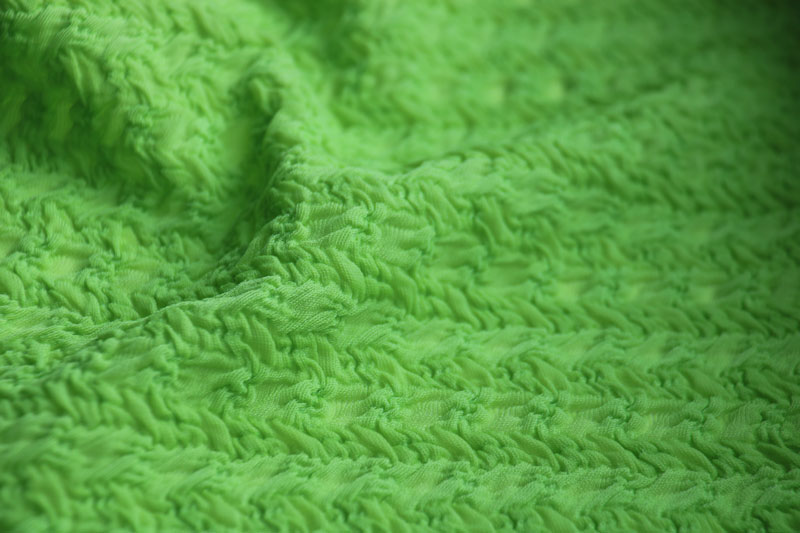
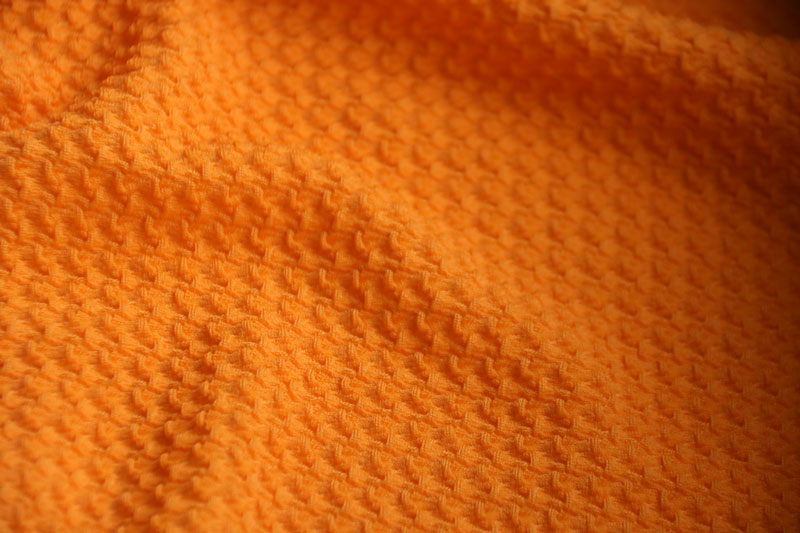
Patterns, produced during the development of the new warp knitted fabrics with seersucker look

OBERTSHAUSEN, Germany — December 1, 2020 — Seersucker clothing is a hit every summer season. The fabrics look cool and can be worn without breaking into a sweat. This is thanks to slightly three-dimensional relief-like fabric sides. The crepe-like surfaces ensure that the textiles do not lie directly on the skin, but are instead kept away from the body. This allows for ventilation and moisture balance. What’s more, the relief-like structures mean the pieces do not need to be ironed after washing — and also give the fabric its name. The word seersucker originates from Persian and means shir o shekar: milk and sugar.

These fabrics that offer many advantages are traditionally produced on rapier looms. Thanks to a recent breakthrough by Melanie Bergmann, Textile Technology Product Developer at KARL MAYER, it is now possible to produce seersucker-effect fabrics on warp knitting machines. To complete her work, the creative artist used a high-performance tricot machine — type HKS 4-M EL in E 28 — and a polyamide winding yarn with an elastane core. The gauge of the textured PU/PA yarn is dtex 110 f 24. “The material was tensioned in GB 1 and GB 2 and creates a great visual effect when relaxing,” Bergmann explained. The surface structure and elastic properties can both be changed by lapping the wrapping yarn differently. The possibilities were explored when implementing various sample series at the end of last year. During further trials in March 2020, Bergmann also influenced the elasticity, as well as the flatness and the characteristics of the 3D effects using different threadings. These new fabrics with a versatile, moving surface design enable warp knitting companies to effectively expand their production repertoire. KARL MAYER particularly sees potential for clothing and home textile manufacturers in Turkey. Warp knitting is generally highly efficient compared to many other surface forming processes and results in products that neither pull stitches nor fray at the edges. There are further examples in the pattern part of this issue.

Posted December 8, 2020

Source: Karl Mayer

Stäubli — Innovation Driver And Long-Term Shaper Of The Swiss Machinery Landscape

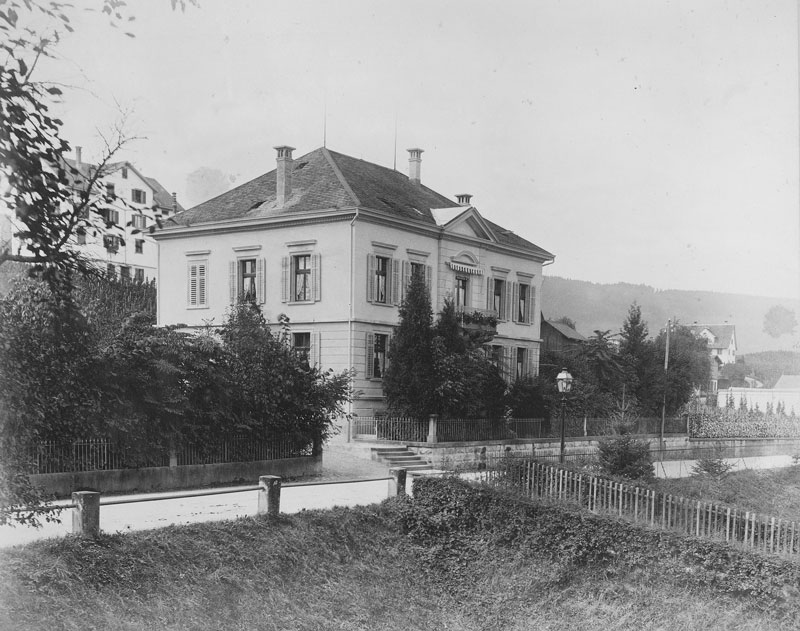
1892: Stäubli machine shop for repairs and machine construction in Horgen, Switzerland

PFÄFFIKON, Switzerland — December 2, 2020 — December 9, 2020, marks the 80th anniversary date of the Swissmem Textile Machinery Division. Stäubli, a member of Swissmem since January 1897, was among the founders of this section, dedicated to the textile industry. The section was established during very difficult times, World War II, but has achieved success for both partners: Today, the Swissmem Textile Machinery Division is celebrating its 80th anniversary, and the Stäubli Group, as a founding member headquartered in Switzerland, enjoys worldwide renown as an innovation driver in textile mechatronics.

Remaining forward-looking and optimistic — and continuing to innovate during the present time in which people and businesses everywhere are struggling with a global crisis — are values that have been intrinsic to the Stäubli Group since the very beginning. Stäubli has always seen crisis and difficulty as a chance to think out of the box and to embrace new opportunities. In 1940 the Stäubli family took part in the founding meeting of the Textile Machinery Division of the Swissmem association. Goals of this Textile Machinery Division were to secure supplies of raw materials, develop international relations, to approach markets in a united and effective way, and to continue making high-quality products in Switzerland and selling them throughout Europe and the rest of the world, even during difficult times. The division has been globally promoting Swiss textile machinery in recent years with the slogan ‘Innovation: it’s in our DNA’. At Stäubli, the innovation gene dates back to 1892 and is abundantly evident today in the 500-some R&D engineers working in the Group to invent, redesign or improve Stäubli mecatronics solutions and thereby bring further benefits to Stäubli customers. In their united quest for excellence, the various Stäubli teams bundle their expertise, long-term business experience, and the input of sales and technical teams who collaborate closely with customers and thus learn the real needs of the weaving mills and the markets. This rich combination results in a diversified product portfolio that meets the requirements of any woven application and covers the needs of any weaving company. Stäubli also goes a step further: The company’s solutions support market trends, help to shape the industry, and provide the flexibility to adapt to future changes and challenges. Ingenious features and technologies, robust high-quality construction, comprehensive services, and spare parts availability even years after delivery make Stäubli solutions an essential part of modern weaving mill operations around the world.

Standard-setting technologies in weaving preparation and shed formation

Stäubli sets worldwide standards in the weaving industry. Prime examples are Active Warp Control (AWC) and Initial Condition Settings (ICS), applied in the company’s SAFIR automatic drawing-in machines. AWC enables automatic supervision and management of yarn types and colors during automatic drawing in. ICS represents state-of-the-art technology for efficient style and warp changes, enabling easy startup after style change with specific yarns, such as hairy or technical yarns. These and other leading-edge technologies help to optimize the process flow within the mill and greatly enhance operational performance. The SAFIR range of automatic drawing-in systems offers two machinery concepts (one stationary and one mobile) and offers a choice of four machine models. These systems efficiently process not only standard yarns, filaments and effect yarns but also technical yarns such glass fibers for fine filter applications.

In the Jacquard weaving sector, Stäubli is a provider of weaving equipment for airbag and large-format weaving. The LX/LXL/LXXL Jacquard machines are available in many formats, with up to 25,600 hooks, and formats of up to 51,200 hooks can be achieved by combining two machines. These machines feature NOEMI, a new-generation electronic control system that sets a new standard for reliability in high-speed weaving. The electronics architecture of NOEMI boasts a reduced number of connectors for extremely stable data transmission. The machines offer good operation. Mills that use an LX Jacquard machine combined with individually adapted Stäubli Jacquard harnesses have a reliable and highly efficient solution with a single purpose: producing high volumes of first-quality fabric with minimum downtimes.

Today’s innovations tomorrow

The Swissmem Textile Machinery Division will celebrate its next future milestone in 2030, at which time we will certainly look back on 2020, a year that will mark history books due to the pandemic which has devastated individuals and businesses around the world. To face this crisis, mankind has been called upon to adapt and remain flexible, and businesses have been challenged to innovate. The Stäubli Group is determined to meet this challenge by providing flexible and reliable solutions for long-term use and by driving innovation further, always with one goal in mind: to provide modern and market-oriented solutions for the textile industry and thereby equip the industry for sustainable performance and achievement.

Posted December 8, 2020

Source: Stäubli Group

Noble Biomaterials Announces Allon Cohne As Chief Marketing Officer

SCRANTON, Pa. — December 2, 2020 — Noble Biomaterials, the global leader in antimicrobial and conductivity solutions for soft-surface applications, today announced the expansion of its senior leadership team with the hire of marketing veteran Allon Cohne as its new chief marketing officer.

“Allon is a proven leader with decades of experience building great brands,” said Joel Furey, chief commercial officer of Noble Biomaterials. “We are excited to welcome him to the team, and are confident that he will strengthen and accelerate Noble’s position as an innovative and trusted intelligent materials partner.”

Prior to joining Noble, Allon was the chief marketing officer at Vibram Group, a producer and seller of high-performance rubber outsoles for shoes in the sports, leisure, industrial, orthopedic and repair markets. At Vibram, Allon oversaw all marketing functions for B2C and B2B programs in the Americas, where he successfully launched or relaunched many product campaigns. Prior to Vibram, Allon served as Global Marketing Director at Polartec, where he led global marketing functions, developed and implemented brand strategy and managed media and public relations efforts. Allon has also held senior marketing roles at Vail Resorts and Kirkwood Mountain Resort in Lake Tahoe, Calif.

“Fabric hygiene, safety, and technology has not only become crucial in multiple industries — from apparel to healthcare to travel — it’s fast becoming an end user value. I’m excited to be joining Noble Biomaterials to create a high-performing marketing team that will drive brand awareness and profitable growth for the company,” said Cohne. “I look forward to strengthening Noble’s position as the leader in material science and helping ensure the company’s innovative solutions are incorporated into even more products and verticals.”

Posted December 8, 2020

Source: Noble Biomaterials

ANDRITZ and Infinited Fiber Company Sign Equipment Development Deal For Commercializing Textile Fiber Regeneration Technology

GRAZ, Austria — December 3, 2020 — International technology group ANDRITZ and biotechnology group Infinited Fiber Co. have signed a cooperation agreement to develop the process and equipment solutions for Infinited Fiber Company’s textile fiber regeneration technology. The technology can turn any cellulose-rich raw material, including discarded textiles, used cardboard or rice or wheat straw, into cellulose carbamate fibers — unique, high-quality textile fibers with the look and feel of cotton. Andritz is the process equipment supplier for the technology. The two companies have worked together to carry out trials since the end of 2019.

Under the newly signed cooperation agreement, which came into effect on November 13, 2020, the two companies will work together to develop the factory process and equipment solutions, aiming to perfect every step in preparation for the technology to be scaled up to commercial scale production. Infinited Fiber Co. currently operates two pilot facilities in Finland. The operations have a nominal combined capacity of 150 metric tons per year.

Under the new agreement, Andritz and Infinited Fiber Co. will spend the next six months collaborating on the development, testing and validation of the process and equipment solutions, with Andritz providing equipment for both the mechanical and chemical pre-treatment processes as well as for the carbamation process. This will be followed by factory deliveries, with Infinited Fiber Co. expecting to secure a commercial deal or deals during 2021.

“Andritz’s equipment and process portfolio offers good opportunities for fiber production technology, and the cooperation with Infinited Fiber Company is a significant step towards creating a new type of textile fiber. Textile waste recirculation is becoming mandatory in the EU in 2025 and we want to be involved in developing new bio-based fibers from textile waste and also from other pulp-based materials,” said Kari Tuominen, president and CEO of Andritz Oy.

“Andritz is a leading factory equipment supplier, and we are delighted to be working with them to prepare our textile fiber regeneration technology for commercialization,” said Infinited Fiber Co. Cofounder and CEO Petri Alava. “Bringing to market a new technology, a new fiber type, and even a new way of operating in accordance with circular economy principals requires the creation of a strong ecosystem of experts working towards common goals. We are proud that Andritz is a key member of this ecosystem.”

Posted December 8, 2020

Source: Andritz

Four AAPN Members Elected To AAPN Board Of Directors

ATLANTA — December 3, 2020 — The Atlanta-based Americas Apparel Producers’ Network (AAPN) announced the following new additions to its board of directors:

Chris Alt
Alt is senior vice president of Elevate Textiles, which, in turn, now owns American & Efird. Chris graduated from The University of Kansas with a BS Business Administration – Finance and Marketing. He has spent virtually his entire career at A&E. Chris is a strong supporter of the AAPN Carolina Mill Tour. He also graduated from the University of Virginia Darden School of Business, Executive Program, Financial Management

Keith Dartley
Dartley is the president and cofounder of Swisstex based in Los Angeles with 165 employees and 70 knitting machines in El Salvador. Dartley has been highly active in AAPN’s Regional Conferences and many other events. He made an extraordinary commitment to fight the virus reporting to AAPN, “We produced enough mask fabric from March through June to produce about 180 million masks and enough gown fabric to produce about 1.5 million surgical gowns”.  He graduated from Colorado State University with a BS in Marketing.

Jennifer Knight
Knight graduated from Brown University with a B.A. in Religious Studies, and after a stint writing scripts for TV shows joined the family business of Georgia Narrow Fabrics. She has had numerous progressive steps in her industry career most recently as president & COO of the American Woolen Company. Jennifer is a long time member and close confidant of AAPN. She also holds an MBA from the Columbia Business School.

Pam Peale
Peale holds a BS degree in Fashion/Apparel Design from Baylor University. She began her degree in technology at Gerber and has remained in technology including time at a major producer of uniforms. She is currently vice president of DeSL. Pam has anchored several panels at AAPN Regional Conferences and on AAPN virtual events. She is leading several AAPN projects in new industry technology.

Posted December 8, 2020

Source: AAPN

Sponsors