WASHINGTON — December 29, 2020 — The National Retail Federation urged the Office of the U.S. Trade Representative (USTR) to avoid placing tariffs on imports of Vietnamese goods and rely on other remedies and authorities to address trade complaints. USTR recently launched two separate 301 investigations regarding Vietnam’s currency practices and trade in illegal timber. NRF Senior Vice President of Government Relations David French provided testimony at both the illegal timber and currency practices hearings this week.
“Vietnam has become an increasingly important political ally and economic partner to the United States to counter the influence of China in the region,” French said. “It is important that this relationship not only continue but expand as the global economy continues to recover from the coronavirus pandemic.”
“As companies continue to face economic hardship caused by the coronavirus pandemic, new tariffs on imports from Vietnam will further harm U.S. companies and will result in higher costs for consumers.”
French cited a new report commissioned by NRF and prepared by the Trade Partnership Worldwide on the potential impacts of tariffs on Vietnam. The report estimates the use of tariffs on imports of apparel, footwear and other goods from Vietnam would result in additional costs to American consumers and would range from $4 billion to $9 billion in higher prices.
French noted that many companies shifted their supply chains away from China to Vietnam as a direct result of the China 301 tariffs. Placing tariffs on imports from Vietnam will now punish these companies and may result in sourcing shifting back to China.
DENVER — December 28, 2020 — VF Corp. today announced that it has completed its previously announced acquisition of Supreme®, a privately-owned global streetwear brand, for an aggregate base purchase price of $2.1 billion subject to customary adjustments for cash, indebtedness, working capital and transaction expenses. As a result of the transaction, Supreme has become a wholly owned subsidiary of VF Corp.
The acquisition of the Supreme brand accelerates VF’s consumer-minded, retail-centric, hyper-digital business model transformation and builds on a long-standing relationship between Supreme and VF, with the Supreme brand being a regular collaborator with VF’s Vans®, The North Face® and Timberland® brands.
Supreme is expected to be modestly accretive to VF’s revenue and adjusted earnings per share in fiscal 2021. The Supreme brand is expected to contribute at least $500 million of revenue and $0.20 of adjusted EPS in fiscal 2022.
MAHWAH, N.J. — December 23, 2020 — ascena retail group inc. and certain of its subsidiaries today announced that it has completed the sale of the Ann Taylor, LOFT, Lou & Grey, and Lane Bryant brands to Premium Apparel LLC, an affiliate of Sycamore Partners. Premium Apparel has committed to retaining a substantial portion of the retail stores, associates, and corporate operations affiliated with these brands.
“We are pleased to have completed this transaction, which secures a path for the long-term success of Ann Taylor, LOFT, Lou & Grey, and Lane Bryant,” said Gary Muto, CEO. “We have worked diligently to maximize the value of our brands, and we are confident they will thrive under Sycamore’s ownership.”
Muto continued: “I would like to thank our associates, who have remained focused on meeting our customers’ needs throughout our financial restructuring process. While we have certainly faced obstacles in the challenging retail landscape brought on by the global pandemic, our associates have consistently demonstrated leadership, professionalism and dedication to our customers and to each other. Ann Taylor, LOFT, Lou & Grey and Lane Bryant will continue to serve customers through the holiday season and beyond.”
“We’re pleased to have completed our purchase of these four highly respected apparel brands and are excited by the opportunity to unlock their full potential as part of our portfolio,” said Stefan Kaluzny, managing director of Sycamore Partners. “We look forward to working with the brands’ associates to continue delivering great products and memorable experiences to their customers, while positioning each for long-term success.”
As previously disclosed, FullBeauty Brands Operations LLC has completed its acquisition of Catherines’ intellectual property assets and e-commerce business, and Justice Brand Holdings LLC, an entity formed by Bluestar Alliance LLC, has completed its acquisition of the intellectual property of Justice.
POTSDAM, N.Y. — December 28, 2020 — Clarkson University’s Center for Air and Aquatic Resources Engineering and Sciences (CAARES) Lab is now accredited to perform per- and polyfluoroalkyl substances (PFAS) analysis.
The accreditation is through the Department of Defense Environmental Laboratory Accreditation Program (DoD ELAP), which is designed to accredit laboratories that wish to test for Department of Defense environmental restoration programs.
PFAS, or Per- and Polyfluoroalkyl Substances, represent a diverse group of man-made chemical compounds that are persistent; meaning they don’t break down and can accumulate over time. According to the EPA, there is evidence that exposure to PFAS can lead to adverse human health effects. PFAS compounds have been used in hundreds of industrial applications and consumer products including carpeting, apparel, upholstery, food paper wrappings, fire-fighting foams, and metal plating.
“Not only does this validate the good work that CAARES does, but it shows that Clarkson supports the highest quality analytical research activity,” said Clarkson President Tony Collins.
The focus of CAARES is to provide a better and more complete scientific basis for air and water quality management. They strive to understand the sources, transport and chemistry that give rise to indoor and outdoor exposure to air pollutants, including noise, their potential health and welfare effects, and ways in which these effects can be reduced or eliminated. More information about CAARES can be found at https://www.clarkson.edu/caares.
Clarkson University has numerous research grants with the EPA and DoD investigating ways to destroy PFAS in contaminated water and soil. These promising technologies have been featured in several international publications, are undergoing field tests, and have spun-off two start-up companies, including Professor Michelle Crimi’s RemWell LLC and Professor Selma Mededovic and Professor Thomas Holsen’s DMAX Plasma LLC.
“I am fortunate to be working with talented researchers and state-of-the-art equipment in the CAARES laboratory. There are only a limited number of accredited labs in the country, and we are the only accredited university lab. This distinction will give us a significant advantage as we continue to pursue research in this area,” Professor Holsen, codirector of CAARES said.
CAARES has analytical facilities that house a number of major instruments, as well as laboratory space specifically designed to support research. The major types of instruments are an inductively coupled plasma-mass spectrometry (ICP-MS) system, liquid chromatography-mass spectrometery (LC-MS) systems, and gas chromatography-mass spectrometry (GC-MS) systems, including a 2-D gas chromatograph/high-resolution mass spectrometer system. The Environmental Protection Agency (EPA) and Clarkson University have funded this equipment.
WARROAD, Minn./MASON, Ohio — December 23, 2020 — Warroad Original Hockey Co. — a performance, safety, and recovery brand created by and for hockey players — today announced the launch of its new antimicrobial on-ice performance collection, TILO™, in partnership with Noble Biomaterials, a producer of antimicrobial and conductivity solutions for soft-surface applications, and Cutlon®, the commercial manufacturer of Dyneema™ cut-resistant fabric.
To create the TILO Collection, Warroad partnered with some of the best hockey players in the world. TILO features Cutlon cut-resistant material to protect players from blade cuts and Noble’s Ionic+ silver technology, which provides antimicrobial and anti-odor protection to prevent skin irritation. The range of performance tops and bottoms offers advanced performance through Noble’s technology, which is incorporated into the breathable poly, four-way-stretch mesh fabric. The line also features Cutlon cut-resistant wrist and Achilles silicone grippers to hold pads in place and enhance performance fit. The fabric is designed to allow vapor transfer, which keeps players lighter and dryer.
“Skin irritation is a real problem for players at every level,” said T. J. Oshie, Warroad co-founder, Washington Capitals right winger and Stanley Cup Champion. “We’re really excited about TILO. We engineered the line with features players really need and comfort they will want to wear. The fit is great — tight in the sleeves and loose on the body — and the pieces are lightweight, durable, and able to fight bacteria and odor to protect a player’s skin while they’re playing. In addition, the cut-resistant Cutlon panels give an added level of confidence and safety.”
“We’re committed to the safety, performance and recovery of the modern hockey athlete at all levels — it is our mission,” stated Jason Olden, Warroad founding partner. “It is scary what has been happening in hockey with lacerations, which seem to be more prevalent.”
“We’re extremely proud to partner with Warroad to create smart fabric solutions that provide better safety, hygiene and comfort to both pro and amateur hockey players — and allow them to focus on the game,” said Joel Furey, CCO of Noble Biomaterials.
Warroad products are designed in collaboration with top-tier NHL players and product professionals and are built from premium, hand-selected materials. They offer quality construction, style and modern technical performance. The brand is named in homage to Warroad, Minnesota, also known as “Hockeytown, USA,” which is the hometown of at least one player on every gold medal-winning U.S. Olympic hockey team.
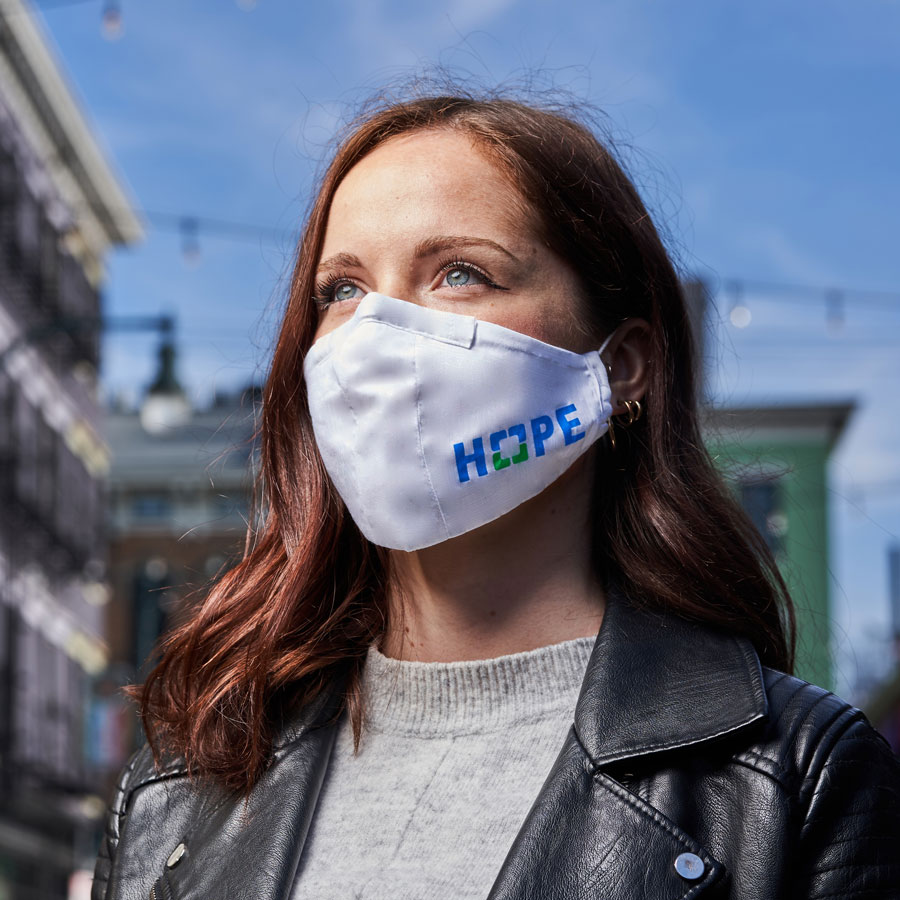
CINCINNATI/CLEVELAND — December 28, 2020 — Standard Textile — a global manufacturer of healthcare, hospitality, and consumer products — and Cleveland Clinic will collaborate to produce a non-medical grade, reusable face mask that is designed for comfort and customization. Standard Textile will sell the face masks on its consumer website, standardtextilehome.com.
On the forefront of biomedical research, Cleveland Clinic is leading a number of research projects related to COVID-19. Cleveland Clinic formed a multidisciplinary committee to evaluate therapies for mild to severe cases of the disease, with the goal of supporting trials that are scientifically sound and prioritizing those with the potential for significant impact on clinical care.
In addition, Cleveland Clinic’s new Global Center for Pathogen Research and Human Health is bringing together top scientists in infectious disease, virology and other specialties to research the causes, treatments and cures of COVID-19 and other global health concerns such as HIV, Zika and Dengue fever with a focus on identifying and preventing the world’s next viral threats.
As a nonprofit healthcare system, Cleveland Clinic relies on philanthropic gifts to fund these critical research projects and programs. Since spring, thousands of donors have contributed to COVID-19 research. Their charitable gifts hold the promise of saving countless lives. Standard Textile is donating the majority of profit from face mask sales to support COVID-19 research at Cleveland Clinic.
“We applaud Cleveland Clinic’s commitment to dedicating substantial resources to important therapeutic studies that have the potential of improving outcomes for individuals who have contracted COVID-19,” said Gary Heiman, Standard Textile’s President and CEO. “We value our long-standing relationship with Cleveland Clinic and are pleased we have an opportunity to expand that by supporting COVID-19 research.”
Standard Textile’s and Cleveland Clinic’s respective innovation teams collaborated to design the non-medical face mask, which will bear the inspirational message “HOPE” after Hope Hospital, a temporary hospital in the Sheila and Eric Samson Pavilion on the Health Education Campus of Case Western Reserve University and Cleveland Clinic. In April, Cleveland Clinic transitioned the Samson Pavilion to a temporary hospital to meet the potential needs of patients and the community in the event of a surge of patients with COVID-19. The building was converted back to the Health Education Campus for the fall semester.
“As we consider opportunities to commercialize innovations, it’s important to us to collaborate with industry leaders who align with our commitment to protecting the community and advancing research,” said Dr. Will Morris, executive medical director of Cleveland Clinic Innovations. “Teaming up with Standard Textile on this creative project supports social distancing and mask wearing, while raising funds for critical COVID-19 research at Cleveland Clinic.”
The reusable face mask offers enhanced comfort with its 100-percent cotton construction and breathability with its mesh lining. Adjustable ear loops and a neck strap add convenience of use, while its filter pocket and removable nose clip offer customization options. Standard Textile and Cleveland Clinic plan to produce custom-branded versions of the face mask for key partners looking to outfit their employees and customers with an enhanced, non-medical face mask.
“We appreciate the collaboration with Standard Textile on this project,” said Lara Kalafatis, chair of Cleveland Clinic’s Philanthropy Institute. “This new mask truly represents hope in several ways, from raising critical research funds through sale proceeds to giving us all one more way to #MaskUp to keep our families and communities safe.”
The HOPE™ face mask is being produced by Standard Textile, who earlier this year led the urgent charge to increase production of PPE such as protective gowns, face masks and face shields in order to provide hospitals and healthcare workers in the United States with additional protection against COVID-19.
“We have an 80-year legacy of inspiring care, comfort, and change in our communities. Our work with Cleveland Clinic allows us to bring to the consumer a face mask that not only helps mitigate the spread of COVID-19 — it also inspires hope for a healthier future for all of us,” Heiman said.
BENSALEM, Pa. — December 28, 2020 — Pennsylvania-based textile manufacturer AKAS Tex has announced a significant increase in its knitting capacity.
Due to overwhelming demand of the fabrics that are used for face masks and surgical gowns, AKAS Tex has added five knitting machines in the year 2020.
Two machines are for double knits, such as its the ProCool® interlock; two machines are for its Zorb® Dimple spacer fabric; and one machine is for its TransWick® 1-Way Wicking fabric.
These five machines will add 200,300 pounds per year to the existing knitting capacity and generate much needed employment.
EAST HAMPTON, N.Y. — December 22, 2020 — Weaver, designer, collector, gardener, author, world traveler, entrepreneur, teacher, and cultural scholar, Jack Lenor Larsen was mentor to textile connoisseurs, designers, artisans and artists throughout his eventful and gratifying 93 years. He died peacefully on the evening of December 22, 2020, of natural causes in East Hampton, N.Y., at LongHouse Reserve, the 16-acre garden and arts center that is his legacy. Larsen’s, companion of more than 30 years, Peter Olsen, was at his side.
A memorial service will be announced in the near future.
For those who wish to honor Larsen, he would appreciate nothing more than a contribution to the Jack Lenor Larsen Endowment Fund, established to support the maintenance of and programming at his beloved LongHouse Reserve.
Larsen’s remarkable career as a textile designer began in the early 1950s when he founded his studio, Jack Lenor Larsen Inc., in New York City. His influence on midcentury modern design and textiles is historic, and is distinguished by his passion for natural yarns, his appropriation and preservation of Asian, African, and indigenous patterns and techniques, and his aesthetic innovations. As recently as 2019, Larsen designed a textile collection in Sunbrella performance yarns, distributed internationally under Cowtan & Tout’s Larsen brand. Woven in luxurious chenilles and textured jacquards, the designs are timeless, with universal appeal. As Jack has said, “They now live harmoniously both outside in the gardens and inside Longhouse on my iconic furnishings.”
Larsen has been honored and recognized for his contributions to the fields of craft and design by leading arts and humanities organizations around the world. These include The American Craft Council, The American Institute of Architects, The Aspen Design Conference, The New School, Interior Design’s Hall of Fame and The Cooper Hewitt Smithsonian Design Museum. He is the recipient of honorary doctorates from The Parsons School of Design, The Fashion Institute, The Rhode Island School of Design, and both the Royal College of Art and the Royal Society of Art in London, England. The many tributes paid to Larsen in print occupy a voluminous archive. Larsen is also one of only four Americans to have been honored with an exhibition at the Palais du Louvre in Paris, France, as well as with a solo exhibition at the Museum of Arts and Design in New York in 2004. Larsen fabrics reside in the permanent collections of The Metropolitan Museum of Art, MoMA, The Minneapolis Institute of Arts, The Art Institute of Chicago, and The Victoria & Albert Museum, to name just a few.
Dianne Benson, Board President of Longhouse Reserve, has said, “In a world today in which our senses are saturated with sameness, Jack Larsen is a shrine to individuality. In our mega-multiple world where things are now routinely measured in billions, Jack cautioned us to be more mindful of what we take away than of what we add. ‘Subtraction is the key to elegance’ he insisted. Both fluid and authoritative, intimidating and shy, possessed of a dry wit and an elegant mien, Jack was also totally unpredictable. Often, he made an appearance dressed in the most hand-woven of ethnic costumes, including astonishing hats and uncommonly beautiful scarves and at other times he showed up in the outdoorsiest of garden woolens and boots, with everyone else primped for summer. Invariably, he had always made the best choice.”
Jack Lenor Larsen was born on August 5, 1927, in Seattle, Washington, the only child of parents who had come from Alberta, Canada and who traced their ancestry to Norway and Denmark. Influenced by his father, an architect, Larsen enrolled at the School of Architecture at the University of Washington in 1945. The following year he studied furniture design and began weaving; he then moved to Los Angeles to focus on fabric design. In 1949, Larsen studied ancient Peruvian textiles in Seattle and in 1951 he earned a Master of Fine Arts degree from the Cranbrook Academy of Art. He later opened his design studio in New York City. A deep appreciation for handmade objects and weaving traditions from around the world were essential to Larsen as an artist, designer, and educator throughout his life.
Over the course of his career, Larsen designed thousands of fabric patterns and textiles, distinguishing his fabrics with random repeats and variegated, natural yarns. He traveled widely and shared his distinctive techniques with others, resulting in the manufacture of iconic Larsen textiles in over 30 countries. n an era where artificial fibers and machine-made products were the latest thing, Larsen was known for handmade, natural materials and local craft traditions such as ikat and batik. His visionary collaborations with weavers in Japan, Southeast Asia, India, and Africa helped preserve traditional techniques and inspire experimental design and manufacturing in those regions. Among Larsen’s notable early commissions was the design of lobby draperies for Skidmore, Owings & Merrill’s Lever House (1951-1952). Frank Lloyd Wright also used Larsen fabrics at both Taliesen and Fallingwater. Eero Saarinen commissioned Larsen fabrics for his J. Irwin Miller House, and Larsen was on the committee that selected architect Edward Larrabee Barnes for the Haystack Mountain School of Crafts. Other architect collaborators included Hugh Hardy, I. M. Pei, and Louis Kahn (whom he also taught to weave).
Larsen’s company created fabrics for Braniff Airways’ first jet planes and then PanAm’s first 747s, and other planes including Air Force One. His clients were global, sophisticated and diverse — they included Joan Baez, Leonard Bernstein, the Duke and Duchess of Windsor, Alexander Calder, and Marilyn Monroe, among other artists and celebrities.
His multi-faceted life and career cast Larsen in many roles — chairman of The Haystack Mountain School, president of the World Craft Council, Lifetime Achiever of the American Crafts Museum. However, it is at LongHouse that he staked his claim for the ages.
LongHouse Reserve is a not-for-profit institution inaugurated by Larsen in 1991 and which opened to the public in 1992. Its mission, as articulated by Larsen is to exemplify and encourage living with art in all its forms. The gardens, sculpture and programs of LongHouse reflect world cultures and are designed to foster a creative life. After encountering a group touring LongHouse one day, Larsen remarked, “How rewarding to witness their excitement … they found a haven where all seemed to make sense, and everything is so beautiful! Passions were aroused and the question answered — how to make their lives more real, less conformist, with no thought of dollar signs? Being in it. This is what LongHouse is all about.”
With his passing, the ownership of the house and of Larsen’s personal collection is being transferred to the LongHouse Reserve Foundation, which is committed to maintaining Larsen’s aesthetic philosophies while expanding the public presence of LongHouse. Larsen’s home will be transformed into a “house museum.” Larsen was a true enthusiast who searched out and embraced the new, the unexplored, the next thing. He repeatedly stressed that LongHouse should “be relevant, not reverent,” and the Foundation will ensure that it is.
Matko Tomicic, executive director of Longhouse Reserve commented: “During the course of over 24 years of working with Jack, I learned the importance of dreaming, planning, and being open to all possibilities. Each day proved to be an adventure, a challenge, an experiment, an exploration, and an opportunity to envision and to realize the warp and weft of life. We would, indeed be fortunate to create until our final breath, as he did. Jack was my mentor, Jack was my friend, he will be missed.”
Larsen first visited East Hampton in 1953 and in 1964 he acquired land that became Round House, his first residence. Modeled after Bantu dwellings in West Africa, it was his home until 1990. In 1975 Larsen bought an adjacent 15.4-acre property on which he planned to display alternatives in design, architecture, and art. Today, that property is LongHouse Reserve. Larsen noted with his usual practical approach “property so far from the ocean was not only affordable but had better weather for year-round gardening.”
In 1990 Larsen sold Round House to good friends, Judy and Ennius Bergsma. From the very beginning, his intention was to make LongHouse a place of learning, open to the public and especially welcoming to children. The house was a collaboration with the architect Charles Forberg and was built by Joe Tufariello — construction was completed in 1992.
The structure’s design was inspired by the seventh century Shinto shrine at Ise Japan. It encompasses 13,000 square feet, with 18 spaces on four levels. Larsen’s friend, playwright Edward Albee, called LongHouse, “a 16-acre unreality of forest, garden, and vista put together over many years by a man whose sense of what with sufficient vision might be, is made reality.”
With typical modesty Larsen recently wrote: “For a long time now, I have been a maker — often of the less usual and with some success. While mid-century furniture endures, my cloths are in shreds, their successful exhibits long forgotten. LongHouse, on the other hand, transcends each year more splendidly.”
LongHouse is a showcase for Larsen’s extensive collections of historical and contemporary crafts, including works by Anni Albers, Dame Lucie Rie, Hans Coper, Edward Wormley, a particularly fine collection of Wharton Esherick furniture as well as works by Dale Chihuly (Larsen advised Chihuly, then a student, to “give up weaving and go into glass blowing”). The gardens surrounding the house, wholly conceived by Larsen down to the choice of rocks and placement of hedges, include works by Willem de Kooning, Bryan Hunt, Sol LeWitt, Grace Knowlton, Yoko Ono, Toshiko Takaezu and others amidst rotating pieces that change each season. Buckminster Fuller’s striking Fly’s Eye Dome is the largest work at LongHouse, the one that stands out on a Google map that Larsen favored as he explained, “It was his last dome — he envisioned it being dropped onto hillsides by helicopters and used as living space.” LongHouse Reserve is one of the few public collections to have always maintained parity between female and male artists and, its renowned summer galas have honored artists and thinkers of all origins and persuasions.
Dale Chihuly — “Jack Lenor Larsen was an extraordinary designer, teacher, and friend. Already a legend when we met at the University of Washington while I was still a student, he encouraged me and became a mentor. Jack was remarkably creative and continues to help artists and craftsmen – opening doors for them and helping them find their way.”
Bill T. Jones — “Jack Lenor Larsen is one of those curious personalities who exude an awareness of high modernism and yet insists on living squarely in this era that has not yet been defined with any kind of moniker, any kind of ‘ism.’ In Jack we have a true Renaissance man, a master of weaving, design, gardening. The greatest testament to Jack’s legacy is the number of makers he’s mentored and championed. He is a grand gentleman and a brave visionary. My life has been enriched by knowing him.”
Wendy Van Deusen, curator at LongHouse — “When Jack Larsen was honored by the Smithsonian, he was very clear, acknowledging that he did not get where he is alone. Jack has always embraced collaboration. He’s been my greatest teacher.”
Larsen was also a giver, having donated important examples of 20th century design and craft, as well as his own textiles and wisdom to a myriad of institutions. He was a man of distinct tastes, the curator of many exhibitions including two at MoMA (1968-69 and 1977), The San Francisco Museum of Art (1981), and the Textile Museum in Washington DC (1986). In addition, he was an accomplished linguist and author. Larsen’s 10 books, the most recent of which is Learning from LongHouse, published by Pointed Leaf Press in 2016, are a compendium of acerbic anecdotes and thought provoking pearls of design wisdom.
In 2016 Larsen wrote to Dianne Benson what might be the perfect eulogy for him, “If coming home has always been the best part of travel, this is true of coming home from the hospital. With that, for the first time, came the realization that one day I will not come home. Pity that, as I have come to be so appreciative of the environment here and of the friends remaining. Having been chosen for a long life does not diminish attachment to that life.”
PUEBLA, Mexico — December 23, 2020 — Given the difficult scenario that we are experiencing today in Mexico and all around the world due to the COVID-19 pandemic, following the recommendations made by the civil protection authorities of the state of Puebla, the organizing committee has decided to postpone EXINTEX 2021.
Our main objective is to preserve the health and well-being of all the attendants during the event, for this reason, it is decided to carry out EXINTEX 2021 October 26-29, 2021.
We are convinced this adjustment will allow us to have an event just as successful as in previous editions, and favorable for all our participants.
Today, it is important to take care of ourselves and our families. We wish you the best Holiday Season and look forward to seeing you in October 2021, at the Exhibition Center of the City of Puebla.
Clockwise from top left: Dr. Aartjan te Velthuis, Dr. C. Raina MacIntyre, Dr. Christopher McDevitt and Dr. Karoll Cortez
HOUSTON — December 21, 2020 — Ascend Performance Materials has appointed a medical advisory board to provide counsel on its Acteev™ technology platform.
Comprising internationally recognized experts in the fields of personal protective equipment (PPE) evaluation, viral pathology, epidemiology and infectious diseases, the board will provide scientific review and advice on end applications of Acteev technology, including masks, filtration, fabrics and engineered plastics.
“This medical advisory board brings together some of the most distinguished researchers and medical experts from around the world,” said Dr. Vikram Gopal, Ascend’s senior vice president and chief technology officer. “We launched Acteev as a novel way to help fight the spread of the COVID-19 pandemic, and this team of advisors will be invaluable as we seek to rapidly develop Acteev to its full potential.”
Dr. C. Raina MacIntyre, MBBS Hons 1, FRACP, FAFPHM, M App Epid is a professor of biosecurity at the University of New South Wales and head of the Global Biosecurity program at the Kirby Institute for Infection and Immunity. She is director of Australia’s NHMRC Centre for Research Excellence in Integrated Systems for Epidemic Response. She earned her medical degree from the University of Sydney and Ph.D. in epidemiology from The Australian National University.
Dr. Karoll Cortez, M.H.S. is an infectious disease physician at Greater Baltimore Medical Center. Previously she served as Medical Officer in the Infectious Control Devices branch of the Center for Devices and Radiological Health for the U.S. Food and Drug Administration and as a physician scientist at the National Cancer Institute and the National Institute of Allergy and Infectious Disease at the National Institute of Health. Dr. Cortez received her medical degree from the Universidad Central de Venezuela and master’s from the Duke University School of Medicine.
Dr. Christopher McDevitt is an Australian Research Council Future Fellow and principal investigator in the Chemical Biology of Bacterial Pathogens Laboratory at the University of Melbourne, Department of Microbiology and Immunology. He completed six years of postdoctoral research at the University of Oxford after earning his Ph.D. from the University of Queensland, Australia.
Dr. Aartjan te Velthuis is an assistant professor at Princeton University, Department of Molecular Biology. Previously, he was a Wellcome Trust Henry Dale Fellow and group leader at the University of Cambridge, Department of Pathology. He did his postdoctoral training at the Sir William Dunn School of Pathology at the University of Oxford. Dr. te Velthuis received a Ph.D. in molecular virology from Leiden University in the Netherlands.