Textiles And Apparel: Sustainability Center Stage

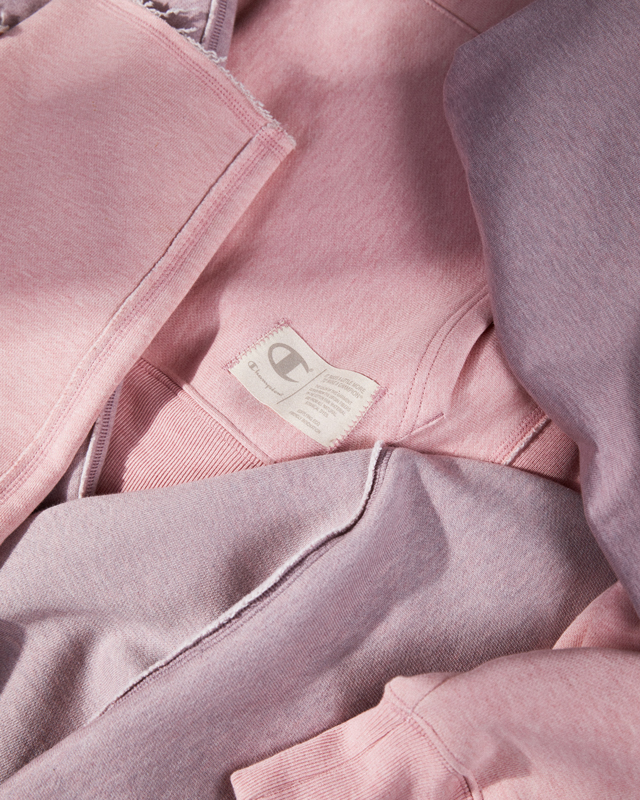
Champion Athleticwear’s new Natural State Reverse Weave collection features muted, natural colors created with all-natural dyes derived from plants.

Textile manufacturers and brands are developing innovative strategies to make the textile and apparel industry more sustainable.

TW Special Report

Each year, Earth Day typically coincides with a steady flow of new stories pointing to sustainable actions textile and apparel companies have achieved or are in the process of implementing. Companies also issue their annual Corporate Sustainability Reports (CSRs), reporting accomplishments and targets for future years. Sustainability is not a new concept in the industry, but it is an issue that has great momentum at the moment. Companies from textile manufacturers to brands are reporting huge efforts to make the textile industry a more sustainable entity.

Sustainability Reports

Spartanburg-based Milliken & Company recently released its third annual CSR. The report titled “Together for Tomorrow,” highlights the company’s progress towards 2025 goals set back in 2018. According to the company, “this report creates increased accountability while inviting new conversations and collaborations as the company works to create a positive impact on the world that will last generations.”

“Together, we met the critical moments from 2020,” said Milliken’s President and CEO Halsey Cook. “We pivoted production lines, launched new innovations, and rallied our team to improve our sustainability metrics in 10 of 12 strategic categories. Our sustainability initiatives have momentum and are fundamentally changing our business.”

Milliken reported progress in 2020 in a number of its planet and product goals including: capital investments to eliminate coal as a primary fuel source; the Borchers acquisition to help the company scale its coating additives platform while reducing solvent use; and convening thought leaders at an event hosted by National Geographic Creative Works to support the plastics circularity conversation.

With regards to the company’s people goals, Milliken reported an ongoing commitment to advancing diversity, equality and inclusion; prioritizing associate safety; and launching the Milliken Leadership Model, aimed at training associates on growth leadership with purpose.

Glen Raven Inc. also just released its first CSR (“See “Corporate Responsibility In Flight,” TW, this issue). The report aims to strengthen Glen Raven’s history as a good corporate citizen.

Charlotte-based Elevate Textiles — the parent company of American & Efird (A&E), Burlington, Cone Denim, Gütermann and Safety Components — recently issued its 2021 Sustainability Report. According to the company, it made significant progress towards its 2025 sustainability goals, which include a focus on sustainably-sourced fibers, reduced water consumption and a reduction in greenhouse gas emissions. The company has aligned its goals with the United Nations’ (UN) Global Compact’s Ten Principles — which lays out fundamental corporate responsibilities for sustainability in the areas of human rights, labor, environment and anti-corruption. This follows Elevate’s own “Ten Threads of Sustainability” environmental program (See “U.S. Textiles: Pacesetters In Sustainability,” TW, July/August 2018).

Areas of progress highlighted in Elevate’s 2021 Sustainability Report include: a water recycling increase of 65 percent and a 7.5-percent reduction in absolute global water consumption since 2016; and measurement of Scope 3 greenhouse gas emissions and a reduction in Scope 1 and 2 greenhouse gases in line with a corporate goal of 2.5 percent per year.

“We are focused on providing ethically and sustainably sourced products that offer innovative solutions needed to be successful, and we view our teams and global resources as a collaborative extension and partner to our customers, suppliers, employees, communities and other stakeholders,” said Sim Skinner, president and CEO of Elevate Textiles.

In addition, Elevate announced that it has joined the Sustainable Apparel Coalition (SAC), joining more than 250 global brands, retailers, manufacturers, government entities, non-profit organizations and academic institutions that are committed to improving sustainability in the apparel, footwear and textile industry supply chains. As part of its participation, Elevate has committed to contribute data and resources to support the Higg Index, a suite of tools that measures sustainability performance that Elevate brands have been using since 2014.

“We welcome the addition of Elevate Textiles to the Sustainable Apparel Coalition and look forward to its participation in this industry-wide effort in sustainability,” said SAC Executive Director Amina Razvi. “Having Elevate and each of its top textile brands as part of the coalition widens the scope of our impact within the industry and accelerates the change we’re making towards responsible industry actions.”

High Point, N.C.-based Culp Inc. recently joined the Sustainable Furnishings Council (SFC) — “an independent, non-profit coalition of furniture industry manufacturers, retailers, and designers dedicated to raising awareness and promoting the adoption of environmentally sustainable practices in the home furnishings industry.” SFC core beliefs focus on carbon reduction, water management, product circularity, and waste reduction, among other sustainable strategies.

According to Culp, as the only publicly-traded SFC company, it plans to use its membership to increase best practices and be a leader in the home furnishings industry with regards to environmental and social change.

Recent accomplishments by Culp include the use of solar panels at a Knoxville, Tenn., facility; using hydro- and wind power at a manufacturing facility in Quebec; reusing water at a plant in Stokesdale, N.C.; and achieving Zero to Landfill certification at all of its U.S. mattress fabric and sewn cover production facilities. Culp also has seen success with its LiveSmart Evolve® upholstery fabric line, which has to date, has diverted more than 1.6 million plastics bottles from landfills, according to the company. (See “Quality Fabric Of The Month: Culp’s LiveSmart® Gets Smarter,” TW, January/February 2021).

“By joining this council, we are hoping to further our efforts of incorporating sustainable practices into our operations and have a greater positive influence in our industry,” said Iv Culp, president and CEO. “We are known as an innovative and creative company committed to managing our business in a responsible manner. This not only applies to our fabric designs and material sourcing, but to our entire company culture. We are striving to find ways of operating that are better for the environment, for our customers, for our employees, and for our communities.”

HanesBrands, Winston-Salem, N.C., recently was awarded its 12th consecutive U.S. Environmental Protection Agency (EPA) Energy Star Sustained Excellence/Partner of the Year award. The EPA launched the Energy Star voluntary, market-based partnership program in 1992 to reduce greenhouse gas emissions via increased efficiency. The Partner of the Year honor recognizes organizations that have made outstanding contributions to environmental protection through company-wide energy savings and best practices. The EPA recognized HanesBrands for lowering overall energy use as well as increasing its use of renewable energy and electricity during 2020.

In 2020, the company named its first chief sustainability officer. HanesBrands reports it also implemented 2030 sustainability goals including further reducing energy use by 25 percent, moving to 100-percent renewable electricity and launching science-based emission reduction targets.

“We’re incredibly proud to remain the only apparel company to earn sustained excellence honors in the U.S. EPA Energy Star program’s 29-year history,” said Chris Fox, HanesBrands chief sustainability officer. “HanesBrands and its 61,000 worldwide associates are deeply committed to sustainability and operating our company as if every day is Earth Day. But there is much more work yet to do. We are intensely focused on pursuing ambitious 2030 goals that will improve the lives of people, protect the planet and produce sustainable products.”

Water-Saving Strategies

Greensboro, N.C.-based Kontoor Brands — parent company of the Wrangler® and Lee® denim brands — has expanded its water-saving Indigood™ program beyond foam-dyed denim to include any technology used in apparel fabric production that utilizes at least 90-percent less water than conventional processes.

“Water is one of our most vital and precious natural resources, and as such, we are focused on advancing the sustainable and equitable management of water resources,” said Jeff Frye, vice president of product development and direct procurement, Kontoor Brands. “By expanding the Indigood program to include additional water saving technologies, we’re giving our suppliers the opportunity to select the water savings technologies that work best for their production, while also meeting the growing consumer demand for products that not only look good, but also minimize the impact on the planet.”

In other sustainability news, Wrangler recently launched the WeCare Wrangler™ sustainability platform aimed to guide sustainable innovation in three key areas — planet, product and people. The platform includes goals such as using preferred chemistry, renewable energy and sustainable cotton, as well as reducing water use.

“It matters to Wrangler what’s in our clothing,” said Tom Waldron, executive vice president, global brand president, Wrangler. “The WeCare Wrangler sustainability platform will act as our roadmap as we help lead the industry toward meaningful change that creates more positive environmental and social impacts.”
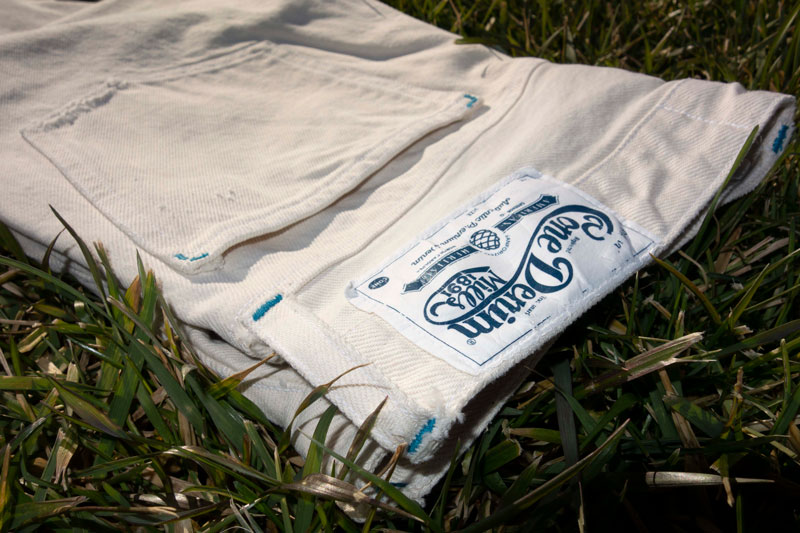
Cone Denim is commited to driving forward water conservation initiatives in its manufacturing processes.

Elevate company Cone Denim has long been committed to responsible water use and global water conservation efforts in denim manufacturing. Recently, the company released details on the next phase of its water reduction initiatives, which includes a Zero Liquid Discharge wastewater treatment facility at Mexico-based Cone Denim Parras.

“We are focused on a sustainable future and minimizing our impact on natural resources,” said Cone Denim President Steve Maggard. “To support these efforts, we’ve affirmed our commitment to the UN Sustainable Development Goals with our water conservation initiatives focused on Goal number 6: Clean Water and Sanitation. We are driving conservation efforts throughout our manufacturing processes and establishing greater transparency and improved ways to monitor, track and report our progress.”

Cone Denim also partnered with Spain-based Jeanologia S.L. on a new denim collection that is the first step in Jeanologia’s “Road to Mission Zero.” Mission Zero is the commitment to eliminating 100-percent of the waste generated during denim production. The collection features sustainable options from fabric to finish including Cone Denim Flash Finish fabric manufactured using Jeanologia’s G2 Dynamic ozone finishing ranges.

In other company sustainability news, Cone reports it is on track to use almost 3 million pounds of certified Organic Content Standard (OCS) cotton by the end of 2021 in the production of its organic denim cotton collection. The company has worked with suppliers to secure inventory of this limited cotton product. All Cone Denim mills are OCS certified to make organic yarns and denim fabrics, and the company was the first denim manufacturer to offer Oritain technology for scientific cotton origin certification.

Unifi Recognizes Brand, Textile And Retailer Partners

Unifi Inc., Greensboro, N.C., recently announced the recipients of its fourth annual REPREVE® Champions Of Sustainability Awards. As a fiber producer, Unifi has long been a champion of sustainability in its own right and certainly leads by example. The company has recycled more than 25 billion plastics bottles in its REPREVE fiber manufacturing process, which uses less energy and water compared to virgin fiber production. Unifi reports it is on track to reach its goal of recycling 30 billion bottles by 2022. (See “Sustainability In Fiber Manufacturing,” TW, this issue, to learn more about sustainability efforts by other fiber companies).

Unifi’s REPREVE Champions of Sustainability awards “recognize brand, textile and retail partners that have demonstrated a true commitment to supporting a sustainable world.” In 2021, 93 companies were honored — the largest number of recipients since the awards’ inception.

In 2021, 38 brand and retail partners that transformed 10 million or more recycled plastic bottles and 55 textile partners that transformed 50 million or more recycled bottles were recognized by Unifi. The list of winners is available on TW’s website.

Unifi also conferred two special category awards: REPREVE Newcomer to Switzerland-based Odlo; and the REPREVE Leading the Change award to Turkey-based Penti.

“Despite the COVID-19 pandemic, Unifi remains successful because of its customers,” said Unifi CEO Eddie Ingle. “With a nearly 20-percent increase in the number of winners from the previous year, our brand partners are demonstrating a steadfast commitment to sustainability. We want to thank them for their support for a more sustainable world during these unparalleled times.”

Brand-Led Sustainability Efforts

On a mission to make clothes that feel good and do good as part of its Champion MADE promise, Winston Salem, N.C.-based Champion Athleticwear has introduced two new lines — the Natural State Reverse Weave and Rally Pro Earth footwear.

The Natural State collection features recycled polyester fibers; minimally processed and unbleached fabrics; and uses only all-natural dyes derived from flowers, plants and roots for muted, natural colors. The Rally Pro Earth sneaker collection comprises Rally Pro sneakers made using more earth-friendly materials including upcycled and recycled products.

“We are dedicated to helping protect the planet by creating best-in-class sustainable products,” said David Robertson, director, Champion Global Brand Marketing. “The launch of Natural State and Rally Pro Earth are only the beginning of what we have in-the-works to protect the place we all call home.”

Lululemon athletica inc., Vancouver, recently announced two new initiatives — lululemon Like New and Earth Dye — as part of the Be Planet pillar of its Impact Agenda released in the fall of 2020.

Like New is lululemon’s first recommerce program that will allow customers to trade in or resell the brand’s clothing. Pilot programs will first launch in California and Texas, and profits from the program will be directly reinvested in additional sustainability programs.

The Earth Dye initiative focuses on a limited-edition collection of clothing dyed using upcycled orange, beet and saw palmetto tree waste from the agricultural and herbal industries. According to the company, these lower-impact dyes use less water, carbon and man-made chemicals.

“lululemon is actively working to help create a healthier future, and we are focused on meeting the goals detailed in our Impact Agenda, including making 100 percent of our products with sustainable materials and end-of-use solutions by 2030,” said lululemon CEO Calvin McDonald. “Our lululemon Like New and Earth Dye initiatives are both meaningful steps towards a circular ecosystem and demonstrate the sustainable innovation underway in product development and retail.”

Denver-based JanSport introduced its first backpack collection made using excess factory materials that otherwise may end up in a landfill. Every component of the limited-edition Surplus Ski n’ Hike backpacks — fabric, ladder lock lining and zipper pulls — come from pre-existing factory materials. Other key sustainability-related milestone also were reported by JanSport including: switching certain products to recycled fabrics and linings, which saved the equivalent of 13 million 16-ounce plastic water bottles; implementing renewable energy sources and energy efficient processes to reduce the company’s carbon footprint; using 100-percent recycled paper for hangtags; and designing all products to be polyvinyl chloride-free.

“As part of our sustainability efforts, JanSport wants to keep fabric off the cutting room floor and ensure that our unused products do not go to waste,” said Roger Spatz, JanSport president. “We challenged our designers to construct a backpack collection entirely from surplus fabrics and components from our factory, and we could not be more impressed with the result. The Surplus Ski n’ Hike breathes new life into an archived silhouette and uses the textiles in a smarter, more sustainable way that prevents these elements from potentially going into landfill.”

In an effort to change how the apparel industry colors cotton by addressing water scarcity and pollution, New York City-based Ralph Lauren has launched the Color on Demand dyeing platform, which will be implemented in phases. Color on Demand comprises a new set of technologies that enables water reuse and recycling during the dyeing process for a scalable zero wastewater cotton dyeing system. Ralph Lauren reports the system also reduces the amount of dye, chemicals, time and energy used to color the cotton. The brand collaborated with Dow, Jeanologia, Huntsman Textile Effects and Corob to rethink the dyeing process and develop a more efficient system. The first phase of Color on Demand focuses on using ECOFAST™ Pure Sustainable Textile Treatment from Dow, which reduces water, chemicals and energy use for a 60-percent reduction in the carbon footprint when compared to traditional cotton dyeing processes. Ralph Lauren will launch products made using this treatment later this year.

“Water scarcity and pollution are important issues for the fashion industry and through our partnership with Ralph Lauren we are working towards addressing these challenges,” said Sheila Bonini, senior vice president, Private Sector Engagement at World Wildlife Fund. “Technology has the ability to accelerate change at a scale that matters, so it’s exciting to see Ralph Lauren establishing innovative new models that transform outdated practices and can deliver measurable outcomes for people and planet. This is exactly the kind of leadership we need to see from the fashion industry.”

Important issues indeed. But issues the manufacturers and brands seem to be tackling with innovative, forward-thinking solutions. The industry is full of leaders setting the bar and encouraging every company in the textile value chain to get involved and make a difference.

May/June 2021
TTG Launches New CELLATEX™ ePTFE Products For The Medical Device Market

HIGGINSVILLE, Mo. — May 19, 2021 — Trinity Technology Group (TTG Inc.) has applied the company’s substantial polymer engineering expertise and proprietary manufacturing technology to create the CELLATEX line of microporous expanded PTFE (ePTFE) membranes, tapes, and laminated textiles. Medical device engineers now have a new option for high performance ePTFE products that are specifically designed for medical applications and are made in the USA.

“Our CELLATEX ePTFE products were developed with the medical market’s exacting needs in mind,” said Greg Vas Nunes, TTG’s CEO. “Our strictly controlled manufacturing process generates finely tuned membranes, tapes, and laminated fabrics with uniform microporosity that meet the medical device sector’s stringent quality and performance requirements.”

Expanded PTFE has a long history as a critical component in multiple medical device applications. The material is biocompatible and, combined with a very low surface energy and chemical resistance, is extremely well-suited for implantable and other medical and dental applications. With its proprietary process, TTG can produce ePTFE products with specific, uniform microporosity and other desired properties like flexibility, tenacity, hydrophobicity, tunable permeability, and high dielectric strength.

“Medical ePTFE materials must be extraordinarily consistent and precisely manufactured to deliver the quality and performance that medical applications require,” said Dr. Bruce Anneaux, TTG’s chief technology officer. “CELLATEX ePTFE products have significant advantages that medical device engineers will truly appreciate.” Anneaux joined TTG last year to apply his experience in medical device and biotech R&D and bioengineering product development to the medical ePTFE opportunity and other new markets.

TTG has a long history of providing superior quality microporous ePTFE products for a wide variety of industries such as filtration, automotive, protective gear, and performance apparel. The company’s high capacity lamination and large-scale roll-to-roll plasma treatment technology result in consistent, reliable domestic supply of meticulously engineered products that can be microscopically tailored for any application. The CELLATEX product line is the first of several new focused market segment expansions for TTG.

Posted May 19, 2021

Source: TTG Inc.

Austin-Based Western Brand Tecovas Names Former Nike Executive Elliott Hill To Its Board Of Directors

AUSTIN, Texas — May 19, 2021 — Austin-based western brand Tecovas took a cowboy-sized leap forward with the addition of Elliott Hill, a former Nike executive, to their board as a director. Hill served as Nike’s president of Consumer and Marketplace before retiring in 2020 after 32 years at the company. Hill’s experience managing Nike’s end-to-end direct-to-consumer and wholesale strategies will be a valuable foundation for counsel to a brand that was the first in its category to adopt the direct-to-consumer sales strategy.

“Over the past couple of years, I have been lucky to get to know Elliott as a friendly advisor and I’m thrilled to now have him as an official member of the Tecovas board,” said Tecovas’ Founder and CEO Paul Hedrick. “His Nike experience speaks for itself, and his passion for people and his leadership instincts are second to none — all of which is invaluable for a young and growing brand like Tecovas. We are very fortunate to have him along for the ride.”

Tecovas’ growing board mirrors its ambitious rise since its founding in late 2015. After three years of selling its cowboy boots, apparel, and accessories exclusively online, Tecovas opened its first retail store in March 2019 — and has opened 15 since then, including eight in 2020 and two more this year to date. While most Tecovas stores are in Texas, its 2020-2021 expansion included outposts in Arizona, Tennessee, North Carolina, South Carolina, and Alabama.

Tecovas has also expanded its product line significantly since 2015 when it launched with 4 styles of cowboy boots. Today, the brand offers dozens of boot styles for men and women, a burgeoning apparel line, and accessories ranging from duffle bags to belts. In November, the brand had its biggest launch to date with its line of rugged outdoor-oriented boots and apparel, Tecovas Ranch Wear. Hill himself is familiar with cowboy boots, being born and raised in Tecovas’ hometown of Austin, Texas.

“I’ve been a fan of the Tecovas brand and product since its inception and am honored to be joining the board,” Hill said. “I’m passionate about helping the Tecovas team to innovate within a heritage product category, to know and serve the customer better than any other brand, and to grow a world-class company in such a great town.”

Hill joins a board led by Hedrick, a former McKinsey consultant and Texan who quit his job in private equity to launch the world’s first direct-to-consumer western brand after being frustrated by the lack of high-quality and affordable cowboy boot options on the market. The brand’s meteoric rise has further solidified his belief that cowboy boots are a product that is marketable far beyond the Lone Star State, with customers hailing from all 50 states. The Tecovas board includes an impressive breadth of entrepreneurial and investing experience, with Hill joining Hedrick, Brian Spaly (founder of Bonobos and Trunk Club), Andy Hunt (co-founder of Warby Parker and Elephant, Tecovas’ lead investor), Roy Seiders (co-founder of YETI), and Julie Effron (Partner at Elephant).

Posted May 19, 2021

Source: Tecovas

Under Armour Increases Its Minimum Pay Rate To $15 Per Hour

BALTIMORE — May 19, 2021 — Today, Under Armour announced up to a 50-percent increase in its minimum pay rate for hourly teammates in the United States and Canada. Hourly rates will increase from a minimum of $10 per hour to $15 per hour — $15.25 Canadian dollars per hour in Canada — which will go into effect on June 6. As a result, more than 8,000 part-time and full-time teammates — approximately 90 percent of the Retail and Distribution House (DH) workforce — will see a compensation increase.

Under Armour’s pay rate increase marks the beginning of several steps to enhance the teammate experience. Over the coming year, the company will implement additional measures to holistically support teammates on their career journeys through important initiatives like compensation, learning and development, and a new incentive plan for our hourly teammates.

“Our Retail and Distribution House teammates are the backbone of our business, and play an essential role in our ability to serve our Focused Performers,” said Patrik Frisk, president and CEO of Under Armour. “We are committed to doing the right thing, and at the center of our commitment is ensuring our teammates feel valued and appreciated.”

Under Armour currently has more than 3,000 open roles in retail locations and distribution houses, some of which are seasonal and include Sales Teammates, Store Managers and Stock Teammates. All of these roles will start at a minimum of $15 per hour in June.

“At Under Armour, direct-to-consumer is one of our biggest growth opportunities and an area that I am proud to oversee,” said Stephanie Pugliese, president of the Americas at Under Armour. “Teammates in our retail stores and distribution houses are our strongest asset and we needed to make a strategic decision on our hourly wages to be a competitive employer in the retail space.

“We’re delighted to be able to raise our minimum pay rate and acknowledge the hard work of our frontline teammates in retail and warehouse, particularly over the past year.”

Posted May 19, 2021

Source: Under Armour Inc.

Katten’s New Corporate Attorney Focuses On M&A And Fashion Industry Counsel

NEW YORK CITY — May 19, 2021 — Katten announced today that Ilana Lubin has joined its Mergers & Acquisitions and Private Equity practice in New York City and will advise companies in a range of industries on domestic and cross-border mergers and acquisitions, and divestiture and joint venture transactions, particularly those in the retail, apparel, footwear, accessory and beauty sectors.

“Ilana’s reputation for excellence precedes her. She is an exceptional attorney whose outstanding skills and pragmatic approach will deepen our industry-leading client services,” said Kimberly Smith, global chair of Katten’s Corporate department and co-chair of the firm’s global Mergers & Acquisitions and Private Equity practice.

In addition to advising on mergers and acquisitions, and divestiture and joint venture transactions, Lubin counsels clients on other strategic corporate and commercial matters. Her practice often sits at the intersection of traditional retail operations, digitization and entertainment.

Skilled at advising on celebrity endorsements and the licensing of celebrity, entertainment and fashion brands around the globe, Lubin represents retailers, consumer products companies and brand owners in connection with the development of celebrity-branded and -founded consumer product lines. Additionally, she provides counsel on implementing the revival and expansion of brands internationally, including in Europe, Asia and South America.

Her appreciation of both the scope of legal issues and the accelerated demand for businesses to innovate and reinvent themselves has made her a trusted attorney who offers a range of solutions for her clients in fashion and beyond.

Katten is a full-service law firm with nearly 650 attorneys in locations across the United States and in London and Shanghai. Clients seeking sophisticated, high-value legal services turn to Katten for counsel locally, nationally and internationally. The firm’s core areas of practice include corporate, financial markets and funds, insolvency and restructuring, intellectual property, litigation, real estate, structured finance and securitization, transactional tax planning, private credit and private wealth. Katten represents public and private companies in numerous industries, as well as a number of government and nonprofit organizations and individuals.

Posted May 19, 2021

Source: Katten

Kingwhale Enhances Commitment To Sustainable Production And Recyclable Fibers

TAIPEI — May 19, 2021 — Kingwhale — responsible manufacturer of performance textiles — commits to furthering its sustainability initiatives by emphasizing recyclable fibers in its portfolio of products. Through new processes, Kingwhale has better positioned itself to recycle discarded resources to develop new, reusable textiles, in turn, minimizing carbon emissions and its reliance on petrochemicals.

“We call it a ‘textile-to-textile’ process, where we can make new fibers from existing ones,” said James Huang, president of Kingwhale. “Forget about landfills. We’re collecting discarded garments, breaking them down, and reviving them as sustainable fibers. And it’s all done with environmentally safe treatments.”

Renowned for its range of technical knits and fleeces, Kingwhale is a vertically integrated company controlling the entire production process from fiber spinning to textile manufacturing to garment construction. Moreover, the company has long placed an emphasis on sustainability, with its proprietary technologies resulting in manufacturing practices that minimize energy consumption, reduce waste, and utilize fewer resources.

“The textile industry is notorious for generating excessive waste,” Huang said. “But Kingwhale is helping fix that. We’ve long been proponents of a circular economy for apparel, so we’re working hard to develop innovative recyclable fibers that can be regenerated into new materials over and over again, and thereby minimize the industry’s dependance on petroleum and other mined resources.”

New sustainable and biodegradable fiber-based products from Kingwhale are slated for launch this year.

To further demonstrate its commitment to carbon neutrality and responsible production, Kingwhale joined the RE100 global initiative in 2020, pledging to 100-percent renewable electricity by 2040. The textile manufacturer has become the first mill in the Asia-Pacific region to do so. RE100, led by the international non-profit The Climate Group, brings together large, influential organizations, such as Kingwhale, that are committed to taking ambitious actions to combat climate change.

Moreover, in the past year, solar panels located across Kingwhale’s facilities generated nearly 850,000 kWh of energy. Its reduction in carbon emissions is comparable to the carbon dioxide absorption of more than 41,000 trees.

As a bluesign® system partner and OEKO-TEX® Standard 100 certified company, Kingwhale is already regarded as an industry leader with regards to its environmental stewardship. In fact, its L.I.T.® (Low Impact Technology) is lauded for its waste reduction and efficiency. This innovative yarn technology modifies the molecular structure of yarn fibers, thus making the dyeing process more efficient, leading to 60-percent less water for dye preservation, 15-percent less dyestuffs to achieve color, and 22-percent less electricity for heating and cooling.

“We’ve been paving the path for responsible textile production for years,” said Huang. “Looking ahead, I know Kingwhale can help establish new best practices to reduce carbon emissions and minimize the industry’s dependance on petroleum. And I know we’ll launch some game-changing sustainable fibers in the process.”

Posted May 19, 2021

Source: Kingwhale

DYEING, PRINTING & FINISHING: PFAS – A Textile Perspective

Figure 1: Where do they come from?
(Courtesy of Consumer Reports)

Despite the textile industry’s limited use of PFAS materials, future regulation may impact producers of performance fabrics.

By Hardy Sullivan

Given the wide array of end uses for per- and polyfluoroalkyl substances (PFAS), producers of performance fabrics, including personal protective equipment (PPE) gowns with superior blood repellency, workwear with oily stain release properties, and high-use upholstery needing resistance to oily foods and stains, might think the press’ portrayal of the textile industry misses the mark. Why focus on fabric but ignore phones?

As an end-user of PFAS materials, textiles make up only a tiny fraction of PFAS consumption. And as a percentage by weight of fabric, a little goes a long way. Yet stain-resistant fabric gets top billing as a PFAS source in consumer-facing news articles. In turn, some state regulators have targeted PFAS-containing carpet and upholstery, detracting attention from primary pollution sources — non-polymeric PFAS processing aids and PFAS-containing firefighting foam.

But textile producers have a story to tell, too. These products are safe for the consumer and require only a small amount of short-chain PFAS to impart performance, saving the environment from detrimental effects of a fast fashion, disposable goods mentality. And there are significant differences between PFAS substances; thus, one-size-fits-all regulation is unfair and not science-based.

Who will prevail in the battle for the narrative? Will other consumer products get noticed?

PFAS In The Media

A May 2021 Consumer Reports article, “How Safe is Our Drinking Water?,”1 states PFAS were detected in the drinking water of 117 out of 120 households. Two of the samples exceeded the federal advisory level of 70 parts per trillion (ppt), and 46 samples exceeded Consumer Reports’ recommended 10 ppt limit for total PFAS.

Though the Consumer Reports article states manufacturers use PFAS to make “hundreds of other common products,” a visual representation of PFAS sources published by the publication (see Figure 1) shows only three sources — stain resistant fabric, non-stick pans and fast-food packaging. A picture, is indeed, worth a thousand words — or at least hundreds in this case.

There are numerous other examples of the industry’s unwanted high profile. A recent New York Times article titled “These Everyday Toxins May Be Hurting Pregnant Women and Their Babies”2 featured the subhead “PFAS, industrial chemicals used to waterproof jackets and grease-proof fast-food containers, may disrupt pregnancy with lasting effects.” And in a podcast interview, the European Chemical Agency’s Executive Director3 cited cookware, clothing and carpet as common end-uses for PFAS.

Whoever said “There’s no such thing as bad press” wasn’t producing PFAS-containing fabric.

Response To Negative Press

The years of bad press led some companies to, publicly or privately, discontinue the use of PFAS compounds in their fiber-based products. In 2019, Home Depot announced the phase-out of PFAS in carpet.4 That same year, Gap Inc. announced it would phase out all PFC-based finishes by 2023,5 where PFC has been used to mean fluorochemicals. Even fast-fashion company H&M proudly touts its long-standing commitment to PFAS-free clothing, accessories and shoes.6 Healthcare organization Kaiser Permanente also prohibits the purchase of upholstery with fluorochemicals.7

Which Industries Utilize PFAS?

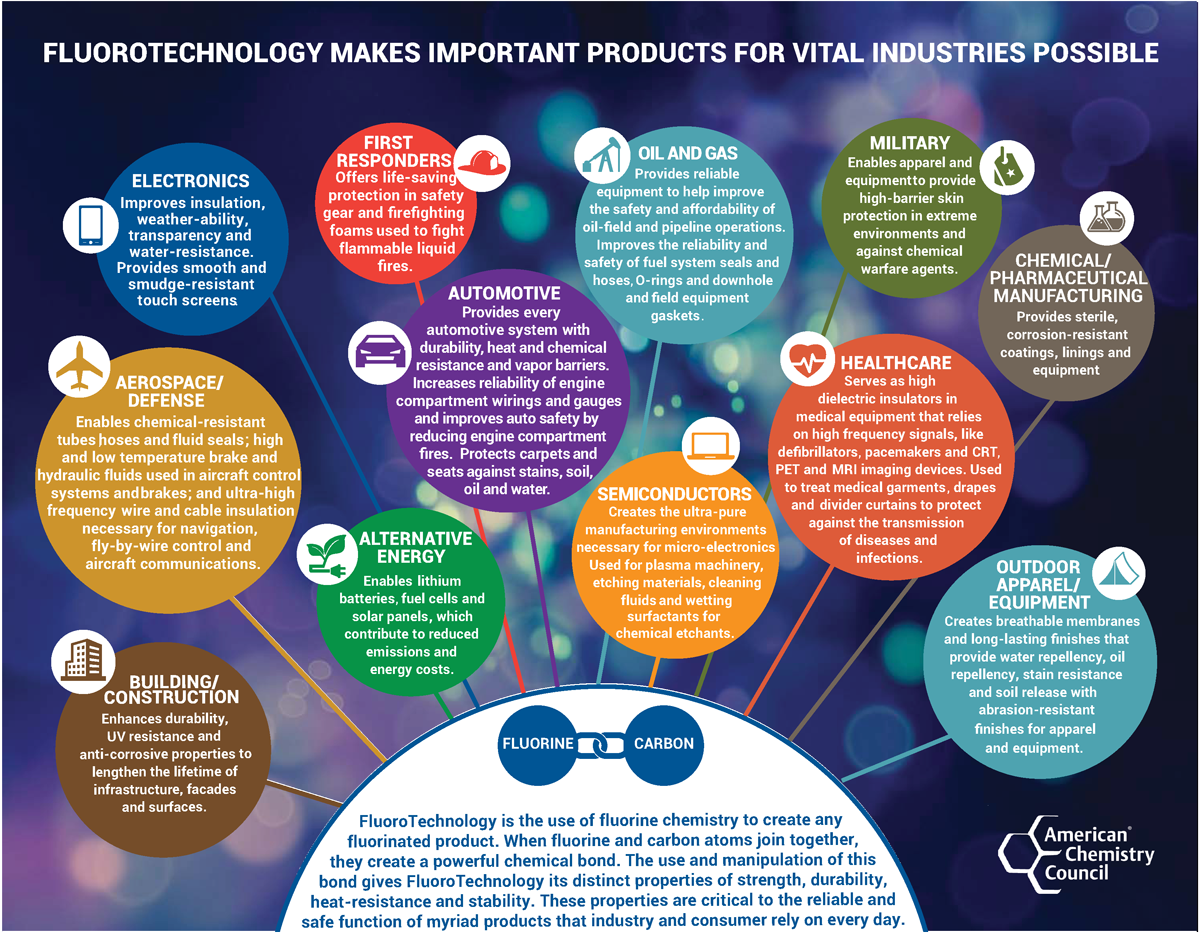
A better question to ask is what manufacturing industries do not utilize PFAS. All PFAS chemistries include strong carbon to fluorine bonds. As early as the 1940s, companies started capitalizing on fluorine’s unique properties, such as its relatively compact atomic structure and high electronegativity, or affinity for electrons. Carbon-fluorine bonds enable chemical resistance, stability in hot and cold temperatures, low surface energy, low friction, low rigidity, variable permeability, and dielectric insulation. Numerous industries developed an array of uses, some of which, given fluorine’s special place on the periodic table, may not be possible by other means. Figure 2 contains descriptions of end-uses by industry according to the American Chemistry Council.8

Figure 2

How Does PFAS Consumption In Textiles Compare To Other industries?

Putting PFAS consumption in perspective is a central issue that has gone unaddressed in press coverage. Some consumer end-uses have been reported, but PFAS consumption by industry has been absent. Everyday consumer goods containing PFAS chemistries include smart phones and tablet touchscreens, smart watch bands, dental floss, bicycle chain lubricant, and eyeglass lenses, to name a few. There are hundreds more.

A recent paper, “An overview of the uses of per- and polyfluoroalkyl substances (PFAS)”9 published by the Royal Society of Chemistry, attempted to not only identify PFAS end-uses but also characterize consumption by industry. Though the data comes from some of the Nordic countries, it provides useful insight for the United States. The take-away? While the regulation of PFAS-containing textiles might make some state regulators feel good that something is being done, the impact on the safety of drinking water will be very limited. Figure 3 shows that textiles, despite all of the attention they receive, don’t break the top 10 in terms of end-use consumption.

All of the end-uses with a dark gray background are industrial end-uses.

It is also worth noting the distinction that is drawn between polymeric and non-polymeric substances. More on this distinction later.

How Complex Is This Topic?

Fluorocarbon’s unique properties led to the creation of more than 5,000 PFAS compounds. The multitude of chemistries makes PFAS ripe for confusion. The array of designer cocktails is so large that a panel of stakeholders came together in 2011 just to establish PFAS naming guidelines.10 If it takes 29 pages to describe how to name chemistries within a class of chemicals then, chances are, there are significant differences between the chemistries.

Should PFAS Chemicals Be Treated As A Single Class? 

Some groups argue all PFAS chemicals should be regulated as a single class.11 It is true that the carbon-fluorine bond is a strong one, making all PFAS materials environmentally persistent; thus, the term “forever chemicals”. It is important to distinguish, however, between environmental persistence, toxicity, and bioaccumulation. After all, sand on a beach is persistent.

While all PFAS materials are environmentally persistent, an important distinction within the PFAS class is they exist in different states — including solids, liquids, and gases. The state of matter greatly impacts mobility through air, water and soil. The liquid state, for example, of PFAS-containing firefighting foam contributes greatly to its ability to contaminate soil, as opposed to PFAS solids found on textiles.

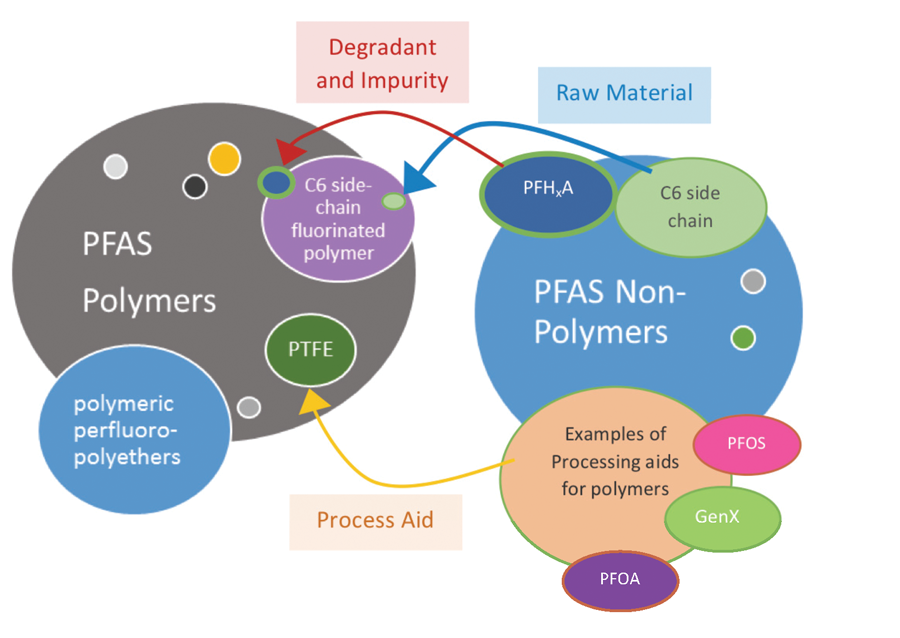
Additionally, there are, literally, sizeable differences between polymeric and non-polymeric PFAS substances, referred to here as PFAS polymers and PFAS non-polymers (see Figure 4). A PFAS non-polymer consists of a single molecule; whereas, polymers can consist of thousands of repeating molecular units. The relatively small size of PFAS non-polymers makes them more mobile — easy to spread in air and waterways — and more bio-available — with increased potential to build up in blood and body tissues where they might do harm.

Figure 4

It is not as simple as PFAS polymers are good and PFAS non-polymers are bad, however, because there are varying levels of toxicity between the PFAS non-polymers. Adding to the complexity, there is an interdependence between some PFAS polymers and PFAS non-polymers.

As visualized in Figure 4, PFAS non-polymers, play one or more of the following roles:

  • process aids essential for production of PFAS polymers that do not necessarily end up in PFAS polymer;
  • raw material inputs for making PFAS polymers that are incorporated in the PFAS polymer;
  • impurities or unintentional byproducts contained within the PFAS polymers; and/or
  • degradants resulting from decomposition of PFAS polymers over long periods of time.
Figure 5

Which PFAS Chemicals Are Commonly Used In Textiles?

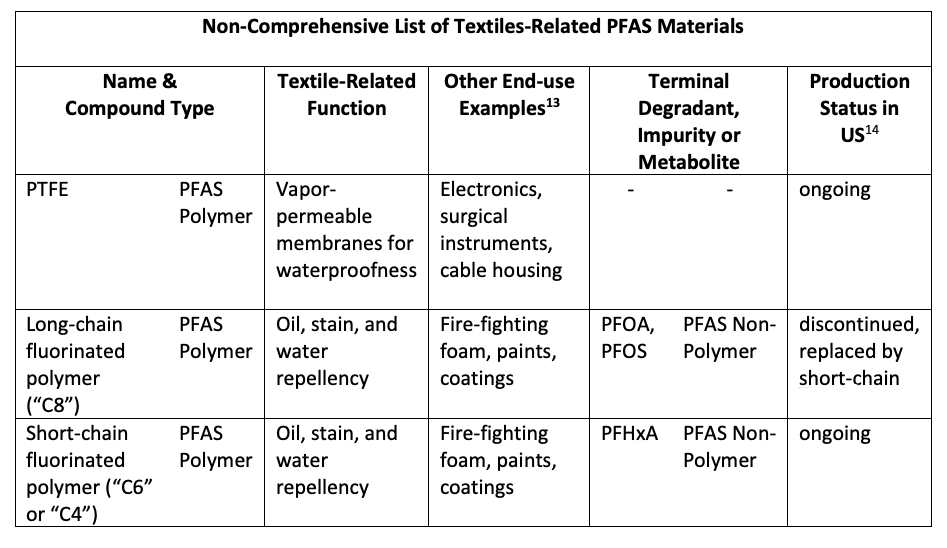
The primary PFAS chemicals used in textiles include polytetrafluoroethylene (PTFE) and short-chain fluorinated polymers known as C6 or C4 chemistries. Both materials are PFAS polymers. As shown in Figure 5,12 PTFE can serve as a waterproof breathable membrane, and the C6 reduces the surface energy of the uppermost layer, imparting water and oil repellency. Non-fluorinated chemistries are available as supplements or replacements to the PFAS-containing materials, but they tend to not perform as well.

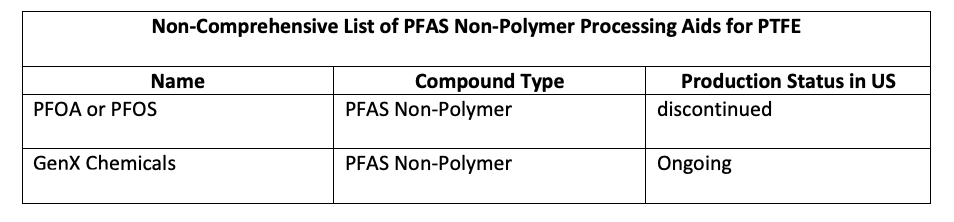
Shown in Table 1 and Table 2 are non-comprehensive lists of textile-related PFAS materials.

Table 1
Table 2

The U.S. Environmental Protection Agency (EPA) has been studying the environmental and human health profiles of PFAS chemistries since 2000. The products in production today meet the EPA’s current regulatory requirements and comply with the EPA’s PFOA [perfluorooctanoic acid] Stewardship Program. Human health and environmental impact studies are ongoing,15 and the EPA, of course, has the authority to change its requirements.

Fluoropolymers, including PTFE, the predominant type,16 are not water soluble and are not concerns for toxicity.17  Keep in mind, however, that PFAS non-polymers are required as processing aids — GenX, for example — for some fluoropolymers. While PFOA and perfluorooctanesulfonic acid (PFOS) are no longer produced in the United States, GenX is one of the replacements for PFOA and PFOS. The EPA reported GenX chemicals are less toxic than PFOA and PFOS,18 but water pollution of these non-polymer processing aids remains a concern.19

The ultimate breakdown product of short-chain fluorinated polymer continues to be studied. C6 consists of side-chains (fluorotelomers) attached to a backbone polymer, usually an acrylic or urethane. The ultimate breakdown product for C6 is perfluorohexanoic acid (PFHxA). A 2019 review of the literature indicates PFHxA is less hazardous to human health than PFOA,20 an important benchmark for the EPA.

Figure 6

Does Carpet Cause PFAS Pollution?

Researchers are using sophisticated analytical techniques to measure PFAS levels in waterways, homes, retail stores and fire-fighting stations.

The latest scientific evidence appears to refute regulators’ emphasis on carpet. A 2020 study published by the American Chemical Society in its Environmental Science & Technology journal measured PFAS levels in dust taken from 184 homes in North Carolina.

While earlier studies draw different conclusions,21 this journal article reported there was no significant difference in PFAS levels in dust collected at homes with and without carpet.22 Additionally, no significant differences were found based on age or square footage of the houses. The article also reported a decline in PFAS content in dust samples collected over the past 20 years. Using data from earlier studies, some state regulators are targeting PFAS-treated carpeting as a non-essential end-use.

What Are The Sources Of PFAS Pollution?

According to the EPA,23 PFAS contamination is “typically localized and associated with a specific facility … an industrial facility where PFAS were produced or used to manufacture other products, or locations where firefighting foam was used such as oil refineries, airfields or other training facilities for firefighters.”

Why Is Textiles One Of The Frequently Implicated End-Uses?

The public can more easily relate to consumer goods — frying pans and raingear — than low-friction pipelines lined with PFAS materials, for example. But additional factors played a role in textiles becoming a media-spotlighted user of PFAS. Imprecise naming and guilt-by-contamination linked two well-known PFAS materials — PFOA and PFOS — to PFAS-treated Textiles.

Chemists have well-established shortcuts for naming chemical structures, but such shortcuts can lose their original meaning when used in the public domain. Such was the case in the early 2000s when the EPA referred to PFOA as C8, which was the same generic name used in the textile industry to identify the long-chain fluorinated polymers. C6 and C4 are now commonly used to describe today’s short-chain fluorinated polymers. Whether it’s C8, C6 or C4, these are just shorthand terms that do not fully explain the chemical compounds; rather, they simply indicate the number of carbon atoms linked in a series. In the case of fluorinated polymers — fluorotelomers attached to polymeric backbones — used in textiles, this nomenclature only refers to the length of the side-chain functional group; the identity of the backbone polymer is omitted entirely.

Adding to the confusion, PFOS and PFOA, were both intentionally produced processing aids for PTFE and low-level impurities of long-chain fluorinated polymers. PFOA, though not a raw material, was a low-level impurity in the long-chain fluorinated polymer manufacutured by DuPont via telomerization. PFOS was the impurity present in 3M’s long-chain fluorinated polymer produced via electrofluorination.

Figure 7a

For Textiles, How Do Non-Fluorinated Repellents Compare To C6?

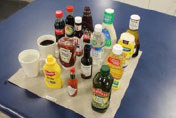
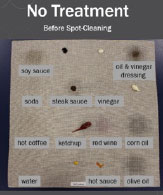
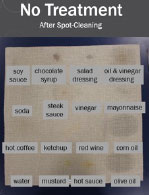
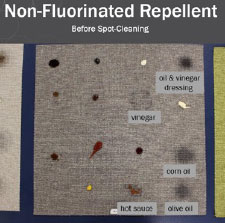
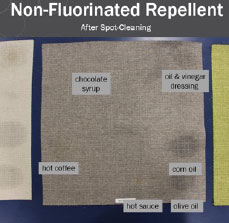
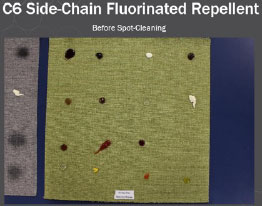
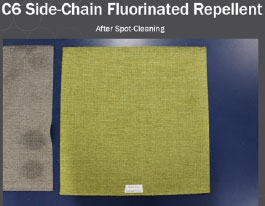
Shown in Figures 7a-7g is a comparison of the same polyester upholstery style with three levels of finish treatment — no treatment, non-fluorinated repellent, and C6 side-chain fluorinated repellent. Sixteen food and beverage stains were applied to the fabric, which was then photographed before cleaning, cleaned with a spot cleaner, dried, and re-photographed. As shown in the figures, untreated polyester will not repel most foodstuffs and beverages. Non-fluorinated finish provides some protection but, because its surface energy is higher than C6, it does not resist penetration of oils. The C6 finish, on the other hand, is fully able to repel a variety of food and beverages, allowing the fabric to be cleaned more easily, thoroughly, and quickly. In hospital rooms, restaurants, and homes, all of these features contribute to customer satisfaction. Such results can be achieved with fluorine making up only 0.1 percent of the fabric weight.24

Spot-cleanability of polyester upholstery25 — penetrated and residual stains — are labeled in the figures.

Figure 7b: No treatment, before cleaning
Figure 7c: No treatment, after cleaning


Figure 7d: Non-fluorinated, before cleaning
Figure 7e: Non-fluorinated, after cleaning


Figure 7f: C6, before cleaning
Figure 7g: C6, after cleaning

What Are The Consequences Of Removing C6 PFAS From Textiles?

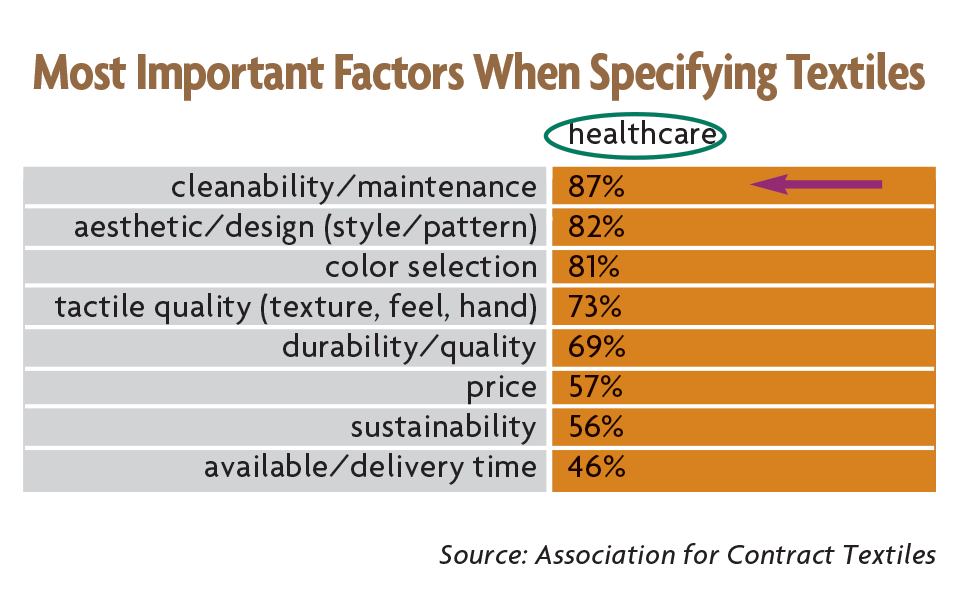
Multiple surveys of U.S. designers by Interior Design magazine indicate strong demand among specifiers and end-users for surface cleanability. Cleanability is particularly important in the healthcare segment, topping the list of factors that influence fabric selection.

Figure 8

For markets where spot-cleanability is important, the absence of C6 could shorten the life of fabrics, leading to increased demand for replacements. While selling more fabric benefits producers, it is higher cost to end-users, and negatively impacts the environment because of higher use of non-renewable fuels for man-made fibers, coatings, production and transportation; increased use of pesticides for natural fibers; elevated emissions and effluent from manufacturing; increased landfill use; possibly higher microplastics pollution; and increased use of harsh solvent cleaners.

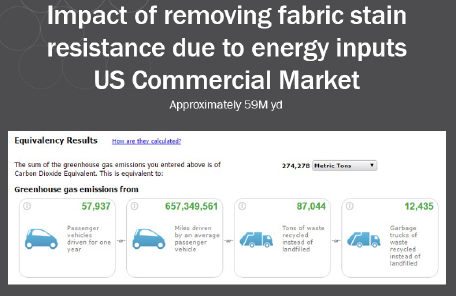
Some textile producers claim C6 finish extends the life of upholstery by years. By extending the life of commercial (non-residential) upholstery in the United States from 3 to 5 years, and not having to produce replacements as frequently, the National Council of Textile Organizations (NCTO) estimated 274k metric tons of greenhouse gas emissions is avoided, equivalent to emissions from 58 thousand passenger cars (see Figure 9).  Similarly, other resources — such as water and landfills — would be proportionately impacted.

Figure 9

PFAS Regulation In The United States And Europe

A comprehensive list of actions being taken by the EPA is available on its website.26 Actions affecting drinking water include studying PFAS chemistries, monitoring sites, setting standards and identifying treatment options.

Figure 10

In addition, some U.S. states have proposed or enacted an array of disparate measures to prevent or constrain PFAS contamination. Safer States is an organization that tracks PFAS-related legislation and litigation.27 State-by-state legislation varies widely but includes testing water supplies for PFAS; funding for cleanups; bans for PFAS in food packaging; firefighting foam restrictions; and prohibition on the use of PFAS in consumer products, including carpet and textiles28 (See Figure 10).

The National Defense Authorization Act for Fiscal 202029 includes multiple PFAS provisions. Among others, it restricts the use of PFAS in firefighting foam; addresses clean-up of military bases polluted by firefighting foam; requires standards for monitoring PFAS; and adds some PFAS chemicals, including PFOA, PFOS and GenX chemicals, to the Toxic Release Inventory. The latter action requires applicable manufacturers to report their releases and disposals.

The FDA obtained agreements from short-chain fluorotelomer producers to phase out their PFAS products in food packaging by 2023.30 Viewed in combination with other end-uses under scrutiny, the loss of this market opportunity reduces the overall market attractiveness for short-chain fluorinated polymer producers that also supply textile finishers.

PFAS materials are also under pressure in Europe. Operating within the guidelines of the European Chemical Agency (ECHA), five Member States have proposed a ban or restriction on all PFAS materials.31 This process will take several years to unfold.

A more immediate threat to European textile producers is Germany’s proposal to restrict perfluorohexanoic acid (PFHxA) and products containing PFHxA.32 Small quantities of PFHxA are found in fabrics finished with C6; thus, C6 finish would be restricted. During the Call for Evidence, numerous comments from industry reinforced the lack of an alternative for oil repellency; the use of only minor quantities to achieve the desired property; and the wide array of non-textile end-uses that rely upon PFHxA directly or indirectly. While derogations may be allowed, such as for PPE fabrics, some textile applications are likely to be viewed as non-essential. Timing to implement restrictions is unclear.

Which PFAS end-uses are essential?  Is that the right question?

The scope of PFAS regulation extends well beyond textiles. As regulators and consumer groups start to realize PFAS is essential to industries tied to national security — such as semiconductors and microchips — and renewable energy, including photovoltaics and rechargeable batteries, there has been a push, particularly in Europe and by U.S. states, to distinguish between essential and non-essential end-uses. Their goal is to eliminate non-essential end-uses.

An argument in favor of this approach is the end-use format — industrial versus consumer good — impacts product safety or risk. To be fair across industries, however, regulators would need to develop a consistent, quantifiable means for comparing risk — hazard and exposure — of hundreds of consumer products. Risk is considered a function of hazard and exposure where hazard is a material’s toxicity or corrosiveness, for example, and exposure is the extent to which the material can be ingested or come into contact with parts of the body that can be harmed.

The “What’s essential?” approach raises many questions.  Who should decide whether smudge resistance of a touchscreen is more important than stain resistance of upholstery? If a grease containing PFAS is used to ensure a windmill operates more efficiently, can that grease be used to lubricate weaving loom gears? On a bicycle?  What about the negative environmental implications of shortening a product’s useful life? How long would it take to formulate the criteria, answer these questions, and educate lawmakers?

In the absence of quantifiable criteria and vast resources for comparing end-uses, the subjective assignment of non-essential does not bode well for textiles. In comparison to the negligible public awareness of PFAS in electronics, stain-resistant textiles is a high-profile category, employs relatively few people, uses small quantities of PFAS, has limited political reach, and generates relatively low turnover. Compared to makers of airplanes, automobiles, and smart watches, textiles looks highly exposed and even expendable.

Meanwhile, the “What’s essential?” approach omits the consideration for actual sources of contamination and their relative impacts. What is the value of picking winners and losers if it has little impact on the problem?

What Does The Future Hold For Textiles Made Using PFAS?

Select types of PFAS — PTFE and short-chain fluorinated polymers — allow textiles to achieve levels of performance that, so far, cannot be matched without those compounds. Superior breathability, cleanability, and stain resistance all result in higher consumer satisfaction, allowing the textile products to last longer.

Despite the textile industry’s role as a minor user of PFAS, negative press coverage has dented PFAS usage in textiles. Looking ahead, the path will be difficult to navigate. Challenges include the media spotlight, environmental persistence, confusion about the chemistries, customer perception, shrinking market attractiveness for fluorotelomer producers, ongoing safety studies and regulators’ desire to target low-hanging fruit. The cards are stacked against performance textile producers and finishers.

One thing is clear: Textile companies that haven’t already launched fabrics with a non-fluorinated finish need to have a backup plan ready to go.

As for other industries using PFAS, it seems unlikely that regulators would limit the electronics industry from making semiconductors and other products that affect our global economic competitiveness, national security, and renewable energy technologies. Some PFAS uses are too big to fail.

Bottom line: PFAS contamination of waterways needs to be addressed. The main focus should be on keeping PFAS out of drinking water, as opposed to keeping it out of durable performance fabrics.

References:

1 https://www.consumerreports.org/water-quality/how-safe-is-our-drinking-water-a0101771201/#:~:text=CR’s%20tests%20results%20confirm%20the,for%20PFAS%20in%20drinking%20water

2 https://www.nytimes.com/2020/09/23/parenting/pregnancy/pfas-toxins-chemicals.html

3 https://www.youtube.com/watch?v=lndgsT9tRrk&t=80s

4 https://corporate.homedepot.com/newsroom/phasing-out-products-containing-pfas

5 https://www.gapincsustainability.com/environment/protecting-our-shared-environment/reducing-chemicals

6 https://hmgroup.com/news/phasing-out-pfas/

7 https://about.kaiserpermanente.org/community-health/improving-community-conditions/environmental-stewardship/safer-products

8 https://www.americanchemistry.com/Fluorotechnology-Makes-Important-Products-for-Vital-Industries-Possible.html

9 https://pubs.rsc.org/en/content/articlehtml/2020/em/d0em00291g

10 https://setac.onlinelibrary.wiley.com/doi/abs/10.1002/ieam.258

11 https://factor.niehs.nih.gov/2020/8/papers/pfas/index.htm

12 https://echa.europa.eu/documents/10162/13641/pfas_in_textiles_final_report_en.pdf/0a3b1c60-3427-5327-4a19-4d98ee06f041

13 https://www.americanchemistry.com/PFAS/Fluorotechnology-Facts.html

14 https://www.epa.gov/assessing-and-managing-chemicals-under-tsca/fact-sheet-20102015-pfoa-stewardship-program#mfg

15 https://www.epa.gov/assessing-and-managing-chemicals-under-tsca/new-chemicals-program-review-alternatives-pfoa-and#telomer

16 https://ihsmarkit.com/products/fluoropolymers-chemical-economics-handbook.html

17 https://www.americanchemistry.com/PFAS/Fluorotechnology-Facts.html

18 https://www.epa.gov/sites/production/files/2018-11/documents/factsheet_pfbs-genx-toxicity_values_11.14.2018.pdf

19 https://cen.acs.org/environment/persistent-pollutants/hunt-GenX-chemicals-people/97/i14

20 https://reader.elsevier.com/reader/sd/pii/S0273230019300194?token=CCF5F1A64BC245945BF6AD1C71202116B25ABC737820D6828CEF3078FC232FFD23E257DDFA8EB759C81321D4684461B8&originRegion=us-east-1&originCreation=20210419211641

21 https://www.sciencedirect.com/science/article/pii/S016041201630215X?via%3Dihub

22 https://pubs.acs.org/doi/pdf/10.1021/acs.est.0c04869

23 https://www.epa.gov/sites/production/files/2018-03/documents/pfasv15_2pg_0.pdf

24 https://www.crypton.com/crypton-eco-fabric/

25 National Council of Textile Organizations (NCTO)

26 https://www.epa.gov/pfas/epa-actions-address-pfas

27 https://www.saferstates.org/toxic-chemicals/pfas/

28 https://toxicfreefuture.org/washington-state-targets-pfas-in-carpet-and-other-toxics-in-products-under-new-groundbreaking-law/

29 https://www.congress.gov/bill/116th-congress/house-bill/2500/text

30 https://chemicalwatch.com/140955/manufacturers-agree-to-phase-out-type-of-pfas-in-food-packaging

31 https://www.rivm.nl/en/pfas/pfas-restriction-proposal

32 https://echa.europa.eu/registry-of-restriction-intentions/-/dislist/details/0b0236e18323a25d


Editor’s Note: Hardy Sullivan is a sales representative for Thies Corp., a Germany-based producer of dyeing machines and dispensing systems. Prior to Thies, Sullivan developed performance fabrics and finishes for commercial, residential and automotive end-uses. He has an M.S. in Textile Technology from the Institute of Textile Technology, and a B.S. in Textile Management from North Carolina State University’s Wilson College of Textiles.


May/June 2021

Otis Instruments Releases The Cube Gas Detector

BRYAN, Texas — May 17, 2021 — Otis Instruments has introduced The Cube non-explosion-proof gas detector to their existing line of industry-leading gas detection systems.

Suited for diverse applications, The Cube uses an electrochemical, infrared or photoionization detector (PID) sensor element to detect a variety of toxic gases in various industries including oil and gas, wastewater management, manufacturing, food and beverage, laboratory, and more.

The Cube features a transparent cover with multi-colored status indicator front panel LEDs that can notify users from a distance of hazardous conditions. Magnetic switches allow for non-intrusive calibration while in the field, as well as full-system settings and diagnostics.

The device is available as part of our wired and wireless (dual-battery) powered product lines and includes radio, 4-20 mA analog and/or RS-485 Modbus communication options.

Posted May 19, 2021

Source: Otis Instruments

DYEING, PRINTING FINISHING: Six Practical Ways To Close The Textile Dyeing Skills Gap

How can the textile dyeing industry collectively combat the current skills crisis?

By Andrew Filarowski

Although anecdotal evidence exists showing the lack of critical skills and resources in the dyeing sector, recent research undertaken by the England-based Society of Dyers and Colourists (SDC) has found the true extent of the issue — and the results suggests that the industry really is now at a crisis point.

An overwhelming majority of industry players that took part in the SDC’s recent survey, “An Industry in Crisis: The Widening of the Textile Dyeing Skills Gap” stated that there is an international shortage of knowledgeable textile coloration professionals, with more than three quarters of respondents describing this as harmful to textile production and quality of product.

But what is causing the issue? It’s clear that fresh talent is not entering the profession as once was the case, with negative perceptions of textile dyeing as a dirty and hazardous industry being a key reason. This, combined with properly qualified staff retiring means that there is now a “squeezed middle,” stretched very thinly across the board.

Technical knowledge is also seen as hard to achieve and can sometimes be undervalued by employers, but it’s also true that people with the chemical expertise behind the dyeing process are the only ones able to innovate and bring the industry forward — achieving both quality excellence and sustainable operations.

SDC’s research also found that there is poor promotion of opportunities within the industry, and a lack of locally available training and support from employers in relation to learning and qualifications. SDC’s assumptions also were confirmed that there is a lack of traineeships available that offer qualifications in the science of fabric coloration.

Further to all of this, is the preference of textile students leaving higher educational institutions to become designers — rather than dyers with an interest in the practical side — and therefore a lack of understanding of how color is applied to fabric.

Six Practical Steps

So, how can the industry collective combat this skills crisis before it is too late?

Firstly, the industry must take a more practical approach to learning to allow a greater scope of candidates to enter the industry, such as earn and learn schemes and paid traineeships. This will allow people to continue to make a living while becoming qualified, thus opening up a wider talent pool.

Secondly, part-time online learning should be made available globally, making tuition more accessible to all within the sector. This accessibility is something that the SDC is spearheading, working with the industry to make courses available to all.

Thirdly, young people should be incentivized with higher starting salaries to bring chemists back into the fold, using their scientific knowledge to drive the industry forward. Whether that’s better-paid traineeships, or bonuses to join with prior qualifications in science or chemistry. The industry needs to reward skills accordingly.

The industry must also collaborate collectively to lobby governments to provide support and subsidized training — or at least to help promote textile dyeing as a career at a national level, and made known within schools as a viable and fulfilling career path.

In addition, dyers and employers should work together with training providers, with a two-way approach to information sharing, to ensure that courses are relevant, up-to-date, and applicable to the modern-day dyehouse. Those with considerable dyeing skills should also take up teaching and training positions to pass on their invaluable knowledge and experience to a new generation of dyers.

Lastly, dyehouses must engage with those further down the supply chain, such as fashion brands, to educate them on the importance of the dyeing process and how it can help improve their product to help change perceptions on the prospect of textile dyeing as a career. Fashion brands can help highlight the importance of knowledgeable dyers at this critical stage in the manufacturing process.

Consequences Of Inaction

Without qualified dyeing technicians, the industry will come to a standstill because knowledge and expertise will be lost permanently, higher processing costs will be incurred because of a lack in process innovation, which will result in inferior end products.

This paints a severe picture of what could happen if the talent crisis within the sector is not solved. Smaller dyehouses will be forced to shut their doors, and only larger operations with in-house training would remain — though with the scope of technical expertise severely narrowed.

Sustainability and efficiency also will be compromised, and a dyehouse’s ability to remain compliant with changing legislation will be compromised.

Ultimately, the industry must both take notice and take action to halt the widening of the skills gap and to bring science back into the equation.


Editor’s Note: Andrew Filarowski is deputy chief executive and technical director at the England-based Society of Dyers and Colourists (SDC).


May/June 2021

May/June 2021

Clyde Fairfax Wilmeth Jr., owner of Wilmington, N.C.-based Wilmeth Yarns Inc., recently passed away at the age of 89. Prior to starting his own company, Wilmeth worked for L.P. Muller, a textile conglomerate in Charlotte, N.C. He was a graduate of North Carolina State University with a degree in textile technology.

Sanjeev Rastogi has joined Hexion Inc., Columbus, Ohio, as senior vice president, Global Resins.

TenCate Protective Fabrics, Union City, Ga., named Maria Gallahue-Worl CEO.

BLOOM™ Sustainable Materials, Meridian, Miss., has named Chuck Mason president and CFO of Algix LLC and the BLOOM brand of sustainable materials used in footwear and other products.

Waterford, N.Y.-based Soft-Tex International Inc. recently announced three new executive management appointments. Danielle Ignazzi was named chief innovation officer, Christine McKiernan was named chief quality officer, and Lloyd Wilson was appointed chief legal officer. All three managers report to Soft-Tex Principal Mark Smiderle.

Smith

Kaylee Smith has joined Mehler Engineered Products, Martinsville, Va., as regional sales manager, North America.

HanesBrands, Winston-Salem, N.C., has named Michael Dastugue CFO.

England-based technical fabrics manufacturer Nonwovenn has named Mark Kirkup operations director.

Don Rusch was appointed new director of the Textile Technology Center (TTC) at Gaston College, Belmont, N.C. Rusch will direct, manage, supervise and coordinate TTC programs and activities as he oversees day-to-day aspects of the center.

Georgina Yu has joined Fil Doux Textiles, Brooklyn, N.Y., as its Las Vegas sales representative.

Los Angeles-based PacSun recently announced management changes. President
Alfred Chang and PSEB Group Interim CEO Michael “Mike” Relich were named co-CEOs; and PacSun’s Chief Brand Officer Brieane “Brie” Olson was promoted to president. PSEB Group owns PacSun and Eddie Bauer.

Denver-based VF Corp. has named Matt Puckett CFO. He will serve on the company’s executive leadership team and reports to CEO Steve Rendle.

Klaus Heinrichs

Klaus Heinrichs has announced he is retiring from Germany-based A. Monforts Textilmaschinen GmbH & Co. KG after almost 30 years with the company.

Los Angeles-based Barco™ Uniforms has named Ron Wagenseil president and CEO.

Switzerland-based SSM Schärer Schweiter Mettler AG (SSM), a Rieter Group subsidiary, has named Per Olofsson managing director.

Switzerland-based Schoeller Textil AG added North American Sales Directors Megan
Fulton and Jack McPheron to its team. Fulton will concentrate on customers based in Northern California, the greater Pacific Northwest and parts of Canada. McPheron’s focus is on Southern California, Colorado, Utah and beyond.

Funk

Herculite Products Inc., Emigsville, Pa., has hired Pamela Funk as manager, Human Resources.

Carnegie Fabrics, Rockville Centre, N.Y., has appointed Gordon Boggis CEO.

May/June 2021

Sponsors