National Cotton Council Names 2021 Directors

MEMPHIS, Tenn. — February 10, 2020 — The National Cotton Council directors for 2021 were announced at the NCC’s virtual 2021 annual meeting.

Elected to the NCC Board during segment caucuses were:
Producers – Rusty Darby, Chester, S.C.; Jason Condrey, Lake Providence, La.; Doyle Schniers, San Angelo, Texas; Dan Thelander, Maricopa, Ariz.; and Mark McKean, Riverdale, Calif.
 Ginners – Drake Perrow, Cameron, S.C.; Curtis Stewart, Spade, Texas; George LaCour, Morganza, La.; Gene Seal, Pima, Ariz.; and Gary Feist, Anthony, Kan.
Warehousers – Donald Robinson, Garner, N.C.; Joe Tillman, Cordova, Tenn.; Eric Wanjura, Lubbock, Texas; Coalter Paxton, Ill., Wilson, N.C.; and Robert Swize, Corpus Christi, Texas.
Merchants – Raymond Faus, Plano, Texas; Bobby Walton, Memphis, Tenn.; and Joe Nicosia, William Barksdale, and Jeff Johnson, all of Cordova, Tenn.
Cottonseed – Fred Serven, Chattanooga, Tenn.; Paul Scruggs, Overland Park, Kan.; Sammy Wright, Tifton, Ga.; Austin Rose, Altus, Okla.; and Jerrod Drinnon, Lubbock, Texas.
Cooperatives – Keith Lucas, Lubbock, Texas; Henry N. Reichle Jr., Greenwood, Miss.; Paul Bush, Glendale, Ariz.; Wayne Boseman, Garner, N.C.; and Reid Nichols, Altus, Okla.
Manufacturers – Anderson Warlick and James Martin, both of Gastonia, N.C.; Mike Quinn, Sanford, N.C.; William Bowen, Jr., Inman, S.C.; and Marc Doyon, Salisbury, N.C.

Posted February 16, 2021

Source: National Cotton Council

Bindatex Expands Nonwoven Slitting, Sheeting Capacity And Maintains Quickest Delivery Times In The Industry

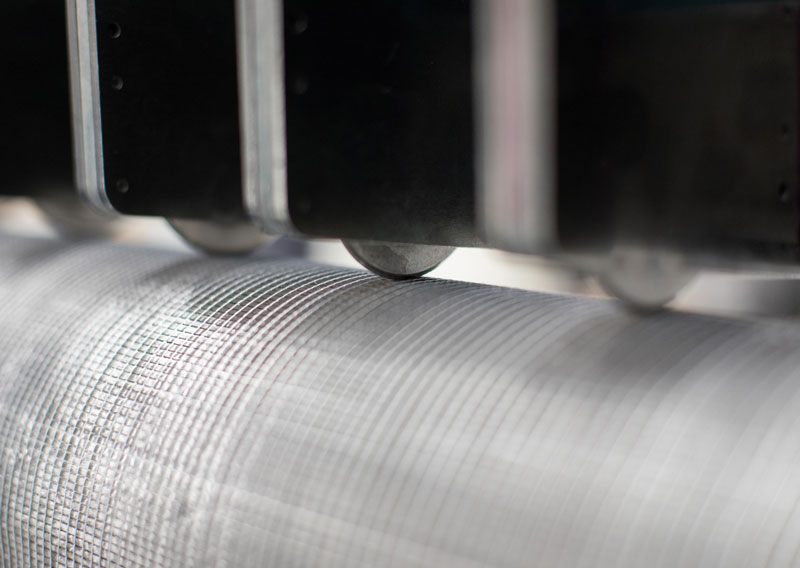
BOLTON, England — February 11, 2021 — Bindatex, the United Kingdom-based provider of specialist process and cutting services, is increasing its capacity for slitting nonwovens while maintaining the quickest turn-around times in the industry. It can put inquiries into production within two days, if required, which typically takes weeks.

As specialists in cutting, Bindatex can easily achieve the very low slitting widths that can be required by the nonwovens industry (20mm easily and lower on request) and at very large diameters.

The company also provides a solution to the common problem within the industry of uneven tension in winding the roll and enables material salvage.

The expansion in capacity comes after the successful completion of projects for several UK PPE manufacturers and other companies in medical technology such as filter disks for ventilators, and across other nonwovens applications ranging from cosmetics to civil engineering.

Bindatex can supply in high production volumes or low development amounts for prototyping.

Chris Lever, managing director of Bindatex, said: “Our extensive experience in the aerospace industry means we apply attention to detail and quality processes in all areas of our work. And when slitting to low widths with quick turn-around times for the nonwovens industry, this is especially important.

“Over the past couple of years, we have invested heavily in highly specialised machinery which enables us to offer a wide range of cutting solutions with very short lead-times.

Formed in 2004, Bindatex is experienced in slitting and sheeting a variety of hard to cut materials and also has extensive experience in cutting nonwovens into discs shapes for filter applications. The company is ISO9001 approved and, unlike many other converting companies, does not impose a minimum order.

At the end of 2020, Bindatex secured a grant from Innovate UK from the Sustainable Innovation Fund to support a critical six-month R&D project to further develop and upscale their operations.

Posted February 16, 2021

Source: Bindatex

NCC Survey Suggests U.S. Producers To Plant 11.5 Million Acres Of Cotton In 2021

MEMPHIS, Tenn. — February 11, 2021 —  U.S. cotton producers intend to plant 11.5 million cotton acres this spring, down 5.2 percent from 2020 (based on USDA’s February 2021 estimate), according to the National Cotton Council’s 40th Annual Early Season Planting Intentions Survey (see table below).

Upland cotton intentions are 11.3 million acres, down 4.9 percent from 2020, while extra-long staple (ELS) intentions of 161,000 acres represent a 20.7 percent decline. The detailed survey results were announced during the 2021 National Cotton Council Annual Meeting Virtual Live-Stream Event.

Dr. Jody Campiche, the NCC’s vice president, Economics & Policy Analysis, said, “Planted acreage is just one of the factors that will determine supplies of cotton and cottonseed. Ultimately, weather and agronomic conditions are among the factors that play a significant role in determining crop size.”

She said that with abandonment assumed at 18.1 percent for the United States, Cotton Belt harvested area totals 9.4 million acres. Using an average U.S. yield per harvested acre of 855 pounds generates a cotton crop of 16.7 million bales, with 16.3 million upland bales and 431,000 ELS bales.

The NCC questionnaire, mailed in mid-December 2020 to producers across the 17-state Cotton Belt, asked producers for the number of acres devoted to cotton and other crops in 2020 and the acres planned for the coming season. Survey responses were collected through mid-January.

Campiche noted, “History has shown that U.S. farmers respond to relative prices when making planting decisions. Relative to the average futures prices during the first quarter of 2020, prices of all commodities were trading higher. For the 2021 crop year, corn, soybeans, wheat, and sorghum are expected to provide more competition for cotton acres.”

Southeast respondents indicate a 4.2 percent decrease in the region’s upland area to 2.3 million acres. In Alabama, the survey responses indicate a 9.3 percent decrease in cotton acreage and increases in corn, wheat, and soybeans. In Florida, respondents indicated slightly less cotton and more corn and peanuts. In Georgia, cotton acreage is expected to decline by 8.6 percent as growers expect to plant more corn, wheat, soybeans, and peanuts. In North Carolina and South Carolina, growers expect to increase cotton acreage by 13.4 percent and 2.6 percent, respectively. Cotton acreage is expected to decline by 10.0 percent percent in Virginia while an increase in corn, soybeans, and ‘other crops’ is expected.

Mid-South growers intend to plant 1.7 million acres, a decline of 3.7 percent from the previous year. Across the region, all states except Missouri intend to decrease cotton acreage. Arkansas producers intend to plant 6.8 percent less cotton acreage and increase corn, wheat, and soybeans. Louisiana producers expect to plant 5.6 percent less cotton acreage in 2021 and plant more corn, wheat and soybeans. In Mississippi, cotton acreage is expected to decrease by 1.6 percent while corn, wheat, and soybean acreage is expected to increase. Missouri growers expect to increase cotton acres by 1.2 percent, planting more corn and less soybeans. In Tennessee, cotton acreage is expected to decline by 6.1 percent as land shifts to corn, soybeans, and wheat.

Southwest growers intend to plant 7.1 million cotton acres, a 5.5 percent decline. In Kansas, producers intend to plant 0.9 percent more cotton acres and less corn, wheat, and soybeans. In Oklahoma, growers expect to plant 5.2 percent less cotton and more wheat. Texas acreage is expected to decline by 5.7 percent while corn, wheat, and sorghum acreage is expected to increase.

Far West producers are expecting to plant 197,000 upland cotton acres, a 2.5 percent decrease from 2020. Cotton acreage is expected to decrease in Arizona and California and increase slightly in New Mexico.

ELS acreage is expected to decline by 26.7 percent in California and 10.5 percent in Texas due to concerns about water availability. A slight increase is expected in Arizona, while New Mexico acreage is expected to remain unchanged from 2020.

In recent years, U.S. cotton producers have struggled with volatile cotton prices, high production costs and weather issues. In the face of very tight margins, many producers continue to face difficult economic conditions heading into 2021.

NCC delegates were reminded the expectations are a snapshot of intentions based on market conditions at survey time with actual plantings influenced by changing market conditions and weather.

Prospective 2021 U.S. Cotton Area

   2020 Actual (Thou.)  1/  2021 Intended (Thou.)  2/ Percent Change
 
SOUTHEAST 2,368  2,268  -4.2%   
  Alabama 450 408 -9.3%  
  Florida 98 97 -1.2%  
  Georgia 1,190 1,088 -8.6%  
  North Carolina 360 408 13.4%  
  South Carolina 190 195 2.6%  
  Virginia 80 72 -10.0%  
 
MID-SOUTH 1,800  1,733  -3.7%   
  Arkansas 525 489 -6.8%  
  Louisiana 170 161 -5.6%  
  Mississippi 530 521 -1.6%  
  Missouri 295 299 1.2%  
  Tennessee 280 263 -6.1%  
 
SOUTHWEST 7,520  7,109  -5.5%   
  Kansas 195 197 0.9%  
  Oklahoma 525 498 -5.2%  
  Texas 6,800 6,415 -5.7%  
 
WEST 202  197  -2.5%   
  Arizona 125 125 -0.3%  
  California 34 28 -17.7%  
  New Mexico 43 44 3.2%  
 
TOTAL UPLAND 11,890  11,308  -4.9%   
 
TOTAL ELS 203  161  -20.7%   
  Arizona 7 8 19.8%  
  California 147 108 -26.7%  
  New Mexico 11 11 0.0%  
  Texas 38 34 -10.5%  
 
ALL COTTON 12,093  11,468  -5.2%   


Posted February 16, 2021

Source: National Cotton Council

2021 World Cotton Outlook: Recovery In World Cotton Demand As The U.S. And World Economies Rebound

MEMPHIS, Tenn. — February 11, 2021 — National Cotton Council economists point to a few key factors that will shape the U.S. cotton industry’s 2021 economic outlook.

This past year was characterized by significant uncertainty and volatility in both the global economy and the world cotton market. The most challenging issue facing the global cotton market in 2020 was the COVID-19 pandemic. The pandemic caused unprecedented disruptions in the supply chains and markets for the U.S. and world cotton and textile industries during the first half of 2020. The COVID‐19 pandemic devastated textile supply chains as retail outlets shuttered their doors for months. As the collapse in cotton demand persisted throughout 2020, the negative impacts were felt across the U.S. cotton industry.

Now, in the early weeks of 2021, while the pandemic is still creating disruptions in various parts of the world, the overall economy is recovering at a much faster pace than originally expected. However, current economic projections for the U.S. and global economies should be viewed with caution given the lack of clarity regarding the potential impacts of the ongoing pandemic. The distribution of vaccines has created optimism for world economic conditions, yet some uncertainty is still present due to increased infections and new virus strains in some parts of the world along with renewed restrictions.

In her analysis of the NCC Annual Planting Intentions survey results, Campiche said the NCC projects 2021 U.S. cotton acreage to be 11.5 million acres, 5.2 percent less than 2020. The expected drop in acreage is primarily the result of strong competing crop prices. With abandonment assumed at 18.1 percent for the United States, Cotton Belt harvested area totals 9.4 million acres. Using an average 2021 U.S. yield per harvested acre of 855 pounds generates a cotton crop of 16.7 million bales, with 16.3 million upland bales and 431,000 extra-long staple bales. U.S. cottonseed production is projected to increase to 5.2 million tons in 2021.

Regarding domestic mill cotton use, the NCC is projecting a partial recovery in U.S. mill use at 2.8 million bales during the 2021 crop year. U.S. mills were severely impacted by the COVID-19 shutdowns in 2020. As one of largest markets for U.S. cotton, U.S. mills continue to be critically important to the health of the cotton industry.

World trade is estimated to be higher in the 2020 marketing year as consumption recovers from the COVID-19 pandemic. Based on sales and shipments for the year-to-date, U.S. exports are projected to reach 15.8 million bales in the 2020 marketing year. As a result of a large carryover sales from the 2019 crop year and increased purchases from China, U.S. export commitments and shipments have been very strong for the 2020 crop year. As of February 4, total commitments reached 14.1 million bales while 7.8 million bales have been shipped. Current commitments are at the highest level at this point in the marketing year since the 2010 crop year.

While export competition from Brazil remains strong, the United States was able to regain market share in China in 2020 as a result of the Phase I agreement. The United States also had increased opportunities for higher export sales to other markets in the 2020 crop year due to lower production in Australia, Pakistan, and Turkey.

U.S. exports are projected to drop slightly to 15.4 million bales in the 2021 marketing year. With large stocks in other major exporting countries and a partial recovery in Australia’s production, the United States will continue to face strong export competition in 2021. When combined with U.S. mill use, total offtake exceeds expected production, and ending stocks are projected to fall to 2.6 million bales. If realized, U.S. stocks represent one of the lowest levels in the last 20 years.

Campiche said world production is estimated to increase by 1.5 million bales in 2021 to 115.6 million due to a slight increase in acreage. World mill use is projected to increase to 120.9 million bales in 2021. Ending stocks are projected to decline by 5.4 million bales in the 2021 marketing year to 90.4 million bales, resulting in a stocks-to-use ratio of 74.8 percent.

Although global stocks remain high, a tighter U.S. balance sheet, low supply chain inventories, increased purchases from China, speculative money flow, weaker U.S. dollar, higher grain and oilseed prices, and post-COVID demand expectations are contributing to bullish sentiment for cotton prices. However, additional restrictions related to the COVID-19 pandemic, large stocks outside of China, and low man-made fiber prices could put downward pressure on cotton prices in 2021.

On the NCC’s website are additional details of the 2021 Cotton Economic Outlook.

Posted February 16, 2021

Source: National Cotton Council

Kent Fountain To Lead National Cotton Council In 2021

Kent Fountain

MEMPHIS, Tenn. — February 11, 2021 — Kent Fountain, a Surrency, Ga., ginner, was re-elected National Cotton Council (NCC) chairman for 2021 during the organization’s virtual annual meeting today. Ted Schneider, a Lake Providence, La., producer, was re-elected to the position of vice chairman for 2021.

A member of the NCC’s 2001-2002 Cotton Leadership Class, Fountain served as a NCC vice president from 2016-2018 and as a NCC director in 2011. He has served on multiple NCC committees, including chairing its Quality Task Force, and served for 10 years as a director of Cotton Council International, the NCC’s export promotion arm.

Very active in the National Cotton Ginners Association, Fountain has held numerous leadership positions including serving as its president in 2012. He is a past president of the Southeastern Cotton Ginners Association and currently serves as a director for Staplcotn and the Cotton Growers Warehouse Association.

Fountain, who earned an Agricultural Economics degree at the University of Georgia, is the president/CEO of Southeastern Gin and Peanut, Incorporated in Surrency. The recipient of numerous honors, he was named Southeastern Ginner of the Year in 2001 and received the Horace Hayden National Ginner of the Year Award in 2016. He and his wife, Missi, live in Screven, Ga., and have two sons.

Elected as a NCC vice president was Jay Cowart, an Altus, Okla., warehouser.

Re-elected as NCC vice presidents were: Jordan Lea, a Greenville, S.C., merchant; Robin Perkins, a Sanford, N.C., textile manufacturer; Kirk Gilkey, a Corcoran, Calif., ginner; and Kevin Brinkley, marketing cooperative executive; and Robert Lacy, Jr, cottonseed processor; both from Lubbock, Texas. Re-elected as secretary-treasurer is Barry Evans, a producer from Kress, Texas.

Re-elected as NCC staff officers were: Gary Adams, president and chief executive officer; Marjory Walker, vice president, Council Operations; Jody Campiche, vice president, Economics and Policy Analysis; Reece Langley, vice president, Washington Operations; John Gibson, vice president, Member Services; and Harrison Ashley, vice president, Ginner Services.

Newly-elected NCC staff officers are: Don Parker, vice president, Technical Services; and Tas Smith, vice president, Producer Affairs.

Posted February 16, 2021

Source: National Cotton Council

Hyundai Reveals IONIQ 5’s Living Space And Sustainable Interior Ahead Of Virtual World Premiere

SEOUL — February 15, 2021 — Hyundai Motor Co. today released new images, revealing the spacious and versatile interior of the much-anticipated IONIQ 5, which will make its virtual world premiere on February 23, 2021.

IONIQ 5 is Hyundai’s first battery electric vehicle (BEV) model to utilize the Electric-Global Modular Platform (E-GMP). This BEV-dedicated platform houses a flat battery that enables a spacious and customizable interior, offering personalized mobility with flexible configurations to comfortably accommodate both passengers and cargo.

Furnished with primarily eco-friendly materials and textiles, the interior design reflects consumers’ rising interest in personal transportation that supports well-being as well as demand for more ethical and sustainable products.

“IONIQ 5 is a statement of design that offers an optimistic look at what customers can expect in the new EV era,” said SangYup Lee, senior vice president and head of Hyundai Global Design Center. “The long wheelbase is translated to a new dimension of space. We designed this special space as a perfect place to recharge, Your home away from home.”

‘Living Space’ inspired interior opens a new dimension of design

IONIQ 5 sets itself apart from other midsize crossovers, especially those with internal combustion engines and conventional Steer-by-Wire systems, because the E-GMP allows for an elongated wheelbase and flat floor.

IONIQ 5’s driver and passengers can freely enter and exit the cabin on either side when parked in a narrow spot, because the flat floor allows the center console to slide back and forth. This resulted in a fundamental rethink of the conventional center console and to offer greater function than a static storage box. The newly developed ‘Universal Island’ replaces the center console and becomes the centerpiece of the IONIQ 5’s living space experience.

The driver and front passenger seats are equipped with leg rests that allow passengers to ‘relax and recharge’ while their vehicle is being recharged. All seats can be operated and repositioned, making it easier for adults in the front to care for children and pets seated in the rear.

Reducing negative environmental impact with high-quality, eco-friendly interiors

While developing IONIQ 5, Hyundai put considerable thought into what consumers were looking for in a car. One of the clear demands was the need for more eco-conscious mobility solutions with lower environmental impact. Designers addressed these concerns through IONIQ 5’s use of eco-friendly and sustainably sourced materials.

The seats are clad in an eco-processed leather that is dyed and treated with plant oil extractions from flaxseed. Other soft furnishings throughout the cabin consist of textiles derived from sustainable fibers such as sugar cane bio components, wool and poly yarns, as well as material woven from fibers made from recycled PET plastic bottles. Surfaces such as the dashboard, switches, steering wheel and door panels are coated in a polyurethane bio paint composed of oils from rape flowers and corn.

World Premiere of IONIQ 5

Hyundai will debut IONIQ 5 during the virtual world premiere event on February 23, 2021. During the event, Hyundai will unveil details about IONIQ 5’s innovative features and how customers can benefit from this dedicated BEV model.

Posted February 16, 2021

Source: Hyundai Motor Co.

Surgical Masks By Freudenberg Receive 510(k) Clearance From The FDA

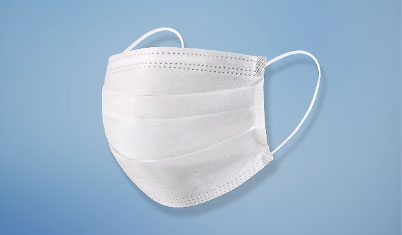
DURHAM, N.C. — February 15, 2021 — ASTM Level 3 surgical masks manufactured by Freudenberg Performance Materials recently received 510(k) clearance from the US Food and Drug Administration (FDA). The surgical masks are intended for use by healthcare personnel to protect both the patient and themselves from transfer of microorganisms, body fluids and particulate material. The face masks are intended for use in infection control practices to reduce the potential exposure to blood and body fluids.

For the U.S. market, Freudenberg Performance Materials is now providing FDA cleared surgical masks meeting the Level 3 standard of the American Society of Testing and Materials (ASTM). The ASTM Level 3 surgical mask is for use in conditions where there is a high risk of fluid and spray of aerosol transmission, such as operating procedures. The masks are a single use, disposable device provided non-sterile.

Surgical masks by Freudenberg were tested for performance in five areas: fluid resistance, differential pressure, particulate efficiency, bacterial filtration efficiency and flammability. Upon completion of testing, the surgical masks consistently met ASTM Level 3 criteria in all five performance test areas. Bacterial and particle filtration efficiency test results were greater than 99 percent.

“This was a great accomplishment for our team,” said Alice Pittenger, head of sales, North America, Global Healthcare Division, Freudenberg.” It is a milestone that supports our commitment to continue manufacturing local. Meeting the ASTM Level 3 standard helps us in our goal to not only keep our healthcare workers safe, but also ensure they have a steady, reliable PPE supply so the shortages that happened at the beginning of the pandemic don’t happen again.”

The Durham, N.C., site of Freudenberg Performance Materials began mask production in 2020 in response to the COVID-19 pandemic. Working closely with local partners, Freudenberg is also aiming to prevent future PPE supply shortages by establishing long-term face mask production for the U.S. market. The site manufactures surgical masks and community masks and is pursuing NIOSH N95 respirator certification.

Posted February 16, 2021

Source: Freudenberg Performance Materials

EPA Approves Livinguard’s “Self-Disinfecting Textile,” Setting The Bar In New Textile Category

SAN JOSE, Calif. — February 16, 2021 — Livinguard announced today that the U.S. Environmental Protection Agency (EPA) has approved the hygiene-technology company’s patented self-disinfecting textile (EPA Reg N. 95700-2). Livinguard’s new textile is effective against Gram negative and Gram positive bacteria to the tune of 100,000 times in 10 minutes, among the highest levels of defense against disease-causing pathogens. With patents, this is a one of a kind technology.

In addition to killing 99.999-percent of bacteria, Livinguard’s technology continuously disinfects and is safe for humans and the environment. Furthermore, the EPA approval confirms Livinguard’s self-disinfecting technology remains effective on textiles tested after 30 industrial washes, giving it broad application across many industries.

“This EPA certification is confirmation of Livinguard’s patented and break-through invention, creating a new self-disinfecting-textile category, whereby the textile kills bacteria on contact, is washable and reusable,” said Sanjeev Swamy, Livinguard’s founder and CEO. “Unlocking the limitless possibilities of permanent hygiene and proactively improving the health and safety of the public is at the heart of Livinguard’s mission. We can now have self-disinfecting airplane seats, hospital and hotel linens, sports apparel, medical scrubs, footwear, uniforms and carpeting. Essentially, any business or organization that uses textiles can effectively utilize our self-disinfecting technology.”

Livinguard’s innovation pipeline continues to develop newer generation of self-disinfecting technologies

While the latest breakthrough of the EPA approval marks a crowning achievement for the hygiene-technology company, Livinguard has already incorporated newer antimicrobial technology that it currently incorporates in a line of face masks that can be worn up to 210 times (approximately six months) and a line of gloves that can be worn up to 30 times with no compromise on safety or efficacy.  Worn together, the two provide peace of mind for those seeking protection against airborne viruses and those transmitted on surfaces.

Since the onset of the COVID-19 pandemic, researchers have studied the effectiveness of Livinguard’s next-generation self-disinfecting textile against the virus. Freie University (Berlin) laboratory studies concluded Livinguard’s next-generation self-disinfecting textile efficiently inactivated SARS-CoV-2. In addition, studies conducted by researchers at the University of Arizona, Tucson’s Water & Energy Sustainable Technology center determined the textile’s efficacy against Human Coronavirus 229E. The findings from both studies can be found here: https://c212.net/c/link/?t=0&l=en&o=3069139-1&h=2370660721&u=https%3A%2F%2Flivinguard.com%2Fwp-content%2Fuploads%2F2020%2F09%2FLivinguard_FU-Berlin_Arizona.pdf&a=can+be+found+here

Posted February 16, 2021

Source: Livinguard AG

Motion Announces Seven Management Promotions

BIRMINGHAM, Ala. — February 15, 2021 — Motion — a distributor of maintenance, repair, and operation replacement parts, and provider of industrial technology solutions — is pleased to announce seven recent promotions to key field management positions. Each brings depth of experience and achievement to further position Motion for success — in providing the best customer experience as well as in attaining company growth goals.

Logan Carden was named Nashville Division vice president and will be responsible for overseeing the sales growth initiatives of 20 branches located in parts of Indiana, Tennessee, Kentucky, Mississippi and Alabama. He will report to Chris Pacer, vice president Group Executive – Central.

Carden joined Motion in 2007, as a member of the Corporate Accounts Support Team. He continued to expand his roles within the company, ultimately earning a Corporate Account Manager role in 2013 before his move to the field sales and branch operations side in 2019 with a promotion to branch manager of Motion’s Evansville, Ind., location. Carden was quickly promoted to sales manager of the Evansville and Owensboro, Ky. locations in March 2020. He graduated with a Bachelor of Arts Degree from Huntingdon College in 2006, and later earned his MBA from the University of North Alabama. Originally from Birmingham, Alabama, Carden is currently based in Indiana after making the move with his 2019 promotion.

Bill Carroll was promoted to vice president of the new Philadelphia Division — Pennsylvania, New Jersey, and West Virginia — which was strategically established to serve and further the significant growth in the East Group’s territory. He will be responsible for overseeing 13 branches’ sales and guiding their market growth, and will report to Phil Donnelly, vice president Group Executive – East.

Carroll most recently managed the Philadelphia branch, and in his career has held a variety of managerial, sales, and support positions in the company and in its industry. He started in 1989 with Eastern Bearing of New Jersey, which Motion acquired in 1999. During his Motion tenure, Carroll has managed at four different branch operations in New Jersey and Pennsylvania. He has also worked in Motion’s Corporate Accounts organization in a Compliance manager role. Originally from Pennsylvania, Carroll is based near Philadelphia.

Tami DeWeese will assume leadership of the Pacific Northwest Division as its vice president. In her new role, DeWeese will oversee the sales growth, strategy and operations of 19 branch and shop locations. She will report to Jeremy Barton, vice president Group Executive –West.

A native of Washington state, DeWeese started with Motion in 2014 as a branch manager for Motion’s Portland (Oregon) branch, and in 2016 took on the added responsibility of the Longview, Wash., branch. Prior to joining Motion, she was the president of a process pump company for 13 years.

Dan Pike was promoted to St. Louis Division vice president and will be responsible for the sales growth and strategic management of 17 branch operations throughout Missouri and Arkansas. He will report to Austin Amos, senior vice president Group Executive – Midwest.

Pike began his career with Motion in 1991 as a corporate trainee, and his tenure has included various positions within the company including account fepresentative, Fluid Power specialist, branch manager, Corporate Account manager, and most recently as Area vice president Corporate Accounts for the Midwest Group. He is a native Floridian and a graduate of the University of Florida with a degree in Marketing.

Dave Purvis was named Midwest Group Area vice president, replacing Dan Pike in that role. Purvis will be responsible for leading the Midwest Group Corporate Accounts Team, which involves managing existing corporate account relationships and driving new growth opportunities. He will also be responsible for providing corporate account partners with Motion’s full offering of services and solutions to reduce these partners’ Total Cost of Ownership. He will report to Austin Amos.

Purvis started his career with Motion in 1991 at the Mattoon, Ill., branch and has held various positions within the company, including warehouse manager, operations manager and account manager. In 2011, he was promoted to corporate account manager. Prior to joining Motion, Purvis attended Eastern Illinois University. Originally from Illinois, he is currently based in Decatur.

Steve Kammeyer was named area vice president for Corporate Accounts, West Group. In his new position, he will directly engage with field personnel and leadership in creating and developing internal and external sales-driven initiatives, with a focus on corporate account customers. Kammeyer will report to and work closely with Jeremy Barton (Vice President Group Executive – West) in the execution of these efforts.

Beginning his career with Motion in 1986, Kammeyer has held various roles within the branch structure including warehousing, customer service, outside sales, and branch manager before being promoted to corporate sales manager in 2012. An Arizona native, he is based in Phoenix.

Lisa Solomon was promoted to area vice president for Corporate Accounts, Central Group, and will lead this Group’s Corporate Accounts Team. She will be responsible for enhancing existing national account relationships and driving new opportunities for growth throughout the various industry segments within the geographic area. She will report to Chris Pacer, vice president Group Executive – Central.

Solomon began her Motion journey in 2015 as a Business Development manager in Corporate Accounts and was quickly promoted in 2016 to Corporate Accounts manager. Originally from Michigan, Solomon graduated from Central Michigan University with a Bachelor of Liberal Arts in Broadcasting, Communications and Marketing.

“We are immensely proud of what these individuals have accomplished to date and are confident that their experience, acumen and drive will help to take their Divisions and the Company to a new level,” said Kevin Storer, executive vice president Branch Operations – North America and president of Motion Mexico. “Each of these promotions is well-deserved and we are looking forward to seeing the impact of their leadership, as part of Motion’s bright future.”

Posted February 16, 2021

Source: Motion

Oerlikon Neumag Presents Efficient BCF S8 Carpet Yarn System In Monocolor And Tricolor Versions

NEUMUENSTER, Germany — February 16, 2021 — Oerlikon Neumag has found the right approach for its customers with the efficient BCF S8 carpet yarn system in Monocolor and Tricolor versions. Their solution is once again in the spotlight at this year’s DOMOTEX Asia/CHINAFLOOR from March 24-26, 2021 in Shanghai. Their audience of professionals can see the advantages for themselves at Oerlikon Neumag exhibition stand W3 D26.

Whether Monocolor or Tricolor, the performance data and technological details of the BCF S8 versions have already made a huge impression at numerous exhibitions and road shows: With up to 700 filaments per thread, the BCF S8 significantly outperforms its sister, the BCF S+ (400 filaments), also guaranteeing finer titres of up to 2.5 dpf. In addition to that, the process speed of the new Witras III-37 winder is higher than ever at 3,700 m/min — and provides increased throughput of up to 15 percent in comparison to previous technologies. The bottom line is a system efficiency of 99 percent, as well as possible energy savings of up to 5 percent per kilogram of yarn.

The BCF S8 Tricolor version is all you need

From a mélange to strict separation — the trend towards multiple colors for carpets goes on. The options for differentiating product for carpet yarn manufacturers are better than ever with the BCF S8 due to even more flexible color mixture versions. More than 200,000 different color shades derived from three colors are provided by the core component of the process, the new patent-pending CPC-T (Colour Pop Compacting unit).

Posted February 16, 2021

Source: Oerlikon Neumag

Sponsors