TMAS – The Swedish Textile Machinery Association: Digitalization Demands Streamlined Solutions

STOCKHOLM, Sweden — December 13, 2021 — Fully integrated production lines from single source suppliers have increasingly become the norm in the textile industry and make complete sense in meeting today’s complex supply chain needs, according to TMAS – the Swedish Textile Machinery Association.

“Over the past few decades, textile mills have transitioned from consisting of collections of individual machines serviced and maintained largely by in-house mechanics as well as separate supplier companies for each part of the production line,” said TMAS Secretary General Therese Premler-Andersson. “Those in-house engineering service teams have diminished over the years, while the introduction of electronic drive systems in the 1980s and 90s also put an increased emphasis on the need for third party electrical engineers, operating separately to the machine builders.

“Subsequently, mechanical machines and electronic drive systems became much more integrated, and more recently, with the advent of digitalization, entire production lines are becoming centrally controlled with remote, instantaneous connections to their suppliers for service and maintenance.

“In this context, the integration of machinery and automation specialists as single-source suppliers makes perfect sense, while partnerships between machine builders and their customers have never been more important.”

The recent acquisition of Nowo textile machinery from its previous owner, Brandstones Ab Oy, by TMAS member ACG Kinna, she adds, is a good example of this general trend.

Nowo, headquartered in Turku, Finland, designs, manufactures and exports high-end textile production machinery mainly for the fiber processing industry. At the end of the 1980s it introduced the highly successful Nowo Vac pillow filling system, which has been its best-selling system, alongside the Noworoll ball fiber machine, introduced in the 1990s.

Nowo’s machine range covers the entire production process from bale opening to weighing and filling, and complete production lines are tailored to the specific needs of customers. The company can also deliver individual machines such as bale openers, cards, crosslappers, pickers, mixing devices, material silos, sucking devices, anti-static units etc. Seven patents cover the company’s technologies.

Founded in 1977, ACG Kinna Automatic, based in Skene in Sweden, specializes in customized and cost-efficient solutions for the production of pillows and quilts. All of its design, manufacturing and final line testing is carried out in Sweden and the reliability and longevity of its machines has earned it the trust of the world’s largest furniture and home decoration retailers and Europe’s largest manufacturer of pillows and duvets, among many customers.

“We see good opportunities for growth for Nowo’s technology, alongside and in combination with the extensive ACG Kinna product portfolio,” said ACG Kinna CEO Christian Moore. “We aim to continue the good cooperation with Nowo’s current suppliers and partners and will accelerate the development of fully integrated production lines based on the know-how of both companies. As new Nowo MD, Jurgen Jürimä brings a wealth of fibre and textile knowledge to the team and this will enable us to take Nowo textile machines to the next level in automated, seamless production.”

Posted December 13, 2021

Source: TMAS – The Swedish Textile Machinery Association
The International Textile Manufacturers Federation (ITMF) Will Present Awards In The Categories “Sustainability & Innovation” And “International Cooperation”

ZURICH — December 13, 2021 — The International Textile Manufacturers Federation (ITMF) is supporting and promoting sustainable environmental, social, and economic production along the entire textile value chain. Companies and organizations around the world are investing time and resources to develop and improve sustainable solutions. Another important aspect in today’s complex world is the increased necessity to cooperate with different partners from industry, research, and governments.

Against this backdrop, ITMF wants to recognize companies/organizations and/or persons along the textile value chain that are striving to make a difference and that have achieved outstanding results. In 2022, ITMF will present the ITMF Awards in the categories “Sustainability & Innovation” and “International Cooperation”.

1) Innovation & Sustainability

Objective: Recognize sustainable and innovative achievements in the textile industry with focus on innovation, design, development, and production under the strictest
standards of sustainability and respect for the environment.
Requirements: The jury will grant this award to a company/organisation or person which/who significantly improved textile manufacturing through the means of international collaboration.

2) International Cooperation

Objective: Recognize progress in the area of international collaboration in the textile industry according to the values of the 17 Sustainable Development Goals (SDGs)
of the 2030 Agenda for Sustainable Development.
Requirements: The jury will grant this award to a company/organization or person which/who significantly improved textile manufacturing through the means of international collaboration.

Information about the application requirements and process are available on ITMF Awards 2022.

The deadline for applications is January 29th, 2022, at 23:00 hrs. (CET).

The winners will be invited to present their achievements at the ITMF Annual Conference 2022 (https://www.itmf.org/conferences/annual-conference-2021) in Davos, Switzerland.

All applications and related documents are to be sent by email to secretariat@itmf.org.

Posted December 13, 2021

Source: The International Textile Manufacturers Federation (ITMF)

Teijin Frontier Joins “Fashion For Good” Platform For Sustainable Innovation In Apparel Industry

TOKYO, Japan — December 13, 2021 — Teijin Frontier Co., Ltd., the Teijin Group’s fibers and products converting company, announced today that it has become East Asia’s first enterprise to join Fashion For Good (FFG), a global platform aimed at enhancing sustainable innovation in the apparel industry.

The FFG was established in 2017 to address pressing issues such as the pollution generated by producing and transporting clothes and their raw materials, the disposal of used items, the creation of a recycling system, and the need to develop technologies and mechanism to resolve such issues. FFG membership includes apparel and retail enterprises mainly in Europe, start-up companies and research institutes in industries engaged such as raw materials, textile, processing, sewing and logistics.

Teijin Frontier will now evaluate the quality of chemically recycled polyester  pellets made from  textile wastes manufactured by selected FFG innovators, and also manufacture and evaluate the quality of sustainable filament yarns. Teijin Frontier, utilizing its well-established technology and expertise, aims to create more efficient fiber-to-fiber recycling mechanisms as well as contribute to solve other serious issues in the apparel industry that FFG defines.

Teijin Frontier, guided by its THINK ECO® environmental strategy, is striving to improve its environmental value, including by developing environmentally friendly materials and products for applications ranging from clothing to industrial materials. In addition, to contribute to more responsible consumption and production in keeping with the Sustainable Development Goals (SDGs), Teijin Frontier is working to enhance systems in society for more effective resource conservation, such as waste reduction and recycling. Going forward, Teijin Frontier will continue to actively pursue these and other initiatives to help protect the global environment.

Posted December 13, 2021

Source: Teijin Limited

The National Retail Federation (NRF) Issues Statement On House Passage Of Ocean Shipping Reform Act

WASHINGTON — December 8, 2021 — The National Retail Federation (NRF) today issued the following statement from Senior Vice President of Government Relations David French after the U.S. House of Representatives voted to approve the Ocean Shipping Reform Act (OSRA) of 2021. The bipartisan legislation, sponsored by Congressmen John Garamendi (D-CA) and Dusty Johnson (R-SD), would provide critical updates to the international maritime transportation system, which has been severely impacted by COVID-19.

“The Shipping Act has remained unchanged for nearly 20 years, as the global supply chain has continued to grow and evolve to meet increased consumer demand. This bipartisan legislation provides much-needed updates and reform to an archaic system that retailers and thousands of other businesses depend on each day to transport goods.

“These improvements could not come at a more critical time, as the amplification from the pandemic has been severe. We thank Reps. Garamendi and Johnson for their leadership and the House for their swift vote to approve this measure. We encourage the Senate to follow suit.”

The House passage of the Ocean Shipping Reform Act is the final piece of NRF’s “Save Our Shipments” grassroots campaign. The targeted advocacy effort focuses on legislative solutions to address the retail industry’s supply chain challenges, including passing the Bipartisan Infrastructure Bill and adding more truck drivers to the workforce.

Earlier this week, NRF sent a key vote letter to the House, urging members to approve the bill.

In September, NRF helped to spearhead a coalition of more than 152 supply chain stakeholders to endorse the bill.

Posted December 9, 2021

Source: The National Retail Federation (NRF)

Putting The Proof Behind Sustainability Promises

As consumers work to check everything off their shopping lists this holiday season, sustainability is becoming part of the shopping equation more and more.

Brands and retailers have noticed an increased demand for more sustainable products since the pandemic began more than 20 months ago. Research conducted earlier this year by the U.S. Cotton Trust Protocol revealed that nearly two-thirds of brands and retailers felt there has been an increased demand for sustainable products since March of 2020. However, it is not just about providing consumers with more sustainable products, it has also become about proving that sustainability with data and transparency.

The U.S. Cotton Trust Protocol, which was launched in the fall of 2020, can help brands and retailers meet these demands. The program provides farm level data on six key environmental metrics — water use, land use, soil loss, soil carbon, energy use and greenhouse gas emissions.

“I’ve spent most of my life working with cotton and have committed the past several decades to helping U.S. growers raise the bar for sustainable stewardship of their land,” said Dr. Andrew Jordan, advisor to the U.S. Cotton Trust Protocol. “This initiative is groundbreaking because of its commitment to data and its scalability. The data allows brands and retailers to demonstrate their commitments to their science-based sustainability targets and allows us to walk with U.S. cotton growers on a road of continuous improvement.”

The U.S. cotton industry understands that continuous improvement is essential and has committed to a number of sustainability goals by 2025. Trust Protocol grower members will meet these goals by utilizing a data-driven approach that relies on innovative new technologies, cutting-edge research, and best management practices.

“Today, the Trust Protocol is the first sustainable cotton fiber to provide article-level transparency throughout the supply chain,” said Dr. Gary Adams, president of the U.S. Cotton Trust Protocol. “The program provides access to more sustainably grown cotton for brands and retailers, and science based, data-led assurances that their consumers can have confidence in — something that has been lacking in the industry to date.”

As public pressure continues to build, the Trust Protocol allows brands and retailers to prove their sustainability commitments to their customers, while at the same time continuously reducing U.S. cotton’s environmental footprint, providing consumers the confidence they need as they look for the perfect gifts this holiday season — and beyond.

In its first year, the Trust Protocol welcomed more than 560 brand, retailer, mill and manufacturer members, including Levi Strauss & Co.; PVH Corp. and its brands Calvin Klein and Tommy Hilfiger; Gap Inc. and its collection of purpose-led lifestyle brands Old Navy,
Gap, Banana Republic and Athleta; as well as global apparel manufacturer Gildan. The Trust Protocol has also welcomed U.K. retailers Tesco, Byford and Next Plc.

The Trust Protocol was designed to deliver a better future for U.S. cotton, ensuring that it contributes to the protection and preservation of the planet, using the most sustainable and responsible techniques.


To learn more about the U.S. Cotton Trust Protocol visit trustuscotton.org. Be sure to follow @TrustUSCotton on Twitter and Instagram, and connect with U.S.Cotton Trust Protocol on LinkedIn for more updates.

This sponsored content has been provided by the U.S. Cotton Trust Protocol.


November/December 2021

November/December 2021: Textile Activity At A Glance


November/December 2021

Confidence Is Tricky To Maintain

By Jim Borneman, Editor In Chief

Trade shows, meetings, in person events — and even personal selling — are trying like heck to make a comeback. This time of year, eyes look forward, trying to plan the course for 2022. And it looks like it may be harder than first thought.

As the industry entered the second half of the year, there was good news. The Industrial Fabrics Association International (IFAI), Synthetic Yarn & Fabric Association (SYFA), and other organizations held in-person events and there was a feeling of “Hey! We are back in business!”

Things were a little different, with antivirus procedures and protocols now part of everyday life. But the strong desire for some sense of normalcy — not a full-blown return to the daily life of say, 2019 — but a life with face-to-face meetings, sharing ideas in person, running into old friends, and even making some new ones, sure felt better for many attendees who have grown tired of staring at the computer screen for another zoom meeting.

Then, just like the old “Jaws 2” movie tag line, “Just when you thought it was safe to go back in the water,” the new COVID-19 variant Omicron made news.

As of this writing, not much is known about the severity of the new variant or the effect of vaccinations and treatment options. But governments are applying new travel restrictions and considering new rules regarding testing and proof of vaccination.

There also is a strong inconsistency in reactions to the Omicron variant, and politicization of the early response — and response in general — is not helping the situation.

Emotionally there are many parallels between COVID and a war. Not to minimize armed conflict, but the emotions of the embattled population are somewhat similar. The general
population suffers real loss — personal, family and friends. Their world is smaller, and movements restricted. Daily life is very different with institutions like schools, law and order, and government shifting roles in society. And, after the initial shock of the foggy engagement and initial crisis subsides, a sense of adapting and finding a way through
the daily battles comes to bare.

There is a sense of optimism out there — one not stoked by just wishful thinking — that 2022 will have a path to a more normal daily life. There will noise from all corners, but many will find their way down the center.

As of this writing, the year 2022 has a host of in-person textile events on the calendar, and the current conditions don’t seem to be impacting those plans. However, shows early in the year are threatened.

As Omicron is studied and better understood, as new drugs are approved to treat COVID, and if lockdowns and travel restrictions are eventually relaxed, 2022 shows like IDEA® in Miami and Techtextil North America/Texprocess Americas in Atlanta will create some terrific opportunities for business, innovation and investment in U.S. textiles.

There are lessons learned from the COVID war, but maybe it is time to shout, “Hey! We are back in business!”

November/December 2021

Zoltek Invests In Carbon Fiber Capacity

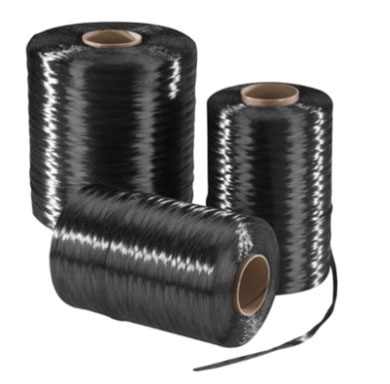
Zoltek Companies Inc. — with production facilities in the United States, Hungary and Mexico; and a U.S. subsidiary of Japan-based Toray Industries Inc. — has announced a capacity expansion in its large-tow carbon fiber production in 2023. Large- tow carbon fiber is fiber with more than 40,000 filaments and is often used in industrial applications such as wind turbine blades. The $130 million investment will be used to increase capacity at a Zoltek facility in Jalisco, Mexico, by approximately 54 percent to more than 20,000 tons per year. Once the new capacity is up and running, combined annual production of Zoltek’s Mexico and Hungary plants will be 35,000 metric tons.

Growing demand for alternative forms of energy, including wind power, are driving increases in demand for large-tow carbon fiber. Toray reports it expects the market for this fiber to continue to expand over the medium to long-term, and its investment will help stabilize supplies.

November/December 2021

Techtextil North America/Texprocess Opens Early Bird Registration

Early bird registration is now open for next year’s Techtextil North America and Texprocess Americas, which will take place at the Georgia World Congress Center in Atlanta. The event takes place May 17-19, 2022, but anyone registering before February 18, 2022, has the opportunity to save on exhibit hall, symposium and special event tickets.

Attendees are encouraged to purchase all tickets in advance. Early registration also makes planning easier, reduces wait times to pick up badges and ensures attendees are able to attend all events. Some features, such as the symposium and Official Techtextil North America & Texprocess Americas Reception, have a capacity limit.

To learn more about the show and purchase early bird tickets, visit the event’s joint website: techtextil-texprocess.us. messefrankfurt.com.

November/December 2021

VF Corp. Announces Investment In Virginia

VF Corp. has announced a $10.2 million investment in Martinsville, Va., to increase capacity at a 500,000-square-foot distribution center. The expansion includes 82 new jobs. A grant in the amount of $225,000 from the Commonwealth’s Opportunity Fund was approved by Governor Ralph Northam to assist Henry County with the project. The Virginia Economic Development Partnership worked with the Martinsville-Henry County Economic Development Corp. and the Virginia Office of Outdoor Recreation to secure the investment for the state, which was in competition with California and Pennsylvania.

“VF Corporation has thrived in Henry County for nearly 20 years, and we are thrilled to see the company continue to invest in the Commonwealth,” said Governor Northam.

“We’ve proudly operated our distribution center in Martinsville for 18 years and we know that continuing to invest in Martinsville is the right choice given its location and committed employees,” said Cameron Bailey, VF Corp. executive vice president, Global Supply Chain. “The planned investments in this facility, from enhanced technology to improved distribution equipment, as well as the 82 new full-time positions, will help deliver our products to our consumers in a more efficient and prompt manner.”

November/December 2021

Sponsors