Automation To Support Supply Chain Woes

By Claudia Jarrett

Unpredictable markets, an unstable procurement chain and impatient customers are just a few challenges your supply chain deals with. Balancing supply, demand and capacity has reached such a level of complexity that automation is increasingly sought after — and warehousing and materials handling are no exception. These are just a few of the reasons warehouse managers should look to increase their investment in automation.

Business Wire reports that more than 80 percent of the warehouses today have no automation whatsoever. However, it is expected that companies will ramp up investment into warehouse automation in the next few years. In fact, a Gartner survey states that 75 percent of companies will have integrated intralogistics smart robots into their warehouses by 2026.

Simply put, warehouse automation is the process of replacing repetitive tasks with automated systems. The goal here is for these automation systems to eliminate labor intensive and time consuming duties. Doing so, in turn, frees workers up to focus on more value-added tasks, such as quality control.

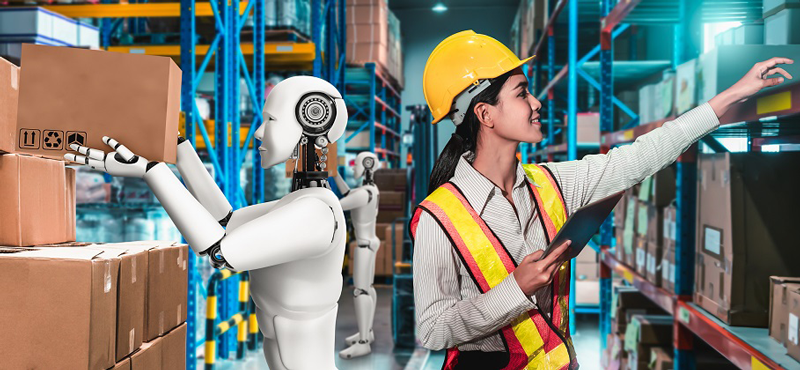
Intralogistics smart robots are designed specifically to support warehouses and distribution centres. Automation of this kind is becoming increasingly sought after in response to rising labor costs and the skills shortage. That’s also not to forget the increased demand on warehouses resulting from the COVID-19 pandemic and from recent materials shortages that impacted all sectors of manufacturing.

With smart solutions to fit all budgets, there are several reasons to consider increasing your investment in automation. Investing in them now can be a great step to future-proof your business and gain a competitive edge, so let’s explore why.

Safety first

Safety is one of the key reasons to implement automation in your facility. Robots in warehouses perform inherently dangerous tasks, such as reaching items on high shelves. Secondly, they also help to prevent injury or sickness, resulting from general worker fatigue. Common injury causes range from using improper lifting techniques, to working erratic shifts.  These benefits are reinforced by a research article published recently by the Harvard Business Review, where workers cited it as the number one benefit.

Furthermore, the same study cited an additional benefit that is being applied during the era of the pandemic. A stocking associate at a retail chain in Michigan stressed that her warehouse was safer following COVID protocols. “With just the push of a button, the cleaning robots drive around cleaning the floors and wiping everything down the whole night.”

Customer satisfaction

Investing in a fully automated warehouse system will increase operational efficiency and better address growing customer demands. In today’s fast paced world consumer expectations for receiving products and services are higher than ever. Thankfully, today’s smart warehouses have much higher throughout, are immediately restocked and resupplied and allow for services like same-day delivery.

For example, using technologies such as scanning, bar codes, RFID tags, blockchains, IoT, analytics and AI, companies can drive faster order delivery, improved tracking and reduce losses and damage to packages. Better order tracking and real-time updates about in transit and delivery status can also help to enhance customer satisfaction.

In addition, operations can also be automated and simplified, such as validating and sorting packages while unloading with the help of technology, routing them appropriately and minimizing delays in delivery through dispensing accurate information to delivery personnel and customers. Such technology ensures more uniformed and desired results, despite the skill of handlers. 

Automation options
One option is automated material handling systems (AMHS), which ensure efficient transport of material from one place to another in the manufacturing area. This machine can be used in the same department or bay, on opposite ends of the manufacturing floor, or even in two separate buildings.

An AMHS uses route and process step information provided by the manufacturing execution system (MES) to move material using conveyers, vertical elevators, and autonomous vehicles. Several other advanced technologies are used for the identification of material. These include radio-frequency identification (RFID), barcoding, optical character recognition (OCR), near-field communication, or ultra-wide band indoor tracking to detect the location of a material or carrier for transport by the AMHS.

No human interaction with carriers, transport systems or material is required with a fully implemented AMHS. The AMHS independently controls the identification, routing and delivery of material to the appropriate tool. The machine even places and removes the material from the load ports on the tool. If this process is done solely by human efforts, it can be costly and even risk worker safety and product damage as manufacturing incorporates many steps at many stations during the lifecycle of the transported material.

There’s more?

The sky is the limit when choosing automation options. Even smaller jobs, such as removing recycling from the shop floor, can be automated. For example, Fetch Robotics’ Autonomous Mobile Robots (AMRs) can be programmed to pick up recycling at custom time intervals, according to a warehouse’s needs. This frees up workers to perform more valuable tasks, resulting in improved employee satisfaction.

A recent article from McKinsey anticipates that investing in integrated solutions across the three main areas of materials handling — warehouse management, shop-floor operations and field operations — may be an effective strategy to future-proof your business. These share a few familiar success drivers, including accuracy, reliability and cost efficiencies.

In warehouse management, crucial success metrics include picking and sorting speed and tracking accuracy. Whereas shop-floor operations value timely delivery of products to production lines and low operating costs. Finally, the field-operations use case benefits from mechanical capabilities such as construction, mining, ports and the flexibility to handle multiple operations simultaneously.

Whatever your automation setup, whether a hybrid mix of new and legacy systems that includes obsolete products, or a new integrated solution, EU Automation can help. If you need obsolete automation equipment to improve your facility, visit the EU Automation website to find out more.


Editor’s Note: Claudia Jarrett is U.S. country manager at industrial parts supplier EU Automation


May 26, 2022
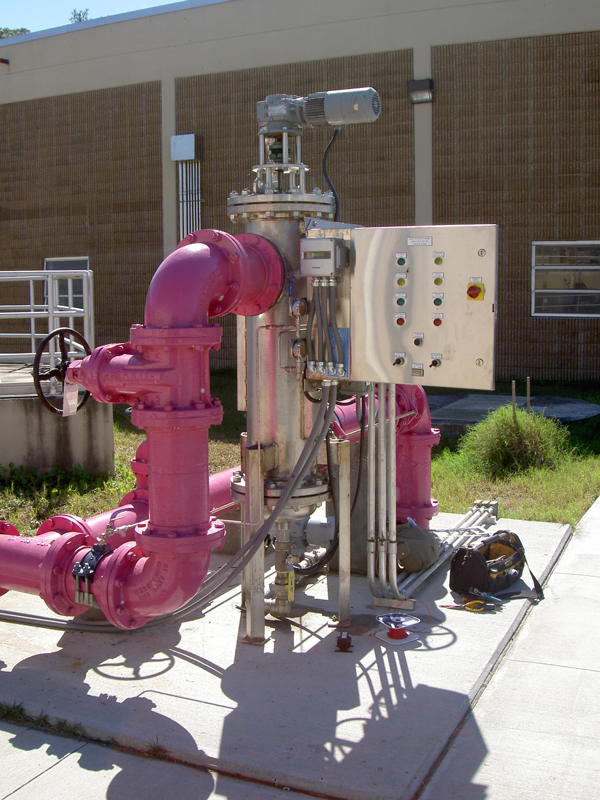
 

Textile Industry: Automatic Scraper Strainers Protect Critical Membrane Systems

Automated scraper strainers pre-filter water and wastewater to protect fragile membrane systems from damage caused by large, suspended particles, reducing maintenance and replacement costs.

TW Special Report

The textile industry uses substantial amounts of water and large quantities of chemicals to perform necessary functions. Chemical detergents and caustic substances remove dirt, grit, oils and waxes. Bleach improves whiteness/brightness, while dyes, fixing agents and inorganics provide various colors. Additionally, oils improve spinning/knitting, glues enable binding, and specialty chemicals function as softeners as well as agents for wetting and stain release.

However, these chemicals must be removed from wastewater before discharge from textile mills to comply with local, state, and federal regulations. As a solution, membrane separation technology is evolving to reduce chemical pollutants in wastewater effluent. In many cases, chemicals, dyes, and salts can be recovered from the effluent and the water can be reused. Membrane filtration also reduces energy costs if warm water can be reclaimed, which further expedites quick ROI on the technology.

The challenge is that membrane systems are delicate and can be easily damaged by large particulates in the water. A pre-filtration step eliminates this risk by removing oversized suspended solids to prevent damage, eliminate unnecessary maintenance, and reduce the cost of premature membrane replacement.

Among the pre-filtering options available, automatic self-cleaning scraper strainers are increasingly popular because they are affordable, require very minimal maintenance or attention, and can remove solids down to 75 microns. The strainers allow for continuous, uninterrupted flows even during blowdown cycles. When compared to filters that must be manually cleaned or even conventional backwash systems, automatic scraper strainers can save substantial costs on maintenance and membrane replacement.

Industrial Water Treatment and Membrane Systems

Although various filtration methods use membranes, the most mature is pressure driven membrane filtration, which relies on a liquid being forced through a filter membrane with a large surface area. Depending on the size and type of the particles involved, the process could be categorized as reverse osmosis, nanofiltration, ultrafiltration, or microfiltration.

In general, reverse osmosis is used to produce potable water or deionized water. Nanofiltration is used in wastewater treatment. Ultrafiltration and microfiltration are increasingly used in water and wastewater treatments.

Numerous industries have high water usage that can require further treatment of water, including textiles, automotive, aerospace, oil & gas extraction, refining, and pulp & paper mills. In industrial applications, water treatment is also vital to protect downstream equipment from fouling, scaling, corrosion, and other forms of damage or premature wear due to contaminants present in the source water. For these reasons, cooling tower and boiler feed water are generally pre-treated.

Membrane filtration is also utilized to treat non-potable water sources such as gray water and reclaimed/recycled “purple pipe” water.

Because the membranes are made using thin, porous sheets of material, failing to sufficiently pre-filter any large, suspended particles from the water can cause severe damage and fouling — leading to premature replacement and unnecessary maintenance, according to Robert Presser, vice president of Acme Engineering Products Inc., a North American manufacturer of industrial self-cleaning strainers.

“Most membrane filter manufacturers recommend that all influents be pre-screened from 100 to 500 microns to maintain membrane filter efficiency,” says Presser, whose company is an ISO 9001:2015 certified manufacturer of environmental controls and systems with integrated mechanical, electrical and electronic capabilities.

He adds that automatic scraper strainers are typically installed before the intake plenum of membrane filters, after the supply pumps.

Extending Membrane Life

As an alternative to sand filters, centrifugal separators, and basket type strainers, automatic scraper strainers provide superior membrane protection while drastically reducing required maintenance.

For the textile industry, automatic scraper strainers like those from Acme Engineering can provide continuous removal of suspended solids to comprehensively protect membrane systems. The automatic units are motorized and designed to continually remove suspended particulates in industrial process water and wastewater to the specific size required down to .003 inches (75 microns).

Conventional manual strainers can become clogged quickly due to limitations in straining area. When that occurs, cleaning or media replacement is required, which increases maintenance costs. The other alternative for fine straining is automated backwash-style strainers of various designs. As particle sizes grow larger, however, large contaminants can jam up the backwash system or remain in the body of the strainer, requiring manual removal and interruption of the process flow.

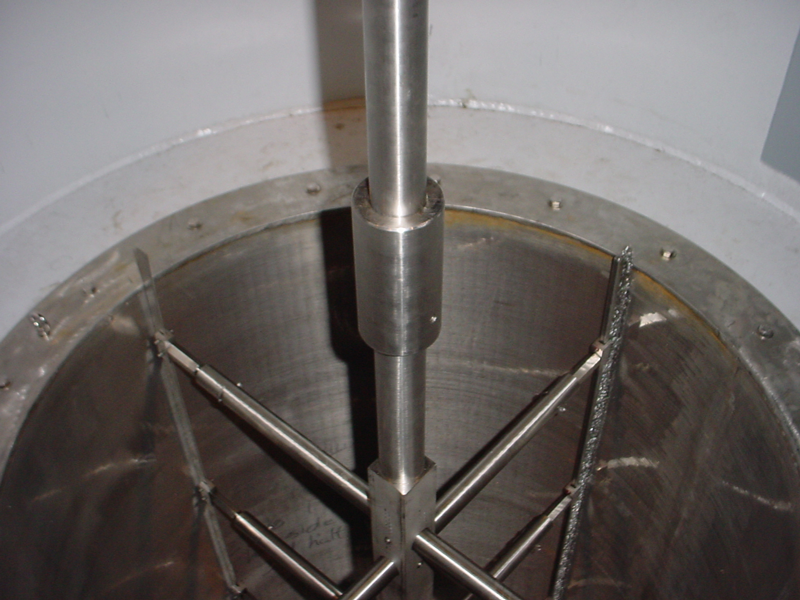
With the automatic scraper strainer, cleaning is accomplished by a spring-loaded blade and brush system, managed by a fully automatic control system. Four scraper brushes rotate at 8 RPM, resulting in a cleaning rate of 32 strokes per minute. The scraper brushes get into the wedge-wire slots and dislodge resistant particulates and solids. This approach enables the scraper strainers to resist clogging and fouling when faced with large solids and high solids concentration. It ensures a complete cleaning and is very effective against even organic matter “biofouling.”

With this type of system, manual maintenance for cleaning is eliminated. Blowdown occurs only at the end of the intermittent scraping cycle when a valve is opened for a few seconds to remove solids from the collector area. Liquid loss is well below 1 percent of total flow.

With so much to gain, textile industry plant managers should consider selecting an automated, self-cleaning system that is essentially “set-and-forget,” where automatic scraper strainers comprehensively protect delicate membranes and allow personnel to focus on other aspects of the facility.

May 26, 2022

Retail Sales And Consumer Confidence Decline

By Jim Phillips, Yarn Market Editor

Recent announcements of quarterly sales for U.S. retailers have left analysts reeling, manufacturers stunned and consumers cautious.

While it is still too early to assess whether this heralds a sustained economic slowdown, experts say, there is no doubt the U.S. economy stumbled a bit in Q2 — especially disappointing after a relatively solid first quarter.

As of this writing, retail disappointments have yet to trickle down to yarn spinners, many of whom have been struggling to meet increased demand as a result of diminished resources. “Mills are still running,” said one expert. “Many have a backlog they are trying to get out from under. After that, it will be just wait and see.”

“It’s hard for some spinners, especially smaller ones that aren’t entrenched in a niche market, to turn a profit,” said another industry expert. “They are facing increased prices for energy and raw materials, a reduced labor pool and supply chain issues. They have to raise prices to account for all of this, but they also have to be careful not to price themselves right out of business.”

The analyst continued: “At some point, we were expecting some relief from these issues as the year progressed, but now we are not certain when — or even if — things will return to normal. When you look at the supply chain, for example, even short tangles are hard to fix, much less the global dysfunctionality currently present.”

Yarn spinners and others within the fiber/textile/apparel complex are keeping their fingers crossed that recent sales reports do not take the shine off of what was a mostly positive “State of the Textile Industry” address by NCTO Chairman David Poston.

“We all faced a litany of challenges in 2021, but I am proud to stand here today and say that our industry’s resilience and innovative spirit pulled us through and put us on a path of growth,” Poston told NCTO members at that organization’s annual meeting in early May. “If 2020 was a year marked by an economic downturn and once-in-a-generation pandemic and health crisis, 2021 was defined by a rebound of remarkable proportions in our industry, nearly on par with the performance of pre-pandemic levels in 2019.” Year over year, textile industry shipments, exports and capital expenditures all increased in 2021.

However, in April, households cut back on a number of purchases, leading to flat sales from several retailers. Target was among the first to break the bad news, noting that, for the fiscal quarter ended April 30, the company posted adjusted earnings of $2.19 a share. Analysts expected Target to earn $3.07 a share, on revenue of $24.48 billion. Last year it earned $3.69 a share on sales of $24.2 billion. Other retailers followed with earnings reports below expectations. As a result, the Federal Reserve cut its second-quarter gross domestic product (GDP) growth estimate to a 1.1 percent annualized rate from the previous expectation of 1.6 percent. In the first quarter, the economy grew by 3.2 percent.

The drop in retail sales reflects a corresponding drop in consumer confidence. According to The Conference Board Consumer Confidence Index®, consumer confidence decreased slightly from March.

“Consumer confidence fell slightly in April, after a modest increase in March,” said Lynn Franco, Senior Director of Economic Indicators at The Conference Board.

“… purchasing intentions are down overall from recent levels as interest rates have begun rising. Meanwhile, concerns about inflation retreated from an all-time high in March but remained elevated. Looking ahead, inflation and the war in Ukraine will continue to pose downside risks to confidence and may further curb consumer spending this year.”

Ultimately, those close to industry say that finding a way to curb inflation and restore stability to Europe is likely to go a long way toward getting the global economy back on solid ground.

Unifi Recognizes Sustainability Champions

Unifi Inc., an innovator in recycled and synthetic yarns, announced on May 24 the recipients of its fifth annual REPREVE® Champions of Sustainability awards, which recognize brand, textile and retail partners that have demonstrated a true commitment to supporting a more sustainable world.

“We are thrilled to announce the 2022 Repreve Champions of Sustainability,” said Eddie Ingle, CEO of Unifi. “We applaud the demonstrated commitment to sustainability, which has allowed us to recycle more than 30 billion bottles to date.”

Unifi’s Repreve Champions of Sustainability awards will be presented to 39 brand and retail partners that have transformed 10 million or more recycled plastic bottles and 53 textile partners that have transformed 50 million or more recycled plastic bottles through the use of Repreve performance fibers.

Cone Promotes Mental Health Awareness

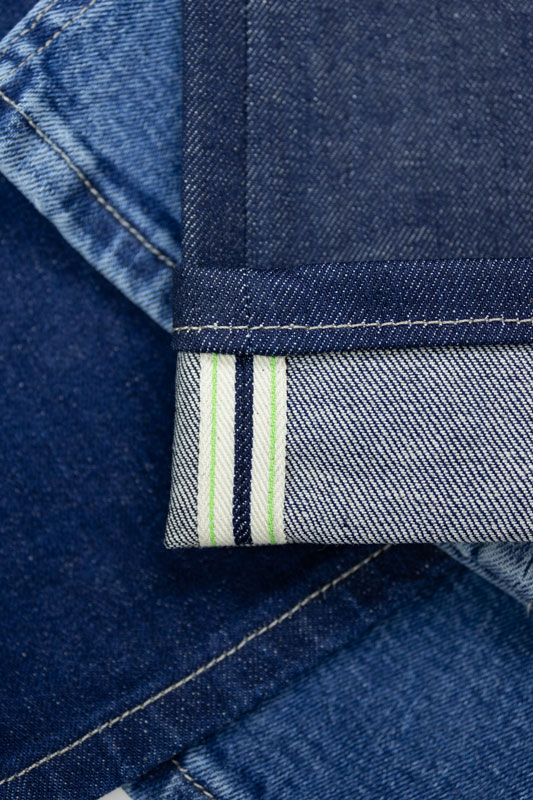
Cone Denim® has launched its Mental Health Awareness Selvage Denim in support of Mental Health Awareness Month. This is the newest fabric within the Cone Community Collection, a series of fabrics designed to support various causes and organizations that align with the values of Cone Denim. Cone will donate a portion of sales related to the newest selvage to the Child Mind Institute, a nonprofit dedicated to transforming the lives of children and their families struggling with mental health and learning disorders.

May 2022

The Easy Way to Upgrade Your Yarn

Figure 1: The compacting device COMPACTeasy can be easily retrofitted on existing ring spinning machines.

Global Textile Group selected Rieter’s COMPACTeasy to upgrade its ring yarn to compact yarn.

TW Special Report

The compacting device COMPACTeasy from Switzerland-based Rieter was the perfect solution for Uzbekistan-based Fergana Global Textile (FGT) Factory — a Global Textile Group business — to upgrade its ring yarn to compact yarn. FGT installed the compacting device on its existing G 37 ring spinning machines. With COMPACTeasy, the company reports it benefits from higher yarn quality and better performance in downstream processes, as well as the ability to switch between the production of ring and compact yarn.

Global Textile Group produces high-quality yarns in Uzebekistan using modern technology. Its FGT factory produces 26 tons of carded yarns and 12 tons of combed compact yarn per day, as well as 20 tons of blended yarn from cotton and polyester. As a vertically integrated company, it processes cotton grown on its own fields in a ginning plant, and also started to produce dyed knitted fabrics. The yarn and fabrics are certified with OKEO-TEX® Standard 100 and are sold to sewing and knitting mills of brands mostly based in Europe.

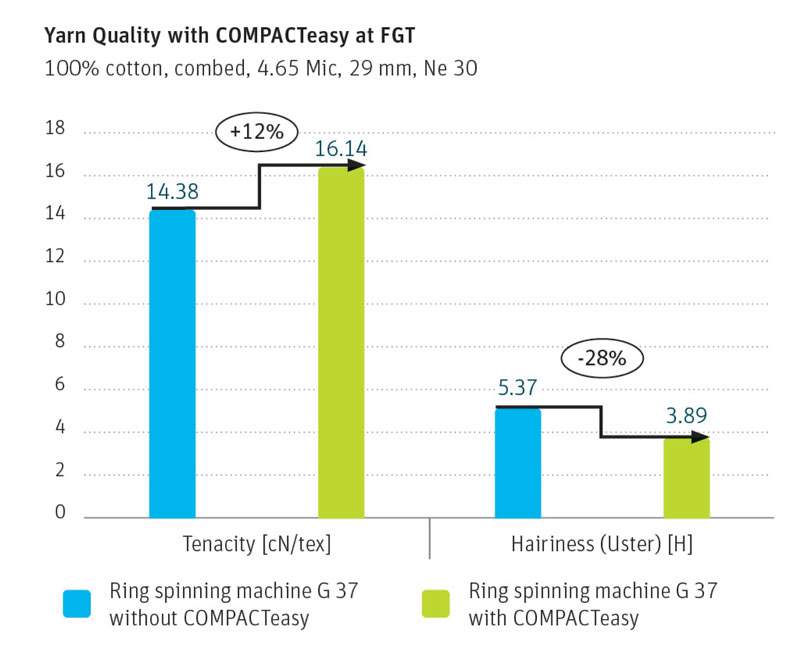
Figure 2: Higher tenacity and lower hairiness with COMPACTeasy.

From Ring To Compact Yarn With COMPACTeasy 

FGT was looking for a straightforward solution to upgrade its ring yarn to compact yarn without any major installation effort and without high investment costs. The compacting device COMPACTeasy in combination with Rieter comber E 86 was the right solution for FGT.

COMPACTeasy features a compacting system with a y-shaped channel, enabling intensive double compacting without any additional energy consumption (See Figure 1). The yarn quality is determined by both the y-channel of the compactor and the integrated pin. The pin acts on the fibers while they are in the drafting system area — the area where they have the least guidance. The compacting device can be easily retrofitted on existing machines.

Boosting Productivity And Quality

FGT has upgraded its ring yarn by using the comber E 86 in spinning preparation and by installing the compacting device COMPACTeasy on its ring spinning machines G 37. With the production of combed compact yarn, productivity on the G 37 has increased by 7 percent. To compare the yarn quality produced on the G 37 with and without COMPACTeasy, the compacting device was plugged out at several spinning positions. As a result, combed ring and combed compact yarn — made using 100-percent cotton with an Ne 30 yarn count — was produced on the same machine. The results for unevenness were similar for both the ring and compact yarn. In terms of hairiness and tenacity, the compact yarn achieved a significantly better quality: tenacity was 12-percent higher and hairiness 28-percent lower (See Figure 2). 

Otabek Nishanov, FGT CEO

“The comber E 86 and the installation of the compacting device COMPACTeasy on our ring spinning machine were accompanied by excellent service and timely support from Rieter field service staff,” said Otabek Nishanov, FGT CEO. “The compacting device gives us the opportunity to add value to our yarns while using existing equipment. This not only strengthens our own fabric production, but also helps us meet the needs of our customers and forge new partnerships.”

Excellent Performance In Downstream Processes

Thanks to COMPACTeasy, the company now benefits from all the advantages of a compact yarn. These advantages are not only noticeable in higher yarn quality, but also have a positive impact on downstream processes. FGT appreciates the better performance of its knitting machines when processing the compact yarn and fabrics are characterized by less pilling. If needed, the compacting device easily can be unplugged from the G 37 without any tools to switch to ring yarn production again. This feature offers a high level of flexibility when faced with market requirements that are constantly changing.

May 2022

ITM + Hightex  2022 Exhibitor Preview: DiloGroup

EBERBACH, Germany — May 20, 2022 — International textile producers meet again in Istanbul, Turkey, from June 14-18, 2022, on the occasion of the ITM + Hightex Exhibition. The ITM + Hightex Exhibition in Istanbul is the most important exhibition in Turkey and the Middle East. Especially in Hall 9 (Hightex) the exhibitors will present the complete industry value chain from nonwovens raw materials, production machines and accessories to the endproduct. The related industries covered include hygiene, filtration, fabrics and apparel, medical, automotive, wipes, home furnishings and upholstery. DiloGroup offers tailor-made production systems from one supplier and will inform on booth # 905A about its portfolio and the latest equipment developments from fibre opening to the finished felt.

As a leading group in the field of staple fiber nonwoven production lines DiloGroup will inform about complete lines as well as high speed needlelooms for spunbonds.

A new, simplified elliptical needle beam drive makes Hyperpunch technology also attractive for standard application. Hyperpunch HαV allows a more uniform stitch distribution in the preneedling process especially in combination with the new needle pattern 6000X. In a complete needling line this felt homogenization process can be improved further. The new needle pattern 8000X is a milestone in the needle pattern development process and results in end product surfaces with low markings over a wide range of advances/stroke.

Another strong pillar of our sales program over decades has been fibre preparation and high speed webforming equipment for other nonwoven technologies. During these years, there has been a shift to higher throughput rates, and in some cases in Asia, a requirement for improved MD/CD strength ratios of hydroentangled products. In addition, our further development of the high-speed layering principle “Hyperlayer” made considerable progress for better CD strength through a combination of inline cards and crossline card with crosslapper. Particularly, carding machines in a working width above 3.5 m up to 5.1 m have been supplied by DiloSpinnbau as complete high speed carding systems, comprising two or even three cards in a line to directly feed the hydroentangling units of various suppliers. Together with DiloTemafa not only have high throughput rates been achieved in the fibre preparation section of the line but also dedusting filtering and air-conditioning systems have been successfully engineered and integrated.

Until recently, Dilo did not supply complete lines including water-jet units, ovens and end-of-line equipment to the important hydroentanglement market segment. This has changed and Dilo is glad to confirm the partnership with Sicam, Italy. Together with Sicam, we have combined know-how for hydroentangling technology and therefore can provide complete lines as general contractor including equipment for cutting, winding and packaging.

Another interesting machine is the 3D-Lofter, first presented during ITMA 2019 in Barcelona, which offers a wider range of nonwovens applications by exploring the third dimension. A series of single web forming units which work according to the aerodynamic web forming principle deliver defined fiber masses in varied patterns on a base needlefelt. A stress oriented production of technical formed parts resulting in fiber savings or patterned DI-LOUR or DI-LOOP felts with or without repeat are two examples for this technology which explores new application areas for needlefelts.

The 3D-Lofter technology may also be used “inverted” as “IsoFeed” for filling up bad spots in web mats and thus achieves a better homogeneity of spunlace or airlay products.

The DiloLine 4.0 concept offer I4.0 modules which not only support the user but also facilitate quality control and maintenance by a maximum data transparency in production and control of operation. The Dilo solutions “Smart Start” for a fully automatic start of the production line or “DI-LOWATT” for energy savings are accompanied by Siemens solutions which can be selected via App or Data Cloud “MindSphere”.

With more than 400 installations delivered to the nonwovens industry worldwide, DiloGroup has the necessary know-how and the complete equipment portfolio to engineer the perfect production line for any product specification. The efficiency of Dilo production lines is the result of long-term research work and experience.

We look forward to welcoming you at our booth # 905A in Hall 9 during ITM / Hightex.

Posted: May 26, 2022

Source: DiloGroup

Techtextil 2022 Exhibitor Preview: DIENES Apparatebau GmbH

MÜHLHEIM, Germany — May 19, 2022 — DIENES’s passion is the design of special equipment and fully engineered solutions. For over than 90 years, DIENES has been building up a reputation as a reliable technology partner for leading manufacturers of technical fibers and renowned research institutes. At Techtextil, DIENES will show how the company is supporting its customers in shaping a more sustainable future for technical textiles and how its solutions are helping research teams on their way from the first laboratory tests to the modular construction of production lines.

Innovative technical textiles like precursor yarns for carbon fibers made from renewable raw materials are produced and improved with DIENES spinning systems. Growing demands on the varying quality of recycled feedstock, the implementation of biobased materials and ensuring fiber performance require a continuous development and optimization of both technology and production parameters. A reliable development of textile and technical filament yarns demands an efficient, systematic and, in part, self-optimizing experimental working system which must be intelligent and flexible.

At Techtextil, DIENES will present its approach towards digitalization which is called MultiMode®. In a MultiMode plant, each process step is represented by a module which can be individually adapted to customer-specific requirements and has its own decentralized control. Thus, DIENES production lines consist of several intelligent modular units which can be easily exchanged and rearranged at any time with a reduced programming effort. Moreover, all production parameters can be permanently visualised and recorded, enabling a complete traceability of the process.

DIENES team are “your experts in fibre processing” and will be awaiting many visitors and interesting technical discussions at the VDMA Group Stand in Hall 12 (organised by VDMA Textile Machinery Association).

Posted: May 26, 2022

Source: DIENES Apparatebau GmbH

Xeriant Completes Critical Pre-Certification Testing Of Retacell® Flame Retardant On Synthetic Fabrics

BOCA RATON, Fla. — May 26, 2022 — Xeriant Inc., an aerospace company dedicated to Advanced Air Mobility and associated specialty chemicals and materials, announced today it has completed the critical pre-certification testing of its eco-friendly Retacell® flame retardant on synthetic fabrics, the most common of which are derived from polyester, polyamide, polyethylene and polypropylene and produced on highly specialized equipment using various nonwoven extrusion and bonding techniques.

These polymer-based textiles have been widely adopted for their cost-effectiveness and durability, and are found in carpeting, upholstery and filtration products. Many of the applications, particularly transportation interiors and home furnishings, are regulated by strict flammability standards and often employ flame retardants suspected of being toxic to human health and the environment. Recently, the EU took steps to ban up to 12,000 toxic substances, including flame retardant chemicals, driving the demand for eco-friendly alternatives like Retacell.

“We are pleased with the progress our team has made in developing textile applications for Retacell. In initial tests, Retacell has been successfully applied to the polymeric material in the finishing process as a surface treatment spray. We will be presenting these results to a global textile manufacturer to ensure that the modified material meets their performance specifications as they phase out toxic flame retardants. The next technological iteration will be creating a Retacell bulk additive that can be incorporated during compounding, potentially reducing the overall manufacturing costs,” commented Keith Duffy, CEO of Xeriant.

The global synthetic textiles market size was estimated at $60 billion in 2020 and is projected to reach $100 billion by 2028, according to a March 2021 report by Grand View Research. The same research firm values the global flame retardant market at $7.5 billion in 2020, which is forecast to grow to $13.8 billion by 2028, based on a November 2021 press release.

Posted: May 26, 2022

Source: Xeriant Inc.

KAVALAN And Epson PVC-Free Partnership Set To Inspire At Sustainability-Focused FESPA

TAIWAN — May 26, 2022 — At FESPA 2022, taking place in Berlin, Germany from May 31– June 3, attendees will have the opportunity to see KAVALAN PVC-free materials in action. In a collaboration with Epson Europe B.V., KAVALAN Sunlight Weldable frontlit material will be printed live on the Epson stand in Hall 4.2-C30.

Epson will be showcasing products from the SureColor SC-R 5000 Series resin printer range and the SureColor SC-S Series eco-solvent printer range. Heather Kendle, Manager Product Management, LFP Business, Epson Europe B.V., commented: “Epson is delighted to be partnering with KAVALAN printing on PVC-free Sunlight Weldable frontlit material with the water-based resin ink SC-R5000L printer.”

This year’s FESPA Global Print Expo will include a significant focus on sustainability, as brands and businesses seek effective and innovative ways to implement environmentally-responsible practices. Many exhibitors are expected to showcase new sustainable solutions on their stands and the brand new Sustainability Spotlight feature ‘will provide useful, informative and actionable advice to address the needs of People, Planet and Profit’.

KAVALAN’s European Sales Director Rob Karpenko will be speaking at the Sustainability Spotlight, presenting a session at 14:00 on June 2nd entitled: ‘The Future is PVC-Free – Are You Getting Left Behind?’. The presentation will see Rob illustrate what it really means to take responsibility for the environmental impact of your business, covering the viability of corporate recycling infrastructure, the reality behind ”greenwashing”, and the distressing long-term effects of polyvinyl chloride (PVC), as well as empowering attendees to embrace a greener future without compromising on profits or product performance.

Rob Karpenko commented: “As we prepare to convene in Berlin, it has been heartening to see so many exhibitors planning a strong focus on sustainability. As a leader in the battle to eliminate PVC and embrace robust, eco-friendly solutions, we are delighted to be partnering with Epson to demonstrate how thoughtful and meaningful green innovation throughout the wide-format value chain can deliver incredible results while substantially reducing environmental impact.

“I am also looking forward to sharing the KAVALAN story and the core values of our products with the FESPA audience during my Sustainability Spotlight presentation, and of course connecting with partners and customers from across the continent as we continue to strengthen KAVALAN’s presence in Europe.”

Elsewhere at the event, Filmolux will also feature KAVALAN PVC-free banner materials, further bolstering the manufacturer’s sustainable messaging and product range that will be on display on the Filmolux stand in Hall 3.2-C30.

Posted: May 26, 2022

Source: TAYA Groups

Techtextil 2022 Exhibitor Preview: Sitip S.p.A.

CENE, Italy — May 26, 2022 — Industry experts from all over the world meet every two years at Techtextil, the trade fair about the new developments in technical textiles, functional apparel fabrics and nonwovens offered by companies from all over the world. Techtextil offers exhibitors and visitors an insight into the latest developments in the industry, as well as additional technical inspiration.

Techtextil is one of the most important trade fairs for Sitip, Italian company with over 60 years of experience, specialized in the production of synthetic warp-knitted fabrics for the technical industrial world, and stretch and circular fabrics for the world of clothing.

As sustainability in one of the major topic at Techtextil, Sitip will present its excellence among the production of fabrics as result of a path towards sustainability reached by the company over the years.

Participating in a special Forum about innovative fabrics organized by the Agency ICE, promoting abroad the Italian companies and their internationalization, as examples of the latest developments Sitip is bringing to the fair a list of fabrics part of the NATIVE Sustainable Textiles collection, a technology applied to fabrics made with recycled yarns and low-environmental-impact chemicals with reduced consumption of natural resources

Visit Sitip S.p.A. at Hall 12.1 B45

Posted: May 26, 2022

Source: Sitip S.p.A.

Sponsors