Flexible Automation: Rieter’s Autoconer X6

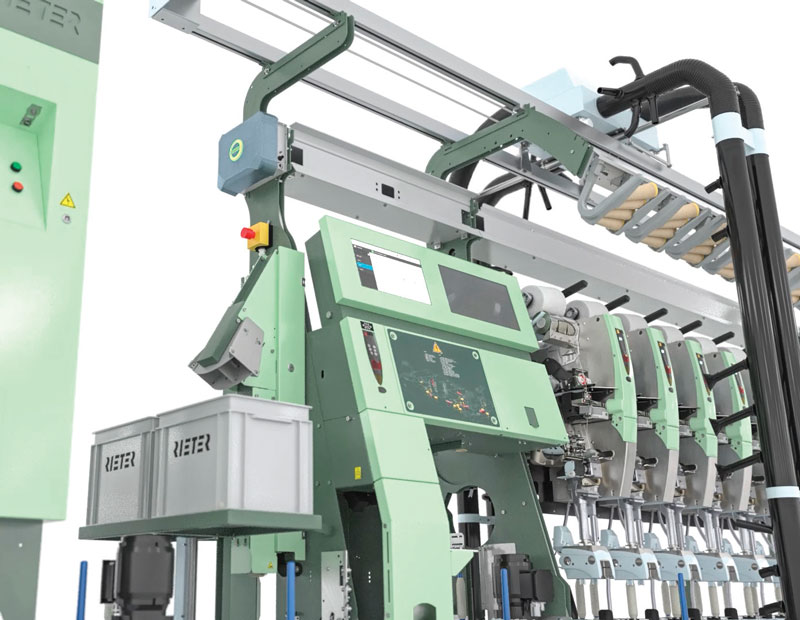
Rieter’s new Cop Exchanger enables more flexible automation.

Rieter’s Autoconer X6 offers intelligent data analysis and improved ergonomics as well as flexible automation in package winding.

TW Special Report

Switzerland-based Rieter Ltd.’s winding machine Autoconer X6 Type V delivers on every front, according to the company. Equipping it with the Cop Exchanger, which automatically removes defective cops, means yarn quality is safeguarded, production seamless and operator workload reduced. The all-new compact design combines ergonomic comfort with enhanced safety features. Additionally, the Ring-Winder-Connect module enables targeted operator guidance to faulty spindles. It improves quality, reduces waste, lowers energy use, and enables preventive maintenance.

Customers with a high degree of automation rely on the Autoconer X6 type V with its direct connection to the ring spinning machine. The integration of Cop Exchanger and Ring-Winder-Connect increases process reliability and performance, while simplifying operation and data analysis.

Automated Cop Handling

The Cop Exchanger works based on the results of the spindle identification system SPID. This detects alarm cops with faulty yarn, as well as off-standard cops with below-average yarn quality. Additionally, sensors in the automation aggregates monitor processing status of the cops and detect those that cannot be processed, for example. Smarttrays and RFID technology enable an intelligent cop material flow. Based on collected data, the Cop Exchanger removes affected cops from the Smarttrays and replaces them with empty tubes. Cops are sorted into two boxes: one for cops that cannot be processed, one for lower yarn quality cops.

Maximum Process Reliability

The Cop Exchanger offers user-friendly operation and high flexibility. It has a large empty tube capacity and can process two lots — with identical tube lengths — in parallel. Its boxes are easy to change. The unique decentralized material flow enables flexible combination with the spinning tube stripper and the Color Check, ensuring correct tube assignment via tube color monitoring.

Space-Saving Design And Improved Ergonomics

The machine’s length has been reduced by 350 millimeters (mm) to 818 mm, improving space efficiency — even in 96-spindle machines. This is especially beneficial for integration into existing buildings. The compact design is based on sections with six or 10 winding units and a newly designed, space-saving energy unit.

Rieter engineers also have optimized the machine’s ergonomics. The operating height at the winding unit is now 80 mm lower, thus increasing the operator’s safety and comfort. In addition, the new color scheme aligns the Autoconer X6 with Rieter ring and compact-spinning systems.

Intelligent Data Analysis With Ring-Winder-Connect Module

The new Autoconer X6, Type V, is ready for advanced data analysis and management with the Ring-Winder-Connect module. It analyzes SPID quality data from the Autoconer X6 and data from individual spindle monitoring system ISM on the ring spinning machine. This enables targeted operator guidance to faulty spindles. Ring-Winder-Connect improves quality, reduces waste, lowers energy use, and enables preventive maintenance, according to the company.

2025 Quarterly Issue IV

2025 Quarterly Issue IV

The Jones Family of Companies, Humboldt, Tenn., has hired Eric Delaby as senior director of sales.

New York City-based nonprofit Accelerating Circularity has announced founder and current CEO Karla Magruder will transition to board chair, where she will continue to guide the organization’s strategic direction. As part of the transition, Eileen Mockus was named new CEO.

Jonathan Puckett was appointed CFO of Houston-based specialty chemicals company Orion S.A.

Ebert

New Zealand-based Nuyarn® has named Monica Ebert vice president, sales, North America.

Suominen Corp., Helsinki, has appointed Francois Guetat COO and a member of the Suominen Leadership Team.

Fruit of the Loom Inc., Bowling Green, Ky., has appointed Scott Daley senior vice president – Brands. He replaces Tony Iannuzzi who is retiring at the end of the year.

John Brearley was named president, Americas, for Paris-based Lectra.

Bjorkman

Brett Bjorkman was named CEO of Next Level Apparel, Torrance, Bjorkman Calif. He
replaced the founder Joe Simsoly who has retired.

Julian Sponseller has joined the direct sales team at Emigsville, Pa.-based Herculite Products Inc. as Western Regional Manager. Austin Barshinger was named the new Quality Supervisor at Herculite’s facility in York, Pa.

England-based Think Group recently hired Harriet Adams as development director, and Lance Bray as a key accounts manager.

Compression brand CEP Running, Durham, N.C., has named Marc Sylvester National Specialty sales manager.

The American Apparel & Footwear Association (AAFA), Washington, has promoted its senior vice president of Policy, Nate Herman, to executive vice president.

England-based Carrington Textiles has hired Kim Proctor as sales manager. She will focus on a portfolio of accounts and drive growth across flame-retardant, printed and workwear fabrics.

The Global Nonwovens Alliance (GNA) has announced its inaugural board members. GNA is a federation established by the Association of the Nonwoven Fabrics Industry (INDA), Cary, N.C., and Brussels-based EDANA the Voice of Nonwovens. Murat Dogru was appointed CEO of GNA. INDA representatives on the GNA board are Mark A. Thornton, The Procter & Gamble Co.; Mike Clark, Hollingsworth & Vose; Jodi Russell, The Clorox Co.; Paul Harmon, Magnera; Douglas Dowdell, International Paper; and Jaren J. Edwards, Everra. EDANA’s representatives on the GNA board are Mikael Staal Axelsen, Fibertex Personal Care/Innowo Print; Jörg Ortmeier, TWE Group; Giorgio Mantovani, Corman S.p.A.; Thorsten Habeck, BASF; Ulrich Hornfeck, Sandler AG; and Anke Renz, Essity.

Ackerman

Covation Biomaterials (CovationBio), Newark, Del., has appointed Steven Ackerman CEO.

Avery Dennison Corp., Mentor, Ohio, named Mariana Rodriguez vice president and general manager, Materials Group EMENA.

Chris Blakeslee was named the first independent board member of Unspun, San Francisco.

The Supervisory Board of the Germany-based Karl Mayer Group has appointed Lutz Wolf CEO of Karl Mayer Holding SE & Co. KG.

Boulanger

Sophie Boulanger is the new CEO of SRTX, Montreal, the company known for Sheertex tights.

Microban International, Huntersville, N.C., has appointed Shermon McMillan president.

The American Association of Chemists and Colorists (AATCC), Durham, N.C., awarded its 2025 Olney Medal to Dr. Karen K. Leonas, professor in the Department of Textile and Apparel, Technology and Management at NC State’s Wilson College of Textiles; and the Harold C. Chapin Award to Barry P. Brady, AATCC board member and AATCC Foundation board member.

The Washington-based United States Fashion Industry Association (USFIA) named Michael Lambert executive director of Global Trade and Compliance.

2025 Quarterly Issue IV

SENSIL® By NILIT And ROICA™ By Asahi Kasei Collaborate To Reduce Apparel’s Footprint

MUNICH — December 1, 2025 — Rapidly transforming apparel into a lower-carbon industry requires collaboration, innovation, and creativity. In this spirit, SENSIL® by NILIT and ROICA™ by Asahi Kasei have collaborated to introduce the concept of a new fabric with less environmental impact, combining SENSIL® ByNature, a NILIT Biomass Balanced Nylon 6.6 yarn, and Biomass Balanced ROICA™ premium stretch fiber, both designed for high-performance apparel.

Both companies utilize textile raw materials created through the Biomass Balance (BMB) approach, which utilizes renewable feedstocks made from reclaimed and recycled organic waste that does not compete with food sources, nor need the use of land for its production.

  • SENSIL® ByNature is the first textile Nylon 6.6 yarn for apparel made using a Biomass Balanced renewable feedstock sourced from biogenic waste.
  • Biomass Balanced ROICA™ premium stretch fiber incorporates renewable raw materials in place of traditional fossil hydrocarbons. ROICA ™ will focus its Biomass Balanced (BMB) efforts at its Taiwan plant, the company’s key reference hub for BMB production.

Because BMB products are identical to traditional products, the resulting fabrics engineered with SENSIL® ByNature and Biomass Balanced ROICA retain the comparable comfort, aesthetics, and performance as their conventional counterparts. This means that apparel brands can integrate these environmentally conscious fabrics without redesigning collections.

The companies use Biomass Balance accounting and third-party certification to appropriately allocate the percentage of renewable feedstocks to their products so that brands and consumers can rely on the sustainability claims. In addition, the companies are certified under the International Sustainability and Carbon Certification Plus (ISCC+) system, ensuring rigorous control and transparency in renewable feedstock use across the supply chain.

This partnership will contribute to reducing environmental impact:

  • NILIT’s SENSIL® ByNature lowers greenhouse gas emissions by about 1.8 kg CO₂ eq per ton of yarn versus traditional nylon.
  • Asahi Kasei projects that the new ROICA™ Biomass Balanced stretch fiber, combined with manufacturing optimizations, will reduce CO₂ emissions compared to existing products. However, since production decisions have only just been made, exact numbers are not yet available.

When blended, SENSIL® ByNature and Biomass Balanced ROICA™ stretch fiber help designers create outstanding stretch fabrics that substantially reduce a garment’s environmental footprint, lessening reliance on fossil resources, supporting circularity initiatives through renewable inputs, and improving Life Cycle Assessment, while maintaining the premium look, feel, comfort, or stretch performance consumers expect.

Discover more about BMB technologies and experience the next generation of sustainable stretch apparel at ISPO Munich in Hall B1/308 ISPO BrandNew Area.

Posted: December 2, 2025

Source: NILIT

2025 Quarterly Issue IV

Shawmut, West Bridgewater, Mass., recently launched Shawmut™ Insights, a proprietary Life Cycle Assessment system for its automotive textiles, from raw materials to end-of-life.

Microban International, Huntersville, N.C., recently introduced EcoFresh™ odor capture technology that was designed with active and outdoor enthusiasts in mind.

1888 Mills and Cotton Incorporated have developed a bath and bedding collection.

1888 Mills, Griffin, Ga., and Cotton Incorporated, Cary, N.C., have co-developed a new bath and bedding collection that comprises 100-percent cotton towels, sheet and bedding at an accessible starting price point.

Italy-based Thermore® has introduced Thermore Freedom, a 100-percent recycled thermal insulation material developed for active warmth and its ability to adapt to movement.

Fire-Dex, Medina, Ohio, has launched Fire Investigation PPE, a protective ensemble designed specifically for fire investigators.

Primaloft, Latham, N.Y., has expanded its product portfolio with the addition of six new products including PrimaLoft® UltraPeak™, ThermoPlume® PrimaLoft ReRun™, Silver PrimaLoft ReRun, PrimaLoft Therma-Stretch™, PrimaLoft Heat-Sphere™ and PrimaLoft Rise Sleeping Bag™.

Intrinsic Advanced Materials, Gastonia, N.C., reports the Home Fashion Products Association recognized its CiCLO® technology with the 2025 Home Excellence Behind the Seams award. In other CiCLO news, Minneapolis-based BOKSER Textiles has introduced the Vermilion Sheeting Collection — a blend of 52-percent polyester treated with CiCLO® and 48-percent modal.

For the third consecutive year, the Central Penn Business Journal and Lehigh Valley Business have named Herculite, Emigsville, Pa., as one of the Best Places to Work in Pennsylvania in 2025.

The Textile Institute, England, is celebrating its 100th anniversary. Its Royal Charter was granted in 1925 by King George V.

England-based Nonwovenn reports it achieved its 19th consecutive year of profitable growth, with a 25-percent growth in sales year-over-year during the 2024-25 financial year.

Cincinnati-based Standard Textile and hospitality brand Accor have launched the Mascioni Hotel Collection as the preferred luxury linen provider for some of Accor’s brands including Fairmont, Sofitel Legend, Sofitel and MGallery Collection.

SDL’s Scorch/Sublimation Tester

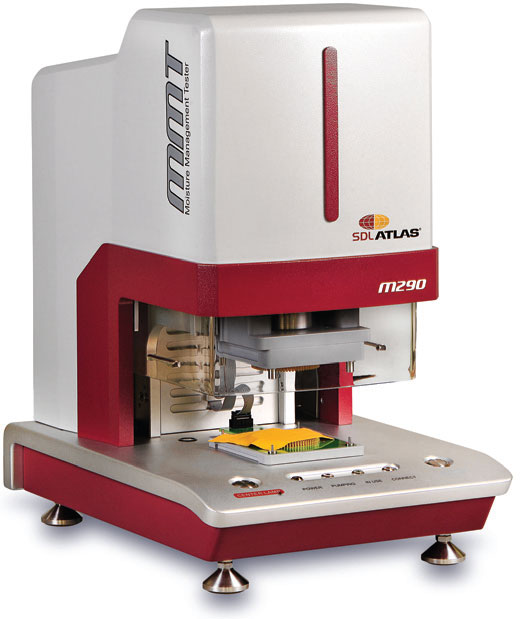
SDL Atlas, Rock Hill, S.C., has released the latest iteration of its Scorch/Sublimation Tester, which offers improved accuracy, efficiency and operator safety while testing fabrics that are under heat and pressure, according to the company.

The American Association of Chemists and Colorists (AATCC), Durham, N.C., reports the OEKO-TEX® Eco Passport certification, Number 21.0.93288, has been renewed for its AATCC Powder Laundry Detergent.

Atlas Material Testing Technology, Mount Prospect, Ill., recently introduced the nex-gen Ci3000 Weather-Ometer. The unit features almost double the sample capacity, enhanced irradiance and temperature uniformity, as well as a new user interface.

Replin by Hainsworth turned 80 this year.

England-based Replin by Hainsworth, a producer of fabrics for aviation and transport interiors, is celebrating 80 years since its founding by Hungarian refugee and textile innovator Dr. Maurus Banyai.

Milliken & Company, Spartanburg, S.C., reports its Milliken Assure™ Moisture Barrier was awarded a 2025 R&D 100 Award. The flame-resistant moisture barrier designed for firefighter turnout gear is non-halogenated, non-per- and polyfluoroalkyl substances (non-PFAS) and UL-certified. Assure is certified to both NFPA 1971-2018 and NFPA 1970-2025 standards.

Sunbrella®, Burlington, N.C., has launched Sunbrella Interiors, a new sub-brand of fabrics and products developed for interior spaces. The product line includes plush chenilles, bouclés and other soft, textured fabrics; window treatments; and throws. In addition, Sunbrella has expanded its Sunbrella Horizon® marine vinyl collection with 14 new stock keeping units including the Tuscano leather-grain texture style in two colorways.

2025 Quarterly Volume IV


PANGAIA Tests AeoniQ™ In Limited Capsule

A 55-piece collection showcases the climate-positive AeoniQ™ cellulosic yarn designed to rival polyester and nylon in performance.

By Rachael S. Davis, Executive Editor

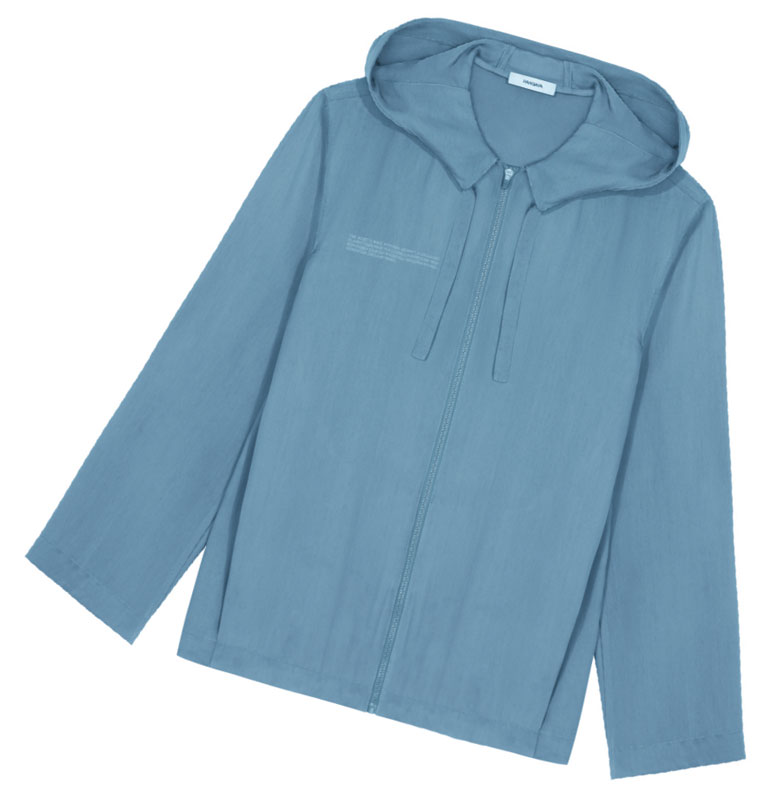
London-based PANGAIA — a company established to scale cutting-edge material solutions — recently introduced a limited-edition 55-piece capsule collection of hooded jackets, half-zip overtops and straight-leg trousers made using AeoniQ™ cellulosic filament yarn developed by HeiQ, Switzerland. An alternative to fossil-fuel derived fibers, AeoniQ was designed to imitate the performance of polyester and nylon while offering closed-loop circularity.

HeiQ and PANGAIA have previously collaborated, and “Over time, our partnership has evolved to explore more transformative technologies that can shift the textile industry toward regenerative, closed-loop systems,” said Chelsea Franklin, head of Advanced Concept Design, PANGAIA. “AeoniQ represents the next chapter of that collaboration, a truly circular, climate positive alternative to synthetics like polyester and nylon.”

Renewable cellulose feed-stocks, including wood and eucalyptus pulp, form the starting materials for AeoniQ, making the fiber fully recyclable and biodegradable. When used in place of polyester, the fiber may reduce emissions by up to 3.2 kilograms of carbon dioxide equivalent per kilogram of yarn, according to assessments by Amsterdam-based Fashion for Good and South Pole, Switzerland.

AeoniQ is a continuous filament with a smooth, lustrous surface; and innate tenacity, abrasion resistance and drape. “The performance properties are inherent in the AeoniQ filament itself,” Franklin shared. “HeiQ’s proprietary spinning technology allows precise control over filament formation, giving the yarn its strength, resilience and smooth hand feel.” Yarn twist and fabric density as well as final fabric weight also can impact durability in the finished garments. Applications include both apparel and technical textiles.

According to Franklin, AeoniQ does not fibrillate so it maintains a smooth and stable finish with no pilling, which makes it different to typical cellulosic fibers.

Hooded jackets were featured in the 55-piece AeoniQ™ capsule collection.

“Additionally, AeoniQ can be texturized, providing diverse hand feels and allowing designers and manufacturers greater flexibility in creating both soft and structured textiles, something not possible with traditional cellulosic fibers,” Franklin shared.

For the capsule collection, PANGAIA worked closely with both HeiQ and Italy-based mill Beste to develop the 100-percent AeoniQ fabric. “The capsule was intention-ally limited, only 55 pieces, to showcase the material’s potential and validate its performance through design,” Franklin said. “HeiQ is currently scaling AeoniQ production with plans to increase capacity over the next year. As availability increases, PANGAIA is exploring a broader application of AeoniQ across product categories where performance and circularity intersect.

“At PANGAIA Lab, we believe design plays a critical role in bridging scientific innovation and cultural desirability,” Franklin said. “By translating new materials like AeoniQ into timeless wearable pieces, we can help shift perception, showing that responsible innovation can be both advanced and accessible.”


For more information, visit pangaia.com.


2025 Quarterly Issue IV

The Role Of Print Design In Textile Innovation

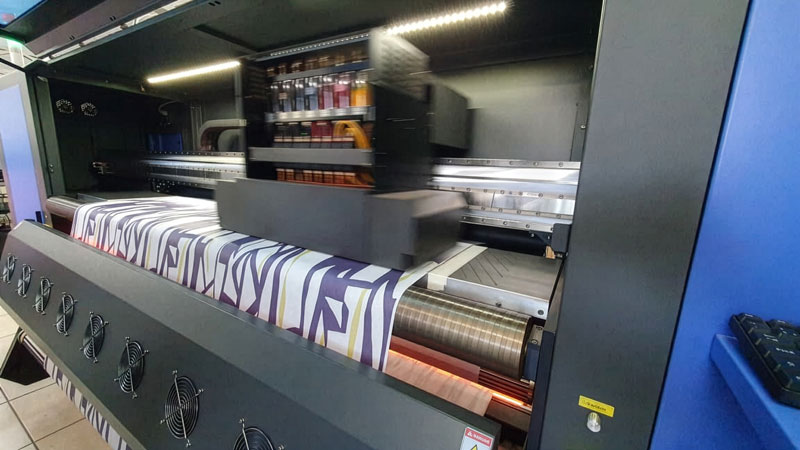
Image courtesy of Dumy Estamparia — Brazil

By Alessandra Olisia Medeiros

C

onsidering “Print Design as a Driver of the Textile Industry,” the world of print design connects creativity, technology, and engineering, and it is one of the main drivers of innovation within the textile industry. More than an aesthetic element, print has become a force that propels the development of new materials, machinery, and industrial processes.

Over the past decades, surface design has encouraged manufacturers to create faster, more precise, and more sustainable equipment, reducing waste and opening space for new forms of visual expression.

As Audaces, a technology leader in fashion innovation, explains: “The art of producing prints is millenary and, like most textile processes, has evolved alongside the industry’s technological and industrial development — with more and more digital technologies being incorporated into processes that were once manual.”1

From Art To Industrial Process

Since the earliest civilizations, humans have expressed their ideas through images. On walls, fabrics, and paper, the first forms of painting and printing emerged, eventually giving rise to what we know today as textile printing. With the Industrial Revolution, this artistic practice transitioned into an industrial process, laying the foundation for a field that merged creativity and engineering.2

Modern screen printing owes much to the 1960s, when technological advances allowed production to meet industrial demand. One of the key figures was Michael Vasilantone, founder of Vastex in Philadelphia, who developed a dual rotary printing press in 1967. This innovation enabled fabric printing with greater speed and accuracy, transforming screen printing from an artisanal practice into a scalable, industrial process.3

Another significant milestone was the development of new inks. Early water-based inks were slow to dry and difficult to control. The introduction of plastisol, made from PVC particles, changed the game. It offered higher viscosity, greater durability, and stability, enabling consistent, long-lasting results. This evolution expanded creative possibilities, allowing designers to explore layered effects, 3D-textures, and more intense colors, merging artistic expression with industrial efficiency.

Balancing Technique And Art

Automation transformed screen printing without eliminating human touch. Operators remain essential for feeding garments and ensuring quality control, but the difference in productivity is remarkable: while a manual press can produce 40 to 100 T-shirts per hour, an automatic press can print more than 2,000 garments per hour.

According to FESPA, the world record reached 2,139 T-shirts per hour, demonstrating how automation redefined textile production speed and scale.4 Even so, manual printing maintains its artistic value. Many manufacturers today combine both methods, creating hybrid workflows, using automation for large runs and manual presses for smaller or specialized projects.

Contemporary screen printing also continues to evolve through tactile and sensory effects, such as puff, glitter, and glow-in-the-dark inks, which some of them have a little difficult to replicate digitally. This ability to create unique textures and visual depth keeps screen printing relevant in the digital era.

When Design Drives Technology

As screen printing advanced, digital textile printing began to reshape the industry. With the arrival of DTG (direct-to-garment) and, more recently, DTF (direct-to-film) technologies, it became possible to print directly onto fabric or transfer designs onto various materials, eliminating screens, reducing setup time, and enabling faster and more flexible production.

These methods expanded the creative freedom, allowing designers to produce highly detailed, colorful, and customized artwork that was previously impossible with traditional techniques. According to Kornit Digital, a leading manufacturer in the field, these processes combine “photographic quality with on-demand production,” serving both the fashion and promotional markets.5

This progression demonstrates how design continues to drive industrial innovation: as designers and brands pursue new forms of expression, manufacturers respond by developing smarter machines and more sustainable processes.

Designing The Future

Today, innovation in textile printing is closely tied to sustainability. The industry’s pursuit of more conscious practices has led to the use of low-impact inks, the adoption of 3D digital prototyping and sampling, which reduces water consumption and fabric waste, and the growth of on-demand production systems that minimize excess inventory. This integration of technology and sustainability shows that print design goes far beyond aesthetics, it plays a crucial role in the technical and ethical progress of the textile industry, bringing new solutions that combine agility, cost efficiency, and environmental responsibility.

Print design remains a vital bridge between creativity and textile engineering. Every industrial innovation begins with a creative vision that pushes technical boundaries and inspires new possibilities for fashion and design. As technology becomes smarter and production processes more sustainable, the designer’s role grows even more essential, positioned at the intersection of art, innovation, and efficiency. When creativity and technology work in harmony, fabric ceases to be just material; it becomes a true expression of innovation. That’s why collaboration between designers and industry is so important, together, they shape new technologies that combine the best of both worlds.

In addition, designers today are deeply engaged in monitoring trends in consumption behavior and market needs. Because they are close to brands and in tune with what the end consumer demands, they could be able to propose innovations to machinery and production systems. Working collaboratively, designers and manufacturers can co-create next-generation technologies that better reflect both aesthetic vision and industrial feasibility, shaping processes that elevate entire product ecosystems.


References

1 Audaces Blog. “Estamparia Digital: A arte de produzir estampas é milenar…” (2023). https://audaces.com/pt-br/blog/estamparia-digital

2 WNY Book Arts Center. “A Brief History of Screenprinting.” https://wnybookarts.org/a-brief-history-of-screenprinting/

3 Everpress “A Brief History of T-Shirt Screen Printing.” https://everpress.com/creator-toolkit/a-brief-history-of-t-shirt-screen-printing/

4 FESPA “Automation in Screen Printing.” https://www.fespa.com/en/news-media/analysing-the-benefits-of-automation-in-screen-printing-for-textiles/

5 Kornit Digital. “What Is Direct to Garment Printing – A Full Guide.” Published July 2024. https://www.kornit.com/magazine/what-is-dtg-printing-a-full-guide-kornit/


Editor’s Note: Alessandra Olisia Medeiros is founder and creative director of Brazil-based Olisia Design Studio


December 1, 2025

Manufacturing PMI® At 48.2 Percent; November 2025 ISM® Manufacturing PMI® Report: Apparel, Leather & Allied Products; Textile Mills Sectors Report Contraction

TEMPE, Ariz. — December 1, 2025 — Economic activity in the manufacturing sector contracted in November for the ninth consecutive month, following a two-month expansion preceded by 26 straight months of contraction, say the nation’s supply executives in the latest ISM® Manufacturing PMI® Report.

The report was issued today by Susan Spence, MBA, Chair of the Institute for Supply Management® (ISM) Manufacturing Business Survey Committee.

“The Manufacturing PMI registered 48.2 percent in November, a 0.5-percentage point decrease compared to the reading of 48.7 percent in October. The overall economy continued in expansion for the 67th month after one month of contraction in April 2020. (A Manufacturing PMI above 42.3 percent, over a period of time, generally indicates an expansion of the overall economy.) The New Orders Index contracted for a third straight month in November following one month of growth; the figure of 47.4 percent is 2 percentage points lower than the 49.4 percent recorded in October. The November reading of the Production Index (51.4 percent) is 3.2 percentage points higher than October’s figure of 48.2 percent. The Prices Index remained in expansion (or ‘increasing’ territory), registering 58.5 percent, up 0.5 percentage point compared to the reading of 58 percent reported in October. The Backlog of Orders Index registered 44 percent, down 3.9 percentage points compared to the 47.9 percent recorded in October. The Employment Index registered 44 percent, down 2 percentage points from October’s figure of 46 percent.

“The Supplier Deliveries Index indicated faster delivery performance after three consecutive (and 14 of the previous 16) months in ‘slower’ territory. The reading of 49.3 percent is down 4.9 percentage points from the 54.2 percent recorded in October. (Supplier Deliveries is the only ISM PMI Reports index that is inversed; a reading of above 50 percent indicates slower deliveries, which is typical as the economy improves and customer demand increases.) The Inventories Index registered 48.9 percent, up 3.1 percentage points compared to October’s reading of 45.8 percent.

“The New Export Orders Index reading of 46.2 percent is 1.7 percentage points higher than the reading of 44.5 percent registered in October. The Imports Index registered 48.9 percent, 3.5 percentage points higher than October’s reading of 45.4 percent.”

Spence continues, “In November, U.S. manufacturing activity contracted at a faster rate, with pullbacks in supplier deliveries, new orders and employment leading to the 0.5-percentage point decrease of the Manufacturing PMI. Continuing a recent trend, a previous month’s improvement in one index was evident in another gauge. After new orders strengthened in August, production improved in September. An improvement in the Backlog of Orders Index in October transferred to the Production Index, which expanded in November (as backlogs pulled back). However, the New Orders and Employment indexes both dipped 2 percentage points, underscoring the ongoing economic uncertainty.

“Decreases in two of the four demand indicators (Backlog of Orders and New Orders) overwhelmed the gains posted by the New Export Orders and Customers’ Inventories indexes. The Customers’ Inventories Index contracted at a slower rate. A ‘too low’ status for the Customers’ Inventories Index is usually considered positive for future production.

“Regarding output, production jumped into expansion, but employment contracted at a faster pace, as 67 percent of panelists (the same as October) indicated that managing head counts is still the norm at their companies, as opposed to hiring.

“Finally, inputs (defined as supplier deliveries, inventories, prices and imports), were mixed, with the Supplier Deliveries Index indicating faster deliveries, the Inventories Index contracting at a slower rate, and the Prices Index continuing to reflect increases. The Imports Index contracted at a slower rate.

“Looking at the manufacturing economy, 58 percent of the sector’s gross domestic product (GDP) contracted in November, matching the previous month’s figure, and the percentage of GDP in strong contraction (registering a composite PMI of 45 percent or lower) decreased slightly, at 39 percent compared to 41 percent in October. The share of sector GDP with a PMI at or below 45 percent is a good metric to gauge overall manufacturing weakness. Of the six largest manufacturing industries, three (Computer & Electronic Products; Food, Beverage & Tobacco Products; and Machinery) expanded in November,” says Spence.

The four manufacturing industries reporting growth in November are: Computer & Electronic Products; Food, Beverage & Tobacco Products; Miscellaneous Manufacturing; and Machinery. The 11 industries reporting contraction in November — in the following order — are: Apparel, Leather & Allied Products; Wood Products; Paper Products; Textile Mills; Fabricated Metal Products; Petroleum & Coal Products; Chemical Products; Nonmetallic Mineral Products; Furniture & Related Products; Transportation Equipment; and Plastics & Rubber Products.

What Respondent Are Saying

  • “New order entries are within the forecast. We have increased requests from customers to get their orders sooner. Transit time on imports seems to be longer.” (Machinery)
  • “We are starting to institute more permanent changes due to the tariff environment. This includes reduction of staff, new guidance to shareholders, and development of additional offshore manufacturing that would have otherwise been for U.S. export.” (Transportation Equipment)
  • “Tariffs and economic uncertainty continue to weigh on demand for adhesives and sealants, which are primarily used in building construction.” (Chemical Products)
  • “No major changes at this time, but going into 2026, we expect to see big changes with cash flow and employee head count. The company has sold off a big part of the business that generated free cash while offering voluntary severance packages to anyone.” (Petroleum & Coal Products)
  • “Business conditions remain soft as a result of higher costs from tariffs, the government shutdown, and increased global uncertainty.” (Miscellaneous Manufacturing)
  • “The unstable market has made pricing fluctuate in a very volatile way; I have had to reduce suppliers for raw materials to maintain a better direct cost structure. Reducing my suppliers has reduced the availability of some items and created longer lead times.” (Fabricated Metal Products)
  • “Business continues to be a struggle regarding long-term sourcing decisions based on tariffs and landing costs. External (or international) sourcing remains the lowest-cost solution compared to U.S. production/manufacturing. The delta is smaller now, reducing margins.” (Computer & Electronic Products)
  • “The government shutdown has impacted our access to agricultural data, impacting agricultural markets and, as a result, decisions we make. Optimism for a tariff exemption on palm oil percolated but hasn’t come to fruition at this time.” (Food, Beverage & Tobacco Products)
  • “Trade confusion. At any given point, trade with our international partners is clouded and difficult. Suppliers are finding more and more errors when attempting to export to the U.S. — before I even have the opportunity to import. Freight organizations are also having difficulties overseas, contending with changing regulations and uncertainty. Conditions are more trying than during the coronavirus pandemic in terms of supply chain uncertainty.” (Electrical Equipment, Appliances & Components)
  • “Domestic and export business have been lackluster. Our customers are taking prompt orders only and still don’t have confidence to build inventory, much less make expansion plans. In fact, most of any kind of ‘planning’ has been undermined by unpredictability due to inconsistent messaging from Washington. Artificial intelligence is in its infancy stages, producing confusing and most often inaccurate information. This also causes apprehensive consumer buying patterns, contributing to the challenge of forecasting demand.” (Wood Products)
MANUFACTURING AT A GLANCE

November 2025

Index Series
IndexNov
Series
IndexOct
Percentage

Point

Change

Direction Rate of
Change
Trend*
(Months)
Manufacturing PMI® 48.2 48.7 -0.5 Contracting Faster 9
New Orders 47.4 49.4 -2.0 Contracting Faster 3
Production 51.4 48.2 +3.2 Growing From Contracting 1
Employment 44.0 46.0 -2.0 Contracting Faster 10
Supplier Deliveries 49.3 54.2 -4.9 Faster From Slower 1
Inventories 48.9 45.8 +3.1 Contracting Slower 7
Customers’ Inventories 44.7 43.9 +0.8 Too Low Slower 14
Prices 58.5 58.0 +0.5 Increasing Faster 14
Backlog of Orders 44.0 47.9 -3.9 Contracting Faster 38
New Export Orders 46.2 44.5 +1.7 Contracting Slower 9
Imports 48.9 45.4 +3.5 Contracting Slower 8
OVERALL ECONOMY Growing Slower 67
Manufacturing Sector Contracting Faster 9

ISM® Manufacturing PMI® Report data is seasonally adjusted for the New Orders, Production, Employment and Inventories indexes.

*Number of months moving in current direction.

Commodities Reported Up/Down In Price And In Short Supply

Commodities Up in Price
Aluminum (24); Copper (5); Critical Minerals; Electrical Components; Electronic Components (3); Natural Gas; Steel*; and Steel — Hot Rolled.

Commodities Down in Price
Freight Packing Materials; Gasoline; Polypropylene Resin (3); and Steel* (4).

Commodities in Short Supply
Electrical Components (5); Electronic Components (9); Labor (3); Rare Earth Components; and Rare Earth Magnets (3).

Note: The number of consecutive months the commodity is listed is indicated after each item.
*Indicates both up and down in price.

November 2025 Manufacturing Index Summaries 

Manufacturing PMI®
The U.S. manufacturing sector contracted in November for the ninth consecutive month after two months of expansion preceded by 26 months of contraction. “The Manufacturing PMI registered 48.2 percent in November, a 0.5-percentage point decrease compared to the 48.7 percent recorded in October. Of the five subindexes that directly factor into the Manufacturing PMI, one is in expansion territory, the same number as in October. The Production Index returned to expansion, gaining 3.2 percentage points. The New Orders and Employment index contracted at faster rates, and the Inventories Index increased but remained in contraction. Of the six biggest manufacturing industries, three (Computer & Electronic Products; Food, Beverage & Tobacco Products; and Machinery) registered growth in November,” says Spence. A reading above 50 percent indicates that the manufacturing sector is generally expanding; below 50 percent indicates that it is generally contracting.

A Manufacturing PMI above 42.3 percent, over a period of time, generally indicates an expansion of the overall economy. Therefore, the November Manufacturing PMI indicates the overall economy grew for the 67th straight month after contracting in April 2020. “The past relationship between the Manufacturing PMI and the overall economy indicates that the November reading (48.2 percent) corresponds to a 1.7-percent increase in real gross domestic product (GDP) on an annualized basis,” says Spence.

The Last 12 Months

Month Manufacturing
PMI®
Month Manufacturing
PMI®
Nov 2025 48.2 May 2025 48.5
Oct 2025 48.7 Apr 2025 48.7
Sep 2025 49.1 Mar 2025 49.0
Aug 2025 48.7 Feb 2025 50.3
Jul 2025 48.0 Jan 2025 50.9
Jun 2025 49.0 Dec 2024 49.2
Average for 12 months – 49.0

High – 50.9

Low – 48.0


New Orders
ISM’s New Orders Index contracted for the third consecutive month in November after one month in expansion, registering 47.4 percent, a decrease of 2 percentage points compared to October’s figure of 49.4 percent. This reading is below the 12-month average (48.9 percent) for the New Orders Index, which hasn’t indicated consistent growth since a 24-month streak of expansion ended in May 2022. “Of the six largest manufacturing industries, three (Computer & Electronic Products; Machinery; and Food, Beverage & Tobacco Products) reported increased new orders. For every positive comment about new orders, there were 1.2 comments expressing concern about near-term demand, driven primarily by tariff costs and uncertainty,” says Spence. A New Orders Index above 52.1 percent, over time, is generally consistent with an increase in the Census Bureau’s series on manufacturing orders (in constant 2000 dollars).

The six manufacturing industries that reported growth in new orders in November — in the following order — are: Electrical Equipment, Appliances & Components; Computer & Electronic Products; Machinery; Miscellaneous Manufacturing; Food, Beverage & Tobacco Products; and Primary Metals. The nine industries reporting a decline in new orders in November, in order, are: Wood Products; Textile Mills; Apparel, Leather & Allied Products; Paper Products; Fabricated Metal Products; Petroleum & Coal Products; Nonmetallic Mineral Products; Transportation Equipment; and Chemical Products.

New Orders %Higher %Same %Lower Net Index
Nov 2025 20.7 50.9 28.4 -7.7 47.4
Oct 2025 20.4 53.6 26.0 -5.6 49.4
Sep 2025 18.6 56.5 24.9 -6.3 48.9
Aug 2025 24.7 52.6 22.7 +2.0 51.4


Production
The Production Index expanded in November, registering 51.4 percent, 3.2 percentage points higher than the October reading of 48.2 percent. “Of the six largest manufacturing industries, three (Food, Beverage & Tobacco Products; Computer & Electronic Products; and Machinery) reported increased production. Panelists had a 1-to-1 ratio of positive to negative comments regarding output,” says Spence. An index above 52.1 percent, over time, is generally consistent with an increase in the Federal Reserve Board’s Industrial Production figures.

The seven industries reporting growth in production during the month of November — in the following order — are: Food, Beverage & Tobacco Products; Computer & Electronic Products; Miscellaneous Manufacturing; Machinery; Plastics & Rubber Products; Electrical Equipment, Appliances & Components; and Primary Metals. The five industries reporting a decrease in production in November are: Wood Products; Nonmetallic Mineral Products; Fabricated Metal Products; Paper Products; and Chemical Products. Six industries reported no change in production in November.

Production %Higher %Same %Lower Net Index
Nov 2025 22.8 57.4 19.8 +3.0 51.4
Oct 2025 17.3 60.7 22.0 -4.7 48.2
Sep 2025 19.0 60.5 20.5 -1.5 51.0
Aug 2025 16.6 62.3 21.1 -4.5 47.8


Employment
ISM’s Employment Index registered 44 percent in November, 2 percentage points lower than October’s reading of 46 percent. “The index posted its 10th consecutive month of contraction after expanding in January, with seven straight months of contraction before that. Since May 2022, the Employment Index has contracted in 36 of 43 months. Of the six big manufacturing industries, two (Computer & Electronic Products; and Machinery) reported higher levels of employment in November. For every comment on hiring, there were 3.4 on reducing head counts, equaling the ratio in October. Companies continued to focus on accelerating staff reductions due to uncertain near- to mid-term demand. The main head-count management strategies remain layoffs and not filling open positions,” says Spence. An Employment Index above 50.3 percent, over time, is generally consistent with an increase in the Bureau of Labor Statistics (BLS) data on manufacturing employment.

Of the 18 manufacturing industries, two reported employment growth in November: Computer & Electronic Products; and Machinery. The 12 industries reporting a decrease in employment in November, in the following order, are: Apparel, Leather & Allied Products; Wood Products; Paper Products; Textile Mills; Petroleum & Coal Products; Furniture & Related Products; Electrical Equipment, Appliances & Components; Chemical Products; Miscellaneous Manufacturing; Transportation Equipment; Food, Beverage & Tobacco Products; and Fabricated Metal Products.

Employment %Higher %Same %Lower Net Index
Nov 2025 10.8 64.1 25.1 -14.3 44.0
Oct 2025 13.1 64.6 22.3 -9.2 46.0
Sep 2025 11.1 64.5 24.4 -13.3 45.3
Aug 2025 9.4 68.2 22.4 -13.0 43.8


Supplier Deliveries
Delivery performance of suppliers to manufacturing organizations was faster in November, after three months of slower deliveries. “The Supplier Deliveries Index registered 49.3 percent, a 4.9-percentage point decrease compared to the reading of 54.2 percent reported in October. The index is below 50 percent for just the third time in 17 months,” says Spence. Of the six big industries, two (Computer & Electronic Products; and Food, Beverage & Tobacco Products) reported slower supplier deliveries. A reading below 50 percent indicates faster deliveries, while a reading above 50 percent indicates slower deliveries.

The five manufacturing industries reporting slower supplier deliveries in November are: Furniture & Related Products; Computer & Electronic Products; Primary Metals; Food, Beverage & Tobacco Products; and Fabricated Metal Products. The seven industries reporting faster supplier deliveries in November, in order, are: Paper Products; Plastics & Rubber Products; Miscellaneous Manufacturing; Chemical Products; Electrical Equipment, Appliances & Components; Machinery; and Transportation Equipment. Six industries reported no change in supplier deliveries in November.

Supplier Deliveries %Slower %Same %Faster Net Index
Nov 2025 6.1 86.3 7.6 -1.5 49.3
Oct 2025 11.6 85.2 3.2 +8.4 54.2
Sep 2025 11.2 82.7 6.1 +5.1 52.6
Aug 2025 9.2 84.2 6.6 +2.6 51.3


Inventories
The Inventories Index registered 48.9 percent in November, up 3.1 percentage points compared to the reading of 45.8 percent in October. “Of the six big industries, two (Food, Beverage & Tobacco Products; and Computer & Electronic Products) expanded in November,” says Spence. An Inventories Index greater than 44.5 percent, over time, is generally consistent with expansion in the Bureau of Economic Analysis (BEA) figures on overall manufacturing inventories (in chained 2000 dollars).

Of 18 manufacturing industries, the five reporting higher inventories in November are: Textile Mills; Nonmetallic Mineral Products; Food, Beverage & Tobacco Products; Miscellaneous Manufacturing; and Computer & Electronic Products. The 10 industries reporting lower inventories in November — listed in order — are: Apparel, Leather & Allied Products; Furniture & Related Products; Wood Products; Paper Products; Primary Metals; Chemical Products; Plastics & Rubber Products; Machinery; Fabricated Metal Products; and Transportation Equipment.

Inventories %Higher %Same %Lower Net Index
Nov 2025 14.4 67.9 17.7 -3.3 48.9
Oct 2025 13.2 65.1 21.7 -8.5 45.8
Sep 2025 16.0 63.7 20.3 -4.3 47.7
Aug 2025 19.5 61.9 18.6 +0.9 49.4


Customers’ Inventories
ISM’s Customers’ Inventories Index remained in “too low” territory in November, with a reading of 44.7 percent, an increase of 0.8 percentage point compared to the reading of 43.9 percent in October. “Customers’ inventory levels in November continued to contract but moved slightly toward ‘about right’ territory,” says Spence. (For more information about the Customers’ Inventories Index, see the “Data and Method of Presentation” section below.)

The only industry reporting customers’ inventories as too high in November is Electrical Equipment, Appliances & Components. The 11 industries reporting customers’ inventories as too low in November, in order, are: Primary Metals; Plastics & Rubber Products; Paper Products; Furniture & Related Products; Miscellaneous Manufacturing; Food, Beverage & Tobacco Products; Fabricated Metal Products; Machinery; Transportation Equipment; Chemical Products; and Computer & Electronic Products. Six industries reported no change in customers’ inventories in November.

Customers’
Inventories
%
Reporting
%Too
High
%About
Right
%Too
Low
Net Index
Nov 2025 73 8.8 71.8 19.4 -10.6 44.7
Oct 2025 75 11.8 64.1 24.1 -12.3 43.9
Sep 2025 73 10.5 66.3 23.2 -12.7 43.7
Aug 2025 74 9.5 70.1 20.4 -10.9 44.6


Prices
The ISM Prices Index registered 58.5 percent in November, increasing 0.5 percentage point compared to the previous month’s reading of 58 percent, indicating raw materials prices increased for the 14th straight month (and at a faster rate compared to October). The Prices Index has increased 6 percentage points over the past 12 months. Of the six largest manufacturing industries, five (Machinery; Transportation Equipment; Food, Beverage & Tobacco Products; Computer & Electronic Products; and Chemical Products) reported price increases in November. “The Prices Index reading continues to be driven by increases in steel and aluminum prices that impact the entire value chain, as well as tariffs applied to many imported goods. Higher prices were reported by 27.2 percent of respondents in November, down just 0.1 percentage point from 27.3 percent in October and compared to 49.2 percent in April, which was the highest level since June 2022 (65.2 percent),” says Spence. A Prices Index above 52.8 percent, over time, is generally consistent with an increase in the Bureau of Labor Statistics (BLS) Producer Price Index for Intermediate Materials.

In November, the 12 industries that reported paying increased prices for raw materials, in order, are: Apparel, Leather & Allied Products; Electrical Equipment, Appliances & Components; Primary Metals; Machinery; Wood Products; Transportation Equipment; Food, Beverage & Tobacco Products; Nonmetallic Mineral Products; Fabricated Metal Products; Computer & Electronic Products; Miscellaneous Manufacturing; and Chemical Products. The two industries that reported paying decreased prices for raw materials in November are: Plastics & Rubber Products; and Petroleum & Coal Products.


Prices

%Higher %Same %Lower Net Index
Nov 2025 27.2 62.6 10.2 +17.0 58.5
Oct 2025 27.3 61.4 11.3 +16.0 58.0
Sep 2025 32.5 58.8 8.7 +23.8 61.9
Aug 2025 33.5 60.4 6.1 +27.4 63.7


Backlog of Orders
ISM’s Backlog of Orders Index registered 44 percent, a decrease of 3.9 percentage points compared to the October reading of 47.9 percent, indicating order backlogs contracted for the 38th consecutive month after a 27-month period of expansion that ended in September 2022. Of the six largest manufacturing industries, only one (Food, Beverage & Tobacco Products) reported expansion in order backlogs in November. “Another month of contraction in the Backlog of Orders Index suggests that trade-related and geopolitical factors persist. Not much improvement is expected until those influences diminish,” says Spence.

Of the 18 manufacturing industries, the three that reported growth in order backlogs in November are: Electrical Equipment, Appliances & Components; Food, Beverage & Tobacco Products; and Fabricated Metal Products. The 11 industries reporting lower backlogs in November — in the following order — are: Paper Products; Wood Products; Textile Mills; Plastics & Rubber Products; Nonmetallic Mineral Products; Chemical Products; Primary Metals; Computer & Electronic Products; Transportation Equipment; Machinery; and Miscellaneous Manufacturing.

Backlog of
Orders
%
Reporting
%Higher %Same %Lower Net Index
Nov 2025 90 13.9 60.2 25.9 -12.0 44.0
Oct 2025 90 15.7 64.4 19.9 -4.2 47.9
Sep 2025 89 17.2 58.0 24.8 -7.6 46.2
Aug 2025 91 16.3 56.7 27.0 -10.7 44.7


New Export Orders
ISM’s New Export Orders Index contracted in November, registering 46.2 percent, up 1.7 percentage points from October’s reading of 44.5 percent. “Export orders contracted for the ninth consecutive month after growing in January and February. That brief period of expansion followed an ‘unchanged’ status (a reading of 50 percent) in December, preceded by six straight months of contraction. Despite a 1.7-percentage-point improvement in the New Export Orders Index, trade frictions continue to weigh on demand. Many panelists still report softer international orders tied to tariffs and ongoing uncertainty around U.S. economic policy,” says Spence.

Of the 18 manufacturing industries, the two that reported growth in new export orders in November are Primary Metals; and Computer & Electronic Products. The 10 industries that reported a decrease in new export orders in November — in the following order — are: Wood Products; Paper Products; Food, Beverage & Tobacco Products; Electrical Equipment, Appliances & Components; Transportation Equipment; Plastics & Rubber Products; Fabricated Metal Products; Machinery; Miscellaneous Manufacturing; and Chemical Products. Six industries reported no change in new export orders in November.

New Export
Orders
%
Reporting
%Higher %Same %Lower Net Index
Nov 2025 74 10.3 71.8 17.9 -7.6 46.2
Oct 2025 72 10.5 68.0 21.5 -11.0 44.5
Sep 2025 71 7.2 71.5 21.3 -14.1 43.0
Aug 2025 71 11.3 72.6 16.1 -4.8 47.6


Imports
ISM’s Imports Index remained in contraction for the eighth straight month in November after a three-month period of expansion. The November figure of 48.9 percent is an increase of 3.5 percentage points compared to the reading of 45.4 percent reported in October. “Imports remained in contraction, indicating that tariff-related pricing pressures and softer demand are still influencing purchasing behavior,” says Spence.

The five industries reporting higher imports in November are: Primary Metals; Computer & Electronic Products; Food, Beverage & Tobacco Products; Miscellaneous Manufacturing; and Fabricated Metal Products. The eight industries that reported lower volumes of imports in November — in the following order — are: Wood Products; Nonmetallic Mineral Products; Furniture & Related Products; Paper Products; Electrical Equipment, Appliances & Components; Machinery; Transportation Equipment; and Chemical Products.

Imports %
Reporting
%Higher %Same %Lower Net Index
Nov 2025 84 13.4 71.0 15.6 -2.2 48.9
Oct 2025 84 10.4 69.9 19.7 -9.3 45.4
Sep 2025 84 9.9 69.6 20.5 -10.6 44.7
Aug 2025 84 9.8 72.4 17.8 -8.0 46.0

The Supplier Deliveries, Customers’ Inventories, Prices, Backlog of Orders, New Export Orders, and Imports indexes do not meet the accepted criteria for seasonal adjustments.

Buying Policy
The average commitment lead time for Capital Expenditures in November was 171 days, an increase of 3 days compared to October. The average lead time in November for Production Materials was 81 days, an increase of one day compared to October. The average lead time for Maintenance, Repair and Operating (MRO) Supplies was 47 days, the same as in October.

Percent Reporting
Capital
Expenditures
Hand-to-
Mouth
30 Days 60 Days 90 Days 6 Months 1 Year+ Average
Days
Nov 2025 16 5 8 14 30 27 171
Oct 2025 18 4 7 14 31 26 168
Sep 2025 16 5 8 15 29 27 170
Aug 2025 18 3 7 14 30 28 173
Percent Reporting
Production
Materials
Hand-to-
Mouth
30 Days 60 Days 90 Days 6 Months 1 Year+ Average
Days
Nov 2025 10 25 25 26 9 5 81
Oct 2025 10 26 23 28 8 5 80
Sep 2025 9 25 23 30 8 5 81
Aug 2025 9 25 26 25 9 6 84
Percent Reporting
MRO Supplies Hand-to-
Mouth
30 Days 60 Days 90 Days 6 Months 1 Year+ Average
Days
Nov 2025 28 36 16 14 5 1 47
Oct 2025 30 32 18 14 5 1 47
Sep 2025 28 35 18 11 7 1 49
Aug 2025 32 31 18 11 7 1 48


Posted: December 1, 2025

Source: Institute for Supply Management

Reinventing Strength: The Innovation Behind Kevlar® EXO™

By Joseph Hovanec

For more than half a century, Kevlar® has been synonymous with strength, protection and performance under pressure. But now, a new, next-generation fiber, Kevlar EXO™, has emerged, representing a significant evolution in aramid fiber technology. The Kevlar EXO material features new polymer structures enhancing energy absorption, flexibility and fire resistance, resulting in a fabric that offers greater strength-to-weight performance.

The journey to Kevlar EXO began with a simple but ambitious question: How can a trusted material be re-engineered to meet the demands of a world that’s moving faster and farther than ever before? From that challenge came a process rooted in curiosity and guided by innovation principles focusing on rapid prototyping, cross-functional teamwork and a constant loop of testing, learning and refining.

What’s most striking is how quickly different applications were discovered for Kevlar EXO beyond the traditional use cases in life protection. From its use in motorsports to spacecraft and soft body armor, new applications for Kevlar EXO are still being identified as we learn more about its capabilities.

Next-Generation Protection

Kevlar EXO was initially used as a main component in soft body armor, like bullet-resistant vests, where it redefined what protective gear could feel like. Traditional body armor relies on stiff, layered panels that can be heavy and restrictive. Kevlar EXO changes the entire paradigm, offering the same ballistic performance with less physical limitations.

The result is protection that is lighter, more breathable and more flexible, conforming to the body rather than constraining it. Soft body armor can now easily move with the wearer, improving both comfort and endurance. For military and law enforcement personnel, that translates into tangible benefits: reduced fatigue, improved mobility and enhanced safety.

Beyond soft body armor, Kevlar EXO is also being explored for hard armor applications, including in helmets and ballistic plate inserts. By playing a structural role in hard armor, the material can improve structural integrity, limit crack propagation and disseminate energy by absorbing up to two and a half times more energy. This is critical for minimizing trauma for the wearer, who can also benefit from the lightweight performance of Kevlar EXO.

The exploration of hard armor applications also marks an entry for the material into composites. From structural composites in mass transportation and automotive to recreational sports, Kevlar EXO offers a unique balance of properties, making it a novel material for engineers to design with.

Protection is the ultimate goal of soft and hard body armor, and with Kevlar EXO, law enforcement and military personnel have the advantage of lighter weight gear without sacrificing their safety.

Speed, Safety And Innovation In Motion

The same combination of toughness, lightness and flexibility that makes Kevlar EXO ideal for body armor can also be applied to the world of racing. In collaboration with Aero Tec Laboratories (ATL), the material has been integrated into crash-resistant fuel bladders for elite racing categories including Formula One and, more recently, the World Rally Championship.

In motorsports, safety components must withstand enormous forces and heat while remaining as light as possible. In these conditions, every gram matters. Kevlar EXO has delivered more than 20 percent weight savings compared to previous bladder constructions while still meeting stringent FIA safety standards.

Reaching For The Stars (Or At Least The Moon)

Perhaps the most visionary use of Kevlar EXO lies beyond Earth’s atmosphere. Engineers and materials scientists are exploring its potential for spacecraft shielding, satellite protection and future orbital habitats, where applications with mass and weight savings and resilience can make or break a mission.

Early hypervelocity impact tests at NASA’s White Sands facility have shown impressive results. Shields incorporating Kevlar EXO resisted aluminum projectiles traveling over six kilometers per second, outperforming conventional designs while cutting total shield mass by as much as 40 percent. This frees up valuable payload capacity, reduces launch costs and extends operational lifespans for orbiting equipment.

The material’s flexibility also opens new design possibilities. Unlike rigid panels, Kevlar EXO can be integrated into deployable structures or layered membranes that flex and adapt during launch and operation. Its inherent flame resistance and ability to withstand extreme thermal cycles make it well-suited for the extreme conditions of orbital flight.

Lessons From The Innovation Process

The story behind Kevlar EXO is as much about how it was developed as what it has achieved. The material’s success is rooted in a willingness to rethink tradition and approach each new challenge with curiosity. Rather than adhering to a linear R&D path, ideas were rapidly tested, failures were treated as data and partnerships across industries ensured real-world validation from the start.

From protecting first responders to fueling the world’s fastest cars and fortifying spacecraft, Kevlar EXO represents a fusion of science and imagination. It embodies what happens when material innovation becomes not just a technical pursuit but a creative one—redefining limits across disciplines that once seemed worlds apart.

Learn more about the various applications for Kevlar EXO visit: www.dupont.com/kevlar-exo.html


Editor’s Note: Joseph Hovanec is DuPont Global Technology Manager


December 1, 2025

Hygienix™ 2025 Showcased Absorbent Hygiene Innovation, Sustainability, And Collaboration — Confitex Technology Wins The 2025 Hygienix™ Innovation Award™

CARY, N.C. — December 1, 2025 — Hygienix™ 2025 brought together hundreds of industry leaders to explore advancements in the absorbent hygiene and personal care markets during the 11th annual Hygienix™ event, held November 17-20 in Orlando, Fla.

INDA, the Association of the Nonwoven Fabrics Industry, announced Confitex Technology as the winner of the 2025 Hygienix™ Innovation Award™ for its groundbreaking Washable Nonwoven Sanitary Pads, recognizing exceptional innovation in absorbent hygiene materials, products, or technologies.

2025 Hygienix Innovation Award winner:

Confitex Technology – Washable Nonwoven Sanitary Pads

Making single-use reusable: As regulators, retailers and consumers move toward a greener future, a new category of washable AHPs is creating opportunities for the nonwoven industry. Confitex Technology has created and patented world’s first washable nonwoven sanitary pads designed for sustainability and scalability without the need for SAPs. Confitex Technology is leading Innovator and Private Label supplier. Their purpose is to transform the lives of millions and reduce the Earth’s landfill by creating the ultimate reusable AHPs.

Finalists Dukane – Curved Leg Elastic (CLE) and ZymoChem – BAYSE™ were also recognized for their significant contributions to advancing performance, sustainability, and consumer well-being in absorbent hygiene.

“The innovations presented this year demonstrate remarkable creativity and a clear focus on improving lives while advancing environmental stewardship,” said Tony Fragnito, INDA President & CEO. “The level of collaboration and innovation seen at Hygienix continues to raise the bar for our industry.”

Networking and Collaboration Across the Hygiene Value Chain

The 2025 Hygienix™ Conference fostered meaningful connections through multiple networking formats, including:

  • Women in Nonwovens (WiN) Luncheon – Encouraging mentorship, leadership, and collaboration among women in the industry.
  • Lightning Talks – High-energy, five-minute presentations from exhibiting companies.
  • Evening Receptions & Exhibits – Showcasing breakthrough technologies and supplier capabilities across absorbent hygiene.
  • Lunch Around with Olivia Ahn, MD, Co-Founder, Planera – Sharing her start-up journey and sustainability vision.
  • Welcome Reception – An informal kickoff Monday evening connecting industry peers and innovators.

Program Content: Insights Driving the Future of Absorbent Hygiene

The conference featured a comprehensive technical program and three Pre-Conference Workshops on absorption systems, menstrual care innovation, and baby and infant care market dynamics.

Throughout the week, attendees explored presentations and panel discussions on:

  • Circularity and sustainable materials, including bio-based fibers, PFAS-free chemistries, and flushable packaging.
  • Regulatory, testing, and consumer trends shaping product design and market growth.
  • New applications such as pet care, eczema-friendly testing, and private label innovation.

Speakers represented a global cross-section of the value chain, including Absorbent Hygiene Insights, BAHP, Cycleology, Euromonitor International, Kuraray Europe, Lenzing AG, ProVerde Environmental, SmartSolve, Soane Materials, Trützschler Nonwovens, Woolchemy NZ, and many others.

Industry Momentum and Strong Attendance

This year’s event was well-received by all attendees, drawing global participation from brand owners, converters, material and equipment suppliers, and entrepreneurs committed to advancing performance and sustainability in absorbent hygiene.

“Hygienix continues to be the must-attend event for anyone driving innovation in the absorbent hygiene sector,” said Matt O’Sickey, PhD, INDA Director of Education & Technical Affairs. “From start-ups to multinationals, the insights and connections made here have a lasting impact on our industry’s progress.”

Posted: December 1, 2025

Source: INDA, the Association of the Nonwoven Fabrics Industry

Indorama Ventures’ Fibers Business And Jiaren Chemical Recycling Form Joint Venture To Enhance Global Textile Circularity

BANGKOK, Thailand / ZHEIJANG, China— November 26, 2025 — Indorama Ventures’ Fibers business, a leading global supplier of recycled technical textiles, polyester fibers and yarns, and Jiaren Chemical Recycling, a technology leader in chemical polyester recycling, form a joint venture to accelerate circularity in the global textile industry.

Both partners plan to leverage the joint venture to unlock up to 100,000 tonnes of textile-recycled PET spinning capacity annually, thereby enhancing the resilience and transparency of the global textile supply chain and optimizing the value both partners deliver to the industry.

Indorama Ventures’ global manufacturing footprint across APAC, EMEA, and the Americas along with the company’s proven ability to build efficient regional supply chains enable brand owners to establish local sourcing hubs where they need them. Jiaren Chemical Recyling’s ability to source, sort, de-color, de- and re-polymerize textile waste makes chemical textile recycling available at scale.

That means fibers and yarns from this recycled feedstock allow brand owners to realize their climate targets and reduce textile waste at scale, while maintaining well-known material performance for consumers.

Mr. Diego Boeri, Executive President of Indorama Ventures’ Fibers business, said:

Diego Boeri, Executive President of Indorama Ventures’ Fibers business

“Mismanaged textile waste as well as the next generation’s expectations regarding climate protection cannot be solved by one company alone. It requires significant investment in infrastructure, technology and operations.

“Only together, all value chain players can build circular business models. Regulators need to help nurture the appetite for required investments, in particular in Europe, and consumers need to understand a lot better what happens in today’s global material flows to make educated buying choices. At Indorama Ventures, we strongly believe in the power of tightly woven relationships, with our customers and all other parties. We aim to lead the shift towards a circular textile economy.

“That’s why we back this joint venture with a double-digit million $ equity investment in Jiaren’s recycling capacity. We consider Jiaren Chemical Recycling the most advanced technology player in chemical textile recycling today. This strategic partnership is our next significant contribution to making our ambition of a circular textile industry real.”

Mr. Fang Jiayu, Chief Commercial Officer (International Market) of Jiaren, confirmed the goal to lead from the front:

“Already today, Jiaren Chemical Recycling is among the biggest PET textile chemical recyclers globally, and we are continuously expanding our capacity. Partnering with a global powerhouse like Indorama Ventures is an opportunity for us to expand reach, helping to solve the world’s textile waste crisis, and secure diverse stable supply chains for brand owners and customers worldwide.” The closing of the joint venture is subject to relevant regulatory approvals

Posted: November 26, 2025

Source: Indorama Ventures Public Company Limited

Sponsors