January/February 2023

Switzerland-based Rieter reports Norbert Klapper, Rieter CEO for the past nine years, plans to leave the company to pursue other professional challenges. Thomas Oetterli will succeed Klapper as CEO of Rieter on March 13, 2023.

Web Industries Inc., Marlborough, Mass., has named John Madej CEO and Amy Reardon Doherty vice president, Legal.

Helsinki-based Ahlstrom has named Helen Mets president and CEO. She succeeds Hans Sohlström who is leaving the company.

Gunnar Meyer was named managing director of A. Monforts Textilmaschinen GmbH & Co. KG, Germany.

Jessica Adler

Jessica Adler has joined outdoor performance and lifestyle brand Merrell® as vice president of U.S. sales. She reports directly to Merrell’s Global Brand President Chris Hufnagel.

Sonobond Ultrasonics Inc., West Chester, Pa., announced Manning Smith IV is the new president. He replaces Janet Devine who recently retired. She will operate in an advisory position during a transition period.

Effective April 30, 2023, John Hrdlick will retire from INX International Ink Co., Schaumburg, Ill., at which time Bryce Kristo will take over as president and CEO.

Alex Heiman

Standard Textile Co. Inc., Cincinnati, announced Alex Heiman will succeed his father Gary Heiman as president of the company. He will be the fourth-generation family member to be president of the company. Gary Heiman will continue as chairman and CEO.

Darn Tough Vermont®, Northfield, Vt., has hired Kristen Graf as global director, Environmental and Social Responsibility.

Christopher Bernat was appointed general manager of North America and the Caribbean markets for Italy-based MS Printing Solutions and JK Group. He is based in Charleston, S.C.

Cornell University School of Integrative Plant Science Scientist and Professor Dr. Michael Gore was awarded the 2022 Cotton Genetics Research Award at the recent 2023 Beltwide Cotton Improvement Conference.

Paul Cleary is the new president and CEO of Momentum Textiles & Wallcovering, Irvine, Calif.

Singapore-based DyStar named Yalin Yu managing director and president of DyStar Group; and Eric Hopmann was named chief commercial officer with a focus on sales and marketing reporting to Xu.

Südwolle Group GmbH, Germany, has appointed Stéphane Thouvay managing director, sales and marketing. Effective April 1, 2023, he also will lead the company’s global
marketing organization.

MaryJo Lilly

The Cary, N.C.-based Association of the Nonwoven Fabrics Industry (INDA) has named MaryJo Lilly Market Intelligence Leader.

Humbolt, Tenn.-based Jones Family of Companies has named former Executive Chairman Ralph Jones III chairman and CEO. In addition, Scott Butler was promoted to president and John French has joined the senior leadership team CFO.

England-based Pincroft has hired Louise Sheridan as the company’s business development manager.

Aquafil USA, Cartersville, Ga., has welcomed back Ian Burt as its director of sales and marketing.

London-based Eco-Age has promoted Harriet Vocking from chief strategy officer to CEO.

David Heiman

David Heiman has joined Milliken & Company, Spartanburg, S.C., as account manager for the outdoor fabrics category on the Textile Businesses’ Décor team.

New York City-based PVH Corp. has appointed Eva Serrano global brand president of Calvin Klein.

The board of directors at the United States Fashion Industry Association (USFIA) has chosen Chris Lucas, senior director, associate general council at American Eagle Outfitters Inc. as its new chair.

Jyl Davis has joined Standard Fiber, Burlingame, Calif., as vice president, sales and merchandising.

Simon Whitmarsh-Knight was named textile global marketing director for Seoul-based Hyosung.

Steve Rendle has decided to retire from his position as chairman, president and CEO of Denver-based VF Corp. Benno Dorer has been named interim president and CEO, and Richard Carucci will serve as interim chairman of the board.

January/February 2023

MMI Textiles To Supply Milliken’s Tegris® Fabric

MMI Textiles, Brooklyn, Ohio, recently inked an agreement with Milliken & Company to supply Milliken Tegris® thermoplastic composite fabric. Tegris is a lightweight, but stiff material design to protect from blasts and projectiles. It also is suitable for plate carriers and belt applications. MMI is positioned as a Tegris expert and can now offer the material at quantities previously unavailable.

“Being able to offer Tegris and partner with a leader in the textile industry like Milliken further illustrates MMI’s commitment to provide innovative products to the end customer, especially those that protect our warfighters,” said Joey Smith, MMI’s director of business development.

January/February 2023

Avgol Invests In Capacity, Wins P&G Excellence Award

Bangkok-based nonwovens company Avgol® has announced an investment in a new high-speed, high-capacity flexible multiple beam Reicofil 5 line for its Mocksville, N.C., plant. The line, supplied by Germany-based Reifenhäuser Reicofil GmbH & Co. KG, is the sixth line in Mocksville.

“The addition of this new line enables us to have even greater production capacity, delivering component materials that are Made in America and offering more sustainable options for the growing North America market and around the world,” said Avgol CEO Tommi Bjornman. “This additional new line also enables the Mocksville facility to deliver additional meltblown nonwovens, ensuring we have extra capacity to meet market demand.

In other company news, Avgol was recently honored for the first time with a Supplier Excellence Award from Procter & Gamble (P&G) as a notable and valuable supplier to the company’s Baby Care business unit.

January/February 2023

Trützschler Announces Card Clothing Expansion

Germany-based Trützschler Card Clothing (TCC) reports it will invest 12 million euros to expand its Neubulach, Germany, card clothing production facility. Production, warehouse and offices will be upgraded, which will expand the range of services offered at the site. The company has seen increased demand for its card clothing products that are used in carding processes in nonwovens as well as spinning applications.

January/February 2023

Stein Acquires Fibertex Fiber Operation

Stein Fibers LLC, Albany, N.Y., has purchased the North American fiber operation of Fibertex Corp. The combined operation will benefit both companies and expand the North America fiber product portfolio.

“I am excited to partner with the Stein Fibers organization, which shares the same core values and believe the combination will provide an opportunity to grow our relationships with both customers and suppliers.”

“We are truly excited to work with Ernest as Fibertex and Stein Fibers have similar histories rooted in a deep family commitment to the textile industry that has stretched generations,” said Stein Fibers’ COO Robert Taylor.

January/February 2023

Kraig Introduces Hybrid Dragon Silk™ Silkworms

Kraig Biocraft Laboratories Inc., Ann Arbor, Mich., reports it has delivered the first two hybrid-cross Dragon Silk™ silkworm strains to its third-party production partner in Vietnam. The current issue limiting large-scale production is robustness of the silkworms in a large-scale production environment. The new hybrid strains were developed to address this hurdle and combine the mechanical performance of the company’s original Dragon Silk worms with the size and robustness of native production silkworm strains.

“Work with our production partner in Vietnam has accelerated the identification of challenges and opportunities in scaling up production to metric tonnage levels,” said Jon Rice, COO, Kraig Biocraft Laboratories.

January/February 2023

Nilit Introduces Made In USA SENSIL® EcoCare

Israel-based Nilit recently introduced a version of its SENSIL® EcoCare recycled nylon 6,6 that is produced at its North American facility in Martinsville, Va., using only U.S. materials. SENSIL EcoCare is made using post-industrial recycled nylon 6,6. According to the company, its recycling process retains the properties of virgin fiber for high-quality nylon fibers and yarns. The new yarns are compliant with the Berry Amendment as well as the United States-Mexico-Canada Agreement and Dominican Republic-Central America Free Trade Agreement rules.

January/February 2023

Riding The Wave: The Evolution Of Marine Textiles

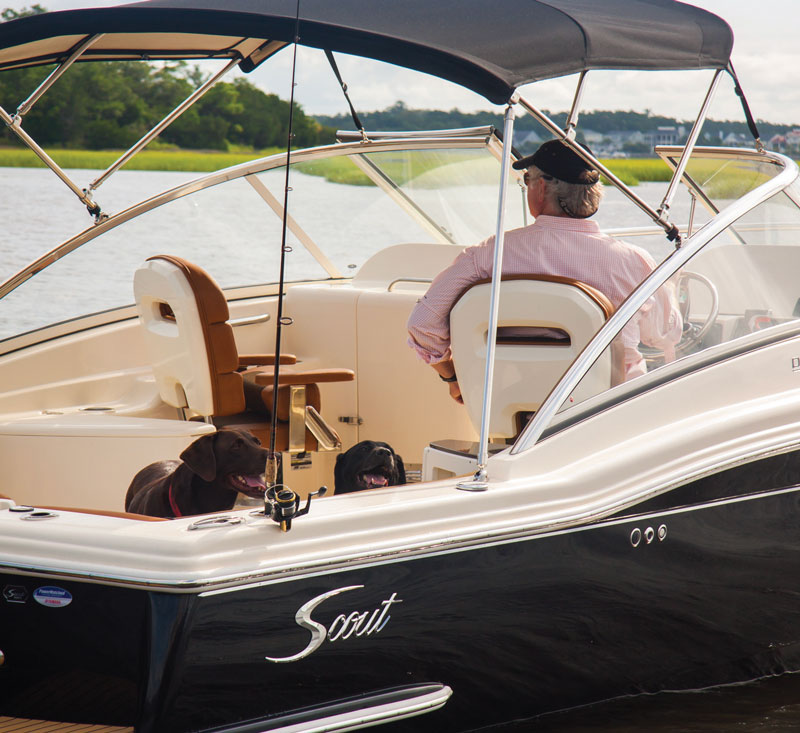
Sunbrella fabrics can be applied throughout the entire boat, from Bimini tops that provide comfort from the sun to soft seating, pillows and durable covers that keep boats clean and free of debris when stored so boaters can leave the dock at a moment’s notice. (Photograph ©Steve Exum)

Following the company’s ethos that fabrics should be beautiful, comfortable and functional, Sunbrella marine fabrics are designed and engineered to meet the needs of boaters today and tomorrow.

By Kirk Fitzsimmons

The post-pandemic surge in recreational boating activity reignited the marine industry with new opportunities for innovation and connection. Ongoing research from the National Marine Manufacturers Association affirms this momentum will continue, which is why it has become increasingly important for marine textile companies to understand evolving consumer habits and apply those insights to develop new marine products and enhance existing ones to meet the needs of boaters today and tomorrow.

From commercial yachts that require premier textiles with a soft and luxurious hand to consumer fishing boats, pontoons and catamarans with seating crafted to protect against challenges such as microbial pinking, there has never been such an exciting opportunity for textile companies that serve the boating industry. How can we help boaters with different desires create memorable experiences on the water? How can we best serve each of our stakeholders — from boaters to manufacturers to fabricators — based on their specific needs? These are some of the questions posed every day at Sunbrella since the company entered the market more than 60 years ago — but these words now have new meaning.

As the Sunbrella team approaches 2023 at full throttle, they also are taking time to reel it back and reflect on how far Sunbrella has come as a brand with a purpose and ethos the company feels proud to stand behind. For decades, the company’s success has been centered on a legacy of complete performance, from fabrics that stand the test of time in demanding environments to the service and support that Sunbrella extends to customers. The company hopes that by sharing its knowledge, it can educate and inspire those that are part of the marine community because the future is bright for all.

Putting A Stake In The Ground

Sunbrella began in 1961 when the brand’s founders identified an opportunity to develop an awning canvas with a substantially longer lifespan than cotton. The patented material that was created not only delivered on that longevity, but also offered an unprecedented resistance to fading. Sunbrella fabric was the first of its kind and the company quickly began to lead the awning market.

It wasn’t long before Sunbrella realized that its performance fabrics could extend beyond shade structures. In the years that followed, the founders brought the innovative spirit of Sunbrella into several new environments and applications, including marine. From superyachts to speedboats, the state-of-the-art fabrics began appearing on vessels of all sizes around the world as a result of the protection they offered against the elements. The company feels proud to have redefined what consumers could expect from performance textiles in those initial years.

An Ongoing Commitment To Excellence

Ever since Sunbrella entered the marine market, it has been a priority for the brand to deliver premium fabric that gives boaters, manufacturers and fabricators the materials they need to create the extraordinary in textile design, whether that be a vibrant color palette or niche function. Sunbrella is founded on the belief that fabrics should be beautiful, comfortable and functional. For marine applications, this translates to a luxurious experience on the water with Bimini tops that provide comfort from the sun, soft seating and pillows that deliver worry-free performance and are engineered to stand up to everything from splashes to spills, and last but not least, durable covers that keep boats clean and free of debris when stored so boaters can leave the dock at a moment’s notice. It also means producing fabric offerings in a wide range of colors and patterns to reflect a consumer’s unique style. The expansive Sunbrella portfolio includes textiles that are all woven with careful attention to detail. The brand stand behind its textiles with industry-leading warranties. This has been critical to earn and maintain the trust of trade partners and consumers in the marine space.

Today, the term “performance fabric” is used broadly to refer to any textile designed to be easily cleanable and withstand wear and tear, but not all performance fabrics are created equal. Some rely on a sprayed-on topcoat or finish that wears away over time or after consistent exposure to ultraviolet (UV) rays from the sun. The proprietary performance of Sunbrella is engineered into the core of its fabrics with yarns saturated at the fiber level with exclusive UV-stable pigments. For example, Sunbrella marine canvas fabrics block 98 percent of harmful UV light. Sunbrella shade fabrics are further recommended by the Skin Cancer Foundation as part of a complete sun protection regimen alongside regular use of sunscreen to aid in preventing sun-induced skin damage.

Sunbrella continues to push the boundaries with its formulations to ensure the innovative fabrics exceed the expectations of modern life, including new products that work harder and smarter for boaters to combat marine-specific phenomena like microbial pinking or salt residue. From sourcing raw materials to manufacturing to distribution, the company adheres to strict standards to ensure its fabrics perform and the company’s vertically integrated production process aligns with company values. All fabrics must pass an extensive combination of 33 rigorous in-house and third party-certified tests to ensure they provide exceptional quality and durability to perform in the harshest of environments. These tests gauge things such as colorfastness, flame retardancy, abrasion resistance, weathering and more.

Built on a legacy of complete performance, Sunbrella continues to push the boundaries of what’s possible with its innovative marine fabrics.

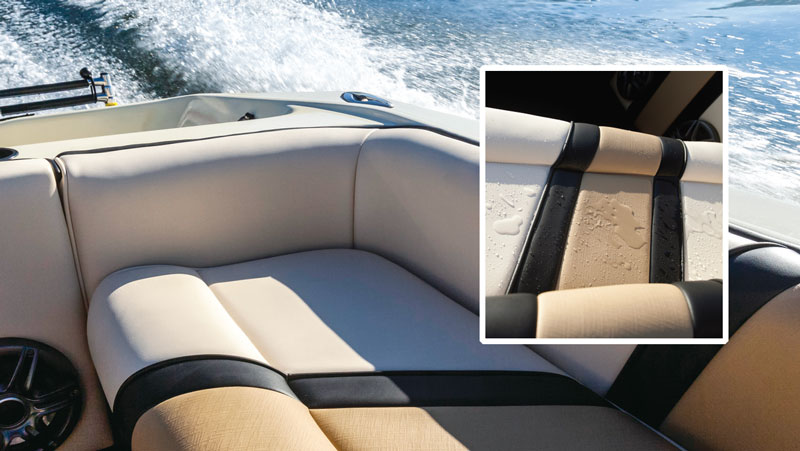
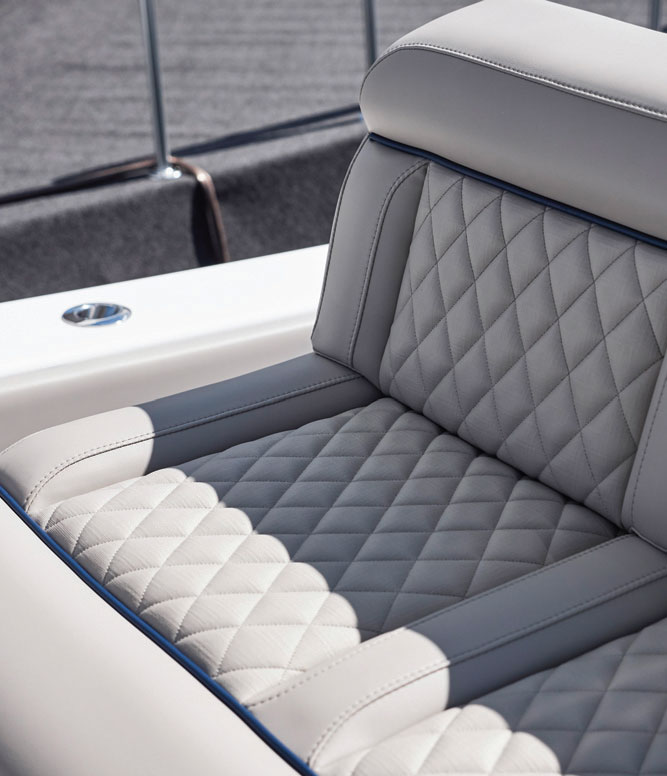
Most recently, the company launched Sunbrella Horizon marine vinyl — the company’s first non-woven upholstery fabric. Horizon offers revolutionary resistance against microbial pinking, four-way stretch and recovery and lasting performance for years of worry-free enjoyment. It also features a knit-backed construction that prevents misshaping. This soft vinyl fabric is suitable for numerous marine upholstery applications, including captain’s chairs, cushions, bench seating and sunpads, and is designed to complement and coordinate with gelcoat and Sunbrella marine canvas fabrics. Additionally, Horizon is weather-, mold- and mildew-resistant, resists cold cracking and is easy to clean — even with bleach — so boaters can spend more time on the water and less time on maintenance and care. Horizon also features highly UV-stable pigments for optimal color retention over time with strong protection against fading from sunlight. The product is now available in more than 30 styles, 25 colors and two embossing patterns, and is being used by a growing number of boat manufacturers.

Expanding The Sunbrella Footprint For The Long Term

Sunbrella customers always have been more than a purchase order to the company and over the years, the company has learned that by making a commitment to product excellence, it is investing in their success. Customers deserve the best for their customers — and everyone must work with the greater success of the industry in mind.

To keep up with early and ongoing success across a growing number of industries, the parent company of Sunbrella, Glen Raven, significantly expanded its manufacturing facilities over the past few decades to have a global footprint across three continents. While the Sunbrella headquarters and primary production facilities are located in the United States, there are additional manufacturing facilities in Lille, France, and Suzhou, China —two strategic locations that have enabled the company to deliver on the growing demand.

Today, these capital investments span new technologies such as B2B portals for customers to see inventory in real time, as well as a multiphase $250+ million capacity expansion plan — 75 percent of which is focused on Glen Raven’s U.S. footprint — to continuing to increase production, warehousing and testing capabilities.

Getting Involved

In the marine industry, relationships are everything. Sunbrella takes a holistic approach to supporting the industry and by sharing more about its approach, the company hopes it can inspire other companies to consider similar tactics. The industry is a close-knit group of good people who trust each other. Word of mouth is an invaluable learning tactic in this industry, but more importantly, these conversations allow Sunbrella to better support its partners and understand their needs.

For decades, Sunbrella has partnered with regional, national, advocacy and trade associations that reach various sectors of the business and at all levels. These associations are central to the marine industry as they provide fabricators, distributors, manufacturers, companies and their customers with support and education to make informed business and purchasing decisions. This approach has brought immense value not only to the company’s research and product development, but to its customer relationships as well.

Sunbrella also has benefitted from involvement with trade associations such as the Advanced Textiles Association (ATA) and Marine Fabricators Association. Through regional events, workshops and conferences, a longstanding partnership with ATA has helped Sunbrella build strong and lasting relationships with the fabricators that are critical to its business and the industry at large. The Marine Fabricators Conference each January is an annual highlight for the Sunbrella team.

The company also takes pride in its involvement with regional associations like the North East Canvas Products Association and the Chesapeake Marine Canvas Fabricators Association. These associations help Sunbrella reach awning and marine canvas dealers and fabricators in the places where they have operated for years. These connections give Sunbrella the opportunity to learn about its trade partners, hear feedback and determine how the company can continue to provide support and help them address their unique challenges.

Horizon marine vinyl is the first non-woven upholstery fabric from Sunbrella.

In addition to its relationships with associations, Sunbrella always has prioritized attending and exhibiting at boat shows across the country. These events are one of the most effective ways to promote brand awareness. The company sees the events as opportunities to demonstrate its category leadership for Sunbrella alongside other key players in the industry. From Seattle to Miami to Newport, in-person conversations at these shows with consumers and the trade help Sunbrella communicate important messages about the design excellence and top performance for which Sunbrella is known in a setting that promotes trust. This learning goes back to the idea that word of mouth and authenticity are critical in driving brand awareness for marine textiles. When consumers can pair the tactile feel of a soft vinyl fabric like Sunbrella Horizon with advice they’re receiving in real time based on experience, they are more likely to walk away with trust in that product.

As individualization in design is increasingly sought after, consumers must start by understanding their fabric options to best personalize their boat. That understanding should also incorporate knowledge of the brand they are choosing and what it stands for. In the case of Sunbrella, the brand’s goal is to support consumers with the education and tools they need to choose Sunbrella with confidence to enjoy their experience on the water.

Respecting The Planet

Being a good corporate citizen and steward of the environment has defined Glen Raven for decades. The company is committed to the greater good of its people, its communities and the planet. Sustainability practices are being increasingly evaluated and prioritized across industries, including marine, but these practices have always been part of the company’s DNA.

The performance woven into Sunbrella fabrics allows them to maintain their color through wear and tear and in the harshest marine environments, delivering not only a superior product but also one that needs to be replaced less often, providing a more sustainable option and ultimately reducing waste over time.

In addition to longstanding sustainable practices, Sunbrella is passionate about two philanthropic marine partnerships. The first is with SeaCleaners, a nonprofit association that encourages coordinated joint action against plastic pollution in the oceans. The second partnership is with Bonefish & Tarpon Trust, a science-based organization with a mission to conserve bonefish, tarpon and permit species, their habitats and associated fisheries. By working with SeaCleaners, Sunbrella has been able to make a direct impact on preserving oceans and marine environments; and with Bonefish & Tarpon Trust, the company has been able to promote healthy fisheries and their marine environments for the long term.

Looking Ahead

The marine industry is dynamic, filled with a storied history and brimming with growth opportunities. Sunbrella has many exciting projects on the horizon and the company will continue to meet the needs of its customers while respecting the planet. Led by relationships and best-in-class textiles, Sunbrella looks forward to championing the growth of the marine industry in 2023 and beyond.


Editor’s Note: Kirk Fitzsimmons is director of Shade & Marine at Sunbrella.


January/February 2023

Sustainable Denim Production Using Open-End Versus Ring Spun Yarn

Kontoor Brands is examining its manufacturing processes to look for ways to reduce energy and its carbon footprint.

TW Special Report

It is unequivocal that anthropogenic carbon dioxide (CO2) emissions are causing climate change. The rate of these emissions is unmatched in the last 2,000 years of human history1. Consequently, the world has been experiencing unprecedented climate extremities. From devastating flooding in Pakistan and the United States, to a record-breaking heat wave in the United Kingdom, 2022 saw many climate anomalies2.

The consensus among scientific communities is that the global temperature rise needs to be kept below a 1.5°C rise from preindustrial levels during the period 1850-1900. Beyond this point, the world may experience far more catastrophic climate change effects on its people and ecosystems1. Keeping the temperature rise at less than 1.5°C requires halving global carbon emissions by 2030 from 2010 levels and achieving net zero by 2050. In plain terms, this decade — from 2020 to 2030 — is the last window of opportunity for humanity to redefine the climate future.

Kontoor Brands — owner of iconic Wrangler® and Lee® brands, among other brands — recognizes this urgency and sustainability is an end-to-end commitment included in the company’s strategic priorities. It is aware that the global fashion industry contributes roughly 2 percent of carbon emissions — approximately 1.05 gigatons of CO2 equivalents — every year3. Hence, Kontoor constantly is looking for ways to improve any part of the processes used to manufacture its products to reduce the impact on the planet and the people living on it. At the end of 2022, Kontoor submitted its Science-Based Targets (SBTs) to align its emissions reduction strategy with the 1.5°C climate target. SBTs are enterprise-wide binding commitments to reduce CO2 emissions, overseen by the Science-Based Targets initiative (SBTi)4.

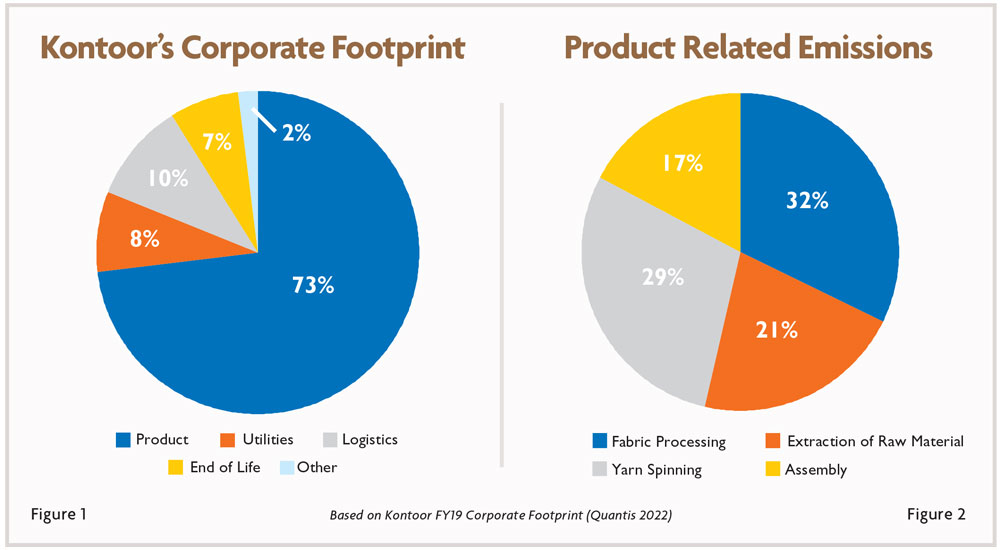
Through a corporate carbon footprint assessment, Kontoor has found that product related emissions account for approximately 78 percent of its carbon footprint, excluding consumer use of product (See Figure 1). This refers specifically to the emissions associated with the extraction, development, and processing of products’ raw materials as well as the assembly of final products including packaging. Breaking it down further, spinning accounts for about 20 percent or one-fifth of the total product related emissions (See Figure 2). Therefore, it is beneficial to explore alternative options to reduce emissions from spinning, and Kontoor is currently examining the feasibility to expand open-end spinning in all denim and related products.

What is Open-End Yarn?

Open-end (OE) yarn is a type of yarn that can be produced without using a spindle. In OE spinning, the roving process is omitted, and the sliver is fed directly into a rotor after the drawing process. The fineness of the yarn can be altered by adjusting the rate at which the fibers are drawn out of the rotor relative to the rate at which fibers are fed into the rotor. The process is based on principles of centrifugal force. Imagine the fibers are pressed into a groove on the inside of the rotor until the desired count is achieved.

The primary difference between OE yarns and ring-spun (RS) yarns is the process used to form the yarn. RS yarn is formed by inserting twist into a continuous strand of fibers. A piece of OE yarn is formed by collecting individual fibers from the inside surface of a rotor and combining them using centrifugal forces. RS yarn may be described as formed from the outside in, while OE yarn is formed from the inside out.

Where Are These Yarns Used?

OE yarns often are found across multiple product categories in basic apparel. However, use of OE yarn remains in the minority, with RS yarn accounting for around 70 percent of the yarn used for clothing purposes today5. OE yarns are often found in towels, where the yarn works well for both feel and water absorption. As technologies and processes continue to evolve, the applications for OE yarns also are evolving. With the sustainability gains of OE yarns, more opportunities for application are on the horizon.

What Makes OE Spinning Different From Ring Spinning?

Less Time and Energy — The primary difference that makes OE spinning a better process than ring spinning is its high efficiency. OE spinning has fundamentally fewer steps in its process than ring spinning. Since OE spinning only requires one pass of drawing — versus two passes for ring spinning — and no roving frame procedure, it is a faster process than ring spinning.

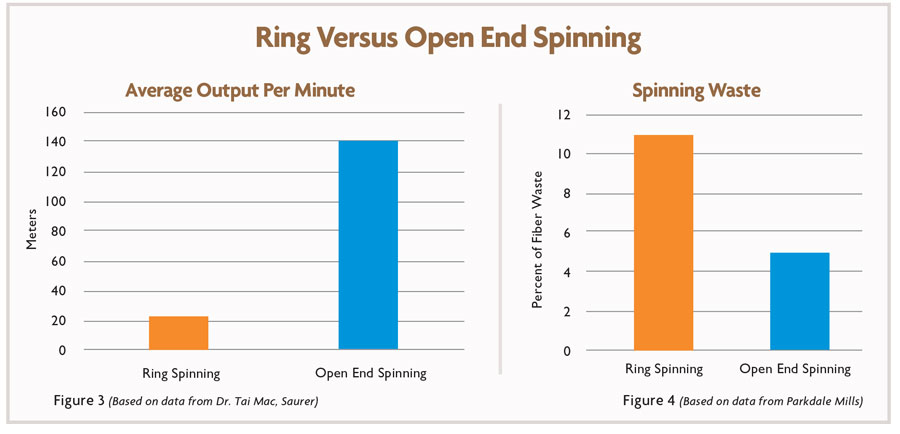
Cem Yalcin, head of Sales and Marketing for Switzerland-based Saurer AG, described OE spinning as “unbeatable in productivity and energy savings.” Considering only the spinning process of OE compared to ring spun, it is simply faster in this area as ring spinning machines are relatively slower. The OE process is faster because of the remarkably high rotor speed in OE machines. Figure 3 shows a direct comparison of the output of a ring spinning machine versus an OE spinning machine using a typical denim yarn in the time frame of one minute. The graph illustrates the glaring difference in speed. The elimination of roving and winding steps leads to yarn production speeds that are six to eight times faster than ring spun yarns6,7,8. Also, with fewer steps, the floorspace required is less for the OE spinning process.
Along with improving efficiency, having less steps in the process also results in reduced workforce requirements. Brad Johnson, vice president of Manufacturing at Cone Denim, estimated that for the full ring spinning process, approximately three to four times as many operators are needed than are required for OE spinning. Despite the need for fewer operators for OE spinning, the output is still considerably higher. Great advances actively are being made in the automation stages of OE spinning, requiring even fewer operators. For example, optical and capacitance systems are able to continually assess fiber characteristics, such as linear density, making it possible to quickly identify and remove faults or mistakes, often automatically. A study from Das and Alagirusamy9 predicts that there are possibilities of full automation of the yarn spinning process within the world of OE spinning. This concept also typically results in tighter statistical controlled processes from a quality perspective. While full automation of mills has not yet been realized, full automation is much closer with OE spinning than it is with ring spinning, according to experts at Saurer.

The shortened process and improved efficiency greatly affects the energy consumed during OE spinning, which creates a meaningful sustainability advantage when compared to ring spinning. There are multiple publications and reports that compare the energy usage of the two spinning methods (See Table 1). OE spinning consistently uses less energy than ring spinning, with reductions as high as 57 percent.
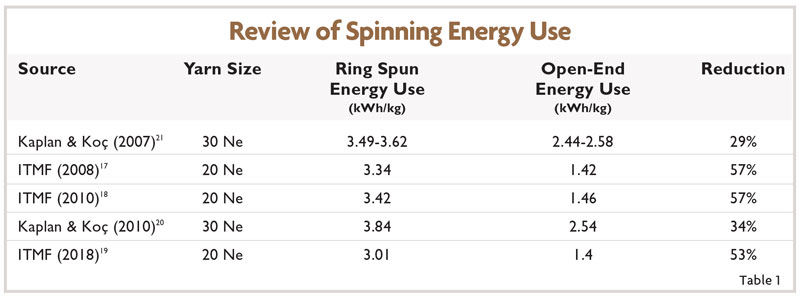
Based on the most recent numbers from the United States Energy Information Administration10, the OE spinning energy savings are equivalent to a minimum of thirteen cents per kilogram of yarn produced. When that number factors towards the hundreds of thousands of kilograms mills produce weekly, it becomes significant.

Less Waste Generated — Besides energy savings, OE spinning generates less fiber waste when compared to ring spinning. Cheryl Smyre, director of Advanced Materials at Parkdale Mills, shared the variance in waste between OE spun yarn and RS yarn (See Figure 4).

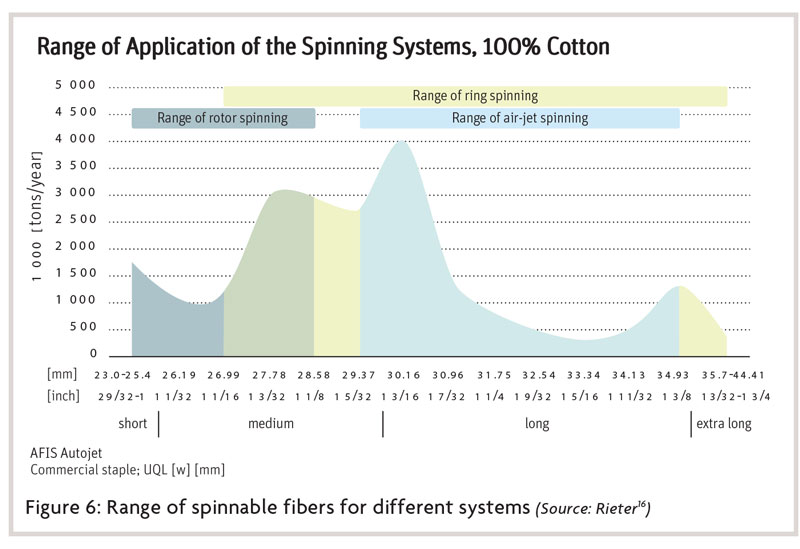
Recycled Fiber Usage and Circularity — The OE spinning process also offers advantages when it comes to compatible fiber types. OE spinning can utilize shorter fibers, while ring spinning can only use fibers of a minimum length and high uniformity. The use of shorter or lower grade cotton fiber in OE spinning processed does not compromise yarn integrity and allows yarns of the same quality to be produced using less expensive cotton than the ring-spinning process. In addition, it is easier to process recycled fibers in the OE spinning process. Although ring frames can process almost all fiber types, more short fiber content tends to result in a higher number of yarn breaks and higher wastage. Therefore, the quantity of recycled fibers used in RS yarns is considerably lower compared to OE yarns. Switzerland-based Rieter11 evaluated the unevenness of RS and OE yarns as a function of torn recycled fibers (See Figure 5). Figure 6 shows the range of acceptable fiber sizes for different spinning methods.
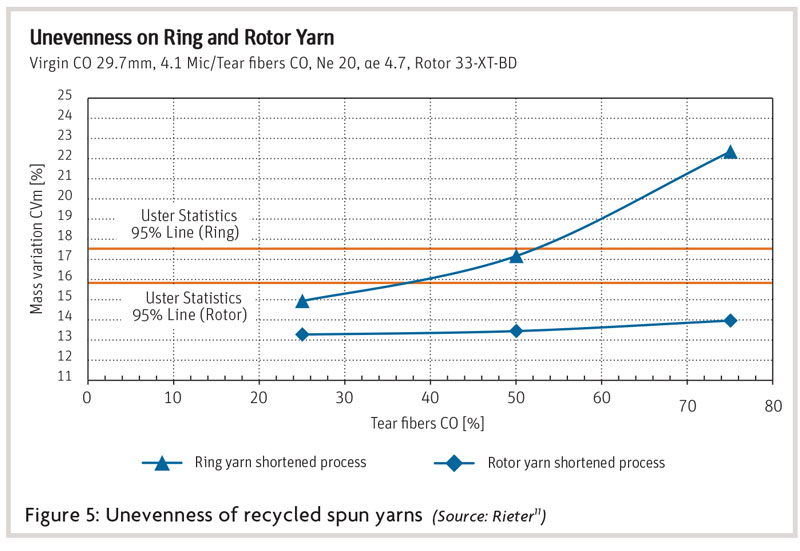
For acceptable yarn quality and operational reliability, a blend containing up to 75-percent recycled content is possible in OE spinning. With ring spinning, recycled content is typically kept below 25 percent6. OE spinning offers the opportunity to better utilize recycled materials versus ring spinning where recycled fiber use is more limited.

The need to recycle fabrics already is on the rise in some regions. France recently passed a law to combat waste that makes the destruction of unused textiles illegal. Such waste must be recycled or donated12. Other regulations have been proposed in the European Union that call for a mandatory minimum use of recycled fibers for fashion companies by the year 2030. Circular material flows — such as reuse and recycling — also is recommended in IPCC’s13 climate change mitigation strategy. The ability to utilize recycled fiber for apparel products is something that will become increasingly important in the coming years and OE spinning will be a helpful strategy.
What Are the Limitations?

One of the main obstacles of OE yarn relates to its strength and durability. A study from Cary, N.C.-based Cotton Incorporated14 found that OE spun yarn was 10- to 30-percent weaker than RS yarn on average. In addition, light man-made fibers such as polyester cannot be effectively spun alone using the OE spinning process. For instance, a durable, but exceptionally lightweight garment likely could not be produced using OE spun yarn.

Another common concern when comparing OE to RS yarn is the fact that RS yarn is easily placed on a core while OE yarn is not. Core spinning is the process of spinning fibers around a pre-existing yarn core. The core can be comprised of different yarns. For example, a polyester core would add strength to the garment, while an elastic core would allow the garment to stretch. This stretch property is especially important when making modern slim fit and skinny jeans because certain level of stretch often is incorporated for comfort as well as the ability to expand and adjust. The required stretch can be conferred by a spandex core yarn in the center of the cotton. Though this is one of the drawbacks of OE, technology is being developed that enables stretch yarns to be produced on OE spinning machines.

One example of this technology is the Rotona process developed by Rieter. The process involves wrapping OE-spun yarn around a core that can be elastic or non-elastic15. Another solution to this problem is to use a combination of OE and RS yarn in products that require a degree of stretch. While it is no argument that a garment made entirely out of ring-spun yarn with an elastic core would certainly stretch more, the combination of OE yarn and elastic RS yarn may be sufficient for some consumers and products.

One non-technical drawback to this combined option would be to address consumer perception, as most consumers are used to the feel of the standard RS fibers. OE spinning produces a slightly coarser yarn count, and the structure of the yarn itself is slightly different than RS, with OE-spun yarn having fewer parallel fibers. An OE-spun yarn cannot currently be produced in the same caliber of fineness that a RS yarn can. It is difficult to produce finer yarns above 40 Ne with this system; this does not pose a major challenge in denim manufacturing, as denim yarns range from 10 to 30 Ne. These variances result in a slightly different hand — one that the consumer may notice when purchasing products. For a heavier fabric, such as denim, these attributes of OE-spun yarn are not as much of a concern.

Kontoor’s Plans For OE Yarn

Kontoor has submitted a science-based target in line with a 1.5°C temperature reduction scenario. As shown in Figure 2, yarn spinning accounts for roughly 20 percent of Kontoor’s product related emissions. Hence, innovation in cotton spinning processes would produce a notable reduction to the company’s overall carbon footprint. For example, an internal analysis from Quantis revealed that replacing 50 percent of Kontoor’s current ring spun volume with an OE process can potentially save 6 percent emissions from scope 3, which are defined as value chain emissions. Therefore, the potential impact of OE spinning cannot be ignored.

OE spinning offers advantages in a wide array of distinct aspects of the garment-making process. The process requires fewer workers, less energy and factory floor space, and produces less waste, while increasing efficiency, opportunities for automation, and opportunities to recycle fibers. When viewing all these advantages, OE spinning is a more sustainable choice when producing garments. In addition, overall cost savings, including the cost of lower grade cotton, makes it a financially viable strategy.

Kontoor encourages spinning machine manufacturers to continue innovating. The future of the spinning process relies on finding ways to increase efficiency to decrease waste and emissions. Kontoor also encourages other brands to consider the possibilities related to using OE spinning for some or all of their product lines. The potential positive environmental impact is substantial. At Kontoor, sustainability is defined as the dynamic process of continual improvement for its people, product, and planet. In support of this, the company is always searching for innovation and activities that can improve performance relative to these objectives. Kontoor views OE spinning as an area that can impact the sustainability of apparel products. As a good steward in the sustainability space, Kontoor hopes to see other brands pursue these same types of initiatives.

Every Action Counts

Limiting global warming to less than a 1.5°C rise would require accelerated and far-reaching transitions in energy and industrial systems. It is a global issue, and everyone needs to pull together in every possible way. Each action towards emission reduction counts, no matter how big or small. From reduction in fossil fuel use to deployment of low-emission energy sources to energy efficiency and conservation, every opportunity needs to be seized in order to fight climate change. OE yarn spinning is just one of the many solutions available. Kontoor is hopeful that this will catalyze others and that the fashion industry will be able to do its fair share to deliver on climate targets.


References

1 IPCC (2021). Summary for Policymakers. In: Climate Change 2021: The Physical Science Basis. Contribution of Working Group I to the Sixth Assessment Report of the Intergovernmental Panel on Climate Change. https://www.ipcc.ch/report/ar6/wg1/downloads/report/IPCC_AR6_WGI_TS.pdf

2 NCEI (2022, Sep 14). Assessing the Global Climate in August 2022. NOAA. https://www.ncei.noaa.gov/news/global-climate-202208

3 Ley, K., Perkins, L., van Mazijk, R., Gaines, R. & Hugil, R. (2021). Unlocking the trillion-dollar fashion decarbonization opportunity: existing and innovative solutions. Apparel Impact Institute & Fashion for Good. https://apparelimpact.org/wp-content/uploads/2021/11/Aii_UnlockingTheTrillion-DollarFashionDecarbonisationOpportunity_Report_v11.pdf

4 https://sciencebasedtargets.org/

5 Singh, M. K., & Nigam, A. (2013). Effect of various ring yarns on fabric comfort. Journal of Industrial Engineering, 2013.

6 Goyal, A., & Nayak, R. (2020). Sustainability in yarn manufacturing. In Sustainable Technologies for Fashion and Textiles (pp. 33-55). Woodhead Publishing.

7 Kiron, M. I. (2021, January 28). An overview of open-end rotor spinning. Textile Learner. https://textilelearner.net/an-overview-of-open-end-rotor-spinning/#:~:text=The%20production%20rate%20of%20rotor,used%20in%20
cotton%20carded%20spinning.

8 Dr. Tai Mac, Saurer, personal communication, 2022

9 Das, A., & Alagirusamy, R. (2010). Fundamental principles of open end yarn spinning. In Advances in yarn spinning technology (pp. 79-101). Woodhead Publishing.

10 United States Energy Information Administration. (2022, July 26). Electric Power Monthly. U.S. Energy Information Administration (EIA). https://www.eia.gov/electricity/monthly/epm_table_grapher.php?t=epmt_5_6_a

11 Rieter (2021). The Increasing Importance of Recycling in the Staple-Fiber Spinning Process. Switzerland: Rieter Spinning

12 Casert, R. (2022, March 30). EU to propose new rules to discourage consumers against Fast Fashion. PBS. https://www.pbs.org/newshour/world/eu-to-propose-new-rules-to-discourage-consumers-against-fast-fashion# :~:text=New%20rules%20proposed%20by%20the,conditions%20in%20the%20garment%20industry.

13 IPCC (2022). Summary for Policymakers. In: Climate Change 2022: Mitigation of Climate Change. Contribution of Working Group III to the Sixth Assessment Report of the Intergovernmental Panel on Climate Change. https://www.ipcc.ch/report/ar6/wg3/downloads/report/IPCC_AR6_WGIII_SPM.pdf

14 Cotton Incorporated. (2003). Introduction to open end Spinning – Cotton Incorporated. Retrieved August 5, 2022, from https://www.cottoninc.com/wp- content/uploads/2017/12/TRI-1004-Introduction-to-Open-End-Spinning.pdf

15 Hehl, R. (2004). Rotona: An open-end core yarn, especially suitable for denim. 59-61.

16 Rieter (2015). Processing Indian Raw Cotton. Switzerland: Rieter Spinning

17 ITMF (2008). International Comparison of Manufacturing Costs, Spinning/Weaving/Knitting, Sweden: International Textile Manufacturers Federation.

18 ITMF (2010). International Comparison of Manufacturing Costs, Spinning/Weaving/Knitting, Sweden: International Textile Manufacturers Federation

19 ITMF (2018). International Comparison of Manufacturing Costs, Spinning/Weaving/Knitting, Sweden: International Textile Manufacturers Federation.

20 Kaplan, E., & Koç, E. (2010). Investigation of Energy Consumption in Yarn Production with Special Reference to Open-End Rotor Spinning. Fibres & Textiles in Eastern Europe.

21 Kaplan, E. & Koç, E. (2007). An Investigation on Energy Consumption in Yarn Production with Special Reference to Ring Spinning. Fibres & Textiles in Eastern Europe, (4 (63)), 18-24.


Editor’s Note: The following people contributed to this article Brad Johnson, vice president of Manufacturing at Cone Denim; Carole McFee, senior director of Quality Assurance and Product Stewardship of Jeanswear at Kontoor Brands; Cem Yalcin, vice president, head of  Sales and Marketing at Saurer; Cheryl Smyre, director of Advanced Materials at Parkdale Mills; Dhruv Agarwal, vice president – Sustainability, Innovation, Development at Kontoor Brands; Jacob Knego, developer, Textile Research at Kontoor Brands; Jeff Frye, head – Sustainability, Innovation, Product Development, Procurement at Kontoor Brands; Jordan Brewster, manager of Global Sustainability Engagement at Kontoor Brands; Lauren Fields, senior manager of Global Sustainability Data and Reporting at Kontoor Brands; Logan Fortenberry, Sustainability intern at Kontoor Brands; Matthew Hawthorne, Sustainability consultant at Quantis; Randy Fortenberry, Former Supply Chain executive; Dr. Sarif Patwary, senior Sustainability Analyst at Kontoor Brands; Dr. Tai Mac, vice president, director of Business Line Open-End Spinning at Saurer.

In addition, the paper was reviewed by Dr. Rong Yin, assistant professor, Textile Engineering, Chemistry and Science, Wilson College of Textiles, North Carolina State University; and Larry Hubbard, associate director, Fiber Processing and Spinning, Cotton Incorporated.

Figures 1 and 2 as originally published in the print version of “Sustainable Denim Production Using Open-End Versus Ring Spun Yarn,” TW, January/February 2023, have been updated online. The numbers disclosed in the new figures shown here are the most accurate and up-to-date. The changes were warranted based on an update in footprint accounting methodology. 


January/February 2023

A Textile Education Circa 2023: Going Global

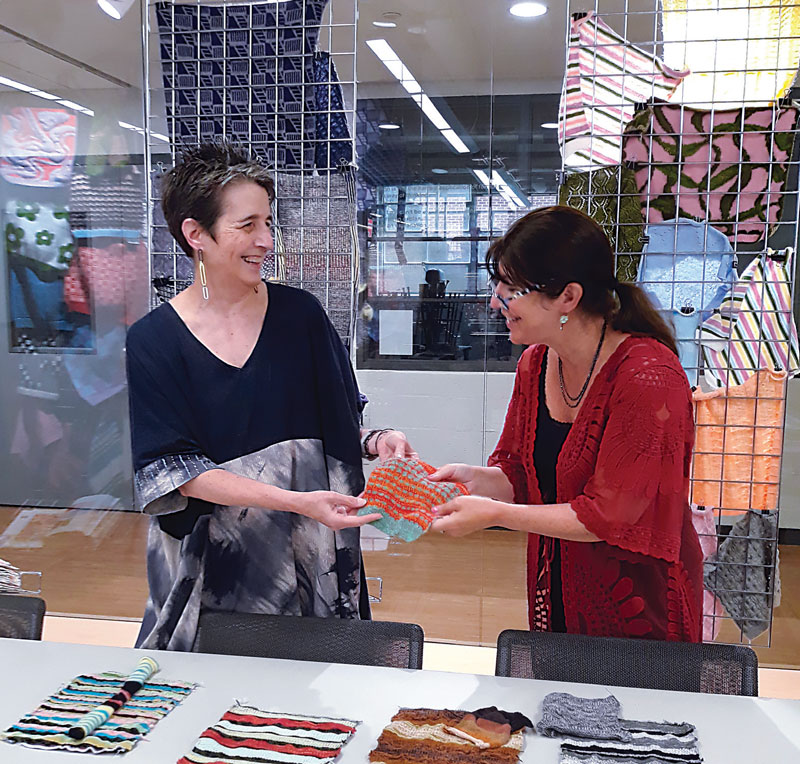
Professors Marcia Weiss (left) and
Marnie Collins reviewing textiles at Thomas Jefferson University.

Two of the world’s oldest textile universities partner to offer a joint Master’s of Science in Global Textile Design

By Jim Kaufmann, Contributing Editor

Thomas Jefferson University (Jefferson), based in Philadelphia, and Heriot-Watt University (Heriot-Watt) based in Edinburgh, Scotland, together recently announced a partnership to offer an exclusive joint Master of Science (M.S.) degree in Global Textile Design.

“This program is being positioned to enlighten students about the opportunities and issues which this global industry is currently facing,” said Marnie Collins, co-director of the Global Textile Design program and assistant professor, program director of Studies-Design for Textiles at Heriot-Watt. “We’ll also support the students in navigating their own leadership pathway in the field.”

“It is the first program of its kind in textile design that will offer joint masters degrees from each institution,” added Marcia Weiss, also co-director of the Global Textile Design program and director, Textile Design Programs, at Jefferson’s Kanbar College of Design, Engineering and Commerce.

Though the co-directors didn’t know each other in college, Weiss and Collins — both graduates of the textile design program at the then Philadelphia College of Textiles and Sciences which is now part of Jefferson (See “A Study in Collaboration,” TW, September/October 2020) — have followed similar career paths and passions. Each maintains a love of textile design, and both worked in various aspects of the textile industry before joining academia, albeit in different countries. “We’ve worked together for several years overseeing the longstanding international student exchanges between our Universities,” Collins said. “We learned we had common interests beyond woven textile design and higher education in artisanal textiles and the heritage and provenance of textiles.” A co-authored research paper, “The Role of Provenance in Luxury Textiles,” that focused on cultural similarities and differences in the perceptions and importance of design origins between U.K. and U.S. consumers formed the basis for a mutual friendship and interest in finding other ways to collaborate.

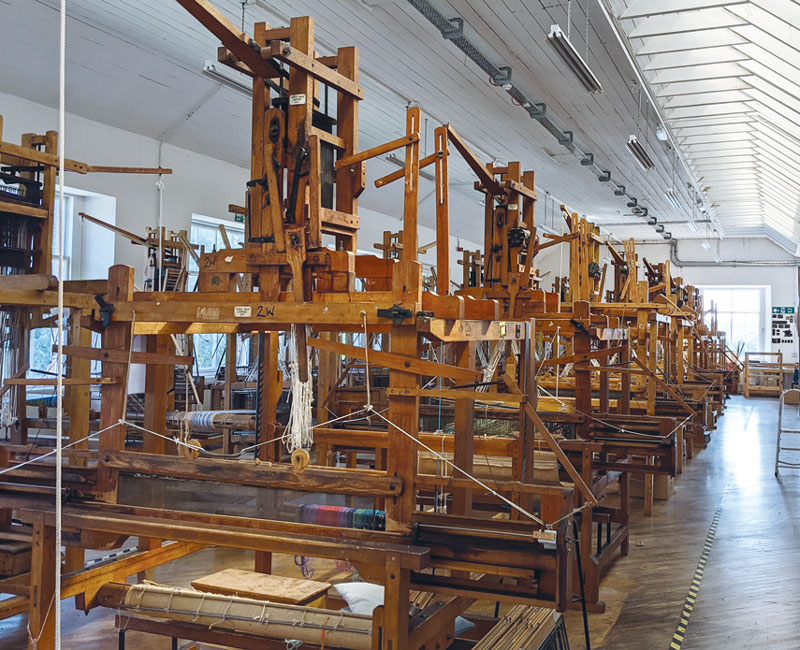
The weave shed in the High Mill at Heriot-Watt University

Ultimately, the women found themselves at what both Weiss and Collins agree “was the most enjoyable ‘business’ meeting ever!” “At various times, we’d have informal discussions on different ways to collaborate. Then in June 2016, Marnie was visiting family along the Jersey Shore and invited me out to Beach Haven, N.J., where we sat on the beach, looked out at the ocean, and inevitably started to piece together the program’s general scope and structure,” Weiss said. “I believe it was Marcia who came up with the idea of the joint master’s program which led to the ‘wouldn’t it be great’ question being asked quite often,” Collins added. “With such an inspiring location, it was inevitable for us to day-dream about what the most amazing joint master’s program would look like.”

The Program’s Structure

The first of its kind program for both universities has been finalized and will welcome its first class of students in the fall of 2023. “This program is structured to educate students about the opportunities and issues currently being faced throughout the contemporary textile industry and to support them in navigating their own leadership pathway in the field,” Weiss said. “Textile design creativity, sustainability, artisanal heritage as well as entrepreneurship will be emphasized.”

Structured as an 18-month-long master’s program, all students in the class will follow the same program path. It will begin with a full fall semester held at Jefferson in Philadelphia. After the traditional holiday/New Year break, students will spend the first half of the spring semester at Jefferson and then collectively move to Scotland during spring break to complete the second half of the spring semester at Heriot-Watt.

A key aspect of the joint program is the incorporation of a credit-bearing summer internship that will provide students with unprecedented opportunities because of the quality of industry partners and potential placement options offered. Each internship could be completed at select companies literally anywhere in the world. “Marnie and I have both worked directly in the textile industry prior to joining academia and with various other segments through university and industry collaborations. We both are focused on our student’s career opportunities and there are a high level of industry contacts and networks available that can be engaged specific to potential internships,” Weiss noted.

The final fall semester will be completed in full at Heriot-Watt. According to Weiss: “The sequencing and location of semesters were chosen based on the proximity of textile industry tradeshows occurring throughout the duration of the program.” A comprehensive tuition package will cover travel within courses, but not the back-and-forth between Scotland and Philadelphia. Students will need to be prepared for a considerable amount of travel as part of this global program which will also afford them the opportunity to visit and participate in a variety of international textile events both in the United States and Europe.

The program initially will be limited to a class size of 12 students. Because of the small class size, careful consideration will be given to the selection process ensuring a high quality of participants. Qualifications for those interested in enrolling will require a bachelor’s degree from an accredited institution and a level of creative experience, which doesn’t necessarily have to be specifically in textiles or textile design. “We are really looking for a demonstrated passion and interest in creative pursuits from the candidates,” suggested Weiss. Prospective students will also be asked to submit a portfolio of their work, a resume or curriculum vitae, as well as letters of recommendation. Decisions on acceptance will be made jointly by both Universities.

Value And Appeal Of Two Historic Textile Institutions

“The textile industry is obviously global,” Collins said. “There are aspects of the industry that have local challenges and concerns. However, the vast majority of modern-day issues facing the textile industry are shared across the world, including sustainability, ethical practices and artisanal skills preservation.”

“We view this program in a similar way to the ‘farm to table’ philosophy found in the restaurant industry,” Weiss noted. “People increasingly want to know the provenance of their textiles as well. So, the textile industry is pivoting towards thinking global, yet living local in order to meet the changing attitudes of consumers globally.”

There are numerous similarities between Jefferson and Heriot-Watt and their textiles and design programs. They each represent two of the world’s oldest textile institutions — The School of Textiles and Design at Heriot-Watt was formerly the Scottish College of Textiles, while Jefferson’s textile program was founded in 1884 as the Philadelphia Textile School. “The heritage and reputation of both institutions are widely known and highly respected,” stated Collins. “Both have expert staff who provide high quality support for their students for undergrad and post grad. And both have amazing facilities including textile processing labs and testing facilities, excellent historical archives and fantastic links with the industry. Graduates will find themselves with an expanded network and a much more varied experience to draw upon post degree.”

Differences between the two are subtle, but significant. Jefferson has better digital facilities and industrial machinery, while Heriot-Watt has prolific analog facilities and hand-weaving equipment. Given the different environments where each university is located, students also will be exposed to a variety of not only different cultures, but also industry networks. “There are so many great textiles globally. We hope to build on the legacy of both institutions with the arrival of this program and the international community it will foster,” stated Weiss.

Earning a degree from two of the world’s most prestigious and respected textile institutions can only provide a major benefit to the program’s graduates as they enter or re-enter the workplace. The plan was to introduce the program for the 2019/2020 school year, but the COVID pandemic hit and postponed its launch. On the bright side, this allowed for more discussions on and fine-tuning of the program details, the meshing of institutional regulations into one cohesive program, and additional time to attract national and international students. Now, both Weiss and Collins are ready to get this program off the ground. “We’re super excited for the opportunities it will bring to the students and to further connect our two schools,” said Weiss. “It’s going to be great fun!”

January/February 2023

Sponsors