Rondal Selected As 2023 JEC Innovation Awards Finalists For Automated Carbon Composite Wing Sail

VOLLENHOVE, Netherlands — February 13, 2023 — Rondal, supplier of superyacht spars and sailing systems, is delighted to announce that its automated, carbon fiber composite wing sail for yachts has been recognized by the JEC Innovation Awards committee and selected as a finalist for the 2023 JEC Innovation Awards in the category Maritime Transportation & Shipbuilding.

Developed with project partners Curve Works and Artemis Technologies, the new wing sail concept aims to significantly increase the market share of wind-propelled yachts by creating a highly efficient, automated, composite solid wing sail technology that can be “ready-to-sail” in seconds, maximizing the time vessels rely solely on clean, renewable wind propulsion. The wing sail created is also the world’s first large structural composite wing produced using a single adaptive mold with integrated heating to manufacture individual curved wing skin panels from pre-preg materials which were then bonded together to assemble the final wing structure.

Rondal and Artemis Technologies employed the latest in simulation technologies to evaluate their wing design before the build of their 9 metre tall sailing prototype. An intensive sailing test program also allowed the project team to validate real-world handling characteristics of the wing versus its predicted performance, and provided key data for the next stage optimization of the wing control systems.

The construction process for the new wing sail also represents a step-change in manufacturing sustainability for such large wing structures, with Curve Works integrating a new mold heating system within their adaptive tooling system. As the Rondal innovation also offers fully customizable wing planforms that can match both the performance and styling requirements of each unique yacht design, utilizing this single mold tool corresponds to a massive reduction in landfill waste resulting traditional composite tooling.

The JEC Innovation Awards — organized by the JEC Group — are recognized as the composite industry’s most prestigious awards. The 2023 award winners will be announced at a ceremony in Paris on the 2nd of March, with Rondal, Curve Works and Artemis Technologies also displaying the wing as part of the Industrial Planets at JEC World 2023.

“We are thrilled to be nominated as finalists for the 2023 JEC Innovation Awards and are absolutely delighted that the awards committee has recognized the potential of our new wing concept. Rondal’s passion for innovation, along with the design, simulation and manufacturing support of our partners Curve Works and Artemis Technologies has created an extremely exciting new sailing solution. We can’t wait to continue leading the way in enabling a new generation of clean, silent and highly efficient yachts powered solely by the wind,” commented Hermen de Jong, Innovation manager, Rondal

Posted: February 13, 2023

Source: Rondal bv.

Sattler® Outdura® Appoints Caldwell And Talbert To Lead Sales Teams

Chris Caldwell

HUDSON, N.C. — February 10, 2023 — Sattler Outdura, a division of The Sattler Group, Austria, announced that Chris Caldwell, current product manager for Outdura casual furniture and Sattler shade fabrics, has taken on the new responsibility of sales manager for Outdura. Julie Talbert has also joined the Outdura team as a sales manager. Both positions report to Ulrich Tombuelt, Sattler Outdura CEO.

As product manager, Caldwell was responsible for the development, analysis and management of all furniture and shade fabrics as well as working closely with sales and business development to enhance Outdura’s image and create long-term value to the organization. “Chris has done a wonderful job growing our business and has taken us to the next level in sales, delivery and overall service so moving into the position as sales manager is natural progression for his skills set,” Tombuelt stated. “Plus, his in-depth product knowledge will be a great asset to our customers as he helps them resolve their fabric needs.”

Julie Talbert

Talbert joins Outdura with a strong textile background working as a director of product development, outbound sales representative and as a merchandising and design specialist in the industry. “Julie’s extensive experience in textiles along with her in-depth design knowledge and customer service expertise will prove to be extremely beneficial for us and especially our customers as she undertakes this new sales manager position,” Tombuelt added

“We decided to let both Chris and Julie work across the country, instead of in territories, focusing on the companies and people that they have cultivated meaningful relationships with. I am confident that with their broad backgrounds, product knowledge, and network of contacts, both will be successful in maintaining and developing strategic new channels of business for our Outdura line of solution-dyed acrylic fabrics,” Tombuelt concluded

Posted: February 10, 2023

Source: Outdura

Itema Participates At DTG 2023: Itema Rapier Weaving Machine 
From Customer Universal Denims Limited (Bangladesh) On Display

COLZATE, Italy and DHAKA, Bangladesh — February 10, 2023 — Itema, a global provider of advanced weaving solutions, including weaving machines, OEM spare parts and integrated services, is exhibiting at DTG 2023 (Hall 7/296) from February 15-18 at International Convention City Bashundhara in Dhaka.

On show, Itema will bring its denim-dedicated rapier weaving machine, the R9500-2denim. The weaving machine is courtesy of Universal Denims Limited, Bangladesh, which selected Itema as its trusted technological partner for the production of premium denim fabrics. The machine displayed at the event comes from the bulk order of 99 Itema rapier R9500-2denim that Universal Denim recently installed in its mill. Universal Denim is one of the first largest vertical state-of-the-art multi-storey integrated textile operations in Bangladesh, a LEED Platinum standard built company with modern facilities on 160 Bigha land at Bhaluka, Mymensingh. Universal Denims Limited supplies more than 36 million yards of world-class denim to leading fashion brands and retailers worldwide.

The R9500-2denim on show is equipped with iSAVER®, the one-of-a-kind mechatronic device capable to completely eliminate the waste selvedge on the left-hand side of the fabric thus leading to significant costs savings and to reduced waste, contributing to a sustainable denim weaving. iSAVER is already successfully installed in many leading denim mills worldwide and represents a real interesting added value for Bangladeshi weavers that deal everyday with Western brands which are more and more looking at a green and sustainable production chain for the fabrics they purchase.

DTG is for Itema the perfect stage to allow the Bangladeshi weavers to experience first-hand the weaving solutions provided by the company, which are worldwide renowned for their superior textile mastery, eco- efficiency, and ease of use. 
Itema positions itself as a reliable partner — and not only a simple supplier — for textile companies, providing advanced weaving machines along with a real-time after-sales service, highly professional training for the weavers, and integrated textile consultancy.

Itema is uniquely positioned in the market to offer textile manufacturers the top three weft insertion technologies — rapier, airjet and projectile — OEM spare parts, upgrade kits, and a dedicated online shop for the historic brands now part of Itema — Somet, Sulzer, and Vamatex — in addition to highly professional training in 6 worldwide locations.

Atiqul Alam Chowdhury, managing director of Universal Denims Ltd., commented: “Universal Denims Limited works on sustainable manufacturing processes, innovation, carbon-footprint reduction, and utility efficiency. The yarns and chemicals used in our plants come from organic sustainable sources, we adopt an ozone finishing process that reduces environmental impact, and fabric stretching is realized with an aero finish to increase durability. Moreover, our state-of-the-art effluent treatment plant saves 172 million liters of natural water annually, equipped with e-labs that make our factory extremely eco-friendly. Itema’s technology further helps us in reducing the footprint of our activities, while not having to compromise in terms of weaving efficiency and fabric quality – we are therefore delighted to further enhance our partnership by having one of our Itema R9500-2denim rapier weaving machines on display at DTG”.

To learn more about Itema latest weaving innovations, visit the Itema booth 296 in Hall 7 at DTG 2023.

Posted: February 10, 2023

Source: Itema

Positive Moves To Improve The Textile Industry’s Eco Credentials

New dyeing techniques can remove the damaging impact the textile industry has on the environment.

By Peter Broom

As consumers become more eco-aware they are increasingly calling for apparel which meets environmental and sustainability demands. Indeed research shows that 31 percent of Gen X would buy more sustainable clothing if it was available.

What the textile industry must understand is that it has to accept that change is needed if it is to be in tune with customers who really do care about what happens to our planet.

The recent COP27 gathering was a reminder that there is still much to be done to protect the planet and the textile sector mustn’t shy away from its role in both being the problem and the solution.

This is particularly important as the World Economic Forum says that the fashion industry and its supply chain is, after food and construction, the planet’s third largest polluter.

It’s the industry’s responsibility to see how it can make changes and do things better. It must be more than simple green washing and means developing sustainable materials to offset the textile industry’s detrimental environmental effects.

The industry needs to stand up and act before it is too late. To do this, it needs to go back to basics.

Research from the environmental sustainability consultancy Quantis found that more than 90 percent of the industry’s environmentally damaging emissions come from just four basic activities — dyeing and finishing, fabric preparation, yarn preparation, and fiber production.

Each process needs action to reduce the textile industry’s negative impact on the environment. At Meryl Fabrics, the creation of Meryl EcoDye has made advances in dyeing and finishing.

Meryl EcoDye offers dope dyed fabrics a high-quality coloration and excellent fastness while making the dyeing process more environmentally friendly. With a one-step colorization process, compared with the traditional two step, it removes the need to produce white fabric and subsequent dyeing. Meryl adds a pigment to its yarn so that the color becomes an inherent part of the fabric and guarantees the best colour and highest quality control with outstanding fastness to ultraviolet rays, washing abrasion, migration and ironing.

This has been tested in closed and open laundry circuits where garments can be washed a minimum of 300 times without losing color or misshaping.

Dyeing and finishing is also a major water polluter. The World Bank says that 17 to 20 percent of all water pollution comes from textile dyeing treatments so the advent of waterless dyeing reduces the environmental harm.

Because one metric ton of fabric is estimated to use more than 200,000 litres of water and requires a dye discharge with effluent into water systems, the fact that Meryl EcoDye uses no water offers colossal savings in water resources.

Meryl EcoDye’s environmental advantages are further strengthened as it has no heavy metals or additional chemicals, solvents or silicones to further protect water sources.

By using products like Meryl EcoDye, textile producers can significantly reduce the environmental impact of textile waste and stop the destruction currently being inflicted on the planet, while helping to achieve the United Nations Sustainable Development goals.

It can do this by standing up as an industry to say things can be done better and showing that eco-friendly and effective alternatives are available.

The industry must stop talking about doing something; solutions exist, so it’s time to execute!


Editor’s Note: Peter Broom is Technical and Innovation director at Meryl Fabrics.


February 9, 2023

A “Game Changer” For Clothing Recycling?

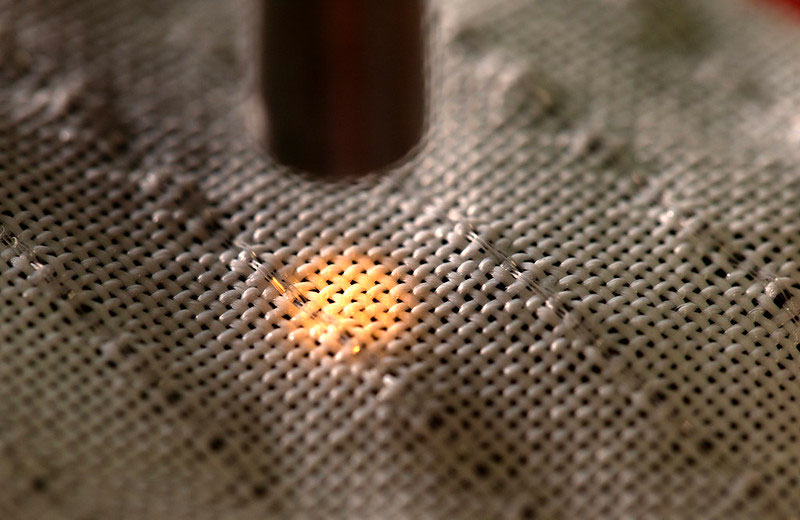
A fabric with photonic fibers woven into it at the University of Michigan’s North Campus Research Center in Ann Arbor, Mich. Photographs courtesy of Marcin Szczepanski/Lead Multimedia Storyteller, University of Michigan College of Engineering

Photonic fibers borrow from butterfly wings to enable invisible, indelible sorting labels.

TW Special Report

Less than 15 percent of the 92 million tons of clothing and other textiles discarded annually are recycled — in part because they are so difficult to sort. Woven-in labels made with inexpensive photonic fibers developed by a University of Michigan-led team could change that.

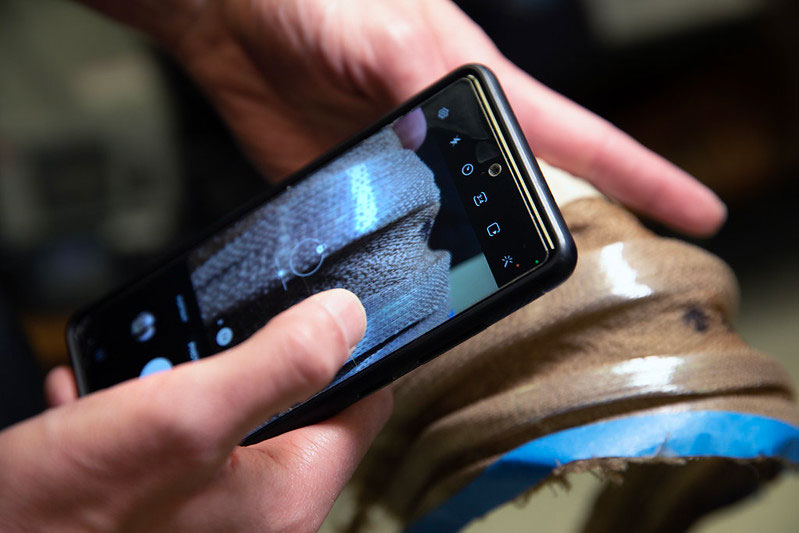
“It’s like a barcode that’s woven directly into the fabric of a garment,” said Max Shtein, a U-M professor of materials science and engineering and corresponding author on the study. “We can customize the photonic properties of the fibers to make them visible to the naked eye, readable only under near-infrared light or any combination.”

Ordinary tags often don’t make it to the end of a garment’s life — they may be cut away or washed until illegible, and tagless information can wear off. Recycling could be more effective if a tag was woven into the fabric, invisible until it needs to be read. This is what the new fiber could do.

Recyclers already use near-infrared sorting systems that identify different materials according to their naturally occurring optical signatures — the PET plastic in a water bottle, for example, looks different under near-infrared light than the HDPE plastic in a milk jug. Different fabrics also have different optical signatures, but Brian Iezzi, a postdoctoral researcher in Shtein’s lab and lead author on the paper, explains that those signatures are of limited use to recyclers because of the prevalence of blended fabrics.

“For a truly circular recycling system to work, it’s important to know the precise composition of a fabric — a cotton recycler doesn’t want to pay for a garment that’s made of 70-percent polyester,” Iezzi said. “Natural optical signatures can’t provide that level of precision, but our photonic fibers can.”

The team developed the technology by combining Iezzi and Shtein’s photonic expertise — usually applied to products like displays, solar cells and optical filters — with the advanced textile capabilities at MIT’s Lincoln Lab. The lab worked to incorporate the photonic properties into a process that would be compatible with large-scale production.

They accomplished the task by starting with a preform — a plastic feedstock that comprises dozens of alternating layers. In this case, they used acrylic and polycarbonate. While each individual layer is clear, the combination of two materials bends and refracts light to create optical effects that can look like color. It’s the same basic phenomena that gives butterfly wings their shimmer.

The preform is heated and then mechanically pulled — a bit like taffy — into a hair-thin strand of fiber. While the manufacturing process method differs from the extrusion technique used to make conventional man-made fibers like polyester, it can produce the same miles-long strands of fiber. Those strands can then be processed with the same equipment already used by textile makers.

By adjusting the mix of materials and the speed at which the preform is pulled, the researchers tuned the fiber to create the desired optical properties and ensure recyclability. While the photonic fiber is more expensive than traditional textiles, the researchers estimate that it will only result in a small increase in the cost of finished goods.

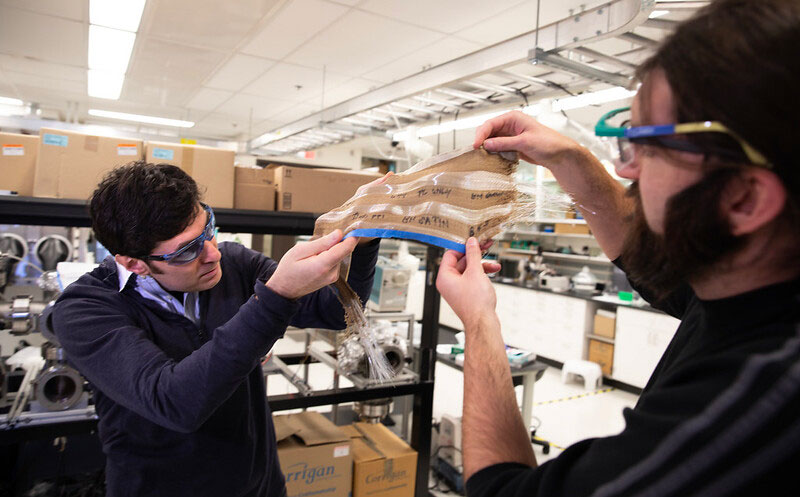
Chemical Engineering Professor Max Stein (left) and Brian Iezzi, post-doctoral researcher at the Materials Science and Engineering Department, analyze the fabric with photonic fibers woven into it at the University of Michigan’s North Campus Research Center in Ann Arbor

“The photonic fibers only need to make up a small percentage — as little as 1 percent of a finished garment,” Iezzi said. “That might increase the cost of the finished product by around 25 cents — similar to the cost of those use-and-care tags we’re all familiar with.”

Shtein says that in addition to making recycling easier, the photonic labeling could be used to tell consumers where and how goods are made, and even to verify the authenticity of brand-name products. It could be a way to add important value for customers.

“As electronic devices like cell phones become more sophisticated, they could potentially have the ability to read this kind of photonic labeling,” Shtein said. “So I could imagine a future where woven-in labels are a useful feature for consumers as well as recyclers.”

The team has applied for patent protection and is evaluating ways to move forward with the commercialization of the technology.

The research was supported by the National Science Foundation and the Under Secretary of Defense for Research and Engineering.

Study: “Fabric-Integrated Polymeric Photonic Crystal Fibers for Textile Tracing and Sorting” (DOI: https://doi.org/10.1002/admt.202201099)

February 9, 2023

Microfluidic Devices Made With Fibers, Yarns And Fabrics Are Making Revolutionary Advances In Multiple Application Areas

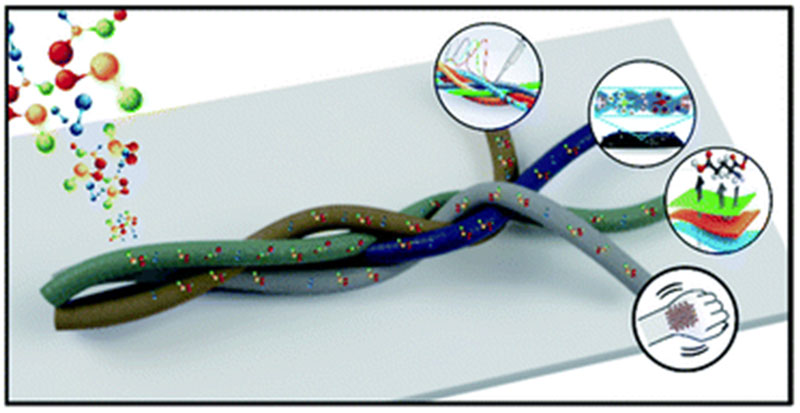
Figure 1: An illustration of a Thread-Based Microfluidic System (This figure originally appeared in the article, “Microfluidic Devices Based on Textile Threads for Analytical Applications: State of the Art and Prospects,” published in Analytical Methods, Issue 41, 2021 by Denoir Augustini et al.)

By Dr. Radhakrishnaiah Parachuru

Textiles are rapidly emerging as the cheapest and most versatile components of microfluidic devices. Microfluidics is the  branch of science which deals with the behavior of fluids through micro channels. It also deals with the technology of manufacturing miniaturized devices containing chambers and tunnels through which fluids can flow or remain confined. These devices work with very small volumes of fluids, down to 1 cc or so. Fluids behave very differently on the micrometric scale than they do in bulk quantities. The unique features and behaviors of tiny volumes of fluids absorbed into micro channels play unique detection and diagnostic roles in new scientific experiments and a plethora of emerging new devices.

Polymers are widely used to fabricate microfluidic devices. Both thermoplastics and thermosets have found extensive use. Their preference is due to the fact that they are robust, inexpensive and remain stable under strong bio-chemical environments. The availability of a wide range of polymeric materials and the possibility of modifying their properties through chemical and thermal means are other factors that govern their popularity. In recent years, low-cost microfluidic devices based on mono and multifilament threads and fabricated textiles have found important applications in disease detection, diagnosis and environmental mitigation. Hydrophilic multifilament threads are capable of transporting aqueous and non-aqueous fluids via capillary action and they possess desirable properties for building fluid transport pathways in microfluidic devices. Figure 1 illustrates a thread-based system.

These devices are usually integrated with one or more analysis techniques such as electrochemical, colorimetric, electrophoretic, chromatographic and fluorescence techniques. The combination allowed the construction of fully portable devices suitable for point-of-care and wearable applications.

Threads can also be used to manufacture fabrics which can be patterned to achieve suitable hydrophilic-hydrophobic control. A combination of hydrophilic and hydrophobic threads can be used to fabricate precisely controlled low-cost fabric patterns which will serve as inexpensive microfluidic devices. Recent research on textile microfluidic devices focused on modelling of the fluid flow in microfluidic thread and textile-based systems. The work also focused on thread surface treatments and the potential of combining multifilament threads with other materials to construct devices with expanded functionality.

Fabric-based 2D and 3D microfluidic devices fabricated using organic cotton and wax have demonstrated how instant absorption of tiny volumes of colored fluids in preferred locations can be accomplished. These devices are suitable for colorimetric protocols whose sensing principle is based on color change. Anhydrous sodium bicarbonate (NaHCO3) was used to remove the natural wax from preferred locations of the fabric to make these locations hydrophilic in nature. It was shown that by removing natural wax and applying wax to cotton in preferred patterns, side-by-side hydrophilic-hydrophobic zones down to 1 millimeter size can be created in an ordinary cotton fabric. The fabric containing tiny zones that can either attract or repel fluids can be used to detect the presence or absence of fluids, including contaminated and differently colored fluids.

Water pollution is a major problem today causing shortage of fresh water around the globe. Heavy metals, pharmaceutical waste materials, organic and inorganic contaminants present in water bodies are posing significant threats to the environment and public health. Currently available monitoring techniques involve complex equipment, longer processing time, and highly skilled professionals, making these techniques expensive and inaccessible. Towards achieving a portable, highly sensitive, and selective water quality control system, microfluidic devices have emerged as the preferred choice. Several researchers have turned their attention to the microfluidic devices and are focusing on the development of appropriate devices for the detection of contaminants in water. Polymer and textile-based microfluidic devices are expected to play a big role in detecting and removing the pollutants present in global water bodies.


Editor’s Note: Dr. Radhakrishnaiah Parachuru is a professor in the School of Materials Science & Engineering at the Georgia Institute of Technology in Atlanta.


February 9, 2023

For Sports Fans And Athletes, On-Demand Apparel Production Captures That Winning Feeling

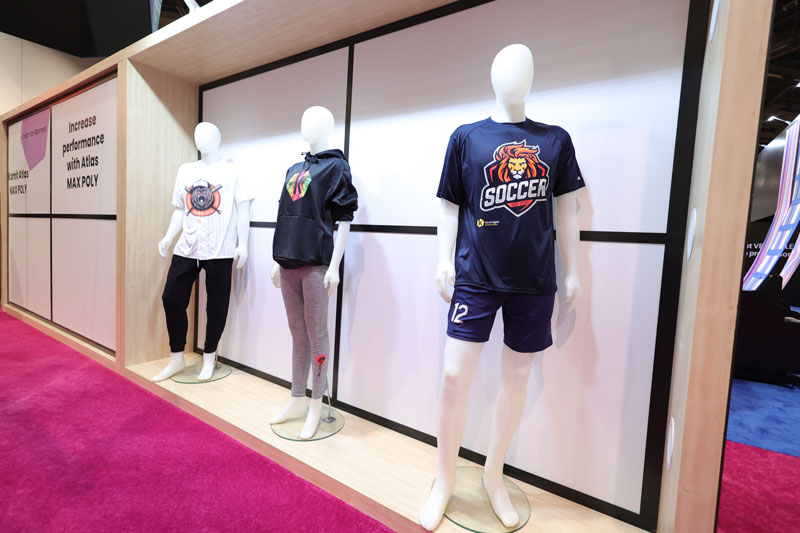
Agile digital fashion and merchandise print means scoring on wins in the World Cup, Super Bowl, March Madness — and community.

By Don Whaley

Kornit customer Peter Mendez is co-owner of Long Island, N.Y.-based Mendez Printing, a family-run business using digital direct-to-garment (DTG) print technology to create graphically unlimited apparel for schools, sports teams, hospitals, businesses, and other organizations in his community. Like a growing number of Americans, he’s a big soccer fan, and couldn’t help but notice the role of championship merchandise in major events like the recent World Cup.

“We’ve all seen World Series winners, Super Bowl winners, and most recently Argentina hoisting the World Cup in Qatar, and almost like magic, the winner brandishes custom-printed garments after their victory,” Mendez said. “On-demand DTG printing offers the speed and versatility to take full advantage of this opportunity, both on and off the field. Its agile and requires no minimum quantity. The next World Cup will be here, and the final game played at MetLife Stadium — in New Jersey, a mere 33 miles from our shop. Just imagine the simple logistics of having gear for the competing teams printed on fanwear and fashion with sustainable, industry-best digital capabilities right here in the area, with virtually no shipping and delivery time.”
Flag On The Play

Mendez has an excellent point, although it makes sense to step back and look at the even broader picture. For every team celebrating with new gear on the field, there are millions of sports fans around the world with a passion for sharing in that sense of victory. As an extension of the team, a diehard fan base wants to celebrate the wins, and support their team in any way possible — especially through sports apparel. That’s why, practically overnight, vendors both online and brick-and-mortar stock their shelves with championship merchandise, often at premium prices, and delivering premium revenues for teams and licensed apparel providers.

And yet, the slow mechanics involved in producing and shipping that inventory via traditional means — screen printing, dye sublimation, embroidery, vinyl transfer, and the like — has long necessitated overproduction. This is one circumstance where “be prepared” means “generate far more than you need, because you won’t know who wins until it’s too late.”

An article published in the Los Angeles Times shortly before the last Super Bowl discussed this phenomenon at length, noting the “conundrum” of sports retailers who at that time held two contrasting inventories of caps, t-shirts, sweatshirts, and face masks alternately celebrating the “Super Bowl LVI Champion Los Angeles Rams” and “Super Bowl LVI Champion Cincinnati Bengals,” awaiting the big game to decide the true winner.

According to one L.A. retail clerk cited in the piece, “demand for Rams gear had been low all year, so an uptick in interest after their NFC championship win caught the store off guard.” Meanwhile, they cited a web-based licensed apparel decorate who noted that “Bengals gear has been outselling the Rams four to one.”

So when the LA Rams became Super Bowl Champions on February 13, 2022, and companies like Good360 began shipping “Super Bowl Champion Cincinnati Bengals” gear shortly thereafter, it became an awkward example of out-of-touch memorabilia finding its way into collectors’ hands. And every big game yields the same pile of “Dewey Defeats Truman”-type curios, to be written off at considerable cost to producers.

Delay of Game

Surely an apparel industry that’s spent recent years fighting charges of waste, ecological harm, “greenwashing,” the downsides of “fast fashion,” and other byproducts of overproduction can do better than knowingly creating more piles of goods than will ever be needed and labeling one of those piles “tax write-off.” If producers aren’t moving beyond that business model for environmental reasons, then surely it’s worth considering for better profit margins, better customer experiences, and creating a proven pathway to operational growth.
The Kick Is Good

The state of on-demand digital apparel printing has long since matched the quality, durability, and brand standards of today’s major apparel retailers and sports teams, and as Mendez suggested, it can fulfill demand in a fraction of the time compared to other production mechanisms. With a single step, companies can have ready-to-wear apparel without limitations of color or graphic design, applied to any number of cotton, polyester, blends, or other materials in mere minutes, so they can produce only what they sell — or, in most cases, produce only the winning team’s championship gear. There’s no setup time; simply render an image on a screen, and the DTG system renders it on a garment, so costs are low and margins are robust, whether a company is producing one or 1,000 pieces.

The most advanced of these systems can replicate screen, dye sublimation, vinyl transfer, embroidery, and even 3D imagery using the same efficient mechanism, so the production floor can produce more with less labor, less energy, less materials, and less time. It’s the perfect solution for streamlining operations and enabling long-term growth.

Innovative workflow technology provides transparency and accountability across the end-to-end production experience, and a consistent product across multiple production systems and production sites. Whether creating on-demand sportswear and fan gear in Los Angeles, Buenos Aires, Paris, Tel Aviv, or Tokyo — or all of the above — digital offers consistency and reliability. Become the go-to provider for never-before-seen sports apparel in a local market, or wherever the demand is, with the untouchable speed, agility, quality, profitability, and uncompromising imagery only digital can provide fans.

Be An Apparel All-Star

Digital on-demand fashion and apparel production empowers companies to capture the moment, and capitalize on opportunities in real time. This can apply to a championship tournament such as the World Cup, Super Bowl, or March Madness, or any performance worth commemorating. A team’s starting pitcher throws a no-hitter? An NBA player sets new points record for his team? How about capturing a successful Hail Mary pass with only seconds left? Put a photorealistic image from that game, complete with score and any other relevant details, on a T-shirt and have it for sale on an e-commerce site within hours.

Or let your customers design it themselves. Which brings us to the final point.

Be Part of the Huddle

David Hardman, proprietor of Scottsdale, Ariz.-based Huddleup Stores, is another Kornit customer. His business focuses on providing quality “teamwear” in all its forms, including custom sports apparel but also catering to charities, community organizations, corporate groups, and others in his area. He’s using digital DTG capabilities in particular to imprint polyester and poly-blend apparel common to the sportswear market. For Hardman’s teams, the localized scale of their demand puts the cost of overproduction into focus, as well as the true opportunity presented by digital capabilities.

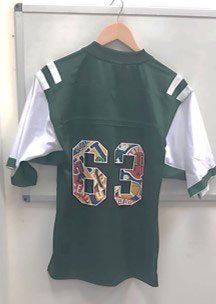
“Customization and personalization makes the most impact locally, on the personal level,” Hardman said. “When the consumer has the opportunity to actually go and choose what they want, their company doesn’t have to guess at it, and won’t sink costs by guessing sizes, designs, and excess inventory storage. Companies often forget sunk costs and devalue their brand when they only sell a portion of what they’ve produced. This principle applies even more so at the local level because you don’t have a million fans willing to buy things. The big brands don’t care that they’re throwing $100,000 away, but the small and medium companies can’t afford those repeated losses. I want to give people something they know they want, something where they choose what makes them happy. We all get to have the number we want on our backs.”

With digital on-demand production, you have the versatility to not only commemorate the big games, but also empower fans to put their own spin on their apparel. That can include personalization, capturing a special moment, and more. The only limit is their imagination, and wearing it is a winning feeling, no matter who’s playing.

Super Bowl LVII takes place Sunday, February 12, 2023, at State Farm Stadium in Glendale, Ariz. — just 31 miles from Hardman’s shop!


Don Whaley is vice president, marketing, at Kornit Digital Americas.


February 9, 2023

Ditto™ Launches Digital Pattern Projection, A Disruptive Sewing Technology

NEW YORK CITY — February 9, 2023 — Ditto™, a joint venture between JOANN and SINGER®, has launched the first-ever digital pattern projection system for home sewists that combines algorithmic intelligence with digital projection to make patterns paperless, customizable, and adaptable to specific body measurements — all in real time. This system is the first evolution of paper patterns since their invention in 1860. The Ditto platform will feature original Ditto patterns and options from major pattern producers.

“Ditto compresses hours into minutes, eliminating the errors, frustration, and time-consuming reality of traditional patterns,” said Filippo Robotti, general manager of Ditto and vice president of strategy at SVP Worldwide. “Most importantly, Ditto is a tool to enable creativity. The same technology that accurately and easily projects patterns gives sewists the ability to customize measurements and modify the designs in just a few clicks — a concept that once seemed impossible.”

Ditto allows sewists to get to the fun faster. The system:

  • Creates a custom fit — Pattern dimensions adjust in real time using measurement inputs, reflecting the reality that no two bodies are the same;
  • Customizes the design — Changing a neckline or sleeve, or flaring a skirt or pant leg are all possible in a few clicks;
  • Is accurate — Ditto has unmatched precision. Once calibrated, sewists can trust pattern pieces are accurate and ready to cut. Ditto also has a splicing feature to accurately handle pieces that extend beyond the cutting mat;
  • Simplifies setup — From box opening to patterning in minutes, no tools, mounting, or engineering degrees are needed;
  • Includes a digital sewing gallery (i.e., pattern library) — Hundreds of customizable Ditto patterns and more from top brands and indie pattern makers will be available at launch, with more added monthly; and
  • Saves paper and the space to store it.

Ditto works by attaching a small digital projector to a tension rod, which is set up vertically between the floor and the ceiling. Using the Ditto app, sewists calibrate the projector to the cutting mat within minutes, then choose a pattern on dittopatterns.com, add their measurements, and customize the design and project. It can be set up and taken down quickly and easily.

In solving the challenges of paper patterns, Ditto addresses both a top frustration among — 33 percent rank patterning tasks as their least favorite part of sewing* — and a sizable market opportunity. There are 35 million active sewists in the U.S. and sewing machine sales continue to grow, adding new consumers who are skewing younger. Meanwhile, sewists are going digital with PDF patterns from indie pattern makers.

Until Ditto, sewists have used PDF patterns by printing and laying them out on fabric like traditional paper patterns or projecting them through DIY setups. These homespun options require ceiling or wall mounting, are not movable, and are highly challenging to calibrate for accurate pattern dimensions. Even with these limitations, everyday sewists have a growing interest in projected patterns because it offers an improvement over traditional paper. Facebook groups that troubleshoot home-grown options have tens of thousands of members.

The idea for Ditto began as a way to simply solve these pain points, but it has since grown into a tool that makes sewing and patterning more inclusive, more accessible, and more creative. By collaborating with real sewists throughout the three-year development process, Ditto developers identified bigger-picture needs, including made-to-measure sizing and the ability to easily modify a pattern’s design.

“Every Ditto capability was created for sewists and by sewists, which resulted in a tool that delivers the freedom of expression, the freedom of fit, and the joy of garments reflecting your personal style,” said Niasia Pinnock, lead designer at Ditto.

Ditto retails for $799 with purchase information on dittopatterns.com. Pre-orders began on February 8 at joann.com/ditto. It will be sold at independent sewing dealer locations, at singer.com/ditto and joann.com beginning March 1, and at JOANN stores beginning March 31.

Unlimited, customizable Ditto patterns are available through monthly ($9.99) or annual ($99.99) subscription options or can be purchased individually. Ditto will also offer non-customizable, third-party patterns from major pattern brands, like McCall’s, Simplicity and Butterick, and an array of indie pattern makers, like Style Arc, Liesl + Co., Named and Madalynne Intimates. New sewing patterns will be added monthly.

For more information, visit dittopatterns.com and @dittopatterns on Instagram and Facebook.

*According to Ditto original research, October 2019.

Posted: February 9, 2023

Source: Ditto

Atlas Copco Compressors Announces Agreement With Hoffman & Hoffman On Industrial Process Cooling Solutions Range

ROCK HILL, S.C. — February 9, 2023 — Atlas Copco Compressors is pleased to announce a new distributor agreement with Hoffman & Hoffman for Atlas Copco’s complete range of industrial process cooling systems. Hoffman & Hoffman will represent the product line exclusively across South Carolina, North Carolina, Virginia and Tennessee. The product and application experts from Hoffman & Hoffman will work with the dedicated Atlas Copco process cooling team to provide an unrivaled experience for customers.

Atlas Copco launched into the industrial cooling space in 2020, bringing their own innovation stamp to the market, particularly when it comes to connected controllers, advanced monitoring and diagnostics, and full-service packages for a range of industrial equipment. The Elektronikon® Mk5 Touch controller is one key feature, putting control at the user’s fingertips. Additionally, SMARTLINK 24/7 monitoring and diagnostics is available as part of the chiller’s total package.

The first product Atlas Copco launched into the U.S. market was the TCX range, featuring a compact, all-in-one water chiller with an air-cooled condenser and integrated hydro module, with units available in a variety of sizes. TCX chillers are specially designed for cooling water (or a mixture of water and glycol) for a wide range of industrial segments. The design of the TCX range’s state-of-the-art microchannel condensers requires 30% less refrigerant, making the units more environmentally friendly while lowering potential maintenance charges over the life of the chiller.

In 2022, Atlas Copco expanded the range with the new four-model TCA55-215 plug-and-play industrial water chiller range, which offers cooling capacities from 55 to 228 kW. This new range has many unique features designed for optimum energy efficiency and complete operational safety, as well as for easy and cost-effective installation and maintenance. Reliable and robust, the chillers feature proven scroll compressors in a twin circuit configuration, air-cooled microchannel condensers and an integrated hydraulic module.

“We are proud to be working with Hoffman & Hoffman,” said Robert Tucker, National sales manager, Atlas Copco Process Cooling Solutions. “Innovative new products and working with a company with such established routes to market, expertise, and customer service will ensure we provide our customers with a total package that’s second to none.”

Hoffman & Hoffman specializes in the selection and application of commercial and industrial heating, ventilation, air conditioning, filtration and direct digital control (DDC) systems. They represent manufacturers of the highest quality HVAC equipment and controls available on the market today.

Posted: February 9, 2023

Source: Atlas Copco Compressors LLC

The 2023 Marine Fabricators Conference Is A Win-Win Event

ROSEVILLE, Minn. — February 7, 2023 — The 2023 Marine Fabricators Conference that took place January 26-28 in New Orleans was bustling with energy, creativity and goodwill. With a total of 273 registrants, 68 first-time participants and 51 exhibitors, veterans and newcomers alike enjoyed the buzzing show floor, well-attended education sessions and special networking events that included a Fabricator Olympics and an over-the-top costume party.

First-time attendee Rosemary Taugher, co-owner of Two Roses Canvas in San Diego, Calif., said that after a decade in business she decided to join the Marine Fabricators Association (MFA) and attend the conference, and she wasn’t disappointed.

“Our business has gotten to the point where we need to downsize or go to the next level,” Taugher said. “That’s why I’m here. It’s so painful to learn the business by yourself, and I came hoping to smooth my learning curve and help decide what’s next for our business.”

Taugher says she found the education sessions extremely helpful because of the knowledgeable speakers and the give and take from other attendees. She especially appreciated “Intro to Digital: 2D vs. 3D” because it helped her understand the next steps for her business. “Being at the conference has given us more belief in ourselves. It’s helped us realize we can offer information to others and also receive it. I really value that.”

Veteran fabricator Mark Peterson, owner of SugarHouse Industries in Salt Lake City, Utah, echoes many of Taugher’s sentiments. He remembers his first conferences more than a decade ago. “At first, I kept to myself, and then I realized there’s not only a lot I can benefit from here but there’s a chance others can benefit from what I know too.”

Peterson was part of the 2023 MFA Ambassador Committee, which welcomed new attendees at a variety of events. “Newcomers quickly see the MFA is unique in how willing everyone is to share knowledge,” says Peterson. “Newcomers from a few years ago are now actively participating and benefiting more from all they have to offer the MFA and from all the MFA has to offer them. It’s a win-win situation.

New Attendee Choice Awards

Two new awards were handed out at this year’s MFA Conference, and the winners received the most votes of the attendees who participated in the voting:

Rookie of the Year (first-time award submission) – Diamond in the Rough, Tangi’s Custom Creations (Marine Exterior)

Attendee’s Choice (most popular award submission) – Unicorn, In Stitches Customs (Uniquely Different)

Tools, Tricks and Tips winners

The 2023 Tools, Tricks and Tips contest included more video entries than ever. The point of the competition is to suggest winning ideas to make the fabrication process faster and easier. Charlton’s Marine Canvas, Yorktown, Va., won the first-place Don Racine Award and a full registration to the 2024 MFA Conference in St. Pete Beach, Fla., for its 3D-Printed Keder Welt Cutter. The second-place award, winner of a three-sheet drum of 40 gauge O’Sea or Regalite supplied by Continental, went to Boatman Marine Canvas, Oklahoma City, Okla., for its 20-Volt 2-in-1 Switch Driver. The third-place award, winner of a Press-n-Snap Tool from Action Upholstery Supply Inc., went to In Stitches Customs, Lake Havasu City, Ariz., for its Customized BendARC tip.

MFA Peer Group launches on CONNECT by ATA

The Advanced Textiles Association (ATA) recently launched the MFA Peer Group on CONNECT by ATA exclusively for members of the Marine Division. This new group offers an opportunity for MFA members to share resources, find answers and network with industry peers.

The Peer Group includes:

  • Discussions — Participants can communicate and learn from others about important industry topics.
  • Resource Sharing — All attachments posted to discussions are archived in a dedicated Resource Library. Participants can also add documents to share helpful information.
  • Member Directory Search — Participants can search for members to help solve their most challenging problems by name, location, company or area of interest.

To join the group and participate in discussions, visit connect.textiles.org.

Posted: February 9, 2023

Source: Advanced Textiles Association (ATA)

Sponsors