National Retail Federation (NRF): Higher U.S. Tariffs On Chinese Imports Would Cost Consumers $31 Billion, NRF Study Says 

WASHINGTON — October 12, 2023 — American consumers could lose $31 billion in spending power if U.S. tariffs are raised on common household products like microwaves and T-shirts imported from China, according to a new report released today by the National Retail Federation. The study, “Estimated Impacts of Changes to China’s Tariff Status,” examines how ending the country’s permanent normal trade relations (PNTR) trade status would impact five specific consumer product categories including toys, furniture, apparel, household appliances and footwear.

Policymakers are expressing a growing interest in changing trade policy and practices between the United States and China, including the potential removal of China’s PNTR status. PNTR is a legal status that extends to China the same tariff rates applied to other U.S. trading partners. Congress approved China’s PNTR status in 2000 when it officially joined the World Trade Organization.

NRF and other industry organizations are examining the potential effect this would have on businesses, consumers and the economy. Eliminating China’s PNTR status would subject imports from China — both finished goods and inputs to production — to significantly higher tariff rates.

“Even though significant efforts have been made in recent years to diversify sourcing, China continues to play an important role in the supply chain of many retailers and other global industries, from sourcing raw materials to manufacturing and production,” NRF Vice President of Supply Chain and Customs Policy Jonathan Gold said. “It would be impossible for American families to escape the higher costs from dramatic tariff increases on necessities such as apparel, footwear, furniture, appliances and toys.”

Among the key findings:

  • Higher U.S. tariffs on imports from China resulting from the revocation of PNTR for China would cost American consumers $31 billion, or $240 per household, in higher prices for widely used products.
  • The prices of toys would increase by more than 21 percent, or $93 per household.
  • The prices of other consumer goods would rise as well: Household appliances by nearly 7 percent; shoes by nearly 5 percent; furniture by 4 percent; and apparel by nearly 2 percent.
  • Low-income households, which spend greater shares of their incomes on these products than high-income households, would be hit the hardest.
  • These cost increases would negatively impact the effort to lower inflation for households overall.

View the “Estimated Impacts of Changes to China’s Tariff Status: Toys, Furniture, Apparel, Household Appliances and Footwear”.

As an authority and voice for the retail industry, NRF analyzes economic conditions affecting the industry and consumers through reports such as this. The study was commissioned by NRF and prepared by Trade Partnership Worldwide LLC.

Posted: October 12, 2023

Source: The National Retail Federation (NRF)

Kraig Biocraft Laboratories Creates Synergy By Onboarding Key Elements And Scientists From The University Of Notre Dame Spider Silk Research Operations

ANN ARBOR, Mich. — October 12, 2023 — Kraig Biocraft Laboratories Inc., the biotechnology company focused on the development and commercialization of spider silk, today announced that it hired key scientists from the University of Notre Dame (UND) spider silk research lab following the retirement of Dr. Malcolm Fraser, Professor Emeritus. Onboarding their expertise and blending it with the company’s R&D operations has created significant synergies in both molecular biology and sericulture.

This merger of Kraig Labs operations with significant elements, including scientific personnel, from the UND Fraser Lab comes after more than a decade of close collaboration between Kraig Labs and the University that created the Company’s first spider silk transgenics, including Monster Silk® and Dragon Silk®.

The core technologies initially envisioned by the company’s Founder and CEO, Kim Thompson, were first driven to practice in the UND labs, creating the first recombinant silkworms spinning spider silk. Following that success, the Company opened its R&D headquarters and has been advancing the state of spider silk transgenics utilizing the latest gene editing technologies.

Integrating members from the UND spider silk research program into Kraig Labs’ R&D operations further strengthens the Company’s expertise and leading role in commercializing cost-effective and eco-responsible spider silk manufacturing.

“I’m very excited to see the continuation of the groundbreaking work in recombinant spider silk that was developed in my lab at Notre Dame,” said Dr. Fraser. “The merger of these two teams holds great promise for the future spider silks. Our collaborations over the last decade have created incredible advancements in recombinant spider silk and transgenic silkworms. I am delighted to see Kraig Labs beefing up its team and increasing the depth of its sericulture expertise as it prepares for larger scale production of spider silk,” continued Dr. Fraser.

The company continues to develop new and exciting spider silk technologies utilizing its readily scalable silkworm-based production model. The effect of merging these two industry-leading operations is expected to advance next-generation transgenics development rapidly and strengthen the company’s international production operations.

“From my initial development of these concepts to our collaboration with Notre Dame and the resulting scientific breakthroughs, we have had one clear vision: large-scale production and commercialization of spider silks,” Thompson said. “At each stage in this process we have faced unique hurdles. Now, as we work to achieve larger-scale production of spider silks, we are harnessing the opportunity to expand our team with scientists from the Fraser Lab with a proven history of success in spider silk development. We are proud to announce that we are fully integrating key members of Fraser’s spider silk program into our operations. This has given us a tremendous needed boost to our operations as we prepare for the successful relaunch of spider silk production.”

Posted: October 12, 2023

Source: Kraig Biocraft Laboratories, Inc.

International Trade Fair For Occupational Safety And Health At Work. STFI At The A+A 2023 In Düsseldorf, Germany

CHEMNITZ, Germany — October 12, 2023 — Occupational safety and health – A+A in Düsseldorf is the world’s largest and most important event when it comes to safety and health at work. With the leitmotif “Impulses for a better working world”, this year’s focus is set on new ideas, products and solutions that help to make the working world safer, more efficient and healthier.
With many years of experience and competence in the testing and certification of personal protective equipment (PPE), the Saxon Textile Research Institute (STFI) supports an essential component for the market provision of protective clothing. STFI testing and certification body offers a wide range of services in the field of textile PPE. Both for protective clothing against heat and flame according to EN ISO 11612 and for protective clothing for welding and allied processes according to EN ISO 11611, our institute offers all testing procedures completely for your individual needs. The testing and certification body’s portfolio also includes the testing and evaluation of protective textiles against the thermal risks of electric arcs.

From process development to international standardization, the experts contribute to making work in the field of electrical installations safer. For the evaluation of electrostatically dissipative protective clothing, the experts at STFI are just as intensively involved in the research of electrostatic phenomena and the development of suitable test methods derived from this, in addition to testing and certification. Many years ago, the EN 1149-3 was developed at the institute as a harmonised European test standard for textiles with built-in conductive fibre systems, and today the specialists are working on methods for testing and evaluating complete clothing systems.

STFI will have its own stand at the A+A from 24 to 27 October 2023. Hendrik Beier, Head of the Accredited Certification Department (CE 0516) at STFI, and his colleagues, will be on site at our trade fair stand in hall 16, stand E24 providing information on topics relating to protective clothing and product standards. Our experts are pleased to answer your specific questions and give advise on the certification of your personal protective clothing.

Posted: October 12, 2023

Source: Saxon Textile Research Institute / Sächsisches Textilforschungsinstitut e.V. (STFI)

ANDRITZ Will Present Innovative Production Solutions For Nonwovens And Textiles At SINCE In Shanghai, China

GRAZ, Austria — October 11, 2023 — International technology group ANDRITZ will be presenting its innovative production solutions for nonwovens and textiles at SINCE in Shanghai, China, from November 8 to 10 (booth 1L10). The ANDRITZ product portfolio covers state-of-the-art production technologies for nonwovens and textiles, including air-through bonding, needlepunch, airlaid, spunlace, spunbond, wetlaid/Wetlace™, converting, textile finishing, airlay, and natural fiber processing.

New Development In Drylaid Technology: CA25 Card

ANDRITZ has an experienced platform for production and service specially geared to fit the Asian nonwovens industry at ANDRITZ (China) Ltd. Wuxi Branch. It designs and manufactures cutting-edge equipment to complement the ANDRITZ aXcess product range, which includes complete lines and individual machines for air-through bonding, needlepunch, and spunlace processes.

The latest development in the aXcess range is the CA25 card for high capacities. Thanks to the improvement of fibers and web handling, the new CA25 card makes it possible to reach a speed of up to 200 m/min, while keeping the MD/CD ratio below 4:1. With this improved performance, the new CA25 card offers a competitive capacity/investment ratio for air-through bonding, spunlace, and Wetlace CP processes.

Dribing Success In Wipes Markets

ANDRITZ will be focusing on its comprehensive technologies for all types of wipes: Airlace™, Spunlace, Wetlace, and Wetlace CP. With the recent acquisition of Dan-Web, ANDRITZ is expanding its portfolio to include the well-known airlaid and airlace processes, offering its customers an even wider range of options. As a leading supplier to the nonwovens industry, ANDRITZ plays an important role in the development of sustainable products – such as wipes that are biodegradable and/or flushable and produced from natural or recycled fibers – all with one goal in mind: to reduce and eliminate plastic components and to reuse raw materials while maintaining the high quality of the desired product properties.

Highlights In Hygiene Nonwovens And Applications

ANDRITZ provides complete lines and individual machines to produce hygiene nonwovens and applications, such as air-through bonding, spunlace lines, nonwovens calenders, Spunjet equipment, and complete converting lines for baby, adult, and fem care products.

The ANDRITZ air-through bonding lines deliver all the fabric characteristics of nonwovens for hygiene end uses, such as top sheets, acquisition distribution layers, and back sheets. The well-known ANDRITZ carding machines are the key to success in achieving perfect web uniformity and comfort. With the ANDRITZ air-through bonding line, you can benefit from high production capacity and high- performance fabrics from 16 to 80 gsm made from bi-component fibers produced at high speeds of up to 250 m/min. The air-though bonding allows you to include cellulosic and natural fiber in the fiber blend to improve the quality of absorbent hygiene products and reduce the consumption of plastics.

Cutting-Edge Solutions For Durable Applications

The ANDRITZ needlepunch portfolio will be another highlight at the SINCE exhibition. It provides customers with superior technologies and enables them to produce exactly the fabric characteristics they need, such as market entry solutions for premium production lines with fabric weights ranging from very light (<70 gsm) to heavy (up to 4,000 gsm).

ANDRITZ will be introducing its latest solutions in PTFE processing for filtration from the raw material to the end of the line, with dedicated expertise to enhance production capacity and product uniformity. Great attention will also be paid to high-performing batt forming solutions for glass fiber and natural fiber.

Moreover, we will be presenting our ProWid™ technology for profile weight correction in the needlepunch industry, which fits both our eXcelle crosslappers and our aXcess range of batt forming solutions for a wider, cost-sensitive approach. This device optimizes processes by ensuring a more regular product weight and providing a faster return on investment via significant material savings. The ProWid system allows the carded web to be stretched to reduce its fiber weight so that the stretched web areas can be laid by the crosslapper on both edges of the fiber mat provided. Its closed loop design is an advantage in constantly improving the CV%. Better products then make it possible to penetrate new markets or to implement more attractive prices for most applications.

The entire ANDRITZ Nonwoven and Textile team is looking forward to welcoming customers to our booth (booth 1L10).

Posted: October 12, 2023

Source: ANDRITZ Küsters GmbH

Waterless, Low-Carbon Footprint Scouring Using Compressed Carbon Dioxide As Non-Toxic Solvent

TW Special Report

In the search for textile processing technologies with low water- and carbon footprints, several novel, sustainable coloration technologies have been developed in the last decade, for both printing and dyeing operations. This can indeed lead to a significant sustainability improvement but the pre- and post-treatments have been largely left out of considerations until now, despite the fact that these have similar water consumptions and carbon footprints.

Scouring of fabrics of polyester and its blends with spandex in conventional jet machines, for instance, uses up to 18,000 liters of water per ton fabric for scouring and subsequent neutralization and generates 1,150 kilograms (kg) CO2 equivalents per ton fabric.

An alternative is solvent scouring, which is on the market but suffers from the inherent disadvantage that organic solvents have a bad reputation for being toxic and flammable. Potential of exposure of workers and the presence of traces of solvent in the end product has prevented this waterless, low-carbon footprint technology from becoming mainstream.

One solution

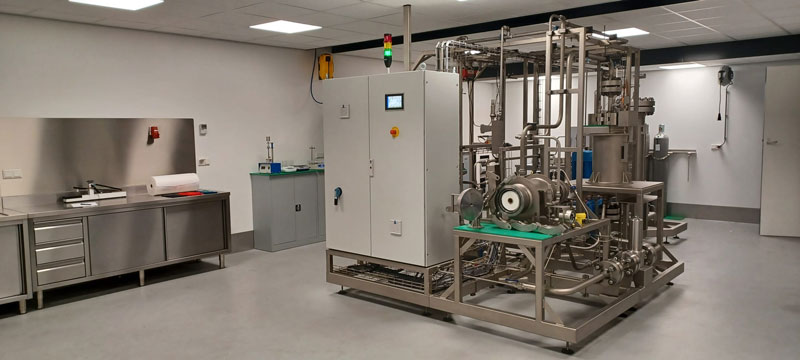
The Netherlands-based Dye-FF B.V. has developed a solution for waterless, low-carbon footprint scouring, using compressed carbon dioxide (CO2) as non-toxic solvent. Polyester and polyester-spandex fabric is rolled on a beam and perfused by the CO2, which dissolves and takes away all knitting and spinning oil from the fibers.

Gentle Process

The fact that the fabric is not moving in the machine means that even the most sensitive fabrics can be treated with this process. What is more, there will be no microfibers released from the fabric. Downstream of the scouring vessel, the oil is obtained from the machine pure and clean, offering the possibility of circularity by oil reuse.

The pressure and temperature inside the scouring vessel are 60 bar and 20°C, so no shrinking or fiber damage is caused. In addition, if a dope-dyed fabric is scoured, no dye extraction will take place. Relaxation and heat setting has to be done as usual in a tenter after the scouring if the fabric is to be dyed or printed.

Because of the low temperature of 20°C, the energy consumption using this method is low. On top of this, the tenter does not need to dry the fabric and thus extra energy is saved. The total carbon footprint of the process is only 540 kg of CO2 equivalents per ton of fabric — 50-percent lower than the typical 1,150 kg CO2 eq/ton that is characteristic for scouring synthetic fabrics in a jet machine.

Dye-FF has developed this experimental process on a 1-kg scale using an R&D machine designed built by its business partner Ozephius Stainless B.V., the Netherlands. It was found that the oil content of commercial fabric could be reduced in only one hour of total processing time, from 3 percent down to 0.2 percent or even 0 percent. A patent on the process and equipment is submitted and pending.

The Machine

From the experimental results, the company has designed the commercial scale equipment needed to scour 1.6 million kg of polyester or polyester-spandex in 140-kg batches on a beam. The machine will cost approximately $1.3 million depending on how many machines can be manufactured in series and in which country the machines are made. The lower machine operating cost, especially energy use, compensate for this higher investment cost, the nett effect being a lower total cost: $160/ton for CO2 scouring, versus $250/ton for conventional jet scouring.

The CO2 scouring technology can be used for any factory that makes polyester or polyester-spandex, be it as dope dyed fabric, conventional water-based dyeing or printing. In all cases, the same combination of sustainability and cost saving is found. In some cases, it can even mean completely waterless production of fabrics.

Scouring in CO2 – summarized:

  • Sustainable: no water and less energy;
  • Lower cost: 160 versus 250 USD/ton fabric (including machine depreciation);
  • Lower carbon footprint: 540 versus 1150 kg CO2/ton fabric;
  • No chemicals, only pure CO2;
  • Gentle fabric treatment;
  • Oil is obtained clean, pure and can be re-used; and
  • No microfibers are released.

With the technical and economic feasibility proven, and the carbon footprint calculated, Dye-FF B.V. now is looking for investors to fund the building of the first full-scale, commercial machine so that it can demonstrate the solution and its low carbon footprint to dyehouses and brands. For more information, please contact martijn@dye-ff.com.

October 12, 2023

ROBOspin Increases Efficiency In Ring And Compact Spinning

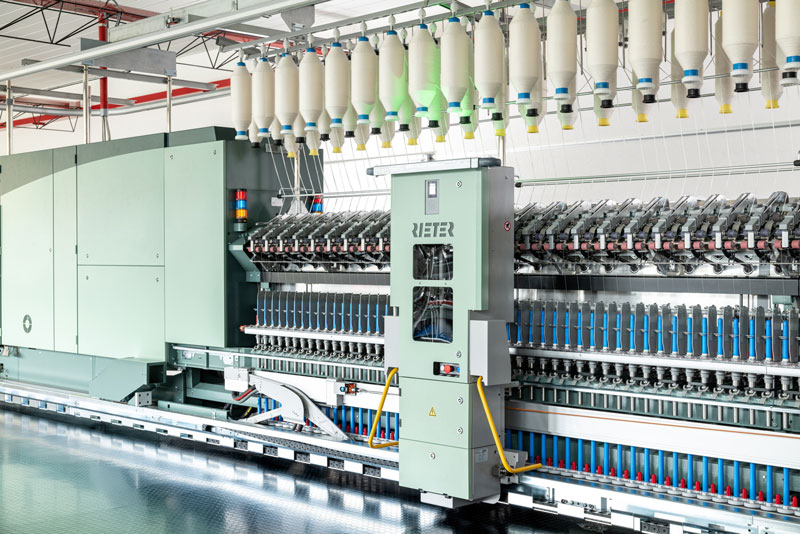
Figure 1: ROBOspin on a Rieter compact-spinning machine

TW Special Report

Two factors that have a particularly strong impact on spinning mill output are efficiency and productivity. The fully automated piecing robot ROBOspin for ring and compact-spinning machines offers a rise in productivity as well as consistent quality during piecing. Spinning mills around the world reduce their manpower requirements by 50 percent and the robot reliably reaches up to 95 percent piecing efficiency.

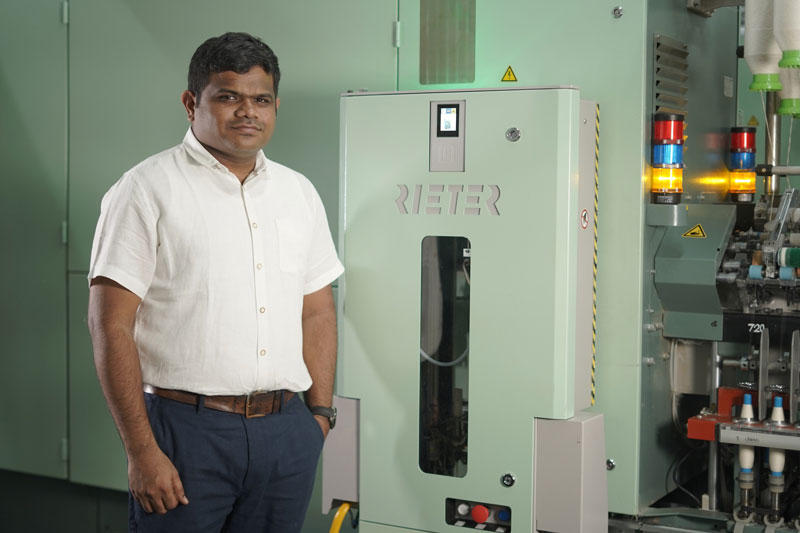
Figure 2: The Managing Director of Poomex, Durai Arun, and his team are very satisfied with ROBOspin.

ROBOspin is the industry’s first fully automated piecing robot (See Figure 1). On the market since 2019, it is proving its worth in a variety of countries such as the US, Turkey, and India. The piecing robot is a response to the constant challenges of spinning mills to find dedicated operating personnel to quickly repair ends down and thus ensure full machine performance. Working in the ring spinning department is challenging due to long walking distances, high noise levels, and the dusty environment. “ROBOspin is the perfect automation solution to efficiently schedule the workforce. Our technical team is very happy with the operation and maintenance of the ROBOspin,” said Durai Arun, managing director of Poomex Clothing Co. in Tiruppur, India.

ROBOspin was installed at Poomex Clothing in 2020 on an existing ring spinning machine G 32 (See Figure 2). “The compact design and consistency in piecing quality are the standout features of this robot,” Arun added.

The Key To High Efficiency

ROBOspin shortens the time for ends down detection and its repair as much as possible – this is the key to higher machine efficiency. The downtime of spinning positions while waiting for operating personnel to repair the ends down is reduced significantly. This increases production and minimizes raw material waste. With ROBOspin, the spindle speed can thus be increased, which boosts productivity while the efficiency remains the same.

Figure 3: The individual spindle monitoring system ISM detects the affected spinning position.

Fully Automated From A To Z

The fully automated piecing robot ROBOspin repairs ends down that occur during production or doffing. This improves the efficiency of the spinning positions and ensures higher productivity and a reduction in labor costs.

Each machine has one robot per machine side. Ends down are detected by the individual spindle monitoring system ISM (See Figure 3). ROBOspin travels directly to the affected spinning position and repairs the ends down in the shortest possible time. The entire piecing cycle runs fully automatically, from searching for the yarn end on the cop to threading into the traveler and placing the yarn behind the delivery roller.
Consistent performance with minimal personnel deployment

ROBOspin runs with consistently high performance in various spinning mills around the world. ROBOspin piecing efficiency reaches up to 95 percent, and the robot reduces personnel requirements in the ring spinning department by 50 percent. With Rieter’s unique yarn end search device, piecing is carried out without affecting the yarn layers on the cop. In addition, the automated piecing process ensures consistent piecer quality. The operator does not have to handle the cop during the cycle, and top-quality yarn is produced.

October 12, 2023

Pailung’s AlterKnit Creates Functional Fabrics That Boost Performance

Imagine clothing that doesn’t just feel comfortable against your skin but actively adapts to your needs. Enter AlterKnit, an innovation by Pailung.

TW Special Report

Comfort is a crucial quality consumers look for in clothing. This has never been more true than in recent years, as the activewear and athleisure markets continue to expand. As people choose more active lifestyles and working from home becomes more commonplace, the importance of comfort in clothing continues to grow.

When mentioning comfort, most people immediately think of fabric weight or hand feel. However, these characteristics are no longer enough to satisfy consumers. Soft materials don’t always provide the best support, and with global temperatures rising, lightweight fabrics can only do so much to prevent us from overheating. The bottom line is that brands must adopt more comprehensive approaches to comfort in order to meet changing demands and ensure they stay ahead.

In response, several major sportswear brands are using functional fabrics. These provide extra functions for the wearer, such as moisture wicking, through the fabric’s structure or the yarn’s chemical properties. As fabric technologies advance and demand for greater comfort increases, more brands will look towards functional fabrics to keep up with the competition.

Pailung’s Innovative Approach to Function

Taiwan-based knitting machine manufacturer Pailung is one of the brands empowering the functional fabric trend while combining it with aesthetics. Known for its relentless approach to innovation and development, Pailung consistently experiments with ways to boost comfort with its fabric technologies. In June, it unveiled its AlterKnit knitting technology at ITMA 2023, the world’s largest textile machinery convention, to overwhelming acclaim from major apparel brands. Why did AlterKnit perform so well? It checked three boxes: aesthetic, sustainability, and lastly, comfort.

AlterKnit is heralded as a game-changer because it knits multiple colors together in one step, yielding patterned fabrics while reducing energy consumption by eliminating finishing steps like splicing and embroidery. In doing so, it produces smooth, lightweight fabrics. However, what’s equally as impressive but perhaps less known, is that AlterKnit can also make functional fabrics.

Elevating Athletic Performance

There are two types of AlterKnit machine, single knit and double knit. Besides transitioning through colors swiftly, this ground-breaking technology can also switch between two knit structures within one sheet of fabric. Double knit can be combined with pique or mesh, while single knit can be combined with pique, mesh, or fleece. Pailung is currently extending capabilities further, and states that double knit AlterKnit combined with spacer will be available soon.

AlterKnit produces functional fabric that not just improves comfort but also enhances athletic performance. For example, it can use elastic yarn to create stretchable, flexible fabrics. These are a popular choice for medium- to low-impact sports like jogging, running, and golf, as the fabric follows the body’s movements with ease. In addition, when combining AlterKnit with mesh, designers are able to make body-mapping garments. This technique alters fabric in specific places so that it responds to different parts of the body and their requirements. For example, adding mesh to areas such as underarms, increases ventilation and makes the fabric more breathable, especially useful in hotter climates. For colder environments, single knit AlterKnit can use fleece to trap heat between its fibers while remaining lightweight, which is particularly useful for winter sportswear or other outdoor clothing.

Incorporating different functions adds value to fabrics and garments. It not just improves comfort for the wearer, but in the case of sportswear applications, it can even boost athletic performance. What’s even more impressive is that it does all this while incorporating its signature patterns, preventing manufacturers from sacrificing color for comfort.

Intertwining Color, Comfort, and Sustainability

So how does AlterKnit actually create patterns? This state-of-the-art technology knits multiple colors or yarn types together using an inverse plating technique, whereby alternate colors appear on the fabric surface to create designs. This also offers sustainability benefits, as knitting multiple colors directly enables designers to use dyed or dope-dyed yarn as the raw material for knitting patterns, rather than piece dyeing. Dope-dyed yarn is considered more environmentally friendly due to its increased color fastness, and reduced water, chemical, and energy consumption. As a result, AlterKnit allows designers to latch onto the functional fabric trend while achieving their own sustainability goals.

The Future of Function

By combining function and sustainability with colorful designs, Pailung is set to take the activewear and athleisure markets by storm, particularly football, running, and gym clothes. The brand hopes its technology can help manufacturers to meet the rising demand for more technical textiles and add value to their apparel lines, while appealing to the growing number of environmentally conscious consumers. In the future, Pailung plans to add more functions to AlterKnit’s capabilities as well as new fabric textures, increasing the technology’s versatility.

October 12, 2023

Textile Manufacturing Hub To Receive $10 Million Federal ARC Grant To Expand Facility In Burke County, N.C.

RALEIGH, N.C. — October 11, 2023 — The Appalachian Regional Commission (ARC) awarded a $10 million grant to The Industrial Commons, an industry focused nonprofit in western North Carolina. The grant will help build a 40,000-square-foot green textile manufacturing hub in Burke County.

“North Carolina has a rich legacy in textile manufacturing and innovation,” said Governor Roy Cooper. “This investment will help strengthen our textile economy and grow our nonwovens manufacturing workforce which is the largest in the nation.”

The new facility will be a manufacturing incubator that will expand the capacity to produce circular textiles — a process where textile waste is broken down and turned into new yarn, which can be used as a new raw material input to make new products at The Industrial Commons (TIC) and throughout the textile manufacturing supply chain. TIC is a woman-owned and led nonprofit that supports the scaling of employee-owned businesses and industrial cooperatives while helping the region’s manufacturing workforce improve its economic prosperity with an emphasis on diversity and equity. TIC was founded after the success of Opportunity Threads and is now the home to three enterprises, Good Books, Carolina Textile District, and Material Return, which has saved 1.8 million pounds of fabric from landfills over the past five years. TIC also has several community-focused initiatives such as TOSS, a school-based art program, and Work in Burke that engage youth and the community in conversations about the future of work.

The manufacturing hub will be part of TIC’s larger Innovation Campus to be located at the former Drexel Heritage Furniture site in Morganton.

This project is a collaboration between North Carolina, South Carolina, and Tennessee, which improves economic prosperity in southern Appalachia. Overall, the project will include $60 million in private investment and will create 85 jobs across the three states, with 31 jobs being added in North Carolina.

“The work of our ARISE grantees will not only support economic development and encourage collaboration in North Carolina and Tennessee, but will help deploy new technology that will be the catalyst for the next era of energy and manufacturing across our Appalachian states,” said ARC Federal Co-Chair Gayle Manchin. “It is critically important that we focus on the future of energy diversification, while supporting the Appalachian Region’s longtime role of maintaining America’s energy independence.”

“The Industrial Commons is a nationally recognized model for our circular economy,” said N.C. Commerce Secretary Machelle Baker Sanders. “Since its founding in 2015, TIC has been on the frontlines of reenergizing the industrial manufacturing economy in western North Carolina through its unique workforce training and community support programs that have trained more than 3,700 workers.”

Through its training approach, the project will prepare the next generation of workers to grow the circular textile industry in southern Appalachia. In addition to providing advanced manufacturing training for hundreds of students and workers, the project will also establish a textile supply chain and connect entrepreneurs in Appalachian North Carolina, South Carolina, and Tennessee.

The $10 million grant is provided through the Appalachian Regional Initiative for Strong Economies (ARISE) a new federal program through the Bipartisan Infrastructure Law, which drives large-scale economic transformation through multi-state collaboration. The project also received a $5 million appropriation from the N.C. General Assembly to support the construction of the incubator.

Appalachian Regional Commission is an economic development entity of the federal government and 13 state governments focusing on 423 counties across the Appalachian Region, including 31 North Carolina counties. ARC’s mission is to innovate, partner, and invest to build community capacity and strengthen economic growth in Appalachia to help the Region achieve socioeconomic parity with the nation.

For more information on ARC’s investments in North Carolina, visit the Appalachian Regional Commission webpage.

Posted: October 11, 2023

Source: North Carolina Office of the Governor

SailGP Joins Forces With Mover To Create Plastic-Free Technical Sportswear

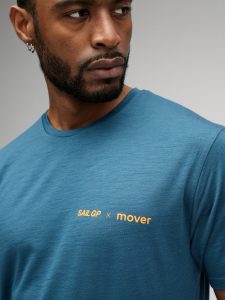
Light merino t-shirt — stargazer

LONDON — October 11, 2023 — SailGP, one of the world’s fastest growing sports leagues, has announced an exciting purpose-driven collaboration with Mover, a pioneer in 100 percent plastic-free apparel, to create plastic-free technical sportswear.

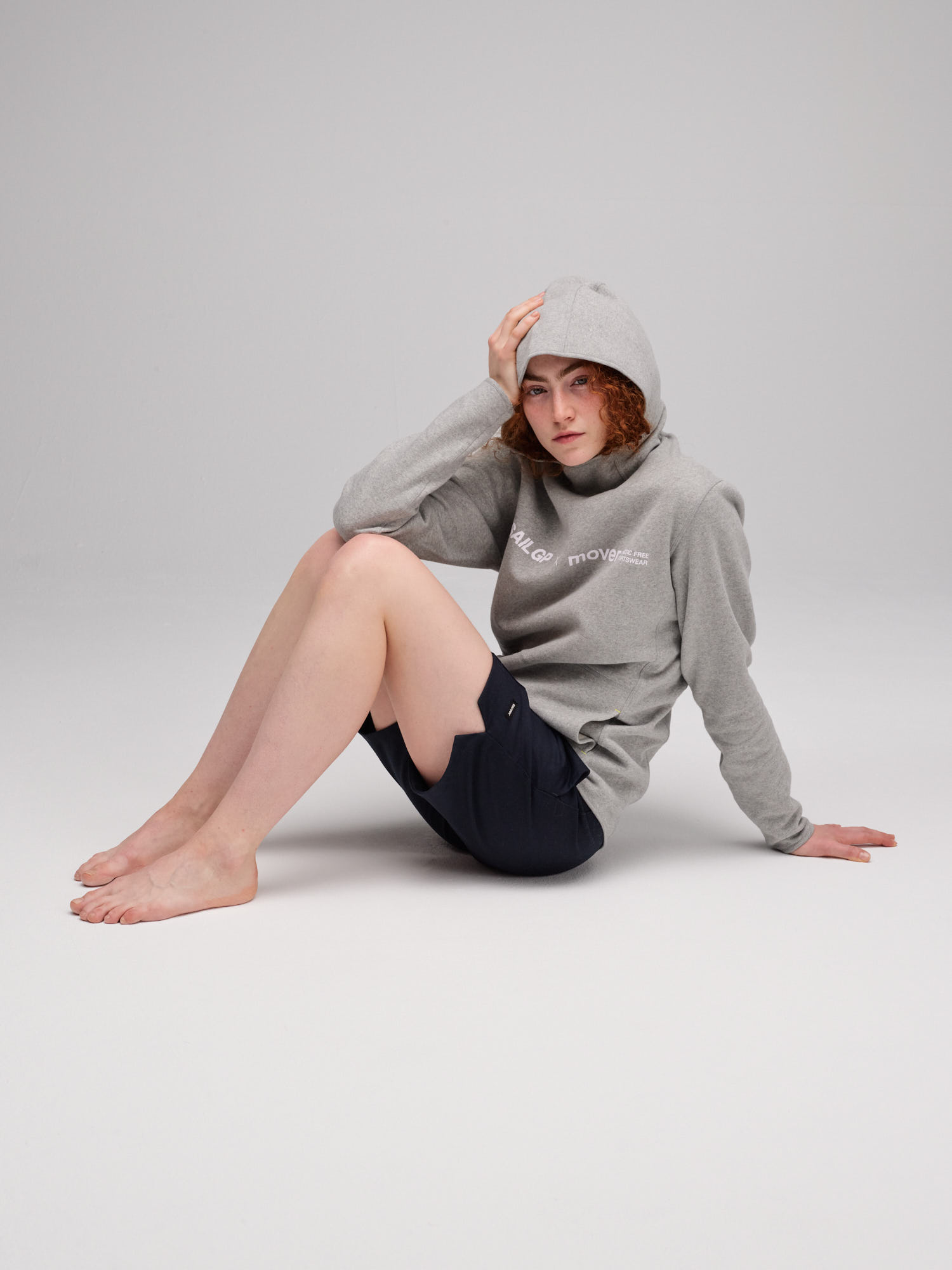
A 2023 survey of 1,500 adults in the United States, United Kingdom and Switzerland, commissioned by SailGP, found that 72 percent of people would prefer plastic-free sportswear if it were available. This collaboration between SailGP and Mover will see a capsule collection available to purchase now and the future development of a line of high-performance sportswear for athletes to trial in a sailing environment. There are six items in this capsule collection, including t-shirts, polos and fleece hoodies, all of which are crafted from 100 percent natural fibers, featuring plastic-free stitching and labeling, and water-based printing.

This project challenges the status quo in sportswear and apparel, where the industry promotes synthetic fibers as the only viable solution to meet the technical demands of high-performance clothing. Synthetic fibers, such as nylon, polyester and acrylic, account for 69 percent of all fibers used worldwide and this figure is expected to reach almost 75 percent by 2030. These fibers are derived from fossil fuels and contribute to primary microplastic pollution and the plastic waste crisis.

SailGP Chief Purpose Officer Fiona Morgan said: “At SailGP our ambition is to be the world’s most purpose driven and sustainable global sport and entertainment platform, and it’s only by collaborating with innovative, like-minded partners that we’ll be able to achieve this.

Cotton hoodie

“That’s why we’re incredibly excited to be joining forces with Mover after two years of development to totally rethink sports performance clothing with plastic free materials, a cause very close to my heart. This purpose-driven collaboration demonstrates that change is possible if you innovate and re-design the norm.”

By testing plastic-free technical sportswear in some of the most challenging environments, this pilot project aims to demonstrate that high-performance textiles can be achieved without relying on fossil-fuel fibers.

CEO and Founder of Mover, Nicolas Rochat, said: “Our collaboration with SailGP is a fantastic opportunity to prove that natural fibers can excel in one of the most demanding sports on the planet. Our materials that are the most technical and intelligent, genuinely designed to be digested by nature.”

The collaboration between SailGP and Mover is championed by A Plastic Planet, an organization working to inspire the world to reduce its plastic usage.

Founder of A Plastic Planet, Sian Sutherland, said: “The plastic crisis can feel overwhelming with billions of pieces of plastic still being pumped out into our oceans and soil. But it doesn’t have to be this way. Mover is proving that technical performance textiles from natural, truly breathable materials not only feel great but mean we are no longer adding to plastic pollution with every wear and wash. We are so proud to bring Mover together with SailGP to highlight that change is possible.”

The survey also found that 54 percent of people were unaware or unsure of any health or environmental-related impacts of chemicals that are used in synthetic technical clothing.

There are several chemicals involved in the treatment of synthetic fabrics that are a cause of concern, including the carcinogen antinomy, and per- and polyfluoroalkyl substances (PFAS), which are known to be toxic, persistent and bio accumulative in the environment, and are often now called ‘forever chemicals.’ Recycled polyester offers no durable solution to the problems associated with synthetic materials as it emits the same toxic substances as any virgin plastic, such as Bisphenol A (BPA) which causes developmental issues, serious eye damage, respiratory irritation, skin allergies and reproductive harm.

The Mover capsule collection can be purchased at shopsailgp.com or mover.eu and is shipped in plastic free kraft mailers.

Posted: October 11, 2023

Source: SailGP

WACKER Celebrates Its 30th Anniversary In China

MUNICH, Germany/SHANGHAI, China — October 11, 2023 — Today, WACKER held a grand ceremony in Shanghai to celebrate the 30th anniversary of its subsidiary in China. The ceremony was attended by customers, authority representatives and long-standing business partners. WACKER started building its presence in China by opening its first offices in 1993. Today, the Group operates an extensive network of production sites, R&D and service centers. In 2022, WACKER generated around 2.5 billion euros in China, which corresponds to approximately 30 percent of Group sales.

Addressing the guests, President and WACKER CEO Christian Hartel emphasized the importance of the region. “China is the world’s largest chemical market and an important growth driver for the global economy,” he said. “The country offers a wide range of development opportunities which we at WACKER intend to leverage continuously.”

In May, WACKER ramped up new production facilities for dispersions and dispersible polymer powders in Nanjing. In September, the Group also announced the expansion of several new production lines for manufacturing functional silicone fluids, silicone emulsions and silicone elastomer gels at its Zhangjiagang site. “This is our largest single investment since the site went into operation,” Hartel said. “Over the past 30 years, we invested nearly 1 billion euros in production, in customer and technical service and in research in China.”

Today, WACKER China has more than 1,700 employees and operates a total of four production sites, three technical centers, eight sales offices and a WACKER ACADEMY for training purposes. In 2022, WACKER generated around 2.45 billion euros in China, which corresponds to approximately 30 percent of group sales.

Alvin Hu, president of WACKER China, briefly reviewed the company’s 30 year journey in China. “Our track record is impressive: equipped with a comprehensive network of integrated production sites, four joint ventures, R&D and technical service centers as well as several sales offices we are well positioned strategically, especially with a view to key growth topics,” he noted. As an example, Hu referred to the burgeoning electrification of vehicles in China: “This will benefit our silicone business, as WACKER’s high performance silicones are essential for the development and production of electric vehicles.”

In order to better serve customer needs and market trends in China, WACKER operates several R&D centers in addition to its local production network. In 2000, the Group opened its first regional technical application center in Shanghai. In 2012, the WACKER Shanghai Center went into use, equipped with multiple application and R&D labs for developing tailor-made products that meet regional needs and serve multiple industries including construction, coatings, adhesives, electronics, automobile and personal care. The facility also operates global competence centers for consumer care, cement and concrete, e-mobility and thermal interface materials.

WACKER’s production network in China currently includes a total of four sites. At its fully integrated Zhangjiagang production site, WACKER manufactures pyrogenic silica and a wide range of down-stream silicone products for the Asian market. The company’s Nanjing site produces dispersions, dispersible polymer powders and polyvinyl acetate solid resins for the construction, adhesives and coatings industries. The Shunde site manufactures silicone emulsions and silicone-based process auxiliaries for textiles, leather and fiber applications. In 2022, WACKER acquired a 60 percent stake in Sico Performance Material (Shandong) Co. Ltd. Its plant in Jining is now WACKER’s second largest silicone production site in China. It provides organofunctional silane specialties for adhesives, sealants, construction chemicals, coatings and composites.

Posted: October 11, 2023

Source: Wacker Chemie AG

Sponsors