GRAND RAPIDS, MI — July 23, 2026 — X-Rite Pantone, the global authority in color standards and color science, and the Fashion Institute of Technology (FIT), part of the State University of New York (SUNY) and a global leader in creative education, today announce a strategic partnership to advance color education and digital innovation for the apparel, footwear, soft goods, and textile industries. As part of the collaboration, X-Rite Pantone will donate industry-leading color measurement, quality control, and visual evaluation technology to the college’s Textile Development and Marketing (TDM) department in order to support hands-on learning at FIT. This donation significantly enhances the offerings of the TDM department, which is part of the college’s Jay and Patty Baker School of Business and Technology.
“By partnering with FIT, we’re providing the knowledge and tools future designers and textile professionals need to align physical color standards, spectral data, and digital workflows,” said Raj Shah, Vice President of Marketing at X-Rite Pantone.
As textile production continues to globalize, accurate and consistent color communication from design through production is more critical than ever. Digital color standards accelerate development, enable more effective collaboration between brands, mills, dye houses, and manufacturers, helping organizations maintain color consistency across complex supply chains, and bringing products to market faster with less waste. To prepare students for modern apparel and textile production, X-Rite Pantone is donating a complete end-to-end textile color management ecosystem, including the latest X-Rite color measurement devices, software, and visual evaluation solutions.
With access to the same professional tools used by leading global brands, FIT’s TDM students will gain real-world experience managing color from inspiration through finished product. They will learn how digital color workflows improve communication between supply chain partners, enhance quality control, support nearshoring and global sourcing initiatives, and help brands respond faster to shifting consumer demands.
“We are thrilled to partner with X-Rite Pantone,” said Shannon Maher, dean, FIT’s School of Business and Technology. “FIT’s legacy is rooted in strong industry alliances and hands-on, applied learning. Combining our TDM faculty’s deep textile expertise with X-Rite Pantone’s industry-standard color technology gives our students a distinct competitive advantage, preparing them to champion faster, more sustainable production practices across the global market.”
Through this partnership, X-Rite Pantone and FIT will conduct industry research to help establish more efficient, sustainable, and connected color processes. The initiative will explore opportunities to improve digital adoption, strengthen supplier-brand collaboration, increase color quality and consistency, and identify best practices for more resilient and responsive textile supply chains.
“Digital color skills aren’t just technical,” added Shah. “They play a critical role in helping brands design for achievability, improve collaboration across global supply chains, and bring products to market faster. As the textile industry continues its digital transformation, these skills are becoming essential for designers, developers, and production teams alike.”
By combining academic research with industry-leading technology, this partnership aims to equip the next generation of textile professionals with the skills needed to reduce development cycles and material waste, improve supply chain transparency, and drive innovation through digital color workflows.
SHANGHAI — July 24, 2026 — Intertextile Shanghai Home Textiles – Autumn Edition 2026 is preparing to welcome global exhibitors from across the home textiles industry, including a new wave of industry players joining key product segments, set to stimulate the fair’s offering. From 18 – 20 August at the National Exhibition and Convention Center (Shanghai), the fair will also feature a series of fringe events designed to offer fresh design inspiration, market intelligence and business opportunities. Building on this impetus, the fair will present a broader and more layered sourcing landscape, with an increasing number of new exhibitors across bedding, upholstery and sofa fabrics, and wall décor. Together, these elements enable buyers to explore greater variety, innovation, and cross-segment solutions in one platform.
Commenting on the upcoming show, Ms Wilmet Shea, General Manager of Messe Frankfurt (HK) Ltd, said: “This edition will highlight the continued dynamism of the home textiles industry, with our expansive lineup of exhibitors and expert speakers unlocking a diverse range of product categories and innovations. As market demand evolves, the fair aims to cater to new preferences, bringing together cutting-edge materials, forward-looking design, and sustainable solutions, enabling industry players to discover new trends, exchange insights and capture new opportunities.”
Among the new participants, several from various sub-sectors will showcase a range of innovations, including:
Bedding:
The Cozynest Company (Korea) (6.1H B30) – the best-selling bedding brand in Korea’s department stores, with more than 40 years of premium innovation. At the fair, Cozynest will unveil its signature All-in-One Quilt, a lightweight, hygienic and machine-washable alternative to traditional duvet systems, together with its EarthWool Series and Bio-Cotton Series.
Antonio Salgado & Ca Lda (Portugal) (6.1H 32) – specialises in premium home textiles including bedding, throws, cushions and decorative fabrics, with a strong focus on jacquard weaving and sustainable production. The company offers private label and OEM solutions using organic cotton, European flax linen, wool and other sustainable fibres.
Other featured exhibitors in this category include Anhui Xiazhen Down & Feather Co Ltd (6.1H F91), Jiangsu Rayfull Ecological Technology Co Ltd (6.1H F21), and Nantong Jibubu Textile Technology Co Ltd (6.1H F12), all hailing from China.
Upholstery and sofa fabrics:
Green City Textile Co Ltd (Taiwan) (5.1H A28) – produces cooling-yarn fabrics, pet-friendly fabrics, chenille woven textures and solvent-free synthetic leather collections. The range combines water-repellent and stain-resistant performance with European-inspired aesthetics.
New Tex Cambodia Weaving & Dyeing Technology Co Ltd(Cambodia) (6.1H C76) – its manufacturing base in the well-established Sihanoukville Special Economic Zone ensures reliable operations. As one of the early movers integrating weaving and dyeing capacity in Southeast Asia, the company’s complete production lines consistently serve global brands’ supply chains.
Other featured exhibitors in this category include All Rich Fore-Front Ltd (Hong Kong) (6.1H C48) and Suzhou YiFan Textile Co Ltd (China) (5.1H A65).
Wall décor:
Shaoxing Suxiang Decoration Materials Co Ltd (China) (5.1H C12) – set to launch new solid-colour and decorative background textile wall coverings. The seamless nature of these coverings eliminates the risk of curling or fraying, improving product lifespan and aesthetics. Additionally, thicker and more textured specialty yarns can be used to enhance the fabric’s expressive qualities.
Hangzhou Cyan Stone Trading Co Ltd (China) (5.1H C25) – presents a portfolio of home furnishing brands spanning curtains and fabrics, wallpapers and wall coverings, murals and artisanal paints, carpets, decorative art, furniture, lighting, home textiles and home fragrances.
Fringe events to inspire new designs and market dialogue
The fair’s fringe programme adds further value by combining trend forecasting, design exchange and market-focused dialogue, offering practical insights for product development and international expansion.
The fair continues to offer a platform that enables both exhibitors and buyers to respond proactively to evolving global demand – encapsulated by the show’s refreshed fringe programme, themed Palette, Connector, Go-Green, NextGen. The corresponding trend area brings together textile craftsmanship and future-oriented innovation through a balance of tactility, movement and architectural calm. The space will mirror the direction, where raw, human lines meet material honesty and digital precision, creating a visual narrative around circularity, technology and connection within a clear textile context.
Highlights include a trend presentation by NellyRodi™ Agency’s Global Creative Director Ms Cécile Rosenstrauch (France), alongside her guided exploration of the trend area’s emerging colour and material directions; a group panel led by Mr Shen Lei discussing city growth, regeneration and circularity; the Designers’ Tour, led by Order Studio founder Mr Byron Lee, allowing interior designers to explore products with real-life applications; and a seminar by Mr Adriano Tadeu Barbosa (Brazil), focusing on opportunities and market entry strategies in Latin America.
Complementing these will be the Furniture & Home Textiles Go Global Summit, addressing cross-border expansion and business matchmaking, and other sessions exploring how AI and digital technologies are shaping the future of textile manufacturing.
Intertextile Shanghai Home Textiles – Autumn Edition is organised by Messe Frankfurt (HK) Ltd; the Sub-Council of Textile Industry, CCPIT; and the China Home Textile Association (CHTA).
To find out more, please visit: www.intertextilehome.com.
WASHINGTON, D.C. — July 24, 2026 — The National Council of Textile Organizations (NCTO), which represents the full spectrum of the U.S. textile industry from fiber, yarn, and fabric production to finished sewn products issued the following statement in response to the administration’s Section 301 forced labor actions.
The administration announced Thursday it will impose Section 301 tariffs on goods from 60 economies for failing to implement and effectively enforce a prohibition on imports made with forced labor.
A textile mechanism will offer relief from the Section 301 duties for textile and apparel imports from Bangladesh, Cambodia, Indonesia, and Malaysia based on those economies’ imports of U.S. cotton and textiles through tariff-rate quotas.
Furthermore, the administration did not exempt textile inputs and machinery that are not available domestically. Such exemptions are critical to onshoring the U.S. supply chain away from countries that fail to effectively prohibit and combat forced labor.
Statement by NCTO President and CEO Kim Glas:
NCTO President and CEO Kim Glas
“No other industry has been more disadvantaged by forced labor than the U.S. textile industry, which employs 453,000 workers and has lost 41 plants over the past two plus years. We remain strongly concerned that USTR’s textile mechanism will harm the very domestic manufacturers the administration seeks to help.
These tariff benefits for Asia will come at the expense of U.S. textile manufacturers and the Western Hemisphere—the destination for 70 percent of total annual U.S. textile and apparel exports. Our hemispheric supply chains compete directly against Asia. Any apparel market shift to sources outside of the Western Hemisphere means less opportunities for U.S. textile exports and further contraction of our industry at home.
U.S. apparel imports from major Asian supplier countries that use textile components from China, including Bangladesh and Indonesia, increased by double digits last year.
Since 2019, Asia has expanded its U.S. market share from 77 percent to 79 percent while the Western Hemisphere’s share has narrowed from 16 percent to 12 percent. The removal of Section 301 duties on apparel imports from Asian countries will only further accelerate these alarming trends.
Cotton produced with Uyghur forced labor in Xinjiang, China is pervasive in global textile and apparel supply chains, and these imports have done irreparable economic harm to the U.S. textile industry and the Western Hemisphere. The administration should be focused on stepping up enforcement of the Uyghur Forced Labor Prevention Act, which has declined by every measure, to bolster the domestic textile industry and drive demand for U.S. cotton.
We are grateful that the administration excluded qualifying apparel and textile goods that enter the U.S. duty-free under the United States-Mexico-Canada Agreement (USMCA) or the Dominican Republic-Central America Free Trade Agreement (CAFTA-DR) from the Section 301 tariffs.
While some of the actions announced today represent a positive step forward in combatting forced labor in global supply chains, the administration’s textile mechanism, which would eliminate Section 301 duties on textile and apparel imports from Bangladesh, Cambodia, Indonesia, and Malaysia for imports of U.S. cotton, will be a step backward.
As I noted in my testimony at USTR’s forced labor hearing earlier this month, the inclusion of raw cotton in the mechanism will create an offshoring incentive by lowering the cost of Asian apparel imports that compete directly against manufacturing in the United States and the Western Hemisphere, artificially raising cotton prices for U.S. textile mills, and providing a tariff reward to Asian producers.
We want to dispel the notion that the textile mechanism proposed by USTR will promote the export of U.S. yarns and fabrics. Regrettably, it will not open market opportunities for our industry because of Asia’s chronic reliance on subsidized textile inputs and it will have seriously damaging effects for domestic textile manufacturers if U.S. raw cotton is included in the mechanism.
NCTO and the apparel and retail industry united for the first time behind an alternative mechanism proposal to USTR that has the potential to double U.S. textile exports, spur growth and investment in the U.S. and the Western Hemisphere and address forced labor concerns.
We will continue to work with the administration as USTR’s new textile mechanism is implemented and press for meaningful solutions that will reshore domestic manufacturing and stabilize and grow Western Hemisphere textile and apparel supply chains.”
**See NCTO’s full written submission to USTR here.
Posted: July 26, 2026
Source: The National Council of Textile Organizations (NCTO)
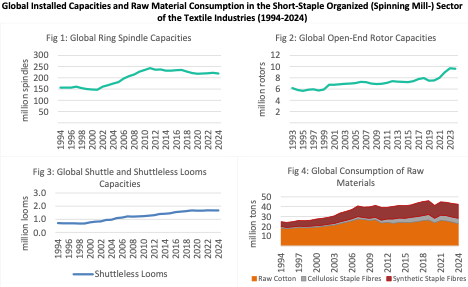
ZÜRICH, Switzerland — July 24, 2026 — The International Textile Manufacturer Federation (www.itmf.org) has published its International Textile Industry Statistics (ITIS) on productive capacity and raw materials consumption in the short-staple organized (spinning mill-) sector in virtually all textile-producing countries in the world.
ITMF continuously improves the capacity and consumption time series to reflect the industry’s structure. The results for the year 2024 freshly came out as part of this ongoing revision. The estimated global number of installed short-staple spindles shrunk to 219 Mio units and the number of installed open-end rotors reached 9.6 Mio, experiencing a slight decrease since 2023 (see Fig. 1 and 2). The number of installed air-jet spindles kept rising and was still dominated by China. The dynamics at world level denote a slow substitution to technologies with increased performance.
The number of shuttle-less looms installed was stable in 2024 (1.67 Mio, +0.3%, see Fig. 3). 83% of all looms were installed in Asia and Oceania. Total raw material consumption in the short-staple organized sector slightly decreased to 42 Mio tons despite consumption of cellulosic and synthetic fibres slightly rising (see Fig. 4).
Posted: July 26, 2026
Source: The International Textile Manufacturer Federation (ITMF)
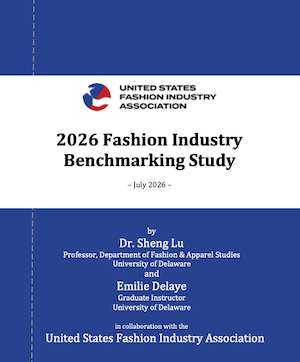
NEWARK, DE — July 25, 2026 — In collaboration with the US Fashion Industry Association (USFIA), University of Delaware Professor Dr. Sheng Lu and Graduate Instructor Emilie Delaye, surveyed sourcing executives from 30 leading US fashion brands and retailers (80% with more than 1,000 employees) from April to June, 2026.
According to Sheng, the results, while there has been a slight increase in domestic sourcing and nearshoring as part of U.S. fashion companies’ sourcing diversification strategy, capacity building and a stable policy environment remain critical for continued sourcing expansion. Specifically:
76 percent of respondents sourced apparel from members of the Dominican Republic-Central America Free Trade Agreement (CAFTA-DR) this year, up from 64 percent in 2025, and 24 percent sourced more than 10 percent of their apparel from the region, concentrated among large companies typically using 2–3 members such as Guatemala, El Salvador, and Honduras.
Respondents’ sourcing from members of the S.-Mexico-Canada Trade Agreement (USMCA), mainly from Mexico, held steady in 2026. However, respondents were hesitant to increase sourcing from the region due to concerns about the agreement’s uncertain future.
Over the next 2–3 years, respondents plan to continue concentrating their apparel sourcing from the Western Hemisphere in a relatively narrow range of product categories, including T-shirts (67 percent), activewear and athleisure (33 percent), and bottoms (27 percent) from CAFTA-DR and T-shirts (47 percent) and bottoms (20 percent) from USMCA. This pattern was consistent with findings from previous surveys and suggested that limited product diversification remained a major constraint on the future growth of U.S. apparel sourcing from the Western Hemisphere.
Most respondents (over 65 percent) further indicated that access to duty-free benefits was among the most important incentives for sourcing apparel from CAFTA-DR members and Mexico. This finding underscores that exempting CAFTA-DR and USMCA-qualified apparel products from additional tariffs imposed by the Trump administration and avoiding policy uncertainty will be essential to supporting U.S. fashion companies’ nearshoring efforts under the current business environment. Additionally, 100 percent of respondents support maintaining the USMCA as a trilateral agreement.
The newly published 2026 Fashion Industry Benchmarking Study, report is available at: https://www.usfashionindustry.com/resources/research-reports/usfia-fashion-industry-benchmarking-study
Posted: July 26, 2026
Source: Dr. Sheng Lu, Professor ,Department of Fashion & Apparel Studies, University of Delaware
SHANGHAI — July 22, 2026 — Backed by steady growth across Asia-Pacific’s technical textiles and nonwovens markets, Cinte Techtextil China 2026 will welcome a targeted range of nonwovens exhibitors for protective and industrial applications, alongside other high-demand sectors.
To better help industry players expand networks and resources, the fair will debut the Association Village, showcasing the innovation of several international industry associations. The opportunities onsite will be further enhanced by a fringe programme delivering targeted technical and market insights, where highlights include the China International Nonwovens Conference under the theme ‘Redefine the growth paradigm’, the Mobiltech Display Zone, and guided exhibition tours for Medtech & Protech and more.
This targeted focus on protective and industrial applications comes at a time of significant global and regional expansion. The global Protech sector is projected to hit USD 7.4 billion by 2032, driven by a CAGR of 7.16% as workplace safety standards advance worldwide[1]. Parallel to this, the global Indutech market is also experiencing an upward trend, projected to reach USD 30.1 billion by 2033 at a CAGR of 5.5%[2].
Asia-Pacific remains one of the major drivers of this dual momentum, holding a distinct competitive advantage through its strong supply chain, infrastructure development and rapid industrialisation. “The main reason we’re attending Cinte Techtextil China for the first time is that we would like to expand our business across Asia, particularly in China,” said Mr Oliver Vogel, Sales Manager of Dr. Karl Wetekam & Co. KG, speaking at last year’s show. “We are planning to set up a new plant in Asia to serve Asian customers in a far better way than we we’re able to do from Germany. The potential markets in China and Asia are huge – which is why we are going to set up a plant on this continent.”
Reflecting this regional strength, Cinte Techtextil China 2026 will feature innovative protective and industrial nonwovens exhibitors, from key Asian powerhouses such as China, India, Japan, and more. New and highlighted exhibitors include:
Protech
Texbond Nonwovens – India (new): specialising in customisable, high-performance polypropylene spunbond, SMS, and multi-layer nonwoven fabrics manufactured via advanced extrusion technology, Texbond offers solutions that serve critical safety and performance needs across medical, hygiene, automotive, construction, and industrial protection sectors. The company is certified under GRS, ISO 9001, and FDA registration.
Dawnsens New Materials (Xiamen) – China: a national high-tech enterprise with independent intellectual property rights for commercial flash evaporation manufacturing. Its signature brand, Dawnsens®, offers flashspun non-woven materials tailored for high-risk end-use applications including medical packaging, building waterproofing, and safety protection apparel.
Indutech
IMAE Industries– Japan (new): IMAE specialises in thermal insulation solutions, including nonwoven mats, textiles, ropes, packings and gaskets, alongside high-temperature firing jigs and engineering ceramics. The company serves the shipbuilding, automotive, steel, electronics, semiconductor, chemical and power industries. Featured products include various high-performance fibre lines, and energy-saving solutions such as Ene-guard®.
Nippon Paper Industries – Japan (new): Japan’s second-largest integrated paper manufacturer will showcase Cu-TOP – an innovative wood pulp infused with copper technology, delivering effective antibacterial and odour control. Additive-free, this versatile material can be made into nonwovens, tissue paper and paper yarn, unlocking eco-friendly and hygienic textile solutions for healthcare, lifestyle, interior and wellness products.
Inaugural Association Village to expand industry connections
Strengthening the fair’s business ecosystem is the debut of the Association Village, where visitors can more efficiently connect and collaborate with various organisations. Anchoring this new initiative include the Nonwoven Federation of India (NWFI), the UK Fashion and Textile Association, and the Asia International Hemp Federation (AIHF) – an international body dedicated to advancing industrial hemp fibre innovation and application.
Also at this edition, AIHF will host a specialised roundtable discussion in the seminar area. Featuring its representatives, designers, and production experts, the discussion will centre around AIHF members’ hemp-derived products, including furniture, motorcycle composites, bioplastics, and woven fabrics. These sustainable innovations are engineered for semi-structural and decorative applications across the automotive, construction, marine, sports, and consumer goods sectors, and will be featured at AIHF’s display area in Hall W5.
Other fringe events to deliver growth-driven insights
The annual China International Nonwovens Conference (CINC) will return this year under the theme ‘Redefine the growth paradigm’. The agenda is set to include presentations delivering critical global industry updates, alongside topics such as nonwovens development in the 15th Five-Year Plan period, and more.
Catering to the rapid growth of the new energy vehicle sector, the Mobiltech Display Area in Hall W4 will centre on the theme ‘Smart, Safe, Lightweight – Trends and Opportunities for Automotive Textile Materials’. This special area will showcase a collection of automotive interiors, airbags, hot-melt adhesives, and cutting equipment, with market-ready insights delivered at the automotive seminars held in the show’s conference and presentation venues.
Other featured fringe events include the Deeyeo Wet Wipes Industry Chain High-End Dialogue, and a display zone dedicated to Technical Textiles in the 15th Five-Year Plan. To deliver additional insights, and help visitors navigate the show floor efficiently, industry experts will lead target-specific guided tours for high-demand categories – including Mobiltech, Medtech & Protech, Sustainability, and tents and coverings.
The fair’s product categories cover 12 application areas, which comprehensively span a full range of potential uses in modern technical textiles and nonwovens. These categories also cover the entire industry, from upstream technology and raw materials providers to finished fabrics, chemicals and other solutions. This scope of product groups and application areas ensures that the fair is an effective business platform for the entire industry.
Cinte Techtextil China will be held from 1 – 3 September 2026.
The fair is organised by Messe Frankfurt (HK) Ltd; the Sub-Council of Textile Industry, CCPIT; and the China Nonwovens & Industrial Textiles Association (CNITA).
UZWIL, Switzerland / BLUMENAU, Brazil — July 20, 2026 — Benninger AG from Switzerland and Grupo NS from Brazil announce joined forces to support textile customers across Brazil with a strong portfolio of textile wet processing technologies, practical application know-how, and reliable local service.
The cooperation combines Benninger’s long-standing engineering expertise in textile finishing and dyeing with Grupo NS’s deep understanding of the Brazilian textile market, customer needs, and service requirements.
Benninger AG and Grupo NS join forces large
Brazil holds its own as one of the most important textile markets in the Americas. Customers require not only modern machinery, but complete solutions including process knowledge, reliable service, spare parts, training, automation support, and long-term technical partnership.
Benninger and Grupo NS are joining forces to bring these elements together: global technology and dyehouse expertise from Benninger, combined with local market access, technical proximity and customer support from Grupo NS. “Together with Grupo NS, we are bringing Benninger’s complete portfolio closer to Brazilian textile manufacturers. Our aim is simple: help customers improve quality, productivity and sustainability with the right technology and strong local support,” says Rolf Erik Schoeler, Global Head of Sales and Marketing at Benninger AG.
Delivering measurable value in textile production
Benninger brings more than 160 years of textile process expertise together with a comprehensive portfolio for continuous and discontinuous wet processing. From singeing, preparation, washing and mercerising to Cold Pad Batch, jet and jigger dyeing, Benninger develops complete solutions for woven, knitted and technical textiles rather than supplying individual machines in isolation.
At the heart of the Benninger offering is deep process know-how. Machines, automation, chemical preparation and dosing, fabric handling and process control are engineered to work together. This integrated approach helps customers achieve reproducible results, high first-time-right rates and consistently excellent fabric quality across different fibres, blends and production batches.
For customers, this translates directly into stronger operational performance: shorter processing times, higher productivity, reduced reprocessing and greater flexibility to manufacture demanding or higher-value fabrics. Resource-efficient technologies reduce the consumption of water, energy and chemicals, while heat recovery, water recycling and caustic recovery solutions can further lower operating costs and environmental impact.
Benninger’s singeing technology provides the essential foundation for superior downstream results. SingeRay delivers a clean and uniform fabric surface with reproducible process settings and efficient gas utilisation, improving the quality and reliability of subsequent dyeing and finishing processes.
Brazilian customers benefit from strong partners
Grupo NS brings decades of experience in the Brazilian textile industry and a strong reputation for customer proximity, technical advice and local service. The company understands the requirements of Brazilian mills and offers the local structure needed to support demanding industrial customers.
“Grupo NS has always focused on bringing high-quality solutions to the Brazilian textile industry. Our cooperation with Benninger allows us to offer Brazilian customers a stronger portfolio, deeper process expertise and reliable local support,” says Rogério Esau, Director NS Química, Grupo NS`s chemical products division with focus on the textile-processing industry. Together, Benninger and Grupo NS will help customers evaluate projects, select the right technology, improve process performance and secure long-term support after installation.
BERGAMO, Italy— July 21, 2026 — Electronics For Imaging, Inc. (EFI), through its subsidiary EFI Reggiani (Reggiani Macchine S.p.A.), together with Danitech Engineering and Solutions Srl (Italy) and Suzhou Danitech Intelligent Technology Co. Ltd (China), announces a multi-year license and manufacturing agreement covering the Mezzera and Jaeggli textile finishing machinery portfolio.
Mezzera’s legacy is built on over a century of technological excellence, combining deep-rooted heritage with continuous innovation to deliver superior performance, trusted reliability, and outstanding customer satisfaction across the global textile finishing industry.
The agreement grants the Danitech Group global rights to manufacture, commercialize, sell, install and service the entire Mezzera product range. The portfolio includes advanced solutions such as Mezzera washing and bleaching lines, singeing machines, jiggers and Jaeggli yarn mercerizing lines.
EFI Reggiani will continue to provide after-sales support and service as well as spare parts for existing installed base. For all “Mezzera by Danitech” machines, Danitech will manage full lifecycle aftersales support, backed by a dedicated long-term original spare parts supply chain with reserved volume pricing for the Group throughout the whole agreement period.
By appointing Danitech as its global manufacturing partner for the Mezzera product line, EFI Reggiani strengthens Mezzera brand’s globally recognized quality standards while increasing competitiveness and shared market potential for both partners.
The agreement will enable to expand market reach and maximize customer value under the brand “Mezzera by Danitech”, particularly in high-growth regions such as Asia, by leveraging both global sales networks, and at the same time increase competitiveness for the product line thanks to design and technological continuity.
“Our selection of Danitech as global manufacturing partner for the Mezzera range reflects our commitment to safeguarding the brand’s longstanding reputation for quality and performance”, said Vincenzo Marino, VP and GM Textile EFI Reggiani. “The comprehensive technical handover ensures that every “Mezzera by Danitech” machine fully complies with our original engineering specifications and quality standards.”
This partnership represents a cornerstone of Danitech’s long-term strategy to expand its position in integrated textile finishing solutions and strengthen its portfolio in the high-end machinery segment, supporting the Group’s goal to consolidate its global footprint in sustainable textile finishing technology.
“This partnership marks a major milestone in Danitech’s growth. By combining our manufacturing strength, leveraging both our Italian and Chinese plants, and sustainable solutions with Mezzera’s century-long heritage, we are now able to offer a comprehensive portfolio of high-performance, environmentally responsible textile finishing technologies meeting the most demanding global standards”, said Danilo Cagnazzi, General Manager, Danitech Engineering and Solutions Srl.
By combining Mezzera’s heritage and technical excellence with Danitech’s engineering and manufacturing capabilities, the Group will deliver high-performance, end-to-end finishing solutions that enhance textile substrate quality for customers while reducing environmental impact through sustainable technologies.
“With full sales rights in Greater China, we are well positioned to meet the region’s growing demand with localized production, installation, and fast after-sales service—while maintaining the premium quality that defines the Mezzera brand” said Yin Jie, CEO, Suzhou Danitech Intelligent Technology Co. Ltd.
GASTONIA, NC — July 21, 2026 — Champion Thread Company® (CTC®), a U.S.-based manufacturer and marketer of industrial sewing threads, engineered/specialty yarns, textile and sewn products accessories, today announced the appointment of industry veteran John Giordano to the newly created role of Senior Sales Director.
John Giordano
Mr. Giordano has more than 50 years of experience in industrial sewing thread sales and marketing, having held senior leadership positions with leading global manufacturers. As Senior Sales Director, he will lead CTC’s national account and wholesale distribution initiatives, helping accelerate the company’s growth strategy by expanding market reach while strengthening customer partnerships.
Champion Thread CEO and President Matt Poovey noted, “John’s appointment reflects Champion Thread’s continued investment in expanding its domestic manufacturing capabilities, strengthening its distribution network, and delivering the technical expertise and customer support that have long distinguished Champion Thread. His decades of industry knowledge and customer relationships have already made a meaningful impact, and we’re excited about the opportunities ahead.”
“I joined Champion Thread because of its outstanding reputation for technical expertise, product quality, and customer commitment,” said Giordano. “I quickly recognized a strong alignment between the company’s culture and my own professional values. Champion Thread has built an exceptional reputation by combining deep industry knowledge with a genuine commitment to customer success, and I’m excited to contribute to the company’s continued growth.”
KREFELD, Germany — July 16, 2026 — As global industries accelerate their transition toward sustainable materials, natural fibers are moving to the forefront of innovation. Bast fibers and regenerated natural fibers are increasingly used in technical textiles, automotive components, construction materials, insulation, and geotextiles. Mastering these fibers, however, requires deep process knowledge and robust technology.
Natural Fibers In Industrial Applications
Jute, hemp, flax, and coconut fibers – each serve a broad range of end applications, reflecting their distinct mechanical and functional properties.
Jute is widely used in geotextiles, erosion control fabrics, carpet backing, and packaging due to its strength, biodegradability, and cost efficiency.
Hemp combines high tensile strength with durability and moisture resistance, making it ideal for automotive interior components, technical composites, insulation materials, and construction applications.
Flax, valued for its fine fibers and excellent stiffness‑to‑weight ratio, is commonly applied in high‑quality textiles, automotive lightweight composites, furniture, and thermal or acoustic insulation panels.
Coconut fibers (coir), known for their resilience and resistance to moisture and rot, are extensively used in mattress and bedding products, horticulture, erosion control mats, brushes, and cushioning applications.
Together, these fibers enable a wide spectrum of sustainable end products, ranging from high‑performance industrial solutions to everyday consumer goods.
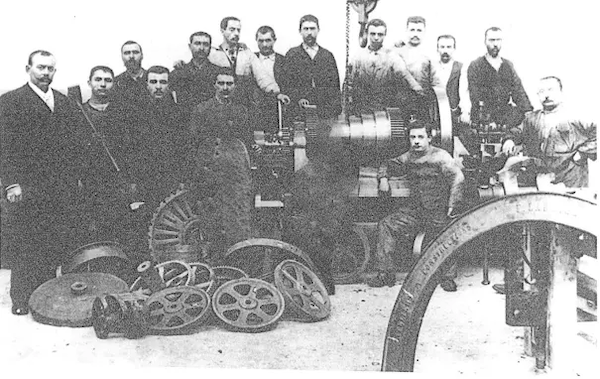
ANDRITZ Laroche, around the 20’s of the 20th century
France’s Expertise In Natural Fibers
France has long been at the forefront of natural fiber handling and utilization, building on a deep industrial and cultural heritage. For centuries, the country has been a global reference for linen (flax) production, particularly in regions such as Normandy and Northern France, which are still recognized today for producing some of the world’s finest flax fibers used in textiles and technical applications.
France also played a key role in the historical development of hemp processing, with hemp widely cultivated and transformed for ropes, sails, and industrial textiles as early as the Middle Ages. In addition, the French silk industry, centered around Lyon from the Renaissance onward, set benchmarks for fiber processing, innovation, and textile engineering. This long tradition of mastering natural fibers – from agriculture to industrial transformation – has laid the foundation for France’s continued leadership in modern, sustainable nonwoven and technical textile solutions.
Today, ANDRITZ is closely involved in this development through its three locations in France, building on longstanding expertise in natural fiber processing.
ANDRITZ Solutions For Natural Fiber Processing
With over a century of experience in textile engineering and a unique portfolio covering the entire value chain, ANDRITZ offers industrial solutions that transform natural fibers from decortication to final nonwoven products, using downstream airlay and carding technologies – reliably efficiently, and at scale. The company offers access to three internationally recognized technical centers in France, located in Elbeuf, Cours-La-Ville and Montbonnot where customers can test a wide range of fibers and applications under production-like conditions.
Processing natural fibers starts long before web formation. Fiber variability, impurities, length dispersion, and dust content present significant challenges that many equipment suppliers address only partially. It therefore becomes key taking a different approach by engineering integrated solutions starting at the fiber preparation stage. In order master natural fibers handling from the very beginning, ANDRITZ decortication, refining, and cottonizing technologies are specifically designed for bast fibers, ensuring gentle fiber opening, excellent cleaning efficiency, and optimal downstream processability – whether for carding or airlay applications.
Bast Fiber Processing Performance And Output
ANDRITZ teXline bast fiber integrates dry cleaning, decortication, and refining to deliver reproducible material yields and stable industrial performance. For typical hemp processing, the teXline configuration achieves approximately 50% cleaned shives, 25% cleaned refined fibers, 15–20% dust, and about 5% very short fibers, while maintaining high separation efficiency and fiber integrity. The solutions are designed to process bast straw at controlled humidity levels between 12 and 16%, depending on fiber type, and can handle both rectangular cut bales (up to 50 cm length) and round uncut bales.
Modular and upgradeable line concepts allow installed capacities to start at 1 T/h and be expanded up to 2.5 t/h, with standard industrial lines available for 2.5, 5, or 10 t/h of straw throughput. In addition, ANDRITZ offers dedicated cottonizing processes, derived from decades of flax cottonizing experience, with capacities ranging from 0.1 to 1 t/h, enabling downstream use of bast fibers in spinning, nonwovens, hygiene, and specialty applications while ensuring consistent fiber quality and minimal shive content.
From Fiber Processing To Value Creation
With decades of experience in bast fiber processing via its own technical centers in France, ANDRITZ provides customers with a stable, repeatable fiber base, significantly reducing production risks and quality fluctuations.
Once fibers are prepared, ANDRITZ technologies enable precise and flexible web formation through airlay & carding systems, tailored for natural fibers, while remaining compatible with recycled or shoddy fibers as a complementary activity. This downstream process will give the final products their textile characteristics. It appears for leading market players to be more and more crucial to control the full value-chain both for competitiveness and quality control, as natural fiber properties can vary depending on their origin and harvest conditions.
Natural fiber production relies on a complete local ecosystem. Decortication lines must be located close to cultivation areas, such as hemp fields. The fibers produced should then be further processed locally through downstream applications, supporting value creation across the overall production process.
Airlay Production Lines
ANDRITZ airlay lines stand out for their ability to process short, long, recycled, and fragile natural fibers in a single, highly controlled process. From blending to mat consolidation, the technology ensures homogeneous fiber distribution, excellent weight uniformity, and consistent product performance, even with challenging raw materials, usually for end products included from 500 to 10,000 gsm mainly aimed at automative and insulation.
End-To-End Integrated Solutions
When considering new capital investments, complete success is not solely based on individual machines, but also on system expertise and long‑term upstream & downstream partnerships. One distinguishes itself through comprehensive end-to-end process competence, covering every step from natural fiber decortication to the production of finished nonwovens.
As a true one-stop-shop, ANDRITZ integrates fiber preparation, web forming, bonding, and finishing into fully engineered solutions tailored to customer needs. This approach is reinforced by application-driven engineering, with technologies developed, tested, and validated around the world.
Backed by hundreds of proven installations across Europe, Asia, the Americas, and emerging markets, ANDRITZ combines global experience with a strong sustainability focus, enabling customers to profitably valorize natural, recycled, and bio-based fibers while meeting the demands of future-oriented markets. This holistic approach translates into faster commissioning, higher uptime, consistent quality, and long‑term competitiveness for customers for the decades to come.

 GRAND RAPIDS, MI — July 23, 2026 — X-Rite Pantone, the global authority in color standards and color science, and the Fashion Institute of Technology (FIT), part of the State University of New York (SUNY) and a global leader in creative education, today announce a strategic partnership to advance color education and digital innovation for the apparel, footwear, soft goods, and textile industries. As part of the collaboration, X-Rite Pantone will donate industry-leading color measurement, quality control, and visual evaluation technology to the college’s Textile Development and Marketing (TDM) department in order to support hands-on learning at FIT. This donation significantly enhances the offerings of the TDM department, which is part of the college’s Jay and Patty Baker School of Business and Technology.