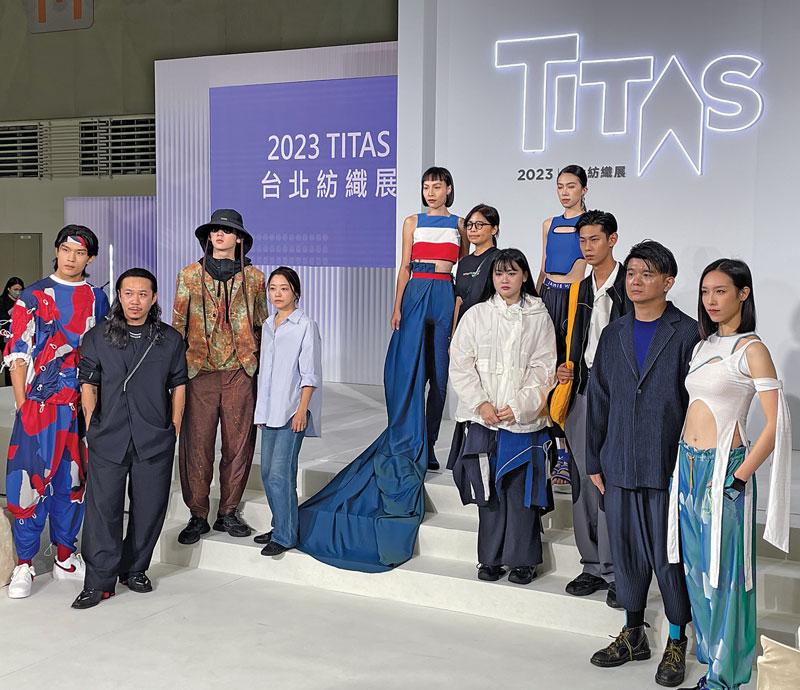
Participants in the TITAS Opening Ceremonies Fashion Show
The 27th edition of TITAS — Taipei Innovative Textile Application Show — showcased Taiwan’s innovative and youthful textile industry.
By Jim Kaufmann, Contributing Editor
To begin, here are some interesting statistics and information collected from the 27th Taipei Innovative Textile Application Show (TITAS) held recently in Taipei City, Taiwan:
More than 35,000 attendees —yes, actual attendance numbers! —from more than 15 different countries during the three-day event.
A vibrant, colorful and youthful atmosphere throughout the show floor.
Some 381 international exhibitors from 11 different countries.
Taiwan’s textile industry ranks first globally in terms of functional and green fabrics resulting in a core theme for this year’s TITAS of “Sustainability, Functional Applications and Intelligent Manufacturing” with virtually every exhibitor booth prominently dis-playing sustainable, recyclable and/or circular products, future concepts and/or even demonstrated results.
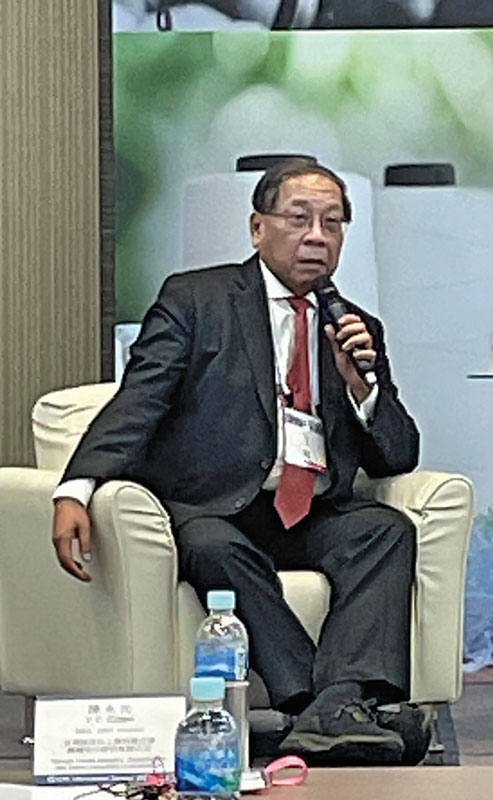
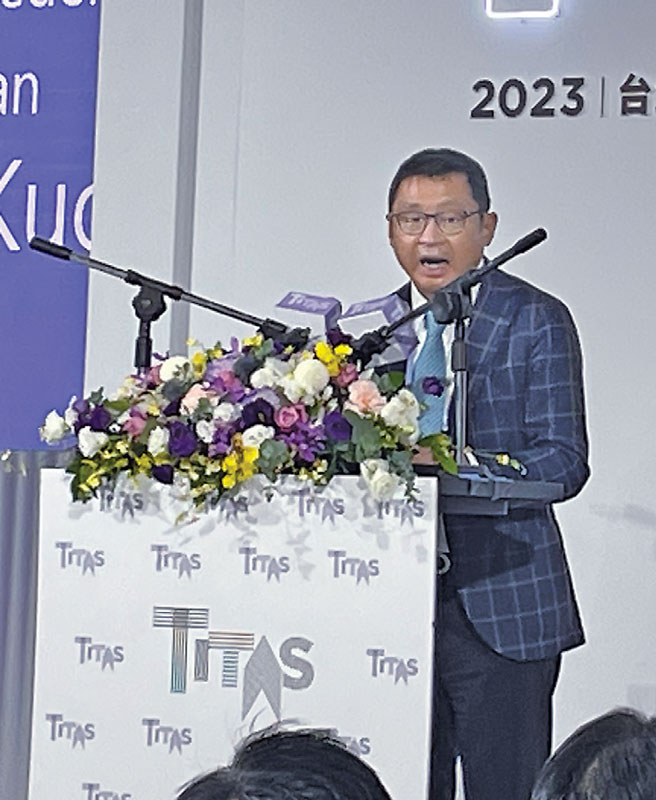
Taiwan’s Vice President Dr. Lai Chingte spoke at the TITAS opening ceremonies emphasizing the textile industry’s importance to Taiwan and Taiwan’s commitment to its textile industry.
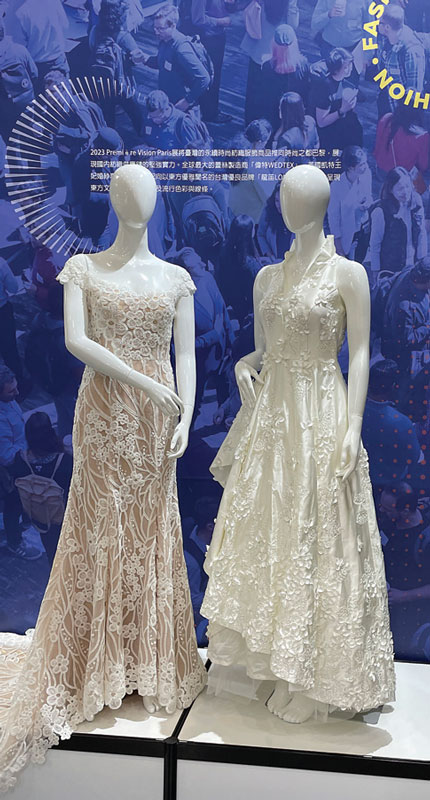
Creativity and innovation were on display pretty much in every direction, including several fashion shows over the show days featuring local designers focusing on what can be done with recycled content, new fabrics and technologies. For example, for the opening ceremony fashion show, the designers involved were given the challenge “to interpret and reflect the fabric’s performance in the garment’s design.”
Future business opportunities generated during the three days of the show estimated to be in excess of $47 million dollars in value. Not bad for an island country slightly larger in land mass than the state of Maryland.
Organized by the Taiwan Textile Federation (TTF) in partnership with Taiwan’s International Trade Administration of the Ministry of Economic Affairs, TITAS was held at the Nan-gang Exhibition Center. As a first-time visitor, the impressions made were immediate and lasting. TITAS exemplified itself as an active, interesting and truly vibrant show. The TTF and its President Justin Huang are forward thinking, knowledgeable, influential and vibrant. The collective feeling derived from the majority of participants was one of youthfulness and yes, vibrance! The innovative products and technologies on dis-play, not to mention the colors found throughout the exhibitor booths and show floor — yep, also vibrant.
TTF’s Influence And Focus On Technology
TITAS is widely regarded as Asia’s key sourcing platform for textiles and clothing, but this status did not happen overnight. It began years ago when Huang and his colleagues at TTF came to the realization that, “Geopolitics are important and you need to maintain a global perspective to compete.” Huang noted: “Taiwan— with a population of just over 23.5 million people — can never compete with the manpower and efficiencies that other countries in the region possess and we have no free trade agreements with anyone. To compete, we needed to devise a strategy based on technology and innovation to keep all potential customers interested and keep Taiwan ahead of the curve. Once a technology is developed and moves into production, the resulting products will likely be produced in other countries. So, we need to continue developing newer technologies.”
Given the push to advance technologies, Huang and TTF also made a conscious decision to hedge their bets by taking a realistic look at and focusing more on what Taiwan’s textile industry does best. “We don’t have a lot of land to grow cotton, but we do make a lot of synthetic yarns,” Huang said. “So, we devised a strategy to ‘feed the machine’ through encouraging designers, manufacturers and brands to focus on synthetic yarns. Since Taiwan primarily makes synthetic fabrics, it only makes sense to have designers in Taiwan’s schools and mills feed those capabilities they have access to and focus on synthetics and now recycled content in creating performance fashion. Cotton is very important globally, but cotton blends are more important to us.”
The next step was to focus on global and local brands by inviting them to attend TITAS and getting the brands involved in the development process as early as possible. As a result, Taiwan’s textile industry has effectively evolved itself into a leader in textile technology and functionality. “We are able to adapt and change quicker than other countries because of an innovation focus and by playing the long game, or big picture view of industry,” Huang added. “We compete by pushing the envelope and advancing technologies further forward. The designers, brands and retailers want and need versatility and options and we endeavor to provide these options for them. It is difficult to keep this position, but we just try to keep the ideas coming.”
Today, TITAS largely focuses on making available all sectors of Taiwan’s apparel and sportswear markets to all visitors and notably the global brands. “Taiwan is a hub of innovation and functionality, especially in textiles,” stated Philip Wang, assistant sales manager for Freudenberg Performance Materials. “It’s not just the big companies, but also the small ones who do their own developments as well,” a fact that was largely illustrated throughout the show floor.
A few of the many highlights dis-covered at this year’s TITAS included (in no particular order):
Taiwan Textile Research Institute (TTRI), New Taipei City Taiwan — The research institute, partially funded by its home country, showcased a wide array of textile related research activities developed within the institute primarily for Taiwan’s textile industry.
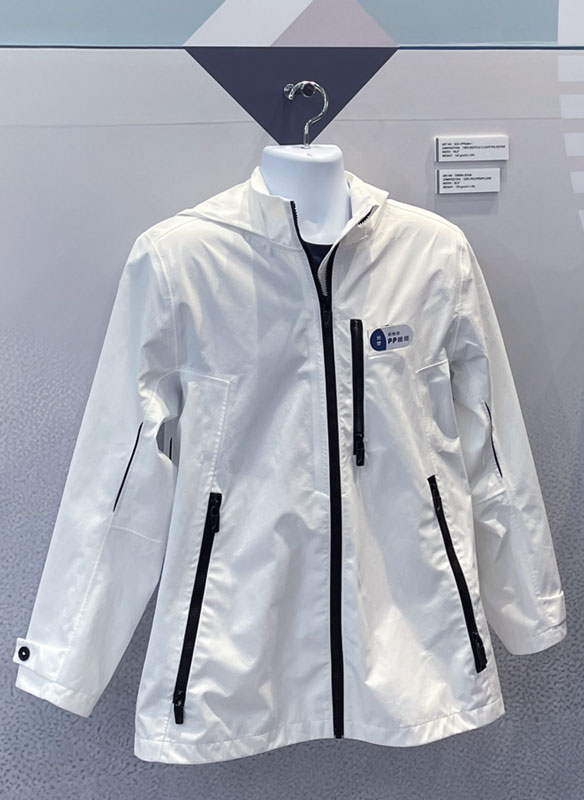
A mono-material waterproof and breathable jacket — In an effort to resolve one of the major challenges found in garment recycling, companies including Tokyo-based YKK Group, Singtex Industrial Co. Ltd., Taiwan, and TTRI worked together to develop a functional garment where all components are produced from a singular polymer — in this case polypropylene — for more efficient recycling at the garment’s end of life.
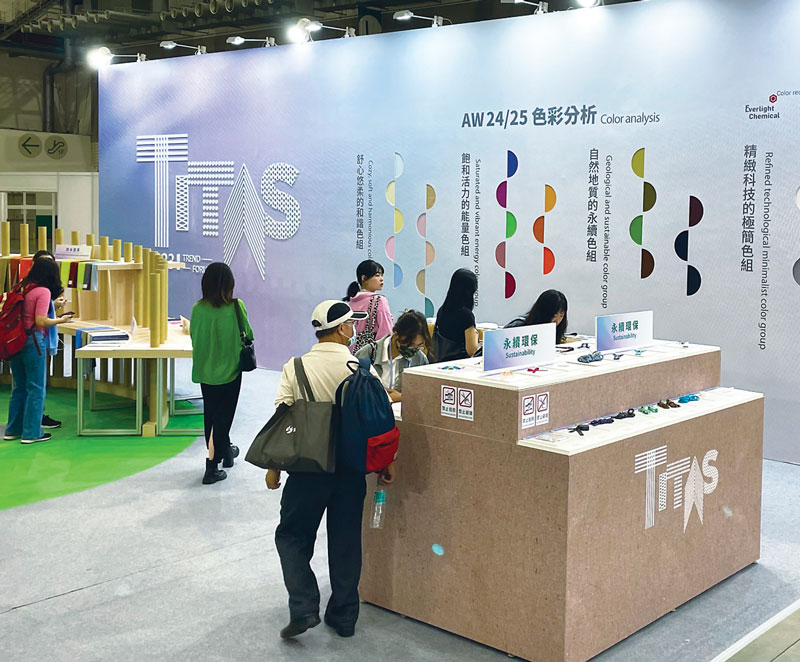
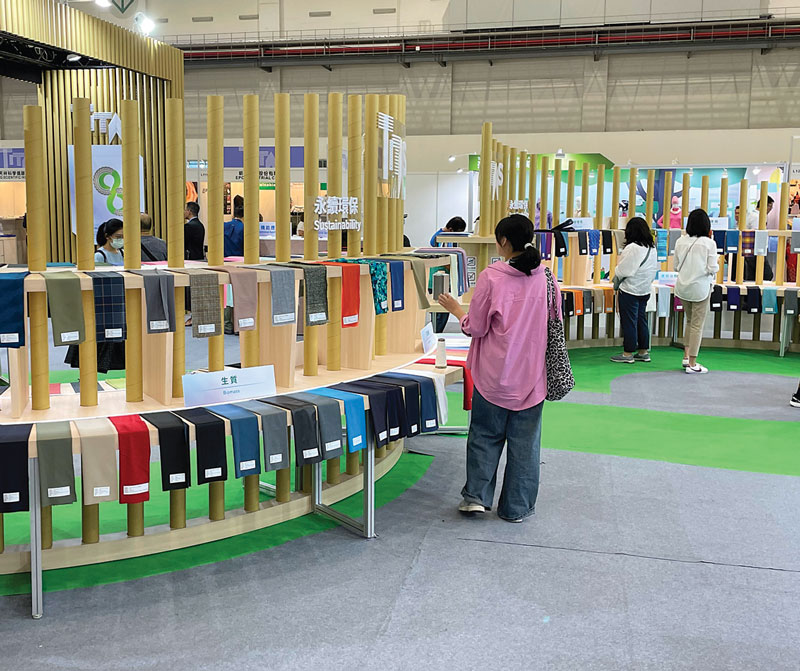
•TITAS Trend Forum — This display of more than 100 different fabric and component examples filled a section of the exhibit hall and was devoted to showcasing the breadth of technical developments presented throughout TITAS by Taiwan’s participating exhibitors.
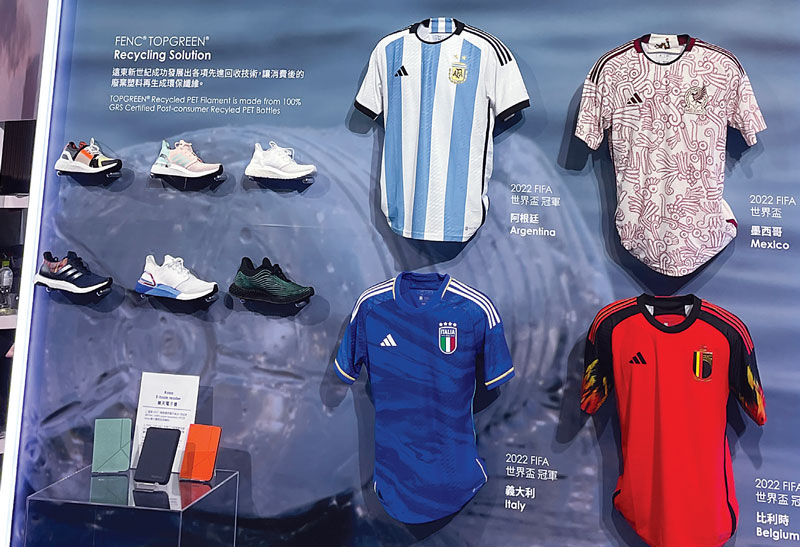
Far Eastern New Century Corp. (FENC), Taipei, Taiwan— The company’s colorful booth presented a clever marketing campaign for its technologies including various consumer products from polymers and yarns made using recycled content “from land,” “from ocean,” and “from air” emphasizing FENC’s broad efforts toward developing recycling solutions.
Tactile Sensation Analyzer (TSA) — Developed by Germany-based Emtec Co., the TSA can reliably measure and quantify haptic qualities or the “hand” of a fabric surface in an objective manner. “The human hand and eye are no longer reliable enough for this industry to manage comparisons effectively,” said Alexander Gruener, Emtec’s Global Business Development manager. According to Gruener, TSA data can be used for lot-to-lot quality comparisons; to effectively categorize different products; to compare suppliers or competitive products; and potentially to feed accurate data into AI, modeling or simulation programs.
Pailung Machinery Mill Co. Ltd., Taiwan — showcased further advancements in circular (weft) jacquard knitting machine technologies, including its AlterKnit inverse plating technology in both single and double needlebar machines, as well as a new artificial intelligence (AI)-driven fabric defect detector system that learns as defects happen and are identified.
The International Cotton Advisory Committee (ICAC), Washington — In a unique move to further promote textiles to young adults, ICAC had students take a picture of themselves inside a large picture frame promoting World Cotton Day and offered 15,000 Taiwan dollars — approximately $465 — to the student who posted the image online and garnered the most likes.
Youthful Atmosphere
Another example of Huang and TTF’s forward thinking was the youthful atmosphere found on the show floor. It was rather evident throughout the duration of the show that a much greater number of participants were under the age of 40 than the number of participants over the age of 40. This presented a very real and striking contrast to the age ratios generally found at U.S.-based textile shows as previously has been discussed in past issues of Textile World. When asked about this comparison, Huang offered that: “We saw the industry getting older years ago, so we went to Taiwan’s universities and learning institutions and helped them create programs to attract more youth into the industry. We wanted to make the industry more appealing to young people by highlighting technology and the recognizability of the brands we cater to. We want the young people to feel engaged, and that helps to keep them here. Textiles do not have negative connotation here in Taiwan and young people continue to relate to the textile industry, technology and the brands. The semi-conductor folks may pay 2.5 times more, but the work is tedious. Textiles is more interesting and continually evolving, which keeps the young people interested. As a result, the majority of people in textiles in Taiwan are younger.” Obviously looking around the show floor, this strategy has been successful!
The recipe for a successful event of almost any kind generally involves a clear focus and purpose, a viable “product” to offer, some solid planning, and a bit of foresight. By all accounts, TITAS is a world-class event certainly worth attending by anyone interested in functional and advanced textile technologies offered in a colorful and most likely vibrant atmosphere.
1 of 8
Views from the TITAS Trend Forum showcasing technical developments.
Views from the TITAS Trend Forum showcasing technical developments.
Justin Huang, president of the Taiwan Textile Federation
James Kuo, TTF chairman
Singtex ONESHELL monomaterial garment
Garments made using recycled materials found in the sea.
ROCKFORD, Mich. — November 30, 2023 — Merrell®, a hike and outdoor footwear brand, has announced the appointment of Pallav Tamaskar as chief marketing officer (CMO), effective November 30, 2023. As CMO, Tamaskar will be responsible for leading Merrell’s global marketing strategy, directing the creation of modern and integrated global integrated marketing campaigns, elevating full-funnel media planning, and driving cultural relevance through innovative product collaborations and brand-purpose programming.
“Pallav is an innovative leader and talent builder, with a strong track record of growing global brands and pioneering digital marketing strategies to accelerate consumer demand creation,” shared Janice Tennant, Global Brand president of Merrell. “With his experience leading brands through transformation, Pallav will be instrumental in helping Merrell tell amazing stories to deliver engaging consumer experiences that accelerate demand creation and build brand love.”
Tamaskar joins the Merrell team with a strong Consumer Packaged Goods and Media background. Most recently, Tamaskar served as the Executive Vice President and Managing Director of Myprotein (THG) North America, one of the world’s largest sports Nutrition Brands. There, he led the regional operation through a dynamic period of topline transformation and profitability.
Prior to THG, Pallav was an executive at ESPN (The Walt Disney Company) where he held multiple roles instilling game-changing category marketing tactics across ESPN Masterbrand and College Sports portfolio which helped to grow overall ratings and brand affinity. He has also held numerous additional marketing roles, domestically and internationally, at some of the top Fortune 100 companies including PepsiCo and Procter & Gamble.
Of his new role with Merrell, Tamaskar said, “As an avid outdoor participant, I am excited to bring my passion for marketing and consumer experiences to Merrell and be a part of the team that is helping to shape the future growth for the brand”.
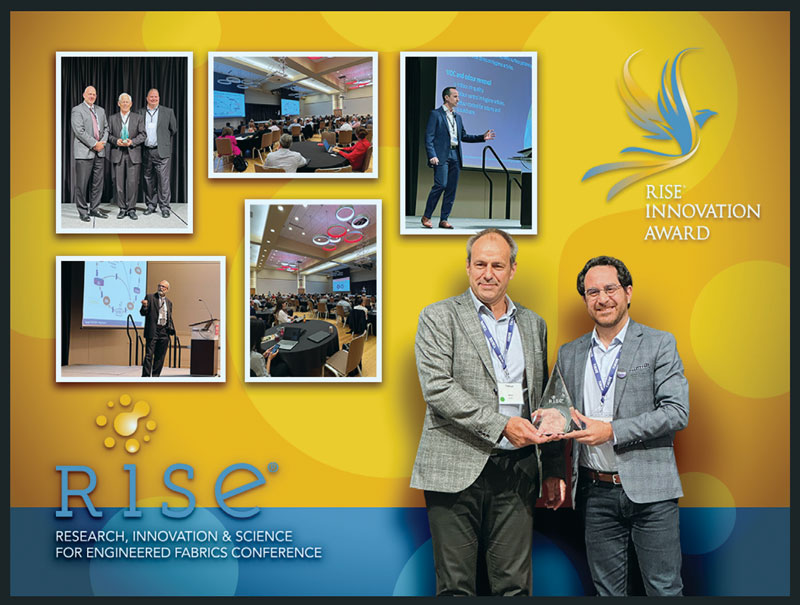
The 2023 RISE® conference focused on emerging technologies in nonwovens and engineered fabrics.
TW Special Report
The Cary, N.C.-based Association of the Nonwoven Fabrics Industry (INDA) held the 13th iteration of its RISE® — Research, Innovation & Science for Engineered Fabrics — conference recently at the Talley Student Union on the campus of North Carolina State University (NC State), Raleigh, N.C. The two-day event was again co-organized by INDA, NC State and the Nonwovens Institute (NWI).
RISE focuses on emerging technologies and ideas with the aim of connecting innovations with real-world applications for professionals in the nonwoven/engineered fabrics industry.
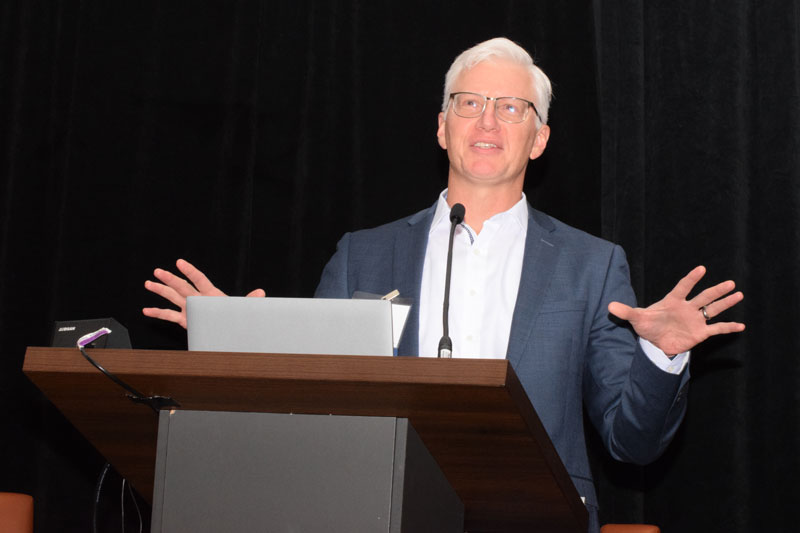
Speakers included experienced industry, government and academic personnel. Topics included the future of nonwovens manufacturing, real-world applications and advances in filter media, recycled polymers and sustainability, circular solutions, and market statistics and data trends, among other topics. Johann-Philipp Dilo, Dilo Group CEO, traveled from Germany to share information about Dilo’s new MicroPunch needling technology for lightweight nonwovens that was introduced at ITMA 2023.
Graduate students from the NWI had the opportunity to present their research work to attendees in a poster display. The conference also featured a tour of NWI to view its extensive collection of lab- and pilot-scale manufacturing and testing equipment.
Ed Thomas, with Nonwoven Technology Associates LLC, was honored with the 2023 INDA Life-time Technical Achievement Award for his contributions to the growth and success of the nonwovens industry over many decades. He was presented with the award by INDA President Anthony “Tony” Fragnito and Matt O’Sickey, INDA’s director of Education and Technical Affairs.
On day one of the conference, each of the RISE Innovation Award finalists gave a short presentation about their nominated technology to the conference participants who then were tasked with voting for the winner. Presentations were provided by Chris Nelson with Curt G. Joa Inc. about the ESC-8 – The JOA® Electronic Size Change; Thomas Wittrup with Fiberpartner ApS about BicoBio Fiber; Tobias Wagner with Reicofil GmbH & Co. KG about the Reifenhäuser Reicofil RF5 XHL; and by Dr. Hani Sherry with TiHive SAS about its SAPMonit technology. TiHive emerged as the 2023 RISE Innovation Award winner for its diaper inspection technology. Using advanced cameras, high-speed vision algorithms and secure cloud integration, SAPMonit detects the weight and distribution of superabsorbents inline and can optimize resources, detect flaws and accelerate research and development. The technology has the capability to avoid hundreds of tons of plastic waste per machine per year, thus reducing costs and providing a more sustainable operation.
“INDA values its long-standing collaboration with NWI,” noted INDA President Anthony “Tony” Fragnito. “Together we provide valuable workforce development opportunities and disseminate industry innovation and research in the material sciences impacting nonwovens. The 2023 edition of the RISE conference is another shining example of our organizations working together for the benefit of the industry.”
RISE 2024 is scheduled for October 1-2, 2024, at a new venue on the NC State campus — the James B. Hunt Jr. Library.
The SYFA’s fall conference took a deep dive into recycling and sustainable technologies in the man-made fiber sector.
TW Special Report
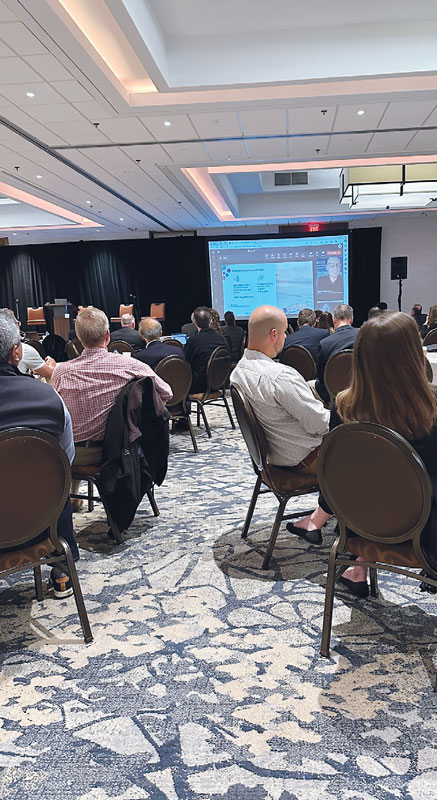
The Synthetic Yarn and Fabric Association (SYFA) held its 2023 fall conference recently at the Sheraton Charlotte Airport Hotel, Charlotte, N.C. The format differed slightly from typical meetings. It began with single presenters speaking on a variety of topics under the theme “Reimagining Fibers, Factories and Waste.” The intent of the conference was to take a deeper dive into recycling and sustainable technologies in the man-made fiber sector.
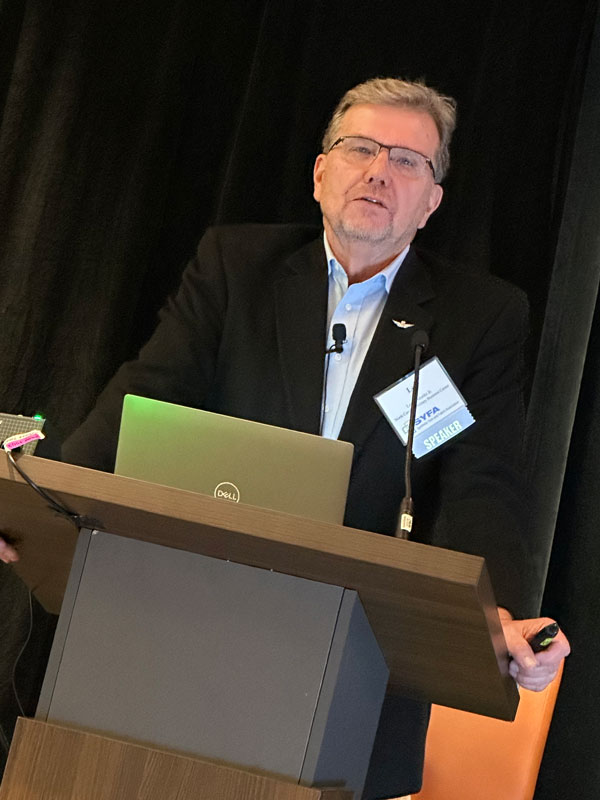
Laura Murphy, Wood Mackenzie, kicked off the presentations with a data-driven “Fiber and Yarn Update.” She was followed by Parkdale’s Cheryl Smyre who presented an update on CiCLO® technology to attendees in her talk titled “Biodegradable Technology to Reduce the Impacts of Synthetic Microfiber Pollution.” After a networking break, Dave Kasper with Canada-based General Recycled, talked about his company’s unique recycling process developed to keep non-biodegradable flame-resistant (FR) garments out of landfills. The presentation, titled “Closed Loop Recycling of Aramid Garments at the End of Their Lifecycle,” provided an interesting look at the process that begins with FR garments at the end of their lifecycle and ends with new FR garments made using recycled aramid yarns. Rounding out day one of the conference was Lee E. Moritz Jr. with the NC Military Business Center who provided attendees helpful information on how to go after Federal contracts in his presentation “Introduction to Federal Contracting.”
After dinner, attendees heard from Keynote Speaker Augustine Tantillo from consulting firm SRG & Associates. Rieter’s Jerry Eskew, who is retiring, was also was recognized for his 47 years of service to the SYFA. For most of his time as a member, Eskew served on the association’s board.
The second day of presentations began with Bruno Langlois, business development and partnership director with France-based Carbios. He joined the conference via an online video call from France to deliver his presentation about “Enzymatic Recycling,” which focused on Carbios’ enzyme technology for depolymerizing polyethylene terephthalate (PET) in a circular manner with no loss of quality. Carbios recently obtained building and operating permits for the world’s first biorecycling plant in Longlaville, France, which is expected to be operational in 2025.
Langlois was followed by Aaron Alvarado, with Germany-based Setex, a supplier of controls, sensors and camera measurement technology, and planning and manufacturing software for textile machinery manufacturers. Alvarado presented on the topic of “Transformation in Textile Manufacturing from Automation to Digitalization.”
The final session was arranged as a panel discussion led by moderator Alasdair Carmichael, a long-time SYFA board member and program director at the National Association for PET Container Resources (NAPCOR). The panelists — Raymond Randall, WM (Waste Management); Megan Helton, Eastman; Chad Bolick, Unifi; and Sarah Coulter, Accelerating Circularity — offered expertise in collection and logistics, molecular and mechanical textile recycling, as well as ongoing actions downstream in the textile recycling sector. After each panelist gave a short presentation about his or her company and its recycling journey, the group discussed the ideas of collection, sorting and end-of-life treatment as it relates to textile recycling. Information shared and discussed included:
It is estimated that 92 million tons of textile waste is generated each year by the apparel industry;
Some 15 percent of all fabric delivered into the apparel supply chain ends up as waste on the cutting room floor; and
Of all garments produced, 30 percent are not sold at retail and must be disposed of some way.
Moderator Carmichael warned attendees that legislation is coming and that the textile and apparel industry needs to be involved in writing the legislation or rules will be created that are not at all favorable to the industry.
Conference sponsors included Diamond Sponsor Premier Fibers Inc.; Gold Sponsor Goulston Technologies; Silver Sponsor Pulcra Chemicals LLC; Bronze Sponsors Polyspintex and Unifi Inc.; and Keynote Sponsors Measured Solutions Inc. and Milliken & Company.
“On the heels of a successful 50th anniversary celebration last year, the 2023 Fall Conference shined a light on what’s ahead for the next few decades,” said SYFA President Hardy Sullivan. “The synthetic yarn and fabric industry has experienced an evolution of ways North American companies try to set themselves apart. Over the years we’ve seen a gradual transition of focus — from throughput to quality to recycled content; and now there is emphasis on minimizing resources and circularity. To recognize we’ve reached an inflection point, the conference theme was ‘Reimagining Fibers, Factories and Waste.’ We had a great lineup of speakers and panelists that revealed ways to modernize, expand into new markets, and make our industry more sustainable by using materials and processes that allow synthetics to biodegrade or be recycled at large scale. SYFA has reached its 51st year but, in many ways, we’re just starting a new chapter.”
The next edition of the SYFA conference will be held April 18-19, 2024, at the Sheraton Charlotte Airport Hotel. The association is planning its second annual golf outing the day before the conference, on April 18, to raise money for the SYFA Scholarship Fund for Gaston Community College’s textile program. Lauren Eck, the first recipient of SYFA’s scholarship, was in attendance at the fall meeting.
Tobias Cochran, softgoods lab engineer at NASA’s Johnson Space Center
The collocated Advanced Textiles Expo and Sun Shading Expo recently gathered in Orlando, Fla., to showcase industrial, technical and sun shading textiles.
By Jim Kaufmann, Contributing Editor
This year’s Advanced Textiles Expo — organized by the Roseville, Minn.-based Advanced Textiles Association and held at the Orange County Convention Center in Orlando, Fla. — focused on the industrial, technical and performance sectors of the textile industry. It was once again collocated with the Sun Shading Expo, which caters to and addresses the interior and exterior sun shading industry. Unfortunately, both shows may have been the victims of either unlucky scheduling or trade show fatigue as the collocated expos were held the same week as two other functional textile and composites trade shows, both of which undoubtedly siphoned off some of the usual attendees.
That said, though the number of attendees may have been smaller than usual — actual numbers for exhibitors and attendees were not available as of TW’s press time —several exhibitors shared that they had a good show experience. Scott Hilleary, president of SSM Industries, Spring City, Tenn., expressed: “We’ve had a really good show here in Orlando. We’ve participated in a number of good meetings and made some interesting introductions to potential customers that we hope will develop into opportunities.”
“This is our primary event, and we always seem to have good traffic and meaningful conversations in our booth, so yes it’s been a good show for us,” said Dan Weisenberger, Southern Regional sales manager for Seaman Corp., Wooster, Ohio.
Exhibitors included a variety of narrow- and full-width fabric suppliers, coaters and laminators, machine vendors, auxiliary components, and accessories suppliers. Each catered to the wide breadth of markets that typically fall under the advanced textiles umbrella.
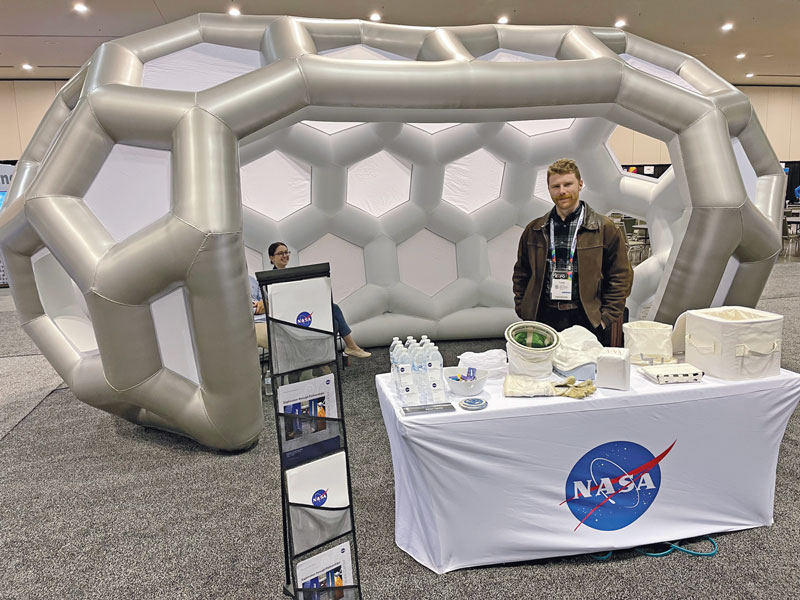
The National Aeronautics and Space Administration (NASA) again exhibited at the expo and brought what was probably the most visually interesting inflatable booth to grace the show floor. The booth showcased several examples of softgoods products and prototypes intended for use on future space missions to the moon and Mars, and maybe beyond, giving visitors a small glimpse into some of the challenges today’s space travelers face.
Tobias Cochran, an engineer in the softgoods lab at NASA’s Johnson Space Center appreciated the variety of exhibitors presented and the conversations that occurred. “We work on a lot of different prototypes, typically with rather unique requirements,” Cochran said. “So, coming to this show is great for us. It gives us the opportunity to not only show off the products we produce, but also provides us the opportunity to talk with the advanced textiles community and discuss problems we’re hoping to solve, learn about new and existing technologies, and look for possible new solutions that may help us at some point in the future.”
Events like the Advanced Textiles and Sun Shading Expos continue to provide a focused meeting space for industry newbies and veterans alike to meet and make new connections, get caught up with old friends, and maybe solve a problem or two. Ironically, regardless of how many attend a trade show, it really only takes one or two of those connections or conversations to make the trip worth the effort. As an old friend always used to say, if you’re fortunate to partake more than one or two good conversations, “…well, that’s just gravy! And man, do I like the gravy.”
The 2024 Advanced Textiles Expo will be held September 24-26, 2024, in Anaheim, Calif. Let’s hope there’s lots of gravy to be spread around again.
Successful CAMX aided by location near composite and textile manufacturers based in the southeast.
By Jim Kaufmann, Contributing Editor
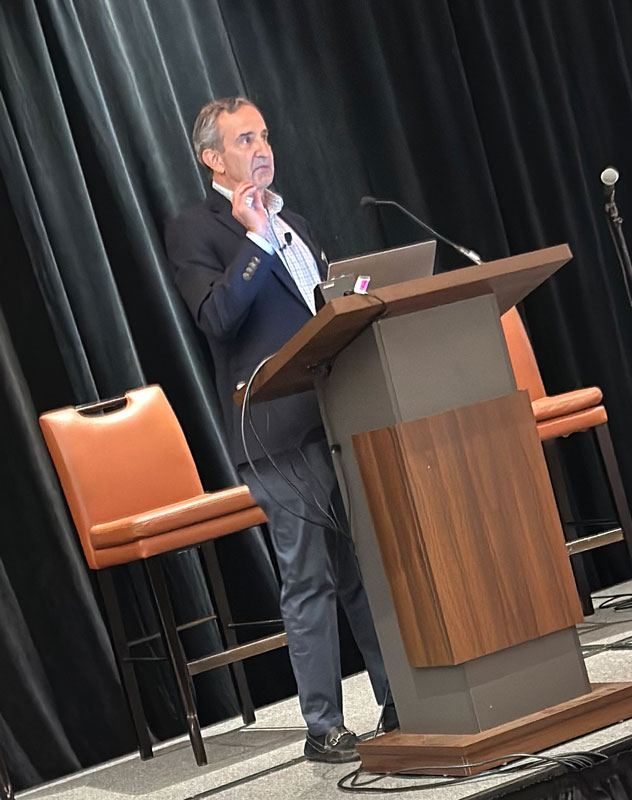
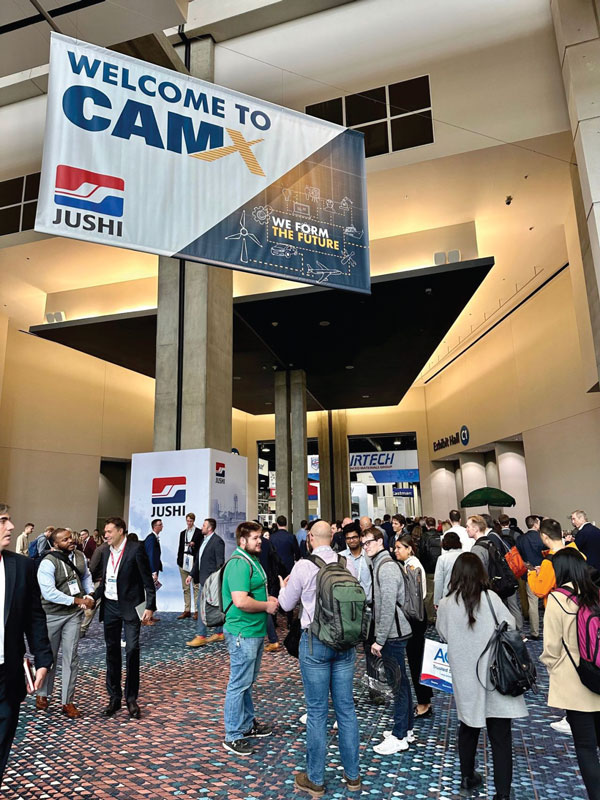
As the composites industry in North America continues to grow and blossom into newer and more creative applications, so too does CAMX, the Composites and Advanced Materials Expo. This year’s edition of CAMX was held for the first time at the World Congress Center in Atlanta, and by all accounts it was another successful event. Joan Higginbotham, a retired NASA astronaut who now is president of Joan Higginbotham Ad Astra LLC — an aerospace consulting firm — was the keynote speaker. She discussed her rewarding careers and her perseverance in becoming a rocket scientist and astronaut, which led to becoming a crew member of a 2006 space shuttle Discovery mission to the international space station. Upon returning to terra firma and after her time with NASA ended, Higginbotham embarked on a career focused on driving social impact and eventually became an aerospace consultant.
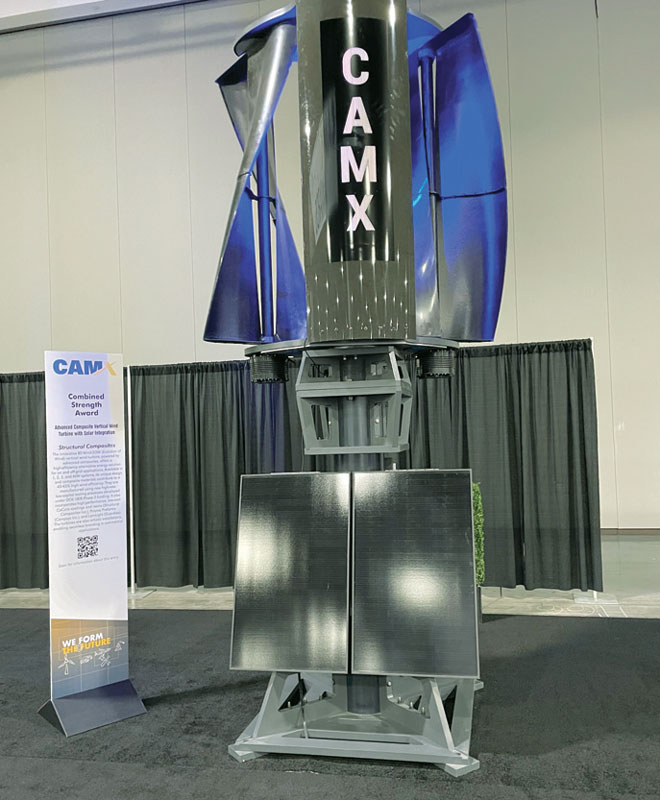
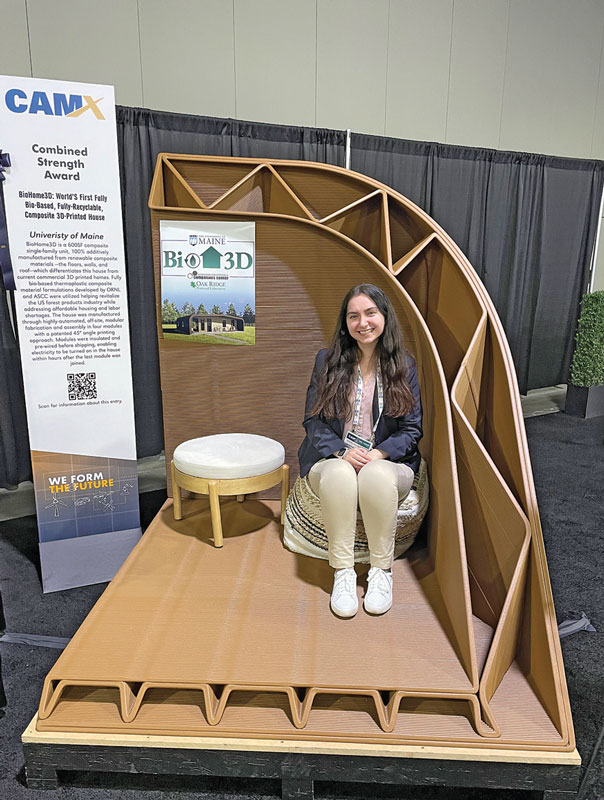
During the show, CAMX Award winners were announced with the University of Maine accepting the Combined Strength Award for its BioHome3D — a unique biobased, fully 3D-printed and fully recyclable house that included a novel printing twist. To provide better integration of design aspects, the university created a patented process for large scale 3D-printing at a 45-degree angle. A representative segment of the printed house structure was available on the show floor and drew a lot of attention during the expo.
Strongwell, Bristol, Va., received the CAMX Unsurpassed Innovation award for its 200-foot all pultruded structure, which is part of a 40-year infrastructure initiative to make wireless energy transmission more feasible. Bespoke tooling was designed and used to pultrude the individual shapes necessary to create the structure.
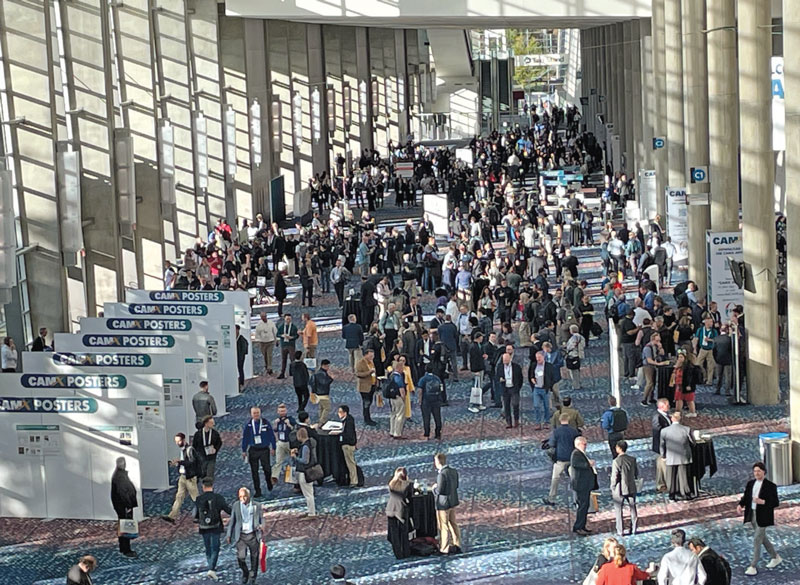
As always, the conference segment provided a variety of session topics ranging from “AI Machine Learning in Composites” to “Avoiding ‘Greenwashing’ Claims” and more. Poster sessions also returned and provided additional opportunities to expand one’s knowledge of the advancements in composites. However, as typically is the case, most were attracted to the activities found on the show floor where a growing number of booths and exhibiting companies displayed their wares demonstrating once again how the composites industry endeavors to keep moving forward.
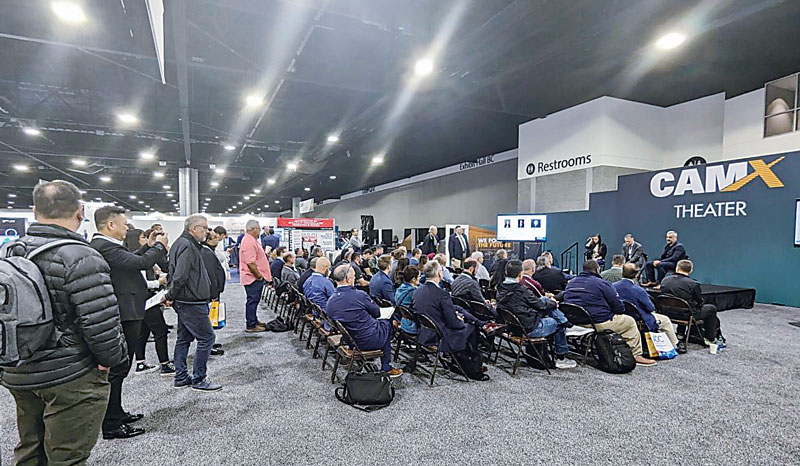
The expo floor felt bigger than in past years, but those wandering the hall were able to see and speak with a bevy of industry experts from up and down the supply chain. Composites One and the Closed Mold Alliance, as has become a welcomed tradition, again used a portion of the expo floor to demonstrate molding techniques and advanced processes. CAMX also offered the CAMX Theater to provide assorted additional education opportunities to those on the expo floor. However, the real attractions were the various exhibitor booths, which held the treasures most attendees might have been searching for. A few treasures or at least items of interest included:
3D printing technologies, featured by several different exhibitors, continue to evolve and grow as a processing system into new and more complex shapes, configurations and applications.
WEAV3D, Norcross, Ga., highlighted its woven composite lattice reinforcement structure, “Rebar for Plastics” that incorporates spread tow tapes. The lattice framework of the structure allows WEAV3D to locally tune performance characteristics to meet molded component needs, reducing component costs to targeted transportation and industrial applications.
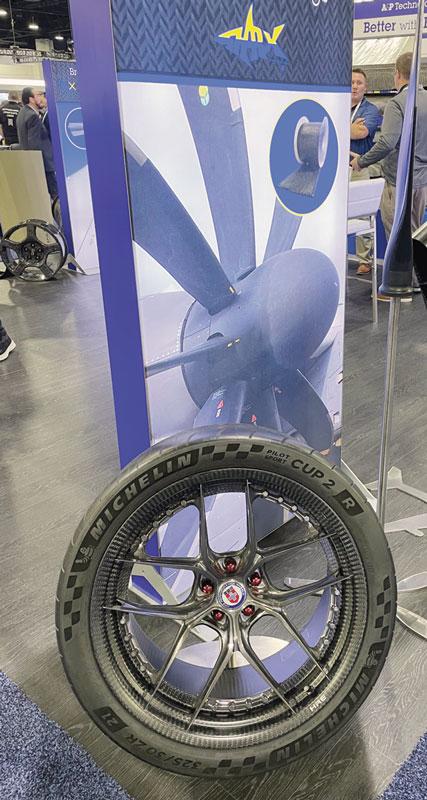
Innegra Technologies, Colfax, N. C., recently acquired by and now part of the Quantum Group, showed the versatility of its Innegra S fiber — a high modulus polyolefin multifilament yarn — in different textile and composite applications. It can be used in con-cert with other high-performance fibers such as carbon or glass, to improve toughness, durability and vibration dampening of molded parts, while also improving overall part cost and reducing weight.
Several booths featured composite parts produced with recycled content, including recycled carbon and glass. Also, work continues in developing green composites, some of which could be found within the innovation displays.
Also of interest in the innovation displays was a new composite based vertical axis wind turbine system from Be-Wind, Melbourne, Fla., that has a much smaller profile and cost than current wind turbine systems.
IFC Mercantile LLC, Warren, N. J., promoted a modified acrylic — not modacrylic — staple fiber with inherent flame-retardant properties that does not melt or drip. It is intended for flame retardant applications including protective apparel, higher temperature filtration, industrial and technical applications.
Attendee and final exhibitor numbers were not available as of TW’s press time, but the general consensus of participants and exhibitors surveyed was that this year’s CAMX was another success. And Atlanta, though colder and windier than many expected, proved again to be a viable location for such an event given its proximity to the southeast’s textile and composite manufacturers. The 2024 CAMX Expo will be held September 9-12, 2024, in San Diego, Calif. Hope to see you there!
The dyeing and finishing industry continues to make strides in developing technologies that make the processes more environmentally friendly and sustainable.
TW Special Report
Sustainability continues to be at the forefront of textile machinery and technology development and there were a plethora of sustainable fiber and yarn developments in the spotlight at the recent ITMA 2023. However, as one of the first sectors in the textile industry to receive negative attention for the high use of water and chemicals, and amounts of wastewater generated, the dyeing and finishing industry is no stranger to sustainable innovation. But despite a focus on environmentally friendly technologies for much longer than other sectors in some cases, there were plenty of innovations shown at ITMA that showed the sustainability journey continuing in dyeing and finishing.
Some trends include low or no salt dyeing, use of carbon dioxide or nitrogen in processing as well as new heating systems and water reductions all designed to make the sector more sustainable.
Following is a look at just some of the latest technologies available for dyeing and finishing.
Germany-based Thies Textilmaschinen GmbH & Co. KG debuted the Signature Series machine, which was developed to dye cotton fabrics at the lowest possible liquor ratio using no salt. The jet-dyeing machine operates at an ultra-low liquor ratio as low as 1:2.3. For each batch, the liquor ratio is determined based on the fabric’s adsorption level plus a small quantity of water roughly equal to 0.6 liters per kilogram to ensure the pump used to circulate the dye liquor remains flooded. By removing water from the process, more of the dyestuff goes on to the fabric instead of hydrolyzing and ending up as a waste product. The machine delivers small amounts of highly concentrated dye throughout the dye cycle to ensure a level dyeing.
The machine can be used in three modes to dye using full salt, low salt or no salt. No salt dyeing reduces the effluent, which helps companies in countries with strict effluent policies; and both no and low salt processes save dyestuff and chemicals for both cost savings as well as environmental advantages. The Signature Series prepares, dyes and rinses the fabric with-out the need for intermediate processes or machines. As a high-pressure vessel, the machine also can be used to dye polyester and is a great option for a company that handles a variety of fabric substrates. An adjustable, curved J-box also means the machine can handle light and heavy fabrics in full and reduced loads. “Thies is opening a new chapter in fabric coloration,” said Verena Thies, managing shareholder, Thies. “Signature’s innovative ultra-low liquor ratio significantly enhances dye effectiveness, resulting in up to 20 per-cent decrease in dyestuff consumption. By combining Thies’ cutting-edge advancements, water usage is minimized by 25 percent.” These decreases are based on a comparison with Thies’ iMaster, the Signature’s predecessor.
DyeCoo Textile Systems BV, the Netherlands, introduced new additions to its carbon dioxide dyeing solutions at ITMA including a com-pact sampling and small-scale production machine, and a lab system for research and development. The company’s technology harnesses carbon dioxide (CO2) instead of using water to dye fabric. Under pressure, the CO2 becomes “supercritical” and acts as a solvent that easily dissolves the dye, transporting it into the fiber. The system requires no additional chemicals to help dissolve the dye, and there is a 98 percent dye uptake and therefore, very little waste. The technology also uses reclaimed CO2 from existing industrial processes where 95 percent
of the CO2 is recycled in a closed-loop process. According to DyeCoo, the use of 100-percent pure dyestuff that is evenly distributed over the fabric results in deep, vibrant colors.
Italy-based Master S.r.l. did not participate in this year’s ITMA, but the company recently introduced the Craftyflow and Craftyrope machines for dyeing denim warps. The machines feature a dual technology and can operate in a traditional manner in a natural air atmosphere or in a nitrogen atmosphere. When operating in a nitrogen atmosphere, the machine reduces the chemical consumption of hydrosulfite by 75 per-cent, caustic soda by 80 percent and water by 80 percent, according to the company. Master reports the technology already has been adopted by some notable denim producers.
Switzerland-based Benninger AG offers complete systems for continuous wet processing and discontinuous dyeing, including jet dyeing machines, dye house supply systems, caustic soda recovery plants and wastewater heat recovery systems. The company also produces tire cord processing solutions.
Benninger’s new FabricMaster discontinuous jet-dyeing machine was developed with faster processing times and economical water usage in mind. Knit or woven fabric is loaded from the side of the machine versus from the top down to avoid elongation and loading marks. The machine is available in a variety of sizes from lab size on up.
Other technologies available from Benninger include the Benninger-Küsters CPB (cold pad batch) dyeing technology, which allows knitwear to be dyed in a salt-free, cold dyeing process; and the CDS (chemical dispensing system) that can dispense up to 24 chemicals for between two and 16 machines for accurate and just-in-time supply.
The company’s SingeRay singeing machine has exceeded all expectations selling more units already this year than ever anticipated. The machine was designed with energy savings, natural gas in particular, in mind. Made in Germany, the SingeRay features four singeing positions as well as two special aluminum burners with ceramic flame guiding bricks, which offer higher production speed and higher heat intensity. Its silicium car-bide burning chambers with four cooling channels ensure complete combustion and a constant burner temperature, which also helps to keep the nozzle strip straight. The machine can be adapted to accommodate different widths of fabric and rather than just shutting down sections of the flame bar, the actual chamber width can be modified to close the gap on each side thus aiding heat conservation and saving energy.
Lexington, N.C.-based Navis Tubetex now offers Gaston Systems’ foam technology for applying a low water foamed chemistry onto or into a substrate. The technology was originally used for chemical finishing where the precision applicators allow one chemical to be applied to the front of a fabric while a different chemical is applied on the back. But further applications for this proprietary technology are developing because of the ability to reduce chemical waste, as well as water and energy consumption. The company recently collaborated with biofabrication company Modern Meadow who was searching for a partner that offered an application technology suitable for its Bio-FREED™ powered by Bio-Alloy™ plant-based protein and biopolymer. When used as a dyeing pretreatment, the bio-based technology makes the fabric much more receptive to dyes. Research is continuing, but the process is interesting for its ability to reduce energy, water, and dyes and chemicals use during dyeing. When applied to a blended textile substrate using the Gaston Technologies foam equipment, Bio-FREED results in an estimated 95-percent reduction in water, 75-percent reduction in energy, and an 80-percent reduction in the amount of dyes and chemicals needed. Navis Tubetex also offers Oasis, which is a pretreatment technology to make the fabric more receptive to dyes so the fabric may be dyed using less salt.
Italy-based Santex Rimar Group S.r.l. offers an extensive portfolio comprising six brands that cover finishing, coating, laminating, impregnation, embossing, printing, prepregs, weaving and green technologies for water treatment for drying. Federico Businaro, vice president, Group Corporate Image, noted that the company’s slogan “Eco is our attitude” appeared to attract customers to its booth during ITMA. The company invests 4 percent of its annual global turnover in research and development every year to ensure it is offering the best technologies to its customers. ITMA highlights included the Compas from Sperotto Rimar, ESC unit for the SANTASHRINK, and the Cavimelt Pro multifunctional coating machine from Cavitec presented for the first time at an international exhibition.
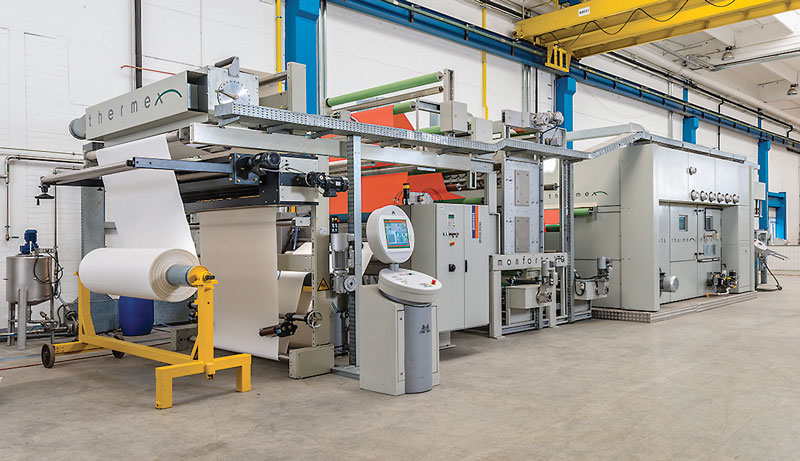
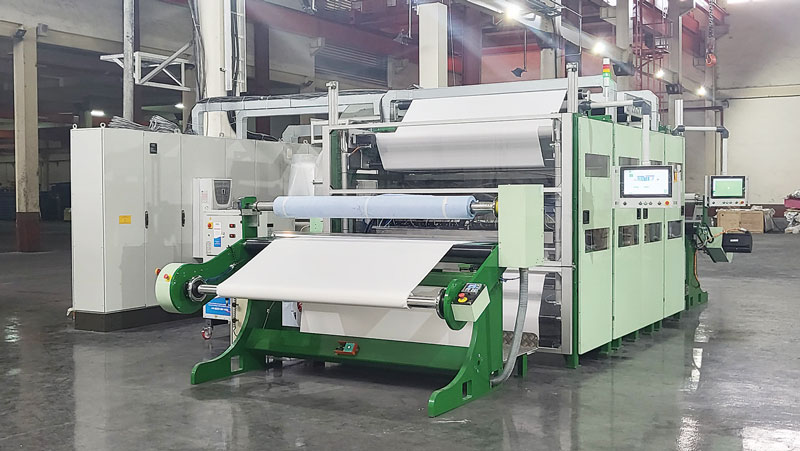
The Compas open-width compacting and finishing machine features a new elastic belt that is cooled using a cooling roll that is equipped with a chiller to recool and circulate the water. The compacting action is enhanced by the elasticity of the new belt, which is pretensioned at a controlled and set-table value. The fabric makes contact with the belt when it is under maxi-mum tension and as the tension is released the fabric follows the belt, thus compacting the fabric lengthwise.
The Santashrink, a tensionless shrinkage and relax drying machine for tubular and open-width knitted fabrics, has long been a Santex best-seller. The machine now can be sup-plied or retrofitted with the ESC –Energy Saving Chamber, which recovers and reuses the hot exhaust air. The company reports the use of the ESC can increase production capacity by 15 to 17 percent using the same amount of heating energy.
Lastly, the two-in-one Cavimelt Pro was designed to switch rapidly between rotogravure and full-surface coating. Based on hotmelt technology — which is inherently environmentally friendly because it uses no solvents or water — the Cavimelt Pro delivers high bonding performance even on sensitive materials and in innovative applications, according to the company.
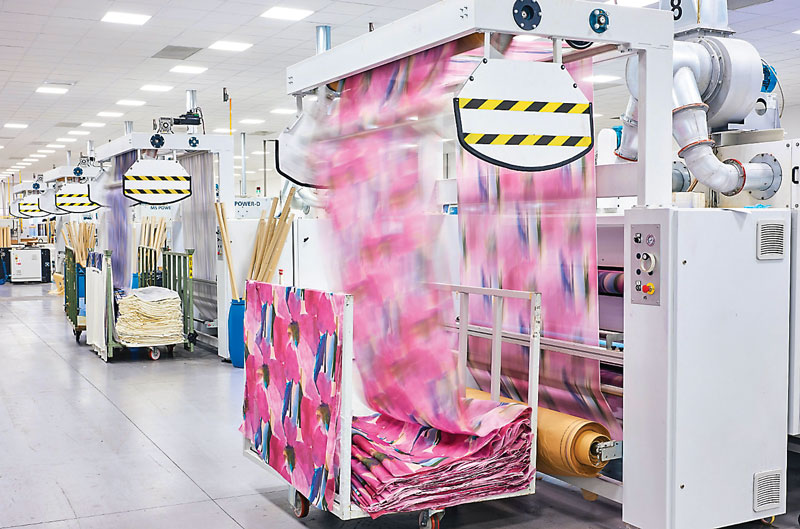
Brückner Textile Technologies GmbH & Co. KG, Germany, presented its lines for finishing and coating at ITMA. Its latest-generation tenter, the POWER-FRAME SFP-4, features electric/hydrogen- powered heating systems, as well as intelligent software, and systems for heat recovery and exhaust air purification, among other features. Driven by the energy crisis, the company set out to develop innovative heating systems that are energy efficient and combine a variety of heating options such as gas, steam, oil or electrical heat. In addition to the Power-Frame SFP-4, Brückner offers a new industrial oven that is fully electric powered using heat pumps. These new options reduce the dependence on fossil fuels and minimize the carbon dioxide footprint for a manufacturer. The ECO-HEAT heat-recovery and ECO-AIR exhaust air purification systems may be retrofitted to older lines from Brückner, but also lines from other manufacturers. The systems feature intelligent controls and Brückner can help customers perform tests on site on a laboratory scale to assess utilization rates and efficiency before installation. The newly redesigned POWER-DRY relaxation dryer also can be heated using a high-temperature heat pump to eliminate carbon dioxide emissions.
Brückner’s ECO-COAT and OPTI-COAT 2in1 offer cus-tomers an opportunity to save resources such as water and chemicals. The Opti-Coat 2in1 combines a floating knife and knife-over-cylinder in one machine for high-precision with paste and foam coatings. The Eco-Coat is a new type of padder featuring minimum preparation quantity or residual liquor.
All Brückner’s machinery may be supplied with intelligent systems that support optimum machine settings.
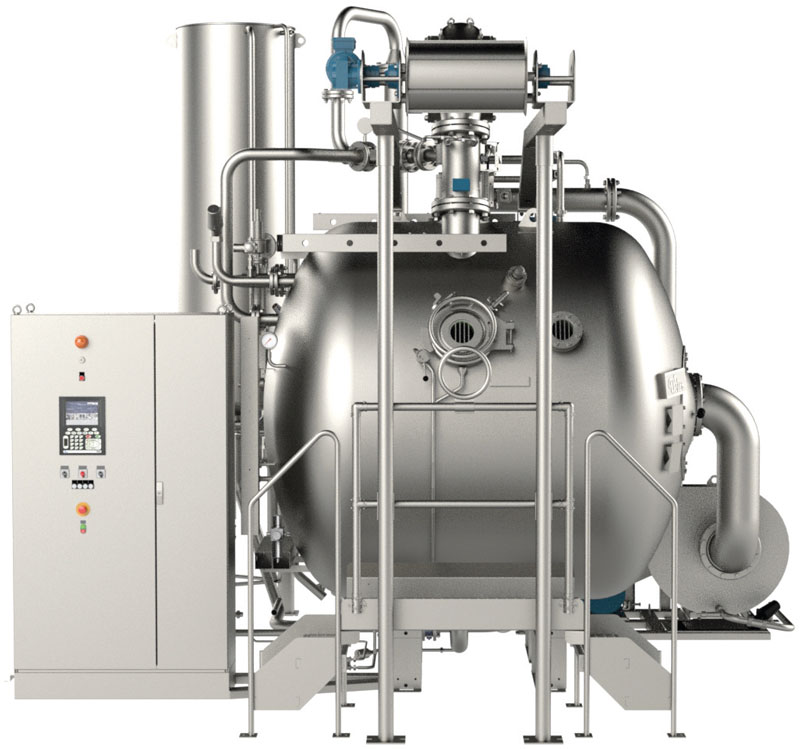
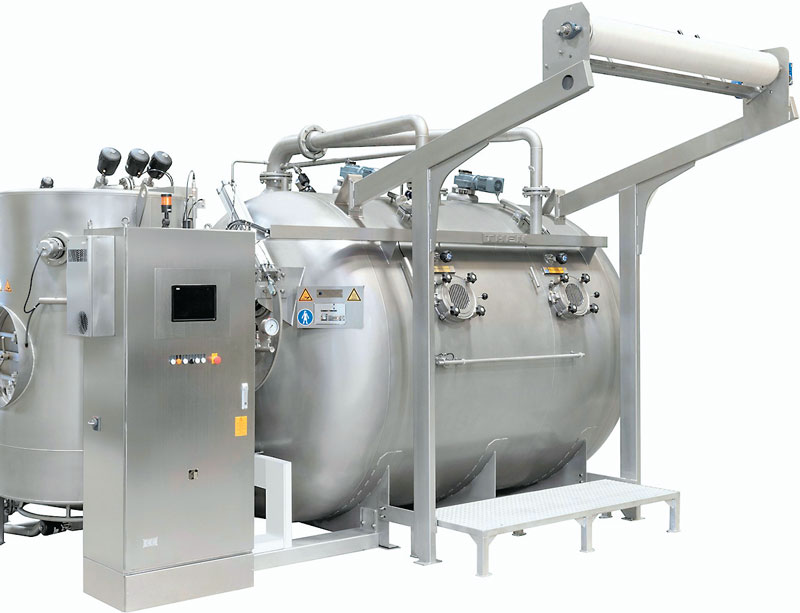
THEN Smartflow TSF dyeing maachine
Germany-based Then, a member of the CHTC Fong’s International Group and a Fong’s Europe GmbH brand, introduced the hydraulic high-temperature THEN Smartflow TSF dyeing machine with a unique reel-less round shape. The machine features a smart fabric transport system to ensure even dyeing; a heat exchanger to quickly and efficiently heat the dye liquor; and optimized chemical, dyestuff and salt dosing to reduce waste and optimize results. The Smartflow TSF has a low liquor ratio of 1:2.5 with a full load of man-made fiber fabrics. “We take the global green deal seriously and analyze production and working processes for their environmental impact,” said Fong’s Europe Director of Sales and Marketing Richard Fander. “The chambers of the Smartflow TSF can accommodate variable loads in terms of both weight and material type down to 40 kg for extremely flexible processing, and each unit can be equipped with up to six chambers, in order to fully maximize productivity, while taking up to 40-percent less floor space than competing systems. Overall, the machine is a reliable and efficient solution for textile dyeing that can help textile manufacturers reduce their environmental impact while improving their processes.” THEN also offers the Supratec LTM dyeing machine suitable for sensitive highly elastic and delicate man-made fiber fabrics. The long tube-shaped machine design can be tailor-made for customers with one or two nozzles for full filling with acceptable fast turn times. Each kier has a capacity of up to 200 kilograms and the machine runs at 80 to 600 meters per minute.
Germany-based Goller, a member of the CHTC Fong’s International Group and a Fong’s Europe GmbH brand, promoted its KnitExcellence package for wet finishing treatment of knit textiles at ITMA. Comprised of the Knit Complexa for bleaching, Knit Mercer for mercerization, Knit Economica for dyeing, and the Sintensa washing range, the package offers a manufacturer a complete range of machinery for processing knit fabrics. The company also introduced the new Oxidator module for all types of woven fabrics. The machine features a washing compartment with an inter-changeable, modular design that can be modified to meet a variety of washing requirements to produce different fabric qualities. The unit combines powerful, adjustable angle spray washing with up-down roller washing. The design also can house 25-percent more fabric than a conventional drum washer.
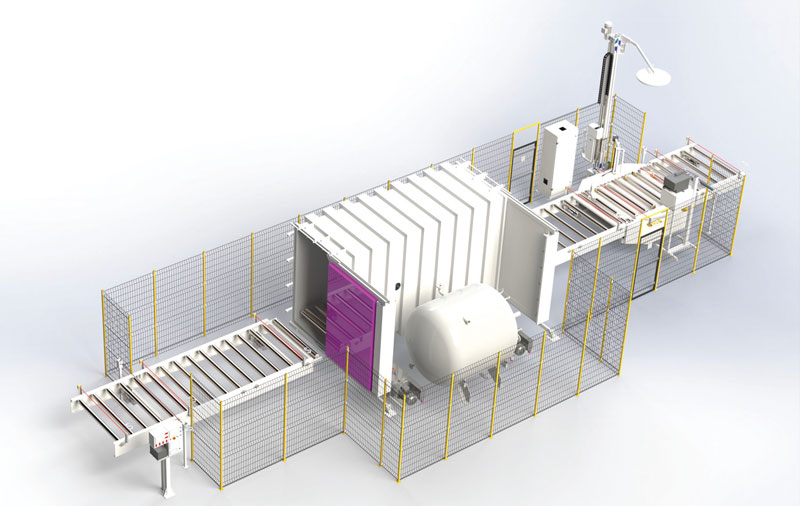
Xorella’s new XO automation system
Another member of the CHTC Fong’s International Group and Fong’s Europe brand, Xorella, Switzerland, launched the XO Solid machine series, as well as XO Automation for the double XO Select conditioning machine series. The XO Solid was designed to complement the company’s existing XO Smart, XO Trend and XO Select yarn vacuum conditioning and heat setting machines. XO Solid features a cubical design with a high loading space of 1,800 millimeters (mm) x 1,700 mm x 4,000 mm, which allows six units to be manually loaded on the floor level. The “plug and play” machine includes all components preinstalled on a single frame for easy installation at the customer site. Xorella’s XO Automation system is a roller conveyor technology for loading and unloading two-door XO Select condi-tioning machines. A customer may also opt to add a pallet wrapping machine, weighing station, label printer, safety fence and security system to complete the line. XO Automation fills the gap between the XO Select moving platform and the fully automated transportation system from spinning hall to warehouse.
Since its introduction at ITMA 2015, Baldwin’s non-contact spray application system for textile finishing and remoistening has started to take off.
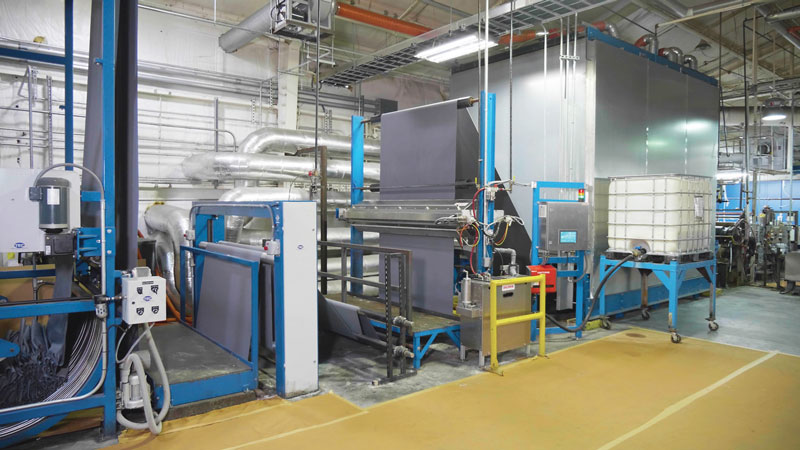
The TexCoat™ G4 from St. Louis-based Baldwin Technology Co. Inc. has its origins in a spray system used in the paper industry. Since its introduction at ITMA 2015, this non-con-tact spray application system for textile finishing and remoistening has started to take off. “Since its introduction at ITMA 2015 in Milan, global textile finishers have embraced TexCoat and are reaping the benefits,” said Rick Stanford, Baldwin’s vice president of Global Business Development, Textiles. “They have been able to increase profitability, cut energy use and reduce their carbon footprint in addition to exercising precision control with our patented precision spray technology.” The spray system vastly reduces water, chemicals and energy consumption with water consumption decreasing by as much as 50 percent compared to traditional pad application processes, and energy costs dipping by 35 to 50 percent. The technology also allows a manufacturer to finish the fabric on one or both sides at the same time depending on production requirements. Graniteville Specialty Fabrics, Graniteville, S.C., recently installed TexCoat technology at its operation.
Baldwin also offers the Plasma Pure treatment for textiles, which features ceramic electrodes that generate an air plasma to treat the fabric surface and improve absorption and adhesion properties of the fabric. The treatment enhances dyeing, coating and lamination results with uniform dyeing and greater bonding strength, among other advantages.
Xorella’s new XO automation system
Post-ITMA, Germany-based A. Monforts Textilmaschinen GmbH & Co. KG reported it had welcomed a high number of visitors to its booth and had secured major orders from manufacturers in Central and South America, Pakistan and Italy.
At ITMA, the company highlighted its Montex tenter, which thanks to heat recovery and energy optimization options offers overall energy savings of 40 percent compared to convention tenters. “Exhaust air treatment on [tenter] frames has posed particular challenges over the years, since the air can contain significant amounts of oil, fiber and even wax particles that may see emissions limits being reached in the processing of certain fabrics,” explained Monforts Managing Director Gunnar Meyer. “In addressing this issue, we are incorporating the MonforClean module directly into the [tenter] frame. With this addition, the waste heat from the drying process is used to preheat the drying air, resulting in a radical reduction in the conventional heat supply required compared to gas and thermal oil heating.” Ontario-based nonwovens producer Albarrie was one of the first companies to install a Monfort Montex tenter equipped with the full range of MonforClean technologies.
“We were also very pleased with the interest in the Montex®Coat, the latest addition to our range of technologies, which we displayed in Milan,” said Nicole Croonenbroek, marketing manager. The Montex Coat may be used to apply PVC coatings, solvent coatings, pigment dyes, and minimal application surface and low penetration treatments. The flexible system accommodates knife and roller coating as well as screen printing for quick changes between fabric runs while still operating in an economical manner. The Montex Coat now features automatic edge limiters to immediately adapt to new production widths. The Montex Coat serves a very diverse number of markets and enables full PVC coatings, pigment dyeing or minimal application surface and low penetration treatments as well as solvent coatings. Knife coating, roller coating or screen printing can also all be carried out with this system. As such, it provides the ultimate in flexibility and the ability to switch quickly from one fabric run to the next, without compromising on the economical use of energy or raw materials.
France-based Superba S.a.S., known historically for its heat-setting solutions and today a member of the Belgium-based Vandewiele Group, has developed a new modular version of its MCD3 space-dyeing machine for carpet and rug yarns. The MCD3M can be scaled on demand in blocks of two or three modules to meet a customer’s needs. This modularity enables a manufacturer to control the cost of production, energy consumption and waste. Similar to its predecessor, the MCD3M can handle a layer of 72 ends of bulk continuous filament or spun nylon, polyester, wool or polyacrylonitrile yarns and blends. A high-pressure spraying technique is used for even application.
Dyes, Auxiliaries And Finishes
As well as producers of dyeing and finishing machinery, companies producing dyes, chemicals and auxiliaries were present at ITMA to share their latest sustainable innovations. Italy-based ERCA Textile Chemistry introduced a new generation of auxiliary chemicals made from used vegetable oil; and Officina39, also based in Italy, showcased its Ecobinder R Series binder made from 100-percent post-consumer recycled polymer obtained from recycled windshields and other types of laminated and safety glass, and Recycrom™ dyestuff products derived from 100-percent recycled used clothing, fibrous mate-rial and textile scraps (See “Just A Few Of The ‘Cool’ Things On Display —The ITMA 2023 Edition,” TW, July/August 2023).
Avient debuted new sustainable additions to its MagnaColours ITO range of dyes, chemicals and functional finishes.
Avient Specialty Inks, Kennesaw, Ga., has expanded its MagnaColours® ITO dye range with the ITOFIX EVO reactive dyes. When used on cellulose fibers, the dyes reduce the processing cycle time and may be used at a lower dyeing temperature because of faster fixation capabilities, according to the company. The range is currently available in 10 different shades and is formulated to reduce hazardous substances without compromising on performance. Avient reports its Taoyuan production facility has achieved full compliance with the Global Recycled Standard 4.0 and also is recognized as a bluesign® System Partner as a provider of colorants and additives for spin dyeing.
Switerland-based HeiQ highlighted its biobased textile innovations for allergen reduction, odor control and cooling during ITMA. The company reports its technologies are designed to provide “superpowers” to fabrics, adding functionality while remaining a sustainable choice. Some of the technologies available include:
HeiQ Allergen Tech, which confers protection against inanimate allergens such as house dust mite matter and pet allergens in home textiles;
HeiQ Cool, a dual-action cooling technology that offers up to a 5.4°F cooler fabric temperature compared to an untreated fabric for enhanced thermal and moisture comfort;
HeiQ Mint, a plant-based odor management solution that has no impact on breathability, color, hand or wicking properties and also is suitable for a wide range of applica-tions from apparel to home textiles on a variety of fiber types; and
HeiQ Fresh, a silver-free odor con-trol technology that tackles smells by adsorbing volatile organic com-pounds responsible for the odor.
First-time ITMA exhibitor Fuze Technologies, Salt Lake City, reported an extremely successful show. The company offers FUZE, a silver- and water-based, non-ionic and chemical-free technology that can be applied to textiles to confer permanent protection from odor-causing and infectious-disease-carrying bacteria. The patented laser ablation manufacturing process allows the company to create particles of a precise size and shape to fit the application. Because FUZE uses pure silver particles that are non-ionic, no silver ions are released and therefore there is no negative effect on the environment and the chemistry is not harmful to humans. The technology requires no chemical binders or surfactants and is applied using a light mist. It also may be blended with other treatments such as whiteners and softeners. According to the company, testing has shown the treatment to remain more than 99-percent effective on textile products for more than 100 washes. The initially expensive technology was originally only available on high-end products, but a boost in interest as a result of the COVID pandemic dropped the price of the technology substantially and it now is moving into many more medical, nonwovens and hospitality products.
Related Technologies, Innovations
Germany-based Pulcra Chemicals GmbH introduced the combined pretreatment and dyeing process, Sustineri Coloring, developed in partnership with the Spain-based fashion group Inditex. Based on newly developed chemicals, the process allows one bath to be used for pretreatment and dyeing for dark, medium and light shades of cotton and polycotton blends using an exhaust method. According to the companies, studies performed in mills that are already using the process show that Sustineri Coloring can reduce pretreatment and dyeing time by up to 60 percent. In addition, water consumption is reduced by up to 80 percent and energy consumption by up to 60 percent compared to traditional processing methods.
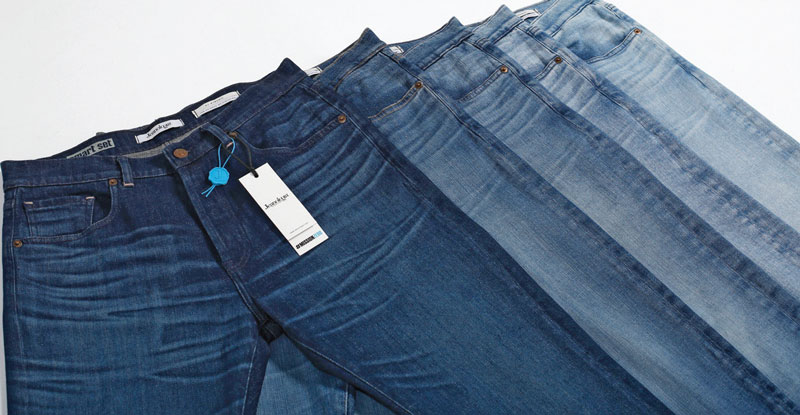
Jeanologia specializes in disruptive technologies for processing denim
Inditex also collaborated with Spain-based Jeanologia S.L. to develop the Air Fiber Washer, a solution to tackle the release of microfibers from garments during finishing before they are sold to the consumer. Jeanologia also offers the new Atmos, an atmospheric washing process that pairs its G2 ozone technology with the new patented INDRA system to pro-duce a stonewashed, authentic vintage look on denim without using water, chemicals or pumice stones (See “Just A Few Of The ‘Cool’ Things On Dis-play — The ITMA 2023 Edition,” TW, July/August 2023).
ITMA 2023 showcased the latest developments in the still-growing digital printing arena.
By Dr. Lisa P. Chapman, Technical Editor; and Kerry McGuire King
ITMA 2023, aptly named “Transforming the World of Textiles”, focused on sustainability achieved in three innovation areas that are directly related to digital printing — Advanced Material, Artificial Intelligence and Automation. This year was the largest iteration of the show with more than 111,000 attendees from 143 countries (2019: 105,000) 1,709 exhibitors from 47 countries (2019: 1,717), and 200,000 square meters of exhibition space (2019: 114,500 square meters). Digital printing was again heavily featured at ITMA 2023, with an entire hall devoted to this technology. The digital print market grew substantially since the last ITMA. There was a slowdown during the pandemic, but now there is a return to a growth market.
ITMA 2015 saw a transformative breakthrough with the development of single pass printers, capable of printing at speeds up to 70 meters per minute (m/min). Surprisingly, these high-speed printers were not featured as prominently at ITMA 2023. Rather, the emphasis was on the optimization and maturation of scan type printers with a focus on sustainability, as well as optimization of the printing process to improve quality and reduce colorants, chemicals and time. Scan type printers, while still not as fast as single pass printers, are now much faster than what was shown at ITMA 2019, reaching speeds of 15 to 20 linear yards per minute. The increased speed of scan type printers is achieved by stacking print heads. Although slower, scan type printers also offer greater flexibility, and in some instances higher quality. The high speed of single pass printers means approximately 20 percent of designs cannot be achieved, particularly those prints where more saturated, larger solid print areas are required. Scan type printers are cheaper and take up less floor space and so it’s possible to have several on the factory floor printing using different colorants on a variety of substrates. Scanning technologies offer manufacturing flexibility and redundancy, which is critical for print on demand environments where ultra-short run printing includes quick turns across a variety of materials and product types.
Scanning solutions offer the ability to scale manufacturing over time through the addition of machines and the ability to “step up” to the next machine level. This is a strategy offered by a number of vendors.
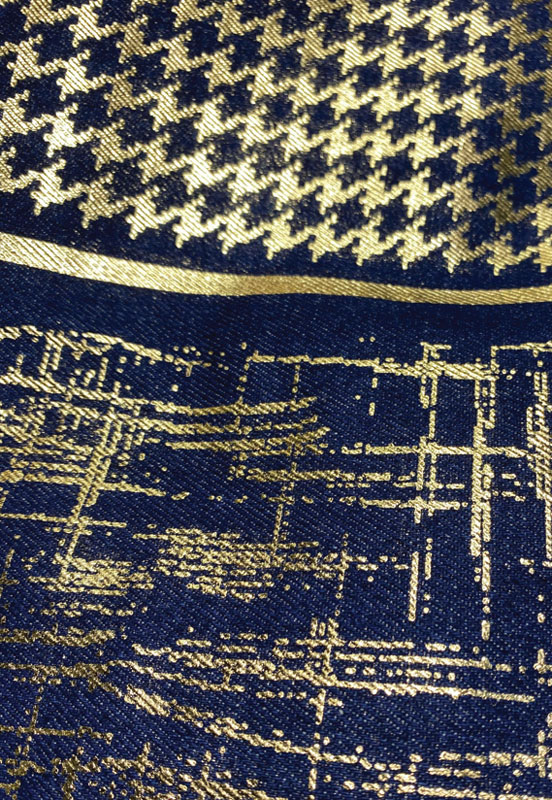
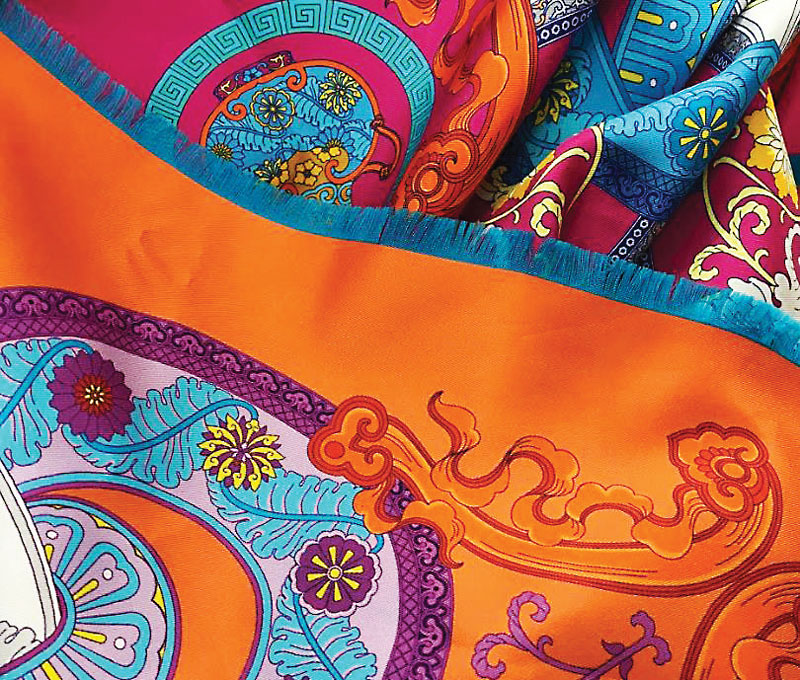
Fabric featuring metallic ink produced on Epson’s Monna Lisa ML-16000/HY
Roll-To-Roll/Direct-To-Fabric Printers
At ITMA, Japan-based Epson showcased the Monna Lisa series —widely considered to be one of the premium technologies for the high-est resolution and highest-quality prints — including the ML 8000, 16000, 32000 and 64000 machines for which the model number corresponds to the number of printheads and therefore throughput capability. Models and capabilities include:
ML 8000, which prints with a set of reactive and acid dyes, called REACID, for fiber blended substrates, or for more flexibility if for example, a customer wanted to print substrates compatible with acid for one print run and reactive for another.
ML 13000, which offers inline pre- and post-treatments with pigment inks. The pretreatment liquid, ejected through one of the print-heads, jets a surfactant agent to pull the ink to the surface of the fabric, which helps to make the print more colorful. Another print-head jets a binder for increased fastness properties, while another printhead jets a softener to improve the hand of the fabric.
ML 16000 hybrid, which combines piezo-electric printheads with microvalves. The printheads jet pigment colorant and the microvalves are able to jet paste for effects such as metallic and white pigmented color.
ML 3200, which has a printable width of 340 centimeters and 32 printheads. This printer can be configured to print two pieces of fabric simultaneously, thus increasing productivity and reducing energy and resource consumption.
Italy-based EFI Reggiani showed the opportunity to step up in machine width with its Hyper model available as a 1.8-, 2.4-, or 3.4-meter-wide machine. Equipped with 72 printheads and ink recirculation up to the nozzle plate, it can print two pass, production quality at speeds up to 13 linear m/min on a 1.5-meter-wide roll. The widest machine also offers dual-roll capability to print two different, narrower substrates at once at throughput speeds of up to 20 m/minute. This is an interesting concept, shown by Italy-based Durst at the last ITMA show, which requires special machine and software engineering.
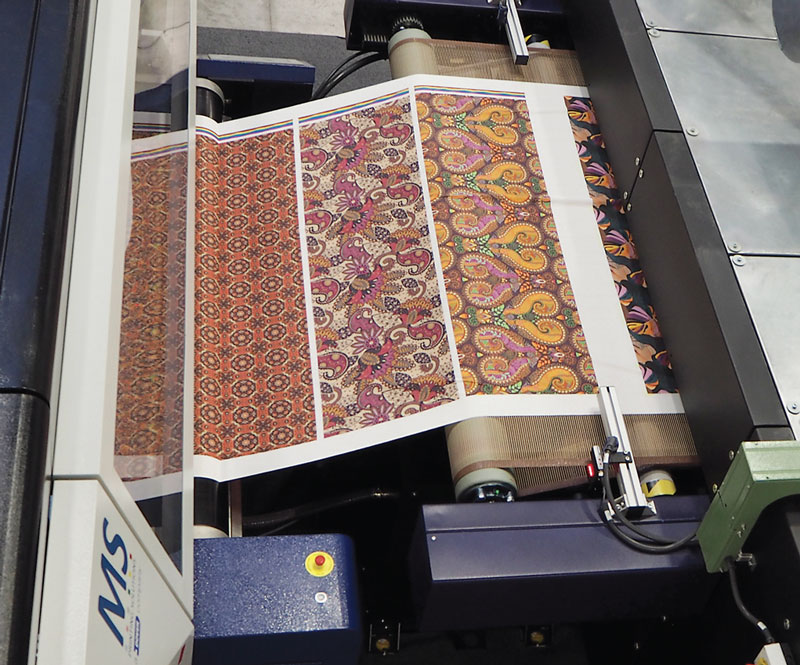
Italy-based Dover Industries Italy (DII) (MS Printing Solutions & JK Group brands), also featured scaling opportunities within its scanning line. At the top end, the Mini Lario has been upgraded and now has eight rows with up to eight heads per row and can print at a speed of 1,000 meters per hour. This is one of the fastest scan type printers on the market. DII (MS & JK brands) reports that the Mini Lario can be precisely color matched to production on the Lario to enable longer production runs of the same design and colorway should the need arise.
DII (Ms & JK brands) JP7 printer set up with pigment ink and a polymerization dryer.
In addition, DII (MS & JK brands) showed the reengineered JP7 machine and system that significantly improves the sustainability of the entire printing process. The center of this optimized, sustainable printing system is Digistar Pigment 4K, a patent pending colorant set that eliminates pretreatment, thereby reducing chemical and water usage, as well as time and cost. The printer also includes a new zero-wastewater recirculation system that reduces up to 90 percent of water waste typically generated in a 40-hour working cycle. To further optimize a sustainable printing process, a new ink recirculation system from DII (MS & JK brands) prevents nozzle blocking, which is a primary cause of print fabric defects that leads to fabric and colorant wastage. Gradus, its in-line drying system, ensures minimal energy consumption; and because the modular system allows curing and drying all in one, carbon dioxide emissions are reduced.
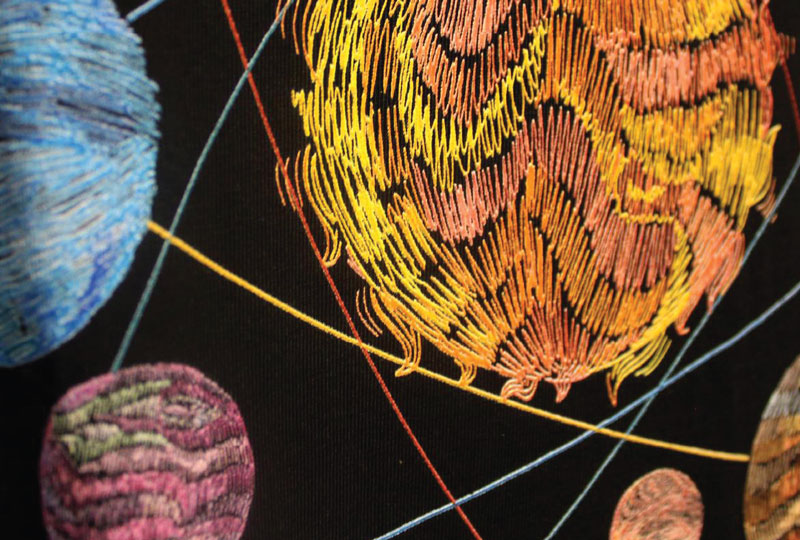
Austria-based Zimmer Austria Inc. — a producer of machines for textile and carpet finishing including digital printing systems, flat and rotary screen printing, coating systems, steaming, washing and drying — showcased the Colaris3 high-performance pretreatment, digital printing and colorant systems for applications that require colorant penetration through the substrate such as carpeting, towels, and plush or heavy automotive and home décor fabrics. The Colaris series of printers can be used with a variety of colorants such as reactive, disperse, acid, pigment and vat. Inline pre-and post-treatment systems can be added to improve print quality and increase ink penetration. The Colaris printer has 16 printheads for a larger color gamut, increased speed, or flexibility to run multiple types of colorants. Zimmer has added a vision camera detection system to its Colaris digital printers. The Colaris-vision I – Match Print to Cut includes individual piece goods recognition and outline masking with automated computation of the print mask positioning for design customization.
Zimmer’s Colaris-vision II – Match to Print is a roll-to-roll print process with seamless detection of a pre-imagined fabric followed by a registered print. The system has an automated distortion compensation that ensures the print is fitted precisely into the given structure on a web. The design can be fitted exactly onto the substrate despite of any weft misalignment or shrinkage from fabric preparation in the pre-print process.
Advanced Materials
As part of the textile industry’s cur-rent focus on sustainability, vendors continue to ramp up investment in the development of solutions that reduce water, chemical and material waste. Digital dyeing, inline pretreatment, and pigment printing all have the potential to improve sustainability. In particular, pigment colorant was featured by a large number of vendors. As pigment technology matures, com-petition is increasing in a way that is leading to improvements in print quality and innovations in chemistry and application. Further adoption of ink recirculation strategies is a contributing factor to the success of pigments and this idea was highlighted by EFI Reggiani in its Hyper system. Ink recirculation was also mentioned by DII (MS & JK brands) in regard to its redesigned JP7 technology in combination with the Digistar Pigment 4K.
Integrated softening and pretreatment innovations from multiple solution providers is paving the way for greater acceptance of pigment printed fabric. Japan-based Kyocera Corp., a key supplier of industrial printhead technology to textile developers, has joined the mix with the introduction of Forearth technology, and highlighted the ability to print on a broad range of fabrics.
Atexco’s double-sided printing technology uses a camera and imaging software to scan the printed fabric for alignment and ink penetration for precise printing on the reverse side of the fabric.
Other advanced material innovations included China-based Atexco’s double-sided printing technology and reactive colorant that does not require a post treatment for cotton substrates.
Overall, vendors illustrated the compatibility of digital printing with tricky-to-manage substrates including knits and lightweight apparel fabrics. This was particularly evident in the pigment printing area that had previously demonstrated poor fabric hand and color quality. New pigment technologies are opening-up the possibility for pigment printed fabric adoption in a broader range of product areas and markets.
Special Effects
Advances in pigment technology also are enabling special effect printing. During the show, Israel-based Kornit Digital Ltd. demonstrated a white pigment capability that enables imaging on colored grounds and when combined with its Xdi technology, creates a unique, raised, textural look.
Epson has taken this theme one step further with the introduction of the ML 16000 Hybrid machine that combines piezo-electric printheads with microvalves. The printheads jet pigment colorant while the microvalves jet paste to create effects including metallic and white pigmented color. Epson’s Genesta water-based inks guarantee color accuracy and fastness properties, while the special pastes — developed and produced by Italy-based Epson Como Printing Technologies S.r.l.— create the special effects.
Alchemie Technology’s Endeavour™ is a breakthrough waterless dyeing process.
Digital Dyeing And Finishing
Although pigments offer a sustainability advantage over dye-based colorants for digital printing, digital application methods for solid colors offer the potential for a much greater reduction in environmental footprint. Toward that end, England-based Alchemie Technology’s Endeavour™ digital dyeing technology applies liquid colorants to fabrics using a unique non-contact high-energy jetting of nano-droplets, delivering exceptionally homogeneous color throughout the fabric. This breakthrough waterless, low-carbon, digital dyeing technology, supports dye houses in reducing costs — dramatically cutting energy and carbon dioxide emissions by 85 percent, water use by 95 percent, and also eliminates wastewater pollution in the dyeing process.
Alchemie’s Novara™ digital textile finishing technology delivers sustainability with precision digital application of functional finishes to textiles. Novara is a non-contact, low energy, low chemistry, digital finishing solution that enables textile finishing houses to dramatically reduce their carbon and chemical footprint and reduce costs, using 85-percent less energy and up to 50-percent less chemistry compared to traditional methods, according to Alchemie. Novara delivers precisely defined digitally controlled finishes only where needed. It also enables product innovations including single-side finishing, 2D finish to shape, and allows multiple finishes to be applied to one fabric in a way that is not possible using traditional methods of immersing the entire fabric in a chemical bath. In addition, Alchemie also offers Discovery, a laboratory system that replicates production machines, and may be used for recipe development, color matching and new material process development.
Direct-To-Film Printing
Shenzhen Inkbank Graphic Technology Co. Ltd. (Inkbank), China, and Japan-based Mimaki showed direct-to-film (DTF) technologies for rapidly printing garments.
DTF printing eliminates the need for fabric selection, plate making and pretreatment as compared to the time and resource intensive processes required for silk screen, heat transfer— rubber sheet method — or direct-to-garment (DTG) printing. The DTF process is simple, and in this way, offers a sustainability advantage. First, the design is printed directly onto a special transfer film which is then sprinkled with hot-melt powder. Once heated and dried, the transfer sheet can be applied using a heat press. The one drawback is the waste created because a transfer material is used.
Mimaki offers the TXF150 for DTF. The PHT50 inks used for this printing process are heat transfer water-based pigments that are OEKO-TEX certified. The inks are safe and meet the criteria for ecologically responsible textile manufacturing, according to the company.
Artificial Intelligence And Automation
As digital textile printing technology matures and adoption of complex, high-speed printing systems grows, solution providers also are demonstrating greater investment in the creation of intelligent systems that ease technology management by enabling monitoring and optimized printer performance. Software applications are aimed at providing visibility that helps reduce machine downtime and operating cost, while minimizing waste. As customers invest in multiple print systems to scale print capacity, software strategies for automated system calibration and fleet management also are becoming increasingly relevant. Additionally, to help drive growth in adoption, technology providers are advancing digital workflow solutions designed to assist with order management and automation of repetitive file processing tasks.
A preview of the DII (MS & JK brands) System Plus Software, a new print management system, exemplifies the trend toward intelligent systems. The technology integrates calibration, printing software and ink for a robust, time saving solution. Used with DII (MS & JK brands) pigments and printers, the software system reduces calibration time by 50 percent, increases the color yield by up to 20 percent and increases the brightness of the colors by up to 15 percent. This system’s machine learning platform, the first-of-its-kind to be commercially available for digital printing, enables information to be gathered during the printing process to optimize current and future print runs. This software has the potential to eliminate print defects and reduce the amount of colorant needed.
DII (MS & JK brands) innovation is focused on a highly optimized manufacturing process. During ITMA, the company demonstrated the combined significance of advancing printer hardware and workflow in a working environment by way of organized plant visits to the Italy-based IMPRIMA printing mill.
During ITMA, interested parties were able to tour the IMPRIMA print mill to view Dover Industries Italy (MS Printing Solutions & JK Group brands) technologies in action.
IMPRIMA is a cluster of digital print operations with the capability to print 35 million meters of fabric annually. IMPRIMA largely serves the European luxury market, but also prints for U.S.-based brands such as Walmart, Target, Macy’s and Ralph Lauren, among other brands.
Kornit promoted its QualiSet technology, which is described as a smart, autonomous approach to calibration aimed at printhead registration, nozzle testing, compensation and color consistency. Paired with the previously introduced Konnect system for monitoring printer performance and consumables, the company now offers greater ability to manage the print operation at the fleet level. Production monitoring was also high-lighted by Epson for printers connected to the cloud-based PORT system, and by EFI Reggiani which showed the Query software solution that collects data and enables analysis and tracking of printer performance, cost and sustainability metrics such as water and energy consumption.
In addition, robust solutions for automating portions of the production process to reduce or eliminate labor are emerging in the digital printing sector. Kornit showed a fully automated DTG printing solution that reduces labor and increases production speed. Kornit’s Apollo DTG printer can print up to 400 garments per hour. Kornit’s patented wet-on-wet printing system eliminates the need for pretreatment. The Apollo, geared toward t-shirt printers who seek a near-shoring option, features in-line heat fixation, and an auto-mated loading and unloading system.
Harnessing Digital Printing Innovations
It was exciting to see the growth in digital printing technologies at ITMA 2023. Even more impressive was seeing some of these technologies successfully implemented in a production setting at IMPRIMA. Held in Milan, ITMA 2023 was located just a short distance from the Como region of Italy, long considered the luxury printing capital of the world. This region has changed from almost entirely rotary and flat screen printing to digital printing, allowing the industry to service sectors beyond the luxury market. It serves as a great example of harnessing the full capabilities of digital printing innovations.
Editor’s Note: Kerry Maguire King has more than 25 years working in the digital printing field. King played a role in the development of Spoonflower’s manufacturing platform, and currently is working as a consultant while continuing her education in the Ph.D. program at the Wilson College of Textiles at North Carolina State University, Raleigh, N.C.
MUMBAI, India — November 30, 2023 — Canopy, an environment focused not-for-profit entity, has released its annual Hot Button Report, which enables fashion brands and retailers to robustly assess suppliers of Man Made Cellulosic Fibers (MMCF) for their forest fiber sourcing.
Commenting on the ranking, H.K. Agarwal, managing director, Grasim Industries Ltd., and Business Director Birla Cellulose, said, “This esteemed recognition serves as confirmation of Birla Cellulose’s steadfast dedication and commitment to improve sustainable wood sourcing practices, forest conservation, innovation, next-generation fiber solutions, and transparent operations across the entire value chain.”
Birla Cellulose, along with other global MMCF producers, has also supported calls for implementation of the Conventional on Biological Diversity’s commitment to conserve at least 30 percent of terrestrial ecosystems by 2030
The company actively collaborates with brands and supply chain partners, innovators, and orchestrators such as Canopy, Fashion for Good, and Circular Fashion Partnership for scaling up circularity.
“A hearty congratulations to Aditya Birla for securing the top spot in Canopy’s 2023 Hot Button Report,” said Nicole Rycroft, Canopy’s executive director. “We commend their hard work to remove Ancient and Endangered Forests from the MMCF supply chain and are encouraged by their consistent progress to bring Next Gen fibers to market at scale.”
Posted: November 30, 2023
Source: Birla Cellulose, the pulp and fibre business of the Aditya Birla Group
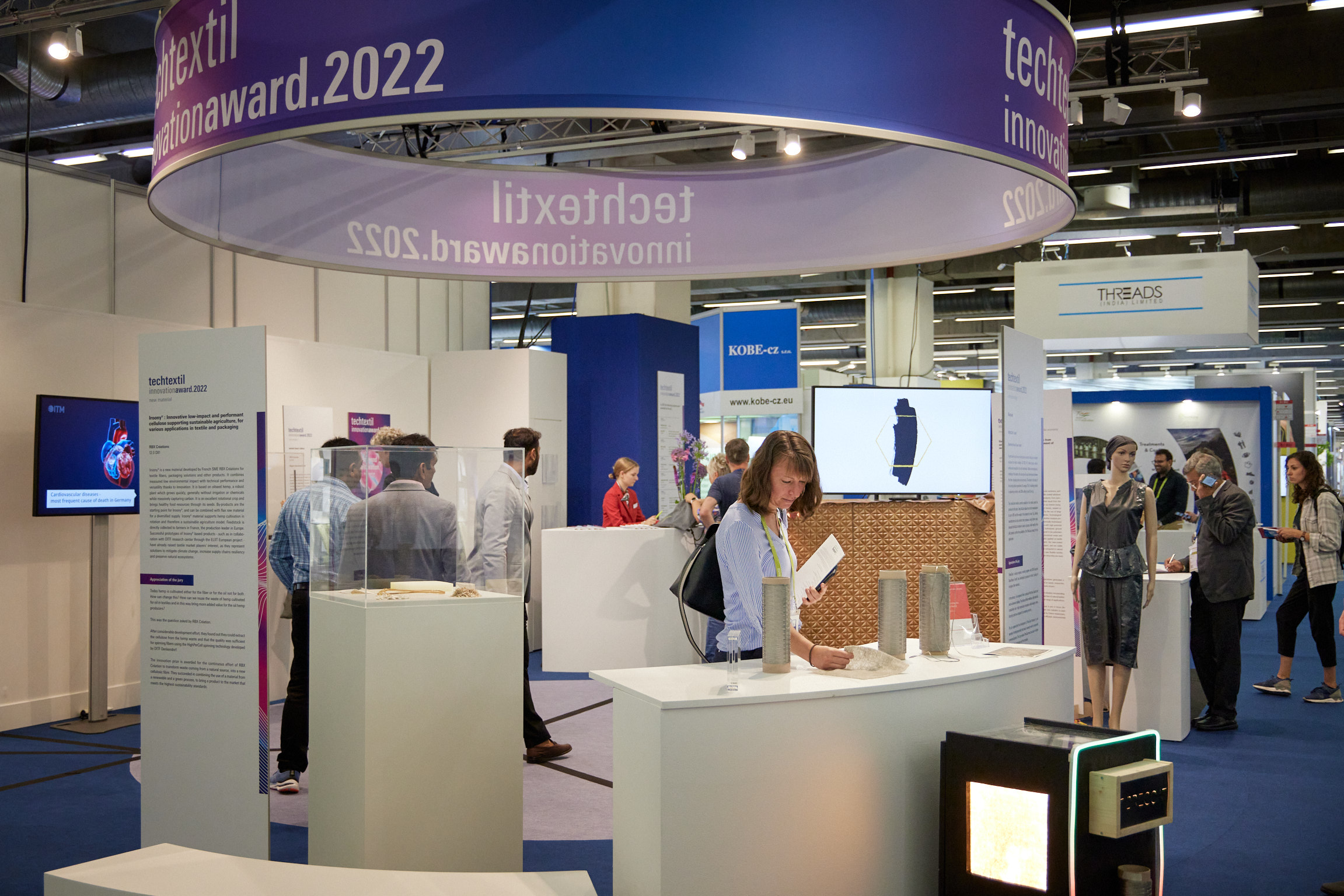
Techtextil Innovation Award – Photo: Messe Frankfurt / Jean-Luc Valentin
FRANKFURT AM MAIN, Germany — November 30, 2023 — The international textile industry is ready to look to the future at Techtextil and Texprocess from 23 to 26 April 2024. These two leading trade fairs are hotspots for innovations, textile solutions and networking. With more than 1,600 exhibitors from around 50 countries, Techtextil and Texprocess reflect the extraordinary degree of innovation prevailing in the sectors.
Innovation, research, an exchange of ideas and information, inspiration and successful business transactions — these are the promises made to the international industry by Techtextil and Texprocess in Frankfurt am Main from 23 to 26 April 2024. The large number of current exhibitor registrations – over 1,600 from around 50 countries — confirms the relevance of the two trade fairs for the textile sector. There, companies can look forward to meeting buyers and top decision makers from 95 (Techtextil 2022) and 86 (Texprocess 2022) countries. In addition to familiar and high-grade formats, such as the Techtextil Innovation Award and the Texprocess Innovation Award, as well as the Techtextil Forum and the Texprocess Forum, the coming editions will be distinguished by several new special areas, e.g., the Nature Performance area and the Future Materials special show at Techtextil, and the Denim Hub and an Emerging Markets area at Texprocess.
“The sectors are undergoing a rapid process of change. Participants at Techtextil and Texprocess will have the opportunity to stay in tune with the times, to present innovations to an audience of experts from all over the world and to find new solutions and business partners”, says Olaf Schmidt, Vice President Textiles & Textile Technologies, Messe Frankfurt.
The spectrum of textile solutions presented at Techtextil is unparalleled worldwide. Visitors can discover an extraordinary range of products in twelve areas of application, which are used in many different industries — from automotive to fashion, and from medicine to construction. The latest developments in fibers and yarns, nonwovens, composites, coated textiles, technologies, etc., will be presented by companies at Techtextil, in many cases for the first time in public. The companies registered to date include Carrington Textiles (Great Britain), Concordia Textiles (Belgium), Datacolor (Belgium), Everest Textile (Taiwan), Franz Miederhoff (Germany), Groz-Beckert (Germany), Kuraray (Japan), Kusumgar Corporates (India), Outlast Technologies (Germany), Sandler (Germany), Tanatex Chemicals (Netherlands) and Textilcolor (Switzerland).
Texprocess is the international platform for exhibitors of the latest machinery, equipment, processes and services for manufacturing garments, as well as textile and flexible materials. The spectrum of products to be seen ranges from sewing technology and materials, embroidery technology, fastening, CAD/CAM and cutting to recycling technologies and much more. The companies that have announced their participation in Texprocess 2024 include Amann & Söhne (Germany), Assyst/Style3D (Germany), ASTAS (Turkey), Barudan Co, Ltd (France), Brother Internationale Industriemaschinen (Germany), bullmer (Germany), Dürkopp Adler (Germany), IMA (Italy), Kai Corporation (Japan), Morgan Tecnica (Italy), natific (Switzerland), Orox Group (Italy) and Tajima Industries (Japan).
Econogy: sustainability as a driver of innovation
Sustainability and economic efficiency go together and this objective is being promoted by the global trade fairs of Messe Frankfurt – the Texpertise Network – with the reorientation of the company’s sustainable formats. This encompasses not only the overarching heading, ‘Econogy’, which links ecology and economics, but above all the standardisation of sustainable evaluation criteria for the selection of resource-saving products, processes and exhibitors. Econogy thus creates transparency and comparability across the board. To this end, Messe Frankfurt works together with independent, external sustainability experts to take account of the latest approved seals and certificates, and to integrate the Sustainable Development Goals into the checks.
The services associated with Econogy at Techtextil and Texprocess include the Econogy Finder, a directory of certified suppliers of sustainable products, which enables visitors to head straight for them.
The best way to find ideal sustainable solutions is within the framework of an exchange of ideas and information, and the Econogy Talks offer the perfect setting for this.
Led by experts in the field of sustainability, the aim of the Econogy Tours at Techtextil is to introduce visitors to selected exhibitors of sustainable products and to give them the opportunity to obtain knowledge and ideas at first hand.
Can nature and performance be combined in a fibre or a material? Of course they can! At Techtextil, manufacturers of natural fibres and materials, as well as bio-based fibres and materials with future-oriented functional properties for a huge range of applications, will be showing what natural textiles can do. The sustainable performers can be found in a special Nature Performance area in the Fibres & Yarns product segment. A highlight for visitors is sure to be the presentation of progressive material innovations by renowned trend and future agency, Franklin Till, in the special Future Materials show.
Recycling is also gaining in importance with the increased relevance of sustainability and the growing appreciation and scarcity of resources, which gives it a unique potential for development and innovation. With the curated special show Recyclable Fibres & Yarns in Hall 9.1 and Recyclable Materials in Hall 12.1, Techtextil and Texprocess are putting the spotlight on future-oriented, reusable materials and recycling technologies.
The future at a glance: Techtextil Innovation Awards and Texprocess Innovation Awards
The Innovation Awards are popular highlights at both events. Two high-calibre juries of experts honour the latest, most intelligent and outstanding innovations from the industries. The awards reflect the future of the sectors in terms of new ideas and developments, which offer solutions for the various aspects of digitalisation and artificial intelligence, as well as sustainability, new materials and processes. The deadline for receipt of entries is 15 December 2023.
Up to date at the Techtextil Forum and Texprocess Forum
Visitors wanting to expand their knowledge, discover the latest research results, new product developments and progressive innovations should not miss the Techtextil Forum in Hall 9.1 and the Texprocess Forum in Hall 9.0. There, they will find a high-grade, curated program on the latest themes, knowledge transfer and an exchange of ideas and information with renowned experts from research and industry. The spectrum of subjects covered at the Techtextil Forum ranges from bio-based functional materials to intelligent textiles. At the Texprocess Forum, it runs from automation to supply chains.
Start-up stars: tomorrow’s A-listers
Ambitious founders and young entrepreneurs have the chance to present their companies in the start-up areas at Techtextil and Texprocess, to find business partners and investors and thus carve out their way in the sector. For them, the leading trade fairs are the perfect place to put forward their ideas, to find partners and investors and thus find their way into the market. Young, innovative start-up stars show their products to an international audience in the attention-grabbing ‘Textile Production’ and ‘Functional Materials’ start-up areas at Techtextil and at the ‘Textile Processing Technologies’ area at Texprocess.
All about denim
At Texprocess, the Denim Hub puts the spotlight on sustainable jeans production, processing and recycling. Exhibitors offer first-class insights into their circular strategies while, in the Denim Talks, visitors can learn about sustainable approaches to washing, destroying, bleaching, lasering, dyeing, recycling and upcycling and customising jeans.
Curtain up on Performance Apparels on Stage
In the Performance Apparels on Stage special show, Techtextil 2024 presents the multifarious functionalities of textiles for the garment industry. Against this impressive background, the show illustrates the use of technical textiles in the apparel and fashion industry, in the field of sportswear and leisurewear and professional and safety clothing.
Emerging Markets Area: finding global potential
Texprocess 2024 sees the first Emerging Markets area with invitations going specifically to organizations from countries with a high development potential in the field of textile processing. In the Emerging Markets Lounge, visitors and exhibitors can hold discussions with the delegations, present their business ideas, intensify contacts and lever new potential.
Techtextil and Texprocess
The events Techtextil and Texprocess will be held April 23-26, 2024.