Some exhibitors at ITMA 2023 offered innovations in design, labeling and traceability to help move the industry move towards circularity as well as meet European Commission sustainability standards.
By Calvin Huelsman
Excessive consumption and waste brought about by the overproduction of textile and apparel goods has produced the need for sustainability standards imposed by the European Union (EU) in order to facilitate the circular transition. The ITMA 2023 trade show in Milan showcased many of the steps businesses and organizations have taken towards circularity. This article highlights new developments in ecodesign, sustainability information requirements, verification of green claims, and how education and training drives circular innovation.
The Issue
The EU’s announcement of the Strategy for Sustainable and Circular Textiles in the spring of 2022 highlighted a range of industry measures that will be enforced in the near future to greatly reduce textile overproduction, consumption and waste to protect environmental and human health. The impacts of the strategy were evident at the ITMA 2023 trade show in Milan, where businesses and organizations from across the industry showcased their contributions to developing the circular economy in Europe. The goal of the circular economy is to develop products that utilize a transparent, closed supply chain loop by reducing, reusing and recycling previous material inputs as well as collecting and remanufacturing production and post-consumer waste. Transitioning to the circular economy has become recognized as a necessity for the textile and apparel industry as global fiber production has nearly doubled from 58 million tons in 2000 to 109 million tons in 2020, and will grow by an additional 34 percent by the end of this decade if production continues at the present pace, according to the Lamesa, Texas-based Textile Exchange. This increase in production creates a massive strain on virgin resources as currently less than 1 percent of the global fiber market consists of pre- and post-consumer recycled textiles1. Several major challenges have been identified as a cause for low rates of textile recycling, including high costs of collection, difficulties sorting blended fabrics, inconsistent material flow, and low demand for recycled products2. To combat these issues, many companies and organizations who attended the ITMA trade show have begun implementing innovative solutions across all aspects of the value chain.
This article highlights research and innovations made by companies and organizations to address several of the strategies outlined by the European Commission. The article does not address all proposed strategies, but rather focuses on key actions consumer goods manufacturers can take to increase their customers interaction in the circular economy by producing products using elements of ecodesign, transparent product information, verifiable sustainability claims, and how research and innovation drives these strategic actions into practice through education and skill development for a circular workforce. Consumers’ interactions with higher quality, sustainably designed products that utilize clear, traceable labeling creates heightened awareness of the benefits of circularity and has potential to increase consumer participation in the circular economy.
Ecodesign
Up to 80 percent of environmental impacts are determined in the design stage3. Rethinking the product design process is the first step to transitioning to a circular economy from a linear one. Ecodesign is the process of creating a product that has an extended lifecycle so that it lasts longer for its intended purpose and retains value after that intended purpose has been exhausted. Product failure due to poor quality has been cited as one of the primary reasons for a consumer to discard a textile product3. Creating products made of higher quality materials that are designed to be repaired and remanufactured is essential to reducing the footprint of textile production.
Designing products to be more easily recyclable is another aim of the EU’s ecodesign requirements. Currently, textile products that use blended fibers or elastane are extremely difficult and expensive to recycle which greatly hampers the feasibility of commercially recycling these products.
The Germany-based Institute for Textile Technology (ITA) Augsburg gGmbH’s Recycling Atelier is facilitating a path for secondary raw materials to be created into new, high-quality textile products by specializing in the development of circular concepts like upcycling and cycle-oriented product design such as Design4Recycling. These concepts are then used to fabricate real products in their Makers Factory where previously collected secondary textile materials are mechanically recycled and spun into yarn. ITA Augsburg then shares the knowledge gained in its closed loop facility by utilizing its space as a Learning Factory to train and further educate industry professionals on circular development at their own companies.
Another organization that has taken a different approach to developing ecodesigns is Science Park Borås, Sweden. The research park connects universities, businesses and municipalities by developing circular business models that challenge the traditional cradle to grave concept. It has been successful in incubating a range of circular entrepreneurial projects by connecting innovators in its in-house makerspace and online CircularHub. One such project connected designer Stina Randestad with the city of Gothenburg to create upcycled work clothes from discarded healthcare uniforms. The new clothes were worn by volunteers of the industry climate initiative, Greentopia, at the Way Out West music festival last August.4 The project was able to repurpose over a hundred garments and extend their life indefinitely as the new clothes were made with ecodesign techniques like exchangeable logos, enabling them to be rented for use at future events. While making a relatively small impact to reduce textile waste, the project demonstrates an effective and retraceable circular business model which has the potential for further growth across the industry.
Information Requirements And Digital Passport
Accessible product information about relevant sustainability features is important for clear communication between producers, consumers, and recyclers. In the EU, regulations already exist concerning some aspects of textile product labeling which requires disclosure of fiber composition and indication of non-textile parts of animal origin5. However, current regulations do not address the environmental or social impact of a textile product. As part of the EU strategy, a digital product passport (DPP) requiring information to meet circularity and environmental requirements for all textile products will be in effect by 2030.
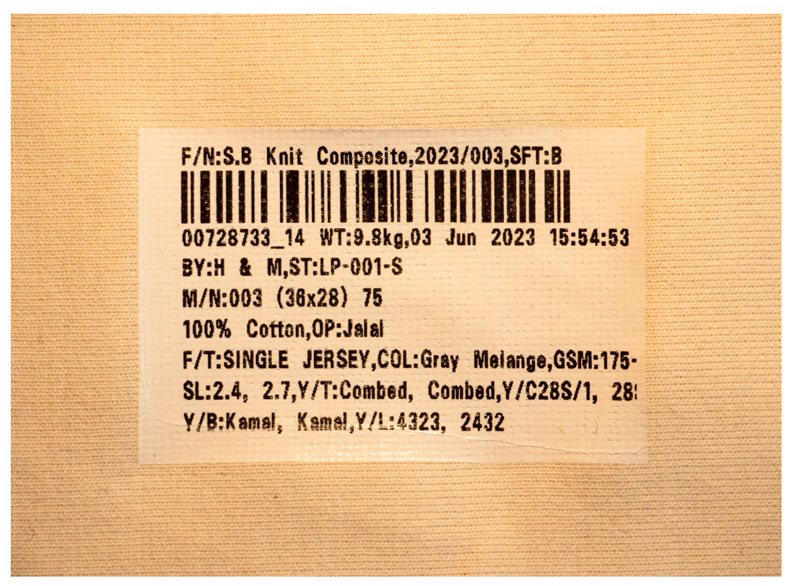
Several companies at ITMA 2023 developed their own takes on how these information requirements could be presented on textile products. Switzerland-based Norsel Textilmaschinen AG is a greige fabric labeling system which utilizes a barcode system in conjunction with RFID technology that contains fabric information in a clear, uniform label heat pressed directly onto the fabric, as shown in Figure 2. Norsel claims its technology helps fabric manufacturers reduce waste from human error while providing full inventory control with ease of sorting. The labeling system provides information valuable to recyclers including fiber composition, type of weave or knit, size, and origin that can be utilized to facilitate the ecodesign of new products made from the material. In the coming years there will be opportunity for this labeling technology to include additional information, because of impending sustainability and circularity disclosure requirements.
Another Switzerland-based company making product information more readily available is Haelixa. By utilizing a proprietary DNA marker, Haelixa is able to physically mark and trace products at any point in the value chain. The DNA marker is applied by a spray which encodes information into a wide range of natural and synthetic fibers, yarns, fabrics, and non-textile products. Manufacturers and consumers benefit from this transparency by interacting with a QR code printed on the label of any textile or apparel product, where information relating to supply chain data, sourcing maps, and/or test results is displayed.
Green Claims For Truly Sustainable Textiles
A recent screening of sustainability claims in the textile, garment, and shoe sector indicated that up to 24 percent of current claims could be false or deceptive, according to the European Commission. In response to the greenwashing that continues to plague the textile and apparel industry, the European Commission has adopted a proposal for a new “Directive on Green Claims” empowering consumers for the green transition. New rules will ensure consumers are provided with information on products’ durability and reparability before purchase6. Additionally, general positive environmental claims will now only be allowed if underpinned by the EU Ecolabel or type I ecolabels, which are voluntary, independently verified sustainability labels based on a products life cycle assessment. By tightening regulations around green advertising, consumer confidence in companies’ sustainable marketing claims can be gradually restored.
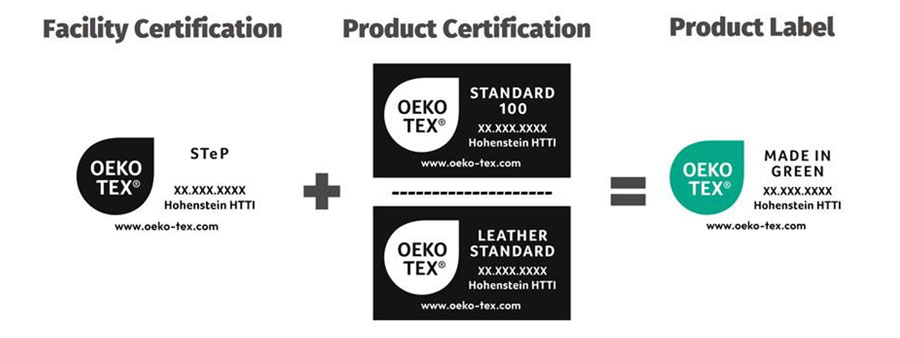
Present at ITMA for the fifth consecutive time, Zurich-based OEKO-TEX® displayed how its production verification strategies can create a more transparent textile and apparel industry. Making its debut in 2016, OEKO-TEX® ECO PASSPORT independently certifies that chemicals, colorants, and auxiliary materials used in leather and textile products are not harmful to human health or the environment. ECO PASSPORT acts as precertification for the further safety and sustainability certifications, OEKO-TEX® STANDARD 100 and LEATHER STANDARD. To validate environmental manufacturing claims, companies can submit their production facilities for review and achieve the STeP certification. The STeP certification ensures environmentally friendly production processes throughout the entire supply chain. In addition to the OEKO-TEX® ORGANIC COTTON label, the final certification a product can receive from OEKO-TEX® is the MADE IN GREEN label. This traceable label is reserved for products that are manufactured in environmentally friendly facilities using socially responsible labor and have been through extensive testing for harmful substances. Consumers have transparent access to all information regarding all materials used and even the exact production facility where each step of the supply chain is completed by scanning a QR code on the product’s label.
Italy-based Centro Tessile Cotoniero e Abbigliamento S.p.A. (Centrocot) is an independent laboratory and research institute that offers third party textile testing services to validate claims made by companies about their products. Accredited by ACCREDIA, Centrocot’s state-of-the-art labs offers a range of sustainable development services such as environmental performance assessments, green chemistry and supply chain traceability. Centrocot is able to validate ecolabel requirements according to the ISO 14020 series of standards, which approves a product for the Environmental Product Declaration (EPD). The EPD is based on a Life Cycle Assessment (LCA) which analyzes environmental pressures associated with production by quantifying impact on environmental indicators such as climate change, eutrophication, water scarcity, and human and eco-toxicity, among others. This assessment can be expanded upon further through Life Cycle Costing (LCC) which is used to estimate the costs over the entire product life cycle and can be useful for gaining financial and investment support. Additionally, Centrocot offers the ability to conduct a Product Environmental Footprint (PEF) report, allowing all actors involved in production and consumption to have a clear, standardized awareness of a product’s environmental impact. With so many environmental standards and certifications available for textile products, Centrocot assists companies in making the right choice for their product so their consumers can avoid confusion.
Acting as an independent third party, Haelixa’s proprietary DNA can not only provide physically encoded information, but this technology can additionally be used to authenticate claims about sustainability and the supply chain. Forensic testing conducted at Haelixa or partner labs, can validate suppliers’ claims of origin, processing, recycling and quality through the value chain, ensuring that producers receive materials that have accurate properties. Hugo Boss recently used this technology to make claims about the origin of its line of Egyptian cotton dress shirts.
Education And Skill Development
In response to the rapid development of sustainable technologies digitalization in the textile and apparel industry, the EU Commision has outlined a number of key actions under its Pact for Skills for the textile ecosystem launched in 2021. Aimed at addressing the green skills gap that 40 percent of European companies currently face7, actions agreed upon by the commission include increasing diversification of management by up to 5 percent annually, supporting more than 10,000 small-to-medium sized enterprises in digitalization, designing 20 new educational processes, and increasing the offer of apprenticeships by 20 percent, among other actions8.
Many of the research organizations highlighted in this article offer technical training and upskilling, in addition to their innovation and development capabilities. Science Park Borås works as an extension of the University of Borås to develop professionals with advanced knowledge of the latest techniques in sustainable development and digital technologies. For employees who do not have the opportunity to expand their higher education formally, the Science Park offers hands-on workshops and lessons focused on helping companies transition to the circular economy.
As an independent, state-run research institute, the Research Institutes of Sweden AB (Rise) conducts cutting-edge research in a range of scientific fields. Within the textile sector, Rise reviews the current textile recycling processes and the value chain so they can be streamlined and improved. Teams are constantly developing new raw materials and processes using recycled or bio-based materials. In addition to technical research, Rise also offers education and training, acting as a catalyst for circular and digital innovation. Its “Learning by RISE” educational concept offers both short- and long-term training and knowledge sharing for a tailored academic experience for any employee or organization. Courses offered by Rise include cybersecurity training, verification of sustainability data, machine learning seminars, and a range of physical skills training.
Centrocot lends its 30 years of experience by offering specialized technical training for the T&A industry. With the ability to attend in-person or online classes, undergraduate and postgraduates alike are able to attend courses that will offer training in sustainable and digital advancements in the textile, leather and new materials supply chain. These courses are highly experiential and contain an individual project as well as 50 percent of hours dedicated in an internship activity. For companies, Centrocot offers customized, needs-based training, with the ability to utilize an apprenticeship.
Conclusion
Rapid consumption and excessive waste of textile goods has brought about the need for robust sustainability standards imposed by the European Commission to facilitate the development of the circular economy within the textile and apparel industry. To overcome many of the challenges associated with this development, many businesses and organizations present at ITMA 2023 have advanced innovations in ecodesign, product labeling, and traceability that empower their consumers to play an integral role in the circular economy of textiles. For manufacturers, it is recommended that they voluntarily commit themselves to these strategies proposed by the commission, while working exclusively with suppliers and partners who share the same vision for a circular future. Additionally, by supporting the upskilling of employees trained for the green and digital economies, businesses can stay at the forefront of innovation and avoid lagging behind as the circular revolution takes hold.
References
1. Ellen MacArthur Foundation, A new textiles economy: Redesigning fashion’s future, (2017, http://www.ellenmacarthurfoundation.org/publications).
2. Jäämaa, L., & Kaipia, R. (2022). The first mile problem in the circular economy supply chains – Collecting recyclable textiles from consumers. Waste Management, 141, 173–182. https://doi.org/https://doi-org.prox.lib.ncsu.edu/10.1016/j.wasman.2022.01.012
3. Botta, V. (2021, April 20). Durable, repairable and mainstream: How ecodesign can make our textiles circular. ECOS. https://ecostandard.org/wp-content/uploads/2021/04/ECOS-REPORT-HOW-ECODESIGN-CAN-MAKE-OUR-TEXTILES-CIRCULAR.pdf
4. Naumanen, C. (2022, August 9). Science Park Borås dresses Way Out West staff in looped nursing clothes. Science Park Borås . https://scienceparkboras.se/2022/08/science-park-boras-klar-way-out-west-personal-i-loopade-vardklader/
5. Regulation 1007/2011. Regulation (EU) No 1007/2011 of the European Parliament and of the Council of 27 September 2011 on textile fibre names and related labelling and marking of the fibre composition of textile products and repealing Council Directive 73/44/EEC and Directives 96/73/EC and 2008/121/EC of the European Parliament and of the Council. http://publications.europa.eu/resource/cellar/85f446fd-05a5-47d7-b0d3-96418710a1e0.0011.02/DOC_1
6. European Commission. (2023c). Proposal for a Directive of the European Parliament and Council on the substantiation and communication of environmental claIms (Green Claims Directive). Brussels, Publications Office. https://eur-lex.europa.eu/legal-content/EN/TXT/?uri=COM%3A2023%3A0166%3AFIN
7. EURATEX. (2021, March 17). WHICH SKILLS COMPANIES NEED FROM THEIR WORKFORCE. The European Apparel and Textile Confederation. https://euratex.eu/news/which-skills-companies-need-from-their-workforce/
8. European Commission. (2022b). EU Strategy for Sustainable and Circular Textiles. Brussels, Publications Office. https://eur-lex.europa.eu/legal-content/EN/TXT/HTML/?uri=CELEX:52022DC0141#footnote16
Editor’s Note: Calvin Huelsman is an undergraduate student at North Carolina State University’s Wilson College of Textiles who will graduate in May with a B.S. degree in Fashion and Textile Management, Brand Management and Marketing
April 19, 2024