Compiled ByJennifer Dennard,Assistant Editor,and Rachael S. Dunn,Managing EditorITMA 2003
Exhibitors
Textile World has put together an expanded ITMA 2003 exhibitor list with a preview of some
of the products that will be on display at the show. The listings were compiled from responses to a
questionnaire and were organized using ITMA-defined product categories arranged in chapters. Use
the chapter links below as a guide to find some of the technologies on display at this years ITMA.
See the October issue of
TW for additional listings.
Chapter
1: Spinning
Chapter
2: Nonwovens
Chapter
3: Weaving
Chapter
4: Knitting
Chapter
5: DyeingandFinishing
Chapter
6: Other MachineryandAccessories
Chapter
7: Making-up Equipment
Chapter
8: TestingandMeasuring Equipment
Chapter
9: Pneumatic Equipment, Air Handling
Chapter
10: TransportationandHandling
Chapter
11: Recycling
Chapter
12: Software
Chapter
13: Technical Information Sources
Chapter
14: DyestuffsandChemicals
Chapter
15: Associated GoodsandServicesSpinningIn the area of fiber and yarn manufacturing, A.B. Carter
Inc., Gastonia, N.C., will display various spinning equipment and accessories. Hall 3, Stand
SP3-4E. Andar Holdings Ltd., New Zealand, will exhibit its Basolan 88 applicator for improved yarn
handling, and its Total Easy Care value-added process that enables fibers to stand up well after
multiple machine washings and tumble dryings. Primary stand contact: Grant Watson. Hall 1, Stand
SP1-19A.Argus Fire Control, Charlotte, will feature its fire suppression systems, the AD-50
metal/spark diverter and the EMT-101 dry chemical system. Hall 2, Stand SP2-12B.Arratex S.r.l.,
Italy (Centro Ricerche Tessili Inc., Charlotte), will demonstrate its versatile twisting machine,
false twisting machine, and cabling machine for embroidery yarn. Primary stand contact: Arturo
Ratti. Hall 2, Stand SP2-13J.Ascotex Ltd., England, will show its polycrystalline sapphire ceramic
yarn guides for micro and super-micro yarns, as well as its latest spin finish applicators and
twist stops. Primary stand contact: James Ashworth. Hall 3A, Stand SP3A-2C.Ashton International
Pvt. Ltd., India, will highlight its lattice conveyor system, synthetic rubber aprons for condenser
cards, condenser tapes, nylon sandwich belts, conveyor belts, flexible card clothing and raising
fillets. Primary stand contact: Ashwani Bindal. Hall 4, Stand SP4-7D.BarcoVision, Belgium, will
display the blow-room Cotton Sorter contaminant detection and removal system; SliverWatch detection
system for draw frames; ABS foreign fiber detection unit for open-end (OE) spinning machines, and
polypropylene (PP) detection sensor for OE spinning machines; Barcoprofile optical yarn measurement
system for air texturing, air entangling and sewing thread machines; Optispin spindle monitoring
system for ring-spinning machines; Optitwist real-time twist and speed control system for twisting
machines; SpinMaster plant-wide monitoring unit; KITMaster sliver information system; and the
OEMaster monitoring system. Hall 1, Stand SP1-13A.Binsfeld Engineering Inc., Maple City, Mich.,
will feature its TempTrak Digital Temperature Transmitter for the improvement of godet temperature
control. Primary stand contact: Michael Binsfeld. Hall 3A, Stand SP3A-10D.Biotti S.r.l., Italy
(Rebtex Co., East Greenwich, R.I.), will feature flexible card clothing, metallic card clothing and
raising fillets. Primary stand contact: Alfredo Margarini. Hall 3A, Stand SP3A-3A.Emil Broell
GmbHandCo., Germany, will exhibit its Broell Spirit-Family of new navels for OE spinning, and OE
rotors. For texturing, LF-rollers and ultra-smooth rollers, twist stop for very fine to coarse
textured yarns, and the conTEX friction disc-set will be on display. Hall 3A, Stand SP3A-7A.Cason
S.p.A., Italy (Fi-Tech Inc., Richmond, Va.), will exhibit manual and automatic bobbin strippers
that allow yarn residuals to be removed from any kind of tube without damaging the tube surface.
Primary stand contact: Giovanni Cama. Hall 2, Stand SP2-13D.
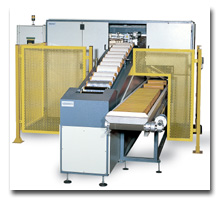
Cason S.p.A. will exhibit bobbin strippers.Cetex Chemnitzer Textilmaschinenentwicklung GmbH,
Germany, will present Cetex-3D textiles that have near-net-contour and air-conditioning properties,
and are recyclable; and retrofitting sets for special spinning processes. Primary stand contact:
Katrin Luther. Hall 4, Stand SP4-7C.Cezoma BV, The Netherlands, will exhibit the CE1187 tube
winder; CE3287 cone winder; CE1387 automatic and manual kingspool winder; CE1487 pre-wound bobbin
winder without flanges for sewing thread, embroidery and dental floss; CEF1487 pre-wound bobbin
winder with flanges; CEP87 snapspool winder; and CE1587 bi-conical tube winder for the braiding
industry. Hall 3, Stand SP3-8C.Cognetex S.p.A., Italy, a member of the Finlane Group, will showcase
a variety of products, including the IDEA-E-73L COM4WOOL® Compact Ring-Spinning Frame with
electronic head-stock; and the new touch-screen Finlane Dialoguer machine now fitted on all Finlane
products. Primary stand contact: Alessandra Bronzini. Hall 1, Stand SP1-16A.Giuseppe Crespi S.a.s.,
Italy, will showcase its latest-generation sliver cans. Primary stand contact: Oreste Crespi. Hall
2, Stand SP2-1C.Danley Engineering Services, England, will exhibit the Model 4 automatic yarn
stripping machine. Primary stand contact: G. Wolstenholme. Hall 11, Stand W11-6J.DuPont Polyester
Technologies, Wilmington, N.C., will exhibit in Hall 3, Stand SP3-5B.E-Hwa Co. Ltd., China, will
present information on its spare parts for texturizing, knitting, weaving and winding machines; and
ceramic yarn guides. Primary stand contact: C.C. Chiang. Hall 1, Stand SP1-4A; and Hall 5, Stand
K5-16B.Ekoteks Tekstil A.S., Turkey, will showcase Ekorit ceramic yarn guides for yarn machines.
Primary stand contact: L. Nalbant. Hall 3, Stand SP3-23B.Electro-Jet S.A., Spain (PSP Marketing
Inc., Charlotte), will offer its traveling cleaners, bobbin cones and automatic transport systems,
Rovematic ADR roving frame, palletizing machines and automatic packing lines; as well as automatic
sets to clean, classify and lay spinning tubes. Primary stand contact: Jerry Perry. Hall 3, Stand
SP3-7A.Epic Enterprises Inc., Southern Pines, N.C., will display its replacement parts for various
cablers, twisting machines and carpet yarn heatsetting machines; and its Epi-Mark colored yarn and
fabric markers. Hall 1, SP1-14E.Fehrer AG, Austria, see Chapter 2: Nonwovens. Hall SP4, Stand
SP4-3C.FA.NI. S.a.s., Italy (Burnett Machine Co. Inc., Gastonia), will introduce a variety of
monitoring sensors and monitoring software including the SC1 capacitive sensor for monitoring ends
on ring-spinning frames, and Archimedes JMonitor software for spinning preparation machines.
Primary stand contact: Andrea Ceriolo. Hall 3A, Stand SP3A-18C.Fibre Extrusion Technology Ltd. and
Colormatrix Europe, England, will show a multidosing system for the controlled addition of liquid
base dispersions for instant on-line color matches. Primary stand contacts: Richard Slack and Phil
Winrow. Hall 1, Stand SP1-7E.Galan Textile Machinery S.L., Spain, will exhibit its new MULTI
modular ring twister featuring 100-percent independent modules, independent spindle twist, direct
spindle drive, electronic module ring holder, simple extension, and auto-doffing system. Hall 3,
Stand SP3-15B. GBS Commerciale S.r.l., Italy, will showcase its grinding machine for flexible card
clothing, automatic vacuum card cleaning plants, a mouthpiece guide unit and sharpening machinery.
Primary stand contact: Stefano Pazzaglia. Hall 2, Stand SP2-13E.Gieseken-Export, Spain, will show
its accessories for spinning machinery. Primary stand contact: Hans-H. Gieseken. Hall 2, Stand
SP2-13A.Giesse S.r.l., Italy (Otex Inc., Greenville), will highlight its fancy yarn machine and
chenille machine with remote control. Primary stand contact: Andrea Maier. Hall 3A, Stand
SP3A-18B.GigliottiandGualchieri S.p.A., Italy, will have on display chenille machines with full
electronic control, and flexible and versatile fancy-yarn machines. Primary stand contact: Renzo G.
Mammoli. Hall 3, Stand SP3-17D.Gneuss Kunststofftechnik GmbH, Germany, will feature the RSFgenius
fully automatic, process-constant filtration system for man-made fiber spinning. Hall 3A, Stand
SP3A-4B.Gold Hsing Industrial Co. Inc., Taiwan, will exhibit its line of rubber aprons and cots, as
well as other parts for textile machines. Primary stand contact: Richard Chuang. Hall 3, Stand
SP3-11B.Goulston Technologies Inc., Monroe, N.C., will display its fiber lubricant technology. Hall
3, Stand SP3-23A.Gualchierani Textile Automation, Italy, will offer its GSA-A bale press and Yarn
Defects Control (YDC) bobbin yarn fault detection device. Hall 2, Stand SP2-8B.Hacoba Spultechnik
GmbH, Germany (Symtech Inc., Spartanburg), will exhibit in Hall 3A, Stand SP3A-11B.Heberlein Fiber
Technology Inc., Switzerland (Heberlein North America, Greenville; Fi-Tech Inc.), will feature the
HemaJet® A series for microfilament yarn processing; the AirSplicer V-17 for technical applications
and texturing; the SlideJet-2, a new HemaJet housing for the Taslan® air-jet texturing process;
DetorqueJets for on-line detwisting during false-twist texturizing; a variety of air-interlacer
jets for spinning; Lufan® yarn-lacing devices; and, in cooperation with Karl Mayer GmbH, Germany,
the TwistJet® integrated texturing unit with MultiJet interlacing. Primary stand contact: Andreas
Weber. Hall 2, Stand SP2-15B.Hills Inc., West Melbourne, Fla., will exhibit glow and metal core
fibers, fibers with 600 islands, spunbond islands-in-the-sea fabric, and man-made canvas from a
spunbond substrate. Primary stand contact: Arnold Wilkie. Hall 1, Stand SP1-10G.H.K. Industries,
Pakistan, will present rubber aprons and cots, and pressure rollers. Primary stand contact:
Khurshid Ahmed. Hall 1, Stand SP1-10E.Hollingsworth Inc., Greenville, will exhibit in Hall 2, Stand
SP2-5B.Huber + Suhner AG, Switzerland (BVO Corp., Monroe, N.C.), will exhibit its latest Berkol®
automatic cot grinding system, a long-lasting top apron and new sleeve-fitting system for the wet
finishing sector. Primary stand contact: Peter Bornhauser. Hall 3A, Stands SP3A-7B and
SP3A-7C.Huitong Polyester Technique Co. Ltd., China, will show production lines for man-made fibers
and spinning frames. Primary stand contact: Sun Jin. Hall 2, Stand SP2-4C.Industria Meccanica
Applicata (IMA) S.r.l., Italy, will highlight spinning and metering pumps, and spin packs. Primary
stand contact: De Luca Leonardo. Hall 1, Stand SP1-3C.Inventa-Fischer GmbHandCo. KG, Germany, will
display elastic fiber melt-spun technology based on its newly developed spinning equipment. Primary
stand contact: Mr. Janzen. Hall 2, Stand SP2-16C.
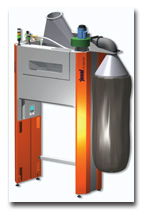
Jossi’s Vision Shield foreign-matter removal systemJossi Systems AG, Switzerland, will
display the Vision Shield foreign-matter removal system for the spinning process, accompanied by
the new PolyTect modulated ultraviolet light source and advanced image-processing software. Hall 1,
Stand SP1-15C.Kanai Juyo Kogyo Co. Ltd., Japan (FeilandDavidson, Greensboro, N.C.), will introduce
Centurymat rings for compact yarn and high-speed, fine-count spinning, as well as a variety of
other rings, travelers, metallic card clothing and top flats. Primary stand contact: Setsuo Banba.
Hall 2, Stand SP2-13B.Leesona Industries, Burlington, N.C., will have information on its rewinder
for technical yarns; and a completely redesigned take-up winder for tapes, multifilaments or
monofilaments. Primary stand contact: Jim Arrington. Hall 3, Stand SP3-12E.Loepfe Brothers Ltd.,
Switzerland (Symtech Inc.), will exhibit in Hall 1, Stand SP1-13E.Loptex S.r.l., Italy, will show
the Optosonic system for the on-line detection and elimination of colored and colorless
contamination. Primary stand contact: Renato Gerletti. Hall 3, Stand SP3-10A.Mariplast S.p.A.,
Italy, will display cones, tubes and cylinders for spinning and dyeing. Hall 2, Stand
SP2-8C.Marzoli S.p.A., Italy, will exhibit in Hall 1, Stand SP1-16B.Mesdan S.p.A., Italy (Mill
Devices Co., Gastonia), will feature products from both its splicers/ knotters and testing
equipment divisions, including Jointair solutions. Primary stand contact: Daniela Messa. Hall 3A,
Stand SP3A-2A.Mino Corp., Japan (Consolidated Textile Services Inc., Gastonia), will present its
line of winding drums. Primary stand contact: N. Nomura. Hall 2, Stand SP2-18A.Murata Machinery
Ltd., Japan, will exhibit the Murata Vortex Spinner and the No. 21C Process Coner. Hall 3A, Stand
SP3A-11A.Neuenhauser Maschinenbau GmbH, Germany, will show the latest developments in off-loom
fabric winding technology, including the CenterWinder ZW, in addition to its automated products for
spinning can transportation to package handling and packing. The company also will highlight a new
automatic doffer for bulk continuous filament yarns and the latest version of its Checknflow
package quality test station. Hall 2, Stand SP2-2D; and Hall 12, Stand W12-1A.Nippon Nozzle Co.
Ltd., Japan (FranklandThomas Inc., Greenville), will showcase strip jets for water entanglement of
spunlaced nonwoven fabric, meltblown dies, and spinnerets with capillaries 16 microns in diameter.
Primary stand contact: Shinsuka Ota. Hall 4, Stand SP4-2D.Nippon Selen Co. Ltd., Japan, will
present information on yarn-break detectors, yarn-length measuring devices and yarn clearers.
Primary stand contact: Y. Makimo. Hall 3, Stand SP3-16C.The NSC Group, Fibre to Yarn Division,
France, comprised of N. SchlumbergerandCie and Thibeau, will feature its long-fiber processing
lines including the new model CA 7 card from Thibeau and a brand-new combing machine from
Schlumberger. Other products on display include stretch breakers, chain gills, blender defelters,
the FMV 40 vertical rubbing frame, and the CF 50 and CF 60 ring-spinning frames. Hall 4, Stand
SP4-3B.Officine Gaudino S.p.A., Italy (Dawson Textile Machinery, Greensboro), will offer its
worsted ring-spinning frame with mechanical compacting system. Primary stand contact: Roberto
Gaudino. Hall 3, Stand SP3-10B.Omatex S.r.l., Italy (A.B. Carter Inc., Gastonia), will present
polivel pickers, spindle tape, cutters, brooms and spindle oil-changing equipment. Primary stand
contact: Maria Vittoria Vavassori. Hall 4, Stand SP4-16C.O.M.M. Meccanotessile S.r.l., Italy, will
exhibit its new R-Type covering machine and new BVE-R spooling machine for flanged spools with
constant tension take-up. Hall 3, Stand SP3-19A.Otalo otto kuhnen, Austria, will show its line of
synthetic rubber aprons and cots. Hall 2, Stand SP2-D1.Piovan S.p.A., Italy (Piovan Canada,
Canada), will highlight its solutions for polyester, polyamide and PP fiber and yarn manufacturing
including a range of dehumidifying dryers, crystallizers, masterbatch and liquid color dosing
units, gravimetric blenders, hopper loaders, mould dryers, water chillers, and SuperVising System
software for the supervision and management of whole fibers manufacturing plants. Primary stand
contact: Francesca Soprano. Hall 3, Stand SP3-14B.Power-Heat-Set GmbH, Germany (Belmont Textile
Machinery, Mount Holly, N.C.), will exhibit a new pristuffer box, a new supervising and controlling
system with process control, the GVA yarn heat-setting system and the Sewimatic E15 linked steaming
machine. Primary stand contact: Peter Resch. Hall 3, Stand SP3-13E.Precision Rubber Industries Pvt.
Ltd., India, will show the latest in its line of Precitex aprons and cots. Primary stand contact:
G. T. Dembla. Hall 3, Stand SP3-3A.Retech AG, Switzerland, will present its Plug and Run godet
range, ATQ – light yarn tension monitoring system and TEX2000 spin draw texturizing machine. Hall
2, Stand SP2-15C.RI.TE S.p.A., Italy, will feature the ARD/L model assembly winder and RRP/L model
cone-to-cone winder. Primary stand contact: Alberto Negro. Hall 3, Stand SP3-15C.Rosink GmbHandCo.
Maschinenfabrik, Germany (MSS Services Inc., Dalton, Ga.), will exhibit a quad can changer/coiler,
drafting unit with autoleveling, service machinery for roller and card clothing workshop, and
stainless steel rollers. Primary stand contact: Martin Schoolkate. Hall 3, Stand SP3-12A.Georg Sahm
GmbHandCo. KG, Germany, will exhibit in Hall 1, Stand SP1-11A.Sanal Plastik, Turkey, will highlight
plastic tubes for spinning, cones for dyeing, and metallic spare parts for frames. Primary stand
contact: Ahmet Sanal. Hall 3, Stand SP3-3B.SantAndrea Novara S.p.A., Italy, a member of the Finlane
Group, will showcase a variety of products including the Millennium Rectilinear Combing Machine,
the RF5 Double Rubbing Vertical Finisher, and the new touch-screen Finlane Dialoguer machine now
fitted on all Finlane products. Primary stand contact: Alessandra Bronzini. Hall 1, Stand
SP1-16A.Sapru Machines Pvt. Ltd., India, will display its Jari Rubber Covering, 60-millimeter (mm)
POT TFO machine, 110/160-mm TFO machine, 350-mm TFO machine, Creep TFO machine and air-covering
machine, and other spinning machinery. Primary stand contact: C. Sanjiv. Hall 3, Stand
SP3-21B.Savio Macchine Tessili S.p.A., Italy, a member of the Itema Group, will exhibit in Hall 2,
Stand SP2-1A.N. SchlumbergerandCie., France, see NSC Group, Fibre to Yarn Division, Chapter 1:
Spinning. Hall 4, Stand SP4-3B.Seydel GmbH, Italy, a member of the Finlane Group, will showcase a
variety of products including the Type 873 Stretch Break Converter, and the new touch-screen
Finlane Dialoguer machine now fitted on all Finlane products. Primary stand contact: Alessandra
Bronzini. Hall 1, Stand SP1-16A.Simet S.r.l., Italy, will have information on its electronic
winders, assembly winders, winders with double positive yarn feeder, and winders for picking from
bulking machines. Primary stand contact: Federica Anceschi. Hall 3, Stand SP3-6F.SML
Maschinengesellschaft mbH, Austria, will feature a variety of technologies for polyolefin cast film
extrusion, multilayer sheet extrusion, breathable film and MDO equipment, extrusion coating and
laminating, PP multifilament spinning and continuous melt filtration. In addition, the company will
highlight its new modular spinning plant with two different spinning processes in one machine, as
well as its Austrofil HT2x2C compact spinning line. Hall 1, Stand SP1-11A.
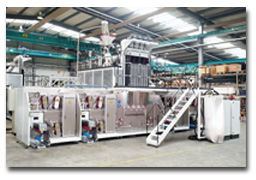
SML will show its latest developments in multifilament spinning.Sohler-Neuenhauser GmbHandCo.
KG, Germany, will display its complete range of traveling cleaner products, including: the Uniclean
for spinning mills; TEXPRO 2 for cleaning spinning, winding and twisting frames; Textra automatic
roving bobbin transport system; Top Duct 2 cleaner with integrated track-channel system; and a new
central vacuum system. Hall 2, Stand SP2-2C; and Hall 12, Stand W12-1A.Sossna GmbH, Germany, will
offer spinnerets and spin packs for bicomponent spinning, and spinnerets for multifilament- and
staple-fiber spinning with different cross sections. Primary stand contact: S. Gicklhorn. Hall 3A,
Stand SP3A-4A.SPT Technical Services Ltd., England, will offer information on the MBS 60 automatic
skein-winding and labelling machine. Primary stand contact: B. Wright. Hall 4, Stand SP4-11A.SSM
Schr Schweiter Mettler AG, Switzerland (Symtech Inc.), will introduce for the first time at an
exhibition its Thread Prince 850 C machine and lubetex lubrication system for sewing thread
finishing processes, as well as a new automatic parallel winder for flange bobbins. SSM also will
feature Uniplex spun yarn technology, jointly developed with DuPont; and present information on its
line of control systems and components for rewinding, dye package winding and assembly winding.
Hall 3A, Stand SP3A-11B.Stewarts of America Inc., Simpsonville, S.C., will exhibit in Hall 2, Stand
SP2-12G.Otto Stuber GmbHandCo. KG, Germany (ESS Automation Inc., Kings Mountain, N.C.), will have
on hand a variety of electronic yarn-break detectors and electrical yarn cutters. Primary stand
contact: G. Stuber. Hall 3, Stand SP3-14C.Superba S.A., France (American Superba Inc., Dalton),
will display the TVP3 yarn heat-setter without steam, the B401-BH401 winder, the HEP yarn steamer,
AHD handling device and MF3 friezing machine for carpet yarns; the Multi color dyeing machine
(MCD); and the UNIVAP yarn steamer for knitting yarns. Primary stand contact: J.P. Ummenhover. Hall
2, Stand SP2-3A.Super Tex Industries, India, will showcase its line of soft cots for fine and
super-fine cotton counts, pre-glued skived aprons, special cots and aprons for air-jet spinning,
and aprons for glass fiber processing. Primary stand contact: Jugal Kishore. Hall 4, Stand
SP4-2A.Techniservice, Kennett Square, Pa., will display its yarn texturing machines. Hall 4, Stand
SP4-16E.Temco Textile Machine Components GmbH, Germany, will feature a variety of Temco and Dienes
technologies for man-made fiber production, including Active Cooling yarn texturing technology,
roller bearing products, interlacing jets, spindles, texturing twisting units, godets, the DMC
modular control system, and WinOLT and WinOLT Statistics software packages for texturing process
and data evaluation. Hall 1, Stands SP1-14A and SP1-14B.S. Textravellers Pvt. Ltd., India, will
offer the following new products: Textra-1000 rings for the reduction of yarn hairiness and end
breakage; and the Glider Ring Traveler for burn reduction and increased traveler life, among other
properties. Primary stand contact: Sandeep Shetty. Hall 3, Stand SP3-14D.Trutzschler GmbHandCo. KG,
Germany, will unveil a new high-production card. Hall 2, Stand SP2-5A.Usha Industrial Corp., India,
will offer such products as sliver cans, plastic ring tubes, simplex bobbins, perforated and plain
cones, OE and TFO tubes, cheese winding tubes, parallel tubes and jumbo cones, among others.
Primary stand contact: Amit K. Shah. Hall 3, Stand SP3-2D.Ph. Welker GmbH, Germany, will exhibit in
Hall 2, Stand SP2-14B.Wetzel AG Sisseln, Switzerland (G/K Sales, Greenville), will present
spinnerets for all types of fibers and filaments, specially complicated shaped holes, and spin
packs for bicomponent fibers. Primary stand contact: S. Chalishajar. Hall 1, Stand SP1-9A.Xorella
AG, Switzerland, will introduce the Contexxor® Plus steaming and conditioning system featuring the
new Fox controller and Eco Plus, an improved energy-saving system. In addition, Xorella will
demonstrate the Mini-Contexxor laboratory unit for development and research purposes. Hall 1, Stand
SP1-17C.Yamauchi Corp., Japan (Yamauchi [U.S.A.] Corp., Charlotte), will demonstrate its soft cots
for spinning machines; and aprons, cots and PU disk for texturing machines. Primary stand contact:
H. Usami. Hall 3A, Stand SP3A-13C.The Zenith Pumps Division of Parker Hannifin, Sanford, N.C., will
exhibit its spinning pumps, among other products. Hall 2, Stand SP2-1B.Zimmer AG, Germany, will
present equipment for the manufacture of man-made filaments and fibers. Hall 3, Stand
SP3-9A.NonwovensIn the field of nonwovens, Cavitec AG, Switzerland, member of the Santex Group,
will introduce the Caviflex modular hotmelt coating machine. Hall 4, Stand
NW4-8A.DellOrcoandVillani S.a.s., Italy (Stellamcor Inc., Harrison, N.Y.), will exhibit weigh pan
blending systems and Dynamix continuous blending systems. Primary stand contact: Sergio DellOrco.
Hall 4, Stand NW4-12B.Oskar Dilo Maschinenfabrik KG, Germany, will highlight high-capacity needle
looms such as the Hyperpunch, and Spinnbau latest-generation high-capacity cards. To illustrate
Dilos engineering work, a ready-to-work installation also will be on display, equipped with Temafa,
Trutzschler, Autefa, Mahlo and Wiessner components, and other examples of alternative line
configurations. Hall 4, Stand NW4-14A.
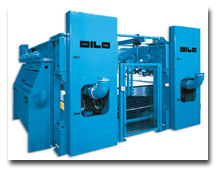
Oskar Dilo will highlight high-capacity needle looms at ITMA 2003.Fehrer AG, Austria (Batson
Group Inc., Greenville), will show its latest machinery developments, including fully operational
needle-punching machines and DREF friction-spinning machines. Primary stand contact: Alois
ollinger. Hall 4, Stand SP4-3C.Fleissner GmbHandCo., Germany (Fleissner Inc., Charlotte), will show
the AquaJet-Spunlace System for hydroentanglement of nonwovens, through-air dryers and other
high-performance lines for nonwovens; man-made fiber production lines for spinning, can-laying,
washing, finishing, drawing, heating, heat-setting, drying, crimping, plaiting, cutting, dyeing,
winding and bailing; a wool program for raw wool scouring and shrinkproof finishing; the RT
thermosol dyeing line and Rotoswing tumbler for woven and knitted goods; and machines for dyeing,
washing, heat-setting and drying tufted carpets. Primary stand contact: Sascha Berck. Hall 4, Stand
NW4-3A.Groz-Beckert KG, Germany, will show its felting and tufting needles for nonwovens use. Hall
4, Stand NW4-4F.hastem Transportber GmbH, Germany (Fi-Tech Inc.), will introduce the CC25GN slat
transport apron with grained surface and overflow-free surface, as well as the AB series of
transport aprons specially developed for the nonwovens industry. Primary stand contact: Stefan
Hastem-Muller. Hall 4, Stand NW4-4G.Laroche S.A., France, will display a textile waste recycling
system for OE spinning and nonwovens, an airlaying machine for nonwoven mats, an opening and
blending line with continuous weighing control, NAPCO technology developments, the Hermann Process
a compact line for semi-cured resinated moldable felts, and the Minitrim HSP high-speed edge-trim
opener. Hall 4, Stand NW4-8B.Nowo Textile Machinery, Finland, will exhibit the Nowo Q, a new
synchronized quilting line designed for every stage of the quilting process including a bale
opener, volumetric feeding device and SmartCard. Hall 4, Stand NW4-9E.
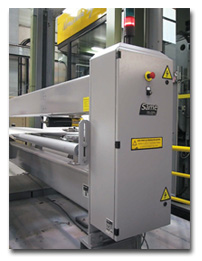
NSC Nonwoven’s X-Ray Scanning Gauge uses X-ray technology to measure weight distribution in
the machiner and cross directions of the final products.The NSC Group, Nonwoven Division, France,
comprised of Asselin and Thibeau, will launch the CA12 and CA14 carding machines designed for a
wide range of products, and the X-Ray Scanning Gauge to measure weight distribution. The recently
introduced Ouat!sys® patented system for condensing card webs while maintaining line production
speed also will be shown. The Ouat!sys can be retrofitted onto existing Asselin Profile and Dynamic
crosslappers. Hall 4, Stand SP4-3B.Santex Nonwoven, Switzerland, will highlight the Santex
Wavemaker vertical lapping machine for nonwoven webs. Hall 4, Stand NW4-8A.Schaetti AG, Switzerland
(Schmid Corp., Spartanburg), will present a live display of the TLM-V flat-bed laminating line,
hotmelt machine with engraved roller system, and powder scatter machine with an operating width of
up to 5,200 mm. Primary stand contact: Sibylle Schneider. Hall 4, Stand NW4-5C.Struto International
Inc., Oak Brook, Ill. (Wise Industries Inc., Kings Mountain), will display a vibration lapping
device for vertically lapped structures. Primary stand contact: Terry Saunders. Hall 4, Stand
NW4-3F.Technoplants S.r.l., Italy (Allertex of America, Cornelius, N.C.), will showcase a special
band saw cutting machine for high-loft wadding. Primary stand contact: Jorn Lahr. Hall 4, Stand
NW4-4D.Trutzschler GmbHandCo. KG, Germany, see Chapter 1: Spinning. Hall 2, Stand SP2-5A.Wise
Industries Inc., Kings Mountain, will exhibit in Hall 4, NW4-3F.WeavingAmong manufacturers of
weaving equipment, David Almond Ltd., England, will show its Venor range of bench-type tufting
machines for bathmats, rugs and mops. Primary stand contact: M. H. Lord. Hall 10, Stand W10-6A.BAG
KFT, Hungary (Probity Products, Kernersville, N.C.), will exhibit spare parts for micro projectile
weaving machines. Primary stand contact: Tibor Tak. Hall 9, Stand W9-12A.Bonas Machine Co. Ltd.,
England, will demonstrate the MJ modular electronic jacquard product line and IBJ+ jacquard with
enhanced electronics. Hall 9, Stand W9-11A.CCI Tech Inc., Taiwan, will show warping and weaving
machines for samples. Primary stand contacts: Alvin Chan and Kevin Chung. Hall 12, Stand
W12-12D.Cobble Blackburn Ltd., England (TMC, Dalton), will introduce new machine developments
including the five-pile-height scroll and Sculptor multi-pile-height machine. Primary stand
contact: Ian Beverly. Hall 12, Stand W12-8F.Cortex S.A., France (Jerry ValentaandSons Inc.,
Hawthorne, N.J.), will showcase its Loomprinter on-loom warp-printing machine and Speeder on-loom
warp heat-treatment machine for thermoplastic warps. Primary stand contact: Mr. Corbi. Hall 10,
Stand W10-1D.Dokaksam A.S., Turkey, will highlight its weaving reeds. Primary stand contact: Erkut
Erguler. Hall 9, Stand W9-6F.Lindauer Dornier GmbH, Germany, will introduce a variety of
innovations including the type AS air-jet weaving machine, ServoTerry air-jet weaving machine, a
wide air-jet weaving machine with EasyLeno technology for PP carpet backing production, a patented
contact-free magnetic mounting for reducing overall fabric load during continuous processing, and
the EcoSqueeze circular squeezing machine. All air-jet weaving machines on display will run with
the ServoControl pressure regulation system, and will be fitted with the AirGuide air cushion
guide. Information on Dorniers CAN Bus and VGA color display both of which support internal and
external control, regulation and monitoring processes on air-jet and rapier machines will be
available. Hall 12, Stand W12-4A.Ekoteks Tekstil A.S., Turkey, will present its Ekowire line of
jacquard weaving loom accessories. Primary stand contact: L. Nalbant. Hall 10, Stand
W10-9C.EL&M S.p.A., Italy (Batson Group Inc.), will display the Supervega automatic drawing-in
machine. Primary stand contact: Filippo Ciani. Hall 11, Stand W11-2H.