Fashion That Starts With Fiber

Buhler Quality Yarns Corp. manufactures fine-count ring-spun combed Supima® cotton yarns
used in a variety of branded apparel.


A
chieving relevance in a post-quota environment may seem impossible to those US textile
manufacturers who believe it’s all about cost. However, there are insiders who take a different
approach. In a world where trade laws have led to lawsuits pitting buyers and sellers within the
apparel supply chain on opposite sides of trade issues, it’s hard to conceive that these
adversaries need to partner to bring fashion and innovation to market. The current power of the US
retailer may be short-lived based on the view that a natural extension of China’s rapid growth is
its attempt to capture the entire apparel supply chain competing directly with retailers at home
(in China) and those in the United States by opening or buying into retail operations. Regardless
of the future challenges to retailers such as the demise of the retail category killer, and the
customer’s boredom with everyday low-prices, the delivery of fashion benefits from a responsive and
innovative supply chain that starts with fiber.

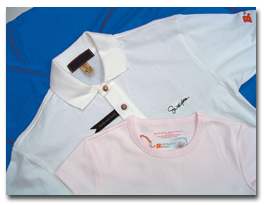
“I Want The Best Golf Shirt Possible.” That request was music to the ears of Jefferson,
Ga.-based Buhler Quality Yarns Corp., manufacturer of fine-count ring-spun combed Supima® cotton
yarns. The request came from New York City-based Polo Ralph Lauren Corp. Polo designs, markets and
internationally distributes lifestyle products under such brand names as Ralph Lauren, Polo Sport
and Club Monaco, among many others. “When Walter Bostic [senior director of technical development
at Polo] asked us to assist him in this challenge of creating the best premium golf shirt, we knew
that we have what it takes to make it happen –  200 years of experience in high-quality yarns
and the desire to continually improve our quality,” said David Sasso, vice president, international
sales, Buhler.

“For us, fashion is about creativity and expressing ourselves through the apparel we wear,”
Sasso added. “The apparel we wear most often makes us feel comfortable, and performs in the style
and colors we like. This performance can be durability, color brightness and color retention,
breathability, drape and hand. These parameters can all be measured and engineered into the fabric
by first starting with the fiber selection. I have not seen many garment specifications that go
into the details that would build in these performance factors. How can you build customer loyalty
when your product is inconsistent?”


Extra-Long-Staple-Cotton

Buhler, a very active marketer and manufacturer of high-end yarns, is no newcomer to the
field. A subsidiary of Switzerland-based Hermann Buhler AG, the company strives to maintain a
leadership position in fine-count, combed yarns made from extra-long-staple cotton fiber, using
American Supima cotton exclusively. Supima accounts for about 3 percent of the annual US cotton
crop. Of that 3 percent, equivalent to about 700,000 bales, Buhler buys the top 25,000 bales in
order to achieve the highest standards in yarns. The company’s philosophy is not about buying on
price, but rather, buying on quality without compromise. Using 32,000 ring spindles and the latest
in manufacturing technology, Buhler’s 120 associates create cotton yarn ranging from Ne 12 to Ne
110 (Nm 20 to Nm 190).

According to Buhler, yarns made of premium, extra-long-staple cotton can be knitted or woven
into softer, finer and more luxurious fabrics. Because of the fineness of Supima, more fibers can
be spun into a yarn of a given count, which enhances the feel and softness, drapeability and color
brilliance of a fabric.

Supima has the highest tensile strength of all cotton fibers worldwide, enabling the
application of finishing methods that no fabric made from other fibers can withstand. The end
effect is a garment with little to no shrinkage, no hairiness and, therefore, no pilling, even
after 20 washings. Costly mercerization of yarns is no longer necessary.


Progressive And Aggressive

“We are progressive, aggressive in our push for new opportunities, and not afraid of speaking
out on what we believe is right and are therefore sometimes at odds with the mainstream textile
industry,” said Werner Bieri, president, Buhler.
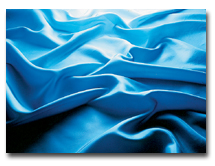
Buhler spins premium, extra-long-staple cotton yarns that are used to knit or weave fabrics
with a luxurious hand.

Buhler is actively pushing for implementation of the Central American Free Trade Agreement
and hopes for quick development of a free trade agreement with the Andean region. According to
Bieri, this is a vital part of the US textile industry’s strategy for the years to come. The
company also is focusing on manufacturers in other parts of the world. Buhler believes the textile
industry is the first to have become truly global and that manufacturers in other parts of the
world have very specific advantages, which may not always be available, even in Central or South
America.


Retail Solution Beyond Price

“Development with the retailer is imperative because we want to better understand their
business,” Sasso said. “We know that there are price points that our yarns cannot meet. Therefore,
understanding which brands and retailers are sourcing for better goods is critical. Under certain
price points, we find that if the product can be made in a country benefiting from the exclusion of
duties entering the United States, that [landed duty paid] product is very competitive to Asian
goods. What we have to do is help our customers upgrade their quality; and improve the know-how in
dyeing and finishing, and the mentality in this hemisphere when dealing with higher-valued goods.”


Stay Open To New Ideas

The mode of operation for most textile yarn manufacturing companies is to offer a specific
group of yarns for sale. “Companies are seldom receptive to suggestions when those suggestions
involve purely experimental processes to prove or disprove a theory in an effort to find the
correct ingredients for a unique yarn or a yarn that has attributes outside the norm,” said Polos
Bostic. “I approached Buhler Quality Yarns with untried ideas and, I must say, somewhat radical
ideas for spinning yarns that I hoped would result in a yarn that would allow me to produce a
superior fabric for our designers. Buhler has the machinery and personnel to implement the ideas.
The important part of the Buhler equation is they made the equipment, laboratory and technical
personnel available to me for the experiments and trial spinning projects with absolutely no
guarantee of our work resulting in yarn sales.”

“This is an example of the attitude suppliers and customers must have if we as an industry
are to succeed in developing superior products for the consumer,” Bostic added.


A Way To Compete

“In the case of Polo, the challenge started with trust in our relationship and our ability to
leverage Buhler’s quality and delivery,” Sasso said. “It’s this type of project and relationship
that separates cost-based sourcing and premium-quality product development. Speed, quality and cost
are all major concerns, but there are areas where US companies can and will compete.”

February 2005
WestPoint Stevens To Close Plants, Files Reorganization Plan

Citing the removal of quotas on textiles from low-wage countries and the need to balance domestic
manufacturing with sourcing from abroad, WestPoint Stevens Inc., West Point, Ga., announced it will
realign and consolidate its Bed Products manufacturing capacity, and consolidate its Bath Products
capacity. The move involves the closure of several facilities and will eliminate nearly 2,500 jobs
– about 20 percent of the company’s workforce.

Bed Products facilities to be closed include: Alamance Plant and Distribution Center,
Burlington, N.C.; Clemson Fabricating and Greige plants and Distribution Center, Clemson, S.C.; and
Middletown Plant, Middletown, Ind. The company will reduce its Clemson Finishing Plant workforce by
more than 50 percent. In addition, it will consolidate Bath Products capacity by closing the Drakes
Branch Plant, Drakes Branch, Va. Plant closings are anticipated to be completed by late March or
early April.

WestPoint Stevens plans to move some production from the closed facilities to other company
facilities, but it also will source a significant amount from other countries. Where possible, it
will attempt to move associates from closed facilities to positions in nearby plants. A range of
assistance will be available to displaced associates.

“We value our associates very much and have a longstanding tradition of investing in our
people in terms of training and providing state-of-the-art equipment,” said Lorraine D. Miller,
senior vice president, finance and external communications. She added that the affected facilities
are modern and updated, but the removal of quotas and other issues have prevented them from being
profitable. Miller also said the company expects there will be more consolidation within its
Bedding operations.

The company also has filed its plan of reorganization with the US Bankruptcy Court and
expects to emerge from bankruptcy by the end of this quarter. The plan calls for a debt-for-equity
swap that would allow the company to emerge debt-free, Miller said. Most of the new ownership would
be in the hands of first- and second-lien holders, including billionaire investor Carl Icahn.

February 2005

Spunlace Meets Spunbonding

Fleissner finishing lines shown here are used to process bitumen carrier webs made of
polyester spunbond.


T
he nonwovens and technical textiles industries have worked with proven bonding and
finishing methods for a long time. Lately, there has been considerable movement in the spunbond
market.

Today’s spunbond market is dominated mainly by calendered spunbonds for the hygiene sector and
mechanically needled spunbonds for geotextiles and roofing applications.

In the future, however, new bonding methods such as AquaJet spunlace technology from
Germany-based Fleissner GmbH will be used more and more for the production of new generations of
spunbonds. Fleissner, a leading supplier of spunlace and finishing equipment for spunbond webs,
cooperates with spunbond machinery producers such as Reifenhauser GmbH and Co. KG Maschinenfabrik,
Germany.

Both the spunlace technology and the spunbond process already have maximum growth rates today.
Spunlaced nonwovens – mainly carded staple-fiber webs – already have replaced and superceded many
other nonwoven products that were produced by other bonding methods. This explains the strong,
dominating position spunlace technology has in the market today.

The market trend of the last few years for the spunbond sector worldwide shows considerable
growth that will increase even more because of new bonding methods such as spunlacing.

The requirements made on spunbond products influence the choice of bonding and finishing
processes used in creating them. It is not important whether polypropylene (PP), polyester, other
homopolymers or bicomponent fibers are used.

Based on experience with more than 1,000 continuous finishing lines for spunbonds, carded webs,
wetlaid webs and airlaid webs, Fleissner can design and deliver finishing lines that meet
requirements made on the final products. Proven spunbond products and technologies include:
lightweight webs for the hygiene and agricultural sectors; lightweight to medium webs used as
sarking membranes for the building sector; heavyweight webs for geotextiles; mediumweight webs for
roofing membranes; and mediumweight webs for primary backings on tufted carpets.


New Concepts

Often, lightweight webs that have been calendered do not offer the desired softness for
applications in the hygiene sector. Subsequent treatment on an AquaJet spunlace line increases the
softness and improves the volume. This can be achieved at processing speeds of up to 600 meters per
minute (m/min). The spunlace line can be installed both in-line with the spunbond machine and
off-line.

The speed and efficiency of the production process for heavy webs for geotextiles so far have
been limited by the relatively low speed of the mechanical needling process, as higher speeds would
destroy the endless filaments, causing a reduction of strength. Bonding using spunlace technology
makes it possible to operate the line at higher production speeds, which increases line efficiency.
At the same time, the tensile strength of the goods is improved. Thus, fiber costs can be reduced
by the reduction in web weights, which considerably increases the economic efficiency of the
process.

Fleissner’s AquaJet spunlace system may be used to make three-layered web structures, such
as the one above with cellulose fibers in the middle layer.

Production of wet wipes as three-layered composites by bonding PP spunbond layers on the outside
and an airlaid pulp layer on the inside results in two advantages: drastic improvement of water
absorbency because of the cellulose fibers; and high cost savings because the use of more than
50-percent pulp allows the raw material to be greatly reduced. Line speeds of 400 m/min to 600
m/min are possible.

When producing spunbond filaments from splittable conjugate fiber cross-sections, AquaJet
spunlace technology causes fibrillation of the fibers so that very fine filaments of less than 0.01
denier may be obtained. The nonwovens thus produced for example, Evolon® by Freudenberg Nonwovens
Group, Germany, are used for wipes with special properties because of the large fiber surface.
Nonwovens for garments and coating substrates such as artificial leather also are increasingly
being produced.

February 2005

Government Appeals Textile Safeguard Injunction

The US Justice Department has appealed an injunction by a federal court that blocked the
Committee for the Implementation of Textile Agreements (CITA) from using a threat of market
disruption in considering safeguard petitions that could result in imposition of new import quotas
on Chinese textile and apparel imports.

Last December, the US Court of International Trade in New York issued a preliminary injunction
that enjoins CITA from accepting, considering or taking any further action on China textile
safeguard petitions based on a threat of market disruption filed by US textile manufacturers. CITA
had accepted a dozen petitions based on the threat of market disruption, which is a provision in
China’s accession to the Word Trade Organization agreement.

The United States Association of Importers of Textiles and Apparel challenged CITA’s right to
use threat of market disruption charging that in accepting the petitions, CITA broke its own rules
providing for interested parties to comment on such petitions. The merits of the petitions are not
being challenged at this time, only the procedures followed by CITA. The preliminary injunction
does not affect a number of petitions pending before CITA based on what the industry says is actual
market disruption.

The federal court is likely to take at least a month to rule on the Justice Department
petition.

February 2005

Quality Fabric Of The Month: Performance In Triplicate

Shuford Mills LLC, Hickory, N.C. – in collaboration with Kappler Inc., Guntersville, Ala. – has developed a waterproof version of its Outdura™ solution-dyed acrylic fabric for outdoor applications. Outdura Trio is targeted primarily to the marine industry, but it also has potential
applications for awnings, and outdoor furniture and equipment covers, among other uses.The original Outdura fabric is breathable and water- and ultraviolet (UV)-resistant. In developing Outdura Trio, Shuford has improved on the original, replacing water resistance with waterproofness by sandwiching Kappler’s ProVent® breathable, waterproof, microporous membrane between an Outdura canvas top fabric and a brushed tricot polyester fabric, which provides a finished headliner look to the underside.

qfomfabric


qfomboat
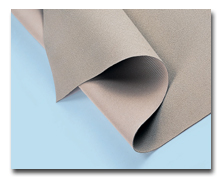
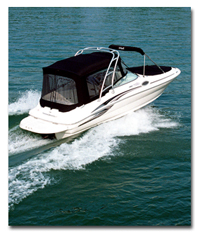
Outdura™ Trio combines Shuford Mills’ original Outdura canvas, Kappler’s ProVent® membrane
and brushed tricot polyester in a fabric suitable for boat enclosures, among other
applications.

“Until now, manufacturers who wanted rich, long-lasting color had to choose between a waterproof fabric that cannot breathe or a water-resistant fabric that can breathe,” said Jeff R. Jimison, director, sales and marketing, Outdura Fabrics. “Now, with Outdura Trio, they can have it all in a waterproof, breathable blended fabric that protects from both external and internal moisture while still resisting UV damage and fading. That is an unprecedented combination.”

Kappler adapted its ProVent technology – originally developed for non woven protective barrier fabrics – to suit marine applications. “Our history and work with nonwoven composites for a wide range of protective uses led us down the path of working with woven fabrics,” said Dennis Sanders, vice president, fabric sales, Kappler Inc. Kappler experimented with different bonding processes to find the best process for bonding the film to the Outdura woven fabric and the tricot fabric.

Jimison and Sanders both stressed that all Outdura Trio components are produced domestically. The sturdy, 12.5-ounce fabric is available in nine standard canvas colors, with other colors available, and carries a five-year fabric replacement warranty. It is easily cleaned and will not mildew if kept clean.

Although it was designed primarily for marine products such as boat and cockpit covers, and convertible and Bimini tops, among other products, Jimison said other outdoor product makers have expressed interest as well. “We have been amazed at the different ideas suggested when we showed Trio to people outside the marine industry, and we anticipate adding jacquards and dobbies to the line,” he said. Among the suggested uses are pavilions; grill covers; fireplace pit covers; and
covers for high-end outdoor furniture made from teak, wicker and other such materials. “Outdura Trio is a very rich fabric, and there are a lot of possibilities,” Jimison said.


For more information about Outdura™ Trio, contact Jeff R. Jimison (866) OUTDURA.

February 2005

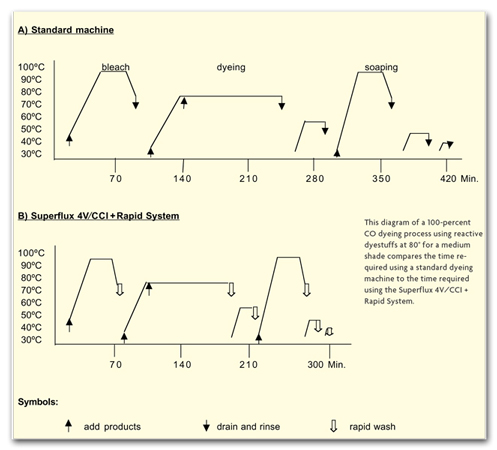
Super Dyeing


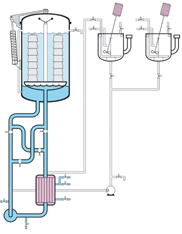
The latest-generation Superflux 4V/CCI + Rapid System from ATYC is used to dye yarn on
cones or bobbins; or in the shape of tops, cable or loose stock.


F
ounded in 1958, Spain-based Argelich, Termes y Cia (ATYC) S.A. is an internationally
recognized designer and manufacturer of jet-dyeing machinery and components whose equipment now is
present in 70 countries. The company has received such accolades as the

Textile World
2004 Innovation Award for its Dual System for Rapidstretch and Technodye machines
(See “Textile Innovation 2004: Technology Driving The Future,
www.TextileWorld.com,, June 2004)
. Continuing its
commitment to innovation, ATYC recently introduced the Superflux 4V/CCI + Rapid System. The new
system is a latest-generation machine used to dye yarn on cones or bobbins; or in the shape of
tops, cable or loose stock. The system has met with positive marketplace results, according to the
company.

The main characteristics of the Superflux 4V/CCI + Rapid System include the recently introduced
Superflux NE airpad system, a high-performance circulation pump, the ability to work with either a
low (1:4) or high (1:8) liquor ratio, and the new 4V dyebath circulation concept. Thanks to the 4V
concept, the dyebath flow goes directly from the pump to the autoclave with little or no loss of
pressure, which results in an increase in dyebath circulation of more than 30 percent.

This means that with the new Superflux machine, it is possible to reduce power consumption by 30
percent, while still realizing the same results achieved using conventional modern machines. This
faster dyebath circulation flow through the packages thus shortens the dyeing process.

If it is necessary to work with the same flow, as is the case with conventional dyeing machines,
a frequency converter may be utilized so the pump will consume less energy. Saving power or time
and reducing dyebath volume will reduce the cost of dyeing.

The new model also incorporates the CCI + Rapid System. The system fills and drains by means of
a pump, and the process is enhanced by a Rapid Rinsing program that operates according to the
number of liters or to the time required to complete the task. This high-performance system thus
reduces processing time, according to the company. As the machine fills with clean water at low
pressure, the autoclave automatically drains the dirty water, without recirculating the dirty water
back through the pump.

The CCI system features an integrated dye kitchen that uses two tanks equipped with the
necessary elements to prepare and automatically add the dyestuff and chemical products. This system
eliminates the necessity for a separate dye kitchen. Both tanks use the MODATYC system for linear
or exponential mode addition of dyebath chemicals. One of the tanks may be used to automatically
dissolve and add in salt or sodium sulfate.

ATYC reports it is possible to achieve high-quality dyeing and significant cost savings using
the Superflux 4V/CCI + Rapid System because of the shortened processing time and reduced power
consumption.

February 2005

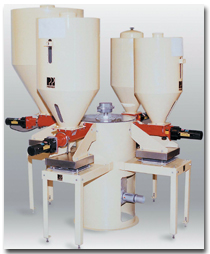
Premier Pneumatics Offers ProRate/Gravimetric Feeder

Premier Pneumatics Inc., Salina, Kan., now offers the ProRate/Gravimetric Feeder for the handling
of plastic pellets and regrind. The machine comprises one to eight independently operating feeders
and a central microprocessor-based proprietary controller. The feeder is designed to provide
accurate, continuous measurement of raw materials into a central station hopper.

ProRate/Gravimetric Feederfrom Premier Pneumatics

The ProRate/Gravimetric Feeder features a production capacity of up to 80,000 pounds per hour
and easy recipe selection, storage and editing, according to the company. Inventory and usage data
may be displayed or sent to a printer.

February 2005

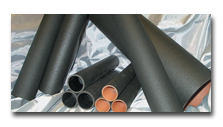
Impregion Offers UltraCombo Idler Roll

Impreglon USA, Fairburn, Ga., reports its new UltraCombo ultra-light idler rolls offer a very
cost-effective yet durable alternative to conventional carbon-fiber composite or thin-walled
aluminum rolls used in nonwovens and other manufacturing processes. According to the company, the
UltraCombo is so economical that it can be disposed of at the end of its useful life, eliminating
the need for costly and time-consuming reprocessing associated with conventional rolls.

UltraCombo idler rolls are now available from Impreglon USA.

The UltraCombo idler rolls are coated with Impreglon’s PlasmaCoat 60531/4001F to provide maximum
non-stick and traction properties, or they may be specially coated to a customer’s specifications
for a particular application. Other features include light weight that provides low inertia,
strength comparable to conventional rolls and a production speed capability of 3,000 feet per
minute. In addition, roll inventory programs may be specified in order to reduce the manufacturer’s
downtime.

February 2005

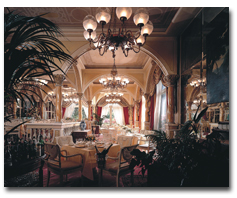
Quality First


Giacomo Garbagnati manufactures high-quality linen and cotton tablecloths, which it
supplies to leading restaurants throughout Italy.


G
iacomo Garbagnati S.p.A., Italy, recently received its third Monforts tenter – one of the
first of the recently introduced Montex 6000 models – as the final phase of a 17 million euro
investment program.

Established in 1907 as a bleaching specialist using traditional outdoor dyeing methods, the
company has earned a reputation for high-quality cotton and linen for household fabrics and
apparel.

“We quickly recognized the need to modernize the complete production facility and introduce new
management techniques,” said GennAndrea Mancone, president. “Coinciding with Italy’s worst downturn
in the textile industry [in] more than 25 years, we needed to implement some radical changes.”

The company recognized the days of long runs per article, or even per color, were past. Today,
within the Italian textile industry, there is a growing demand for flexible production with smaller
runs and shorter delivery times at the lowest possible cost. Therefore, the company had to seek
these newer, small-run niche markets.

Garbagnati had no management system in place to measure its productivity and repeat quality
performance, [as it was] still operating under traditional methods, Mancone said. “We quickly
learned that it would be necessary to implement a flow planning system if we were to improve our
efficiency with a machine setup and production times for right-on-time deliveries and repeat
quality finishing.”

The company also introduced up-to-date techniques for its bleaching and finishing operations to
enhance its reputation for high quality. Innovations included a patented formula to ensure a
special high intensity of white with a high durable-pilling resistance for its cotton bed
linens.

Garbagnati also has continued to maintain some of its former long runs, annually producing 4
million meters of high-quality linen in up to 10,000-meter runs. It also features its own garba
soft finishing process – a new continuous biochemical process that provides a softer, puffy
finish.


Production Systems

Garbagnati produces almost 75,000 meters per day of 100 grams-per-square-meter (gm/m2) to 400
gm/m2 linen and cotton in widths of 0.5 meters to 3.4 meters. Its finished cotton and linen is
supplied to leading Italian brands such as Frette, Bellora, Graziano and Benetton; with, for
example, Frette supplying leading hotel chains with quality bed linen.

The finest damask or Flanders linen and cotton tablecloths are supplied to leading restaurants
throughout Italy.

In 1998, Garbagnati also introduced a new finishing line for sportswear using a combination of
cotton, Lycra® and nylon for stretch fabrics.

Garbagnati recently installed the new Montex 6000 tenter as part of the final phase of a 17
million euro investment program.

The company currently supplies finished fabric to converters for Boss, Benetton and Replay,
among other brands. “Today, we specialize in customized, noncontinuous methods, supplying single
orders of between 200 and 1,000 meters,” Mancone said.


The Key To Success

At the heart of Garbagnati’s finishing lines are three Monforts tenters. The first two with
working widths of 2.2 meters and 3.4 meters were installed in 1997 along with a Monforts
sanforizing unit. In 1999, the company took delivery of a Monforts padbatch dyeing unit and now has
completed its current investment program with the installation of the Montex 6000 tenter.

The Montex 6000 is suitable for treatment of woven and knitted fabrics, and offers the choice
between horizontal and vertical chain return, plus a host of new and improved features. These
features were designed to improve performance, operation and maintenance; and to reduce operating
costs. Easy access to all main control and operating functions is possible via a touchscreen
monitor at eye level, thus eliminating the traditional overhead bridge. A simple menu system guides
the operator through the setup procedure.

Incorporating Monforts proven Qualitex programmable logic control system ensures that important
operating parameters and tension for fabric transfer devices can be set and monitored using the
touchscreen. The system also is able to include storage of setup data, batch management and network
interfacing – all essential criteria in Garbagnati’s constant quest for quality.

“Quality is everything,” Mancone explained. “We provide high-quality production at low speeds,
yet when necessary, the Monforts [tenter] will allow us to increase the speed and maintain a
consistent high-quality finish.”

Mancone also mentioned an additional key to the success of the company the after-sales service
provided by Monforts, endorsed by the local Monforts representative, Sacconghi Monaco S.r.l.

“Monforts is always on hand to assist with new techniques and problem solving, managing spare
parts [and] upgrading and training staff,” Mancone said.

February 2005

Branding – Not Just For Cattle Ranchers


B
randing a product to distinguish it from all others is something cattle ranchers have
done for years, with a single mark creating immediate awareness. Branding has become a watchword in
recent years, with marketing and communications specialists offering varying, often complicated
definitions that confuse business owners as to the meaning and importance of a brand.

Simply put, branding means brand name awareness, and brand name awareness equals
credibility. Awareness of your brand means there is confidence in your company and, ultimately, in
your products.

Many people purchase products or services simply because they are familiar with the name,
knowing little about features, benefits or price. While brand name awareness does not automatically
ensure sales, you have a tremendous advantage over companies in your product category if you work
toward building your company as a brand.


Consistent Message

A company brands itself by developing a consistent, constant marketing message. Repetition may
come from frequent advertising, repeated articles or news briefs in the media, constant exposure to
your company logo, or preferably, a combination of all of these. Your corporate identity can be
your most valuable asset and can make a major contribution to your brand success, but it must be
managed effectively.

The most favorable corporate identity is established with every form of internal and external
corporate communications presented in the same manner. By developing and presenting a consistent
company message, you will reduce the need and costs of building individual brands with new or
improved product introductions.


Company Logo

Your company logo should appear on all forms of corporate communications — letterhead and
envelopes, brochures, business cards, invoices, ads, company vehicles, apparel worn by delivery or
service personnel, and your website, among other items. Never miss an opportunity to promote your
identity. Your company name and logo identify your products and services and differentiate you and
your products from those of competitors. This is the beginning of building your brand.

Remember, a brand is a perception in the mind of the buyer. Your logo, when seen frequently
and in a consistent manner, becomes a symbol of your company’s credibility in the marketplace. When
executed effectively, your company name will become synonymous with your marketing message and
point of differentiation.


Differentiate Or Die

Marketing guru Jack Trout chose this as the title of his 2000 book subtitled “Survival in Our
Era of Killer Competition.” The dramatic increase of choices in just about every product category
in recent decades has forever changed the way companies do business. This proliferation coupled
with a dramatic increase in communication media — which now include the Internet, hundreds of new
cable and satellite television stations, and even movie theatres — leaves many buyers and sellers
scratching their heads.

The average American is exposed to about 3,000 advertising messages per day as corporations
globally spend more than $620 billion annually to build their brands, according to the Newspaper
Association of America.

Companies compete in this era of killer competition by differentiating. Differentiation
defines a company and distinguishes it from all others. Identifying your company’s competitive
advantage is first and foremost in the branding effort. If you try to be all things to all buyers,
you quickly undermine what makes you different. You must determine and concentrate on your
distinctive attribute, and establish that as your marketing message.

You can differentiate yourself from your competition in several ways — place, price,
promotion, people, product, service, selection, quality, convenience and speed. Are you less
expensive, more durable, faster, and/or more flexible? You can differentiate anything, but remember
that in today’s business environment, everyone promises the best quality and service. Your products
and services are made greater by giving the customers more than they expect. For example, Otis
Elevator Co. uses remote diagnostics as its point of differentiation. In high-traffic buildings
where servicing elevators is an inconvenience, Otis uses remote diagnostics capabilities to predict
possible service interruptions, sending employees to perform preventive maintenance in the evenings
when traffic is light.


Lasting Brand Name Awareness

Once you’ve developed a marketing message and a point of differentiation, it’s time to put these
tools to frequent use. Brand name awareness of the highest quality is a lasting awareness. A
potential customer can read one of your marketing messages and remember your name for a week or so,
but if the would-be buyer is not exposed to your message repeatedly, he or she forgets it and moves
on.


Peden Companies Build Their Brand On Service

In today’s crowded marketplace, many companies use the service attribute as a way to
differentiate themselves from the competition. For Peden Textile Equipment Co. and John W. Peden
Co. Inc., that point of differentiation has helped the small, family-owned businesses establish
their niche in a volatile industry.

“Whether you drive a Chevrolet or a Mercedes, if that car is always in the shop, pretty soon
you’re going to change brands and dealerships,” said Warren Peden, president of the
Greenville-based companies that sell and service warp-tying machinery. “When a machine is down on
the weave room floor, customers don’t want to hear that you don’t have the parts in stock [nor] the
technical ability to fix it.”

An inventory of spare parts, the technical expertise to make repairs, and immediate response
to service demands have made Peden Textile Equipment the go-to company as textile plants have
downsized in recent years. While the company sells only Japanese-made Todo equipment, it is called
upon to service many other different brands.

“As mills have leaned down in order to compete, a lot of them have lost their technical
talent,” Peden explained. “They’ve come to depend on us more and more because their institutional
knowledge often is lost in management turnover and downsizing.”

It’s that institutional knowledge that Peden believes sets his companies apart. “We sell
ourselves on the weave room floor.” he said. “I think in today’s environment, a lot of companies
spend more time building spreadsheets than in the weave room figuring out what’s wrong and how to
fix it. We learned the ways that Grandpa did it, and we’ve built our reputation on it.”

For Peden, institutional learning began in 1988 when his father bought a textile equipment
company. “The former manager was to stay on for five years, and he left after two months,” Peden
said. “I was 23 years old trying to sell equipment to men who had been in the business for years,
and I quickly realized I’d better know what I was talking about.”

So the younger Peden went into the mill to learn the business from the bottom up — the
mechanics of the machinery, the labor aspect and the personality of the industry. That thirst for
knowledge and commitment to service has served Peden well over the years. The small company of nine
employees today serves customers all over the world and goes head to head with some of the largest
machinery makers in the business.

Peden also concentrates on doing business primarily with smaller, family-owned mills and has
made a commitment to remain debt-free. But he is quick to credit Milliken & Company,
Spartanburg, for helping his company develop its immediate response capabilities.

“Milliken was one of the first companies to put their faith in us. We developed a lot of our
immediate response expertise around what Milliken required,” Peden said.

In an industry marked by bankruptcies and huge job losses in recent years, the Peden
companies have downsized less than 30 percent over the last five years. 


“A friend once told me that it’s better to be underestimated and over-deliver than
overestimated and under-deliver,” Peden said. “Your product and service are much better when you
give the customer more than they expect.”


February 2005


Sponsors