Everlast Enters Licensing Agreement With Globus Trading

Everlast Worldwide Inc., manufacturer, marketer and licensor of sporting goods and apparel under
the Everlast brand name, today announced that it entered into an extensive licensing agreement with
Globus Trading Group GmbH, based in Nuremberg, Germany. Under the terms of the agreement, the
following products will be introduced: men’s and women’s underwear in all of Europe except the
U.K., Republic of Ireland, Italy and Turkey; men’s and women’s socks in all countries with the
exception of Italy and Turkey; boxing equipment, handheld exercise equipment, aerobic
equipment (treadmills, etc) and weight lifting equipment in all of Europe with the exception of the
U.K. and Republic of Ireland; men’s, women’s and children’s apparel in Chechnya, Belarus, Slovakia,
Serbia and Montenegro, Bosnia and Herzegovina, Croatia, Macedonia, Estonia, Lithuania, Ukraine,
Armenia, Azerbaijan, Uzbekistan, Tajikistan, and Georgia.

The new Everlast products produced by Globus Trading Group GmbH will be ready for shipment late
in the third quarter of this year and will be distributed through sporting goods retailers and
better department stores. George Q Horowitz, chairman and CEO of Everlast Worldwide Inc., said, “As
a result of this agreement, the Everlast brand has taken a giant step forward in its international
expansion program as we will now be in 101 countries. Our licensing program continues to gather
momentum due to the increased consumer awareness generated by our involvement with NBC’s ‘The
Contender’ reality-based television series as well as the appreciation for the uniquely American
character of the Everlast brand. In addition, through this agreement Everlast is now in a position
to offer an extensive array of products almost identical to those currently available in the U.S.
We will continue to explore additional international opportunities for new licensing agreements.”

Press Release Courtesy of PR Newswire

April 2005

Technical Textiles Sector Adds Jobs In Virginia

Investments in technical textiles facilities in Virginia will add 77 new jobs to local
payrolls.

Pulaski, Va.-based BondCote Corp. will invest $2.7 million to expand production of its
high-performance coated and laminated fabrics, increasing production capacity by 20 percent and
creating 27 new jobs. Lindstrand USA Inc., a subsidiary of Lindstrand Technologies Ltd. – an
England-based inflatable structures manufacturer – will invest $2.5 million to open its first
US-based aeronautical fabric engineering and production plant in South Boston, Va. The facility
will employ 50 people.

April 2005

Closing The Carpet Loop

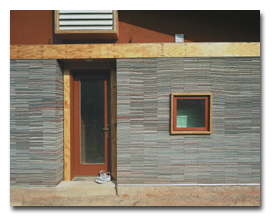
Interface supplied carpet tiles made from recycled materials for interior and exterior
walls of the Lucy House – part of the Rural Studio Project Photography courtesy of Timothy
Hursley.


W
e all like the feel of soft carpet under our feet. It is a feeling of comfort, warmth and
luxury. But next time you rip up your old rugs to lay down new carpet, spare a thought for the fate
of your old floor covering.

Most used carpet ends up in a landfill. While it represents less than 3 percent of the overall
volume of waste landfilled each year, more than 4.5 billion pounds of carpet were discarded in the
United States in 2004, according to estimates from the Dalton, Ga.-based Carpet and Rug Institute
(CRI).

Given the growing scarcity of landfill space and the acceptance that recycling and sustainable
manufacturing processes can actually make business as well as environmental sense, a large number
of carpet manufacturers signed a Memorandum of Understanding for Carpet Stewardship (MOU) in 2002.
Its main goal is lofty a landfill diversion rate of 40 percent by 2012. This target is viewed as a
step towards a long-term commitment by the carpet industry for the eventual elimination of not only
disposal in a landfill, but also incineration and incineration with energy recovery
(waste-to-energy) of waste carpet.

So how is the effort shaping up? It certainly got off to a bad start when, in 2002, Evergreen
Nylon Recycling LLC – a joint venture between DSM Chemicals North America Inc., Augusta, Ga., and
Honeywell International Inc., Morris Township, N.J. – closed its carpet recycling facility in
Augusta. This closure was followed by the bankruptcy of the Germany-based Polyamid 2000 plant in
2003.

These plants used the latest technologies to recycle the nylon content of old carpets. Evergreen
used selective pyrolysis to produce caprolactam from nylon 6 carpet fibers. Caprolactam is the main
chemical building block of nylon 6, so Evergreen’s process offered closed-loop recycling for nylon
6 carpets. Polyamid 2000 was able to recycle nylon 6,6 carpets using a proprietary process. Energy
was recovered from the non-recyclable, organic portion and used to power the plant.

But the economics just didn’t add up, as several European research projects could have
predicted. According to Edmund Vankann, managing director of GUT – a Germany-based consortium of
European carpet manufacturers focused on promoting environmentally friendly practices – polyamide 6
is the only polymer that can be recycled into a product of real economic value. Theoretical
research shows only about 4.5 percent of an incoming carpet waste stream in Europe is polyamide 6
– about half the amount necessary to make the process worthwhile financially. Unsurprisingly,
by 2004, nylon carpet recycling was almost non-existent.

Nevertheless, Bob Peoples, director of sustainability, CRI; and executive director, Carpet
America Recovery Effort (CARE), an affiliate of CRI, remains upbeat. “This is not a dying but
nascent industry, but the timing in the economic cycle is not right. Still, what has become clear
to me over the past few years is that the free enterprise approach is the right way to solve this
challenging problem and that, ultimately, society must bear the cost of sustainability.”


Recycling Initiatives

Carpet manufacturers are leading the way with recycling initiatives. INVISTA Inc., Wilmington,
Del., operates the oldest planned carpet recycling program, accepting carpet regardless of fiber
type, manufacturer or backing type. Post-consumer carpet products recycled include carpet cushion,
automotive parts, natural turf-based roofing tiles, furniture, pallets, filtration pipes and
boards.

Some companies such as Interface Inc., Atlanta; and Milliken Carpet, LaGrange, Ga. have reuse
programs. They take back old carpet tiles, and clean and refurbish them, even adding new color and
patterns. But reuse accounts for only a tiny portion of carpet diverted from landfills. “While
reuse provides an interesting story, reuse will never offer significant diversion of carpet from
disposal,” said Dobbin Callahan, general manager, government markets, Tandus US Inc., parent
company of a number of floor covering businesses, including Dalton, Ga.-based Collins & Aikman
Floorcoverings Inc. (C & A). “I think it is fair to say that reuse by all companies
involved does not account for one-tenth as much recycling as we alone are doing!”

Recycling of material is much more important, and most carpet manufacturers now include recycled
content in their carpet ranges, especially in the backing polymers. C & A takes polyvinyl
chloride (PVC)-backed carpet and recycles it into backing for new carpet.
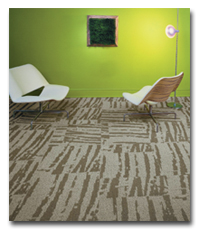
Shaw Industry’s A Walk In The Garden Collection of carpet tile, which contains Ecoworx®
polyethylene carpet backing, is designed for convenient recycling.

“We take the old material, chop and grind it, pulverize it and pelletize it and then extrude it
to produce new, 100-percent recycled-content backings,” Callahan said. “We are recycling 10 million
pounds of carpet per year this way. PVC recycling is economically viable for sure. Today, it is
cheaper for us to make a tile with recycled PVC than to use virgin material.”

Manufacturers also are beginning to consider recycling in the design of their carpets. Dalton,
Ga.-based Shaw Industry Inc.’s EcoWorx® polyethylene backing – just one end product created from
its many recycling and sustainability efforts – is designed specifically for easy recycling. The
company also has a cradle-to-cradle design protocol to assess each individual material used in a
product to determine whether it is safe for the ecosystem.

Callahan believes the market for carpet recycling will grow substantially. The change will come
about when the main purchasers of carpet begin to demand recycling and products with recycled
content. It is not a major issue for the education or health care sectors yet, but in government
and in corporations, sustainability is beginning to get higher up on the agenda. Corporations need
to maintain an image of environmental concern, and government needs to lead the way in diverting
waste from landfills. Most of the market is driven by how new carpets are specified – there are no
mandates yet, but plenty of initiative to encourage recycled content.

Peoples looks to entrepreneurs to take up the carpet recycling challenge. “CARE is keen to work
with the little guys,” he said. “There’s no way we have the technology today to put 2 billion
pounds of post-consumer carpet back into carpet,” Peoples said. “We have to find other outlets. It
is like a great mosaic, putting in many pieces to achieve the overall goal. Creation of demand for
such products will be a critical key to the success of CARE.
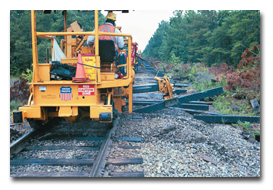
TieTek has developed railroad ties that incorporate a mixture of carpet materials,
plastics, rubber from recycled tires, other waste materials, chemical additives and various fillers
and reinforcement agents.

Peoples highlighted several innovative materials and products he thinks epitomize the direction
carpet recycling should take. Atlanta-based Nycore Inc., for example, has seen considerable growth
in its business. Post-consumer carpet is sorted, separated and mixed with other components before
being extruded into a board. It is an ideal substitute for wood and plastic building materials. The
company’s products include Nycore, a 100-percent post-consumer-carpet thermoplastic tile
backerboard; and Ny-Slate, a 100-percent post-consumer-carpet roofing tile.

TieTek LLC, Houston, is developing railroad ties that incorporate carpet materials. The novel
composite tie is composed of a proprietary mixture of plastics, rubber from recycled tires, waste
materials, chemical additives and various fillers and reinforcement agents. In extensive field
tests, they have proven to be superior to wooden crossties, lasting up to 50 years, according to
the company. They also are fully recyclable at the end of their useful life. Fifteen million
railroad ties are used each year, and they require creosote a human carcinogen as a preservative.
“These composite ties tell a hugely compelling environmental story,” Peoples said.

Old carpet also may find its way into plastic lumber or specialty products such as drain
sediment filters, which outlast natural hay.


Making It Work

GUTs Vankann is skeptical about whether this entrepreneurial model would work in Europe. He
noted that the main products developed so far are probably not appropriate in Europe, where timber
is rarely used in construction and railroad ties are made of concrete.

“In Europe, we have taken a technical approach,” he said. “We wanted to know the basic facts
first, whereas in America they are concentrating on making products and creating new markets. Our
research suggests the problem of separating and collecting has to be overcome first if we are to
recycle large quantities of carpet. Niche products are only part of the solution.”

For Europe, which has no carpet reclamation infrastructure, Vankann said recycling efforts will
have to start off looking at energy from waste. Research suggests carpet is a better fuel than
brown coal. Carpet is highly efficient and perfect for refuse-derived fuel, he explained. It should
be collected up with other high-calorific waste sources to produce refuse-derived fuel (RDF) waste
to energy. Once the RDF infrastructure is in place, it may then be possible to look at separating
materials from this waste stream for chemical or other recycling. The RDF solution is best for
those products made 10 years ago, when nobody thought about designing carpets for easy
recycling.

Peoples is keen to explore every possible opportunity available in order to reach the recycling
targets. “There needs to be a variety of outlets and uses,” he said. There is also a role for
cement kilns and energy recovery in our overall plan, but by creating many product outlets for old
carpet as a raw material, it will be easier to accomplish our aggressive goals. The key to success
will be creating demand for products that contain post-consumer recycled content from carpet. I
believe a good portion of our challenge is to get the word out, communicate and share the story of
the new industry we are creating a new industry based on sustainable design.”

April 2005

Konarka Partners With Swiss University To Develop Photovoltaic Fabric

Konarka Technologies Inc., a Lowell, Mass.-based developer of polymer photovoltaic products
using nanotechnology, is collaborating with the Ecole Polytechnique Federale de Lausanne (EPFL),
Switzerland, to develop photovoltaic fabric in which solar power-generating properties are woven
into the fabric rather than applied to the fabric surface. The Photovoltaic Fibers and Textiles
Based on Nanotechnology program will build on work already begun by Konarka in developing
photovoltaic fiber, with additional input by EPFL researchers, led by Jan-Anders Manson, Ph.D.,
director of the schools Laboratory of Composite and Polymer Technology.

“Photovoltaic textiles could positively increase the number of applications available to solar
technology by extending integration to objects made from fabrics, such as garments, tents or
coverings,” said Daniel Patrick McGahn, executive vice president and chief marketing officer,
Konarka. “New application possibilities include wearable power generation for mobile
electronics.”

The project, which is funded by the Swiss Commission for Technology and Innovation, will entail
the optimization of the photovoltaic fibers electrical performance, strength and thickness; and
maximization of the fabrics performance while maintaining the integrity of the fibers.

 
April 2005

Trade Representative Cites Concerns Over China

President Bush’s choice as his new trade representative says he will conduct a top to bottom
review of the government’s trade policies with China, as he believes China does not always play by
the rules. Promising to pursue an aggressive trade agenda, Rob Portman told members of the Senate
Finance Committee considering his nomination he plans to consider a fresh perspective on the entire
range of enforcement tools available. There was no specific mention of textile issues during the
hearing except that Portman referred to the fact that the administration had self-initiated some
safeguard petitions to address a surge in Chinese imports.

Portman said he plans to travel to Asia soon to deliver a strong message in person to Chinese
trade officials. While Portman, a seven-term member of Congress from Ohio, was given a generally
warm reception, committee members expressed their concern over the administration’s failure to
enforce trade agreements. Portman said it is his intention to aggressively enforce trade agreements
and seek more overseas market opportunities for US goods.

April 2005

RadiciSpandex Moves Headquarters To Gastonia Campus

RadiciSpandex Corp. has announced plans to close its office in Fall River, Mass., and make its
Gastonia, N.C.-based compound the primary headquarters for its US operations.The company already
conducts its mid- to heavy-denier spandex fiber spinning and fine-denier warp finishing operations
and certain corporate functions, and maintains its glob
al distribution warehouse at the Gastonia facility. It will add accounting, customer
service and planning staff at that location.

“This is a conscious move on the part of [Italy-based Radici Group] to identify itself as a
cohesive US concern,” said Rob Rebello, CEO. He added that the Gastonia office also is the official
US sales agent for RadiciNylon (Type 6 and 6,6) and RadiGreen (man-made turf fibers).

The company will create a new technical sales group that will comprise sales, marketing,
logistics, planning and technical customer service. Preston Kelly, formerly global product manager,
fashion applications, has been promoted to director, commercial operations, with responsibility for
those activities. He will be assisted by Marty Moran, sales manager.

 
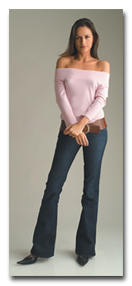
RadiciSpandex type S-17 spandex is used in stretch denim fabrics, among
others.

The Gastonia fiber-spinning operation will shut down temporarily to allow installation of new
equipment and other facility upgrades. The shutdown will affect only heavy-denier spandex spinning,
and RadiciSpandex reports it has sufficient inventory on hand to meet customers needs until
resumption of the operation, which is expected in mid-May.

April 2005

Improving Abrasion And Pilling Testing


J
ames H. Heal and Co. Ltd., England, has been in the textile business since 1872. For
roughly the last 50 years, the company has been totally dedicated to the supply of testing
instruments, quality consumables, and global maintenance and calibration services. During that
period, Heal has contributed to the science of testing by introducing many product and service
innovations.


Product Development

Every manufacturer knows a continuous stream of new and enhanced products is vital for its
future success. However, getting the product right the first time, within budget and to the agreed
time scale represents a massive challenge.

Over the years, Heal has perfected a method of product development that invariably produces what
it describes as outstanding results. Simultaneous involvement of every part of the business, as
well as agents, distributors and, most importantly, users, is fundamental to the company’s
approach.

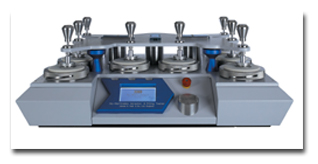
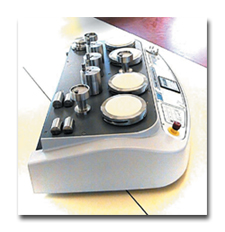
James H. Heal introduced the Nu-Martindale 864 abrasion and pilling tester at ATME-1
2004.

Recent notable testing instrument successes include the Apollo for lightfastness and weathering,
Thermaplate for colorfastness and stability, TruBurst for bursting strength, SnagPod for snagging
and Heal’s own brand of Quality Assured Consumables.


Abrasion Testing

Heal has led the way in the important field of Martindale testing, which tests a fabric’s
ability to resist wear and pilling. The company initiated many firsts in the field of Martindale
testers. It was the first to:

  • offer a six-station machine;
  • include individual station counters;
  • incorporate a hinged top plate;
  • use quick-lock, clamping rings;
  • achieve United Kingdom Accreditation Service (UKAS)-accredited calibration;
  • introduce a single-station machine; and
  • introduce higher speeds for accelerated testing.


Nu-Martindale 864 Abrasion And Pilling Tester

The ergonomically designed Nu-Martindale 864 abrasion and pilling tester, launched last year at
the American Textile Machinery Exhibition-International (ATME-I), is one example of the company’s
expert approach to product development.

Although it has been manufacturing and designing Martindale instruments since the early 1940s,
Heal still has been able to make substantial improvements to the efficiency and performance of its
latest machine.

The 864 is a four-, six-, or eight-station machine. The concept is simple: Buy a four-station
machine and upgrade at the time of purchase or later to a six- or eight- station machine. Upgrading
is easy – no tools are required and anyone can do it. The key issue on any eight-station machine is
the accessibility of the abrading tables. How easy is it to change the felt and the abrasive cloth?
After all, there’s little point in having eight stations if you can’t use them all comfortably,
according to the company.

Unrestricted access is achieved by clever positioning of the abrading tables, the radical shape
of the top plate and three primary parking positions for the top plate.

Heal offers an entry-model four-head Nu-Martindale pilling tester suitable for use in small
test laboratories.

The plate can be parked at the rear, on the right or on the left, leaving the tables fully
exposed. The top plate does not need to be lifted to access any of the eight tables.

The 864 offers versatile, easy-to-use software. It also features different operating modes, an
averaging feature and the possibility of grouping stations to create two machines in one. There
also is a facility for altering the test speed. The machine can be set to run at half the normal or
1.5 times the normal speed.

As abrasion testing is a slow process, this unique feature opens up possibilities for developing
new test methods or for accelerating tests.


Value For Money

Behind the scenes, Heal invests in state-of-the-art production machinery, which substantially
improves the company’s ability to reduce manufacturing costs. These investments have significantly
impacted the pricing of the new 864, making the machine extremely price-competitive, according to
Heal.


Quality Assured Consumables

The 864 is a machine of high quality. Good results are nevertheless dependent on the quality and
reliability of the consumables required for the testing process. Heal recommends its brand of
Quality Assured Consumables. Abrasive cloth, felt and foam are now available as pre-cut discs for
maximum convenience and minimum waste.

April 2005

Amantea Nonwovens Breaks Ground For New Facility

Cincinnati-based Amantea Nonwovens LLC has begun construction of the first United States-based
minority-owned nonwoven fabrics manufacturing plant. Located in the TechSolve Business Park in
Cincinnati, a federally designated empowerment zone neighborhood, the 77,000-square-foot facility
will employ about 30 people in a $20 million-per-year operation. Amantea’s owners include CEO Kevin
Lynch, COO Sorin Crainic, Partner Ernie Green and Italy-based nonwovens manufacturer Albis S.p.A.
The company initially served as Brentwood, Tenn.-based BBA Fiberweb’s distributor of nonwoven
fabric to Cincinnati-based Procter and Gamble. Upon completion of its plant, Amantea will produce
the fabric under contract with Procter and Gamble, and also will explore other commercial and
consumer nonwovens markets.

April 2005

Performance Fibers In Ropes And Cordage

Ropes made of Honeywell Spectra fibers have higher breaking strength than that of steel
wire ropes of the same thickness, but have only one-tenth the weight.


F
or many years, abaca (Manila hemp) and sisal were the dominant rope and cordage fibers;
and there was some use of cotton and jute for small cords, twines and string. Steel wire developed
in the early 1800s for use in heavy-duty cables replaced hemp in heavy-duty uses such as mining and
later in bridge construction.

Vegetable-based hard fibers such as hemp and sisal were the dominant materials for the rope
industry until the late 1930s. The development and introduction of nylon in the late 1930s and
early 1940s provided a new, higher-strength material for the rope industry. Nylon ropes also had
the advantage of resistance to biological degradation. Nylon rope became an important material for
land, sea and air military uses during World War II.


Polypropylene Becomes An Important Material

In the mid-1950s, polyester filament yarns became available and found some use in rope
applications because they possess a lower elongation than nylon. The initial higher price of
polyester filament restricted its use on a larger scale. At about the same time, polyethylene and
polypropylene began to be used in rope and cordage products. An advantage of these polyolefins in
rope is their low specific gravity, which enables them to float. Polyethylene use in rope is
restricted because of its low melting point.

After 1957, a number of US and European companies began to produce polypropylene resin. This
enabled many rope manufacturers to extrude their own fibers and yarns for their rope and cordage
products.


Polypropylene For Baler Twine

Farm equipment was developed in the 1930s that would collect and tie grain with sisal twine.
Supplies of sisal and the varying quality of the sisal twine presented problems for the farmers.
Polypropylene twine was introduced for baling in the 1960s. Major advantages of this twine over
sisal twine were that its higher strength and rot resistance enabled the bales to be moved more
easily and to be stored outside. Quality problems with early polypropylene baler twine slowed its
early acceptance as a replacement for wire products. The first polypropylene twine used degraded
when exposed to sunlight. This problem was overcome by adding ultraviolet (UV) inhibitors to the
polymer before extrusion. A major improvement in polypropylene baler twine was made when Albert
Lea, Minn.-based Bridon Cordage developed its SR-240 product in 1977.

“Our twine performed much better than steel wire back then, and, even to date, our technology
and manufacturing process continues to keep our Bridon brand the worlds premier baler twine
product,” said Al Mullenbach, marketing and sales manager. Bridon Cordage is owned by Eagan,
Minn.-based Universal Cooperatives Inc., an international farm supply cooperative that is owned and
operated by members around the globe. The company has plants in Jerome, Idaho, and Saskatchewan. It
also produces polypropylene cordage and twine for industrial uses.

Another important producer of polypropylene baler twine and industrial twine is Ontario-based
Poli-Twine Inc. Poli-Twine claims the following advantages for its Power-Ty baler twine:
suitability for use in all heavy-duty balers, generally without the need for knotter modification;
UV treatment for extended outdoor storage; and capability of making tight knots without
slippage.


High-Tech Rope And Cable Manufacturing

Until man-made fibers and high-performance fibers became available, rope manufacturers products
were used by traditional businesses such as marine transportation and shipping, fishing and mining.
Some smaller companies specialized in ropes and cordage for yachting and recreational boating. When
nylon fibers and later when high-performance fibers came on the scene, rope and cordage companies
were able to produce higher-strength products, which opened up new, more demanding markets. These
markets required rope manufacturers to increase their technical staffs and perform more research
and development work. This also resulted in a considerable amount of merger and consolidation in
the rope industry. Important newer applications for cordage products include fiber optic armored
cables, marine and aerospace cables, steel replacement ropes and transport slings.


High-Performance Fibers For Ropes And Cordage

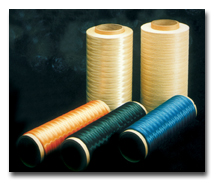
Kevlar® aramid fiber is a liquid crystal polymer first marketed by Wilmington, Del.-based DuPont
in 1971. The long-chain polymer is extremely rigid and produces fibers of very high strength – five
times stronger ounce-for-ounce than steel with half the density of fiberglass. Kevlar’s very high
strength – up to 27 grams per denier – and its low elongation enable it to be used in special types
of cable. It was used to secure the airbags in the landing apparatus of the Mars Pathfinder. Kevlar
is not found in ropes used in everyday marine applications, not only because of its relatively high
price, but also because its abrasion resistance and UV resistance are only fair. One type of
specialty cable for yacht rigging is made by using a continuous loop of Kevlar rope to create a
super-strong, lightweight cable that is protected from UV rays and abrasion by a heat-shrink
covering and a chafe cover with customized thimbles at each end.

Kevlar is useful for small guys to very large marine anchor ropes and helicopter slings. It is
used in electromechanical cables that carry both load and conductors, such as power transmission
lines, undersea communications systems and fiber optic cables, among others. In most cable and rope
applications, Kevlar is used in combination with other materials. Loose tube cables used for aerial
applications and in underground ducts use Kevlar as a strength member to withstand mechanical
pulling and other stress during installation and use. There are a large number of color-coded
optical cables within the tubes. The tube cables are of an all-dielectric construction, and the
interstices and the Kevlar are gel-flooded to provide extra water protection. These types of cables
have a wide operating temperature range and excellent reliability in a wide variety of installation
environments.

Kevlar-reinforced fiber optic telemetry cables are operated off medium and large oceanographic
vessels for marine geological and geophysical programs. In a system that has been used to examine
the volcanic seafloor off the coast of Hawaii, the business end of the sea cable consists of two
separate modules – one for initial power conversion and optical encoding/decoding and another that
houses lights, cameras and other environmental sensors. The power module is attached directly to
the end of the electro-optical tether. The camera module hangs below it on a 15-meter-long
Kevlar-reinforced coaxial umbilical. The camera module has one video module and two 500-watt
incandescent lights, and a small pressure case to hold communication and power distribution
circuits. The power module contains an oil-filled transformer case that supplies 110-volt current
and a pressure case for optical encoding of data. This system has operated at depths of 800
meters.


The Cordage Institute

Founded in 1920, the Wayne, Pa.-based Cordage Institute is an international association of
manufacturers, producers and resellers of cordage, rope and twine. The institute’s more than 70
members, including 10 from outside the United States, represent about 70 percent of the poundage of
these products produced and used in the United States. The institute’s technical committee is
involved in the development of standards and guidelines standardized using a voluntary consensus
process for the manufacture and use of cordage, rope and twine products. The committee publishes a
manual that documents the safe use of these products.

For more information about the Cordage Institute, contact (610) 971-4854; fax (610) 971-4859;
info@ropecord.com;
www.ropecord.com.


Gel-Spun Polyethylene Fibers

Polyethylene found only limited use in fiber structures until researchers at DSM Research, The
Netherlands, developed the gel fiber process for making high-strength polyethylene fibers using an
ultra-high-molecular-weight polyethylene fiber dissolved in a suitable hydrocarbon solvent at a
suitable temperature and concentration.

In 1984, AlliedSignal Inc., now the Colonial Heights, Va.-based Advanced Fibers and Composites
business unit of Honeywell International Inc., Morris Township, N.J., licensed DSM’s patents and
technology to produce gel-spun high-strength polyethylene fibers, using the technology to develop
Spectra® fibers, now known as Honeywell Spectra. AlliedSignal made further improvements, which
resulted in newer generations of Spectra.

In 1986, DSM formed a joint venture with Toyobo Co. Ltd., Japan, to produce DSM’s Dyneema®
high-strength polyethylene fibers.


Rope And Related Uses For Dyneema® and Spectra®

Although produced by two different companies, Dyneema and Spectra share very similar properties
and end-use applications. Ropes made from these products have a higher breaking strength than that
of steel wire ropes of the same thickness, but have only one-tenth the weight. These ropes have
good UV, seawater, abrasion, cutting and fatigue resistance. With their low specific gravity, they
also float. Fishing uses for these high-strength polyethylene ropes include warp lines, bridles,
headlines and rib lines. Netting uses include trawl nets, purse seine nets and aquaculture nets.
The low diameter of these twines and their favorable weight/strength ratio produce up to 40-percent
less drag than conventional fiber structures as the net is pulled through the water or set against
tide currents. This allows fishing vessels to increase their catch potentially by as much as 80
percent by trawling faster or using larger nets, or to reduce fuel consumption. The resistance of
Dyneema nets to UV light, seawater, abrasion and cutting is high, guaranteeing that nets last
longer, according to DSM. With low elongation as little as 5 percent and no shrinkage in water, the
mesh size remains stable during normal use of the netting.

Other important applications of high-strength polyethylene fibers are cut-resistant gloves,
bullet-resistant vests and plates for personal protection, vehicle armor, yacht ropes and sails,
and rescue and climbing cables.


Vectran® Liquid Crystal Polymer Fiber

Fort Mill, S.C.-based Celanese Advanced Materials Inc.’s Vectran® a high-performance
thermoplastic multifilament yarn spun from Vectra® liquid crystal polymer (LCP) is the only
commercially available melt-spun LCP fiber in the world. Pound for pound, Vectran fiber is five
times stronger than steel and 10 times stronger than aluminum. The unique properties that
characterize Vectran fiber include:

  • high strength and modulus;
  • excellent creep resistance;
  • high abrasion resistance;
  • excellent flex/fold characteristics;
  • low thermal expansion coefficient;
  • minimal moisture absorption;
  • high dielectric strength;
  • outstanding cut resistance;
  • excellent property retention at high and low temperatures;
  • outstanding vibration-damping characteristics; and
  • high impact resistance.

Vectran HS is helping to solve performance problems in critical marine, military and
industrial rope and cable applications. For example, in July 1997, airbags made from Vectran fabric
were deployed to cushion the landing on Mars of the Pathfinder space probe.

Celanese Advanced Materials’ Vectran® thermoplastic filament yarn – spun from Vectra®
liquid crystal polymer (LCP) – is the only commercially available meltspun LCP fiber in the
world.

Applications for Vectran rope products include towing and cargo tie-downs. The rope’s
high-strength, no-creep and low-stretch properties make it ideal for these uses. Vectran ropes have
found acceptance as yacht halyards, and they maintain sail loads under varying wind conditions.
Although there is no one high-performance fiber that meets all of the requirements for ropes and
cables, Vectran’s properties provide the greatest versatility, according to Celanese. Although
Vectran is lacking in UV resistance, this limitation can be overcome by using polyester as a
protective covering. It also is possible that suitable polymer additives may soon be developed to
improve its UV resistance.

April 2005

Maintaining Specialty Textiles Quality

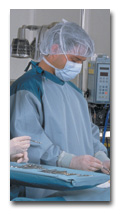
Stedfast Inc., Quebec, manufactures barrier fabrics that protect medical staff and patients
from bacteria and infection.


W
hile many US textile mills and companies have not survived the devastating effects of
what politicians call free trade, the North American specialty textile market remains a bright spot
in this industry for several reasons. Adherence to stringent quality standards, which results in
low product liability, ranks as one of the most critical reasons. Because high liability is a known
risk, steps must be taken to ensure only the highest-quality, defect-free products leave the mill.
The medical and automotive markets are examples of such high-liability sectors.


Medical Textiles

Medical textiles may be divided into two categories: disposable products made of nonwoven
materials; and reusable products made of woven or knitted fabrics.

No matter what these products are made of, they have to perform 100 percent of the time.
Critical medical textile performance properties include:

  • Barrier properties: Medical staff must be confident they are protected from blood-borne
    pathogens. Hydrostatic head testing, usually to AATCC test method (TM) 127, is performed to ensure
    this critical property is maintained.
  • Breathability: A balance between barrier properties and fabric breathability must be achieved.
    Therefore, the fabric must comply not only with AATCC TM 127, but also with the ASTM D 737 Air
    Permeability standard.
  • Durability: Linting and fiber loss through abrasion of surgical gowns and drapes is a major
    concern for both patient and caregiver. Two of the most common methods used to check this property
    are Gelbo Flex Testing to ISO 9073-10 and the Modified Martindale test standard, similar to ASTM D
    4966.


Automotive Textiles

The applications for automotive textiles are vast, as is the liability of providing these
products to the industry. One product in particular brings a high level of liability – the airbag.
Imagine the consequences of a failed airbag due to defective fabric or bag construction. No matter
who the manufacturer of the car is, the liability of a safety recall or class action lawsuit could
be astronomical. Therefore, stringent testing and quality control are required, from the yarn used
in the construction of the fabric through to the sewn seams. Critical parameters of airbag fabric
include:

  • tensile strength (breaking force) and elongation of yarns used to weave the fabric;
  • tensile strength of the fabric;
  • fabric construction thread count and area weight;
  • air permeability of the fabric typically, both static air permeability (ASTM D 737) and dynamic
    air permeability (ASTM D 6476) are tested; and
  • seam slippage in the sewn bag.

April 2005

Sponsors