Dow To Raise Prices

Effective December 1 or as contracts allow, The Dow Chemical Co., Midland, Mich., will increase
list and off-list prices of certain oxygenated solvents products sold in North America.

Acids will increase by 4 to 5 cents per pound; alcohols by 4 to 6 cents per pound; acetone
derivatives by 4 cents per pound; esters by 3 to 4 cents per pound; E-series glycol ethers by 3 to
4 cents per pound; and P-series glycol ethers by 3 cents per pound.

Also effective December 1, the company will increase North American list and off-list prices
of certain TERGITOL™, TRITON™ and DOWFAX™ surfactants by 2 to 5 cents per pound; and certain
CARBOWAX™ and CARBOWAX SENTRY™ polyethylene glycols, methoxypolyethylene glycols and other
polyglycol products by 2 to 5 cents per pound.

November 13, 2007

Delta Galil Implements PTC®’s FlexPLM™ Solution

Israel-based apparel manufacturer Delta Galil Ltd. has selected Needham, Mass.-based Parametric
Technology Corp.’s (PTC®’s) FlexPLM™ (product lifecycle management) Web-based solution for retail,
footwear and apparel for implementation across its manufacturing enterprise. Delta Galil — which
employs 10,500 associates at locations in North and Central America, Europe, Africa and Asia — will
implement the solution in order to cut lead time and optimize product development efficiency across
all locations.

FlexPLM offers a central product repository through which product information may be shared
and controlled, calendar management and event tracking, streamlined process management and approval
routings, and view and mark-up capabilities via computer-aided design tools, among other features.

“Since Delta became a more global-focused company, there was a growing need in managing the
complete product lifecycle from concept through to the consumer,” said Avi Pinhas, CIO, Delta
Galil. “We needed to reduce the development time and automate processes to cut the lead time. In
parallel, we wanted to improve and better control the extended supply chain, thus making it more
transparent.”

Pinhas added that the company expects FlexPLM to improve collaboration with customers; help
to increase product margins; and improve data accuracy, product quality and operational efficiency.
PTC’s Global Service Organization will assist Delta Galil in implementing the solution and
customize it to meet specific customer needs.

November 13, 2007

BASF, Harvard Establish Advanced Research Initiative

Germany-based chemical manufacturer BASF AG and Cambridge, Mass.-based Harvard University’s Office
of Technology Development have agreed to jointly establish the BASF Advanced Research Initiative
with the aim of defining and undertaking projects that may lead to commercial development by BASF.
Application areas include applied physics, physics, applied mathematics, chemical biology, systems
biology, bioengineering and materials science

The initiative, based at Harvard’s School of Engineering and Applied Sciences, will benefit
from relationships with a number of schools and departments within the university. BASF will fund
Harvard researchers directly, initially supporting 10 postdoctoral students. The company expects to
provide up to $20 million over the next five years.

Dr. Jens Rieger, scientific director, Polymer Research, BASF; Dr. David Weitz, Mallinckrodt
Professor of Physics and Applied Physics; and Dr. George Whitesides, Woodford L. and Ann A. Flowers
University Professor; will lead the initiative and work to create a research network within the
university. Harvard faculty researchers will be able to distribute and publish any research
findings resulting from the initiative.

Initial research topics include finding new chemical approaches to materials and processes
such as carbon dioxide chemistry; understanding the formation of biofilms and developing strategies
to inhibit or limit their growth by surface or material modification; and targeting new and
improved concepts to deliver active ingredient molecules to a particular place where they develop
activity in a controlled procedure.

“We are delighted to be working together with one of the world’s most respected universities
for science and engineering,” said Dr. Stefan Marcinowski, executive research director and member
of BASF’s Board of Executive Directors. “We expect this initiative to generate new and
unconventional innovations, which can lead to future products that are relevant to the needs of
society.”


November 13, 2007

Bowman Hollis To Distribute Conveyors

Charlotte-based Bowman Hollis Manufacturing Inc., an established industrial conveyor belting
distributor, will become a full-service distributor of conveyors. A major focus of the company will
be low-profile modular conveyors for automated assembly, packaging, vision systems, and plastic-
and metalworking.

Because of Bowman Hollis’ experience with belting, the company will bring more to the table
than the average conveyor distributor, according to Steve Broadwell, manager, sales and marketing. “
So many times, conveyor systems underperform due to improper belting choices. We are belting
people, and customers will not have this problem when dealing with us,” he said.

Bowman Hollis will target the Southeastern United States. It will represent Milford,
Ohio-based Conveyor Technologies Ltd., and Alpena, Mich.-based Omni Metalcraft.


November/December 2005

Dow Reichhold Raises Price

Effective Jan. 1, 2008, Dow Reichhold Specialty Latex LLC will increase the price of nitrile latex,
used in the production of gloves, by 3 to 5 percent worldwide.

The company attributes the increase to the continued rising costs of energy, logistics and
raw materials.

Karl Mayer Acquires Sucker-Müller Product Line From Moenus

Germany-based Karl Mayer Textilmaschinenfabrik GmbH has acquired the Sucker-Müller weaving
preparation product line from Germany-based Moenus Textilmaschinen GmbH. The acquisition, which
includes trademark and patent rights, will allow Karl Mayer to expand its Warp Preparation division
by offering a new product line under the Sucker brand.

Sucker will continue its manufacturing operation on a medium-term basis in Mönchengladbach,
Germany, as Sucker Textilmaschinen GmbH, retaining its global service and spare parts business and
25 employees at that location. Karl Mayer ultimately plans to integrate the business, which had
been its largest competitor, into the Karl Mayer Group.

November 6, 2007

DAK, Wellman To Raise Polyester Staple Prices

Effective December 1, Charlotte-based DAK Americas LLC will increase the price of its polyester
staple fiber products by 3 cents per pound. In addition, Wellman Inc., Fort Mill, S.C., will
increase the price of its Fortrel® polyester staple fiber products on December 1 by 3 cents per
pound.

Both companies attribute the price increases to continued high costs of such raw materials as
ethylene glycol.

November 6, 2007

Wellman’s Board Explores Strategic Alternatives

The Board of Directors of Fort Mill, S.C.-based fiber, plastic packaging and engineering resin
producer Wellman Inc. has engaged New York City-based investment bank Lazard Frères & Co. LLC
to help the company explore strategic alternatives prior to refinancing of its debt in 2008.

According to Wellman’s Chairman and CEO, Tom Duff, the company continues to streamline its
operations, with the expectation of lowering its costs in 2008 by $20 million to $25 million
compared with costs in the previous year.

For the third quarter (Q3) 2007, which ended September 30, Wellman lost $26.3 million, or 81
cents per share, from continuing operations; compared with a Q3 2006 loss of $37.9 million, or
$1.19 per share. For the first nine months of 2007, the company reported a loss of $66.1 million,
or $2.05 per share; compared with a year-earlier loss of $68.7 million, or $2.15 per share.

“Our financial results in the third quarter were negatively impacted by increased competitive
pressures as new PET [polyethylene terephthalate] resin capacities were fully introduced into the
NAFTA [North America Free Trade Agreement] market,” Duff said.

The company’s sale of its European recycled-based fiber business earlier this year
contributed to enabling it to reduce its outstanding debt by $21.2 million, according to CFO Keith
Phillips.

November 6, 2007

The Rupp Report: The Battle For Energy Has Just Begun

For decades, energy wasn’t such an issue for politicians, citizens or industry. However, with an
increasing consciousness of ecological issues and overloaded landfills, people — mainly in Europe —
started protesting for a “better and cleaner world.” Eventually, the first “Green” political
parties were founded in Europe, and in the beginning, the hype to be green was big. Even glamorous
show business stars participated and demonstrated their feelings on green issues.

However, environmental protection and not the worry over resources was primarily at issue.
Eventually, the first studies on climate change started to emerge in the public realm. Alternative
energy resources, mainly for cars, became a daily issue in the media. Japan as an island got the
message and started to produce cars that consumed less gas, as well as hybrid vehicles.


Changing Textile Markets


Also, textile markets are radically changing. Emerging countries in the Far East have started
more and more to intrude on international markets. This trend started in the 1960s — first with
Hong Kong in apparel, followed by Japan in textile machinery.

The situation changed dramatically when China started to be a production powerhouse for the
whole world, and not only in textiles. Hong Kong abandoned its production and became the gateway to
China. The energy consumption, and thus also the prices for energy, soared and destroyed most of
the Western textile production. The Western world claimed unfair processing methods regarding
environmental issues.


A Way To Survive


With today’s energy prices and the lack of clean resources such as water, many Asian
countries are realizing that environmentally friendly processing, energy savings and a gentle
deployment of resources are no longer a political issue, but the only way to survive economically.

This trend has also left its footprints in the textile machinery industry by kicking off a
lot of new developments in yarn and fabric forming, mainly in the finishing sector. Reduced energy
consumption and lower liquor ratios are just a few key phrases in today’s competitive marketplace.
At ITMA 2007 in Munich, many manufacturers of textile machinery showed their latest equipment
operating with less energy and natural resources.

Recently, a well-known supplier of sports fabrics mentioned in an interview that only by
using finishing machinery with a reduced liquor ratio and water consumption was he able to pay for
his investment in three years.

And, a famous Germany-based manufacturer of screws and tools — and more recently, solar
panels — said: “In the beginning, ecological issues were considered in my company to be a bonus for
the corporate image. Now we have realized that we can make a lot of money out of it.”

November 6, 2007

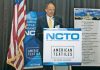
Textile Lobbyists Attack China Trade

At a hearing before the International Trade Commission (ITC), Washington lobbyists for the US
textile industry painted a bleak picture of trade with China, saying that the burgeoning trade is “
the single greatest trade problem confronting the United States as a whole and the US manufacturing
base in particular.” The ITC is conducting the hearing, “China: Government Policies Affecting US
Trade in Selected Sectors,” in order to evaluate the trade and investment implications of trade
with China and other nations in Asia.

The leading organizations representing textile and other manufacturers in Washington launched
a scathing attack on US trade with China, charging that China’s heavily subsidized manufacturers
are threatening to completely dominate world trade in textiles and apparel.

Auggie Tantillo, executive director of the American Manufacturing Trade Action Coalition
(AMTAC), told the ITC that China has been able to gain a dominant position in the global textile
and apparel marketplace because its government has “designed and implemented a sophisticated plan
including both general and specific subsidies to ensure that they can penetrate and destabilize key
markets.” He said it is time for the US government to acknowledge that it is virtually impossible
to compete with Chinese manufacturers who “have the benefit of lax environmental standards,
pennies-per-hour labor rates and substantial government subsidies.”

Cass Johnson, president of the National Council of Textile Organizations, testified that
China has 73 subsidies that prop up its textile sector including such things as subsidized land
grants, subsidized loans and loan forgiveness, brand development grants, exemptions from value
-dded taxes, raw material rebates and worker benefit exemptions. He also cited currency
manipulation as a major subsidy.

Johnson warned that with the Chinese textile and apparel safeguards due to expire next year,
textile and apparel manufacturers throughout the world “are in jeopardy.” He said that if China
follows past history, it will take over 65 percent of US and European Union apparel markets once
the remaining safeguards setting quotas in sensitive imports are removed. In addition, he said, the
economies of Central America, Sub-Saharan Africa, Pakistan, Sri Lanka, Indonesia and Jordan will be
particularly vulnerable once safeguards are removed.

Johnson cited the following key facts:

• With four times the size of any other country’s exports, Chinese textile and apparel
exports are growing at an annual rate of 20 percent.

• China’s $12-billion gain in apparel exports in 2006 was greater than the total exports of
46 of the top 50 exporters of apparel to the world.

• Through government intervention, China’s textile industry has invested $85 billion during
the last ten years with the biggest increases coming in 2006 and 2007.

Johnson called on Congress to pass “meaningful legislation” to address issues related to
China trade.


November 6, 2007

Sponsors