The Rupp Report: Cotton With A New Approach

In the International Year of Natural Fibres, declared by the Food and Agriculture Organization of
the United Nations, cotton is even more the focus of attention than in the past. For decades,
cotton was considered to be a kind of “bad” fiber, using too much water for irrigation, and,
moreover, too much pesticide. Those times are gone.

What Is Clean Cotton?

As Textile World has reported before, there is a totally new approach to cotton these days.
Sustainability is one of the key words. Customers around the world are putting more attention on
“clean cotton.” But what exactly is clean or sustainable cotton? As quoted in the last cotton
report from Bremen Cotton Exchange, sustainability as well as sustainable cotton production are
much-discussed terms.

However, there are still misunderstandings between sustainability and terms like “organic” or
“bio.” Back in 1987, the United Nations presented its definition of sustainability: “Sustainable
development is development that meets the needs of the present without compromising the ability of
future generations to meet their own needs.” Therefore, a sustainable agricultural production
should have an ecological, economical and social balance that also considers the options of future
developments.”

Research Programs

Under the theme “Sustainable Cotton Production,” the International Cotton Advisory Committee
(ICAC) organized a Research Associates Program, which took place April 6-16. Cotton researchers
from Ivory Coast, Germany, Greece, Sudan, Turkey and Zambia participated. The focus of the program
was to learn the definition of sustainability in combination with practical input of the cotton
production sector.

Besides modules at the ICAC office in Washington, other important locations for the US cotton
industry – including visits to the United States Department of Agriculture and Cotton Council
International in Washington, and Cotton Incorporated in Cary, N.C. – completed the program.


Improved Seeds


The US agricultural sector also tries to improve its methods through intensive research, the
report says. The use of chemical inputs is being reduced further owing to the use of genetically
engineered seeds. Furthermore, the agricultural research has reached a stage of high-tech crop
management that can reduce pesticide use to a minimum. An exact diagnosis of the soil condition,
irrigation steered by satellite and, of course, specific seed breeding are factors already used in
the fields.


To Face Financial Problems


Obviously, the financial crisis hit the textile sector. This was mentioned at a panel
discussion of the ICAC Standing Committee in which the research associates could participate as
well. The meeting took place at the Fashion Institute of Technology in New York City. The main
focus of the gathering was the panel discussion on “Demand for Cotton Products in the Economic
Crisis”. On the panel were representatives of textile-based sectors like fabric research or fabric
development as well as denim development and jeans manufacturing, but also the cotton research
sector. The main idea was that – at least in the US market – quality is of core importance. The end
consumer considers cotton a high-priced quality fiber despite the fact that man-made fiber can be
more expensive.

For more information on the important subject of sustainable cotton, please visit
www.textileworld.com.

May 12, 2009

RadiciSpandex Announces 2009 Stretch To The Future Design Competition Winners

Gastonia, N.C.-based spandex fiber manufacturer RadiciSpandex Corp., the North American business of
Italy-based RadiciGroup, has announced five winners of the 2009 “Stretch To The Future” Design
Scholarship Competition. The Radici competition – held with junior class design students at The
Fashion School of Kent State University, Kent, Ohio – was established 10 years ago to promote
apparel design using fabrics containing spandex. Judging was held at Kent’s Manhattan design
studio.

This year’s honorary judges were Lisa Mayock and Sophie Buhai, designers and founders of
Brooklyn, N.Y.-based Vena Cava, a contemporary womenswear label. Mayock and Buhai received Stretch
to the Future honoree awards from RadiciSpandex Marketing Manager Kim Hall. The Underfashion Club
sponsored the contest’s lingerie award for the second year.

This year’s winners were chosen from a field of 30 students. Fabrics used contained
RadiciSpandex’s RadElast® spandex. Alexandria Kakoules, who designed a one-piece swimsuit
constructed in fabrics from Darlington Fabrics, took the Grand Prize. Christine Barbas received the
Activewear Award for her three-piece design comprising a zip-up vest, long-sleeve top and leggings
using fabrics provided by Darlington, Gehring Textiles, Paul Gottlieb and Sextet Fabrics. Chelsea
Paskvan won the Swimwear Award for a swimsuit and cover-up designed using fabrics by Sextet.
Brittney Sampsel received the Lingerie Award for a bustier and panty constructed using Sextet and
Cyberknit fabrics. Jenna Weickert won the Eveningwear Award for her gown designed in black stretch
fabric provided from Darlington.

May 12, 2009

Klopman Vantage Fabric With Cordura® Wins Fabric And Fibre Innovation Award

Klopman Vantage workwear fabric featuring Invista’s Cordura® technology has received the Company
Clothing Industry Award’s 2009 Fabric and Fibre Innovation Award.

Wichita, Kansas-based Invista – a manufacturer of global integrated fibers and polymers – and
England-based Klopman International – a manufacturer of polyester/cotton blended fabric – partnered
to develop a comfortable, durable, abrasion-resistant twill fabric that could be used for a
complete garment.
(See ”
Invista,
Klopman Unveil Klopman Vantage Fabric With Cordura Technology
,” October 2008.)
Klopman
Vantage with Cordura contains an intimate blend of 50-percent Invista™ T420 Nylon 6,6 fiber and
50-percent combed cotton. The fabric is used to make trousers, coveralls and jackets, and is
available in five colors. Klopman currently is working to expand the range of fabric weaves in the
Vantage line.

“We chose to recognize Klopman Vantage Fabric featuring Cordura brand technology because the
performance of the fabric represents a step-change in terms of durability and abrasion resistance
without compromising on comfort or aesthetic appeal,” said Jose Sanchez de Muniain, chairman of the
judging panel, former editor of Company Clothing and current editor of Fire & Rescue magazine
and Industrial Fire Journal. “These factors heavily influence the success of workwear garments. The
fabric offers something new to the industry – and that is what we look for in a winning fabric.”

May 12, 2009

NCTO Receives DOC Appreciation Award For Trade

On Monday, May 11, Rep. Sue Myrick, R., N.C., presented the US Department of Commerce (DOC)
Appreciation Award for Trade to The National Council of Textile Organizations’ (NCTO’s) North
Carolina office for its continuing efforts to support trade — specifically, export trade — within
the US textile industry. NCTO selected RadiciSpandex Corp., a Gastonia, N.C.-based spandex fiber
manufacturer and NCTO member, to accept the award because it is a leading exporter of US-made
goods. RadiciSpandex Marketing Manager Kim Hall represented the company at the award ceremony,
which was held at the Gaston County Citizen’s Resource Center in Dallas, N.C.

May 12, 2009

Exhibition Space Open At ITMA Asia + CITME 2010 In Shanghai

Organizers of the second ITMA Asia + CITME textile machinery exhibition – to be held June 22-26,
2010, at the Shanghai New International Expo Centre in Shanghai’s Pudong district – are inviting
textile machinery manufacturers to apply for exhibition space. According to show organizers Beijing
Textile Machinery International Exhibition Co. Ltd. and Singapore-based MP International Pte. Ltd.,
the exhibition is expected to draw a record response, despite the current global economic climate.

“In a world of uncertainty, manufacturers are looking increasingly at cost-cutting measures
and value propositions,” said Maria Avery, secretary general, CEMATEX, the European Committee of
Textile Machinery Manufacturers, owner of ITMA Asia. “Textile machinery manufacturers will
consolidate their resources and rely on established platforms that deliver great value and
sustainability. Hence, we are confident that all the leading brand names will continue to have a
presence in credible showcases that are organized by the industry.”

Launched in 2008 by CEMATEX and its Chinese partners – the Sub-Council of Textile Industry,
the China Council for the Promotion of International Trade, the China Textile Machinery Association
and China Exhibition Centre Group Corporation – ITMA Asia + CITME combines two previously
independently produced Asian textile machinery exhibitions. The inaugural ITMA Asia + CITME, which
drew 1,368 exhibitors from 30 countries and regions and more than 80,000 trade visitors from 96
countries and regions, sold out its exhibition space. Applications for space are due September 30,
2009. For more information about the show, visit
www.itmaasia.com or
www.citme.com.

May 12, 2009

DAK Americas Announces PSF Price Increase

Effective June 1, Charlotte-based DAK Americas LLC — a producer of polyester staple fibers (PSFs),
polyethylene terephthalate resins and terephthalic acid monomers; and a subsidiary of Mexico-based
Alfa S.A.B. de C.V. — will implement a 3-cents-per-pound price increase on all of its PSF products,
in addition to the 4-cents-per-pound price increase that became effective May 1. The company cited
the escalating demand for paraxylene, a raw material feedstock used to manufacture PSFs, in
announcing the increase.

May 12, 2009

BASF Announces Price Increase For Styrofan™ Latex

Effective June 1, or as contracts allow, Florham Park, N.J.-based BASF Corp. will implement a price
increase of 4 cents per dry pound for all Styrofan™ carboxylated styrene-butadiene polymers sold to
the carpet industry in the United States and Canada.


May 12, 2009

J+J/Invision Backing Systems Receive NSF/ANSI Standard 140-2007 Certification

Dalton, Ga.-based J&J Industries — a manufacturer of carpet for commercial applications
including corporate interiors, healthcare, retail and educational facilities — has announced three
carpet backing systems in its J+J/Invision product line have been certified by Ann Arbor,
Mich.-based third-party certification organization NSF International to be compliant with the
NSF/ANSI Standard 140-2007 Sustainable Carpet Assessment standard.

J+J/Invision’s eKo® modular carpet backing system has received platinum certification; and
its PremierBac™ Plus and TitanBac® Plus broadloom carpet backing systems have received gold
certification. NSF/ANSI 140-2007 rates sustainable carpet on three performance levels — silver,
gold and platinum — using established criteria for sustainable manufacturing processes; reclamation
and end-of-life management; energy usage and efficiency; use of bio-based, recycled or
environmentally preferable materials; and efforts to minimize adverse impacts on public health, the
environment and the community.

Eko modular carpet backing contains less material, making it 33-percent lighter-weight than
traditional polyvinyl chloride backing; and it also is recyclable in a closed-loop system.
PremierBac Plus and TitanBac Plus broadloom carpet backings feature lifetime warranties for tuft
bind strength and delamination protection. TitanBac Plus also features a system that keeps moisture
from penetrating into the subfloor. Eko, PremierBac Plus and TitanBac Plus are all part of EnAct®,
J&J Industries’ company-wide focus on sustainability.

May 12, 2009

Springtime In Paris


D
espite the lagging economy, sample orders for many recent Paris apparel textile trade
show exhibitors were ahead of last year. Business is coming back to Europe. The trend is to order
less, buy more frequently and demand faster deliveries – something not available from Asian mills.
And buyers looking for innovation and creativity found a lot of it at the shows.

Fiber producers, yarn spinners, weavers, knitters and finishers all offered new developments
and treatments that buyers wanted. Generally, fluid, sheer, supple, silky-touch fabrics are
favorites for Spring/Summer 2010. Some have crinkled surfaces; others, a papery touch. Open-work
comes via knit stitch, loose weave or laser cut. Luster, shine and metallic decoration are
abundant.

Performance fabrics transport and evaporate moisture, are antibacterial and
ultraviolet-protective, and provide thermal comfort. Eco-friendliness is a given, with cotton,
linen and silk reported to be fibers of choice, along with recycled polyester and a bio-based nylon
as activewear favorites. Natural dyestuffs and low-impact finishing treatments are on the rise.
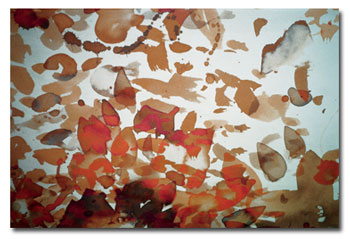
bucol
Fabric from Bucol, shown at Première Vision


Fibers


Cary, N.C.-based Cotton Incorporated, an exhibitor at Première Vision and Texworld, showed
development techniques and fabrics, along with Fall/Winter 2010-11 color direction. Fabrics shown
included knits with a dry, crisp hand; fluid 36-gauge single knits, hairless, singed, plied yarns;
and piece-dyed, discharge-printed denim. 

Supima, Phoenix, showed fabrics and apparel brands, and garments created by young, emerging
designers. Of note was a wedding dress created in Supima® cotton shirting fabrics by Cotonificio
Albini S.p.A., Italy.

Lenzing Fibers, Austria, focused on new fiber variant ProModal®, Tencel® in denim and the
environment. Lenzing is working with DyStar Textilfarben GmbH & Co. Deutschland KG, Germany, to
develop eco-friendly ways to use and reuse dyestuff.

At Première Vision, Masters of Linen, Paris, showed a collection of innovative fabrics called
Linen Dream Lab. Fabric samples were executed by European knitters and weavers. Libeco Lagae S.A.,
Belgium, showed a linen/paper-blend dense and loose check. Also seen were a micro textured jacquard
with a dry hand and fluid drape from Crespi, Italy; camouflage-patterned devoré of linen/silk that
has mechanical softening by Achille Pinto, Italy; soft, ultrafine double voile by Coltex Retail
Group, the Netherlands; broken geometric damask by Linea Tessile Italiana, Italy; and a 3-D
prism-like knit in yarns from Linificio E Canapificio, Italy.
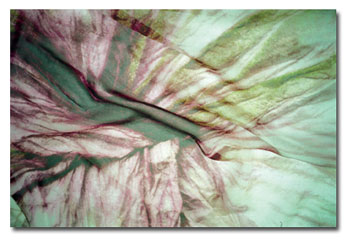
mantero
Fabric from Mantero Seta S.p.A., shown at Première Vision


Expofil


 Exhibitors at Expofil, the yarn segment of Première Vision Pluriel, presented a lot of
newness. Much of the focus was on yarns for Fall/Winter 2010/11 and future developments.

Sofila, France, introduced its greenfil® yarn, made of Rilsan® nylon produced from oil
extracted from castor beans. Sofila is using natural dyes produced by Rubia Pigmenta Naturalia, the
Netherlands. Hosiery, lace, swimwear and medical products makers have shown interest.

France-based Safilin introduced ultrafine-count linen yarns. A lot are going to knitters,
including Bel Maille and Bugis, both based in France, and Silanco S.p.A, Italy. Bel Maille reported
excellent reaction to its linen single jersey and a linen/cotton piqué. Bugis is blending linen
with cotton or Tencel. Fabrics include piqué stitches, ribs and jersey with a slight nub.

Techno yarns at Tearfil, Portugal, are low-pill and antibacterial. A new yarn spun of
Trevira® is being used in double cloths for the next-to-skin inner layer. For Winter 2010, Tearfil
has new cashmere/silk yarns.

Hermann Bühler, Switzerland, reported special interest in TransDRY™ and Rainbow yarns.
Recently, it introduced an extensive range of ultrafine organic Supima cotton yarns. Another new
product is Royal Spun, a MicroModal® yarn with improved anti-pilling.

New at Kurabo Industries Ltd., Japan, is Qwon yarn irradiated to bind deodorizing agents,
producing a long-lasting effect. The yarn absorbs moisture inside clothing to generate heat and
warm the body. Mitsubishi, Japan, showed superfine acrylic yarns with antistatic, anti-pilling and
heat-generating properties. Other yarns resemble fur.

ProModal spinner Karsu Tekstil, Turkey, is showing cellulosic yarns as well as cashmere and
wool blends. There are fine-count and anti-pill yarns. Sampaio, Portugal, has ultralight
ProModal/spandex piqué and single knits.

One of the most crowded stands was Rubia, whose current spectrum of naturally dyed colors
ranges from pale pinks and oranges to deep reds and browns. Rubia’s dyes are powder extracts from
Rubia tinctorum roots grown on its own farm. Soon to be introduced are yellows and blues. Crespi
and Italy-based Marioboselli Group are using Rubia dyes.

ratti
Fabric from Ratti S.p.A., shown at Première Vision


Première Vision Best Sellers


At Crespi, linens have a paper touch, are gold-foil-coated or have pearly finishes.
Marioboselli has linen/Lycra® knits and heavy jacket weights for menswear.

 Libeco Lagae is selling naturally dyed linen. Popular are glazed linens washed to give
them a soft hand, linen gauze and summer tweeds.

Prints tend to be large and bold, blurred and romantic, abstract, outlined or graphic.
Continuing are skins, small shirting florals, dots and paisleys. Print bases at Josef Otten GmbH
& Co., Austria, are heavy cotton/silk blends, seersucker, polyester sateen, heavy linens, silk
chiffon and viscose crepe. There are blurred florals, abstracts and mono-colored flowers outlined
in white.

Miroglio Group, Italy, has spectacular dramatic flowers, sunburst stripes, animals in their
natural habitat and enormous borders. Italian printer Friulprint’s line, created by five young
British-schooled designers, ranges from colorful abstract florals to architectural designs.

Silk producer Ratti S.p.A., Italy, has sophisticated fabrics with dimensional effects,
transparent foil coatings, prints with a faded look, bleeding watery florals and new paisleys. Best
seller at R. Allegri & Filli S.r.l., Italy, is a color-reverse, crinkled-surface taffeta.

Bucol, France, showed an elegant line with prints that are splattered, melting, blurred or
paintbrush-stroked. Colors are subtle.

Jacquard weaver Stephen Walters & Sons Ltd., England, showed handwoven effects,
understated textures and patterns, touches of luster or metal and soft mélange colors.

Fantasy knits at Jackytex S.p.A., Italy, are light and liquid, and include fringe, chenille,
shiny printed laminates and double gauzes. Knits at Texdam, Spain, are crinkled, puckered or open;
and include eyelet embroideries, diagonal stripes and placed patterns.

Techno specialist Mectex S.p.A. produces all of its fabrics in Italy. Nylon stretch cloqué
and ultra-sheer taffeta with a soft or crisp hand were pointed out. Performance features include
bistretch, moisture transport/absorbency, antibacterial function, and flame retardation.

Komatsu Seiren Co. Ltd., Japan, showed a 7-denier, 11-grams-per-square-meter transparent
woven polyester fabric with reflective luster.

At Texworld, Rieter Machine Works, Switzerland, presented possibilities available using its
textile machinery. Fabrics and garments on display were created using yarns spun on new ComforJet®
equipment.

Many Texworld exhibitors are vertical manufacturers. Many are also garment manufacturers.
Nishat Mills Ltd., Pakistan, sells stretch denim woven with Invista T400® elastic fiber. There are
soft sugar finishes.

Techno finishes at Alok Industries, India, offer soil-release, antibacterial and
insect-repellent properties on cotton/silk knits, fine yarn-dyed dobbies and herringbone shirtings
that have been gas-finished. Some fabrics are knitted or woven of organic cotton.

At Bordo Tekstil, Turkey, organic and Pima cottons, linen and bamboo are fibers of choice.
Fabrics include silky-touch twills; jacquard interlocks; and jersey for T-shirts, dresses and
intimates.

Hangzhou Zhongsang, China, a dyer and finisher of casual and outerwear fabrics, is selling
ottomans, twills and poplins. China-based Jiangsu Textile Industry (Group) Import & Export Co.
Ltd. showed jacquards, piqués, interlocks, fleeces and basket textures knitted with cotton/spandex,
Modal, Tencel, bamboo viscose and polyester.


May/June 2009

Kornit Offers New Dark Polyester Printing

Kornit Digital Ltd. – an Israel-based developer, manufacturer and marketer of digital printing
solutions for the apparel industry – has introduced a method of using its existing ink technology
and automatic wetting solution process to print on 100-percent dark polyester and dark polyester
performance fabrics. According to Kornit, the application allows for high-quality dark polyester
prints including variable data prints for sportswear, collegewear and other applications.

Kornit will present Dark Polyester Printing for the first time at Fespa Digital 2009, to be
held May 12-14 in Amsterdam. The Dark Polyester Software Application will be available May 15.


May/June 2009

Sponsors



