Roaches International Adds Features To Dyeing Machines

England-based textile-laboratory solutions supplier Roaches International Ltd. now offers new
user-friendly control features on its Pyrotec, Colortec and Phoenix laboratory dyeing machines. The
machines now feature a variety of personal computer-based, touch-screen controllers that are able
to record the program parameters for every production batch and then store the data for future
reference. The system also has Internet capabilities and can connect to a standard 10/100 ethernet
network.

August 11, 2009

Suzhou Deylon, Shangdong Lawrance Earn Oeko-Tex® Standard 100plus Certification

Suzhou Deylon Textile Co. Ltd. and Shangdong Lawrance Textiles Co. Ltd. — China-based producers of
ready-to-wear apparel, and subsidiaries of Saudi Arabia-based investor Ajlan & Bros. — have
become the first companies in Asia to earn Oeko-Tex® Standard 100plus certification for their
products. To receive the certification, a company’s product must be free of harmful substances
according to Oeko-Tex Standard 100 and must be manufactured in environmentally-friendly facilities
that apply socially responsible policies according to Oeko-Tex Standard 1000. Testex®, the
Switzerland-based Swiss Textile Testing Institute, performed third-party testing of Suzhou Deylon’s
and Shangdong Lawrance’s products and facilities.

Suzhou Deylon specializes in producing the yashmagh and ghuttra, traditional Arab headwear.
Shangdong Lawrance manufactures outerwear and undergarments for the Asian and European markets.
There are currently three companies in the world whose ready-to-wear products are Oeko-Tex Standard
100plus-certified.

August 11, 2009

August 2009

Research and Markets Ltd., Ireland, has released the book “Sustainable Textiles:
Life Cycle and Environmental Impact.”

Rochester Hills, Mich.-based
cf stinson, a partner of Wakefield, Mass.-based
Agion Technologies Inc., has received the Best of NeoCon® Gold Award for
Healthcare Fabrics for its Now & Zen Woven Agion® upholstery fabrics.

The
Association of Italian Textile Machinery Manufacturers (ACIMIT), Milan, and the
Italian Institute for Foreign Trade have released an English version of The
Nonwovens Textbook, covering nonwovens production technologies.

The Hohenstein Institute, Germany, has introduced two “Tested Quality” labels: one
for bed linens that gives sleep comfort ratings ranging from 1 for “very good” to 6 for
“unsatisfactory,” and one for mattress covers that indicates whether an encasement is breathable
and suitable for allergy sufferers. 

The
Association of the Nonwoven Fabrics Industry (INDA), Cary, N.C., has added the
Babel Fish translator to its website, www.inda.org. Babel Fish can translate html pages into Dutch,
French, German, Greek, Italian, Japanese, Korean, Portuguese, Russian, Swedish, Spanish, and
simplified and traditional Chinese.

August 2009

August 2009

Bristol, Va.-based
Universal Fibers Systems LLC‘s Board of Directors has appointed
Marc Ammen CEO.

ammenPeople

Ammen

Compton, Calif.-based
Crown Crafts Infant Products Inc. has promoted
Tracie Schor to vice president of marketing.

New York City-based
Jones Apparel Group Inc. has appointed
Mehmet Tangoren senior vice president of product development, Jeanswear Division.

Greenville-based
Frankl & Thomas Inc. has awarded its annual scholarship to
Collin Alexander, a sophomore at The Citadel.

The Netherlands-based
DSM Biomedical has named
Samuel Stupp,
James Kirkpatrick and
Wouter Dhert to its Biomedical Scientific Advisory Board.

Portland, Ore.-based
Naturally Advanced Technologies Inc. has appointed
Jeremy K. Jones to its Board of Directors.

The Boston-based
National Textile Association (NTA) has promoted
Jane Lomas to office manager.

August 2009

Some Industry Improvement

Newly released government statistics suggest the huge month-to-month textile declines of late last
year and early 2009 may be nearing an end. To be sure, the latest overall numbers can hardly be
described as bullish. On the other hand, the industry tumble does seem to be bottoming out. Over
the past three months, for example, the Federal Reserve Board’s overall mill output index declined
by only about 1 percent. And this trend seems to be confirmed by another bellwether industry
barometer — textile shipments, which over the past three-month period also slipped by the same
small 1 percent. The point to keep in mind: These latest estimates from Uncle Sam’s number
crunchers are a lot better than those reported over the previous 12 months — a time when mill
output and shipments both fell by more than 20 percent.

But a note of caution: All this in no way means that a big drop for all of 2009 can be
avoided. Put succinctly, the hefty textile activity declines of earlier this year and the only
very-modest leveling off now noted will be taking their toll on 2009’s final results.

Textile World
‘s revised mid-year updated 2009 forecast, for example, now points to something in the order
of a 15-percent or slightly larger decline in industry activity. That’s actually bigger than last
year, when mill production dropped by about 12 percent. On a more optimistic note, however,

TW
now sees 2010 turning out considerably better — with perhaps only some fractional slippage
in mill activity as the US economy slowly recovers from the biggest downturn since the Great
Depression.

BFgraphAugust09


A Closer Look At The Economy


This modestly upbeat 2010 outlook seems fairly certain — despite all the recent talk that
Uncle Sam’s big stimulus package isn’t working. Much of this gloom and doom talk is based on the
fact that unemployment is still very high. But it’s important to remember that the jobless rate is
a lagging indicator. Put another way: During past downturns, employment only began to rise well
after the economy had begun to bottom out. Indeed, if history is any indicator, it may not be until
next spring or summer before these jobless numbers begin to show any meaningful shrinkage.

Meantime, there’s plenty of evidence that the economy is beginning to turn the corner. Some
of these positive signs: overall retail sales are no longer falling; the lion’s share of
Washington’s stimulus money has yet to be spent (some experts say that close to 80 percent of the
total still has not been committed); and the federal minimum wage has just gone up. The impact of
the latter can’t be underestimated since it should funnel more money into the pockets of some 2.8
million workers. The higher minimum should also raise the pay of an additional 7 million employees
— workers whose wages are tied to the minimum level.

In any event, estimates supplied by the Economic Policy Institute suggest that the new
minimum pay boost could add a hefty $5.5 billion to the economy. And most of this money — since
it’s going to low-income workers – is likely to be spent almost immediately. Given all the above
encouraging signs, most economists now see the remainder of the year as flat to slightly higher.
And by next spring or summer, they expect to see gross domestic product increasing at a small but
respectable 2-percent annual rate.


More Chinese Concerns


That’s not to say that the industry is out of the woods. Chinese trade, for example,
continues to present serious question marks for both textile and apparel firms. Note, for instance,
that while US imports of these products from all countries are down 11 percent so far this year,
the drop-off is far less when it comes to China — which is off by only 6.5 percent. Conclusion:
Beijing’s share of US textile imports is still on the rise. Moreover, because of even bigger
declines in domestic demand for these products, the Chinese share of the overall US market
continues to grow. More importantly, there’s little to suggest that Beijing will be willing to give
up on its drive for even greater market penetration. Thus, aside from halting any further upward
revaluation of its currency, the yuan, which as jumped 20 percent over the past four years, China
has been recently granting exporters larger tax rebates, more generous loans from state-owned banks
to finance trade, and more government-paid travel to promote themselves at global trade shows.
Another trade worry is that the nation’s banning of all its government agencies from buying
imported goods except where no local substitutes are available. And, last but not least, there’s
China’s huge labor cost advantage – with their current factory pay average put at only $1.25 an
hour. That’s a pretty strong advantage when it comes to selling labor-intensive products like
textiles and apparel. 

August 2009

Steady Progress For Spinners


T
he backlogs aren’t where spinners would hope them to be, and the orders are generally
smaller, but since the near-disastrous conditions of the first quarter, many spinners have
recovered to enjoy a steady stream of business during the middle part of the year. In July,
spinners were reporting orders in-house averaging two to four weeks. 

“We’ve been steady in our ring spinning business,” said one North Carolina spinner. “A few
months ago, we had one plant struggling and one running a relatively full schedule. Today, one
plant is operating seven days and the other six days, so both are running very strong. But there’s
not a lot of depth to that. We’re running three to four weeks out and we’re keeping the pipeline
full, but we don’t see any longevity beyond that time period that people are willing to place
orders on. Ideally, we would like to have a six-to-eight-week order backlog and run a three-week
delivery schedule.”

A two-to three-week turnaround seems to be the sweet spot for many of those spinners that
experienced a solid second quarter. “For our products, we’ve got to be able to turn them in a
two-to-three-week period,” said one specialty spinner. “That’s why we continue to get the business
we do. But it would be nice to have program orders in place for longer than that.”

Another spinner added: “We’re busy, but our pipeline is a lot shorter than we would
like.  Our customers and retailers are limiting orders to just what they need for the
immediate future. We didn’t see as big a jump as we had hoped for the back-to-school period, so we
are looking optimistically toward the end-of-the-year holidays. At this point, it all hinges how
confident retailers are that we are moving out of recession and into a recovery period.”

Retailer confidence is directly tied to consumer confidence. Consumer confidence in the US
economy dipped slightly in June and July after several successive months of increase. Despite the
decreases, consumer confidence is still well above the all-time low recorded in February of this
year. Many economists attribute the June and July blips in consumer confidence to the worsening job
market. As well, these same economists predict the initial stages of any recovery will be weak
until the job market improves.

As surprisingly robust as ring spinning has been the past few months, however, open-end
business has been just as unsurprisingly weak, continuing a trend that began more than a year ago.
“It’s been the same for a good while, now,” said one spinner. Said another: “It’s week-to-week
right now. There’s just not much coming in.”


Pricing


Yarn pricing for customers has remained relatively stable for the first seven months of the
year, spinners report. “We’re close to where we’ve been since the beginning of the year,” said a
Carolinas spinner. “It’s been pretty stable. We’ve had a few price increases in raw materials along
the way, some of which we’ve absorbed and some that we have tried to pass along. The latest
increase is in rayon, which seems to be heading northwards again. Cotton prices have been up and
down. We’ve been into a little more expensive cotton than we were earlier in the year, but I don’t
see that being too dramatic right now.”

As of the end of July, spot market cotton prices averaged 56.86 cents per pound, down from
64.25 for the same period a year ago. Landed mill prices averaged 58.08 cents, down from 64.25 for
the same period a year ago.


Looking Ahead


Compared to just a few months ago, most spinners interviewed were considerably more
optimistic about the prospect for favorable business conditions for the remainder of the year. “As
we head toward the year end, I think it will continue to get stronger,” said one spinner. “The
worst I foresee is maintaining where we are. Of course, I am talking just about ring-spun. Open-end
is horrible, and it doesn’t look to get better any time soon.”

Said another: “The end result for this year will be decided by how strong holiday sales are.
If retail picks up and has a strong close, we have the opportunity to finish our year well ahead of
where we expected back in January or February. However, if retailers forecast slow holiday sales,
then the year will end up being very disappointing.”

August 2009

Observations Of Changing Technology


T
he major difference between traditional and technical textiles markets is obvious.
Traditional textiles are marketed mainly in terms of style, appearance and quality. Technical
textiles are tailor-made to meet specific requirements related to end-product applications. Many
technical products are innovation-driven and demand constant research and development based on
awareness of customer requirements — requirements that are prerequisites for a successful position
in the marketplace.

New developments in technology can spur opportunities to better meet the technical demands of
specialty textile products. Expositions like the upcoming IFAI Expo in San Diego and the recent
Techtextil in Frankfurt offer significant opportunities to see the latest innovations. Following
are some quick observations of innovative technologies shown at Techtextil.


Filament Twisting, Cabling And Assembling


With the increasing significance of industrial textile applications, man-made fiber
processing has gained importance, requiring flexibility, market knowledge and creativity.
Processing machinery offered by France-based RITM includes: the Universal Twister & Cabler
(UTC) 60, said to enable either two-for-one yarn twisting or direct yarn cabling — a flexible
winding system that enables the user to build the bobbin either in a cross-wound package or by
precision winding and also to define the winding stroke; and the UTW 30, which allows a one-step
assembling and twisting process to produce cabled cord, using individual positions and
state-of-the-art drives for maximum flexibility.
SpecialtyRITM

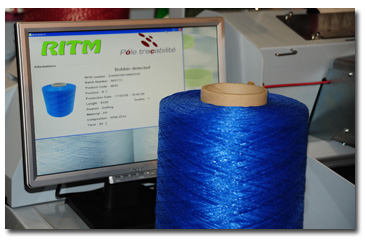
RITM’s Universal Twister & Cabler 60 includes

an online tracking feature based on

radio frequency identification technology,

enabling tracking of each bobbin during the entire production process.


System Supplier


Groz-Beckert KG, Germany, offers a broad range of needles and other products for knitting,
weaving, felting and sewing. Its litespeed® and compound needles for knitting machines are used
more and more in the technical field. For processing carbon, glass and high-strength fibers as well
as copper, silver and steel wire, the compound needle appears to be indispensable. The SAN® 5
sewing needle was developed to eliminate problems such as needle deflection, stitch hole sticking
and irregular seam appearance related to processing technical materials. The Gebeswitch® enables
quick changeover of needle size on medium-duty lockstitch machines to adjust to the material being
processed, providing constant scarf/hook orientation by displacement of the needle axis over a Nm
80 to Nm 200 size range.


Open-Shed Weaving Technology


New open-shed weaving technology developments for Germany-based Lindauer Dornier GmbH’s
rapier machines are said to optimize fabric quality — including the quality of technical fabrics
woven with aramid, carbon and glass — as well as to minimize waste and maximize production speed.
Dornier reports the machine’s positive controlled rapier head can process virtually any material
that can be wound on a bobbin, from 0.012-millimeter wire or 11-decitex monofilament up to
50,000-filament carbon or Nm 0.5 bulk continuous filament yarn, with a single filling or with
five-fold multiple filling insertion, in single-layer up to eight-layer fabrics.


Weft Insertion Technology


Itema (Switzerland) Ltd.’s Sulzer Textil™ brand offers rapier, air-jet and projectile weft
insertion systems on its various weaving machines, along with special equipment to meet every
requirement. Under the company’s Customized Weaving Technology program, it will tailor-make
machines up to 655 centimeters wide to produce special fabrics such as agrotextiles and
geotextiles, conveyor belts, sailcloth, cinema and theatre screens, filtering fabrics, tarpaulins,
and wire fabrics.


Filament Hydroentanglement


France-based Rieter Perfojet’s Spunjet® in-line filament hydroentanglement process was
developed for nonwovens producers seeking opportunities in new markets such as geotextiles, roofing
or artificial leather. Spunjet is claimed to combine spunbond strength and spunlace softness; and
offers additional fabric properties with regard to softness, drape, tensile strength and isotropic
machine direction:cross direction (MD:CD) ratio.


Lyocell Nonwovens


Cellulose fiber and polymer producer Lenzing Group, Austria, and softwood market pulp
producer Weyerhaeuser, Federal Way, Wash., have commissioned a pilot plant in Lenzing to explore
the commercial potential of TencelWeb™ technology to produce nonwovens directly from lyocell for
industrial and personal care products. TencelWeb offers an alternative to petroleum-based nonwovens
by applying both meltblown and spunbond technology to wood-fiber-based raw materials.


Direct Coating


Dry finishing systems supplier Brückner Trockentechnik GmbH & Co. KG, Germany, and
printing systems solutions supplier Stork Prints BV, the Netherlands, have developed a
patent-pending technology for direct coating of elastic knitted fabric. The process is an
alternative to traditional indirect transfer coating, in which the coating substance is first
applied on a dimensionally stable carrier material on which the fabric is then laid and dried,
followed by separation of the substrates. The new system features a rotary printing screen
integrated in the tenter’s entry zone; fabric centering in front of the introduction to the coating
unit; a very short fabric path between the coating unit and the pin-on point at the tenter;
tension-controlled fabric transport; selective fabric width and length heat-setting using a tenter
with optional fabric support belt; and Stork Prints’ flexible foam processor, which also can be
used for paste processing.


Calender Technology


Calender roll producer Andritz Küsters GmbH, Germany, offers a MycroCoat micron-precision
fixed comma doctor blade for web coating or finishing. The blade’s deflection control facilitates a
precisely defined nip against the optimally bedded counter roll.

Andritz Küsters’ teXcal s-roll calender has a maximum line force of 400 Newtons per
millimeter. Featuring deflection control and adapted surface technology, the roll can be used to
process special applications — such as parachute silk and high-tech outdoor clothing, which require
a defined low air permeability — with optimal compaction results in one passage.

The company’s neXline® wetlaid technology offers solutions for manufacturing niche products
made with aramid, carbon, microglass and other high-tech fibers.


Silicone Technologies


Silicone products supplier Dow Corning Corp., Midland, Mich., launched DS-9000 Eco Repel, a
technology co-developed with Belgium-based niche chemicals manufacturer Devan Chemicals that
enhances softness and hydrophobicity on flame-retardant (FR) finishes without affecting a fabric’s
FR properties. The eco-friendly, fluorocarbon-compatible, formaldehyde-free product is made using a
low-surfactant formula, and its silica shell encapsulated silicone fluid construction makes it
suitable for multifunctional formulations. End-use applications include mattress ticking, tenting,
canvas, upholstery and protective clothing.

Two new technology platforms for Dow Corning’s demand-activated, impact-resistant Active
Protection System for fabrics are also available: the S-Range, building on first-generation 3-D
spacer technology but lighter-weight with optimized silicone for maximized impact protection and
offering improved washability; and the TP-Range, featuring thermoplastic technology. Both offer
improved comfort and aesthetics over the original technology and comply with a range of
international impact-protection standards. Applications include high-performance sports apparel and
equipment; body armor; sport, medical and military base-layer garments; other military
applications; and personal possessions protection.
SpecialtyDowSrange
SpecialtyTPrange

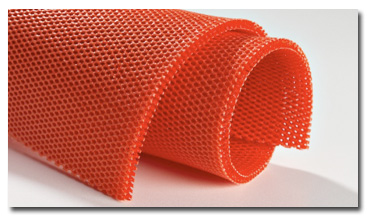
Top: Dow Corning’s Active Protection System S-Range

impact-resistant fabric features 3-D spacer technology.

Bottom: The TP-Range fabric features thermoplastic technology.


Textile DNA


Product piracy is a global problem, and a number of authentication technologies are available
or in development. Textile technology developer Schoeller Technologies AG, Switzerland, reports its
DNAtex technology gives a product a “unique ID” that is recognized immediately when the article is
electronically scanned. Schoeller claims every element in the textile production chain, from
chemicals to fibers to fabrics to finished products, can apply the technology.

July/August 2009

US-China Dialogue Stresses Cooperation

The first cabinet-level US-China Strategic and Economic Dialogue hosted by the Obama administration
addressed a wide range of issues and stressed the importance of cooperation in order to overcome
economic problems in both countries and the world at large.

While these periodic conferences generally are long on rhetoric and short on action, a joint
statement said the two parties had a “candid and in-depth exchange of views” that will lead to an
understanding of strategic, long-term issues, and laid the groundwork to reduce differences and
promote a “positive, cooperative and comprehensive relationship.”

China’s huge trade imbalance with the United States remains one of top issues on the agendas
of both countries. At the conclusion of the meeting, US Treasury Secretary Timothy F. Geitner, who
chaired the US delegation, said, “We reaffirmed our commitment to open and rules-based trade and
investment, and we renewed our commitment to avoid protectionist measures and to bring about a
successful conclusion of the Doha Round of trade liberalizations negotiations.”

While the talks did not produce much in terms of specific commitments, the Chinese have said
they intend to continue moving away from the export-dominated trade policies that have contributed
to the trade deficit and place more emphasis on domestic consumption. The US government’s statement
did not address allegations of Chinese currency manipulation or other illegal trade practices,
which domestic manufacturers see as major contributors to the trade imbalance.

A Treasury Department statement said a Chinese economy that is powered less by exports and
more by domestic demand growth and greater household consumption will contribute to “stronger more
sustainable and more balanced global economic growth.”

The two days of meetings did produce a memorandum of understanding calling on both countries
to enhance cooperation on climate change. The memorandum calls for an ongoing dialogue dealing with
such things as a technology exchange, cooperation on specific projects and efforts to promote a
transition to low-carbon energy consumption by industries.

Participants said the meetings laid the groundwork for a visit by President Barack Obama to
China later this year.

August 4, 2009

The Rupp Report: Technical Textiles In Sports Politics

The 13th FINA World Championships for swimming in Rome just finished. An unbelievable number of
more than 40 world records set a strange standard for future competitions. And, yes, technical
textiles played a major part in this funny dance of records.


348 Possible Suits?

For years, swimming was a sport dominated by the United States. Names like Mark
Spitz and Michael Phelps are known around the globe. But this situation has changed in the last few
years. With the development since 2008 of new swimsuits — or should one say, racing suits — new
world records have come with almost every competition — more than 150 since 2008. From a humble
swimsuit, the gear changed to high-tech suits, which are far away from the traditional swimwear
made of knitted fabrics. Modern racing suits are more like a kind of full-body scuba diving
equipment. The athlete is now in second place — his efforts are not that important anymore. The
one with the best-performing material is winning the game, and the new world records come
automatically — almost.

Unbelievable? Yes, but according to the list of the International Swimming Federation (FINA),
and the FINA Commission in charge of swimwear approval, 348 swimsuits from 21 manufacturers were
approved on May 18, 2009. Yes, 348.

Back To Swimming?

Just to give an idea of the specifications for a modern swimsuit, here are the main
points, established by the FINA committee for swimming, to be taken into consideration. And, dear
reader, don’t forget, this is for a swimsuit and not for an airplane:

• surface covered;

• type of material;

• flexibility;

• regular flat material;

• outside application;

• thickness;

• buoyancy;

• construction;

• external stimulation or influence;

• consistency; and

• customization.

Back To Textiles!

However, some requirements belong to textiles and their ability to invest new fabrics:

First, the surface treatment of the fabric: “Any material added on to the surface of the
textile fabric (e.g. coating, printing, impregnation) shall not close the original open mesh
structure of the base textile fabric. The treated material shall further comply with all
requirements in particular in regard to thickness, permeability and flexibility. This part of the
rule does not apply to logos and labels. This applies to both the manufacturing level and the
actual use of the swimsuit.”

Secondly, the variety of materials: “Different materials may be used in one swimsuit provided
they are textile fabrics as defined above and they comply with all other criteria including notably
thickness and permeability to apply to total layers. Combination of materials shall further not
create outstanding shape(s) or structure(s). Layered materials must be completely
attached/bound/stuck together except where required to protect sensitive parts.”

And last, but not least, permeability: “Material(s) used must have at any point a
permeability value of more than 80 [liters per square meter per second]. Permeability values are
measured on material with a standard multidirectional stretch of 25%. However, measure on material
which cannot be significantly stretched will be effected on unstretched flattened material.”

However, after the avalanche of world records set in Rome, the list of 348 different
materials is now valid only until Dec. 31, 2009. And a FINA congress voted that “for men, the
swimsuit shall not extend above the navel nor below the knee, and for women, shall not cover the
neck, extend past the shoulder, nor extend below the knee.”

What A Challenge!

What does this mean? It is the challenge for all clever fabric producers to show FINA that
even sportswear is today a technical textile, and the proof that swimming is first of all a human
sport and not a matter of a technical invention. Even some brand names are ready to go back: “We
applaud FINA for finally banning these buoyant wetsuits which have cast a shadow over the
competition.” These words came from Craig Brommers, swimsuit maker Speedo’s senior vice president
of marketing. Speedo is on the list with many fabrics. “We do feel that a 100% textile-only body
suit, as per 2007 world championships, would have been an appropriate solution. Despite that ruling
we will now look forward to innovating within the FINA rules,” he added.

Ok, lets go for it.

August 4, 2009

PBSI Launches DuPont™ Kevlar® XP™ Body Armor

Pompano Beach, Fla.-based Point Blank Solutions Inc. (PBSI) — a producer of body armor solutions
for the US military, government and law enforcement agencies, in addition to certain global markets
— has introduced a line of high-performance ballistic armor systems featuring 100-percent DuPont™
Kevlar® XP™ woven fabric technology. The line includes the company’s KXPIIIA ballistic model,
available in Point Blank Body Armor’s Hi-Lite XP™ and Protective Apparel Corp. of America’s Perform
XP™ versions. The protective solutions meet the National Institute of Justice’s (NIJ’s) .06 testing
requirements and are certified under the Level IIIA performance standard.

PBSI collaborated with DuPont Protection Technologies in developing Hi-Lite XP and Perform XP
to protect officers against increased threat levels and to stop bullets under a range of extreme
field conditions such as heat, cold, humidity and mechanical wear. Independent tests conducted by
DuPont have shown Kevlar XP provides enhanced bullet resistance and reduced back face deformation
and is 10-percent lighter than other commercially available technologies designed to protect
against the 44 Magnum and other ballistic threats. The systems also are engineered to protect
against special threats ammunition.

PBSI will offer Hi-Lite XP and Perform XP with ergonomically improved carriers providing
increased range of motion, flexibility and adjustability, and with protective features such as the
company’s patented Self Suspending Ballistic System™, which adjusts to the body’s contours to allow
improved maneuverability.

August 4, 2009

Sponsors