Miller Weldmaster New Star Of Hollywood Monster’s Show

NAVARRE, Ohio — May 17, 2012 — Miller Weldmaster, a leading global provider of heat-sealing
technology services and machinery for the industrial welding fabric & thermoplastic market,
announced today that through its partnering UK distributor, Solent Sewing & Welding has
completed the installation of a Miller Weldmaster 112 Extreme at sign and graphics specialist
Hollywood Monster’s Birmingham production facility.

The combined welding, eyeleting and cutting solution will enable Hollywood Monster to finish
a wider range of materials than their previous equipment allowed, including ‘green’ recyclable
polyethylene thanks to the machine’s hot air and hot wedge welding functionality.

“Hollywood Monster is contracted to build signage and banners in preparation for this
summer’s 2012 London Olympics. We are thrilled and honored they’ve chosen Miller Weldmaster
technology and machinery to take on this momentous task,” said Scott Miller, Chief Executive
Officer for Miller Weldmaster. “The Miller Weldmaster 112 Extreme is the perfect machine for this
project and built to meet the customer’s need and specifications.”

The recent acquisition of the Miller Weldmaster 112 Extreme by Hollywood Monster’s mirrors
industry trends.  Businesses are gradually moving away from radio frequency welding in favor
of faster, robust and more reliant technology such as hot air and hot wedge welding. 

“While RF welding has been popular in the UK in the past, there is now a general movement in
the trade towards the Miller Weldmaster hot air and hot wedge welding solutions,” comments Solent
managing director Ian Jenkins for Solent Sewing & Welding, citing the systems’ speed and
environmental credentials as key to the trend.”

The 112 Extreme is the next generation of the popular 112 Cross Seamer. The 112 Extreme has a
larger breadth of production capabilities and is easier for the operator to use. With
precision-controlled welding parameters, easy recall settings and an ergonomic design, the 112
Extreme is built to take production and efficiency to the next level.

Posted on May 22, 2012

Source: Miller Weldmaster
Kenactiv Innovations, Inc. Launches Activat Fiber Technologies Platform To Meet Rapidly Increasing Demand For Sustainable Woven And Nonwoven Fiber Products

SCOTTSDALE, Ariz. —May 16, 2012 — Kenactiv Innovations, Inc., a leading innovator and manufacturer
of sustainable biobased performance fibers and products, announced today the launch of its Activat
Fiber Technologies platform to meet rapidly increasing demand for sustainable fiber products by the
textile, automotive, healthcare, plastics, packaging and consumer products industries.

Activat Fiber Technologies applies Kenactiv’s innovative and customizable processing and
treatments to kenaf, jute and flax fibers to create sustainable solutions for manufacturers seeking
high performance yet sustainable alternatives to synthetic and other natural fibers. The AFT
platform includes Activat1 bast-fiber products and feedstocks from kenaf, flax and/or jute, which
are suited to all nonwoven manufacturing processes.  ActivatBL, bast fiber and core blend
products offer excellent performance and value for paper and pulp applications.  Kenactiv
Innovations, Inc. is the premier US manufacturer offering kenaf, jute and flax which each have
unique performance profiles and suitability for different applications.

As demand for woven and nonwoven textiles increases, so does demand for sustainability in
these applications.  A large margin of the nonwovens market is for single use items such as
home maintenance and beauty product wipes and healthcare products. With an eye toward
controlling  landfills, recyclable and biodegradable or compostable materials are increasingly
called for by manufacturers and consumers. Biobased fibers such as kenaf, flax and jute offer the
sustainability profile manufacturers and consumers demand with no sacrifice in performance.

“While manufacturers have for some time recognized the sustainability and performance
benefits of biobased fibers for these industrial and consumer applications, supply chain stability
and quality control have been obstacles to their use,” said Richard W. Elsey, President and COO of
Kenactiv Innovations, Inc. “With large scale agricultural capacity right here in the US and the
largest bast fiber processing operation in North America — plus additional capacity abroad —
Kenactiv Innovations is uniquely able to meet both the volume and quality demands of large scale
manufacturers.”

Kenactiv Innovations is a specialist in the natural and enzymatic technologies required to
process bast fibers to achieve the fiber length, consistency and tensile strength these demanding
applications require while also maximizing their sustainability and cost benefits. Choosing Activat
fiber products over petroleum-based or other synthetic and natural fibers offers manufacturers
proven operational cost savings, improved risk mitigation, environmental hazard and toxicity
reduction, reduced water consumption and decreased emissions.  Kenaf composite and nonwoven
automotive products, for example, reduce automobile weight increasing fuel efficiency. And by
replacing conventional plastics and fiberglass with biobased alternatives, the vehicle’s overall
carbon footprint is further reduced.

The Company offers highly customizable treatments and processes including enhanced or
selective absorption, antimicrobial, fire retardance, high flash, water resistance, woolenization
and dye compatibility to satisfy customers’ unique design specifications. “Coupled with our diverse
raw fiber offerings and processing capacity, we can provide sustainable solutions across a broad
spectrum of woven and nonwoven textile applications,” according to Elsey.

For further information regarding Activat Fiber Technologies and products, please contact
Jack Galvin EVP of Sales, at jgalvin@kenactiv.com.


Posted on May 22, 2012

Source: Kenactiv Innovations Inc./PRNewswire

Mount Vernon Mills Expands U.S. Capacity For Flame Resistant Fabrics

TRION, Ga. — May 21, 2012 — Mount Vernon Mills today announced that the company has more than
doubled its capacity to produce flame resistant (FR) fabrics in its manufacturing facilities
located in Trion, Georgia.  The expansion will enhance the company’s ability to meet increased
demand for flame resistant garments to protect workers against hazards associated with electrical
energy (NFPA 70E) and oil refining (NFPA 2112). 

“The increase in capacity is a demonstration of our commitment to producing FR fabrics in the
U.S. in our vertically integrated manufacturing facility, where we have in-house control of 25
major processes, including spinning, weaving, dyeing and FR finishing,” said Mike Woods, vice
president of flame resistant fabric sales for Mount Vernon Mills.  “We now have three ranges
producing FR fabrics, and we are the only U.S. producer to be using the latest technology in
softening equipment from Biancalani.”  

The company has invested more than $15 million in capital equipment to support its FR
programs.  The increased capacity will allow Mount Vernon Mills to continue to provide
consistent 6-8 week delivery of its flame resistant fabrics while also maintaining in-stock
inventory on core products and colors that will be available for immediate shipment.

At the core of every FR protective fabric is the company’s more than 165 years of experience
in the development and production of fabrics that work hard.  Blending history with
technology, Mount Vernon Mills uses more than 3,000 computer monitored control points and extensive
quality assurance testing to provide customers with the highest level of reliability, quality,
durability, color consistency and shrinkage control in every FR fabric.

“Our heritage began with sail cloth and canvas for tents, and has evolved into being a
leading producer of fabrics for career apparel and the military,” added Woods.  “We put our
experience to work in every flame resistant fabric, and we know what it takes to make durable and
dependable workwear fabrics that meet the safety, comfort and styling needs of today’s workforce.”

Mount Vernon Mills is also committed to protecting the environment.  All FR fabrics are
backed by the company’s Eco-Excellence™ program, providing flame resistant fabrics that are made
responsibly.  Flame resistant fabrics from Mount Vernon Mills comply with the following
standards for environmental excellence: Oeko-Tex, SONG Sustainability Initiative, REACH; Worldwide
Responsible Apparel Production (WRAP) Principles, Responsible Care (CMA) and the Environmental
Stewardship Program.

To learn more about the company’s collection of flame resistant fabrics, please visit booth
357 at the Safety 2012 Exposition, which will be held June 3-5 in the Colorado Convention Center in
Denver, Colo.  


Posted on May 22, 2012

Source: Mount Vernon Mills

Kuraray Co., Ltd. Acquires MonoSol, LLC

TOKYO — May 22, 2012 — Kuraray Co., Ltd. (Kuraray) and MonoSol, LLC announced today that Kuraray
has agreed to acquire MonoSol, LLC (MonoSol), a market-leading manufacturer of water-soluble
polyvinyl alcohol (PVA) films. This acquisition by Kuraray supports its strategy to expand its
Vinyl Acetate Chemical Chain Business. Terms of the transaction were not disclosed.

Through this acquisition, Kuraray will expand its product offering of PVA films into a wider
range of industrial applications, thereby enhancing its competitiveness. Kuraray currently supplies
“POVAL” PVA film for optical-uses including a polarizing film, which is an essential component of
liquid crystal displays.

“This merger will allow MonoSol to continue to grow and service its customer base while
providing additional R&D resources – capitalizing on the expertise of both groups. Utilizing
the Kuraray Acetyl Products expertise will allow MonoSol to reach our product development goals
faster and more efficiently. We are very excited about this combination and look forward to our
future with Kuraray,” said P. Scott Bening, President and CEO of MonoSol, LLC.

The transaction is subject to approvals by the appropriate regulatory authorities. The
business will be operated as an independent company under Kuraray Holdings U.S.A., Inc. and all
employees will be transferred to the new company.

Posted on May 22, 2012

Source: MonoSol LLC

PHPI To Open Plant In Scottsboro, Ala., Add 25 Jobs

Polyamide High Performance Inc. (PHPI), Scottsboro, Ala. — the North American business unit of
high-tenacity polyamide and polyester yarns and polymers manufacturer PHP, Germany — has partnered
with Toyobo Co. Ltd., Japan — a manufacturer of fibers, fabrics, films, resins and other products —
to establish an airbag fabric weaving and finishing business in Scottsboro that will operate under
the name SafeTweave Inc.

Toyobo will provide the technology and equipment for SafeTweave’s plant, which will be
located adjacent to PHPI’s nylon spinning plant. PHPI’s plant will supply nylon 6,6 to SafeTweave,
which will sell its airbag fabrics to Toyobo Industrial Materials America Inc. for use in U.S.-made
Japanese cars. SafeTweave is expected to begin production in December 2012 and create 25 jobs.

PHPI Sales Director Manuel Guerra noted the endeavor is part of the company’s effort to bring
insourcing and manufacturing back to the United States. “We have had issues over the last few years
due to earthquakes, the tsunami in Japan and flooding in Thailand,” he said. “There’s a big push
from Japanese original equipment manufacturers to make sure they have localized supply.”

May/June 2012

Kraig Labs To Open Research Lab, Expand Operations

Kraig Biocraft Laboratories Inc., Lansing, Mich., a developer of recombinant spider silk
technologies, has leased a new genetic engineering laboratory and is expanding its research and
development activities and production of its first product — Monster Silk, a hybrid silk produced
by transgenic silkworms.

“Up until now, all of our research has been conducted within university laboratories,” said
Kim K. Thompson, founder and CEO, Kraig Biocraft Laboratories. “We see the new laboratory as
providing the opportunity for a significant expansion of our capabilities.”

Thompson said the company has increased the caterpillar population for Monster Silk
production and ramped up production of transgenic silkworm eggs and fiber, and that the fiber being
produced now is stronger than the fiber originally documented in a peer-reviewed article published
earlier this year in “Proceedings of the National Academy of Sciences.” He also reported interest
from several large companies in Monster Silk’s potential for sportswear, fashion, defense and
military textile applications.

In addition, the company is ramping up development of its Generation II 100-percent
recombinant spider silk technology.

May/June 2012

Quality Fabric Of The Month: Comfortable FR Underneath It All

Polybenzimidazole (PBI), a flame-resistant (FR) fiber produced by PBI Performance Products Inc., Charlotte, has been utilized to protect astronauts, firefighters, first responders, military personnel, and petrochemical and utility workers for more than 40 years. Developed in the 1960s, the fiber is known as a high-performance, lightweight FR solution that doesn’t melt, drip, shrink or char significantly or break open under high heat and flame; and produces no off-gassing when a
flame is extinguished. It also is flexible and breathable, has the same moisture regain as cotton, and offers good moisture management — making it suitable for baselayer applications. PBI BaseGuard™, a recently developed blend with 20-percent PBI, 70-percent Lenzing FR® and 10-percent Tencel®, is garnering interest as a very comfortable baselayer solution that takes advantage of the additional FR characteristics of Lenzing FR and the soft hand of both cellulosic fibers.
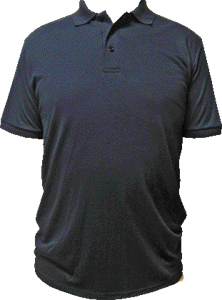
FesslerUSA, Orwigsburg, Pa., is knitting the yarns, spun by McAdenville, N.C.-based Pharr Yarns Inc., into fabrics and making them into T-shirts, baselayers and polo shirts branded FusaFR®.

QFOMFessler


FesslerUSA’s FusaFR® custom garments have been certified to be compliant with the National
Fire Protection Association’s NFPA 2112 and 70E, level 1 and 2, standards.

According to William Lawson, COO, PBI Performance Products, PBI BaseGuard was developed for the military as a low-cost PBI alternative that gives flash-fire protection and is quite comfortable to wear. “As we tested it, we found more and more places where it could be used, and
now we’re really pushing it for other markets, such as industrial and utility — it does very well in arc flash testing — and it’s very comfortable compared to other FR products that are out there,” he said.

PBI worked with Pharr Yarns to develop the yarn, which comprises an intimate blend of the three fibers. “Pharr Yarns knows and understands fiber,” said Jim Sells, group president of Pharr Yarns’ High Performance Yarn Division. “We have strong skills in blending fibers, and we make sure there’s the right amount of each fiber so the yarn always passes the test.”

Pharr Yarns winds the yarn on packages for FesslerUSA, which worked with PBI to overcome yarn-processing challenges. “The processing requires some very specific controls on knitting and finishing, and it was a challenge to make the fabric consistently with the shrinkage and pilling
performance needed,” said Brian Meck, vice president, sales and marketing, FesslerUSA. “PBI also wanted to work with a vertical mill and needed concept garments, and we can offer full-package and custom garment manufacturing.”

FesslerUSA adds a Microban® antimicrobial and an anti-pilling finish to the knitted fabric. Meck said the finishes are durable to 50 launderings. Knitted fabrics include a lightweight jersey suitable for baselayers and a heavier interlock suitable for polo shirts and station T-shirts. In addition to the military, first-responder, fire and industrial markets, Meck said there also is interest in the automobile racing market for the FusaFR products.


For more information about PBI BaseGuard™, contact Kim Henry +704-554-3106; kimhenry@pbiproducts.com.
For more information about FusaFR® garments, contact Brian Meck sales@fesslerusa.com


May/June 2012

Bulletin Board

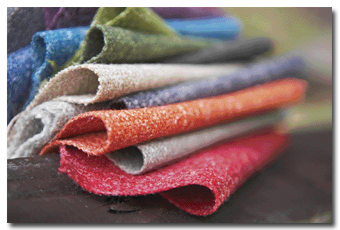
Camira Fabrics Ltd., United Kingdom, has introduced Hemp, a biodegradable,
fire-retardant hemp/wool-blend fabric.

BBcamira

Camira’s Hemp fabric

Research and Markets Ltd., Ireland, now offers Cientifica Ltd.’s report
“Nanotechnologies for the Textile Market”; and Global Industry Analysts Inc.’s “Textiles – Global
Outlook,” 2012 edition.

Cintas Corp., Cincinnati, has presented the inaugural Green Garment Award to Revel
Entertainment Group LLC; Health Management Associates Inc.; Avis Budget Car Rental LLC; and
Montefiore Medical Center.

EverStrand® and Wear-Dated® Revive™ carpets from Dalton, Ga.-based
Mohawk Industries Inc. have earned Environmental Claim Validation from UL
Environment, a business unit of Underwriters Laboratories Inc. (UL), Camas, Wash.

Vancouver, Canada-based
Naturally Advanced Technologies Inc.‘s CRAiLAR® Flax fiber has earned the U.S.
Department of Agriculture Certified Biobased Product Label.

Dalton-based
Shaw Industries Group Inc.‘s Shaw Floors business has debuted a Pinterest page at
pinterest.com/shawfloors.

The White House has selected the Boulder, Colo.-based
Outdoor Industry Association Sustainability Working Group as a Champion of Change
for Corporate Environmental Sustainability.

Manufacturers Chemicals LLC, Cleveland, Tenn., has launched “Solutions Corner,” a
Web-based helpline for chemicals, colorants and processes, available at
manufacturers.com.


Fruit of the Loom
, Bowling Green, Ky., has given its 2011 Supplier of the Year
Award to George C. Moore Co., Westerly, R.I.


Mutoh America Inc.
, Phoenix, now offers more than 90 new International Color
Consortium Profiles from SA International for use with select Mutoh printers and Flexi and
PhotoPRINT 10 software.

May/June 2012

Dell’Orco & Villani Offers Twin Carding Opener

Dell’Orco & Villani S.r.l., Italy — a maker of fiber blending equipment and machinery and
plants for recycling textile waste materials — now offers the Twin Carding Opener (TCO) fiber
carding and opening machine. The machine features two cylinders that work in tandem as well as a
number of peripheral working rollers; uses 20 percent of the power required for comparable
operations; offers high productivity; and has a low footprint.

The TCO comprises one section featuring two feed rollers with rigid wire clothing, a main
cylinder that can be clothed with rigid wire or supplied with lags and pins, and three working
rollers with rigid wire clothing; and a second featuring a main cylinder and five working rollers,
all with rigid wire clothing. The company reports the different combinations possible for wire
clothing choice, speed options and the distance setting between rollers and main cylinders enable
flexibility in the machine’s applications, allowing opening of a range of nonwovens production
waste. The TCO is available in a 1,500-millimeter (mm) or 1,000-mm working width, and can be fed
manually, or by a chute feed or regular hopper feeder.

May/June 2012

From The Editor: MFG Expansion 33 Months & Expanding

By Jim Borneman, Editor In Chief

With all of the doom and gloom in the news, textiles has had some bright spots recently. There was strong attendance, active participation and good energy at the Techtextil North America and Texprocess Americas shows. One exhibitor said he received more leads on the first day of the show than he had received in the last two years of participating. It was not what ATME-I® or the Bobbin Show used to be, and if you went there expecting their reincarnations, you’d have been disappointed. But what was there represented what the industry is today — smaller, less grand, but also innovative, creative and collaborative. There was one real opportunity in that the visitors were as interesting as the exhibitors — there to solve problems and look for opportunities. The symposium sessions had strong attendance, while not detracting from activity on the show floor.

In another instance, the American Apparel Producers’ Network recently held its annual meeting in Miami, attracting approximately 160 members of the apparel supply chain — “from the dirt to the shirt,” as they say — who gathered for networking and presentations. An interesting theme
was, simply, change. Retailing is changing, responsibilities in the apparel supply chain are changing, use of technology is changing, trade laws are changing, and the importance of green and sustainable solutions is changing. Presentation of the synthetic fiber-based apparel cluster in El Salvador — a complete synthetic apparel supply chain — highlighted new investment and smart development in the West. There was a strong sense of positive activity — business coming back to
the Western Hemisphere and some real innovations afoot in the pipeline.

Many notions about a slowly improving manufacturing sector are consistent with the economic indicators. Conventional wisdom seems to be that an indicator like unemployment is a proxy for growth. This is often a misguided idea, particularly when much of the investment in manufacturing is in automation. Economic sector health is not always employment-based, as the press would have you believe. Instead, have a look at the Institute for Supply Management’s Manufacturing ISM Report on Business® — the April report is a good read.

The report states: “Manufacturing continued its growth in April as the PMI [Purchasing Managers’ Index™] registered 54.8 percent, an increase of 1.4 percentage points when compared to March’s reading of 53.4 percent. A reading above 50 percent indicates that the manufacturing economy is generally expanding; below 50 percent indicates that it is generally contracting.

“A PMI in excess of 42.6 percent, over a period of time, generally indicates an expansion of the overall economy. Therefore, the PMI indicates growth for the 35th consecutive month in the overall economy, as well as expansion in the manufacturing sector for the 33rd consecutive month.”

An expanding manufacturing sector for nearly three years is not in the headlines. Toss in a little certainty on taxes, healthcare and energy policy — and manufacturing just might attract the investment it needs.

May/June 2012

Sponsors