Ruyi’s Cubbie Station Is About To Receive A Bumper Cotton Harvest

QUEENSLAND, Australia — March 5, 2020 —  Cubbie Station, a subsidiary of Ruyi Group, has reached its highest water level, bringing abundant water to the cotton planting season from 2020 to 2021. Cotton is expected to usher in a bumper harvest.

Cubbie Station in Queensland is Australia’s largest irrigated cotton farm. It has suffered a severe drought in recent years. The successive droughts have broken the balance of the local ecosystems and resulted in massive pressure on agricultural production.

Cubbie Station owns three cotton fields near St. George and Dirranbandi in southwestern Queensland. Its total area is 93,700 hectares, including 22,100 hectares of irrigated land. According to the data last month, the rainfall of the Dirranbandi cotton field reaches to 72 millimeters, and the highest rainfall of St. George is over 132 millimeters. A recent satellite image showed that Cubbie Station has diverted water from the Culgoa River and filled a 2000-meter-long reservoir. Rains provide more than 170 billion liters of water for the next cotton season.

Cubbie Station is the largest producer of cotton in the southern hemisphere and the world’s largest producer of agricultural irrigation. It can produce in excess of 330,000 bales of cotton and other agriculture including wheat, sorghum, sunflowers, barley, chickpeas and corn in a full production year. 15,000 hectares of cotton will be grown from 2020 to 2021, which reaches to 70 percent of the total output. Another crop of wheat is likely to be planted this winter, with an expected yield of 8,000 hectares. The saturated rainwater is expected to meet the water demand for cotton planting in the next three years.

As the source of the textile industry, cotton is the key to long-term development of textile enterprises. Since acquiring Cubbie Station for 300 million Australian dollars (2 billion renimbi) in 2013, Ruyi Group has combined advanced modern planting technology to improve planting levels and expand the cotton industry chain. Ruyi has invested more than US$26 million to maintain and improve the operating efficiency of Cubbie and another US$25 million to acquire and upgrade the ginning in Dirranbandi. Cubbie has achieved bumper harvests for three consecutive years since the acquisition, and it has become an important profit growth source for Ruyi Group in Australian cotton production and export pricing.

Posted March 5, 2020

Source: Ruyi Group

CQ Printing Unveils New DTG Printing For Single, Full Color And Short Run Custom Apparel Printing

STRONGSVILLE, Ohio — March 5, 2020 —  CQ Printing, a family owned commercial printing and branding company, announced the launch of its Direct to Garment (DTG) printing division for apparel printing. DTG capabilities provides high quality, short-run custom printing options for customers with a quick turnaround time. Apparel can be printed in single or multi-color designs. “We are thrilled to debut our DTG capability to complement our already growing apparel division, and build a more well-rounded service offering,” Founder and CEO John Bechke stated.

CQ Printing has been in business for more than 42 years, providing commercial printing, design, direct mailing, signs and banners, branded apparel and promotional products. CQ Printing offers a one-stop shop for all their client’s needs, providing high quality products and services, serving northeastern Ohio with offices and a production facility in Strongsville and Medina.

Posted March 5, 2020

Source: CQ Printing

Gerber Childrenswear Launches New Elevated Line Of Baby Essentials

Gerber Childrenswear Modern Moments

GREENVILLE, S.C. — March 5, 2020 —  Gerber Childrenswear LLC is excited to announce the launch of the Gerber Modern Moments baby apparel line made with organically grown cotton and available exclusively at Walmart March 2020.

“As an iconic brand with a deep heritage of providing the best essentials for babies, Gerber is constantly evolving to appeal to today’s consumer while providing great value,” said Donna DeBoer, chief merchandising officer at Gerber Childrenswear. “We have built our apparel brand on providing parents with quality products that look, fit and feel great. Our Gerber Modern Moments line has a new color palette and modern silhouettes, all made from organic cotton.”

Aligning with Gerber Childrenswear’s long-standing commitment to provide high quality, functional products, the new Gerber Modern Moments baby line gives today’s moms a brand with modern sophistication and style without compromising on quality, all with the value they expect from Gerber. The line features new designs and colors, including:

  • Comfort Design: 97-percent cotton with organic fibers/3-percent spandex, Standard 100 Oeko-Tex® Certified;
  • Baby Soft: Made with organic cotton for high quality comfort and perfect amount of stretch;
  • Design Forward: Modern, boutique silhouettes, colors and designs;
  • Mix-it-up: Boy, girl and neutral separates for creating multiple looks;
  • Quality for All: Exceptional quality and affordable for all;
  • Assorted Sizes: Newborn up to 12 months; and
  • Great Value: Retail prices range from $2.84 – $12.84.

“Our purpose is to be parents’ trusted partner on their parenting journey. We felt there was a need for a fashion-forward modern line of baby essentials from a brand parents can trust to bring high quality at an affordable price,” said Maria Montaño, president and CEO.

Gerber Modern Moments is available exclusively at Walmart stores nationwide and on Walmart.com.

Posted March 5, 2020

Source: Gerber Childrenswear LLC

Brooks Brothers Group Inc. Seeks To Protect Its Trademark — Company Asks That Coexistence Agreement Be Honored By Brooks Sports, Inc.

NEW YORK CITY — March 4, 2020 — Brooks Brothers Group Inc. today announced that it has filed a response and counterclaim against Brooks Sports Inc. for breach of contract, trademark infringement, dilution and unfair competition. The lawsuit seeks to eliminate potential consumer deception or confusion caused by Brooks Sports by intentionally dropping its logo in association with its brand name — which is in direct violation of a long-standing co-existence agreement between the two companies.

Brooks Brothers was founded by Henry Sands Brooks in New York City in 1818 and is America’s oldest apparel company. The BROOKS BROTHERS trademark was established in 1854. For over two centuries the company has been recognized as a global lifestyle brand offering a wide range of clothing, sportswear and accessories that have defined American style. Brooks Brothers has also invented some of fashion’s most iconic items, many of which take origins in sports apparel, such as its famous Original Polo Button Down shirt. As a result of its long history and widespread fame, the name Brooks has become synonymous with Brooks Brothers not only within the apparel industry but also in the media, popular culture, literature and to consumers alike.

In the 1970’s, Brooks Sports Inc. began selling running shoes under the mark BROOKS, prompting an objection by Brooks Brothers and eventually, in 1980, a coexistence agreement providing that Brooks Sports could use BROOKS alone for athletic shoes, but could only use BROOKS on athletic clothing if combined with a logo or other word.

After nearly 40 years of co-existence based on these terms, Brooks Sports has breached the agreement by dropping its logo and filing for the word BROOKS alone for a variety of apparel items, selling t-shirts and hats displaying BROOKS without its logo, and filing a lawsuit against Brooks Brothers.

In order to protect its internationally renowned trademark and prevent consumer confusion between the companies’ respective brands, Brooks Brothers has opposed Brooks Sports’ newly filed applications around the world and filed a counterclaim in federal court to enforce the terms of the contract.

Posted March 5, 2020

Source: Brooks Brothers Group Inc.

Teijin Frontier Launches Eco-Minded Adhesive For Rubber Reinforcing Fiber

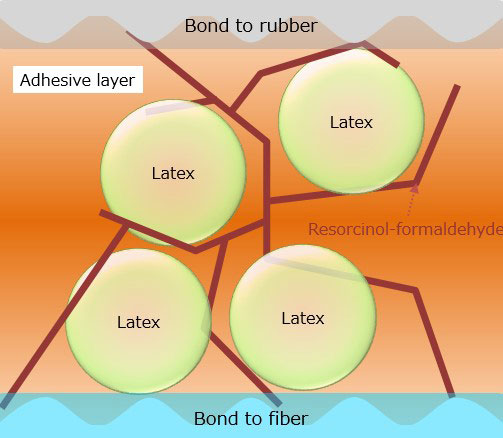
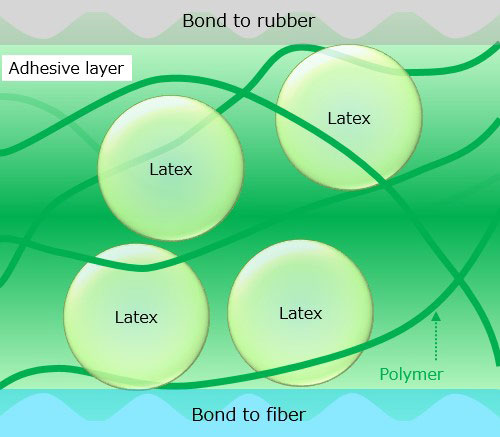
TOKYO — March 5, 2020 — Teijin Frontier Co. Ltd., the Teijin Group’s fibers and products converting company, announced today that it has launched a new eco-minded adhesive for rubber reinforcing fiber that does not use resorcinol-formaldehyde (RF) but still achieves the same level of performance as conventional methods. The new adhesive, one of Teijin Frontier’s latest “THINK ECO” applications to protect the environment in fields ranging from fashion to industrial textiles, will be test marketed beginning this year. The company is targeting annual production of 200,000 tons in 2028.

Resorcinol-formaldehyde latex (RFL) adhesives have long been used to reinforce rubber products, such as tires, with fiber to maintain strength and morphological stability. In recent years, however, demands have been growing for solutions that do not use RF, which has been shown to have harmful effects on the human body.

The new adhesive uses a non-RF blended polymer for bonding. The polymer, which is reticulated by intermolecular interaction, achieves a high level of adhesiveness, equivalent to that of an RFL adhesive thanks to its high affinity for both fiber and rubber.

Going forward, Teijin Frontier will continue to develop diverse applications for various kinds of rubber materials including tires, belts, hoses and more.

Posted March 5, 2020

Source: The Teijin Group

Reducing Yarn Breaks — First Wiping Robot Successfully Commissioned In India

REMSCHEID, Germany — March 5, 2020 — Following its installation at several major yarn manufacturers in China, the first wiping robot has now been operating in India since the end of 2019. As already the case with our Chinese clients, the performance of the Oerlikon Barmag solution there demonstrates the same properties: an even, high-quality wiping process providing considerably reduced yarn break rates and higher full package rates. Regular wiping/cleaning of the spin packs is important for process stability and yarn quality.

The performance data at the Indian yarn manufacturer was collated and evaluated over a period of three months. The results revealed that the yarn break rate has — regardless of the product — fallen by almost 30 percent. The former running time breaks have decreased by 10 percent and string-up breaks by 40 percent. Consequently, full package rates have risen by 3 percent, while waste rates have fallen by 0.2 percent. “Yarn breaks are always an issue; they have a direct impact on the production figures. This is where the wiping robot reveals its added value,” commented Stephan Faulstich, technology manager POY. The system automatically and autonomously controls the individual positions in accordance with the scheduled wiping cycles. In addition to the scheduled wiping processes, there are also events that cannot be planned or that are not immediately visible. Here, the wiping robot – as a result of its management functionalities — is able to identify issues such as yarn breaks or parallel wiping processes and to independently offer solutions. The same also applies to manual requests: if another action is simultaneously required here, the system identifies this and offers solutions.

The wiping robot operates in a cross-line manner. In contrast to manual wiping, the cleaning quality remains constant around the clock, considerably reducing the impact of the wiping on both the spinning plant process stability and on the yarn data of the spun yarn. And production times can be increased between two cleaning cycles as well: whereas repeated wiping is required after 48 hours in the case of manual wiping, utilizing the robot extends the interval between two wiping processes to up to 60 hours. The considerable increase in the spinning process efficiency achieved by the wiping robot also has a positive impact on margins. To this end, one customer deploying the wiping robot was able to reduce its production costs for the same yarn by more than 3 percent.

Posted March 5, 2020

Source: Oerlikon Textile GmbH & Co. KG

TRSA Clean Green Awards Honor Corporate Sustainability Excellence

ALEXANDRIA, Va. — March 5, 2020 —  From alternative energy to water filtration and a variety of natural resource conservation practices, finding new ways to simultaneously protect the environment and accordingly control costs remains a priority for linen, uniform and facility services companies. TRSA members’ exemplary such efforts have been recognized with TRSA Clean Green Innovation Awards, to be presented March 25 at TRSA’s 10th Annual Legislative Conference in Washington.

Major sustainability initiatives of New York’s Arrow Linen Supply Co. (food and beverage and hospitality) include a combined heat and power system in the company’s Brooklyn, N.Y., plant that uses exhaust heat from two 150-kilowatt generators to heat boiler feed water. Before this system’s installation, Arrow was operating at 40 percent energy efficiency; it’s now 65 percent. In Arrow Linen’s Garden City facility, a 480-kilowatt solar panel system is replacing 73 percent of the company’s power requirements when combined with new LED lighting installed in 2018. Furthermore, the two installations have also allowed the company to reduce carbon emissions by 578 tons annually. Now being installed is a ceramic microfiltration and reverse osmosis (RO) wastewater treatment system. Such systems filter wastewater particles larger than .05 microns and treat up to 250 gallons per minute (GPM) to produce 225 GPM of filtrate (reusable water). RO filters other harmful particles, resulting in 70 percent wastewater reuse.

CITY Clean and Simple (CITY Laundering Co.), Oelwein, Iowa, has the state’s largest roof-mounted solar installation, complete with 850 panels, which has offset roughly 14 million pounds of CO2, the emission equivalent of 1,395 cars. Industrial/uniform specialist CITY uses a filtration system that helps save 665,000 gallons of water monthly, as well as enabling recycling of 67 percent of water. A complete LED lighting system saves about 58,000 pounds of CO2 annually. This performance captured the attention Gov. Kim Reynolds and Lt. Gov. Adam Gregg, who toured the facility. Between LED, solar energy and water filtration, using suppliers’ estimates, CITY has calculated its overall impact over the next 25 years as saving 1,595 acres of trees from being planted, 1,520 passenger vehicles off the road, 7.1 million pounds of coal from being burned and 200 million gallons of fresh water from being used.

PureStar Group green initiatives are reflected in nearly every aspect of the business as management of facilities across the Las Vegas-based hospitality laundry chain implement an ongoing commitment to conserve water, natural gas and electricity. Many operate water reuse systems with reverse osmosis and ceramic filtration to recycle up to 75 percent of our water. In Orlando, a filtration system that reduced gallons per pound of laundry from .8 to .32. Tunnel washers use as little as .3. Facilities typically employ LED lighting and occupancy sensors; exterior lights use high efficiency photocells. Computer components, plastics, metals, shredded papers, and end-of-life linen are recycled. Dry-cleaning operations use EPA-friendly K4 solvent; wash chemistry uses no alkali, sour, or perc. Several PureStar companies participate in EcoDesk for supply chain sustainability, documenting suppliers’ carbon emissions, energy and water use and waste output, for developing improvement goals and sustainability projects.

TRSA associate (industry supplier) member OMNI Services has close to 2,000 ultraviolet light units installed in laundries across the world. This technique creates a secondary oxidizer allowing laundries to use less hot water and less water overall, resulting in a 20 percent or greater utility reduction month after month.  Savings are realized immediately upon system installation. Municipalities that verify and prove the validity of the system are offering laundries incentives for such installations. Payback is achieved not only through fuel and water reduction, but a lower wastewater burden (reduced BOD/COD) and greater linen life. It lengthens due to the system’s role in optimizing chemistry and reducing wash temperatures, slowing degradation.

The TRSA Clean Green Innovation Award is the industry’s leading recognition of linen, uniform and facility services companies or facilities that reduce their operations’ environmental impact in one or more ways, often best reflected in reduction of per-laundry-pound use of a single resource (water, energy, chemistry), improved efficiency of a production or service function, or increased discharge control. Use of best management practices described in the TRSA Clean Green standard for certifying linen and uniform service operations is encouraged.

This accolade will be presented at the 10th Annual TRSA Legislative Conference with other honors in the TRSA Leadership Awards series, which also recognizes exceptional community and customer service, diversity recognition, TRSA volunteer leadership and workplace safety.

Posted March 5, 2020

Source: TRSA

Epson Completes Construction Of Innovation Center Building B At Hirooka Office

TOKYO — March 4, 2020 —  Seiko Epson Corp. has completed construction work on Innovation Center Building B, a new four-story facility, on the campus of its Hirooka Office in Nagano Prefecture, Japan. Construction began in the autumn of 2018.

Innovation Center Building B has a total floor area of 39,634 square meters. The first and second floors will house digital inkjet textile printer prototype production and volume production operations along with a digital printing solutions exhibition area. The third and fourth floors will be office space. Preparations are under way for an April start to operations. The new facility is designed to reinforce the company’s research and development capabilities and production technology in the growing textile printing space. It will also increase the strength and efficiency of business operations by consolidating printing solutions business operations.

Epson, which identified textile printing as a growth area in its Epson 25 Corporate Vision, seeks to drive a shift away from traditional plate-based analog printing of textiles and toward a digital printing environment that offers both high productivity and a smaller environmental footprint.

To accelerate this shift, Epson is installing prototype production and volume production systems for digital inkjet textile printers in Innovation Center Building B while simultaneously reinforcing its R&D and production engineering organizations in this area. The facility will also have an exhibition area and a space for viewing the assembly process. These, Epson believes, will help to strengthen customer touch points and expand sales in the textile printing segment.

Epson will increase the efficiency of its printing solutions business operations by consolidating in the Innovation Center and adjacent offices the departments involved in functions such as strategy, sales and marketing, development, design, and production engineering.

Epson will broaden the world of digital printing and further accelerate inkjet innovation by continuing to refine its technology and provide outstanding products and services built around original core devices.

Innovation Center Building B profile

  • Investment – Approx. 16 billion yen;
  • Start of operations – April 2020;
  • Total floor space – Approx. 39,634 m²; and
  • Building construction – Four-story steel-frame.

Hirooka Office profile

  • Location – 80 Harashinden, Hirooka, Shiojiri-shi, Nagano-ken 399-0785;
  • Operations – Printing solutions business R&D, design, production and new business development for Epson as a whole. New product R&D;
  • Lot area – 219,315 m²; and
  • Year operations began – 1970.

Epson’s Hirooka Office

The Hirooka Office is the heart of Epson’s printing solutions business. It serves as a center for administration, core device research and development, and production. As such, it works closely with Epson’s global sales and production sites. It shares the advanced production technology and know-how it gains through the development and production of core devices with Epson’s overseas sites to help maximize manufacturing capabilities across the Epson Group. In June 2018, Epson completed construction on Building 9, a facility for manufacturing PrecisionCore print chips. Now, with Innovation Center Building B, Epson has further strengthened its printing solutions R&D and production capacity and will accelerate actions to expand the business.

The advance of inkjets in commercial and industrial printing

Digitization is steadily advancing in the commercial and industrial printing markets, where the demand for design diversity is driving the spread of short-run production. Here, Epson has designated the signage, textile, and label printing segments as growth markets where there is ample room for digitization and expansion.

To lead the transition to digital printing in the commercial and industrial sectors, Epson is developing platforms that can efficiently be deployed in products and services that meet diverse customer needs. Leveraging the advantages of Micro Piezo inkjet technology, Epson will build up its lineup of faster, higher quality products that support a wide range of media and materials. At the same time, the company will provide applications built around its Color Control Technology color matching software to capture replacement, additional printer, and distributed printing demand.

Epson is accelerating the global shift to digital printing by opening Textile Solution Centers, first in Italy and then in Japan. TSC Asia was opened in June 2019 at Epson’s Fujimi Plant in Nagano prefecture in response to the growth of active textile printing demand in Asia. Like its counterpart in Italy, TSC Asia recommends textile printing solutions and provides enhanced support to potential customers in Asia, who are invited to experience using Epson’s equipment first-hand as they produce sample works.

Posted March 4, 2020

Source: Seiko Epson Corp.

Bed Bath & Beyond Inc. Names Joe Hartsig As Chief Merchandising Officer And President Of Harmon Stores Inc.

UNION, N.J. — March 4, 2020 — Bed Bath & Beyond Inc. has named Joe Hartsig as executive vice president, chief merchandising officer of Bed Bath & Beyond and president of Harmon Stores Inc., effective immediately.

Reporting directly to Bed Bath & Beyond’s President & CEO, Mark Tritton, Hartsig will be a key member of the senior leadership team and responsible for developing and implementing its product strategy, one of the five pillars of the company’s preliminary strategic plan. His responsibilities will include oversight of the company’s omni-channel merchandising, planning, and owned brand strategies. As president of Harmon, Hartsig will also be responsible for developing the growth strategy for the cosmetics, health and beauty retailer, operating under the names Harmon, Harmon Face Values or Face Values.

“To rebuild our business, we need leaders of change.  Joe’s experience as one of the leading innovators in retail makes him perfectly suited to help re-establish our authority in the Home, Baby and Beauty markets and we’re excited to welcome him to this critically important role,” Tritton said. “Improving the curation and differentiation of our assortment is our number one strategic priority, and Joe will be the driving force behind our ambition to make it easy to feel at home with Bed Bath & Beyond, while also providing the leadership and vision needed to grow our Harmon business.”

Hartsig has more than 30 years of experience in consumer brand development and retail merchandising, as a senior leader at some of the world’s largest and best-known consumer brands, including Walmart, Motorola and SC Johnson. Most recently, he served as senior vice president and chief merchandising officer at Walgreens, where he managed the front of store Retail Products division and drove transformational change.  He was responsible for a team of over 500 merchandising, planning and field team employees across a variety of categories, in addition to leading the owned brand organization and e-commerce and digital merchandising strategies to advance the company’s omni-channel capabilities.

“The opportunity to help rebuild an iconic brand like Bed Bath & Beyond was too good to miss,” said Hartsig. “Mark has a clear vision to reconstruct a modern, durable business model with a differentiated merchandising strategy at its heart.  It is an exciting time to be joining Bed Bath & Beyond and I look forward to working closely with Mark and the organization.”

The company is on track in its search to fill a number of other strategic leadership roles.  “I am very grateful for our associates who have stepped up to provide key interim leadership and partner closely with me to build our plan. We look forward to providing an update on additional hires soon,” Tritton said.

Posted March 4, 2020

Source:  Bed Bath & Beyond Inc.

Green Buffalow Leading the Charge in Changing Female Wildland Firefighting Uniforms

FORT COLLINS, Colo. — March 4, 2020 — When fighting a wildland fire, the right-fitting gear can make all the difference in being able to work efficiently and safely. Founded in 2015, Green Buffalow has been working to develop a better wildland firefighting uniform for both men and women, and are proud to announce the launch of their new product to the public.

Green Buffalow is working to create the best possible Wildland Firefighter uniforms. Their new Wildland Firefighter Uniforms focus on the best fit, fabrics, and style to bring about the most ergonomic uniforms available on the market. Green Buffalow has partnered with industry experts to design uniforms that will feel great, reduce heat stress, and allow the most movement due to our superior styling.

Green Buffalow’s mission really hits home for the company’s founders Summer and Korena. Summer, having a background in Apparel Technical Design and Korena’s background in Business Development as well as being married to a wildland firefighter, truly brings forward a desire to create gear that would help ensure the safety of not only her spouse, but all Wildland Firefighters. Korena and Summer then embarked on a journey with the NFPA (National Fire Protection Association) to approve sizing for women and create new sizing for men.

Over the last few decades, little has been done to update wildland firefighting uniforms, and Green Buffalow strongly believes it’s time that changes. Green Buffalow is the only brand working closely with the NFPA to advocate for wildland firefighters and change industry standards. According to an NFPA committee member, “Everyone else has brought us problems — Green Buffalow is the only one who has brought us solutions.” Green Buffalow is solving many current issues with wildland firefighting uniforms:

  • No current size chart in the standard for female upper torso garments;
  • Lower torso female sizing is almost a mirror image of the men’s lower torso size table;
  • Restrictive design requirements cause for ill-fitting garments; and
  • Due to poor fit, it results in some individuals to have chafing and bleeding.

Green Buffalow is excited to launch its new uniforms to the public and begin equipping fire departments across the country. This overhaul in women’s sizing and overall uniform safety has been a long time coming, and Green Buffalow is proud to be spearheading the effort.

Posted March 4, 2020

Source:  Green Buffalow

Sponsors