Arvind & Peak Sustainability Ventures Launch India’s First Industrial-Scale Cotton-Stalk Torrefaction Project, Decarbonizing Textile Manufacturing In Gujarat

MUMBAI — November 17, 2025 — Arvind Limited, one of India’s leading textile-to-retail conglomerates, and Peak Sustainability Ventures, a Mumbai-based global climate investment firm, have entered into a partnership to build a large-scale cotton stalk torrefaction plant in Gujarat, with a capacity of 40,000+ tonnes per year, to accelerate Arvind’s decarbonization goals and promote torrefaction at scale in India. The project will convert cotton stalk into torrefied biomass, a cleaner, drop-in substitute for coal in boilers at Arvind’s manufacturing operations, reducing fossil fuel usage. This industrial-scale project, which is the first of its kind in India for cotton stalk, is intended to serve as an economically viable, scalable blueprint for industrial companies to transition away from coal towards biomass-based alternatives.

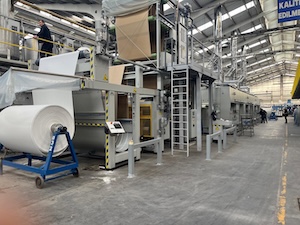
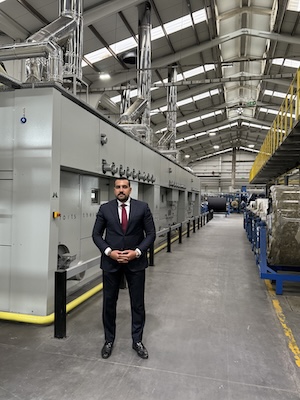
Representative image of production site

Commenting on the project, Mr. Punit Lalbhai, Vice Chairman at Arvind Limited, said, “At Arvind, sustainability is not just a goal; it’s a journey with a sense of responsibility. We are innovating in all parts of our value chain to improve our sustainability and long-term business and meet our SBTI targets. This torrefaction project with Peak is one of the best examples of circular economy and waste-to-energy we have seen in the textiles space, exemplifying what a regenerative textile ecosystem can look like. I am proud to announce this collaboration as a bold step toward responsible manufacturing at scale.”

Mr. Samir Shah, Managing Partner at Peak Sustainability Ventures, noted, “We are excited to partner with Arvind Limited, a globally recognized player in the textiles sector, on this landmark project. Through this collaboration, we hope to provide validation to the broader industry that waste-to-energy solutions can be economical, circular, and importantly, catalytic in accelerating India’s transition away from fossil fuels. At Peak, our core mission is to make a large impact on India’s sustainability goals, and we believe this pioneering project with Arvind can play a key role in that journey.”

Peak has been instrumental in putting the project together by developing the reactor design, identifying the technology partner, and funding the project capex. For Arvind, this project helps accelerate its transition towards a 100% coal-free company by 2030. For the local area, the project provides non-agricultural employment, economic growth, and the utilization of the cotton stalk that may otherwise have decayed or been burnt in the open fields. Through this project, Arvind’s global customers can also reduce their Scope 3 emissions through decarbonization of their supply chain, which has become a key focus for fashion brands. For Peak, this project accelerates India’s pathway to achieving its broader sustainability goals, that of utilizing India’s abundant agricultural waste for energy, enabling a pathway for a clean energy future.

Torrefaction as a Climate Solution for Textiles

India produces over 500 million tonnes of agricultural waste every year, most of which is either discarded or burned.  In the case of cotton, only 15% of the plant, the cotton fiber and seed, is used for textile and other products, with the remaining 85% of the crop, the woody biomass remaining after the cotton is extracted, commonly called cotton stalk, is being burnt or left in the field. Arvind, as one of the largest textile mills in India, has a farmer network of over 90,000 cotton farmers. While Arvind currently is using cotton stalk for thermal energy at its manufacturing units, the fuel characteristics of the stalk are substantially improved through torrefaction. This project demonstrates a circular, replicable, and scalable model to convert large quantities of cotton plant by-product into a valuable, low-carbon energy source that can fuel its own operations. In the future, both parties may explore producing biochar from cotton stalks to provide to farmers, which can in turn improve soil health and crop yield and promote regenerative agricultural practices.

Torrefaction is a thermal process that enhances the energy density, stability, and handling properties of biomass and increases the calorific value by up to 20%. The resulting biomass closely mimics coal and can be seamlessly used in industrial boilers, with up to a 100% replacement of coal, without additional capital investment or significant retrofit. The torrefied biomass produced will be used to power Arvind’s industrial boilers, enabling the company to replace at least 20% of its coal-based thermal energy needs, with potential for increased substitution in the future. Upon successful implementation, this project has the potential to be expanded even further to meet wider industrial energy needs and replicated across other agricultural regions.

Arvind has received a grant from Apparel Impact Institute’s (Aii) Climate Solutions Portfolio Grant program for this project. Aii’s grants help pilot and scale promising climate solutions for the textile industry, and this project was selected for its potential to offer a more practical and cost-effective way for textile manufacturers to use biomass as a transition fuel.

Sustainable biomass offers an effective interim solution until factories can electrify. Through torrefaction, textile manufacturers can procure biomass and use it in existing coal boilers without needing a capex investment. Aii believes this project could help manufacturers in India—and other production countries with agricultural waste—to transition from coal without incurring significant costs.

Peak’s role as a Climate Investor

Peak has been in discussions with Arvind for this project over the past year. In addition to conceptualizing the idea with Arvind, Peak has identified and onboarded a leading European technology company, which specializes in torrefaction and biochar technology, to implement this project as the technology partner.

Peak and its affiliates will be funding the capital expenditure and operations of the project. Peak and Arvind are in discussions with global players who are keen to be involved in this first-of-its-kind, waste-to-energy project in India. Arvind is involved as the long-term offtake party, and feedstock provider, a potential for meeting our own decarbonization goals. While there are no other investments other than the offtake assurance by Arvind, their role will add a lot of pecuniary benefit to our sustainability credentials and advance our decarbononization agenda.

The broader intent for Peak and Arvind is to build a robust waste-to-energy platform that is financially viable and catalytic in addressing India’s fossil fuel usage. Both parties believe that torrefaction can be an extremely important technology to address India’s long-term sustainability transition.

Posted: November 18, 2025

Source: Arvind Limited

ANDRITZ At SINCE 2025: Leading The Way In Nonwoven Innovation

KREFELD, Germany — November 18, 2025 — ANDRITZ Nonwoven & Textile will participate in the 21st Shanghai International Nonwovens Exhibition (SINCE) on December 3-5, 2025, presenting its cutting-edge technologies and solutions for the nonwoven and textile industry. The focus will be on innovative high-speed crosslapping, the new needleloom for medium range capacities, technologies for biodegradable wipes, and on comprehensive service solutions.

High-Speed Crosslapping: New Andritz X-Pro™ Crosslapper

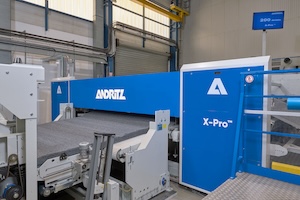
ANDRITZ X-Pro crosslapper for highest speeds

ANDRITZ introduces the X-Pro™ crosslapper, a groundbreaking innovation designed for both spunlace and needlepunch applications, delivering higher efficiency and stunningly uniform web formation. With highest inlet speed ever achieved, it drives productivity to new heights. The patented design ensures optimized batt forming, while full compatibility with the ProWin™ web weight regulation system offers seamless integration. The X-Pro™ crosslapper is also available for retrofit, allowing the nonwoven producers to upgrade existing lines with the support of ANDRITZ service experts and unlock greater productivity. Customers can experience its capabilities firsthand at the ANDRITZ technical center, where trials demonstrate the machine’s outstanding performance.

In the spunlace area, ANDRITZ offers its neXline spunlace in crosslapped configuration. It is engineered for premium nonwoven applications, delivering exceptional uniformity and product consistency. When integrating the X-Pro™ crosslapper, it enables the highest inlet speeds ever achieved, combining high throughput with uncompromising quality. Together, these technologies support scalable production while maintaining strict standards for uniformity and reliability.

Sustainable Wipes Production: The Full Suite By Andritz

ANDRITZ is advancing sustainable nonwoven solutions with technologies that meet the global demand for eco-friendly, high-performance wipes. ANDRITZ expertise covers all technologies from wetlaid, airlaid and spunlace. By combining these technologies in various ways into Wetlace™ and Airlace™ processes, ANDRITZ can serve different segments of the wipes market, using sustainable fibers such as viscose, lyocell, and other cellulose and natural fibers. These technologies reduce reliance on synthetic materials, support biodegradability, and help minimize environmental impact. This gives customers the ability to deliver high-quality products while meeting ever-evolving sustainability standards.

Expansion Of Needleloom Portfolio: New neXloom A-Type For Medium Range Capacities

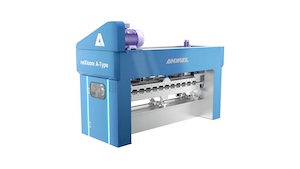
ANDRITZ neXloom A-Type for medium range capacities

In the area of durable nonwovens, ANDRITZ presents the new neXloom A-Type needleloom, specifically designed to meet the demands of medium-range production capacities across key markets such as synthetic leather, filtration, and automotive applications. Engineered for robust performance and cost efficiency, the neXloom A-Type combines the renowned ANDRITZ quality with features that reduce operational and maintenance costs. The machine supports a random needle pattern for enhanced product characteristics and offers optional systems including automatic greasing and cooling, further improving reliability and ease of use.

With a speed range of 850 to 1200 rpm and a stroke range from 25 to 60mm, the neXloom

A-Type represents a strategic addition to the ANDRITZ portfolio, reinforcing its commitment to innovation and customer-focused solutions in the nonwovens industry.

Spot-On Service: Comprehensive And Reliable

ANDRITZ booth H1-1L10 at SINCE 2025

Nonwovens and textile producers require state-of-the-art equipment to meet ever-increasing market demands, optimize their energy use, achieve product differentiation for their nonwovens production lines, and/or enhance product quality. ANDRITZ therefore offers comprehensive and reliable service, including extensive expert support and adaptable upgrade solutions for all production lines. For instance, conventional spunlace lines can easily be retrofitted with airlaid or wetlaid web forming capabilities to open up new market opportunities, such as bio-wipes and flushable wipes. This provides greater flexibility for a wide range of applications. Through specialized guidance and tailored retrofit services, ANDRITZ supports customers maximize productivity while sustaining a competitive edge in a rapidly evolving industry.

ANDRITZ is committed to driving global innovation and high-quality development in the nonwoven and textile industry. Visit us at SINCE 2025 to discover the latest technologies and market insights. We look forward to seeing you at ANDRITZ booth H1-1L10.

Posted: November 18, 2025

Source: ANDRITZ Küsters GmbH

Eton’s Role In Automating The Reuse Market

STOCKHOLM, Sweden — November 17, 2025 — Eton Systems – a member of TMAS, the Swedish Textile Machinery Association – is taking part in the current Microfactories System Innovation project which is working on the development of a fully automated workflow for second hand garments.

The new Eton Systems production facility was inaugurated in Nordskogen in 2024.

Eton is contributing its well-proven transport system for material handling to the project, which also involves specialists at the Swedish School of Textiles in Borås, the Automation Region innovation cluster at Mälardalen University and the national collaboration platform iHubs Sweden.

High volumes

According to ThredUp’s 2025 Resale Report, the value of the global second-hand apparel market is already worth an annual $256 billion this year and growing at 10% annually to reach a value of $367 bullion by 2029.

Additionally, the online resale segment alone is forecast to double over the next five years to around $40, billion reflecting higher growth of 17%.

Jan Molin, CEO of Eton Systems.

“The volumes are now so large that handling must be automated for it to work,” says Jan Molin, CEO of Eton Systems. “The new EU regulations requiring separate collection of textiles are having an impact, but we are also seeing an increasingly positive attitude towards reuse and greater awareness of the textile industry’s environmental impact.”

AI categorization

Used clothing items are photographed and analysed in the project’s test facility at Science Park Borås. © Vasilios Bartziokas.

As part of the project, a test facility is being established at Science Park Borås involving garments being placed on custom product carriers within an Eton Systems conveyor system and transported through a series of stations.

The garments are inspected using a vision system, after which AI is employed to categorise them based on parameters such as manufacturer, model and size. Any damage is analysed and the system also provides recommendations for possible repairs.

“The collected information is fed into a calculation model that, based on market data, makes suggestions for a sales price,” Molin explains. “Finally, the garment is photographed for marketing and then transported to a warehouse awaiting sale.”

Historic automation

Eton’s material handling system was developed as early as the 1960s for the company’s own shirt production in Gånghester outside Borås. At the time, material handling was estimated to account for up to 80% of the manufacturing time.

The drives circulate the product carriers so that they reach the various workstations

The company’s Unit Production System (UPS) was developed as an automated ceiling-mounted conveyor system that moved the shirts one by one through the various work steps, the company was able to move from mass production to one-off production.

“It provided many benefits, including shorter lead times, greatly reduced material handling time and better ergonomics for operators,” says Molin. “Quality defect costs were also reduced because defects could be detected on individual products instead of at the batch level.”

The UPS concept was very successful and in 1967 was spun off into the stand-alone automation company Eton Systems, which now runs its operations in a modern production facility in Nordskogen in Borås. Its customers are global with an emphasis on clothing production, home textiles and furniture manufacturing, but the system is also used in, for example, the transport and handling of plastic parts for the automotive industry.

Opportunities for Swedish industry

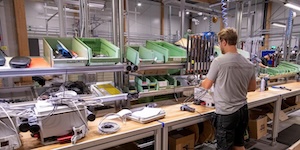
Hampus Götlind, systems engineer at Eton Systems, assembles drives before delivery.

The textile industry has a major environmental impact, not least through extensive overproduction. Clothing companies often order large volumes from the manufacturers and what does not sell is sold out or destroyed.

The Microfactories System Innovation project builds on previous projects that have mainly focused on developing small-scale, local and needs-based production. Now the focus is on the growing market for reuse.

“We see enormous potential in second hand,” says Molin. “It is an area that is growing rapidly and where there is room for innovation and new business models. There is also the opportunity to move technology from other industries.”

Work on the project started in 2024 and will continue for four years. For Eton Systems, participation means both a chance to test new applications for its technology and to strengthen the company’s ability to innovate.

“Collaboration with universities and innovation environments helps us to be at the forefront,” says Molin. “We can participate in freer and more visionary development, without having to take on all the work ourselves. But above all, it is about contributing to a more circular industry, where materials can be used for longer and in a smarter way.”

Accelerating circular systems

TMAS Secretary General Therese Premler-Andersson

“It’s very encouraging to note this growing willingness by many consumers to embrace the second-hand market as an important component of the drive towards accelerating circular systems,” adds TMAS General Secretary Therese Premler-Andersson. “Automation and digitalization as developed by Swedish companies like Eton are increasingly innovating ways in which this market – and more generally textile manufacturing and retailing – can be sustained and made ever more efficient in the general fight against textile waste.”

The Microfactories System Innovation project is funded by the European Regional Development Fund, the Swedish Agency for Economic and Regional Growth, Region Västra Götaland and Region Västmanland.

Posted: November 17, 2025

Source: TMAS, The Swedish Textile Machinery Association

An Accessible World Show Window For Textile Technology Manufacturers And Investors: ITM 2026

ISTANBUL — November 12, 2025 — The ITM 2026 International Textile Machinery Exhibition, one of the most prestigious meeting points for the global textile technologies sector, will bring together industry professionals from around the world in Istanbul from June 9–13, 2026.

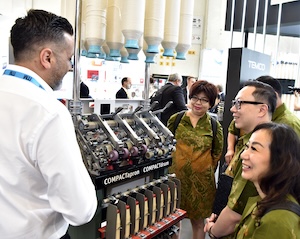
Istanbul’s strategic location, easy accessibility, and cultural inclusiveness make ITM 2026 not just an exhibition but also an accessible world show window. Thousands of investors who cannot travel to Europe due to visa issues are eagerly awaiting ITM 2026 for the chance to see technology firsthand, connect directly with manufacturers, and develop collaborations.

Breaking records for both the number of exhibitors and visitors, as well as the technological vision it offers, the ITM Exhibition continues to establish itself as a respected global brand. More than just a trade fair for industry professionals, ITM 2026 also offers the opportunity to expand into new markets, develop collaborations, and gain firsthand access to the latest technologies. It continues its mission to be an accessible world show window for manufacturers and investors.

Textile Investors Experiencing Visa Problems Await ITM 2026

In recent years, rising geopolitical tensions, global migration policies, and tightening consular procedures have made European trade exhibitions increasingly difficult to reach, especially for investors and industrialists in developing countries. This has led textile investors, particularly in Türkiye, but also in the Middle East, Central Asia, North Africa, and South Asia, to turn their attention to strong global trade exhibitions like ITM. Textile manufacturers in these regions will have the opportunity to experience the latest technologies firsthand by visiting ITM 2026 in Istanbul, where they arrive after a three-hour flight.

Textile Technology Manufacturers to Meet with Global Buyers at ITM 2026

Visa barriers affect not only visitors but also international companies. Many manufacturers are acutely aware of the commercial and strategic shortcomings of not being able to meet potential customers face-to-face at European trade exhibitions. The widespread visa denials, particularly for professionals from developing countries, restrict these companies’ access to the global market. Therefore, the ITM 2026 Exhibition, distinguished by its accessibility, is crucial for companies as a trade bridge not only regionally but also globally. Participating brands are excited to be able to connect their products and solutions with the target audience they truly desire. Many companies are preparing to debut their latest technologies at ITM 2026, and the exhibition is poised to become the epicenter of global textile technology.

The Latest Technologies will Be Showcased at ITM 2026

In an environment where production power is being redefined, the ITM 2026 Exhibition will inject hope, direction, and momentum into the textile industry. Innovations that are redefining the boundaries of textile technology today will be unveiled for the first time at ITM 2026. From digitalization and AI-powered production solutions to sustainability and automation systems, many innovations will be showcased at ITM 2026 by the world’s leading manufacturers. For those who want to shape the factories of the future today, the exhibition will offer unmissable opportunities.

The Technology Hub for Global Denim Trends

Denim Technologies is one of the eagerly anticipated sections of the ITM 2026 Exhibition, showcasing the latest products and technologies across the entire textile production chain, from weaving and knitting to dyeing and printing, from fiber to yarn.

This special section, which will cover all stages of denim production, including washing, dyeing, finishing, laser cutting, sustainable chemicals, and digital solutions, will shed light on the future of the denim industry by focusing on sustainable production, energy efficiency, and eco-friendly innovations. From water- and energy-saving machines to digital washing and laser effect systems, from dyeing technologies that minimize chemical use to automation solutions, groundbreaking innovations in denim production will be showcased at ITM 2026.

Posted: November 14, 2025

Source: Tüyap Tüm Fuarcılık Yapım A.Ş. and Teknik Fuarcılık A.Ş.

Knitex Industries Ltd. (Mondol Group) Invests In Advanced Mahlo Technology

SAAL ON THE DANUBE, Germany — November 12, 2025 — Bangladesh’s Knittex Industries Ltd. is known for its commitment to top-quality knitwear and responsible production.

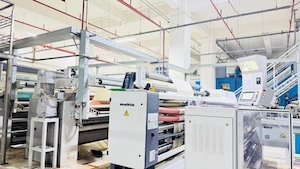
To further enhance fabric quality, the company has invested in a Mahlo Orthopac RVMC-15 weft straightener. Installed by Tootal Quality Resources, the system ensures perfect fabric alignment and supports Knittex’s goal of continuous improvement.

Since its foundation in the late 2005s, Knitex Dresses Ltd. has grown into one of Bangladesh’s leading knit composite manufacturers. As a part of the renowned Mondol Group, the company stands for high-quality production, vertical integration, and a strong focus on sustainability and social responsibility. The company has two campus which are located at Sardagong, Gazipur and Mirzapur, Tangail.  Knitex Dresses Ltd. covers the full textile value chain – from knitting and dyeing to printing, finishing, and garmenting.  This allows for maximum quality control, flexibility, and efficiency.

With a workforce of more than 2.500 people, Knitex produces a wide range of knitwear for global customers. Its daily capacities include around 25,000 kg each in knitting and dyeing, plus several tens of thousands of garments across different categories.

The company philosophy combines quality, employee welfare, and sustainability. All those term are deeply anchored in the group’s DNA.

Focus on quality

To remain a trusted partner for global brands, Knitex Dresses Ltd. continuously invests in modern machinery. The latest example in this strategy: the installation of a Mahlo Orthopac RVMC-15 weft straightener.

Mahlo’s classic optical weft straightener corrects fabric distortions in nearly all applications, ensuring perfect fabric quality right from the start of the finishing line.

The machine was installed and commissioned by Mahlo’s long-term trusted partner in Bangladesh, Tootal Quality Resources, guaranteeing smooth integration and professional support.

Outlook

With the new Mahlo technology in operation, Knitex Dresses Ltd. strengthens its ability to deliver flawless fabrics, reduce waste, and improve efficiency. This investment once again demonstrates the company’s commitment to sustainability, innovation, and uncompromising product quality – values that define both Knitex Dress Ltd.and Mahlo.

Posted: November 14, 2025

Source: Mahlo GmbH + Co. KG

AAFA Welcomes Progress On U.S. Trade Agreements With Key Central American Countries

WASHINGTON, D.C. — November 13, 2025 — The American Apparel & Footwear Association (AAFA) applauds today’s frameworks for agreements on reciprocal trade with El Salvador and Guatemala that incorporate key features vital for the U.S. textile, apparel, and footwear industry.

Steve Lamar, American Apparel and Footwear Association (AAFA)

“We are grateful to President Trump and his trade negotiating teams for this bold step to support U.S. workers and communities whose lives and livelihoods are directly enabled by U.S.-Central American trade. These actions bolster key U.S. export markets in Central America, reduce costs for American consumers, and reinforce the competitiveness of integrated regional supply chains that rely on U.S. cotton and other textiles,” said Steve Lamar, AAFA president and CEO.

Under these frameworks, the United States will remove reciprocal tariffs on products that qualify for the U.S./Dominican Republic-Central America FTA (CAFTA-DR). These actions follow each country’s commitments to take steps to strengthen their trade partnerships with the United States. The removal of tariffs on these CAFTA-DR qualifying products — items like textiles and apparel that are already subject to strict rules of origin — ensures that the U.S./Central American partnership can continue to support workers and communities throughout the United States.

“We urge these agreements to be finalized soon so that these gains can quickly take effect and encourage the United States to incorporate similar provisions in forthcoming agreements with our other CAFTA-DR partners,” added Beth Hughes, AAFA vice president of trade and customs policy.

Posted: November 14, 2025

Source: The American Apparel & Footwear Association (AAFA)

Plastics Economic Analysis: U.S. Automotive Market Shows Resilience Despite Government Shutdown Data Gaps

WASHINGTON, D.C. — November 14, 2025 — The Plastics Industry Association (PLASTICS) Chief Economist, Dr. Perc Pineda, has released a new economic analysis showing that despite limited federal data availability due to the U.S. government shutdown, the nation’s automotive market remains fundamentally strong—supported by resilient consumer demand, steady production, and continued opportunities for plastics manufacturers.

Perc Pineda, Chief Economist, PLASTICS

Dr. Pineda explains, “The ongoing U.S. government shutdown has created significant hurdles for economists and analysts who depend on timely federal data. This is especially true in the automotive sector, where understanding motor vehicle demand and supply dynamics requires up-to-date statistics from agencies like the Bureau of Economic Analysis (BEA) and the U.S. Census Bureau. With official releases stalled, piecing together a clear picture of light vehicle sales—encompassing automobiles and light trucks—over the past two months has become a patchwork effort. Despite these challenges, industry reports and alternative sources paint a picture of resilient demand, tempered by policy-driven fluctuations in electric vehicles (EVs) and fleet purchases.”

To read the full analysis on the PLASTICS blog:

https://www.plasticsindustry.org/blog/navigating-the-u-s-automotive-market/

Posted: November 14, 2025

Source: The Plastics Industry Association (PLASTICS)

U.S. Textile Industry Applauds Plans To Reinstate Duty-Free Benefits For Qualified Textile And Apparel Goods From Guatemala And El Salvador

WASHINGTON, D.C. — November 13, 2025 — The National Council of Textile Organizations (NCTO), representing the full spectrum of U.S. textiles from fiber, yarn and fabrics to finished sewn products, applauded the administration’s announcement today of plans to reinstate duty-free treatment for qualified textile and apparel goods from Guatemala and El Salvador under the Dominican Republic-Central America-United States Free Trade Agreement (CAFTA-DR).

National Council of Textile Organizations President and CEO Kim Glas:

NCTO President and CEO Kim Glas

“NCTO and our industry leaders have long been pushing for the reinstatement of duty-free treatment for qualified textile and apparel goods for our CAFTA-DR partner countries. We welcome the administration’s announcements about restoring these benefits for Guatemala and El Salvador and continue to press for a resolution for the other trade partners including Honduras, the Dominican Republic and Costa Rica, while acknowledging that the administration is conducting an extensive review under Section 301 of Nicaragua and their human rights violations under a separate track.

“We sincerely thank Rep. Richard Hudson (R-NC-09), Rep. David Rouzer (R-NC-07), and many members of the House Textile Caucus for their leadership and efforts in helping reinstate duty-free benefits for CAFTA-DR countries in support of the domestic textile chain.  Today was a first great step and we want to thank President Trump, U.S. Trade Representative Ambassador Jamieson Greer, and the administration for this important decision.

“The CAFTA-DR region forms a vital co-production chain with the American textile supply chain, facilitating $11.3 billion in two-way trade in 2024 and supporting more than 470,000 U.S. workers in the domestic textile sector alone. However, since reciprocal tariffs were imposed on qualifying CAFTA-DR trade, U.S. textile and apparel imports from our free trade partner countries have declined 8 percent year to date in 2025 through July, while U.S. imports from top Asian suppliers have increased by double digits.

“The restoration of duty-free status for qualified goods from El Salvador and Guatemala is a critical key first step for our collective industries.  Restoring duty-free textile and apparel qualified goods from the CAFTA-DR region is important to bolster the U.S. textile supply chain can help bring some stability to this critical sector. The U.S. -Western Hemisphere supply chains stand as a bulwark to China and other Asian countries. We look forward to working with the Trump administration and lawmakers to find a resolution that will restore duty-free treatment for qualified trade for this vital region.”

Posted: November 13, 2025

Source: The National Council of Textile Organizations (NCTO)

Third Monforts Thermex For Turkey’s Altoteks

MÖNCHENGLADBACH, Germany — November 12, 2025 — As a leader in the dyeing, finishing and printing of fabrics for workwear and uniforms, Altoteks, based in Çorlu, Turkey, has been a highly valued Monforts partner since 1996, and has just installed a new Thermex continuous dyeing range.

With an annual dyeing and printing capacity of 18 million metres, the company’s plant already houses two existing Monfortex ranges, along with a Montex finishing range and related equipment.

Exacting standards

The new two-metre-wide line consists of three linked Thermex units.

The key fields of specialisation for Altoteks include the dyeing and finishing of para and meta-aramid fibre fabrics and blends, unique double dyeing and printing techniques for polycotton and nylon and cotton blended fabrics and special processes for ripstop camouflage materials. Another major field is in the coloration of modacrylic fabrics and flame-retardant cotton and viscose blends. All must meet the exacting standards of the military and civil defence services.

“Specialised equipment and know-how are required to achieve the high durability, colour fastness and performance standards required on the woven fabrics for the markets we serve and Monforts Thermex technology is one of the cornerstones of our expertise,” says owner of the company Mehmet Ucar. “We use the Thermex ranges for continuous, disperse and reactive dyeing processes and they are generally preferred for technical textiles and long-run reactive dyeing.”

“With its technologically advanced infrastructure, experienced staff and environmentally friendly production, Altoteks is constantly increasing its domestic and international competitiveness, with customers in Europe, Asia, the USA and Africa,” adds Monforts Area Sales Manager Thomas Päffgen. “Having embraced quality, sustainability and customer satisfaction as its core principles, Altoteks is thriving in some highly specialised markets.”

Econtrol®

The line benefits from gas-powered infrared predryers, providing high evaporation rates in a minimum of space.

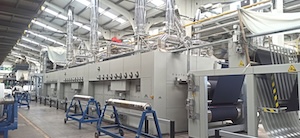
The new two-metre-wide Thermex line consists of three linked Thermex units for continuous dyeing and thermosoling, along with gas-powered infrared predryers, providing high evaporation rates in a minimum of space, and cold pad batch (CPB) winding.

With the trend towards smaller lot sizes per colour in continuous dyeing and the requirement for simple processes, the new Altoteks range also benefits from the Econtrol®* process for reactive dyestuffs developed by Monforts together with Dystar – a simple, quick and economical one-pass pad-dry-wash off continuous dyeing process with drying in the hot flue at 120-130°C and controlled humidity of 25-30% by volume, to obtain fixation in two-to-three minutes.

Altoteks owner Mehmet Ucar: “Monforts Thermex technology is one of the cornerstones of our expertise.”

“The Econtrol process provides a significant advantage for our company, allowing for faster and more economical production in high-volume reactive dyeing,” says Mehmet Ucar “For Altoteks, the new machine will significantly improve production processes in terms of speed, quality and operational efficiency.

“The installation process was completed in a record time of approximately one month with the support of Monforts, its local agent Neotek and our technical team. Monforts consistently provided us with the necessary service support once the machine began production.”

*Econtrol® is a registered trademark of DyStar Colours Distribution GmbH, Germany.

Posted: November 13, 2025

Source: A. Monforts Textilmaschinen GmbH & Co. KG

Australian Company, Thread The Word, Launches US Operation In Manufacturing Solutions Center Incubator

CONOVER, N.C. — November 12, 2025 — Thread the Word, an Australian company which specializes in manufacturing customized gift blankets, has opened a US-based manufacturing operation at the Manufacturing Solutions Center (MSC) incubator located in Conover, North Carolina.  The MSC is part of Catawba Valley Community College.

Thread the Word uses flat bed knitting equipment to manufacture customized baby and gift blankets in various colors and sizes and produces customized embroidered gifts.  Thread the Word’s expansion to the MSC positions the company at one of the nation’s premier hubs for advanced textile manufacturing, research, and development. By joining the MSC incubator, the company gains access to state-of-the-art resources, testing and product development support, textile industry expertise, and a network of domestic manufacturers and suppliers.

Peter Thomas and his wife Annie founded Thread the Word in Australia in 2021.  Thomas recognized the value of having a US operation to better meet the needs of his customers as Thread the Word’s sales grew.  “We’re thrilled to begin this phase of our journey at the Manufacturing Solutions Center,” said Thomas.  “The MSC provides an unmatched support system for scaling our production and expanding our product line.  We can now ship orders to our customers in the States within three days to better serve the US market.”

“We’re excited to welcome Thread the Word to the MSC,” said MSC Director Jeff Neuville.  “Our mission is to expand and support our domestic manufacturing base, so it’s very satisfying to help a manufacturer begin operations here in the US.”

Thread the Word began operations in the MSC incubator in September.  Learn more about Thread the Word at www.threadtheword.com.

Part of Catawba Valley Community College, the Manufacturing Solutions Center provides testing, prototyping, and business incubation services to support the growth of manufacturing companies. With an emphasis on textiles and emerging technologies, MSC fosters innovation and economic development throughout the region.  To learn more about the MSC visit www.manufacturingsolutionscenter.org.

Posted: November 13, 2025

Source: The Manufacturing Solutions Center (MSC)

Sponsors